
This is my 100th post on my Superfactful blog. There are 50 super-fact posts. The other posts are posts about the blog, like this one, or posts featuring interesting information that I think is important, or book reviews of non-fiction books, travel posts with some information, posts about me, or mysteries.
However, the goal of this blog is to create a long list of facts that are important, not trivia, and that are known to be true and yet are either disputed by large segments of the public or highly surprising or misunderstood by many, perhaps shocking. Learning or accepting such a fact will change how you view the world. This makes these facts deserving of special attention, which is why I refer to them as super facts. You can also consider the super facts as a form of myth busting, major myth busting.
As mentioned, at the time of writing this I have come up with 50 super facts and made 50 posts about those super facts, but I am hoping to come up with hundreds. I am open to suggestions for super facts as well as critique of super facts. Tell me if you think it is trivia, not important, not surprising, or not an established fact. To see the first 50 super facts click here.

Deciding on What is an Important Fact
Deciding what is an important fact or not is subjective, but for the same reason it also makes it an easy thing to decide. Ultimately, I decide what is important. It is difficult to compare the importance of facts, but my main concern is to avoid trivia. I also try to avoid facts that may be important to me but do not concern others very much.
For example, I am looking for facts that people discuss a lot, or are often mentioned in the mainstream media, or facts that people dispute fiercely despite a scientific consensus and overwhelming evidence telling us what is true. I am looking for facts from science that could change people’s perspective on nature, our world, or the universe, or facts that could change people’s view of the world, that are related to important historical events, such as the deaths of millions of people, etc.
Shocking Facts
Deciding whether a fact is highly surprising, misunderstood by many, shocking, or contentious and disputed is also not an exact science. In some cases, there are polls stating how common a certain belief is amongst the public but in most cases (that I consider) I have no polls to fall back on. I just have to use my judgment. In some cases, almost everyone I’ve spoken to about the subject is misinformed, bamboozled, or they misunderstand it. In other cases, I need to decide based on my impression. I have to guess.

Finding the Truth
As I mentioned, deciding on what is important or highly surprising is not an exact science. I think that is OK. There’s going to be super facts that are impressive and some that are less so. However, the third criteria is the one thing that I need to get right, and that is whether the fact is true or not.
We humans are not very rational, and we often believe with intense conviction things which are false. I think that is true for all of us. We don’t know what those false beliefs are, otherwise, we wouldn’t have them. However, this is where the super facts can come in handy, as tools for personal growth if we are willing to change our minds in the face of new evidence. This is easier said than done since we are emotional beings embedded in our culture, our tribal attachments and favorite myths. We have biases, we jump to conclusions, we overestimate our understanding of subjects we don’t know much about (see the Dunning Kruger effect), and we tend to believe what we want to believe. That goes for me too.
Adding to the difficulty on deciding what is true is the fact that the internet and especially social media is full of misinformation. There are an enormous amount of YouTube videos, podcasts, and websites touting false claims, conspiracy theories, and pseudo-science. There are political think tanks deceiving the public and industry funded organizations spending billions of dollars on misinformation, as well as people claiming to have special insights and superior knowledge.
I see the most ridiculous claims on Facebook and Instagram on a daily basis and the amazing thing is that people fall for it. If it supports their pre-existing beliefs or opinions, they see it as proof or conclusive evidence and they don’t take the time to question the source. When I see this, I often point out that the source is not reliable, or it may even be a satirical site, and I often add something from Snopes to my comment assuming they’ve investigated it.
Sure, when I do this, I am raining on someone’s parade, and it is quite often not welcome. No matter how politely I try to explain the situation I end up getting insulted or blocked. I should say, I’ve also fallen for fake information myself, but I try to accept it when someone points it out to me using reliable sources. The point is, we humans are really bad at deciding what is true, and we underestimate how bad at it we are, and deciding what is true is often a quite challenging task.
Before I publish a super fact, I need to be fairly certain that it is true. Outside of mathematics and logic you cannot be 100% sure about anything, but some facts we can say with very high certainty are true. For example, the earth is not flat like a pancake, the Sun is bigger than the earth, the capital of the United States is Washington DC, the heart pumps the blood, we breathe oxygen, carbon dioxide is a greenhouse gas, the light speed in vacuum is a universal constant, time dilation is real, Cesium-137 is radioactive, etc. Most likely you only know a very tiny fraction of a percentage of the facts that we know to be true with very high certainty. Some of those facts will surprise you, shock you, or are facts you would like to dispute, and I call them super facts.
Determining What Facts Are True
When I determine whether something is true with a high degree of certainty I start with my own expertise. For example, when someone claims that the second law of thermodynamics (entropy) contradict evolution I know that to be false because I have a degree in physics (master’s degree) and I’ve taken several classes in thermodynamics and statistical mechanics. In addition, I am very familiar with the faulty argumentation behind the claim because I’ve read dozens of creationist books. Yes, I was once bamboozled by creationism myself. Then I learned more about science, evolutionary biology, physics and thermodynamics.
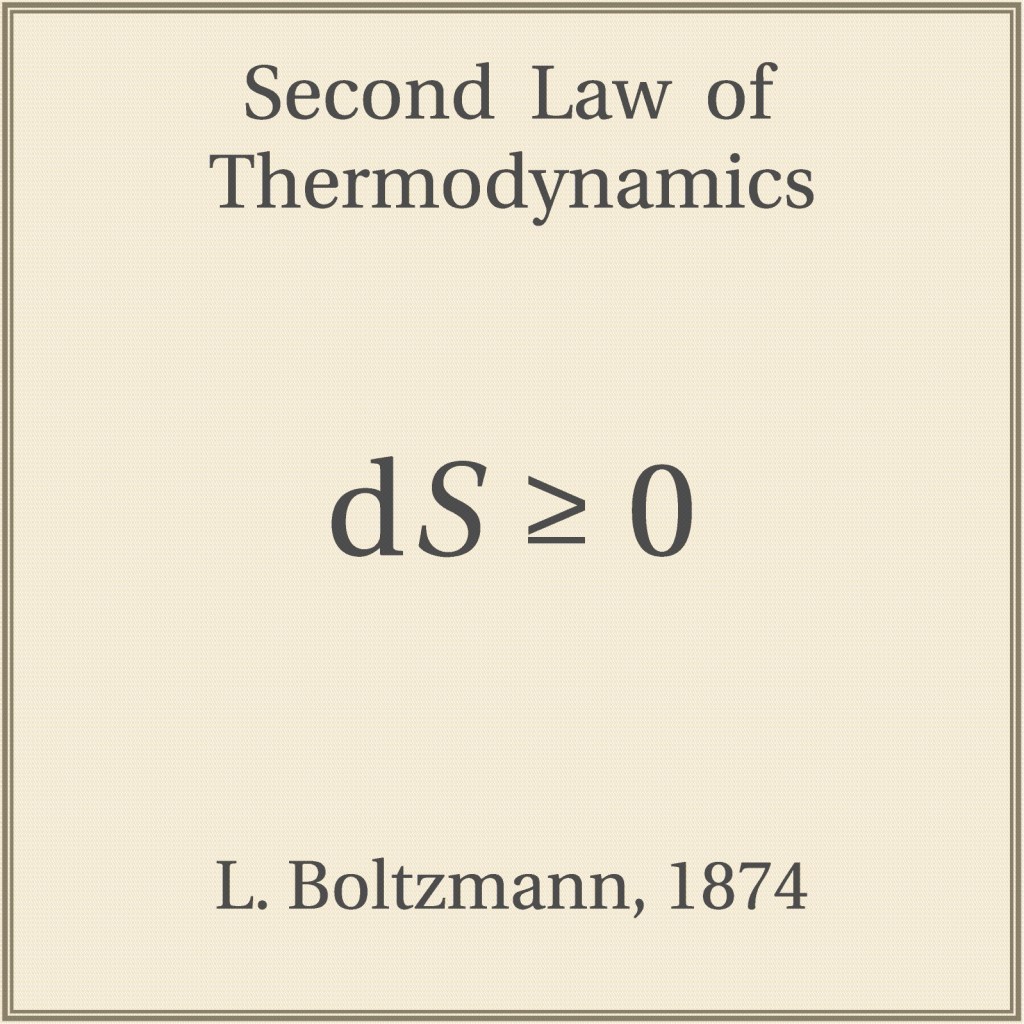
However, my personal expertise is not enough. I also find out about scientific consensus or expert consensus and evidence from reliable sources. I should say that using scientific consensus as a reliable indicator that something is true does not fall under the “appeal to authority fallacy”. The “appeal to authority fallacy” refers to appealing to influential people or organizations who may not necessarily be experts, and regardless of the evidence. In science you don’t really have authorities, you have experts who often disagree with each other. In the event almost all experts agree on a certain fact that has been thoroughly vetted you can trust that fact with nearly 100% certainty, and that is not appeal to authority but a probability argument.
I typically select several reliable sources such as research papers published in respectable journals, national academies, government websites such as NASA, NOAA, EPA, FBI, respected research organizations such Our World in Data, Pew Research Center, and academic publications and books. I make sure that they various sites I find don’t contradict each other regarding my prospective super fact. If they all seem to agree I accept the super fact and include a few of the links in my post.
If I don’t have much personal expertise on a subject I start out by asking Google AI. I don’t ask ChatGPT because I believe it is less reliable with respect to information. Then I check Wikipedia and or another online encyclopedia such as encyclopedia Britannica. This is not to establish the truth but to get an idea. Wikipedia is not an academically acceptable source, but it is rarely wrong and serves as a good first filter to save time. Then I start focusing on the reliable sources above and I will make sure I understand the evidence.
So, in summary I will use my expertise, scientific consensus, reliable sources and better, agreement between reliable sources, to determine if I can say with confidence that something is true. I will also frequently include links from Wikipedia in my posts because Wikipedia typically feature good summaries that are easy to understand. Naturally, anyone is free to dispute any of my super facts. Just make sure you provide good evidence from an arguably reliable source, or I cannot take it seriously.

Sources I will not consider are claims from unreliable sources, political think tanks, talk show hosts, politicians, articles written by contrarians heavily funded by industry or political organizations, and random Reels or YouTube videos, and I will not entertain conspiracy theories for my purposes. Also, I will ignore, articles with click bait titles, sources making claims about a great swindle by the scientific community, articles claiming everyone is lying to you, articles purporting to reveal the hidden truth, articles insisting on presenting the truth that “they”/the-others won’t tell you, etc. Cults will tell you that everyone else is lying to you. I’ve learned not to fall for it at this point.
My Super Fact List
Finally, here are a few examples of my super facts.
- Poverty and child mortality has been sharply reduced worldwide.
- We are Star Dust.
- Smallpox Killed 300 million People in the Last Century Before Eradication.
- Global Warming is Happening and is Caused by us.
- That Earth is round was well known long before Columbus.
- Emissions of ozone-depleting gases have fallen by 99 Percent.
To see all the Super Facts click here

 Super Facts
Nice post thanks for sharing 🙏🎸
LikeLiked by 2 people
Thank you satyam
LikeLike
Congratulations on your 100th post, Thomas! I hope you keep this up. Best, Ben Bennett Voylesbennettvoyles.de Tel. +49 151 62967276 Winterfeldtstr. 39 10781 Berlin, Germany
LikeLiked by 2 people
Thank you so much Ben. It is fun. I will keep it up. Say hello to Cybele and the children from us.
LikeLike
I’m really enjoying your superfacts series. I think it’s important that the correct information is easily avaliable because the false ideas certainly are. Keep them coming 😊 Maggie
LikeLiked by 4 people
Thank you so much Maggie, and you are so right. False information and click bait is very easy to create and spread and believe. Correct information require more work.
LikeLiked by 1 person
Kudos, Thomas, and keep the posts coming!
For future posts, a recent study showed the high percentage of people who feel animosity toward AI. The public lumps all LLMs together, and they’re overwhelmed by the technology. Too many are not familiar with the cascade of issues and abuses. Like baby birds in a nest, they accept whatever AI feeds them. Unlike you, they’re ill equipped to research and separate what sounds plausible from facts. With all that in mind, please consider creating an ongoing series of posts where you expand on AI, helping people to avoid the issues that have caused mental problems, severe embarrassment, lost income, and even deaths.
LikeLiked by 2 people
Yes that is a very good point Grant. I just added it to my list for future posts.
LikeLike
Excellent, Thomas!
LikeLiked by 1 person
I really enjoy this blog. A lot of times I have nothing intelligent to offer- so commenting is not an option- but I learn a lot- and think about even the things I do not understand all the way! Keep up the good work!
LikeLiked by 3 people
That is very kind of you to say Violet. Thank you very much.
LikeLike
I enjoyed reading this. It explained a lot.
LikeLiked by 1 person
Thank you so much Jacqui.
LikeLiked by 1 person
Congratulations on your 100th, Thomas! Quite the milestone.
LikeLiked by 1 person
Thank you so much Patricia.
LikeLike
😀
LikeLiked by 2 people
Congratulations on 100 posts, Thomas! 🎉You have a higher level of education than many of us, and I trust the facts you publish here, knowing they have been impeccably researched. This made me laugh:
So true! And I’ve been known to throw Snopes links out there as well, that were met with various levels of hostility. 😆
LikeLiked by 1 person
Thank you so much Debbie. We are emotional beings and we don’t like our beliefs and assumptions questioned. Everyone is a skeptic until your own beliefs are questioned, but you have to follow the evidence. Snopes is a great tool for debunking and for saving on Christmas presents (from losing friends).
LikeLiked by 1 person
100th post- Bravo! Thank you, Thomas, for offering us insight and truth on challenging or elusive topics.
LikeLiked by 3 people
Thank you so much Gwen
LikeLiked by 1 person
Thank you very much for doing this series, Thomas. I think it’s super-important, and especially considering what your president is doing. Acquainting people with facts is always important but even more important now.
LikeLiked by 1 person
Thank you so much Lynette. I am hoping that accepting or at least entertaining facts that seem to contadict ones beliefs or seem strange or amazing will lead to some personal growth.
LikeLiked by 1 person
Congratulations
LikeLiked by 1 person
Thank you pk
LikeLike
🧠💡 An interesting approach to sharing facts that break misconceptions and broaden perspectives. 👍 It’s important to have such sources in these times full of misinformation.
LikeLiked by 2 people
You are so right myrelar. Thank you so much.
LikeLiked by 1 person
Congratulations 🎊
LikeLiked by 1 person
Thank you Anna
LikeLiked by 1 person
Of course 😀
LikeLiked by 2 people
Great milestone for your super facts blogging! I always like reading through them, understanding some of what is presented, amazed at some, and agree with some. But most of all I appreciate that you have gone above and beyond in researching and informing me and your readers to so much we might never had thought about. Congratulations! 🙂
LikeLiked by 2 people
That is very nice of you to say Barbara. Thank you very much.
LikeLiked by 1 person
You’r welcome! 🙂
LikeLiked by 1 person
congrats on the milestone!
LikeLiked by 1 person
Thank you so much da-AL
LikeLiked by 1 person
I always appreciate the facts you choose to share, I’ve learnt quite a bit from this blog.
LikeLiked by 1 person
Thank you so much Pooja. I really appreciate your kind words.
LikeLiked by 1 person
You’re very welcome.
LikeLiked by 1 person
Hi Thomas, thanks for liking today’s post
LikeLiked by 1 person
Thank you for this look at how you choose your Super Facts. So far, you have picked some really good ones and given me some resources I haven’t seen regarding them, so really appreciate it.
LikeLiked by 1 person
Thank you so much for your kind words David. It certainly means something, especially coming from you.
LikeLiked by 1 person
Thank you, Thomas.
LikeLiked by 1 person
Congratulations on post #100, Thomas! And thank you for this look into how you make sure facts are as properly vetted as can be. Keep up the great work!
LikeLiked by 1 person
Thank you so much for your supportive and kind comment Kevin
LikeLiked by 1 person
My pleasure, Thomas. I hope you are having a great weekend, my friend.
LikeLiked by 1 person
Have a great weekend you too
LikeLiked by 1 person
Congratulations on your 100th post Thomas I enjoy your Super Facts very much 🙂
LikeLiked by 1 person
Thank you so much Carol. I appreciate your kind words.
LikeLiked by 1 person
Congratulations on your 100th post, Thomas!
I’m really enjoying this series!
LikeLiked by 1 person
Thank you so much for your kindness Luisa
LikeLiked by 1 person
You’re so very welcome!
LikeLiked by 1 person
Java Bean: “Ayyy, what?! Humans are not rational??? You are supposed to be the smart ones! Now what are we going to do?!”
LikeLiked by 1 person
Boy, Bean, have I got bad news for you …
LikeLiked by 1 person
Yes I can guess where are going with that
LikeLike
Java Bean I think you are smarter than many humans. Maybe we should have a dog for President.
LikeLike
100 posts is impressive, Thomas. This post made me smile, you are such a maths/science coffin. Of course interpretation cannot be fully factual, it is through the eyes of the interpreter. 😀
LikeLiked by 1 person
Thank you very much Robbie
LikeLike
Truth is like a breath of fresh air these days Thomas. I appreciate your knowledge and searching for truth. I do the same, and avoid all the same you do. I’m not into lies and sensationalism of what could be. I do my research on anything that needs verification and only reliable sources. Thanks for mentioning your preference to Google AI other than ChapGPT I found that interesting. I appreciate your facts. You should make a book with them eventually. 😁
LikeLiked by 1 person
That is great to hear Debby and I very much appreciate your very kind words and support.
LikeLiked by 1 person
My pleasure Thomas. 🙂
LikeLiked by 1 person
I like your Super Fact posts, Thomas! They make me think.
LikeLiked by 1 person
Thank you so much Dawn
LikeLike
We certainly need to read the fine print these days and I so much appreciate your post, thank you, Thomas! 💗
LikeLiked by 1 person
That is very nice of you to say. Thank you Cindy.
LikeLike
It’s so important to develop critical thinking skills and do our own research to go beyond preconceived ideas that may be far from the truth. You explored it well here in this very insightful article. A very interesting read. And so, thank you! With appreciation, sending light and blessings 🙏✨ (* I just found out that I’ve been missing your posts, and I don’t know why… they don’t show on my feed as before… sorry for that!)
LikeLiked by 1 person
Thank you so much Susana, you are so right. About missing posts. I have not been online for a while. It could just be that. Sending you light and blessings as well.
LikeLiked by 1 person