Is Plant Intelligence Real?

The goal of this blog is to create a list of what I call super facts. Super facts are important and true facts that nevertheless are very surprising to many, misunderstood, or disputed among the public. They are special facts that we all can learn something important from. However, I also make posts that are not super facts but feature other interesting information, such as this book review and book recommendation.

The Light Eaters: How the Unseen World of Plant Intelligence Offers a New Understanding of Life on Earth by Zoë Schlanger – May 7, 2024

Below I am listing the four versions of this book. I bought the hardback version.

  • Hardback –  Publisher : Harper (May 7, 2024), ISBN-10 : 0063073854, ISBN-13 : 978-0063073852, 304 pages, item weight : 2.31 pounds, dimensions : 6 x 0.92 x 9 inches. It costs $ 19.90 on US Amazon. Click here to order it from Amazon.com.
  • Paperback –  Publisher : Harper Perennial (May 13, 2025), ISBN-10 : 0063073862, ISBN-13 : 978-0063073869, 304 pages, item weight : 11.2 ounces, dimensions : 5.5 x 0.75 x 8 inches. It costs $15.99 on US Amazon. Click here to order it from Amazon.com.
  • Kindle –  Publisher : Harper (May 7, 2024), ASIN : B0CFM4SMPF, 298 pages, it costs $ 14.99on US Amazon. Click here to order it from Amazon.com.
  • • Audiobook – Publisher : Harper (May 7, 2024), ASIN : B0CJWQ6X99, Listening length : 10 hours and 56 minutes. Click here to order it from Amazon.com.
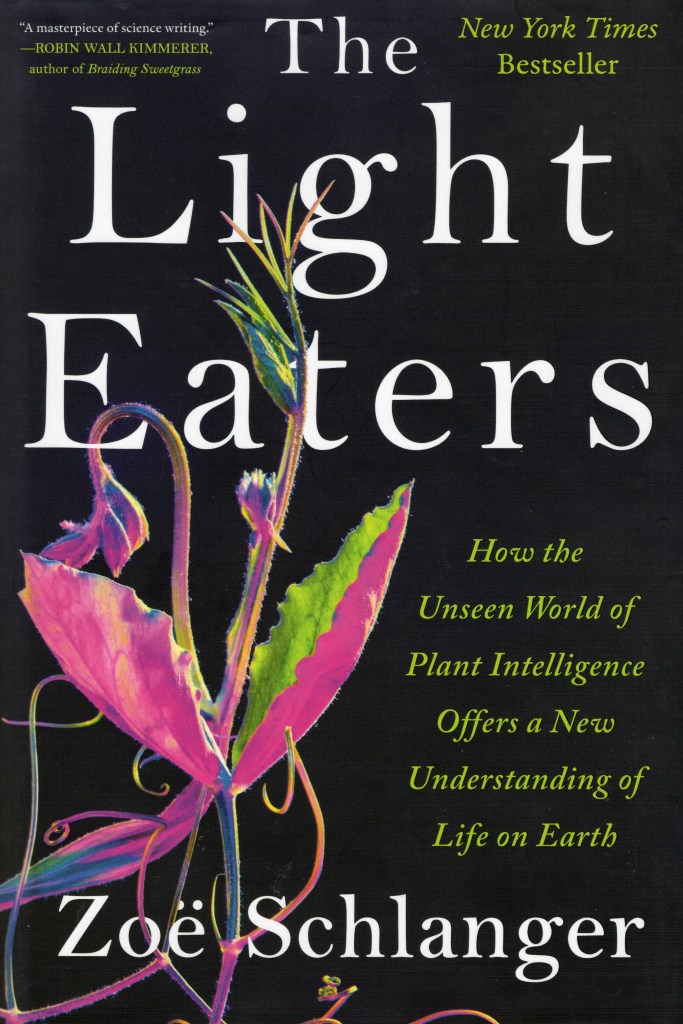
The front cover features a plant on a black background, the title and author of the book and the phrase “How the Unseen World of Plant Intelligence Offers a New Understanding of Life on Earth”. | The front cover of The Light Eaters: How the Unseen World of Plant Intelligence Offers a New Understanding of Life on Earth by Zoë Schlanger.
The front cover of The Light Eaters: How the Unseen World of Plant Intelligence Offers a New Understanding of Life on Earth by Zoë Schlanger. Click on the image to go to the Amazon page for the hardback version of the book.

Amazon’s Description of the Book

NEW YORK TIMES BESTSELLER

The New Yorker’s Best Books of 2024 • TIME’s 10 Best Nonfiction Books of 2024 • New York Magazine’s 10 Best Books of the Year • Washington Post’s 50 Notable Works of Nonfiction of 2024 • Smithsonian’s 10 Best Science Books of the Year •  A Best Book of the Year: Boston Globe, Scientific American,New York Public Library, Christian Science Monitor, Library Journal, and Publishers Weekly • An Amazon Best Nonfiction Book of the Year

Longlisted for the National Book Critics Circle Nonfiction Prize • Finalist for the Chautauqua Prize • Finalist for the Los Angeles Times Book Prize • Winner of the National Outdoor Book Award for Natural History

“A masterpiece of science writing.” ―Robin Wall Kimmerer, author of Braiding Sweetgrass

“Mesmerizing, world-expanding, and achingly beautiful.” ―Ed Yong, author of An Immense World

“Rich, vital, and full of surprises. Read it!” ―Elizabeth Kolbert, author of Under a White Sky and The Sixth Extinction

Award-winning Atlantic staff writer Zoë Schlanger delivers a groundbreaking work of natural history and popular science that probes the hidden world of the plant kingdom, “destabilizing not just how we see the green things of the world but also our place in the hierarchy of beings, and maybe the notion of that hierarchy itself.” (The New Yorker)

It takes tremendous biological creativity to be a plant. To survive and thrive while rooted in a single spot, plants have adapted ingenious methods of survival. In recent years, scientists have learned about their ability to communicate, recognize their kin and behave socially, hear sounds, morph their bodies to blend into their surroundings, store useful memories that inform their life cycle, and trick animals into behaving to their benefit―a fascinating display of plant behavior and sensory abilities, to name just a few remarkable talents.

The Light Eaters is a deep immersion into the drama of green life and the complexity of this wild and awe-inspiring world that challenges our very understanding of agency, consciousness, and intelligence. In this captivating exploration of plant intelligence, we see that plants, rather than imitate human intelligence, have perhaps formed a parallel system. What is intelligent life if not a vine that grows leaves to blend into the shrub on which it climbs, a flower that shapes its bloom to fit exactly the beak of its pollinator, a pea seedling that can hear water flowing and make its way toward it? Zoë Schlanger takes us across the globe, digging into her own memories and into the soil with the scientists who have spent their waking days studying these amazing entities up close.

What can we learn about life on Earth from the living things that thrive, adapt, consume, and accommodate simultaneously? More important, what do we owe these life forms once we come to understand their rich and varied abilities? Examining the latest epiphanies in botanical research, Schlanger spotlights the intellectual struggles among the researchers conceiving a wholly new view of their subject, offering a glimpse of a field in turmoil as plant scientists debate the tenets of ongoing discoveries and how insights into plant communication influence our understanding of what a plant is.

We need plants to survive. But what do they need us for―if at all? An eye-opening and informative look at the ecosystem we live in, this book challenges us to rethink the role of plants―and our own place―in the natural world, tackling the enthralling question of plant consciousness along the way.

This is my five-star review for The Light Eaters

It is a truly great and fact filled book

Plant Behavior and Communication is Real. What about Plant Intelligence?

This is a very interesting book that describes the ways plants behave and communicate via chemicals, fungus, sound, electric signals and light. Many plants even exhibit memory functions and are able mimic the look of other plants from a distance. A leaf is the only thing in our known world that can manufacture sugar out of materials, light and air, that have never been alive. They can produce complex chemicals, like caffeine, that humans and animals can’t produce. If weighed, plants would amount to 80% of Earth’s living matter.

Plants can regrow virtually any amputated part. Some plants inject poisons into the ground around their roots to prevent anything else from growing nearby. Plants can recognize and protect their kin. Many plants will rearrange their leaves to avoid shading siblings. One of the points of the book is that we may have underestimated plants.

The book also discusses the possibility that plants may have a type of intelligence, perhaps even consciousness, depending on how you define it. This is a philosophical discussion. It should be noted that there was a very popular book in the 1970’s that made outlandish and pseudoscientific claims about plants. In the long run this book created a lot of skepticism towards claims within botany that seemed far-fetched despite collaborating evidence. The author laments this conservatism at the same time as she understands it.

There is a problem with getting unconventional work published in botany, at the same time the arduous peer-review process is an essential safeguard against false paths.

However, it has been established that plants do a lot of amazing things, and we are just beginning to realize the extent of plant behavior and communication. Some examples are, plants can communicate with each other even when they are too far apart to be passing information through their roots (perhaps pheromonal substances).

Plants produce electrical impulses and seem to have nodes at the tips of their roots that serve as local command centers. Plants can react to an attack of munching insects by summoning those insects’ specific predators to come and pick them up. They can perceive gravity, but we don’t know how. Primrose increases the sweetness of its nectar within three minutes if you play an audio recording of honeybee flight to it. Pea plants and many other plants grow their roots toward the sound of running water.

Other examples are, Tomatoes make thirty-five sounds per hour when drought stressed. Goldenrod can sense the volatile signals of nearby gall-forming flies and jump-start its immune system before the flies even make contact. Researchers who played tones at different frequencies to alfalfa sprouts for two hours saw that they increased the plants’ content of vitamin C. Plants can hear the caterpillars or pick up the vibrations they cause. Trichomes allow plants to sense the footsteps of moths and caterpillars.

Nasa poissoniana can store and recall information. It can remember the time intervals between bumble bee visits and anticipate the next time their pollinator was likely to arrive. Bittersweet nightshade recruit ants as bodyguards. Cornish mallow, a pink-flowered plant, will turn its leaves hours before sunrise to face the horizon in exactly the direction its expects the sun to rise. A common vine in this rainforest was capable of spontaneously morph into the shape of almost any plant it grew beside.

Plant mimicry is not that unusual. Scientists have long observed that virtually all plants are highly sensitive to touch of any kind and will change their growth accordingly. The book features several dozen more amazing examples of plant behavior, communication, sensing, and forms of memory including generational memory.

The book also delves into some other topics such as the importance of microbes for both plants and animals, including humans. Microbes influence our immune systems, our smells, and our attractiveness to mosquitos. Emerging research suggests that they may play a role in autism, depression, anxiety, and possible even who we are attracted to. The author also notes that pollution steadily filling the air appears to sabotage plants ability to send and interpret each other’s signals.

This is a book that is filled with interesting and perhaps even shocking information, and it certainly made me more interested in plants and botany. I think the book made the outlandish ideas about plant intelligence and conscience appear almost plausible. Plants are all around us and they are more interesting than I thought. The book is also well written and well organized. I should say that I did not think the first three chapters were very interesting, but it got better the further I read. I highly recommend this book.
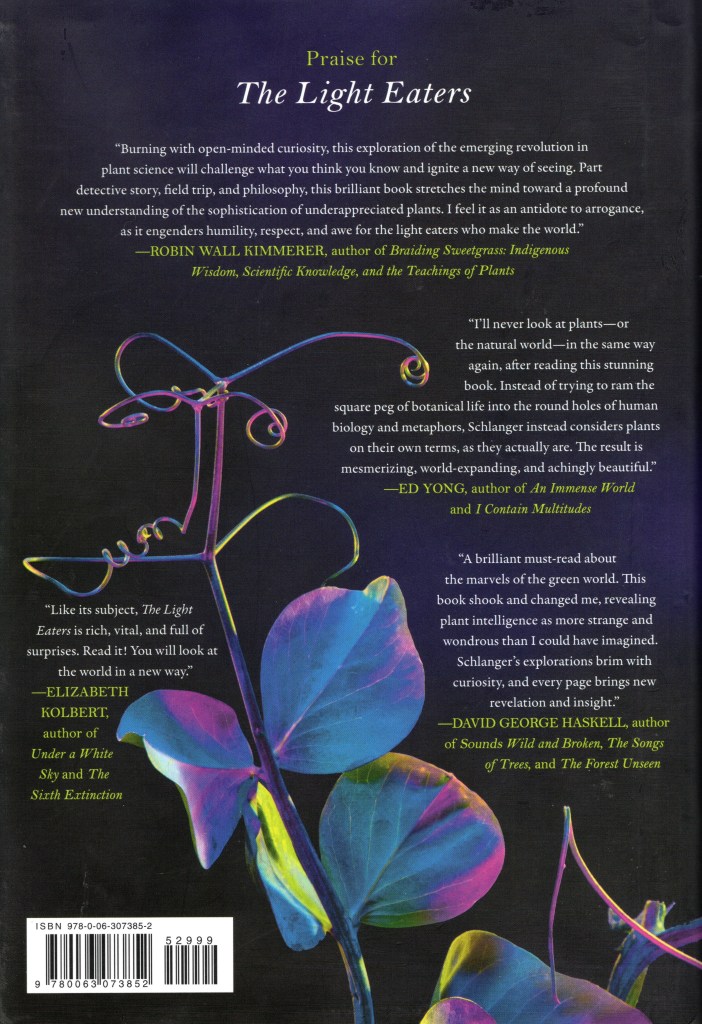
The back cover features a picture of a plant on a black background and praise for the book. | The back cover of The Light Eaters: How the Unseen World of Plant Intelligence Offers a New Understanding of Life on Earth by Zoë Schlanger.
The back cover of The Light Eaters: How the Unseen World of Plant Intelligence Offers a New Understanding of Life on Earth by Zoë Schlanger. Click on the image to go to the Amazon page for the hardback version of the book.


To see the Super Facts click here

All Life Have a Common Ancestor

Super fact 82 : All known cellular life descends from a single Last Universal Common Ancestor (LUCA). All animals, all plants, fungi, algae, green and red algae, kelp, phytoplankton, cyanobacteria, amoebas, amoebozoa, diatoms, stramenopiles, rhizaria, hacrobia, all eukaryote, all archaea, all bacteria, all the millions of species on Earth come from one single ancestor known as the Last Universal Common Ancestor – LUCA. Viruses are an exception, but viruses are not considered life.

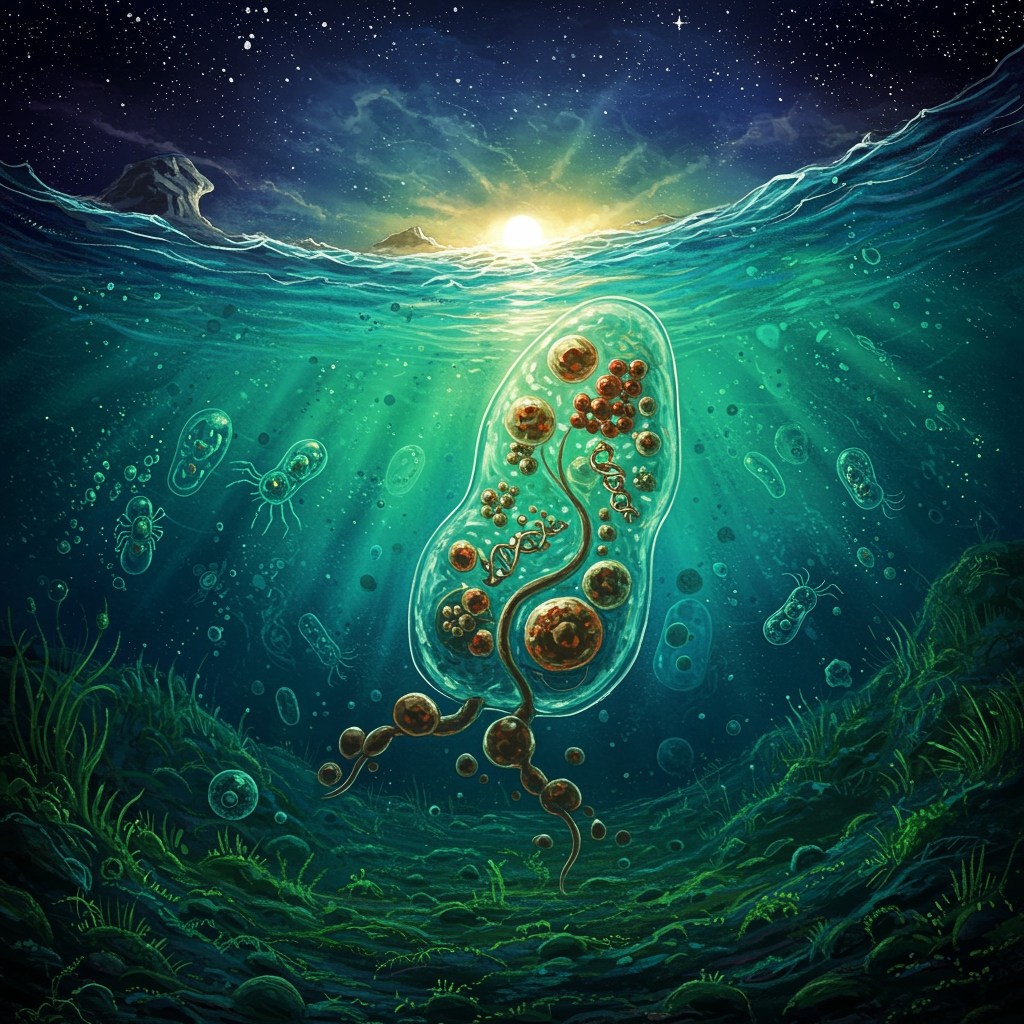
This AI generated image shows a cell in an ocean and in the background, there are hundreds of other cells or possible life structures. | All Life Have a Common Ancestor
Last Universal Common Ancestor creation Shutterstock Asset id: 2666598705 by Shutterstock AI

LUCA, the Last Universal Common Ancestor, was not the first life form. It was preceded by earlier, simpler life forms that did not survive. LUCA was a single-celled, bacteria-like microorganism that existed roughly 4.2 billion years ago, or about 400 million years after planet Earth first formed. It was the final common ancestor for all currently living organisms. It thrived near hydrothermal vents as part of a larger microbial community before the three domains of life bacteria, archaea, and Eukarya diverged. This is a super fact because it is true, or at least highly probable, it is surprising and amazing and kind of important.

How Do We Know All Life Has a Common Ancestor ?

The answer is genome mining. By surveying nearly 2000 genomes of modern microbes we not only know that all life has a common ancestor (LUCA), that lived roughly 4.2 billion years ago, but we also know that it thrived near hydrothermal vents as part of a larger microbial community. This is analogous to another of my posts “Humans and Chimpanzees Have a Common Ancestor”. By sequencing human DNA and chimpanzee and bonobo DNA we know that humans and chimpanzees have a common ancestor. No fossils, or other information from the past is needed. DNA is a great tool for determining relationships between species and for finding information about past life, without the need of fossils.

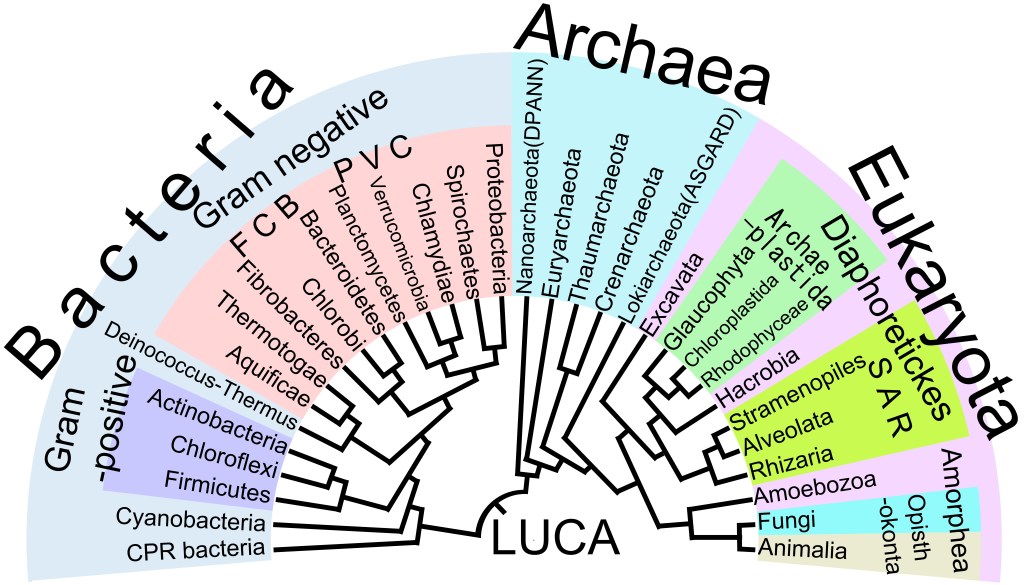
To be more specific, the detailed biochemical similarity of all current life makes the existence of LUCA widely accepted by biochemists. There is a Universal Genetic Code, which means that nearly all living things use the same DNA/RNA-based genetic code to translate genetic information into proteins. There is a shared molecular machinery, for example, all life relies on ribosomes for protein synthesis, similar energy carriers like ATP, and the same 20 amino acids. All life uses the same mirror-image form of molecules, a signature of a single, common ancestry. In addition, there is a “core” set of 355 gene families present in both modern bacteria and archaea, which were likely inherited from LUCA. Finally, we have phylogenetic mapping, protein-sequence-based phylogenetic trees converge on a single root, indicating a common ancestry for all life. See the phylogenetic tree of life below.

The picture shows how the three domains of life bacteria, archaea, eukaryote, and the relationships between the different phylum in each domain leads back to LUCA.
User: Crion, CC BY 3.0 https://creativecommons.org/licenses/by/3.0, via Wikimedia Commons.

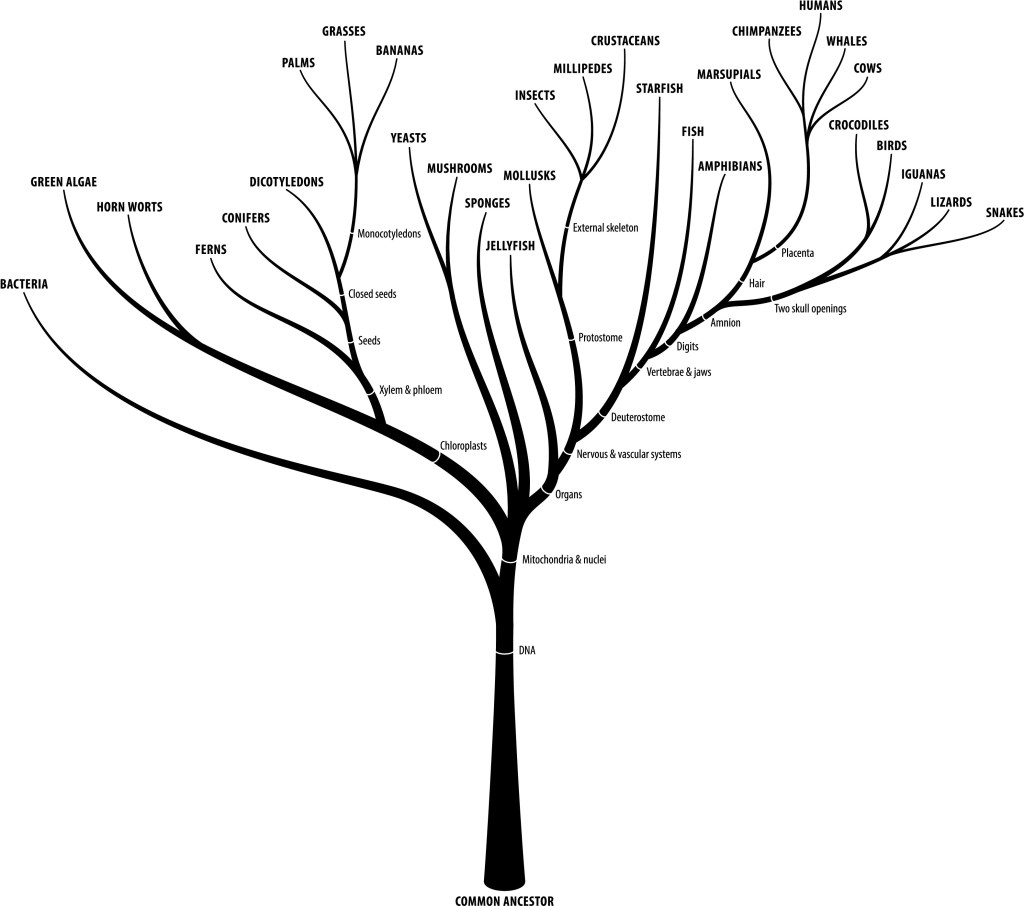
Below is another view of the diversification of life that focuses on the inventions made by life.

This tree of life picture shows a root representing a common ancestor and from it sprouts various inventions of life DNA, mitochondria, nuclei, chloroplasts, organs, hair, and much more.
The evolutionary tree of life showing diversification, branching and key characteristics of each branch. Shutterstock Asset id: 228953155 by Zern Liew

It should be noted that in addition to viruses there were likely other forms of life that existed alongside LUCA or before it. There was likely non-cellular life as well as cellular life that died out, RNA-based life, self-replicating nucleic acids, etc. It should also be noted that if some of the large viruses were to be reclassified as life, or a life form not based on LUCA were to be discovered then our “current LUCA” would no longer be LUCA, but just the ancestor of “almost all life”. That would still be amazing, just slightly less so.

The existence of LUCA brings up an interesting question. What would happen if we found DNA based life on another planet and its DNA showed that it also originated from LUCA ?

Other Evolution Related Super Facts


To see the other Super Facts click here

Oxygen Blue Sky and Complex Life Exist Because of a Bacteria

Super fact 72 : About three billion years ago Cyanobacteria evolved a new type of photosynthesis that used sunlight, water, and carbon dioxide to create energy, while releasing oxygen as a waste product. This transformed the atmosphere and enabled complex life by allowing aerobic respiration to evolve. This invention turned the sky blue, gave us the protective ozone layer, but also caused climate change resulting in massive extinctions.

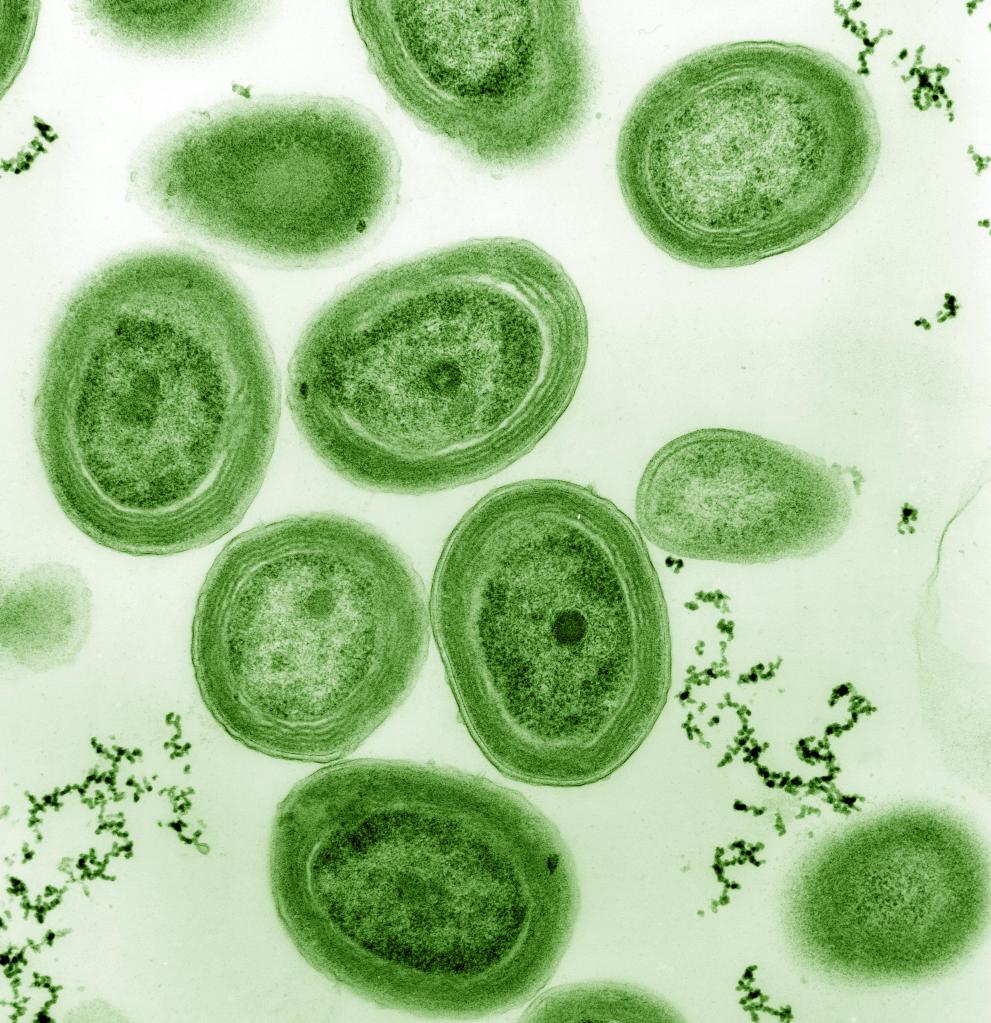
A microscopic photo of Cyanobacteria. They look like green blobs with small nucleuses. | Oxygen Blue Sky and Complex Life Exist Because of a Bacteria
An example of a Cyanobacteria. From Wikipedia. Luke Thompson from Chisholm Lab and Nikki Watson from Whitehead, MIT, CC0, via Wikimedia Commons

Cyanobacteria, also known as blue-green algae, are bacteria capable of oxygenic photosynthesis. Between 3.4 and 2.5 billion years ago they developed a new and very effective form of photosynthesis, which took advantage of highly abundant resources, using sunlight, water, and carbon dioxide turning it into sugar and releasing oxygen as byproduct. This is referred to as the Great Oxidation Event. You can read more about this event here, here, here, here, here, or in the book Becoming Earth by Ferris Jabr.

The atmosphere prior to the Great Oxidation Event was primarily composed of volcanic gases including nitrogen, carbon dioxide, water vapor, methane and ammonia, but almost no free oxygen. The Great Oxidation Event changed all this, but it likely took at least 200 million years.

Labeled educational bacteria internal structure scheme.
Cyanobacteria vector illustration. Biological blue green algae diagram with carboxysome, thylakoid and phycobilisome parts location inside cell. Asset id: 1687712761 by VectorMine

A Microbial Great Extinction and Snowball Earth

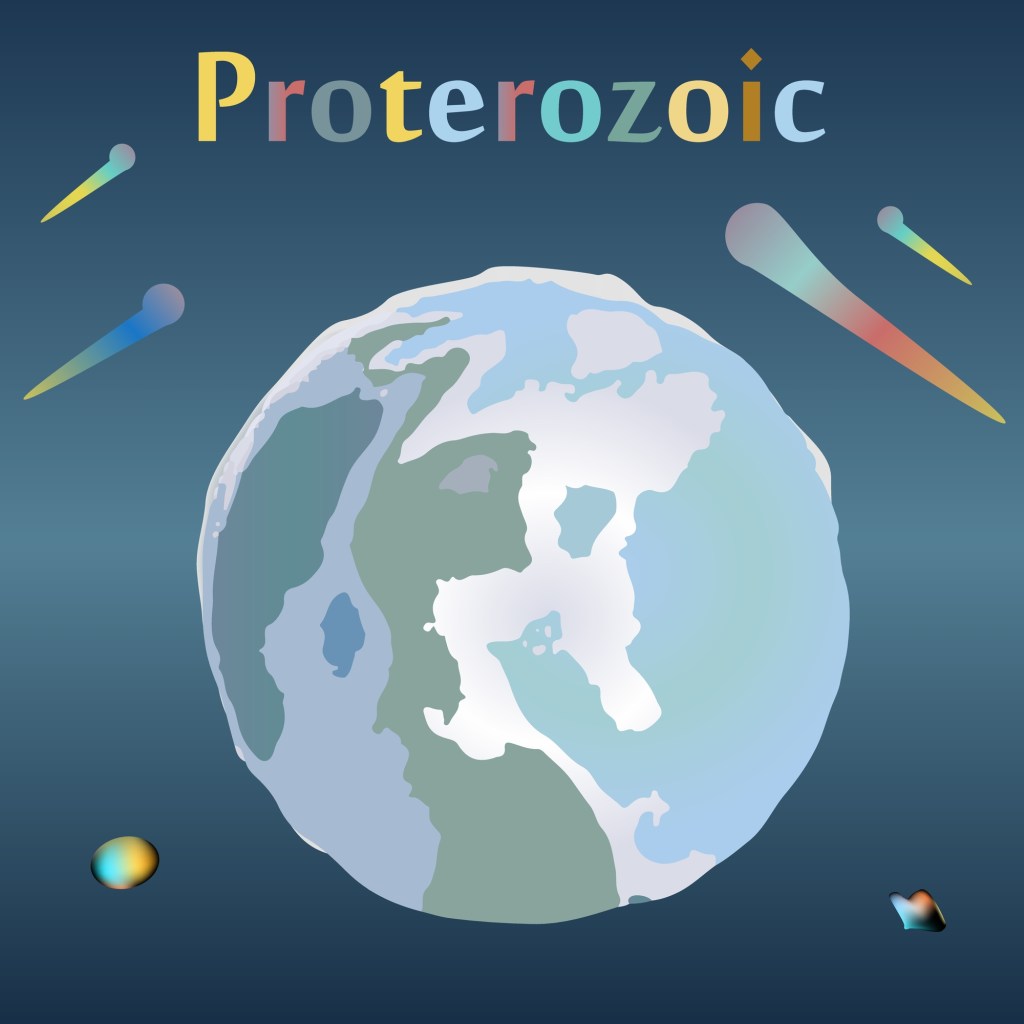
Oxygen was a toxic gas to many early microbes forcing them to adapt or perish. In addition, the change in the atmospheres composition changed the climate, resulting in a severe global cooling referred to as Snowball Earth. This caused a great extinction, perhaps the most severe extinction in Earth’s history. It is not included among the five mass extinction events in Earth’s history because it happened very early in Earth’s history when only primitive microbial life existed and fossil evidence from that time is nearly non-existent. The definition of a mass extinction event is that at least 75% of the world’s species are lost during a short period of time – geologically speaking. This period is not clearly defined but often defined to be two million years. It is very difficult to determine whether the great extinction following the Great Oxidation Event qualifies as a mass extinction event. To read about mass extinctions click here.

Ancient Earth almost entirely covered by ice and white snow. | Oxygen Blue Sky and Complex Life Exist Because of a Bacteria
Proterozoic era in the history of the Earth. Snowball earth. Global glaciation of the Earth. Asset id: 2010272753 by Elena Kelman

The Ozone Layer and the Blue Sky

Oxygen is also responsible for formation of the ozone layer in the atmosphere. The UV radiation from the sun split oxygen molecules, which consist of two oxygen atoms, into two separate atoms of oxygen, which then reacted with another oxygen molecule to generate ozone, and oxygen molecule consisting of three oxygen atoms. Ozone acts as a natural sunscreen to prevent harmful UV radiation from reaching the earth. Therefore, oxygen not only enables land dwelling complex multicell organisms to exist by allowing aerobic respiration to evolve, but also by protecting life from too much UV radiation.

As mentioned above, the atmosphere prior to the Great Oxidation Event was primarily composed of volcanic gases and almost no free oxygen. The color of the sky was likely orange, brown. As oxygen replaced the existing gases the sky slowly turned blue. Oxygen molecules along with Nitrogen molecules scatter blue light from the sun through a process called Rayleigh scattering, making the sky appear blue.

Cyanobacteria and The Great Oxygenation Event

It should be noted that there were other geological and biological processes that were responsible for this permanent shift in the Earth’s system, including changes in the composition of volcanic emissions and chemical reactions that allowed atmospheric hydrogen to escape to space, leaving behind an excess of oxygen molecules. However, whatever the exact mix of mechanisms, cyanobacteria were undoubtedly a critical source of accumulating oxygen. It is possible that tectonic activity altered the cycling and distribution of phosphorus and other nutrients essential for cyanobacteria. To read more see the book Becoming Earth by Ferris Jabr.


To see the other Super Facts click here

Evolution is a Fact

Super fact 63 : Evolution is both a fact and a scientific theory. It is a fact that life has changed over time. This is supported by overwhelming evidence, while the theory of evolution provides a comprehensive scientific explanation for these changes, using processes like natural selection.

This is very confusing to people who do not know what a scientific fact is or what a scientific theory is. First of all, a scientific fact (they exist) is not the same as the scientific theory associated with that fact. Secondly, theory in science does not mean a guess, or a hypothesis, as is often the case in common parlance. In science, a theory is far more than a guess — it is a well-tested, comprehensive explanation of natural phenomena, supported by an extensive body of evidence. I think a good example of this confusion is the following dialogue that I found on Facebook.

I follow “The Credible Hulk”, a Facebook page managed by a group of anonymous scientists dedicated to correcting misinformation around vaccines, global warming, evolution and GMOs. I did not save the post, but it went something like this: The Credible Hulk posted a meme that looked like this.

One of the commentors said : “Calling evolution a “fact” defeats your argument. The Theory of Evolution is by definition a theory not a fact. It’s the currently agreed upon hypothesis but not a fact.” He did not know that he did not know what he was talking about. Since the Credible Hulk page is administered by scientists and a lot of its followers are also scientists, or people with a science education, he got schooled. You can read more about this confusion in my post “There Are Scientific Facts”, or here.

The evidence for evolution is both vast and compelling. Evolution is not just a process of the distant past — it can be observed in real time. Bacteria developing antibiotic resistance, viruses adapting to immune systems, and insects evolving resistance to pesticides are clear, measurable examples of evolution in action. The extensive fossil record, transitional fossils, comparative anatomy, sub-optimality, evidence from biogeography, etc., provide a very large body of conclusive evidence for evolution. Modern genetics provides perhaps the strongest proof of evolution.

Far from being a matter of belief, evolution is a scientifically established reality that shapes life continuously. Its understanding is vital, not only for biology but also for medicine, ecology, and environmental science. It allows us to track disease outbreaks, design new treatments, and appreciate the delicate balance of ecosystems. Evolution is not speculation — it is the foundation of modern biology and a dynamic process still unfolding around us. Evolution is a fact.

According to the pew research center around a third of all Americans reject the idea of evolution. Since this is an important fact that is widely disputed amongst the public, and yet we know it is true, I consider it a super fact. I also would like to reiterate that none of my super facts are scientific theories, but some of them are scientific facts, which again, is not the same thing.

Evidence for Evolution

The evidence for evolution as a phenomenon (fact) is conclusive as we can directly observe it (see below). That is all I need for my statement above that evolution is a fact. However, most people want to know how strong the evidence is for large-scale evolutionary changes that have occurred over geologic time, and what evidence there is for evolution being as the origin of species. In other words, how strong is the evidence for the theory of evolution. It turns out the evidence for that is also very strong. That is not the same as my super fact, but it is related and a quite interesting discussion.

Fossil records preserved in rock layers reveal a chronological history of life on Earth, documenting gradual changes in species over millions of years. Transitional fossils, such as Archaeopteryx linking dinosaurs to birds, demonstrate how one group of organisms evolved into another. Comparative anatomy adds to the case, showing homologous structures across species that point to shared ancestry.

Biogeography shows patterns of species distribution explained by common descent and migration. Modern genetics provides perhaps the strongest proof. DNA — the universal code of life — shows striking similarities across organisms. Humans, for example, share a large percentage of their genome with chimpanzees, and remarkably, the same genetic code underlies all living things, from bacteria to mammals, confirming a common evolutionary origin.

Making a list of all the evidence with brief explanations is far beyond the scope of this blog post and reading a 1,000,000+ word essay about evidence is not everyone’s cup of tea. Therefore, I am just providing a very small sample with very brief explanations (this post is long enough as it is).

This website offers a more extensive overview including 29+ evidences for so called macroevolution. Macroevolution describes large-scale evolutionary changes that occur over geologic time. Scientist tend to avoid the word Macroevolution because it is so misunderstood. First of all, Macroevolution is just the combination of a large number of smaller scale changes. New species do not randomly pop up because of some amazing mutation.

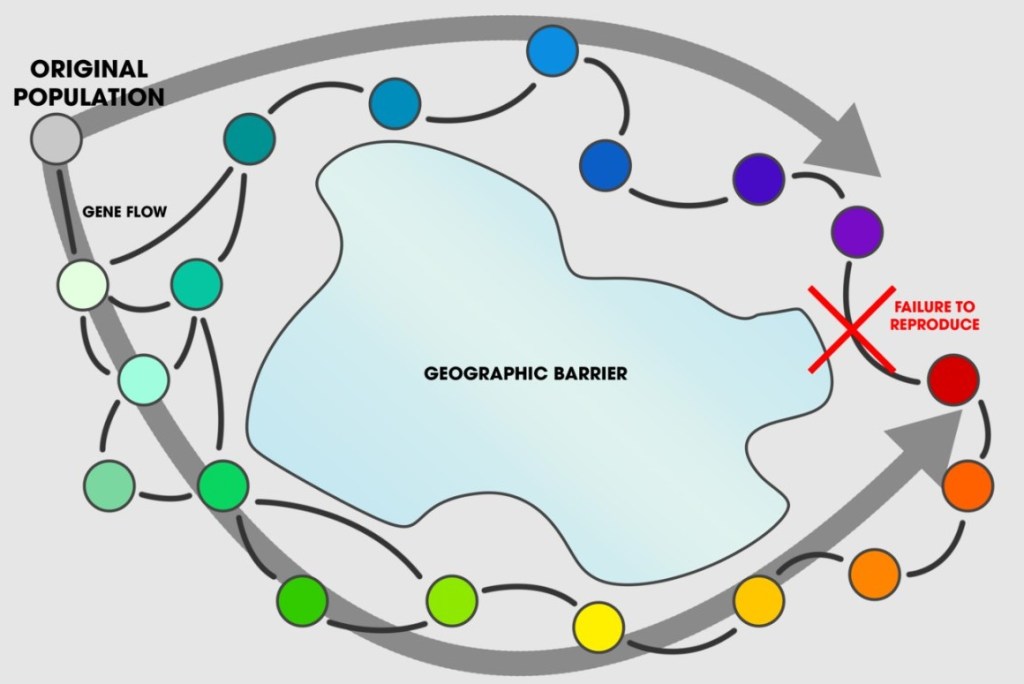
Speciation is considered relative. It is often said that two animals belong to the same species if they can interbreed in nature and produce viable, fertile offspring. However, it is not that simple. An animal A may be able to successfully interbreed with an animal B, and that animal B may be able to successfully interbreed with an animal C, but animal A and C cannot interbreed. Animal A could be said to be a different species relative to animal C but animal B could be said to be the same species as both animal A & C.

A great geography related example of this is ring species. In a ring species, gene flow occurs between neighboring populations of a species, but at the ends of the ring the populations don’t interbreed. Macroevolution is the result of repeated microevolution, so you cannot claim that microevolution is possible but not macroevolution.

The picture depicts different subspecies as little colored circles centered around a big lake. The color changes a little bit at the time. All the circles next to each other can interbreed | Evolution is a Fact
Illustration of ring species, an example of how speciation can be relative. All the circles next to each other can interbreed but at the end it no longer works. Andrew Z. Colvin, CC BY-SA 4.0 <https://creativecommons.org/licenses/by-sa/4.0&gt;, via Wikimedia Commons

Direct Observation

Evolution in viruses and bacteria has been observed and is well-documented, providing a direct window into evolutionary processes. Examples include the development of antibiotic-resistant bacteria, the annual evolution of influenza viruses and researchers can also directly observe rapid adaptation through experiments, such as the ongoing “arms race” between bacteria and viruses in lab settings. Direct observation supports my claim that “evolution is a fact”, because we’ve seen it. However, the evidence for so called macroevolution over longer periods of time is more indirect but still extremely strong.

Evidence from Biogeography

Biogeography provides evolutionary evidence by revealing patterns in the geographic distribution of species that can only be explained by common descent and evolutionary processes. For example, oceanic islands, which are islands that are formed from the sea bottom typically through volcanic activity, feature very narrow sets of native species (flora + fauna) that do not exist elsewhere.

One example is the Hawaiian Islands, which make up only 0.004 percent of the earth’s land and yet they contain nearly half of the world’s two thousand species of Drosophila. Darwin’s finches is another example. Another example is that oceanic islands do not have any native freshwater fish, or amphibians and rarely any native reptiles or mammals. These kinds of examples match the narrative that certain species (birds, insects, etc.) travelled to these islands and then evolved resulting in a unique set of species. BTW non-native freshwater fish, amphibians, and mammals do just fine, so it is not the environment. The book Why Evolution Is True by Jerry A. Coyne gives an extensive overview of biogeographic evidence for evolution.

Fossil Record

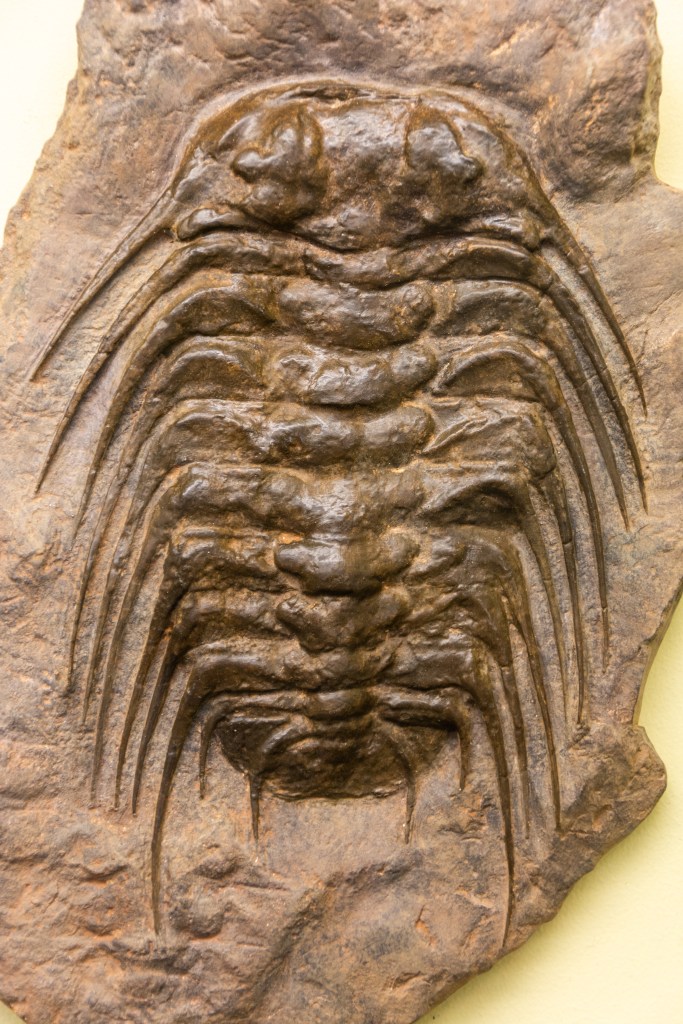
There are millions of found fossils representing 250,000 different species (there are likely trillions of not yet found fossils). The fossil record shows that early life was simple with complex life appearing later, with the youngest fossils being most similar to currently living species. It documents the orderly succession of life forms through geologic time. This is predicted by the theory of evolution. In addition, the various so called gaps in the fossil record keep being filled out. Opponents to evolution often criticize the dating methods used to date fossils. However, these criticisms do not hold water. You can read about that in my post We Know That the Earth is Billions of Years Old.

A photo of a trilobite fossil.
The fossil record is a lot more solid and much less problematic than the creationist books I have read claimed. Shutter Stock Photo ID: 1323000239 by Alizada Studios

Evidence of Evolution from DNA

DNA provides strong evidence for evolution. It is perhaps the strongest evidence for evolution. For example, related species share genes for fundamental traits, and the more similar the DNA sequences of two organisms, the more recently they shared a common ancestor. As time goes by DNA mutations accumulate acting like a “genetic clock,” allowing scientists to estimate how long ago different lineages split from each other. That’s how we know that Chimpanzees and Hominins / Humans share a common ancestor about 6-8 million years ago without having a fossil.

I can add that this was just a sample with a very brief summary for each case. Other types of evidence is the development of embryos. For example, whale and dolphin embryos have limbs that disappear, fetuses look like fish early on, human fetuses go through a hairy (primate) stage. There is evidence in the anatomy of our bodies, sub-optimality, curious anatomical imperfections due to our evolutionary history, so called atavisms, and vestiges. But that is enough for now.

Objections to Evolution

If you pay attention to this topic, you will come across a lot of flawed objections to evolution. When I was a teenager, I was a young earth creationist myself. Since I did not know a lot about the subject at the time I accepted many of these flawed objections and I even believed in a young earth. It doesn’t matter how many flawed objections you have to a theory (or a fact), if they are flawed, they don’t matter. I was very interested in science and went to science high school in northern Sweden. As I learned more about science, I came to realize that I had been bamboozled. You can read more about that in my post “Bamboozlement Misunderstandings, Big Surprises and My Journey”.

Since then, I have tried to argue with creationists about evolution, and I have come to realize that a lot of people are very emotionally invested in their opposition to evolution. For example, back in high school my wife was asked whether she believed in evolution and when she said yes, another girl threatened to beat her up in the bathroom. Once I was arguing online with a couple of strict fundamentalists who took a very aggressive and self-assured attitude to the topic despite not knowing much about the related science or evidence. It seemed to be impossible for them to understand normal scientific or logical arguments and yet they were totally sure, and they used mockery a lot. One of them found out that I “believed/accepted” that global warming is real and caused by us and started mocking me for that, a totally unrelated issue. Then the other one told me that if you believe in evolution, then you and your children will burn in hell forever. Well, if that is really what you believe, no wonder you can’t be rational about it. Anyway, at this point I pressed the block button. Talk about a hot discussion.

In my youth I read dozens of creationist books of various kinds, so I’ve have come across a lot of creationist objections. In the end I came to realize that none of them worked. I can add that the book “The Counter-Creationism Handbook” address over 400 of the most prevalent claims made by creationists. Below I am just very briefly addressing a few.

If humans descended from monkeys how come there are still monkeys?

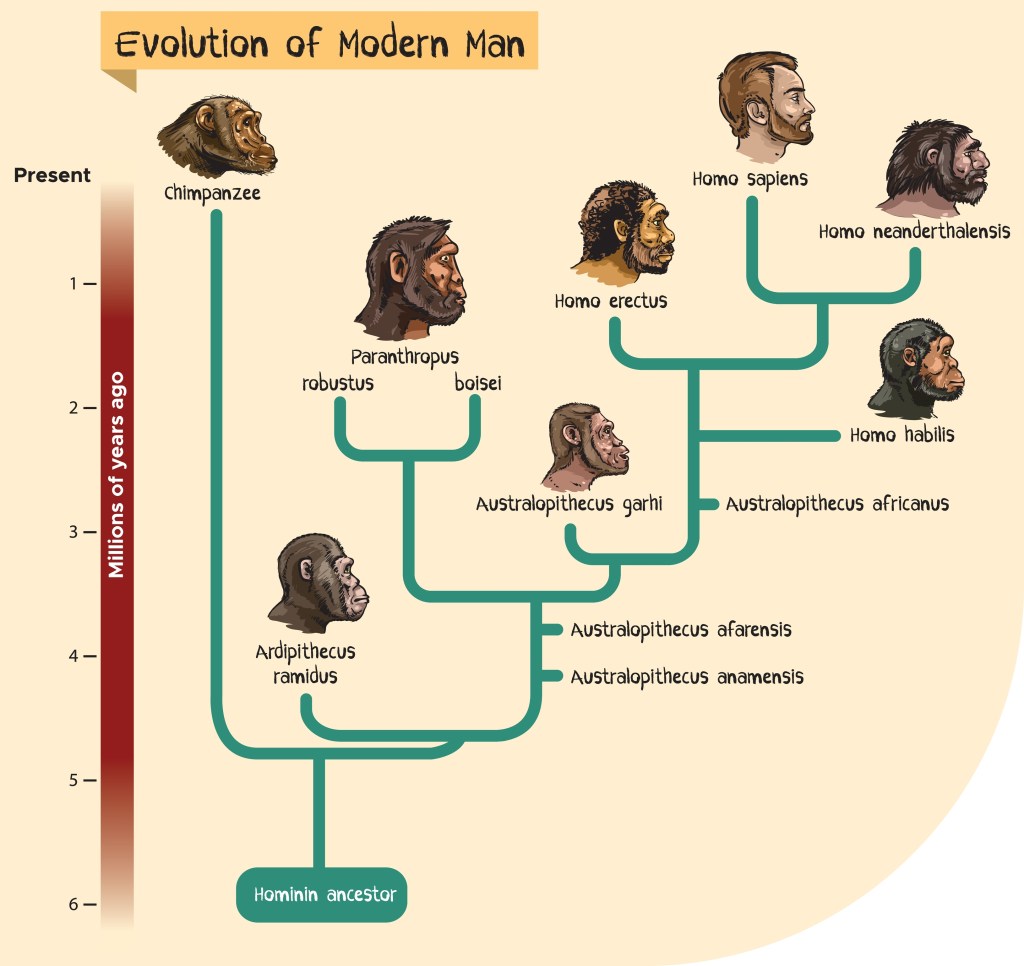
This is perhaps one of the more simplistic objections, but it is still worth mentioning. Even if it would have been true that monkeys evolved from monkeys, there’s no reason monkeys would stop existing just because humans evolved from some monkeys. However, that is not what happened. Genetics provides overwhelming evidence that hominins (including humans) and chimpanzees share a common ancestor. We have not found a fossil for this ancestor, but human and chimpanzee DNA tells us that such an ancestor lived about 6 to 8 million years ago. The simplified cladogram for hominins below demonstrates this.  I can add that there are around 6000 hominin fossils, and up to 31 hominin species.

At the bottom of the cladogram is a box that says “hominin ancestor. A tree branches off from this box. On the left is a chimpanzee and the right a tree for seven hominin species including modern humans.”
Simple cladogram showing evolution of modern man from Hominid Ancestor Shutterstock Asset id: 2093535535 by CLOUD-WALKER

Evolution is not Falsifiable

A theory is scientific only if it can be proven false. It must be falsifiable. Opponents to evolution often claim that evolution is not falsifiable because it deals with unobservable, unrepeatable events. However, the theory of evolution is falsifiable. There are no Precambrian rabbits or Mesozoic human fossils, but if there were that would have proven the theory of evolution false. Note evolution would still have been directly observable (viruses and bacteria), so evolution is a fact that would still be true, but the theory of evolution would have been proven wrong.

Second law of Thermodynamics contradicts Evolution

The second law of thermodynamics states that entropy (typically denoted ‘S’ in physics), which could be said to represent disorder, always increases or stays the same in a closed system. Creationists believe evolution creates complexity and order, which would seem to be a decrease in entropy. One weakness of this argument is that entropy representing disorder only loosely relates to order and disorder as used in common language. More correctly, entropy is defined as; for a given set of macroscopic variables, the entropy measures the degree to which the probability of the system is spread out over different possible microstates. Much more importantly, the creationist argument fails because the second law of thermodynamics requires a closed system, and evolution does not operate in a closed system. For example, the sun is shining and providing earth with energy.

Ludwig Boltzman’s formula from 1874
Second law of thermodynamics Shutter Stock Vector ID: 2342031619 by Sasha701

Evolution is Random and Improbable

Another creationist argument is that evolution is random, and randomness cannot create an elephant or an airplane. No matter how many times you randomly throw pieces of junk around you won’t get an airplane. The error in this argument is that evolution is not random. It is guided by natural selection (theory of evolution), and natural selection can be very powerful over time. For example, several computer simulations have been created to model the evolution of the eye, demonstrating that a complex camera-type eye can evolve gradually from a simple light-sensitive patch through a series of small, advantageous steps.

I can add that I have some personal experience with genetic algorithms myself. At work I created an algorithm that interpreted data from a camera for the purpose of sorting mail effectively. I started out with a chromosome that was very bad. Then my program applied random mutations and few other genetic features and allowed the best chromosomes to survive. Eventually a very complex but effective algorithm/chromosome resulted. I did not create this powerful algorithm; randomness combined with natural selection did. Randomly throw lots of junk around but also add some natural selection and you may very well get an airplane.

Microevolution is possible but not Macroevolution

Creationists like to say this because they must accept the reality of observable microevolution. It is a scientific fact. However, so called macroevolution is just repeated microevolution. There is no reason that macroevolution wouldn’t be possible. In addition, as you saw in the paragraphs before the ring species image above, the evidence for macroevolution is very strong. Again, microevolution and macroevolution are concepts that creationists like to use more than scientists.

Anyway, this became very long, almost 3,000 words.

To see the other Super Facts click here

Small Microscopic Subatomic and Strings

Esther’s writing prompt: 6th August : Small

Click here or Here to join in


Small Things

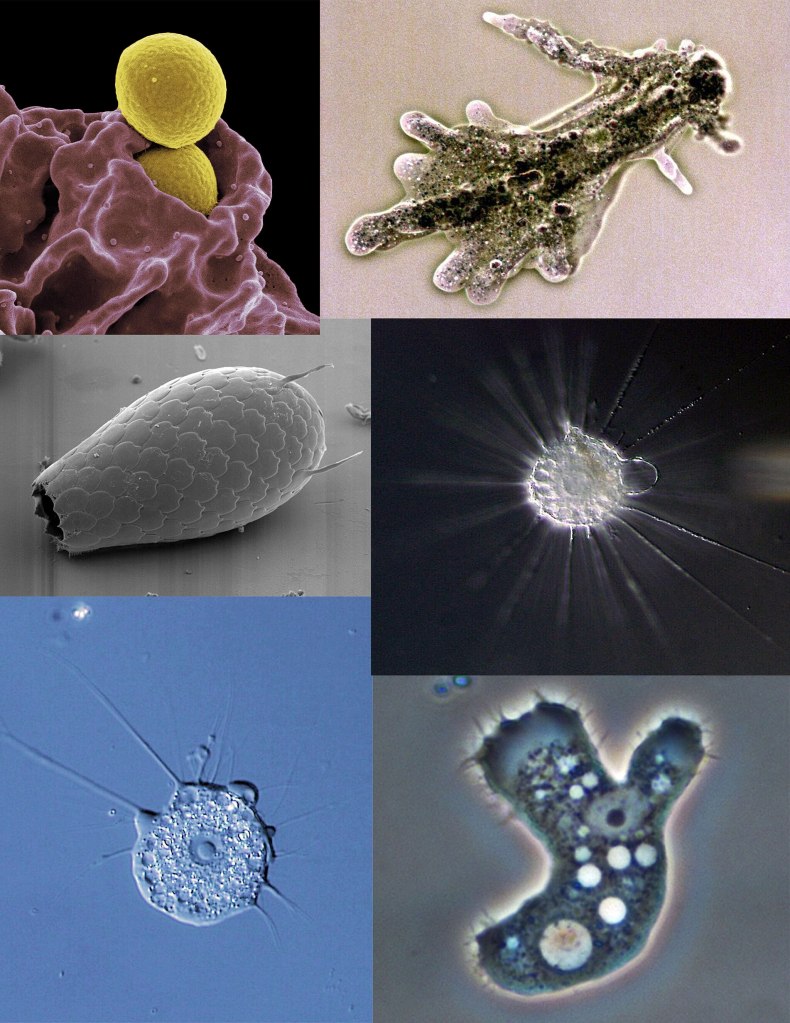
Fire ants are small. They average 1/8 inch to 1/4 inch in length, or 3 to 6 millimeters. Mites are very small arachnids that are less than 1 millimeters. They are so small that they are difficult to see with the naked eye unless they are on a white sheet. However, amoebas are typically even smaller than mites. Most amoebas range from 10 to 500 micrometers in diameter. 500 micrometers is the same as half a millimeter. You typically need a microscope to see an amoeba. I should say that there are some large amoebas that are 2 millimeters.

The photo shows six different types of amoebas | Small Microscopic Subatomic and Strings
Amoebas from Wikimedia commons. Attribution Respectively: NIAID, Cymothoa exigua, ja:User:NEON / User:NEON_ja, Jacob Lorenzo-Morales, Naveed A. Khan and Julia Walochnik, ja:User:NEON / User:NEON_ja, ja:User:NEON / User:NEON_ja, CC BY-SA 4.0 <https://creativecommons.org/licenses/by-sa/4.0&gt;, via Wikimedia Commons

Microscopic Things

If you want to go even smaller, much smaller, we can enter the microscopic world. Bacteria are microscopic, single-celled organisms with sizes typically ranging from 0.5 to 5 micrometers in length and 0.2 to 1 micrometer in width. That means that bacteria are around 100 times smaller than amoebas. Well, if you consider length. If you consider the volume that is a million times smaller. Comparing an amoeba to a bacterium is like comparing a horse to a small cicada. You certainly need a microscope to see bacteria.

If you think bacteria are small, I can tell you that viruses are even smaller. Viruses typically range in size from 20 to 300 nanometers in diameter. 1000 nanometers is 1 micrometer. A small corona virus (SARS-CoV-2) is 50 nanometers, which is 20 times smaller (in diameter) than a bacterium that is 1 micrometer in size and 100 times smaller (in diameter) than a bacterium that is 5 micrometers. Again, a horse to a medium size insect.

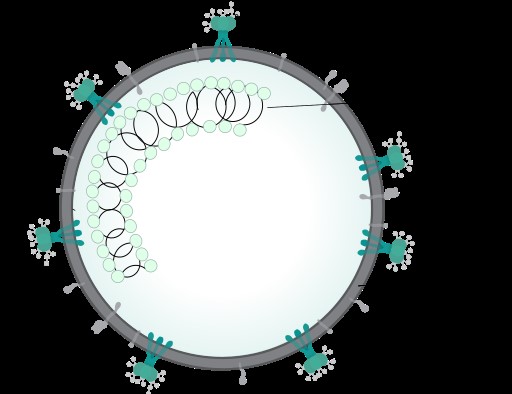
Illustration of Covid-19 Virus
Illustration of Covid-19 Virus (SARS-CoV-2) from Wikimedia Commons. Attribution: SPQR10, CC BY-SA 4.0 <https://creativecommons.org/licenses/by-sa/4.0&gt;, via Wikimedia Commons

Atoms Are Very Small

Atoms are much smaller than viruses. This reddit user calculated that there are roughly 52 million atoms in a normal sized covid virus (100 nanometers). Also keep in mind that there is a lot of space between atoms. The size of a hydrogen atom is 0.1 nanometer or 100 picometer. Comparing a hydrogen atom to a normal sized covid virus is like comparing a flea to a horse. If you consider volume, you could fill a normal sized covid virus with 1 billion hydrogen atoms.

You cannot see an atom using a regular microscope. You must use specialized microscopes that don’t rely on visible light to see atoms, such as scanning tunneling microscopes and electron microscopes. So, in summary, a hydrogen atom is to a normal sized covid virus like a flea is to a horse, and a normal sized covid virus is to a 100 micrometers amoeba (small sized amoeba) like a flea is to a horse.

Below is an illustration of a Helium atom, which is the next element after Hydrogen. A Hydrogen atom has one electron and one proton and possibly one or two neutrons. A stable Helium atom has two electrons and two protons and one or two neutrons.

Illustration of a Helium atom. A nucleus with protons and neutrons is surrounded by a grey fuzzy electrons cloud | Small Microscopic Subatomic and Strings
Illustration of a Helium atom. It has two electrons and a nucleus with two protons and two neutrons in the middle. The two electrons are depicted as clouds because they don’t have an exact position. Attribution : User:Yzmo, CC BY-SA 3.0 <http://creativecommons.org/licenses/by-sa/3.0/&gt;, via Wikimedia Commons

Subatomic Things

But let’s go smaller, much smaller. A hydrogen atom is gigantic in comparison to subatomic particles. Most of the mass in an atom is concentrated in the nucleus, which consists of protons, neutrons, quarks and gluons, and quark pairs called mesons. The size of an atomic nucleus varies, but it typically ranges from 1.6 femtometers (1.6 x 10⁻¹⁵ meters) for a proton to about 15 femtometers for the heaviest atoms.

I should say this is difficult to estimate so take this with a grain of salt. In any case that makes the hydrogen atom about 100,000 times wider than the nucleus in its middle. If the hydrogen atom was 100-meter giant ball the nucleus in the middle would be just 1 millimeter (half the size of a flea). That is despite the fact that the vast majority (+99.95%)  of the mass of the atom is in the nucleus. In this case, we are not comparing a flea to a horse, but a flea to a mountain. A mountain of mostly empty space with a super massive flea at its center. The YouTube video below explains the details.

Strings Are Extremely Small

However, the smallest things there are, might be strings. Strings, in the context of physics, are one-dimensional, extended objects that are thought to be the fundamental building blocks of the universe. These strings vibrate at different frequencies giving rise to elementary subatomic particles. Strings are thought to be about 10^-35 meters, which is 100,000,000,000,000,000,000 times smaller than the atomic nucleus described above. Comparing a string to a nucleus would be like comparing the hydrogen atom to a ball, or a giant star, containing one billion planet earths. I should mention that string theory has not been experimentally confirmed.

That is small, very small, extremely small, as small as it can get.

This post is not a super fact since it features a lot of facts and not all of them confirmed or exact.


To see the Super Facts click here