The goal of this blog is to create a list of super facts. Important facts that are true with very high certainty and yet surprising, misunderstood, or disputed by many. This blog aims to be challenging, educational, and fun, without it being clickbait. I determine veracity using evidence, data from reputable sources and longstanding scientific consensus. Prepare to be challenged (I am). Intentionally seek the truth not confirmation of your belief.
Birds are Avian Dinosaurs
Super fact 84 : Modern birds are classified as part of the clade Dinosauria. They are direct descendants of small, feathered maniraptoran dinosaurs that survived the Cretaceous-Paleogene extinction event 66 million years ago. Maniraptoran dinosaurs in turn are a major subgroup of coelurosaurian theropod dinosaurs. In other words, birds are avian dinosaurs.
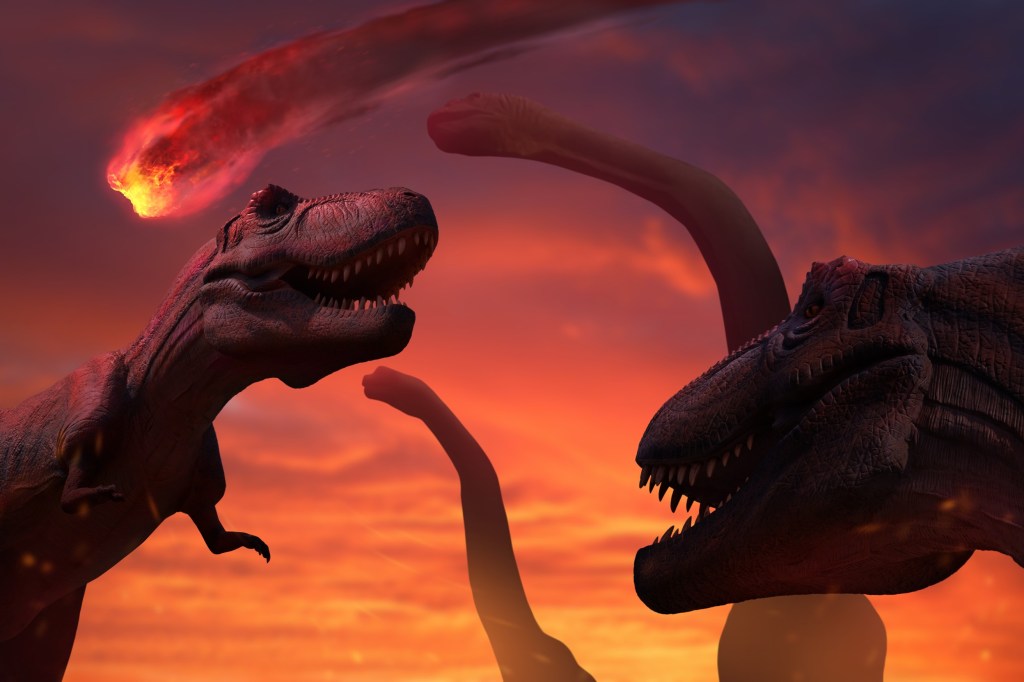
Some dinosaurs survived the Cretaceous-Paleogene extinction event 66 million years ago. Shutterstock Asset id: 2196200279 by funstarts33
Birds are descendants of specialized maniraptoran theropod dinosaurs that survived the extinction event that killed most dinosaurs 66 million years ago. Maniraptoran dinosaurs in turn are a major subgroup of Tyrannoraptora, which include the well-known Tyrannosaurus Rex. Tyrannoraptora in turn is a major subgroup of coelurosaurian theropod dinosaurs. Both the well-known dinosaur called velociraptor, and birds belong to the group Maniraptora. Even though the velociraptor was not a bird they shared many bird-like features, including feathers, wishbones, hollow bones, and similar wrist joints.
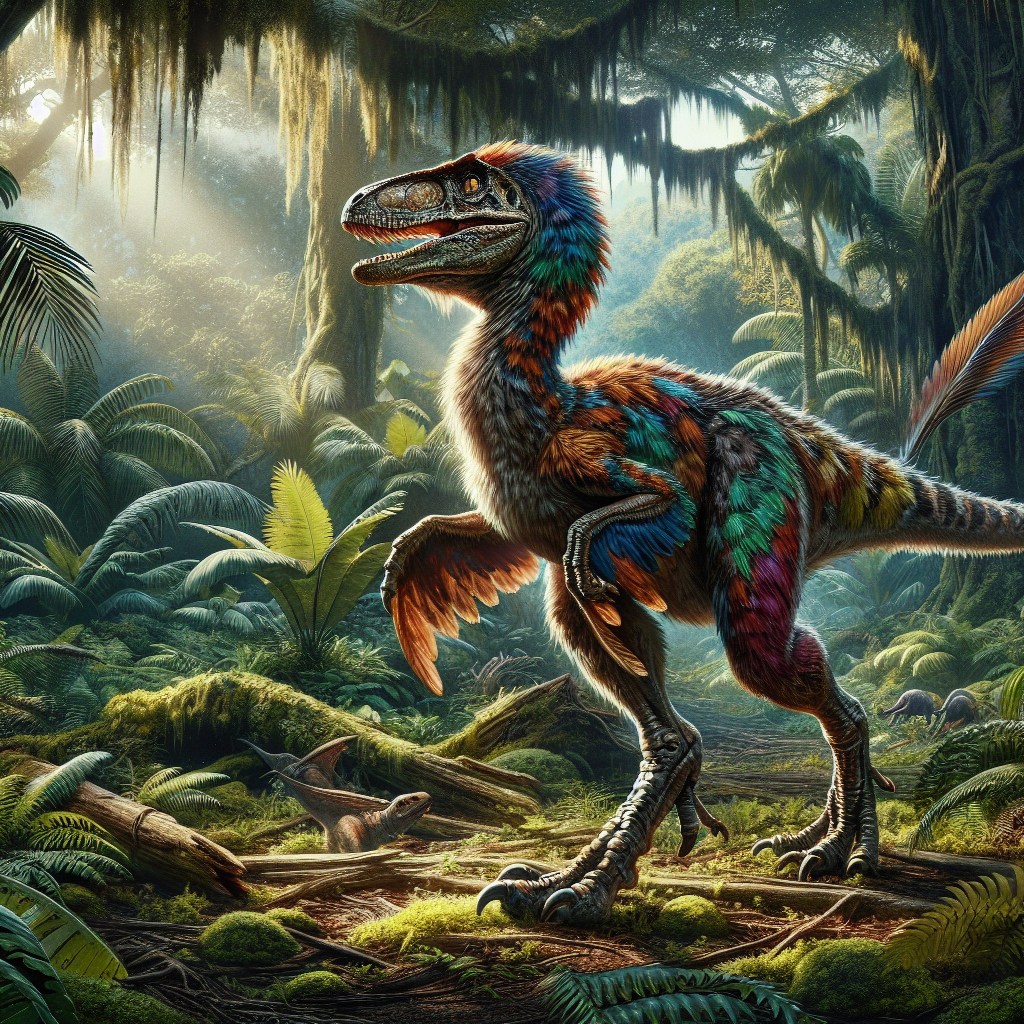
Velociraptor with feathers (well a little bit). Shutterstock Asset id: 2636534673 by Shutterstock AI Generator
Birds evolved during the Jurassic period from two-legged, carnivorous, and often feathered dinosaurs, and are the only surviving dinosaurs. They have been classified as avian dinosaurs since the 1980’s. In other words, they are dinosaurs. Initially feathers evolved among dinosaurs for insulation, sexual display, and camouflage rather than flight. One of the early birds was Eoconfuciusornis. It lived 131 million years ago, long before the Cretaceous-Paleogene extinction event 66 million years ago. Eoconfuciusornis could fly and it had colorful feathers.
I brought up this fact in a recent post and I hinted that it was a super fact. It is true, surprising and kind of important. After all birds are all around us. In this post I am exploring the fact that birds are dinosaurs a little bit more than I did in my previous post. Below are a couple of modern birds.
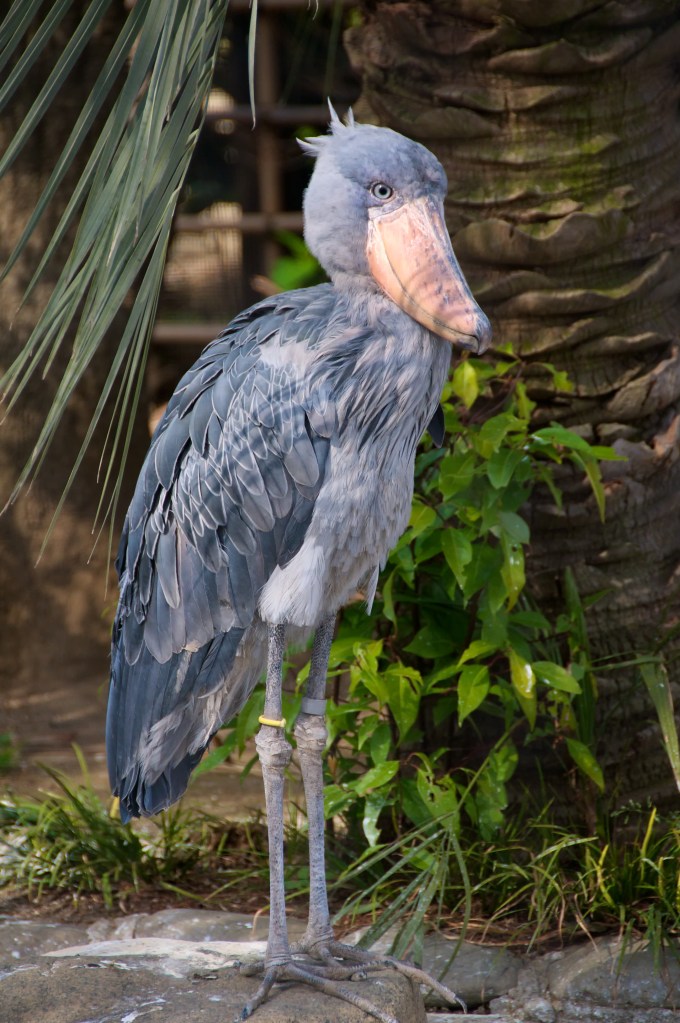
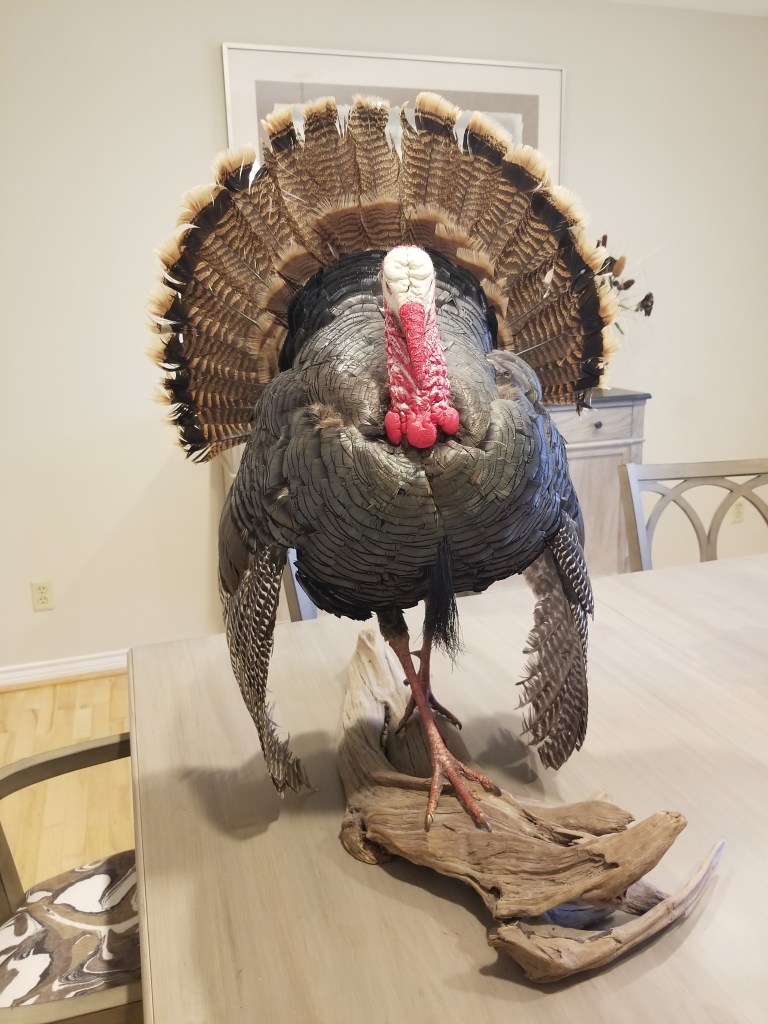
A shoebill stork standing at Ueno Zoo, Tokyo, five feet tall. Bob Owen, CC BY 2.0 https://creativecommons.org/licenses/by/2.0, via Wikimedia CommonsA wild turkey in our dining room.
Feathered Dinosaurs
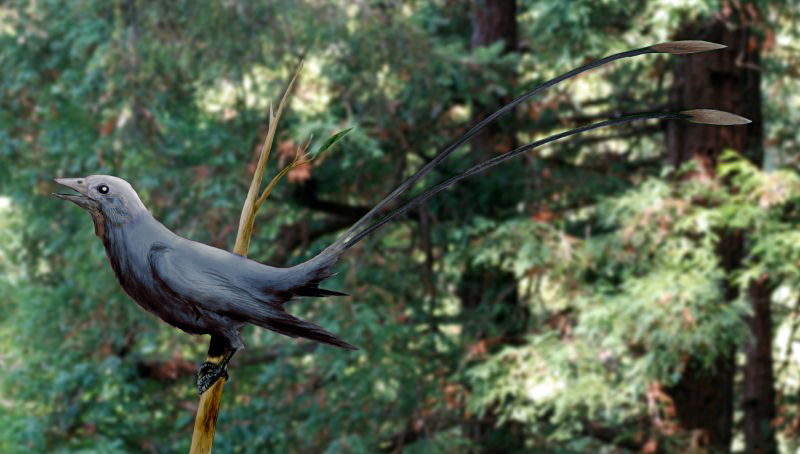
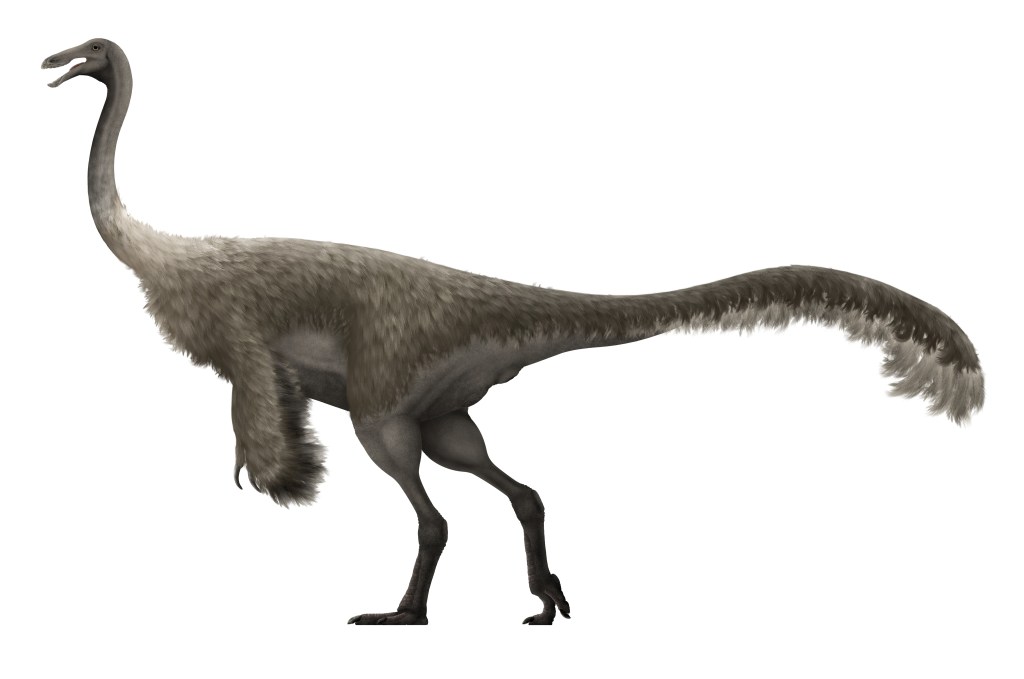
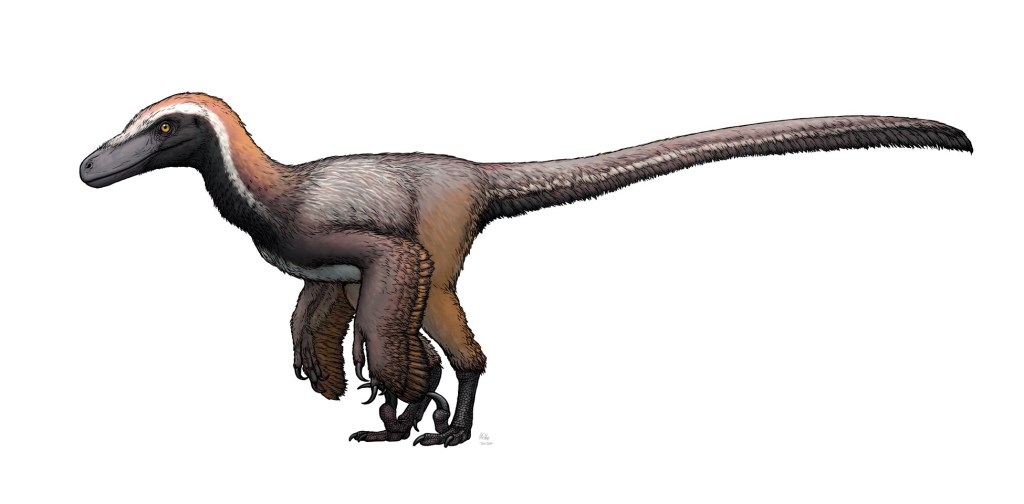
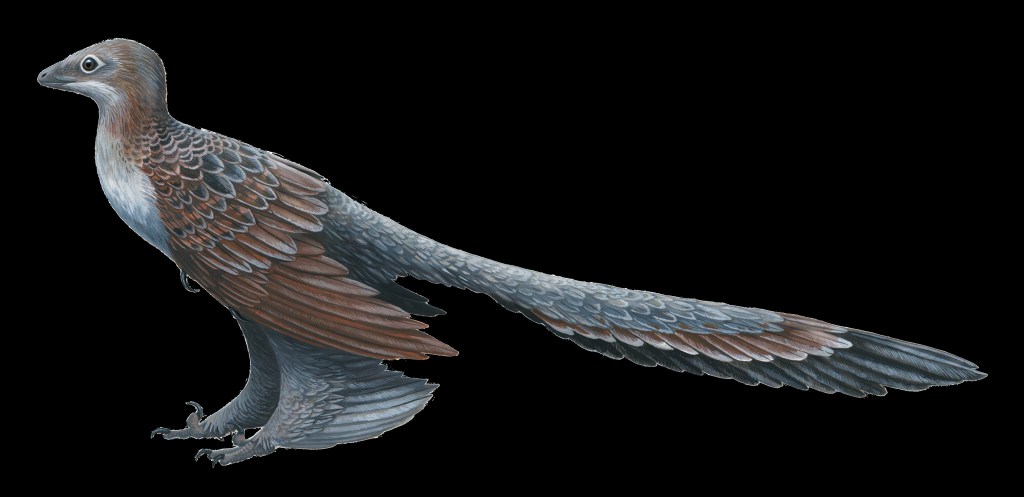
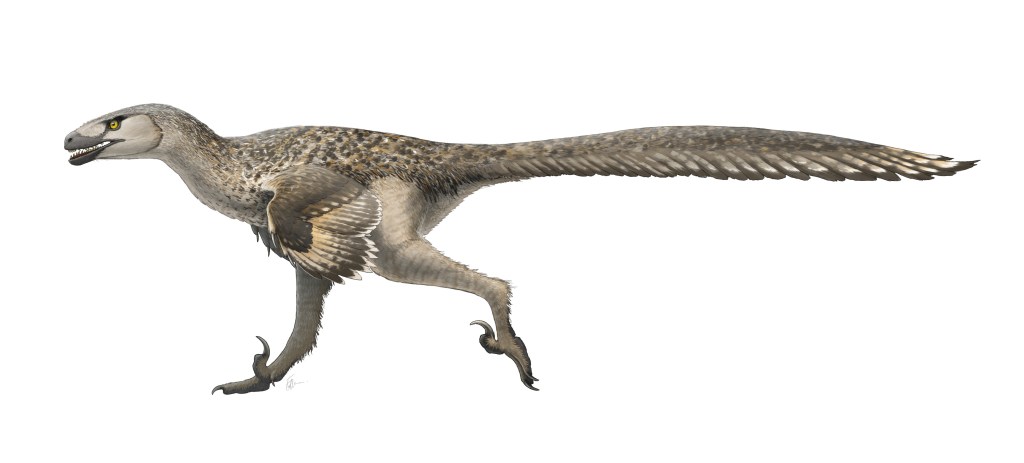
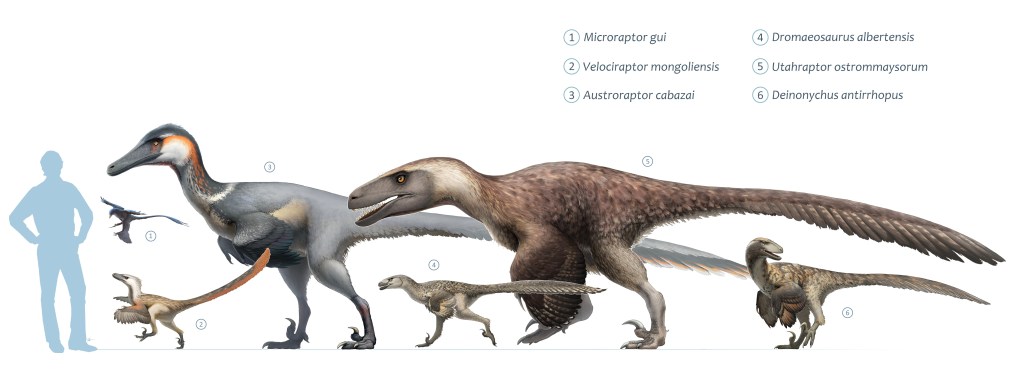
A lot of dinosaurs had feathers, and some could fly. That included many types of dinosaurs other than birds. Dinosaurs with feathers include, for example, Velociraptor, Deinonychus, Archaeopteryx (could fly), Microraptor (could fly), Rahonavis (could fly), Gallimimus, Ornithomimus, Yutyrannus huali, Psittacosaurus, Psittacosaurus, Sinosauropteryx, Sinornithosaurus, Eoconfuciusornis, Wulong, Psittacosaurus, Sciurumimus, Kulindadromeus, Caudipteryx, Utahraptor, Deinonychus, and even young T-Rex and many others. We know that at least some dinosaurs had feathers as well as colors based on fossil finds. Below are some illustrations.
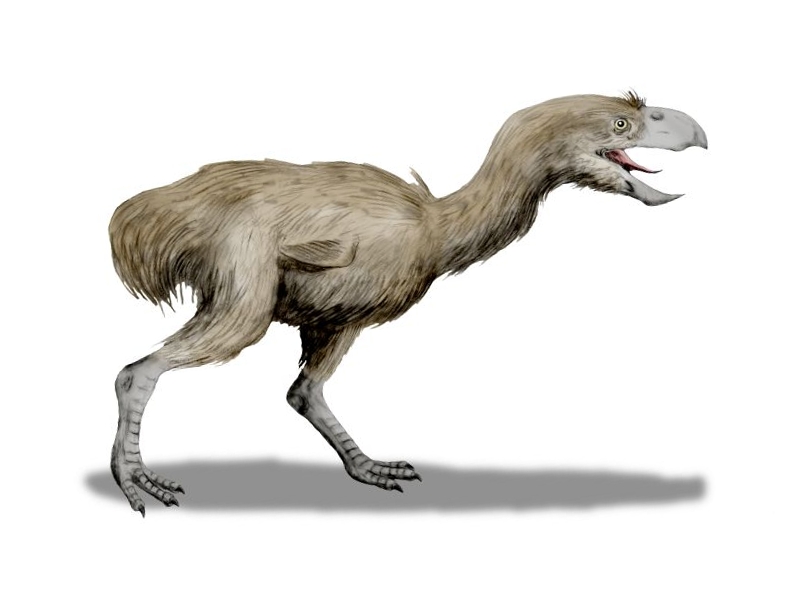
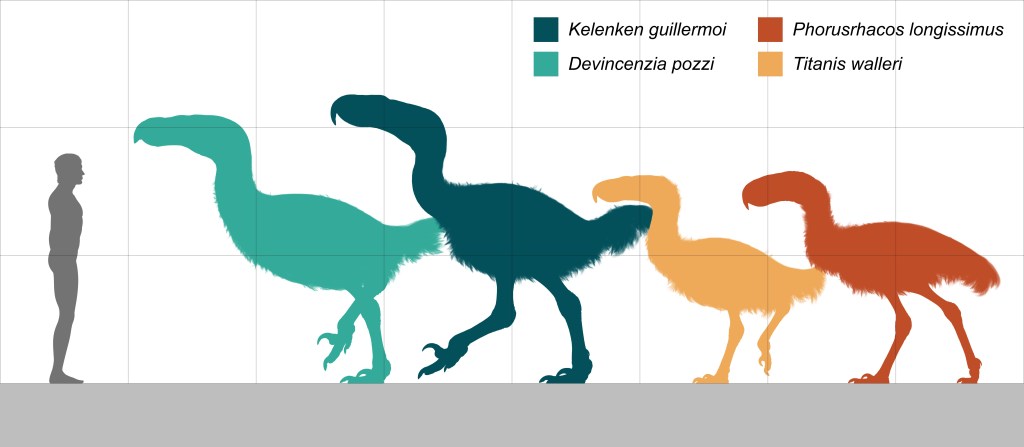
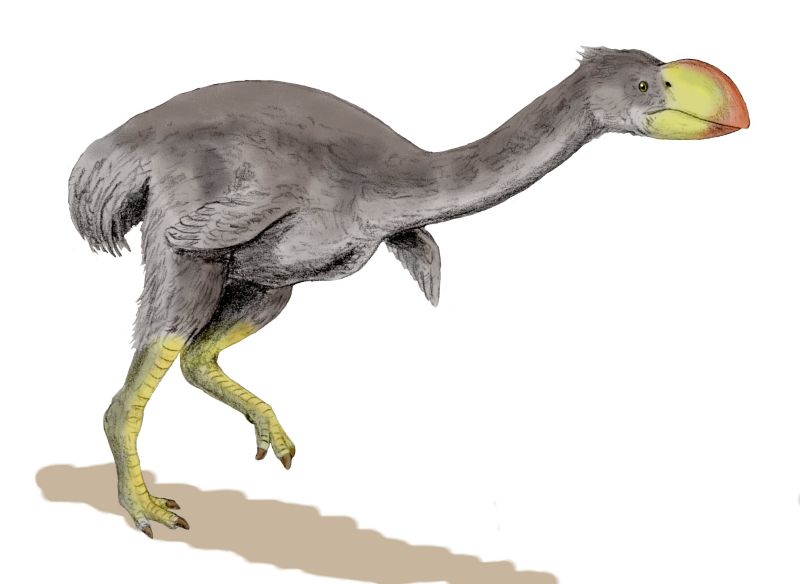
After the Cretaceous-Paleogene extinction event 66 million years ago birds continued evolving. Some of them became large standing 1 – 3 meters (3-10 feet) and weighing hundreds or even thousands of pounds. From about 53 million years ago until 100,000 years ago there were large birds that we refer to as Terror Birds. They lived at the same time as humans. However, there were other large and scary birds. Dromornis stirtoni was a flightless bird that lived 7-8 million years ago, it was over three meters in height (10 feet) and weighed 500-600 kilograms (1,100 to 1,300 pounds). Below are some illustrations.
My name is Thomas Wikman. I am a software/robotics engineer with a background in physics. I am currently retired. I took early retirement. I am a dog lover, and especially a Leonberger lover, a home brewer, craft beer enthusiast, I’m learning French, and I am an avid reader. I live in Dallas, Texas, but I am originally from Sweden. I am married to Claudia, and we have three children. I have two blogs. The first feature the crazy adventures of our Leonberger Le Bronco von der Löwenhöhle as well as information on Leonbergers. The second blog, superfactful, feature information and facts I think are very interesting. With this blog I would like to create a list of facts that are accepted as true among the experts of the field and yet disputed amongst the public or highly surprising. These facts are special and in lieu of a better word I call them super-facts.
View all posts by thomasstigwikman
53 thoughts on “Birds are Avian Dinosaurs”
A fascinating post, Thomas. My husband talks about birds coming from dinosaurs but it was so interesting to learn exactly how and the many different types of dinosaurs related to birds. The reconstruction images are spectacular and wow, they were big!
Thank you so much Annika. Yes, not only are birds and dinosaurs related, birds are dinosaurs. Now a day they classify birds as a clad of dinosaurs. So calling birds dinosaurs is technically correct. Yes after the other dinosaurs died out some birds got really big. Meeting a 10 feet 1000 pound bird in the forest would have been frightening, and yet that was a possibility for early humans and Neanderthals.
I’m very glad that these avian dinosaurs have for the most part become rather benign, although as I watched a pair of bald eagles hunting for lunch a couple of days ago, I was strongly reminded of their physical antecedents!
Yes I agree with you. Terror Birds still existed just 100,000 years ago. I certainly would not like to meet a Dromornis. Like you say some birds can still be a bit scary like the bald eagles you mention, and I’ve been attacked by angry swans and seagulls.
Thank you so much Ada. Yes what a huge and scary bird Dromornis was. They are illustrations and it is hard to know how accurate they are but hopefull at least the body shape and size is correct. In some cases pigmentation left behind helps us know the color.
Thank you so much for your kind words Esther. Even though this post was not an answer to your prompt it was inspired by my response to your prompt (flying). Your prompts are gifts that keep on giving. Thank you for doing them.
Yes that is a good point. Those giant flightless birds look funny. Young Tyrannosaurus Rex were covered in feathers (the big ones we don’t know) and they would kind of look like that too.
Yes you are right. The prehistoric people who lived with those beasts certainly had some challenges. There were also saber tooth tigers and giant cave bears.
This is fascinating, Thomas. The Ornithomimus is quite strange looking to me. I’ve not seen a picture of one before. I knew birds evolved from dinosaurs but all this detail is great to read.
I agree the Ornithomimus looks strange, and it is big and could not fly. The’ve found a lot of feathered dinosaur fossils as well as ancient birds. I just selected a few. Thank you so much for your comment and kind words Robbie.
This is one of those facts that sounds surprising at first and then feels completely obvious once you see the evolutionary path laid out so clearly. I appreciate how you walk through the classification step by step — from maniraptorans to modern birds — while keeping it accessible and engaging. The feathered reconstructions really bring the science to life.
What makes this especially fun is the shift in perspective it creates. Looking at everyday birds and realizing they are technically dinosaurs adds a fresh sense of wonder to something so ordinary. It’s a reminder that the ancient world is not as distant as we sometimes imagine.
Yes we have found between 11,000 to 12,000 non-avian dinosaur fossils (exluding birds) representing about 1,000 species. Considering how extremely rare fossilization is, that is kind of amazing.
Wow. This is fascinating Thomas. I had no idea, and only knew about chickens! It’s amazing to think that some of them could actually fly! Thanks for the link!
Thank you so much for checking it out Di. The natural history of birds have certainly been updated since when we were young. To think that what is essentially a dinosaur may be flying by right now. I agree it is fascinating.
We see kestrels, sparrowhawks, buzzards, marsh harriers, herons, egrets, owls, plus the water fowl in the park a lot here, and I shall be looking at them differently in future.
Yes once I found this out, and about the reclassification of birds, and the feathered dinosaur ancestors, such as velociraptor and utahraptor, that I thought had scaly lizzard skin (but NOT) I am also looking at birds differently.


 Super Facts
A fascinating post, Thomas. My husband talks about birds coming from dinosaurs but it was so interesting to learn exactly how and the many different types of dinosaurs related to birds. The reconstruction images are spectacular and wow, they were big!
LikeLiked by 1 person
Thank you so much Annika. Yes, not only are birds and dinosaurs related, birds are dinosaurs. Now a day they classify birds as a clad of dinosaurs. So calling birds dinosaurs is technically correct. Yes after the other dinosaurs died out some birds got really big. Meeting a 10 feet 1000 pound bird in the forest would have been frightening, and yet that was a possibility for early humans and Neanderthals.
LikeLiked by 1 person
I’m very glad that these avian dinosaurs have for the most part become rather benign, although as I watched a pair of bald eagles hunting for lunch a couple of days ago, I was strongly reminded of their physical antecedents!
LikeLiked by 1 person
Yes I agree with you. Terror Birds still existed just 100,000 years ago. I certainly would not like to meet a Dromornis. Like you say some birds can still be a bit scary like the bald eagles you mention, and I’ve been attacked by angry swans and seagulls.
LikeLiked by 1 person
Yes, swans in particular – Canada geese, too – can be very aggressive and their size certainly contributes!
LikeLiked by 1 person
Can you imagine a 1000 pound Canada Goose? That would be scary.
LikeLiked by 1 person
I don’t even want to go there …
LikeLiked by 1 person
Yes, thinking about that I can imagine why our dog Rollo is so afraid of ducks and geese.
LikeLiked by 1 person
Definitely!
LikeLiked by 1 person
I love the comparison which truly does mirror some dinosaurs 🦕 Thomas! Such amazing creatures!!! ❤️
LikeLiked by 1 person
Thank you Cindy. I agree, it is fascinating to think about birds as dinosaurs, but it is technically correct. Kike you say they are amazing creatures.
LikeLike
Gosh, fascinating! I have always liked stuff about dinosaurs. Really interesting, Thomas.
LikeLiked by 1 person
Thank you so much Chris. I agree dinosaurs are fascinating and so are avian dinosaurs / birds.
LikeLiked by 1 person
What a cool, interesting post! I particularly like the reconstruction of Dromornis stirtoni!
LikeLiked by 1 person
Thank you so much Ada. Yes what a huge and scary bird Dromornis was. They are illustrations and it is hard to know how accurate they are but hopefull at least the body shape and size is correct. In some cases pigmentation left behind helps us know the color.
LikeLiked by 1 person
I really enjoyed your post for ‘flying’, so it’s great that you’ve built on that for us, Thomas. Fascinating facts.
LikeLiked by 1 person
Thank you so much for your kind words Esther. Even though this post was not an answer to your prompt it was inspired by my response to your prompt (flying). Your prompts are gifts that keep on giving. Thank you for doing them.
LikeLiked by 1 person
This was so interesting. Sure wouldn’t want to meet up with a 10 foot bird out in the back yard, though! 🙂
LikeLiked by 1 person
Thank you Barbara. A 10 feet 1000 pound bird in the backyard would be pretty scary, at least without my shotgun.
LikeLiked by 1 person
Evolution is wild, innit.
LikeLiked by 1 person
Yes you are right Jacqui, it is.
LikeLiked by 1 person
Charlee: “Usually I like to look at birds and chatter at them but with these birds I think I would probably just go hide.”
LikeLiked by 1 person
Yes Charlee, I know you can handle (or kill) the small birds but watch out for that big Dromornis.
LikeLike
The dinosaurs here look like newly hatched birds in extra large sizes.
LikeLiked by 1 person
Yes that is a good point. Those giant flightless birds look funny. Young Tyrannosaurus Rex were covered in feathers (the big ones we don’t know) and they would kind of look like that too.
LikeLiked by 1 person
I learned a lot more about dinosaurs from this post, dear Thomas
LikeLiked by 1 person
Thank you so much for your kind words Luisa.
LikeLiked by 1 person
You’re more than welcome!
LikeLiked by 1 person
The cassowary is another giant bird that looks just like you think a dinosaur would look, and is extremely dangerous to boot!
LikeLiked by 1 person
Well maybe not extremely dangerous, but if you’re unwise enough to approach one when it can’t get away, well …
LikeLiked by 1 person
Yes I remember reading about that too. Not all birds are harmless to humans.
LikeLike
Oh yes you are right. Maybe I should have included the cassowary bird. I certainly know about it.
LikeLike
Terror birds sound like a good name! Yikes. But very interesting.
LikeLiked by 1 person
Yes 10 feet tall and several hundred pounds or thousands of pounds, that would not be fun to encounter without a gun.
LikeLiked by 1 person
No! Scary. Everyrone must have had spears and arrows on hand all the time.
LikeLiked by 1 person
Yes you are right. The prehistoric people who lived with those beasts certainly had some challenges. There were also saber tooth tigers and giant cave bears.
LikeLiked by 1 person
This is fascinating, Thomas. The Ornithomimus is quite strange looking to me. I’ve not seen a picture of one before. I knew birds evolved from dinosaurs but all this detail is great to read.
LikeLiked by 1 person
I agree the Ornithomimus looks strange, and it is big and could not fly. The’ve found a lot of feathered dinosaur fossils as well as ancient birds. I just selected a few. Thank you so much for your comment and kind words Robbie.
LikeLike
I am very interested in birds … and dinosaurs 😄
LikeLiked by 1 person
Yes I think it is a very interesting topic too.
LikeLike
🦖🦅
LikeLiked by 1 person
This is one of those facts that sounds surprising at first and then feels completely obvious once you see the evolutionary path laid out so clearly. I appreciate how you walk through the classification step by step — from maniraptorans to modern birds — while keeping it accessible and engaging. The feathered reconstructions really bring the science to life.
What makes this especially fun is the shift in perspective it creates. Looking at everyday birds and realizing they are technically dinosaurs adds a fresh sense of wonder to something so ordinary. It’s a reminder that the ancient world is not as distant as we sometimes imagine.
LikeLiked by 2 people
Thank you so much for your very kind, supportive and insightful comment Livora. You certainly write very well.
LikeLiked by 1 person
It’s amazing how much we know about dinosaurs!
LikeLiked by 1 person
Yes we have found between 11,000 to 12,000 non-avian dinosaur fossils (exluding birds) representing about 1,000 species. Considering how extremely rare fossilization is, that is kind of amazing.
LikeLike
Wow. This is fascinating Thomas. I had no idea, and only knew about chickens! It’s amazing to think that some of them could actually fly! Thanks for the link!
LikeLiked by 1 person
Thank you so much for checking it out Di. The natural history of birds have certainly been updated since when we were young. To think that what is essentially a dinosaur may be flying by right now. I agree it is fascinating.
LikeLiked by 1 person
We see kestrels, sparrowhawks, buzzards, marsh harriers, herons, egrets, owls, plus the water fowl in the park a lot here, and I shall be looking at them differently in future.
LikeLiked by 1 person
Yes once I found this out, and about the reclassification of birds, and the feathered dinosaur ancestors, such as velociraptor and utahraptor, that I thought had scaly lizzard skin (but NOT) I am also looking at birds differently.
LikeLiked by 1 person