
Superfact 89: There is overwhelming scientific evidence supporting so called macroevolution. Evidence for macroevolution includes the fossil record, molecular biology and DNA, biogeography, comparative anatomy, embryology, suboptimality, vestigial structures, etc.
It is difficult to deny that so called microevolution is happening since it can be directly observed. However, it is quite common to come across claims that there is no evidence for macroevolution or that macroevolution is impossible and unscientific. These claims do not come from mainstream scientists but from creationists. There is no magical barrier between microevolution and macroevolution. Rather, macroevolution is just an accumulation of microevolutionary steps, and it is a fact that those changes have been slowly accumulating over millions and billions of years.
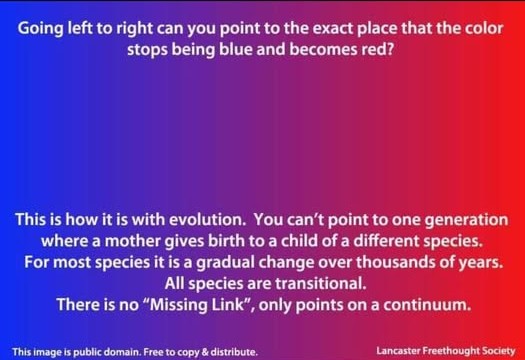
It is often said that macroevolution is when a species evolves into another and that this represents a special barrier, impossible to breach. The existence of fuzzy boundaries between species and the existence of ring species demonstrate that this idea is faulty. See the next section for more information on this. Next after that, I am listing 10 selected types of evidence for macro evolution. If you wish to see an overview of 29+ Evidences for Macroevolution, click here. I can add that scientists do not like to use the terms microevolution and macroevolution since they are nebulous. These terms are more of a creationist thing. That’s why I been prefixing microevolution and macroevolution with “so called”.
Roughly a third of Americans believe the creationist claim that macroevolution is not possible, or that there is no evidence for it, even though we know that there is Strong evidence for macroevolution. Therefore, I consider this a super fact. Note, 97% of scientists support the theory of evolution. This is a brief Wikipedia article on evolution.
Note, this post is long, but if you are interested in it, you could just read a few instead of the evidences instead of all ten.
Speciation is considered relative
It is often said that two animals belong to the same species if they can interbreed in nature and produce viable, fertile offspring. However, it is not that simple.
An animal A may be able to successfully interbreed with an animal B, and that animal B may be able to successfully interbreed with an animal C, but animal A and C cannot interbreed. Animal A could be said to be a different species relative to animal C, but animal B could be said to be the same species as both animal A & C using the definition above. A great geography related example of this is ring species. In a ring species, gene flow occurs between neighboring populations of a species, but at the ends of the ring the populations don’t interbreed.

Next up are ten selected types of evidence for Macroevolution in no particular order.
The Fossil Record Show an Evolution from Simple to Complex Species
The fossil record is quite extensive and represents 250,000 different species, but it is very far from complete. That is expected. Fossilization is an extremely rare event, and fossils are hard to find. Among the 250,000 fossils from different species there are no Precambrian rabbits or Mesozoic human fossils. If there were, that would have falsified evolution and been evidence for a creator. This example shows first of all that the theory of evolution is falsifiable (all scientific theories have to be falsifiable) contrary to some creationist claims and it constitutes a form of evidence for evolution.
If evolution is true then a scan through the entire sequence of rock strata should show early life to be quite simple, with more complex species appearing only after some time. In addition, the youngest fossils should be those that are most similar to living species. The fact that this is the case is strong evidence for evolution, specifically macroevolution. You can read more about this in this relatively short book, The Evidence for Evolution, by Alan R. Rogers.
We can Follow Lineages in the Fossil Record
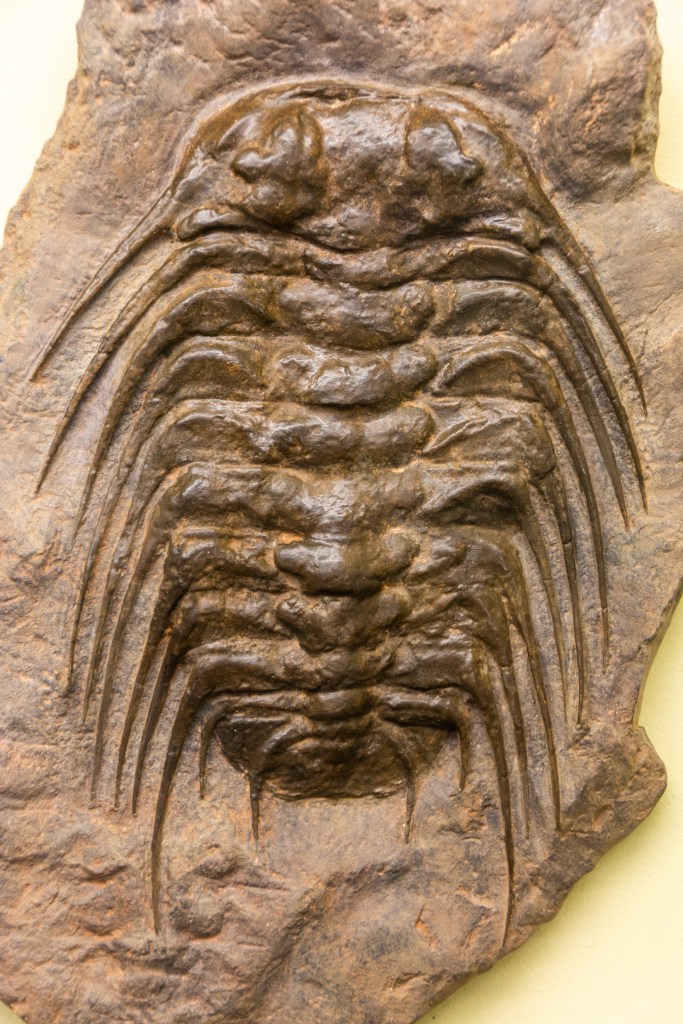
In the fossil record we can also follow lineages; species of animals and plants changing into something different over time. The fossil records show fish changing into amphibians, reptiles changing into mammals, dinosaurs into birds, artiodactyl like mammals into whales, apes into humans, etc. Creationists used to mock the fact that there were no transitional fossils between land mammals and whales and then they found Pakicetus in 1983 and then a lot more. As time passes the more transitional fossils we find.
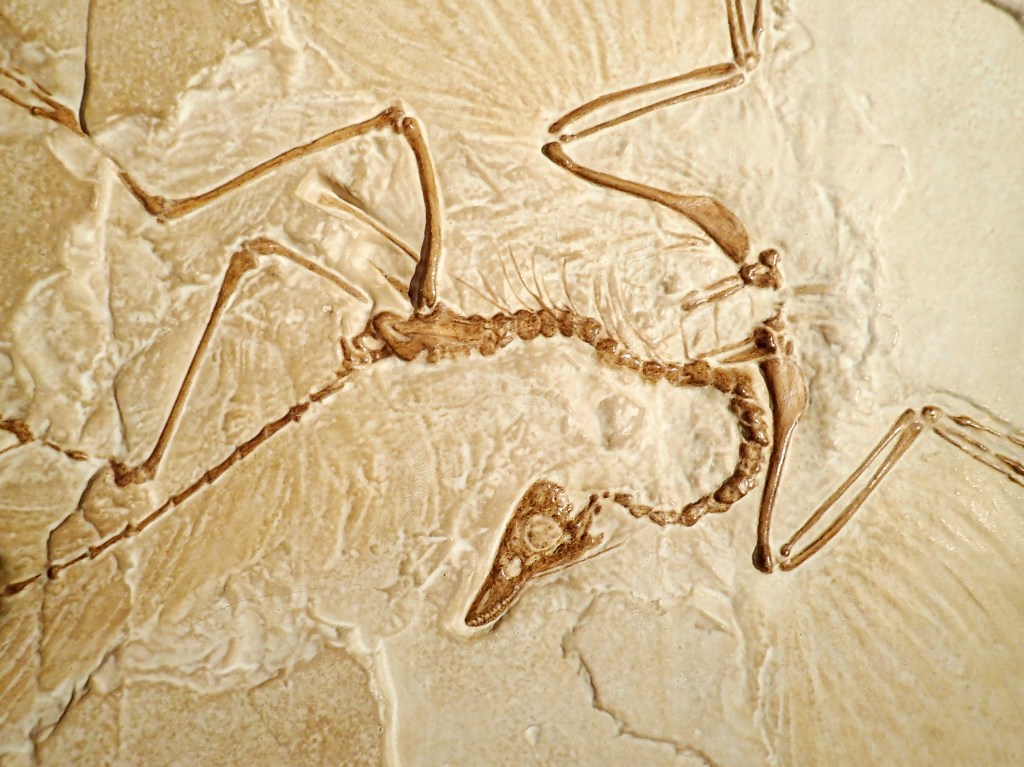
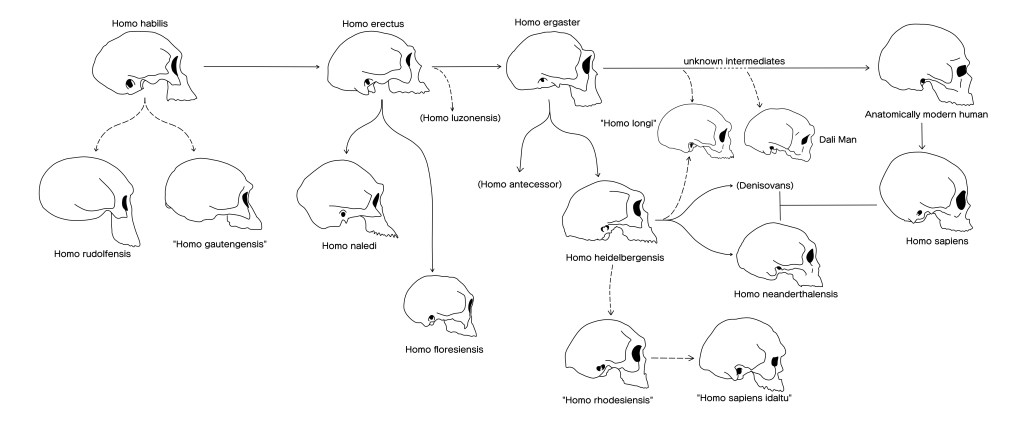
The fact that we can follow lineages and that they are consistent with the various dating methods is powerful evidence for evolution. Dating methods include radiometric dating methods (uranium-lead, potassium-argon, carbon-14), and sequencing and superposition, and conditions encoded in fossils such as the length of the day (varied throughout natural history) and more. To read more about dating methods and how we know Earth is billions of years old click here. The picture below illustrates the skull changes of hominids by time.
Molecular Biology and DNA
Molecular biology and DNA may be our best evidence for macroevolution. Our understanding of DNA has greatly increased over the last couple of decades. The human genome has been sequenced along with that of many other species, and we are able to compare the DNA and the genes of various species, and trace origins.

Of special interest are pseudo genes, the millions of transposable elements (transposons and retroelements) as well as useless sequences, introns. These segments are especially interesting because they are unaffected by natural selection and therefore mutations pile up in them at a fairly constant rate. By comparing two such segments in two species we can tell how far the species are apart and even how far back in time their common ancestor lived.
Based on the similarity in transposons we know that the closest related living animals to whales and dolphins (outside their order) are Hippopotamus, which confirms what we know from the fossil record of whales and the mammals that whales evolved from. Whales and Hippopotamus have a common ancestor and since we’ve found dozens of intermediate fossils between land mammals and whales, the evolution of whales is no longer a mystery.

Based on the similarity in transposons, pseudo genes, and genes in general (all of the genome) we know that the closest related living animals to humans are chimpanzees and bonobos. In fact, chimpanzees and humans are more closely related than chimpanzees and the other great apes. Based on the genetic record chimpanzees are no longer classified as great apes but as Hominini together with humans. Also based on the genetic record we know that chimpanzees and humans had a common ancestor that lived about six million years ago. The fossil for this common ancestor has not been found, but the information in the DNA can often tell us more than the fossil record.
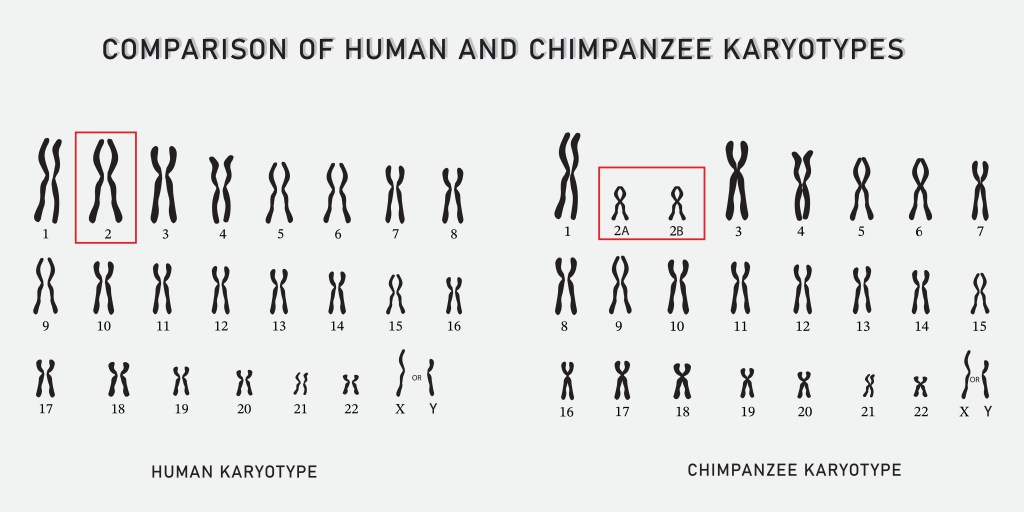
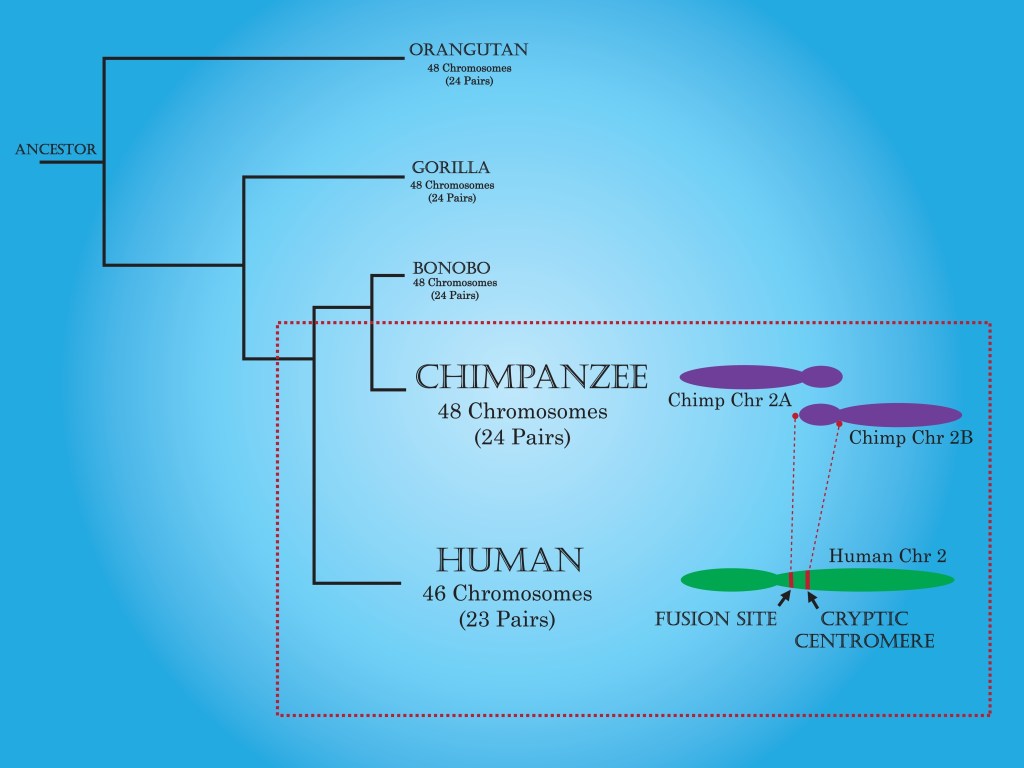

The book Relics of Eden, the powerful evidence of evolution in human DNA by Daniel Fairbanks is good fairly in depth book on this topic.
Biogeography
Biogeographic evidence for evolution / macroevolution is among the oldest types of evidence (Charles Darwin used it) and yet it is very powerful. Biogeographic evidence for evolution shows that species’ geographic distributions result from descent with modification and environmental adaptation, rather than just similar habitats. Key types of biogeographic evidence for macroevolution include species existing only on a certain island, adaptive radiation (e.g., Galápagos finches), tectonic-driven species distribution (e.g., marsupials), and convergent evolution of unrelated species in similar environments.
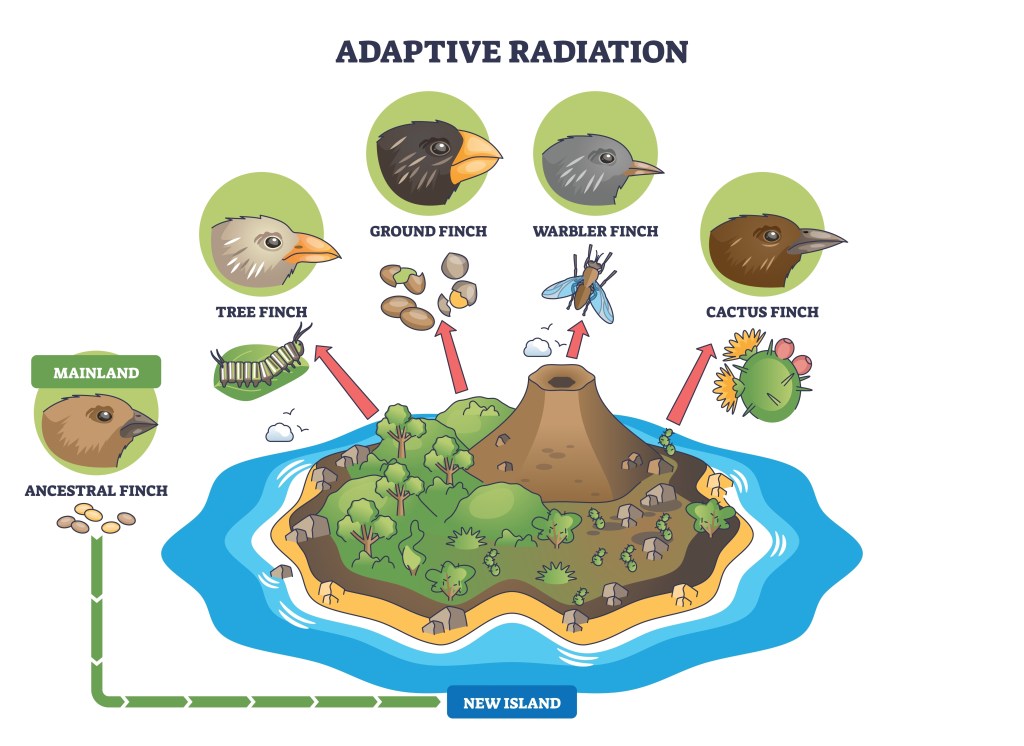
One example of biogeographical evidence for macroevolution is with so called oceanic islands. Oceanic islands are not part of a continent but are formed from the sea bottom typically through volcanic activity. Oceanic islands lack native freshwater fish and amphibians, and they rarely harbor native mammals and reptiles. However, freshwater fish, amphibians, mammals and reptiles thrive when introduced to oceanic islands. It’s just that they have to get there in the first place.
Instead, oceanic islands typically feature birds, insects, and plants that can more easily spread long distances. In addition, the species on oceanic islands are typically closely related and appear in relatively few groups. Add the fact that the species on oceanic islands resemble species on nearby continents but they are not the same. This strongly supports the narrative that some species from nearby continents migrated to newly formed oceanic islands and evolved.
The evidence gets even better if you look in more detail. For example, the Hawaiian Islands (oceanic islands) were formed in chronological order from west to east, as the divide between the continental shelves moved. The species on the different islands show a gradual transition in their physical properties and in their DNA as you go from west to east. This supports the narrative that the species hopped from one island to the next as the islands emerged, and then they evolved.
Comparative Anatomy
Similar anatomical structures in different species, such as the similar bone structure in a human arm, a bat wing, and a whale flipper indicate shared ancestry. Another is the heart structures in fish, amphibians, reptiles, birds, and mammals which show a homologous progression of development.
Embryology
Different species share similar developmental stages. For example, early embryos of reptiles, birds, and mammals, including humans, develop pharyngeal pouches that are similar to fish gills. Baleen whale embryos have teeth that are lost by birth, human embryos develop a tail that are later lost, and human fetuses develop hair around week 16-20 that is usually lost but remain on premature babies. The development of embryos goes through stages of similar embryos of fish, then amphibians, reptiles, and then mammals.
Suboptimality
There is a lot of evidence based on so called suboptimality. Our bodies and that of other animals are full of imperfections that make perfect sense from an evolutionary perspective but not much sense if we were created by a creator. One example is the “vas deference”, which follow a circuitous route from the testis up and around the ureter and back down to the penis, instead of going straight to the penis. As the testis gradually moved from inside our bodies (as it was in fish) to the outside, vas deference got stuck around the ureter like a water hose can get stuck around a tree. This makes perfect sense from an evolutionary perspective.
Vestigial Structures
Vestigial structures are non-functional anatomical features, organs, or behaviors that were functional in a species’ ancestors but have lost most or all of their original purpose through evolution. Examples include the whale hind legs, flightless bird wings, the human appendix, the tailbone, wisdom teeth, and goosebumps in humans.
Atavisms
Atavisms are rare reappearances of a lost ancestral trait in an individual. This could happen because ancestral genes are preserved but suppressed but, for example, a mutation allows the gene to be expressed. Examples include a human baby born with a tail, a snake with limbs or a chicken with teeth, dolphins with back flippers, or teeth in chickens. It is rare but evidence for evolution.
Traces of Common Descent
Traces of common descent in species, for example, homologous anatomical structures, similar embryological development, shared genetic codes, and phylogenetic mapping allows the construction of the tree of life. Phylogenetic mapping suggests that organisms inherited fundamental traits from a common ancestor. All life except viruses can be traced back to a common ancestor that lived 4.2 billion years ago. This also constitutes evidence for evolution / macroevolution.

Other Evolution Related Super Fact Posts
I can add that when I was young, I read a lot of creationists books. I was totally sold on creationism but as I started learning about science that changed. One thing all the creationist books that I read had in common was that they avoided discussing the evidence for evolution and they did not provide evidence for creationism. Instead, they focused on trying to discredit evolution. As I learned more about science I came to realize that not even one of those objections were valid. An example is super fact #73 below.
- #63 : Evolution is a Fact
- #73 : The Second Law of Thermodynamics Does Not Contradict Evolution
- #81 : Humans and Chimpanzees Have a Common Ancestor
- #84 : Birds are Avian Dinosaurs
- #85 : The Evolution of Whales is No Longer a Mystery
- #86 : Early Homo Sapiens lived at the same time as many other human species
To see the Other Super Facts click here

 Super Facts
I read your post with much interest as I fully believe in evolution. It makes total sense – logically and given the evidence – that all life developed very slowly over long periods of time. It in fact is continuing to occur. Excellent piece, Thomas.
LikeLiked by 2 people
Thank you so much Lynette and I agree with you. A few decades ago I would not have agreed with you but now I do. The evidence that life developed very slowly over long periods of time is everywhere.
LikeLiked by 1 person
Great post, Thomas. Thank you for the excellent explanation of fuzzy boundaries. And I agree that just because changes are imperceptible does not mean that they are not occurring in any sphere of life.
LikeLiked by 1 person
Thank you so much for your kind words Suzette. You are right changes like those evolution may happen slowly with small steps and eventually making a big difference.
LikeLiked by 1 person
You are most welcome, Thomas. Blessings to you.
LikeLiked by 1 person
Blessings to you too
LikeLiked by 1 person
Thank you so much Richard. Peace.
LikeLiked by 1 person
Thank you Suzette. My name is Thomas though. I am curious who Richard is because many people call me Richard.
LikeLiked by 1 person
Oh I am so sorry, my sincere apologies, Thomas. I made a mistake.
LikeLiked by 1 person
No worries. It is nothing. I was just curious about who Richard is because several people have called me Richard. It must be someone famous in the blogosphere.
LikeLiked by 1 person
You are most generous, Thomas. Thank you so much for your understanding. Bless you.
LikeLiked by 1 person
Thank you so much Suzette
LikeLiked by 1 person
Another excellent post, Thomas.
LikeLiked by 1 person
Thank you so much Chris.
LikeLiked by 1 person
Excellent article Thomas. Since you grew up as a creationist, I’m curious, is it common in Sweden? As I’ve said before, I don’t know anyone that believes in creationism, and didn’t realise it was so prevalent. Maggie
LikeLiked by 2 people
Thank you so much Maggie. Yes I grew up as a creationists in fundamentalist or almost fundamentalist church and that is not common in Sweden. However, it is more common in northern Sweden in the region where I grew up. Naturally, I know a lot of people who are creationists.
LikeLike
This is so interesting, Thomas. I like how you broke everything down and explained. Very good read!
LikeLiked by 1 person
Thank you so much for your kind words Kymber. It became much longer than I anticipated when I started writing.
LikeLiked by 1 person
I actually read most all of this this time and you explained it very well, so I didn’t get lost (too much) 🙂 … anyway it was all interesting. Just the other day I had one of those fun facts that whales still have arm and leg bones, but I guess they are hidden and of no use now. So I liked that part of your post, and that hippos are related, too. 🙂
LikeLiked by 1 person
It became much longer than I anticipated when I started writing. It is amazing you read most of it anyway. I agree, that is a fun fact about the whales still having vestigal internal leg bones. Thank you so much Barbara.
LikeLike
It’s a very complicated subject. You must have studied it a lot.
LikeLiked by 1 person
Thank you Anneli. I am far from an expert on this and it is not my field. However, I did what corresponds to AP Biology classes in high school and because of my journey from creationism to accepting mainstream science on evolution I’ve a several dozens of books on the topic. First creationists books and then science books. For the purpose of my superfacts though I use internet to find reputable sources on the subject and based on what I find (reputable sources agree, longstanding scientific concensus, also Wikipedia but carefully) I decide whether to accept something as a super fact or not.
LikeLiked by 1 person
It’s good to compare several opinions on any subject. You’re wise to be careful and then draw your own conclusions.
LikeLiked by 1 person
Thank you Anneli
LikeLiked by 1 person
Hi Thomas, this is a very comprehensive post. I know quite a bit of this information from my visits to the Cradle of Mankind and the Origins Centre at the University of the Witwatersrand. I have also read up about the link between whales and hippos and visited the pre-Juassic fossils in the Karoo in South Africa. Fascinating information.
LikeLiked by 1 person
Thank you so much Robbie. I am not surprised you knew this already, being a naturalist, and South Africa has a lot of interesting fossils and interesting plaeontological sites. It is interesting that you visited Cradle of Mankind and the Origins Centre at the University of the Witwatersrand. One day I would like to visit too.
LikeLike
Hi Thomas, those were very interesting visits for me. I was even given a stone age tool by a lecturer who was so thrilled by my deep interest in this subject.
LikeLiked by 1 person
I have to say, that is very cool!
LikeLike
Yes 😄
LikeLiked by 1 person
Java Bean: “Ayyy, we have heard that some Creationists believe that the Supreme Being planted things in the fossil record to trick people, but really, if you’re the Supreme Being, wouldn’t you have better things to do than to troll the poor humans?”
LikeLiked by 1 person
Yes, Java Bean, I’ve heard that argument too, but it is a strange argument. Like you say, why Troll human beings. Conceivably we could take it one step further. We could be living in something like the Matrix and the world was created yesterday and our memories are implants. Everything is fake. But what kind of assumption is that?
LikeLike
Fascinating data here, Thomas. Thanks for explaining it all so precisely! Personally, I’ve always believed in evolution and consider it fact. This sentence stood out to me, because I have seen examples of it ad nauseum on public foums:
Maddening!
Canadians, in general, are much less religious than Americans, and only a small percentage believe in Creationism. You might find this comparison interesting:
https://angusreid.org/canada-us-religion-cardus-spectrum-of-spirituality-comparison/
LikeLiked by 1 person
Thank you so much for your kind words Debbie and thank you for the interesting link on spirituality. This link wasn’t about creationism but with a quick search on the same site (Angus Reid) I found this:
In the United States, 51 per cent of respondents believe God created human beings in their present form within the last 10,000 years. This opinion is shared by just 22 per cent of Canadians and 17 per cent of Britons.
Anyway, you are right, focusing on trying to discredit evolution and ignoring evidence is a bit narrow but it isn’t necessarily wrong if it wasn’t for the fact that the attempts to discredit evolution are pretty much always faulty but that is often non-obvious. Take for example, the example I gave, the claim that the second law of thermodynamics contradict evolution. That claim is not only false, it is silly nonsense, which is obvious to anyone who know what the second law of thermodynamics is. The problem is, most people don’t know what the second law of thermodynamics is, including the people who claim it contradicts evolution. Someone making a false claim that the listener does not know how to counter may seem like he is making a good point, when he is not. That is the problem with all these attempts discredit evolution, the other person may not know how to counter no matter how false it is. You can’t know everything. That is the problem with all false claims that people can’t instantly counter. Luckily we can look up things online and fact check today which makes it much harder for creationists to use these kind of claims.
LikeLiked by 2 people
Yes, we can look things up online, but there’s also much false information to be found. Years ago, I belonged to a chat forum where there were many such discussions and people would share links to all kinds of bullshit to support their positions. 🙄 You are providing a good service here, explaining facts in great detail. 👌
LikeLiked by 2 people
Yes you are right Debbie. Is your source someone’s Facebook account or the creation science institute or is it the science department of a major university or NASA? For my blog I try to keep it to only the most reputable sources. Thank you so much for your kind words Debbie.
LikeLiked by 1 person
Thomas, there is a lot to pnder here. You sure put together a very scholarly post. I only skimmed it nd need to come back to read it slower, but wanted to say that it seems like you put together a solid post ona. very deep topic.
LikeLiked by 1 person
Thank you so much for your kind words Prior. Sorry it became a very long and a bit complicated post. I should say that I am not expert or scholar in this field. However, since I started out on the wrong side of this issue and I later took a special interest in the topic as time went by I eneded up learning a lot. I’ve read dozens of creationist books and dozens of more or less academic books on evolution. It became clear to me that creationism is misguided and not science. However, all that is not very important.
What is important is that to determine the veracity of super fact I follow a process of trying to first understand the evidence, secondly rely on reputable sources and longstanding scientific consensus and thirdly to a smaller degree I accept educational sources and Wikipedia. I am not pretending to be an expert on this topic. In fact, yesterday I got an email from a scientist praising my post but he also told me I left out what he considered the best evidence for Macroevolution. However, I picked 10 evidence and it became very long, and his piece of evidence quite complex. In the future I will most likely write about a similar topic again, and then I will include his too.
LikeLiked by 1 person
Thanks for your comment – and that was nice of that person to email you – and then I can also see how you had to pick and choose what to include
LikeLiked by 1 person
Thank you Prior. I agree. This is a site that is educational and fun, like a step up from a trivia list, but not academic. I include some evidence and reputable sources in links but I cannot make it too advanced.
LikeLiked by 1 person
What an interesting post, Thomas! I’m surprised that so many Americans don’t believe in macroevolution, especially since it seems very logical indeed. Speciation can be relative is something I’m going to tell my son about later on (he often checks out your blog!). He’ll be intrigued by this idea, for sure.
LikeLiked by 1 person
Thank you so much Ada. It is very cool that your son is checking out my blog. I guess it is surprising so many Americans don’t believe in macroevolution. However, it was not too surprising to me since I have several close family members who says that macroevolution is impossible, or that there is no evidence for it. I also have family members (different ones) who say that vaccines don’t work and cause autism. Some strange “anti-science” beliefs are quite common, more so in the US than in Europe.
LikeLiked by 1 person
Have you ever heard of Harun Yahya? He wrote “The Fossil Skulls That Demolish Darwinism” https://www.harunyahya.info/en/books/the-skulls-that-demolish-darwin, https://www.harunyahya.info/en/books/the-skulls-that-demolish-darwin/chapter/some-specimens-of-fossil-skulls-9, https://www.muslim-library.com/dl/books/English_THE_SKULLS_THAT_DEMOLISH_DARWIN.pdf.
I doubt he even bothered to take DNA samples of those fossils. Those fossils are probably too old to preserve DNA.
LikeLiked by 1 person
Hello World Questioner. This comment went into spam. All comments that have more than two links go into spam. This is the Word Press recommendation. So for next time, you have to split a comment with three links into two comments. I had not heard of Harun Yahya. Looking him up I see that he is an Islamic Creationist as well as a pretty prominent crime boss sentenced to over 8,600 years in prison in 2022 for crimes including sexual abuse, fraud, and leading a criminal organization. I’ve read many creationist books and they all turned out to being bunk. Harun Yahya certainly does not look more trustworthy. I have not read his books but I think I can safely take a pass.
LikeLike
I believe in evolution and always have …I like facts not speculation I also appreciate the time ad effort you take to make it simple(ish) for readers like me…I will go back and read it again as I do with all of your postrs as for me it is a lot to take in on one read.. Another excellent and informative post, Thomas 🙂 x
LikeLiked by 1 person
Thank you so much Carol for your very kind words. It became a long post.
LikeLiked by 1 person
Thanks again for another great post diving into the evidence supporting evolution. I think one of the things that makes evolution a hard concept to grasp is the sheer size of the timescale it occurs over. As you say, there really is no such thing as “macroevolution” or “microevolution” it’s just a lot of little steps that occur over a very, very long time.
LikeLiked by 1 person
Thank you so much David. Yes the time scale, millions and even billions of years is very hard for many people to grasp. It is easy to forget that our lifetime is so short you cannot expect much to happen in a human lifetime. It is a blip, like a second. compared to the geological time scales in which evolution works. Yes, it is very strange how creationists differentiate between microevolution and macroevolution as if they were magically different things. They are not.
LikeLiked by 1 person
Interesting post and brain exercises. 🙂 Changes adding up over time makes sense in evolution and in changing individual habits. I believe most things are on a continuum.
LikeLiked by 1 person
Thank you so much JoAnna. You are right, the changes are on a continuum and very slow bit by bit, except for when there are supressed traits in the DNA and they are suddenly needed again, or accidentally reemerge such as Atavisms.
LikeLiked by 1 person
Yes, the atavisms are interesting.
LikeLiked by 1 person
Funny, we somehow got on the subject of whales the other day; I forget what my wife called them (horses that never left the ocean or something like that) and I was like no, they’re hippos that went back to the ocean. So then we were discussing why hippos are so angry all the time and whales (mostly) aren’t and we ended up looking up their family tree, because I couldn’t remember exactly what it looked like, and they diverged from a common ancestor some 50 million years ago, which is plenty of time for hippos to develop an attitude problem and/or whales to lose one.
LikeLiked by 1 person
Hippopotomus means river horse in Greek and many other languages around the world (Greek híppos (“horse”) and potamós (“river”)). In my native language Swedish they are called flodhäst or (river horse). Flod in Swedish means river. So your wife was onto something, but you are right, whales are closer to hippos that went back to the ocean. You are right, I think 50 million years ago is enough time for hippos to develop an attitude problem and whales to lose one. Just look at chimpanzees and humans who have a common ancestor who live 6-7 million years. Chimpanzees have an attitude problem while we humans are very peaceful, oh wait.
LikeLiked by 1 person
A fascinating post Thomas and I agree with you that changes occur incrementally over many thousands of years as all living things adapt to environment, mother nature, famines, disease, cross breeding etc. For example… I took part in a DNA project back in 2000 as part of a Cambridge study and my mitrochondrial DNA was linked back to the bones of a woman who was found in a cave in the Northern Spain/Southern France region and estimated to be 20,000 years old. She was long lived for her time, probably in her mid-forties, and she was riddled with arthritis. But structurally we could have stood side by side and perhaps even in appearance might have looked alike. Her bones were linked even further back to a woman 40,000 years ago, whose mitrochondrial DNA I therefore also carry.
In subsequent tests as more and more submitted their DNA the path taken by my ancestors was very clear and my own DNA carries traces of that journey in my racial make-up which is Spanish, French, Southern England, Welsh and then Irish on my maternal side… and Scandinavian, Northern England, Welsh and then Irish.
My husband did the same test and it turned out we are related because he was linked to a direct line from my bones but a few thousand year’s later.
The fact there are still those who carry even a small percentage of Neanderthal DNA is amazing and shows the resilience of this structure.
Thanks for a great summation and I will put the link in the Sunday Round up.. xx
LikeLiked by 1 person
Wow Sally, that is such a fascinating story. It is amazing what they can do with DNA sequencing. It was great that you participated in that study. Not only did you find out fascinating information about yourself (and later your husband), as well as your prehistoric ancestor, but you help the scientists advance knowledge.
I can add that my wife and I did the 23AndMe thing and I found out that I was in the 99 percentiles for carrying Neanderthal genes. Basically, I have unusually many Neanderthal genes that people normally don’t carry. I deleted the 23AndMe data after finding out that they went bankrupt. Considering all the investors in a large company like that, I thought it was a risk that they may want to sell the data. At least here in the US you don’t want your insurance company to have access to your DNA.
Anyway, your story is the most fascinating DNA related story I’ve ever come across. I am wondering if it is something Jacqui could put in one of her future books. Also thank you so much for including my post in the Sunday round up.
LikeLiked by 1 person
I envy you having those Neanderthal genes Thomas… especially after reading the last trilogy by Jacqui Murray. I never knew my grandparents and there was no family history passed down so finding out I could trace my maternal line back to this one woman who lived 20,000 years ago made me realise how resilient my genes were and to be proud of them. xx
LikeLiked by 1 person
Thank you Sally. The Neanderthal gene things helps me identify with the characters in Jacqui’s books but I think beong able trace your maternal line back to one woman who lived 20,000 years ago beats that. That is pretty amazing.
LikeLiked by 1 person
You might like to read The Seven Daughters of Eve.. by Dr. Bryan Sikes who led the project.. It is now closed down as he has retired. https://www.amazon.com/Seven-Daughters-Eve-Science-Ancestry/dp/0393323145
LikeLiked by 1 person
Thank you Sally. That looks like a very interesting book.
LikeLiked by 1 person
Most people know about vestigial organs and pseudogenes, but most don’t know about atavisms. Right? Atavisms one of the least known evidences for evolution?
LikeLiked by 1 person
World Questioner, I don’t have a poll, but most people who question evolution and macroevolution that I personally know do not know, or did not know, about vestigial organs and pseudogenes. However, I think you are pretty well informed and that may make you think that others know. I can add that I got an email from a scientist, who thought my post was good, but he told me that I left out the best evidence for macroevolution and he sent me a whole bunch of information. I have to admit I had not heard of it until that email. I will make a future post about that. So, whether Atavisms is one of the least known pieces of evidence for evolution, or not I cannot tell, but you are probably right. It is not one of the more prominent. It was just one I picked out of many.
LikeLike
I gave you a comment before, but it might have fallen into spam. Harun Yahya wrote “the skulls that demolish Darwinism,” https://www.harunyahya.info/en/books/the-skulls-that-demolish-darwin and https://www.muslim-library.com/dl/books/English_THE_SKULLS_THAT_DEMOLISH_DARWIN.pdf. Also search “The skulls that demolish Darwinism Harun Yahya” (but without quotes) on Google or Bing.
I doubt he even bothered to take DNA samples to verify that the skulls are identical with animals today. Perhaps the fossils are too old for DNA samples?
LikeLiked by 1 person
Hello World Questioner. Yes your previous comment fell into spam. I have it set up so that you can have maximum two links per comment. That is the recommendation from Word Press. So if you have three links you have split into two comments. However, I just brought back your comment and gave an answer. He is obviously not a scientist and a pretty prominent criminal. You are right I also doubt he even bothered to take DNA samples to verify that the skulls are identical with animals today, and depending on age fossils are often too old for DNA samples. Also some animals don’t evolve much for very long times because they found a stable niche. In any case I see very little reason to trust Harun Yahya.
LikeLike
Interesting.. 🤨 hmmm???🤔
LikeLiked by 1 person
Thank you Kerri
LikeLiked by 1 person
Nice post
LikeLiked by 1 person
Thank you Satyam
LikeLiked by 1 person
Welcome dear freind
LikeLiked by 1 person