The goal of this blog is to create a long list of facts that are important, not trivia, and that are known to be true yet are either disputed by large segments of the public or highly surprising or misunderstood by many.
Author: thomasstigwikman
My name is Thomas Wikman. I am a software/robotics engineer with a background in physics. I am currently retired. I took early retirement. I am a dog lover, and especially a Leonberger lover, a home brewer, craft beer enthusiast, I’m learning French, and I am an avid reader. I live in Dallas, Texas, but I am originally from Sweden. I am married to Claudia, and we have three children. I have two blogs. The first feature the crazy adventures of our Leonberger Le Bronco von der Löwenhöhle as well as information on Leonbergers. The second blog, superfactful, feature information and facts I think are very interesting. With this blog I would like to create a list of facts that are accepted as true among the experts of the field and yet disputed amongst the public or highly surprising. These facts are special and in lieu of a better word I call them super-facts.
This is not a Super Fact post, but it features some interesting facts that have to do with the Vasa Museum Stockholm. It is a bit of trivia and not shocking or disputed information. I am currently traveling in Scandinavia with my oldest son and his wife. This is why I have not been active blogging for a while. By the way, today is his birthday.
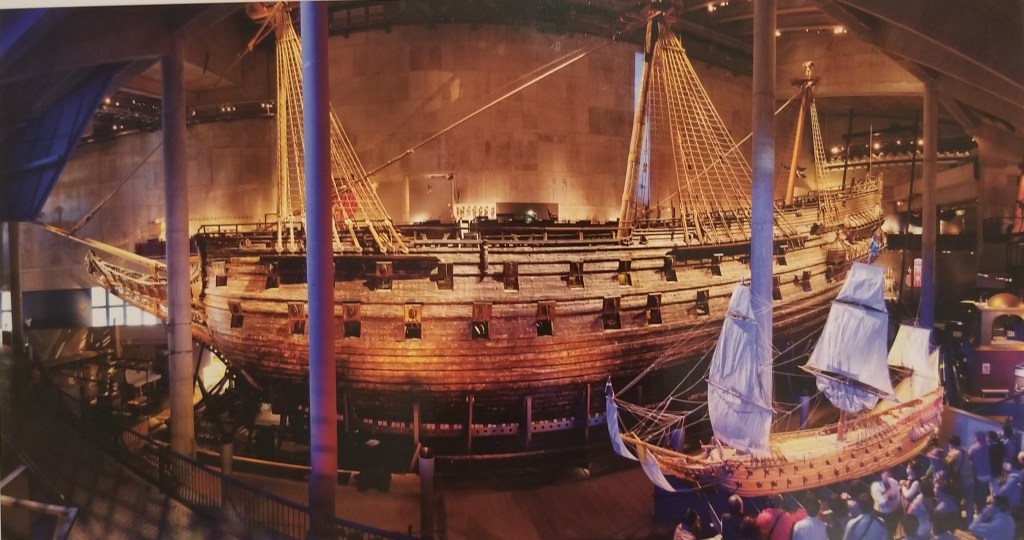
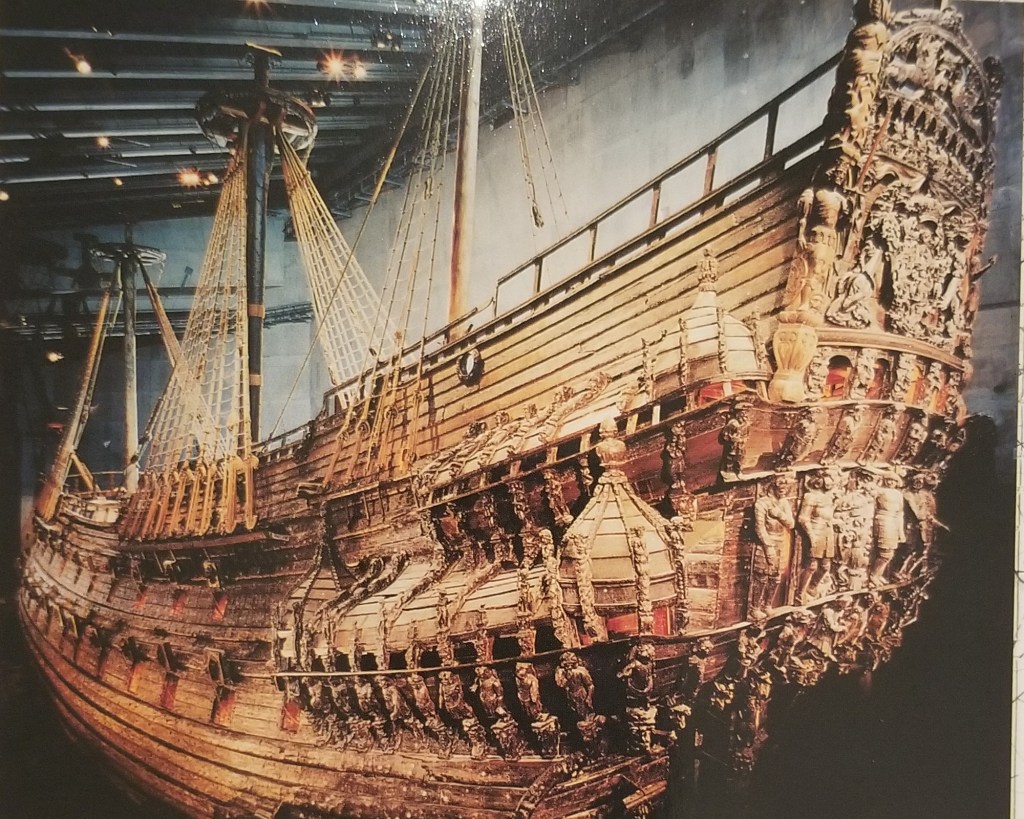
This post is about the Swedish warship Vasa. Vasa (or Wasa) was built between 1626 and 1628, and it tipped and sank on its maiden voyage. It was the largest war ship in the world at the time. The cold and brackish waters of this part of the Baltic were free from shipworms and the ship was only 32 meters down below. This made it possible to salvage the ship with a largely intact hull, which was done in 1961.
The Vasa Museum with its huge and impressive 400-year-old war ship is open to the public and a visit does not take long. It is one of the easy must-see destinations for visitors to Stockholm. It is an example of how a big fiasco can be turned into a wonder of the world.
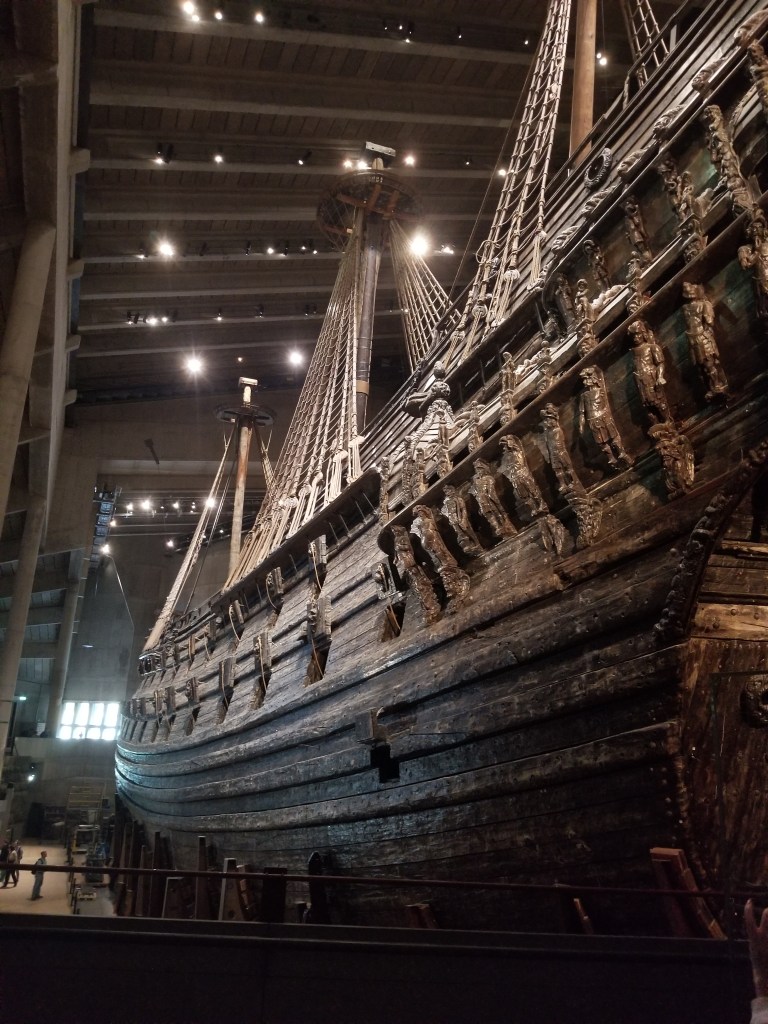
The War Ship Vasa sank in 1628 and salvaged in 1961. It is very well preserved and is on display to the public at the Vasa Museum Stockholm. This photo is taken from a distance. It is not my photo.
At the time there was a big war in Europe, the thirty-year war, fought mainly between protestants and catholic regions. An estimated 4.5 to 8 million people died in this war. Sweden got involved in this war on the protestant side and fought Poland and Lithuania. This war served as a motivation for building Vasa. The reason the Vasa ship tipped over was that the center of gravity was too high. There were too many cannons, ornaments, and the large hull, basically too much stuff, too high up.
An enhanced photo of the Vasa Ship from the museum.A photo of the Vasa ship from the bottom floor. My son is standing on the right in a green and black shirt.
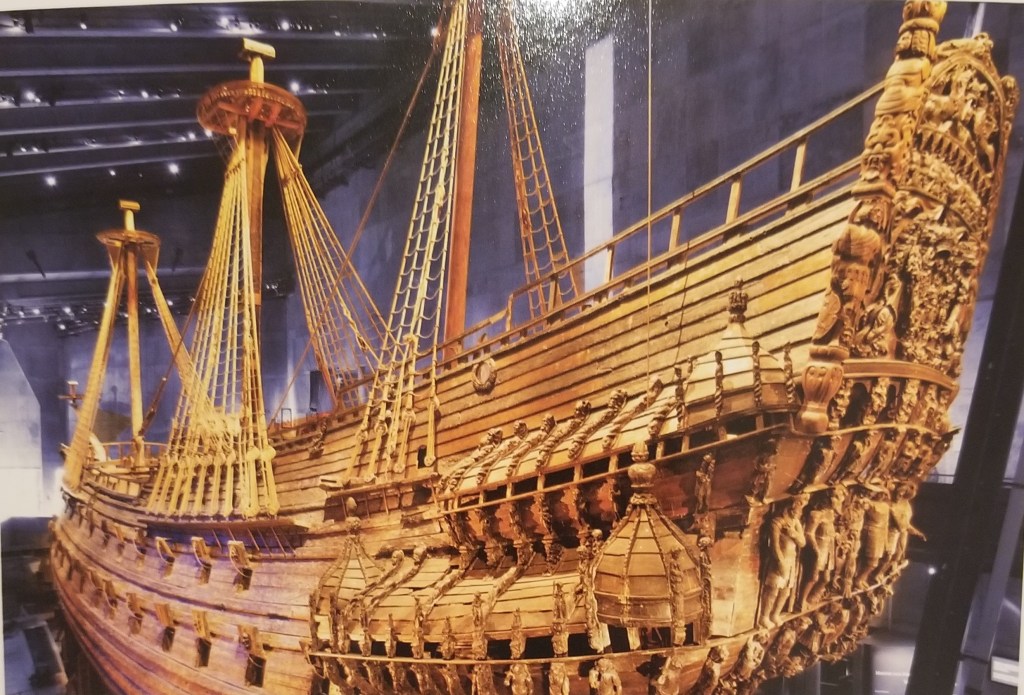
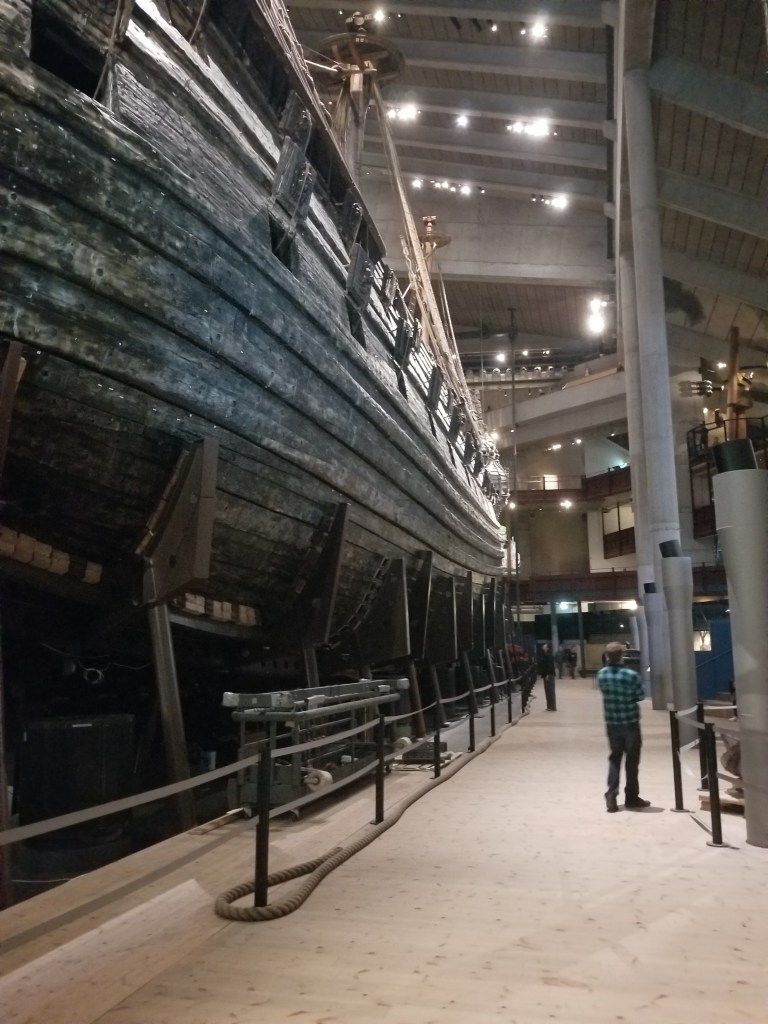
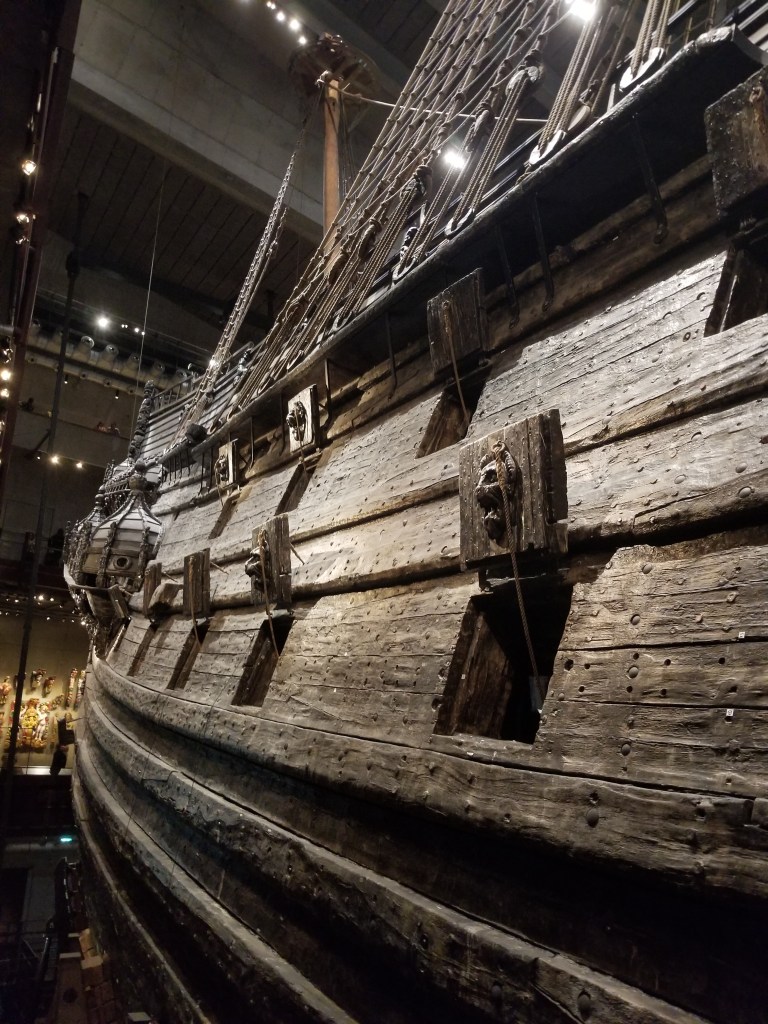
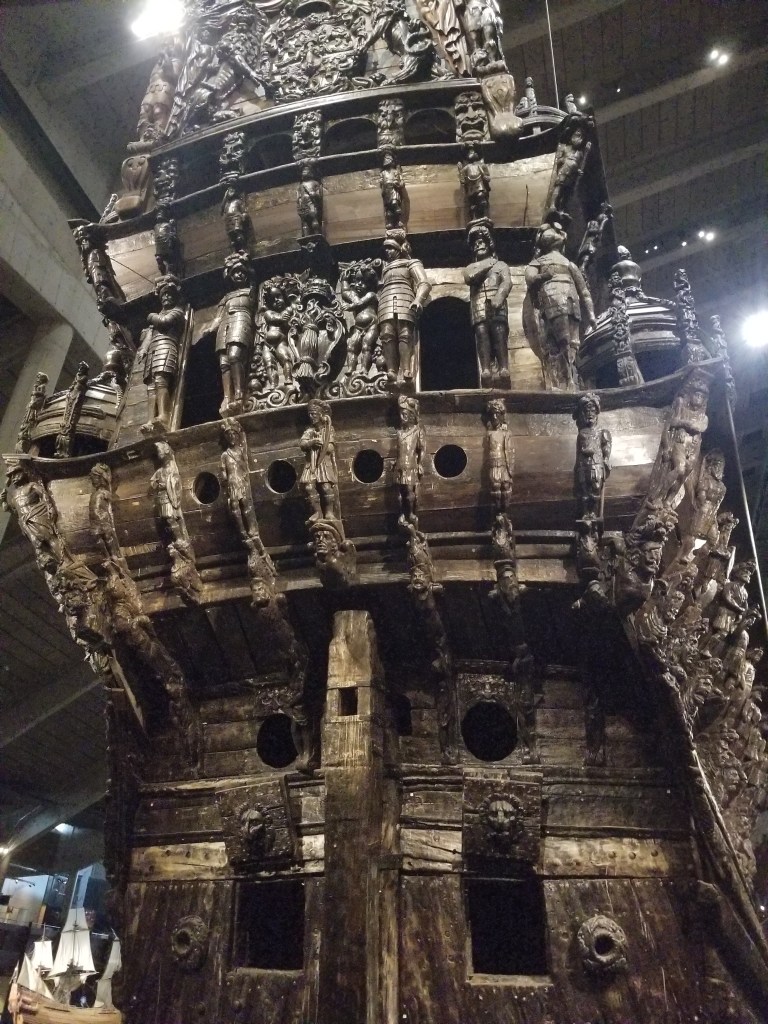
A note regarding the photos below. I could not find a spot in the museum where I could take an unobstructed photo of the entire ship. So my photos just shows parts of the ship.
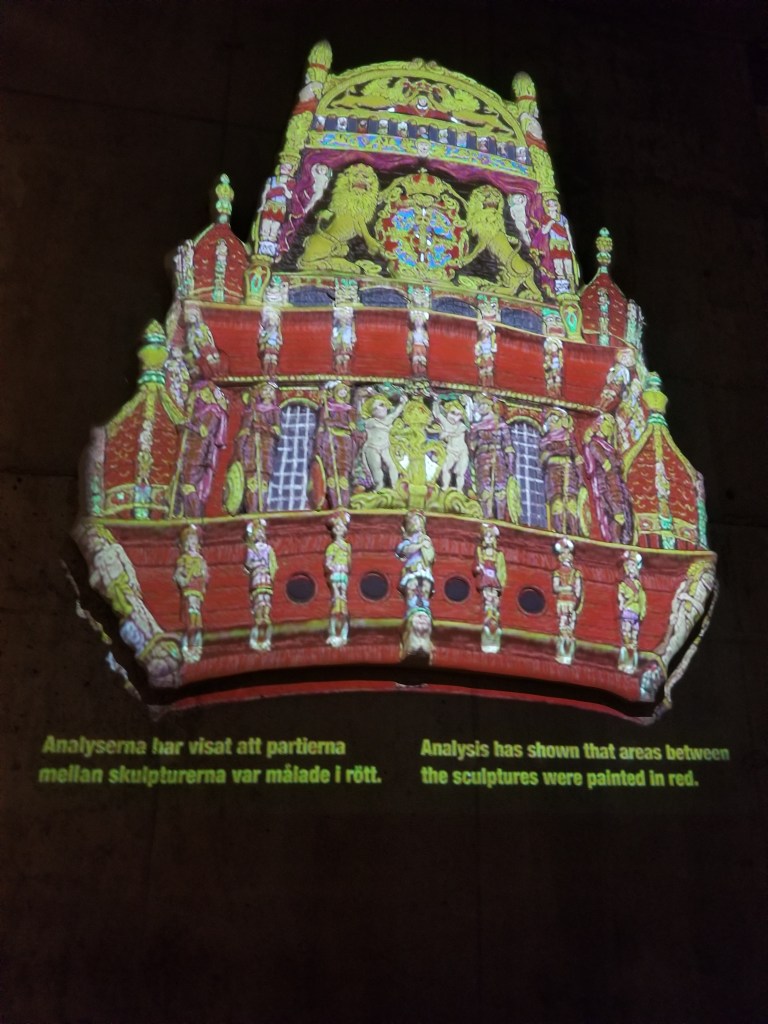
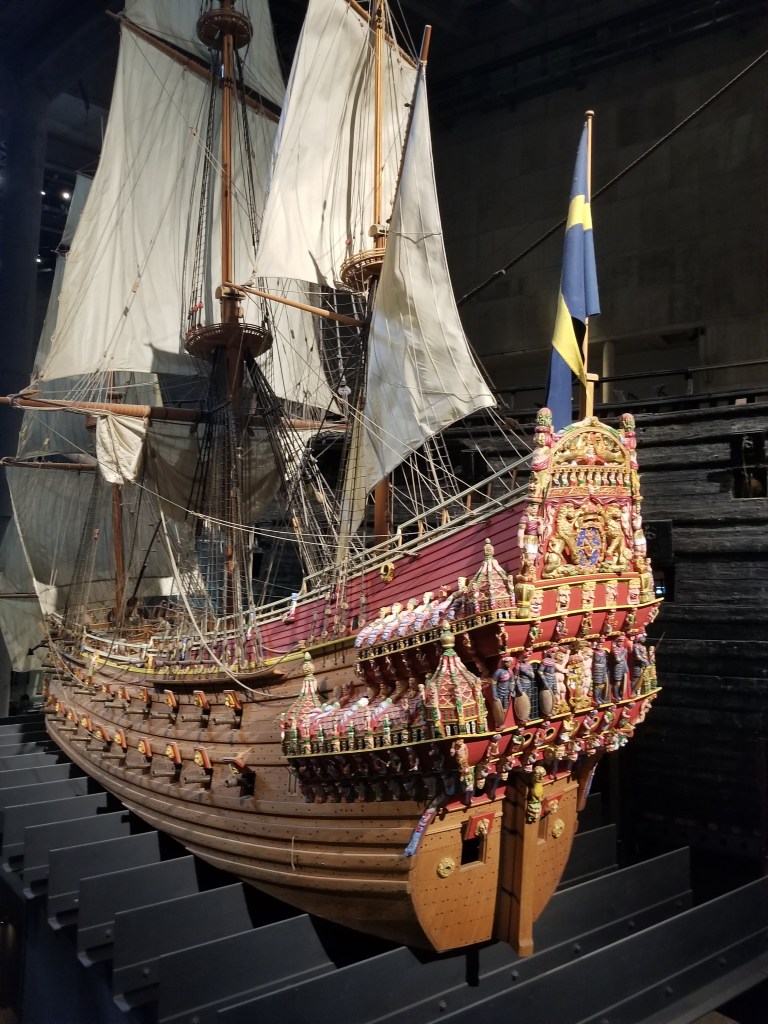
A photo of the Vasa ship from the third floor and on the other side (my photo).A photo of the Vasa ship from the second floor and more from the front. I was walking around the ship and taking photos.A photo of the Vasa ship from the back. They removed all the ornaments and placed them separately. This was not always the case. This is my photo.This is just picture hanging in the museum. It shows how the back of the ship once looked like.A model of the ship showing how it once looked like. This model is part of the museum exhibit (my photo).An older photo of the Vasa ship (not mine). It is taken from the side so you can see the whole ship.
It should be noted that the conservators learned some lessons as they tried to conserve the ship. They pioneered many new methods and succeeded in solving many difficult problems. However, they found that using the conserving agent PEG was not a good idea. The iron originally concentrated in specific areas in the wood was spread over the entire ship. The consequences of this became apparent decades later.
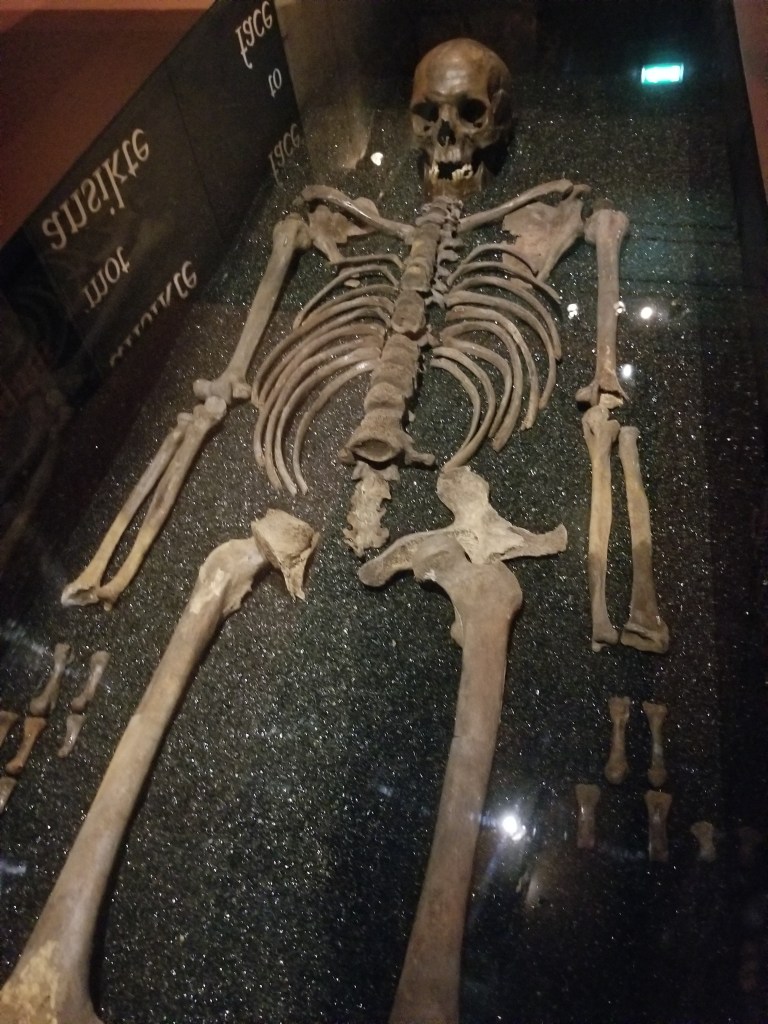
Other things they found when they salvaged the ship were the anchors and skeletons.
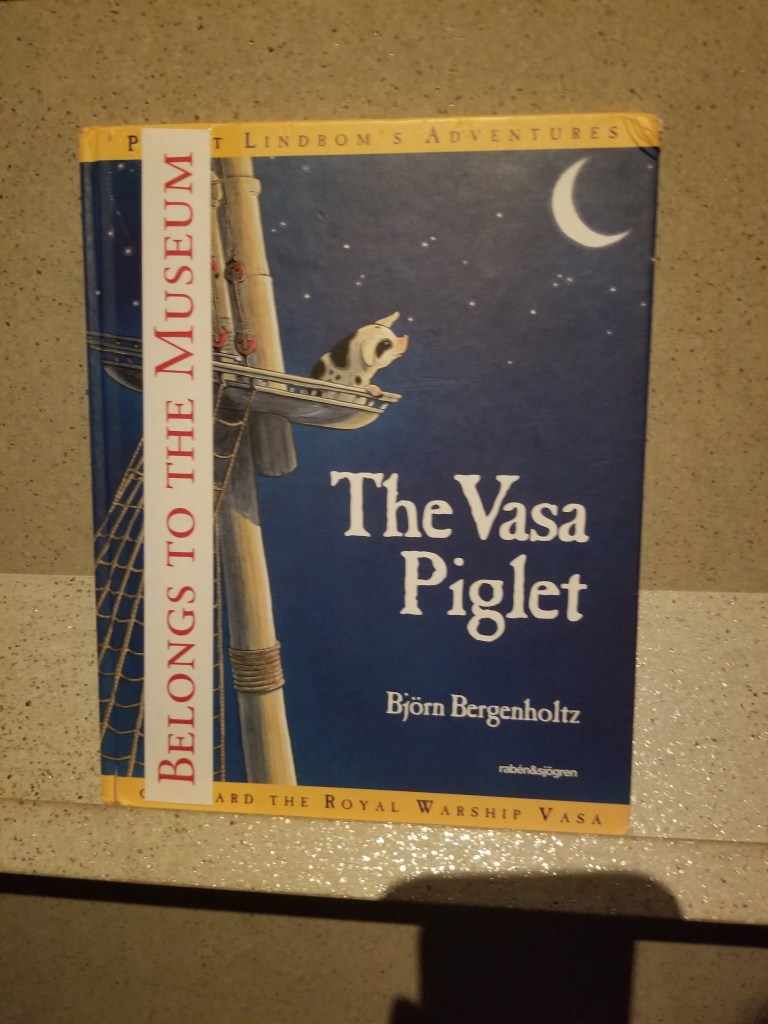
Once when we visited the Vasa Museum, I bought a children’s book that they sold at the museum called The Vasa Piglet. The story was about a pig who was brought onto the ship to be slaughtered and eaten. However, the ship tipped and sank but the pig saved itself by climbing the mast, sitting in the mast platform for a while before swimming to shore. The piglet survived, and no one ever tried to eat him again. Therefore, he lived happily ever after, but no one else did. It seemed like a cute story to me, but my daughter claims she was traumatized by this book. She was fearful of boats for several years afterwards.
Photo of the front cover of the children’s book the Vasa Piglet.
The matter in our bodies and our planet was formed by fusion in the cores of distant stars and then spread across the Universe by supernova explosions. This matter was later incorporated in second and third generation stars like our sun and its planets.
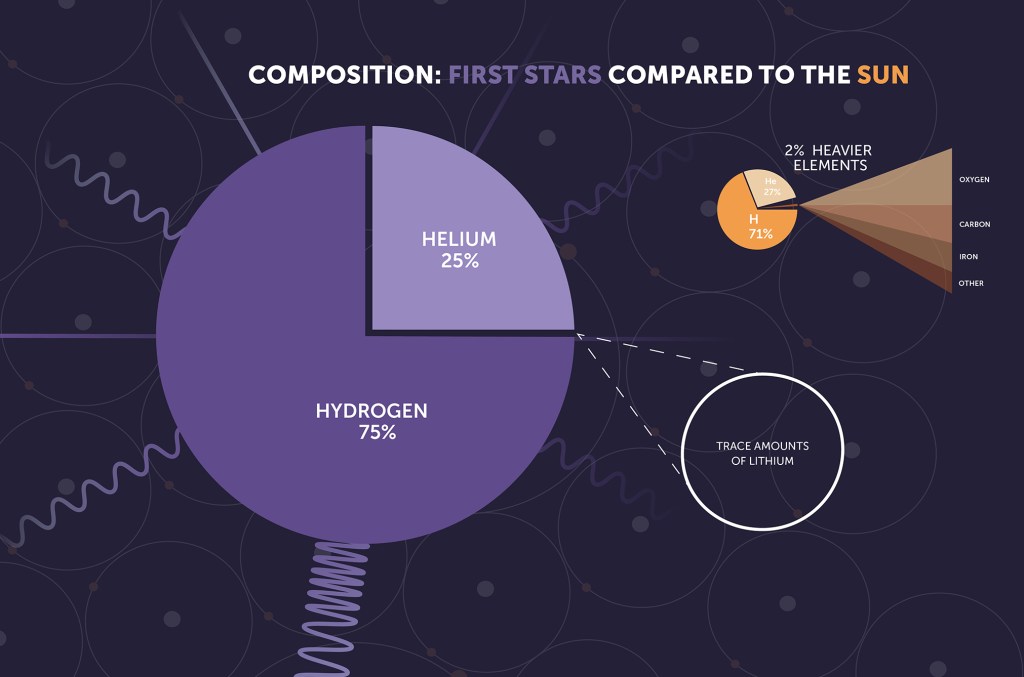
What do I mean by “We are Star Dust”? Let me explain. The first stars in the Universe were made of 75% hydrogen and 25% helium and trace amounts of Lithium, just like the entire Universe at the time. There were no heavier elements that could form planets or other solid celestial bodies. These early stars tended to be large and heavier elements like carbon, oxygen, and iron were formed by fusion in the cores of these stars.
Many of the first stars, called first generation stars, ended their lives in massive supernova explosions and the dusty remains of these explosions, including the metals formed in their cores, became the building blocks of the stars we see today. These second and third generation stars have planets and other smaller solid objects orbiting them, formed from the gas and dust (star dust) left over from the supernova explosions. So, we are star dust. The atoms formed inside the first-generation stars are now within us.
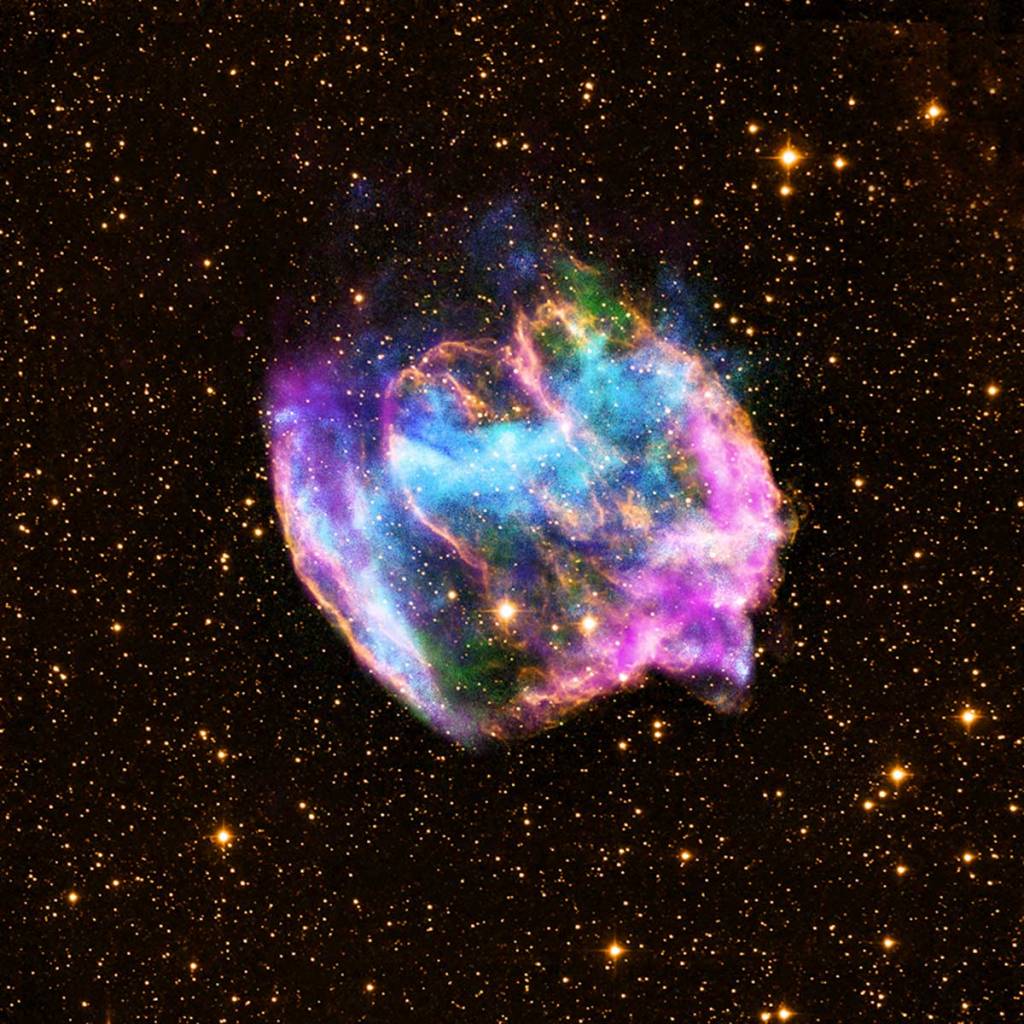
The first-generation stars consisted of 75% hydrogen and 25% helium and trace amounts of Lithium. A second or third generation star like our sun is still mostly hydrogen and helium but also many other elements. The rocky planets circling the sun are mainly elements heavier than hydrogen and helium. Image credit NASA, ESA, CSA, STScI.Remnants of a recent supernova W49B, 26,000 light years away. Credit: X-ray: NASA/CXC/MIT/L.Lopez et al.; Infrared: Palomar; Radio: NSF/NRAO/VLA.
For those who know astronomy this may be basic information, but I’ve met many people who are unfamiliar with this information, and they are quite often surprised and astonished. That is why I consider this information a super fact. I can add that this process, the birth and death of first-generation stars, the supernova explosions, the disbursal of the matter, which later clump together to form new stars and rocky planets as well, takes many millions of years.
This is an Illustration of a supernova. Stock Vector ID: 2109918599 by Varunyuuu.
A Refresher
For those who need a refresher of things like stars and planets and galaxies. Our sun is a star, a third-generation star. It is much bigger than our Earth. If Earth is the size of a small pea or a caper, then the sun would be the size of a beach ball. However, our sun is not a big star, and it is only one star among between 100 and 400 billion stars in our galaxy the Milky Way.
Many galaxies including our own are disc shaped or look like spirals. If you imagine a dust storm cloud in which there are a thousand dust particles per cubic foot, each representing a star. Then this dust cloud would be 100 to 400 feet thick, and a thousand feet wide and long. I can add that there are between 100 billion to 2 trillion galaxies in the visible Universe. Also, the Universe is much bigger than the visible Universe and might be infinitely large.
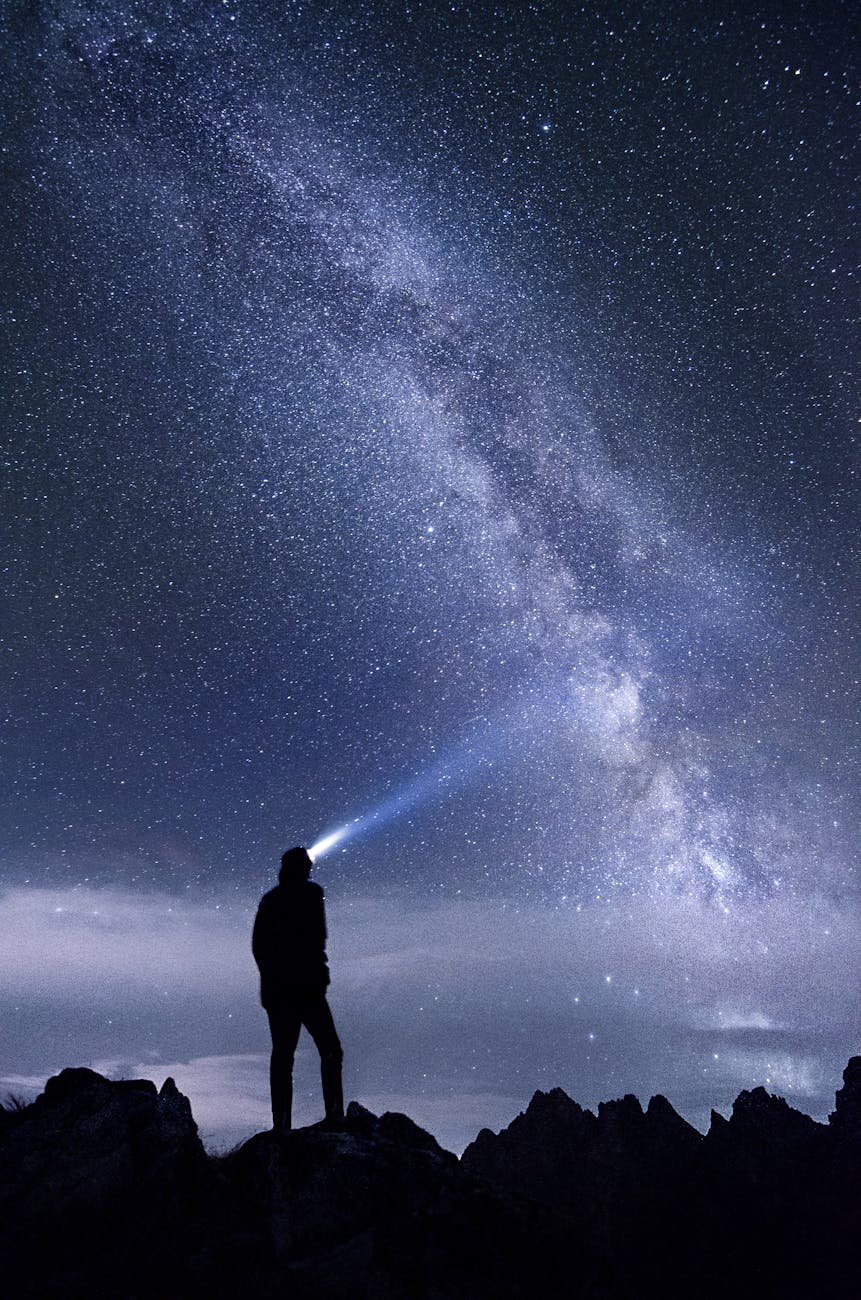
A glimpse of our milky way galaxy. Photo by Stefan Stefancik on Pexels.com
As mentioned, orbiting around our sun there are planets, dwarf planets, moons, planet rings, asteroids, comets, meteoroids, interplanetary dust, etc. The star closest to the sun is Proxima Centauri, which is 4.24 light-years away, but it is too small to be seen. The stars that are visible in the night sky tend to be large stars that are not too far away.
Here in Dallas where I live you can typically see 15 stars with the naked eye, and you cannot see the Milky Way. That’s because of the light pollution. In northern Sweden where I grew up you could see 3,000 stars, our galaxy the Milky Way, as well as the Andromeda Galaxy on a clear night with the naked eye.
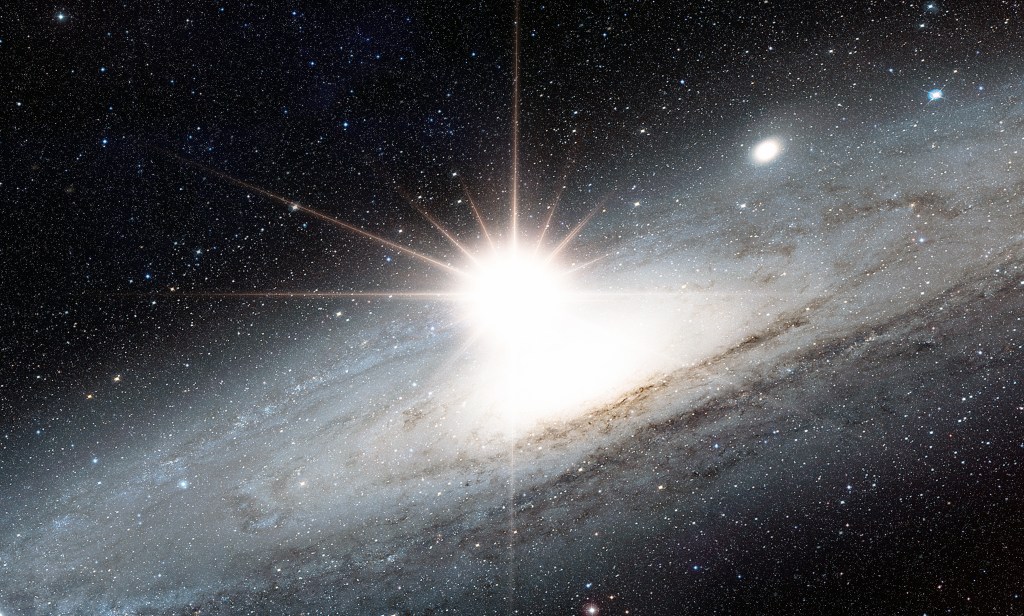
In 1885 a supernova explosion was recorded in the Andromeda Galaxy. Below is a constructed photo showing how it might have looked like if we had had better equipment back then. Notice that the supernova explosion is essentially outshining the entire galaxy. We are the result of the gases and dust spread by such explosions. You can also read more here.
Supernova explosion in the center of the Andromeda galaxy “Elements of this image furnished by NASA” It is essentially an enhanced photo of a supernova explosion in a neighboring galaxy. Stock Photo ID: 2495486227 by muratart.
Superfact 9 : We are living in relatively peaceful times
Despite all the wars going on, the world was filled with a lot more war and violence in the past. Despite the grim news reports we are living in relatively peaceful times.
If I asked you, what are the two biggest wars going on the world today (as of September 2024), you would probably say that it is the Russia / Ukraine war and the Israel / Gaza war. Well, unless you are really well informed, it would come as a surprise that there are more devastating wars going on in the world. For example, there is currently a big civil war going on in Sudan that began in April 2023.
According to the latest issue of the Economist perhaps 150,000 people have been slaughtered in this civil war, and 10 million people have fled their homes, and a famine is emerging that could kill 2.5 million people by the end of the year. This war is likely to destabilize neighboring countries and is sponsored by Russia and Middle Eastern states. It’s likely the biggest crisis in the world but most likely you’ve never heard of it.
In the recent Tigray war in Ethiopia between 162,000 and 600,000 people were killed according to Wikipedia. The Tigray war is mostly over, but the point I am trying to make is that you probably have never heard of it. You cannot use the impressions given by the amount of media attention a conflict gets to decide on how severe it is. You’ve got to check the statistics and compare, and the statistics might be quite unintuitive if you have relied on media attention as a metric.
What was the most devastating war in the 19th century?
So, to the next question. What was the most devastating war in the 19th century? If you say the American civil war, you are not correct (estimated 650,000+ deaths). A somewhat better answer is the Napoleonic wars (and estimated 4 million deaths). But none of the answers are correct. The Taiping rebellion in China was the worst. Estimates of the conflict’s death toll range between 20 and 30 million people. Some estimates say 100 million, which would make it the most devastating war in human history.
But did you hear about it? Again, you’ve got to check the statistics, and not rely on your impressions. I am saying this because the claim that deaths from wars and violence have declined over the last few decades is a quite unintuitive claim and yet it is true. That’s why it is a super fact.
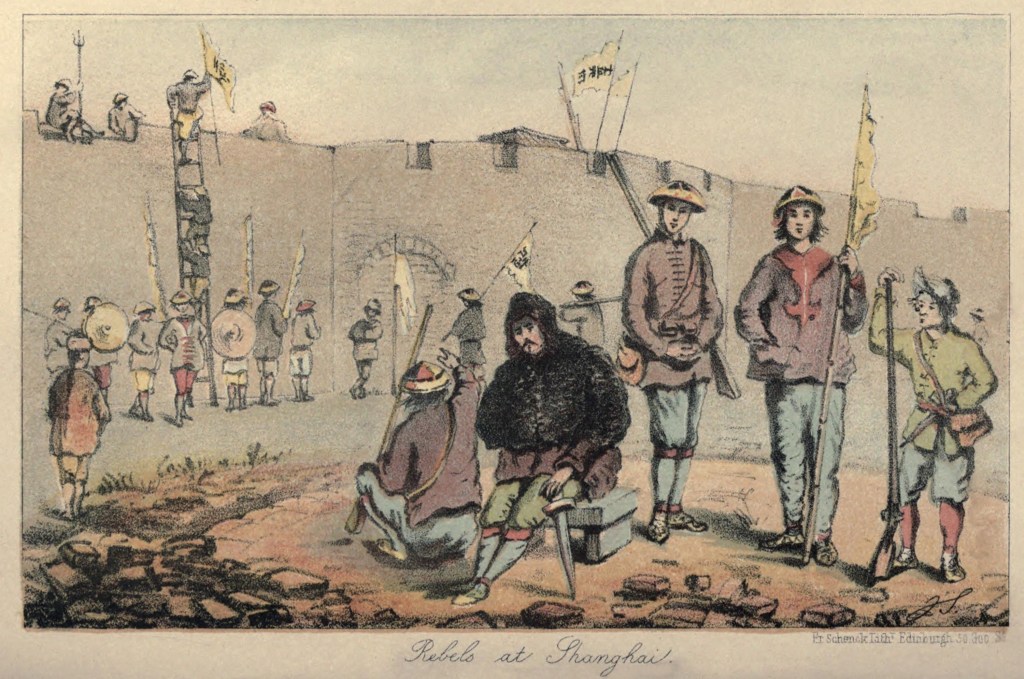
Taiping Rebels at Shanghai China in 1853-54. ‘Small Swords’ refers to daggers used by warriors or martial artists in close combat. 19th century print. Stock Illustration ID: 237232531 by Everett Collection.
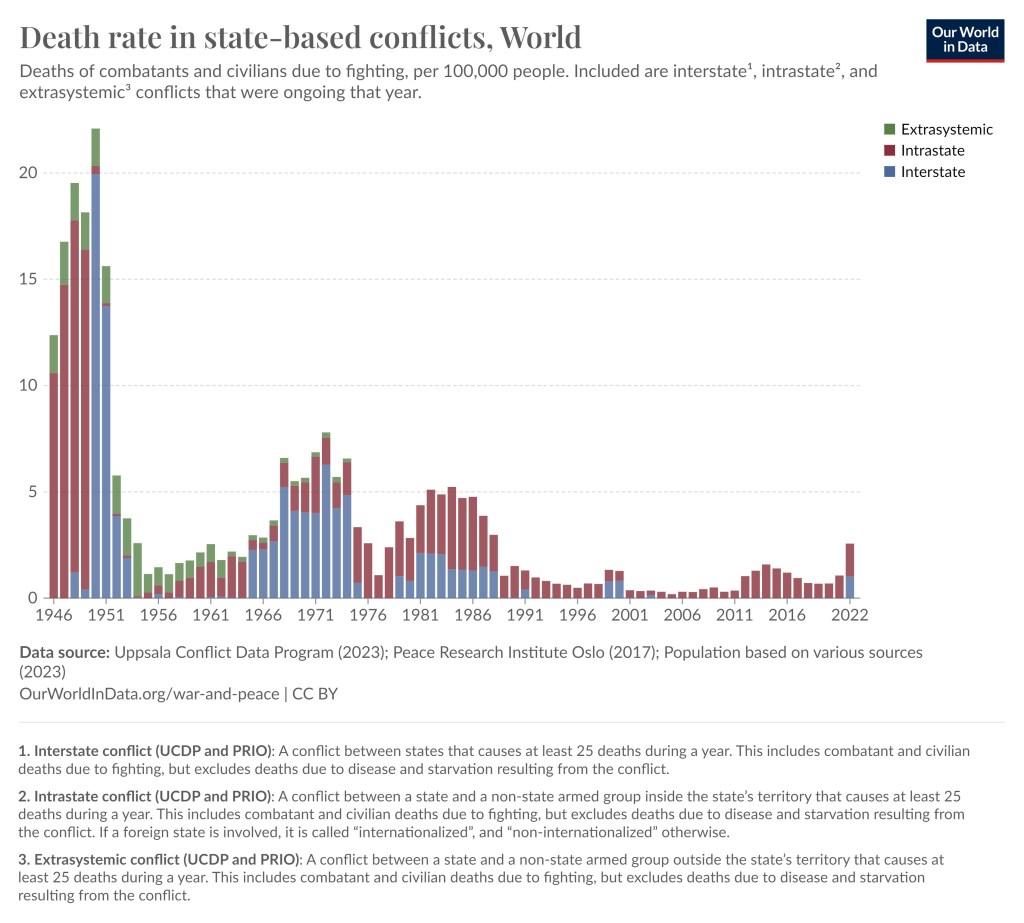
As this article in the Our World In Data states “While every war is a tragedy, the data suggests that fewer people died in conflicts in recent decades than in most of the 20th century. Countries have also built more peaceful relations between and within them.”. It should be noted that even though killing has never been as efficient as it is in the present, in the past a lot of civilians died from famine and disease resulting from the wars.
For example, the Spanish flu following World War I killed between 25 to 50 million people. I should say those numbers are typically not included in the deaths from World War I. The number of deaths from World War I are estimated at 20 million. 10 million combatants and 10 million civilians.
Death rate from wars since 1946. The uptick in 2022 is largely due to the Ethiopian Tigray war with 162,000–600,000 killed and the invasion of Ukraine, which US and BBC estimates at more than 200,000 deaths (but estimates from most other sources are less).
One problem with this kind of statistics is that the estimates vary, especially with respect to civilian causalities. In addition, very big wars lasting a few years create very bumpy graphs with large spikes making it harder to identify trends.
However, by listing estimated war deaths of the biggest wars, genocides and democides since the 1800’s you can see that deaths from this type of violence have overall been reduced over the last few decades. A note, democides are mass killings of civilians but are not necessarily directed at an ethnic group (democide include genocide).
The links below are mostly from Encyclopedia Britannica, but also from Wikipedia, the Census bureau, and a couple of other sources.
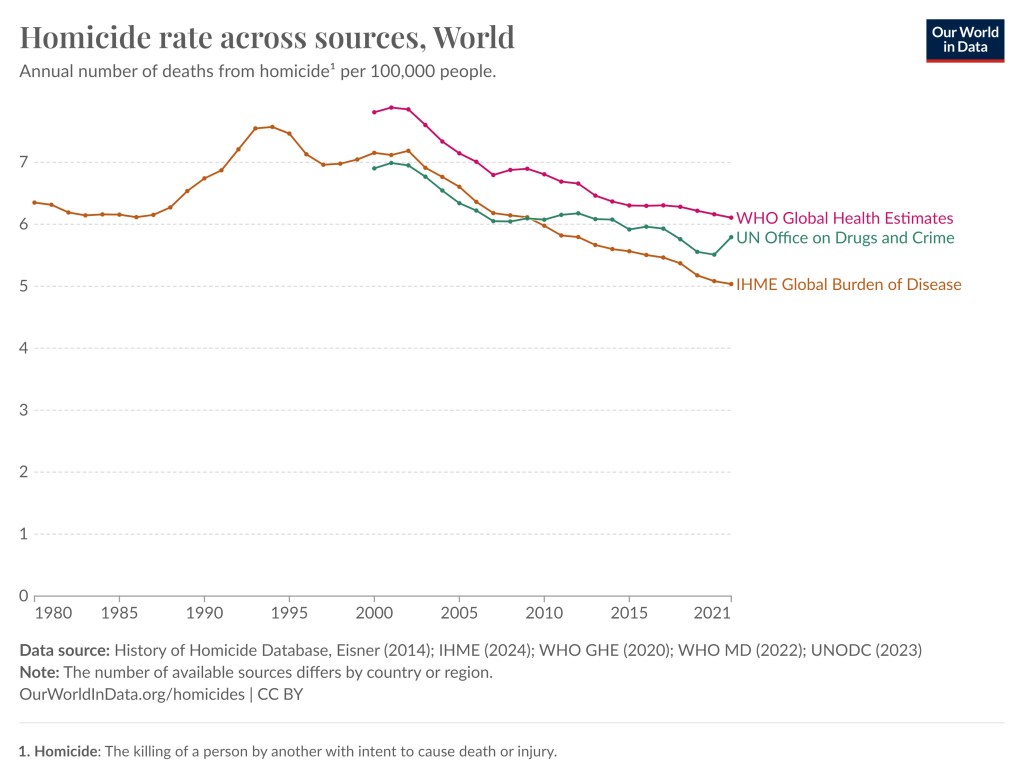
As I said, the numbers are estimates and not hard data, especially with respect to civilian casualties. However, you can see a trend going from several conflicts with numbers in the tens of millions before 1950, then numbers in millions until 2000/2007 and then during the last couple of decades the numbers have been less than a million. This does not cover homicide rates but even in that case we can see a reduction even though it is less distinct.
In this graph we can see that homicide rate worldwide has been reduced somewhat since the mid 1990’s. This graph is also taken from the Our World in Data website and they in turn used various databases from UN, WHO, etc.
Also remember that in the past there were a lot less people on earth, so relatively speaking a million deaths was a lot bigger number back then. In summary, despite all the wars going on, our world is less violent than it used to be.
I created a Facebook page for my super facts or Superfactful blog. The purpose of this post is partially to test if my posts here are showing up on my super fact Facebook page, but it is also to invite you all to follow my Superfactful Facebook page if you wish, or my Leonberger book Facebook page, or send me a friend request to my personal Facebook. I am putting the links to all three below.
Cover photo for my new Facebook page. Click on the photo to visit my new Facebook page.
This is not one of my super facts posts but I think it is interesting information about a quite frightening insect that I had never heard of before I encountered it- a tarantula hawk encounter.
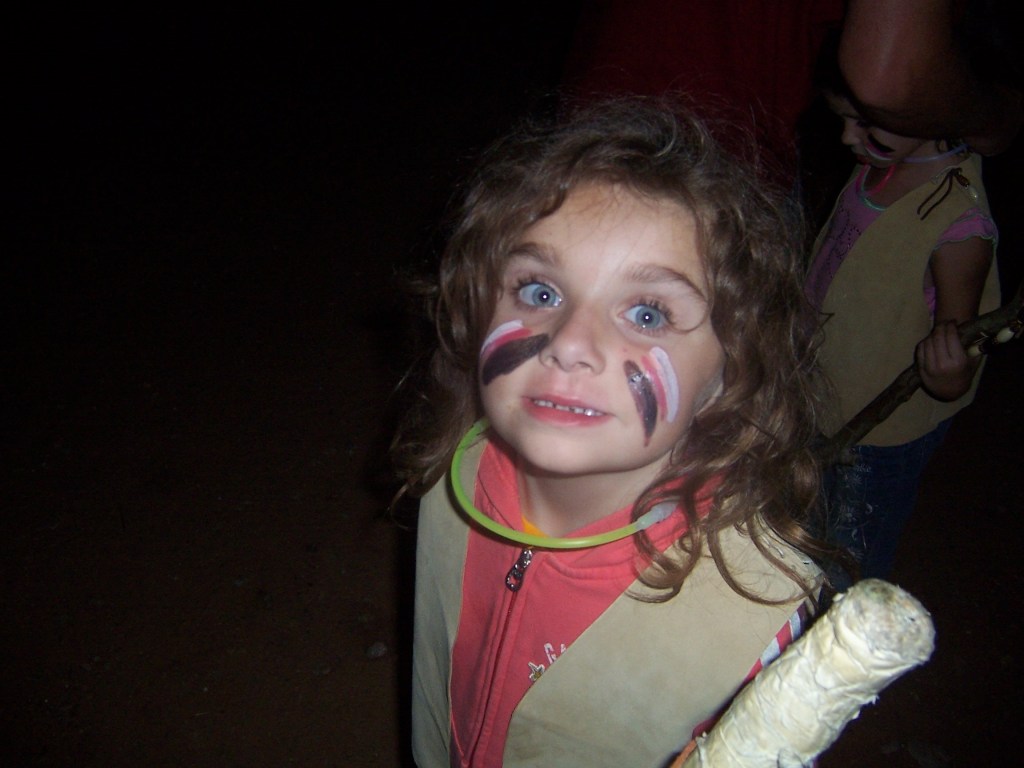
When my daughter was 5-7 years old, she was part of what you can perhaps call a pre-girl-scout organization. It was called Indian Princesses. It later changed its name to Adventure Princesses. They had meetings where they learned things, and they went camping as a group with their dads or moms. There were bonfires, grilling, nature, fishing, adventures, jumping in mud, riding horses, and staying up late at night.
My daughter Rachel camping at Camp Classen in Oklahoma. We are standing around a bonfire at night.
One time the Indian Princesses went camping in Camp Classen in Oklahoma. Since we live in North Texas it was not far away. One morning, as we were standing there talking and preparing breakfast, we saw a big black insect landing on the ground.
As we looked closer, we saw that it had landed on a Tarantula. It stung the tarantula, which stopped moving. Then it dragged the Tarantula through the grass about 100-150 feet and then under the girls’ bathroom. As we stood around the Tarantula and the big black insect, we saw that the insect had reddish wings and the body shape of a wasp or an ant. We did not know what it was. This was the year 2005 or possibly 2006 and cellphones with internet were not common.
This is a photo of the Tarantula Hawk that we saw. It is dragging a Tarantula that it had just stung. It is our photo and maybe not a great photo.
My daughter ran to get her jewelry box from her cabin. When she came back, she handed it to me and said, “Dad put them in here”. Another dad standing nearby started laughing and said, “yes Thomas I want to see you put them in the box.” It was quite lucky that I didn’t because the big black insect with reddish wings was what is called a Tarantula Hawk, a type of wasp, which allegedly has the most painful sting of any insect in the northern hemisphere. There is an insect with a worse sting in South America.
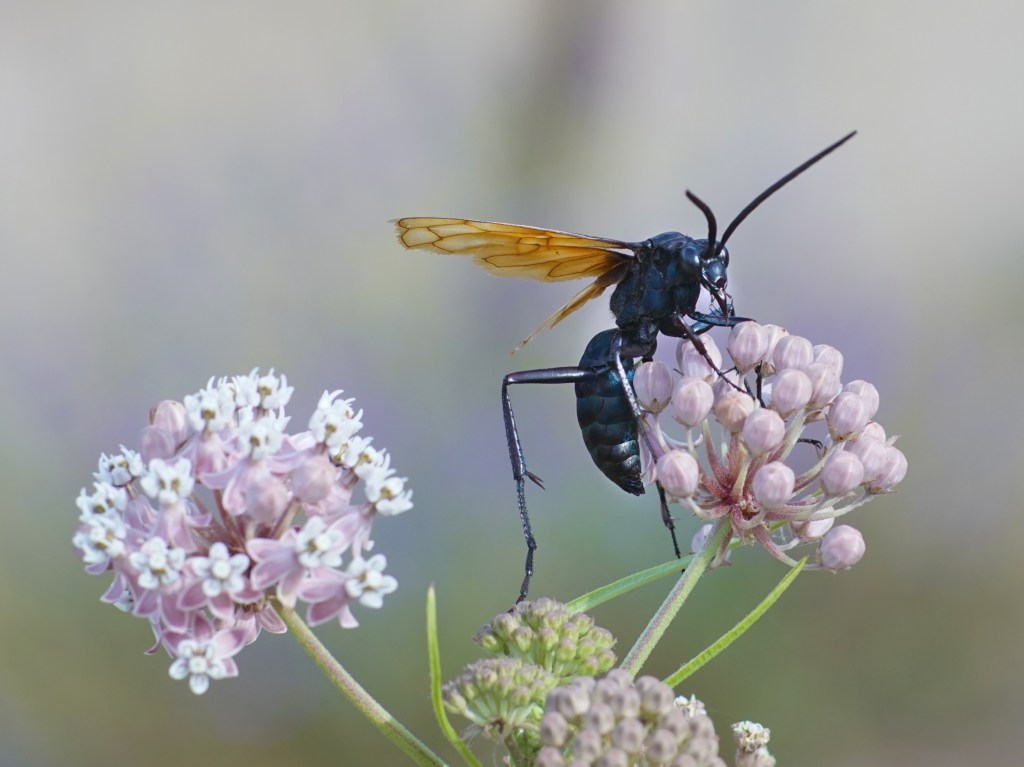
A Tarantula Hawk Wasp feeding on some flowers. Stock Photo ID: 2018945009 by Rix Pix Photography
The Tarantula Hawk is a wasp that feeds on nectar but the female Tarantula Hawk stings and kills Tarantulas to feed its larvae. It stings the Tarantula between the legs, paralyzing it, and then drags the prey to a specially prepared burrow, where a single egg is laid on the spider’s abdomen, and the burrow entrance is covered.
According to this article one researcher described the tarantula hawk’s sting this way: “To me, the pain is like an electric wand that hits you, inducing an immediate, excruciating pain that simply shuts down one’s ability to do anything, except, perhaps, scream.
Below is a youTube video about the Tarantula Hawk.
Have you ever encountered a Tarantula Hawk or another scary wasp or insect?


 Super Facts