Neutering or spaying a dog at 6 months old can be dangerous to their health

Superfact 21: Neutering or spaying a dog at 6 months old can be dangerous to their health depending on breed. It is often recommended that you should neuter or spay your dog by the age of 6 months even as early as 8 weeks. This may be OK for some smaller breeds but is dangerous to the health and longevity of many larger breeds.

Many dog welfare organizations, SPCA, ASCA, etc., recommend that dogs are neutered or spayed by the age of 6 months, or even as early as 8 weeks. It is also a common advice in dog books.

In addition, some veterinarians still hold onto this belief. It is easy to understand why. Dogs running loose and causing unwanted pregnancies resulting in puppies having to be euthanized is a sad problem we don’t want. 

Unfortunately, research has shown that neutering or spaying a dog at 6 months old can be dangerous to their health depending on the breed. You may need to wait 18 months or two years, and some breeds should not be neutered at all. In addition to the scientists in the relevant fields, professional and certified breeders, AKC and dog breed clubs and veterinarians who kept themselves informed on this issue are all aware of this.

In other words, we know this to be true, it is an important fact since so many of us own a dog, roughly half of all US households do, and yet this information is highly surprising to many. This is why I consider it a super fact.
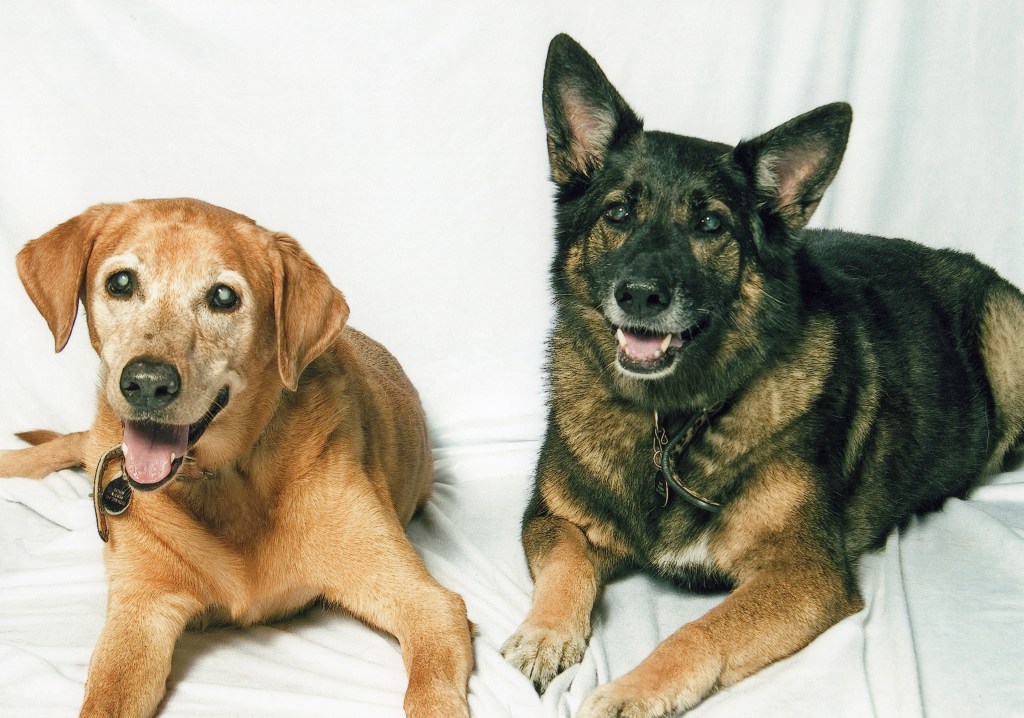
Our yellow lab Baylor is on the left. Our brown-black German Shepherd Baby is on the right | Neutering or spaying a dog at 6 months old can be dangerous to their health depending on breed
This is our Labrador Baylor and German Shepherd Baby. Too early neutering and spaying can severely harm their health.

This less than a year-old article from the AKC states that “an age of six to nine months of age may be appropriate for neutering or spaying a toy breed puppy or small breed puppy but a larger or giant breed may need to wait until they are near or over 12-18 months of age.” The article also provides the following interesting information.

Research conducted by the University of California – Davis reveals that for some dog breeds, neutering and spaying may be associated with the increased risks of certain health conditions such as joint disorders including hip or elbow dysplasia, cranial cruciate rupture or tear, and some cancers, such as lymphoma, mast cell tumor, hemangiosarcoma, and osteosarcoma.

The research conclusions are not surprising. Sex hormones are important in the development of any animal.  We know they affect psychological development as well as the musculoskeletal, cardiovascular, and the immune system.

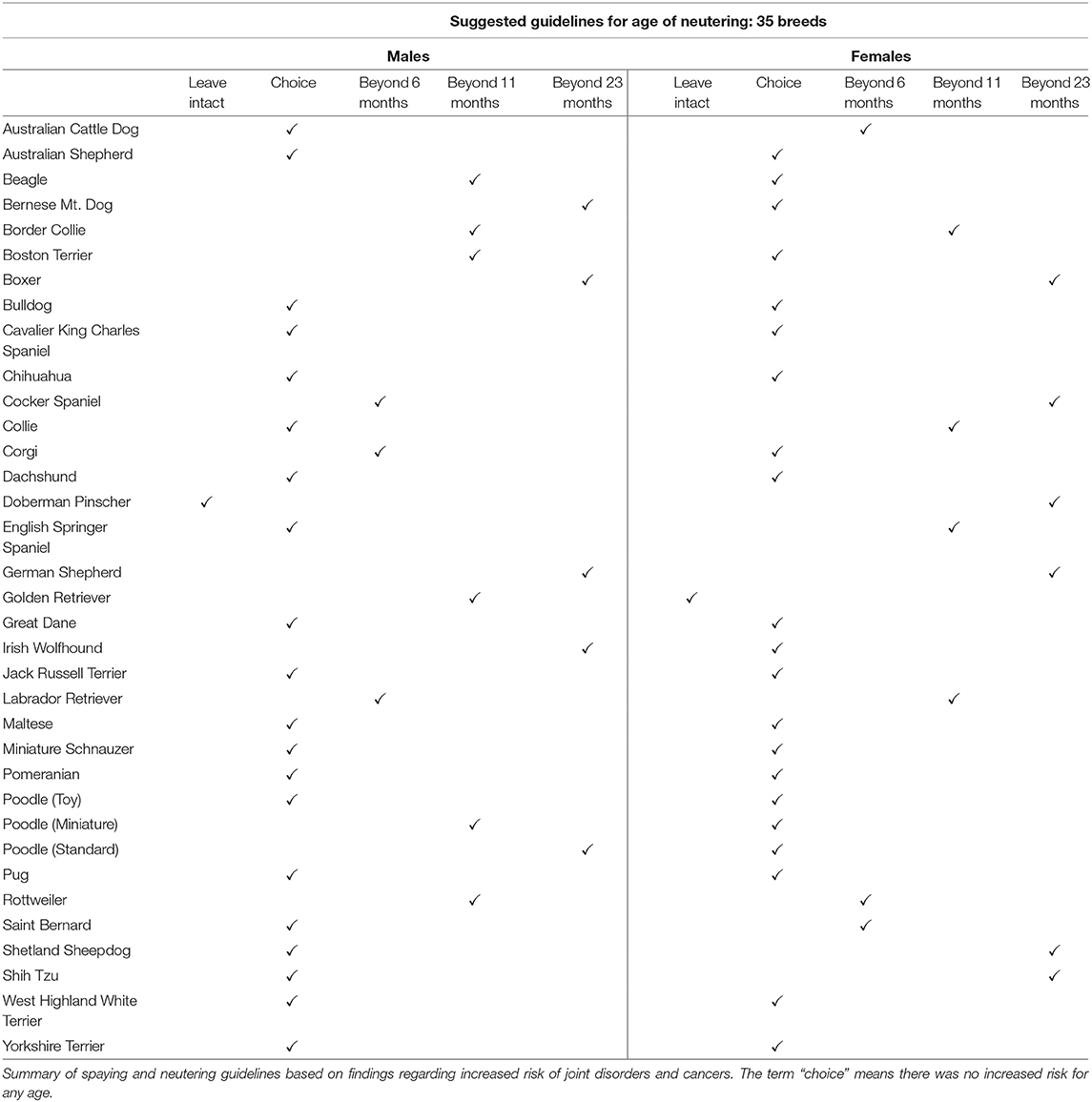
I believe this is the University of California – Davis article in question. It is from 2020. Notice that the suggested guidelines for age of neutering is beyond 23 months for several of the giant breeds in the table featuring 35 breeds.
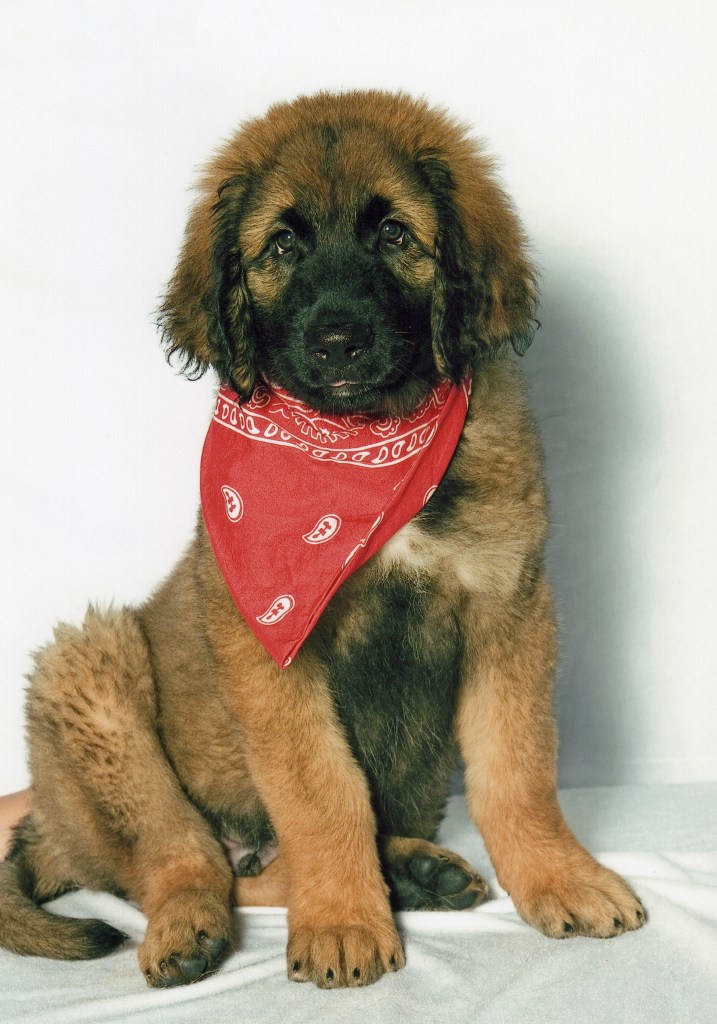
Bronco, our Leonberger puppy is looking straight into the camera. He is wearing a red bandana | Neutering or spaying a dog at 6 months old can be dangerous to their health depending on breed
Our three months old Leonberger Bronco. The Leonberger is a giant breed you can neuter when they are older than two years old.

Recommended Ages for Neutering and Spaying

Below is a list of recommended ages for neutering and spaying for selected dog breeds.

  • Australian Shepherd, for neutering and spaying it is your choice.
  • Bernese Mountain Dog, you should neuter beyond the age of 23 months, but for spaying you have a free choice.
  • Boxer, neuter and spay beyond the age of 23 months.
  • Boston Terrier, neuter beyond 11 months, but for spaying you have a free choice.
  • Doberman Pincher, never neuter, and you need to spay beyond the age of 23 months.
  • German Shepherd, neuter and spay beyond the age of 23 months.
  • Labrador Retriever, neuter beyond 6 months and spay beyond 11 months.
  • Corgi, neuter beyond 6 months, but for spaying you have a free choice.
  • Great Dane, despite being a very large dog you have a free choice for both neutering and spaying.
  • Rottweiler, neuter beyond 11 months, but for spaying beyond 6 months.
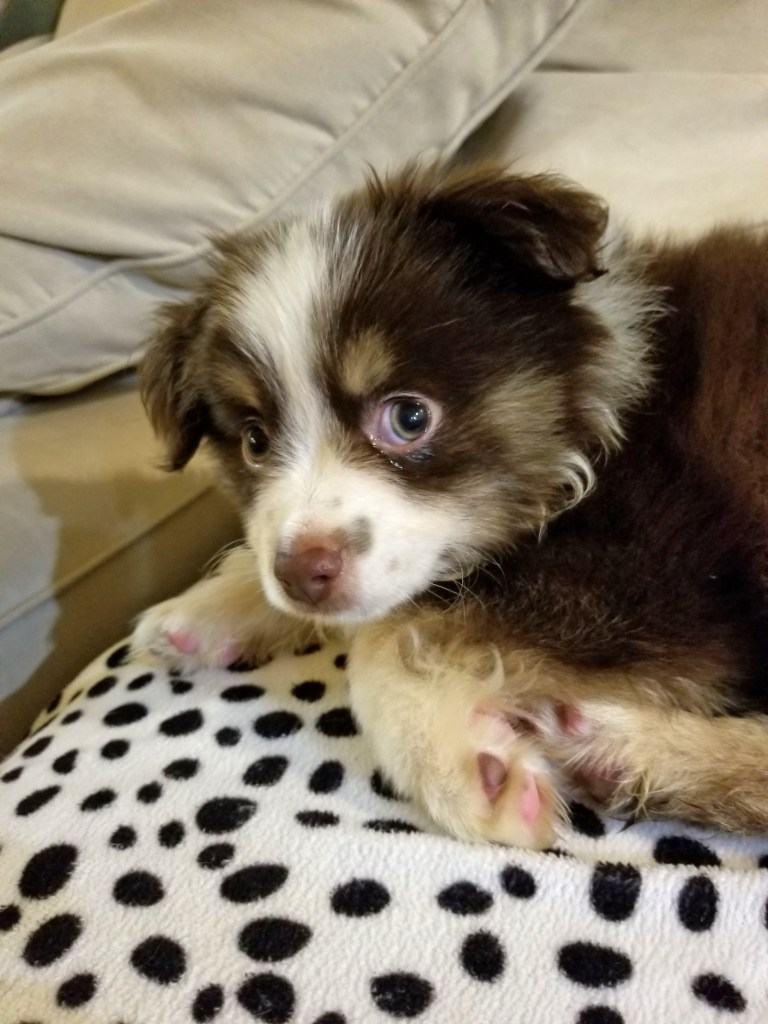
A mini-Australian Shepherd puppy is peeking out behind a sofa chair.
Our mini-Australian Shepherd puppy Rollo. You can neuter this breed at an earlier age.

We used to own a male Leonberger dog, which is a giant breed. Our breeder told us to wait beyond two years before neutering him, for health reasons. This article from Hillhaven Leonbergers states the following “We recommend not neutering until at least 2 years of age…Some Vets would recommend from 6 months but this is NOT a good idea.” To read more about the neutering and spaying of Leonberger dogs click here.
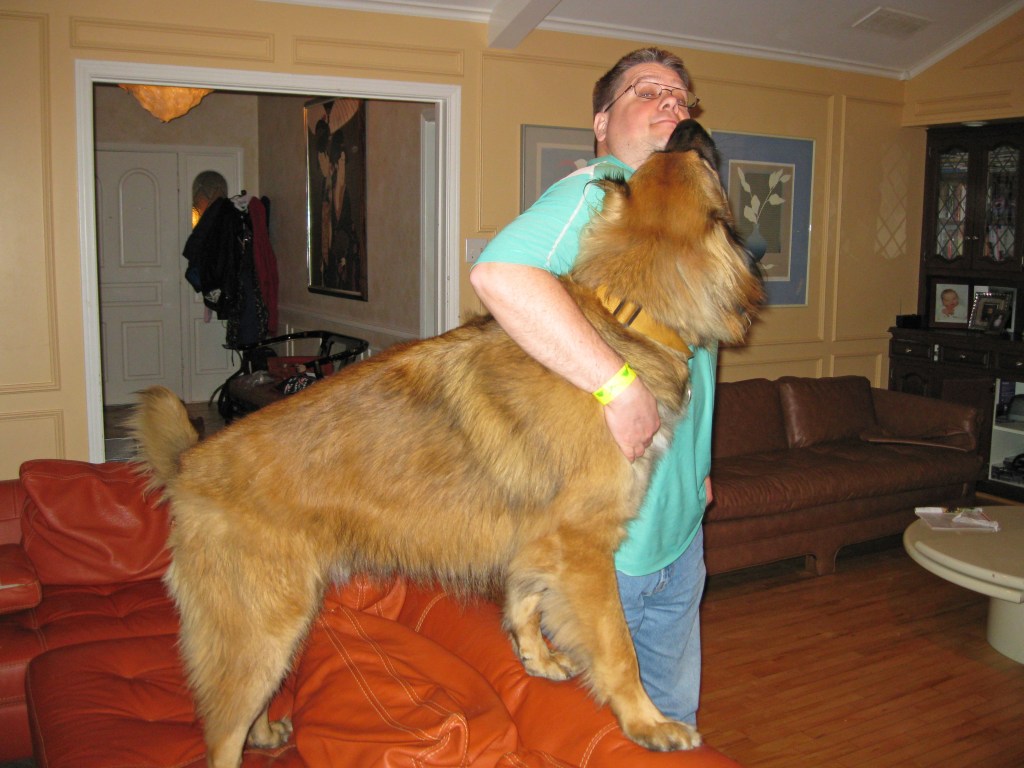
Our Leonberger dog Bronco is standing on a red leather sofa. He is stretching to give me a hug.
Our Leonberger dog Bronco is giving me a hug. He was about one year old in the picture. That is still too early to neuter him.

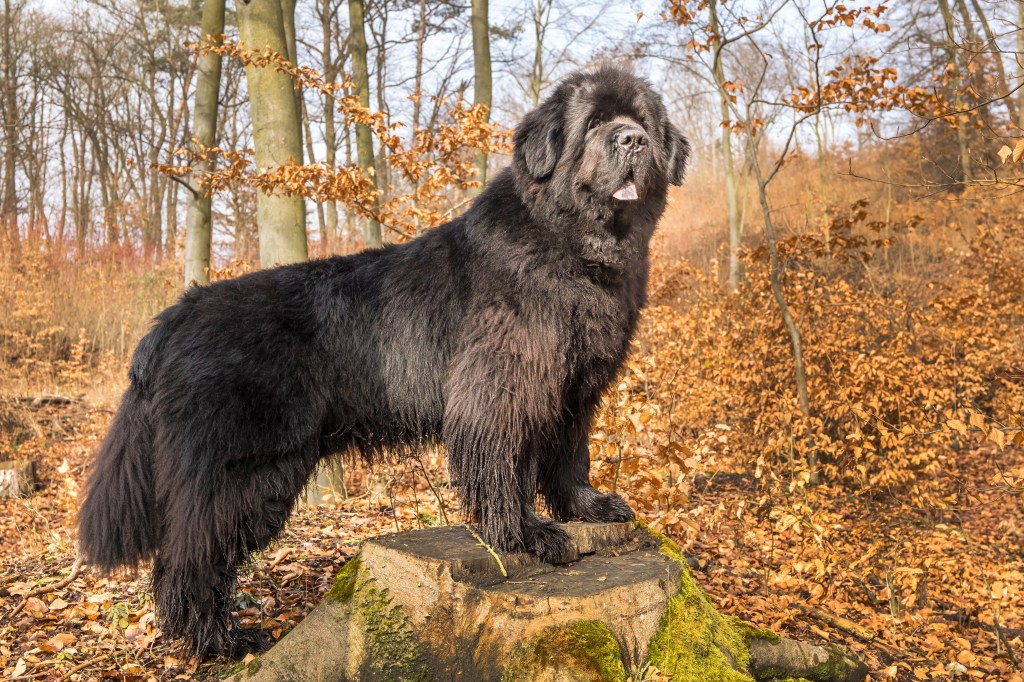
This article from the Saint Bernard Club of America states that “above all, no giant breed puppy should be altered before the growth plates in the bones have matured and closed, usually between 15 and 24 months of age.” This Newfoundland dog magazine states : Currently, the recommended age that a Newfoundland dog should be neutered is 18 to 24 months due to the possible health problems that can arise from altering before that age.
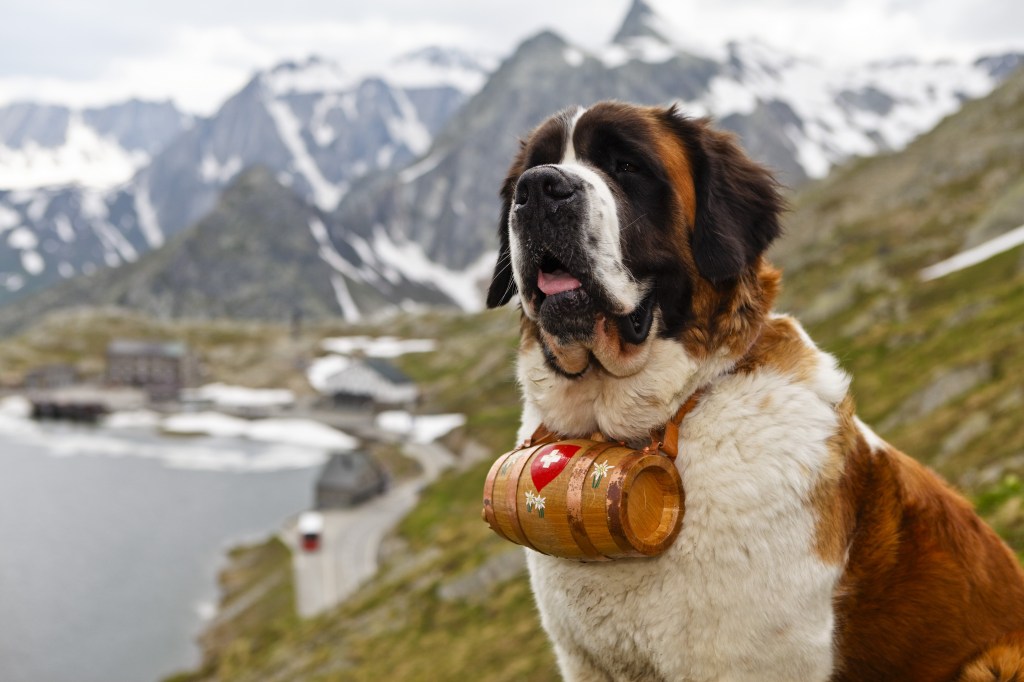
A Saint Bernard dog carrying the typical cognac container. There are mountains in the background | Neutering or spaying a dog at 6 months old can be dangerous to their health depending on breed
According to the article above you should wait to neuter Saint Bernard Dogs until they are close to two years old. Saint Bernard Stock Photo ID: 1713912484 by fred12.
A dark brown Newfoundland dog standing on a stump in the forest.
According to the article above you should wait to neuter Newfoundland Dogs until they are between 18 to 24 months old. Newfoundland dog Stock Photo ID: 1925281937 by Marsan.

Even though the expert advice regarding the best age for neutering and spaying varies, it is clear that doing it at six months old is too early for many breeds and can harm their health.
To see the other Super Facts click here


There are flying Turkeys

Superfact 20: Domesticated Turkeys and Wild Turkeys are the same species, but Wild Turkeys can fly. So yes, there are flying turkeys.

I think this is a super-fact, because the Turkey is a very important bird to Americans and at the same time a lot of people, including Americans, do not know that Turkeys are not flightless birds.

Domesticated turkeys are flightless but wild turkeys are not flightless. Wild turkeys can fly distances of more than a mile, sometimes at speeds of 55 miles per hour. I’ve seen it with my own eyes on turkey hunts. I’ve seen turkeys fly and glide across the sky at the height of 30-50 feet. I’ve seen them flap their wings and then take off.

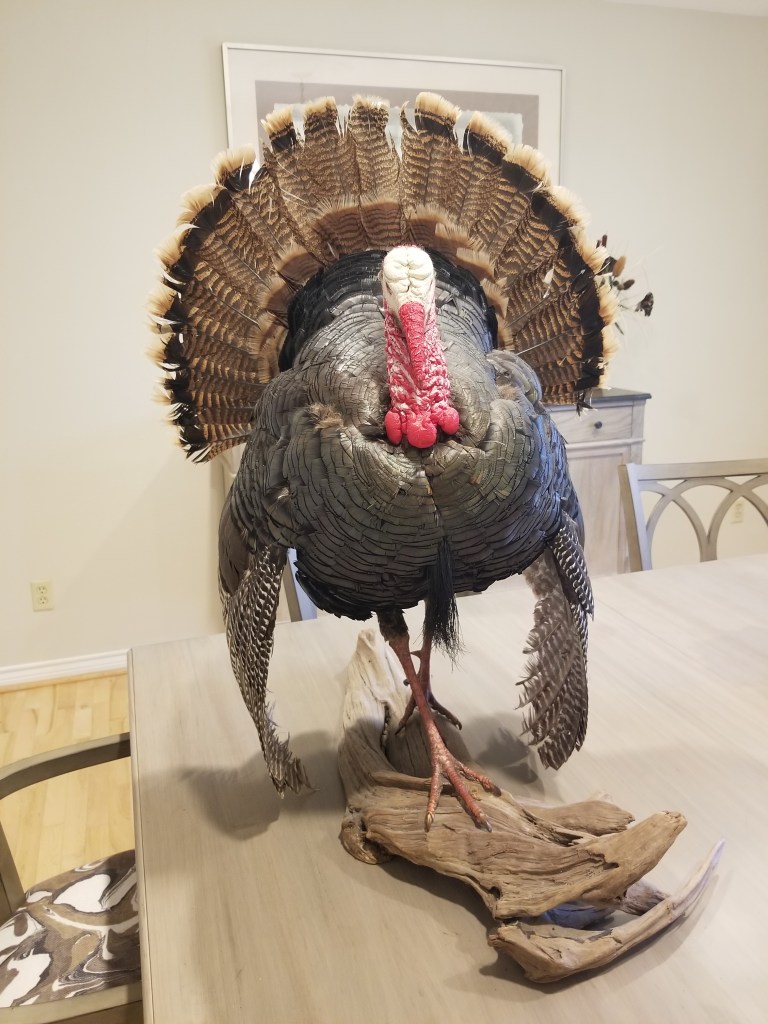
A standing male turkey with a white head, red neck, and fluffed up feathers | There are flying Turkeys
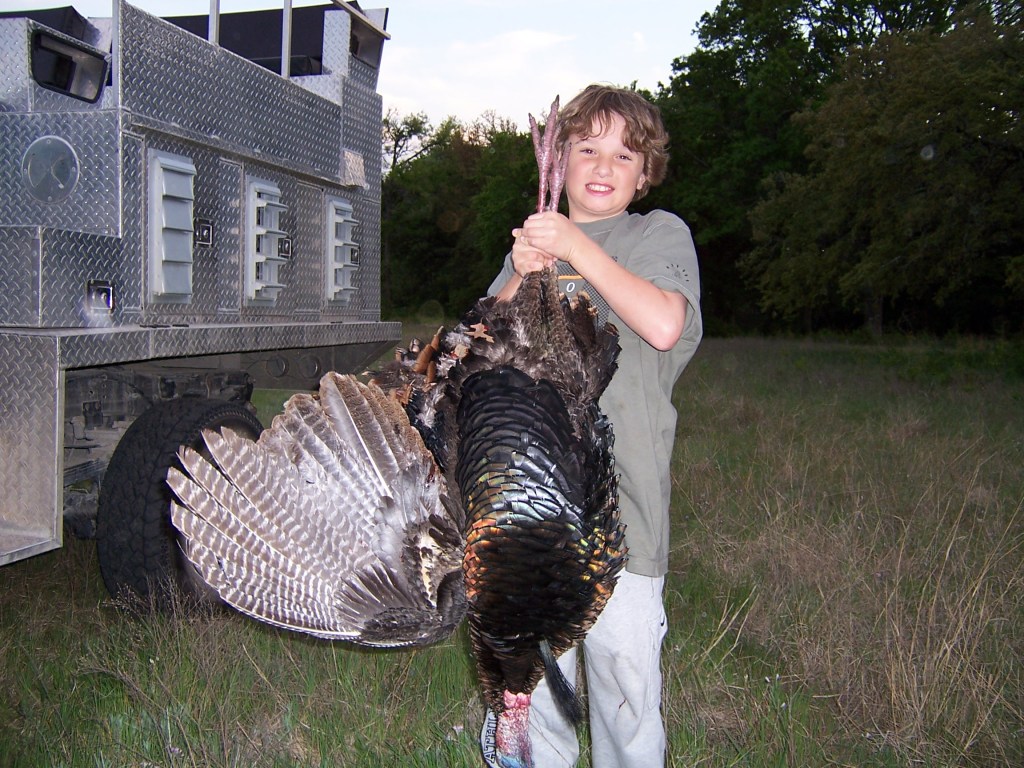
The turkey my oldest son shot when he was 11 years old.
My son is standing next to truck holding a dead turkey by the legs.
My son holding the turkey he shot.

The photo above is a Tom, a male turkey, that my oldest son shot when he was 11 years old. Male turkeys are called Toms and females hens. We took it to a taxidermist for preservation and mounting. I should add that we typically ate the meat of everything we shot. Taking a wild turkey to the taxidermist makes eating the animal more complicated but you can typically ask for the breast meat of the turkey.

Personally, I think that legal hunting is a lot more humane than eating meat from animals from factory farms.

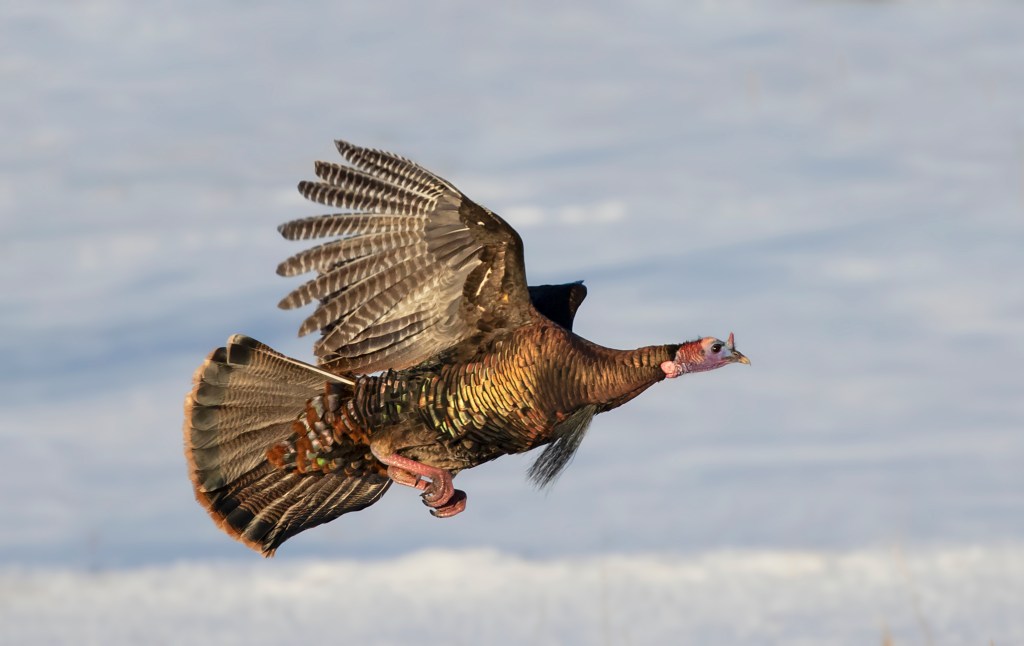
A male turkey in the middle of flight | There are flying Turkeys
Eastern Wild Turkey Meleagris gallopavo flying over the snow in Ottawa, Canada Stock Photo ID: 1358163995 by Jim Cumming.

I should add that legal hunting is often encouraged for conservation and population management. For example, moose are hunted in Sweden (my native country) to manage their large population (400,000 moose), which can cause damage to forests and agriculture, as well as starvation among moose, if not managed. Illegal hunting, on the other hand, is something nefarious. Below is a video showing wild turkeys flying (video is about one minute long).


I wish everyone a very happy Thanksgiving


To see the other Super Facts click here


Grizzly 399 is dead

I just read the sad news 399, a female grizzly bear named after her tag number died on Tuesday October 22 at the age of 28. She was hit by a car. They are looking for her cubs. Grizzly bear 399 was arguably the most famous grizzly bear in the United States. Unlike the typical bear, Grizzly 399 regularly gave birth to triplets rather than twins.

She lived in the Yellowstone and Grand Teton national park area, near Snake River, and she was seen and admired by thousands of visitors. Her Instagram account has 55,000 followers, books were written about her and documentaries were made. She had 22 cubs throughout her life.

Grizzly 399 in the meadow. She is followed by her three cubs | Grizzly 399 is dead
Grizzly 399 with three cubs. Photo from Wikipedia by StevenPDeVries, CC BY-SA 4.0 <https://creativecommons.org/licenses/by-sa/4.0&gt;, via Wikimedia Commons

She is special to me because we also encountered her and three of her cubs during a visit to Grand Teton national park in 2007. It was a school trip organized by the math teacher and each kid was accompanied by at least one parent to give the math teacher a break. Grizzly 399 gave us a very memorable experience.

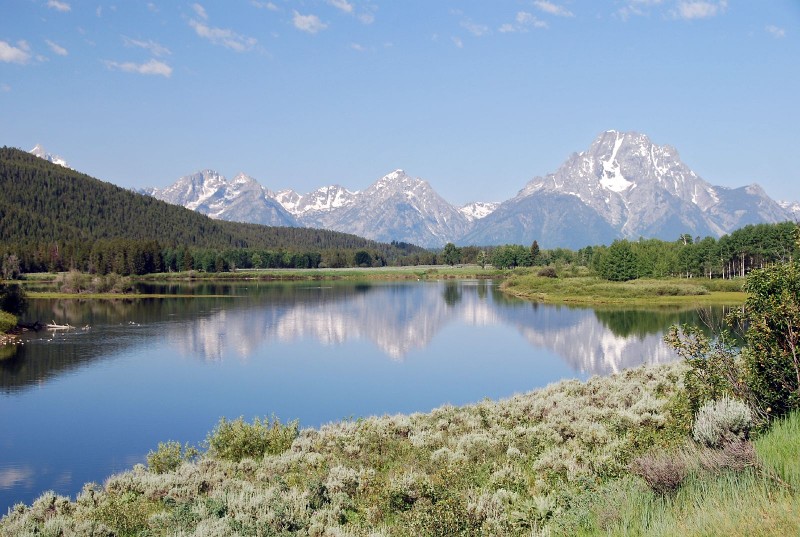
Photo including a somewhat turbulent Snake River with the Teton mountain range in the background.
My photo of the Teton mountain range taken from Snake River.

Grizzly 399 frequently sought human company. She came down to the roads with her cubs and stayed with the passersby for hours. She did not beg for food. She just wanted to stay with people and this article describes her as a gentle soul.

Grizzly bears seeking human company is normally a dangerous situation and grizzly bears seeking human company are therefore often shot to protect the public. Grizzlies are dangerous animals. They can kill people both out of aggression and for food. However, the park rangers left Grizzly 399 and her cubs alone because they deemed her harmless. She frequently interacted with people without ever showing any aggression towards people.

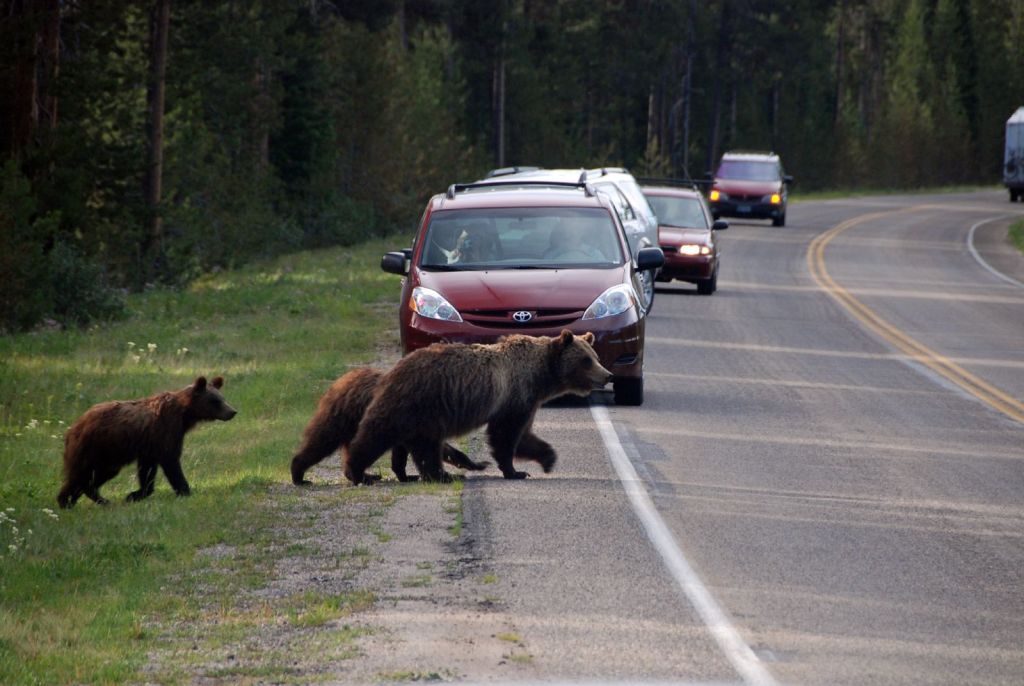
Four cars that are stopped on the road letting the grizzlies cross the road.
A photo of Grizzly 399 and a couple of her cubs taken in June 2007 by fellow trip participant Gabriel Goncalves.

Her behavior was somewhat strange, but I was told by a ranger that male grizzlies sometimes kill cubs, and this was her way of protecting the cubs. Grizzlies tend to stay away from people, except her, so she used people as a shield to protect her cubs.

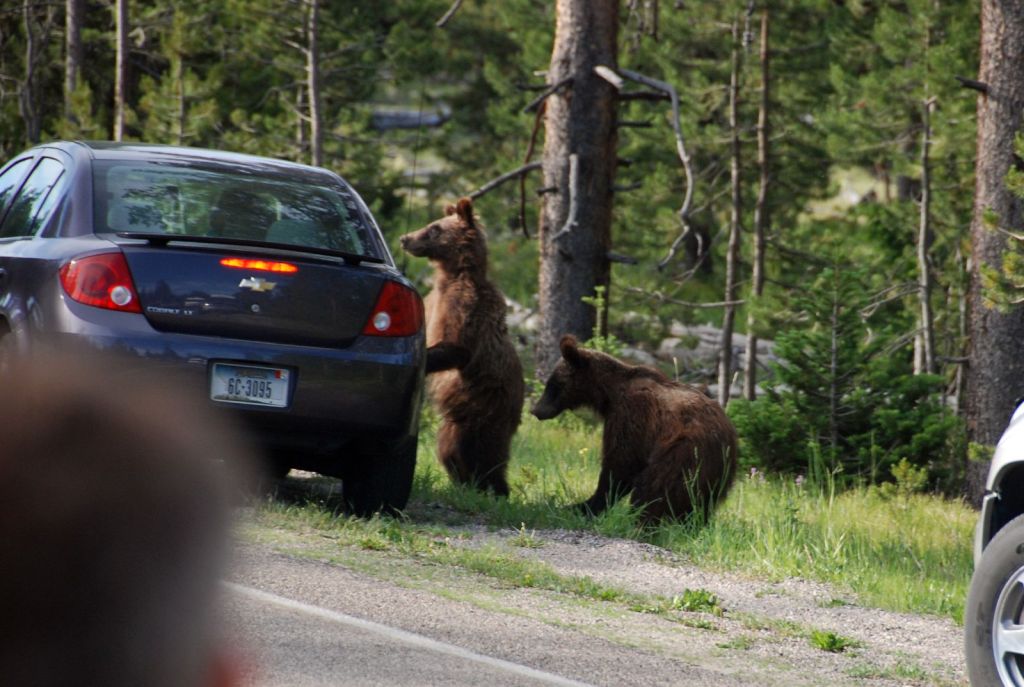
One grizzly cub is looking in the window of a blue car. The other one is right behind.
A photo of two of 399’s cubs. The photo was taken in June 2007 by a fellow trip participant Gabriel Goncalves.

One ranger told us a story about 399 that sounded a bit scary. A hiker, hiking alone (which you should not do) stumbled upon 399 and her cubs as they were in the middle of eating an Elk carcass. He had come out of a thicket and had not seen them until he essentially bumped into them. He screamed on top of his lungs because he was shocked and started running. 399, who was equally startled, pursued him. He laid down on the ground as he had read that he should do when pursued by a grizzly. 399, sniffed him but did not touch him. Her two cubs bit his behind but not hard.

After the grizzlies had left, he stood up, walked away and went to a hospital to check out the bites on his bum, which allegedly were not bad.

Shrubs, bushes and trees and a grizzly bear walking in the middle. There are cubs behind her, still in the bushes | Grizzly 399 is dead
399 is approaching the road. Her cubs are in the background. The photo was taken in June 2007 by a fellow trip participant Gabriel Goncalves.

As for us, we had a somewhat scary experience with Grizzly 399, but as it turned out, we were never in any danger. Someone that he had seen enough and decided to leave, so he drove his car, with a trailer in between 399 and her cubs. Someone rightly thought that was dumb and decided to improve the situation by angrily honking.

As a result, 399 started running towards us, the large group of tourists standing outside taking pictures. People started screaming and running, and unfortunately the math teacher who had organized the trip fell and got trampled by the panicking people.

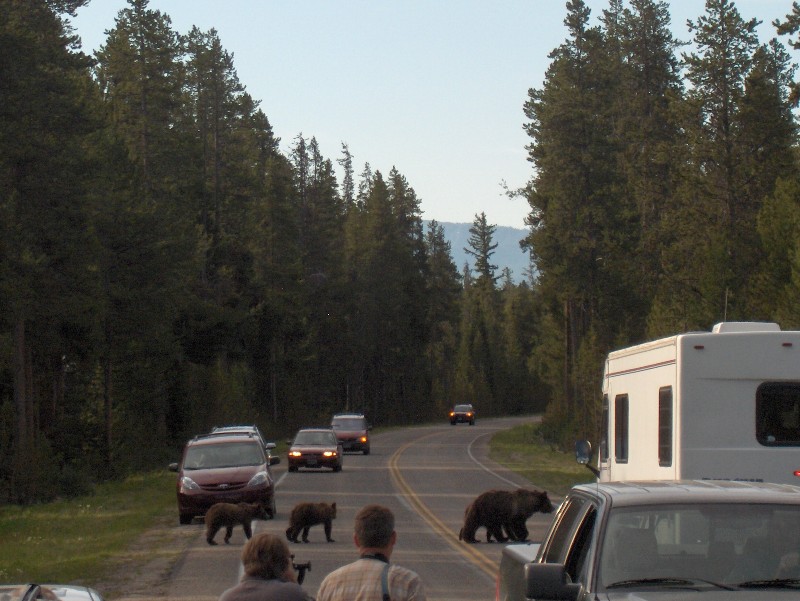
Six cars a car with a big trailer and a grizzly mother and three cubs on the road | Grizzly 399 is dead
399 is crossing the road with her cubs. The photo was taken in June 2007 by a fellow trip participant Gary Weinstein.

A lot of other things happened during the panic. People ran back to their cars or to any car. A couple of my fellow trip participants found themselves blocked from entering their own car (on the side away from the bear) because a plus sized lady was stuck in their door.

By pushing her from behind they were able to get her inside and could then enter the car themselves. The kids were standing on top of the SUVs that we had rented and crawled back into the cars through the sunroofs. My son entered the car last by his own choice.

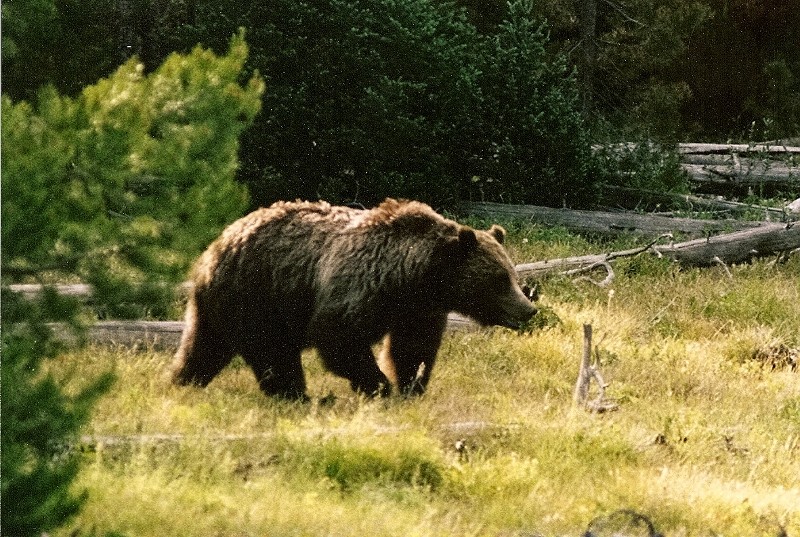
A grizzly bear is walking out of the thicket in a forest nearby the road | Grizzly 399 is dead
The math teacher, Frank Jordan, took this photo of 399.

As it turned out the panic was completely unnecessary. 399 was not chasing anyone and was not really running towards us. She was running to the end of the car with the trailer to get around it to get to her cubs on the other side. Below are a few more photos taken by my fellow trip participants. I did not get good photos of this event, so I am not including them.

Cars a trailer, and grizzly mother with her cubs on the road | Grizzly 399 is dead
399 and her cubs amongst the cars. The photo was taken in June 2007 by a fellow trip participant Carl Ondracek.
Grand Teton and a few other mountains in the Teton range reflected in a lake.
A view of the Teton Mountain range. The big mountain is Grand Teton. The photo was taken in June 2007 by a fellow trip participant Gabriel Goncalves.
The Teton range towering an island is reflected in a lake.
Jackson Lake, an island and the Teton Mountain range in the background. The photo was taken in June 2007 by a fellow trip participant Gabriel Goncalves.

To see the Super Facts click here


A Tarantula Hawk Encounter

This is not one of my super facts posts but I think it is interesting information about a quite frightening insect that I had never heard of before I encountered it- a tarantula hawk encounter.

When my daughter was 5-7 years old, she was part of what you can perhaps call a pre-girl-scout organization. It was called Indian Princesses. It later changed its name to Adventure Princesses. They had meetings where they learned things, and they went camping as a group with their dads or moms. There were bonfires, grilling, nature, fishing, adventures, jumping in mud, riding horses, and staying up late at night.

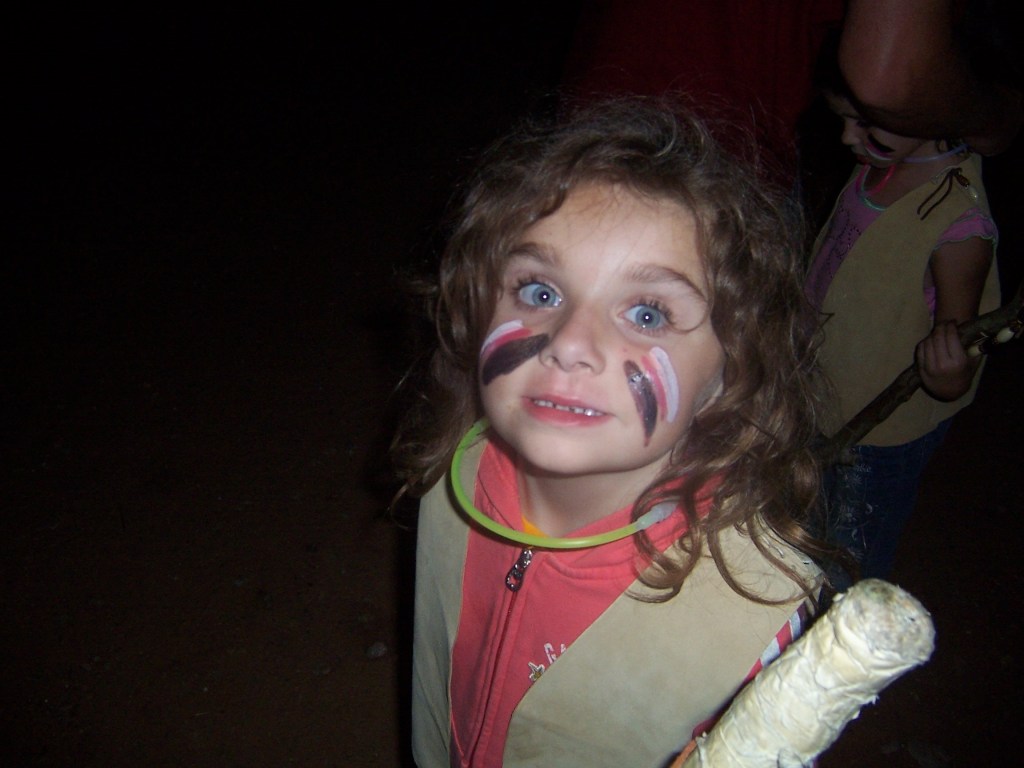
My daughter Rachel had colorful native American looking face paint | A Tarantula Hawk Encounter
My daughter Rachel camping at Camp Classen in Oklahoma. We are standing around a bonfire at night.

One time the Indian Princesses went camping in Camp Classen in Oklahoma. Since we live in North Texas it was not far away. One morning, as we were standing there talking and preparing breakfast, we saw a big black insect landing on the ground.

As we looked closer, we saw that it had landed on a Tarantula. It stung the tarantula, which stopped moving. Then it dragged the Tarantula through the grass about 100-150 feet and then under the girls’ bathroom. As we stood around the Tarantula and the big black insect, we saw that the insect had reddish wings and the body shape of a wasp or an ant. We did not know what it was. This was the year 2005 or possibly 2006 and cellphones with internet were not common.

A black Tarantula Hawk Wasp holding onto a Tarantula Spider. They are sitting in the green grass.
This is a photo of the Tarantula Hawk that we saw. It is dragging a Tarantula that it had just stung. It is our photo and maybe not a great photo.

My daughter ran to get her jewelry box from her cabin. When she came back, she handed it to me and said, “Dad put them in here”. Another dad standing nearby started laughing and said, “yes Thomas I want to see you put them in the box.” It was quite lucky that I didn’t because the big black insect with reddish wings was what is called a Tarantula Hawk, a type of wasp, which allegedly has the most painful sting of any insect in the northern hemisphere. There is an insect with a worse sting in South America.

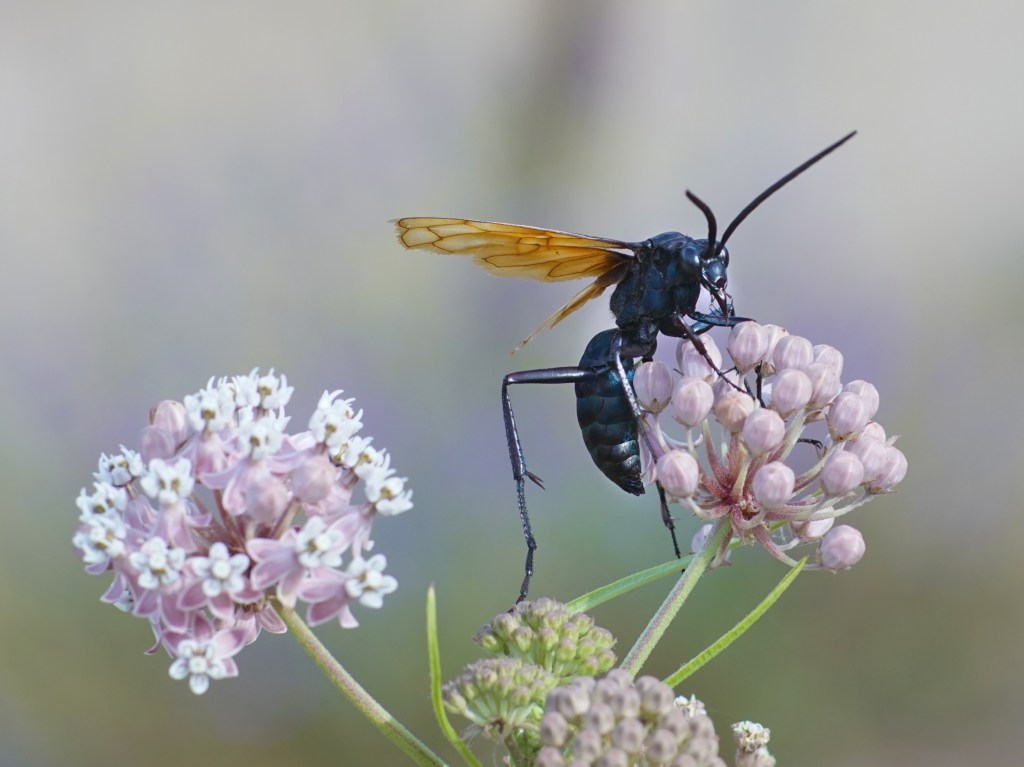
A big black Tarantula Hawk wasp sitting on a flower.
A Tarantula Hawk Wasp feeding on some flowers. Stock Photo ID: 2018945009 by Rix Pix Photography

The Tarantula Hawk is a wasp that feeds on nectar but the female Tarantula Hawk stings and kills Tarantulas to feed its larvae.  It stings the Tarantula between the legs, paralyzing it, and then drags the prey to a specially prepared burrow, where a single egg is laid on the spider’s abdomen, and the burrow entrance is covered.

According to this article one researcher described the tarantula hawk’s sting this way: “To me, the pain is like an electric wand that hits you, inducing an immediate, excruciating pain that simply shuts down one’s ability to do anything, except, perhaps, scream.

Below is a youTube video about the Tarantula Hawk.

Have you ever encountered a Tarantula Hawk or another scary wasp or insect?


To see the Super Facts click here