The goal of this blog is to create a list of super facts. Important facts that are true with very high certainty and yet surprising, misunderstood, or disputed by many. This blog aims to be challenging, educational, and fun, without it being clickbait. I determine veracity using evidence, data from reputable sources and longstanding scientific consensus. Prepare to be challenged (I am). Intentionally seek the truth not confirmation of your belief.
Super fact 74 : We celebrate the birth of Jesus on December 25th or December 24th, but it is quite unlikely that Jesus was born on those dates, and certainly not during the year zero.
Jesus Mary and Joseph Birth – This content was generated by an Artificial Intelligence (AI) system. Shutterstock Asset id: 2560713955
I’ve come across many adults who seriously believe that Jesus was born on December 25th. To them it will come as a big surprise to find out that the date of Jesus’ birth is never mentioned in the Gospels, or elsewhere in the Bible, not in any of the non-canonical Gospels, nor in any known historical sources. In addition, Luke’s Gospel mentions (Luke 2:8) shepherds tending flocks outdoors at night, which is not consistent with the cold winter in Judea. Biblical scholars (see 4th and 5th paragraphs in link) suggest that the information in the Gospel of Luke regarding the vision of John the Baptists father, Zechariah, leads to the conclusion that Jesus was likely born in September.
When was Jesus Born?
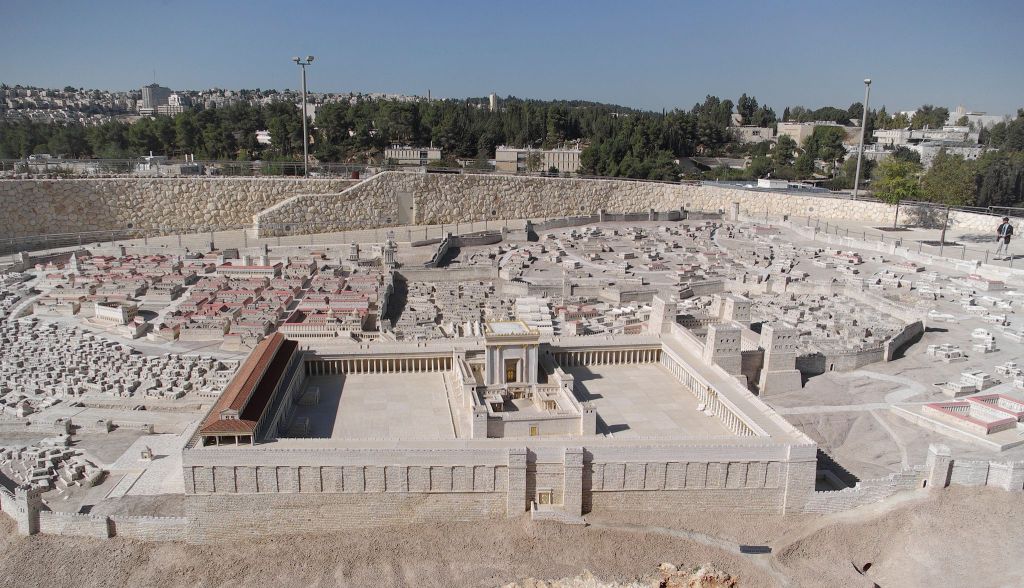
Jesus was not born during the year zero, because there was no year zero. The year after 1 BC (or BCE) is 1 AD (or CE). This causes problems for various scientific disciplines such as astronomy, climate science and history. The Gospel of Matthew mentioned that the birth took place during the time of Herod the Great who died in the year 4 BCE. I can add that Herod the Great got his moniker “Great” because of his extensive construction of cities, palaces, fortresses, aqueducts, and theaters across Judea, as well as the expansion of the Jewish temple.
The Gospel of Luke (Luke 2:1-2) states that the birth of Jesus took place during the census of the Roman governor of Syria, Quirinius (Cyrenius), which was in the year 6 CE, ten years after the death of Herod. However, there were other census taken earlier and scholars suggest that perhaps Luke’s account is a misstatement and that Mathew’s is more realistic. They conclude that Jesus was most likely born between 6 BCE and 4 BCE. As already mentioned it is very hard to pin down the time of the year when Jesus was born, but the month of September seems to be a likely candidate.
Herod was a builder and one of his projects was the expansion of the Temple. Herod’s Temple as depicted on the Holyland Model of Jerusalem. Berthold Werner, Public domain, via Wikimedia Commons.
Why is Christmas on December 25th?
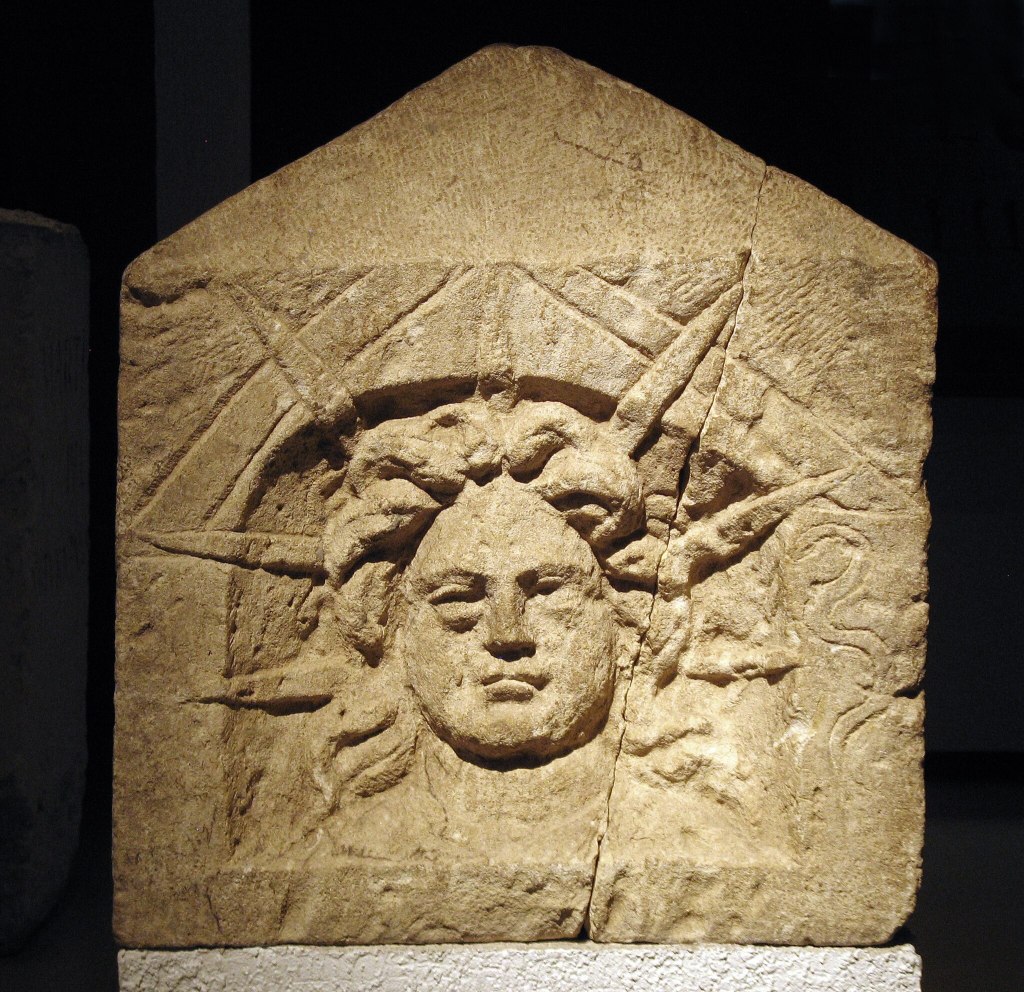
During the first few centuries after the birth of Jesus Christians did not celebrate his birth. The first mention of the birth of Christ on December 25 comes in the 3rd century CE by Hippolytus of Rome. The Roman festival Sol Invictus, celebrating the birth of the Sun God was Celebrated on December 25th. Many pre-Christian cultures marked the shortest day of the year, on December 21 or 22, as an important moment in the calendar, celebrating the “rebirth” of the sun. Germanic peoples celebrated Yule, and various Celtic and Mediterranean cultures held celebrations centered around the winter solstice. It is possible that December 25th was chosen as the day to celebrate the birth of Jesus so that people did not have to change the dates of their celebrations.
Regarding Germanic peoples celebrating Yule. In my native country Sweden Christmas is referred to as “Jul” pronounced “Yool” / “Yuul”. The word “Jul” directly comes from the Old Norse word “jól,” which referred to the pre-Christian midwinter festival (Yule in English). You can read about Scandinavian mythology here or here.
Tomtar (plural of Tomte) or Nisse in Norwegian is a type of small magical people, or gnomes, related to Vitter folk. They are friendly and is an inspiration behind the Swedish version of Santa Claus. An illustration of a Tomte. Shutterstock ID: 2060057882 by PLIMPLUM.
Super fact 28: That Earth is round, or spherical (or closely spherical) had been known for at least a couple of thousand years by the time Columbus set sail. Columbus did not set sail to prove that earth was round, and he knew it was round.
The ancient Greeks, particularly philosophers like Pythagoras and Aristotle knew that earth was round from observing how ships disappeared over the horizon hull first, while their masts were still visible. They noticed the earth’s round shadow cast on the moon during lunar eclipses.
If earth was flat, earth’s shadow would not appear round, especially not all the time. They also noticed that different constellations were visible depending on the location (on earth). So, noticing that earth was round was a simple and obvious observation that easily could be made thousands of years ago.
Earth is a sphere, or closely spherical. Photo by Pixabay on Pexels.com.
Columbus thought that the earth’s circumference was smaller than what Eratosthenes calculation had shown because he relied on maps created by Ptolemy instead of the calculations made by Eratosthenes. When he landed in the New World it seemed like Columbus had been vindicated but that did not last long. Essentially, Columbus sailed west and discovered America because he miscalculated the earth’s circumference.
Columbus thought earth was smaller. He did not know about the Pacific Ocean. Earth Pacific Ocean view Stock Illustration ID: 1617553012 by Matis75
It should be noted that even though the earth is very close to being a sphere, it is more correctly an ellipsoid because it is slightly bulging at the equator due to centrifugal forces. You sometimes hear people say that Copernicus or Galileo proposed that earth was round. This is of course false.
Copernicus’s theory of the solar system, the heliocentric model, proposed that the Sun is at the center of the solar system and the Earth, along with other planets, revolve around it. This was not a well-known fact at the time, unlike the fact that the earth is round. Galileo defended Copernicus theory. The famous alleged quote “And yet it moves” / “E pur si muove” is said to have originated from his argument with the church (however, this is not certain).
So, we know that people knew that earth was round thousands of years before Columbus, and thousands of years before the renaissance, and we know that Columbus did not sail west to prove that earth was round, and he certainly did not prove it. Yet I’ve heard this claim quite often, which is why I consider that earth being round being well known long before Columbus a super fact. Too few people believe earth to be flat like a pancake for me to consider earth being round a super fact.
Eratosthenes Calculates the Circumference of Earth
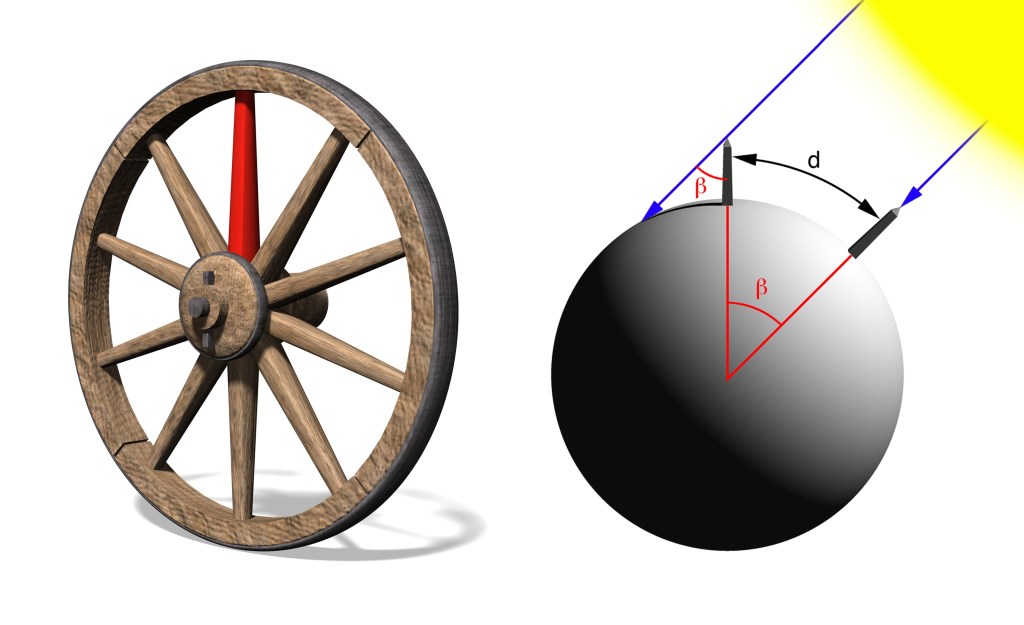
Around 500 BC (2,500 years ago) most Greeks believed that the Earth was round, but they did not know how big it was. The Greek philosopher and mathematician Eratosthenes devised a clever method of estimating its circumference and he got very close. He had heard from travelers about a well in Syene (now Aswan) that at noon on the summer solstice, about June 21 every year, the sun illuminated the entire bottom of a well, without casting any shadows, indicating that the sun was directly overhead. He had also heard that perfectly vertical poles had no shadows at this time.
The reason for this was that Syene/Aswan is located very close to the tropic of Cancer (23.5 degrees versus 24 degrees, or about 60 miles).
In Alexandria, north of Syene, the sun was not directly overhead on the summer solstice. Eratosthenes measured the angle of a shadow cast by a stick at noon on the summer solstice in Alexandria and found it to be 7.2 degrees. Using the distance from Alexandria to Syene and this angle Eratosthenes calculated earth’s circumference to be between 40,250 to 45,900 kilometers. Earth’s circumference is 40,075 kilometers.
Illustration of the measurement of the Earth circumference by Eratosthenes. On June 21st there is no shadow in Syene/Aswan but there is one in Alexandria. Asset id: 2319651251 by Javier Jaime
Resurgence in Flat Earth Beliefs
While very few people believed the Earth was flat 50 years ago, there has been a recent rise in Flat Earth conspiracy theories, largely fueled by online misinformation. Now a day 2% of Americans aged 18-24 years old firmly believe it is flat. That is despite the fact that it is easy to directly observe earth’s round shape. That is a small minority but why would anyone believe such a thing today.
For example, on a flat Earth, a Sun that shines in all directions would illuminate the entire surface at the same time, and all places would experience sunrise and sunset at the horizon at about the same time. With a spherical Earth, half the planet is in daylight at any given time and the other half experiences nighttime. Well just give someone overseas a phone call and you’ll see what the case is. In addition, different places have different amounts of daylight at the same time, which wouldn’t happen with a flat earth.
You can observe the round shape from an airplane. If you stand on a hill by the coast, you can see ships disappearing over the horizon hull first, and you can see earth’s round shadow cast on the moon during lunar eclipses. If you travel far, you can see the constellations and the stars being in different positions in the sky. The southern and northern hemisphere have completely different constellations.
Never mind Eratosthenes, gravity, the Coriolis force, other celestial bodies being round, eyewitness accounts by astronauts, ring-laser gyroscopes, and Foucault pendulums. The moon shows the same face to everyone on earth, which would not be possible if earth was flat. Also never mind NASA photos and the fact that no one has found the earth’s edge.
Below is a youTube video showing an animation composed of actual satellite photos by NASA. Earth is obviously round in this video.
In this video the near side of the moon is dark and what you see is the far side. The far side looks a little bit different from the near side of the moon. It is a new moon and the people on earth don’t see the moon. The sun is behind us and lights up both earth and the far side of the moon (this side people on earth do not see). Also, since there is daylight, the camera does not capture faint objects such as stars.
“The Swedish War King” is not about a super fact. It is just what I think might be interesting information. Americans are obsessed with the British Royalty. However, there 43 monarchies around the world, including Sweden (my native country). Some of the kings and queens of the past are quite interesting.
The focus of this post is Karl XII or Carolus Rex, the Swedish War King who invaded Russia before Napoleon did. I made a list of Swedish monarchs that I find interesting. Then I will focus on Karl XII . The number following the name of the king is his/her time of reign.
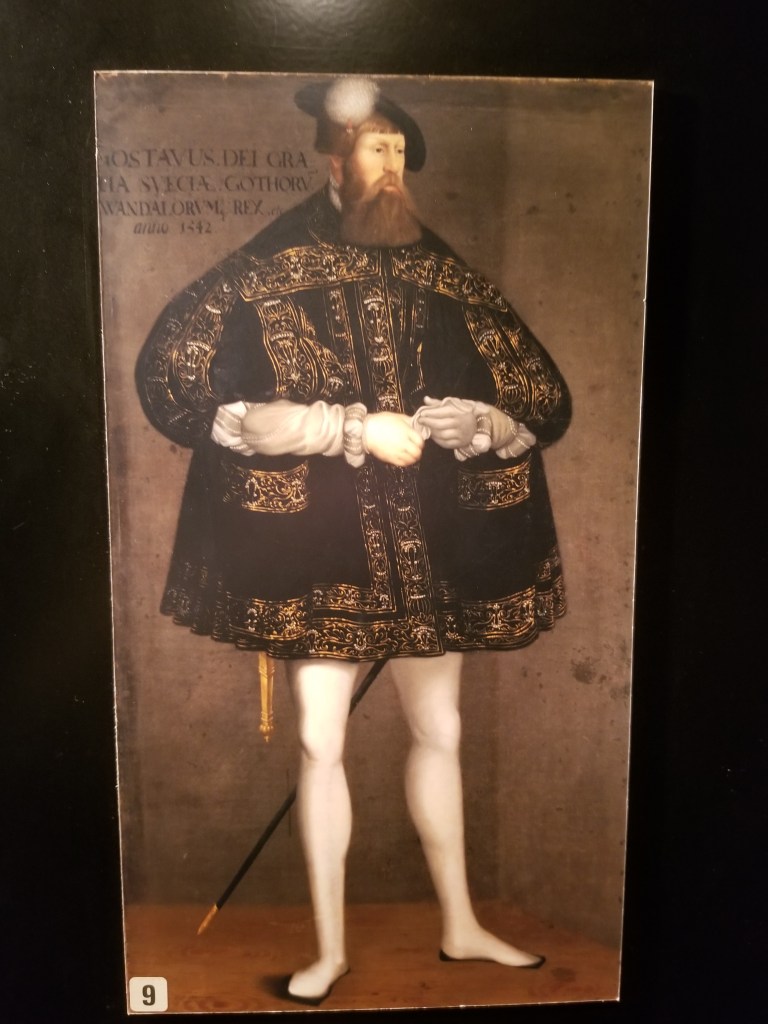
Painting of Gustav I Vasa liberator of Sweden from Denmark. Fashion was somewhat different back in the day.
Olof Skötkonung, 995–1022, son of King Erik VII and Sigrid the Haughty. He was Sweden’s first Christian King. The Swedish Viking era ended during his reign.
Erik IX, 1156 – 18 May 1160. Saint Erik was both a king and a saint. He tried to Christianize Finland and led the first crusade east. He was assassinated. Thereof his short reign.
Gustav Vasa or Gustav I, 6 June 1523 – 29 September 1560. From 1389 to 1523, Sweden was often united with Denmark and Norway under the kings of the Kalmar Union. Sweden’s full independence was restored under Gustav I in 1523. Gustav was elected king in Strängnäs 6 June 1523. Therefore, June 6 is celebrated as Sweden’s Independence Day. The Danish king at the time was King Christian II. In Sweden he is referred to Christian the Tyrant and in Denmark as Christian the Good.
Gustav II Adolf, 30 October 1611 – 6 November 1632. He is known as the “father of modern warfare”, or the first modern general, and under his reign Sweden became one of the great powers of Europe. Sweden was one of the primary military forces in Europe during the Thirty Years’ War (on the Protestant side). An estimated 4-8 million people died in the Thirty Years’ War, so this was a big war.
Queen Christina, 6 November 1632 – 16 June 1654. She was the daughter Gustav II Adolf. Gustav Adolf was closely attached to his daughter, and he taught her everything about being a monarch. Ironically, she fought to end the Thirty Years’ War. She converted to Catholicism, abdicated, and moved to Rome.
Carl XII, Charles XII, or Karl XII, or Carolus Rex, 5 April 1697 – 30 November 1718, was the Swedish War King, known for among other things invading Russia before Napoleon did. (see video below).
Gustav III, 12 February 1771 – 29 March 1792, was an autocrat and a believer in enlightened absolutism (educated despots). He ended the age of liberty and took away most of the powers of the riksdag/congress. He was assassinated.
Carl XIV Bernadotte or Charles XIV John, 5 February 1818 – 8 March 1844, was the king of Sweden and Norway. He was a former General in Napoleons army. Under his reign Sweden entered a long period of peace and neutrality that still lasts today. He is the founder of the current dynasty.
Carl XVI Gustaf Bernadotte or as he sometimes spells it himself Cal XVI, 15 September 1973 – present. He is champion for the dyslexic community. He was formerly made fun of because of his problems with spelling. Not anymore. His work for the dyslexic community has earned him respect.
The current Swedish Royal family. The two people in the middle are Queen Silvia and King Carl XVI Bernadotte. To the right of the king is the future monarch of Sweden princess Victoria and to the left of Queen Silvia is her husband. The others are their other two children and their spouses.
When Karl XII was king (5 April 1697 – 30 November 1718) Sweden was a large and powerful country. I should add that Sweden is viewed as a very small country, but it is significantly larger than California even today.
However, back when Karl XII became king Sweden included what is now Sweden, Finland, Estonia, parts of Norway, Denmark, Latvia, Germany, Poland, and Russia. Karl XII attempted to enlarge Sweden and in doing so he invaded Russia with a goal of taking Moscow and overthrow Tsar Peter the Great. It failed. The Russian winter killed the project.
According to the video below Karl XII was an inspiration for Napolean to do same thing. It was my blogger friend Debbie who alerted me this video. It is a bit long, 15 minutes, so you may want to watch only if you are really interested.
I just returned from a trip to Scandinavia with my son and his wife and I thought I would make another post related to our travel. “Sweden and Norway and Carl XIV Bernadotte” is a factual post, but it is not a super-fact post.
This post is about an interesting Swedish and Norwegian king who was imported from France, and who was the founder of the current Swedish dynasty, Bernadotte. While the United States is a democratic federal republic and Sweden is a democratic constitutional monarchy, they are both representative democracies with a lot in common politically.
The Swedish political power is divided between a legislative, executive, and judicial branch, just like in the United States, people vote for their representatives, and the modern Swedish king does not have any significant political power. However, the royal family is an important symbol for Sweden and is in general well liked. Below is the photo of the current Swedish royal family.
The Swedish Royal family. The two people in the middle are Queen Silvia and King Carl XVI Bernadotte. To the right of the king is the future monarch of Sweden princess Victoria and to the left of Queen Silvia is her husband. The others are their other two children and their spouses.
It may come as a surprise to non-Americans that despite the United States being a Democratic Republic and not a monarchy, Americans are obsessed by the British Royal family. I should say that this obsession is only with the British Royal Family and not with any of the other 42 Royal Families of the world. Sweden, Norway and Denmark are all monarchies, but my efforts to create an American obsession with the Swedish royal family might be in vain. Below is a map of northern Europe showing these three countries and a few more north European countries.
Northern Europe including Sweden, Norway and Denmark. Stock Vector ID: 2173507635 by Peter Hermes Furian
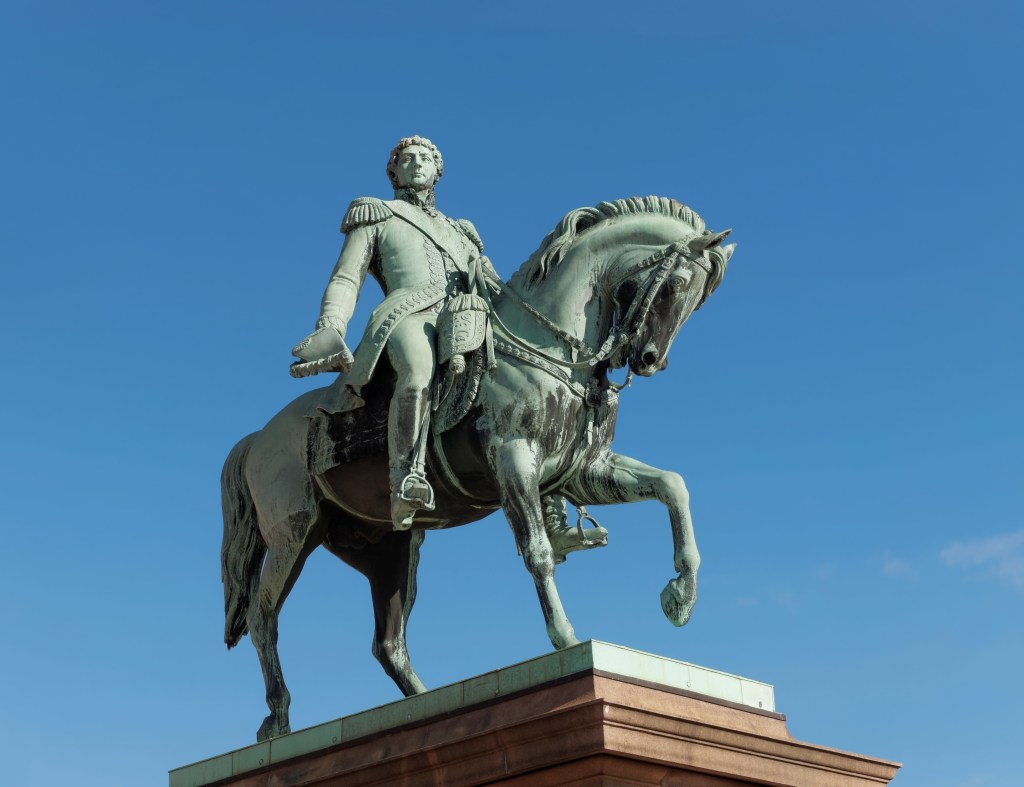
King Karl XIV Johan of Sweden (or Carl XIV), or Charles XIV John was King of Sweden and Norway from 1818 until his death in 1844 and the first monarch of the Bernadotte dynasty. However, he was elected the heir-presumptive to the childless King Charles XIII of Sweden in 1810 and became the de facto ruler after Charles XIII (Carl XIII) had a stroke in 1812. King Karl XIV was born in France 26 January 1763 and his name was originally Jean-Baptiste Jules Bernadotte.
During the Napoleonic Wars, he participated in several battles as a Marshal of France, and he played a significant role in the French victory at Austerlitz. He became an extended member of the French Imperial family (Emperor Napoleon).
This is a painting of Jean-Baptiste Jules Bernadotte (Carl XIV) hanging in the Royal Palace in the Old City of Stockholm.A photo I took of the guard at the Royal Palace in the Old City of Stockholm. If you zoom in you can see that a few of them are women.One of the many rooms inside the Royal Palace in the Old City of Stockholm.Drottningholm, one of the Royal Palaces in Sweden. It was built in the 1660’s and inspired by Versailles.
Sweden took Norway from Denmark in 1814, and Karl XIV Johan became the ruler of both Sweden and Norway and was officially made king in 1818. Sweden was a country that had been almost constantly at war but since 1814 reign Sweden was at peace. Sweden’s longstanding non-alignment and peace was initiated during King Carl / Karl XIV reign (Karl XIV Johan died 1844). Norway and Sweden resolved their union peacefully in 1905. Karl XIV Johan was popular in both countries.
My photo of a painting in the Royal Palace in the Old City of Stockholm. It shows the coronation of Karl XIV Johan.Carl XIV of Norway and Sweden. This statue is located in Norway. Stock Photo ID: 191276033 by Toni Genes
I am currently traveling in Scandinavia with my oldest son and his wife. Therefore, my blogging activities are a little bit less intense than usual. This post is factual, but it is not a super-fact post.
Yesterday, we visited Uppsala, a city north of Stockholm. Uppsala is Sweden’s fourth largest city, and it is the home to one of Europe’s most prominent universities, Uppsala University. This is also where I studied engineering physics before coming to the United States.
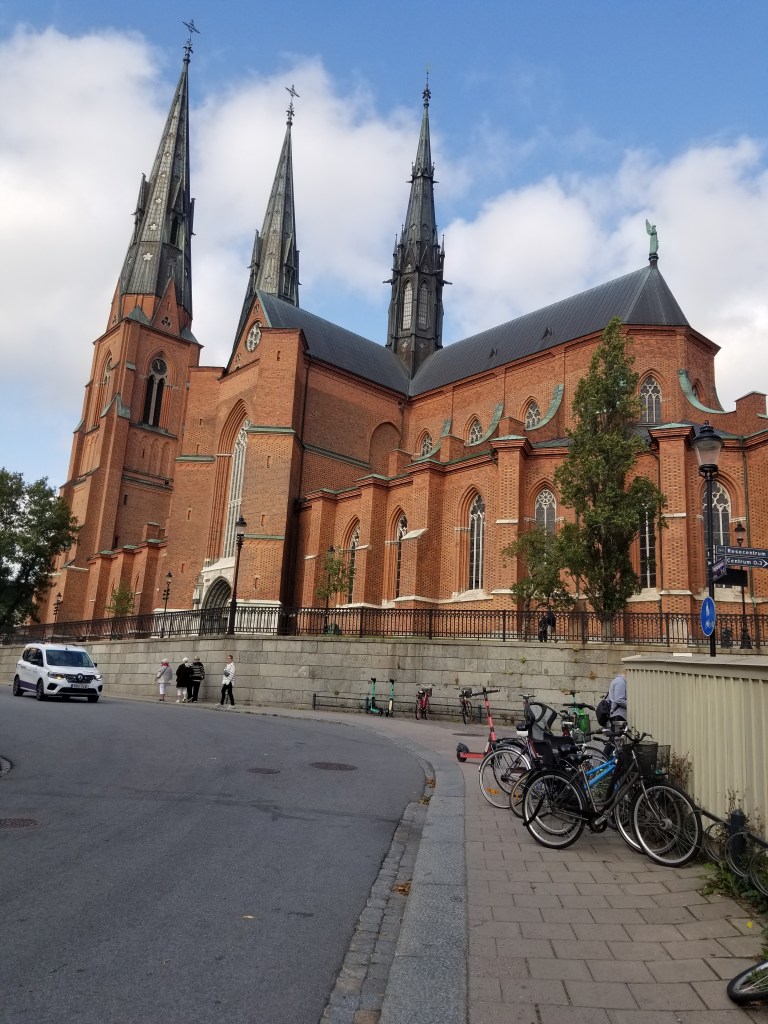
The largest cathedral in Sweden, Uppsala Domkyrka. This is where Gustav I Vasa is buried. Gustav I is arguably Sweden’s most prominent king.
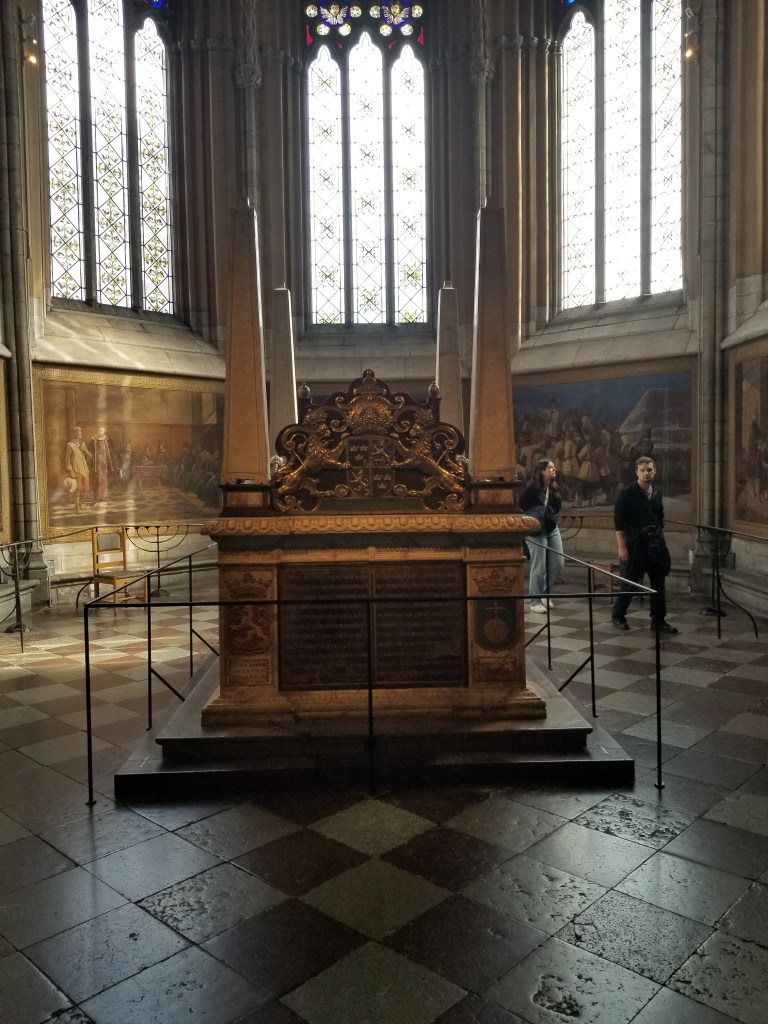
During the Viking era Uppsala was the religious center of Sweden. Later as Sweden became Christian it remained the religious center of Sweden, however, the Viking temple in old Uppsala was replaced by a Christian church. Sweden’s largest cathedral, Uppsala Domkyrka, is located in Uppsala. Inside Uppsala Domkyrka is the tomb of the king that is considered to be the father of Sweden, Gustav I Vasa.
Inside Uppsala Domkyrka.
The relationships between the Scandinavian countries were quite complicated in the past, especially that between Sweden and Denmark. If you do a google search using the phrase “which two countries fought the most wars with each other” the top results all claim that this was Sweden and Denmark. The websites in question, Quora, Twitter and Reddit, aren’t reliable sources, so this may not be true. However, more reliable sources, such as historical sites, encyclopedia Britannica and Wikipedia state that Sweden and Denmark fought at least 11 wars with each other.
Denmark vs Sweden. The yellow and blue flag is the Swedish flag. Red and white is the Danish. Shutterstock Stock Photo ID: 1114320377 by Hasanov Jeyhun.
In 1397 a union was formed between Denmark, Norway and Sweden called the Kalmar Union (Kalmar is a city a Sweden). The Kalmar Union came to be dominated by Denmark and eventually Sweden rebelled against the Danish King Christian II. He was called Christian the Good in Denmark and Christian the Tyrant in Sweden.
This rebellion was led by a noble, Gustav Eriksson who later would be crowned as Gustav I Vasa. He was the first of the Vasa kings. Sweden declared its independence from Denmark on June 6th, 1523, which is why June 6th is Sweden’s national day, or Independence Day.
The Kalmar Union. Finland was part of Sweden at the time. Ssolbergj, CC BY-SA 3.0 <https://creativecommons.org/licenses/by-sa/3.0>, via Wikimedia CommonsPainting of Gustav I Vasa. Fashion was somewhat different back in the day.
Sweden and Denmark had a complicated history that included a lot of hostilities and wars, but you wouldn’t know it if you looked at the situation today. There hasn’t been a war between Sweden and Denmark in more than 180 years and Swedes and Danes get along very well, well as long as you don’t talk too much about the past. In my opinion Swedes and Danes get along better than Texans and Oklahomans. Maybe it helps that Swedes can’t understand what the Danes are saying.
The tomb of Gustav I Vasa in Uppsala Domkyrka. In the background is my son and his wife.











 Super Facts