
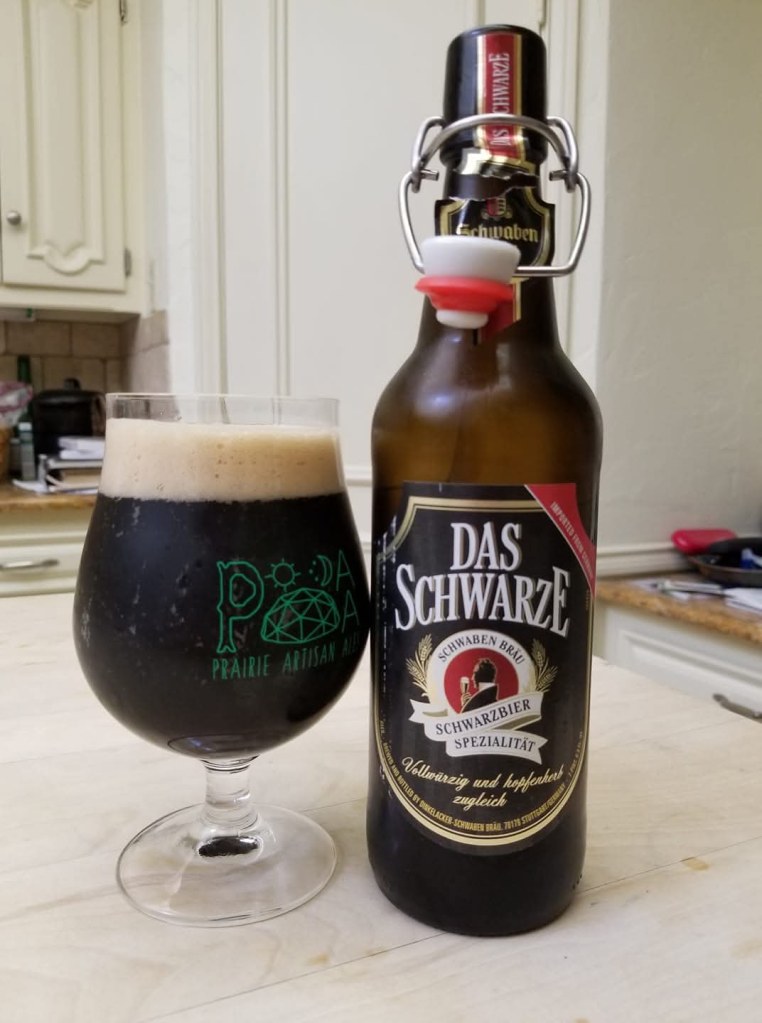
Super fact 50 : There are hundreds of types of beer but in general they fall into two main categories, ales and lagers, and these two categories are not differentiated based on color. The ales are not necessarily dark and lagers light. There are light colored ales and dark, even black ales. There are light colored lagers and dark and almost black lagers (Schwarzbier). The difference between ales and lagers is the type of yeast used and the fermentation temperature. Ales are typically made with top-fermenting yeast at warmer temperatures. This result is a wider range of flavors and aromas, often with fruity or spicy notes. Lagers, on the other hand, are made with bottom-fermenting yeast at cooler temperatures making them crisper and more subtle. Ales have been around for 6,000 years. The lager is a more recent invention.
I consider this a super fact, first, because even though beer is a well-known drink that a lot of us drink almost every day, a lot of people don’t know what the two basic kinds of beer are. They don’t know what an ale is or what a lager is. Even beer fans and many people who drink beer every day are often clueless about this, the most basic fact about beer. A lot of people say that they like light/blond beer or they like dark beer. In my native country Sweden, which I admit is not a true beer country, I often hear people say that they prefer “ljus öl” (light/blond beer) rather than “mörk öl” (dark beer), or the other way around, which is like saying that you like blond / light colored food rather than dark colored food. It doesn’t make sense.
I am in the process of learning Franch, and I’ve discovered that this confusion is even baked into the French language. Well as you might guess France is not a true beer country. If you use Google Translate and you type in “Lager” in the English edit box the answer you get in French is “Bière blonde”, even though French and Belgian beer that are labeled Blonde frequently are Ales not Lagers. I’ve read a lot of French language sites mentioning beer, and unless the author has some beer expertise, they make the same mistake as Google Translate. Blonde / light beer is not Lager, and dark beer is not necessarily Ale.
I had a discussion about this with one of my French teachers and despite me having talked a lot about beer in class and having previously shown him that I knew something about the topic, he had a very hard time accepting the truth. After a Google search he finally accepted the truth, but he was very surprised, perhaps even shocked.
The confusion is immense, it is worldwide, and the truth is surprising to some people. I should mention that Americans for the most part get this right. In general Americans know that Lager isn’t necessarily blonde and vice versa. They know that IPAs, which are not Lagers but Ales, typically are light colored. Perhaps because of the prominent craft beer industry in the US. I should also mention that there are also hybrid beer styles and beer styles that are hard to classify as lager or ale. More about that later.

Secondly, lagers, especially pale bland mass-produced lagers have become so common that when people taste an ale, especially if it is a little bit different, like fruity, tart, have chocolate or coffee flavors, etc., they don’t even consider it a real beer. In their minds real beer is a bland tasting lager. Never mind that we have had Ales for 6,000 years, and that Ales dominated beer drinking up to relatively modern times. Nowadays 90% of beer consumption worldwide is lagers (87% in the US), but throughout most of human history nearly 100% of beer consumption worldwide was ales.

What is an Ale?
As mentioned, an Ale is a style of beer, brewed using a warm fermentation method. Ales are typically made with top-fermenting yeast at warmer temperatures. This result is a wider range of flavors and aromas, often with fruity or spicy notes. The word ale is an English word which in medieval England meant a drink brewed without hops (it is not what it means today). Some popular ales include IPA, Pale Ale, Stouts, Porter, Scotch Ale, and Barley Wine. Below is a more complete list of Ales. The list is from the beer advocate. Despite the 120 styles listed the list is not complete. It should be noted that I’ve added a few that were missing.
- India Pale Ales : American IPA, Belgian IPA, Black IPA, Brut IPA, Cold IPA, English IPA, Imperial IPA, Milkshake IPA, New England IPA.
- Pale Ales : American Amber / Red Ale, American Blonde Ale, American Pale Ale, Belgian Blonde Ale, Belgian Pale Ale, Bière de Garde, English Bitter, English Pale Ale, English, Pale Mild Ale, Extra Special / Strong Bitter (ESB), Grisette, Irish Red Ale, Kölsch, Saison.
- Wild/Sour Beers : Berliner Weisse, Brett Beer, Faro, Flanders Oud Bruin, Flanders Red Ale, Fruit Lambic, Fruited Kettle Sour, Gose, Gueuze, Lambic, Wild Ale.
- Wheat beers : American Dark Wheat Beer, American Pale Wheat Beer, Dunkelweizen, Grodziskie, Hefeweizen, Kristallweizen, Witbier.
- Stouts : American Imperial Stout, American Stout, English Stout, Foreign / Export Stout, Irish Dry Stout, Oatmeal Stout, Russian Imperial Stout, Sweet / Milk Stout.
- Porters : American Porter, Baltic Porter, English Porter, Imperial Porter, Robust Porter, Smoked Porter.
- Dark Ales : Dubbel, Roggenbier, Scottish Ale, Winter Warmer.
- Brown Ales : Altbier, American Brown Ale, Belgian Dark Ale, English Brown Ale, English Dark Mild Ale.
- Strong Ales : American Barleywine, American Strong Ale, Belgian Dark Strong Ale, Belgian Pale Strong Ale, English Barleywine, English Strong Ale, Imperial Red Ale, Old Ale, Quadrupel (Quad), Scotch Ale / Wee Heavy, Tripel, Wheatwine.
- Specialty Beers: Ancient Herbed Ale, Sahti.


Wild Ales and Sour Beers often have fruity flavors. This can be achieved by adding fruits or berries to them but often fruit flavors emerge naturally from the fermentation process, which, at least if you use wild yeast, produce esters (fruit flavors). Wheat beers often have banana or pear notes and just as for Wild Ales these flavors emerge naturally from the fermentation process (esters again). Some of the IPAs also have distinct fruit flavors, especially the New England style IPAs, but in this case the fruit flavors come from the hops.

What is a Lager?
As mentioned, lagers are made with bottom-fermenting yeast at cooler temperatures making them crisper and more subtle. The word lager (German) means to storage or storeroom and used to refer to beers stored at cold temperatures. Sometime in the 15th century cold fermentation yeast emerged, and people started using it to do fermentation at cold temperatures. As time went by this form of fermentation became more popular. It was brought to the US in 1840 and between 1860 and 1870 it became the most popular fermentation process in Bohemia. As mentioned, today 90% of beer consumption worldwide is lagers.
Below is a more complete list of Lagers. The list is from the beer advocate.
- Pale Lagers: American Adjunct Lager, American Lager, Czech / Bohemian Pilsner, Czech Pale Lager, European / Dortmunder Export Lager, European Pale Lager, European Strong Lager, Festbier / Wiesnbier, German Pilsner, Helles, Imperial Pilsner, India Pale Lager (IPL), Kellerbier / Zwickelbier, Light Lager, Malt Liquor.
- Dark Lagers : American Amber / Red Lager, Czech Amber Lager, Czech Dark Lager, European Dark Lager, Märzen, Munich Dunkel, Rauchbier, Schwarzbier, Vienna Lager.
- Specialty Lagers : Japanese Rice Lager, Chile Beer

Finally, there are also specialty beers that are hybrids, or neither or that can be both.
- Hybrid (Ale/Lager): Bière de Champagne / Bière Brut, Braggot, California Common / Steam Beer, Cream Ale.
- Neither lager or ale, or can be both : Fruit and Field Beer, Low-Alcohol Beer, Rye Beer, Smoked Beer, Herb and Spice Beer, Kvass, Gruit, Happoshu, Pumpkin Beer.




 Super Facts