The Bizarre Reality of Black Holes

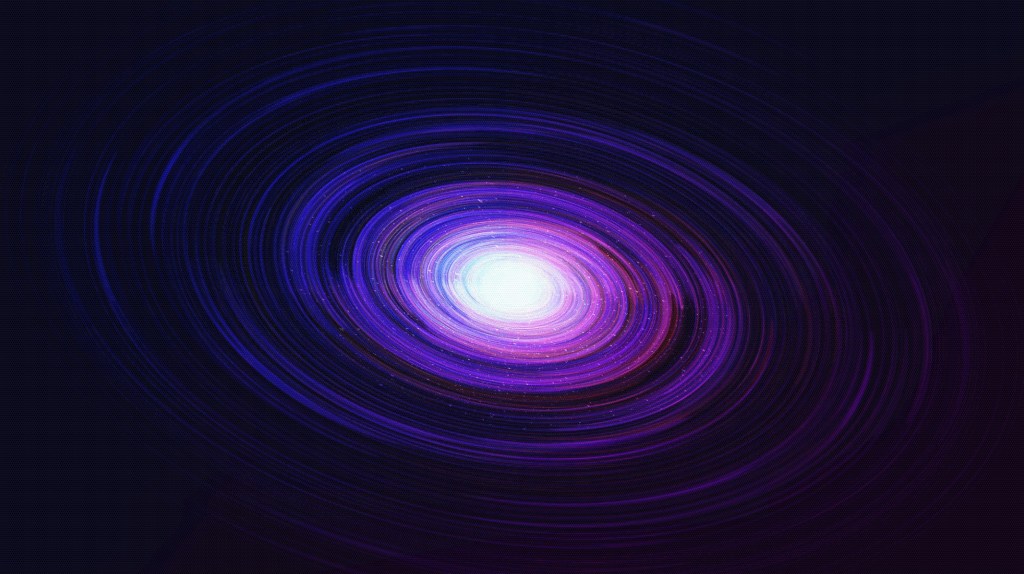
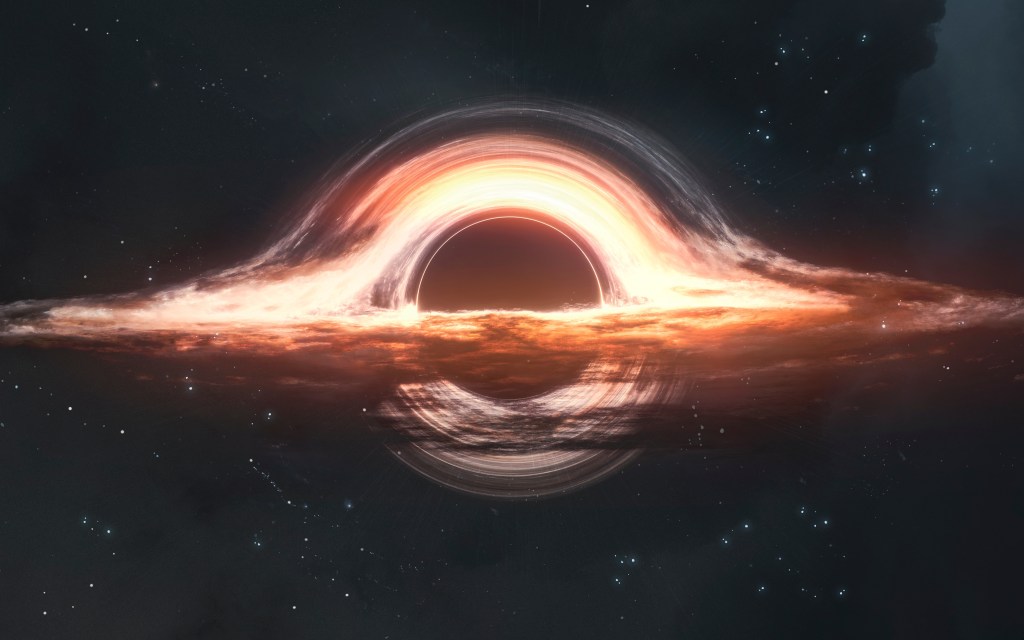
A black hole with a large bright accretion disk | The Bizarre Reality of Black Holes
3D illustration of giant Black hole in deep space. High quality digital space art in 5K – realistic visualization. Stock Illustration ID: 2476711459 by Vadim Sadovski.

Superfact 15: A black hole is a region of spacetime wherein gravity is so strong that nothing can escape it, not light, not anything. There are different kinds of black holes. We don’t fully understand black holes, which makes them very interesting to science. The boundary of no escape is called the event horizon.  Black holes are invisible. They are truly black. However, we can see what they do to their environment as they consume surrounding matter. Below are some bizarre facts about black holes.

  • Time runs much slower closer to a black hole.
  • An object falling towards a black hole will become redder, faint, then infrared, then invisible and all its movements and clocks will freeze.
  • From the perspective of an outside observer, time appears to stop for someone reaching the event horizon of a black hole. Time will continue for someone falling in.
  • At the center of a black hole may lie a gravitational singularity, a region where the spacetime curvature becomes infinite. However, since we cannot peer into a black hole we cannot know.
  • The largest known black hole (TON 618) is more than 287 million times more massive than the most massive known star (R136a1).
  • If our planet earth collapsed into a black hole, it’s diameter would  be 1.75 centimeters or 0.69 inches in diameter. The diameter of the largest known black hole (TON 618) is 242 billion miles, which is more than one million times larger than the distance from the earth to moon.
  • There are supermassive black holes located at the center of most large galaxies, including our Milky Way. The Milky Way’s black hole is about 4 million times the mass of the Sun.
  • Astronomers estimate that there are around 100 million black holes in our Milky Way.
  • When an object (maybe a spaceship, or a person) approaches or falls into a black hole the difference between the gravity on the parts closer to the black hole and those further away will be so large that the object is stretched and ripped apart. This is called spaghettification.
  • Stretching from the event horizon and out another half radius of the black hole is a region called the photon sphere. In the photon sphere light will travel in a non-stable circular orbit around the black hole. Light will go around and around for a while. If you are in the photon sphere you might be able to see the back of your head.
  • Above is just a small sample of weird black hole facts.
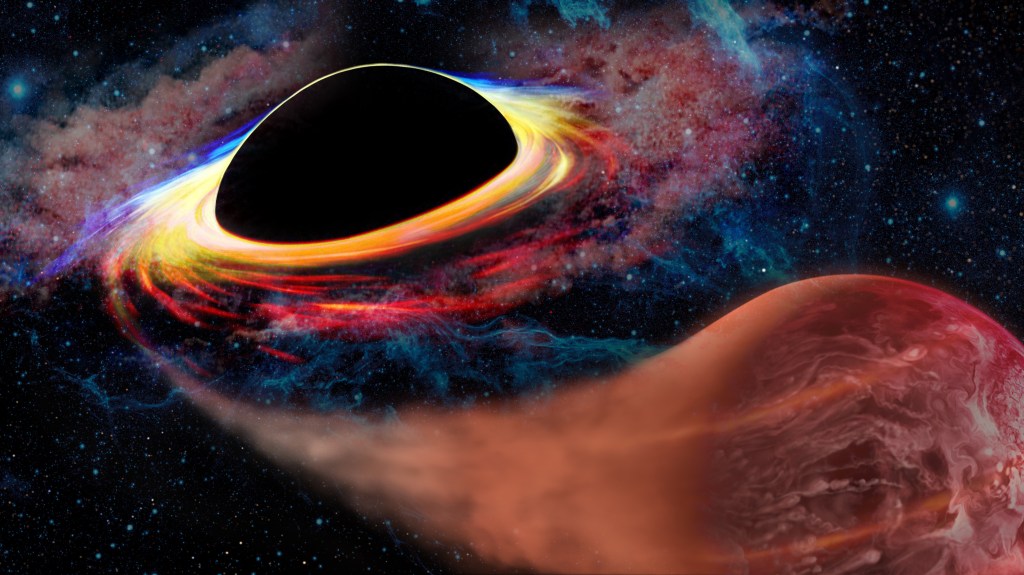
A black hole sucking in a planet
The understanding of black holes requires the General Theory of Relativity, and it is still a lot we don’t understand about them. Stock Photo ID: 2024419973 by Elena11

The Bizarre Reality of Black Holes

I chose the Bizarre Reality of Black Holes as a super-fact and included the ten facts above because these facts are shocking and yet not well known. Below is a photograph of a supermassive black hole at the center of the galaxy M87 taken by the event horizon telescope in 2017. To create the picture below image processing was needed. It is the first photograph of a black hole. This supermassive black hole is an estimated 6.5 billion times as massive as our sun, and 28 million times as massive as the largest known star.
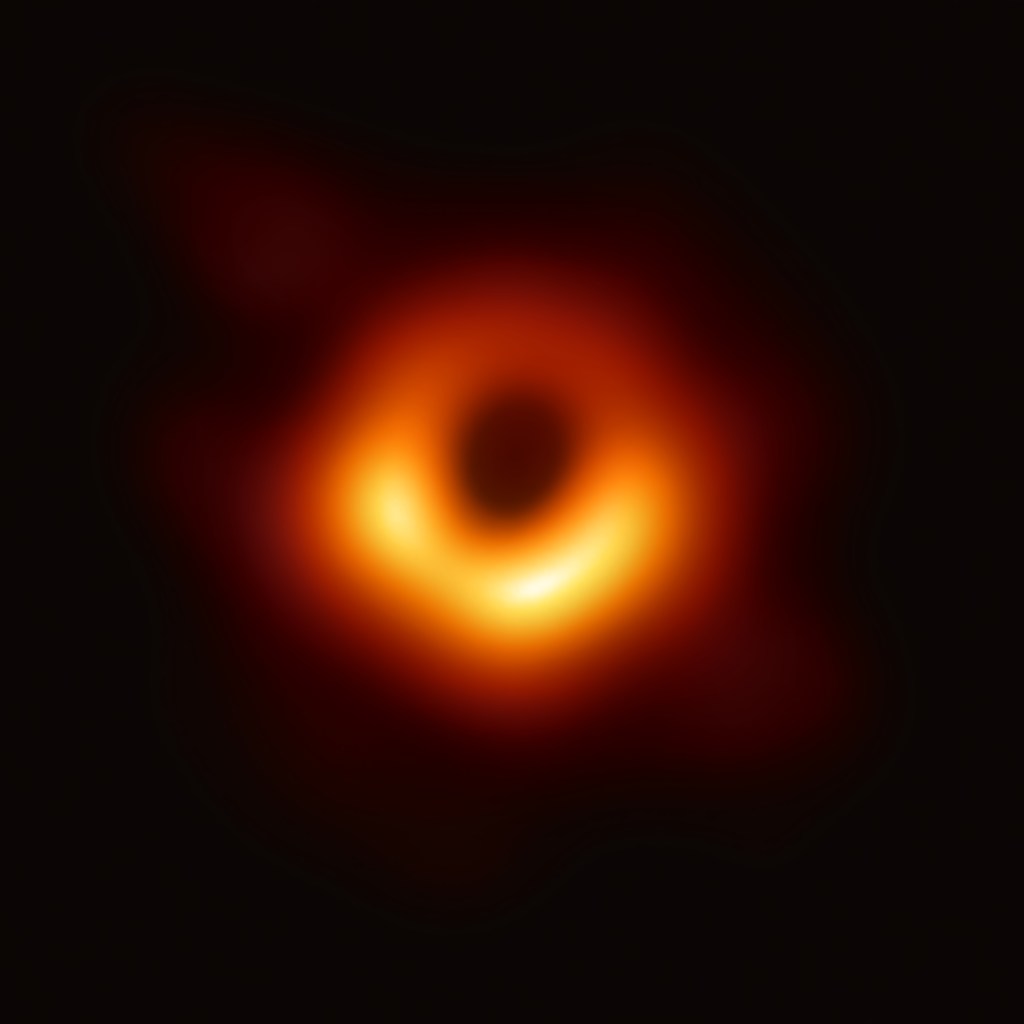
The supermassive black hole at the center of the galaxy M87 taken by the event horizon telescope in 2017 | The Bizarre Reality of Black Holes
The photo of the supermassive black hole at the center of the galaxy M87 taken by the event horizon telescope in 2017. Uploader cropped and converted TIF to JPG – This file has been extracted from another file, CC BY 4.0, https://commons.wikimedia.org/w/index.php?curid=77925953.

Below is an animation created by NASA that depicts what an observer falling into a black hole would see.

The fact that from the perspective of an outside observer, time appears to stop for someone reaching the event horizon of a black hole seems to prevent anything from falling into a black hole from an outside perspective. How does anything ever get inside the black hole if it freezes up at the event horizon? Black holes grow, they collide and merge, so clearly things can get inside, right? But how? As I tried to find the answer to this question, I found that I was far from the only one asking this question.
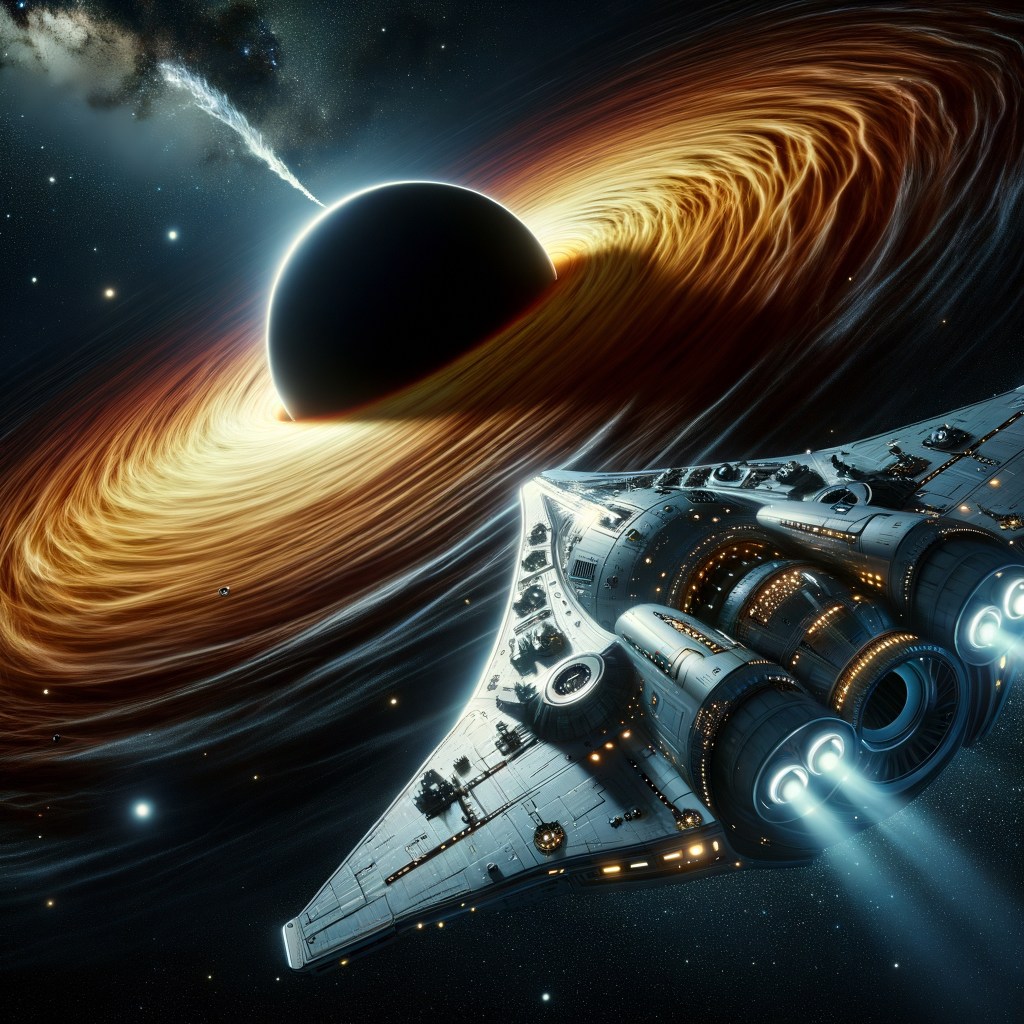
A black hole with an orange accretion disk is approached by futuristic starship.
Realistic spaceship approaching a black hole. This content was generated by an Artificial Intelligence (AI) system. Stock AI-generated image ID: 2448481683 AI-generated image Contributor Shutterstock AI Generator.

I searched physics forums trying to find the answer to this question. There were a lot of discussions but no clear answers. Some said, nothing falls into a black hole. Everything accumulates on the event horizon from the outside perspective and that’s how the event horizon and the black hole grows. The observer crossing the horizon essentially jumps infinitely far into the future, or into a different universe, that’s how he can pass through the event horizon.

Others said that the black hole is not static, it grows, and it shrinks from Hawking radiation, and this complicates the equations so that objects can enter the black hole even from an outside perspective. I have a few physics books on black holes that I have not finished reading. If I learn something better, I will update this post.
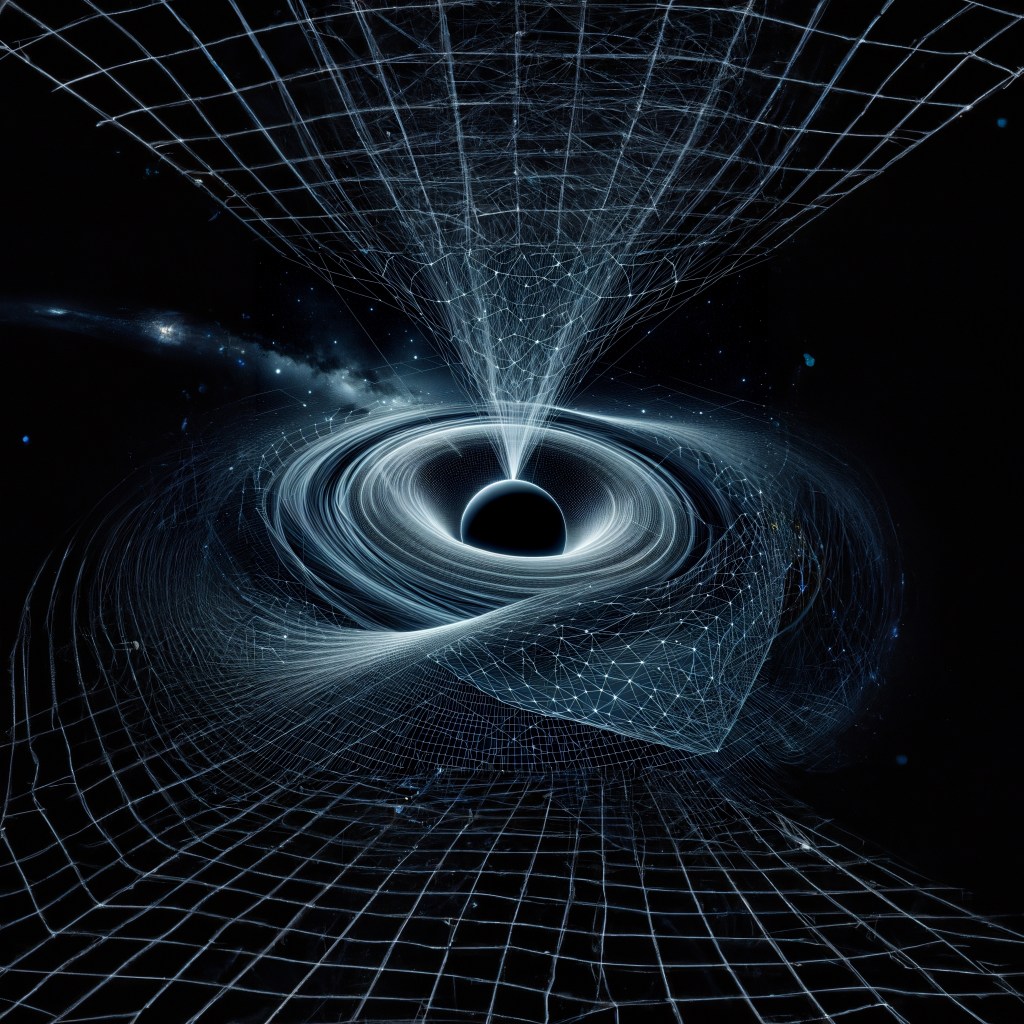
A depiction of a black hole surrounded by a space-time geometric grid that is bending due to gravity | The Bizarre Reality of Black Holes
AI-generated image Description : Space Black Hole Blue Illustration Gravity Geometry Vast Line. Stock AI-generated image ID: 2457551367 by AI-generated image Contributor Shutterstock.AI

In the image above the grid demonstrates how a black hole is distorting space-time. Other strange facts about black holes are that they are slowly evaporating through what is called Hawking radiation.

They come in different sizes. The smallest known black hole (XTE J1650-500) has a diameter of approximately 15 miles. Perhaps scariest of all, black holes are nearly undetectable unless they are feeding on star dust or tugging on nearby stars. That means one hungry black hole could be zipping right through our solar system without us knowing. Considering there are an estimated 100 million black holes in our Milky Way space travel might be scary.

Addressing a Good Question

After posting this post I received a question via email regarding this fact “If our planet earth collapsed into a black hole, its diameter would  be 1.75 centimeters or 0.69 inches in diameter. The diameter of the largest known black hole (TON 618) is 242 billion miles, which is more than one million times larger than the distance from the earth to moon.” The person who asked thought that 1.75 centimeters was pretty tiny and was wondering how a black hole could be that small.

To create a black hole, you need extremely strong gravity and one way to increase the force of gravity at the surface of a planet is to compress all its mass into a smaller volume.

If you compressed all of earth’s gravity so its diameter was only half of what it is, it would be more compact, and the gravity would be four times stronger at earth’s surface. If you compressed it further so that the earth’s diameter would only be a fourth of its original diameter the gravity at the surface would now be 16 times stronger. If you keep compressing the earth until its diameter is only 1.75 centimeters the force of gravity at the surface would be 132,000 trillion times greater than it currently is according to Newtonian physics, and you would get a black hole.

I should say that it comes out differently with General Relativity and that number is different for different sized black holes. However, this calculation is for demonstrative purposes. For relatively small masses like a planet, you would have to compress so much that it becomes tiny before gravity becomes large enough to make a black hole.


To see the other Super Facts click here


If you were an astronaut on an interstellar journey, would you be afraid of falling into a black hole?

Astronomer

Daily writing prompt
What alternative career paths have you considered or are interested in?

So I am trying out the Daily writing prompt for the first time, answering the question “What alternative career paths have you considered or are interested in?”.

I’ve always been interested in astronomy and astrophysics, and I studied engineering physics, later electrical engineering. I did not think astronomer or astrophysicist was an easily attainable career and perhaps not very well paid either, but I think it would have been a fun job to have.

Astronomer
Photo by Lucas Pezeta on Pexels.com

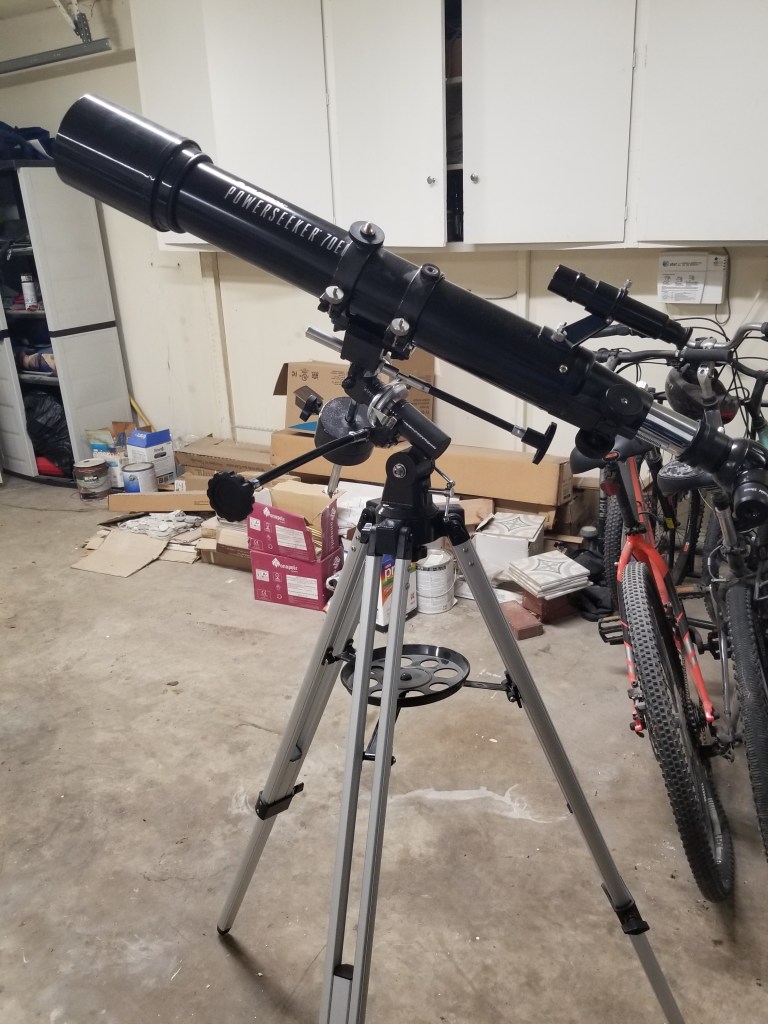
Celestron Powerseeker 70EQ

I am a bit of an amateur astronomer, and I own a basic telescope for amateurs, a Celestron Powerseeker 70EQ. It is not a great telescope, but it is good enough for observing objects such as Saturn and its rings, Jupiter and its four Galilean moons, Mars, Venus (the crescent), the moon and its craters. Those objects you can see from inside a big city like Dallas. Naturally you can do much better if you leave the city and especially if you visit a dark spot. I am a member of TAS, Texas Astronomical Society and they own a dark spot in Oklahoma. Below is a photo of my Celestron Powerseeker 70EQ standing in my garage.

Black Telescope standing in front of bicycles in a garage
Celestron Powerseeker 70EQ

What Does an Astronomer Do?

Astronomers study the universe, including galaxies, stars, planets, and other celestial objects, using telescopes and other instruments to observe and analyze them. They observe and analyze celestial objects. Depending on their specific area, astronomers have different duties.

  • They observe celestial objects using telescopes.
  • They conduct research, analyze data and test hypothesis.
  • They use and develop models including complex mathematical models and computer simulations to understand complex astrophysical phenomena.
  • They collaborate with peers, they teach, and they do mentoring and public outreach.

Types of Astronomers

  • Observational Astronomers use telescopes and other observational instruments to collect data from celestial objects.
  • Theoretical Astrophysicists use mathematical models and computer simulations to understand the physical processes in the universe. They may study stellar evolution, galaxy formation, cosmology, and black holes.
  • Planetary Scientists study planets, moons, and other objects within our solar system. They use data collected by space missions, telescopes, and remote sensing techniques.
  • Stellar Astronomers study stars, their properties, and their life cycles. They may study variable stars, binary star systems, massive stars, stellar remnants such as white dwarfs, neutron stars, or black holes.
  • Galaxies and Cosmology researchers study galaxies and the large-scale structures in the universe.
  • Radio Astronomers study celestial objects using radio waves instead of visible light. They may study radio galaxies, cosmic microwave background radiation, and the structure of the Milky Way.
  • Exoplanet Astronomers study and discover planets orbiting stars outside our solar system. They use techniques such as transit photometry and radial velocity measurements to detect and characterize exoplanets.

Famous Astronomers

  • Nicolaus Copernicus 1473–1543, discovered the heliocentric model putting the sun at the center of our solar system.
  • Johannes Kepler 1571–1630, revolutionized our understanding of how planets orbit the Sun. He used the Copernicus heliocentric model and very careful measurements to show that the planets moved in elliptical orbits around the sun and he came with additional laws to describe the speed of the planets in their orbits.
  • Galileo Galilei, 1564–1642, or Galileo di Vincenzo Bonaiuti de’ Galilei, was an Italian astronomer, physicist and engineer who greatly improved the optical telescope and discovered the four primary moons of Jupiter and the rings of Jupiter. He proved that all falling bodies fall at the same rate, regardless of mass, and developed the first pendulum clock. He got in trouble for defending Nikolai Copernicus idea.
  • Edmund Halley, 1656–1742,  investigated and discovered many things including the nature of comets’ orbits.
  • Edwin Powell Hubble, United States, 1889–1953. Hubble proved that many objects previously thought to be clouds of dust and gas and classified as “nebulae” were galaxies beyond the Milky Way. He showed that these galaxies were moving away from us and each other leading to the conclusion that the universe was expanding.
  • Vera Rubin, 1928–2016,  studied the rotation of galaxies and uncovered the discrepancy between the predicted and observed angular motion. This led to the discovery of dark matter.

What about you? What alternative career paths have you considered or are interested in?


To see the Super Facts click here


The vastness of space and the beginning of infinity

Superfact 14: The vastness of space and the beginning of infinity

The Universe is unimaginably large. Our solar system is enormous. It consists of our star, the sun, the planets including earth, dwarf planets, asteroids, comets, rocks, the Kuiper belt, the Oort cloud, and much else. It is 100,000 times wider than the distance between the sun and our earth. Yet it is just one star system among between 100 and 400 billion in our galaxy, the Milky Way. 

But that is not all. According to the Nobel Prize winner in physics, Roger Penrose, our universe is just one in an eternal (infinite) series of universes, an eternal chain of Big Bangs that has always existed. See his conformal cyclic cosmology (CCC) model (and the book cycles of time).

According to Stephen Hawking, M-theory, an extension or collection of string theories, states that there are 10^500 or 10000000000000…(followed by five hundred zeros) possible multi-verses that are all equally possible. Hugh Everett’s multiverse or multi-world theory states that there are infinitely many universes.

Now try to imagine the size of it all. You can’t do that, can you?

The vastness of space and the beginning of infinity
Photo by Pixabay on Pexels.com

About The Universe

When the astrophysicist Brian Cox was asked the question “what is the one fact about the Universe that blows your mind the most?”, he answered, “One. Just the size and scale of it…”.

At first, I thought his answer was a bit boring. I mean, what about neutron stars, which essentially are giant atomic nuclei? What about the amazing mysteries surrounding black holes, and what about supermassive black holes, quasars, magnetars, the great attractor, what about the big bang, quantum physics, massless particles, the amazing general theory of relativity, dark energy, etc.

Then I tried to imagine the size and scale of the universe and I realized that he knew what he was talking about. The more you think about it, the more it blows your mind.

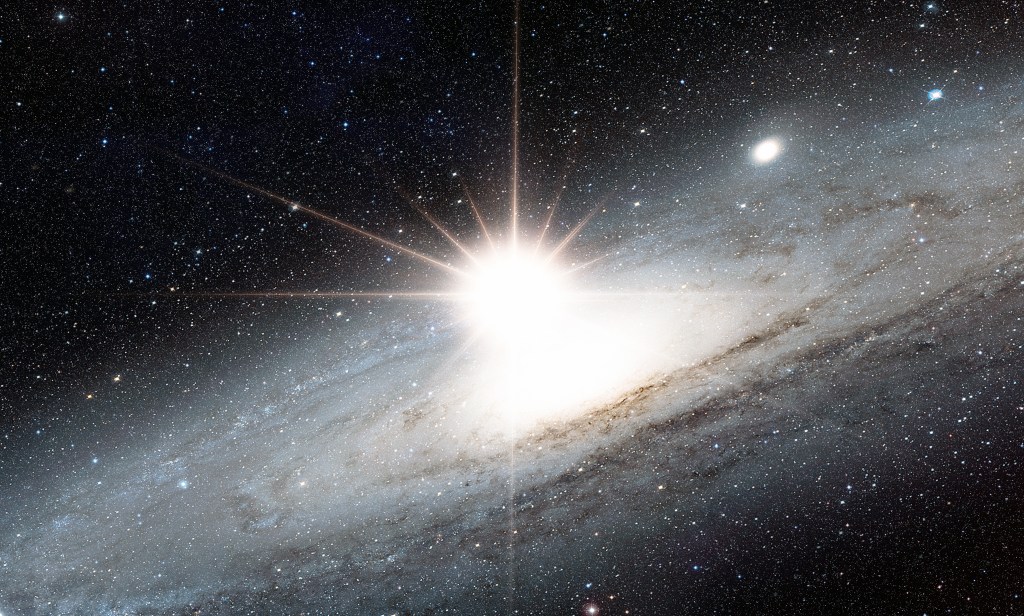
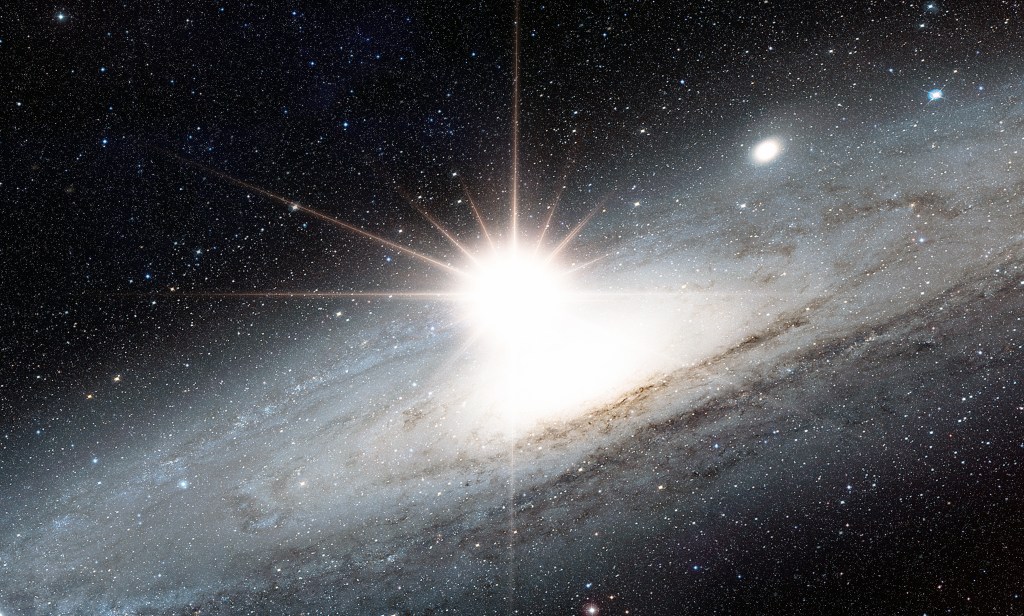
A picture of the Andromeda Galaxy with a bright white light near its center. The bright light is almost outshining the entire galaxy.
An illustration of the Andromeda galaxy with a supernova explosion near its center. “Elements of this image furnished by NASA” Stock Photo ID: 2495486227 by muratart.

The vastness of space and the beginning of infinity

Below is a 55 second video in which astrophysicist Brian Cox ruminates on what it means to live a finite fragile life in an infinite eternal Universe.

Our sun is a star. The sun’s diameter is 109 times larger than earth’s diameter, which means that you could fit more than one million earths inside the sun. The distance between the sun and the earth is called an astronomical unit or 1 AU. 1 AU is approximately 11.7 million times larger than earth’s diameter and 107,340 times larger than the sun’s diameter.

The solar system including all the planets, dwarf planets, asteroids, the Kuiper belt and the Oort cloud is 100,000 AU across with the sun just being a dust speck in the middle.

I mentioned that M-theory implies that there are at least 10^500 multiverses. To get an idea of how bif that number is;  It is a quintillion times a quintillion times a quintillion times a quintillion times a quintillion times a quintillion times a quintillion times a quintillion times a quintillion times a quintillion times  a quintillion times a quintillion times a quintillion times a quintillion times a quintillion times a quintillion times a quintillion times a quintillion times a quintillion times a quintillion times a quintillion times a quintillion times a quintillion times a quintillion a quintillion times a quintillion times a quintillion times. By the way a quintillion is a million trillion.

The vastness of space and the beginning of infinity
Photo by Philippe Donn on Pexels.com

Below are two more videos. The first one is trying to give a perspective on the size of our solar system, our galaxy, and the Universe. It is 11 minutes and 9 seconds long. The second one is very long, half an hour, and it is a bit advanced, so I recommend it only to star nerds.

However, at 22 minutes and a bit more than 30 seconds it states the observable universe is less than a 15 millionth of the universe (which might be even bigger) which contains at least 30 quintillion galaxies.


To see the other Super Facts click here


Supermoon October 2024

“Supermoon October 2024” is not a super-fact post but some fun facts about the Moon. It is a super-moon post instead.

As many of you probably have read, we currently have a so-called supermoon (October 17 & October 18). The moon’s orbit around earth is not a perfect circle but slightly elliptical. Therefore, the moon’s distance to earth varies.

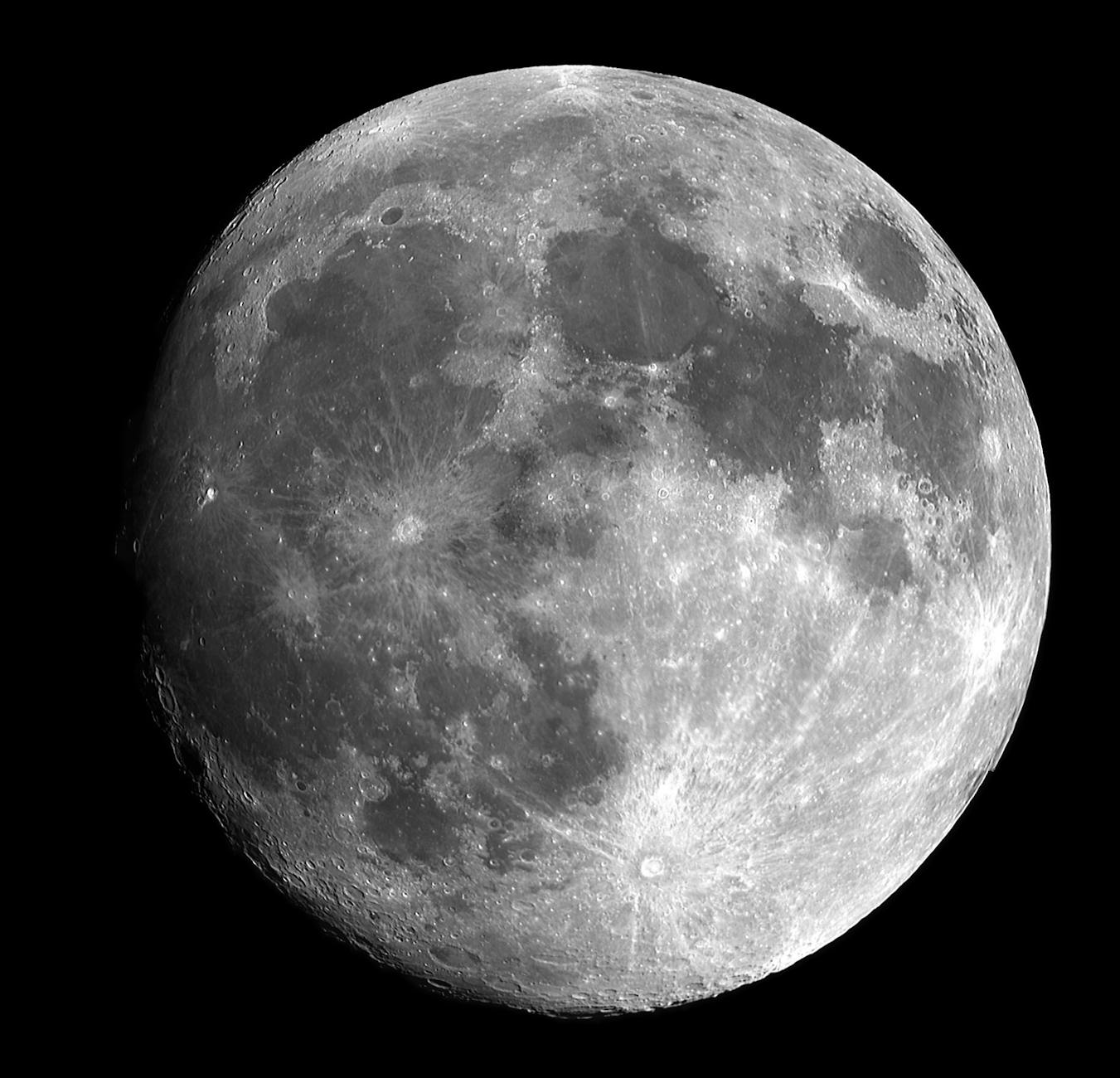
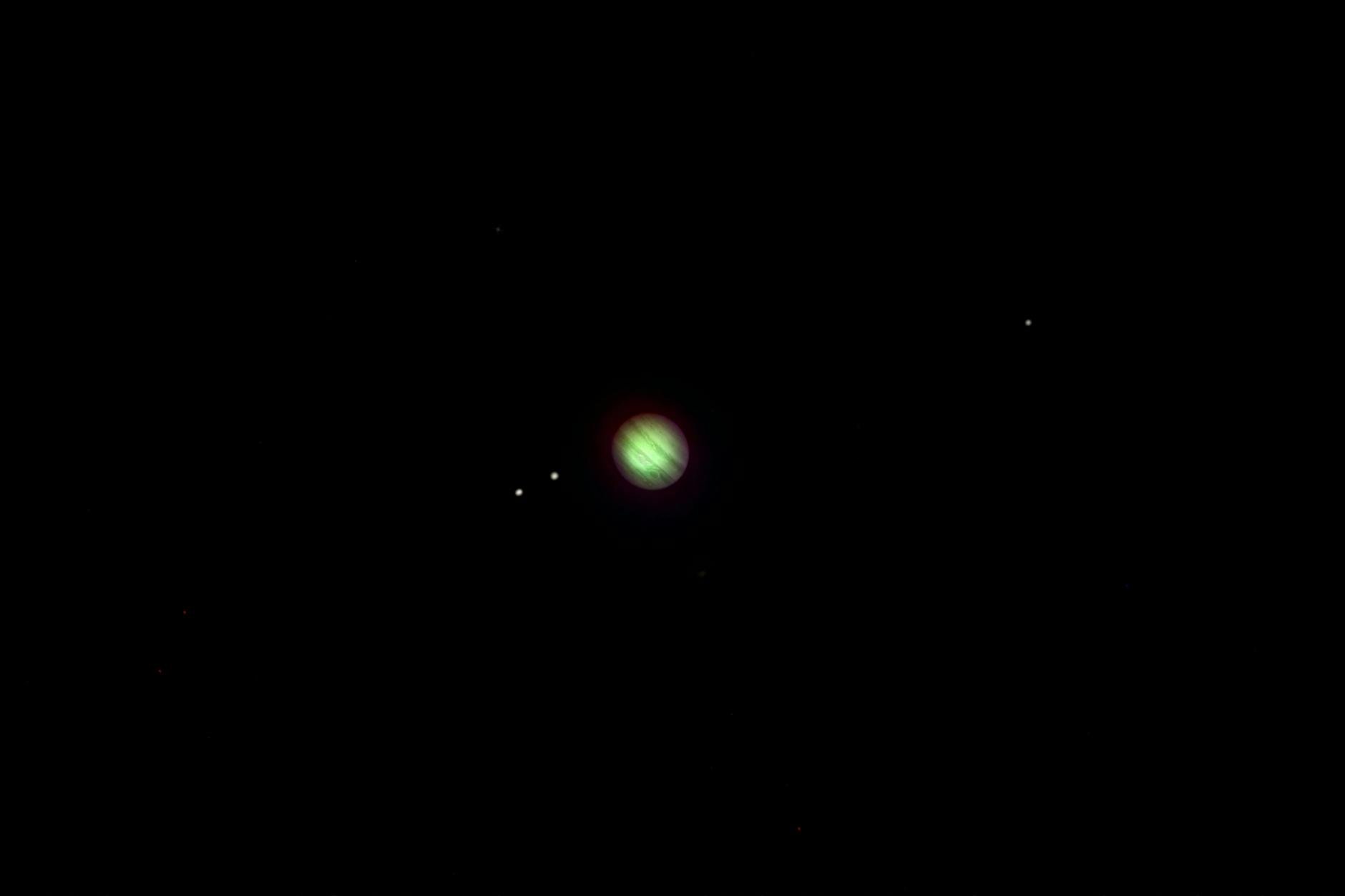
A supermoon is when a full moon occurs when the moon is at its closest point to Earth, called perigee, making it appear larger and brighter than usual. Or more correctly, the term supermoon is usually used to describe a full moon that comes within at least 90% of the perigee. Since this is a special moon event, I took out my little telescope and looked at the moon and its craters. I also took a look at Jupiter, and I saw three of the four Galilean moons.

A close up photo of the near side of the moon | Supermoon October 2024
Photo by Pixabay on Pexels.com
Jupiter in the middle. It is a greenish speck with lines. It is surrounded by three white dots.
The green speck is Jupiter. The three little dots are three of the four Galilean Moons. I roughly saw this in my telescope an hour ago, but it is not my photo. Photo by Raoni Aldrich Dorim on Pexels.com

I thought I might as well mention a few interesting facts about the moon.

There is no dark side of the moon

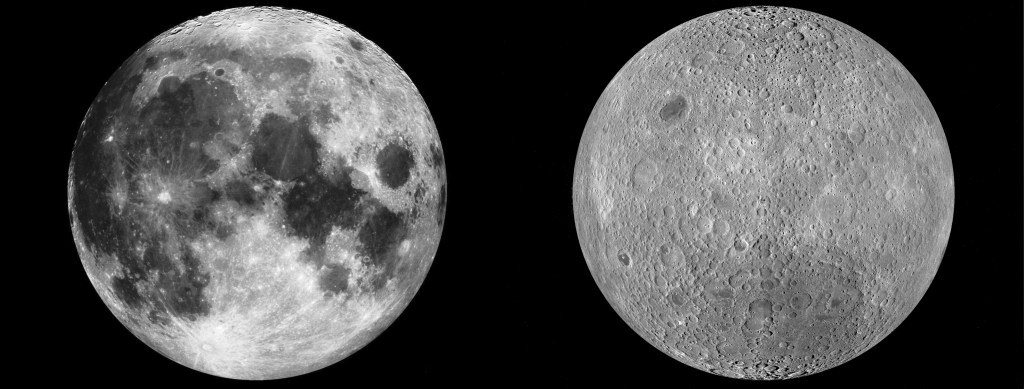
This is a very common misunderstanding. The moon is always showing the same side towards us (or almost exactly the same side). When there is a full moon the backside, or far side, of the moon is dark, but that is not the case when the moon is half, or a crescent, etc. When the moon is new, the far side / backside is “full” from sunlight. If you wondered, NASA and other space agencies have photographed the far side of the moon.

On the left is the near side of the moon and on the right the far side of the moon | Supermoon October 2024
The near side of the Moon and the far side of the Moon. Comparison between the two hemispheres of the Moon. Elements of this image were furnished by NASA. Stock Photo ID: 2157518223 by Claudio Caridi.

Below is a youTube video showing an animation composed of actual satellite photos by NASA.

A few comments about this animation. You see no stars because the sun is shining, and the earth is also quite bright. The reason you don’t easily see stars during the day is not because the sky is blue but because there is too much light to see them. The sun ruins the starry sky. In addition, stars are not easily captured by cameras when there is ambient light. And again, of course, contrary to the belief of some, the backside of the moon is not always dark.

The far side of the moon is different

As you can see in the YouTube video and the enhanced photo above, the far side looks different from the nearside and it is different in appearance and terrain. The near side of the moon has large, dark, flat-lying basins called maria. They look like oceans. The far side is a lot more rugged and covered by lots of craters. Another difference is that the far side of the moon has a much thicker crust compared to the near side.

Photo of the moon on a blue background | Supermoon October 2024
Photo by Alex Andrews on Pexels.com

The moon is drifting away from earth at about 3.8 centimeters per year

The moon is moving away from earth due to the gravitational forces between the moon and earth, which also causes tidal bulges in the Earth’s oceans and the moon. Back in high school I took a physics test on which you had to calculate how much the moon was moving away from earth based on the size of the tidal waves on earth. I did not solve that one, but not many did. The calculation made perfect sense though and some geniuses got it.

NASA found water on the moon

In 2020, NASA announced the discovery of water on the sunlit surface of the Moon. You can read about it here.

Drop of water
Photo by Pixabay on Pexels.com

The moon was likely created by a celestial collision : The most widely accepted explanation for the existence of the moon is that the Moon was created when a planet-like object, the size of Mars slammed into Earth, soon after the solar system began forming. That was about 4.5 billion years ago.


To see the Super Facts click here

We are Star Dust

Superfact 10 : We Are Star Dust

The matter in our bodies and our planet was formed by fusion in the cores of distant stars and then spread across the Universe by supernova explosions. This matter was later incorporated in second and third generation stars like our sun and its planets.

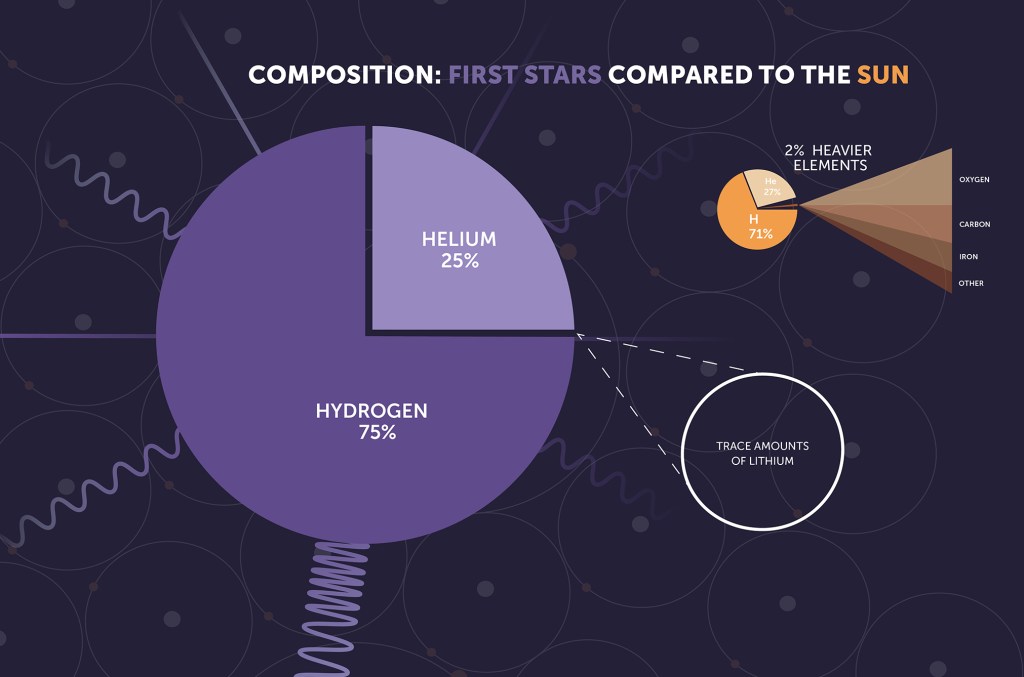
What do I mean by “We are Star Dust”? Let me explain. The first stars in the Universe were made of 75% hydrogen and 25% helium and trace amounts of Lithium, just like the entire Universe at the time. There were no heavier elements that could form planets or other solid celestial bodies. These early stars tended to be large and heavier elements like carbon, oxygen, and iron were formed by fusion in the cores of these stars.

Many of the first stars, called first generation stars, ended their lives in massive supernova explosions and the dusty remains of these explosions, including the metals formed in their cores, became the building blocks of the stars we see today. These second and third generation stars have planets and other smaller solid objects orbiting them, formed from the gas and dust (star dust) left over from the supernova explosions. So, we are star dust. The atoms formed inside the first-generation stars are now within us.

The picture consists of two pie chart graphs representing stars. The left one is a first-generation star with one pie for the 75% hydrogen and one pie for the 25% helium | We are Star Dust
The first-generation stars consisted of 75% hydrogen and 25% helium and trace amounts of Lithium. A second or third generation star like our sun is still mostly hydrogen and helium but also many other elements. The rocky planets circling the sun are mainly elements heavier than hydrogen and helium. Image credit NASA, ESA, CSA, STScI.
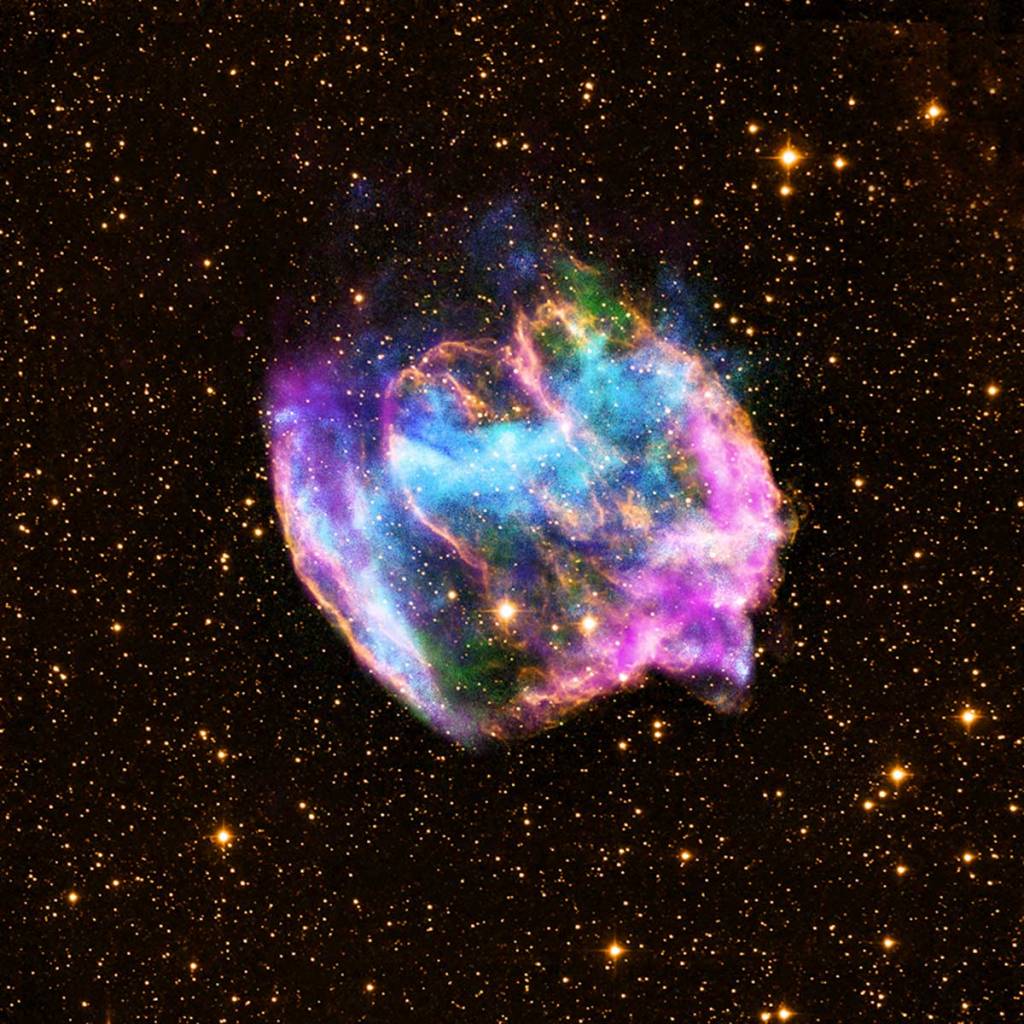
A colorful, nebula, a remnant from a supernova explosion on the background of a black sky full of stars.
Remnants of a recent supernova W49B, 26,000 light years away. Credit: X-ray: NASA/CXC/MIT/L.Lopez et al.; Infrared: Palomar; Radio: NSF/NRAO/VLA.

For those who know astronomy this may be basic information, but I’ve met many people who are unfamiliar with this information, and they are quite often surprised and astonished. That is why I consider this information a super fact. I can add that this process, the birth and death of first-generation stars, the supernova explosions, the disbursal of the matter, which later clump together to form new stars and rocky planets as well, takes many millions of years.

Bright white star surrounded by bluish rings | We are Star Dust
This is an Illustration of a supernova. Stock Vector ID: 2109918599 by Varunyuuu.

A Refresher

For those who need a refresher of things like stars and planets and galaxies. Our sun is a star, a third-generation star. It is much bigger than our Earth. If Earth is the size of a small pea or a caper, then the sun would be the size of a beach ball. However, our sun is not a big star, and it is only one star among between 100 and 400 billion stars in our galaxy the Milky Way.

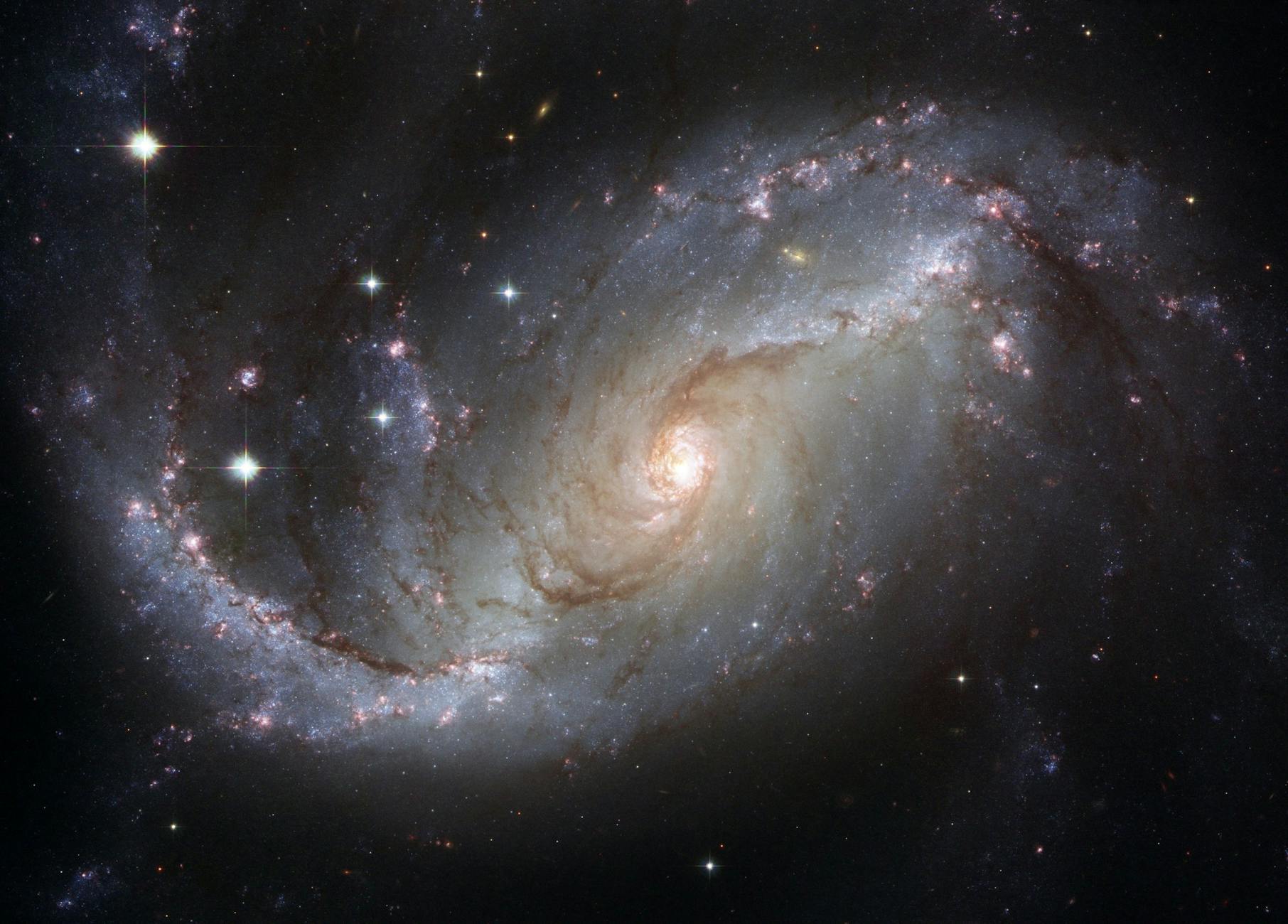
Many galaxies including our own are disc shaped or look like spirals. If you imagine a dust storm cloud in which there are a thousand dust particles per cubic foot, each representing a star. Then this dust cloud would be 100 to 400 feet thick, and a thousand feet wide and long. I can add that there are between 100 billion to 2 trillion galaxies in the visible Universe. Also, the Universe is much bigger than the visible Universe and might be infinitely large.

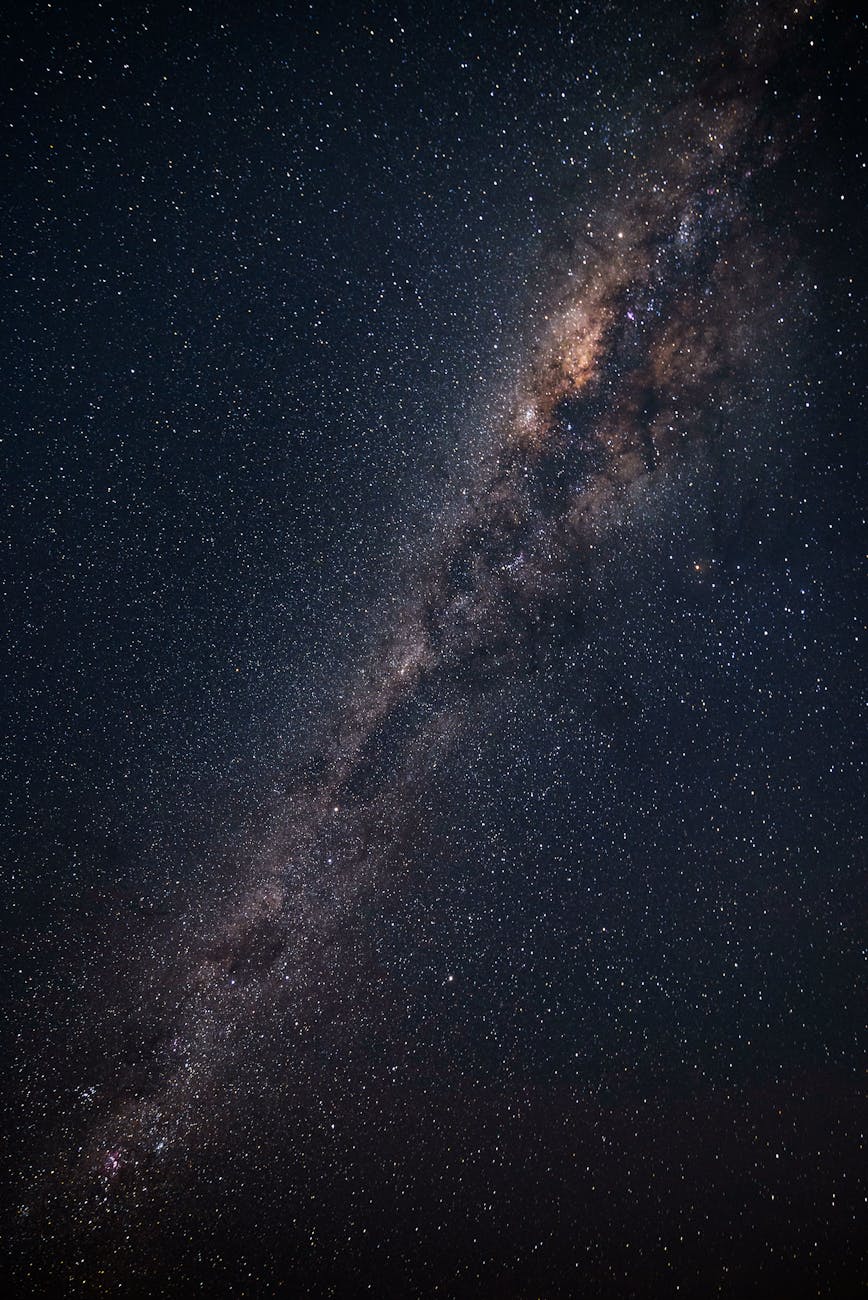
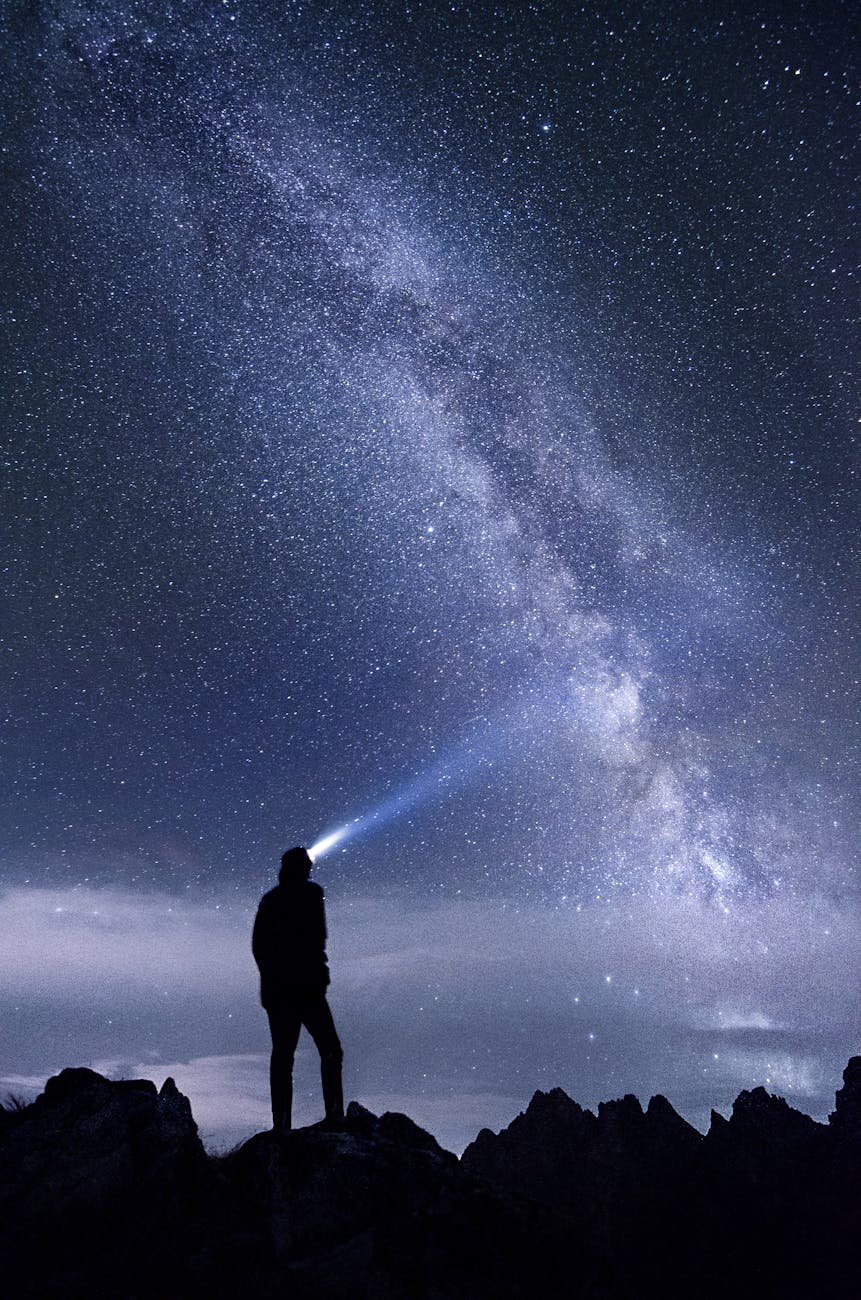
The milky way galaxy stretches across the night sky.
A glimpse of our milky way galaxy. Photo by Stefan Stefancik on Pexels.com

As mentioned, orbiting around our sun there are planets, dwarf planets, moons, planet rings, asteroids, comets, meteoroids, interplanetary dust, etc. The star closest to the sun is Proxima Centauri, which is 4.24 light-years away, but it is too small to be seen. The stars that are visible in the night sky tend to be large stars that are not too far away.

Here in Dallas where I live you can typically see 15 stars with the naked eye, and you cannot see the Milky Way. That’s because of the light pollution. In northern Sweden where I grew up you could see 3,000 stars, our galaxy the Milky Way, as well as the Andromeda Galaxy on a clear night with the naked eye.

In 1885 a supernova explosion was recorded in the Andromeda Galaxy. Below is a constructed photo showing how it might have looked like if we had had better equipment back then. Notice that the supernova explosion is essentially outshining the entire galaxy. We are the result of the gases and dust spread by such explosions. You can also read more here.

A picture of the Andromeda Galaxy with a bright white light near its center. The bright light is almost outshining the entire galaxy.
Supernova explosion in the center of the Andromeda galaxy “Elements of this image furnished by NASA” It is essentially an enhanced photo of a supernova explosion in a neighboring galaxy. Stock Photo ID: 2495486227 by muratart.

To see the other Super Facts click here