The Moon has a Far Side but not a Dark Side

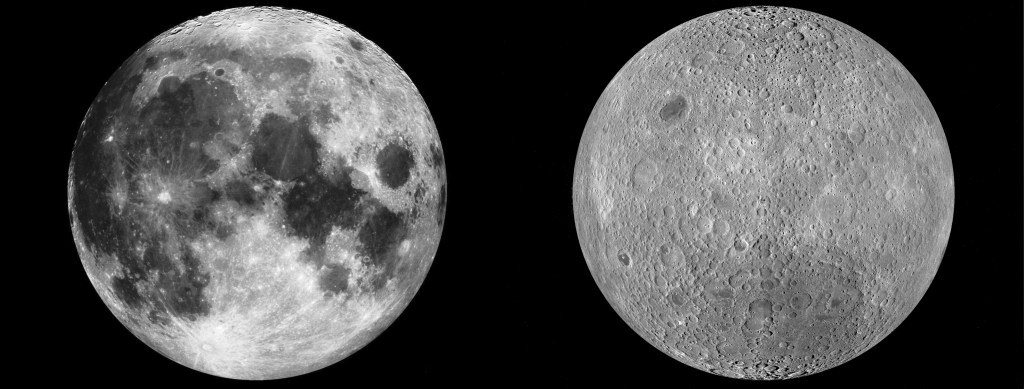
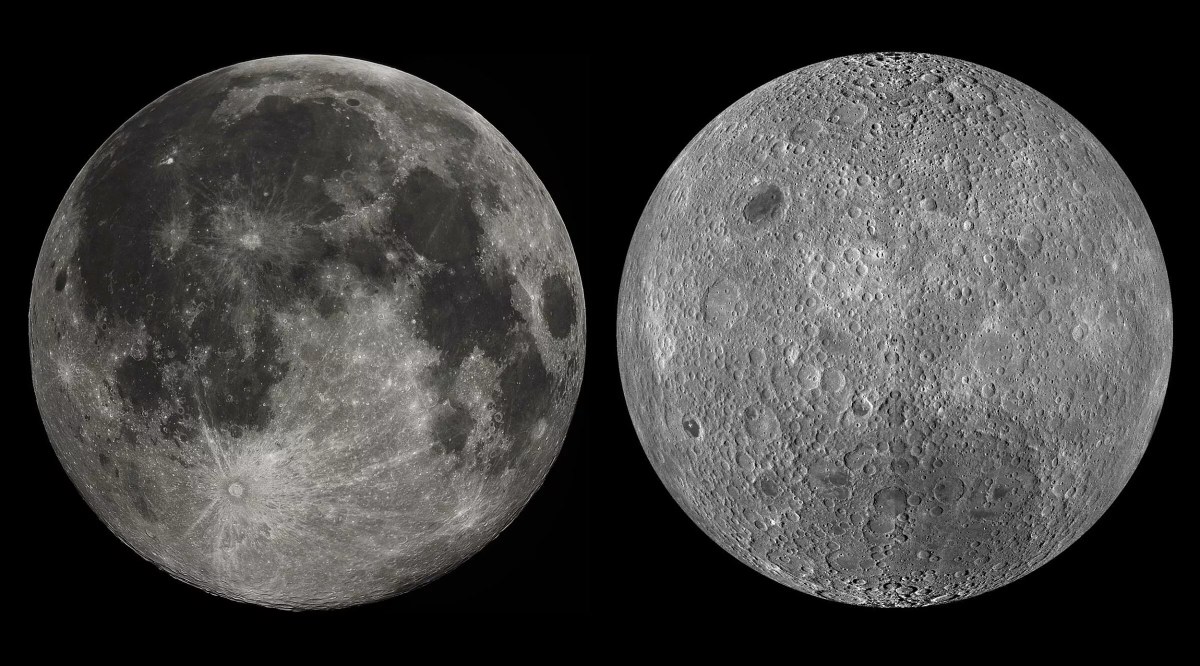
Super fact 103: The moon is always turning the same side towards us. This side is often referred to as the near side of the moon. The back side, which we can’t see from Earth, is often referred to as the far side of the moon. However, there is no side of the moon that is always dark. The near side of the moon and the far side of the moon both have day and night (in a 29.5 day cycle). Another interesting fact is that even though the near side and the far side of the moon get the same amount of light they are very different.
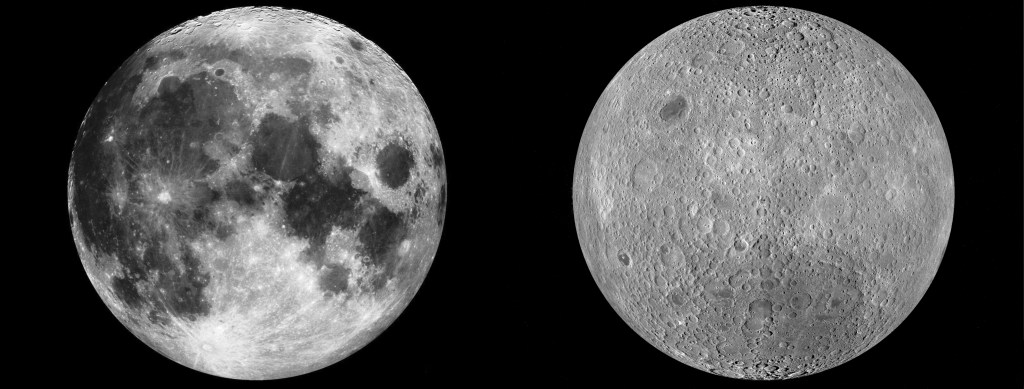
On the left is the near side of the moon and on the right the far side of the moon. | The Moon has a Far Side but not a Dark Side
The near side of the Moon on the left and the far side of the Moon on the right. They are both full about once a month but at different times. They look quite different and are quite different. Elements of this image were furnished by NASA. Stock Photo ID: 2157518223 by Claudio Caridi.

Below is a youTube video showing an animation composed of actual satellite photos by NASA. It shows the far side of the moon, illuminated by the sun, as it crosses between the DSCOVR spacecraft’s Earth Polychromatic Imaging Camera (EPIC) and telescope, and the Earth – one million miles away.

The video has frequently been shown on social media, and I’ve seen many comments stating that it is fake because the back side / far side of the moon is not dark in the video. However, the sun is behind us in the video and shining on both Earth and the far side of the moon. The far side is not always dark.

This is a super fact because many people mistakenly think there is a permanently dark side of the moon, which we know is incorrect and understanding the basics about the moon, the most prominent celestial object in the sky, aside from the sun, is kind of important.

Moon Photos
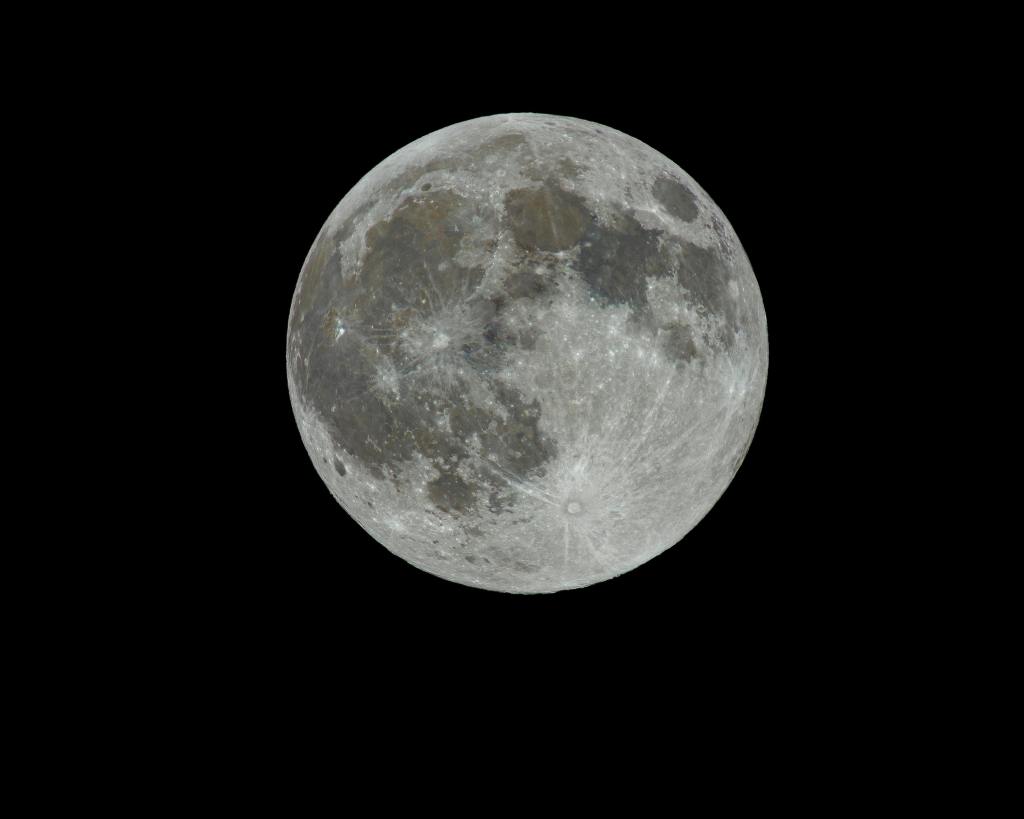
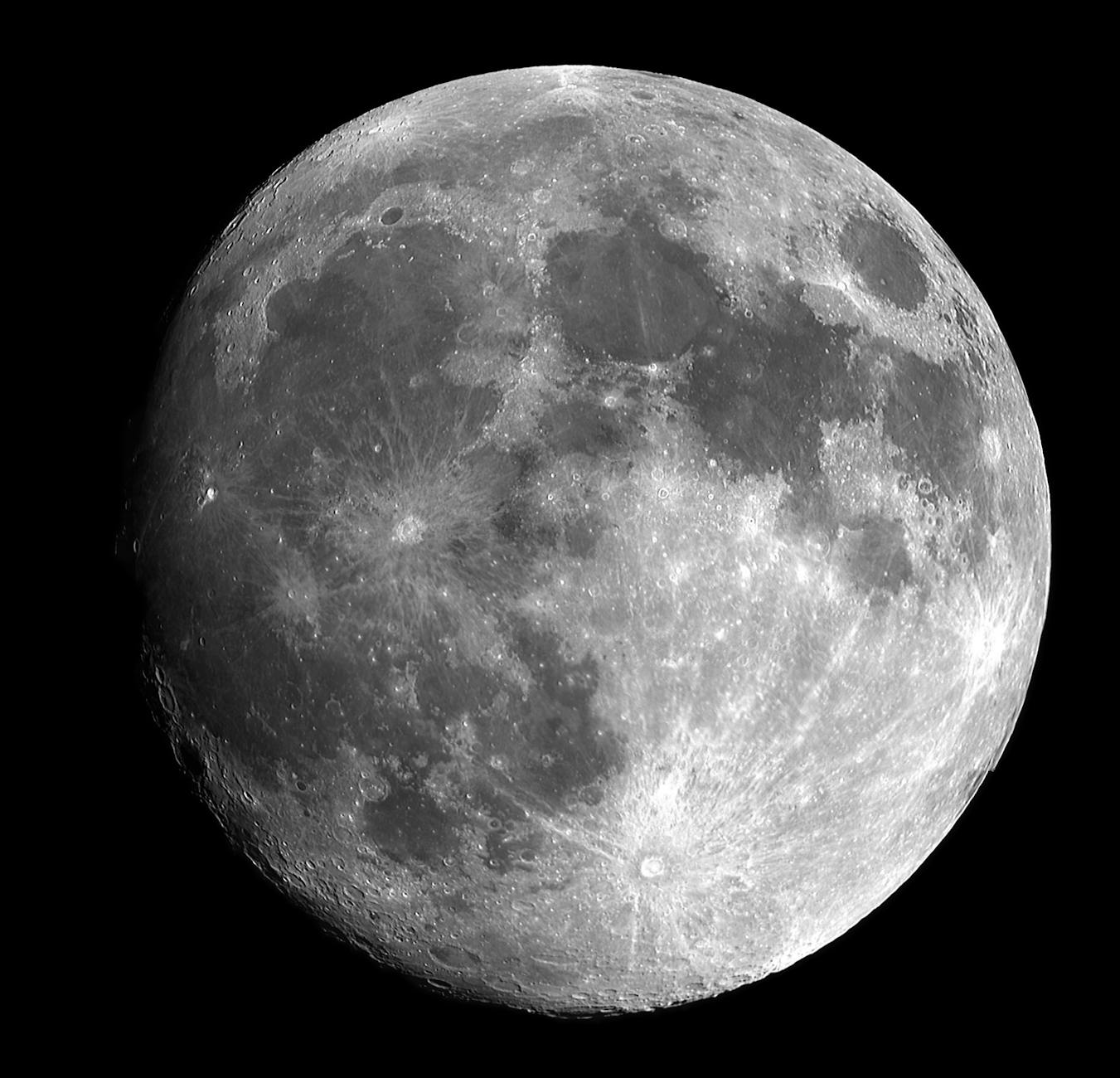
A close up photo of the near side of the moon.
This is a close up photo of the near side of the moon. It is a full moon. Free picture from Pexels by Jay Brand.
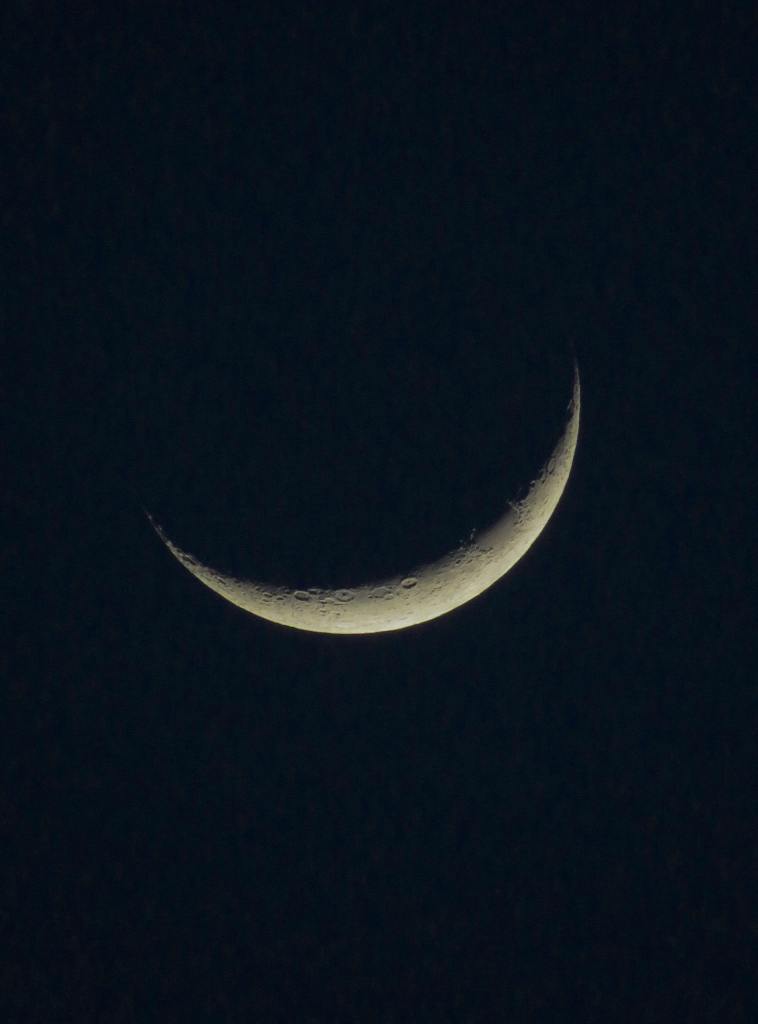
A close up photo of the near side of the moon, but it is a crescent.
This is also a close up photo of the near side of the moon, but it is a crescent moon, which means that the far side, or the back side, is the side that is mostly lit up. In other words, the far side of the moon has day. Free picture from Pexels by Sevde.

I took the photo below with my phone a few minutes ago this evening. The little dot on the left (it is not twinkling) is the planet Venus. The moon is currently a crescent, which means that at the moment of my writing this the back side / far side of the moon has day. The sun is shining down on the far side, and it is reflecting light back into space. The back side / far side is almost a full moon right now, but we can’t see that from Earth.
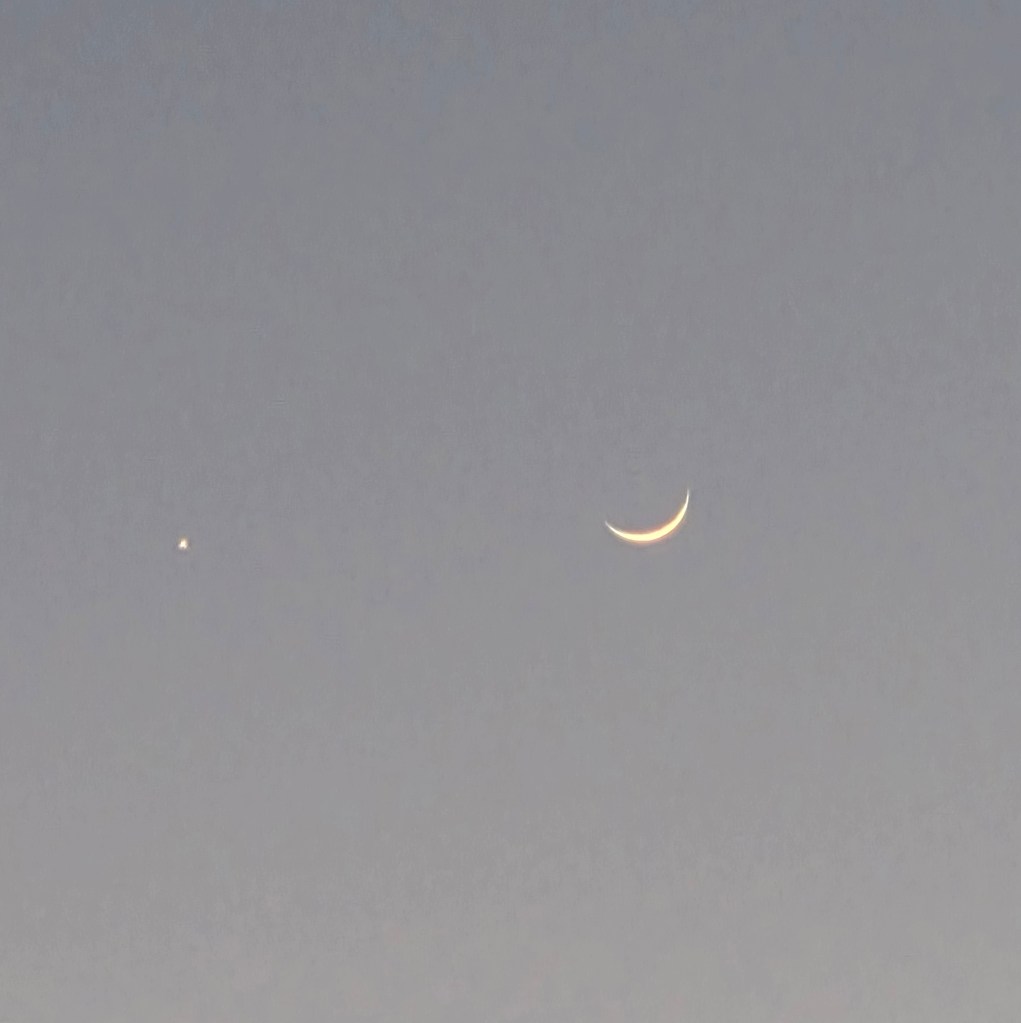
It is a dark photo with a bright dot on the left and the moon crescent on the right. | The Moon has a Far Side but not a Dark Side
The dot on the left is Venus. On the right is the crescent moon. This photo is taken with my phone a few minutes ago (as of this posting).
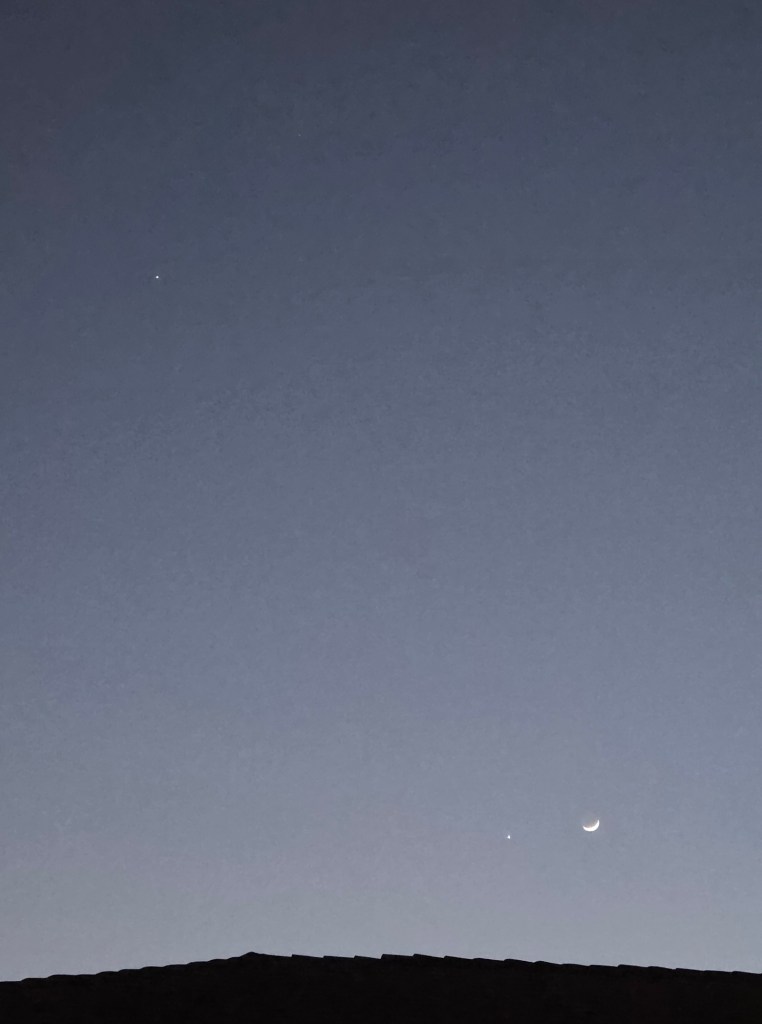
Venus and the crescent moon are in the lower right corner and Jupiter in the upper left corner.
This is a zoomed out photo taken at the same time as the photo above. I zoomed out to capture a second dot up in the left corner. That’s another planet, the planet Jupiter (also not twinkling).

Interesting Moon Facts

I thought I might as well mention a few interesting facts about the moon.
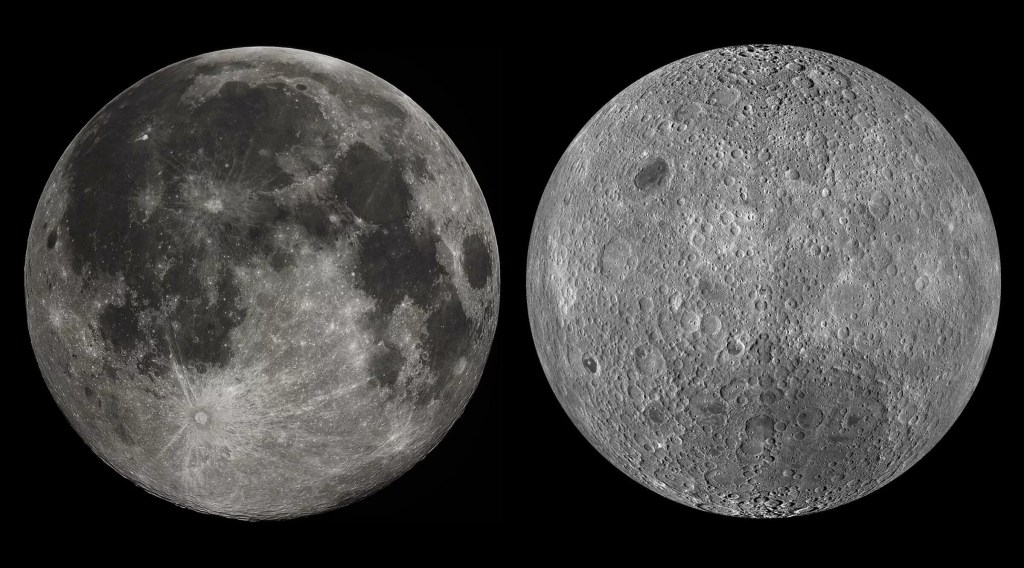
On the left is the near side of the moon, and you can see the flat-lying basins called maria. On the right is the far side of the moon, and it does not have the maria. | The Moon has a Far Side but not a Dark Side
The Moon’s nearside and farside Image: NASA LRO / Jatan Mehta

The far side of the moon is different. As you can see in the YouTube video and photo above, the far side looks different from the nearside and it is different in appearance and terrain. The near side of the moon has large, dark, flat-lying basins called maria. They look like oceans. The far side is a lot more rugged and covered by lots of craters. Another difference is that the far side of the moon has a much thicker crust compared to the near side.

The sun is 400 times wider than the moon. They appear to be roughly be the same size in the sky because the moon is 400 times closer.

The moon is drifting away from earth at about 3.8 centimeters per year. The moon is moving away from earth due to the gravitational forces between the moon and earth, which also causes tidal bulges in the Earth’s oceans and the moon. Back in high school I took a difficult physics test for a competition and one of the questions was to show that the moon was moving away from earth due to gravitational forces and calculate by how much. I did not solve that one.

The moon was likely created by a celestial collision. The most widely accepted explanation for the existence of the moon is that the Moon was created when a planet-like object, the size of Mars slammed into Earth, soon after the solar system began forming. That was about 4.5 billion years ago.

NASA found water on the moon. In 2020, NASA announced the discovery of water on the surface of the Moon. The NASA video below features more interesting facts about the moon.

If you visit this link you’ll find an interactive 3D animation using the NASA Visualization Technology Applications and Development (VTAD) technology. By using your mouse, you can view the moon from many different angles and positions (both the near side and the far side of course).


To see the other Super Facts click here

The Great Sun and Moon Spectacle

We are all in our places with sunshiny faces  ready to experience the astronomical event of the century, a spectacle that Mr. Sun, Sun, Golden Mr. Sun and the moon provided for us.

This is a submission for Kevin’s No Theme Thursday

The Great Sun and Moon Spectacle
Image by Kevin from The Beginning at Last

For us in Dallas, Texas, 2024 was the year when the sun and the moon put up an unforgettable spectacle for all of us to see. On April 8, 2024, the sun and the moon and earth lined up perfectly so that the moon fully covered the sun. We had a total solar eclipse, and we were lucky with the weather. I can add that experiencing a total solar eclipse is quite different from experiencing a partial or annular solar eclipse. I’ve experienced a partial solar eclipse as well and I can attest to the difference.

Unlike a partial eclipse, it gets dark during a total solar eclipse, the stars come out if the sky is clear like it was. The birds and the insects become quiet. It happens very suddenly, in just a few seconds. The total solar eclipse lasted four minutes.

The Motion of the Sun and the Moon

To understand what a solar eclipse is, the video below might help. What you see is the moon and the earth as seen from the sun’s viewpoint. We see earth all lit up by the sun, like a full moon, and we also see the moon lit up by the sun. 

In this situation, when the people on earth look up in the sky, they see the sun, but they don’t see the moon, even though it is there. It is a new moon, or a black moon if it happens twice in the same month. As the moon begins to partially cover the sun the shadows on the ground start looking different and if you use solar eclipse glasses you can see the sun disappearing and looking like a bright crescent, but it is still daylight and looking at the sun without eclipse glasses would just hurt your eyes.

Well, this is true until the sun is fully covered by the moon. When that happens, the light turns off and at that point it is safe to look at the sun without glasses. What you’ll see is a pitch-black circle in the sky surrounded by wispy faint lights. Those wispy faint lights are the sun’s corona.

Below is a youTube video showing an animation composed of actual satellite photos by NASA.


Solar Eclipse Preparation

I drank a very special beer for the occasion, a Trappist Belgian Strong Ale, or Quadruple, called Westvleteren 12 from Brouwerij Westvleteren (Sint-Sixtusabdij van Westvleteren).

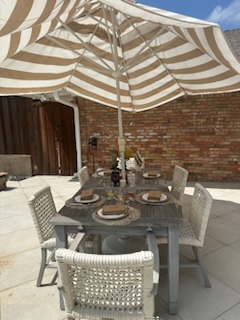
A table set for five with a large parasol | The Great Sun and Moon Spectacle
Our patio table. The little brown packages contain AAS / ISO certified solar eclipse glasses.
My daughter holding a Westvleteren 12 glass with a bow. Grandpa and grandma sitting on chairs in the background | The Great Sun and Moon Spectacle
Our daughter holding a Westvleteren 12 glass with a bow. Grandpa and grandma in the background.
A mini-Australian Shepherd sitting on the patio floor | The Great Sun and Moon Spectacle
Rollo our mini-Australian Shepherd on the patio.

The Partial Eclipse Phase

It was partially cloudy during the partial eclipse, but we were able to get a good look at the eclipse as it progressed. As mentioned, to see the partial eclipse, you have to use good solar eclipse glasses. It is primarily for safety reasons, but it is also pointless to look at the sun during a partial eclipse. You won’t see the eclipse crescent because the powerful light from the sun overwhelms your view.

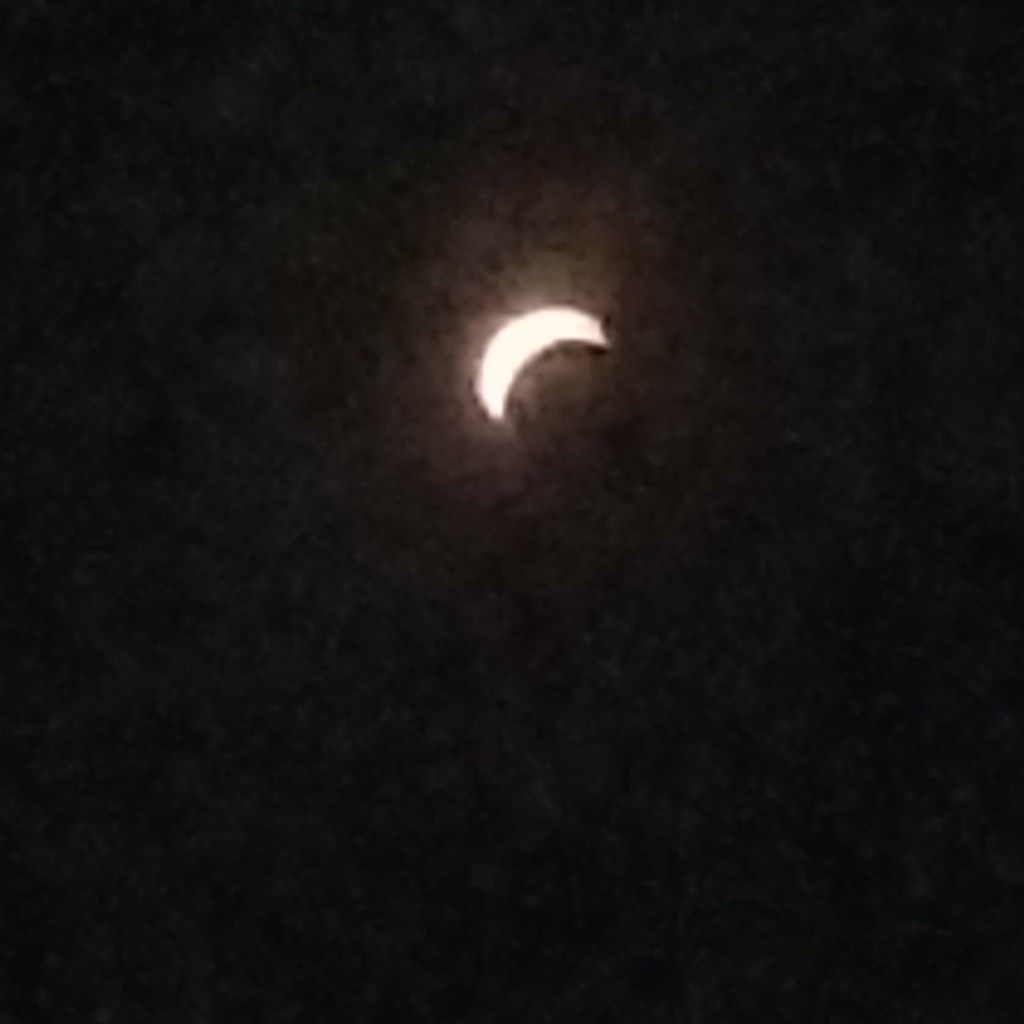
I had a little filter that was placed in front of my phone camera as I took a few pictures. Admittedly they were pretty bad. I have an old Samsung Galaxy S8+ but even using newer phones it is difficult to get decent photos of something like this.

The photo shows a shiny crescent on black background | The Great Sun and Moon Spectacle
Partial eclipse photo taken with my old Samsung Galaxy phone and a filter.

The Total Eclipse

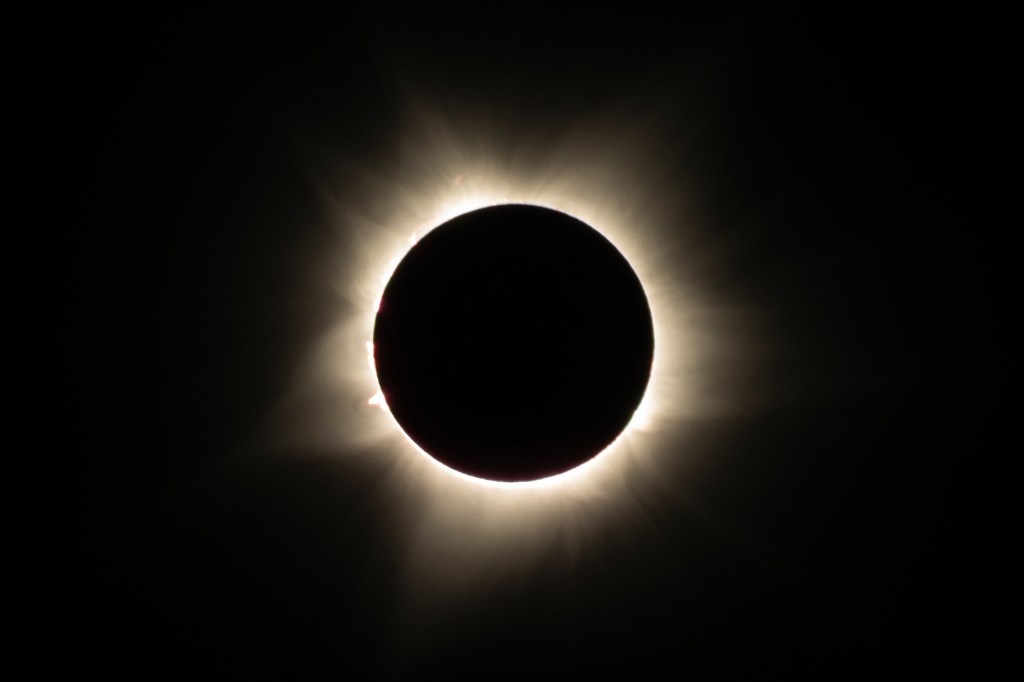
At 1:40PM Dallas time the total solar eclipse happened and luckily it was not covered by clouds. At this point it suddenly got dark and it was safe to look straight at the sun without using the eclipse glasses. The total eclipse lasted four minutes. I have included a shutter stock photo below which closely represents what we actually saw. We saw a black circle and around the black circle was a wispy white fog like light. This was the sun’s corona and it shone with about the same power as the full moon. It kind of looked like a black hole.

Black circle surrounded by a wispy white fog like light. That’s the sun’s corona | The Great Sun and Moon Spectacle
Except for the black background this looks like what we saw with our eyes. The sky we had was dark, like twilight, but not black. Solar Eclipse Stock Photo ID: 2344355767 by aeonWAVE

The Stars and the Planet Venus

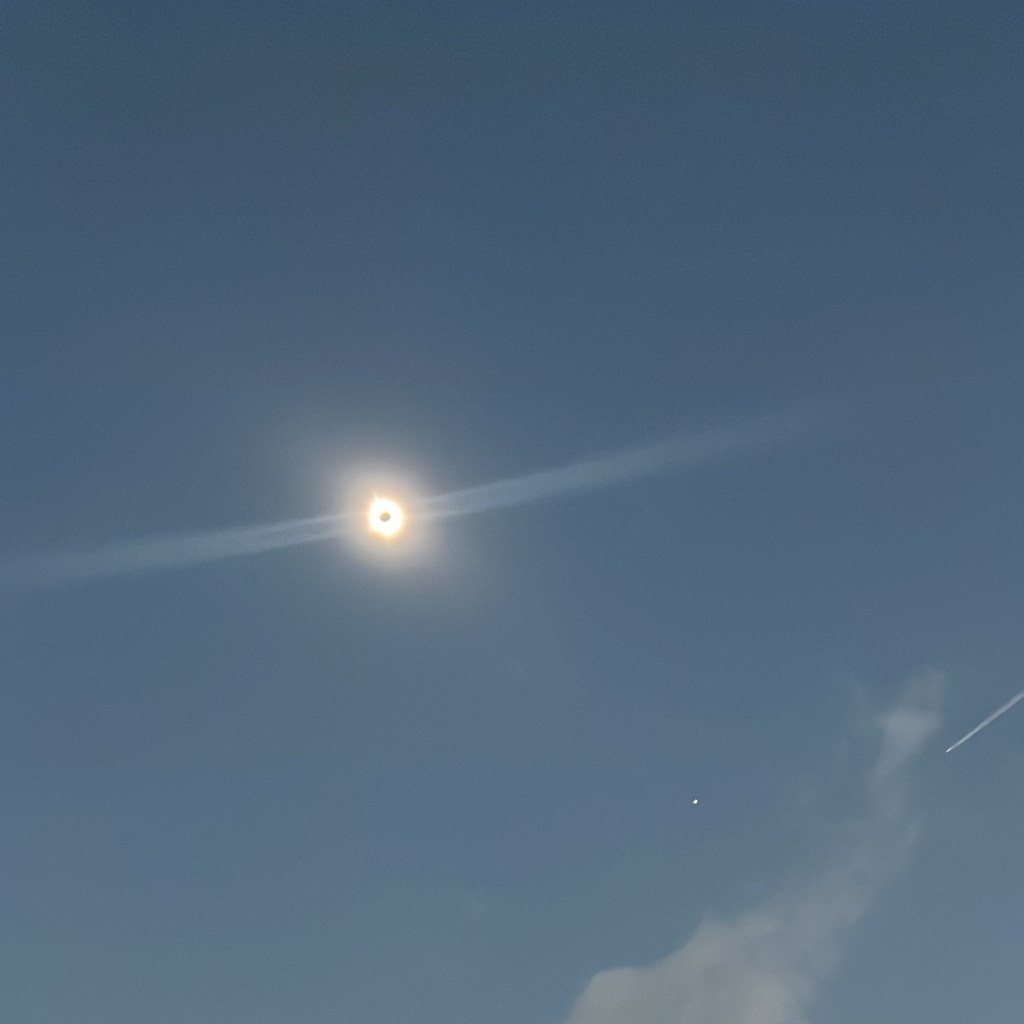
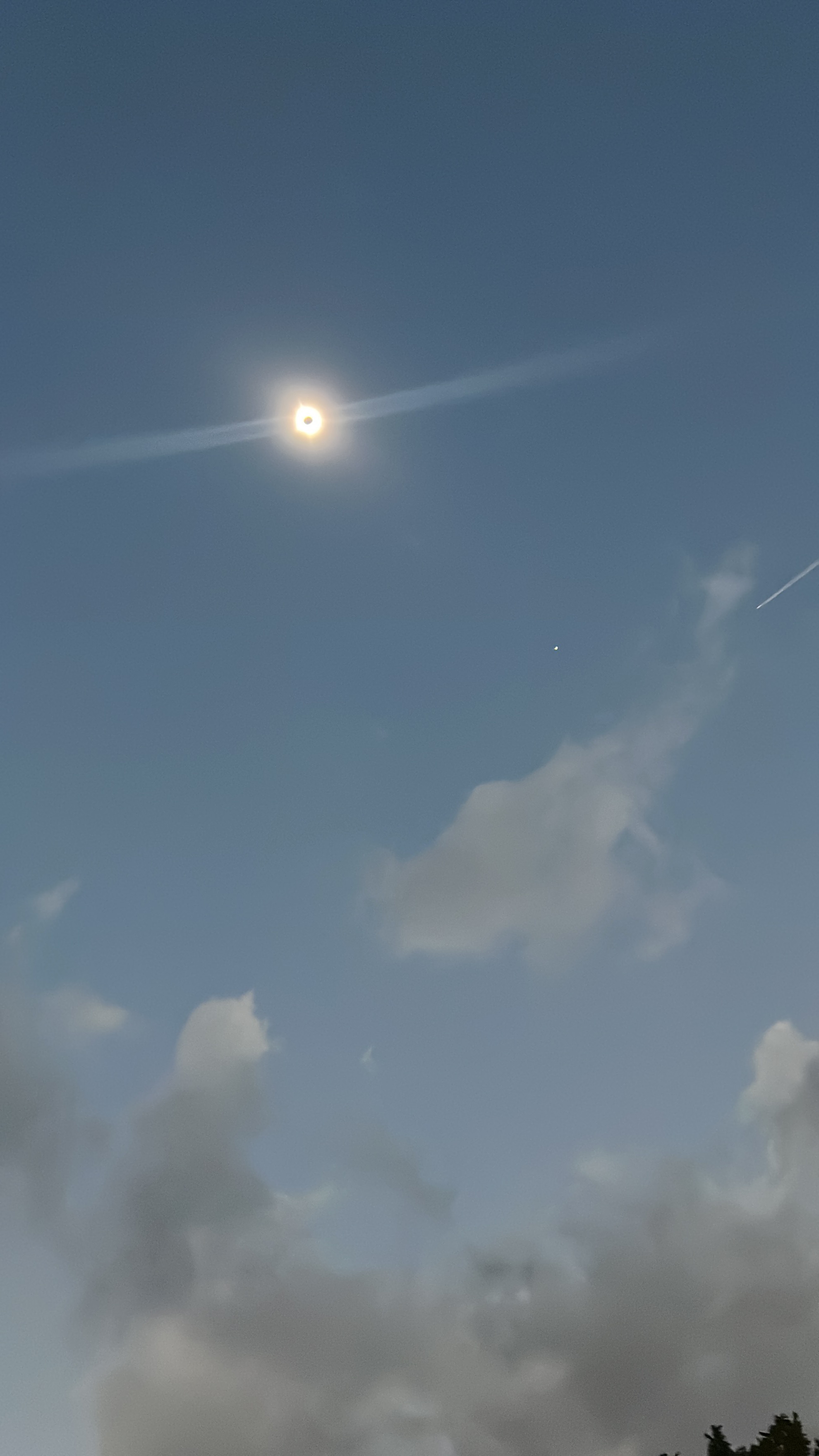
The photo shows the sun totally covered by the moon. It is very small in the photo. There is star like object, that’s Venus, a cloud and airplane contrail | The Great Sun and Moon Spectacle
Total solar eclipse photo that my daughter took. Can you find Venus?

Total Eclipse Photos

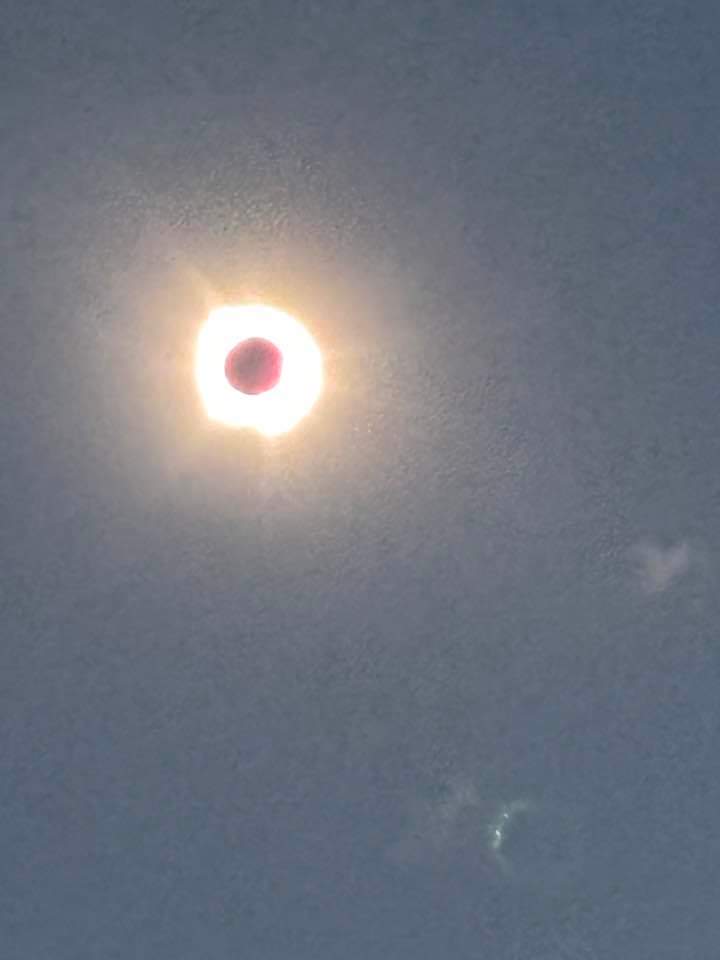
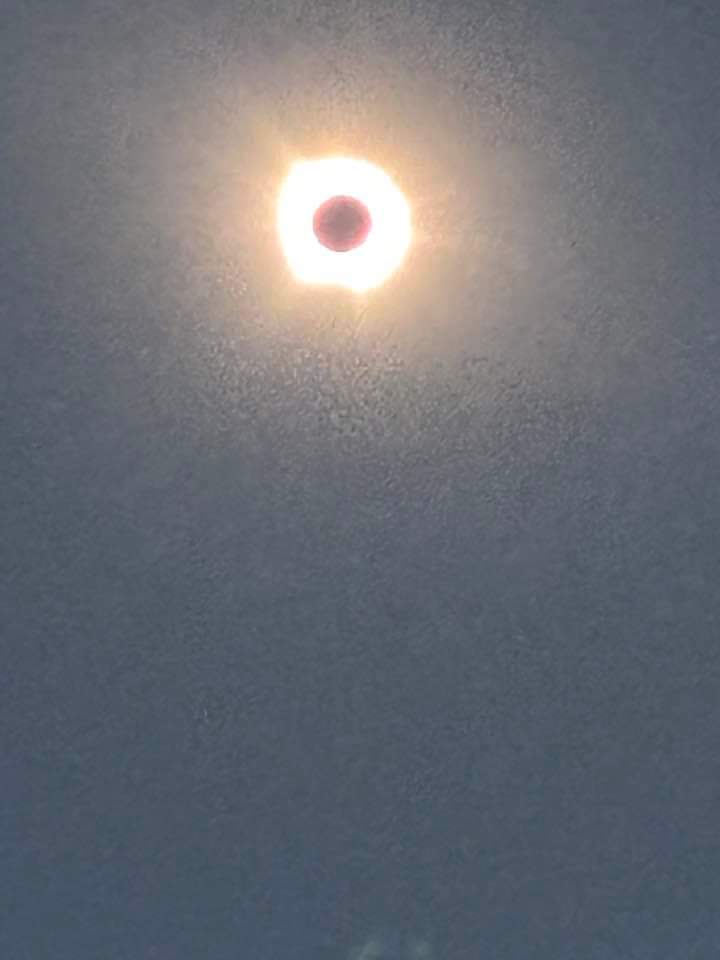
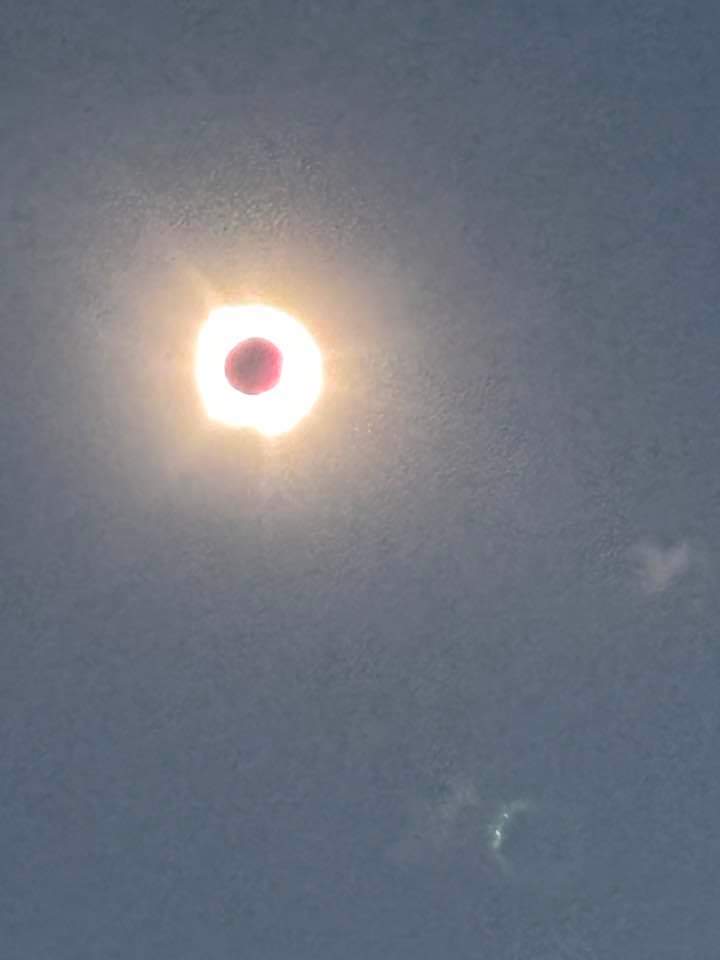
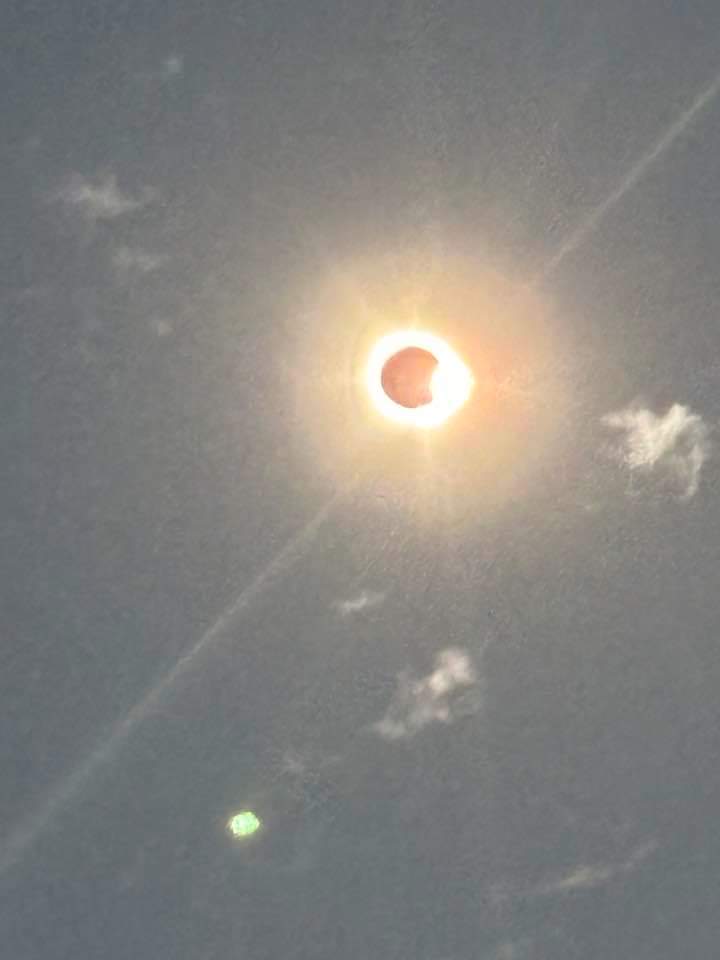
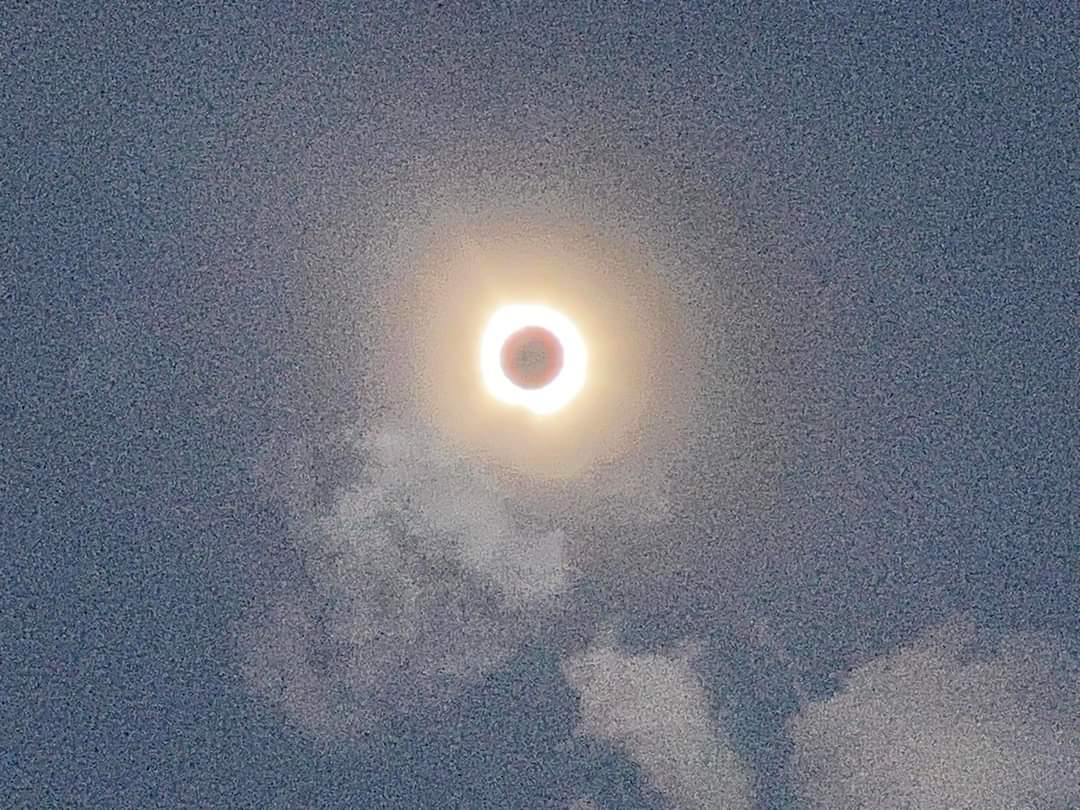
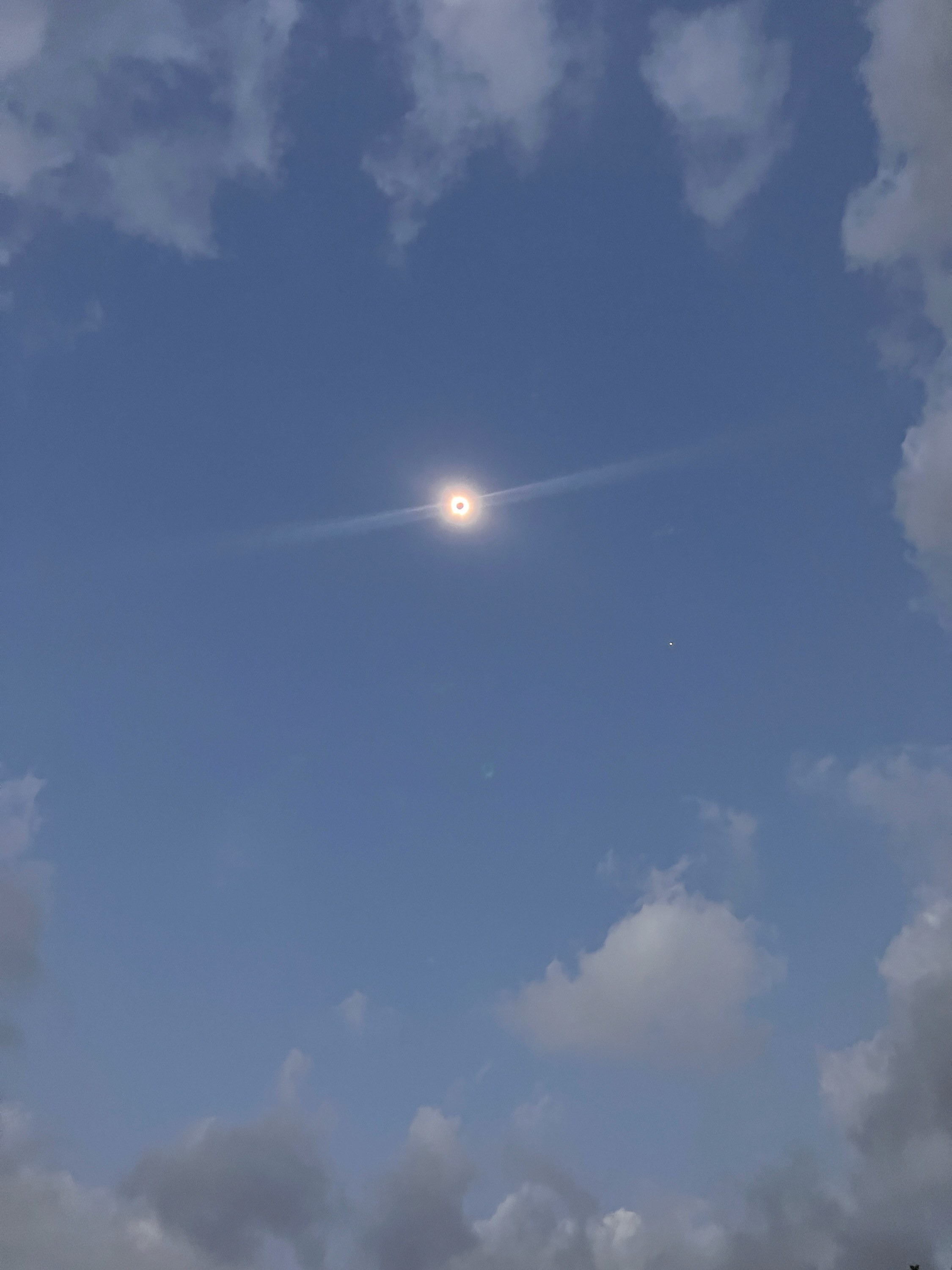
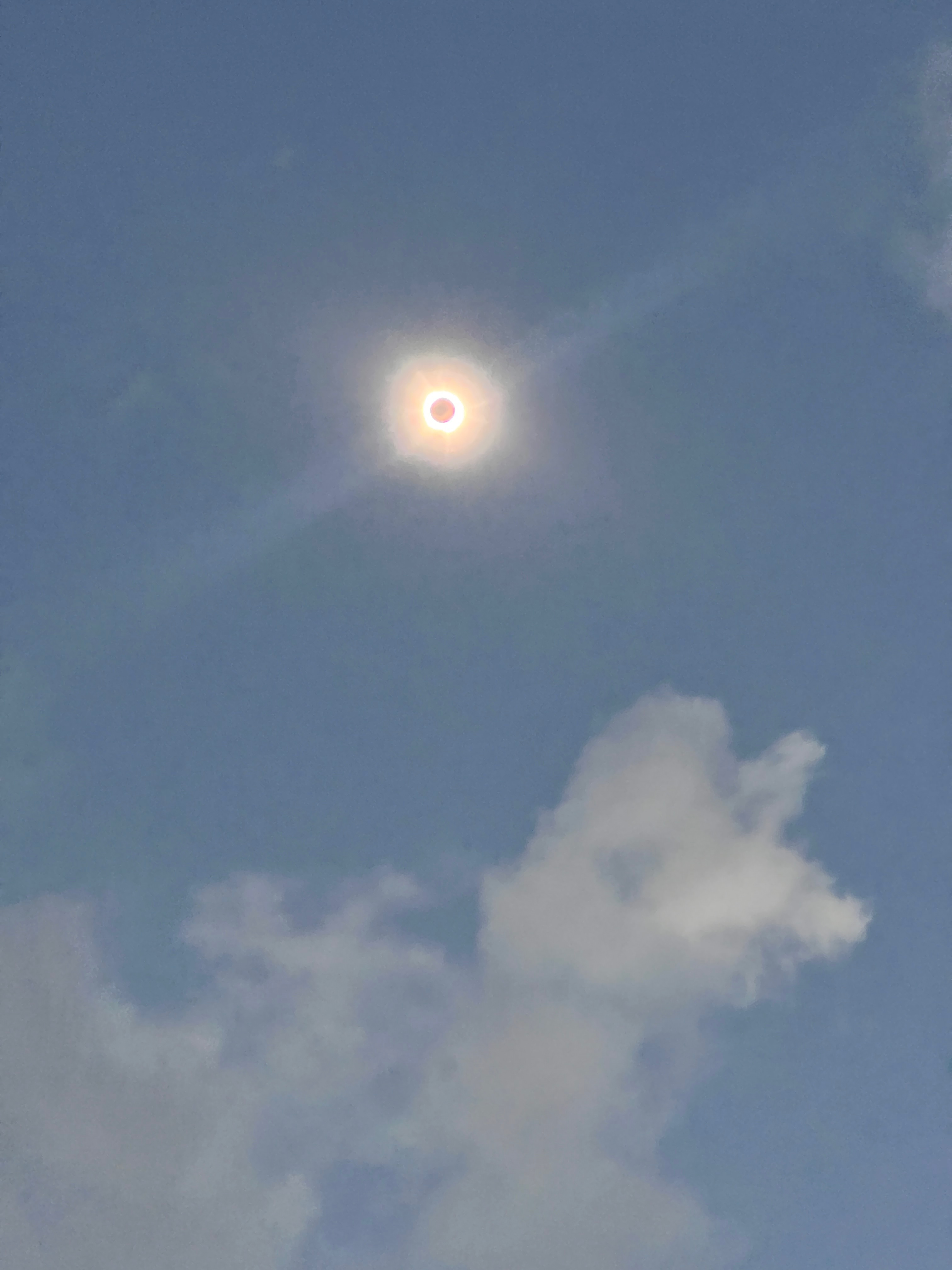
These eight pictures were taken with cell phones by my daughter Rachel, Denise Mosier-Wanken, and Margaret Weiss Bloebaum.

Did you see the total solar eclipse?


To see the Super Facts click here


Black Moon

Today, December 30, 2024, we are having what is called a Black Moon. In Europe it will be December 31.  This is not a super-fact post. Just some lighthearted information about the Black Moon phenomenon.

What is a Black Moon?

The most common definition is that it is the second new moon in a single calendar month. That’s what we are having now. During a new moon the moon is located between the sun and earth, which means that the night side of the moon is directed towards us. At night it is usually below the horizon and during the day you can’t see it.

However, there is one exception to that and that is when you are having a solar eclipse. In that case the moon is directly in front of the sun. It is an unusually well-placed new moon if you will. Here in Dallas, we had a total solar eclipse on April 8 this year. It was a remarkable experience. It turned daker, cooler, some stars and planets came out, including Venus, and the birds and insects stopped singing. I have included some photos from that event below. What you see is the dark side of the moon with the sun hiding behind it.

The sun is shaped like a moon crescent but bright.
I took this photo with my old Samsung 8+ phone before we had totality. Since the sun was still partially visible and bright I used a filter / a pair of glasses that I held in front of the phone.
There’s a black circle in the middle with a light around it, and an especially bright light on the right side | Black Moon
A friend Denise Mosier-Wanken took this photo with her phone. The sun is almost gone. The fuzzy fog like light around the black circle is the sun’s corona.
There’s a black circle in the middle with a light around it.
My daughter Rachel took this photo with her iPhone.
A professional solar eclipse photo with filter. Black Moon.
A professional solar eclipse photo with filter. What we saw with our eyes was something in between this photo and the photos we took. The corona in our photos is too big. This one is too small. Stock Photo ID: 2344355767 by aeonWAVE.

Alternative Definitions of a Black Moon

As mentioned, the most common definition of a black moon is that it is the second new moon in a single calendar month. However, there are other definitions:

  • A month with no full moon
  • A month with no new moon
  • The third new moon in a season with four new moons. A season is defined as the period between a solstice and an equinox and is roughly three months.

A New Moon is a Star Gazing Opportunity

Since there is no moon in the sky the night is a little bit darker. This makes a significant difference in places that are very dark and very far away from city lights. There is so much light pollution here in Dallas, so it doesn’t matter here. However, I still took out my little telescope and observed easy objects, such as Venus, Mars, Jupiter and its four Galilean moons.

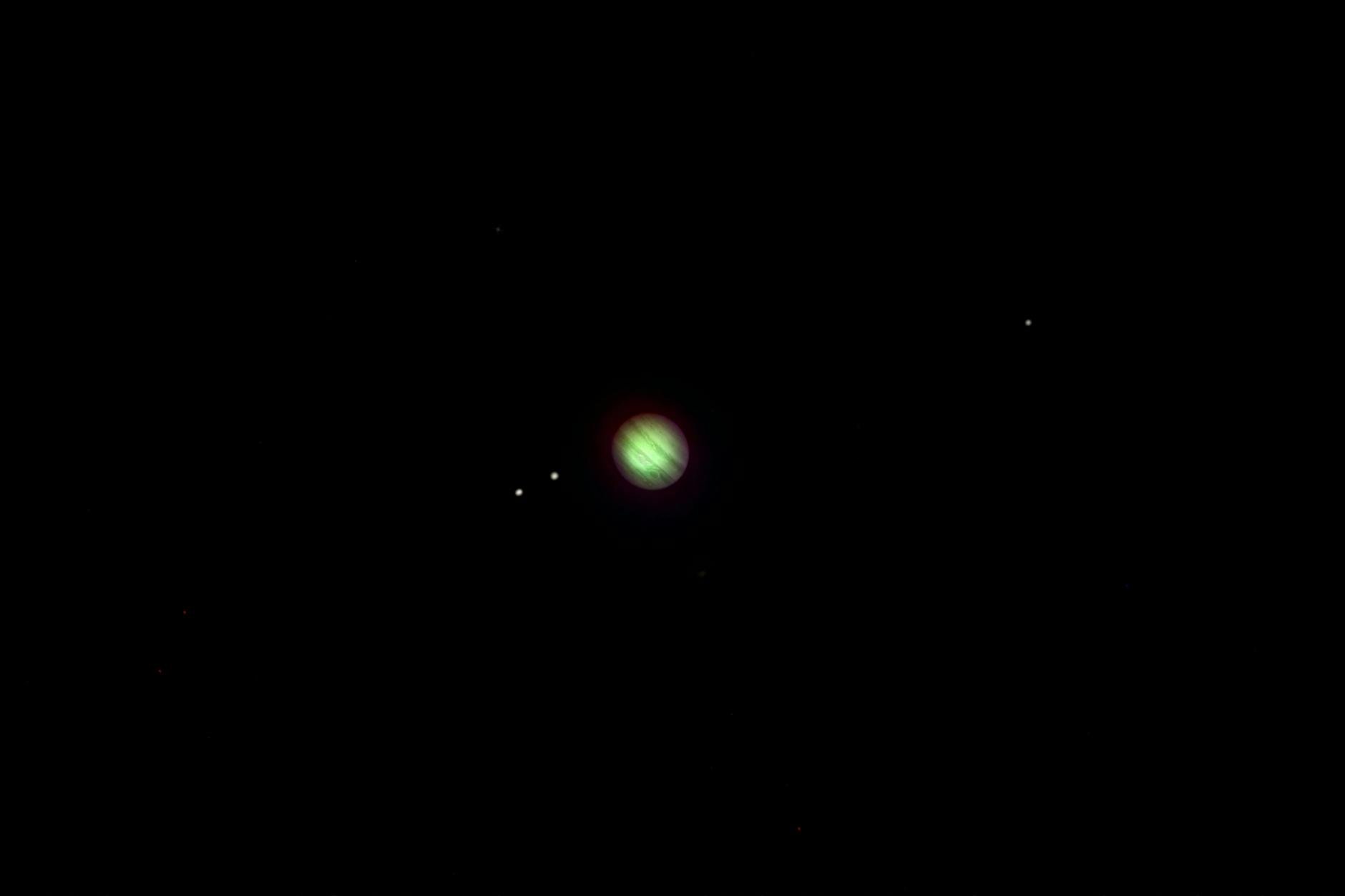
Jupiter in the middle. It is a greenish speck with lines. It is surrounded by three white dots.
The three little dots are three of the four Galilean Moons. I roughly saw this in my telescope a couple of hours ago, but it is not my photo. Photo by Raoni Aldrich Dorim on Pexels.com

The Near Side and the Far Side of the Moon

The moon is always showing us the same side, the so-called near side. The far side, or the back side, you can only see from spacecrafts. Look at the photo below. The near side is on the left whilst the far side is on the right. During a new moon the near side (left) is dark, and the far side (right) is lit up by the sun. But again, you cannot see the far side (right), which is turned away from us.

During a full moon the near side (left) is lit up by the sun, and the far side (right) is dark. One interesting fact about the moon is that the near side (left) and the far side (right) are very different. The far side (right) not only looks different, it has a crust that is much thicker compared to the near side, and it is also densely cratered compared to the near side.

On the left is the near side of the moon and on the right the far side of the moon | Black Moon
The near side of the Moon and the far side of the Moon. Comparison between the two hemispheres of the Moon. Elements of this image were furnished by NASA. Stock Photo ID: 2157518223 by Claudio Caridi.

Below is a youTube video showing an animation composed of actual satellite photos by NASA.

In this video the near side of the moon is dark. It is a new moon and the people on earth don’t see the moon. The sun is behind us and lights up both earth and the far side of the moon (the side people on earth do not see), so that is what the space craft see.

Happy New Year

Finally, a Happy New Year to all of you from Rollo and me. He may not look that happy but that is because I am leaving over the New Years. We have a dog sitter though. For the same reason I will not be on-line tomorrow.

Our mini-Australian Shepherd is looking into the camera. He is looking a tad sad.
Happy New Year from Rollo

To see the Super Facts click here


Supermoon October 2024

“Supermoon October 2024” is not a super-fact post but some fun facts about the Moon. It is a super-moon post instead.

As many of you probably have read, we currently have a so-called supermoon (October 17 & October 18). The moon’s orbit around earth is not a perfect circle but slightly elliptical. Therefore, the moon’s distance to earth varies.

A supermoon is when a full moon occurs when the moon is at its closest point to Earth, called perigee, making it appear larger and brighter than usual. Or more correctly, the term supermoon is usually used to describe a full moon that comes within at least 90% of the perigee. Since this is a special moon event, I took out my little telescope and looked at the moon and its craters. I also took a look at Jupiter, and I saw three of the four Galilean moons.

A close up photo of the near side of the moon | Supermoon October 2024
Photo by Pixabay on Pexels.com
Jupiter in the middle. It is a greenish speck with lines. It is surrounded by three white dots.
The green speck is Jupiter. The three little dots are three of the four Galilean Moons. I roughly saw this in my telescope an hour ago, but it is not my photo. Photo by Raoni Aldrich Dorim on Pexels.com

I thought I might as well mention a few interesting facts about the moon.

There is no dark side of the moon

This is a very common misunderstanding. The moon is always showing the same side towards us (or almost exactly the same side). When there is a full moon the backside, or far side, of the moon is dark, but that is not the case when the moon is half, or a crescent, etc. When the moon is new, the far side / backside is “full” from sunlight. If you wondered, NASA and other space agencies have photographed the far side of the moon.

On the left is the near side of the moon and on the right the far side of the moon | Supermoon October 2024
The near side of the Moon and the far side of the Moon. Comparison between the two hemispheres of the Moon. Elements of this image were furnished by NASA. Stock Photo ID: 2157518223 by Claudio Caridi.

Below is a youTube video showing an animation composed of actual satellite photos by NASA.

A few comments about this animation. You see no stars because the sun is shining, and the earth is also quite bright. The reason you don’t easily see stars during the day is not because the sky is blue but because there is too much light to see them. The sun ruins the starry sky. In addition, stars are not easily captured by cameras when there is ambient light. And again, of course, contrary to the belief of some, the backside of the moon is not always dark.

The far side of the moon is different

As you can see in the YouTube video and the enhanced photo above, the far side looks different from the nearside and it is different in appearance and terrain. The near side of the moon has large, dark, flat-lying basins called maria. They look like oceans. The far side is a lot more rugged and covered by lots of craters. Another difference is that the far side of the moon has a much thicker crust compared to the near side.

Photo of the moon on a blue background | Supermoon October 2024
Photo by Alex Andrews on Pexels.com

The moon is drifting away from earth at about 3.8 centimeters per year

The moon is moving away from earth due to the gravitational forces between the moon and earth, which also causes tidal bulges in the Earth’s oceans and the moon. Back in high school I took a physics test on which you had to calculate how much the moon was moving away from earth based on the size of the tidal waves on earth. I did not solve that one, but not many did. The calculation made perfect sense though and some geniuses got it.

NASA found water on the moon

In 2020, NASA announced the discovery of water on the sunlit surface of the Moon. You can read about it here.

Drop of water
Photo by Pixabay on Pexels.com

The moon was likely created by a celestial collision : The most widely accepted explanation for the existence of the moon is that the Moon was created when a planet-like object, the size of Mars slammed into Earth, soon after the solar system began forming. That was about 4.5 billion years ago.


To see the Super Facts click here