The Moose or Elk Conundrum

This is not a super fact but more of a fun fact. It is a piece of trivia that confuses a lot of people. What is the difference between a Moose and an Elk? Well that depends on where you live and you’d be surprised.

What people in North America refer to as a Moose is called an Elk in British English or in general when you speak English in Europe. It is called an “Älg” in Swedish, “Elg” in Norwegian and in Danish, “Elch“ in German, “Élan” in French, “Alce” in Spanish and Italian. If you use Google Translate “Elk” in English translates to “Älg” in Swedish and “Elch” in German, etc., but so does “Moose”. Using Google Translate Elk and Moose translate to the same animal in all other languages as well. However, if you ask ChatGPT to generate a picture of an Elk and then of a Moose you get two different animals. The same is true for Google AI. There is quite a bit of confusion.

ChatGPT created a picture of an Elk standing in a meadow | The Moose or Elk Conundrum
ChatGPT generated picture of an Elk. Or is it a Moose?
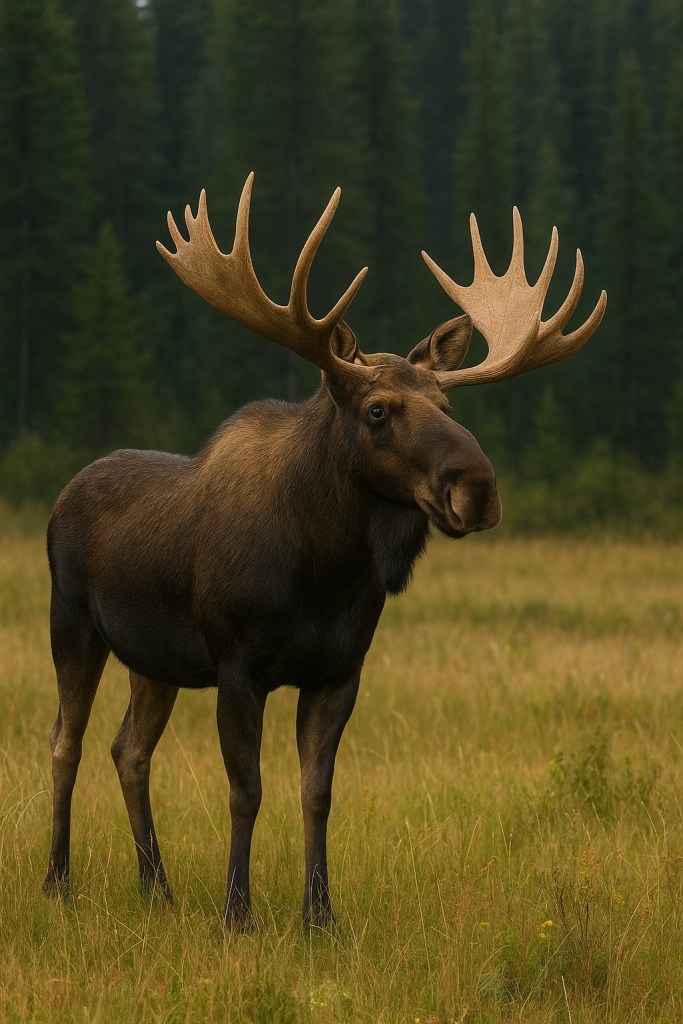
ChatGPT created a picture of a Moose standing in a meadow
ChatGPT generated picture of a Moose. Or is it an Elk?
ChatGPT created a picture of a Moose with Elk antlers standing in a meadow | The Moose or Elk Conundrum
ChatGPT generated picture of a Moose-Elk. Or is it an Elk-Moose.

The moose (Alces Alces) is called Elk in Eurasia. It belongs to the deer family and like all members of deer family the bull has antlers. It is the largest species within the deer family. After the mating season the males drop their antlers to conserve energy for the winter. A new set of antlers will then regrow in the spring. An interesting fact about moose is that not all bull moose have the same type of antlers. The moose in northern Europe and Alaska have palmate antlers, and they act as parabolic reflectors, amplifying sound at the moose’s ear. You may think that the plural of Moose is Meese, but it is not, and it is not Mooses either, it is just Moose. To read more about moose click here.

The picture shows the distribution of moose in red. The red color covers North America, Scandinavia, parts of eastern Europe, Russia and Siberia.
The Moose (or Elk in Eurasia) live in northern North America, Scandinavia, parts of eastern Europe, Russia and Siberia. Jürgen Gbruiker / User:Jrockley, CC BY-SA 3.0 <http://creativecommons.org/licenses/by-sa/3.0/&gt;, via Wikimedia Commons.

Elk (Cervus Canadensis) is the second largest species within the deer family. It is also called Wapiti, and I have come across the name Canada Deer in Europe. Remember, when in Europe you can’t call an Elk and Elk because in Europe the name Elk is reserved for Moose. Like Moose Elk shed their antlers every year. You can read more about Elk here. Note that it says “This article is about the species called “elk” in North America. For the species called “elk” in Eurasia (Alces alces), see Moose.”.

Moose and Elk Photos

Dark illustration of a Scandinavian Bull Moose | The Moose or Elk Conundrum
Vintage boho artistic image of älg (a bull moose) in Sweden in the forest Asset (Shutterstock AI) id: 2592983377
A photo of a Bull Moose standing in the snow
A Moose in Jasper Canada Asset id: 2031585740 by Harry Collins Photography
A bull elk in walking on grass. There is a forest in the background | The Moose or Elk Conundrum
A bull elk in autumn during the rut Asset id: 190972129 by Harry Collins Photography
A big bull elk standing in tall grass nearby a few trees.
Photo of Elk taken by friend in Yellowstone National Park.
A large bull moose standing in tall green grass. There is a forest in the background | The Moose or Elk Conundrum
Photo of a moose taken by friend in Grand Teton National Park.

My Moose and Elk Photos

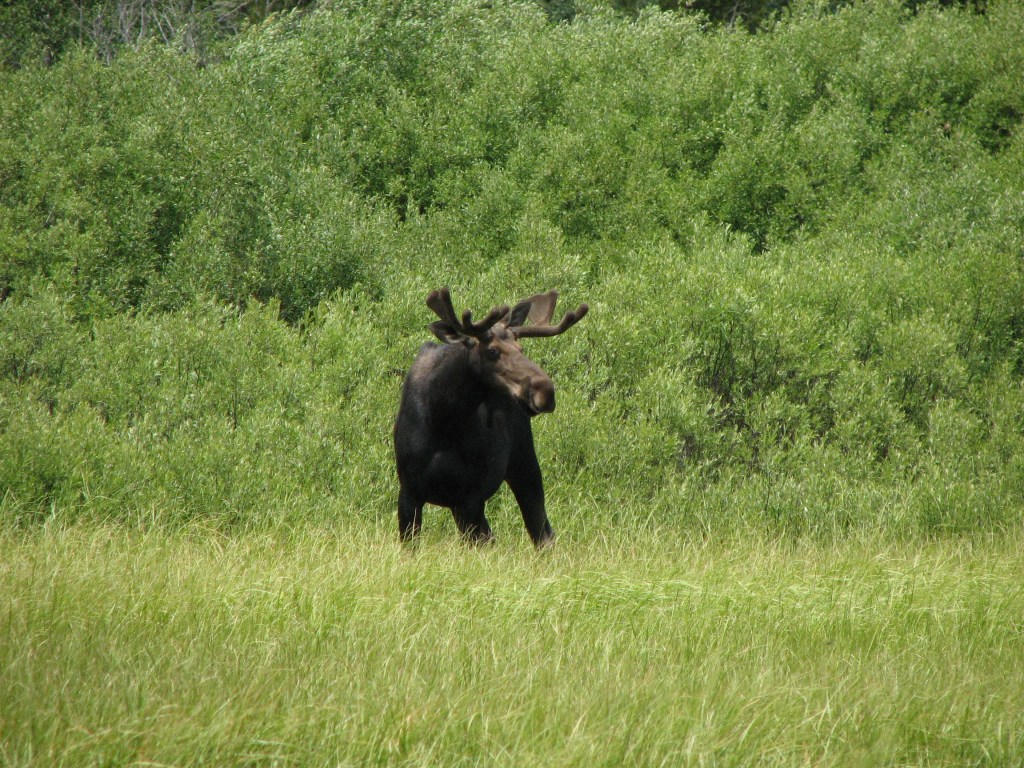
Bull moose standing in tall green grass at a distance
Photo of a Moose that I took on a visit to Yellowstone National Park
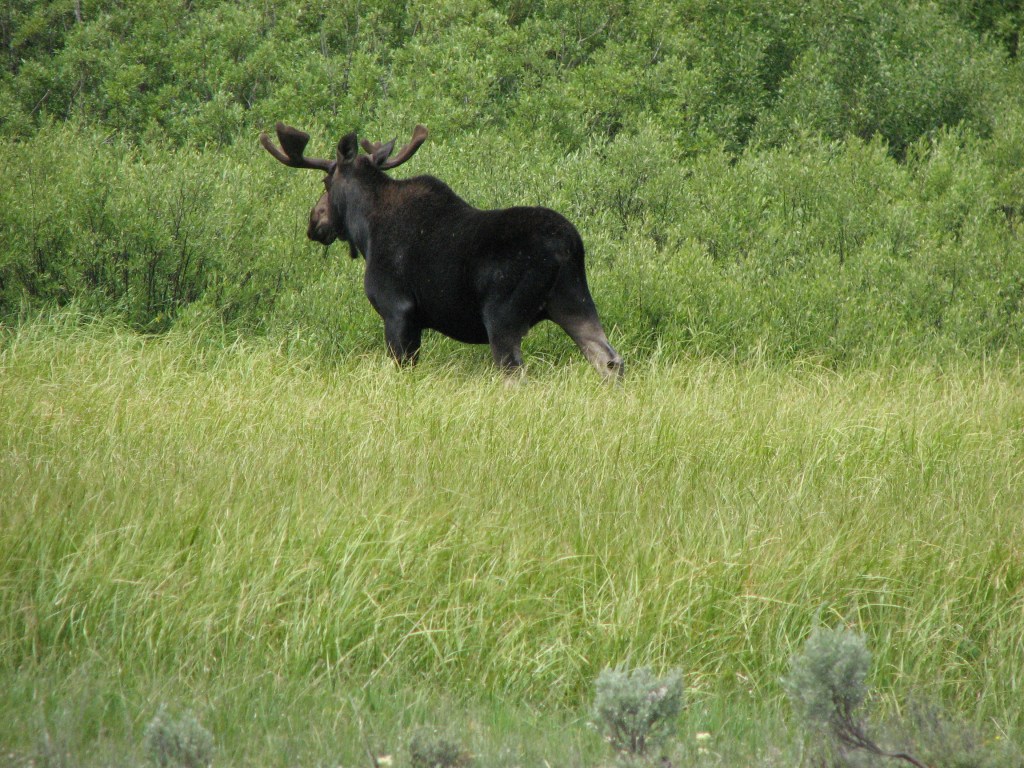
Bull moose running in tall green grass at a distance. The moose is headed away from us towards some bushes. | The Moose or Elk Conundrum
Photo of a Moose that I took on a visit to Yellowstone National Park
Elk is lying down in the grass. He is turned away from us.
Photo of an Elk that I took on a visit to Yellowstone National Park
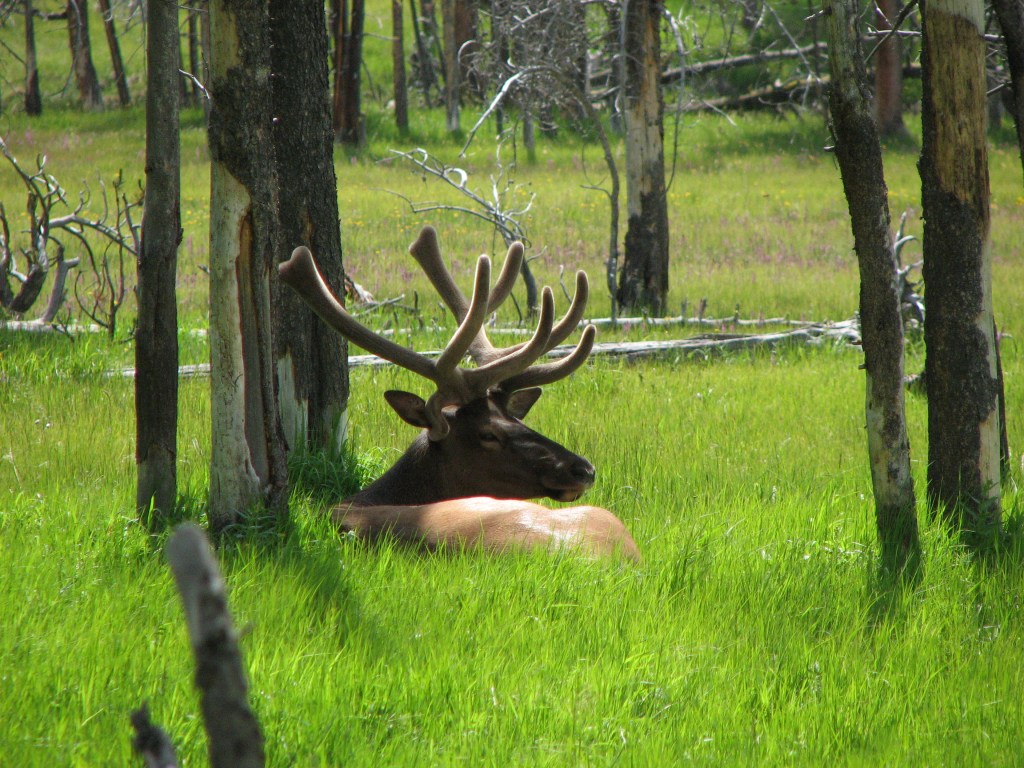
Elk is lying in the forest.
Photo of another Elk that I took on a visit to Yellowstone National Park
The two Elk are lying down among the trees in a forest
Photo of two Elk that I took on a visit to Yellowstone National Park.

The Murder Moose

The first story I ever wrote in my life I gave the title the “The Murder Moose” / “Mördar Älgen”. It was when I was in second grade in Swedish public school. Our teacher told us that we could write about anything, and I chose a horror story. The story was about a very big and dangerous moose that ran into to villages and killed people. At the end of the story a hunter shot the moose. I also drew a picture of a moose with big antlers and sharp teeth.

A moose with big antlers and giant sharp teeth. | The Moose or Elk Conundrum
The murder moose in my second grade story. The picture was generated by ChatGPT.

The inspirations behind this story were two-fold. A neighbor’s girl and I had been walking in the forest together when we saw something big moving behind a thicket around 30 feet ahead of us. At first it looked like a horse and carriage to me, but it couldn’t be. A horse and carriage could not have gotten deep into the forest. Suddenly two big heads peered out of the thicket. It was a bull moose and female moose. We screamed on top of our lungs and ran home, and the two moose startled by our screams ran the opposite way.

The second inspiration for the story is that moose hunting is very common in Sweden especially in northern Sweden where I lived. Sweden has a very large moose population of approximately 300,000 to 400,000 moose, with a stable population of around 350,000. Sweden is the country with the highest concentration of moose in the world. Each fall about 80,000 to 90,000 moose are hunted and killed during the hunting season as part of wildlife management. Therefore, moose hunting was a practice that a lot of adults I knew participated in. We also ate a lot of moose meat.


To see the Super Facts click here

United States is Tornado Country

Super fact 65 : The United States covers approximately 6.14% of Earth’s total land area. Despite that approximately 75% of the world’s tornadoes occur in the United States, making the risk of a tornado in the US 46 times higher than in the rest of the world. Tornadoes are particularly common in Tornado alley. Canada is the country with the second-highest number of tornadoes globally.

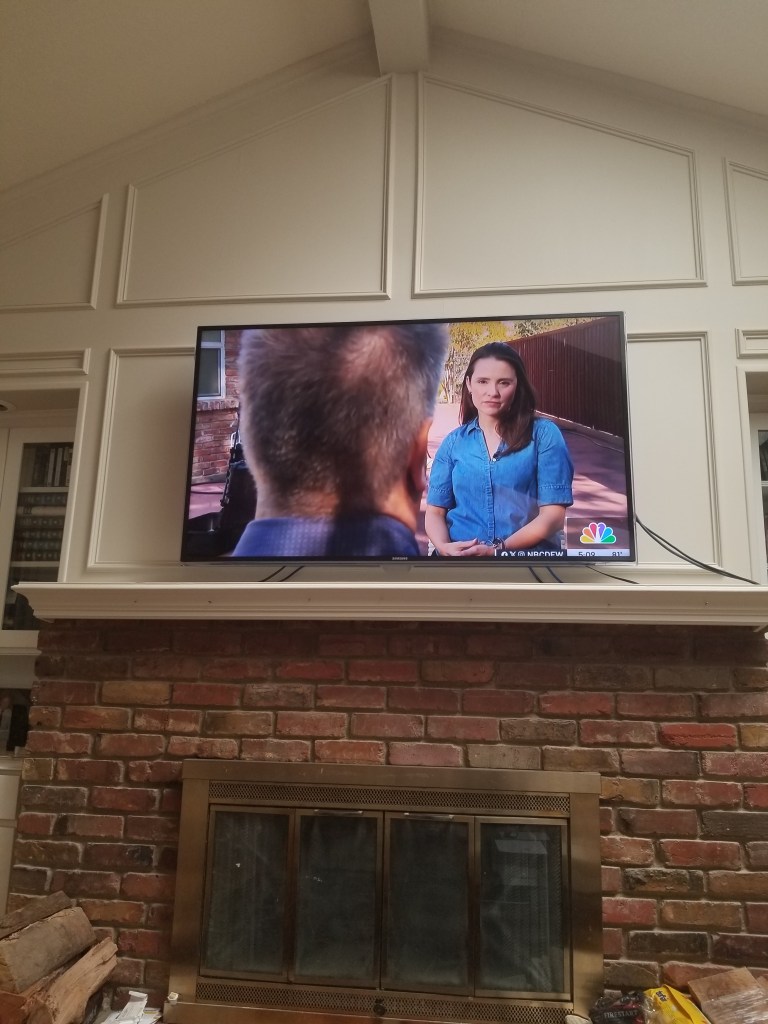
Our neighborhood was ravaged by an EF3 tornado in the evening of October 20, 2019. Today is the six year anniversary of that event. One year ago, I was interviewed by the NBC about this event. Yes, I was on TV. NBC had found me via my Leonberger dog blog. I’ve included the clip below.

It appears that the most common statistics stated by reliable sources is that approximately 75% of the world’s tornadoes occur in the United States (click here, here, or here). As stated, 75% is an approximate number and another common number is 90%.  90% might be overstated because smaller tornadoes are underreported in the rest of the world. Whether the correct number is 75% or 90% it is clear that the United States has the most tornadoes. It is the Tornado Country of the world.

It is quite astonishing that one country, the United States, has such a high concentration of this extreme weather phenomenon. Most Americans know that their country is special in this regard. I’ve met a lot of Europeans (I am from Europe / Sweden myself) who thinks tornadoes is just Hollywood thing. However, it is a real and very common phenomenon in the United States, and that is surprising to much of the rest of the world. It is also an important extreme weather phenomenon that kills a lot of people and causes billions of dollars in damage every year. This is why I consider “United States is Tornado Country” a super fact.

A large well-formed tornado over the plains | United States is Tornado Country
A tornado. Stock Photo ID: 2369175167 by g images.com.

Tornado Alley

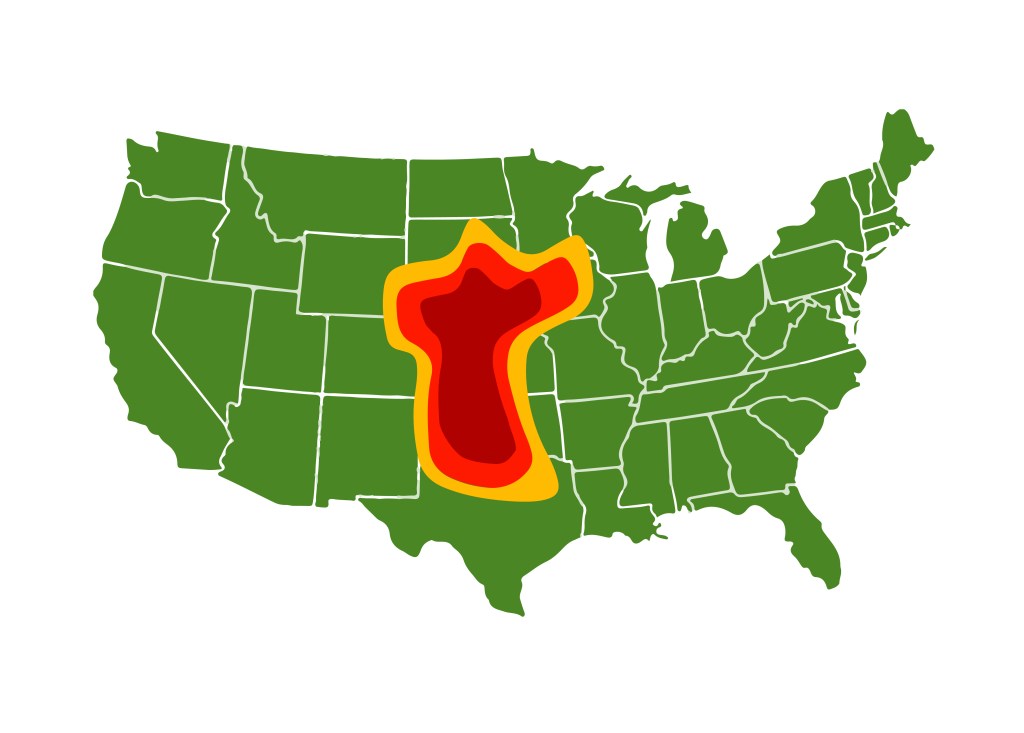
Tornadoes can happen anywhere, but as mentioned they are more common in North America and especially in tornado-alley. Despite tornado alley’s small size, a quarter of all significant tornadoes in the world occurred there according to a study (1921 – 1995). The extent of tornado alley includes north Texas, Oklahoma, Kansas, Nebraska, South Dakota, Iowa, and the corners of Minnesota, Wyoming, Colorado and New Mexico. Dallas, where we live, is in Tornado Alley.

Tornado Alley is indicated in red, orange and yellow covering north Texas, Oklahoma, Kansas, Nebraska, South Dakota, Iowa, and the corners of Minnesota, Wyoming, Colorado and New Mexico.
Map showing Tornado Alley. It includes north Texas / Dallas. Stock Vector ID: 1719764089 by Adansijav Official.

Dixie Alley

Another region with a lot of tornadoes is Dixie Alley. Dixie Alley stretches from eastern Texas and Arkansas across Louisiana, Mississippi, Tennessee, Alabama, Georgia, and mid to western Kentucky to upstate South Carolina and western North Carolina; the area reaches as far north as southeast Missouri.

Dixie Alley has fewer tornadoes than Tornado Alley, but they tend to be deadlier and more violent than in Tornado Alley. The tornadoes in Dixie Alley occur year-round, at night, and the Tornadic storms in Dixie Alley are often high precipitation supercells due to an increase of moisture from proximity to the nearby Gulf of Mexico. The heavy rain makes it difficult to detect the tornadoes. Dixie Alley also has more mobile homes, homes tend to not have basements, and it is more densely populated than Tornado Alley. NOAA records indicate that the majority of deaths from tornadoes in the US have occurred in Dixie Alley.

Map of the United States showing Dixie Alley in red. It includes parts of eastern Texas and Arkansas, Louisiana, Mississippi, Tennessee, Alabama, Georgia, and mid to western Kentucky to upstate South Carolina and western North Carolina and  southeast Missouri.
Map showing Dixie Alley. Bhockey10, CC BY-SA 3.0 <https://creativecommons.org/licenses/by-sa/3.0&gt;, via Wikimedia Commons.

Tornadoes and Hurricanes Are Different

Another related issue that has been brought to me is that many Europeans do not know the difference between a hurricane and a tornado. This is not strange since both of these extreme weather phenomena are less common in Europe.

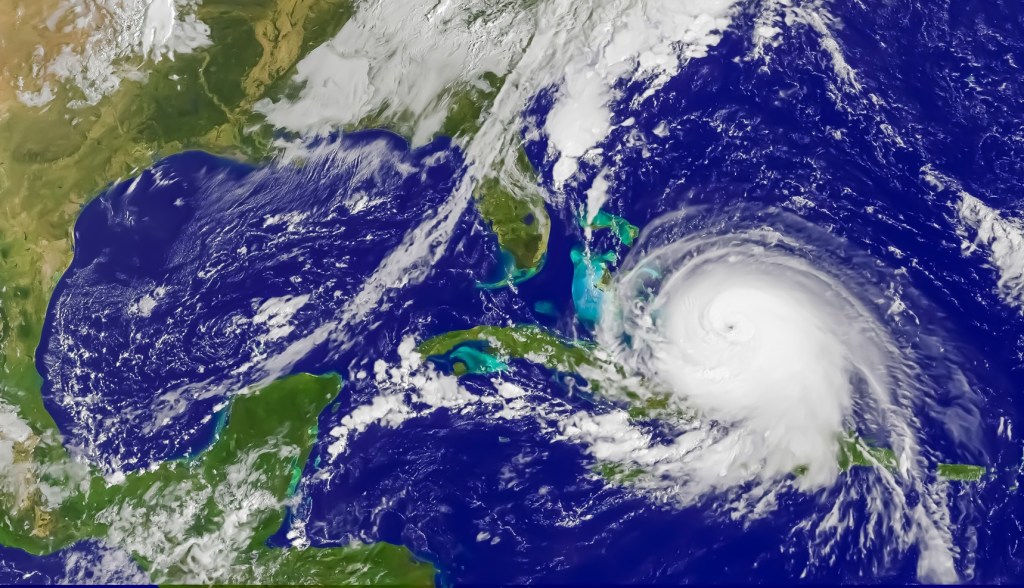
A hurricane is a big rotating storm system originating in the ocean that sometimes makes landfall and devastates our coasts. Hurricanes are big, thousands of square miles and even a million square miles. A hurricane has wind speeds of 74 miles per hour (mph) or higher. That’s 119 kilometers per hour or 33 meters per second. They are called hurricanes in the Atlantic and the northeast Pacific, and Typhoons in the northwest Pacific, and otherwise just cyclones.

Satellite photo of Mexico, southeastern United States and the Caribbean. A hurricane is approaching from the east. | United States is Tornado Country
Satellite photo of hurricane approaching Cuba and Florida. Stock Photo ID: 2202605185 by Emre Akkoyun.

A tornado is a violently rotating column of air that is in contact with both the surface of the Earth and a cloud. They originate with thunderstorms, especially supercells, and are more of an inland phenomenon even though hurricanes can sometimes generate tornadoes. Tornadoes are much smaller than hurricanes in area, almost always much smaller than a square mile, or just 10 or 30 meters across. The reason they can be as deadly as hurricanes is that they tend to have stronger winds and they appear and disappear quicker thus taking people by surprise.

A threatening supercell with lightning
A so called supercell but without a tornado. Stock Photo ID: 1768468151 by Laura Hedien.
A nice photo of a threatening Tornado. | United States is Tornado Country
An F5 tornado in Canada. From Wikimedia Commons.

So, in summary, Hurricanes cover a large area and lasts a long time. They come from the sea and devastate coastal areas and are less common than tornadoes. Tornadoes are formed on land from thunderstorms, typically supercells. They are particularly common in tornado-alley. They cover a small area and go high up into the air forming a funnel and are commonly more intense. They are also more common, and they can surprise people. Therefore, on average, tornadoes cause more deaths in the US than hurricanes. You can read more about it here.

Our Tornado Experience

As mentioned, on October 20, 2025, our neighborhood was ravaged by an EF3 tornado. I was sitting outside in the backyard drinking a beer (Yellow Rose from Lone Pint brewery) when the sirens went off and my cell phone started screaming tornado warning “seek shelter immediately”. I did not see any problem, so I thought it was just one of unnecessary warnings again and I wanted to finish my beer. However, I decided to walk back into the house. About one minute later there was a lot of noise and a piece of the neighbor’s roof flew into our chimney, smashed it and it started raining bricks.

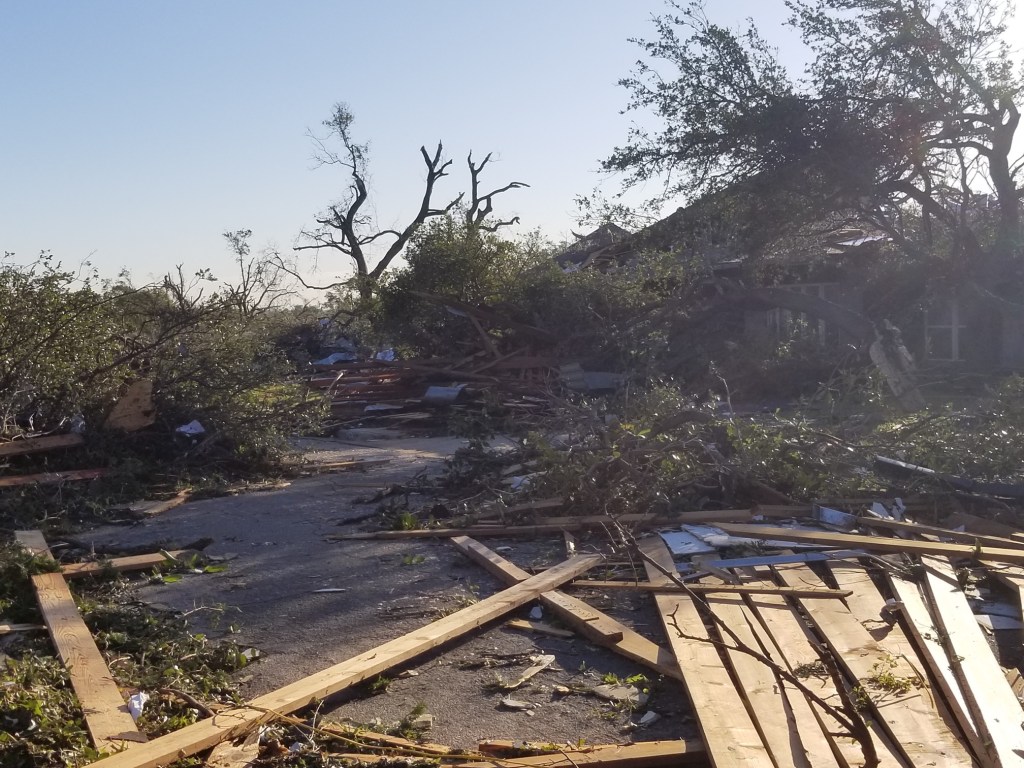
The house shook and thought to myself, “that was some thunderstorm”. I opened the door to the backyard, and I was astounded when I saw the devastation. My backyard was covered in debris, bricks, trees, garbage, my grill had flown off, several of our neighbors’ houses were just rubble. I guessed it must have been a tornado. My wife Claudia told me to go and check on her parents who lived about a mile away. I started driving my Toyota Prius, but I did not get very far because a neighbor’s roof was lying across the road. We live on a circle, so I decided to go the other way instead but about 30 trees lying across the road stopped me. So, I started walking but four firemen stopped me and told me that it was too dangerous to walk around. I had to go home. We would later learn that my wife’s father was injured. I am describing this in the NBC interview below.

We lost power for four days, we needed a new roof and a new chimney, the wiring and piping (for air conditioning) in the attic was destroyed, the fence and garage door were broken. It cost $50,000.00 to repair, nut our house stood, the frame was fine, and luckily our insurance paid for all of it, except for the parasol the flew away. We had no proof it ever existed. Not everyone was that lucky, especially those whose houses were destroyed. Unfortunately, our Leonberger dog Bronco had a heart failure one week after this. However, he recovered. But we are guessing that the fact that we did not have air conditioning for a while could have affected his heart. It was a tough day for Bronco, our Leonberger Dog. <<Link-13>>

A neighbor’s house with the roof ripped off.
A neighbor’s house the morning of October 21st, 2019.
Debris on the street from a neighbor’s destroyed house.
Another neighbor’s house. This house was about 100 yards from our house. It took a direct hit from the tornado.
This house is totally destroyed.
Another neighbor’s house (a bit further away from us).
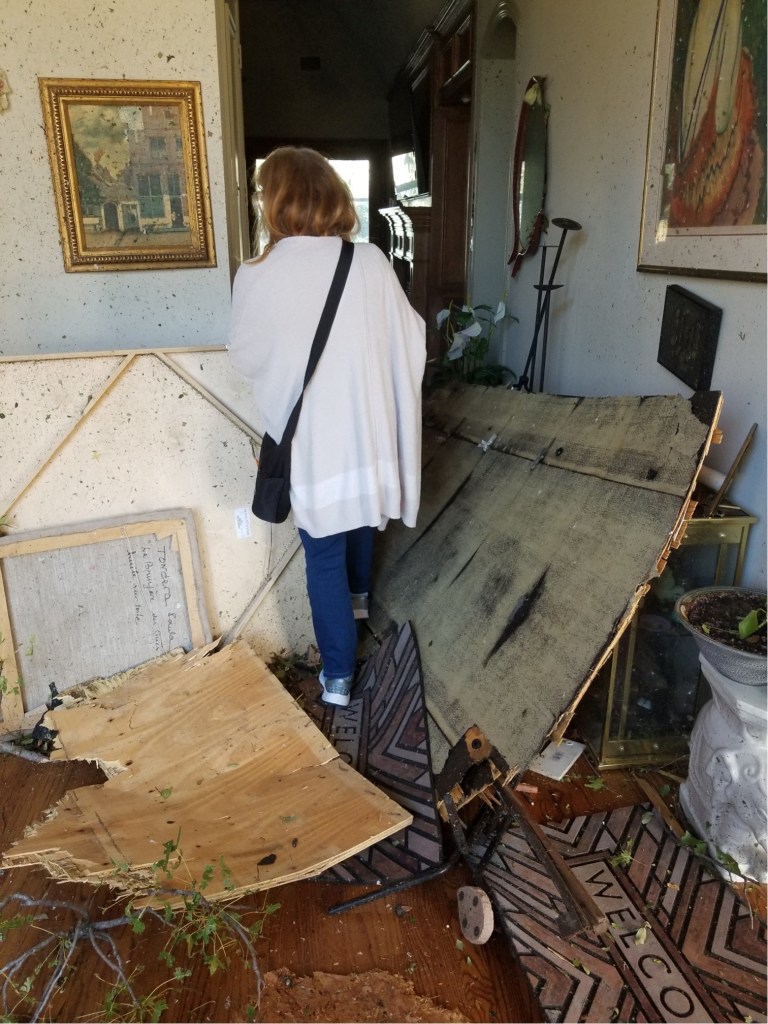
My wife Claudia is walking among the debris in my in-laws house.
Inside Claudia’s parents’ house. This was the morning after. We are walking into their house to check on them (that’s my wife).
The entire top of this house is destroyed.
This is the next-door neighbor of Claudia’s (my wife) parents.
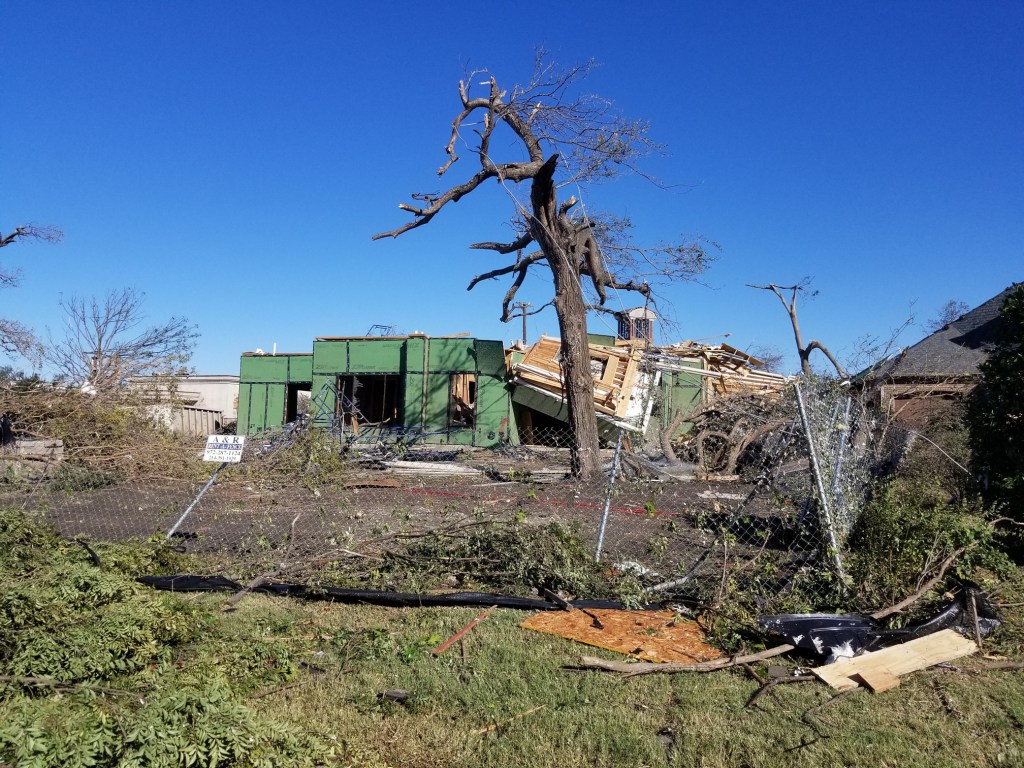
The house is completely flattened. A large tree is destroyed. It has no branches. | United States is Tornado Country
Destroyed house in the neighborhood.
A big nice-looking house destroyed by a tornado.
Another house in the neighborhood.
A photo taken from the inside of a destroyed office.
The remains of the veterinary clinic where we used to take our dogs. Luckily there were no animals staying overnight at this time.
Crashed cars and destroyed stores. | United States is Tornado Country
View of the shopping center in our neighborhood.
The Gap store has its entire backside ripped off.
A store at a nearby shopping center
The yellow school bus is wrapped around a tree.
This was a school bus belonging to the school where my boys went.
Trees are ripped up, vehicles are crushed. | United States is Tornado Country
Streetview from the neighborhood.

My Interview with NBC

As I mentioned, last year NBC interviewed me about this event. They said that they had been reading my Leonberger blog and were interested in a post that I had made about the tornado in Dallas on October 20, 2019. They wanted to interview me and asked for permission to use a few of my photos.

A photo of a TV above the fireplace. Thomas Wikman on the TV screen.
Seeing myself on the TV was a bit surreal. Click on the image to see the interview. My interview starts at 1 minute and 11 seconds.
A photo of my TV above the fireplace. I am on the TV screen. | Thomas Wikman NBC Interview
Here I am with NBC journalist Katie Blake. Click on the image or here to see the interview. My interview starts at 1 minute and 11 seconds.

I would like to stress that there are thousands of people whom they could have interviewed. Thousands of people who probably would have been better candidates. What made all the difference was the post I made on my blog. Therefore, fellow bloggers, perhaps this is an example of the fact that blogs bring attention.


To see the other Super Facts click here

Ten Money Facts

Esther’s writing prompt: October 15 : Money

Click here or here  to join in.

This is not a super fact but a collection of interesting facts regarding money.

A one hundred US Dollar bill sailing through a cloudy sky | Ten Money Facts
US 100 dollar bills falling through the air Shutterstock Asset id: 2555911235 by Caito

Money is a Shared Fiction, a Myth

Money is a fiction that depends on the trust that we collectively put in it. In his book Sapiens, History Professor Yuval Noah Harari argues that money is a “myth”, or a “shared fiction” because its value is not an objective, physical reality but a collective belief. This imagined order allows for mass cooperation by creating a universally accepted, albeit artificial, medium of exchange that can bridge the gap between strangers who don’t know or trust each other personally. When people cease to believe in the value of money it ceases to have value.

Money is Not the Root of All Evil

The “root of all evil is money” is a common phrase that is a misquote of the biblical verse in 1 Timothy 6:10. According to the King James Version of the Bible it says, “For the love of money is the root of all evil: “. However, this is also not correct because it is a mistranslation. According to the New American Standard Bible – NASB 1995 (NASB1995),  the New Century Version (NCV), the American Standard Version (ASV), the New King James Version (NKJV), the correct translation is “For the love of money is a root of all kinds of evil”. The latter makes a whole lot more sense. Not all evil is because of the love of money, but a lot of it.

The Wealth of the World is 500 Trillion Dollars

The world’s total net wealth in 2025 is estimated to be around 500 trillion, but there are other estimates. More than half of this, $260 trillion, is in stocks and bonds.

The Wealth of the United States is 160 Trillion Dollars

The United States has an estimated total wealth of approximately $160 trillion. The top 50% of the US population own 98% of that wealth. The bottom 50% of the US population owns 2% of that wealth. In Q3 2024, the top 1.3 million had a wealth of 49.2 trillion (31%), the next 65.2 million had a wealth of 106.8 trillion (67%), and the next 66.6 million had a wealth of 3.9 trillion (2%).

The Second Most Important Currency is the Euro

The Euro is the second most important currency after the US Dollar, which is the most important currency for borrowing, lending, and reserves.

US paper money is not paper

US paper mone is not made of paper; it’s a blend of 75% cotton and 25% linen to make it more durable.

Cacao Was Once a Currency

The ancient Aztecs used cacao beans as a form of money. Some Aztec taxes were paid in Cacao, and it was even used to pay workers. A single bean could buy you a tamale, while a few dozen might get you a rabbit.

Cash is Not Very Common

On the topic of digital money, it turns out that only 8% of the world’s currency is actually physical, the rest is online or card transactions.

In God We Trust

In God We Trust” is the official motto of the United States. It was adopted by the U.S. Congress in 1956, replacing E pluribus unum (“Out of many, one”). The first paper money to feature the motto was the one-dollar silver certificate, which entered circulation on October 1, 1957.

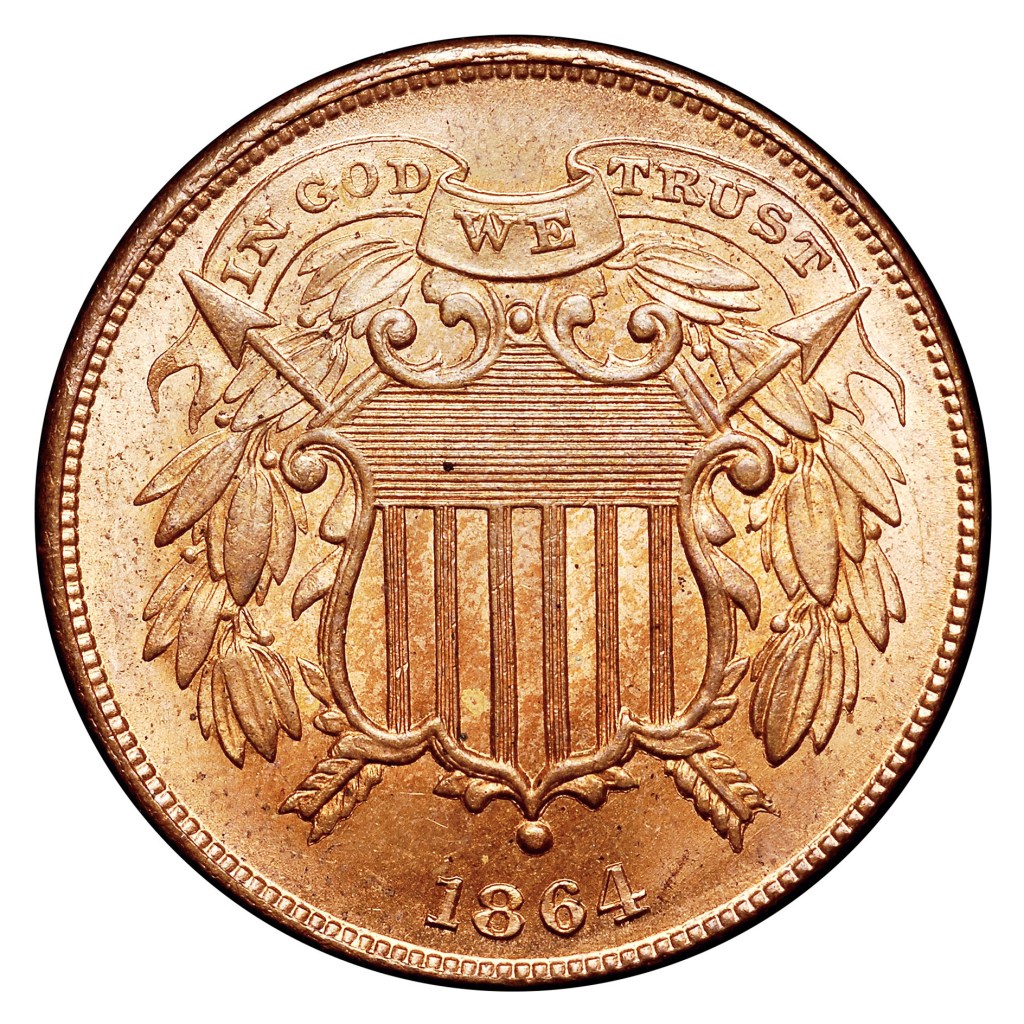
However, that was not the first time “In God We Trust” appeared on American money. “IN GOD WE TRUST” first appeared on the obverse side of the Two-cent piece in 1864.

The backside of a copper colored coin featuring the text “1864” and “IN GOD WE TRUST” | Ten Money Facts
Image courtesy of Heritage Auctions, Public domain, via Wikimedia Commons

US Banknotes Have Multiple Security Features

US banknotes / “paper currency” (along with other currencies) contain security features that can be used to authenticate the banknotes and thereby avoiding accepting counterfeit currency. If you feel the paper (well it is not paper) it should feel slightly rough. All denominations higher than $10 have color shifting ink in the numeral on the lower right corner of the note. On current notes it should change from copper to green. The current style of $100 notes also includes two new security features that you can check by tilting the note: the color shifting in the inkwell and the 3D security ribbon (in the middle across the note). The images of the bells and the text of “100s” should shift as you tilt the note.

In addition, hold the note to light and check the watermark and the security thread that are included on denominations $5 and higher. When held to light the security thread should be visible when held to light. The watermark on a bill should match the portrait of the banknote. The two watermarks on five dollar bills should match the numeral five. The security thread is in a different location for each denomination and glows in a unique color when exposed to UV light. To watch a video explaining how you can check if a bank note is authentic click here or on the YouTube Video below.

If you sort the banknotes or use a machine to check for counterfeiting, there are additional features. The different denominations have a unique magnetic ink signature, as well as a serial number that is unique to each banknote. However, that is for machines and complex systems to discover. The serial number helps in identifying and tracking individual bills.

Me Being a Money Printing Engineer

At one point in my life (2013, 2014, beginning of 2015), I was working for a British company, which at the time was called DeLaRue Cash Systems, now DeLaRue Currency Solutions. DeLaRue Currency Solutions provide more than half of the world’s currencies for a lot of countries around the world. I was working there as a senior software engineer (and electrical engineer) and I was handling and developing the machines that printed banknotes or sorted banknotes. Both of these machines needed to be able to detect the security features described above and therefore they featured various detectors such as cameras, UV lights, magnetic detectors, etc. In the first case to make sure the banknotes were printed correctly and in the second case to check for counterfeit banknotes.

Through my work at DeLaRue I got the opportunity to travel to Great Britain and India. In Great Britain (Gateshead) I visited a banknote printing facility, which when I visited contained huge stacks of banknotes to the value of several billion dollars. Security was pretty tight, and you were not allowed to bring in or out any money. In Bangalore in India, I was introduced to an actress at the Bangalore Palace. My guide told me she was the Jennifer Aniston of India. I looked it up and she was not. Anyway, below is a picture.

Young Indian woman on the left. Me in a yellow T-shirt on the right
Me and allegedly Jennifer Aniston of India, at the Bangalore Palace. They were making a movie at the palace. It was very nice of her to agree to a photo, but my guide’s claim that she was Jennifer Aniston of India was perhaps a slight exaggeration.

Finally, ABBA’s Money, Money, Money


To see the Super Facts click here

A Total Solar Eclipse the Ultimate Moon Shade


Esther’s writing prompt: October 8 : Shade

Click here or here  to join in.

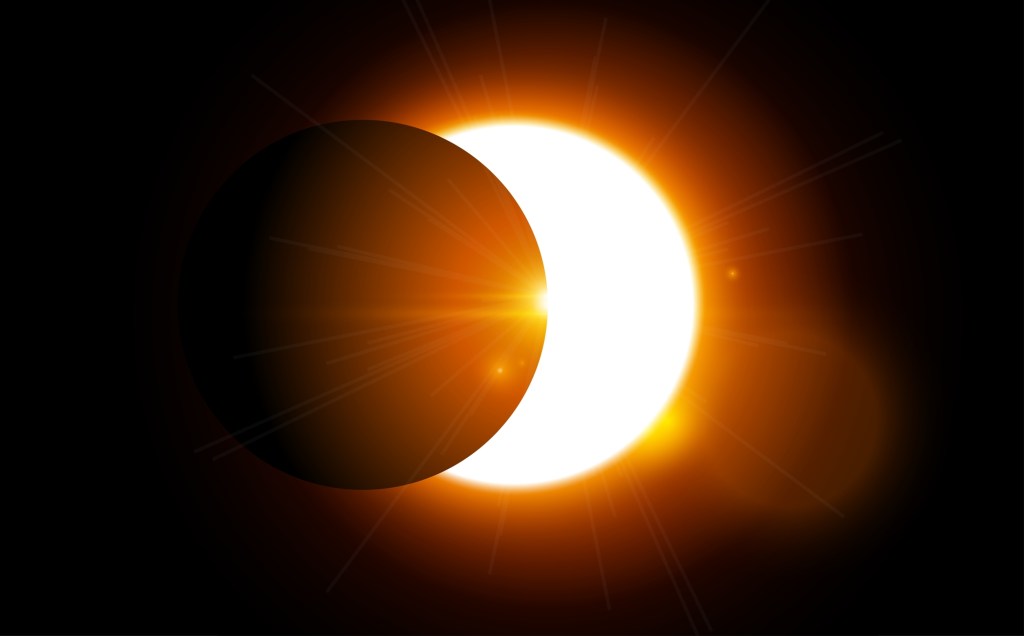
On April 8, 2024, a narrow sliver of the United States, including Dallas, where we live, experienced a total solar eclipse whilst most of the United States experienced a partial solar eclipse. We also had a three hour long partial solar eclipse and the total solar eclipse lasted four minutes. To explain, first there was a one and a half hour partial solar eclipse, then the total solar eclipse lasting four minutes, and then a one and a half hour long partial solar eclipse again. A partial solar eclipse is interesting, but a total solar eclipse is something else entirely. A total solar eclipse is the ultimate moon shade and an unforgettable lifetime experience.

We were all sitting outside in our backyard having a little party, drinking beer and eating snacks, as the partial solar eclipse began. During the partial solar eclipse, it was still daylight, and you could not look at the sun unless you had ISO certified solar eclipse glasses, which we did. When you put on the solar eclipse glasses you could see that the sun looked like a crescent. This was not possible to see without the solar eclipse glasses, and you certainly should not look at the sun during a partial solar eclipse.

Suddenly, it got dark, not entirely dark, but more like as if it was well into twilight. The sun turned into a black circle surrounded by a faint wispy light. That was the sun’s corona, which normally is invisible due to the sun’s powerful light. The sun’s transformation only took a few seconds. The darkness fell extremely fast as if someone turned off the lights. Now you could look straight at the sun without the ISO certified solar eclipse glasses. Looking straight at the sun during a total eclipse is perfectly safe since all you see is a black circle in the sky. What you see is the black moon. The sun is hidden behind the moon. However, you need to be ready to put on your glasses, or turn your head, when it is time for the sun to come back.

As the sun suddenly vanished, the birds and the insects became quiet. The stars came out. Venus appeared above our heads, not far from the sun. It shone brightly in a location where you normally never see Venus. Venus typically appears above the western horizon after sunset (the evening star) or above the eastern horizon before sunrise (the morning star), not right above you. It was quiet, dark, the sky was beautiful and filled with stars, and there was a black circle in the sky surrounded by the magical faintly shining corona.

I knew what was coming next as the four minutes came to a close, so I put my ISO certified solar eclipse glasses back on. At first, I saw nothing. Then I saw something that looked like a big star that was quickly expanding like a super nova and turning into a thin bright thin crescent. The lights came on, the stars and Venus disappeared, the birds and insects began making noise again. Daylight and the whole world returned in just a few seconds. Now we had another one and a half hour of a partial solar eclipse to enjoy (using our solar eclipse glasses).

Map of north America showing the path of the total solar eclipse on April 8, 2024. Several cities in the path of totality are marked | A Total Solar Eclipse the Ultimate Moon Shade
Path of totality (total solar eclipse). I am allowed to use this image as long as I link back to the National Eclipse. Click on the image to visit the National Eclipse.

What is a Total Solar Eclipse?

Solar eclipse occurs when the Moon passes between the Sun and Earth, blocking the Sun’s light and casting a shadow on Earth’s surface. This is illustrated in the picture below. As you can see there’s a weaker but larger shadow covering a portion of earth. This corresponds to the moon not blocking all of the sun, which results in a bright sun crescent. The darker smaller region/circle on earth corresponds to the moon blocking all of the sun resulting in near total darkness. This is the region on earth that has a total solar eclipse.

The illustration shows the sun on the left, then the moon blocking the sun’s light for earth, which is located on the right.
Solar Eclipse with Sun Moon and Earth Orbit. Shutterstock Asset id: 2292547031 by Nandalal Sarkar

Blue planet earth with a small moving dot for totality and a big blue shadow showing the extent of partial solar eclipse | A Total Solar Eclipse the Ultimate Moon Shade
Gif animation illustrating totality and extent of partial solar eclipse. Official work for NASA.
The photo shows a dark blue sky and a black circle surrounded by a wispy light. That is the sun’s corona.
Solar Eclipse. The moon moving in front of the sun. The wispy light is the sun’s corona. It is typically invisible due to the sun’s strong light. It is fine to look at the sun’s corona with the naked eye. It is not very bright, more like the moon’s light. I can add that this photo corresponds the closest to what we saw with our naked eyes. Asset id: 2441654015 by GagliardiPhotography
Solar Eclipse photo | Black circle surrounded by a wispy white fog like light. That’s the sun’s corona | A Total Solar Eclipse the Ultimate Moon Shade
Solar Eclipse photo taken with a photo filter solar Stock Photo ID: 2344355767 by aeonWAVE
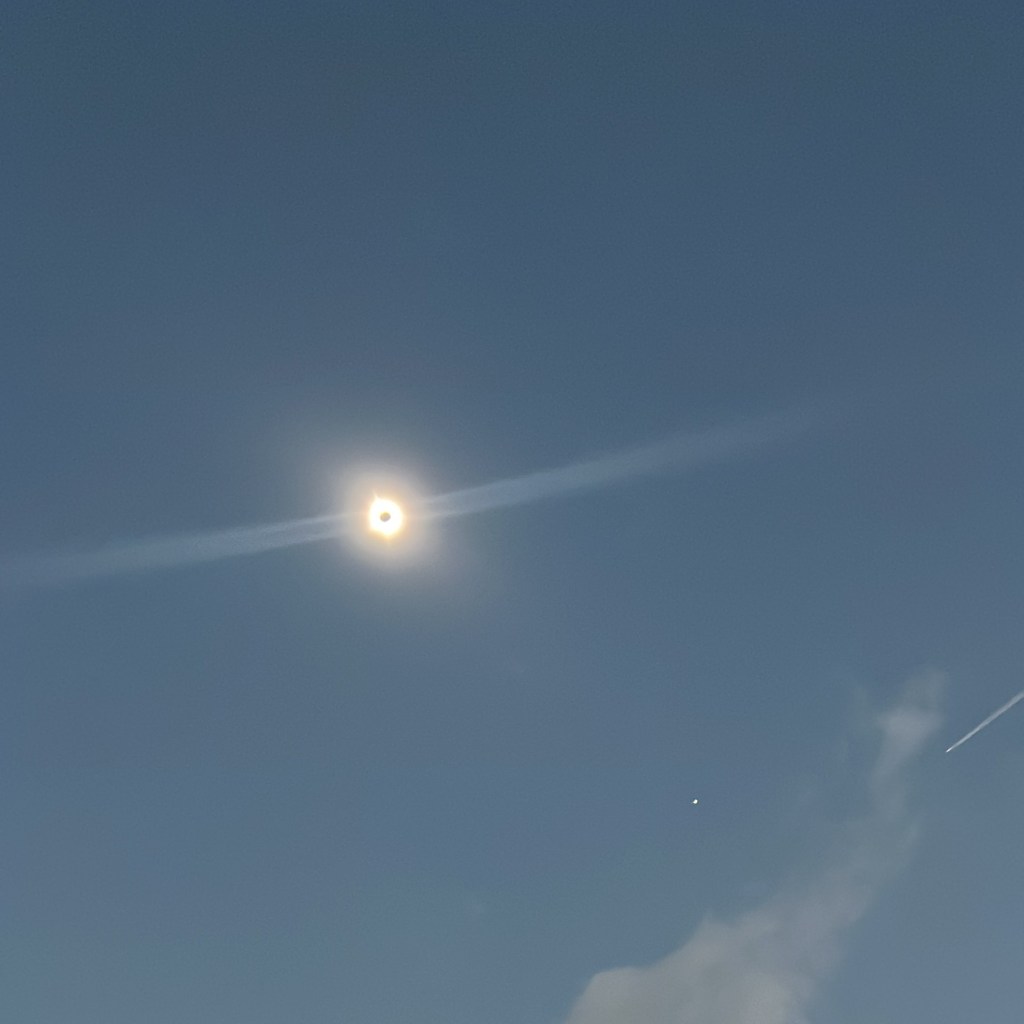
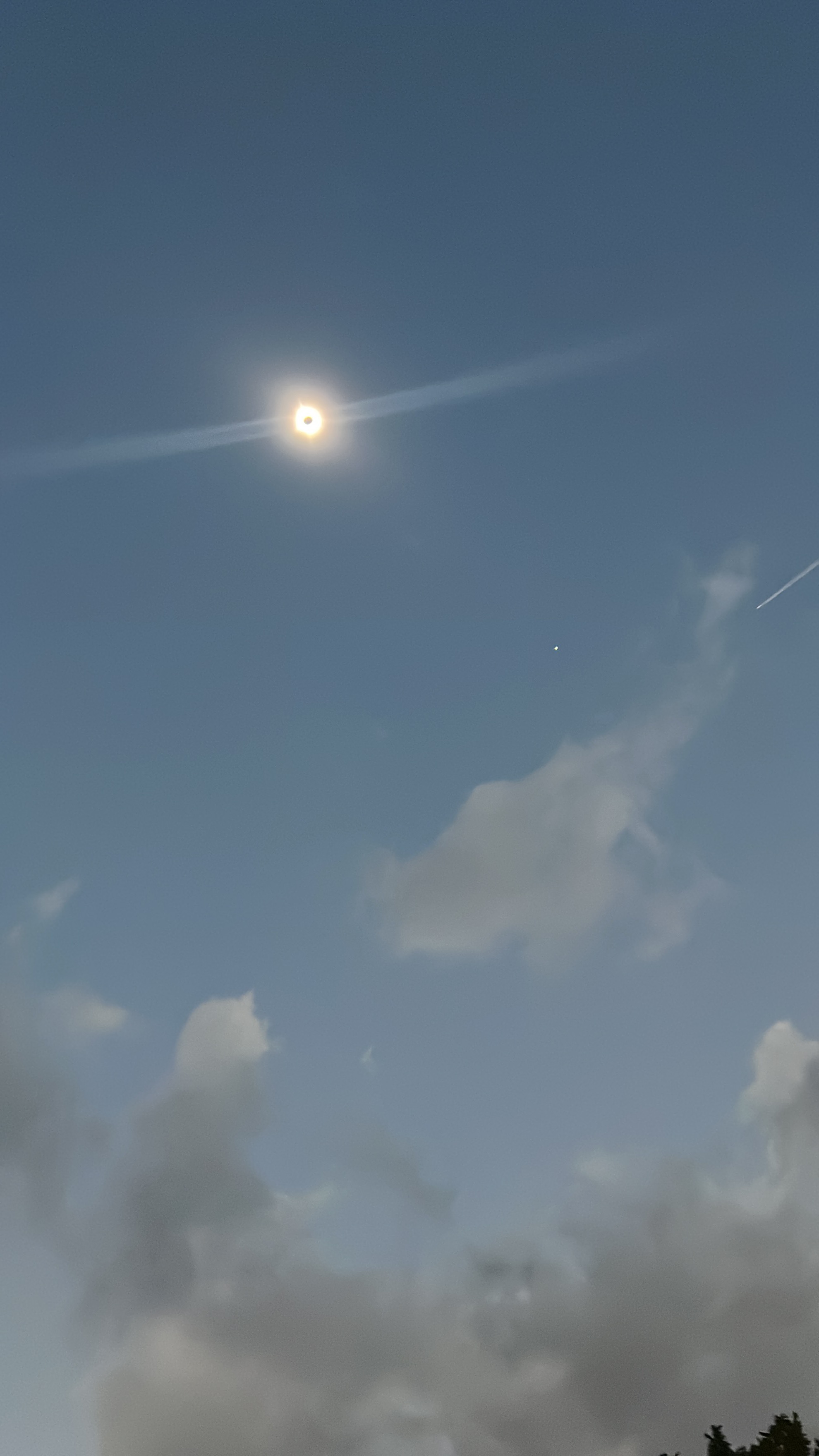
The photo shows total solar eclipse, the sun totally covered by the moon. It is very small in the photo. There is a star-like object, that’s Venus, a cloud and airplane contrail.
Total solar eclipse photo that my daughter took with her iPhone. The sun, I mean the moon, looks small in the picture, but they were the normal size. Can you find Venus?
Photo of my 10 solar eclipse glasses | A Total Solar Eclipse the Ultimate Moon Shade
My solar eclipse glasses that I bought on Amazon.

Partial Solar Eclipse

As I said, most of the country had a partial solar eclipse and we had a partial solar eclipse as well as a total solar eclipse. During a partial solar eclipse, it does not get dark, no stars come out (the sun is too bright), the birds don’t stop singing, and you cannot see the partial solar eclipse with the naked eye. You need ISO certified solar eclipse glasses. However, there are other cool effects such as the shadows of the trees turn into thousands of little crescents.

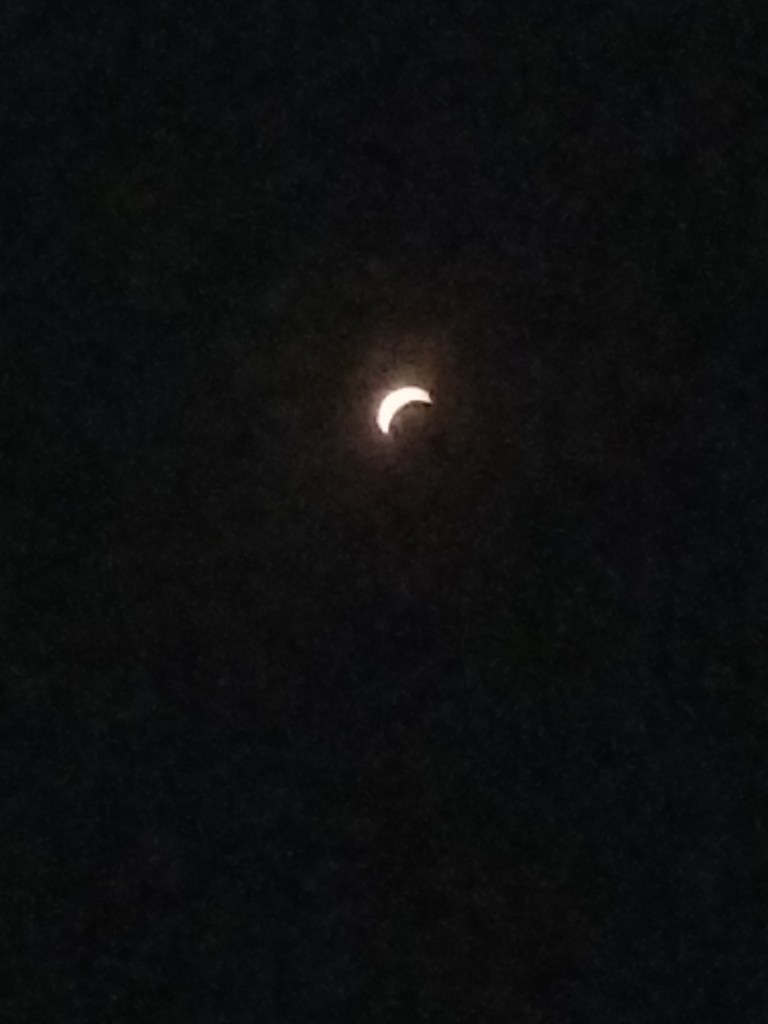
The photo shows a shiny crescent on black background.
Partial eclipse photo taken with my old Samsung Galaxy phone and a photo filter.
The moon is passing in front of the sun causing a partial solar eclipse.
Illustration / enhanced photo of partial solar eclipse. Shutterstock Asset id: 2237042889 by Kolonko

Annular Solar Eclipse

Lastly there are also annular solar eclipses. That is almost a total solar eclipse, but the moon is not covering all of the sun’s disc resulting in circle of the sun being visible. It is similar to a partial solar eclipse in the sense that it is still daylight, the stars won’t come out, etc. I can add that even though the light is dimmed a bit during an annular solar eclipse it does not get dark as during a total solar eclipse. The picture below is a bit misleading in that sense (probably a photo filter).

A ring of fire around a black circle with a silhouette of a dromedary camel | A Total Solar Eclipse the Ultimate Moon Shade
Annular solar eclipse in desert. Liwa desert, Abu Dhabi, United Arab Emirates. Shutterstock Asset id: 1598991664 by Kertu

Miscellaneous Solar Eclipse Photos taken with Cell Phones

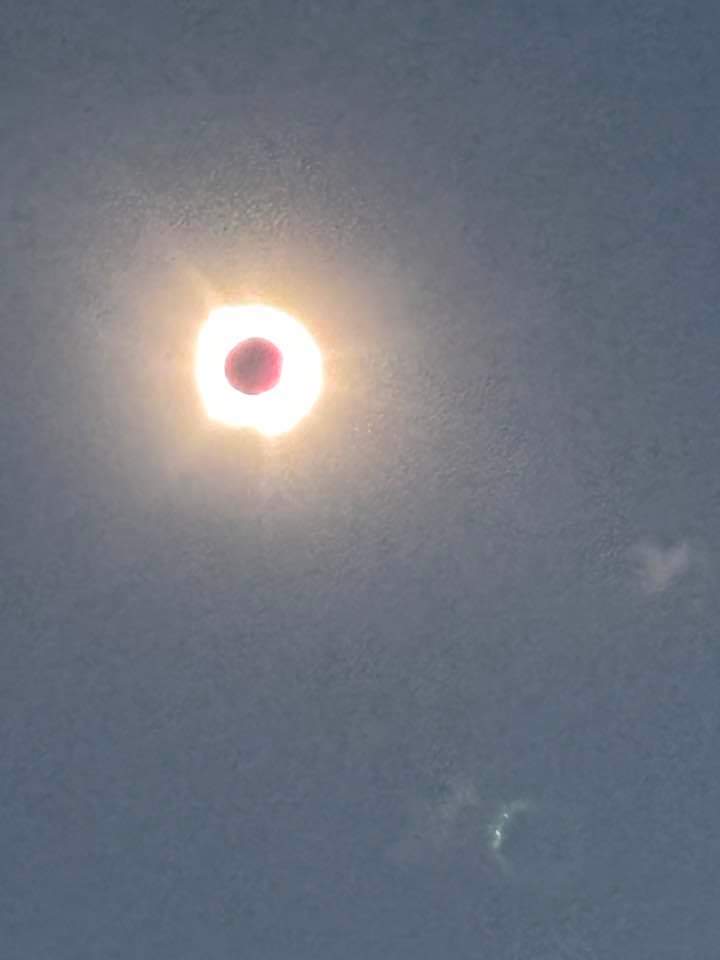
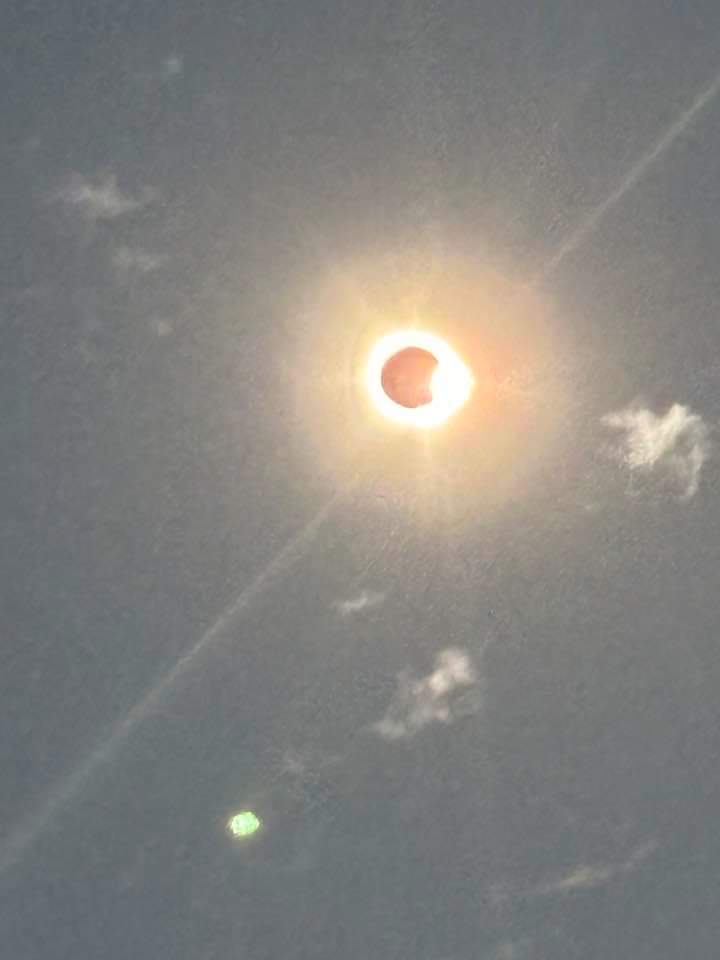
These eight pictures above were taken with cell phones by my daughter Rachel, and friends Denise Mosier-Wanken, and Margaret Weiss Bloebaum.

If you want to read more about this experience you can click here or here.


To see the Super Facts click here

Eulers Polyhedra Math Magic

Super fact 64 : V – E + F = 2 is true for all convex polyhedra, where V is the number of vertices (corners), E is the number of edges, and F is the number of faces of a convex polyhedron. This is called Euler’s formula for polyhedra.

Stick drawings of a tetrahedron on the left and a cube on the right | Eulers Polyhedra Math Magic | Euler's Polyhedron Formula
Polyhedron Euler’s formula. The cube has 6 faces, 8 corners (blue dots), and 12 edges (grey lines) and 8 – 12 + 6 = 2. Popular shapes Asset id: 2362684465 by ramonparaiba.

Convex polyhedra are polyhedra without holes, or it has no internal angles larger than 180 degrees. To express that exactly; A convex polyhedron is a three-dimensional solid with flat polygonal faces where a line segment connecting any two points on its surface or interior remains entirely within the solid. I can add that convex polyhedra consists of convex polygons as their faces. All its faces are convex polygons.

On the left are three convex polygons and on the left are three concave polygons.
The difference between convex and concave polygons. Notice that the concave polygons on the right have “holes” in them, or inner angles larger than 180 degrees, and that you can draw a line starting and ending inside the polygon that goes outside the polygon.

It is easy to understand that there are an infinite number of convex polyhedra. All pyramids (with convex polygons for bottoms) are convex polyhedra whether the bottom is a square/rectangle, or a convex pentagon, hexagon, heptagon, octagon, or any kind of convex polygon, even with trillions.

A hexagonal pyramid with differently colored faces | Eulers Polyhedra Math Magic | Euler's Polyhedron Formula
A hexagonal pyramid (it is convex). Tomruen at en.wikipedia, Public domain, via Wikimedia Commons.

Examples of convex polyhedra are cubes, boxes, a tetrahedron, pyramids of various sorts, an octahedron, dodecahedron, icosahedron, but there are infinitely many.

As an example, take a cube (like a dice). It has six faces (F = 6), eight vertices (corners V = 8), and 12 edges (V – E + F = 2 or 8 – 12 + 6 = 2). A tetrahedron has four faces (F = 4), four vertices (V =4), and six edges (E = 6) (V – E + F = 2 or 4 – 6 + 4 = 2). A pyramid (with a square bottom) has five faces (F = 5), five vertices (V = 5) and eight edges (E = 8) (V – E + F = 2 or 5 – 8 + 5 = 2). An octahedron has eight faces (F = 8), and six vertices (V = 6), and twelve edges (E = 12) (V – E + F = 2 or 6 – 12 + 8 = 2). A dodecahedron has twelve faces (F = 12), and twenty vertices (V = 20), and thirty edges (E = 30) (V – E + F = 2 or 20 – 30 + 12 = 2). An icosahedron has twenty faces (F = 20), and twelve vertices (V = 20), and thirty edges (E = 30) (V – E + F = 2 or 12 – 30 + 20 = 2). Euler’s Polyhedral Formula works for all of them and for all the infinite number of convex polyhedra that exists.

Line of colorful Platonic solids on a grey surface (polyhedra - tetrahedron, cube, octahedron, dodecahedron and icosahedron, 3d render, banner.
Tetrahedron, cube, octahedron, dodecahedron and icosahedron, Shutterstock Asset id: 2138211027 by Dotted Yeti

I consider this a super fact because it is quite amazing and surprising that the number of faces, vertices, and edges follow the same formula for all convex polyhedra. At least it is surprising if you haven’t seen it before. I should say that Leonhard Euler’s most celebrated discovery is probably his discovery of the Euler Number and the associated Euler’s Formula.

More Polyhedra Examples

The three first examples below are convex polyhedra so Euler’s Polyhedral Formula apply. The last two examples are not so Euler’s Polyhedral Formula does not apply.

Blue truncated icosahedrons. Geometric soccer ball or football shape. Archimedean solid. Regular polygon outline with pentagonal and hexagonal faces. Blue gradient polygonal figure | Eulers Polyhedra Math Magic | Euler's Polyhedron Formula
This is a truncated icosahedron, which is a convex polyhedra, so Euler’s Polyhedral Formula apply. Shutterstock Asset id: 2309812551 by Mima Subota.
A green Rhombicuboctahedron with 8 triangles and 18 squares as faces.
This Rhombicuboctahedron is an example of convex polyhedron, so Euler’s Polyhedral Formula applies. Cyp, CC BY 4.0 <https://creativecommons.org/licenses/by/4.0&gt;, via Wikimedia Commons.
Icosidodecahedron with faces that are triangles and pentagons.
This Icosidodecahedron is another example of a convex polyhedron, so Euler’s Polyhedral Formula applies. Attribution must be given to Robert Webb’s Stella software as the creator of this image along with a link to the website: http://www.software3d.com/Stella.php. A complimentary copy of any book or poster using images from the Software would also be appreciated where feasible., Attribution, via Wikimedia Commons
This polyhedron is donut shaped | Eulers Polyhedra Math Magic | Euler's Polyhedron Formula
This hexagonal torus / toroidal polyhedron is not a convex polyhedra, so Euler’s Polyhedral Formula does not apply in this case. Tom Ruen, SVG version from de:User:Antonsusi, Public domain, via Wikimedia Commons
3d polyhedron Merkaba, esoteric bronze crystal, sacral geometry shape, volume david star, mesh form, abstract vector object
This Merkaba Polyhedron is not a convex polyhedra, so Euler’s Polyhedral Formula does not apply in this case. Shutterstock Asset id: 1296063079 by Panimoni


To see the other Super Facts click here