Relativity by Albert Einstein

This is not a super fact post but another kind of fact-oriented post. It is a book review for a book that I find interesting, Relativity: The Special and the General Theory by Albert Einstein. Yes, the book was written by Albert Einstein in 1916 and translated into English in 1920. It is written for laymen, average readers, and despite being more than 100 years old (well this reprint is from 1995) it does not feel outdated.

I should say that I wrote my review decades ago and Amazon has hidden about 900 of the oldest reviews including mine. So, you can no longer find it. Luckily, I still had it, but I cannot provide a link to it. The book comes in formats, hardcover (2024), paperback (1995), Kindle (2014), Audio (2009). I bought the paperback version.

  • Publisher : Independently published (July 29, 2024), ASIN : B0DBQVVJVQ, ISBN-13 : 979-8334454118, 109 pages, item weight : 7.8 ounces, dimensions : ‎ 6 x 0.47 x 9 inches, Translator : Robert W. Lawson, it costs $12.33 on US Amazon. Click here to order it from Amazon.com.
  • Paperback –  Publisher : Crown (June 6, 1995), ASIN : 0517884410, ISBN-13 :  978-0517884416, 208 pages, item weight : 8 ounces, dimensions : ‎ 5.2 x 0.5 x 8 inches, it costs $7.89 on US Amazon. Click here to order it from Amazon.com.
  • Kindle –  Publisher : Amazon Kindle Direct Publishing (February 23, 2014), ASIN : B004M8S53U, 126 pages, it costs $0.99 on US Amazon. Click here to order it from Amazon.com.
  • Audiobook –  Publisher : HighBridge, a division of Recorded Books (November 14, 2009), ASIN : B002XGLDAA, Listening Length : 2 hours and 14 minutes, it costs $12.09 on US Amazon. Click here to order it from Amazon.com.
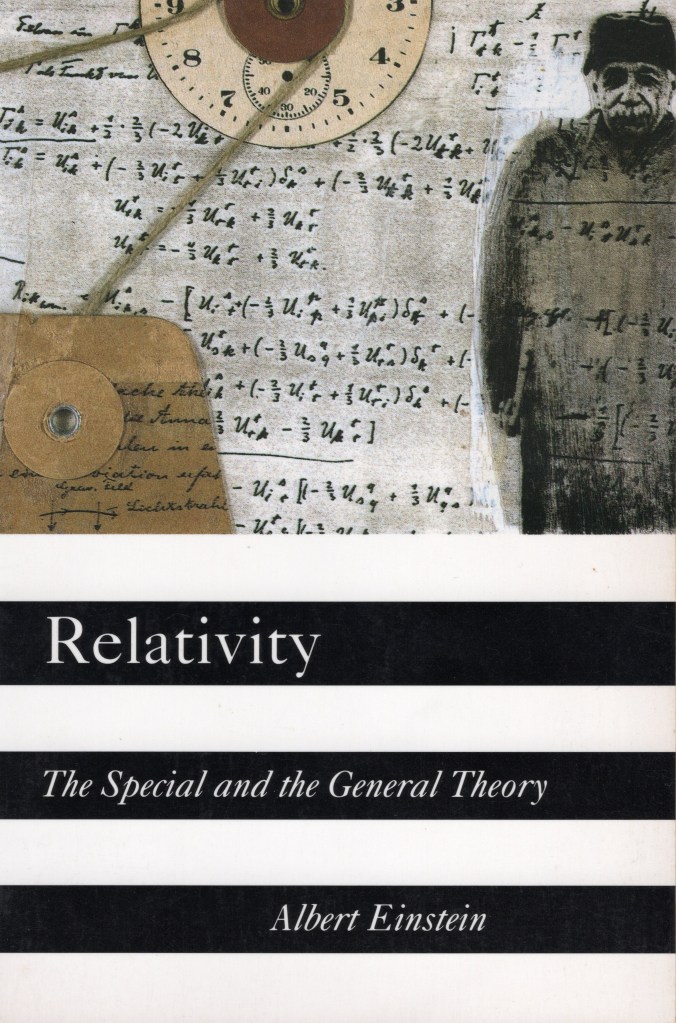
The front cover of the paperback version feature Albert Einstein in front of a black board full of equations, title “Relativity: The Special and the General Theory” and author – Albert Einstein | Relativity by Albert Einstein
Front cover of Relativity: The Special and the General Theory by Albert Einstein. Click on the image to go to the Amazon page for the paperback version of the book.

Amazon’s Description of Relativity by Albert Einstein

This book was originally written in German by Albert Einstein in 1916 and later translated to English by Robert W. Lawson in 1920. In Einstein’s own words, “The present book is intended, as far as possible, to give an exact insight into the theory of Relativity to those readers who, from a general scientific and philosophical point of view, are interested in the theory, but who are not conversant with the mathematical apparatus of theoretical physics. It is an easy-to-understand collection of the ideas of one of the greatest scientists of the twentieth century including the idea he is most known for, the theory of relativity.

Redesigned inside and out to have a fresh, appealing look, this new edition of a classic Crown Trade Paperback is a collection of Einstein’s own popular writings on his work and describes the meaning of his main theories in a way virtually everyone can understand.

Below is my review for Relativity: The Special and the General Theory by Albert Einstein. First, I should mention that the book is divided into two sections, one for the Special Theory of Relativity and another for the General Theory of Relativity. In addition, there are five short appendices. The five appendices are not written for layman and require at least high school mathematics.

Relativity Explained by Einstein himself

I found it very interesting to read an explanation of the theories of relativity by the developer of those theories. However, it is important to remember that the inventors of science theories aren’t always the best ones to explain them. Isaac Newton is a prime example.

Another thing to remember is that today there are a lot of books and online graphics that use clever pedagogic techniques and visualizations to assist you in understanding these theories, and naturally this book does not contain any of that.

This book was originally written in 1916 and updated in 1920 and since then it has been reprinted/edited several times (as this book is an example of). I should say that the General Theory of Relativity had just been published so there weren’t much else out there for laymen at the time.

I’ve already read many good books on relativity, and I believe I understand special relativity pretty well, but my understanding of general relativity is partial. I did not buy this book to understand relativity. The reason I bought this book was to gain another perspective on the subject. If you just want to learn and understand relativity, I recommend Relativity Visualized by Lewis Carroll Epstein instead.

“Relativity: The Special and the General Theory” features no derivations of the formulas in relativity (except in the appendix) and no visualizations demonstrating relativistic effects and phenomena. The book is focused on the conceptual foundations of relativity and physics.

For example, what are Geometrical propositions, what does it mean to measure the length of a rod, or the time of an event, what do we mean by speed, what is simultaneity, what is the difference between what we observe and what we measure, etc? Einstein spends one and a half page explaining addition of velocities in classical-pre-relativistic kinematics (w = v + u) and what assumptions that are inherent with the approach. In that sense the book is quite philosophical, which is what I meant by “another perspective”. The book covers both the Special Theory of Relativity and the General Theory of Relativity. However, the sections on the General Theory of Relativity are quite short and very introductory.

There are some issues with the book. In appendix 1 Einstein (I presume) derives the Lorentz transforms. However, it is not, in my opinion, the best derivation from a pedagogical standpoint and it also had typos in it. As far as I can tell the formula on page 50 is wrong unless what Einstein means with the “m” is “additional relative mass” and not actual “mass” as stated.

The book features an addition written in 1920 where he is discussing an ad hoc modification to his theory that he had previously made but it turned out to be unnecessary (related to cosmology). The language is also very old fashioned. On the other hand, this kind of stuff makes you feel as if you travel back in time to when the theories of relativity were being churned out.

I don’t recommend the book for learning the theories of relativity but overall I liked the book. It focuses very much on basic concepts and near philosophical aspects of time, space and relativity. The book presents a valuable perspective if you already understand what the theories of relativity are about.

The back cover of the paperback features an overview of the background to relativity and to this book as well as ISBN number and publisher | Relativity by Albert Einstein
Back cover of Relativity: The Special and the General Theory by Albert Einstein. Click on the image to go to the Amazon page for the hardback version of the book.

Other Relativity Related Posts


To see the Super Facts click here

Quasar TON 618

This is a submission for Kevin’s No Theme Thursday

Quasar TON 618
Image by Kevin from The Beginning at Last

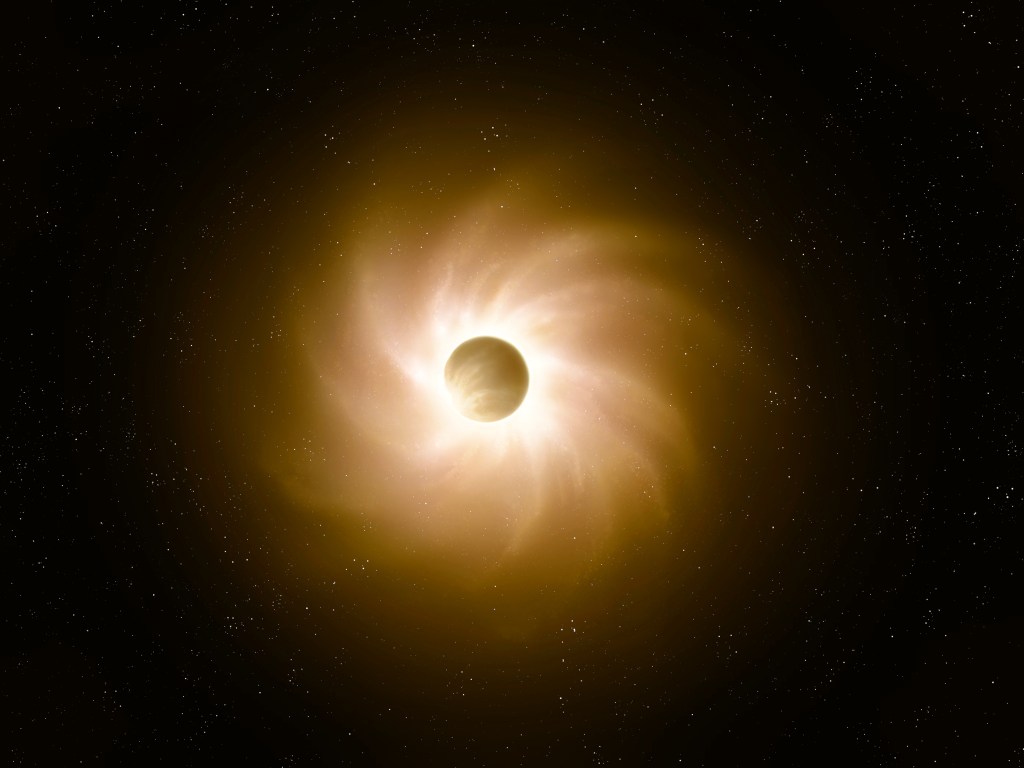
Kevin’s artistic picture above reminds me of a Quasar, a supermassive black hole emitting enormous amounts of energy.

What is a Quasar ?

A Quasar is a supermassive black hole at the center of a galaxy that is emitting enormous amounts of energy. The quasar is the supermassive black hole plus its accretion disk, the gas it is feeding on and the radiation it emits. The quasar is actively feeding on gas and stars and emitting enormous amounts of radiation in the process. The radiant energy of quasars is enormous; the most powerful quasars have luminosities thousands of times greater than that of a galaxy such as the Milky Way, and millions of times greater than the largest and most luminous stars in the known universe.

Supermassive black hole at the center of a quasar. Singularity in space devouring matter and light | Quasar TON 618
Supermassive black hole at the center of a quasar. Singularity in space devouring matter and light. From Shutterstock Asset id: 2484018599 by Nazarii Neshcherenskyi.

TON 618

TON 618 is a hyper luminous Quasar known to house one of the most massive black holes ever discovered, with an estimated mass of around 40 to 60 billion solar masses. Its luminosity is estimated to be 140 trillion times that of the Sun. The diameter of TON 618 is 780 billion kilometers or 82.6 light-years. Keep in mind that the distance to the moon is 1.3 light seconds and 82.6 light years is more than two billion times larger than that. Our sun is gigantic with a diameter 109 times larger than the diameter of earth. 1.3 million earths could fit inside the volume of our sun. However, in comparison to TON 618, our sun is a lot less than tiny. The diameter of TON 618 is 561 million times larger than that of the sun’s diameter and 177 octillion (an octillion is 27 zeros) suns could fit inside the volume of TON 618. In other words, we are comparing a dust particle to planet earth size wise. I am pretty sure you are not going to be able to imagine this.

The quasar is ejecting an enormous energy beam. In the background are stars possibly being absorbed by the quasar.
Quasar in deep space. Elements of this image furnished by NASA. Asset id: 1758938918. by NASA images.

When TON 618 was discovered in 1957, quasars and supermassive black holes were not yet recognized and understood by astronomers. The word quasar inspired shock and awe in every nerd on the planet. The concept of quasars, or quasi-stellar radio sources, wasn’t fully recognized until 1963. When I was a kid in the 1970’s there was a lot of speculation as to what these gigantic ultra bright but far away objects could be. TON 618 is located 18.2 billion light years away. Considering that the reachable limit of the Universe is 16.5 billion light years even if you travel at the speed of light, you could never travel to TON 618 (barring the warp drive in Star Trek).

The Event Horizon

When we are talking about the diameter of a black hole we are not talking about a sphere with a solid surface. The black hole is a sphere, or an oval, wherein gravity is so strong that nothing can escape, not light, not anything. It’s truly black. As you approach the event horizon you become invisible, space deforms, and from the perspective of an outside observer, time appears to stop for someone reaching the event horizon of a black hole. Time will continue for someone falling in, well in some sense. You’ll be transported beyond our universe and time as we know it. We can guess but we can’t really know.

A black hole with an orange accretion disk is approached by futuristic starship.
When this spaceship reaches the event horizon the time will stop from our perspective, and they will never enter the black hole. From their perspective they will enter right through the event horizon, and they will be transported infinitely far into a future beyond time. Stock AI-generated image ID: 2448481683 AI-generated image Contributor Shutterstock AI Generator.

Black Holes

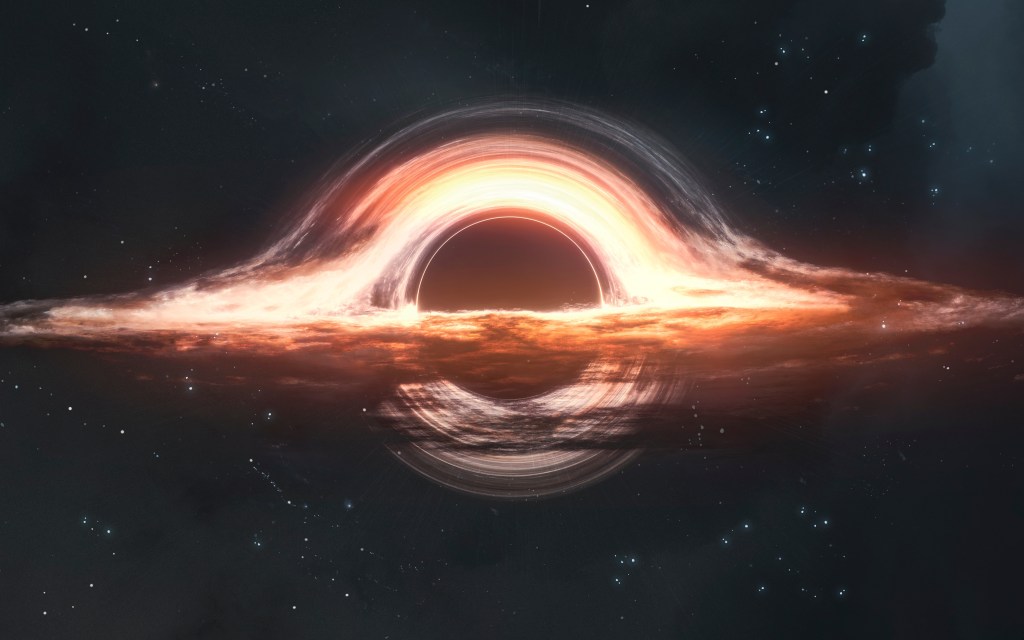
Black holes are invisible. They are truly black. However, we can see them if they are consuming matter. The matter close to black holes will heat up and glow. The closer to the event horizon the redder it is. It is called an accretion disk as in the depiction above. There are an estimated 100 million black holes in our galaxy, the Milky Way. At the center of the Milky Way is a super massive black hole called Sagittarius A-star. It is 4 million times more massive than our sun. There are supermassive black holes located at the center of most large galaxies. The supermassive black holes are considered to play a crucial role in the formation of galaxies.

A black hole with a large bright accretion disk | Quasar TON 618
3D illustration of giant Black hole in deep space. High quality digital space art in 5K – realistic visualization. Stock Illustration ID: 2476711459 by Vadim Sadovski.

Black Hole Animation

Below is an animation created by NASA that depicts what an observer falling into a black hole would see. The video is about 4 minutes long.

TON 618  Animation

Below is an animation of TON 618, a quasar and the largest black hole known in the universe. This video is about 5 minutes.

To see my The Bizarre Reality of Black Holes Super Fact Click Here
To see the Super Facts click here

Note : Today March 14 is Albert Einstein’s birthday, the man who gave us the General Theory of Relativity, which mathematically describes black holes. It is also Pi Day (first 10 digits 3.1415926535), and there’s a rare moon eclipse tonight called a blood moon or a worm moon. Also, Dallas is under a fire warning. Be careful.

Important Note : I am going on a ski vacation tomorrow and I will take a one-week break from blogging as well as a break from reading other people’s blogs.

GPS uses relativity for accuracy

Superfact 23: GPS uses relativity for accuracy. Global Positioning Systems or GPS uses Special Relativity and General Relativity to guide you to your destination. In fact, GPS systems would be rendered useless without the Theories of Relativity.

Businessman finger pin for location points and search addresses on the world map application. Marking destination for travel or finding business places in GPS Satellite coordinates system online web | GPS uses relativity for accuracy
Stock Photo ID: 2502019165 by mayam_studio

Did you use Einstein’s Theories of Relativity to get to the grocery store today?

The theories of relativity may seem strange and impractical, something you only use for astrophysics, black holes, cosmology and extreme velocities. They feature strange concepts such as time dilation, the stretching and bending of space, events simultaneous to some are not to others, the universal constancy of the speed of light in vacuum, the energy and mass equivalency, etc. 

Therefore, it is a bit surprising that without the theories of relativity the GPS app on your phone would not be able to guide you to the grocery store. That’s why I call it a super fact that GPS uses relativity for accuracy.

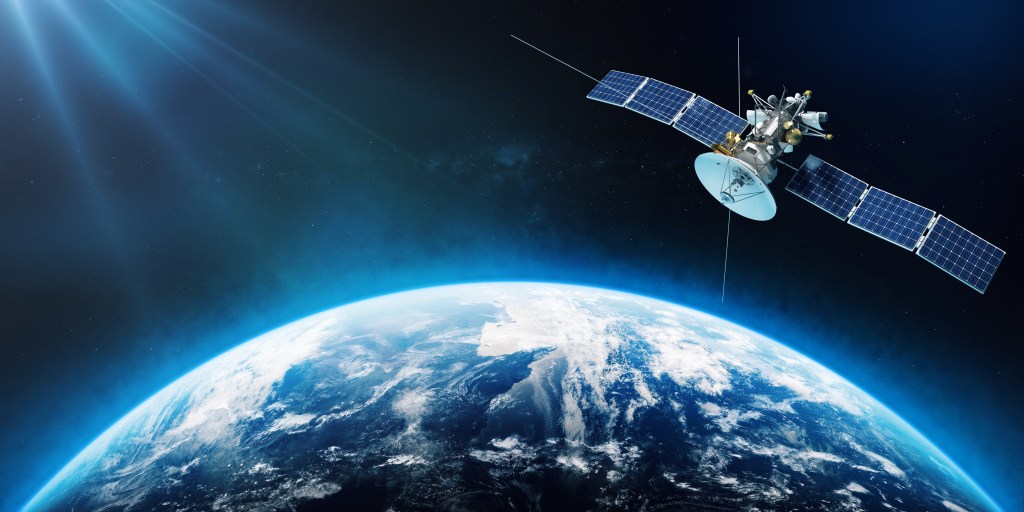
Space satellite orbiting the Earth. 3D rendering
Stock Illustration ID: 1372134458 by Boris Rabtsevich

GPS and Time Dilation

GPS is a satellite-based  radio navigation system that provides location information and time anywhere on Earth. It is amazingly accurate. The basic GPS service provides users with approximately 7.0-meter accuracy, 95% of the time, anywhere on or near the surface of the earth.

The fact that the information is provided by satellites that orbit earth at high speeds and high above earth’s surface makes General Relativity and Special Relativity necessary. The GPS system needs to calculate precisely the time it takes for signals to travel from the satellites to a receiver on Earth for it to work. GPS satellites travel at high speeds causing a large enough time dilation that must be accounted for. In addition, they orbit earth high above earth’s surface where earth’s gravitational field is weaker than on earth’s surface. Clocks run faster in weaker gravitational fields due to gravitational time dilation, so you must correct that as well.

If you ignore relativity, you will accumulate a discrepancy of six miles in one day.  You are not going to find the grocery store that way, unless you use the old-fashioned method of reading a map. In a sense, if your GPS device finds the grocery store for you, you have proven Einstein right.

Below is a YouTube video animation visualizing the GPS system.


GPS Facts

  • The GPS project was started by the U.S. Department of Defense in 1973. It is also owned by the U.S. Department of Defense.
  • The GPS satellites were sent up by the United States Air Force (and not NASA).
  • The first NAVSTAR satellite, later called GPS, was launched in 1978.
  • There are 31 GPS satellites currently in orbit.
  • The system requires 24 GPS satellites.
  • The 24-satellite system became fully operational in 1993.
  • The Global Positioning System cost (the US government) $1.8 billion annually to operate and maintain.
  • The Global Positioning System is free to use for the public worldwide.
  • Making GPS free to civilians worldwide was a decision by President Ronald Reagan in 1983 after a Korean airliner was shot down for straying off course.
  • GPS satellites carry extremely accurate atomic clocks. As explained, GPS must account for relativity, special relativity as well as General Relativity.
  • Other satellite systems help improve GPS, including WAAS (in the U.S.), EGNOS (in Europe), and MSAS (in Japan).
  • GPS is not the only satellite navigation system. Other countries have their own satellite navigation systems. GLONASS (Russia), Galileo (EU), and BeiDou (China).
  • Ukraine is helped by both GPS and Galileo.
  • Russian forces have been actively jamming GPS signals in Ukraine.

Uses of GPS

  • Examples of consumer electronics that use GPS are smart phones, tablets, Smartwatches, Car navigation systems, Cameras (DSLR with GPS), some models of laptops, fitness trackers (Fitbit), and drones.
  • Examples of vehicles using GPS are cars, delivery vans, trucks, aircraft, trains, ships and boats.
  • Military uses of GPS include guided missiles, guided munitions, tactical radios, communication systems, soldier-worn devices for location tracking, military vehicles and military aircraft.
  • Additional examples of GPS use include construction equipment for site positioning and machine guidance,  tractors for precision farming and other agricultural machinery, surveying equipment, pipeline inspection drones, other inspection drones and rovers, emergency locator beacons, pet trackers, smart collars, livestock monitoring, personal trackers, and geocaching devices.

As you can see, GPS is extremely useful, and there are a lot of interesting facts about GPS.


To see the other Super Facts click here