The two main classes of beer are Ales and Lagers

Super fact 50 : There are hundreds of types of beer but in general they fall into two main categories, ales and lagers, and these two categories are not differentiated based on color. The ales are not necessarily dark and lagers light. There are light colored ales and dark, even black ales. There are light colored lagers and dark and almost black lagers (Schwarzbier). The difference between ales and lagers is the type of yeast used and the fermentation temperature. Ales are typically made with top-fermenting yeast at warmer temperatures. This result is a wider range of flavors and aromas, often with fruity or spicy notes. Lagers, on the other hand, are made with bottom-fermenting yeast at cooler temperatures making them crisper and more subtle. Ales have been around for 6,000 years. The lager is a more recent invention.

I consider this a super fact, first, because even though beer is a well-known drink that a lot of us drink almost every day, a lot of people don’t know what the two basic kinds of beer are. They don’t know what an ale is or what a lager is. Even beer fans and many people who drink beer every day are often clueless about this, the most basic fact about beer. A lot of people say that they like light/blond beer or they like dark beer. In my native country Sweden, which I admit is not a true beer country, I often hear people say that they prefer “ljus öl” (light/blond beer) rather than “mörk öl” (dark beer), or the other way around, which is like saying that you like blond / light colored food rather than dark colored food. It doesn’t make sense.
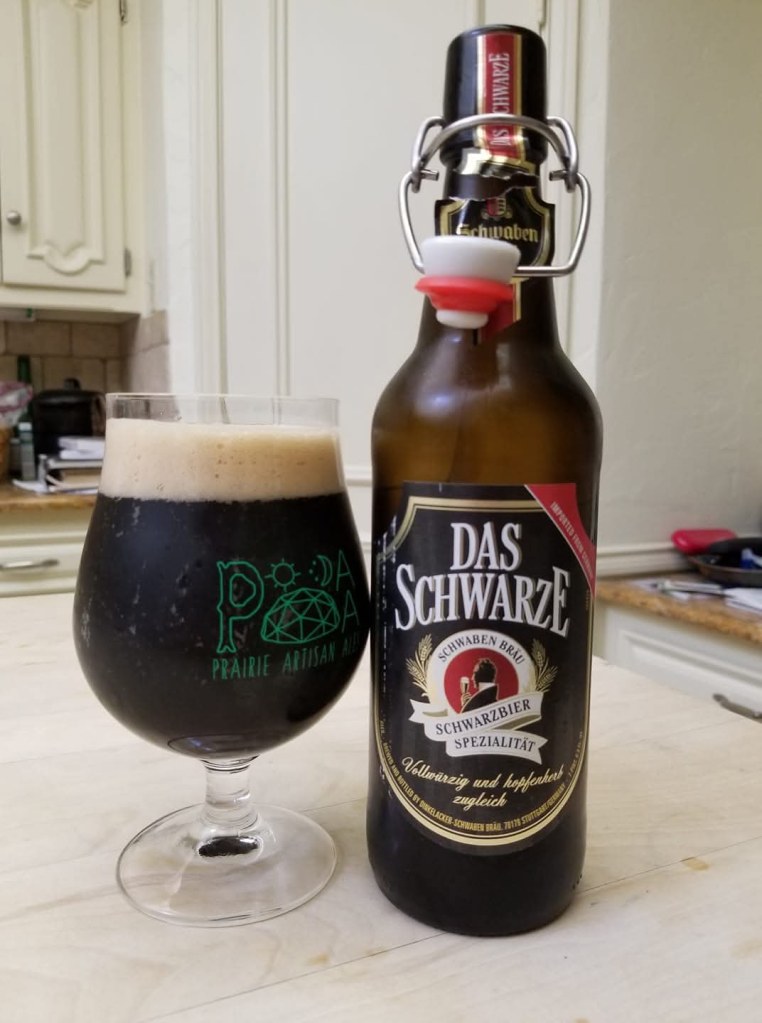
On the left, glass with black beer. It has a mocha-colored head. On the right is the bottle. The label says Das Schwarze.
This is a so called Schwarzbier that I drank some time ago. Das Schwarze a German Schwarzbier from Dinkelacker-Schwabenbräu, ABV 4.9%. Some roasted notes, sweet caramel, light flavor, a bit fizzy, somewhat thin but good enough. This is a Lager but notice a how dark it is, basically black. I did not put black dye in it. It is how they really look despite being Lagers.

I am in the process of learning Franch, and I’ve discovered that this confusion is even baked into the French language. Well as you might guess France is not a true beer country. If you use Google Translate and you type in “Lager” in the English edit box the answer you get in French is “Bière blonde”, even though French and Belgian beer that are labeled Blonde frequently are Ales not Lagers. I’ve read a lot of French language sites mentioning beer, and unless the author has some beer expertise, they make the same mistake as Google Translate. Blonde / light beer is not Lager, and dark beer is not necessarily Ale.

I had a discussion about this with one of my French teachers and despite me having talked a lot about beer in class and having previously shown him that I knew something about the topic, he had a very hard time accepting the truth. After a Google search he finally accepted the truth, but he was very surprised, perhaps even shocked.

The confusion is immense, it is worldwide, and the truth is surprising to some people. I should mention that Americans for the most part get this right. In general Americans know that Lager isn’t necessarily blonde and vice versa. They know that IPAs, which are not Lagers but Ales, typically are light colored. Perhaps because of the prominent craft beer industry in the US. I should also mention that there are also hybrid beer styles and beer styles that are hard to classify as lager or ale. More about that later.

A tall glass with black beer on the left. A can with the label Ba Ba Black Beer on the right. Behind the beer glass you can see Sushi | The two main classes of beer are Ales and Lagers
This is Ba Ba Black Lager, an American Schwarzbier. I had sushi with this Schwarzbier.

Secondly, lagers, especially pale bland mass-produced lagers have become so common that when people taste an ale, especially if it is a little bit different, like fruity, tart, have chocolate or coffee flavors, etc., they don’t even consider it a real beer. In their minds real beer is a bland tasting lager. Never mind that we have had Ales for 6,000 years, and that Ales dominated beer drinking up to relatively modern times. Nowadays 90% of beer consumption worldwide is lagers (87% in the US), but throughout most of human history nearly 100% of beer consumption worldwide was ales.

On the left is an IPA glass filled with a golden colored clear IPA with a snow-white head. In the middle is the Cold War can and on the right is a garden gnome holding a mug. There is a sign next to the gnome, which says “Welcome to my beer garden.”
This is an IPA called Cold War. IPAs are NOT Lagers. However, notice how light the color is. IPAs are popular in the US, which I think is one reason Americans are better educated on the difference between lagers and ales to countries that are not part of the European beer countries (Germany, Britain, Ireland, Belgium, the Czech Republic, etc.)

What is an Ale?

As mentioned, an Ale is a style of beer, brewed using a warm fermentation method. Ales are typically made with top-fermenting yeast at warmer temperatures. This result is a wider range of flavors and aromas, often with fruity or spicy notes. The word ale is an English word which in medieval England meant a drink brewed without hops (it is not what it means today). Some popular ales include IPA, Pale Ale, Stouts, Porter, Scotch Ale, and Barley Wine.  Below is a more complete list of Ales. The list is from the beer advocate. Despite the 120 styles listed the list is not complete. It should be noted that I’ve added a few that were missing.

  • India Pale Ales : American IPA, Belgian IPA, Black IPA, Brut IPA, Cold IPA, English IPA, Imperial IPA, Milkshake IPA, New England IPA.
  • Pale Ales : American Amber / Red Ale, American Blonde Ale, American Pale Ale, Belgian Blonde Ale, Belgian Pale Ale, Bière de Garde, English Bitter, English Pale Ale, English, Pale Mild Ale, Extra Special / Strong Bitter (ESB), Grisette, Irish Red Ale, Kölsch, Saison.
  • Wild/Sour Beers : Berliner Weisse, Brett Beer, Faro, Flanders Oud Bruin, Flanders Red Ale, Fruit Lambic, Fruited Kettle Sour, Gose, Gueuze, Lambic, Wild Ale.
  • Wheat beers : American Dark Wheat Beer, American Pale Wheat Beer, Dunkelweizen, Grodziskie, Hefeweizen, Kristallweizen, Witbier.
  • Stouts : American Imperial Stout, American Stout, English Stout, Foreign / Export Stout, Irish Dry Stout, Oatmeal Stout, Russian Imperial Stout, Sweet / Milk Stout.
  • Porters : American Porter, Baltic Porter, English Porter, Imperial Porter, Robust Porter, Smoked Porter.
  • Dark Ales : Dubbel, Roggenbier, Scottish Ale, Winter Warmer.
  • Brown Ales : Altbier, American Brown Ale, Belgian Dark Ale, English Brown Ale, English Dark Mild Ale.
  • Strong Ales : American Barleywine, American Strong Ale, Belgian Dark Strong Ale, Belgian Pale Strong Ale, English Barleywine, English Strong Ale, Imperial Red Ale, Old Ale, Quadrupel (Quad), Scotch Ale / Wee Heavy, Tripel, Wheatwine.
  • Specialty Beers: Ancient Herbed Ale, Sahti.
On the left a Westvleteren glass filled with dark brown Westvleteren. On the right the Trappist Westvleteren bottle | The two main classes of beer are Ales and Lagers
Trappist Westvleteren from Brouwerij Westvleteren (Sint-Sixtusabdij van Westvleteren) a Belgian Quadruple might be the most renowned beer in the world. I’ve had it many times and it is heavenly. However, it is very difficult  to get in the US. A Quadruple is a type of Ale.
On the left a glass filled with the dark brown to black porter Plutonium-239. On the right the can with the label Plutonium-239.
Plutonium-239 from the Manhattan Project Brewing Company in Dallas, Texas. It is a strong-tasting Porter with coconut flavors. (chocolate, coconut and coffee). There is no clear definition on the difference between porter and stout, other than porters are in general milder and not as strong as stouts. From that perspective Plutonium-239 is really a stout.

Wild Ales and Sour Beers often have fruity flavors. This can be achieved by adding fruits or berries to them but often fruit flavors emerge naturally from the fermentation process, which, at least if you use wild yeast, produce esters (fruit flavors). Wheat beers often have banana or pear notes and just as for Wild Ales these flavors emerge naturally from the fermentation process (esters again). Some of the IPAs also have distinct fruit flavors, especially the New England style IPAs, but in this case the fruit flavors come from the hops.

On the right is a glass filled with dark red beer with a thick pink head. On the left is the Atrial Rubicite bottle | The two main classes of beer are Ales and Lagers
Jester King in Texas brews a Wild Ale called Atrial Rubicite. It is a Wild Ale infused with raspberries. The fermentation process uses “wild yeast” to create a tart and fruity base but raspberries are added to enhance the fruit flavor resulting in a thick full raspberry flavor which most people describe as heavenly.

What is a Lager?

As mentioned, lagers are made with bottom-fermenting yeast at cooler temperatures making them crisper and more subtle. The word lager (German) means to storage or storeroom and used to refer to beers stored at cold temperatures. Sometime in the 15th century cold fermentation yeast emerged, and people started using it to do fermentation at cold temperatures. As time went by this form of fermentation became more popular. It was brought to the US in 1840 and between 1860 and 1870 it became the most popular fermentation process in Bohemia. As mentioned, today 90% of beer consumption worldwide is lagers.

Below is a more complete list of Lagers. The list is from the beer advocate.

  • Pale Lagers: American Adjunct Lager, American Lager, Czech / Bohemian Pilsner, Czech Pale Lager, European / Dortmunder Export Lager, European Pale Lager, European Strong Lager, Festbier / Wiesnbier, German Pilsner, Helles, Imperial Pilsner, India Pale Lager (IPL), Kellerbier / Zwickelbier, Light Lager, Malt Liquor.
  • Dark Lagers : American Amber / Red Lager, Czech Amber Lager, Czech Dark Lager, European Dark Lager, Märzen, Munich Dunkel, Rauchbier, Schwarzbier, Vienna Lager.
  • Specialty Lagers : Japanese Rice Lager, Chile Beer
The picture shows two large blue Paulaner cans and my big one-liter Disneyland cup filled beer with a thick white head.
Paulaner is a so called Festbier (or Octoberfest), which is type of Lager made especially for Octoberfest in Germany.

Finally, there are also specialty beers that are hybrids, or neither or that can be both.

  • Hybrid (Ale/Lager): Bière de Champagne / Bière Brut, Braggot, California Common / Steam Beer, Cream Ale.
  • Neither lager or ale, or can be both : Fruit and Field Beer, Low-Alcohol Beer, Rye Beer, Smoked Beer, Herb and Spice Beer, Kvass, Gruit, Happoshu, Pumpkin Beer.

That’s 120 styles of beer. I’ve had 110 beer styles. How many have you had?

To see the other Super Facts click here

Measuring Alcohol by Volume in Home Brews

Image above by Kevin from The Beginning at Last

Measuring Alcohol by Volume in Home Brews
This is a submission for Kevin’s No Theme Thursday

Beer Styles

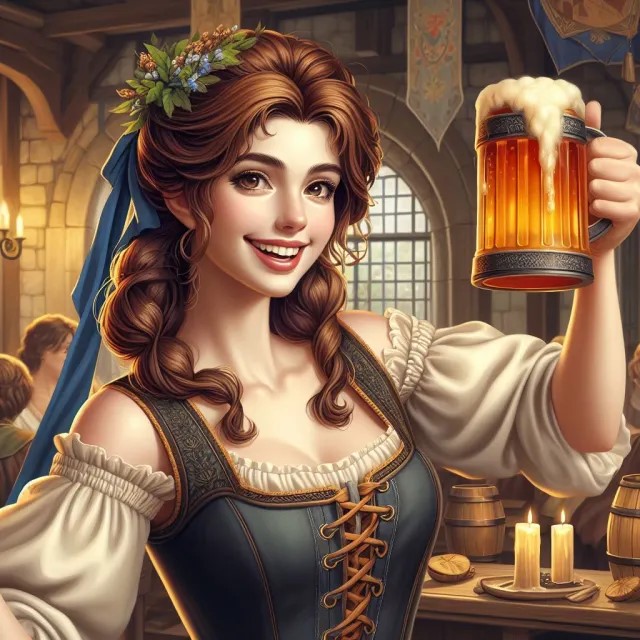
Look at that happy and friendly beer muse above. That is Kevin’s picture. Wouldn’t you like a beer? I like beer and I also brew beer at home. My dog Rollo loves it when I spill wort on the kitchen floor. The wort is what you have before fermentation. It is like a grainy sticky sweet soup, and he likes to lick it up. However, my wife does not like it when there’s sticky wort all over her kitchen floor and the stove. Everyone has their own perspective.

Our dark brown and white mini-Australian Shepherd is standing in the kitchen.
Rollo in the kitchen hoping for the wort to boil over or spill.
A beer garden gnome, a bottle of home brewed beer with a label saying Act on Climate Y’all and a glass of IPA with white foam. It is my homebrewed beer.
This is an IPA that I brewed at home, and it came out pretty good. Look how happy my beer garden gnome is.

Beer is one of the oldest alcoholic beverages in the world, dating back over 7,000 years to ancient Mesopotamia. There are more than 100 different styles of beer worldwide, with the main categories being lagers and ales. The beer advocate currently lists 120. Below are a few examples of Lagers and Ales.

Lagers : Pilsner, Märzen (Oktoberfest), Adjunct Lager, Pale Lager, Scwarzbier (a black lager), Bock.

Ales : IPA, Stout, Porter, Wheat Beer, Belgian Beer, Blonde Ale, Saison, Barley Wine, Lambic, Geuze

Brewing Beer at Home

When you brew beer at home you start by boiling the wort. You boil water and you add the malts and the hops for the flavoring and the aroma at specific times. This all depends on the recipe you are following. Warning! The wort easily boils over. Then you cool the wort (I use an ice bath to do this), add the yeast, and you let it ferment, typically for a couple of weeks.

You can add various things for flavoring, such as whiskey infused wood chips if you want your beer to have a taste of whiskey and wood (yes, I have done that). Whiskey and wood are great added flavors in stouts. After the two weeks of fermentation, you add sugar and bottle the beer and let it ferment for a few weeks before you put it in the fridge.

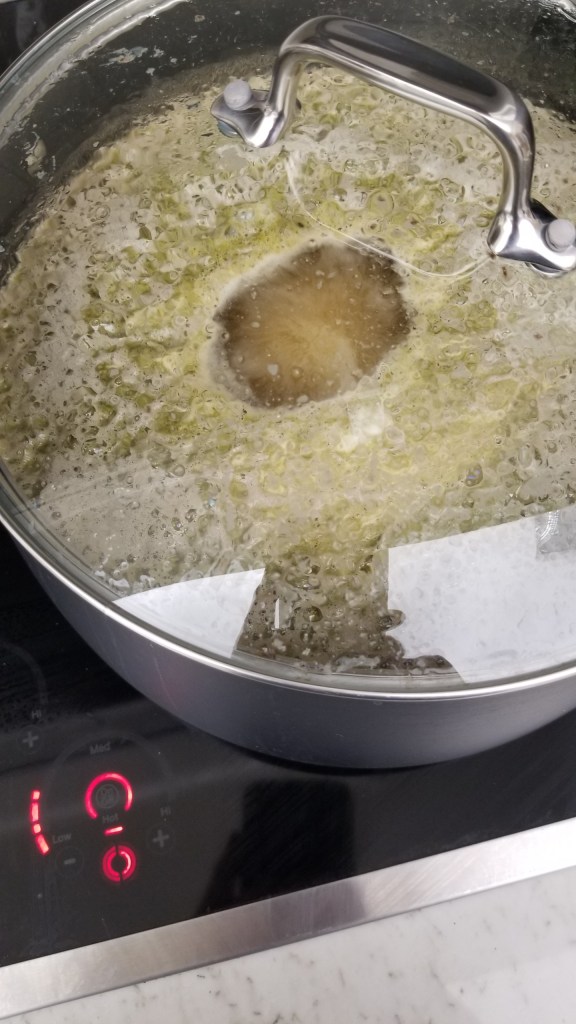
A black pan filled with yellow-beige boiling wort
Boiling wort on the kitchen stove. It contains water, malts, hops, and maybe sugar or honey.

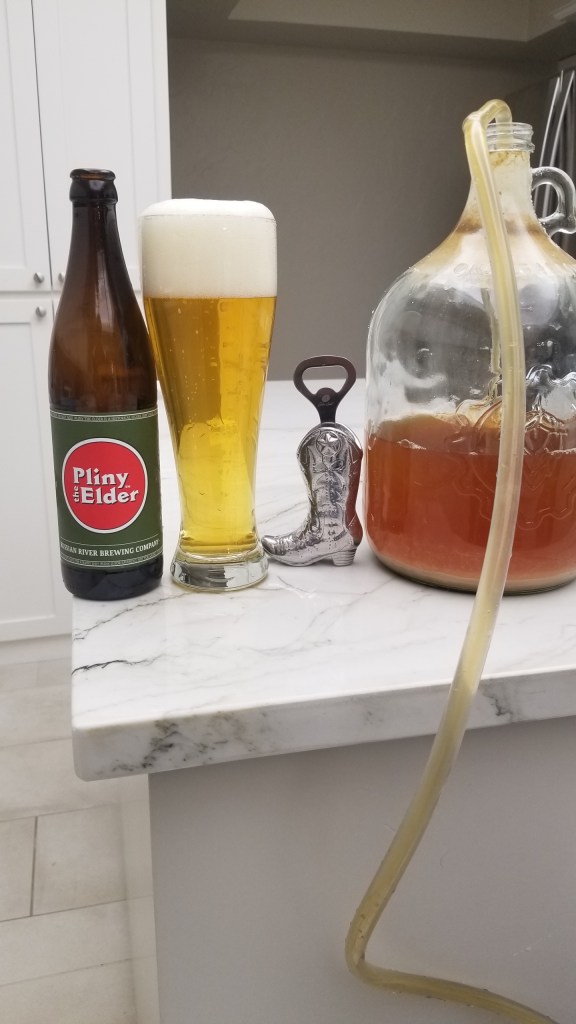
A few words about the bottling process. The bottling process below is using siphoning instead of pouring to achieve some filtering and to avoid splashing. Splashing can cause excessive oxidation which can ruin the beer the same way bananas turn brown. This seems to matter for New England style IPAs, but not so much for other beer styles (my observation).

Carboy with siphoning tubing on the right. Pliny the Elder bottle and beer glass on the left | Measuring Alcohol by Volume in Home Brews
Here I am bottling beer while drinking a renowned IPA called Pliny the Elder, one of the best India Pale Ales in the world.

Measuring the alcohol content in home brews

When you brew beer at home you don’t have the advanced equipment that breweries sometimes do so measuring the alcohol content is a challenge. However, you can do it with an indirect method using a hydrometer. I will explain how to do this. There are instruction booklets, books and online websites that explain how to do this, but I will keep it short and succinct.

During the fermentation process, yeast converts sugars into alcohol (and carbon dioxide). As the sugar is used up, the wort slowly becomes less dense. By measuring the density before and after fermentation (using the hydrometer), you can calculate how much alcohol is in the finished beer. In the beer world this is called measuring the gravity, not to be confused with the fundamental force of attraction between objects with mass. You can buy a hydrometer in a lot of places including Amazon.

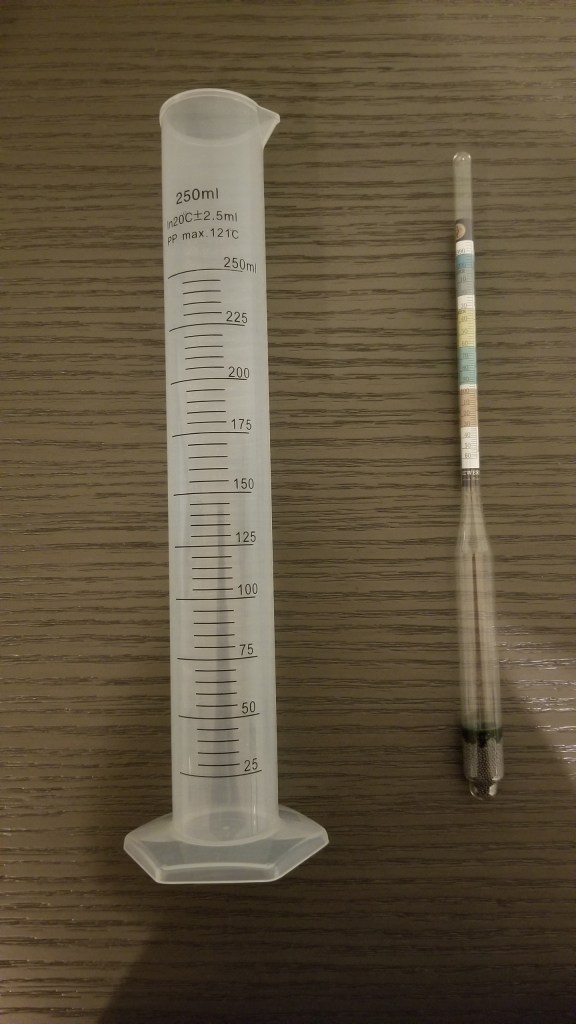
Long white plastic measuring cup with a hydrometer | Measuring Alcohol by Volume in Home Brews
This is a measuring cup (left) and a hydrometer (right). Don’t worry about markings on the measure cup. It is the markings on the hydrometer that you use.
Hydrometer with lots of markings | Measuring Alcohol by Volume in Home Brews
Close up of a hydrometer.

The density/gravity of water is used for reference as 1.000. To be exact, it also depends on the temperature, but for now we’ll ignore that. After the initial boil of the wort, and before you add the yeast, there is no alcohol in the wort. This is a good point to measure what is called original gravity (OG).

I should mention that you need to let the wort cool off before doing your measurement. The temperature at this point should be around room temperature, 72 degrees (60 to 75 degrees). Then after fermentation (in your container, carboy, whatever) you measure it again. This is called the final gravity (FG).

A long measuring cup with beer and a hydrometer in it | Measuring Alcohol by Volume in Home Brews
Original gravity/density Was 1.072. Final gravity/density was 1.018 (in picture).

I should add that after the fermentation in your container/carboy is done you add a little bit more sugar (called priming sugar), you bottle the beer, and you let it ferment a little bit more, which will add a little bit more alcohol as well as carbon dioxide. You want some carbon dioxide in the beer but not too much. This extra amount of alcohol is not accounted for using the final gravity. However, it is typically around 0.2% and if you wish to include it, you can just add that number.

Using the original gravity (OG) and the final gravity (FG) you can now calculate the ABV, Alcohol by Volume, by using the formula below. For this brew, an IPA (India Pale Ale), I got OG = 1.072 and FG = 1.018. Ideally FG is around 1.010, but for whatever reason I did not get there.

ABV = (OG – FG) x 131.25 = 0.054 x 131.25 = 7.1%

So that would be 7.3% with the bottle fermentation. That is a good enough measurement, but if you want precision, there is a more exact formula.

ABV = (76.08 x (OG – FG) / (1.775 – OG)) * (FG/0.794) = which in my case yields ABV = 7.23% which would yield 7.43% with the bottling. I can add the recipe predicted ABV = 7.5%. There are even more exact formulas that account for the temperatures at the points of measurement of original gravity and the final gravity. But that would be really nerdy.

To see the Super Facts click here