Robotics And Leonberger Dogs

Daily writing prompt
On what subject(s) are you an authority?

So, on what subject(s) am I an authority? My understanding on what being an authority on a subject means is that it is being an expert with recognized credibility on that subject. However, the word “authority” has so many other meanings and it brings to mind the “appeal to authority fallacy”. The “appeal to authority fallacy” refers to appealing to influential people or organizations who may not necessarily be experts, and regardless of the evidence.

In science you don’t really have such authorities, you have experts who often disagree with each other. In the event almost all experts agree on a certain fact that has been thoroughly vetted you can trust that fact with nearly 100% certainty, and that is not appeal to authority but a probability argument. Therefore, I don’t really like the use of the word authority in this context. It is confusing. I would have preferred the question to be “In what subject(s) do you have recognized expertise?”
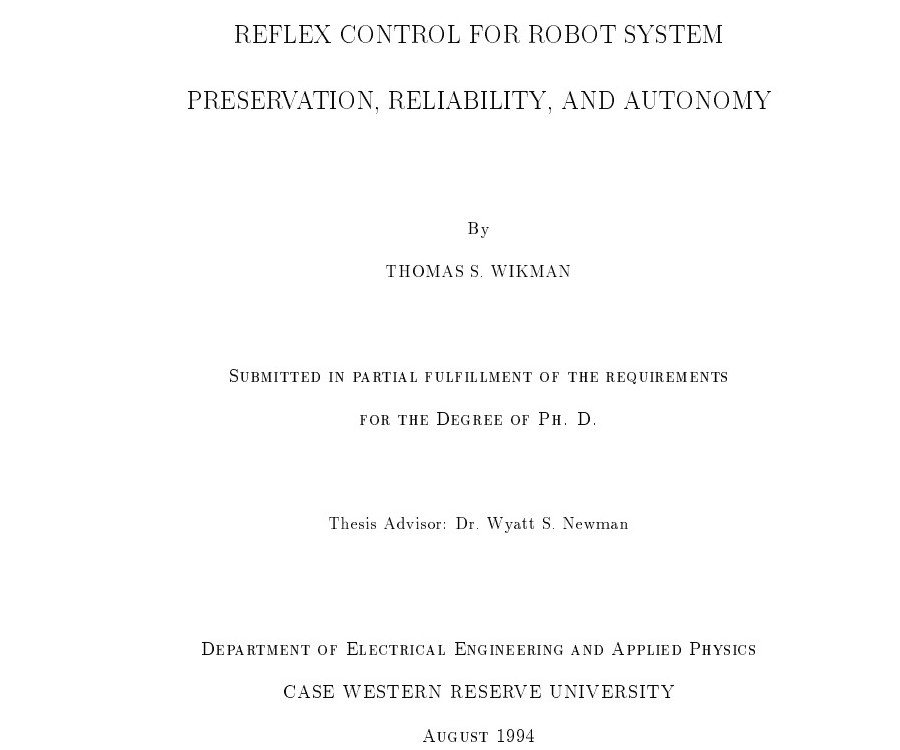
This is a screenshot of a pdf file. It says, “Reflex Control for Obstacle Avoidance and Self Preservation by Thomas Wikman. Submitted in partial Fulfillment of requirements for the degree of Ph.D. Thesis advisor Dr. Wyatt S. Newman. Department of Electrical Engineering and Applied Physics. Case Western Reserve University.”
This is the front page of my PhD thesis “Reflex Control for Obstacle Avoidance and Self Preservation”.

Robotics

Reflex Control for Obstacle Avoidance and Self Preservation

My PhD thesis was in Robotics, specifically Reflex Control for Obstacle Avoidance and Self Preservation. Therefore, you can say that I am an expert on Reflex Control for Obstacle Avoidance and Self Preservation, Reflex Control (in Robotics) as well as Robotics. My expertise has been recognized through my published research papers, the citing of those papers, my PhD thesis, and my peers including Rodney Brooks.

Rodney Brooks is a former director of the MIT Computer Science and Artificial Intelligence Laboratory, founder of several robotics research companies, and he is arguably the most famous roboticist in the world. In the 1990’s he was featured on the front page in national magazines such as Time Magazine several times. During my internship at the Robotics Lab at Sandia National Laboratory in Albuquerque, New Mexico in 1993, I spoke to Rodney Brooks about my research, and he congratulated me on my research, which he liked.

Briefly, reflex control in Robotics refers to functionally simple, quick, and reliable behaviors that override whatever more complex algorithms or humans (joystick / telerobotics) are commanding in case those algorithms or humans execute dangerous motion. Take for example, a robot moving quickly among multiple objects and the path planning algorithm generates a faulty command that would result in a collision when executed. The reflex control layer would detect the problem (assuming it knows about the objects) and halt the robot before it collided with the object. This would need to happen quickly, in milliseconds, and always in a failsafe way. After the collision has been avoided the system or the human can figure out what went wrong and figure out a new path.

To do this the Reflex controller needs to be embedded with the motion controller, and know the characteristics of the motors, the robot configuration, and mechanical characteristics, such as mass, friction model, inertia, etc., exactly. The result is that when you drive a robot around among multiple objects such as boxes hanging from the ceiling, coat racks, and sombreros, and other robots it will avoid colliding with these objects regardless of input from people or high-level path planning algorithms. It looked like the objects were protected by an invisible force field.
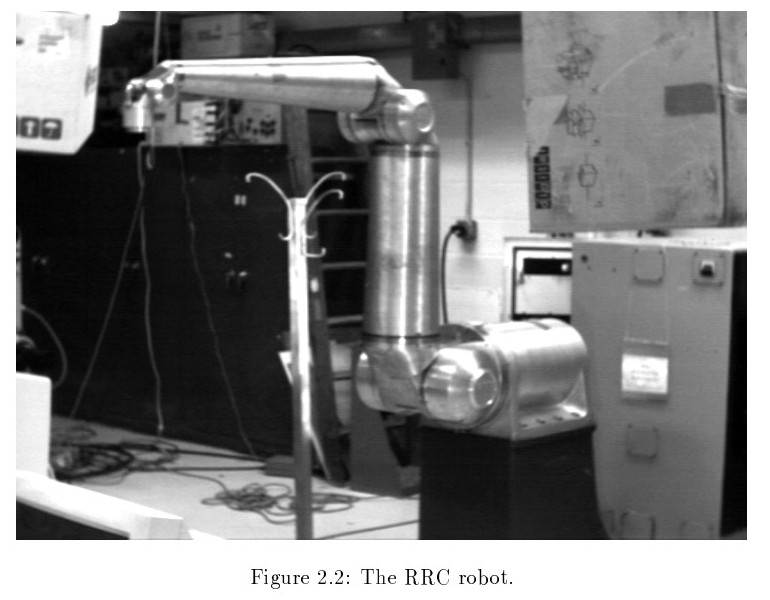
The Robotics Research Corporation Robot / RRC Robot, is a seven-jointed silver colored robot. It is mounted to the floor and surrounded by objects | Robotics And Leonberger Dogs
This is an old black and white photo of the Robotics Research Corporation Robot surrounded by objects including boxes hanging in the ceiling, a coat rack, and a control cabinet. I took the photo, and I created the software for the robot and placed the objects in its workspace.

Robot Kinematics

In addition, to “Reflex Control for Obstacle Avoidance and Self Preservation” or “Reflex Control for Robots”, which is very narrow field, I gained expertise in fields of robotics that are a bit wider. One such field is robot kinematics. That includes, for example, calculating the position, speed and acceleration of the tool tip (the end tip) of the robot from the position and motion of the joints of the robot. Or it could be calculating the possible joint angles from the position of the tool tip. The RRC robot was a seven-jointed robot so this could get complicated. I should say that when I worked for ABB Robotics (after my Ph.D) I created the kinematic models for 30+ of ABB Robotics robots. Therefore, I have expertise and recognized credibility in Robot Kinematics as well.
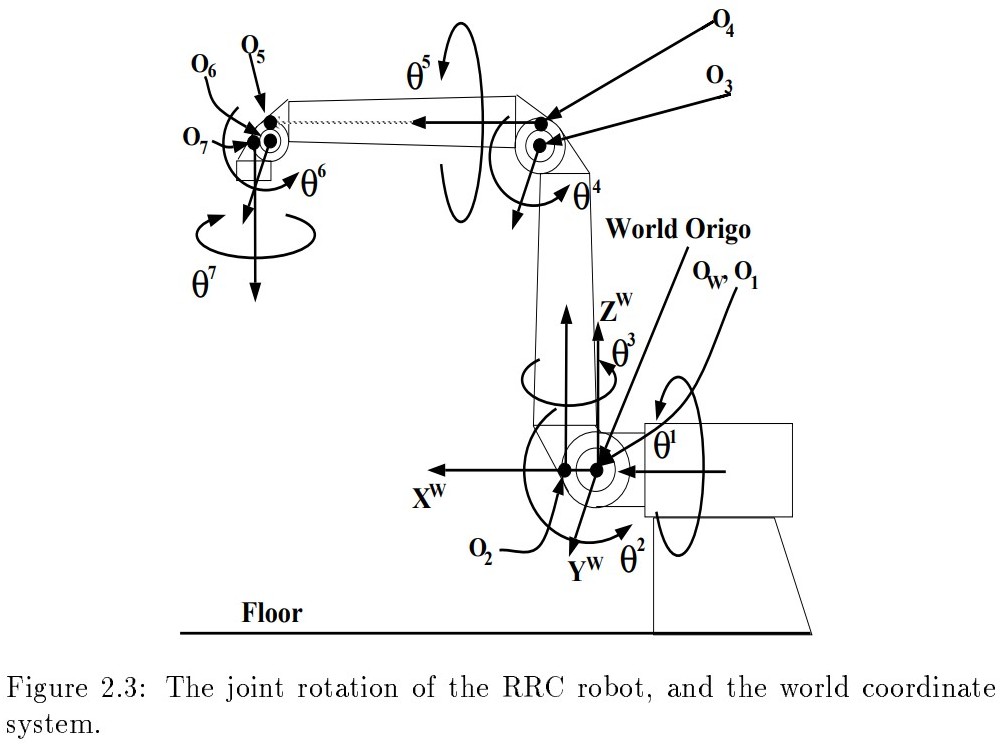
This is a stick figure drawing of the RRC robot for the purpose of defining the coordinate systems for each joint.
The drawing shows the seven joints, the seven possible rotations around those joints, the seven joint angles (the thetas), and the seven coordinate systems and their origos (the O’s) at each joint.

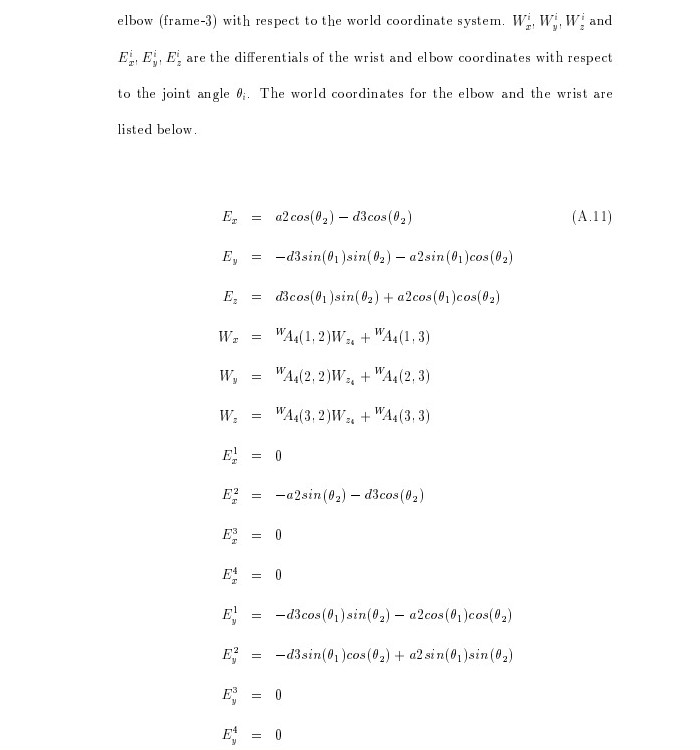
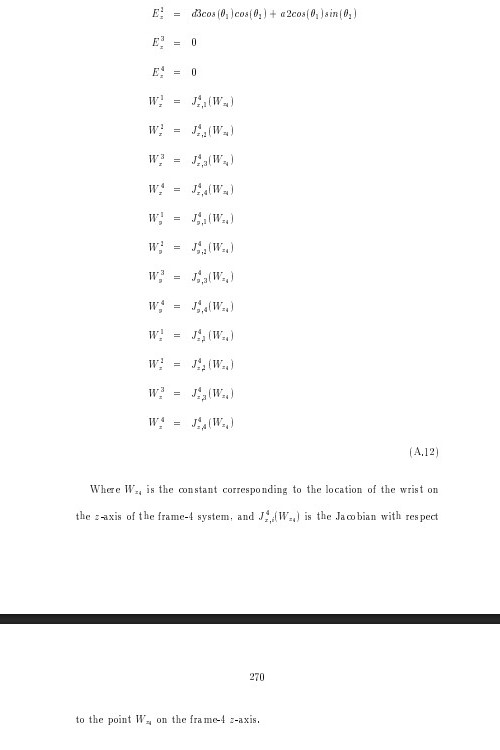
Robot kinematics can get complicated, at least for a seven-jointed robot like the RRC Robot. An example is the Jacobian, which is a matrix that relates joint velocities to end-effector / tool-tip velocities. The Jacobian is crucial for understanding and controlling robot motion, particularly for inverse kinematics and trajectory planning. Below is the Jacobian for the first four joints of the RRC robot. I spent an entire day deriving it. Depending on your eyesight it is difficult to read the scribbles, but it is a bunch of very long, mostly trigonometric equations. Don’t worry about understanding the matrix, it is just to show how complicated robot kinematics can get.

Hundreds of trigonometric expressions arranged in a 4 X 4 matrix.
First part of the 4-dimensional (first four joints) Jacobian for the RRC Robot.
Hundreds of trigonometric expressions arranged in a 4 X 4 matrix.
Second part of the 4-dimensional (first four joints) Jacobian for the RRC Robot.
Hundreds of trigonometric expressions arranged in a 4 X 4 matrix.
Third part of the 4-dimensional (first four joints) Jacobian for the RRC Robot.
Hundreds of trigonometric expressions arranged in a 4 X 4 matrix | Robotics And Leonberger Dogs
Fourth part of the 4-dimensional (first four joints) Jacobian for the RRC Robot.

Configuration Space in Robotics

Another subject I gained a lot of expertise in is configuration space or so-called C-space. It is related to robot kinematics. C-space is a mathematical representation of all possible configurations a robot can take. In C-space for a robot arm (like the RRC Robot) the coordinates are the joint angles instead of X, Y and Z.  For the seven-jointed RRC robot you have seven joint angles and C-space is thus seven dimensions. C-space is very useful if you succeed in representing obstacles in it. A point might become a curve, or multi-dimensional membrane in C-space, and a ball might become a multi-dimensional banana. I had a lot of fun creating algorithms for creating C-space with obstacles in it.

My Other Expertise

I also have a degree a master’s degree in engineering physics (Teknisk Fysik) from Uppsala University in Sweden. I should say that engineering physics in Uppsala was focused a lot on theoretical physics and modern physics as well as practical applications for physics. Case Western Reserve University later converted this degree to a master’s in electrical engineering. I loved physics and was a good student, but my special interest was the theory of relativity. Even though I had and still have a hard time with the General Theory of relativity and I studied the special theory of relativity way beyond what was required at school, and I read dozens of technical books on the subject. So, this is also sort of an area expertise for me.

Below are some links to topics related to the special theory of relativity on this website:

I spent at least 30 years working with software as a software engineer / robotics engineer and gained a lot of experience in software development. It was mostly embedded software but also graphical user interfaces, things you can see on a screen, and Networking Software Development. I worked a lot with Visual Studio, a powerful, expandable, and popular integrated development environment (IDE) from Microsoft.

I developed a lot of code using C++ and C#, .Net, WPF, but also other languages and libraries. I started with Visual Studio 97 (in 1997), then Visual Studio 6, Visual Studio .NET 2002, Visual Studio .NET 2003, Visual Studio 2005, Visual Studio 2008, Visual Studio 2010, Visual Studio 2012, Visual Studio 2015, Visual Studio 2017, but I never got around to Visual Studio 2019 and Visual Studio 2022. So, you can say that I am an expert on Visual Studio with C++ and C# and .NET (I am less of an expert on the other languages typically used with Visual Studio).

Later in life I also came to learn a lot about climate change / climate disruption / global warming / the greenhouse effect whatever you call it. I used to be skeptical about climate change, and I thought it might be politicized by the scientific community, but after some interesting red flags I took a deep dive into the subject, and I learned that climate change is very real and caused by us. I was politicized not the scientific community. There is a scientific consensus on the subject for very good reasons. I continued by reading dozens of climate science papers and several dozens of technical and non-technical books on the topic. Therefore, at this point I know more about it than a lot of people. Maybe expert is a strong word, but almost expert.

Least but not last

Being a Leonberger Dog Expert

I know a lot about Leonbergers because my family was lucky enough to live with one for thirteen years. His name was Le Bronco von der Löwenhöhle—but we called him “Bronco” for short. Bronco wasn’t our only dog, but our world wouldn’t have been the same without him. For instance, he once saved the life of our pug by fending off an attack from another dog. He probably saved our Labrador’s life, too, by sniffing out an impending insulin shock before it happened. Then there was the time he scared off a trespasser who’d been terrorizing my wife and other women in the neighborhood.
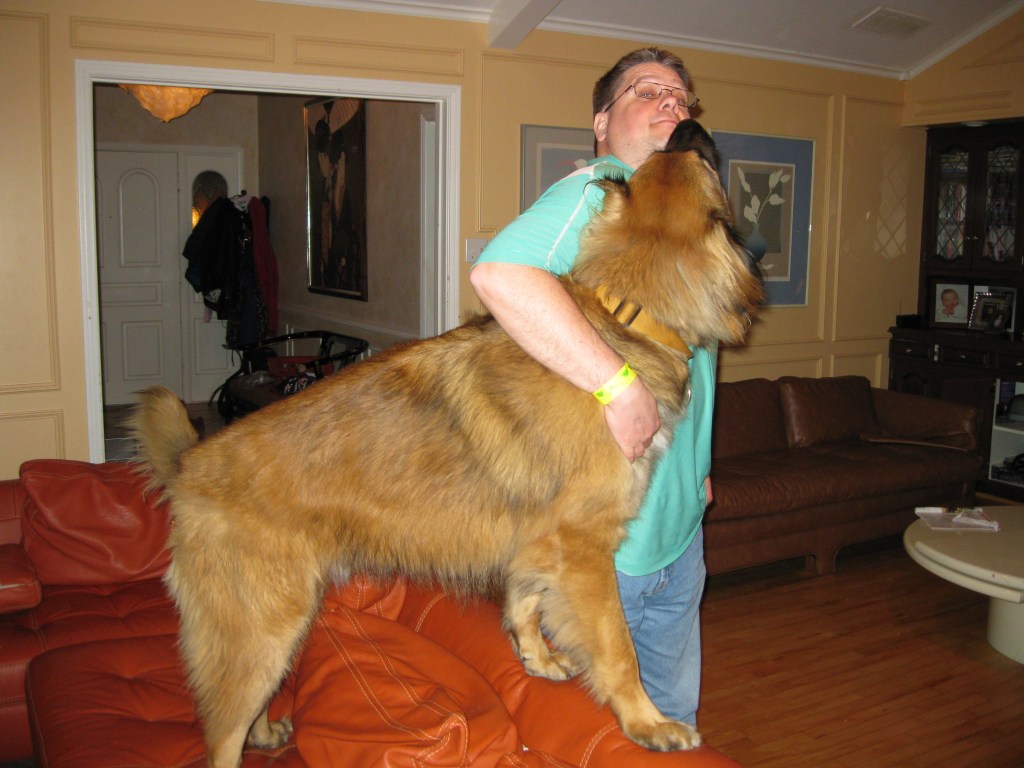
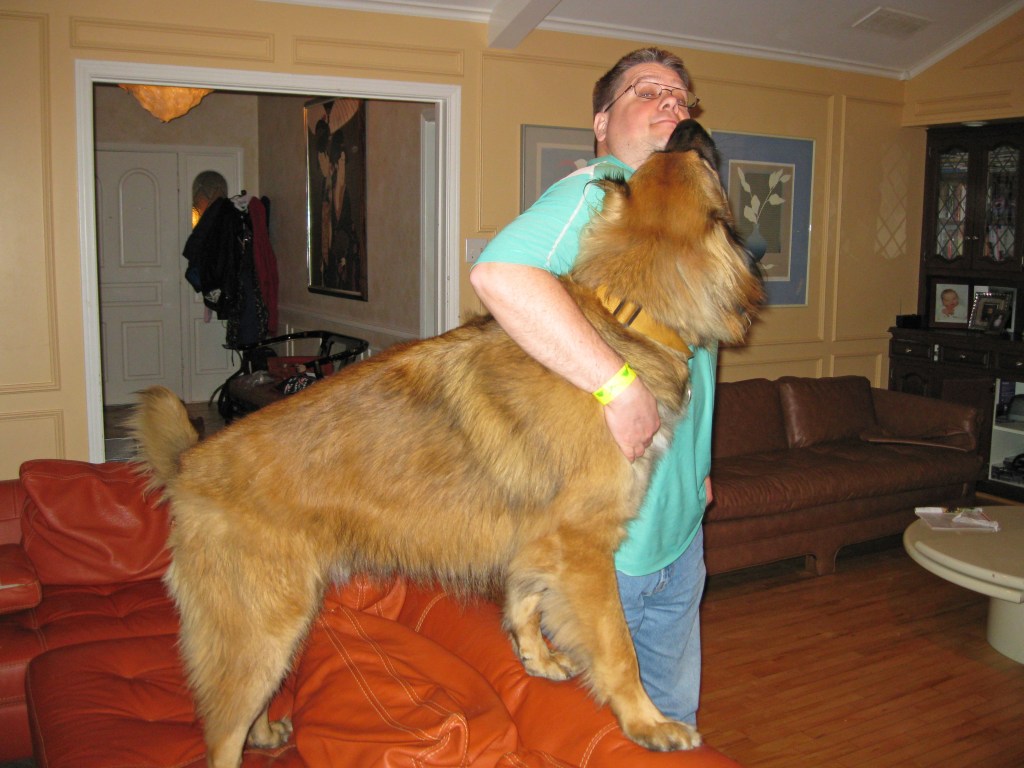
A big Leonberger is standing on a large red leather sofa and stretching out to give me a hug | Robotics And Leonberger Dogs
Bronco loved to dance and hug. Here he is giving me a hug (not yet fully grown).

Bronco is no longer with us, but even in his passing he was distinctive. Leonbergers tend to live less than nine years—but Bronco came very close to reaching his thirteenth birthday. In fact, he received an award for longevity called the “Grey Muzzle Award.”  We already knew he was a special dog, but we sent his DNA to two labs for research anyway. I wrote a book about our amazing Bronco and his many amusing adventures and included helpful information on Leonbergers for new owners and interested dog lovers. I also have a Leonberger website.

In the process of writing my book about Bronco and Leonbergers I came to learn a lot about Leonberger dogs, the Leonberger breed standard, their history, health issues, Leonberger organizations, health and care, etc. I became a bit of a Leonberger expert. If you are interested in the book, check it out here or here. You can also get it from Amazon in many other countries, Barnes & Noble, Chapters Indigo and many other bookstores. For more information check here.


To see the Super Facts click here

Gustav Vasa

Image above by Kevin from The Beginning at Last

Today, June 6 is the National Day of Sweden (or the Independence Day of Sweden). Gustav Vasa, or Gustav I, Sweden’s hero king and the father of modern Sweden, was elected king of Sweden on June 6th, 1523. This was after the Swedish War of Liberation from Denmark 1521 to 1523. Gustav rose to lead the Swedish War of Liberation following the Stockholm Bloodbath, where his father was executed.  Gustav Vasa or Gustav I was King of Sweden from 1523 until his death in 1560. Since I am originally Swedish (now living in Texas) June 6 is a significant date for me.

In the picture there muscular man holding up crown | Gustav Vasa
This picture is how I imagine Gustav Vasa at his coronation. BTW this is a submission for Kevin’s No Theme Thursday
A bearded king and his queen are marching down the middle of beautiful large building, perhaps a cathedral or a castle | Gustav Vasa
This is how I imagine Gustav Vasa’s marriage to Catherine of Saxe-Lauenburg on September 24th, 1531. This picture is also from Kevin’s No Theme Thursday

Depictions of Gustav Vasa

Kevin’s pictures above were, like I said, how I imagine Gustav Vasa. The depictions below might be closer to the truth.

Painting of Gustav Vasa with an interesting hairdo and wearing a large robe.
Painting of Gustav I Vasa. Fashion was somewhat different back in the day.
Gustav Vasa is wearing a big black robe and black beanie looking hat that is slanted on his head.
Portrait of Gustav Vasa (from Wikipedia Commons).

The Kalmar Union

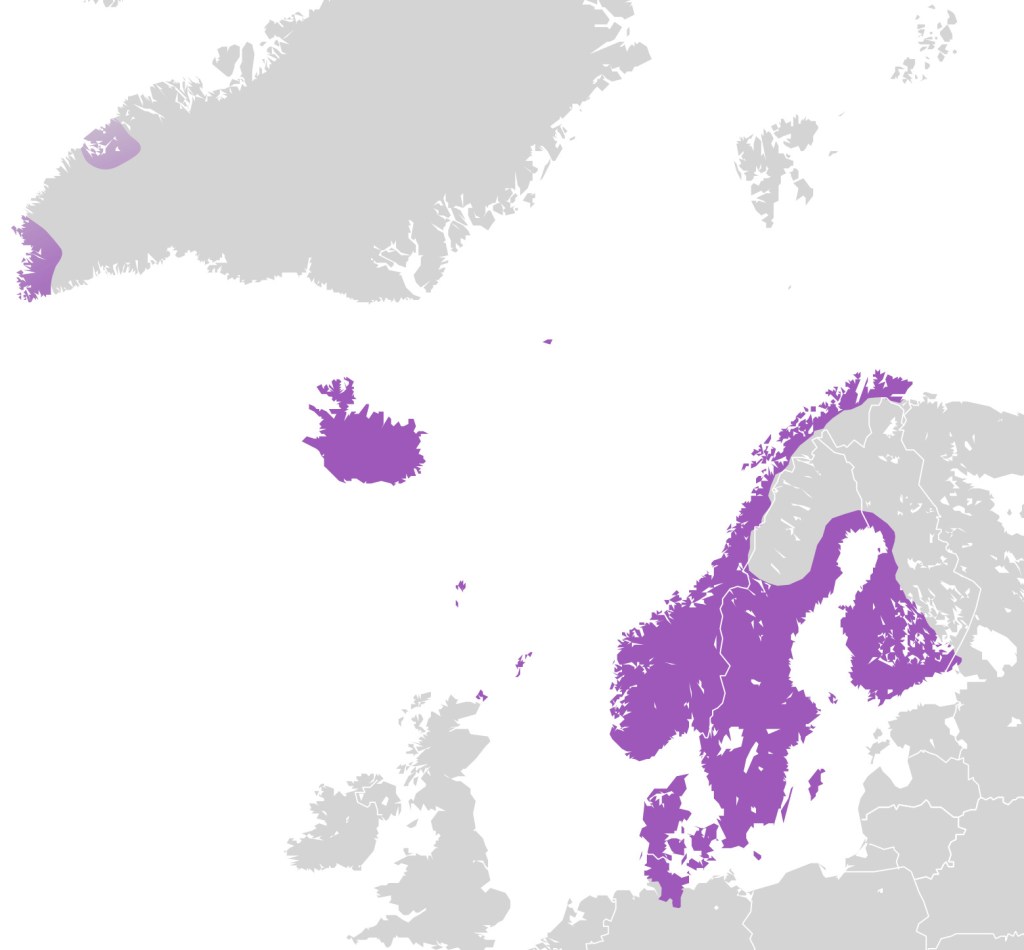
In 1397 a union was formed between Denmark, Norway and Sweden called the Kalmar Union (Kalmar is a city a Sweden). The Kalmar Union came to be dominated by Denmark and there were occasional rebellions. During Gustav’s childhood, parts of the Swedish nobility tried to make Sweden independent. Gustav’s father Erik Johansson Vasa was part of that nobility.

Map showing Denmark, Sweden and Norway in purple. Iceland and Finland are also included.
The Kalmar Union. Finland was part of Sweden at the time. Ssolbergj, CC BY-SA 3.0 <https://creativecommons.org/licenses/by-sa/3.0&gt;, via Wikimedia Commons

After some problematic interactions with Denmark and the Danish King Christian II, King Christian massacred 100 Swedish nobles, November 7-9, 1520, on Stortorget in Stockholm, including Gustav’s father. In 1521 Gustav led a rebellion (or a civil war) against Denmark, which ended in the deposition of King Christian II from the throne of Sweden, effectively ending the Kalmar Union. I can add that King Christian is called Christian the Tyrant in Sweden and Christian the good in Denmark.

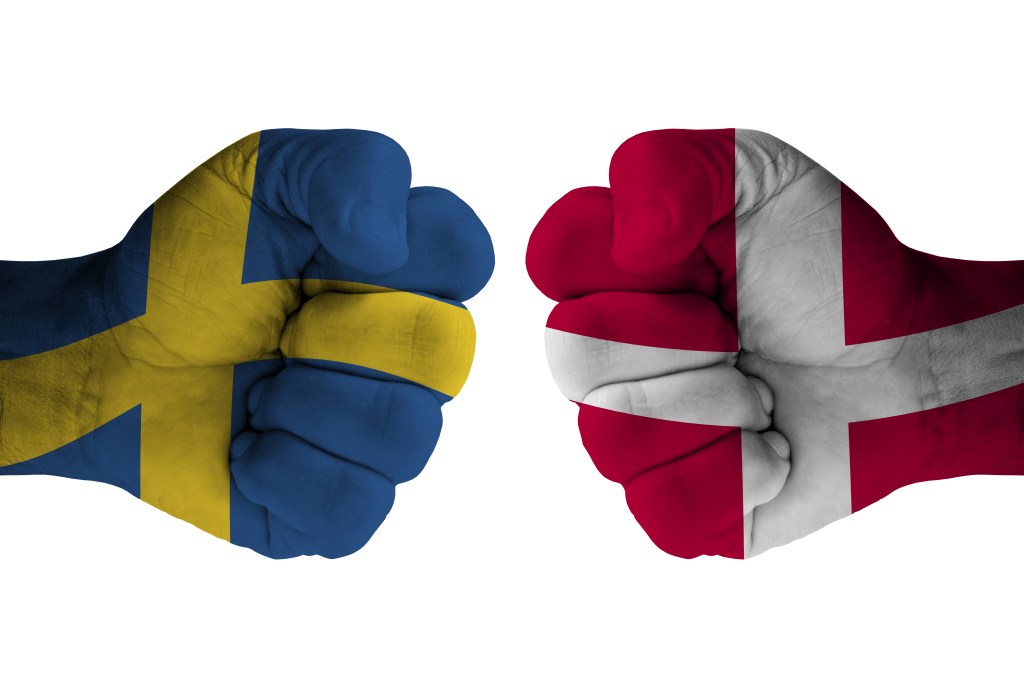
Sweden and Denmark has had a complicated history that included a lot of hostilities and eleven wars, but you wouldn’t know it if you looked at the situation today. There hasn’t been a war between Sweden and Denmark in more than 180 years and Swedes and Danes get along very well. However, it is best not to bring up the past. That is probably true for marriages as well.

On the left, a fist with a yellow and blue flag. On the right, a fist with a red and white flag.
Denmark vs Sweden. The yellow and blue flag is the Swedish flag. Red and white is the Danish. Shutterstock Stock Photo ID: 1114320377 by Hasanov Jeyhun.

Gustav Vasa’s Burial Place

Gustav Vasa died on September 29, 1560, and is buried together with three of his wives (while only two are engraved) in the Cathedral of Uppsala. Uppsala is an old city north of Stockholm famous for its Viking graves/mounds. During the Viking era Uppsala was the religious center of Sweden. Later as Sweden became Christian it remained the religious center of Sweden, however, the Viking temple in old Uppsala was replaced by a Christian church. Uppsala hosts one of the most prominent Universities in the world and it also happens to be where I studied Engineering Physics.

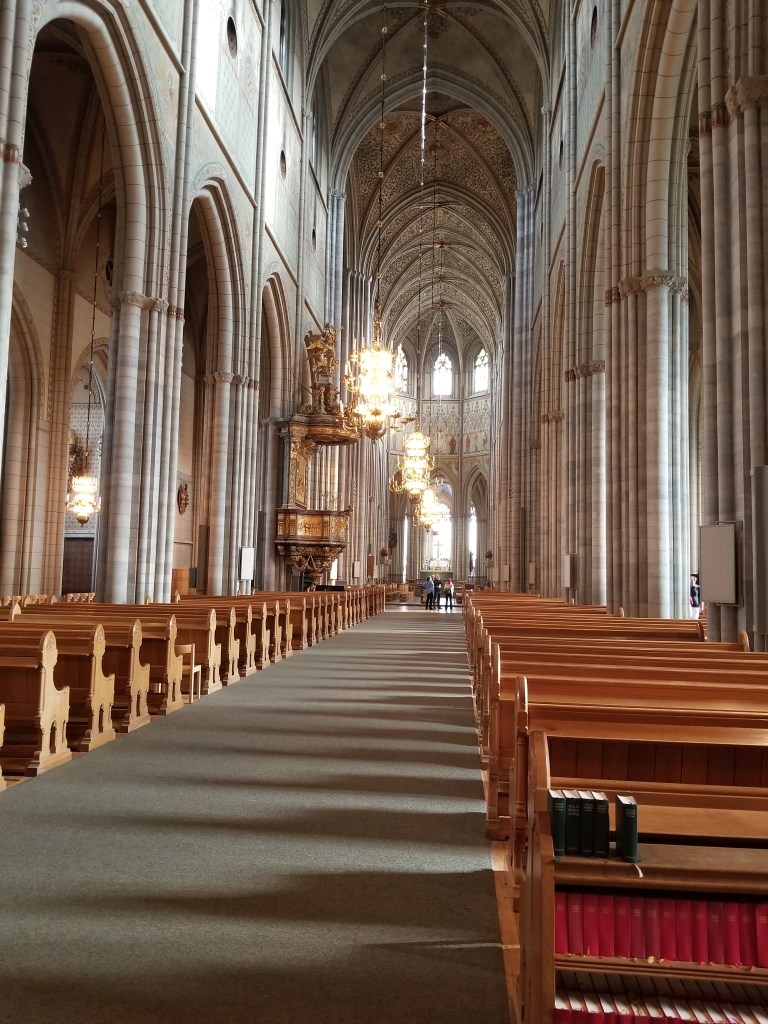
The largest cathedral in Sweden, Uppsala Domkyrka. This is where Gustav I Vasa is buried. Gustav I is arguably Sweden’s most prominent king.
Inside Uppsala Domkyrka
Inside Uppsala Domkyrka.
The tomb of Gustav I Vasa in Uppsala Domkyrka | Heavily decorated coffin shaped tomb placed in a large, decorated room filled with paintings.
The tomb of Gustav I Vasa in Uppsala Domkyrka. In the background is my son and his wife.

Photos from Sweden

Photo of a Leonberger standing on of a bench
I am a fan of Leonberger dogs, and this is a photo of the only Swedish Leonberger I met personally. Her name was Amie. We met her at an interesting place, at the top of a north Swedish mountain called Skule Mountain (Skull Mountain).
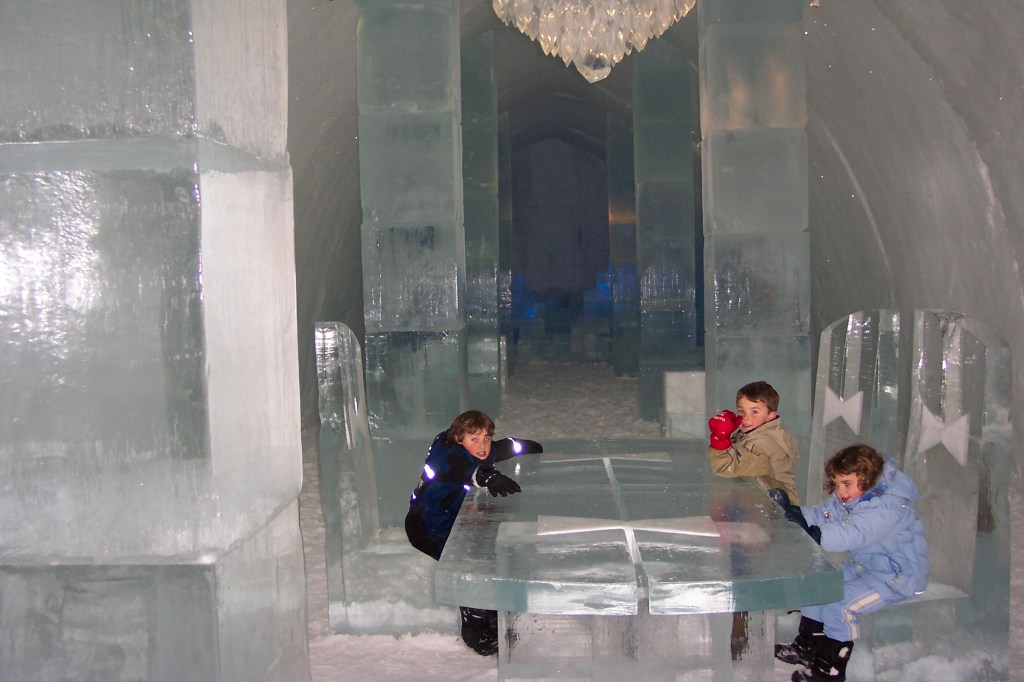
Three children sitting around a large table made of ice in a large room with columns of ice. There is an ice chandelier above the table.
One of the interesting tourist attractions in northern Sweden is the Ice Hotel in Jukkasjärvi . The ice hotel in Jukkasjärvi is the first/original and largest ice hotel in the world. My kids at the lobby of the ice hotel in northern Sweden.

A guard in a dark blue uniform wearing a golden helmet and a gun in standing in front of a booth in front of a big brick castle.
Sweden has a king (Carl XIV), and he owns a couple of big castles. This is my kids with the guard in front of the Winter Castle in Stockholm.
My photo of Drottningholm castle taken from the garden, a very large garden.
Drottningholm, one of the Royal Palaces in Sweden. It was built in the 1660’s and inspired by Versailles.
A photo of the Vasa Ship taken from below.
A photo of the Vasa ship from the bottom floor. My son is standing on the right in a green and black shirt.
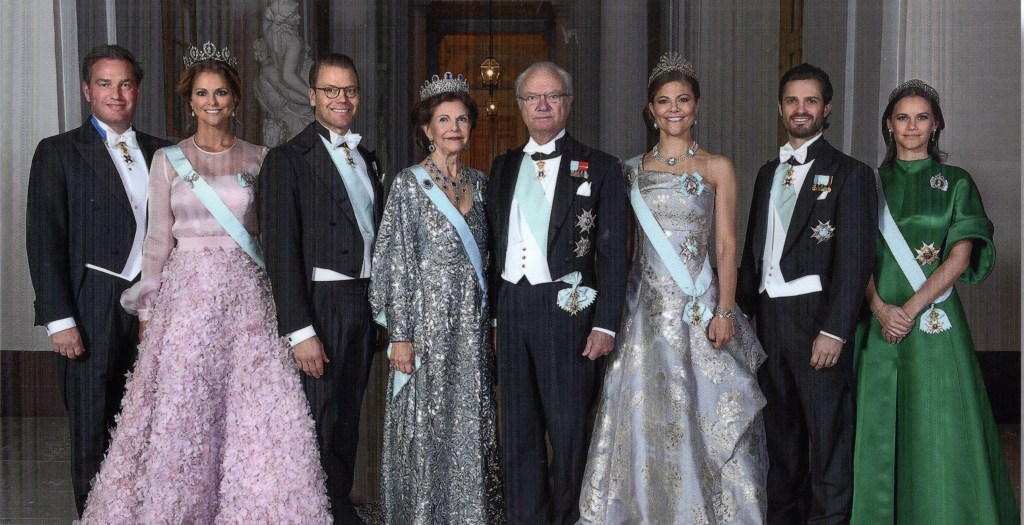
This is a photo of a well-dressed 8-member royal family.
The Swedish Royal family. The two people in the middle are Queen Silvia and King Carl XVI Bernadotte. To the right of the king is the future monarch of Sweden princess Victoria and to the left of Queen Silvia is her husband. The others are their other two children and their spouses.
Yellow and Blue Swedish flag | Gustav Vasa
Finally, the Swedish Flag (Wikimedia Commons). All other photos above are mine

Other Scandinavian Posts


To see the Super Facts click here

The Sunshine Blogger Award Is Rising Again

I’ve been nominated for the Sunshine Blogger Award a second time, this time by Pooja, from Lifesfinewhine. Thank you for the nomination, Pooja! It was a nice surprise.

The Sunshine Blogger Award Official Image
The Sunshine Blogger Award

Check out her blog for lots of great posts featuring blogging advice and expertise, beautiful poetry, short stories, thought provoking quotes and much more!

Without further ado, here are the rules which I’ve copied from Pooja’s blog:

  • Display the award’s official logo somewhere on your blog.
  • Thank the person who nominated you.
  • Provide a link to your nominator’s blog.
  • Answer your nominators’ questions.
  • Nominate up to 11 bloggers.
  • Ask your nominees 11 questions.
  • Notify your nominees by commenting on at least one of their blog posts.

Eleven Questions for Me

Below are my answers to Pooja’s eleven questions.

Question 1 : What’s your favorite animal?

Dogs, especially Leonberger dogs. I love dogs that are big or small. We’ve had a Labrador, a German Shepherd, a Leonberger, a Japanese Shin, a Pug and a mini-Australian Shepherd. I did not grow up with dogs. I learned to love them as an adult. Dogs are intelligent, they can understand hundreds of words, they are emotional, they are great communicators, they are loyal and loving. Dogs are the only animals capable of loving you more than they love themselves. Our Leonberger Bronco, or Le Bronco von der Löwenhöhle, was a very large dog. He was brave, confident, strong, and a great family dog.

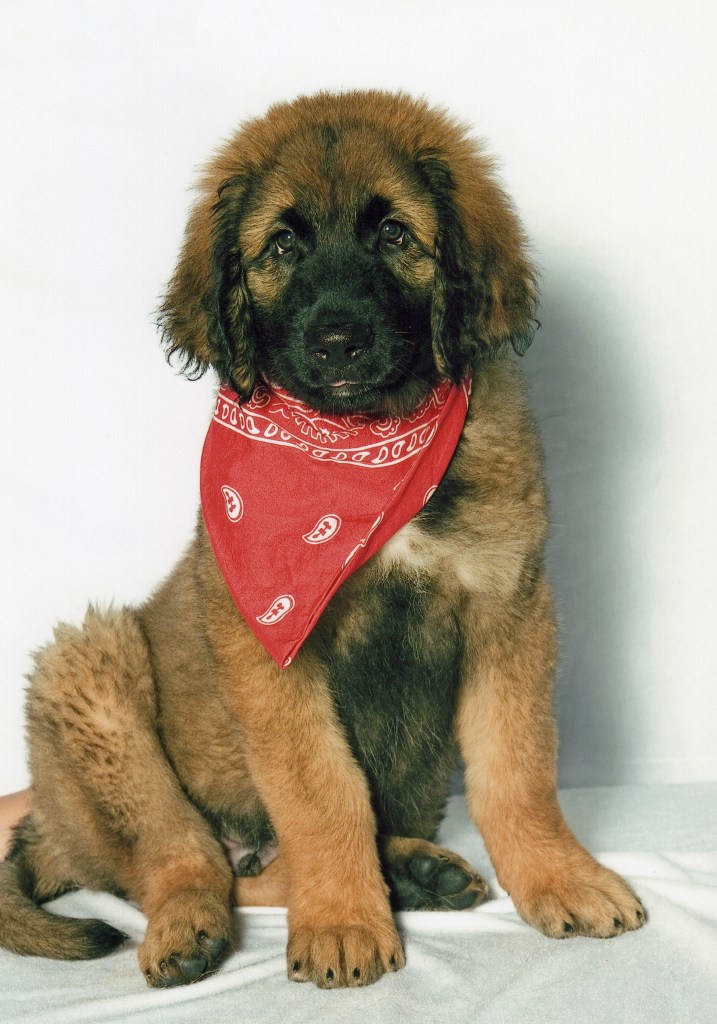
A photo of our three months old Leonberger wearing a red scarf
Our Leonberger Bronco at the age of three months. He would grow to be 140lbs, and 167lbs when he was a bit overweight.

Bronco rescued hamsters and he saved our Pug’s life by stepping in between her and an attacking dog. He likely saved our Labrador’s life too by sniffing out an oncoming insulin shock. He chased off a trespasser and peeping Tom who was harassing my wife and other women in the neighborhood thereby saving the women in the neighborhood when police couldn’t.  He was very funny and an amazing swimmer as well as a skilled counter surfer. I wrote a book about Bronco that you can find here.

The cover is light brown and featuring an old Leonberger dog. The title is The Life and Times of Le Bronco von der Löwenhöhle: Stories and Tips from Thirteen Years with a Leonberger. Author is Thomas Wikman.
The front cover of The Life and Times of Le Bronco von der Löwenhöhle: Stories and Tips from Thirteen Years with a Leonberger. Click on the picture to visit the Amazon page the book.

Question 2 : What TV show or movie do you wish you could watch for the first time again?

I think that might be Ex Machina. This was a movie about Artificial Intelligence embedded in a female robot. She displayed human feelings in many ways, but she was imprisoned, and she wanted to get out. She was a disaster in the making. The movie was very thought-provoking, scary on many levels, as well as full of social commentary. Because it featured several surprises it is the kind of movie that is difficult to watch too many times.

Question 3 : What’s one thing you love unironically?

My wife, my children, my dog, well, that’s many things.

Question 4 : What is your favorite dish to cook?

I don’t have a favorite dish to cook but I love to grill or barbecue chicken, meat, sausage, and drink a beer while I am doing it.

Question 5 : Share the one joke that always makes you laugh no matter how many times you hear it?

There are some jokes that have a thought-provoking aspect to them and those I can laugh at even if I’ve heard them before. An example, “How will Descartes feel when he finds out that people who don’t think exist too?”.

A picture of Descartes with the caption How will Descartes feel when he finds out that people who don’t think exist too? | The Sunshine Blogger Award

I also love dog jokes, even the silly simple ones. An example featuring our Pug Daisy and our mini-Australian Shepherd is shown below.

Daisy tells Rollo “Rollo do you want to hear a joke?”. Rollo says “OK”, Daisy says “Knock! Knock!”, and they both stars barking.

Question 6 : What was your favorite cartoon growing up?

I read a lot of French Belgian Bande Dessinée (in Swedish) when I was a kid. My favorite was Tintin and maybe Asterix. That goes for both the comic books as well as the animated movies.

Question 7 : You get to bring three items to a desert island. What are they?

  • A knife. A gun needs ammunition and cannot be used for a lot of practical things. However, you can use a knife for a very long time. In addition, you can turn it into a spear and use it as a tool and use it to prepare a fire.
  • A hard bottle, or another sort of vessel, for carrying water or digging.
  • A reverse osmosis filter for removing salt from sea water.

Question 8 : What’s your go-to karaoke song?

I’ve only sang Karaoke a few times and I don’t remember what songs I picked, so I don’t have a go-to karaoke song. However, if I ever do Karaoke again, I think I will sing “Nothing Else Matters” by Metallica.

Question 9 : Are you more of a “stay in and binge-watch” person or “go out and explore” person?

I love nature and I love the outside world. However, Dallas, where I live, does not offer a lot of opportunities for that so I might stay inside and watch TV. When I am in the countryside, or where there is a forest, mountains, or beeches, or in a beautiful city like Paris, Stockholm, or Copenhagen, I go out and explore.

Question 10 : What’s your useless superpower?

My most useless superpower is pointing out to people when they are getting their facts wrong. You would think they would appreciate the learning opportunity, but no, they often get annoyed.

Question 11 : What’s the weirdest compliment you’ve ever received?

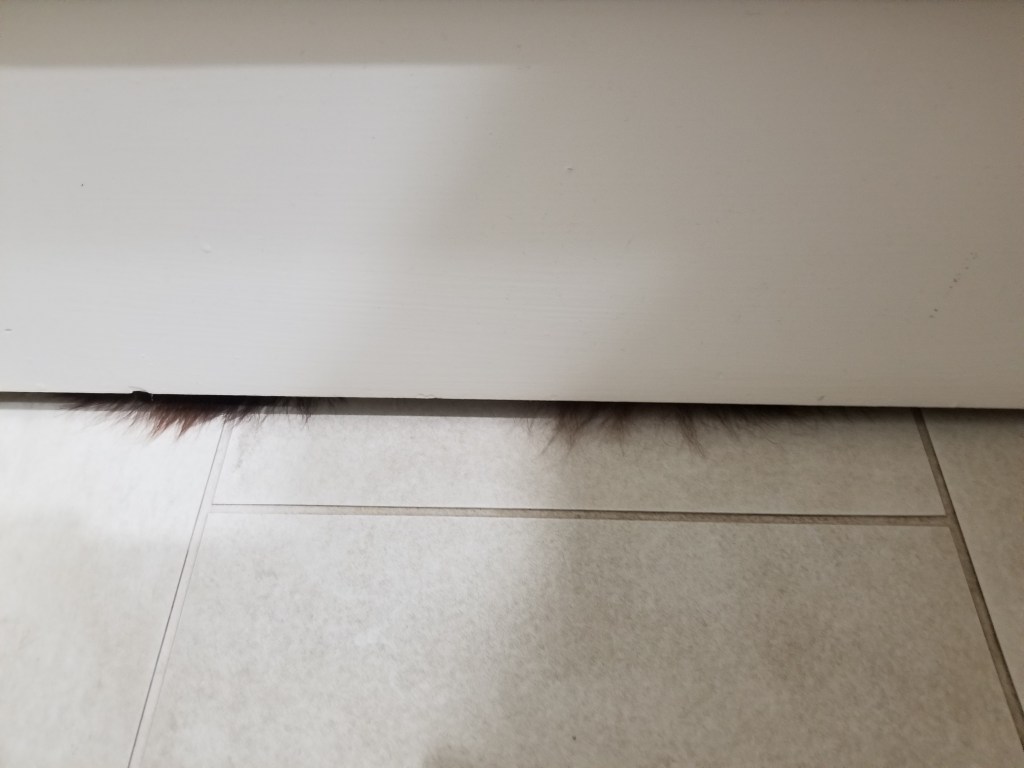
My dog gives me an implicit compliment when he sits outside the bathroom door and waits for me. He shows that he wants to be with me, but it is a little weird.

Our dog Rollo’s dark brown hair is visible under the white bathroom door | The Sunshine Blogger Award
Rollo’s fur sticking out underneath the bathroom door. He is waiting for me to come back out.

Here are my questions for my nominees:

Question 1 : What’s your favorite book?

Question 2 : What’s your ultimate comfort food?

Question 3 : What’s your favorite season and why?

Question 4 : Do you recharge better alone or with others?

Question 5 : What’s one adventure or trip that changed you?

Question 6 : What’s something you used to believe that you’ve changed your mind about?

Question 7 : What’s something you’ve learned about yourself in the past year?

Question 8 : What’s the weirdest or most random fact you know?

Question 9 : What’s a risk you’re glad you took?

Question 10 : What’s the best piece of advice you’ve ever received?

Question 11 : What kind of legacy do you want to leave behind?

Eleven New Victims

Below are my nominees. Naturally, whether you participate or not is entirely up to you. I do not have any expectations, and I fully understand if you are not up to it.

Susana Cabaço, Spiritual Insights & Personal Empowerment

John Howell, Fiction Favorites

Pete Springer, teacher and author

Violet Lentz from Thru Violet’s Lentz

Jan Sikes, Award winning Texas author

Laura Stamps from Dog Dazed

Ada Jenkins from The Introverted Bookworm

Joanne Macco, Anything is Possible with Love, Hope, and Perseverance

Darlene Foster from Darlene Foster’s Blog

Carol Ann Taylor from Carol Cooks2

The Mindful Mystic from the Wild Pomegranate Tree

To see the Super Facts click here

Neutering or spaying a dog at 6 months old can be dangerous to their health

Superfact 21: Neutering or spaying a dog at 6 months old can be dangerous to their health depending on breed. It is often recommended that you should neuter or spay your dog by the age of 6 months even as early as 8 weeks. This may be OK for some smaller breeds but is dangerous to the health and longevity of many larger breeds.

Many dog welfare organizations, SPCA, ASCA, etc., recommend that dogs are neutered or spayed by the age of 6 months, or even as early as 8 weeks. It is also a common advice in dog books.

In addition, some veterinarians still hold onto this belief. It is easy to understand why. Dogs running loose and causing unwanted pregnancies resulting in puppies having to be euthanized is a sad problem we don’t want. 

Unfortunately, research has shown that neutering or spaying a dog at 6 months old can be dangerous to their health depending on the breed. You may need to wait 18 months or two years, and some breeds should not be neutered at all. In addition to the scientists in the relevant fields, professional and certified breeders, AKC and dog breed clubs and veterinarians who kept themselves informed on this issue are all aware of this.

In other words, we know this to be true, it is an important fact since so many of us own a dog, roughly half of all US households do, and yet this information is highly surprising to many. This is why I consider it a super fact.

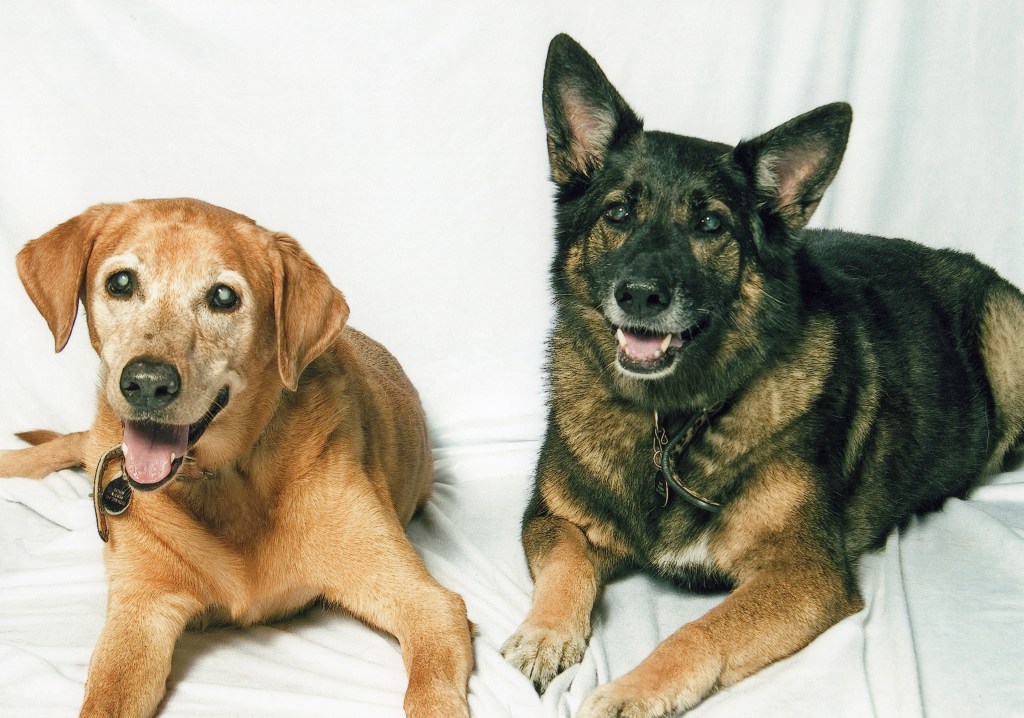
Our yellow lab Baylor is on the left. Our brown-black German Shepherd Baby is on the right | Neutering or spaying a dog at 6 months old can be dangerous to their health depending on breed
This is our Labrador Baylor and German Shepherd Baby. Too early neutering and spaying can severely harm their health.

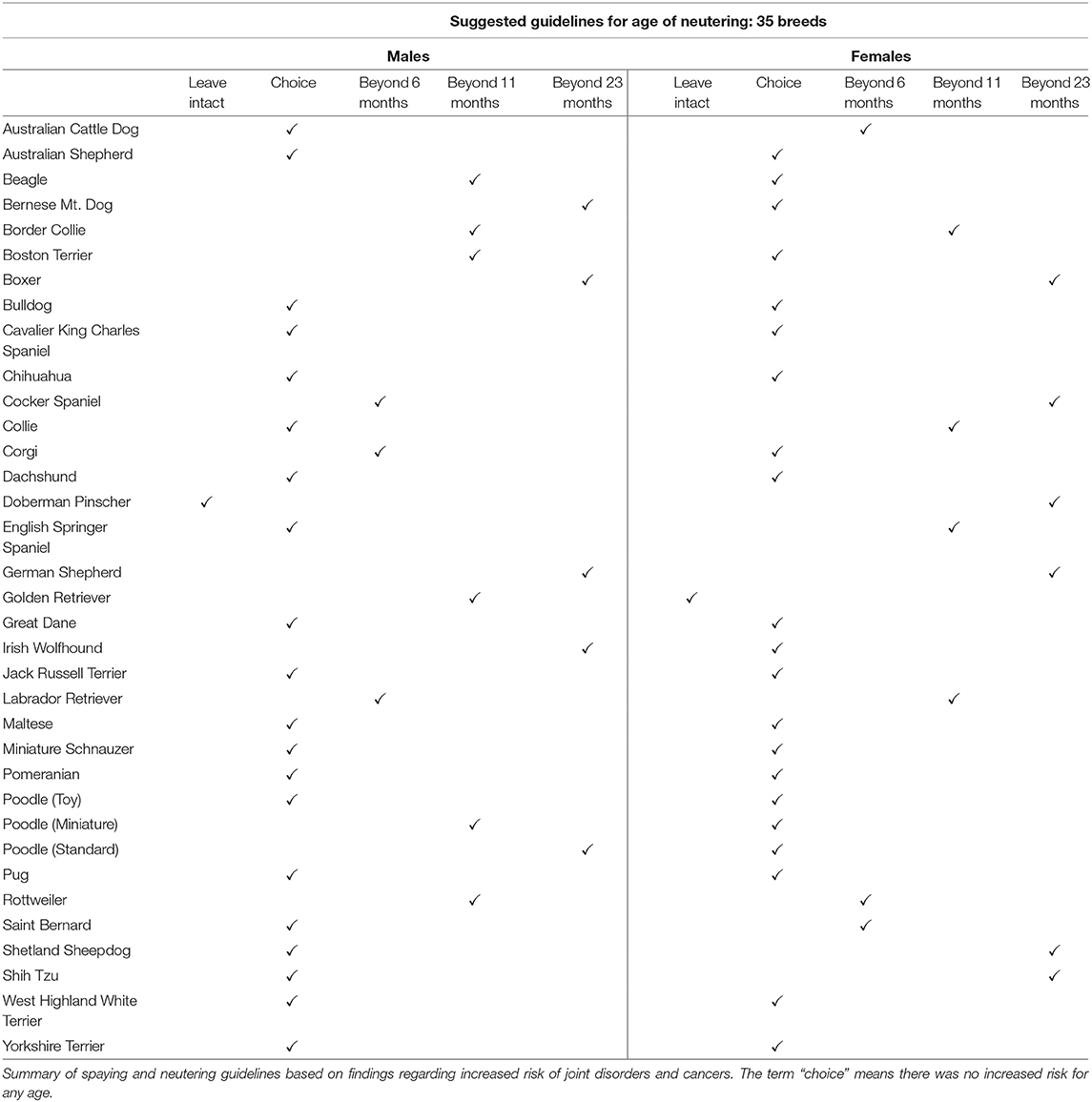
This less than a year-old article from the AKC states that “an age of six to nine months of age may be appropriate for neutering or spaying a toy breed puppy or small breed puppy but a larger or giant breed may need to wait until they are near or over 12-18 months of age.” The article also provides the following interesting information.

Research conducted by the University of California – Davis reveals that for some dog breeds, neutering and spaying may be associated with the increased risks of certain health conditions such as joint disorders including hip or elbow dysplasia, cranial cruciate rupture or tear, and some cancers, such as lymphoma, mast cell tumor, hemangiosarcoma, and osteosarcoma.

The research conclusions are not surprising. Sex hormones are important in the development of any animal.  We know they affect psychological development as well as the musculoskeletal, cardiovascular, and the immune system.

I believe this is the University of California – Davis article in question. It is from 2020. Notice that the suggested guidelines for age of neutering is beyond 23 months for several of the giant breeds in the table featuring 35 breeds.

Bronco, our Leonberger puppy is looking straight into the camera. He is wearing a red bandana | Neutering or spaying a dog at 6 months old can be dangerous to their health depending on breed
Our three months old Leonberger Bronco. The Leonberger is a giant breed you can neuter when they are older than two years old.

Recommended Ages for Neutering and Spaying

Below is a list of recommended ages for neutering and spaying for selected dog breeds.

  • Australian Shepherd, for neutering and spaying it is your choice.
  • Bernese Mountain Dog, you should neuter beyond the age of 23 months, but for spaying you have a free choice.
  • Boxer, neuter and spay beyond the age of 23 months.
  • Boston Terrier, neuter beyond 11 months, but for spaying you have a free choice.
  • Doberman Pincher, never neuter, and you need to spay beyond the age of 23 months.
  • German Shepherd, neuter and spay beyond the age of 23 months.
  • Labrador Retriever, neuter beyond 6 months and spay beyond 11 months.
  • Corgi, neuter beyond 6 months, but for spaying you have a free choice.
  • Great Dane, despite being a very large dog you have a free choice for both neutering and spaying.
  • Rottweiler, neuter beyond 11 months, but for spaying beyond 6 months.
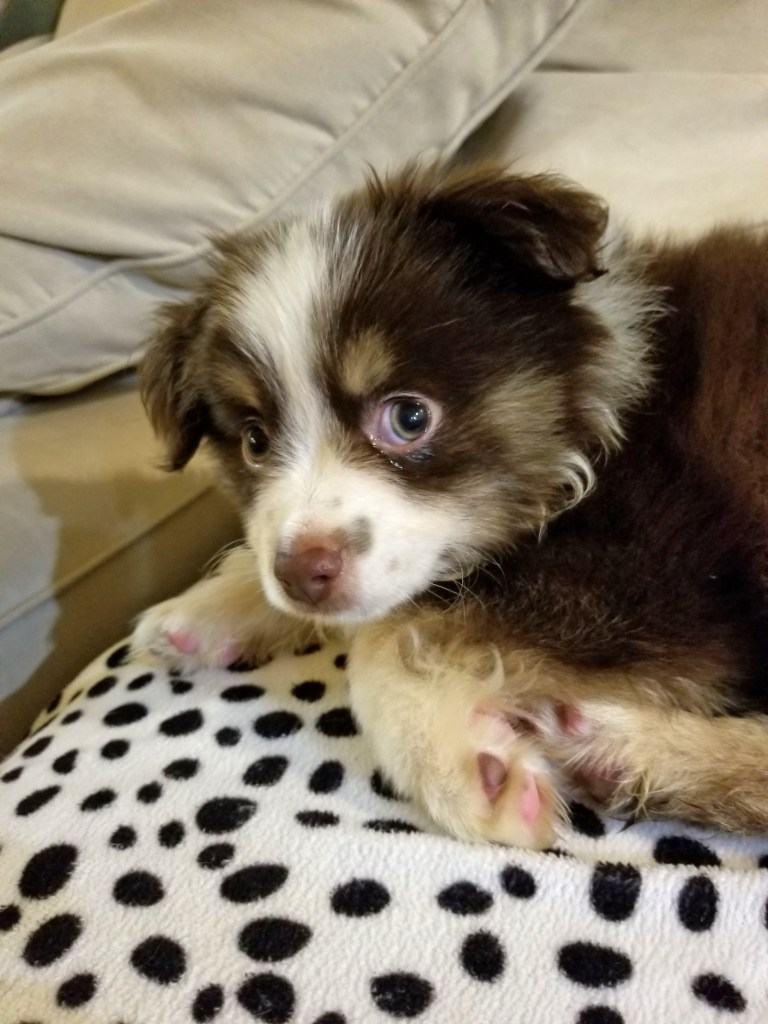
A mini-Australian Shepherd puppy is peeking out behind a sofa chair.
Our mini-Australian Shepherd puppy Rollo. You can neuter this breed at an earlier age.

We used to own a male Leonberger dog, which is a giant breed. Our breeder told us to wait beyond two years before neutering him, for health reasons. This article from Hillhaven Leonbergers states the following “We recommend not neutering until at least 2 years of age…Some Vets would recommend from 6 months but this is NOT a good idea.” To read more about the neutering and spaying of Leonberger dogs click here.

Our Leonberger dog Bronco is standing on a red leather sofa. He is stretching to give me a hug.
Our Leonberger dog Bronco is giving me a hug. He was about one year old in the picture. That is still too early to neuter him.

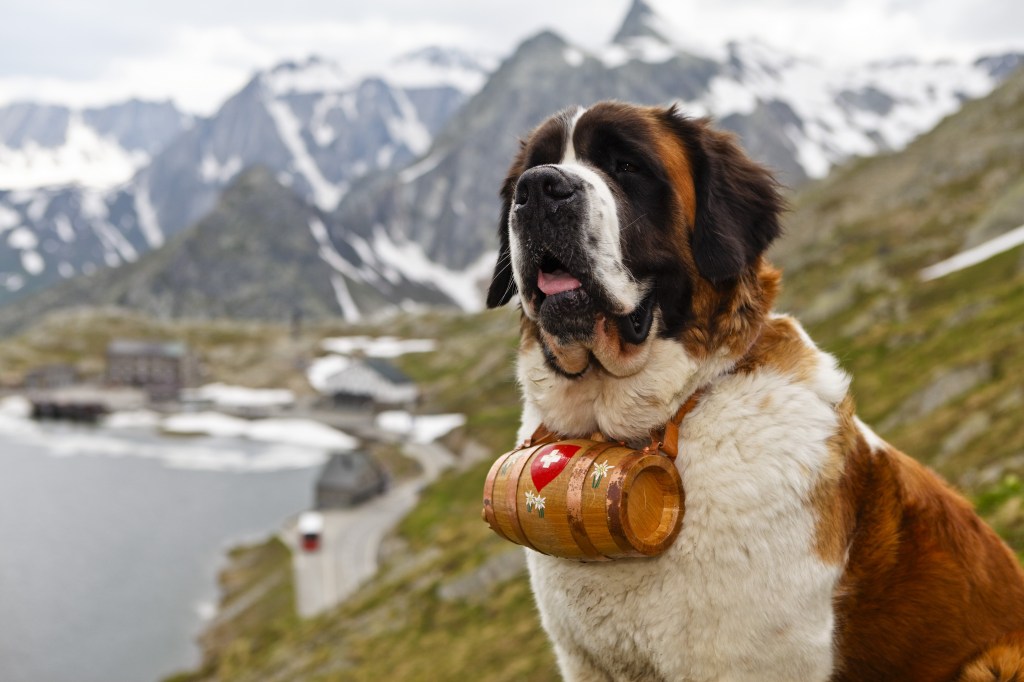
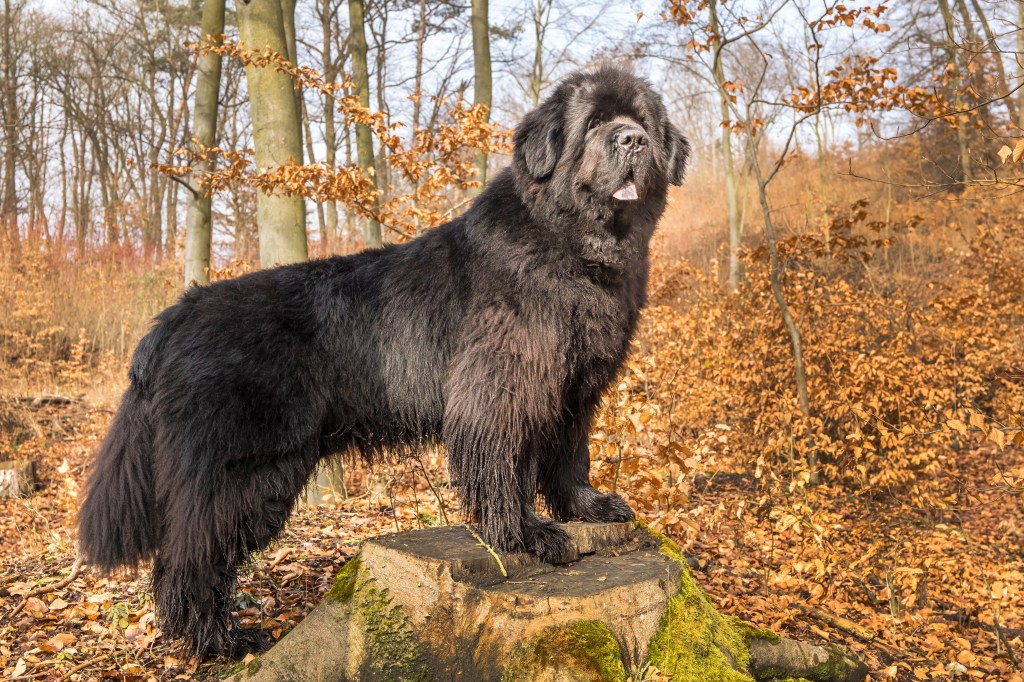
This article from the Saint Bernard Club of America states that “above all, no giant breed puppy should be altered before the growth plates in the bones have matured and closed, usually between 15 and 24 months of age.” This Newfoundland dog magazine states : Currently, the recommended age that a Newfoundland dog should be neutered is 18 to 24 months due to the possible health problems that can arise from altering before that age.

A Saint Bernard dog carrying the typical cognac container. There are mountains in the background | Neutering or spaying a dog at 6 months old can be dangerous to their health depending on breed
According to the article above you should wait to neuter Saint Bernard Dogs until they are close to two years old. Saint Bernard Stock Photo ID: 1713912484 by fred12.
A dark brown Newfoundland dog standing on a stump in the forest.
According to the article above you should wait to neuter Newfoundland Dogs until they are between 18 to 24 months old. Newfoundland dog Stock Photo ID: 1925281937 by Marsan.

Even though the expert advice regarding the best age for neutering and spaying varies, it is clear that doing it at six months old is too early for many breeds and can harm their health.


To see the other Super Facts click here