
Super fact 62 : Facts exist in science; a scientific “fact” is an observation of a natural phenomenon that has been repeatedly confirmed by independent observers and is accepted as true for all practical purposes.
Outside of mathematics and logic nothing is ever the final truth, not in science, and not anywhere else. However, there are facts that have been so well confirmed and are so basic that there is no reason to doubt them. Earth is not flat like a pancake, and the sun is a star, are two examples of astronomical facts. Most dogs have four legs is another fact. The speed of light in vacuum is the same for all observers is a fact in physics that is surprising if you didn’t know it before. Scientific facts are verified by repeatable careful observation or measurement by experiments or other means. It is possible that we are all living in a virtual reality, like in the movie The Matrix, and that Earth is really flat like a pancake after all, because all of reality is a dream. However, for all practical purposes, it is not the case.
This blog, super facts, deal with facts that are surprising, strange, or disputed by non-experts, and yet true because they have been verified, for example, in the case of scientific facts, by repeatable careful observation. Anyone is free to object if you think I am wrong about a fact.
My next super fact is going to be “Evolution is a fact”. Evolution is also a scientific theory, but it means something different from when you say evolution is a fact. Moreover, a Scientific Theory is not a guess, as commonly but incorrectly assumed. I am bringing this up because many people who are typically unaware of the evidence behind a fact will use arguments such as “science does not know everything”, “it is just a theory”, etc., in efforts to dismiss a well-supported claim.
I should say that this post is inspired by a Facebook post by “The Credible Hulk”, a Facebook page managed by a group of anonymous scientists opposing misinformation around vaccines, global warming, evolution and GMOs. I did not save the post, but it went something like this:
- Our planet Earth is not flat like a pancake
- Global Warming is real and is caused by us
- Evolution is a fact
- We’ve been to the moon
- Vaccines do not cause autism
One of the commentors said : “Calling evolution a “fact” defeats your argument. The Theory of Evolution is by definition a theory not a fact. It’s the currently agreed upon hypothesis but not a fact”
What the commentor did not realize is that “Theory” in the context of science does not mean what he thought it did. I am using past tense because he got “schooled”. To his credit he did not respond with insults and neither did the Credible Hulk, which does not seem to be standard on Facebook. However, his comment illustrates something that drives scientists like those who created “The Credible Hulk” nuts, and that is the widespread lack of understanding of the difference between a guess, a hypothesis, a scientific fact, theory as used in common language and used when talking about a scientific theory.
Rather than having this discussion over at my upcoming “Evolution is a fact” post, I am making a separate post about it. I consider “There are Scientific Facts” a super fact because it is true, and yet the confusion around it and what a Scientific Theory pertains is massive, and it is an important topic.
What is Science?
Science is the process of learning about the world through systematic observation and experimentation to gain knowledge about how things work. It involves observing phenomena, forming testable ideas (hypotheses), systematic studies, conducting experiments, and collecting evidence and facts that support or refute those ideas, ultimately leading to a deeper understanding of general truths and natural laws. If an idea/hypothesis correctly predicts and explains facts, it becomes a theory, which is something that is very different from a guess.
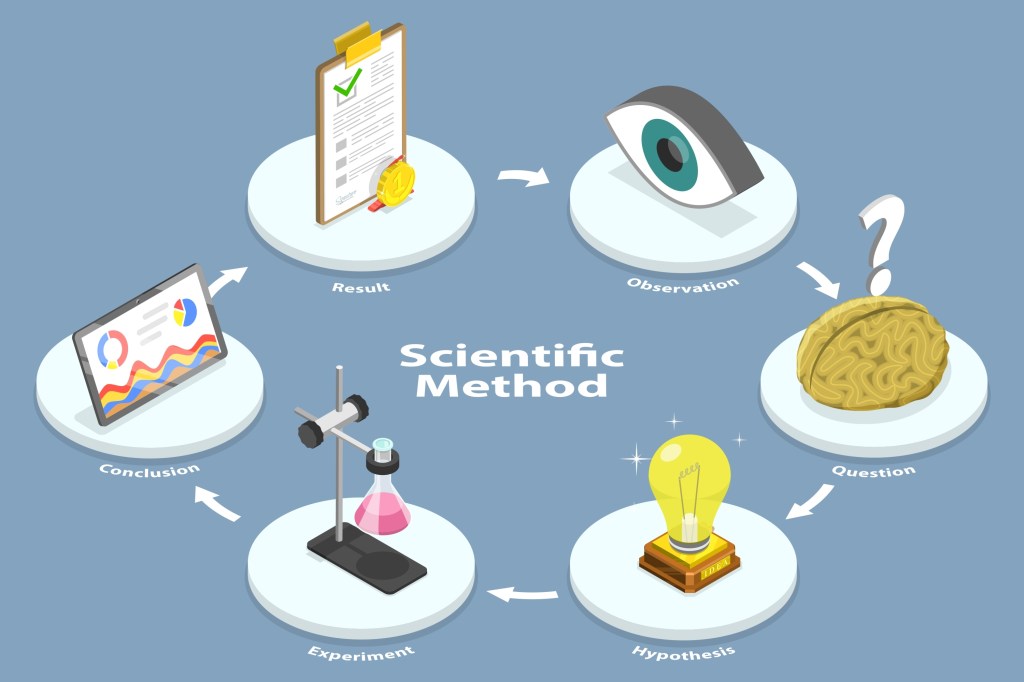
The process of making observations, formulating testable hypotheses, conducting experiments, analyzing data, and drawing conclusions to understand phenomena and solve problems is referred to as the scientific method, and there are different types of scientific methods. Some involve experiments, other involve analysis historical artifacts or existing data. Objectivity, reproducibility, falsifiability, and predictive power or problem solving are essential.

What is a Scientific Theory?
When people hear the phrase “evolution is a theory,” many mistakenly assume it means evolution is just a guess or speculation. In science, however, a theory is far more than a guess. A scientific theory is an explanation of an aspect of the natural world that can be or that has been repeatedly tested and has corroborating evidence in accordance with the scientific method, using accepted protocols of observation, measurement, and evaluation of results. In other words, it is a well-tested, comprehensive explanation of natural phenomena, supported by an extensive body of evidence.
The evidence for evolution is both vast and compelling. It is not just the massive fossil record, it is in DNA, anatomy, there’s geographic evidence, and evidence from dozens of other scientific fields, not to mention that evolution is directly observable. There is a Theory of Evolution, that is the well supported explanation for evolution, or evolution by natural selection. There is also “Evolution is a fact” referring to, for example, the fact that we can directly observe it. It is true for all practical purposes, and that does not mean that evolution stops being a scientific theory as well as a fact.
Afterword
Even though science is constantly evolving and our knowledge is evolving and sometimes our understanding and scientific theories on a topic needs to be updated, scientific facts exist. Some scientific facts are extremely unlikely to change. For example, Jupiter has multiple moons, galaxies exist, global warming is real and is caused by us, and evolution is a fact. Before you decide to dismiss such a fact make sure you know what “theory” means in science, and most importantly educate yourself on the relevant evidence. There might be a whole lot more than you imagined, and you may discover that the evidence you thought was contrary is not evidence.
You often hear “science does not know everything”. That’s true. If science knew everything it would stop. However, the collective knowledge created by science is enormous and as individuals we know next to nothing. So be humble and learn from scientific evidence presented by reliable sources.
To see the other Super Facts click here

 Super Facts
That there is a huge amount of ignorance among people is in itself a super fact, Thomas, although it would be bad form to say this publicly. I am continuously astonished by the baseless comments people make and stick to as their truth. I cannot understand people at all and I don’t think I ever will. Perhaps they take some form of comfort from their ignorance and clinging to ridiculous claims of truth.
LikeLiked by 3 people
Yes, I agree. It is OK not to know, and it is OK to be wrong but contradicting the experts in a field and keeping insisting without understanding the subject, is not OK, yet very common. Like you say, there’s probably some sort of strong emotional attachment to their belief.
LikeLiked by 1 person
I think there is. Upbringing contributes hugely to the shaping of societal views.
LikeLiked by 2 people
Yes I believe you are right
LikeLike
Very interesting! As you say, evidence is so important; I guess some people claim to not need it, which always makes me a bit suspicious of their so-called “facts”! Great blog post, as always, Thomas!
LikeLiked by 1 person
Thank you so much Ada. You are right so many people don’t even consider the evidence using specious arguments such as “it is just a theory”, “science doesn’t know everything”. Well my wife doesn’t know everything, and yet when she says there’s a spider on the wall I would at least look, not refuse to turn around because she doesn’t know everything.
LikeLike
Your posts are always so interesting, Thomas.
LikeLiked by 1 person
Thank you so much Esther.
LikeLiked by 1 person
Oh how I hope the people that really need to hear this are reading!
LikeLiked by 1 person
Thank you so much Violet
LikeLiked by 1 person
Lulu: “Our Dada says he remembers the proper definition of ‘theory’ from school!”
Java Bean: “Sí, but it seems like the popular definition of ‘theory’ is Homer Simpson telling Marge, ‘I agree with you in theory. In theory, Communism works. IN THEORY.‘”
LikeLiked by 1 person
Lulu, it is great that he remembers that from school. Java Bean, I don’t think Homer Simpson’s use of “theory” isn’t very close to the way scientists use it.
LikeLike
A related and highly irritating misnomer is the term “false fact,” which is completely contradictory and meaningless. If it’s false it’s not a fact and never was. The common use of that term highlights how far behind many people are on understanding any of the science, let alone the meaning of “theory” and “fact.” Ugh.
LikeLiked by 1 person
Yes you are right. By definition, a fact is a statement that is true and verifiable. “False fact” is an oxymoron. You should use falsehood or false statement instead. However, I’ve also read that the “false fact” can be meaningful if you use it in the context of something a lot of people think is a fact but isn’t. The “it is just a theory…” argument is one that I’ve seen a thousand times and yet it’s nonsense. If you are commenting in a thread and you’ve just explained to someone that “theory” does not mean “guess” and not “hypothesis” in science, the next person commenting will say “it’s just a theory” again. It never dies.
LikeLiked by 1 person
People don’t hear very carefully … or read carefully, either.
LikeLiked by 1 person
Yes you are right
LikeLiked by 1 person
Thank you for this intelligent and important post!
LikeLiked by 1 person
Thank you so much for your kind words JoAnna
LikeLiked by 1 person
I’m always amazed that there are so many people disputing facts and promoting falsehoods and fallacies. Including he who shall be nameless claiming that Tylenol causes autism. Crazy! And even more so that people will now believe this! 😫
LikeLiked by 1 person
Yes in the past you could usually trust your doctor as well as the Department of Health and Human Services. Now the second one is a circus.
LikeLiked by 1 person
Really enjoyed this, Thomas. You explained the distinction between facts and theories so clearly 🙏. It’s a reminder that precise definitions matter if we want meaningful conversations about science.
LikeLiked by 1 person
Thank you so much for your very kind words Livora
LikeLiked by 1 person
“You’re most welcome! 🌸 It’s always a joy to exchange thoughts here, and your posts make that easy. Keep sharing your insights—they add so much light to this space!” ✨
LikeLiked by 1 person
Thank you so much Livora. There is a lot more to come. I have another 100 posts planned.
LikeLiked by 1 person
That’s wonderful, Wenda! 🌸 I truly look forward to reading more of your posts.
LikeLiked by 1 person
Thank you so much Livora
LikeLiked by 1 person
Sorry for the typo — I accidentally wrote Wenda when I actually meant Thomas. My sincere apologies, I hope you don’t mind.
LikeLiked by 1 person
No that is a very small thing. Thank you so much for your support Livora.
LikeLiked by 1 person
You are 100% percent correct – all you said about science. And I’m with all Robbie said. 😊
LikeLiked by 1 person
Thank you so much for your kind support Debby.
LikeLiked by 1 person
You are most welcome Thomas. 😊
LikeLiked by 1 person
Thank you for the great post about an important distinction. One of my professors noted that some of the confusion can come because scientists are obligated to reconsider facts if new evidence comes to light. His example was that it’s a fact that if you’re on Earth and you hold out a hammer and release it, it will fall down. If the hammer ever falls up, you need to understand why and explain it. However, the likelihood of that need arising is essentially zero barring the presence of an outside force.
LikeLiked by 1 person
Thank you so much David. That is a very interesting point and a great example. It is also great to get the input from a working scientist/astronomer.
LikeLiked by 1 person
Such a brilliant read .I really like how you explained the difference between a scientific fact and a theory in such a clear, down-to-earth way. The everyday examples you used—like dogs having four legs or the Earth not being flat—make it so easy to connect with. It’s eye-opening, yet written so warmly that anyone can enjoy and learn from it. Truly a “super fact” that sparks both curiosity and respect for science!
LikeLiked by 1 person
Thank you so much Dinesh for your very kind words
LikeLike
Dear friend Thomas, I invite you to visit my website and subscribe to it. Give suggestions to improve more.
LikeLiked by 1 person
I visited. I see you are selling women’s clothing
LikeLike
Dear Thomas
I always admire you for this post.
Thanks for liking my post, Defeat 🌹❤️🌹❤️
LikeLiked by 1 person
From what I learned in numerous science classes, a scientific theory is the accepted explanation based on observable conditions, but it is not an absolute truth because new discoveries may alter the conditions and thus, the theory. I believe in evolution because of my medical experience. Bacteria and viruses evolve to survive the effects of new medications, new bodily conditions, temperatures, pH, etc. They genetically mutate, and each generation can become weaker or stronger. I believe in natural selection because organisms, including humans, must adapt to new conditions or die. In humans, it represents in a more complex fashion. Biological natural selection involves adapting to biological and environmental conditions. But there’s also social adaptation and adapting to changing technology, living conditions, stress, etc. People who are not resilient and cannot adapt to changing conditions may resort to substance abuse, social isolation, or aggression to try and control their world and their place in it. Do I believe in Darwin’s theory? To a certain extent. I don’t believe in sudden, big changes in large animals. Gradual change makes more sense. There’s also Spencer’s Social Darwinism, which most people consider harsh and don’t want to accept as a possibility.
LikeLiked by 1 person
Like you say a scientific theory is an explanation, or a model, that can be more or less useful, but it is not a guess or hypothesis. Naturally nothing is ever final. However, that is different from a scientific fact, for example, “we have observed evolution occurring”, so evolution is a fact. The two concepts get confused. What you describe about Bacteria and viruses evolving is something we can observe, so we know evolution is occurring, so evolution is a fact (which is different from the theory of evolution – which is the explanation). I also think gradual change makes more sense. I thought I make a separate super fact about this to avoid making my next post “evolution is a fact” thousands of words long, because it is going to come up.
LikeLiked by 1 person
Thank you for clarifying that!
LikeLiked by 1 person
About the Matrix idea. As I said in https://religionspiritualphilosophy.wordpress.com/2023/04/08/how-to-reconcile-the-bible-with-modern-science/ and https://religionspiritualphilosophy.wordpress.com/2018/02/17/about/, this evolutionary world where we are descended from apes is Maya, Sanskrit for illusion. The other world of Adamic descent is the Sanskrit antonym of Maya. However, that may be a misunderstanding of the meaning of Sanskrit Maya. But what I’m saying is that our true selves aren’t descended from apes, only our incarnations in this world are.
LikeLiked by 1 person
You have a lot of interesting ideas that seem to be unique and well thought through. However, it is beyond what I am normally focusing on. Congratulations on your wesbite and philosophy.
LikeLike