
This is not a super fact but more of a fun fact. It is a piece of trivia that confuses a lot of people. What is the difference between a Moose and an Elk? Well that depends on where you live and you’d be surprised.
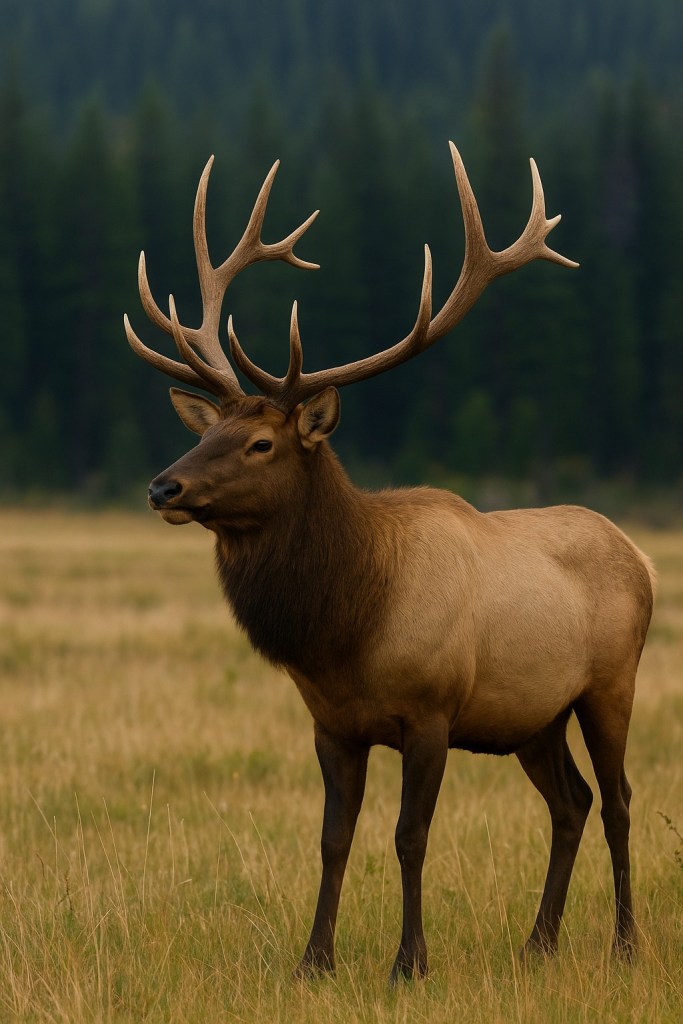
What people in North America refer to as a Moose is called an Elk in British English or in general when you speak English in Europe. It is called an “Älg” in Swedish, “Elg” in Norwegian and in Danish, “Elch“ in German, “Élan” in French, “Alce” in Spanish and Italian. If you use Google Translate “Elk” in English translates to “Älg” in Swedish and “Elch” in German, etc., but so does “Moose”. Using Google Translate Elk and Moose translate to the same animal in all other languages as well. However, if you ask ChatGPT to generate a picture of an Elk and then of a Moose you get two different animals. The same is true for Google AI. There is quite a bit of confusion.
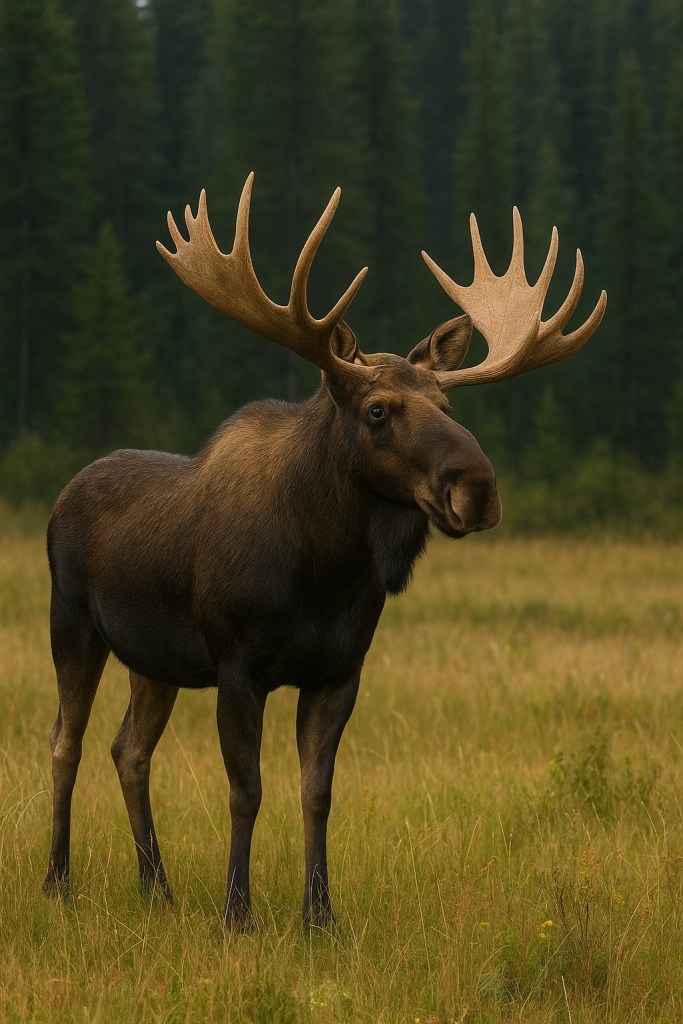
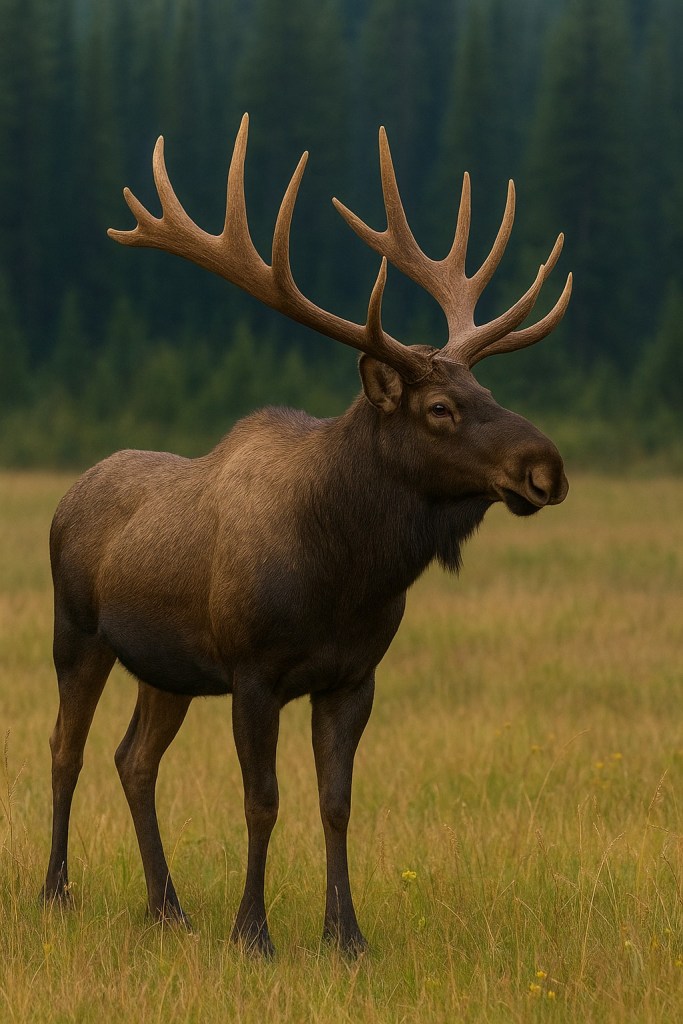
The moose (Alces Alces) is called Elk in Eurasia. It belongs to the deer family and like all members of deer family the bull has antlers. It is the largest species within the deer family. After the mating season the males drop their antlers to conserve energy for the winter. A new set of antlers will then regrow in the spring. An interesting fact about moose is that not all bull moose have the same type of antlers. The moose in northern Europe and Alaska have palmate antlers, and they act as parabolic reflectors, amplifying sound at the moose’s ear. You may think that the plural of Moose is Meese, but it is not, and it is not Mooses either, it is just Moose. To read more about moose click here.

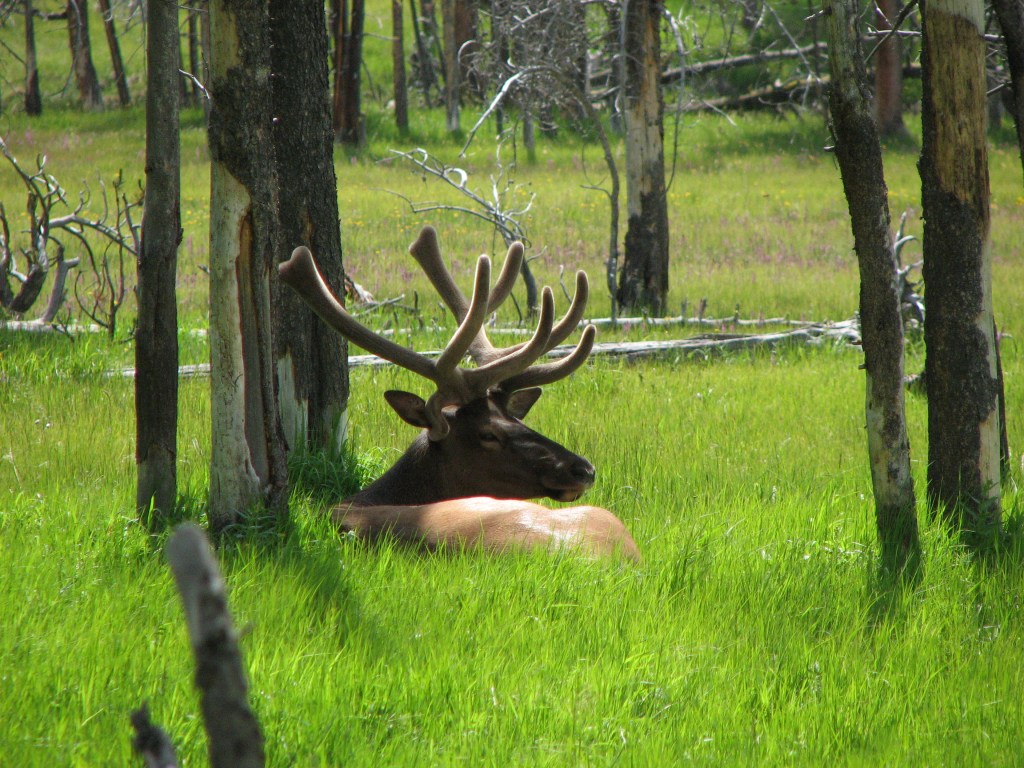
Elk (Cervus Canadensis) is the second largest species within the deer family. It is also called Wapiti, and I have come across the name Canada Deer in Europe. Remember, when in Europe you can’t call an Elk and Elk because in Europe the name Elk is reserved for Moose. Like Moose Elk shed their antlers every year. You can read more about Elk here. Note that it says “This article is about the species called “elk” in North America. For the species called “elk” in Eurasia (Alces alces), see Moose.”.
Moose and Elk Photos
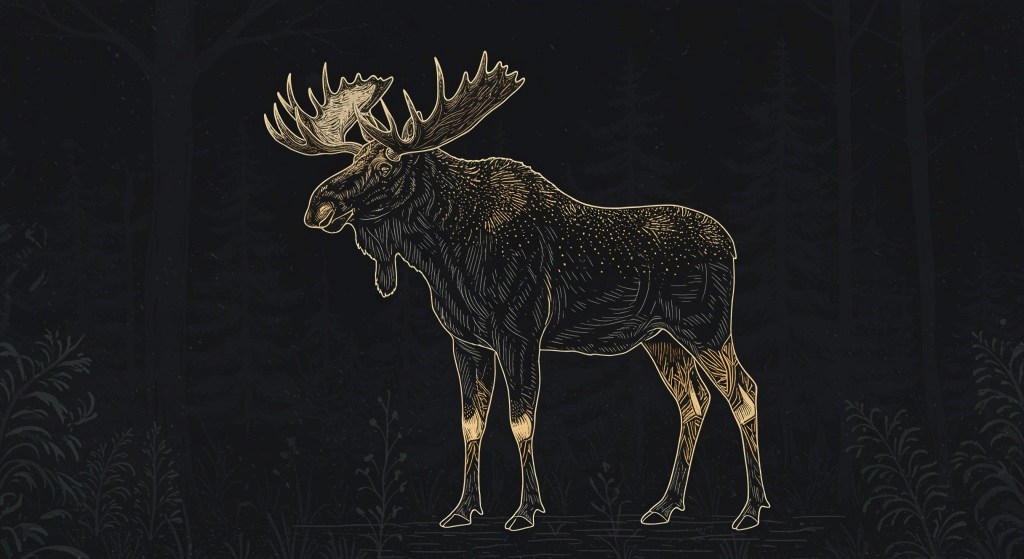


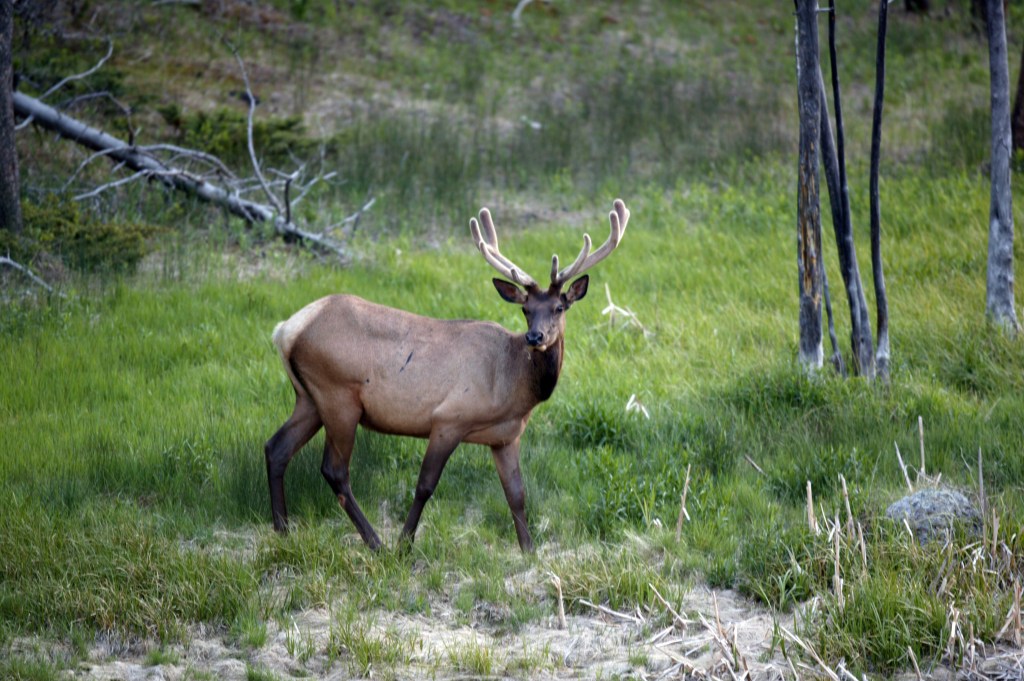

My Moose and Elk Photos
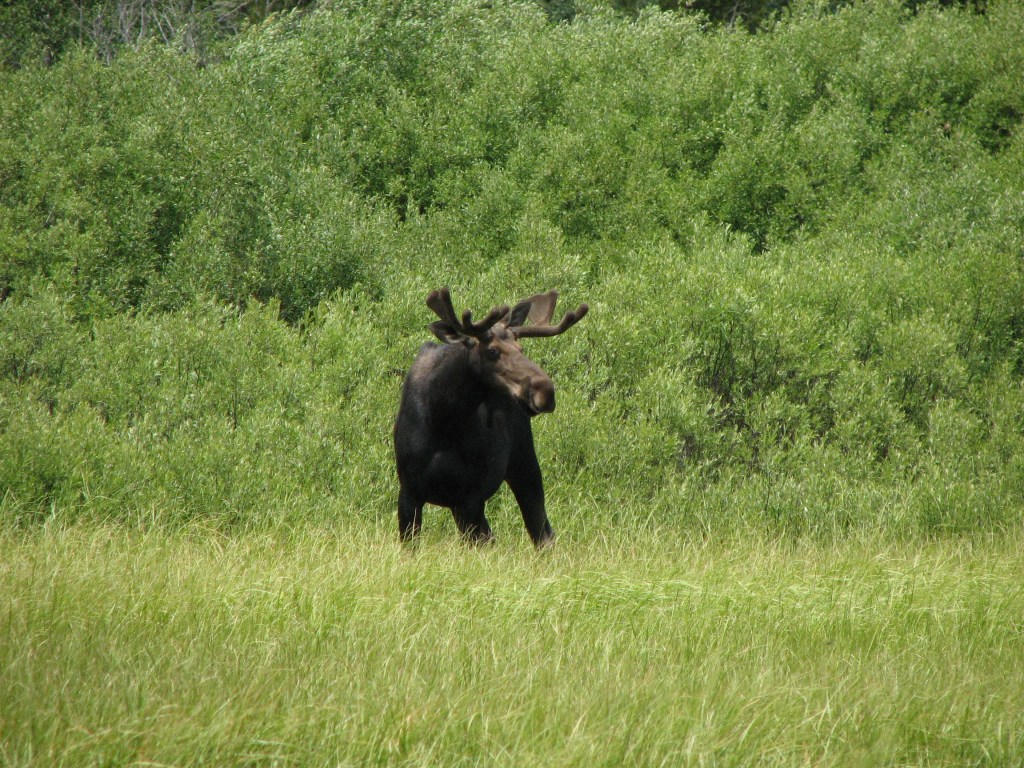
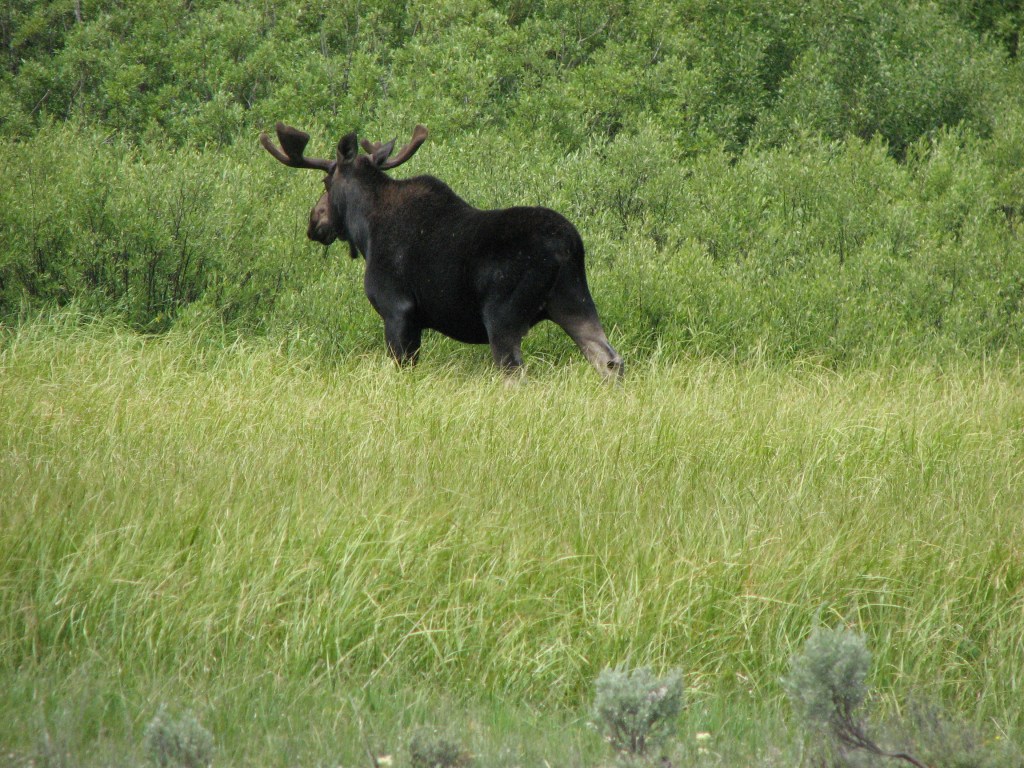
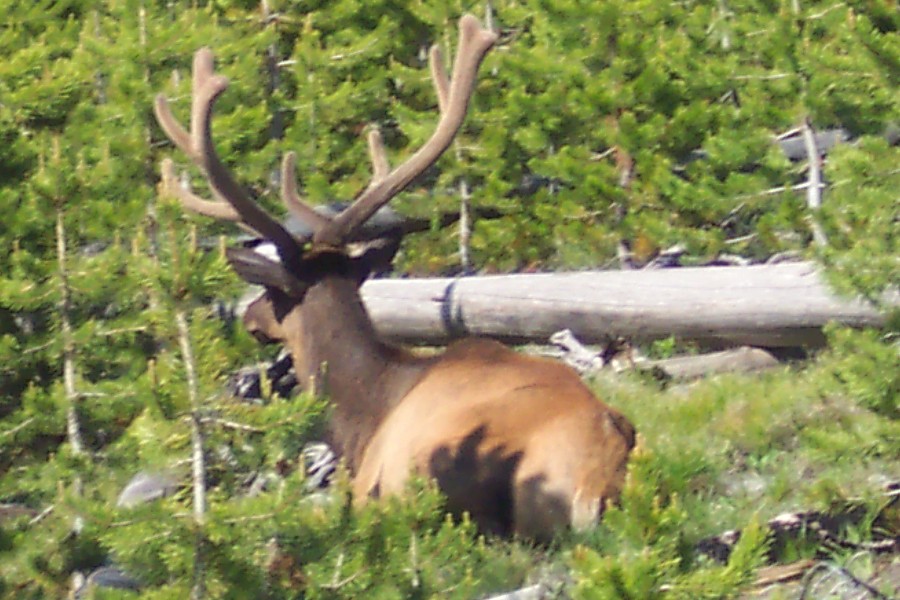

The Murder Moose
The first story I ever wrote in my life I gave the title the “The Murder Moose” / “Mördar Älgen”. It was when I was in second grade in Swedish public school. Our teacher told us that we could write about anything, and I chose a horror story. The story was about a very big and dangerous moose that ran into to villages and killed people. At the end of the story a hunter shot the moose. I also drew a picture of a moose with big antlers and sharp teeth.

The inspirations behind this story were two-fold. A neighbor’s girl and I had been walking in the forest together when we saw something big moving behind a thicket around 30 feet ahead of us. At first it looked like a horse and carriage to me, but it couldn’t be. A horse and carriage could not have gotten deep into the forest. Suddenly two big heads peered out of the thicket. It was a bull moose and female moose. We screamed on top of our lungs and ran home, and the two moose startled by our screams ran the opposite way.
The second inspiration for the story is that moose hunting is very common in Sweden especially in northern Sweden where I lived. Sweden has a very large moose population of approximately 300,000 to 400,000 moose, with a stable population of around 350,000. Sweden is the country with the highest concentration of moose in the world. Each fall about 80,000 to 90,000 moose are hunted and killed during the hunting season as part of wildlife management. Therefore, moose hunting was a practice that a lot of adults I knew participated in. We also ate a lot of moose meat.
To see the Super Facts click here

 Super Facts
I am very aware of the differences having lived near both species almost all my life. My father used to hunt both, as well. When I lived in Europe I learned that the word for moose is elk (or as some people say, Eurasian elk) and that North American elk are not found there at all. Great post, very interesting, Thomas.
LikeLiked by 2 people
You understand it perfectly. For me, when I was young, the only word for Moose I knew was “Älg”, my English wasn’t very good at first, and I did not know about the existence of Elk (north American Elk) since they don’t exist in Europe. So, I had to learn all of this and I found it confusing at first since a lot of people I relied on were confused about it. Then I looked it up.
LikeLiked by 1 person
I can see how these terms get confusion. A lovely and informative post.
LikeLiked by 2 people
Yes it is confusing. Thank you so much Robbie.
LikeLike
Now I can see how these definitions can become confusing! I really enjoyed this post and the wonderful photographs!
LikeLiked by 2 people
Yes it was very confusing to me until I looked it up. Thank you so much Ada.
LikeLiked by 1 person
I’m often confused reading reports of elk in Europe, to then see a moose. Do they even have elk/wapiti in europe? Maggie
LikeLiked by 2 people
Yes it is confusing. Moose is called Elk in Europe, and it is not wrong. It is just a language difference. Elk/Wapiti, the Elk in north America does not exist in Europe (only in North America).
LikeLike
Well, that got confusing fast. 🙂 One doesn’t think of so many moose in Sweden—speaking from the outside, of course. Interesting tale about the murder moose, though!
LikeLiked by 2 people
Yes it is confusing but I hope I clarified it. Sweden certainly have a lot of moose, especially in the north, which is why moose “Älg” was such a big part of my childhood. Too bad I forgot most of what I wrote but it was such a long time ago. But I remember making a drawing of the murder moose too.
LikeLiked by 1 person
Now I’m more confused than ever. I thought an Elk was bigger and bulkier, but doesn’t look that way. Sigh.
LikeLiked by 2 people
Yes the Elk (the Elk as we call it in the US) is the second largest deer and Moose is the largest (on average) deer. However, Elk would be the biggest deer if you did not count moose, and I think that sometimes people don’t think of moose as deer, but it is a type of deer.
LikeLiked by 1 person
I didn’t realize this confusion existed, Thomas. There are both moose and elk in Canada, but only elk on Vancouver Island. I remember seeing moose, and eating moose meat, when I lived in Prince George, British Columbia in the 1960s.
LikeLiked by 2 people
It seems like Canadians have this all figured out, but Americans and Europeans seem to be very confused about this. I was at first too.
LikeLiked by 1 person
Wow, Thomas, what a great tribute to these amazing creatures and I can see the confusion. Amazing shots and so surreal how they hold their heads up high.
💕
LikeLiked by 2 people
Thank you so much Cindy. I also think it is amazing that they hold their heads up. Those antlers must be heavy. It is also amazing that they are shedding and regrowing every year, both species.
LikeLiked by 1 person
You’re so welcome! I know it is just wild. I know it’s illegal to take them but I’d love to have them to make sculptures with. 🩷🤩
LikeLiked by 1 person
That would certainly be some wild sculptures (pun intended).
LikeLiked by 1 person
Hahahaha! 😂
LikeLiked by 1 person
Lulu: “Our Dada says the second ChatGPT picture is what he would call a moose. Also he says you can learn a lot about moose by reading the subtitles at the beginning of Monty Python and the Holy Grail, but we are not sure that is true.”
LikeLiked by 2 people
Yes you are right Lulu, in North America we call that a moose, but in Europe and Asia it is called an Elk, but Elk in north American English is the other deer not that one. It is confusing. I love Monty Python and the Holy Grail but did notice that. I have to watch it again.
LikeLike
I love your moose murder story! Here in Arizona, we have elk. When I worked up in the mountains, I was always terrified of driving at night because I was afraid of hitting an elk on the road.
LikeLiked by 2 people
Thank you so much Dawn. I forgot most of it but I don’t think it was very good. But I think my drawing was great, for second grade, at least. A moose with large antlers and big teeth drawn with a ball pen. I can understand that you terrified driving at night in the mountains because a collision with an Elk or Moose can be very dangerous for both the Elk or Moose and the car passengers. My brother crashed into a Moose twice. In both cases his car was totalled. He did not get hurt but he was lucky. His youngest daughter Greta was very close to being crushed but she was lucky with where the moose landed on the roof.
LikeLike
We have neither Moose or Elks in the UK just deer which are the same family but smaller versions of the Elk. Likewise none in Thailand but they do have other species of deer…An interesting post as always Thomas I learn a lot from your posts…Have a great week 🙂 x
LikeLiked by 2 people
That is interesting. That there were no Elk o Moose/Elk in Thailand I knew, and that you had did not have what Americans call Elk in the UK did not surprise me since those only live in North America, but at first I was to surprised to hear you have no Moose or what is Elk in British English. But then I looked at the map for distribution of moose and see that indeed you don’t. I guess I just learned something too. Thank you so much Carol and have great week you too.
LikeLike
I love it when we both learn,Thomas that’s great..we would be good in a quiz…🤣🤣
LikeLiked by 1 person
Ha ha you are right. Thank you Carol.
LikeLiked by 1 person
A very interesting post, Thomas! I actually didn’t know that both species shed their antlers every year! I also thought about the caribou; both males and females have antlers! But I think that they are smaller and with a very unique geographic distribution. Thank you, my friend, for this precious lesson on wildlife—truly a delight to me!! Lots of light and blessings your way, always! 🙏✨
LikeLiked by 2 people
That is another confusion, but an easy one. Reindeer and caribou are the same species and there are a lot of them in northern Sweden. However, reindeers seems so peaceful and they are smaller so I did not write about a murder caribou. I can add that Caribou also shed their antlers every year. In fact most male deer species shed their antlers (a few exceptions). Thank you so much Susana and lots of light and blessings your way too.
LikeLiked by 1 person
It’s a hair not worth splitting when you meet one in the wild, just run 🤪
LikeLiked by 2 people
You probably know this, but don’t run from bears and wolf, that triggers the prey instinct. However, running from moose and elk is fine. I’ve done that. Most likely they will run too if you scream at them.
LikeLike
The Murder Moose captures that perfect mix of childhood imagination and real-life influence, Thomas. It inspires fear, fascination, the thrill of discovery. I love how, from forest encounters to the rhythms of Swedish life, it’s a reminder that even the wildest tales often begin with something true rustling just beyond the trees.
LikeLiked by 2 people
Thank you so much Patricia for that interesting analysis. I believe you are right and you put it very nicely.
LikeLiked by 1 person
“The Murder Moose” sounds very scary haha. This was such an interesting post, I’ve seen moose when I was living in Canada but I don’t think I’ve seen any elk.
LikeLiked by 2 people
Thank you so much Pooja. Canada is a great place to see both but my guess is that Moose might be easier to see because they are less afraid of people and can come into suburbs. I also think moose is all over Canada but Elk tend to be more in the west.
LikeLiked by 1 person
Yeah I think you’re right. I was in Ontario where elk are not seen often but moose are pretty common to see.
LikeLiked by 1 person
Yes I can imagine. Here in Texas where I live now, there are no Elk and no Moose.
LikeLiked by 2 people
Oh I see, there’s probably other animals native to the area though.
LikeLiked by 1 person
Yes, rattle snakes, lots of rattle snakes. But seriously, you are right there are other animals, white tailed deer, javelina, bobcat, coyote, black bear, alligator, armadillo, oppossum, bats, some cougars. In the past Jaguars (but no longer).
LikeLiked by 1 person
Oh wow, that’s interesting. Are black bears scary, they look huge but not that aggressive.
LikeLiked by 1 person
Black bears are big but not very big. They are about as big as a human, typically smaller. An adult can fight a black bear at least of you have a rock or a thick branch. I’ve been just a few feet away from a black bear in the wild. However, you cannot fight a brownbear / grizzly bear. They kill you with one swoop of their paw.
LikeLiked by 1 person
Oh I see, was it scary being that close to a black bear? Even if they aren’t that big I would be a little intimidated.
LikeLiked by 1 person
Yes you are right. It is actually not entirely safe to be that close to a black bear. Even if you can fight off a black bear you don’t want to be in that situation because you can get hurt. But there’s huge difference between a black bear and brown bear. A fight with an adult brown bear you will never survive.
LikeLiked by 1 person
Interesting to know, I guess brown bears are a lot bigger and more dangerous.
LikeLiked by 1 person
Yes Brown bears are bigger, much bigger as well as more aggressive.
LikeLiked by 1 person
Very interesting, such confusion😍
We had a chance to see so many elks in Yellowstone too, they were quite used with so many people around..
LikeLiked by 2 people
Thank you Christie. Yes we saw a lot of Elk in Yellowstone too, and they did not seem to be afraid of people there.
LikeLiked by 1 person
Fascinating info and comparisons here Thomas, between moose and elk. I’m not sure if it’s because I’m Canadian. but I have no problem telling them apart. To me, the moose has a bigger head and longer snout. The elk look like deer:)
LikeLiked by 2 people
Thank you Debby. Yes you are Canadian and Canadians seem to have no problem telling them apart. Why it is so difficult for the rest of us is also that Moose is called Elk in Europe, and it isn’t wrong, just a language difference.
LikeLiked by 2 people
Enough to confuse anyone really! 😊
LikeLiked by 1 person
Yes you are right
LikeLiked by 1 person
Definitely confusing! 😆 Moose antlers are wider and shorter, yes? Canada has plenty of both, but living here in the southern part of the country, I have yet to see either one in person. There is a giant moose statue in Niagara Falls, and 25 years ago, there was a city-wide art display of moose statues in Toronto. What does moose meat taste like? Is it similar to beef?
LikeLiked by 1 person
Moose in the City in Toronto looks like a lot of fun. There is a giant Elk or rather Moose that is planned to be built in northern Sweden. Notice that Wikipedia is referring to it as Elk, but it is what we mean by moose. I have to go see the giant moose in the Niagara falls.
LikeLike
That planned Moose (Elk) attraction will be something amazing to see! I hope you go and take photos of it, Thomas. 😀 Here’s a photo of the Niagara Falls moose. I believe there are several more in that city.
And every December – January, they have a magnificent light display:
LikeLiked by 1 person
That is very cool. Thank you Debbie.
LikeLiked by 1 person
A very interesting post! Moose and elk have such different heads. The moose body reminds me a little of bison/buffalo. Whatever they’re called, I think moose, elk, and deer are all cool. Your scary moose is so imaginative! I can see that being a horror movie. Instead of a werewolf, it’s a weremoose seeking revenge on hunters. Now that I think of it, I remember my dad talking about moose when we were stationed in Newfoundland. I might have even eaten moose meat back then as a five-year-old.
LikeLiked by 1 person
Thank you Joanna. That is interesting. It is very possible you ate moose meat back then. It is very common where you have a lot of moose. 80-90 thousand moose are killed in Sweden every year by hunters. I can easily imagine a weremoose seeking revenge.
LikeLiked by 1 person
Insightful post, Thomas!
Found it very Interesting. 👍🏻🙏🏻
LikeLiked by 2 people
Thank you so much MMC 2.0
LikeLiked by 1 person