
Super fact 83 : Everyone experiences false memories. They are a normal part of how human memory works and are very common. There are also false memories that are shared among large groups of people and that are often socially reinforced. This is called the Mandela effect.
As I mentioned, false memories are very common. However, what may come as a surprise is that some false memories are widespread and socially reinforced. It is important to know this, and we know it is true, so it is a super fact. The effect is named after the former President of South Africa, Nelson Mandela, who died in 2013. However, a lot of people distinctly remember him dying in prison in the 1980s.
It was paranormal researcher Fiona Broome who named the effect after having a personal experience with the phenomenon. She wrongly recalled Nelson Mandela dying in the 1980s and she could even remember the news coverage of his funeral, and yet it never happened. After talking to other people, she realized that she was far from alone with her false memory.
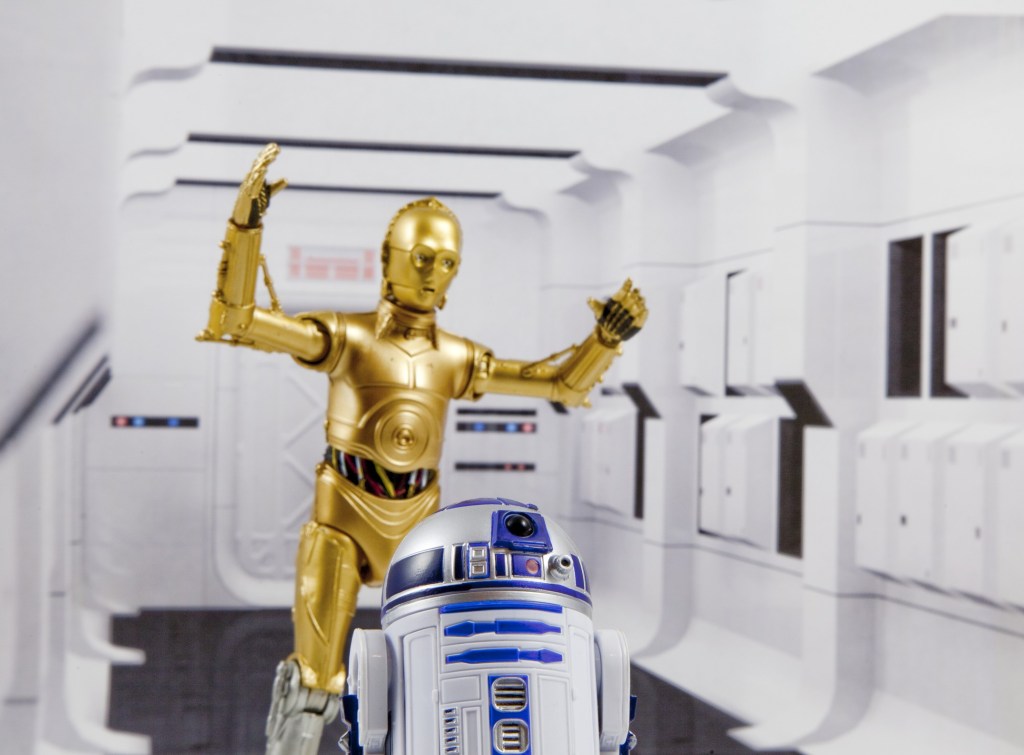
Another example is that a lot of people remember Darth Vader in Star Wars telling Luke “Luke, I am your father”. What Darth Vader said was “No, I am your father”. Yet another movie example is that Forrest Gump did not say “Life is like a Box of Chocolates”. He said, “Life was like a box of chocolates”. Also, the Monopoly man never had a monocle, Curious George doesn’t have a tail, many remember the “Berenstein Bears” but it’s the “Berenstain Bears”. C-3PO is not all gold, he has a silver leg. You can easily find hundreds of examples of the Mandela effect online.
People have asked me, “do you remember in the 1970’s and 1980’s when scientists were convinced that global cooling was happening”, to which I answer, “no I don’t remember that and neither do you”. In the 1970’s much less was known about the climate, but the possibility of anthropogenic warming dominated the peer-reviewed literature even then. There were a few contrarian climate scientists who claimed there was global cooling and there were some articles in popular media about global cooling, but the statement that scientists were convinced there was global cooling is simply false. You can read more about this in this book. Yet some people “remember” this. I believe this is another example of a socially reinforced Mandela Effect.
False Beliefs and False Memories
The existence of false beliefs is another phenomenon that is very common. There are hundreds of common beliefs that we know are false based on carefully vetted data, large amounts of studies, and scientific experiments. I think we all have some false beliefs. We have all been bamboozled at some point. The way to know is to check and compare the evidence and the data and papers from reputable sources. Find out what the experts in the field say. Some examples of false beliefs are:
- Evolution is a hoax – reality: evolution is a fact.
- Earth is less than 10,000 years old – reality: we know that the Earth is billions of years old.
- Crime in the US keeps going up – reality: US violent crime nearly cut in half since 1990.
- Climate change is a hoax – reality: we know global warming is happening and is caused by us.
- The current global warming is natural – reality: we’ve known for decades that the global warming that is happening now is caused by us.
- The Bermuda Triangle is very dangerous to ships and planes – reality: the dangerous Bermuda Triangle is a myth.
- The Second Law of Thermodynamics contradict evolution – reality: this is a silly misunderstanding.
- Vaccines cause autism – reality: Vaccines do not cause autism.
- Vaccines don’t work and are dangerous – reality: vaccines work, save millions of lives, and are in general safe.
- Wind Power is not really clean energy – reality: wind power is much cleaner (by a lot) than the fossil fuels they replace.
- Astrology works – reality: astrology is not science and lack predictive power.
- Homeopathy works – reality: homeopathy has not been shown to work better than placebos.
We adopt false beliefs because of misinformation, propaganda (politics), social reinforcement, a wish to believe certain things, our own lack of critical thinking, etc. False memories, including collective false memories are due to the fact that memories aren’t perfect recordings, memory reconstruction, social reinforcement (also true for false beliefs), and confusion with similar events.
Both false beliefs, false memories and the Mandela effect distort our understanding of the world. That is BTW one important inspiration for this fact finding blog – superfactful. It is difficult to accept that what you believe to be true may simply be false. We want to believe that we know better than others, not that we have been bamboozled or that we misremember things. But we need to be open to look at and compare evidence, be curious and willing to understand how things work, and be willing to change our beliefs and accept that some of our memories may be false. That is one way to grow as a human.
To see the other Super Facts click here

 Super Facts
This was such a good read 🌷😇
LikeLiked by 2 people
Thank you so much Aparna
LikeLiked by 2 people
Excellent post, Thomas. There is so much of this utter crap around and about. I believe a lot of it is about trying to exert control over people’s perceptions and is a sort of gaslighting. Some is just the garden variety urban legend (remember alligators in the sewers, Bigfoot and Atlantis?) or an innocent mistake in retelling that has become the accepted form, but the willful denial of climate change, evolution or vaccine legitimacy is the work of those who want to retain domination over others.
LikeLiked by 2 people
Thank you so much Lynette. It is difficult to know what is true. You have to study and try to understand, verify the facts, and you can’t always believe what your own mind tells you. The fact that there are people who intentionally spread and repeat what we know is misinformation makes it much harder. “…the willful denial of climate change, evolution or vaccine legitimacy” I agree, that certainly undermines our understanding of the world, and it is hard to understand why people would do that. Like you say, it might be to dominate others.
LikeLiked by 2 people
Your comment adds an important ethical layer to the post.
Naming gaslighting and power shifts the conversation from “how memory fails” to “how failure can be exploited.” That framing strengthens the author’s point rather than competing with it—it reminds us that truth isn’t only a cognitive matter, but a moral one as well.
LikeLiked by 3 people
Thank you very much, Livora. I appreciate your comments.
LikeLiked by 2 people
That’s true 💐
LikeLiked by 2 people
Good post. I hear half truths on TV news all the time, gaslighting the public.
LikeLiked by 3 people
Thank you so much Anneli. There is a lot of misinformation being spread. You have to be careful what to believe.
LikeLiked by 2 people
You can say that again!
LikeLiked by 1 person
Thank you Anneli
LikeLiked by 1 person
Really interesting post. I’d never heard of the Madela Effect before, and am surprised to know that the Bermuda Triangle being dangerous for ships and planes is a myth!
LikeLiked by 2 people
Thank you so much, Ada. About Bermuda, considering the amount of traffic in the region there is not more accidents or disappearances compared to elsewhere, which surprises many people. The mystery is a myth.
LikeLiked by 2 people
Thank you so much for printing these often misconstrued truths!
LikeLiked by 2 people
Thank you so much Violet
LikeLiked by 2 people
Hi Thomas, I have never come across the Mandela effect before but I can easily believe it. Many people buy in to believing incorrect information because it suits them to or they just can’t be bothered to seek out the truth. The propaganda in the UK about the boers before and during the Boer War is another example of false beliefs. Lots of English people believe that if you eat carrots you will be able to see in the dark 🥕. My own mother told her kids that.
LikeLiked by 2 people
Thank you so much Robbie. You are right, there are a lot of incorrect information being passed around and many people believe whatever suits them instead trying to find out what is true. I don’t know much about it, but I can easily believe that there was a lot propaganda during the Boer War. I did not know about the carrots and seeing at night. That is bordering on superstition.
LikeLiked by 1 person
It was to do with the discovery of radar by the British. The British pilots didn’t want the invention to leak to the Germans so they fed the public the line that the pilots could see to fly on the dark because of all the carrots they ate.
LikeLiked by 1 person
That is an interesting story. It is amazing how quickly fake stories spread and are believed but known scientific facts are doubted. We humans aren’t very good at determining what is true.
LikeLike
Really fascinating!
LikeLiked by 2 people
Thank you so much Luisa
LikeLiked by 2 people
It was my pleasure!
LikeLiked by 1 person
I appreciate it
LikeLiked by 1 person
The Mandella effect is wild! For example, people say Darth Vader says “Luke, I am your father” but he actually says “No, I am your father.” Interesting how some people claim that the 70’s and 80’s scientists said there was a cooling effect, and your reply is “I don’t remember that and neither do you”. Wild for sure.
LikeLiked by 2 people
I agree, the Mandela is pretty wild, and one of the reasons one should question oneself, and try to verify information rather than just assuming that what feels correct is. I think “I don’t remember that and neither do you” is a pretty good phrase to use when someone makes a false claim about the past and that we should somehow remember it. I borrowed that phrase from someone else who used it in a different context (I think it was vaccines).
LikeLiked by 2 people
True verifying information is the best way to avoid assuming wrong.
LikeLiked by 1 person
Yes that is true
LikeLiked by 1 person
Fascinating! I don’t have a false memory of Mandela dying, but some of the others ring true. C3P0 has silver legs!! 🤣 Maggie
LikeLiked by 2 people
Thank you Maggie. I think we all have some false memories. For example, when people start saying quotes incorrectly it is very easy to remember the incorrect quote instead of the original.
LikeLiked by 2 people
Very interesting. I’ve heard of the Mandela effect before, and it’s fun to find out about some of the things that are the true answers. Sometimes I think that like in the book 1984, there is some erasing of history and replacing it with untrue information. Then it gets said so often people believe the false one thinking it is true. 🙂
LikeLiked by 2 people
I think your analysis is spot on. Thank you Barbara.
LikeLiked by 2 people
The connection you make to 1984 is especially helpful. It highlights how repetition and narrative shape collective memory long before facts are questioned.
That perspective fits seamlessly with the post—it shows that false memories don’t live only in individual minds, but in the stories societies keep telling themselves.
LikeLiked by 1 person
Another fascinating topic, Thomas! I wasn’t familiar with the Mandela Effect and knew he didn’t die in the 1980s, but did think C-3PO was all gold and that Darth Vadar said “Luke”. But, I’m not a Star Wars fan and didn’t watch the movies. 😆 False beliefs are certainly dangerous, and if repeated often enough, may be seen as factual. The climate-change deniers and anti-vaxxers are doing the world a great disservice. 😠
LikeLiked by 2 people
Thank you, Debbie. I also did not think Nelson Mandel died in prison in 1980’s but according to the sources I’ve read a lot of people did. However, I was fooled by the “Luke, I am your father”. When people started saying that I started remembering that even though that is not what was said. I agree with you “climate-change deniers and anti-vaxxers are doing the world a great disservice”, especially our children and future generations.
LikeLiked by 2 people
It IS very important to know this! I did not know this was called the Mandela Effect and appreciate the explanation. Since you mentioned it, I did remember Forest Gump saying his momma used to say life was like a box of chocolates, and the Darth Vader line, having watched those movies so many times. Maybe homeopathy could seem to work because the placebo effect is so strong. What we rehearse in our minds can seem quite real.
LikeLiked by 2 people
Thank you JoAnna, your are right. I remember the same lines even though that is not exactly what was said. What people around us say and what we hear can replace original memories. You have to watch out for that. I’ve been reading about homeopathy and I might make super fact post about it one day.
LikeLiked by 2 people
I take a few supplements, but I don’t think they are homeopathic on which my mind is open to possibilities.
LikeLiked by 1 person
I agree, I am also open to possibilities of various kinds. You should try things out as long as it is safe. However, based on how homeopathy allegedly works as well as blind randomized studies I have to rule that one out.
LikeLiked by 1 person
I really appreciated the honesty in your reflection—especially the ease with which you acknowledged being mistaken without defensiveness.
That posture models exactly the kind of openness this post is inviting. Learning doesn’t always begin with new information; sometimes it begins with the quiet willingness to revise ourselves.
LikeLiked by 2 people
Thank you. I do try to be honest, which includes not knowing.
LikeLiked by 2 people
Thank you, Thomas. Great information. As for false memories, I think age plays a role. A couple of years ago, my younger sister recalled an event that had happened to me, but she insisted it had happened to her. Mom set her straight. My sister had simply heard the story several times and incorporated it.
LikeLiked by 1 person
Thank you Gwen, that is an interesting story. I’ve seen people do that in my personal life as well, but only as a third party bystander. I’ve read that it happens more often as you get old and your memory start failing you. We all have false memories according to the sources I’ve read but it also said that it happens more often when you get old and dementia start setting in. I just didn’t mention that, but you are right.
LikeLike
What I did not know about until now is that this phenomenon is called the Mandela Effect, or that many people thought/think that Nelson Mandela died in 1980. I’m happy to say I haven’t been bamboozled to believe most of the things you list. I did at one time find the idea of the Bermuda Triangle interesting, but abandoned the notion when I learned more. Thanks for another good post, Thomas!
LikeLiked by 1 person
That is very interesting. Yes some people already knew about false memories and how they can be socially reinforced without knowing that it was called the Mandela effect. I should say that in the past I was bamboozled into believing about half of them, maybe slightly more, but I learned.
LikeLiked by 1 person
This is an important and necessary topic to keep returning to.
What I appreciate most is the calm, methodical tone—you normalize human fallibility without turning it into ridicule or alarm. By separating honest memory errors from socially reinforced misinformation, the piece quietly reminds us that intellectual humility is not weakness, but a discipline.
Posts like this don’t just inform; they steady the ground we stand on.
LikeLiked by 1 person
Thank you so much for your very kind words and keen insights Livora
LikeLiked by 1 person
Really interesting, thank you!
LikeLiked by 1 person
Thank you so much Diana
LikeLiked by 1 person
Java Bean: “Ayyy, well, you know, people rarely like to let things like silly things such as facts get in the way of what they think they know, sí?”
LikeLiked by 1 person
I agree Java Bean. You dogs have a lot more integrity than we humans.
LikeLike
This was such a good post to make one stop and think. No doubts too many have been indoctrinated by whatever they scroll on social media. It’s imperative in today’s world that everything gets fact-checked – from reliable sources. 😊
LikeLiked by 2 people
Yes you are absolutely right Debby. Thank you so much for your comment.
LikeLiked by 1 person
😊
LikeLiked by 1 person
God morning, Thomas this is really interesting on my last visit to the UK my sister and I were reminiscing about our childhood and some of our memories differed greatly from each other…it made me question my memories 🙂 x
LikeLiked by 1 person
Thank you so much Carol and sorry for the late reply. Yes our memories are not 100% reliable. I’ve had false memories and according to psychology today everyone has. The scary thing is that sometimes very large groups of people can share the same false memory. It makes having records of things so important.
LikeLiked by 1 person
I’ve been writing about this lately, it’s an observation I find fascinating in families, so many memories from everyone in the same family at the same times and no one can agree on anything. Most of it most likely not even true based on an emotion, programming and age, but no one budges to give room to clarity , truth or even the possibility it never happened at all , let alone the many perspectives that have gained ground in perceived stories finding their own life and choking them out of the life that’s happening in front of them.
LikeLiked by 1 person
I agree that is amazing. False memories is a common thing and yet so hard to believe when it happens to you. That is why it is great to have a record. It does get worse with age, and then there is social reinforcement of various kinds. For example, the “Luke, I am your father” versus the real “No, I am your father” was reinforced by an actor being interviewed on TV saying “Luke, I am your father” and after that more people believed it was “Luke, I am your father”. False memories can spread, and become common, which is why the Mandela effect works.
LikeLike
Sometimes, the media misreports things, but people remember it.
LikeLiked by 1 person
Yes you are right and then people think they remember something that did not happen.
LikeLike