The goal of this blog is to create a list of super facts. Important facts that are true with very high certainty and yet surprising, misunderstood, or disputed by many. This blog aims to be challenging, educational, and fun, without it being clickbait. I determine veracity using evidence, data from reputable sources and longstanding scientific consensus. Prepare to be challenged (I am). Intentionally seek the truth not confirmation of your belief.
Science History of the Greenhouse Effect by Craigvad
I came across a very interesting post about the science history of greenhouse effect: “The Greenhouse Effect: From Early Chemistry to the Keeling Curve” by Craigavad miscellany a science blog written by a retired academic. It is a very educational and interesting post related to this topic. Please take a look.
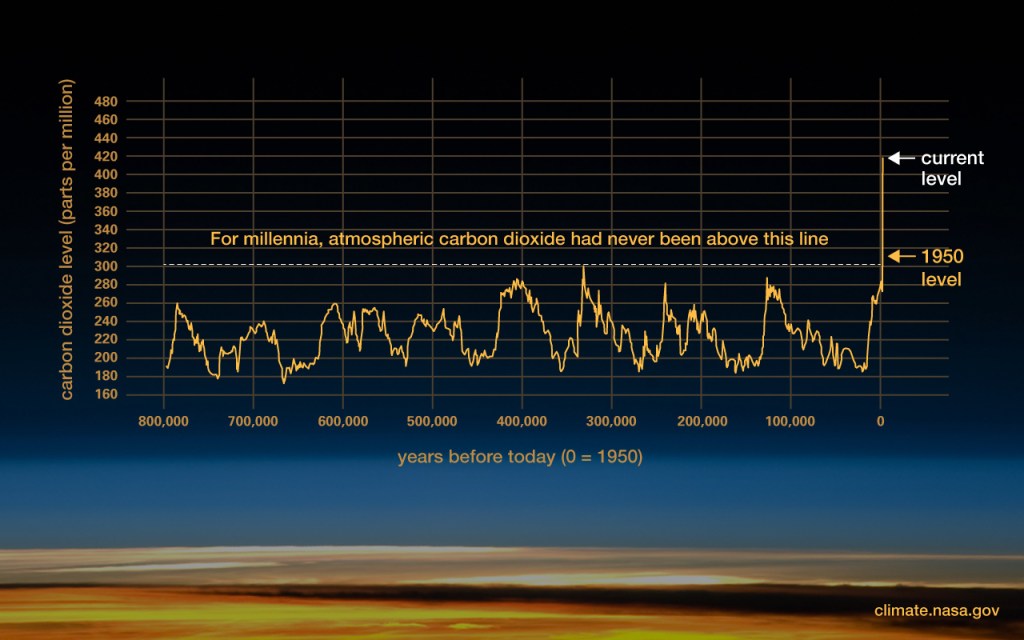
From Scripps institute. Keep two things in mind. First the warming from CO2 is delayed and may result in positive feedback that can manifest decades and centuries later. Secondly, human civilization developed during a period of stable climate. That CO2 levels and temperatures were higher millions of years ago is not much comfort.
My name is Thomas Wikman. I am a software/robotics engineer with a background in physics. I am currently retired. I took early retirement. I am a dog lover, and especially a Leonberger lover, a home brewer, craft beer enthusiast, I’m learning French, and I am an avid reader. I live in Dallas, Texas, but I am originally from Sweden. I am married to Claudia, and we have three children. I have two blogs. The first feature the crazy adventures of our Leonberger Le Bronco von der Löwenhöhle as well as information on Leonbergers. The second blog, superfactful, feature information and facts I think are very interesting. With this blog I would like to create a list of facts that are accepted as true among the experts of the field and yet disputed amongst the public or highly surprising. These facts are special and in lieu of a better word I call them super-facts.
View all posts by thomasstigwikman
12 thoughts on “Science History of the Greenhouse Effect by Craigvad”
Many thanks for the link, Thomas. A very interesting piece.
Thank you Thomas for this great and important share of Craigvad’s post. I was intrigued to learn that carbon dioxide is a chemical species.
Are there anthropogenic models that measure the sum total of living beings exhale of carbon dioxide? Just curious..
Thank you Suzette. That is a very good question. Yes this has been measured. Human breathing contribute very little but if you include bacteria, rotting trees, all animals exhaling, etc., it is significantly more than what comes from us burning fossil fuels. However, this does not add to the CO2 in the atmosphere because it is part of the carbon cycle. It is balanced by photosynthesis and ocean absorption, etc. It is an equilibrium that has existed for millions of years. When we burn fossil fuels we are adding CO2 that is not part of the existing carbon cycle, which is causing the CO2 content in the atmosphere to go up. Isotope studies (For example using Carbon-12, Carbon-13, Carbon-14) show that origin of the carbon dioxide that is added to the atmosphere come from fossil fuels and not nature.
The connection between early atmospheric chemistry experiments and the modern Keeling Curve really drives home how long we’ve understood the basic physics—it’s sobering to realize Fourier and Tyndall laid the groundwork back in the 1800s. Makes you wonder how different public discourse might be if that history were more widely taught.


 Super Facts
Many thanks for the link, Thomas. A very interesting piece.
LikeLiked by 2 people
Thank you so much Lynette. I agree it is very interesting history.
LikeLiked by 1 person
Thank you Thomas for this great and important share of Craigvad’s post. I was intrigued to learn that carbon dioxide is a chemical species.
Are there anthropogenic models that measure the sum total of living beings exhale of carbon dioxide? Just curious..
LikeLiked by 1 person
Thank you Suzette. That is a very good question. Yes this has been measured. Human breathing contribute very little but if you include bacteria, rotting trees, all animals exhaling, etc., it is significantly more than what comes from us burning fossil fuels. However, this does not add to the CO2 in the atmosphere because it is part of the carbon cycle. It is balanced by photosynthesis and ocean absorption, etc. It is an equilibrium that has existed for millions of years. When we burn fossil fuels we are adding CO2 that is not part of the existing carbon cycle, which is causing the CO2 content in the atmosphere to go up. Isotope studies (For example using Carbon-12, Carbon-13, Carbon-14) show that origin of the carbon dioxide that is added to the atmosphere come from fossil fuels and not nature.
LikeLiked by 1 person
This history of the scientific research behind global warming is very interesting. Thanks for sharing this article, Thomas.
LikeLiked by 1 person
Yes I thought it was very interesting. Thank you Robbie.
LikeLike
Thank you Thomas for the generous details in your reply. I learned many new things about CO2. Much appreciated. Blessings l.
LikeLiked by 1 person
Sorry for the late reply Suzette. I really appreciate your kind words and blessings to you too.
LikeLiked by 1 person
No worries Thomas. You are very welcome. Cheers.
LikeLiked by 1 person
Thank you. Cheers 🍻
LikeLiked by 1 person
The connection between early atmospheric chemistry experiments and the modern Keeling Curve really drives home how long we’ve understood the basic physics—it’s sobering to realize Fourier and Tyndall laid the groundwork back in the 1800s. Makes you wonder how different public discourse might be if that history were more widely taught.
LikeLiked by 1 person
Thank you ColorMe, that is certainly a very good point.
LikeLike