
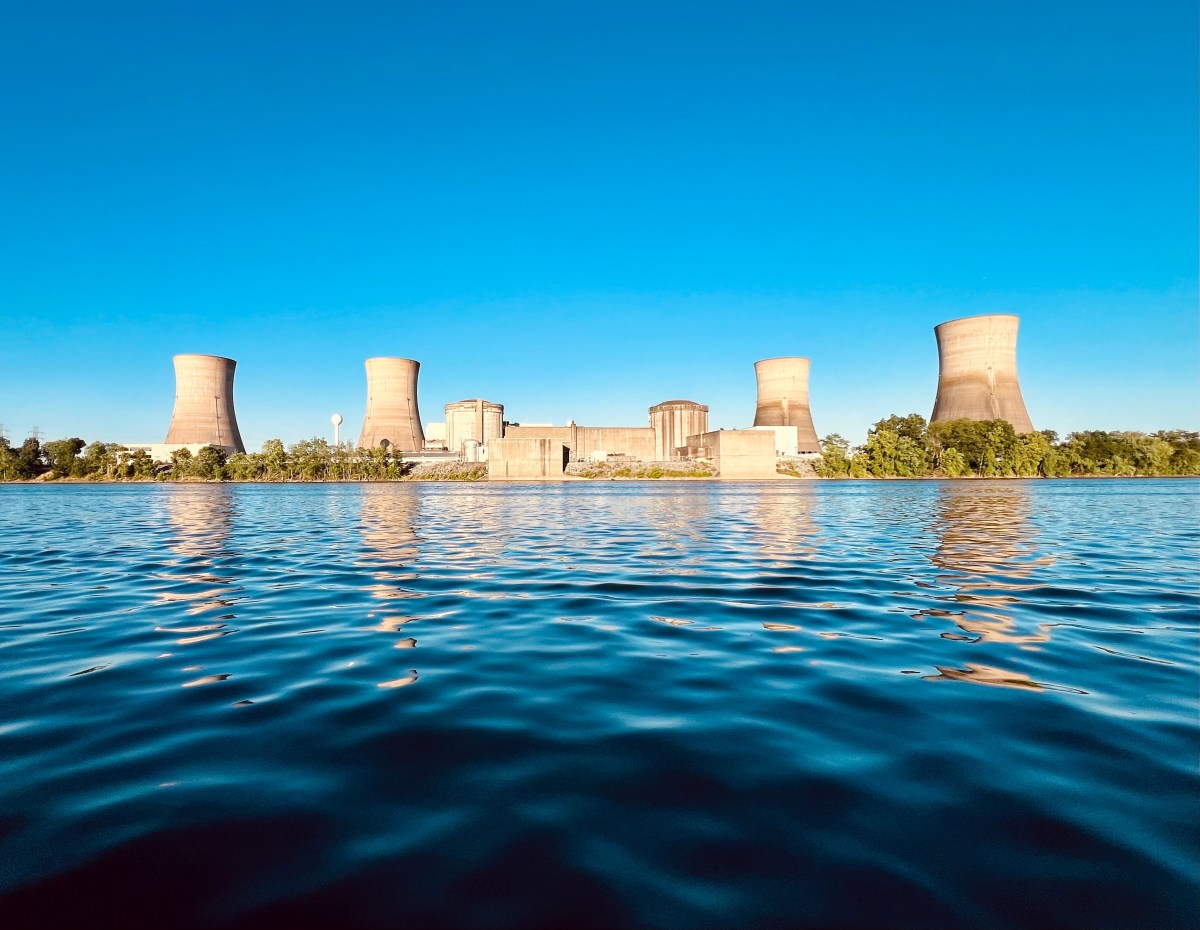
Superfact 96: Nuclear power is a relatively clean and safe energy source that produces no atmospheric emissions during operation. However, there are some problems with nuclear power, but they are often overblown.
Clean energy sources are often defamed by disinformation and misunderstandings. For example, wind power turbines are not bird killing machines. Contrary to what you often hear wind power is indeed a very clean, cheap and sustainable energy source. Nuclear power is another misunderstood energy source. Wind power, solar power, hydro, and nuclear power are all considered clean energy because they produce no greenhouse gases or air pollution during operation and they also have very low life-cycle emissions.
The graph below from Our World in Data depicting lifetime greenhouse gas emissions (construction, operation, disposal) and safety data for the European Union, show that the lifetime greenhouse gas emissions of coal power is 162 times higher than those of nuclear power and coal kill 820 times as many people as nuclear power. The lifetime greenhouse gas emissions of natural gas are 120 times higher than those of nuclear power and kill 613 times as many people as nuclear power. The difference is staggering.
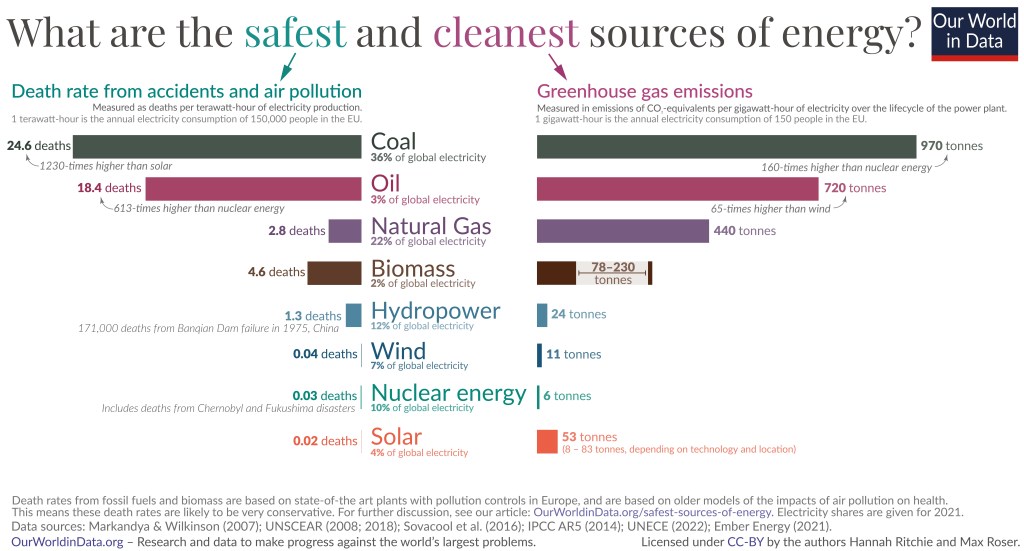
In the graph above, greenhouse gas emissions are measured of CO2 equivalents per Gigawatt-hour of electricity over the lifecycle of the power plant. 1 Gigawatt-hour is the annual electricity consumption of 150 people in the EU. Death rate from accidents and air pollution is measured as deaths per Terawatt hour of electricity production. 1 terawatt hour is the annual electricity consumption of 150,000 people in the EU.
I should mention that there are problems with nuclear power that are not entirely covered by the graph above, including radioactive waste, a history of spectacular accidents, and a perceived connection to nuclear arms. However, as you will see later in this post, even though these problems get a lot of media attention, they are not as scary as one might think. However, it should be noted that nuclear power in its current form is not a cheap source of energy, but that is a different topic.
I consider this a super fact because nuclear power is often thought of as an extremely dangerous and dirty source of energy, which is not the case.
How Does Nuclear Power Work ?
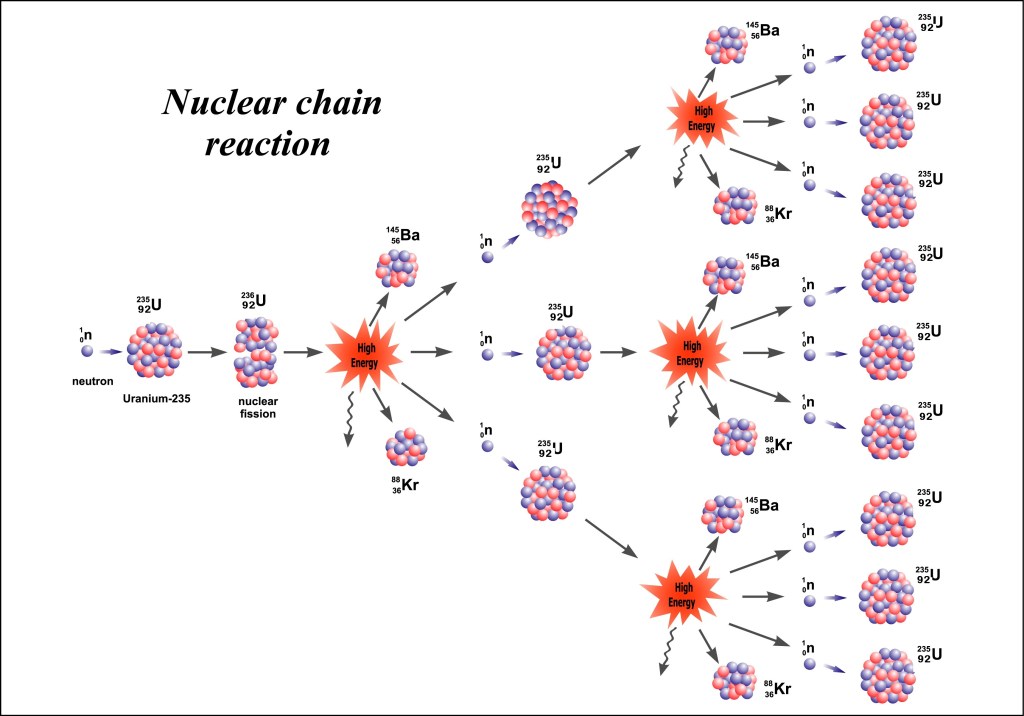
The fuel (fuel rods) in a nuclear power station consists primarily of stacked ceramic pellets made of low enriched uranium dioxide housed inside sealed metal tubes. The uranium consists primarily of two uranium isotopes U-238, which has 92 protons and 146 neutrons and U-235, which has 92 protons and 143 neutrons. Uranium always has 92 protons. The isotope that is used for fission is U-235. Natural Uranium consists of 0.7% U-235, trace amounts of U-236 and the rest (99.3%) is U-238. The uranium in nuclear fuel rods is either natural (0.7% U-235) or a few percent of U-235 (low enriched uranium). This should be contrasted with a uranium atomic bomb which has at least 80% U-235 (highly enriched).
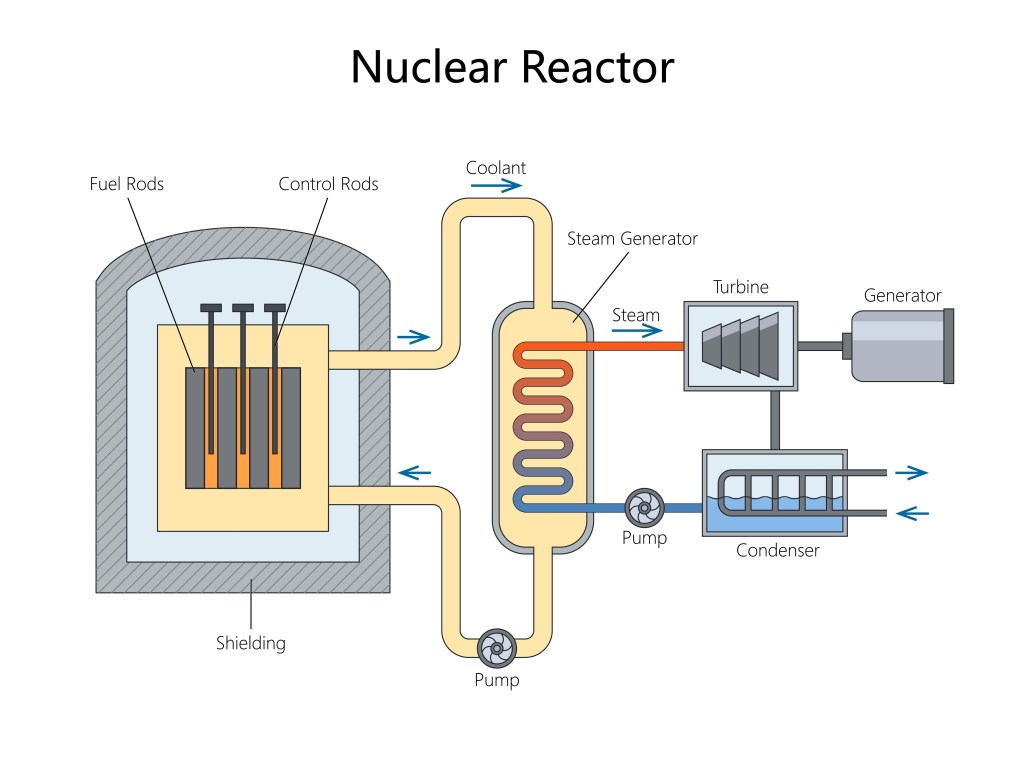
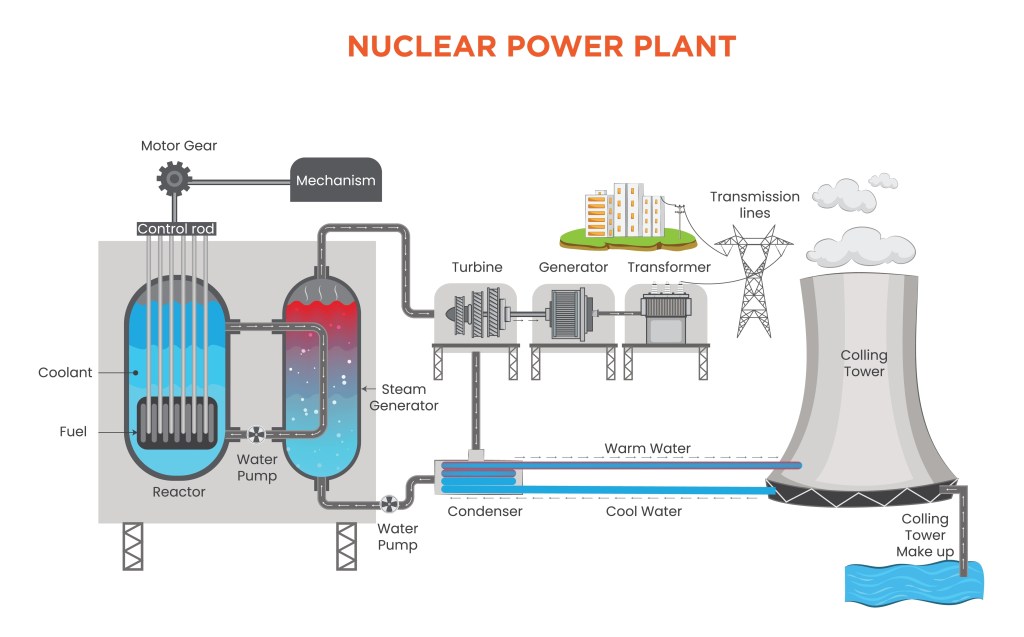
A nuclear power plant generates electricity using heat from nuclear reactions. Inside the reactor, atoms of fuel (uranium) undergo nuclear fission, where they split apart and release a large amount of heat. The fuel rods (see picture below) in a nuclear power station consist primarily of stacked ceramic pellets made of low enriched uranium dioxide housed inside sealed metal tubes. There are also control rods in a nuclear power station, which consist of materials with a high neutron absorption cross-section. The control rods are used to regulate the reaction. If they are fully inserted the reaction will stop. Also note that nuclear reactors have a containment shield (at least in western countries).
Below is an alternative illustration.
What about Chernobyl ?
The Chernobyl disaster, which occurred on April 26, 1986, was the worst nuclear disaster in history. 50 people died as a direct result of the disaster and an estimated 4,000, perhaps 10,000 future cancer deaths are predicted from the disaster. However, it should be noted that an estimated half million people died from coal pollution in the United States over the first two decades of the 21st century. You have to compare.
Another, thing to keep in mind is that the Chernobyl reactors were RBMK reactors (Reaktor Bolshoy Moshchnosti Kanalnyy), an extremely flawed, old and dangerous design that only exists in Russia (or the former Soviet Union). Above I mentioned that the control rods slow down the nuclear reaction when inserted between the fuel rods and stop the reaction when fully inserted. In an RBMK reactor, it is the other way around. The control rods speed up the reaction when inserted. Add the fact that the Chernobyl reactor did not have a containment shield designed to contain a major release of radioactivity, unlike Western reactors and that the Soviet Union was an authoritarian and secretive regime that made things much worse. A nuclear disaster similar to Chernobyl is highly unlikely to happen in the West.
The Fukushima nuclear disaster was caused by a severe earthquake and a 15 meter tsunami. Around 2,300 died from the evacuation, and 15,000 people died from the Earthquake, but it is estimated that no one, or perhaps one person died as a direct result from the nuclear disaster itself. As mentioned no one died from the Three Mile Island accident.
What about Radioactive Waste?
Radioactive waste stored on-site at nuclear power stations (spent fuel) is often millions of times more radioactive than long-term disposal waste. It is important to remember that highly radioactive isotopes decay fast (that’s why they are dangerous), which means that long-term disposal waste is not very dangerous. We are surrounded by radioactivity and our by far largest exposure to ionizing radiation comes from the radon in our basements.
Does nuclear power for energy generation increase the risk for nuclear weapons proliferation?
While commercial nuclear energy and weapons programs share technology, they are distinct processes. The historical data and studies show that national nuclear energy programs in general don’t lead to the development of nuclear weapons. No country officially developed nuclear weapons based on a pre-existing commercial nuclear power industry. Typically, nuclear-armed nations developed dedicated, military-focused, and often secret reactors to produce plutonium or facilities to enrich uranium for weapons. Also, the issue is mostly moot for countries that already have nuclear weapons, such as the United States.
Conclusion
Nuclear power is clean and safe. It might be our cleanest energy source that can provide baseload power. However, there are other concerns including the possibility of spectacular accidents, radioactive waste and the possibility that nuclear power for energy might aid nuclear weapons proliferation. Luckily, it appears that these concerns are overblown. It should be noted that nuclear power, as implemented today, is not cheap energy, but that is a different topic.
To see the Other Super Facts click here


Thanks, Thomas, for clearing up the disinformation surrounding nuclear energy! My son is thinking about becoming a nuclear engineer, so I’ll definitely show this to him!
LikeLiked by 1 person
A nuclear engineer. That is very cool. It would be a very interesting job and the use of nuclear reactors for energy is experiencing a global resurgence. I wish him the best of luck.
LikeLiked by 1 person
Hi Thomas, he’s not quite sure yet (he’s only 15!). His other option was technology-led defense, possibly engineering aircraft. I showed him your article, and we were amazed by your nuclear chain-reaction diagram! Thanks for this interesting post.
LikeLiked by 1 person
Thank you so much for your kind words Ada. I used to work for the division of Ericsson (in Sweden) that built the JAS Gripen military fighter jet. I helped design and build the presentation system for the Pilot. Yes your son is still very young but he sounds ambitious. I wish him all the best with deciding which field to enter.
LikeLiked by 1 person
Oh, wow, Thomas, that’s so cool! I’ll definitely tell him! He’ll be curious and super impressed that you worked for the division of Ericsson that built a military fighter jet – it’s actually really similar to what he wants to do (which I think is to do with drones/helicopters?). It’s one of his options, I think. You’re such an inspiration for young people wanting to enter the industry!
LikeLiked by 1 person
I should say that Ericsson only created the electronics. The plane, the body, of the plane was built by Saab, a Swedish car company. I can add that we received military grade integrated circuits from the United States, which was a secret at the time, because Sweden was supposed to be neutral. I worked was those circuits to dedign the electronics. The United States secretly helped us a bit because they wanted Sweden to have (and sell) a good fighter jet to protect against the Soviet Union. But this was not supposed to happen. Your son is still young and he has many options. I hope he’ll pick an engineering field that he will love.
LikeLiked by 1 person
I knew much of this but still a very interesting post, Thomas. Thanks.
LikeLiked by 2 people
Thank you so much Lynette
LikeLiked by 1 person
An excellent post, Thomas.
LikeLiked by 1 person
Thank you so much Chris
LikeLiked by 1 person
That clears up a lot! I’d just never want to live close to a plant. Just in case.
LikeLiked by 1 person
Thank you so much Sara. I think most people feel like you, including my wife and perhaps me too. However, I’ve visited the nuclear power station Three Mile Island, Middletown, a couple of times and I’ve talked to people and the people in Middletown were perfectly comfortable with it. On the other hand they may not be the majority.
LikeLiked by 1 person
That’s good they’re ok but yeah would rather not have that as a potential blow up risk lol
LikeLiked by 1 person
Always better to be safe than sorry. However, I am not particurly afraid of American, Canadian or Swedish nuclear power stations. Russian RBMK reactors, well that is a different story.
LikeLiked by 1 person
That makes sense for sure 😅
LikeLiked by 1 person
Yes RBMK are scary. There are still 8 of them, all in Russia.
LikeLiked by 1 person
Yes, you’re probably right, but it still scares me.
LikeLiked by 1 person
Thank you Anneli. I think most people feel the same.
LikeLike
Nuclear energy is a godsend for the American submarine fleet and their initiative.
LikeLiked by 1 person
Yes I can certainly imagine that. In college I was in the dorm with a guy who was studying to become a nuclear engineer and he was stationed on the submarine.
LikeLiked by 1 person
That is a unique environment. My daughter decided against it when given the opportunity.
LikeLiked by 1 person
It is very cool that your daughter was offered the opportunity, but I can imagine that a submarine is a difficult environment.
LikeLiked by 1 person
Wow, this is the most thorough and easy to understand articles I’ve ever read on nuclear energy. The graphs helped but seem incomplete without the additional information you included about Chernoble. Probably more people have seen the movie about that tragedy and all their knowledge and emotions about nuclear energy stem from that information. The only problem with your fabulous article is exposure.
LikeLiked by 1 person
Thank you so much for your kind words Marsha. Yes what is often underestimated is the massive damage from burning fossil fuels, which both renewables and nuclear power compete with.
LikeLiked by 1 person
And before we had fossil fuels, we had extreme poverty – according to the whaling museum in Maui that no longer exists.
LikeLiked by 1 person
Yes you are right Marsha. Fossil fuels played a very important role in the industrial revolution and before oil/coal etc., we were nearly hunting whales, seals, etc., to extinction to get oil. However, fossil fuels also caused an enormous damage to the environment, human life, and as we would later realize climate. Now we have alternatives that are much cleaner and safer, wind, solar, batteries, nuclear, and geothermal, which is small but growing. Perhaps we will have even better energy sources in the future, such as fusion power. We humans are inventing better technology.
LikeLiked by 1 person
It seems when we solve one problem another bigger one looms up.
LikeLiked by 1 person
Maybe, but I think that overall we are making progress. Ozone depleting gases used to be a huge and very dangerous problem. However, emissions of ozone-depleting gases have fallen by 99 Percent, in fact 99.7%. The problem has almost entirely vanished. We used to be very worried about acid rain but sulfur dioxide pollution has fallen by 95 percent in the US. Some problems, like global warming are getting worse, because they are tough problems to solve and developing countries want to be prosperous, like Europe and the US. However, we have solutions, even though we haven’t fully implemented them. But we are working on it, or somewhat working on it.
LikeLiked by 1 person
You are very well informed from the sounds of it. I didn’t know that ozone depleting gassed were nearly gone. I missed that huge memo!
LikeLiked by 1 person
Thank you Marsha. The so called ozone hole is not gone but it is shrinking thanks to the ozone depleting gases being pretty much gone. This is largely due to the Montreal protocol in 1987, where nations agreed to phase them out. There is both bad and good news in this world. However, good news tend to be more boring so you hear of it less.
LikeLiked by 1 person
This is true, but some news stations try to focus on a few news stories that are positive. Not enough, though. One of the reasons that blogging is so important is just that. News is made of sound bites. Nothing ever goes very deep, and the same sound bites are repeated over and over again. Repetition is a great learning tool for memorizing facts, but it’s doesn’t promote much in the way of thinking skills or breadth of knowledge.
LikeLiked by 1 person
Yes you are so right Marsha. News agencies are a business and attention grabbing stories without depth makes money. There is a blogger who is focused on writing about good news stories. I forget her name at the moment but I follow her.
LikeLiked by 1 person
Let me know about her, and maybe she should publish some of your posts, too. I think the post I just read was very newsworthy.
LikeLiked by 1 person
Marsha her blog is called “Anything Possible” and the latest post was
https://joannaoftheforest.wordpress.com/2026/04/25/socs-sunburns-tin-man-tinnitus-buttons-and-a-light-at-the-end-of-the-tunnel
LikeLiked by 1 person
I just stopped over there. She seems like a sweetie pie. Thanks for sharing her link. That’s one of the best ways we meet new friends. 🙂
LikeLiked by 1 person
Yes you are right. Thank you Marsha.
LikeLiked by 1 person
Thanks for sending me to meet your friend Jennie, I think it was.
LikeLiked by 1 person
As an Alaskan, I cannot understand why my state does not make preparation to accommodate a cleaner future and invest in nuclear energy. Finland is a comparable climate, and they are working wonders with nuclear. If we ever get out of this fossil fuel rut, I would think it would be the best investment the US could make in Alaska.
LikeLiked by 1 person
Thank you Violet. I can add that Sweden my native country have a nearly 100% fossil free grid with a mix of hydro/renewables/nuclear (about 30% nuclear).
LikeLiked by 1 person
Hi Thomas, this is an interesting article. In terms of risk margin, the numbers of deaths are very low. Of course, any deaths is a terrible thing but I understand that from a commercial perspective it is a very acceptable percentage. It’s a bit like the vaccination risk, sufficiently small to be acceptable from a scientific point of view.
LikeLiked by 1 person
Yes I think that is an excellent comparison. No energy source is perfectly safe or perfectly clean but you have to compare. It always comes down to better or worse.
LikeLike
I agree, it does
LikeLiked by 1 person
What I remember from Three Mile Island wasn’t that people didn’t think nuclear energy was the problem, but thought the government would try to cover up any accidents instead of being honest.
LikeLiked by 1 person
There is always the risk that governments try to cover up things. This is certainly the case in authoritarian regimes. In democracies with a free press this is a little bit harder. Thank you so much Patti.
LikeLiked by 1 person
I think our use of fossil fuels will be reduced or eliminated by combinations of different clean energy sources. Nuclear may be one of them, despite its expense. Canada is said to be producing (or planning to; I’m not sure) a type of small modular nuclear reactor.
LikeLiked by 1 person
Small modular reactors is certainly an interesting prospect. We have a Senator here in Texas (Ted Cruz) who is very much into Small Modular Reactors. You are right the cheapest and most efficient way of moving on from fossil fuels is a combination of clean energy, wind, solar, hydro, batteries, other storage, geothermal, natural gas with carbon capture, and nuclear. Thank you for your interesting comment Audrey.
LikeLiked by 1 person
Thanks for the informative post about how nuclear reactors work and your clear-headed perspective on their relative safety. Accidents and natural disasters have a way of sticking in our memory, so it’s good to step back and put them in perspective.
LikeLiked by 1 person
Thank you so much for your kind words David. Yes something are more spectacular but the creeping every day disaster from pollution may not get as much attention. Data and correctly interpreted statistics can help put things in perspective.
LikeLiked by 1 person
There is an interesting and relevant article in a recent article in The Spectator.
See https://spectator.com/article/the-true-cost-of-chernobyl-isnt-what-you-think/#comments-container
It makes the point that moving away from nuclear power was massively accelerated by the Chernobyl disaster and this has had a big impact.
Here is the final sentence: “But, in the end, Chernobyl’s true impact was the lives cut short by avoidable air pollution. Fear of nuclear power killed more people than nuclear power ever has”.
LikeLiked by 1 person
Thank you so much Peter. Unfortunately, there was a pay wall so I could only read the beginning. Incidentally, I was a student at Uppsala University at the time, which is pretty close to the Forsmark nuclear plant, which I also had toured a few years before. So I was pretty surprised to read in the Uppsala newspaper that the Forsmark nuclear reactor was leaking. It made people nervous, being so close. They changed it pretty quickly though. The next day we found out that it was a nuclear plant in Russia, not Forsmark, that was leaking. Anyway, the article appears to be very interesting and I believe that the conclusion “Fear of nuclear power killed more people than nuclear power ever has” is probably correct.
LikeLike
Thank you for presenting a relatively balanced perspective and including the risks of radioactive waste and the possibilities of “spectacular” accidents. I’m trying to be open minded about this but still feel the risks of nuclear power are significant especially when I think about Chernobyl and that accident’s real impact on humans and nature. I’m not saying we should eliminate nuclear power as an option, but I hope humans work harder to develop and perfect solar, wind, and other power sources with less risk.
LikeLiked by 1 person
Thank you JoAnna. I certainly agree with you that solar, wind and other renewable resources are our best options so far. They are our by far our cleanest options, as well as cheap, and they are getting better, and becoming very popular around the world. The world is adopting wind and solar for good reason while we are fighting them here in the US. However, they are intermittent sources of energy and I think nuclear power is a misunderstood source of energy that can provide steady base load power. Chernobyl was the biggest nuclear disaster in history but since an RBMK reactor, which indeed is a very dangerous type of reactor, is very unlikely to be built outside of Russia we do not need to worry about Chernobyl style accidents (other then contamination coming out of Russia).
LikeLiked by 1 person
Java Bean: “Ayyy, at this point it seems like anything that doesn’t put all kinds of CO2 into the air is worth pursuing, sí?”Lulu: “Yep. Good thing we don’t have a government here that’s intent on killing all the cleaner forms of energy and going back to burning tons and tons of coal that nobody wants to extract from the ground anymore …”
LikeLiked by 1 person
Java Bean and Lulu you are such smart dogs. Lulu you even know how to be sarcastic. You are so right.
LikeLike
Thank you for this balanced perspective, Thomas. Very helpful.
LikeLiked by 2 people
Thank you so much for your kind words Gwen
LikeLiked by 2 people