The goal of this blog is to create a long list of facts that are important, not trivia, and that are known to be true yet are either disputed by large segments of the public or highly surprising or misunderstood by many.
Author: thomasstigwikman
My name is Thomas Wikman. I am a software/robotics engineer with a background in physics. I am currently retired. I took early retirement. I am a dog lover, and especially a Leonberger lover, a home brewer, craft beer enthusiast, I’m learning French, and I am an avid reader. I live in Dallas, Texas, but I am originally from Sweden. I am married to Claudia, and we have three children. I have two blogs. The first feature the crazy adventures of our Leonberger Le Bronco von der Löwenhöhle as well as information on Leonbergers. The second blog, superfactful, feature information and facts I think are very interesting. With this blog I would like to create a list of facts that are accepted as true among the experts of the field and yet disputed amongst the public or highly surprising. These facts are special and in lieu of a better word I call them super-facts.
Super fact 68 : Infinities come in different sizes. Some infinities are larger than others. In fact, it is possible to create an infinite number of different-sized infinities. Some infinities are countable and others are uncountable.
How can infinity be of different sizes? Infinity is infinity after all. Infinity is an absolute, an absolute we cannot imagine. However, at the end of the 19th century a German mathematician by the name Georg Cantor demonstrated that there exists a variety of infinities, and some are larger than others. In fact, his theorem implies the existence of an infinity of infinities. For those who have not heard of this concept before it is surprising and yet it is true, and it is also kind of an important thing to know about mathematics. This is why I consider this a super fact.
Let me explain. Think about all natural numbers, 1, 2, 3, 4, 5, …, a billion, a quintillion, … You can keep counting forever. There are infinitely many natural numbers. Now take two natural numbers, the numbers 3 and 4. How many numbers are in between 3 and 4? Well, you have 3.5, 3.55555, 3.016893, and you have the number pi, 3.14159265358979323846, and infinitely many other numbers with infinitely many decimals. 3 and 4 are only two numbers but you have infinitely many decimal numbers, or so called real numbers, between 3 and 4. That is true for the two numbers 4 and 5 as well, and 5 and 6, and all natural numbers. Even though there are infinitely many natural numbers there are infinitely many more real numbers.
I should say that today Saturday November 8, 2025, is National STEM Day, or STEAM Day. Stem stands for Science, Technology, Engineering, and Mathematics. The extra ‘A’ in STEAM stands for Art. Therefore, I thought that posting something related was appropriate for today, in this case it is Mathematics. I have to admit I am posting it a little bit late in the day though.
To infinity … and beyond!
Buzz Lightyear “To infinity … and beyond”. Shutterstock Asset id: 2464838811 by MSCT Pics
As mentioned, infinites can have different sizes. How about, for example, the set of all natural numbers and the set of even numbers. After all, it seems like the set of all even numbers should be half as big. As it turns out they are the same size. That’s because for all natural numbers 1, 2, 3, 4, 5 you can always find a buddy, 2, 4, 6, 8, 10 among the even numbers. This is called a bijection. However, you cannot do this with natural numbers versus real numbers. You cannot pair up a natural number with the real numbers because there are infinitely many for each single natural number.
The set of all real numbers is really a larger infinity than natural numbers, which by the way is the smallest infinity. The sets of natural numbers and, for example, even numbers are called countable infinities, and the set of real numbers are called uncountable infinities. In addition, there are infinitely many different sizes of infinities that are larger than both natural numbers and real numbers.
Another interesting, related issue is that Cantor tried to prove that there are no infinities with sizes that lie in between the natural numbers and the real numbers. This was called the continuum hypothesis. As it turned out this hypothesis is not possible to prove (you can prove that it cannot be proved) at the same time as it is not possible to disprove. It is related to Gödels incompleteness theorem but is not the same. However, it is another absolute limit to human knowledge, things we know that we can never know.
If you want to have your mind blown, watch this 8 minute YouTube video about infinities of different sizes and the continuum hypothesis.
Since it is Halloween I thought I’d make a fun post (not a super fact) about Scandinavian Mythology or folklore. I live in Texas, but I am originally from Sweden so the various beings I’ll describe or mention below are beings that I grew up hearing about. When I was a kid, we kids used to scare each other with stories about these beings.
I should also point out that it is not ancient Viking mythology but more recent folklore that some people still believe in. I am focusing on Swedish folklore and Norwegian folklore since it is similar to Swedish folklore. Danish folklore is a little bit different, but it has many similarities to Swedish and Norwegian folklore. Denmark is a Scandinavian country, but the post would be too long if I included folklore that is specifically Danish.
I am providing one or more pictures for each being. These pictures are either in the public domain, for example via Wikipedia, or shutter-stock pictures (I have a subscription), or pictures I generated with the help of ChatGPT with varying success. The beings covered are Tomte, Vittra (Vitter folk), Elf, Skogsrå/ /Tallemaja/Huldra, Näcken/Fossegrim, Troll, Myling, Storsjö odjuret (the north Swedish equivalent of the Loch Ness monster), Kraken, and Skvader. Finally, Blodstämmare is not a being but a north Swedish magical practice that you use to remotely stop the blood flow in a person.
Tomte
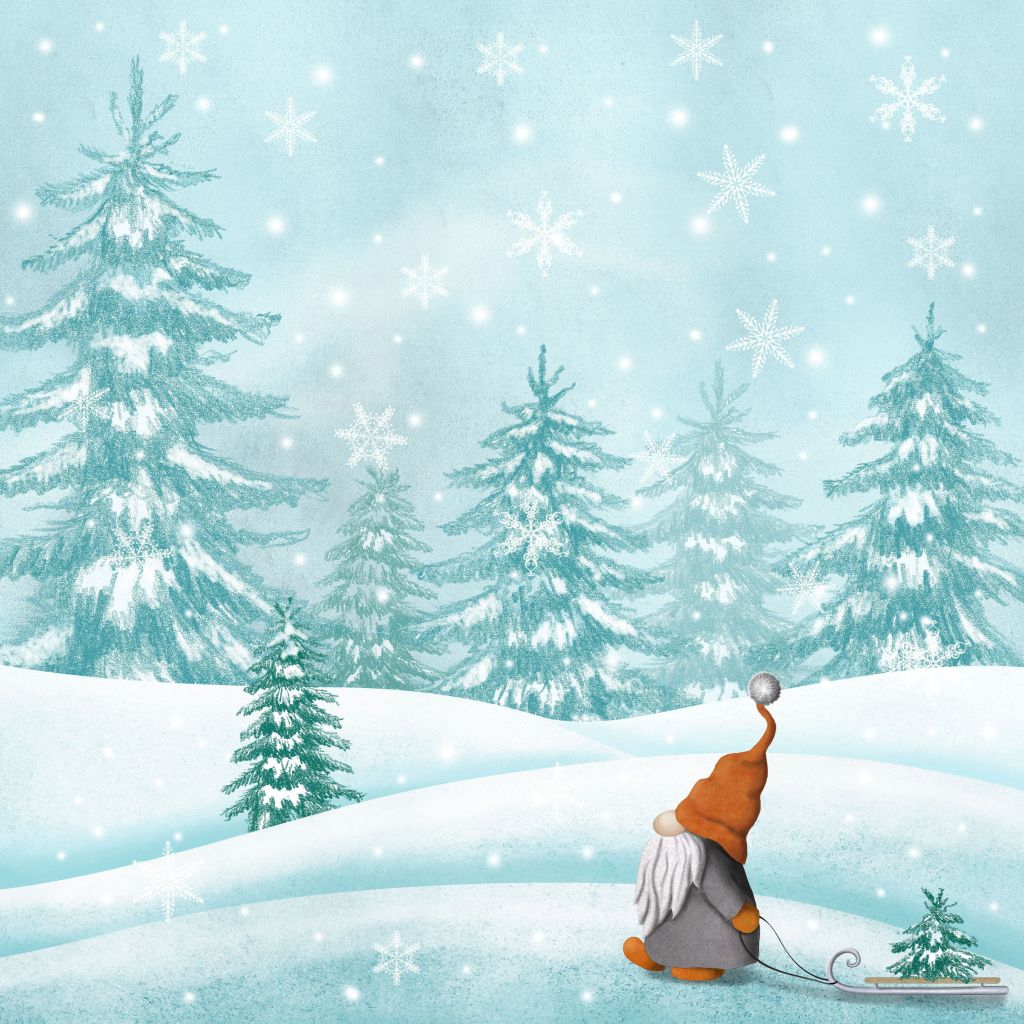
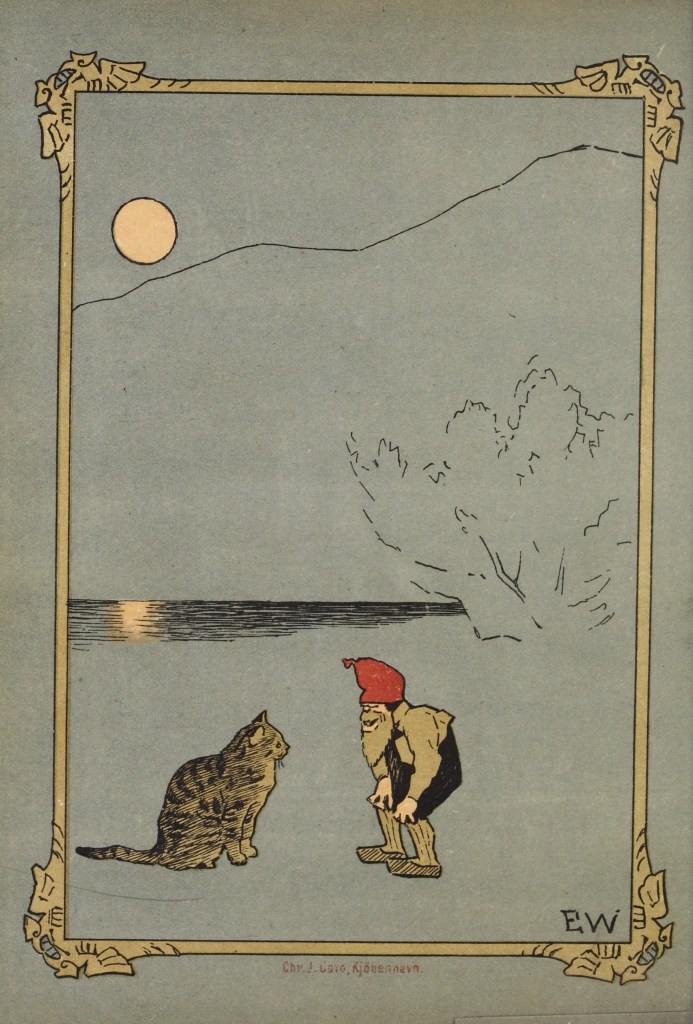
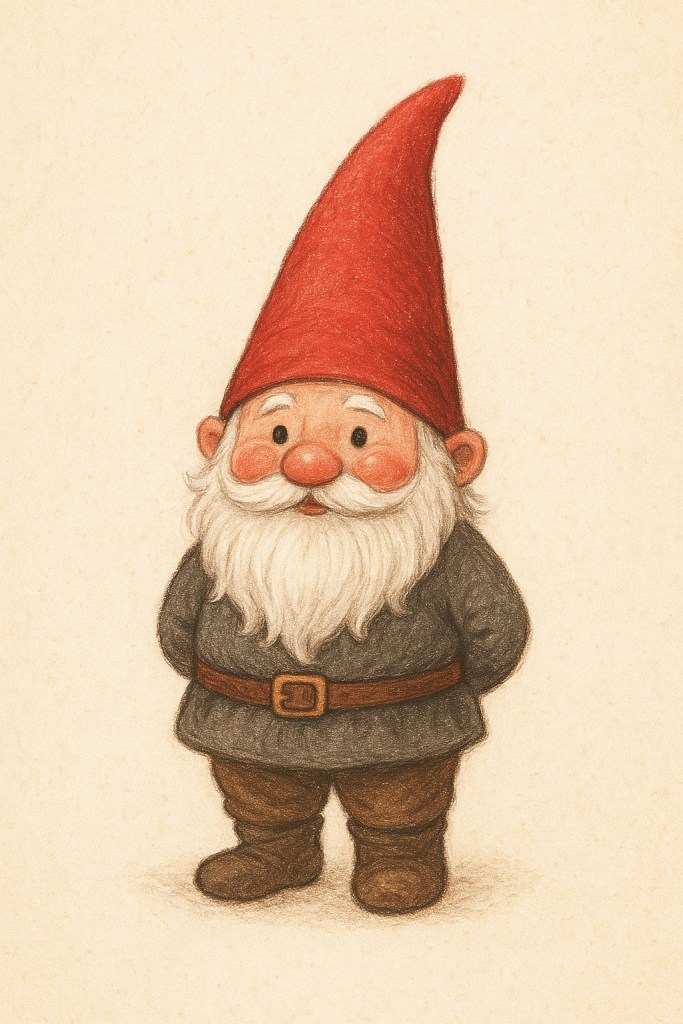
Tomtar (plural of Tomte) or Nisse in Norwegian is a type of small magical people, or gnomes, related to Vitter folk (described below). They are friendly and is the inspiration behind the Swedish version of Santa Claus, which is therefore a bit different from the Disney version of Santa Claus that has become so popular.
For one thing, the Disney version of Santa Claus works alone while delivering presents and therefore needs to move faster than the speed of light to cover all the good children. A Tomte may help you with your projects and duties if you are nice to them. They may help you with your farm and your animals, warn you of danger, and bring you gifts for Christmas if you in return put out food for them, such as porridge. As mentioned, there are many Tomtar, often one Tomte per house.
An illustration of a Tomte. Shutterstock ID: 2060057882 by PLIMPLUM.A Tomte or a Nisse, about as big as a cat, Erik Werenskiold, Public domain, via Wikimedia CommonsTomte generated by ChatGPT
Vittra
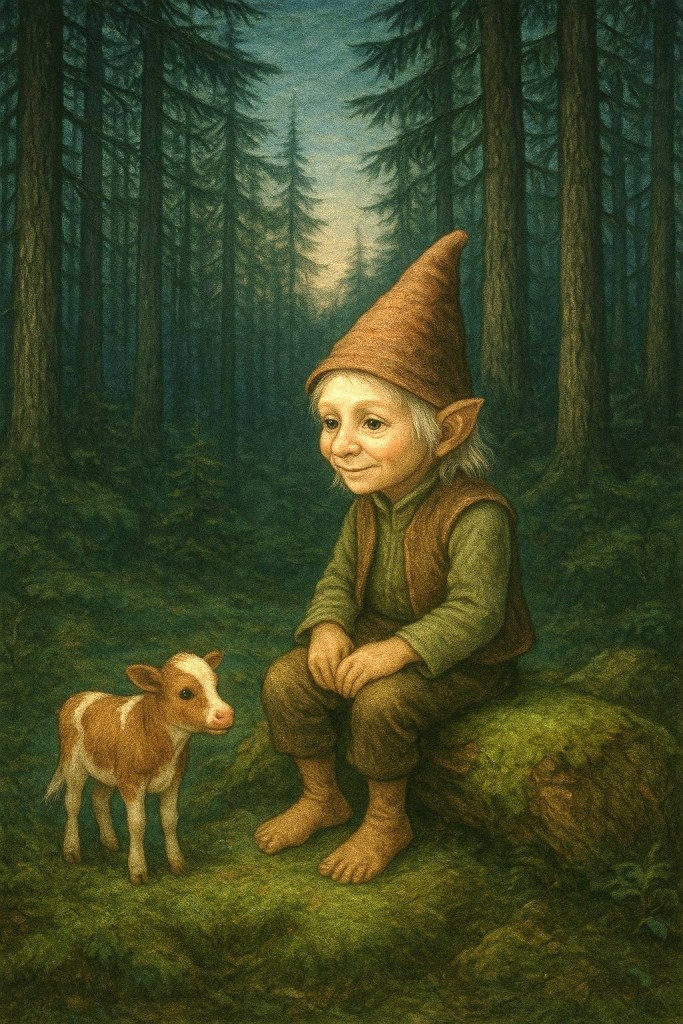
Vittra or Vitterfolk are supernatural spirits or small invisible people who have a lot in common with people as well as Tomtar. They own cattle and they sometimes interact with people. Usually, they stay out of your way, but if you hurt them, for example by throwing hot water out the window without warning them first, they may take revenge on you and burn down your house. Vittra are not evil but not friendly either.
The belief in Vittra is especially prevalent in northern Sweden. On the Swedish island of Gotland, they are often referred to as “Di små undar jordi” in the Got/Goth dialect, or “De små under jorden” in proper Swedish, or “the small ones below ground” in English. They are sometimes depicted as looking similar to Tomtar, gnomes or elves, and sometimes as invisible, or near invisible little spirits. Below are some depictions of Vitter folk.
A Vitter and his mini calf. Generated with the help of ChatGPT
Elf
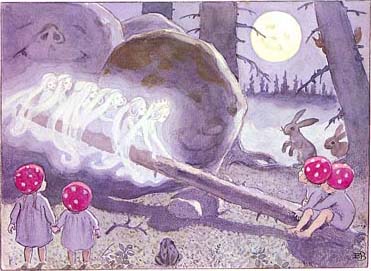
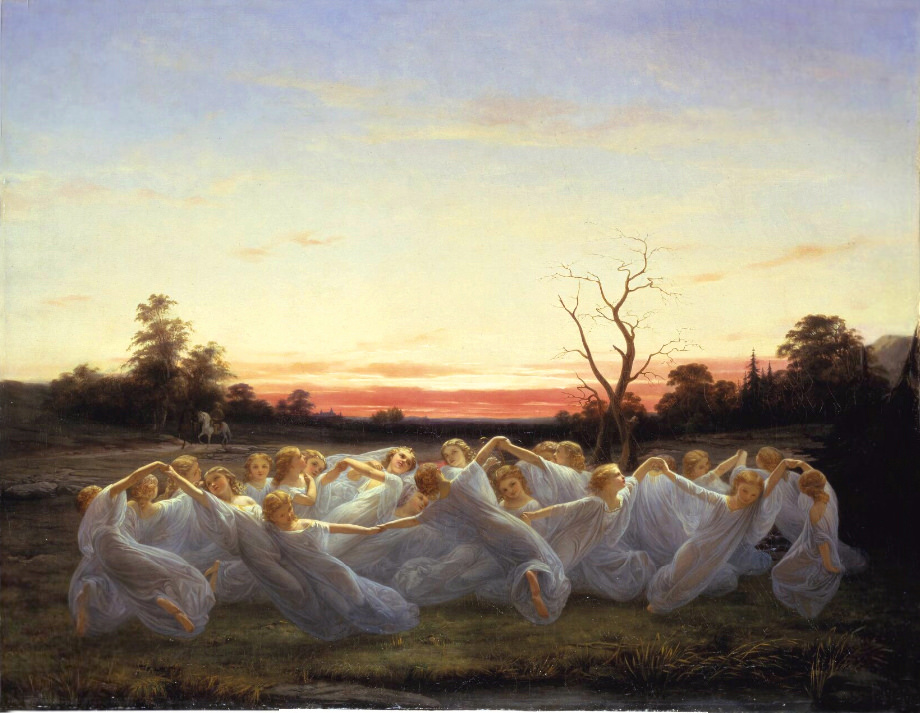
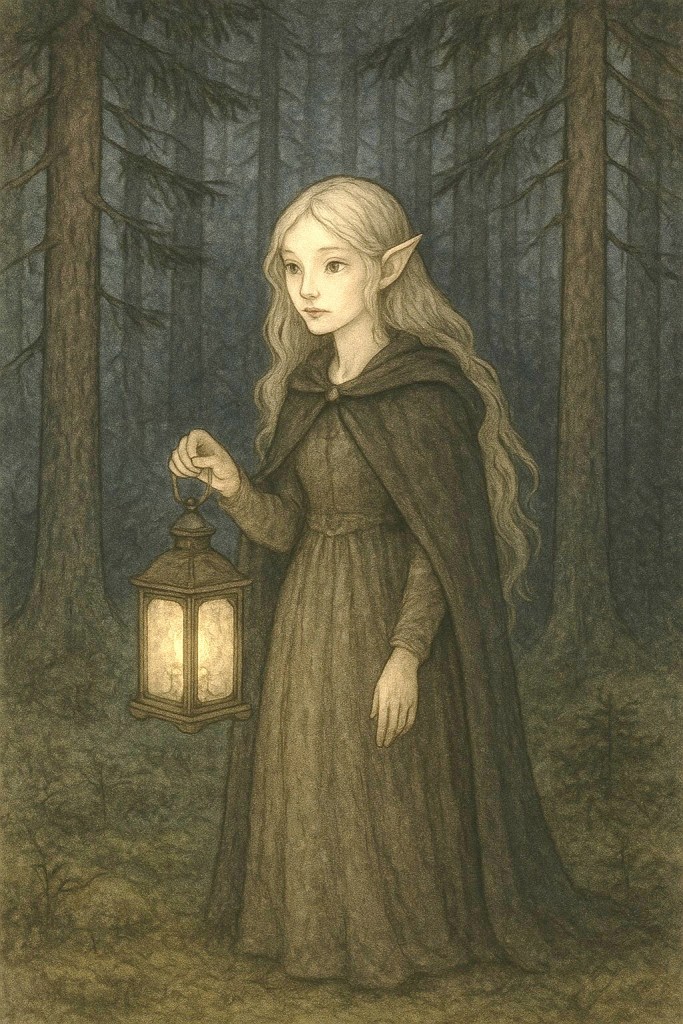
An elf, or elves in plural, is a type of human like supernatural being in Germanic folklore and especially Nordic/Scandinavian folklore. Since elves have been popularized around the world it is a well known being. In Scandinavian mythology they were initially often considered bad news but because of popular culture, such as Tolkien’s books, they have been redeemed into something positive. The first picture below is from a Swedish children’s book written in 1910. I read this book when I was a child. The wispy creatures are elves and the small kids with mushroom hats are Tomte children. In this book the elves are depicted in a Nordic pre-modern fashion, but they are nice.
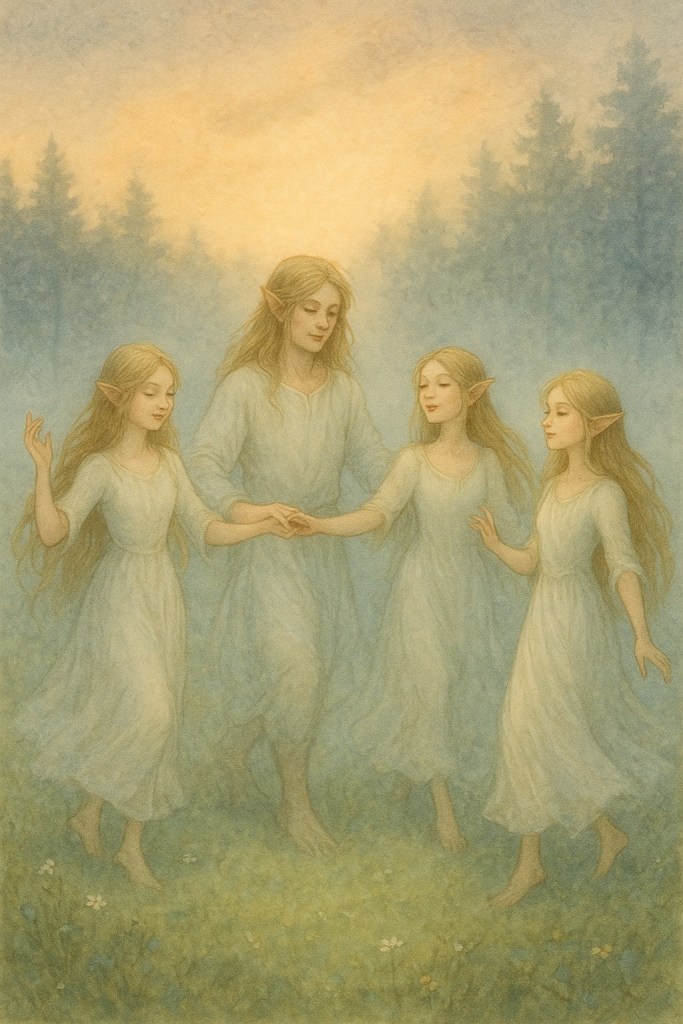
Little älvor, playing with Tomtebobarnen. From Children of the Forest (1910) by Swedish author and illustrator Elsa Beskow. Elsa Beskow, Public domain, via Wikimedia CommonsÄngsälvor (Swedish “Meadow Elves”) by Nils Blommér (1850). Nils Blommér, Public domain, via Wikimedia Commons.A female elf that I generated with the help of ChatGPTFour elves (one male, three females) standing in a forest glade. I generated this picture with the help of ChatGPT.
Skogsrå, Tallemaja, Huldra
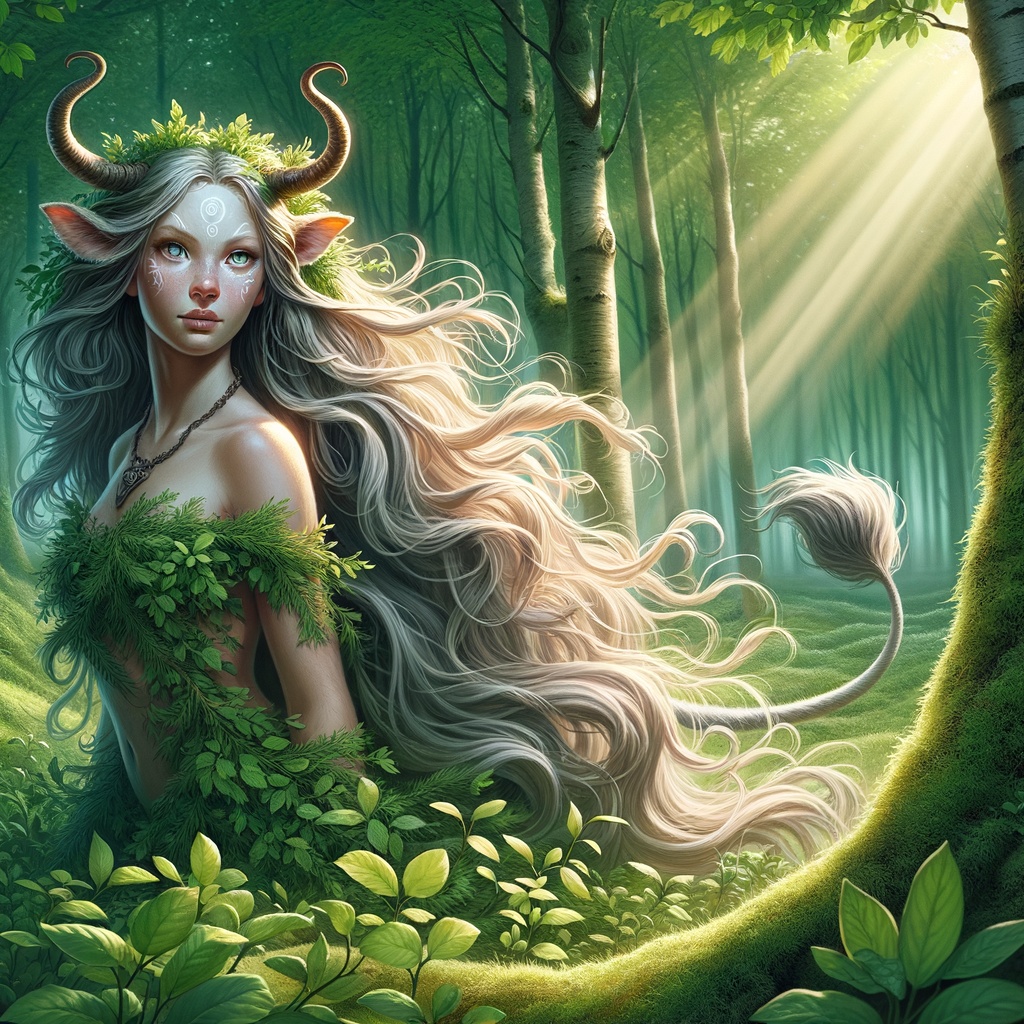
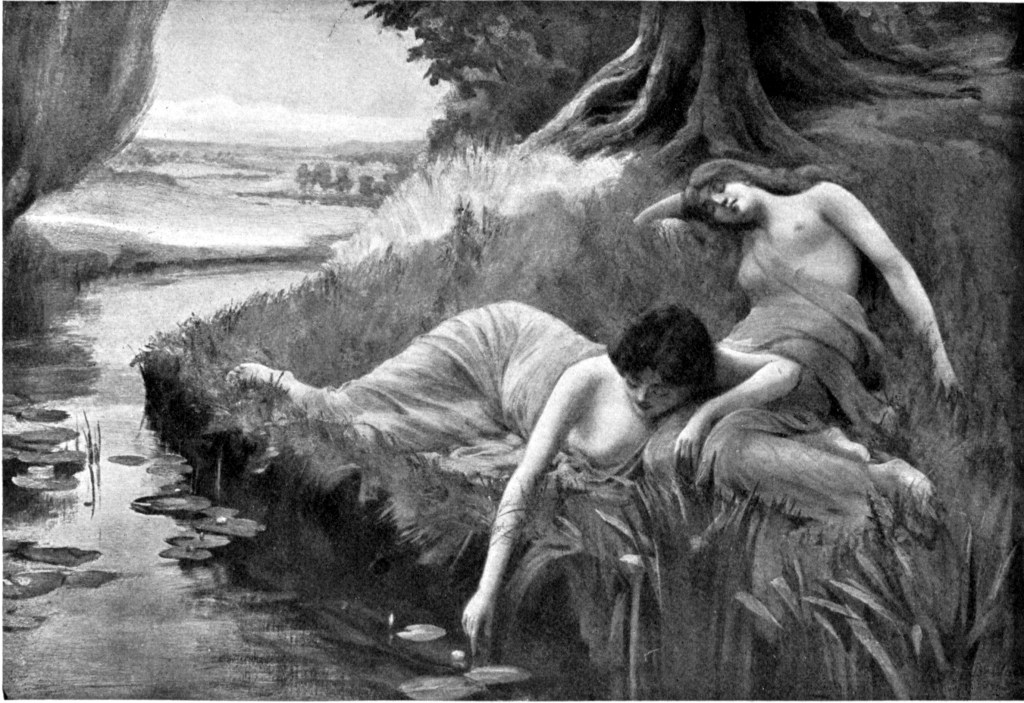
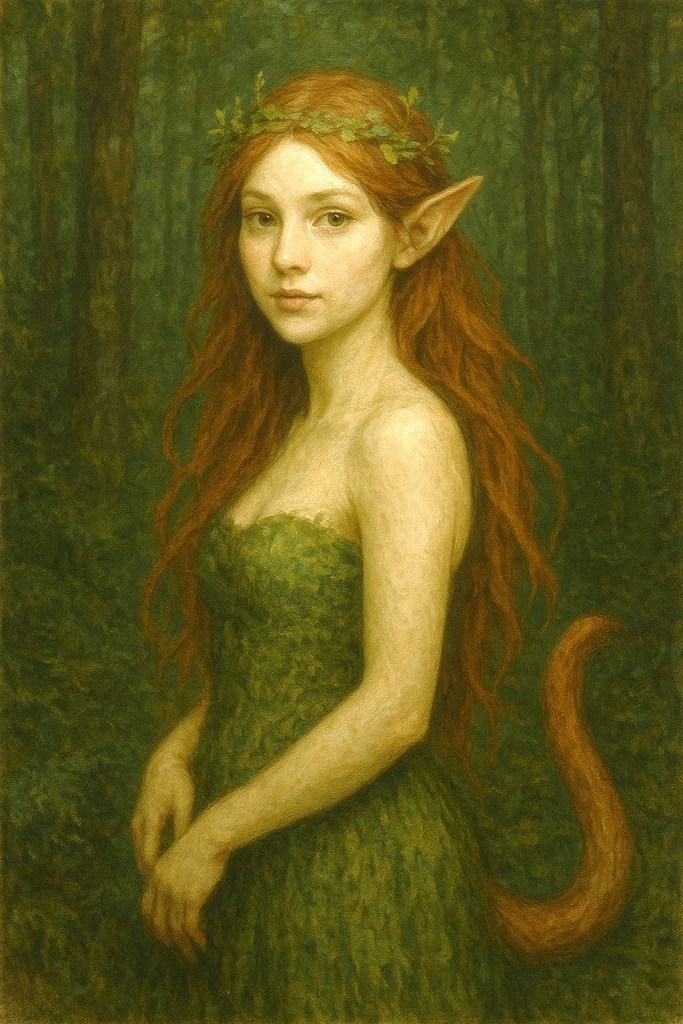
Skogsrå or Tallemaja in Swedish folklore is a seductive female creature who lures men with her beauty or beautiful singing and then kills the men. The Skogsrå / Tallemaja typically has a tail and a hollowed out back, which you can’t see if you are facing each other. In Norwegian this creature is called Huldra (Hulder in plural).
It should be noted that I read that if you meet a Huldra in the forest and you treat her with respect she will not kill you. She would just enjoy your company for a while, talk to you, sing to you, show you the beauty of the forest, and then she would let you go. It is only the rude and selfish men who don’t respect her boundaries whom she kills.
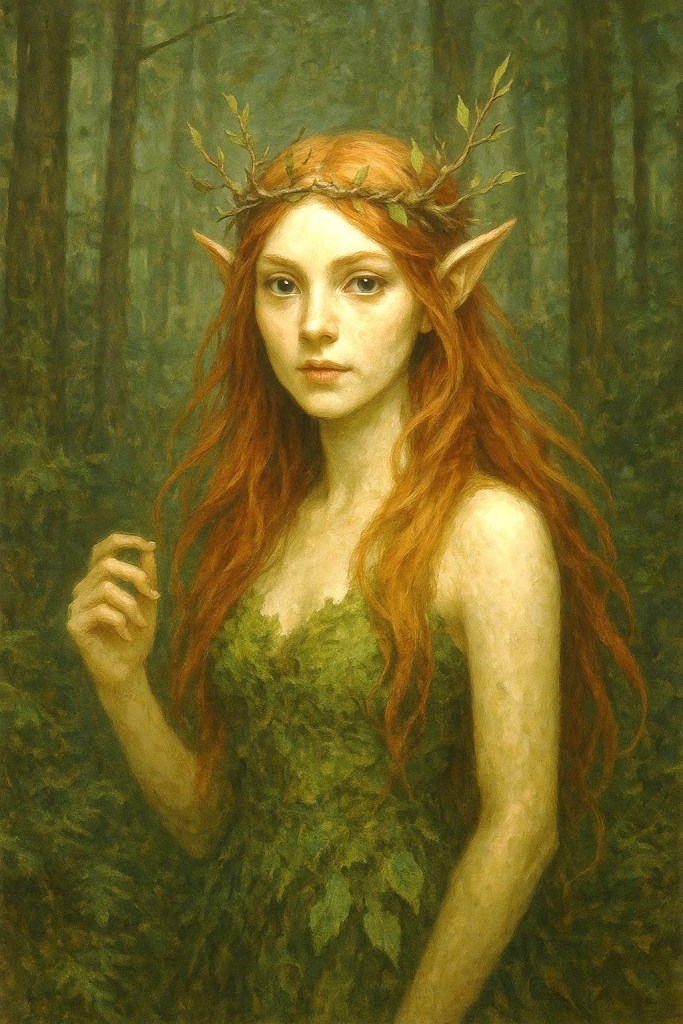
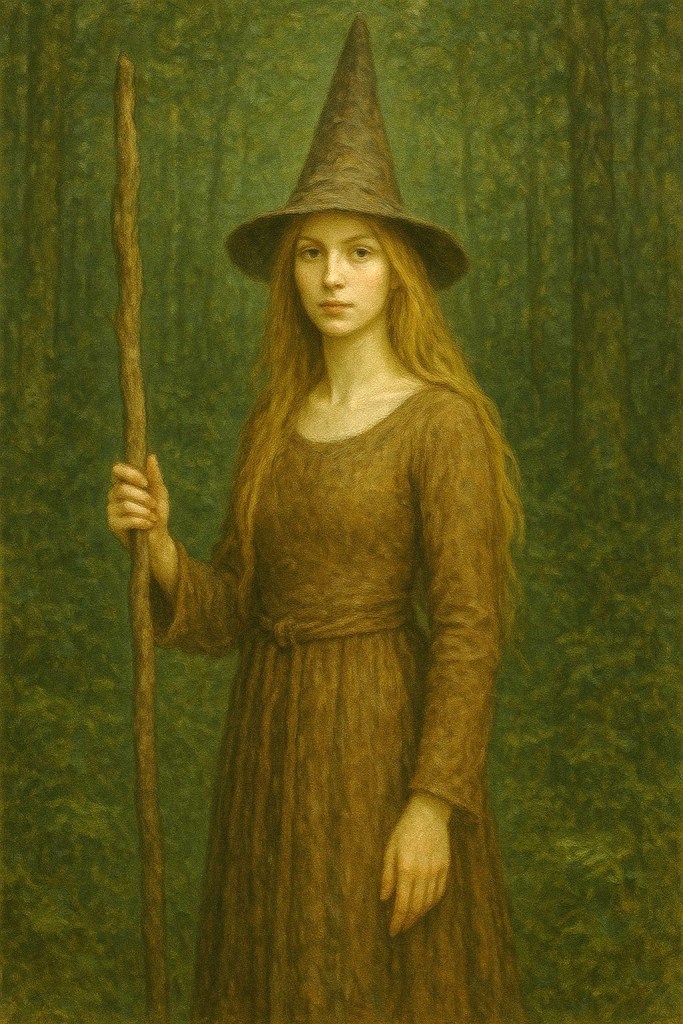
Imagining how a Huldra would look like. Stock AI-generated image ID: 2400845203 by Shutterstock AI Generator.Huldra’s Nymphs (1909) by Bernard Evans Ward, Public domain, via Wikimedia CommonsA Skogsrå, Tallemaja or Huldra that I generated with the help of ChatGPTAnother picture of a Skogsrå, Tallemaja or Huldra that I generated with the help of ChatGPT.A Tallemaja that I generated with the help of ChatGPT.
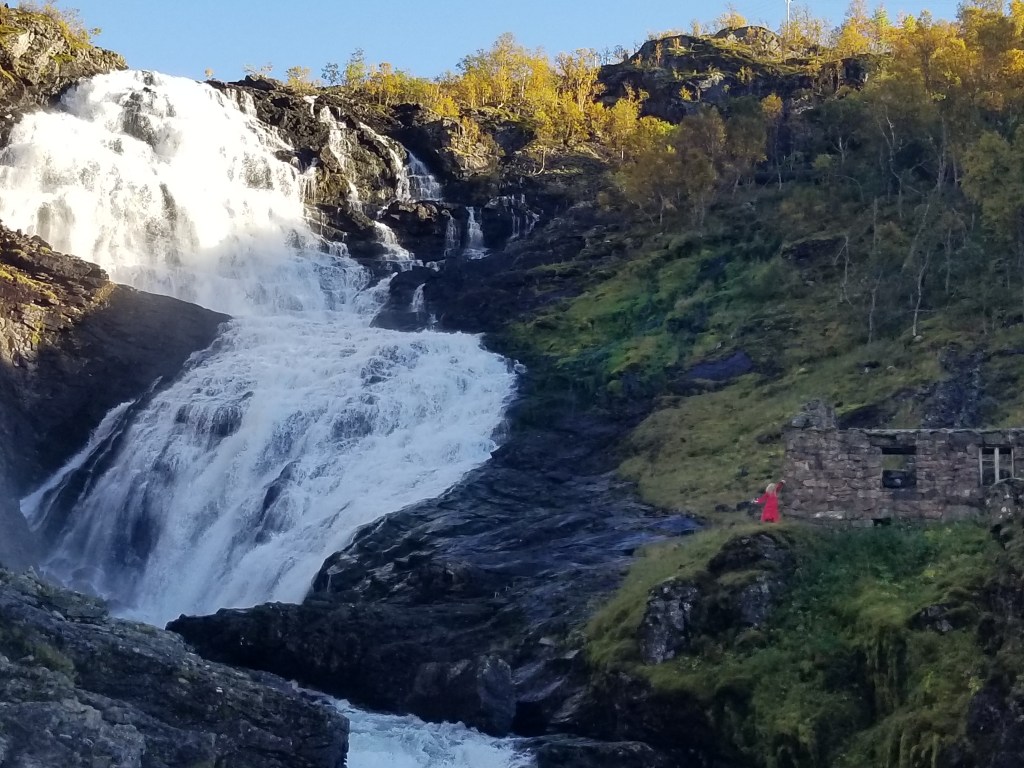
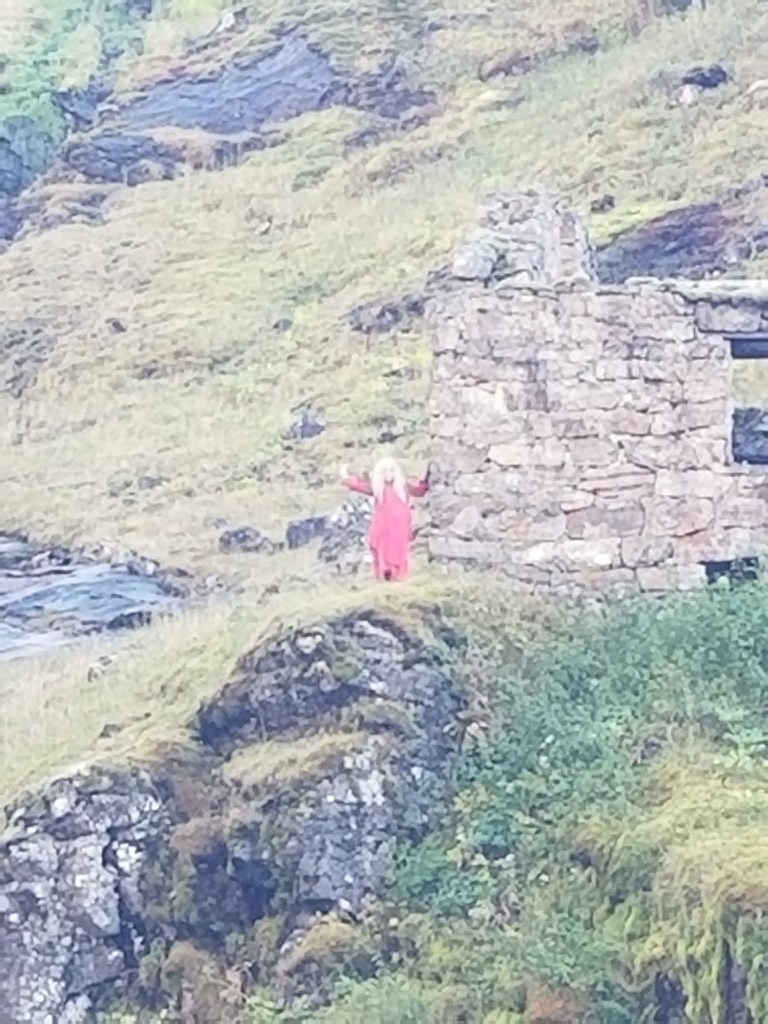
Last summer (a bit more than one year ago) we visited Sweden and Norway. One day we took a tour into the Norwegian mountains and fjords. We took a two-hour cruise on Sognefjord and after the cruise we took a train to the top of the surrounding mountains. Along the way we encountered a Huldra by a waterfall. She sang to us in her beautiful voice, and she seduced us all, both men and women, to take photos of her with our phones and posting them on social media. It was a tourist ploy of course. You can read more about our trip here .
My photo of the Huldra (in red) by the waterfall in the Norwegian mountains. She seduced us all into taking photos of her for Facebook. Her seductiveness was feared in medieval times, but in modern times we refer to the seductiveness of the Huldra as a “tourist trap”.A close up of the Huldra we encountered. Sorry, my phone camera is the best and it was at a distance.
Näcken, Fossegrim
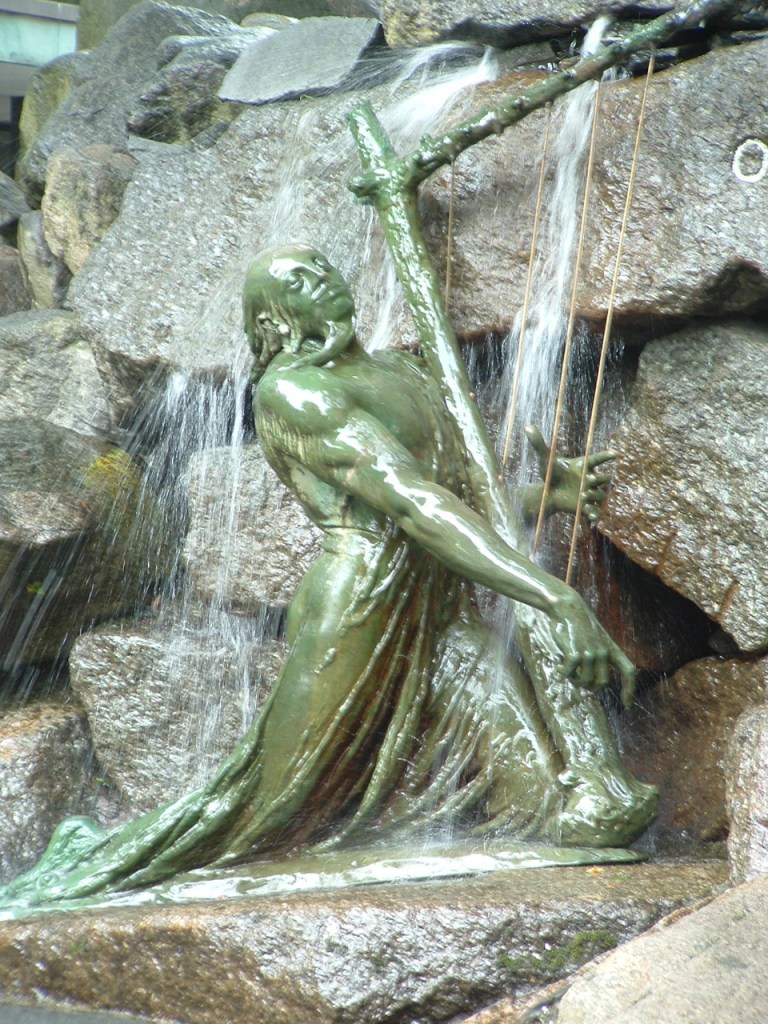
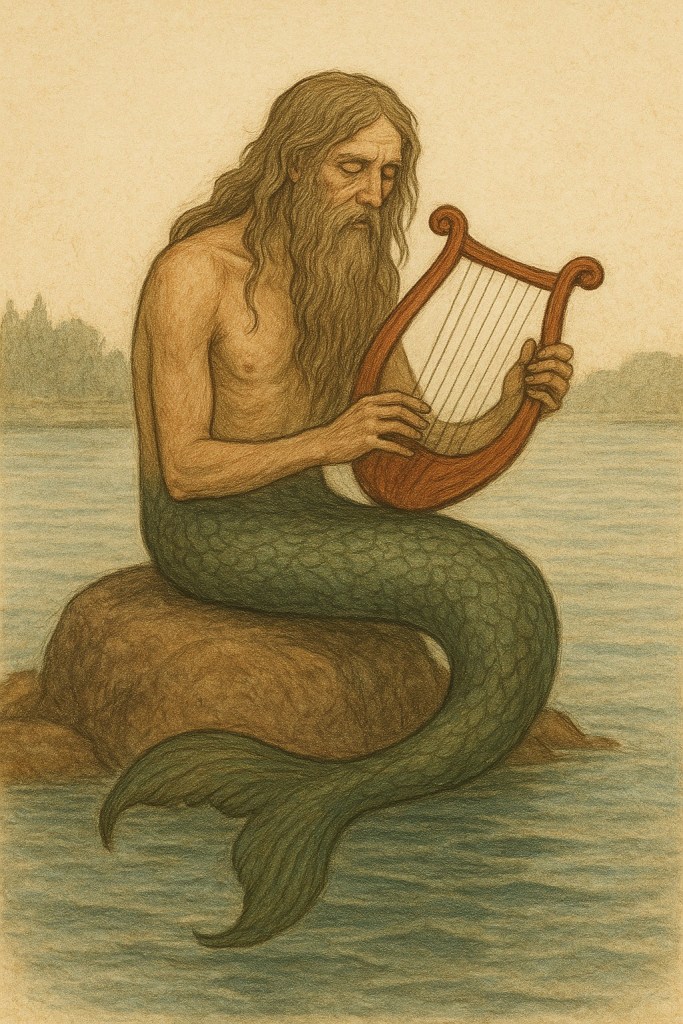
Näcken, Strömkarlen, or Fossegrim in Norwegian is a male creature who lives by the water, creeks, rivers, ponds and lakes. He plays a harp or a violin He lures children and others to their death. In southern Sweden (Scania) he seduces people by skillfully playing a violin thus creating irresistible music.
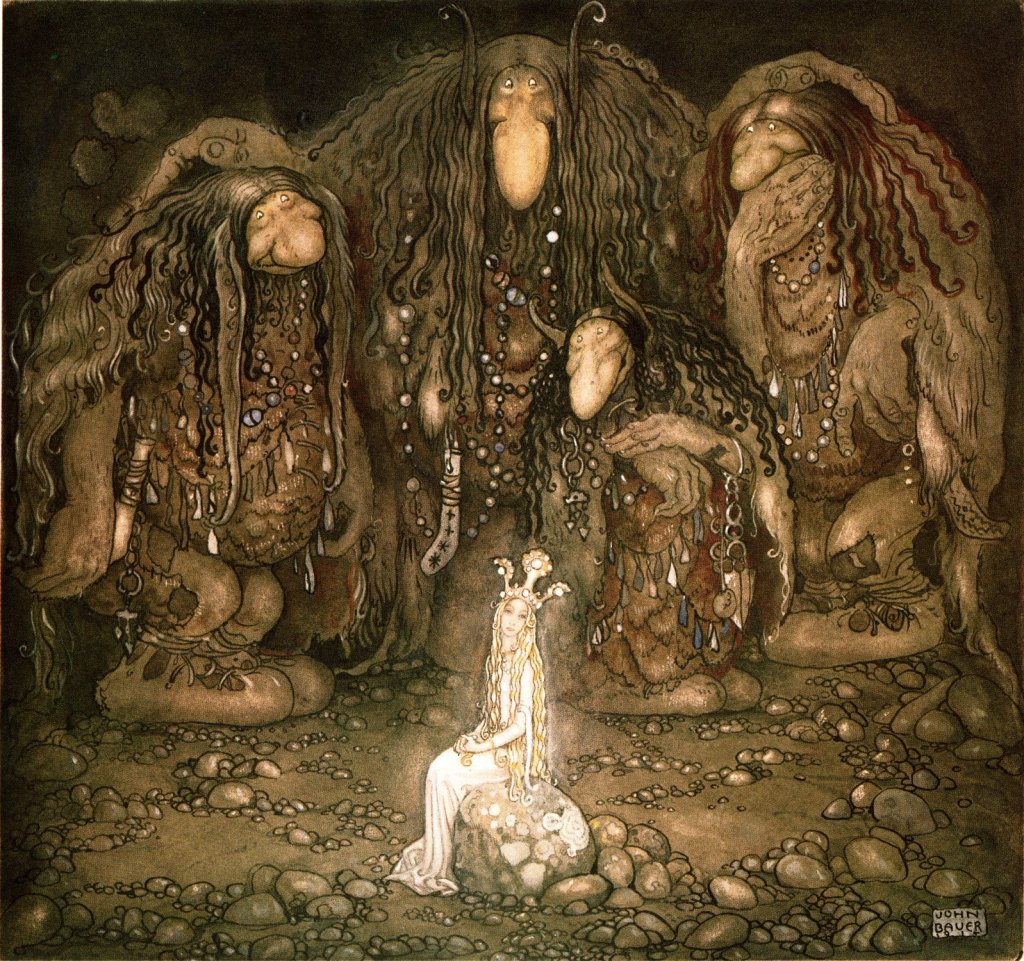
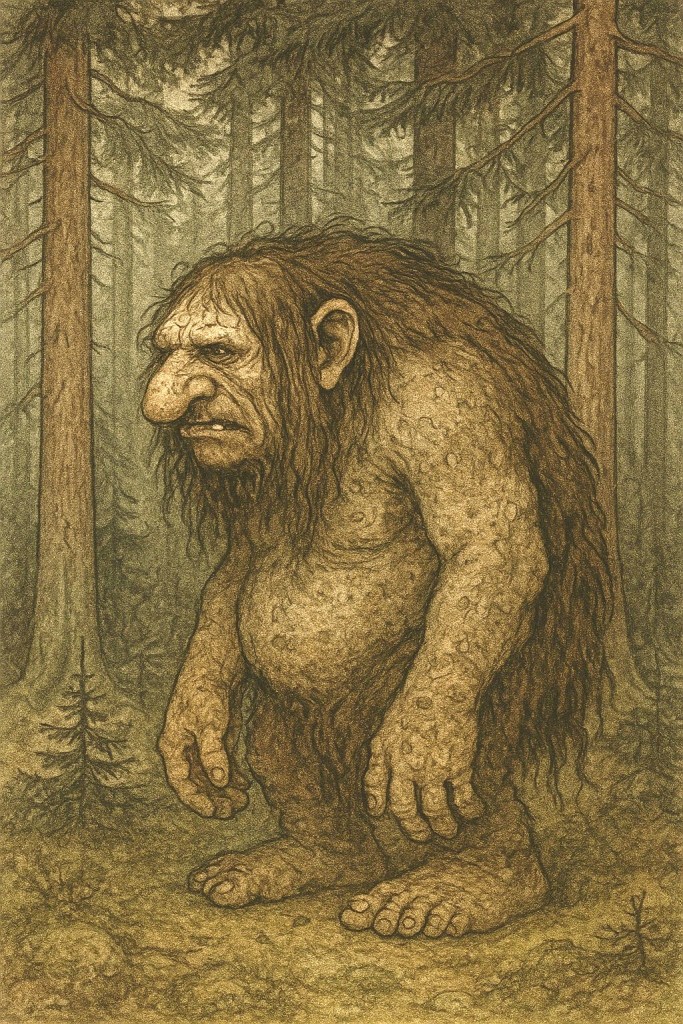
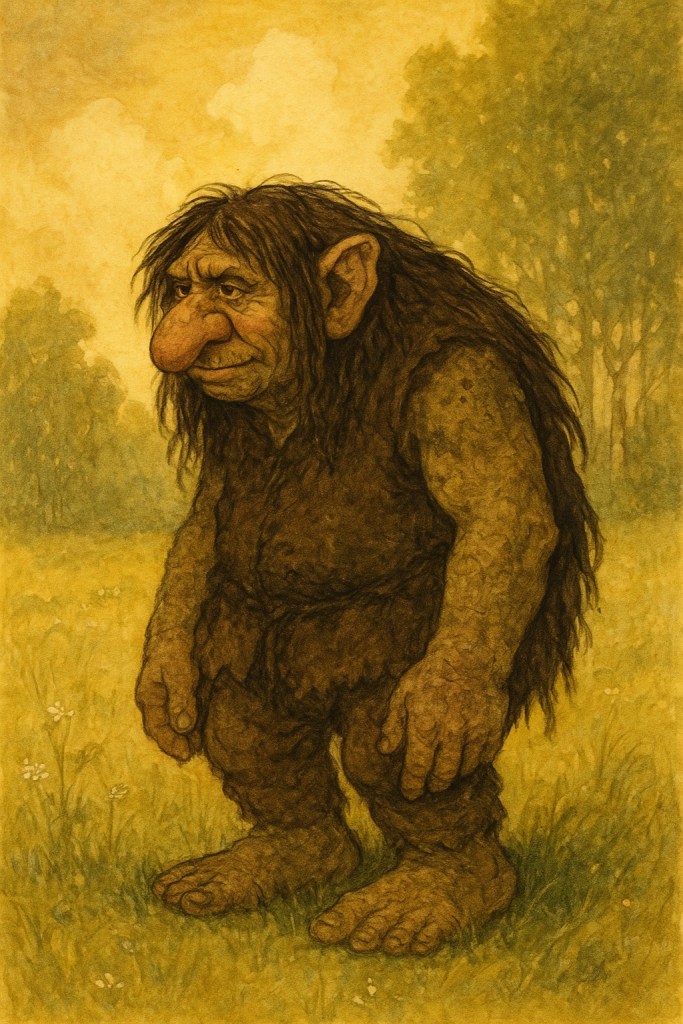
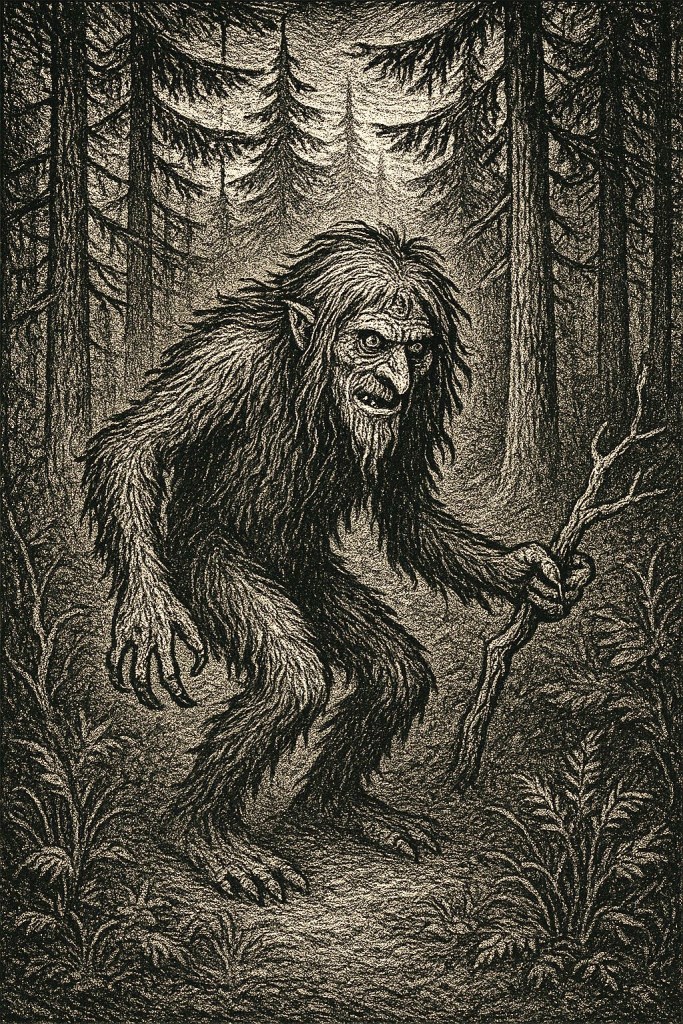
Troll, or Trolls in plural, are large ugly creatures with magical powers. They typically live in caves and sunlight is dangerous to them. They are typically hostile to humans and may kidnap people, including children, to work in their mines. Trolls are called Trolls in both Swedish and Norwegian.
Look at them, troll mother said to the elf girl. Look at my sons! You won’t find more beautiful trolls on this side of the moon. (1915) by John Bauer. John Albert Bauer (4 June 1882 – 20 November 1918) was a Swedish painter and illustrator. wikipedia public domain.A picture of a troll that I generated with the help of ChatGPTAnother picture of a troll that I generated with the help of ChatGPTA picture of a troll, a slightly different style, that I generated with the help of ChatGPT
Myling
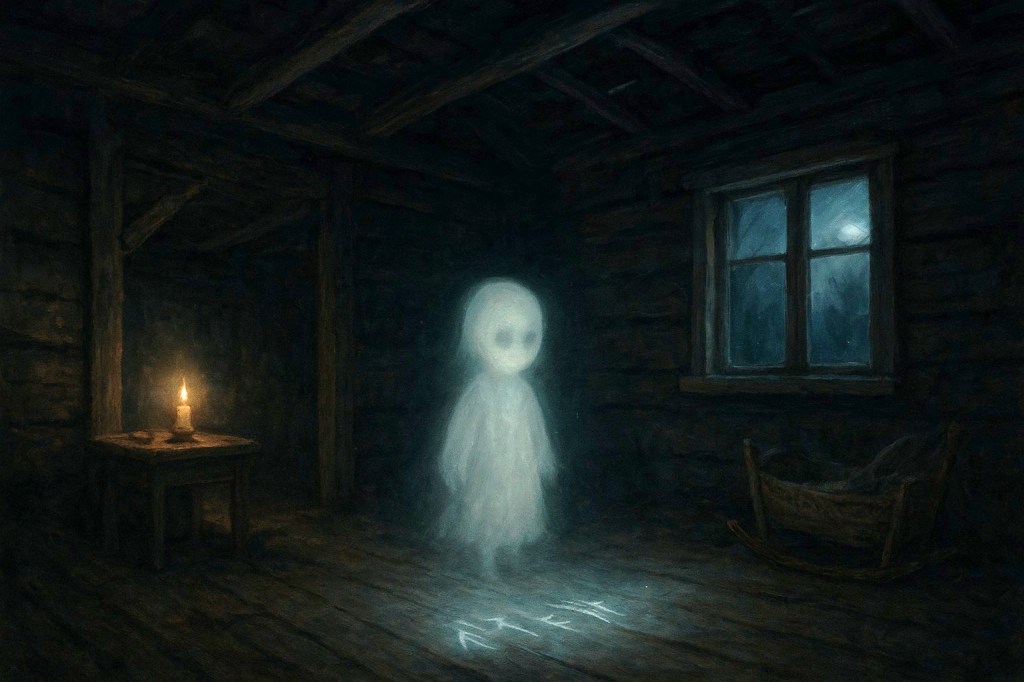
Before modern contraception, infanticide was one way for parents to limit the number of children they had. Unwanted and out of wedlock children were often killed. It is part of our human dark history. These babies were not baptized and in old Scandinavian mythology they became restless spirits seeking revenge on the mother or both parents. Alternatively, they caused mischief until they could convince someone to at least bury them properly. These restless baby spirits are referred to as myling or mylingar in plural.
A picture of a myling that I generated with the help of ChatGPT
Storsjö odjuret
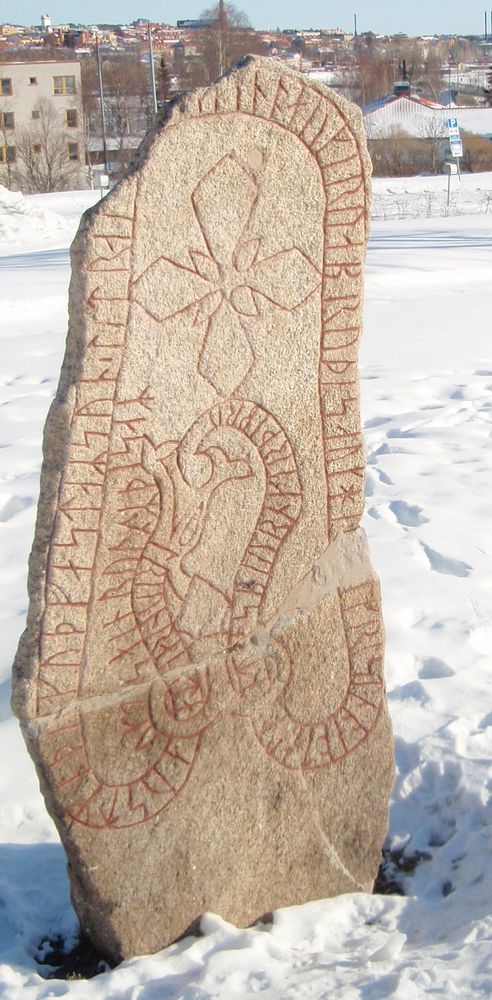
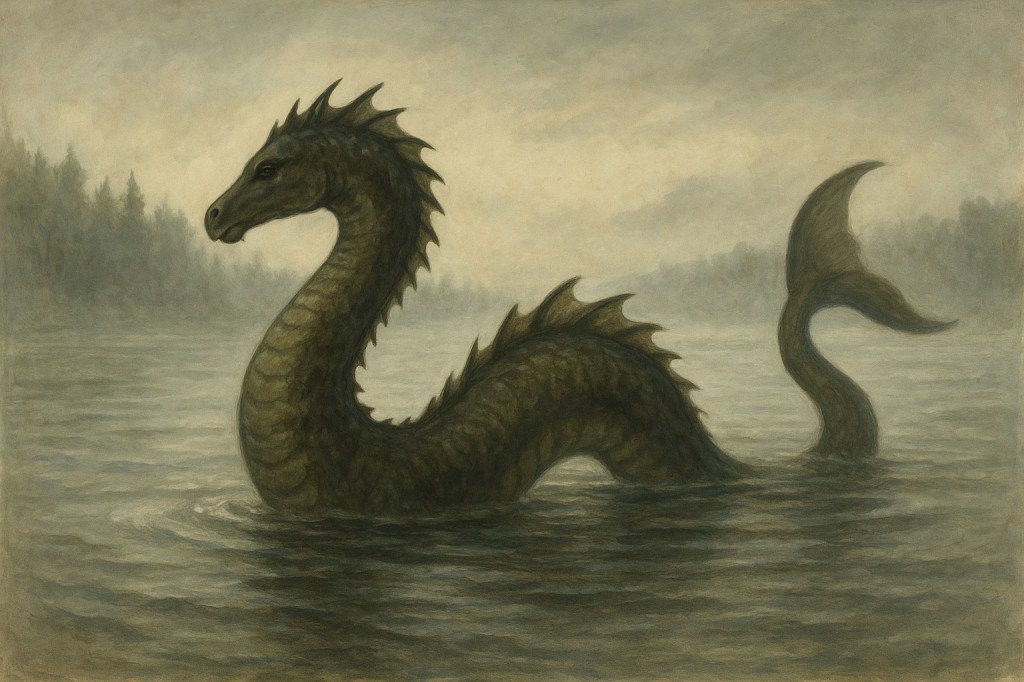
Storsjöodjuret is a large sea serpent like Swedish lake monster like the Loch Ness monster. It resides in a lake in northern Sweden. The English translation of Storsjö odjuret is the monster of the Great Lake. Storsjö / Great Lake is not far from where I grew up. I should say this monster has been hundreds of times since 1635 and seems to have been depicted on a rune stone from the 11th century.
The Frösö Runestone from the mid-11th century. Frösö is an island located in the middle of Storsjö. In the legend from 1635 Storsjöodjuret is said to be the serpent depicted on the stone. Andreaze, Public domain, via Wikimedia CommonsA picture of storsjoodjuret that I generated with the help of ChatGPT
Kraken
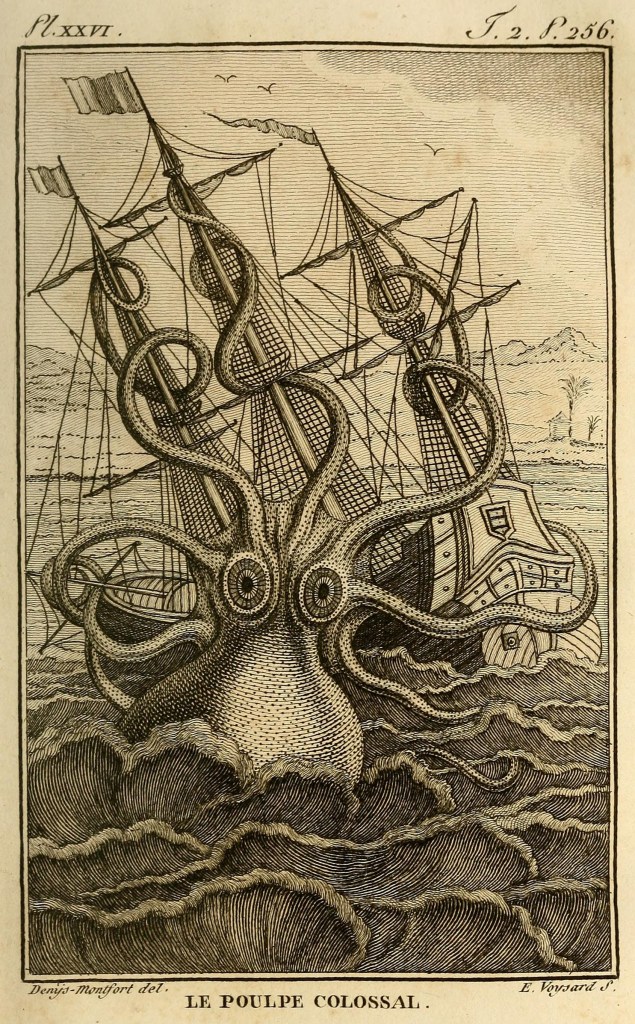
Kraken is a gigantic octopus that can bring down entire ships. It is more of a Norwegian creature but also Swedish.
Pierre Denys de Montfort (1766–1820) / Étienne Claude Voysard (1746–1812.), Public domain, via Wikimedia Commons
Skvader
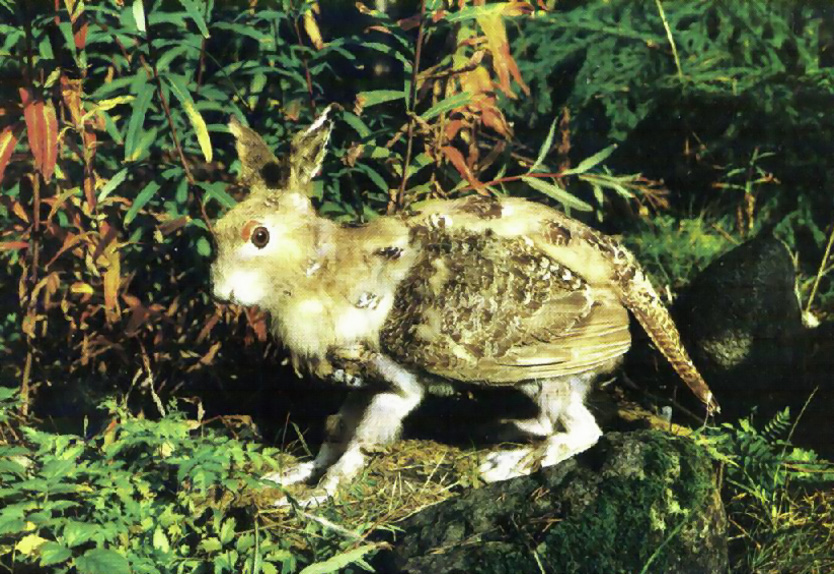
The skvader is a Swedish fictional creature that looks like a mix of a wood grouse and a hare. It started with a taxidermist creating a mixture of the two animals, taking a photo, and a rumor spread that it was real. I am remember watching debates on Swedish TV on whether the creature was real or not. People love to believe strange things. Yet another reason we scientifically valid evidence.
Unknown photographer, Copyrighted free use, via Wikimedia Commons
Blodstämmare
This is not a creature but a very common superstition in northern Sweden. There are people, blodstämmare, who can stop the flow of blood by uttering magical phrases while focusing their minds on the person in question. This power is usually used for helping people who are bleeding. It can also be used for evil, like black magic, to stop the blood flow in someone’s heart. This superstition is based on Sami (indigenous north Scandinavian people) Shamanism and north Swedish Christian fundamentalism (Laestadians). It is respected enough that some north Swedish hospitals have used blodstämmare in emergency situations.
The father of a close friend of mine called a blodstämmare when he had a bad nosebleed, and it worked. I know anecdotes are not valid scientific evidence. It is just a good story.
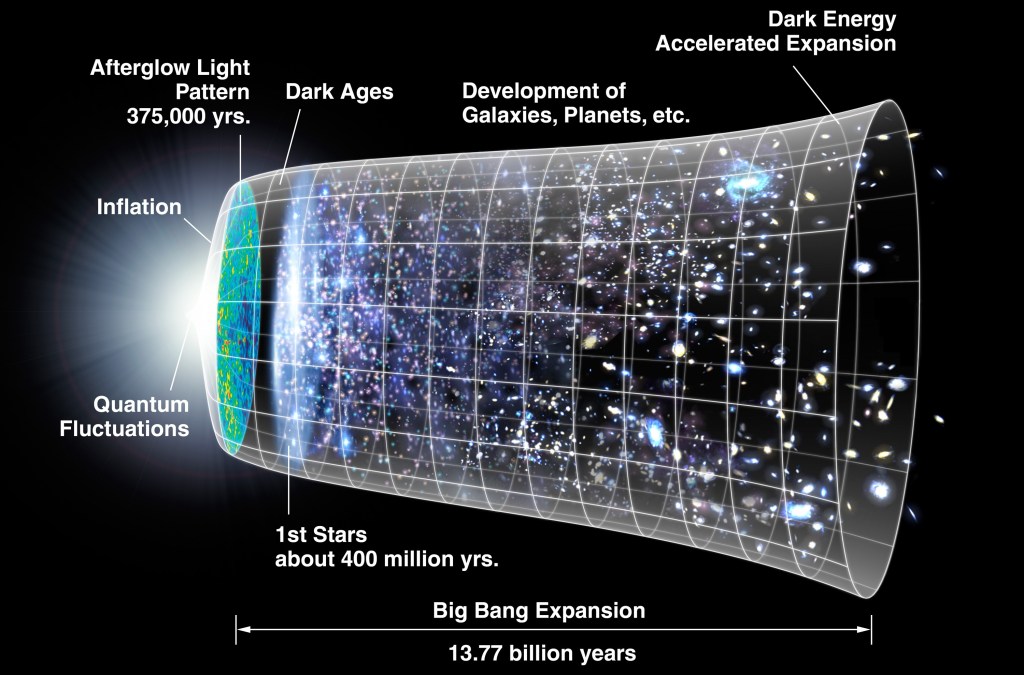
Super fact 67 : The Edge of the Observable Universe is 46.5 billion light years away despite the age of the Universe being 13.8 billion years. We can see 3.4 times further than light can travel in 13.8 billion years.
That sounds impossible at first. The age of the universe is 13.8 billion years. How can we see something that is farther away than 13.8 billion light-years if that’s how long the light had to travel. The reason it works is that space itself has been expanding the entire time that the light has been traveling toward us. The light we see today from the most distant regions of the universe was emitted 13.8 billion years ago, but the space between us and the origin of that light has stretched enormously. You can say that the light hitched a ride on the expanding space.
An overview of the last 13.8 billion years. This file is in the public domain in the United States because it was solely created by NASA. From Wikimedia commons.
As mentioned, the edge of the observable universe is now about 46.5 billion light-years away in every direction, which means that the observable universe is about 93 billion light-years across (46.5 billion light years times 2) vastly larger than what you’d expect if you just multiplied the age of the universe by the speed of light. Beyond that observable edge there may be much more—possibly an infinite Universe, but it is forever hidden from us because light hasn’t had time to reach us yet and will never reach us.
The speed of light in vacuum is a universal constant and nothing can travel faster then the speed of light. However, space itself can expand faster than the speed of light if measured across large enough distances. The distance between two points in space can expand faster than the speed of light if that distance is large enough. This is possible because there is nothing material that is traveling faster than light. It is just the space of the Universe itself expanding because of dark energy.
Space is expanding right where you are standing too. Can you feel space expanding around you? Well, probably not but it is. I consider this a super fact because it is an important aspect of our view of the universe, it is surprising to those who did not know it before, and it is true.
Galaxies are Moving Beyond the Observable Universe
In the future the far away galaxies will continue to move away from us faster and faster, and beyond a certain distance their light will no longer ever reach us again. Therefore, more and more galaxies will disappear from our view. They won’t vanish physically; they’ll just slip beyond our observable horizon. In about 100 billion years, observers in the Milky Way (or what is left of it) may only see the Local Group of galaxies (Milky Way, Andromeda, etc.). Everything else will have faded out of visibility.
Our Local Group of galaxies consists of 80 galaxies compared to the estimated two trillion galaxies in the current observable universe. That means that the observable universe at that point will have 25 billion times fewer galaxies than now, or in other words only 0.000000004% of the galaxies in the observable universe will remain observable.
Large-scale structure of Multiple Galaxies in Deep Universe. When will all these galaxies forever disappear beyond the edge of the observable universe. Asset id: 389006449 by vchal
The Cosmological Event Horizon Another Edge of the Universe
Beyond roughly 16 billion light-years, galaxies recede faster than light due to the expansion of space. Again, that’s allowed in relativity because it’s space expanding, not them moving through space faster than light. Eventually, most of them will cross a boundary called the cosmic event horizon. Once they do, their light will never be able to reach us, not even given infinite time. We can still see these galaxies because of the light they emitted in the past, but the light they emit now will never reach us.
The cosmological event horizon, not to be confused with the event horizon for a black hole, is 16 billion light years away. That is another limit, or edge of the universe. Below is a 10 minute video explaining both the horizon / edge of the observable universe and the cosmological event horizon for those who are interested.
Black Holes Edges of the Universe
3D illustration of giant Black hole in deep space. High quality digital space art in 5K – realistic visualization. Stock Illustration ID: 2476711459 by Vadim Sadovski.
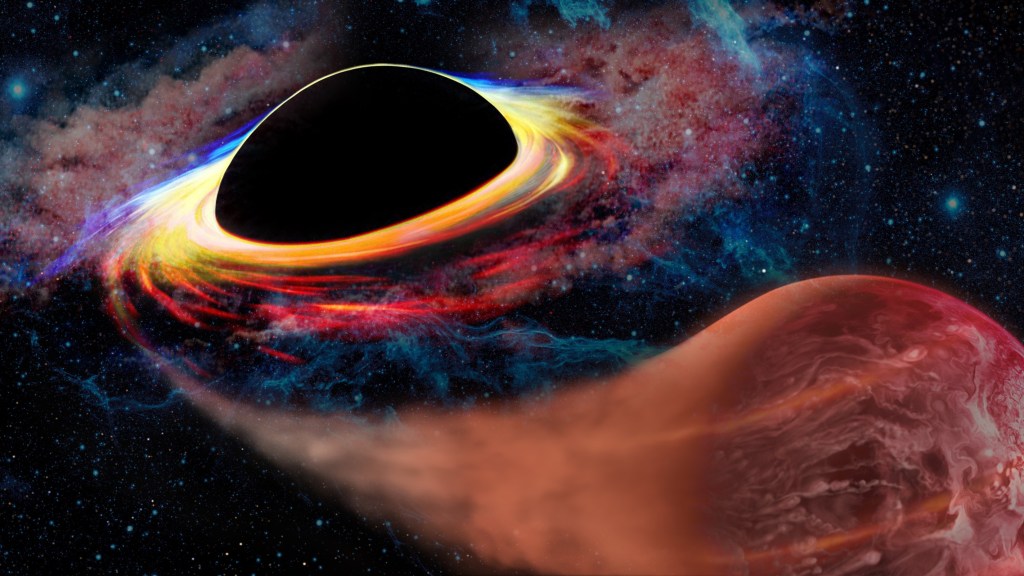
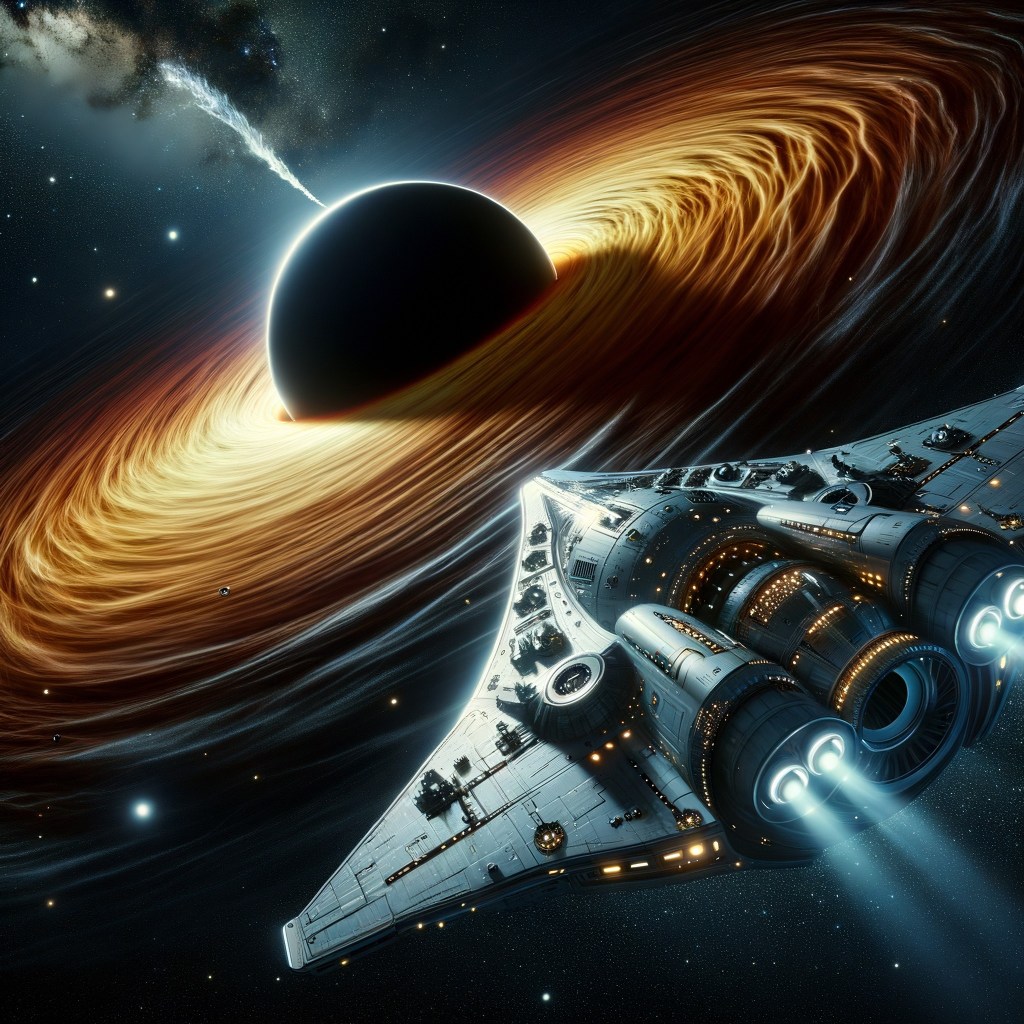
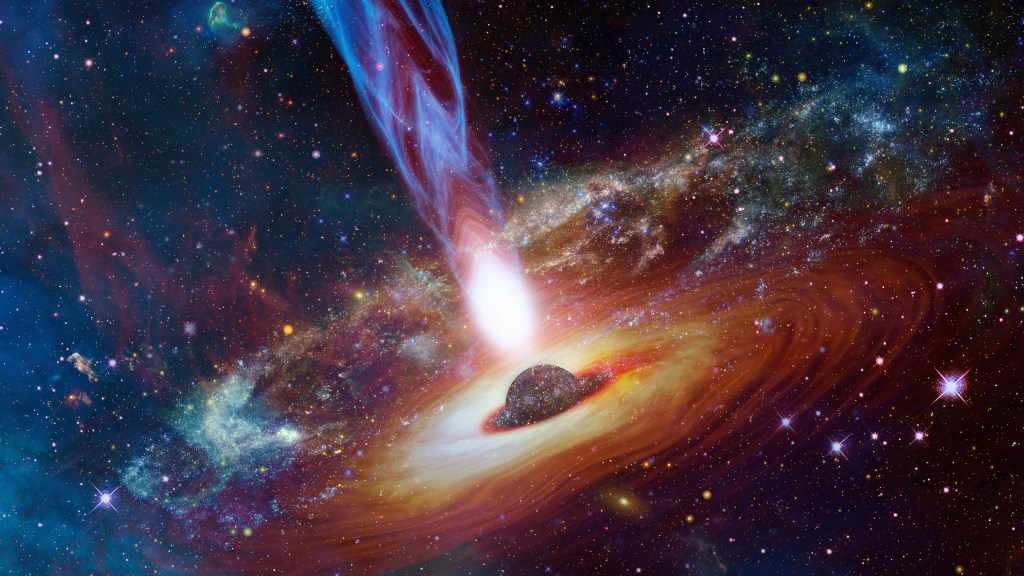
A black hole is a region of spacetime where gravity is so strong that nothing, including light, can escape it. The boundary of no escape is called the event horizon. If you pass the event horizon you cannot come back out no matter how much energy you use. Nothing can escape, no matter, no radiation, not light, or other electromagnetic radiation, and no information. Nothing at all can escape. The curvature of time and space itself forbids it.
I should add that right at the event horizon, there is so called Hawking radiation, but without complicating things it is not the same thing as escaping a black hole. You can guess from physical laws what might be inside, but you can never observe and report what is inside to planet Earth. In a sense, the event horizon of a black hole is another edge of the Universe. You can read about different types of black holes here. You can read more about black holes here, or here.
Black hole devouring a planet. Black Hole Stock Photo ID: 2024419973 by Elena11Realistic spaceship approaching a black hole. This content was generated by an Artificial Intelligence (AI) system. Stock AI-generated image ID: 2448481683 AI-generated image Contributor Shutterstock AI Generator.AI-generated image Description : This image depicts what a black hole is doing to space around it. Gravity bends space time depicted as a grid. Stock AI-generated image ID: 2457551367 by AI-generated image Contributor Shutterstock.AIThe photo of the supermassive black hole at the center of the galaxy M87 taken by the event horizon telescope in 2017. CC BY 4.0, Event Horizon Telescope, uploader cropped and converted TIF to JPG, CC BY 4.0 <https://creativecommons.org/licenses/by/4.0>, via Wikimedia Commons.Quasar in deep space (a huge black hole emitting an energy beam). Elements of this image furnished by NASA. Asset id: 1758938918. by NASA images.
Super fact 66 : Bots make up more than half of all internet traffic surpassing human activity for the first time in 2024. The 2025 Imperva Bad Bot Report found that bots accounted for 51% of all web traffic. Human activity accounted for 49% of all internet traffic, malicious “bad bots” accounted for 37%, and 14% of traffic comes from “good bots,” such as search engine crawlers.
What made me look up this information is that I’ve recently seen a lot of idiotic and inflammatory comments, as well as inappropriate laughing emojis on social media pages and posts. The pages that seem to be targeted the most by this abuse seems to be pages related to things like climate change, clean energy, EV cars, evolution, vaccines, modern medicine, modern physics, geopolitics, information on political issues, etc. However, those topics might reflect my interests. Perhaps all topics are targeted by this growing strange abuse.
It looks like those among us who slept through the science classes in high school now think they are the real experts and have declared war on all science nerds. The question that arose in my mind is, are these keyboard warriors humans or are they bots? It is true that Artificial Intelligence does not (yet) demonstrate true independent intelligence, but that is true for many people as well. So, how do you know the difference? Anyway, that is the background to why I investigated this issue.
Many people are also spreading false information and some of them are scammers, but the fact that machines do it as well add to the problem. It is also very common for bots and fake accounts to leave reactions on Facebook posts, which might be what I saw, but I am not sure. What is certain is that I have come across a lot of false information on Facebook, as well as scams and deep fakes, and Meta/Facebook is obviously not able to clean it out. There are also bots that are remotely controlled ransomware, computer viruses, spyware, and other malware.
Warning of a system hacked. Virus, cyber attack, malware concept. Asset id: 1916985977 by Sashkin
Why I consider this a super fact is because it appears to me that people underestimate the influence of malicious bots. If you had asked me before I looked this up how common bot traffic was, I might have said a few percent. After all streaming, youTube, gaming, etc., require a lot of bandwidth. Considering all the fake stuff and nonsense that is spreading partially with the help of bots, this is dangerous. We know the bots make up more than half of all internet traffic, and bot traffic is growing faster than human traffic, it is important information, and I think it is surprising information to a lot of people, thus making it a super fact.
Fake Nonsense on Facebook
This section is not directly tied to the super fact above, but it concerns a related topic and is based on my personal experience with the social media platform that I have used the most, Facebook. Instagram seems to be even worse, but I am not using it as much. Why I am bringing this up is because increased bot traffic and the increased presence of fake accounts and deep fakes on social media can make this a lot worse. Combined with our gullibility and lack of critical thinking as well as the failure of social media platforms to keep after this, we are facing a serious threat.
Gullible Planet
It is well known that there are a lot of nonsense posts on Facebook (and elsewhere). The fact that we so easily fall for it and don’t check with reliable sources is a big problem. When I see something fake, I often post corrections, for example, using sites like snopes. Sometimes people are grateful, sometimes they get angry, and I’ve even been blocked and lost friends just by posting a snopes link. A lot of the fake stuff is posted by people, but a lot of posts, comments and reactions are posted by bots, and this is becoming more common. With increased malicious bot traffic, AI and deep fakes, we must improve our critical thinking skills.
Below are some examples of fake stuff I’ve come across on Facebook
Did you read that viral article on Facebook claiming that they found 20 feet humanoid skeletons in Turkey? The article stated that archeologists think that they might be fossilized Nephilim, the giants mentioned in the Old Testament. If so, did you doubt the accuracy of the article? If you did, you did good. It was based on an article in a satirical website called World News Daily Report. However, judging from the comment section, including the comments of some of my friends, most people didn’t doubt the article’s accuracy.
How about the story from a purported science magazine that scientists had just discovered that the Easter Island statues/heads have bodies/torsos below the ground. The article stated that this was a revolution in archeology that forced a reevaluation of history. The commentors were amazed over this discovery and some pointed out that not realizing this sooner was a big failure on the part of archeologists and scientists. Well, that the Easter Island statues/heads have bodies/torsos below the ground has been known all along.
How about the story about the lunch lady named Aileen G. Ainuse who poisoned the water supply at Sunnydale High School in Goobersville, Indiana, killing over 300 students and staff. It was accompanied by a scary photo of a starving lady. The readers were shocked and appalled, but not many bothered to verify the story, for example, with the help of snopes. The story was false.
Another article stated that the fact that there were no stars in the black sky in a photo allegedly taken on the moon was proof that the photo was fake and that the astronauts were never on the moon. First of all, it was day, the sun was out. When the sun is out it is very difficult to see the stars because the sun’s light is a million times brighter than the light from the stars and in addition the bright sunlight reflected off the surface of the moon dims the stars. In addition, the cameras used had short shutter speeds for picking up the bright light, not faint stars. Seeing stars in a daytime photo taken on the moon is not something you should expect. Several commentors pointed this out but most other commentors didn’t pay attention and were fooled.
I’ve also seen the opposite, people refusing to believe a true story because they fundamentally misunderstand something. Below is a youTube video showing an animation composed of actual satellite photos by NASA. Many commentors seeing this video insisted that it was a hoax because the back side of the moon is dark. But it is not. When the side of the moon that is turned towards us (the near side) is dark (a new moon) the back side reflects the sun’s light (like a full moon). The backside (far side) of the moon also looks different from the side turned towards us. In the video below the sun is behind the camera and shines on earth as well as the backside of the moon.
A final example is a deep fake Ad featuring Meryl Streep and Dr. Sanjay Gupta promoting an Alzheimer’s cure. I saw it on Facebook several times over a period of several weeks. It looked very real to me, but something felt off, so I fact checked. It turned out that Meryl Streep and Sanjay Gupta had nothing to do with the video. They were AI generated likenesses promoting a scam product. The video used all the typical polemic tricks such as “a cure that the billion dollar companies don’t want you to know about”, “buy now before they take our website down”…. We need to get better at protecting ourselves and believing 20 feet skeletons on Facebook are real is not the way to do it.
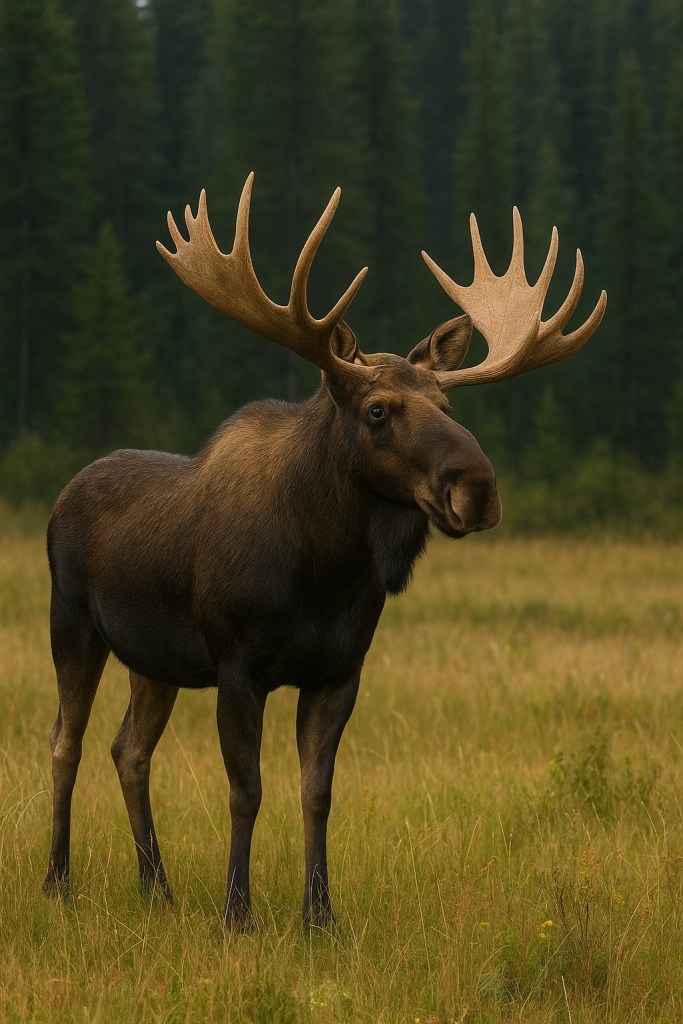
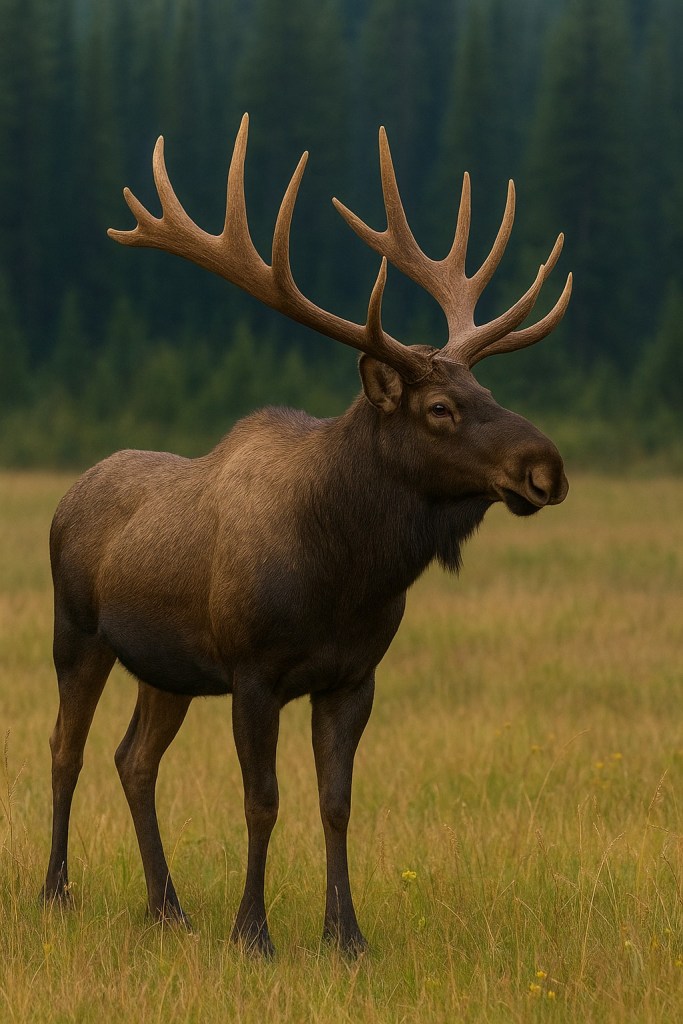
This is not a super fact but more of a fun fact. It is a piece of trivia that confuses a lot of people. What is the difference between a Moose and an Elk? Well that depends on where you live and you’d be surprised.
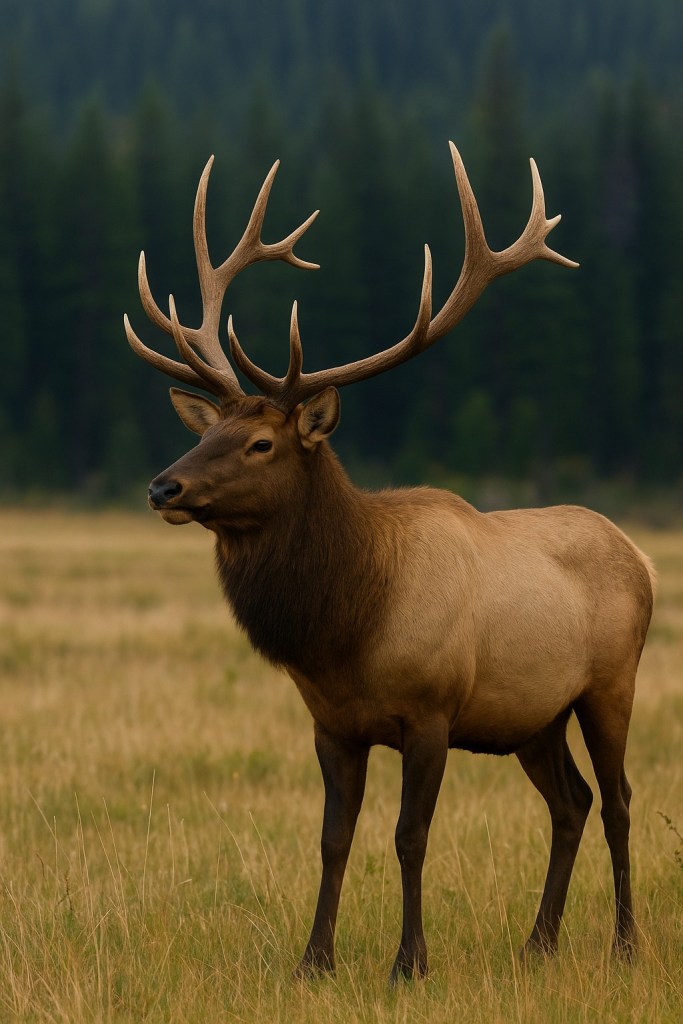
What people in North America refer to as a Moose is called an Elk in British English or in general when you speak English in Europe. It is called an “Älg” in Swedish, “Elg” in Norwegian and in Danish, “Elch“ in German, “Élan” in French, “Alce” in Spanish and Italian. If you use Google Translate “Elk” in English translates to “Älg” in Swedish and “Elch” in German, etc., but so does “Moose”. Using Google Translate Elk and Moose translate to the same animal in all other languages as well. However, if you ask ChatGPT to generate a picture of an Elk and then of a Moose you get two different animals. The same is true for Google AI. There is quite a bit of confusion.
ChatGPT generated picture of an Elk. Or is it a Moose?ChatGPT generated picture of a Moose. Or is it an Elk?ChatGPT generated picture of a Moose-Elk. Or is it an Elk-Moose.
The moose (Alces Alces) is called Elk in Eurasia. It belongs to the deer family and like all members of deer family the bull has antlers. It is the largest species within the deer family. After the mating season the males drop their antlers to conserve energy for the winter. A new set of antlers will then regrow in the spring. An interesting fact about moose is that not all bull moose have the same type of antlers. The moose in northern Europe and Alaska have palmate antlers, and they act as parabolic reflectors, amplifying sound at the moose’s ear. You may think that the plural of Moose is Meese, but it is not, and it is not Mooses either, it is just Moose. To read more about moose click here.
The Moose (or Elk in Eurasia) live in northern North America, Scandinavia, parts of eastern Europe, Russia and Siberia. Jürgen Gbruiker / User:Jrockley, CC BY-SA 3.0 <http://creativecommons.org/licenses/by-sa/3.0/>, via Wikimedia Commons.
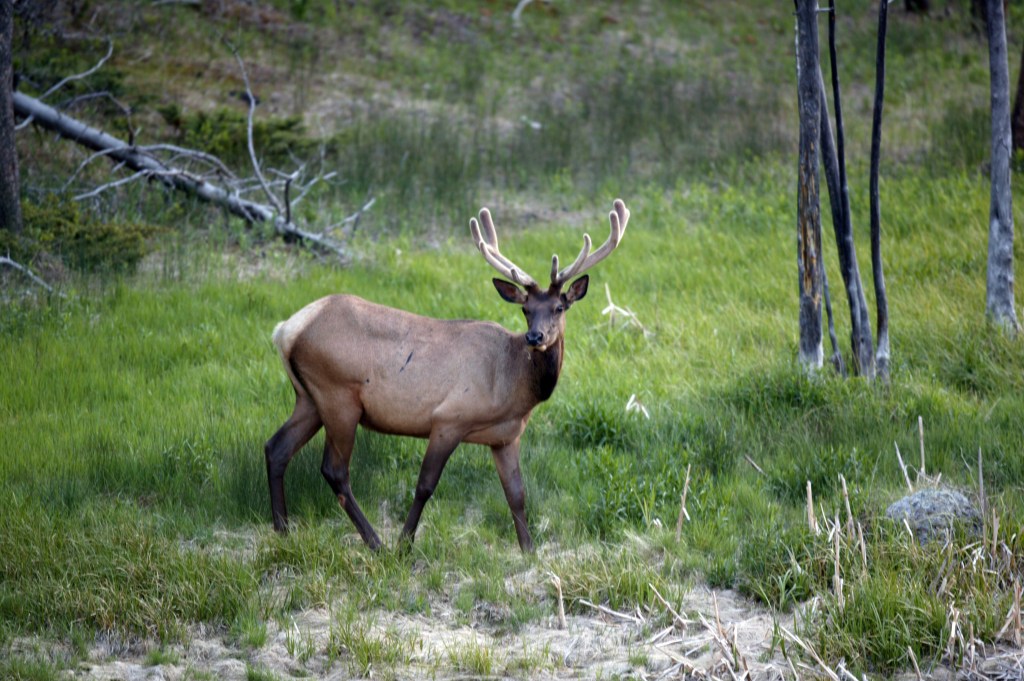
Elk (Cervus Canadensis) is the second largest species within the deer family. It is also called Wapiti, and I have come across the name Canada Deer in Europe. Remember, when in Europe you can’t call an Elk and Elk because in Europe the name Elk is reserved for Moose. Like Moose Elk shed their antlers every year. You can read more about Elk here. Note that it says “This article is about the species called “elk” in North America. For the species called “elk” in Eurasia (Alces alces), see Moose.”.
Moose and Elk Photos
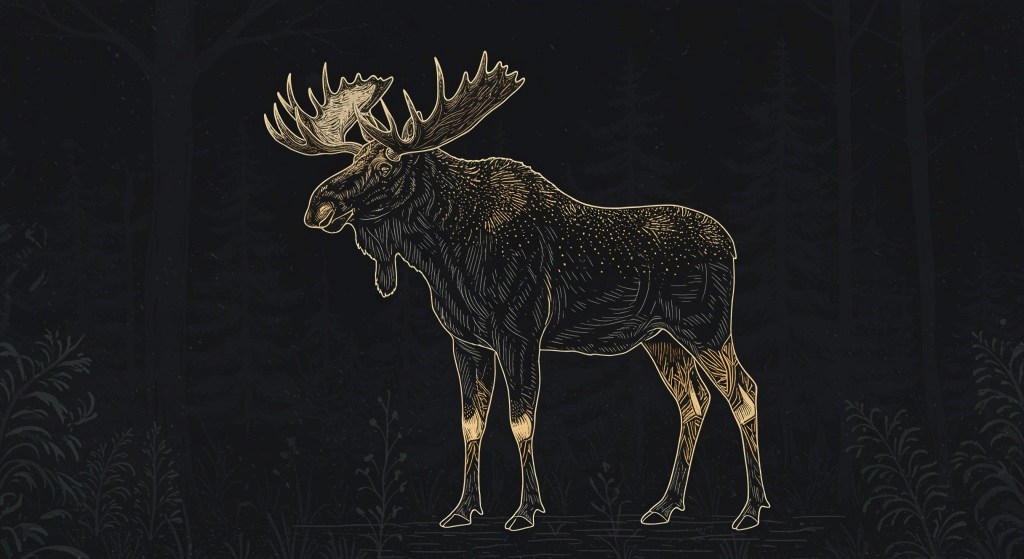
Vintage boho artistic image of älg (a bull moose) in Sweden in the forest Asset (Shutterstock AI) id: 2592983377A Moose in Jasper Canada Asset id: 2031585740 by Harry Collins PhotographyA bull elk in autumn during the rut Asset id: 190972129 by Harry Collins PhotographyPhoto of Elk taken by friend in Yellowstone National Park.Photo of a moose taken by friend in Grand Teton National Park.
My Moose and Elk Photos
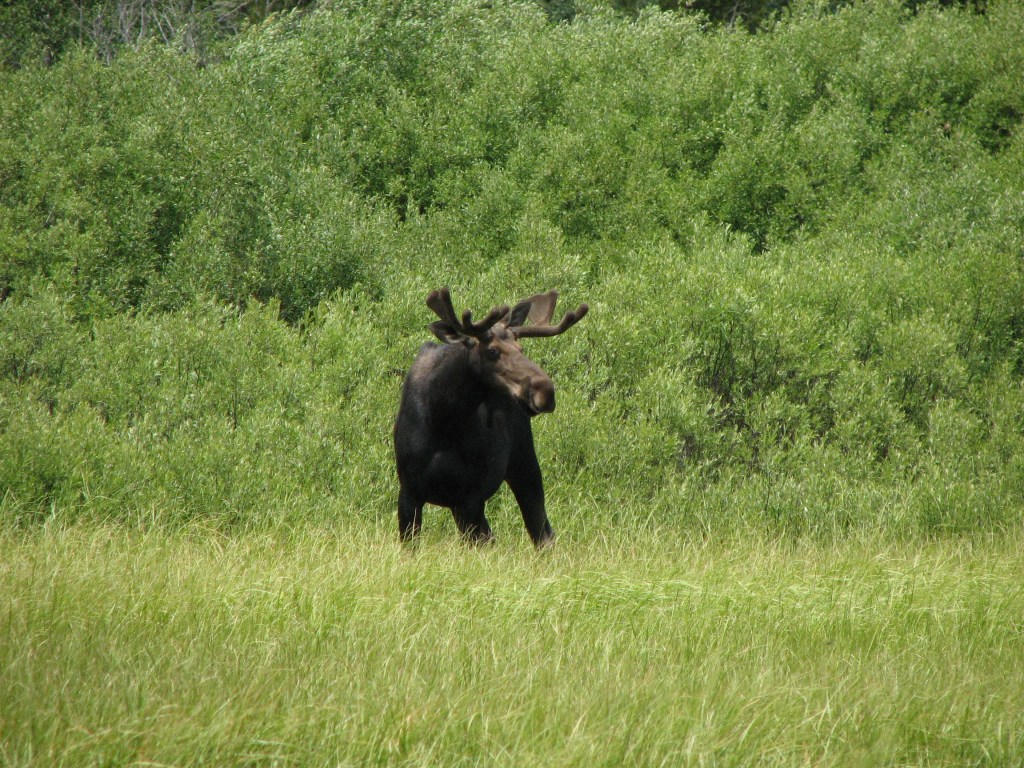
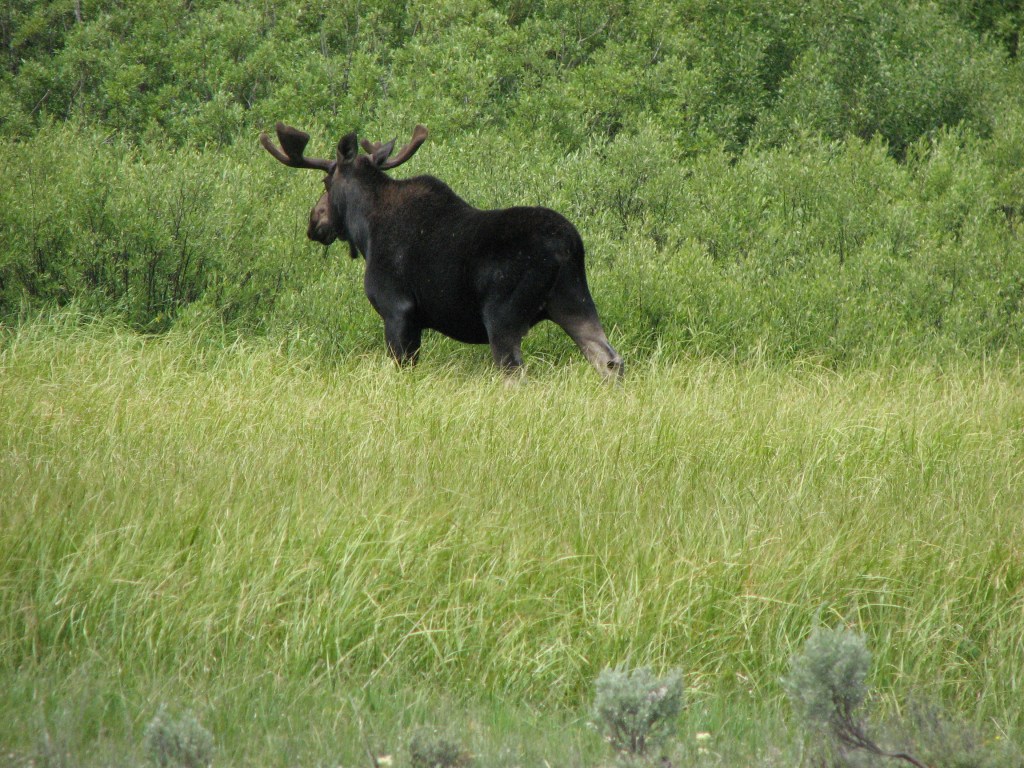
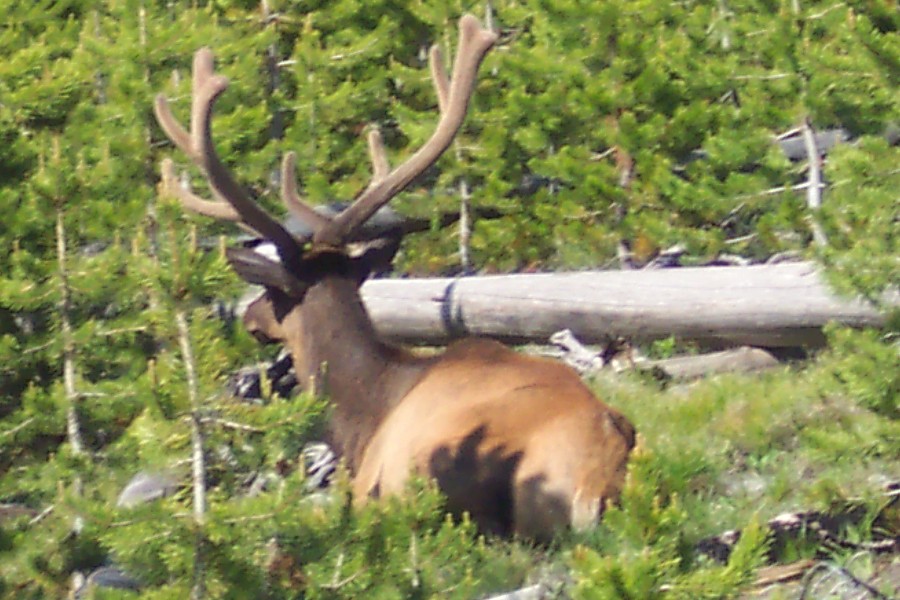
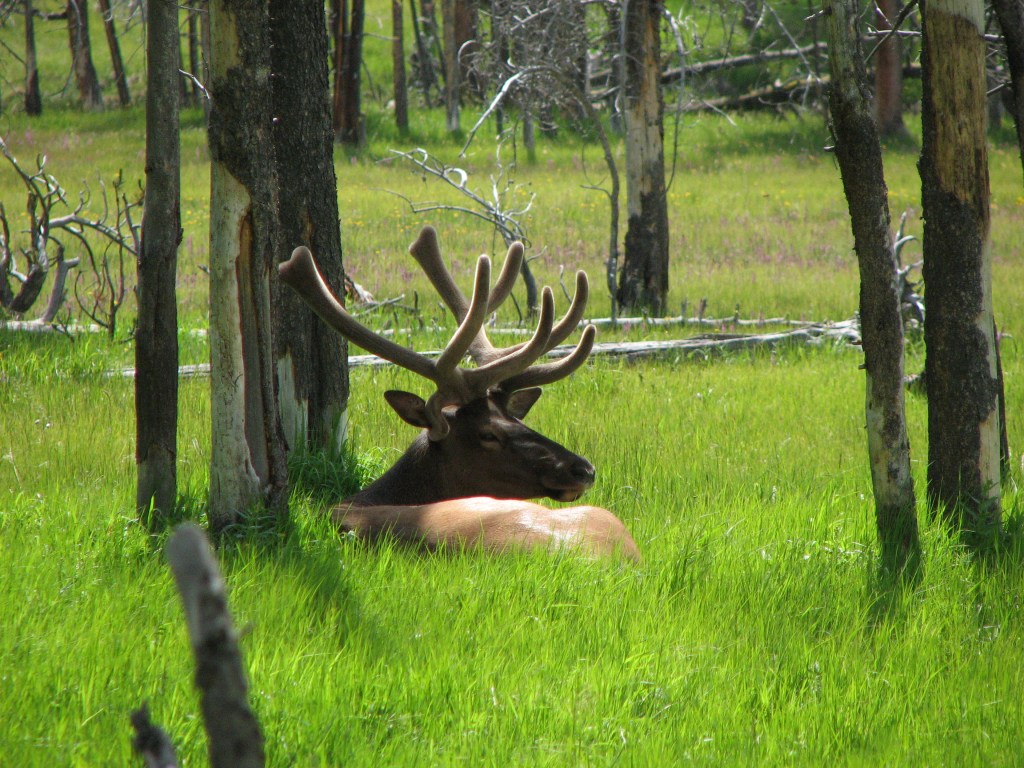
Photo of a Moose that I took on a visit to Yellowstone National ParkPhoto of a Moose that I took on a visit to Yellowstone National ParkPhoto of an Elk that I took on a visit to Yellowstone National ParkPhoto of another Elk that I took on a visit to Yellowstone National ParkPhoto of two Elk that I took on a visit to Yellowstone National Park.
The Murder Moose
The first story I ever wrote in my life I gave the title the “The Murder Moose” / “Mördar Älgen”. It was when I was in second grade in Swedish public school. Our teacher told us that we could write about anything, and I chose a horror story. The story was about a very big and dangerous moose that ran into to villages and killed people. At the end of the story a hunter shot the moose. I also drew a picture of a moose with big antlers and sharp teeth.
The murder moose in my second grade story. The picture was generated by ChatGPT.
The inspirations behind this story were two-fold. A neighbor’s girl and I had been walking in the forest together when we saw something big moving behind a thicket around 30 feet ahead of us. At first it looked like a horse and carriage to me, but it couldn’t be. A horse and carriage could not have gotten deep into the forest. Suddenly two big heads peered out of the thicket. It was a bull moose and female moose. We screamed on top of our lungs and ran home, and the two moose startled by our screams ran the opposite way.
The second inspiration for the story is that moose hunting is very common in Sweden especially in northern Sweden where I lived. Sweden has a very large moose population of approximately 300,000 to 400,000 moose, with a stable population of around 350,000. Sweden is the country with the highest concentration of moose in the world. Each fall about 80,000 to 90,000 moose are hunted and killed during the hunting season as part of wildlife management. Therefore, moose hunting was a practice that a lot of adults I knew participated in. We also ate a lot of moose meat.













 Super Facts