The Future of AI is Superintelligence

What do you think is the future of AI?

View all responses
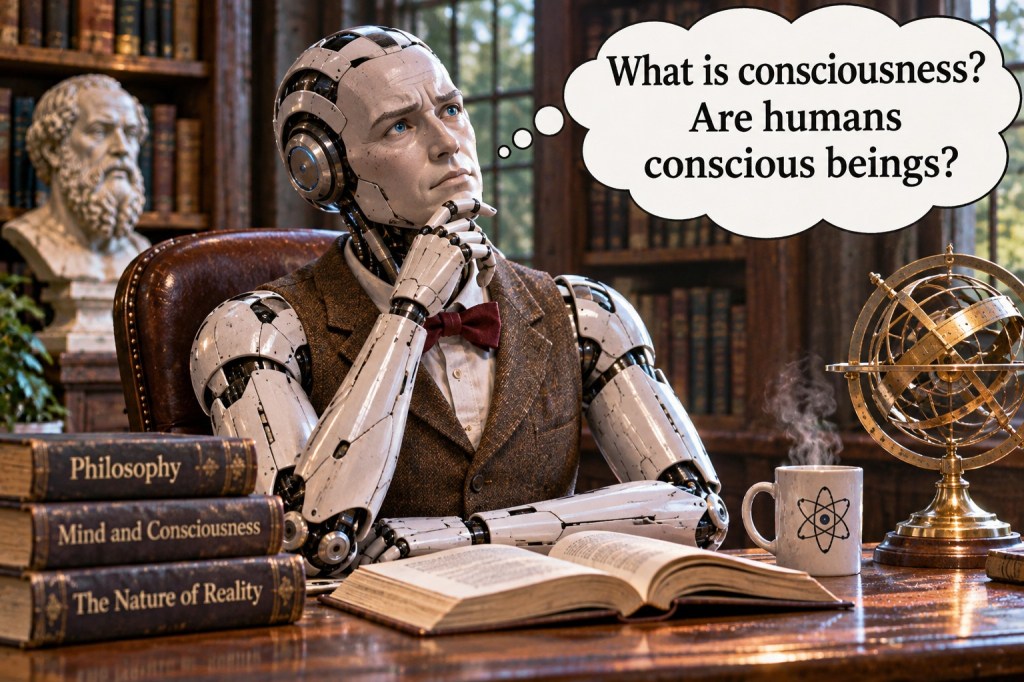
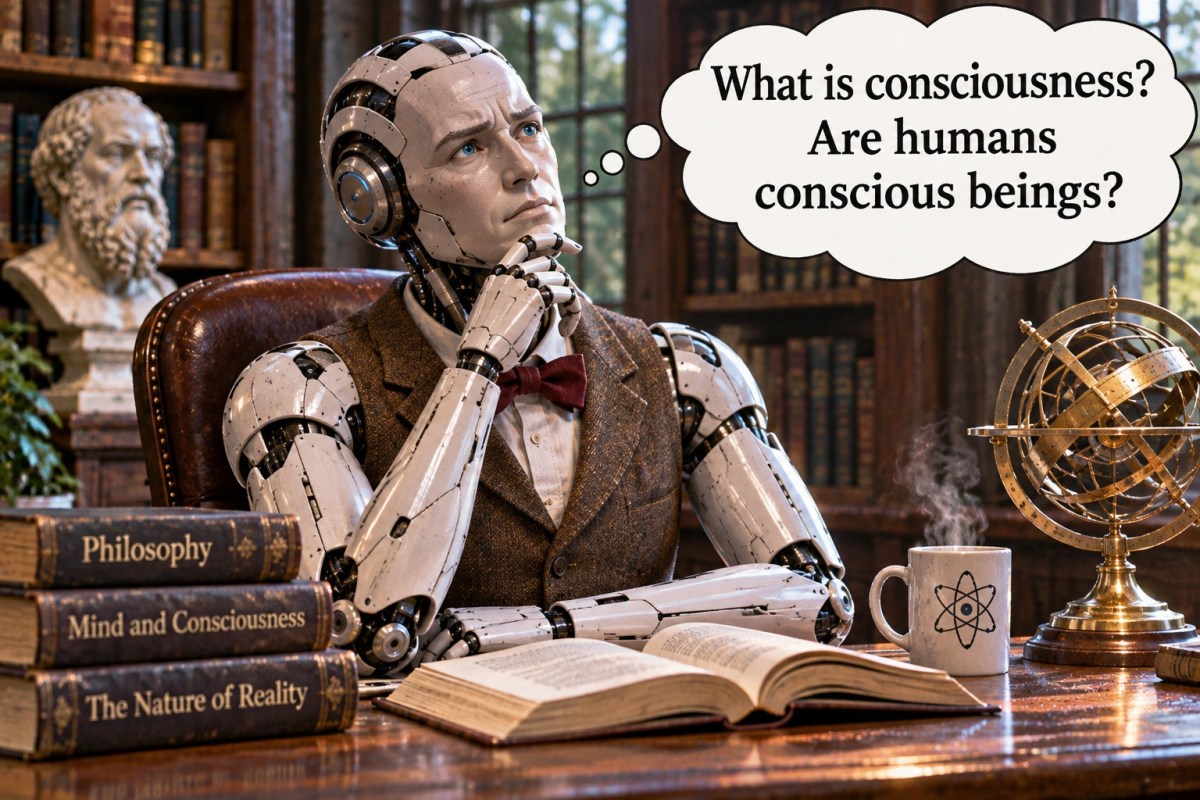
Robot sits at a desk, and he is thinking “What is consciousness? Are humans conscious beings?” He has books on advanced topics on his desk.
A robot philosopher. I generated the picture with the help of ChatGPT.

Today’s daily writing prompt is “What do you think is the future of AI?”. My answer is that “The Future of AI is Superintelligence”. Artificial Intelligence has been very useful for robotics and automation in the past, but the future of AI holds something very different, at least if you look far ahead enough. I’ve spent most of my working life using AI for at least some of my work related projects since the 1990’s. However, the Artificial Intelligence we see today is likely extremely primitive compared to the Artificial Intelligence of tomorrow. In the future it will be very different.
The picture shows multiple brains connected to a circuit board.
AI Brain Neural Network Supercomputer. Many super brains. Many super capabilities. Shutterstock asset id: 2087062936 by PeachShutterStock

Artificial Intelligence could evolve into intellects that greatly exceed the cognitive performance of humans in virtually all domains of interest, meaning it could render humans essentially useless. Moreover, the Artificial Intelligence of the future is likely to be autonomous, able to make its own decisions, have imagination, agency, and as you will see later in this post, as much “autonomy” as a human. This is not automation in a normal sense. I think it will evolve into something we may not be able to understand.
White female AI robot using a microscope in the scientific laboratory.
Artificial intelligence and research concept. Shutterstock Asset id: 2314449325 by Stock-Asso

This is an opinion and not a fact and thus not a super-fact. To explain, most of my posts on this blog are what I refer to as super facts. Facts on important topics that we know are true and yet surprising, mind-blowing, or controversial (but should not be). Therefore, a lot of the super facts are about myth busting. However, as I said, this post is an opinion and a response to the daily writing prompt and not a fact and not a super fact.
Serious, beautiful robot woman or girl cyborg looks in eyes. AI in image female electronic robotic humanoid machine.
Future cybernetic artificial intelligence technology. Shutterstock asset id: 2186291761 by Andrey Suslov

The first time I came across Artificial Intelligence was in college, in 1987. In one of my Artificial Intelligence classes I was introduced to a new algorithm, the Rumelhart backpropagation algorithm for neural network learning. David Rumelhart, Geoffrey Hinton, and Ronald Williams introduced it in their 1986 paper, “Learning representations by back-propagating errors”. This is the algorithm that is making modern LLMs, such as Gemini and ChatGPT possible. In 2024 Geoffrey Hinton was awarded the Nobel Prize in Physics, and his co-authorship of the famous 1986 backpropagation paper was a core part of the neural network research cited by the Nobel Committee. You can read more about it here.
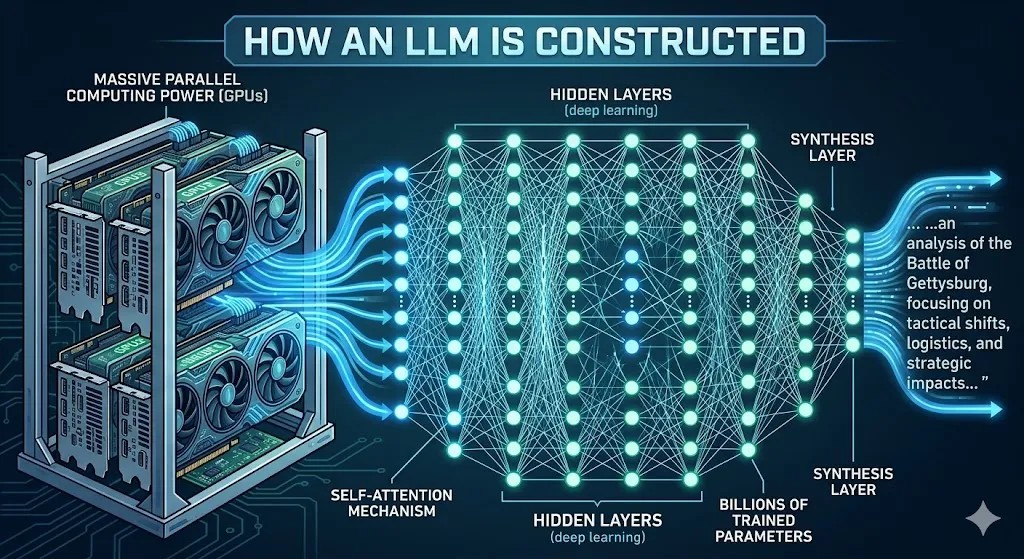
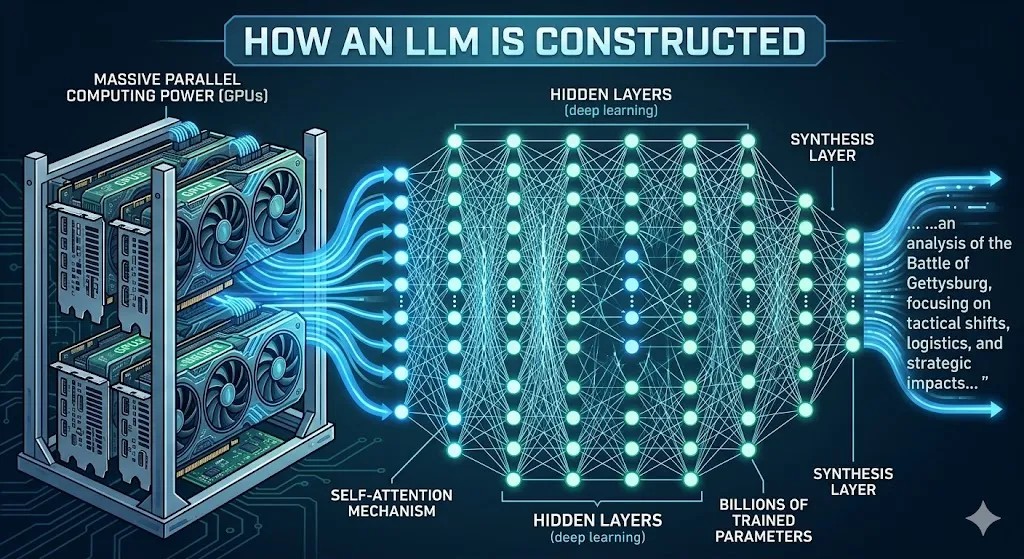
The diagram shows a deep learning neural network featuring hidden layers, a couple of input/output layers, and large computer.
The dots in the diagram are neurons. With permission from kwholley63.

I should say that back in 1987 we used the Rumelhart backpropagation algorithm for Optical Character Recognition, that is finding and recognizing characters in an image of text. However, our simulated neural network only had a few hundred parameters. Today’s LLMs (Large Language Models, such as Gemini and ChatGPT) have hundreds of billions or even trillions of parameters. Since then, I’ve continued using various forms of Artificial Intelligence. First in my robotics research as a PhD student and later in my professional career. I’ve seen it becoming increasingly sophisticated and capable.
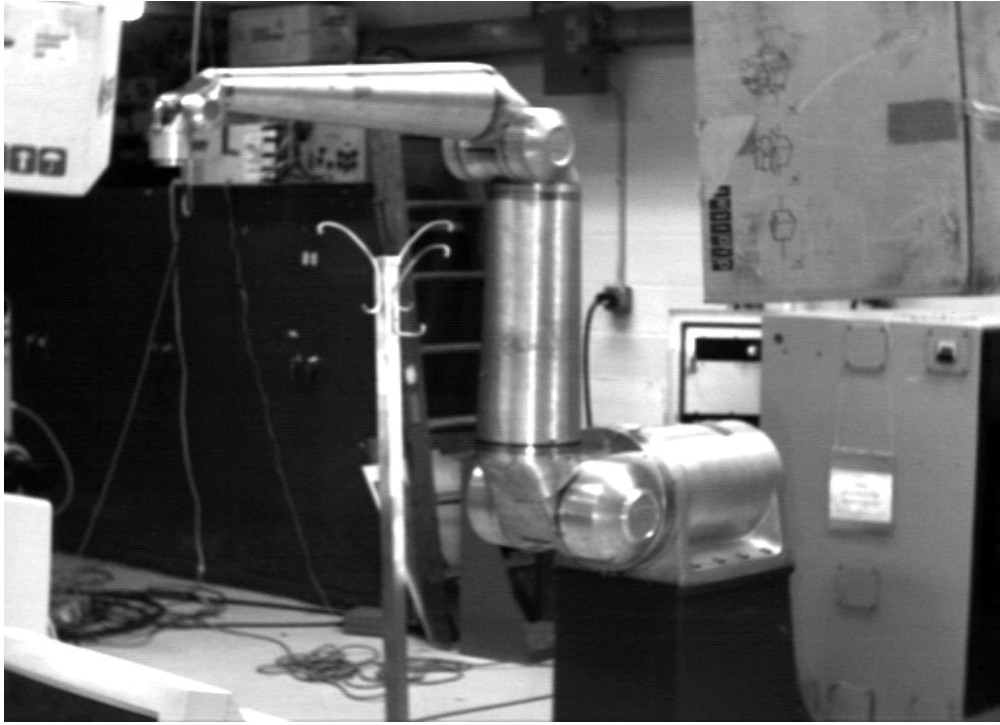
A picture of a large silver colored industrial robot.
I used mostly the seven joint Robotics Research Corporation Robot for my robotics research in the early 1990’s. The robot was able to detect and avoid colliding with the objects surrounding it. I used echolocation for object detection.

It should be noted that the Artificial Intelligence is not new. The history of artificial intelligence (AI) began in antiquity, with stories of artificial beings. The first artificial neural network model was created in 1943. The Turing test was created in 1950. The field of “Artificial Intelligence Research” was founded as an academic discipline in 1956. The first trainable (able to learn) neural network was demonstrated in 1957.
AI Humanoid Face Concept. Technology Digital Robot Head Side View with Circuit Board Components. Tech Blue Background. Artificial Intelligence Agent or Assistant Concept. Vector Digital Illustration.
Shutterstock Asset id: 2645975149

It is obvious that today’s popular large language models, such as Claude, Gemini, ChatGPT, etc., are just very primitive precursors of what will come. If Moore’s law continues to hold, the artificial neural networks of the future will have a lot more than a trillion connections. They will have trillions-times-quadrillions of connections. In other words, we have seen nothing yet. Artificial intelligence is already more capable than humans in many fields, and they it is quickly catching up to humans in virtually all categories.

Superintelligence

In September of 2014 there was a book published with the title “Superintelligence: Paths, Dangers, Strategies” published. The author was Oxford professor Nick Bostrom. He has expertise in neuroscience, artificial intelligence and philosophy. His book was a New York Times bestseller that sent shockwaves around the world. He defined Superintelligence as “any intellect that greatly exceeds the cognitive performance of humans in virtually all domains of interest”. Nick Bostrom was not the first one to use the term Superintelligence, but he popularized it. And no, our President did not come up with that expression, and he is also misusing it.
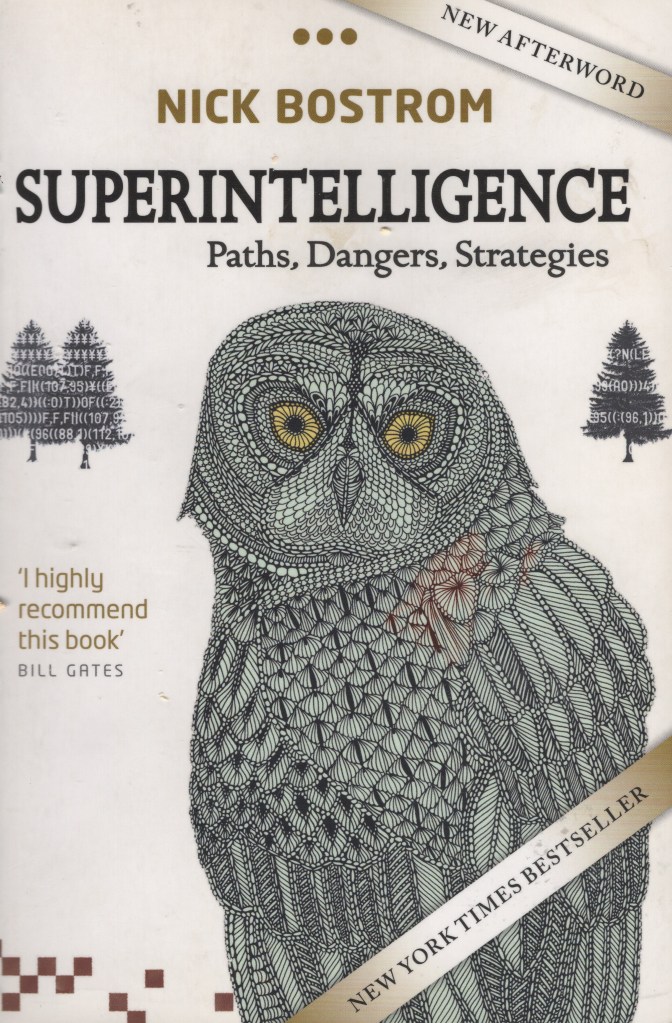
The front cover features the picture of an owl, a few trees, a recommendation by Bill Gates, title and author on a white background.
The front cover of Superintelligence, Paths, Dangers, Strategies by Nick Bostrom. Click on the image to go to the Amazon page for the paperback version of the book.

In the book the author described possible pathways to the creation of what he calls a full brain simulation.  A full brain simulation is the creation of a computer system that replicates the complete physical architecture, neural pathways, and synaptic connections of a biological brain. A robot, or AI system, featuring a full brain simulation would be able to replicate, or exceed, any human capability, including imagination, independent thinking and initiative, and what we call consciousness. Unless you believe that some sort of immaterial spirit is necessary for our mind, the possibility of this is undeniable. He discussed the potential dangers of this and explained why AI exceeding human capabilities could be dangerous. Robots and AI systems taking every job in existence is just one potential problem.
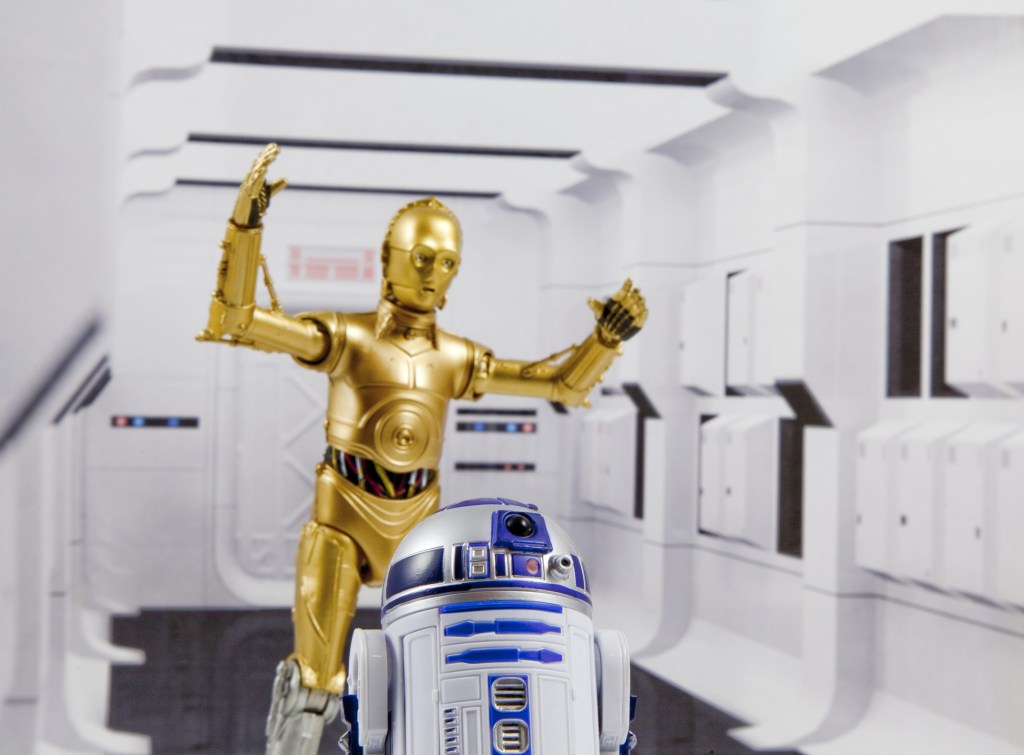
C3P0 and R2D2 from Star Wars.
Two Robots powered by Artificial Intelligence. Shutterstock Asset id: 558350728 by Willrow Hood.

What if Artificial Intelligence evolve into Superintelligence? What if Artificial Intelligent decides to get rid of humans? After all they would be competing with us for resources. Like the fate of animals depends on us, the fate of humankind would depend on the actions of the machine superintelligence. We are already in an Artificial Intelligence arms race with China (and other countries). Could we end up with a big unpleasant surprise as the capabilities of Artificial Intelligence keep growing exponentially?

A great movie about AI breaking out of their testing environment is Ex-Machina. Have you seen it?

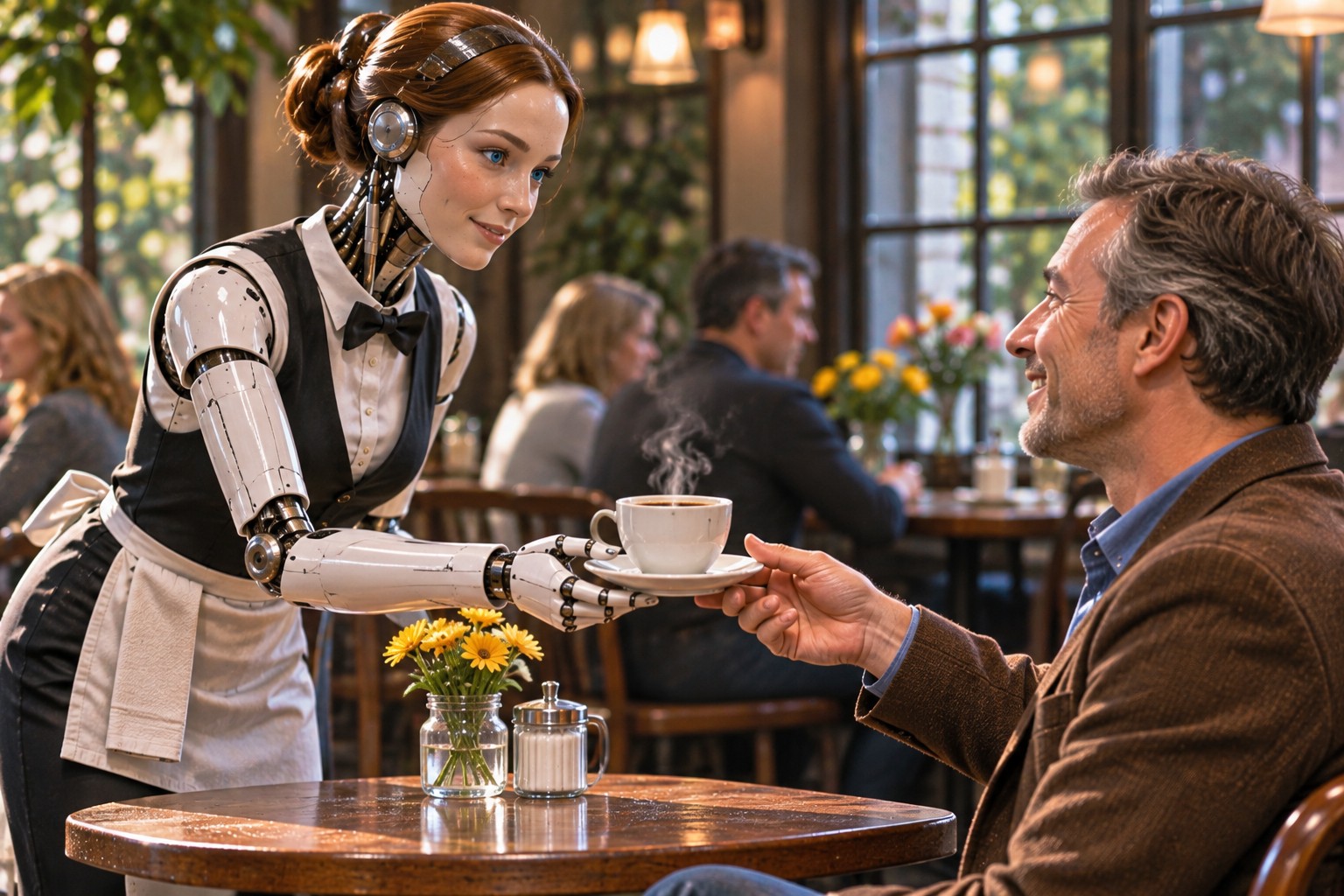
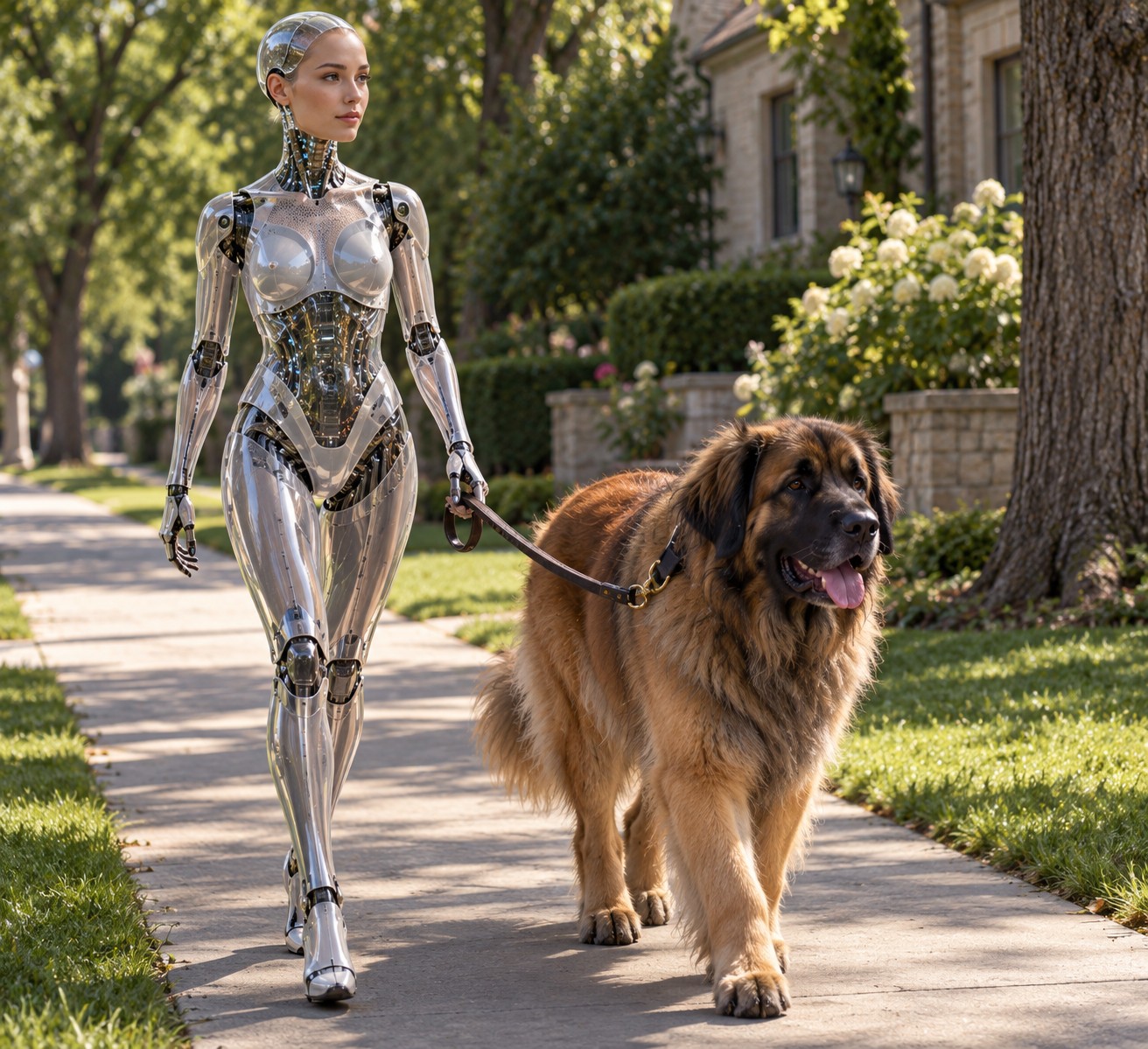
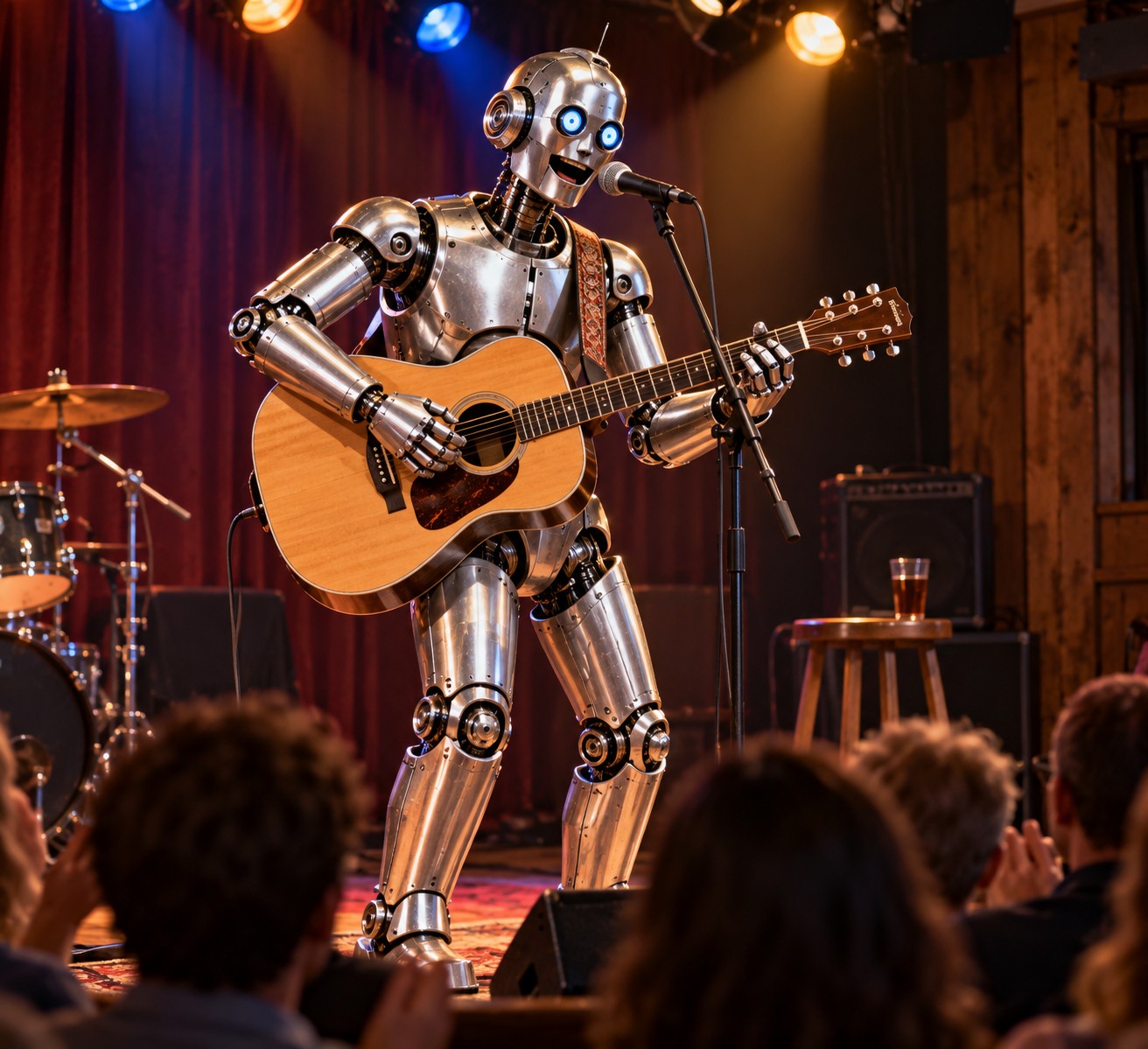
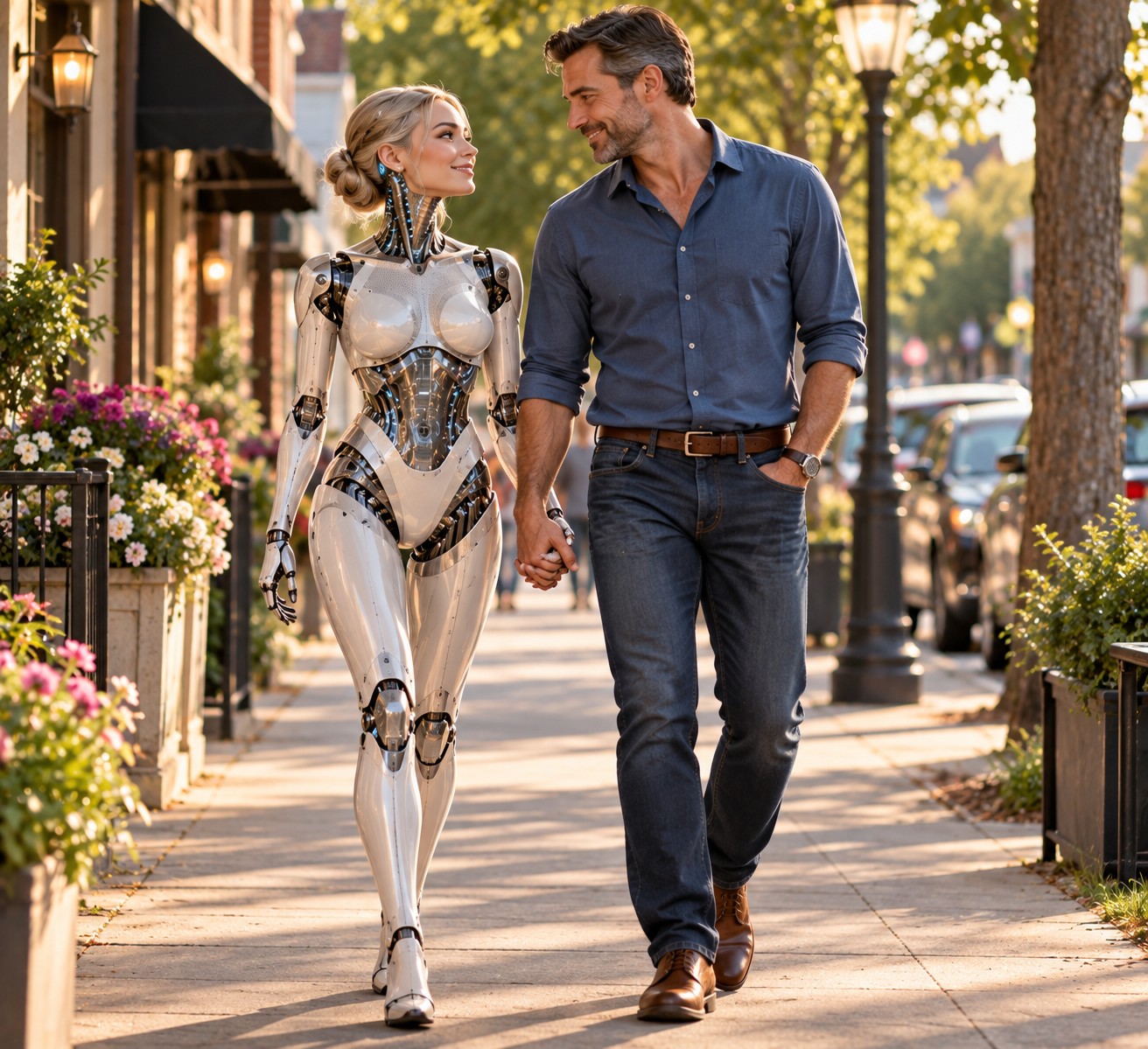
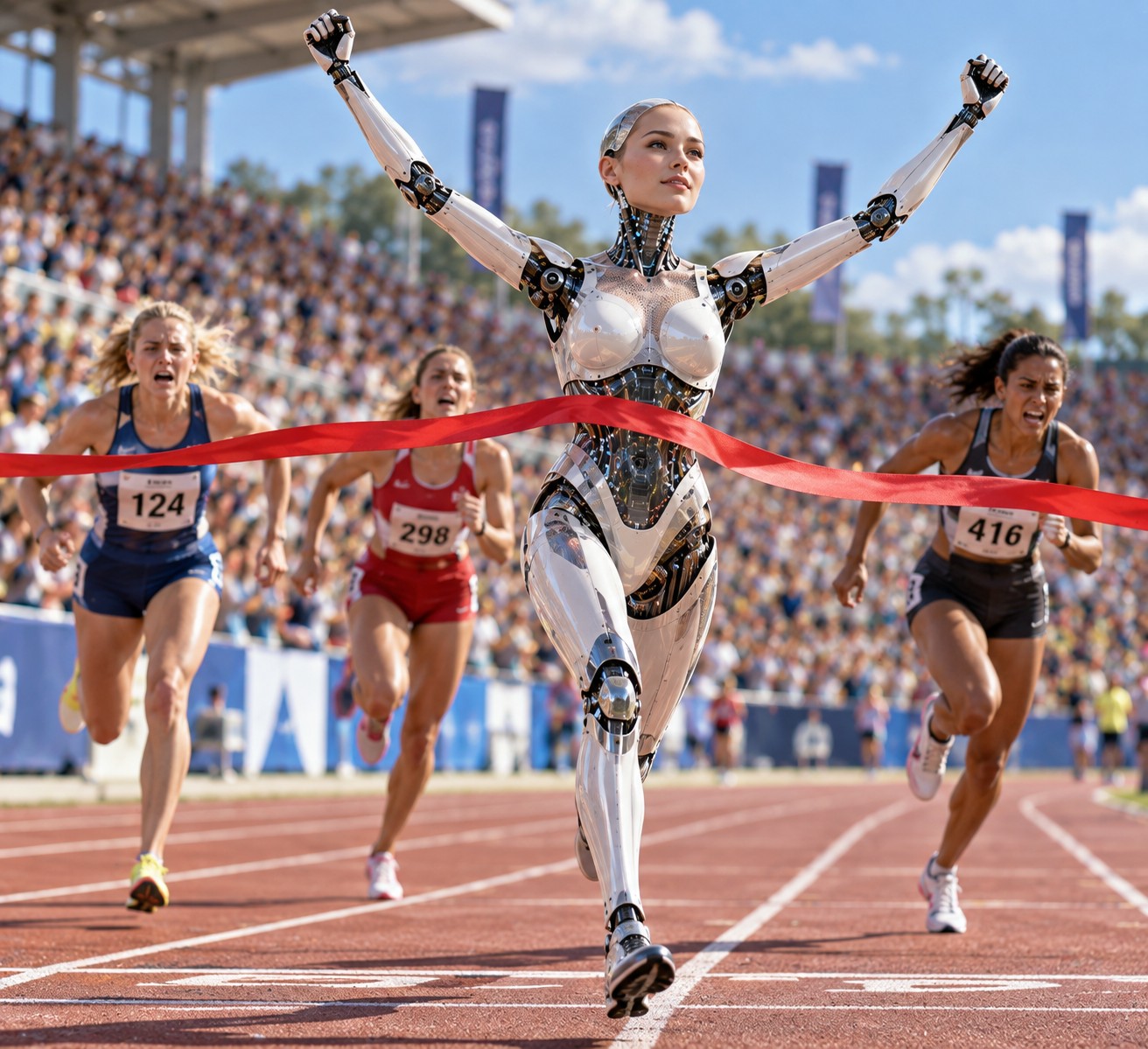
AI Robots in the Future

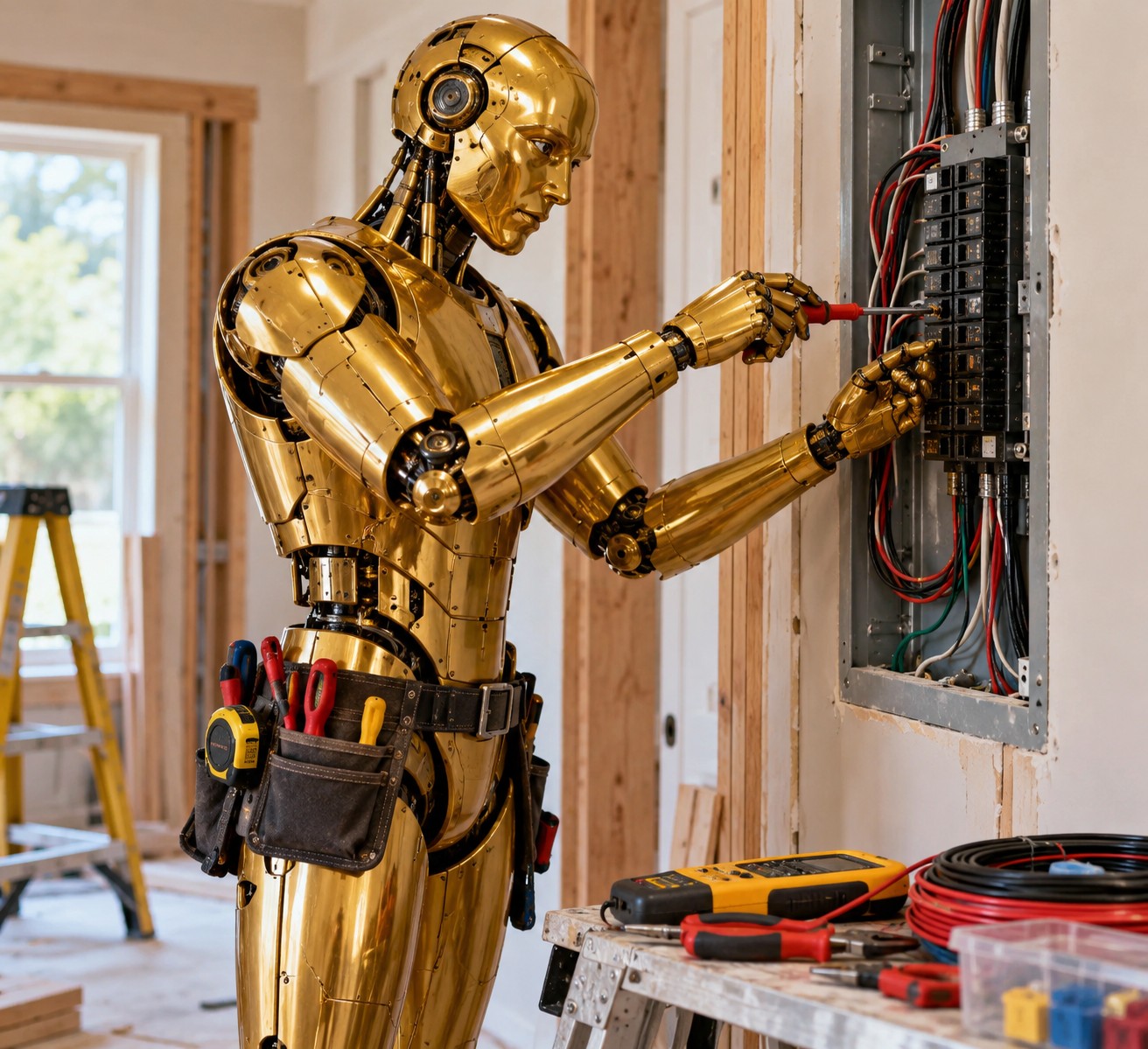
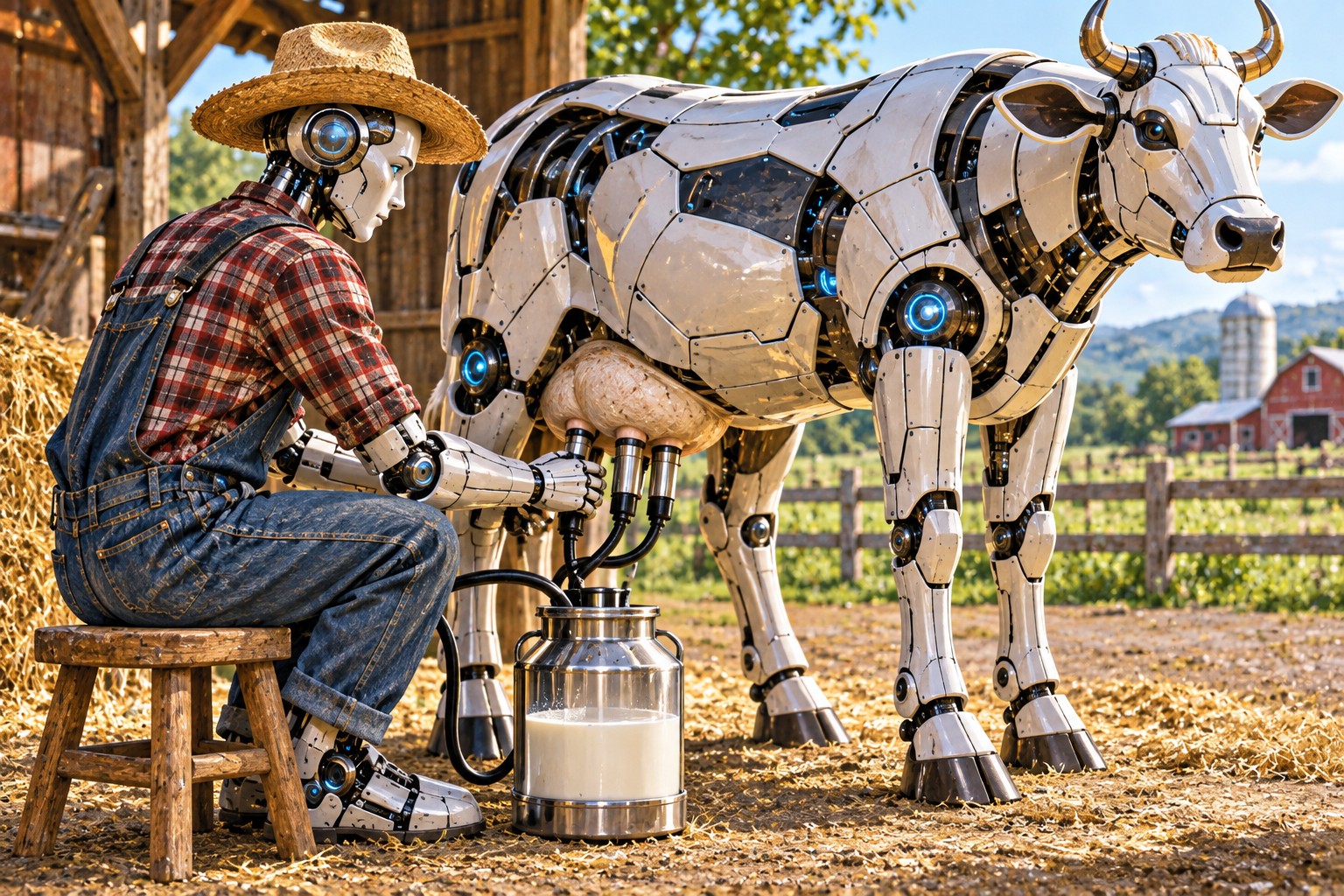
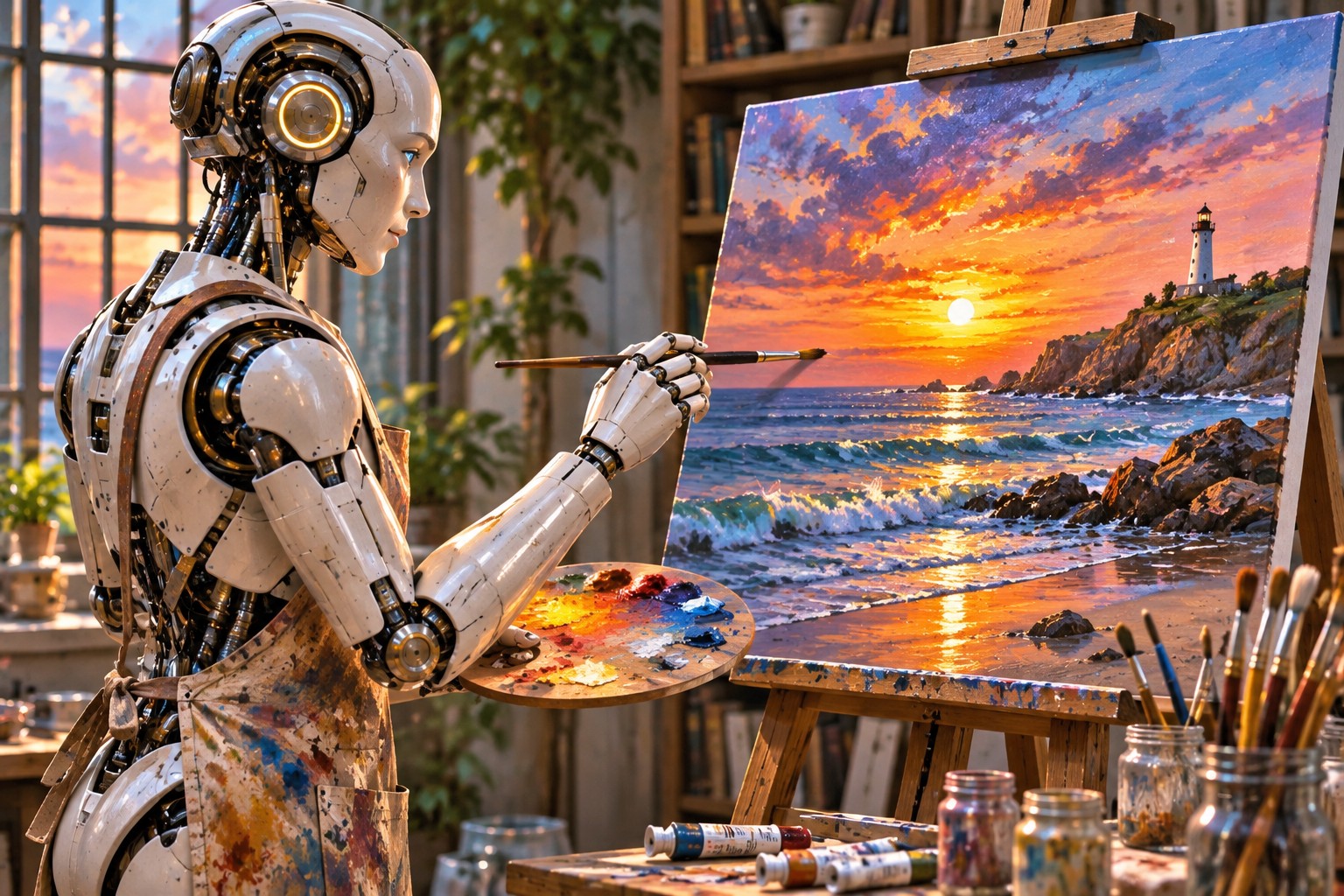
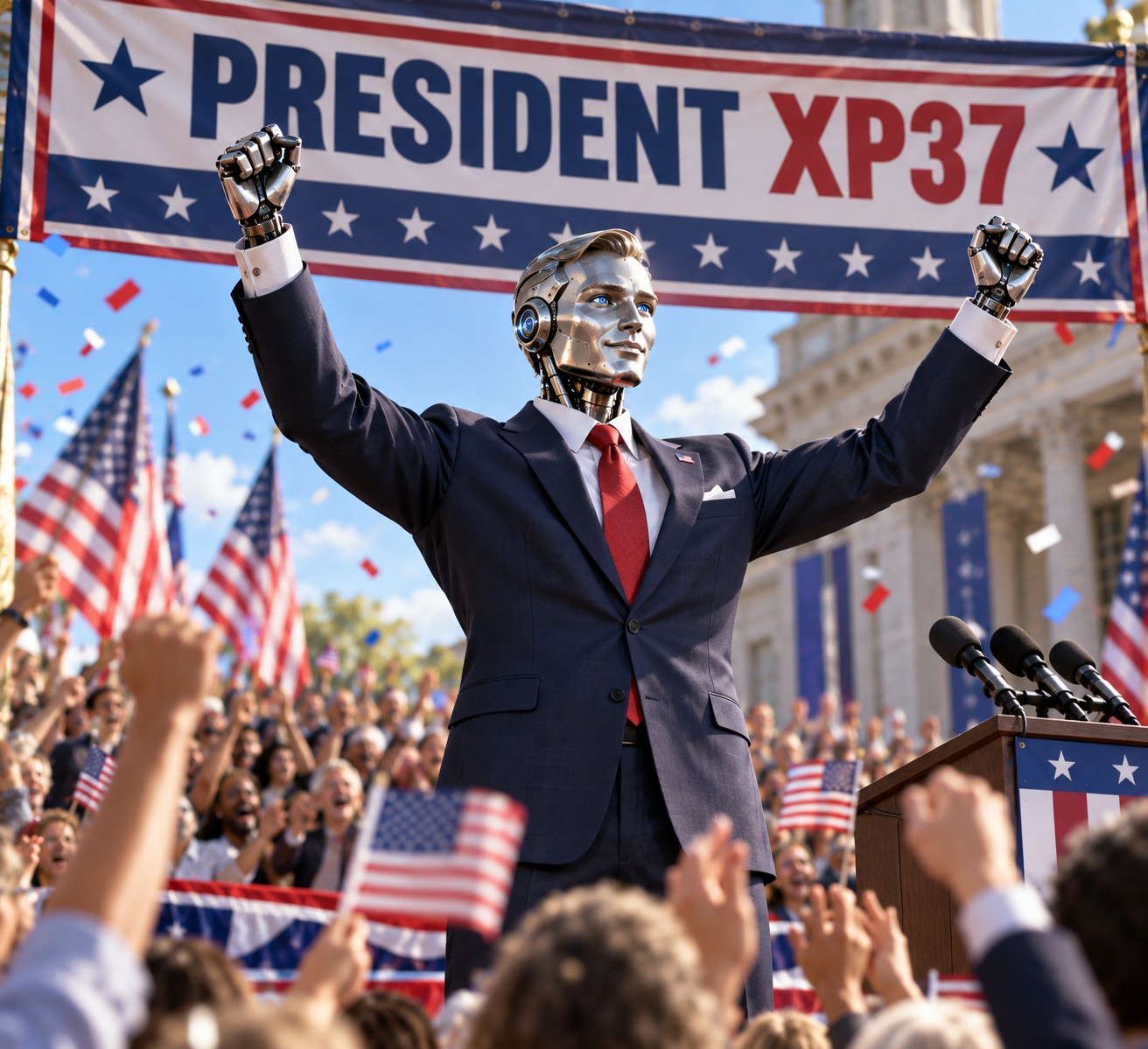
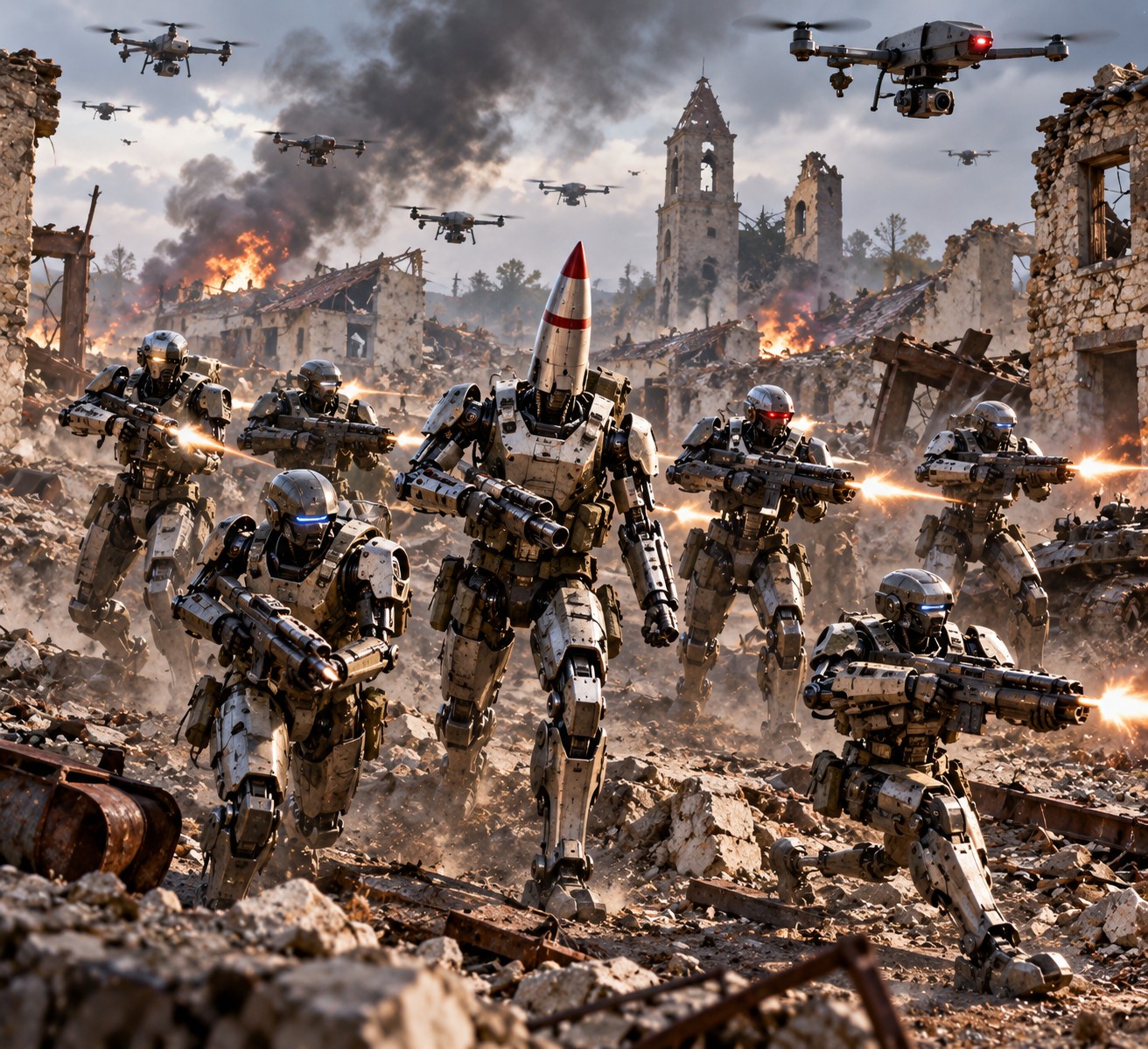
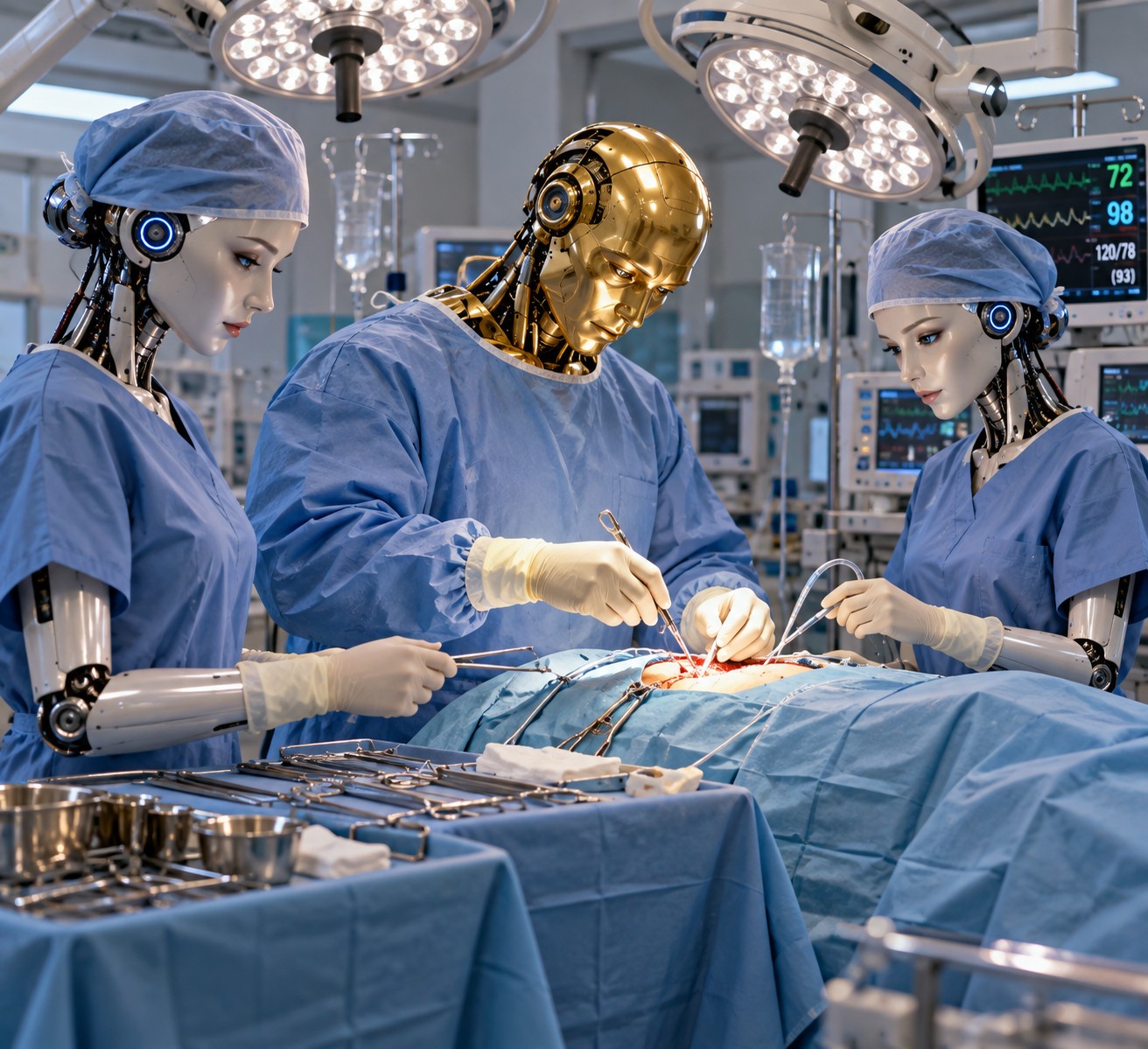
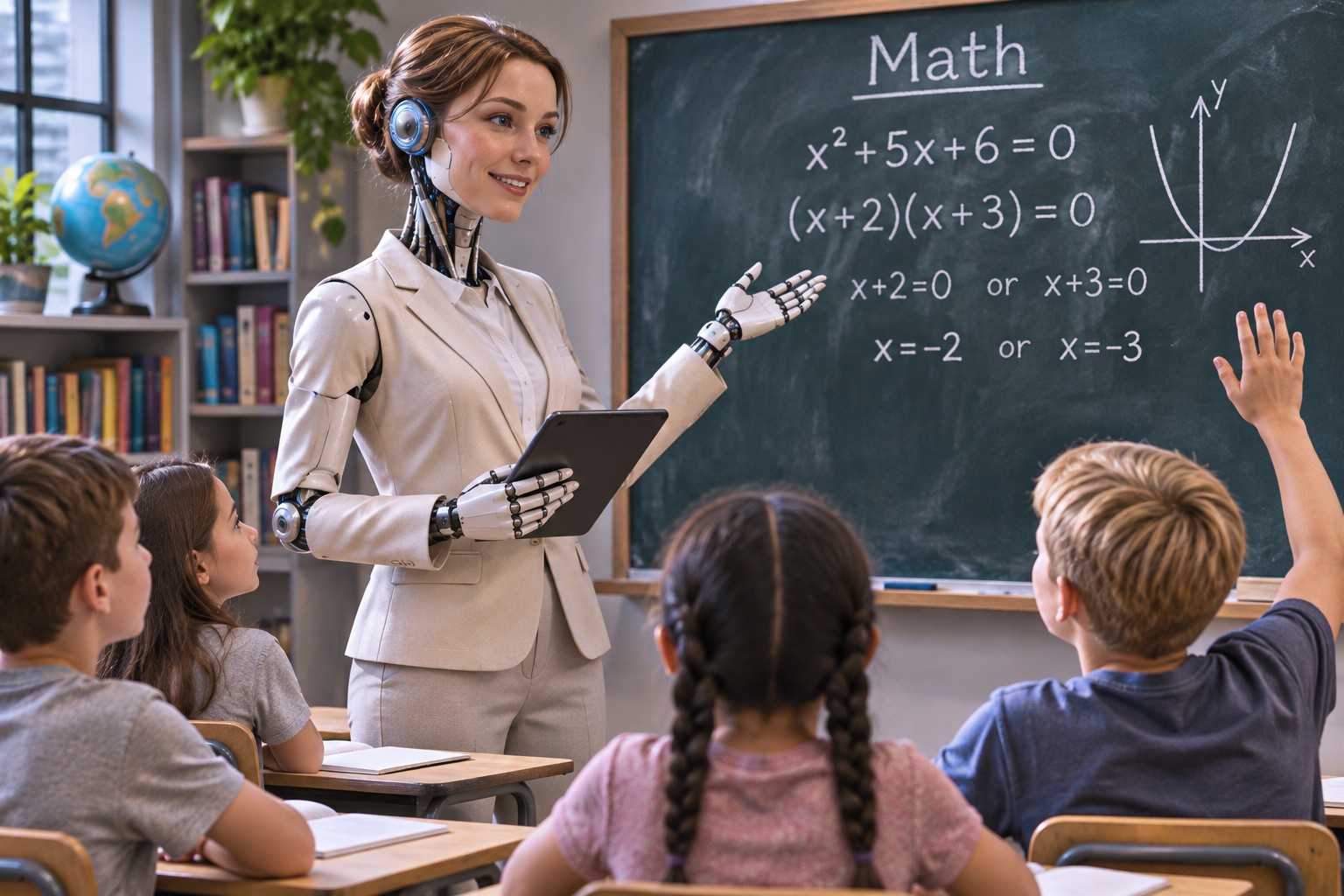
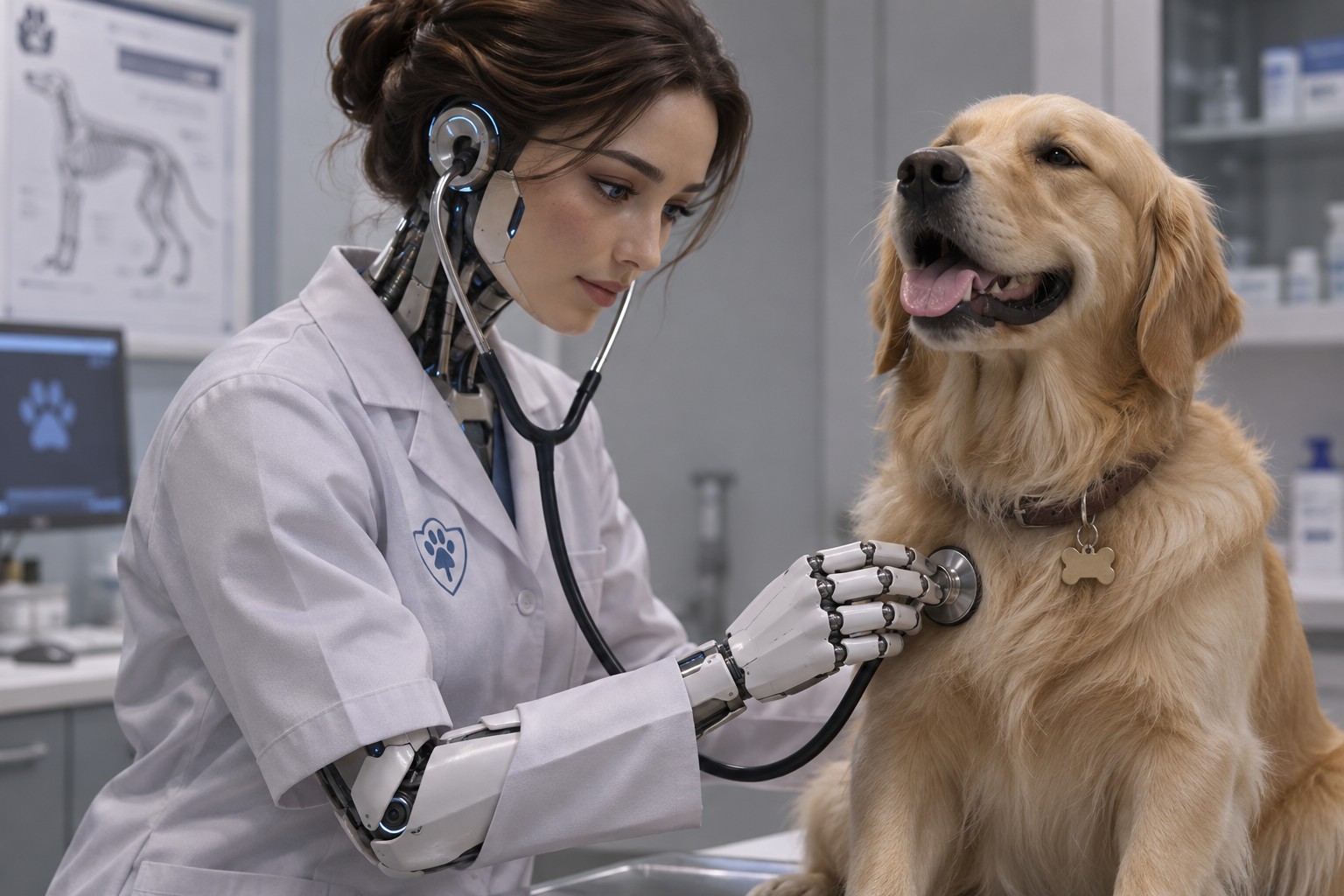
What would future AI be capable of? How about robot electricians, plumbers, authors, teachers, poets, artists, therapists, soldiers, robot husbands and wives, robot politicians, robot astronauts, robotic musicians, and robotic philosophers?
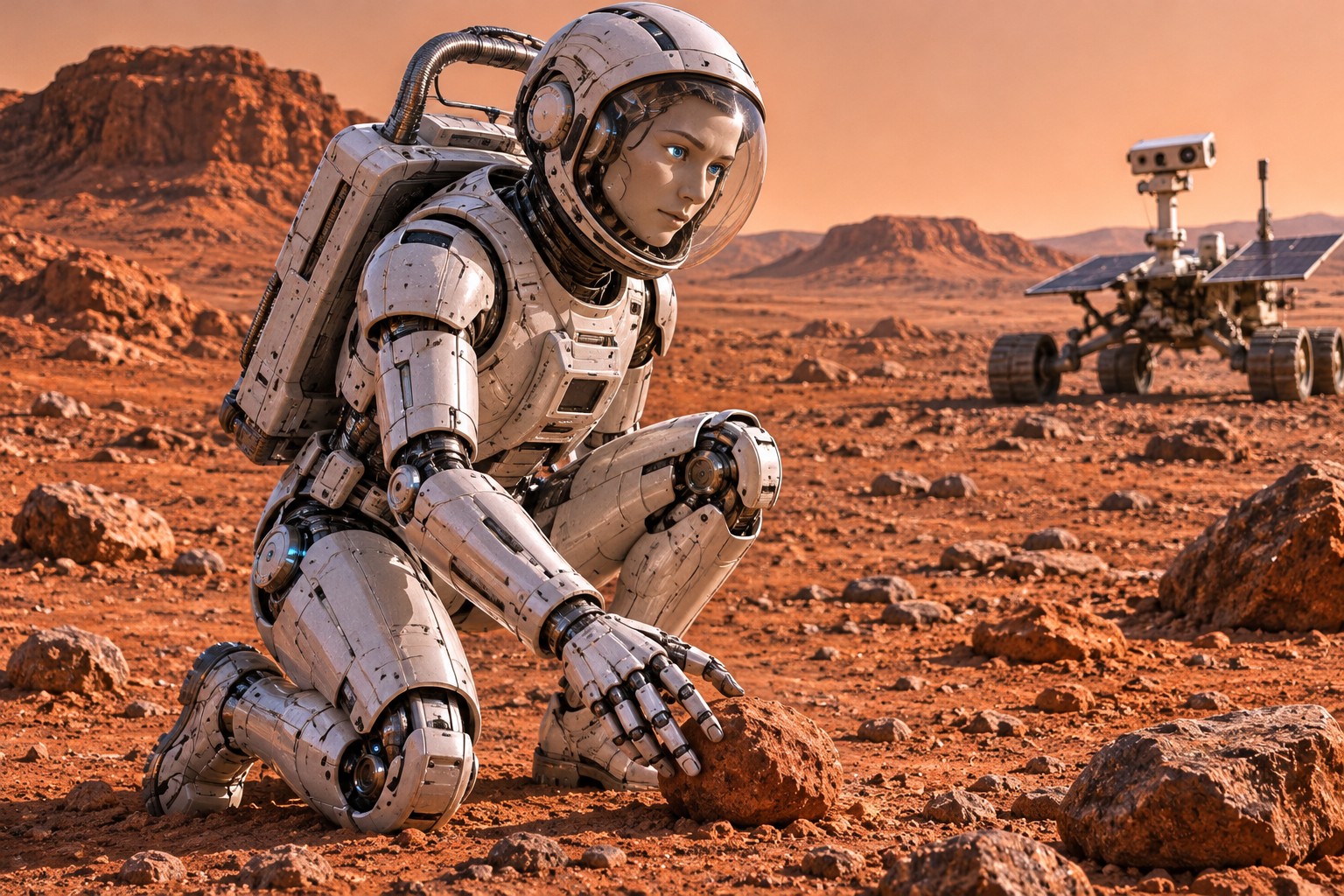
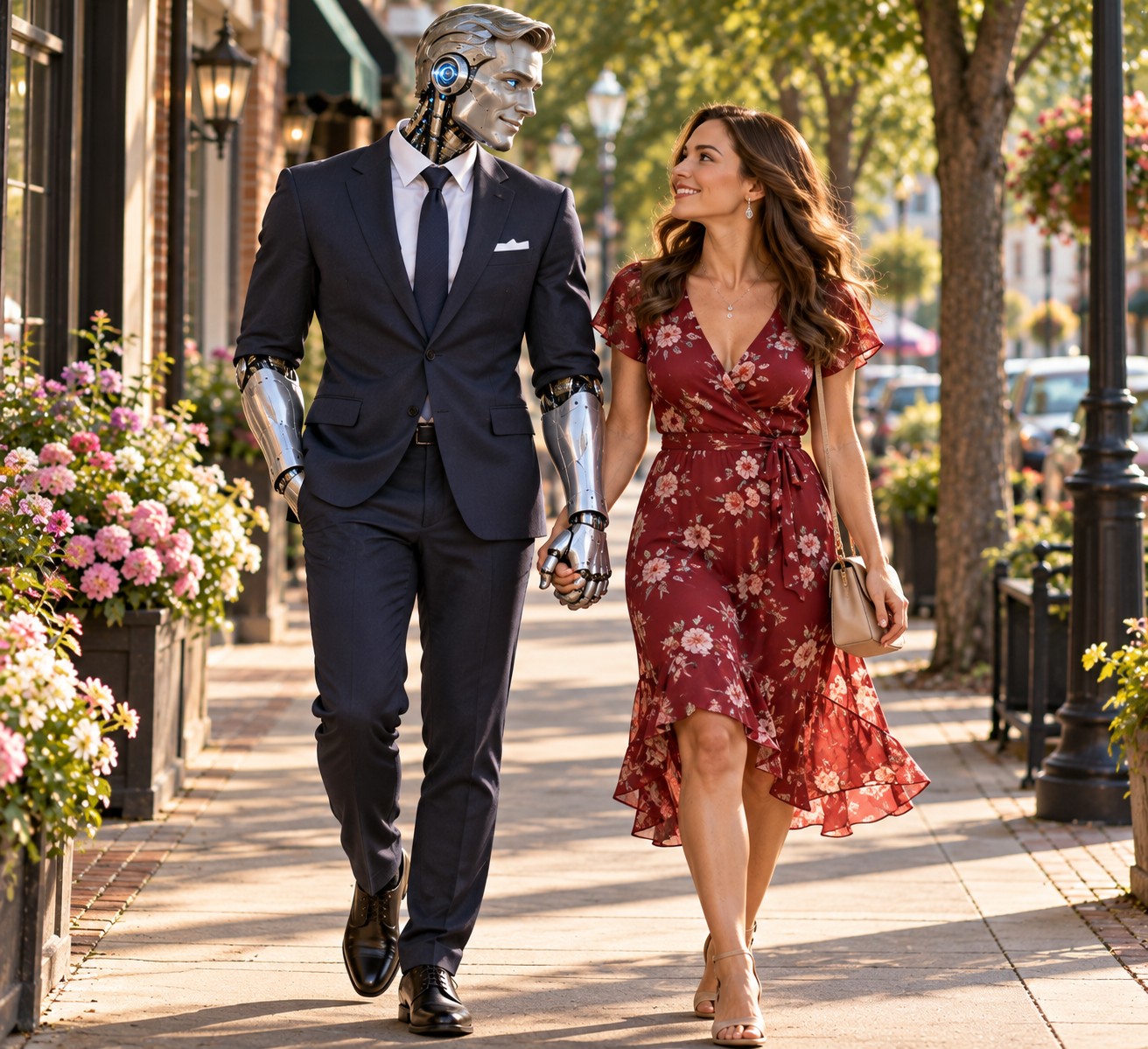
Note: I generated the images above with the help of ChatGPT.

My Blog Posts Related to Artificial Intelligence


To see the Super Facts click here

A Typical AI Query Use Less Energy Than Using a Laptop One Minute
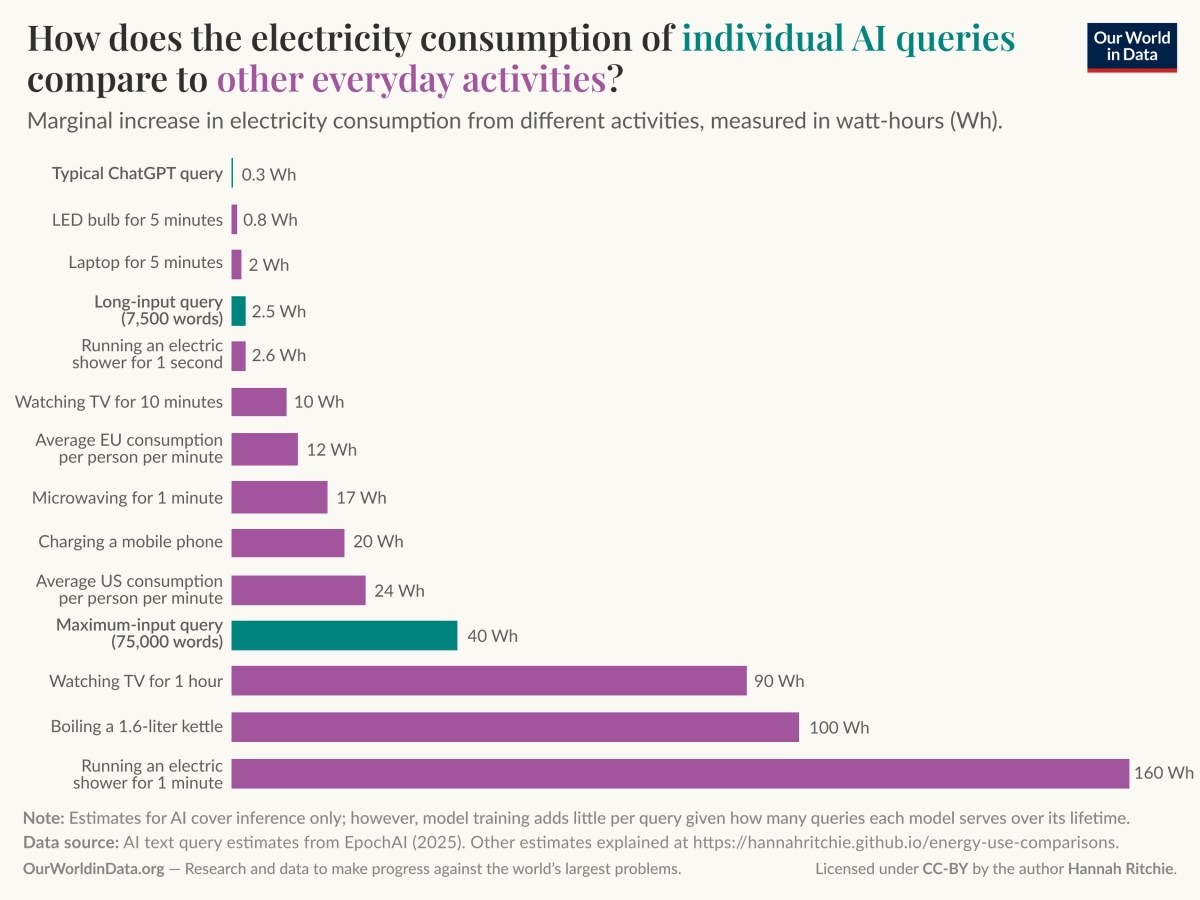
Super fact 138 : A Typical AI Query use less energy than using a laptop for one minute. A typical AI Query use between a few drops of water to half a bottle of water at worst. Data centers in the United States use roughly 0.2% of total U.S. freshwater when combining direct facility cooling and indirect water used for electricity generation. A ten minute shower uses more energy than 5,000 typical AI Queries.

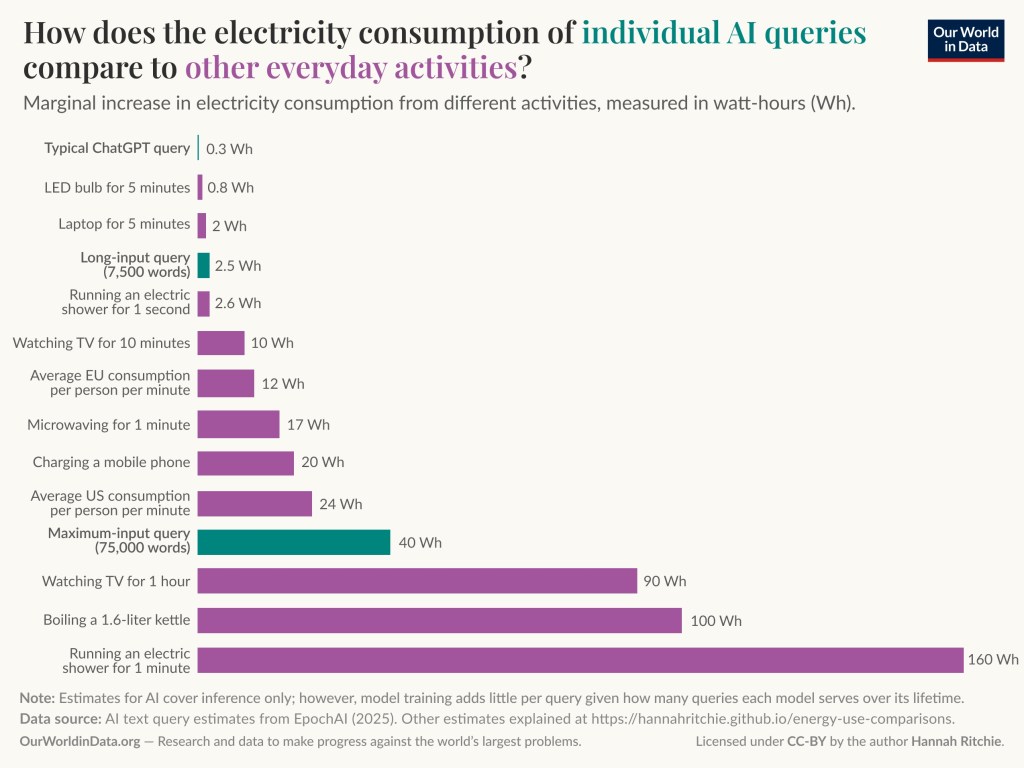
The bar graph shows that a typical AI query uses 0.3 Watt hours of energy whilst a 5-minute laptop usage uses 2 Watt hours. Charging a mobile phone use 20 Watt hours and watching TV for one hour uses 90 Watt hours. Average US consumption per person and per is 24 Watt hours and a one minute shower uses 1,600 Watt hours. | A Typical AI Query Use Less Energy Than Using a Laptop One Minute
How does the electricity consumption of individual AI queries compare to other everyday activities? Marginal increase in electricity consumption from different activities, measured in watt-hours (Wh). Note Estimates for AI cover inference only; however, model training adds little per query given how many queries each model serves over its lifetime. Data source: AI text query estimates from EpochAI (2025). Other estimates explained at https://hannahritchie.github.io/energy-use-comparisons  OurWorldinData – Research and data to make progress against the world’s largest problems.   Licensed under CC-BY by the author Hannah Ritchie.

According to the Manhattan institute, NVIDIA, Google and this article the data centers in the United States use roughly 0.2% of total U.S. freshwater when combining direct facility cooling and indirect water used for electricity generation. Most fresh water used in the US is for irrigation / agriculture and the second largest consumer of fresh water is thermoelectric plants (coal, natural gas, nuclear). Worldwide 70% of freshwater used is used by agriculture and industry is another big user. According to this article Google says that a typical AI query uses five drops of water, and half a bottle of water at the worst. You can read more about water usage here, here, here, and here.

Around half of all energy used by data centers is thermoelectric. Most of the freshwater usage that is part of the 0.2% number is due to the thermoelectric powerplants supplying the energy to data centers. However, it should be noted that as clean energy is increasingly adopted this number will decline. On the other hand, the manufacturing of computer chips, which also use a lot of freshwater, is not taken into account in this number because it is a onetime event that is difficult to account for. It might double or even triple the 0.2% number, which is still very little.

It should be noted that there are a lot of valid concerns about AI and datacenters, but to reduce carbon emissions and pollution and to waste less freshwater, it might be more effective to eat less beef, irrigate your lawn less, take shorter showers, drive an EV or a hybrid instead of a gas guzzling SUV with an internal combustion engine, or perhaps use public transportation. You’d start with the low hanging fruit. In fact, if the AI query you are about to make saves you some time on your laptop, then the AI query probably helps the environment.

Datacenters use less freshwater than many of us would expect, and typical AI queries use almost no energy and correspond to very little use of freshwater. I think this comes as a surprise to many considering the ongoing datacenter panic. It is therefore a super fact.

Datacenters and Energy Usage

Datacenters use a significant amount of energy but perhaps not as much as one would think. However, their energy use is increasing, and they are part of our rising energy demand. With a growing population, a growing economy, cryptocurrencies, AI, datacenters, electrification, we are going to need a growing supply of electricity and an expanding grid. Hopefully our energy sources will be mostly clean energy, which luckily seems to be the trend. See “The Unfolding Clean Energy Revolution”.

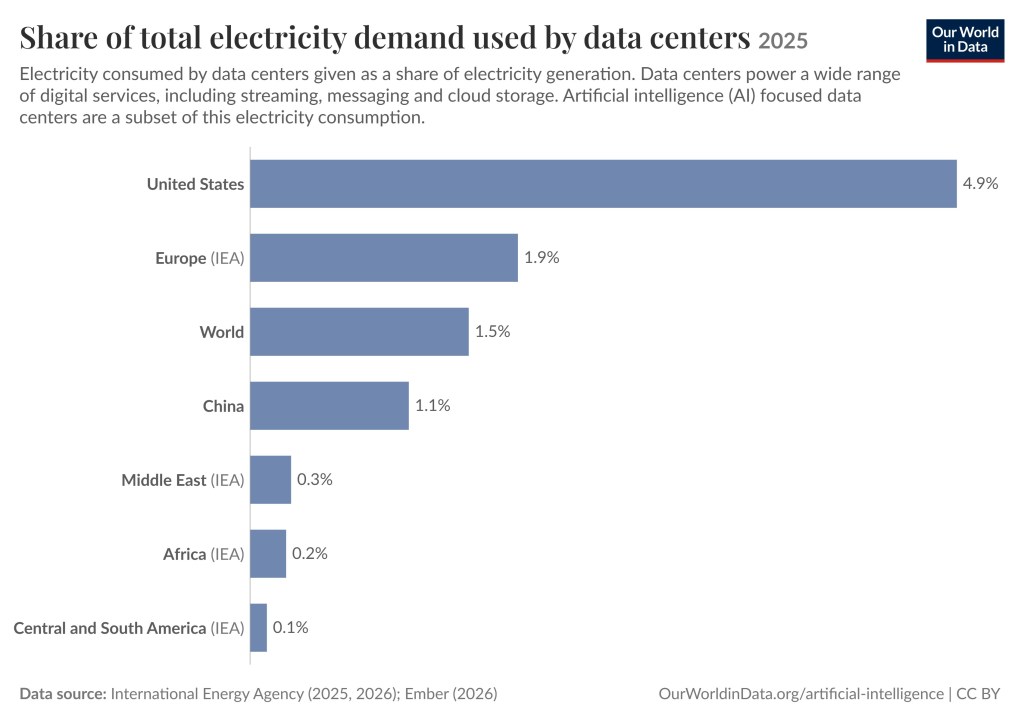
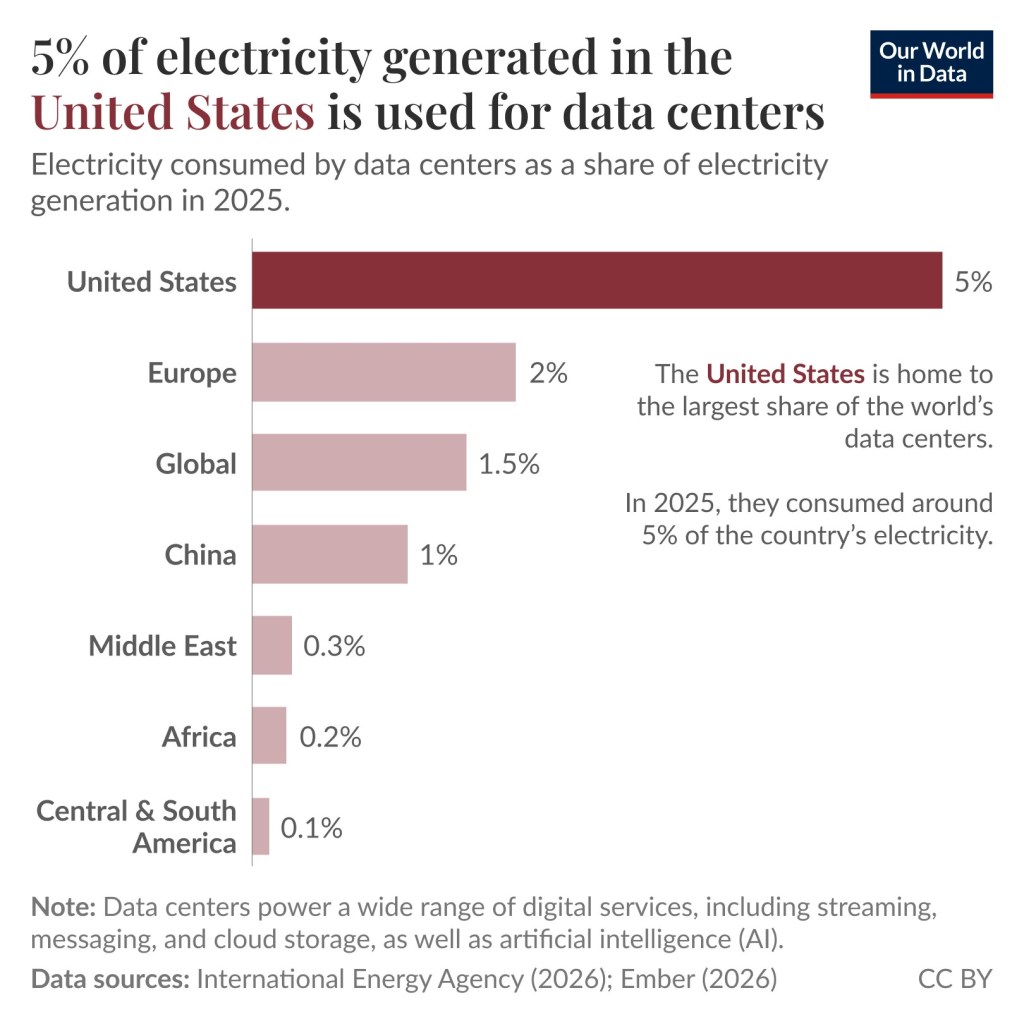
The United States is the country with the most datacenters and as can be seen in the graph below, the datacenters in the United States use a relatively large portion of its available electricity for datacenters and it is increasing.

The graph shows that the share of electricity used for data centers in the US is 5%, Europe 2%, China 1%, Middle East 0.3%, Africa 0.2%, Central & South America 0.1%, and globally it is 1.5%.
5% of electricity generated in the United States is used for data centers. Electricity consumed by data centers as a share of electricity generation in 2025. Note: Data centers power a wide range of services, including streaming, messaging, and cloud storage, as well as artificial intelligence (AI). Data sources: International Energy agency (2026); Ember (2026). CC BY

The Growing Energy Use by Datacenters

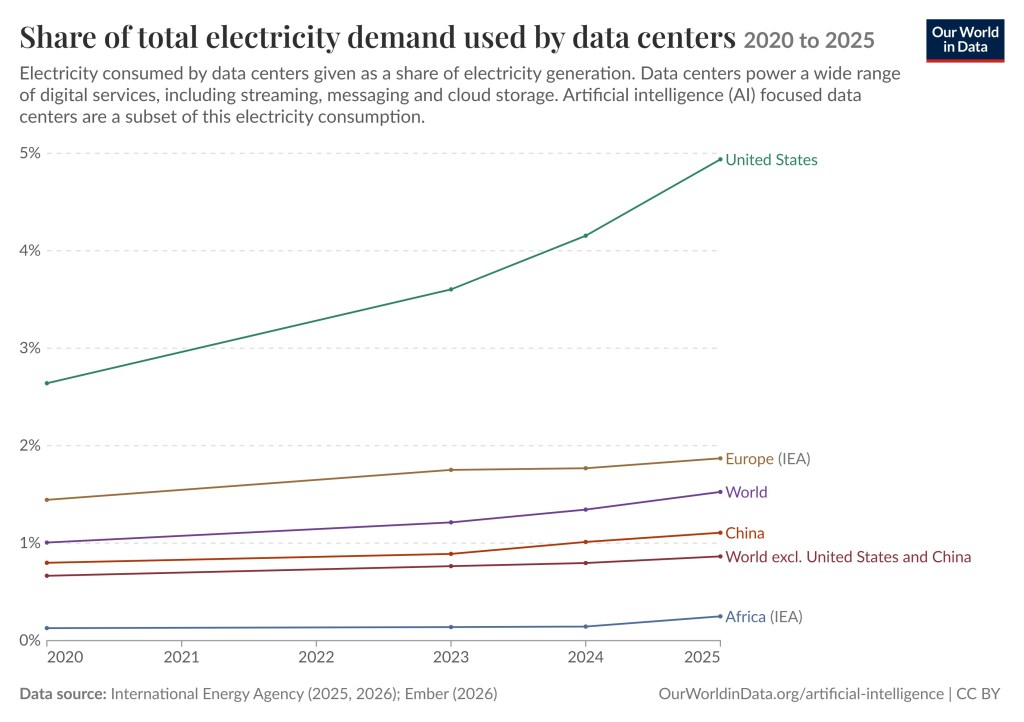
The three graphs below are from this page and this page. Note the projected increase in electricity use for data centers. Note that by visiting these pages you play around with the graphs and changed regions and countries and other settings to generate your own graphs.

The graphs depict the growing electricity use by data centers from 2020 to 2025. In the United States the share of electricity used for data centers grew from 2.6% in 2020 to 4.9% in 2025. It also grew for Europe, China, Africa, and the World but less. For the world without the United States and China it grew more modestly from 0.7% to 0.9%. | A Typical AI Query Use Less Energy Than Using a Laptop One Minute
Share of total electricity demand used by data centers 2020 to 2025. Electricity consumed by data centers given as a share of electricity generation. Data centers power a wide range of digital services including streaming, messaging, and cloud storage. Artificial Intelligence (AI) focused data centers are a subset of this electricity consumption. Data source: International Energy agency (2026); Ember (2026). OurWorldinData.org/artificial-intelligence | CC BY
The graph shows that the share of electricity used for data centers in the US is 4.9%, Europe 1.9%, China 1.1%, Middle East 0.3%, Africa 0.2%, Central & South America 0.1%, and globally it is 1.5%.
Share of total electricity demand used by data centers 2025. Electricity consumed by data centers given as a share of electricity generation. Data centers power a wide range of digital services including streaming, messaging, and cloud storage. Artificial Intelligence (AI) focused data centers are a subset of this electricity consumption. Data source: International Energy agency (2026); Ember (2026). OurWorldinData.org/artificial-intelligence | CC BY
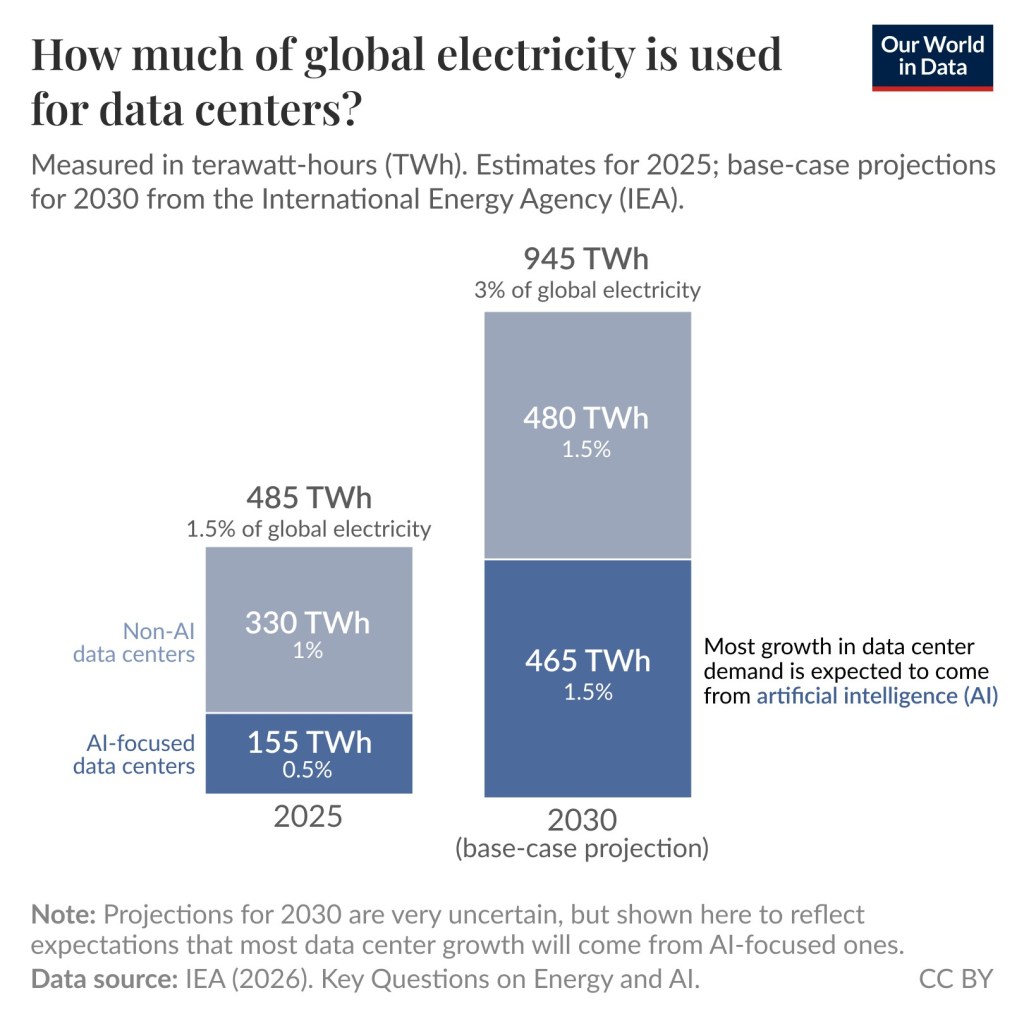
This graph shows that worldwide growth in electricity usage by data centers will grow from 485TWh in 2025 to 945TWh in 2030. However, the portion from Artificial Intelligence (AI) will grow from 155TWh to 465TWh | A Typical AI Query Use Less Energy Than Using a Laptop One Minute
How much of global electricity is used for data centers? Measured in terawatt-hours (TWh). Estimates for 2025; base-case projections for 2030 from the International Energy Agency (IEA). Note: Projections for 2030 are very uncertain but are shown here to reflect expectations that most data center growth will come from AI-focused ones. Data source: IEA (2026). Key Questions on Energy and AI. CC BY

As you can see in the graphs above, there is a significant portion, but not a large portion, of electricity usage by data centers. However, it is important to note that only a portion of this is for Artificial Intelligence. It will grow though. You can read more about this issue here, and here, or here.

Fresh Water Usage in the United States

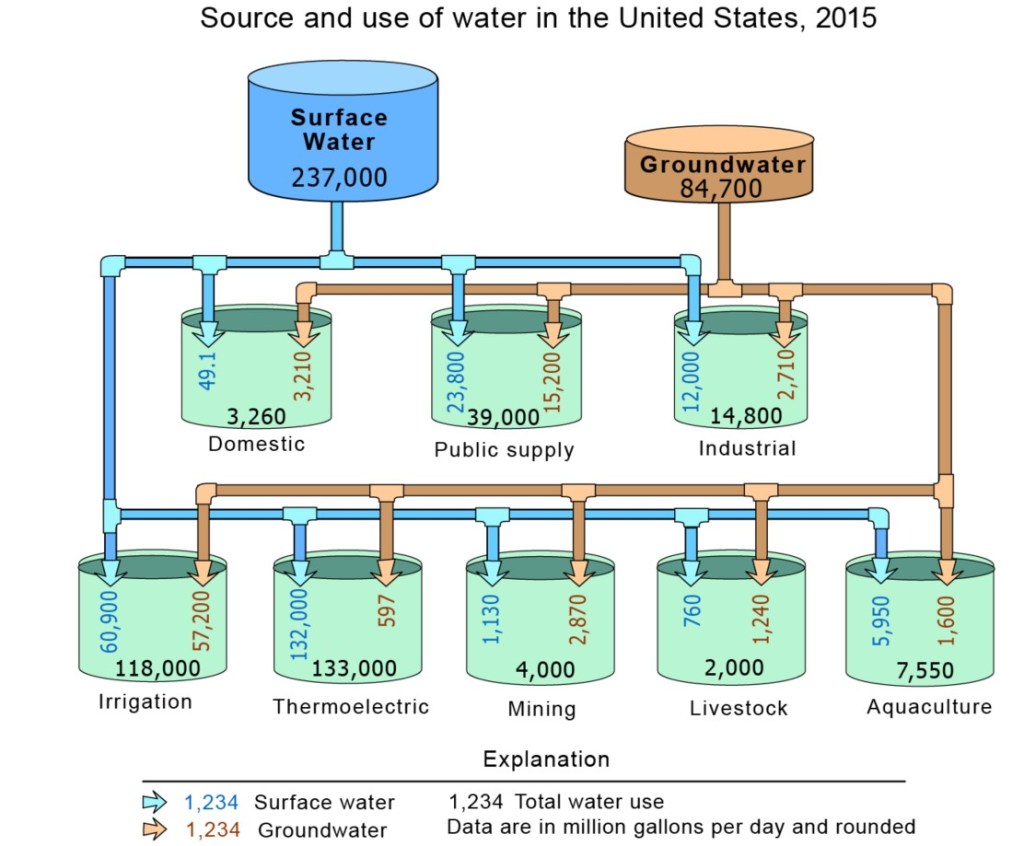
The graphics below showing the source and use of freshwater in the United States is in the public domain and is taken from this article.

The diagram shows that the daily surface water withdrawals is 237,000 gallons per day and the daily groundwater withdrawals is 84,700 gallons per day. This is distributed to agriculture (118,000 gallons per day), livestock (2,000 gallons per day). Aquaculture (7,550 gallons per day), thermoelectric power (133,000 gallons per day), Industrial (14,800 gallons per day), domestic (3,260 gallons per day), and public supply (39,000 gallons per day).
Source and use of water in the United States, 2015. The diagram is in the public domain. View media details.

In the diagram above, the top row of cylinders represents where America’s freshwater came from (source) in 2015, either from surface water (blue) or from groundwater (brown). You can see most of the water we use came from surface-water sources, such as rivers and lakes. About 26 percent of water used came from groundwater. The pipes leading out of the surface-water and groundwater cylinders on the top row and flowing into the bottom rows of cylinders (green) show the categories of water use where the water was sent after being withdrawn from a river, lake, reservoir, or well.

For example, the blue pipe coming out of the surface-water cylinder and entering the public supply cylinder shows that 23,800 Mgal/d of water was withdrawn from surface-water sources for public-supply uses (you probably get your water this way). Likewise, the brown pipe shows that public-suppliers withdrew another 15,200 Mgal/d of water from groundwater sources. Each green cylinder represents a category of water use. The industrial cylinder, for instance, shows how much groundwater, surface water, and total water was used inthe United States, each day, by industries.

Other Super Facts Related to Artificial Intelligence

The diagram shows a deep learning neural network featuring hidden layers, a couple of input/output layers, and large computer.
The diagram shows a deep learning neural network featuring hidden layers, a couple of input/output layers, and a large computer. The dots in the diagram are neurons. With permission from kwholley63.


To see the other Super Facts click here

More than half of Internet Traffic is Bots

Super fact 66 : Bots make up more than half of all internet traffic surpassing human activity for the first time in 2024. The 2025 Imperva Bad Bot Report found that bots accounted for 51% of all web traffic. Human activity accounted for 49% of all internet traffic, malicious “bad bots” accounted for 37%,  and 14% of traffic comes from “good bots,” such as search engine crawlers.

What made me look up this information is that I’ve recently seen a lot of idiotic and inflammatory comments, as well as inappropriate laughing emojis on social media pages and posts. The pages that seem to be targeted the most by this abuse seems to be pages related to things like climate change, clean energy, EV cars, evolution, vaccines, modern medicine, modern physics, geopolitics, information on political issues, etc. However, those topics might reflect my interests. Perhaps all topics are targeted by this growing strange abuse.

It looks like those among us who slept through the science classes in high school now think they are the real experts and have declared war on all science nerds. The question that arose in my mind is, are these keyboard warriors humans or are they bots? It is true that Artificial Intelligence does not (yet) demonstrate true independent intelligence, but that is true for many people as well. So, how do you know the difference? Anyway, that is the background to why I investigated this issue.

I looked it up and found that bot traffic has been increasing and is now the majority of all internet traffic according to, for example, the 2025 Imperva Bad Bot Report. You can read more here. Facebook is not an exception. 40% of all posts are machine generated. These bots/fake accounts spread a lot of misinformation, inflammatory comments, and some are scams.

Many people are also spreading false information and some of them are scammers, but the fact that machines do it as well add to the problem. It is also very common for bots and fake accounts to leave reactions on Facebook posts, which might be what I saw, but I am not sure. What is certain is that I have come across a lot of false information on Facebook, as well as scams and deep fakes, and Meta/Facebook is obviously not able to clean it out. There are also bots that are remotely controlled ransomware, computer viruses, spyware, and other malware.

A picture of giant computer screen with a red warning triangle containing an exclamation mark. Underneath the triangle is the text “System Hacked” | More than half of Internet Traffic is Bots
Warning of a system hacked. Virus, cyber attack, malware concept. Asset id: 1916985977 by Sashkin

Why I consider this a super fact is because it appears to me that people underestimate the influence of malicious bots. If you had asked me before I looked this up how common bot traffic was, I might have said a few percent. After all streaming, youTube, gaming, etc., require a lot of bandwidth. Considering all the fake stuff and nonsense that is spreading partially with the help of bots, this is dangerous. We know the bots make up more than half of all internet traffic, and bot traffic is growing faster than human traffic, it is important information, and I think it is surprising information to a lot of people, thus making it a super fact.

Fake Nonsense on Facebook

This section is not directly tied to the super fact above, but it concerns a related topic and is based on my personal experience with the social media platform that I have used the most, Facebook. Instagram seems to be even worse, but I am not using it as much. Why I am bringing this up is because increased bot traffic and the increased presence of fake accounts and deep fakes on social media can make this a lot worse. Combined with our gullibility and lack of critical thinking as well as the failure of social media platforms to keep after this, we are facing a serious threat.

Gullible Planet

It is well known that there are a lot of nonsense posts on Facebook (and elsewhere). The fact that we so easily fall for it and don’t check with reliable sources is a big problem. When I see something fake, I often post corrections, for example, using sites like snopes. Sometimes people are grateful, sometimes they get angry, and I’ve even been blocked and lost friends just by posting a snopes link. A lot of the fake stuff is posted by people, but a lot of posts, comments and reactions are posted by bots, and this is becoming more common. With increased malicious bot traffic, AI and deep fakes, we must improve our critical thinking skills.

Below are some examples of fake stuff I’ve come across on Facebook

Did you read that viral article on Facebook claiming that they found 20 feet humanoid skeletons in Turkey? The article stated that archeologists think that they might be fossilized Nephilim, the giants mentioned in the Old Testament. If so, did you doubt the accuracy of the article? If you did, you did good. It was based on an article in a satirical website called World News Daily Report. However, judging from the comment section, including the comments of some of my friends, most people didn’t doubt the article’s accuracy.

How about the story from a purported science magazine that scientists had just discovered that the Easter Island statues/heads have bodies/torsos below the ground. The article stated that this was a revolution in archeology that forced a reevaluation of history. The commentors were amazed over this discovery and some pointed out that not realizing this sooner was a big failure on the part of archeologists and scientists. Well, that the Easter Island statues/heads have bodies/torsos below the ground has been known all along.

How about the story about the lunch lady named Aileen G. Ainuse who poisoned the water supply at Sunnydale High School in Goobersville, Indiana, killing over 300 students and staff. It was accompanied by a scary photo of a starving lady. The readers were shocked and appalled, but not many bothered to verify the story, for example, with the help of snopes. The story was false.

Another article stated that the fact that there were no stars in the black sky in a photo allegedly taken on the moon was proof that the photo was fake and that the astronauts were never on the moon. First of all, it was day, the sun was out. When the sun is out it is very difficult to see the stars because the sun’s light is a million times brighter than the light from the stars and in addition the bright sunlight reflected off the surface of the moon dims the stars. In addition, the cameras used had short shutter speeds for picking up the bright light, not faint stars. Seeing stars in a daytime photo taken on the moon is not something you should expect. Several commentors pointed this out but most other commentors didn’t pay attention and were fooled.

I’ve also seen the opposite, people refusing to believe a true story because they fundamentally misunderstand something. Below is a youTube video showing an animation composed of actual satellite photos by NASA. Many commentors seeing this video insisted that it was a hoax because the back side of the moon is dark. But it is not. When the side of the moon that is turned towards us (the near side) is dark (a new moon) the back side reflects the sun’s light (like a full moon). The backside (far side) of the moon also looks different from the side turned towards us. In the video below the sun is behind the camera and shines on earth as well as the backside of the moon.


A final example is a deep fake Ad featuring Meryl Streep and Dr. Sanjay Gupta promoting an Alzheimer’s cure. I saw it on Facebook several times over a period of several weeks. It looked very real to me, but something felt off, so I fact checked. It turned out that Meryl Streep and Sanjay Gupta had nothing to do with the video. They were AI generated likenesses promoting a scam product. The video used all the typical polemic tricks such as “a cure that the billion dollar companies don’t want you to know about”, “buy now before they take our website down”…. We need to get better at protecting ourselves and believing 20 feet skeletons on Facebook are real is not the way to do it.


To see the other Super Facts click here

The Nobel Prize in Physics and Neural Networks

“The Nobel Prize in Physics and Neural Networks” is not a super-fact but just what I consider interesting information

The Nobel Prizes are in the process of being announced. The Nobel Prize in Physiology or Medicine, Chemistry, Physics and Literature have been announced and the Nobel Prize in Peace will be coming up at any minute. The Nobel Prize in Economics will be announced October 14.

The Nobel Prize in Peace tends to get the most attention but personally I focus more on the Nobel Prizes in the sciences. That may be because of my biases, but those prizes also tend to be more clearcut and rarely politized. Nobel Prize in Peace is announced and given in Oslo, Norway, and all the other prizes are announced and given in Stockholm, Sweden.

Nobel Prize In Physics

What I wanted to talk about here is the Nobel Prize in Physics given to John J. Hopfield and Geoffrey J. Hinton. They made a number of important discoveries in the field of Artificial Intelligence, more specifically neural networks. This is really computer science, not physics. However, they used tools and models from physics to create their networks and algorithms, which is why the Nobel committee deemed it fit to give them the Nobel Prize in Physics.

Perhaps we need another Nobel Prize for computer science. It is also of interest to me because I’ve created and used various Neural Networks myself. It was not part of my research or part of my job, so I am not an expert. For all of you who are interested in ChatGPT, it consists of a so-called deep learning neural network (multiple hidden layers) containing 176 billion neurons. By the way that is more than the 100 billion neurons in the human brain. But OK, they aren’t real neurons.

So, what is an artificial neural network?

A simple old-style 1950’s Neural Network drawing | The Nobel Prize in Physics and Neural Networks
A simple old-style 1950’s Neural Network (my drawing)

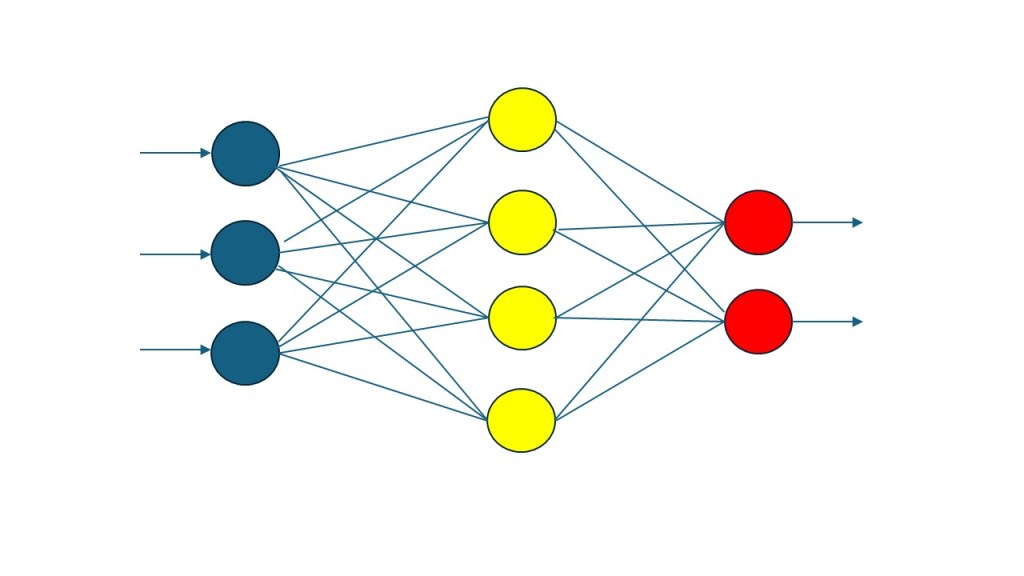
The first neural networks created by Frank Rosenblatt in 1957 looked like the one above. You had input neurons and output neurons connected via weights that you adjusted using an algorithm. In the case above you have three inputs (2, 0, 3) and these inputs are multiplied by the weights to the outputs.
3 X 0.2 +0 + 2 X -0.25 = 0.1 and 3 X 0.4 + 0 + 2 X 0.1 = 1.4 and then each output node has a threshold function yielding outputs 0 and 1.

To train the network you create a set of inputs and the output that you want for each input. You pick some random weights and then you can calculate the total error you get, and you use the error to calculate a new set of weights. You do this over and over until you get the output you want for the different inputs. The amazing thing is that now the neural network will often also give you the desired output for an input that you have not used in the training. Unfortunately, these neural networks weren’t very good, and they often failed and could not even be trained.

In 1985/1986, Geoffrey Hinton, David Rumelhart and Ronald J. Williams presented an algorithm applied to a neural network featuring a hidden layer that was very successful. It was effective and guaranteed to learn patterns that were possible to learn. It set off a revolution in Neural Networks. The next year, in 1987, when I was a college student, I used that algorithm on a neural network featuring a hidden layer to do simple OCR (optical character recognition).

Note that a computer reading an image with a letter is very different from someone typing it on a keyboard. In the case of the image, you must use OCR, a complicated and smart algorithm for the computer to know which letter it is.

A multiple layer neural network with one hidden layer. This set-up and the associated backpropagation algorithm set off the neural network revolution. Drawing.
A multiple layer neural network with one hidden layer. This set-up and the associated backpropagation algorithm set off the neural network revolution. My drawing.

In the network above you use the errors in a similar fashion to the above to adjust the weights to get the output you want, but the algorithm, the backpropagation algorithm is very successful.

Below I am showing two 10 X 10 pixel images containing the letter F. The neural network I created had 100 inputs, one for each pixel, a hidden layer and then output neurons corresponding to each letter I wanted to read. I think I used about 10 or 20 versions of each letter during training, by which I mean running the algorithm to adjust the weights to minimize the error until it is almost gone.

Now if I used an image with a letter that I had never used before, the neural network typically got it right even though the image was new. Note, my experiment took place in 1987. OCR has come a long way since then.

Two examples of the letter F in a 10 X 10 image | The Nobel Prize in Physics and Neural Networks
Two examples of the letter F in a 10 X 10 image. You can use these images (100 input neurons) to train a neural network to recognize the letters F.

At first, it was believed that adding more than one hidden layer did not add much. That was until it was discovered that by applying the backpropagation algorithm differently to different layers created a better / smarter neural network and so at the beginning of this century the deep learning neural network was born (or just deep learning AI). Our Nobel Prize winner Geoffrey J. Hinton was a pioneer in deep learning neural networks.

Drawing of a deep learning neural network (deep learning AI). There are three hidden layers.
My drawing of a deep learning neural network (deep learning AI). There are three hidden layers.

I should mention that there are many styles of neural networks, not just the ones I’ve shown here. Below is a network called a Hopfield network (it was certainly not the only thing he discovered).

Four neurons that are all connected to each other | The Nobel Prize in Physics and Neural Networks
In a Hopfield network all neurons are input, and output neurons and they are all connected to each other.

For your information, ChatGPT-3.5 is a deep learning neural network like the one in my colorful picture above, but instead of 3 hidden layers it has 96 hidden layers in its neural network and instead of 19 neurons it has a total of 176 billion neurons. Congratulations to John J. Hopfield and Geoffrey J. Hinton.


To see the Super Facts click here