Alien Civilizations and the Fermi Paradox

This is a submission for Kevin’s No Theme Thursday
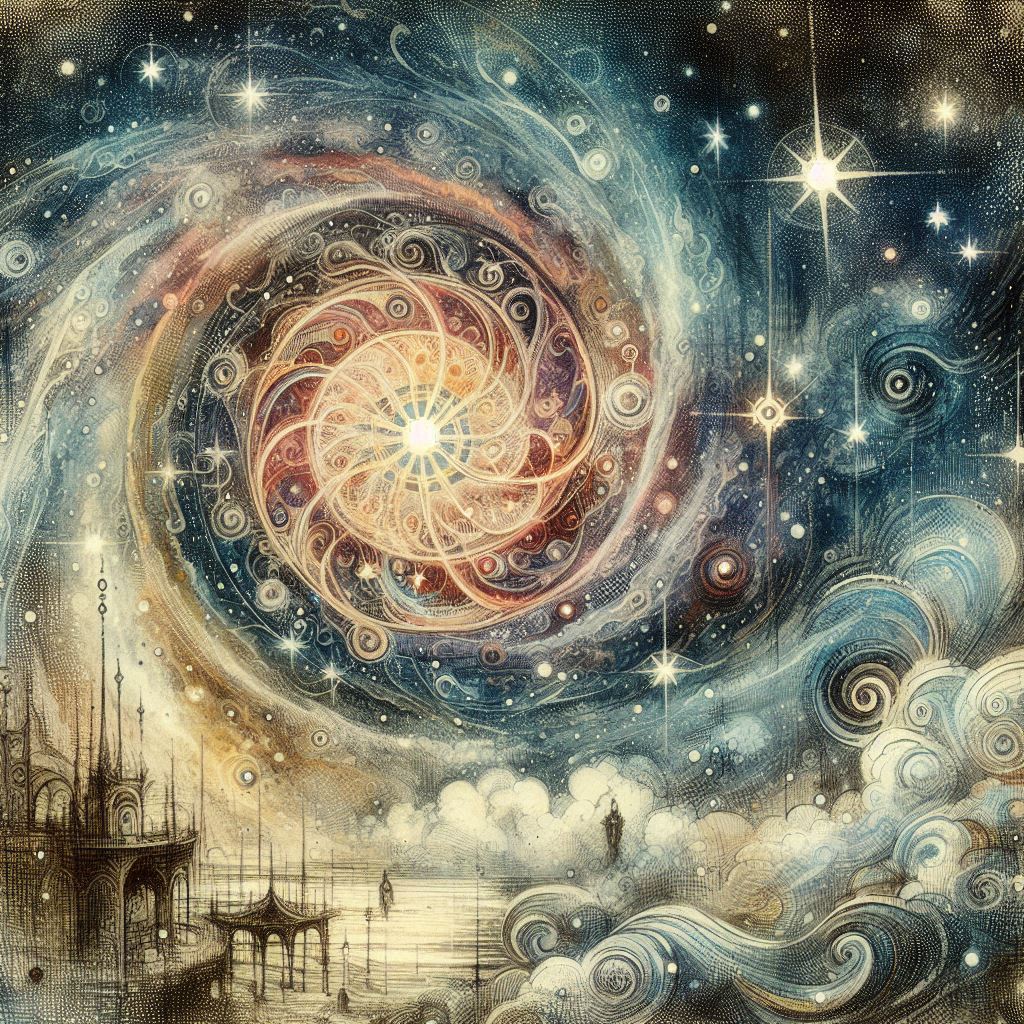
The AI generated image shows magical rotating things in the sky and an alien civilization below | Alien Civilizations and the Fermi Paradox
Image by Kevin from The Beginning at Last

Kevin’s artistic picture above makes me think of Alien Civilizations. Do they exist? Do they exist in our Galaxy? To quote Enrico Fermi, if they do exist “Where is Everybody?”. That is the famous Fermi Paradox.

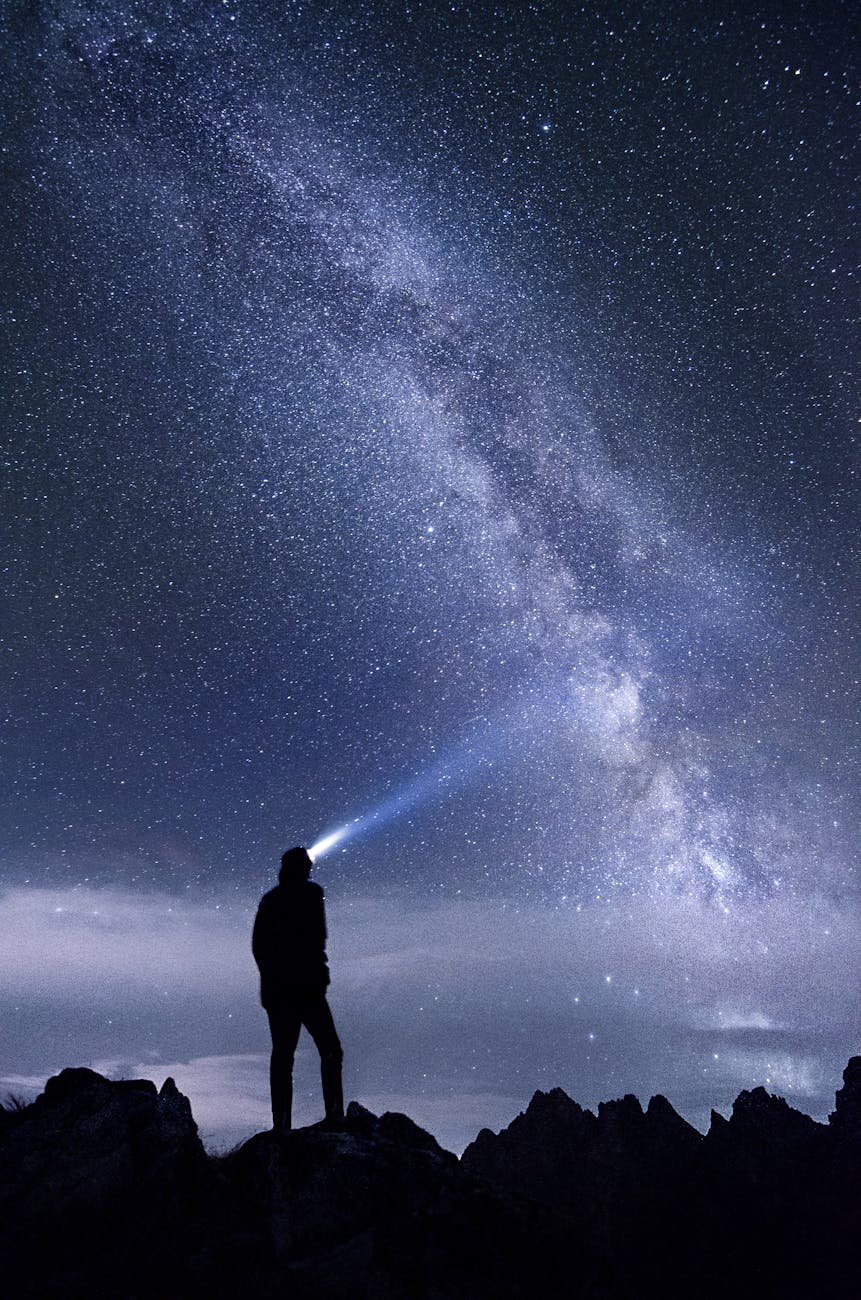
A telescope and a background showing the milky way
Did we find an advanced civilization in our Galaxy, which has hundreds of billions of stars?

We have found thousands of exoplanets,  and it is estimated that there are 11 billion potentially habitable Earth-sized planets orbiting stars roughly the same size as the sun in the Milky Way. It is estimated that there are an additional 40 billion potentially habitable Earth-sized planets orbiting red dwarf stars in the Milky Way. Earth is an estimated 4.5 billion years old whilst our Milky Way Galaxy is an estimated to be 13.6 billion years old. Add that there are at least hundreds of billions of Galaxies like the Milky Way in the observable Universe. Yet, human astronomers have not detected any signs of alien civilizations, and there is no evidence Earth has been visited by aliens in the past.
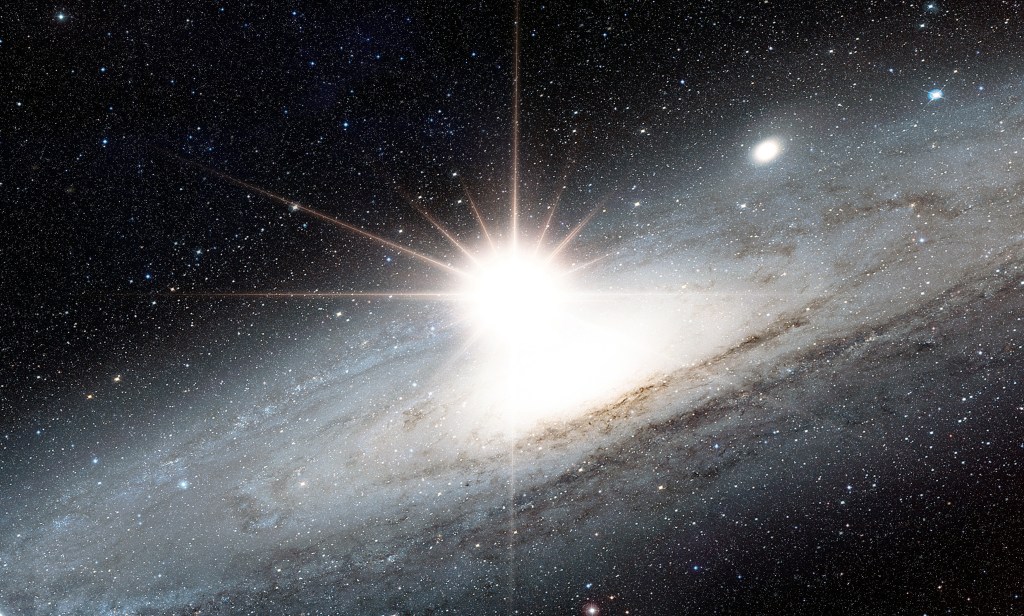
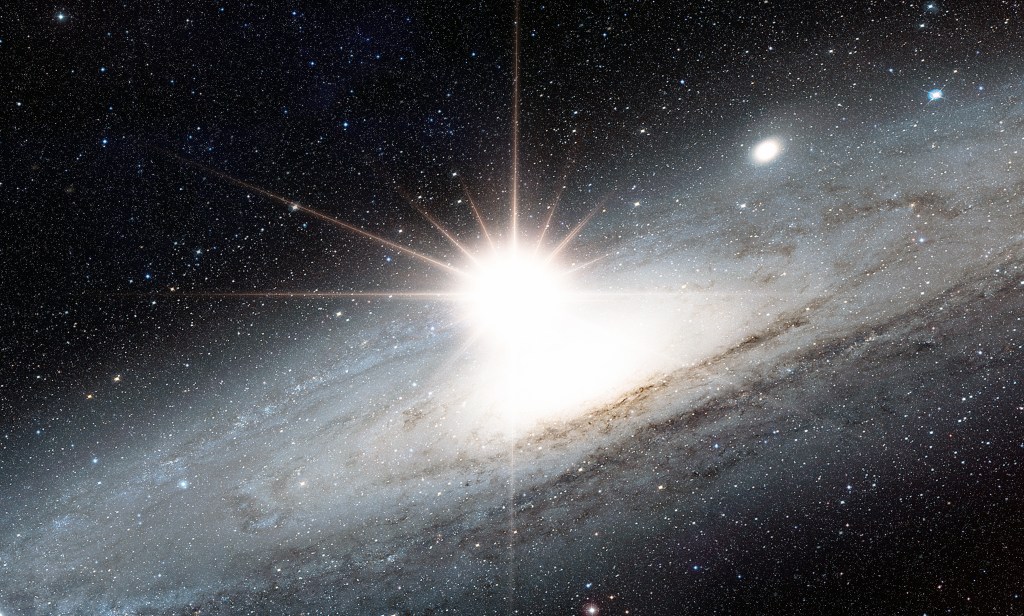
A picture of the Andromeda Galaxy with a bright white light near its center. The bright light is almost outshining the entire galaxy | Alien Civilizations and the Fermi Paradox
It should be noted that even though our Galaxy is 13.6 billion years old, its beginnings were very violent with a lot of supernova explosions, which were necessary for higher elements to come into existence and making life possible. So, we need to count out the first couple of billions of years. This is a supernova explosion in the center of the Andromeda galaxy “Elements of this image furnished by NASA” It is essentially an enhanced photo of a supernova explosion in a neighboring galaxy. Stock Photo ID: 2495486227 by muratart.
Blue and brown Earth like planet with rings.
Exoplanets, we found thousands but there are likely many billion habitable exoplanets in our Galaxy. This is an imagined Earth like exoplanet. Stock Illustration ID: 1440413666 by Dotted Yeti.
A planet surrounded by rings that are hundreds of times wider than the planet | Alien Civilizations and the Fermi Paradox
This is an illustration of a real exoplanet that we’ve found. J1407b is an exoplanet 20 times more massive than Saturn. It has enormous rings and is often referred to as Super Saturn. It may not harbor life. Stock Illustration ID: 2329821675 by Love Employee.

In this context, I would like to mention the Drake equation. The Drake equation is a probabilistic equation used to estimate the number of communicative extraterrestrial civilizations in the Milky Way Galaxy. It was created in 1961 by American astrophysicist and astrobiologist Frank Drake. This is the equation N = R * Fp * Ne * Fl * Fi * Fc * L. where N is the number of civilizations in the Milky Way galaxy with which communication might be possible.

  • R = the average rate of star formation in our galaxy.
  • Fp = the fraction of those stars that have planets.
  • Ne = the average number of planets that can potentially support life per star that has planets.
  • Fl = the fraction of planets that could support life that actually develop life at some point.
  • Fi = the fraction of planets with life that go on to develop intelligent life (civilizations).
  • Fc = the fraction of civilizations that develop a technology that releases detectable signs of their existence into space.
  • L = the length of time for which such civilizations release detectable signals into space.

We have a pretty good idea of what R * Fp * Ne is but the remaining factors are unknown.

An astronaut is standing on the surface of an alien planet. He is surrounded by giant mushrooms and in the sky, there is a large moon or a planet.
Exoplanet with life Stock Illustration ID: 1524001694 by Dotted Yeti

This is not really a super fact but more of a mystery. The goal of this blog is to create a list of what I call super facts. Important facts that we to be true, and yet they are disputed by many non-experts, or just highly surprising to the general public. However, I also post interesting facts and book reviews in this blog.

Is there Scientific Evidence for Alien Civilizations?

UFO sightings are not proof of alien spacecraft. The term “UFO” or “Unidentified Flying Object”, simply describes something in the sky that a person can’t recognize. Studies by NASA, Pentagon’s All-domain Anomaly Resolution Office show that the vast majority of these observations can be attributed to mundane phenomenon. Also, ask yourself, why would an alien civilization fly across interstellar space and only reveal themselves to random people with bad cameras and not to humanity as a whole. Why would they be flying around in little saucers? The typical flying saucer stories are not credible. Some UFO reports are also hoaxes or based on misidentified objects or misinterpretations of natural phenomena.

Grey alien with big black eyes showing peace sign, 3d render | Alien Civilizations and the Fermi Paradox
Alien showing peace sign. Shutter stock asset id: 2245224525 by adike

When I was in the Swedish army I was stationed near the Finnish Swedish border up north, which was close to Murmansk, a big Russian city which had the world’s largest navy base at the time. One night when I looked up in the sky I saw a shiny green elliptical shape in the night sky. It was quite big. I did not know what it was, but a lot of people called in to report it as a UFO. Were we being visited by space aliens as many believed. Some were even certain of it. No, it turned out to be Natrium cloud left behind by an intercontinental missile test launched from the Murmansk naval base.

A black hole with an orange accretion disk is approached by futuristic starship.
Was it a spaceship like this that we saw in the sky? No it was just a boring Natrium cloud left by a Russian missile. This spaceship approaching a black hole was generated by an Artificial Intelligence (AI) system. Stock AI-generated image ID: 2448481683 AI-generated image Contributor Shutterstock AI Generator.

Stories about past visitations are often guesses and conjecture mixed up with misrepresentation and fabrications. These stories are not taken seriously by scientists.  SETI (Search for Extraterrestrial Intelligence) has not found any definitive evidence of alien life. SETI have not detected any signals that convincingly can be attributed to an alien intelligence. In summary, there is no scientific evidence for aliens in the declassified UFO videos, in purported alien bodies, mutilated cows or in anything else.

But why have we not found any traces of alien intelligence? Where is Everybody? That’s the Fermi Paradox.

Solutions to the Fermi Paradox

Interstellar travel and interstellar communication are incredibly difficult. Maybe we should take the fact that nothing can travel faster than the speed of light seriously. You can always speculate about warping space and wormholes but that does not mean such travel is at all physically possible. The distances in the universe are enormous and require thousands or millions of years of travel even at speeds close to the speed of light. Likewise, those distances make communication difficult. Perhaps interstellar travel and communication is too difficult to be worth it.

The so called “Great Filters” hypothesis suggests that advanced civilizations don’t last that long. Maybe they self-destruct in nuclear wars or germ warfare. Perhaps they burn fossil fuels causing severe global warming ending civilization. Maybe AI destroyed their civilization. There could also be a great filter before intelligent life occurs. What if life itself is extremely unlikely to happen.

The “Dark Forest” hypothesis suggests that advanced civilizations are hiding to avoid detection from hostile advanced civilizations. A related idea is that there is a very advanced civilization in our galaxy, which destroys all other civilizations when they become too advanced and a potential threat. If that is true, maybe we shouldn’t advertise our existence using projects like SETI.

Another suggestion is that advanced civilizations are extremely rare because they can only arise under extremely rare conditions. Not only does a planet need to be habitable, but plate tectonics, climate, the shape of continents and oceans all to be just right for intelligent life and advanced civilizations to evolve. Also, consider the fact that intelligent human life existed for hundreds of thousands of years before the rise of civilization. Perhaps we are the only civilization in our Galaxy. Perhaps we are the first civilization in our Galaxy.

Yet another suggestion is that beings that are part of advanced civilizations eventually will escape into a virtual reality world or escape into other alternative worlds.

Here is a video giving an overview of the Fermi Paradox


I would like to end with a famous quote by the famous science fiction writer Arthur C. Clark “There are two possibilities: either we are alone in the Universe, or we are not. Both are equally terrifying,”
So, what do you think? Where is Everybody?

To see the Super Facts click here

We are Star Dust

Superfact 10 : We Are Star Dust

The matter in our bodies and our planet was formed by fusion in the cores of distant stars and then spread across the Universe by supernova explosions. This matter was later incorporated in second and third generation stars like our sun and its planets.

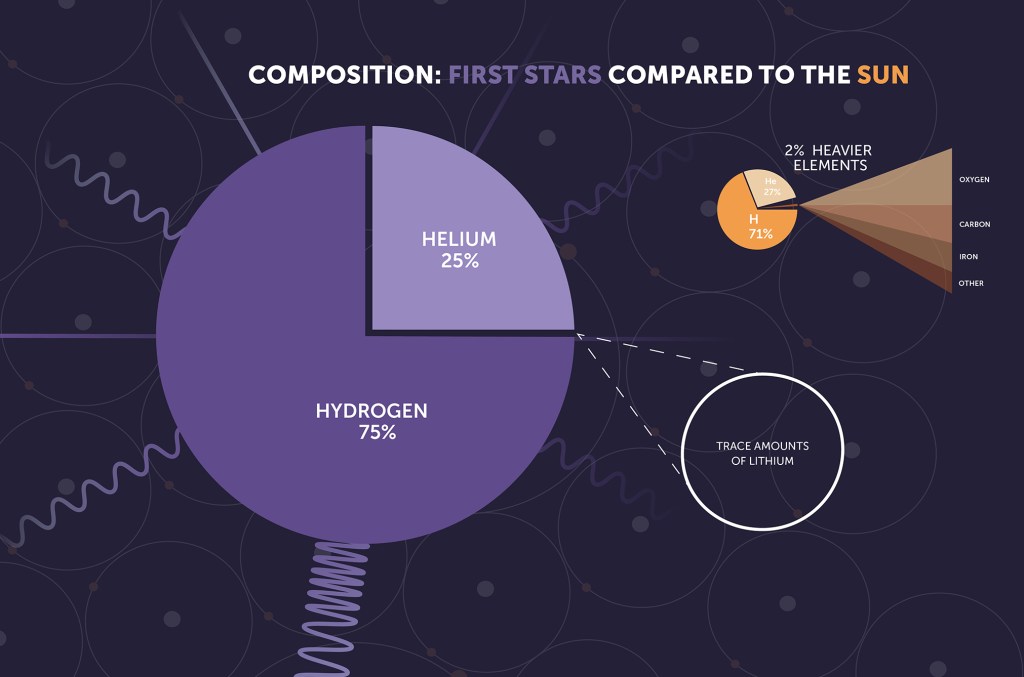
What do I mean by “We are Star Dust”? Let me explain. The first stars in the Universe were made of 75% hydrogen and 25% helium and trace amounts of Lithium, just like the entire Universe at the time. There were no heavier elements that could form planets or other solid celestial bodies. These early stars tended to be large and heavier elements like carbon, oxygen, and iron were formed by fusion in the cores of these stars.

Many of the first stars, called first generation stars, ended their lives in massive supernova explosions and the dusty remains of these explosions, including the metals formed in their cores, became the building blocks of the stars we see today. These second and third generation stars have planets and other smaller solid objects orbiting them, formed from the gas and dust (star dust) left over from the supernova explosions. So, we are star dust. The atoms formed inside the first-generation stars are now within us.

The picture consists of two pie chart graphs representing stars. The left one is a first-generation star with one pie for the 75% hydrogen and one pie for the 25% helium | We are Star Dust
The first-generation stars consisted of 75% hydrogen and 25% helium and trace amounts of Lithium. A second or third generation star like our sun is still mostly hydrogen and helium but also many other elements. The rocky planets circling the sun are mainly elements heavier than hydrogen and helium. Image credit NASA, ESA, CSA, STScI.
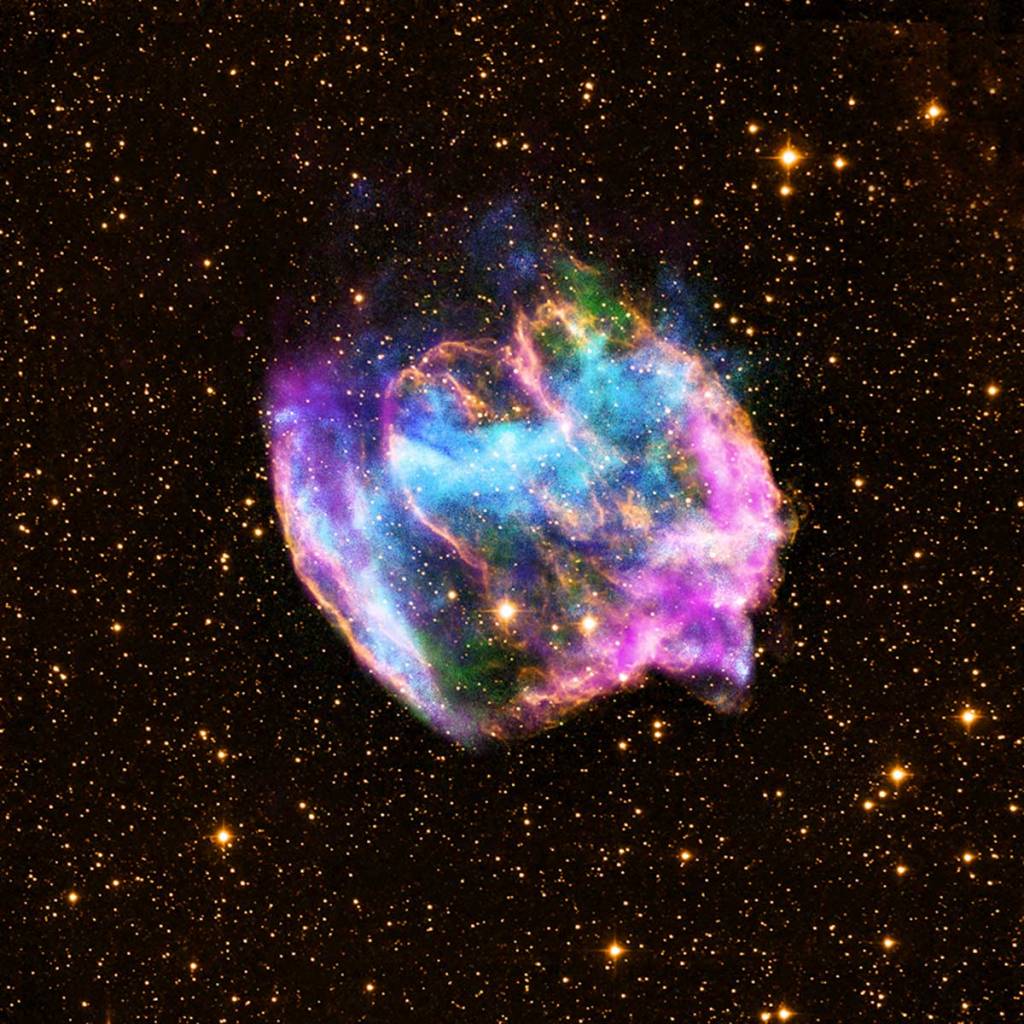
A colorful, nebula, a remnant from a supernova explosion on the background of a black sky full of stars.
Remnants of a recent supernova W49B, 26,000 light years away. Credit: X-ray: NASA/CXC/MIT/L.Lopez et al.; Infrared: Palomar; Radio: NSF/NRAO/VLA.

For those who know astronomy this may be basic information, but I’ve met many people who are unfamiliar with this information, and they are quite often surprised and astonished. That is why I consider this information a super fact. I can add that this process, the birth and death of first-generation stars, the supernova explosions, the disbursal of the matter, which later clump together to form new stars and rocky planets as well, takes many millions of years.

Bright white star surrounded by bluish rings | We are Star Dust
This is an Illustration of a supernova. Stock Vector ID: 2109918599 by Varunyuuu.

A Refresher

For those who need a refresher of things like stars and planets and galaxies. Our sun is a star, a third-generation star. It is much bigger than our Earth. If Earth is the size of a small pea or a caper, then the sun would be the size of a beach ball. However, our sun is not a big star, and it is only one star among between 100 and 400 billion stars in our galaxy the Milky Way.

Many galaxies including our own are disc shaped or look like spirals. If you imagine a dust storm cloud in which there are a thousand dust particles per cubic foot, each representing a star. Then this dust cloud would be 100 to 400 feet thick, and a thousand feet wide and long. I can add that there are between 100 billion to 2 trillion galaxies in the visible Universe. Also, the Universe is much bigger than the visible Universe and might be infinitely large.

The milky way galaxy stretches across the night sky.
A glimpse of our milky way galaxy. Photo by Stefan Stefancik on Pexels.com

As mentioned, orbiting around our sun there are planets, dwarf planets, moons, planet rings, asteroids, comets, meteoroids, interplanetary dust, etc. The star closest to the sun is Proxima Centauri, which is 4.24 light-years away, but it is too small to be seen. The stars that are visible in the night sky tend to be large stars that are not too far away.

Here in Dallas where I live you can typically see 15 stars with the naked eye, and you cannot see the Milky Way. That’s because of the light pollution. In northern Sweden where I grew up you could see 3,000 stars, our galaxy the Milky Way, as well as the Andromeda Galaxy on a clear night with the naked eye.

In 1885 a supernova explosion was recorded in the Andromeda Galaxy. Below is a constructed photo showing how it might have looked like if we had had better equipment back then. Notice that the supernova explosion is essentially outshining the entire galaxy. We are the result of the gases and dust spread by such explosions. You can also read more here.

A picture of the Andromeda Galaxy with a bright white light near its center. The bright light is almost outshining the entire galaxy.
Supernova explosion in the center of the Andromeda galaxy “Elements of this image furnished by NASA” It is essentially an enhanced photo of a supernova explosion in a neighboring galaxy. Stock Photo ID: 2495486227 by muratart.

To see the other Super Facts click here