
Super fact 67 : The Edge of the Observable Universe is 46.5 billion light years away despite the age of the Universe being 13.8 billion years. We can see 3.4 times further than light can travel in 13.8 billion years.
Esther’s writing prompt: October 29 : Edge
Click here or here to join in.
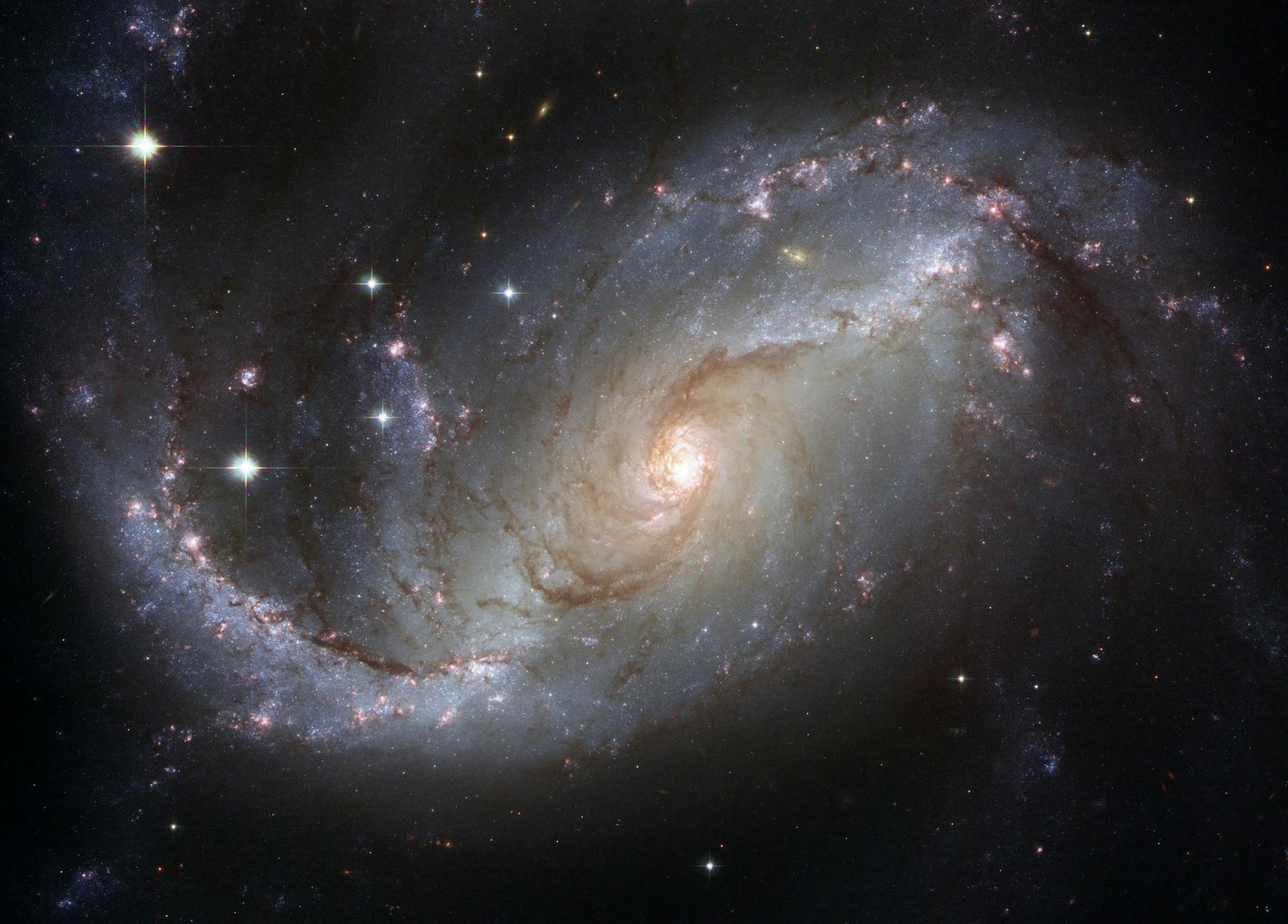
That sounds impossible at first. The age of the universe is 13.8 billion years. How can we see something that is farther away than 13.8 billion light-years if that’s how long the light had to travel. The reason it works is that space itself has been expanding the entire time that the light has been traveling toward us. The light we see today from the most distant regions of the universe was emitted 13.8 billion years ago, but the space between us and the origin of that light has stretched enormously. You can say that the light hitched a ride on the expanding space.
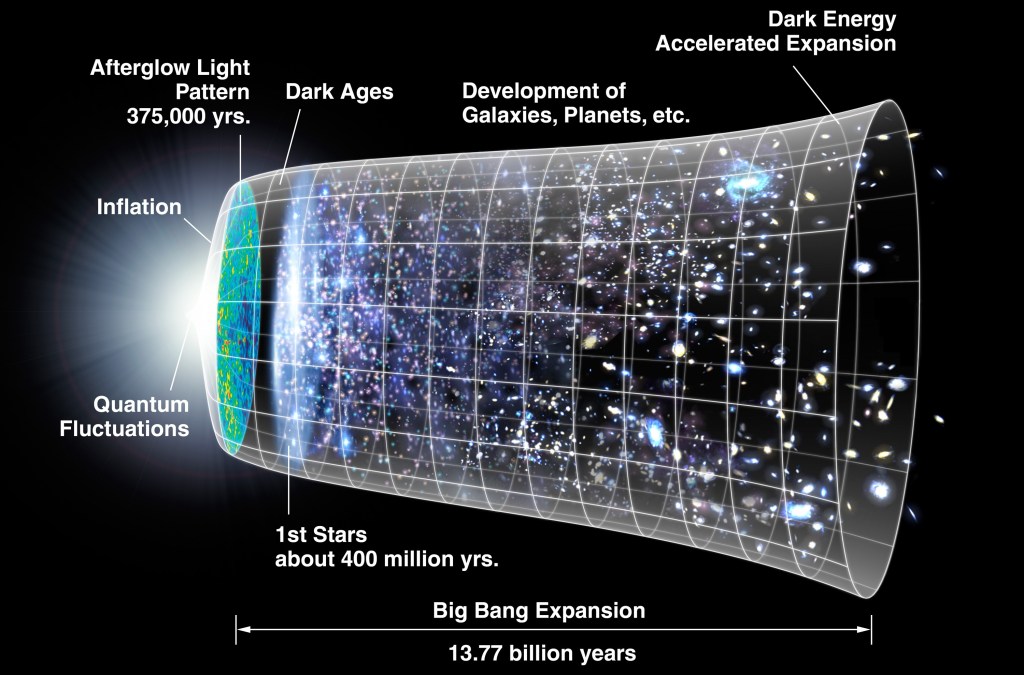
As mentioned, the edge of the observable universe is now about 46.5 billion light-years away in every direction, which means that the observable universe is about 93 billion light-years across (46.5 billion light years times 2) vastly larger than what you’d expect if you just multiplied the age of the universe by the speed of light. Beyond that observable edge there may be much more—possibly an infinite Universe, but it is forever hidden from us because light hasn’t had time to reach us yet and will never reach us.
The speed of light in vacuum is a universal constant and nothing can travel faster then the speed of light. However, space itself can expand faster than the speed of light if measured across large enough distances. The distance between two points in space can expand faster than the speed of light if that distance is large enough. This is possible because there is nothing material that is traveling faster than light. It is just the space of the Universe itself expanding because of dark energy.
Space is expanding right where you are standing too. Can you feel space expanding around you? Well, probably not but it is. I consider this a super fact because it is an important aspect of our view of the universe, it is surprising to those who did not know it before, and it is true.

Galaxies are Moving Beyond the Observable Universe
In the future the far away galaxies will continue to move away from us faster and faster, and beyond a certain distance their light will no longer ever reach us again. Therefore, more and more galaxies will disappear from our view. They won’t vanish physically; they’ll just slip beyond our observable horizon. In about 100 billion years, observers in the Milky Way (or what is left of it) may only see the Local Group of galaxies (Milky Way, Andromeda, etc.). Everything else will have faded out of visibility.
Our Local Group of galaxies consists of 80 galaxies compared to the estimated two trillion galaxies in the current observable universe. That means that the observable universe at that point will have 25 billion times fewer galaxies than now, or in other words only 0.000000004% of the galaxies in the observable universe will remain observable.

The Cosmological Event Horizon Another Edge of the Universe
Beyond roughly 16 billion light-years, galaxies recede faster than light due to the expansion of space. Again, that’s allowed in relativity because it’s space expanding, not them moving through space faster than light. Eventually, most of them will cross a boundary called the cosmic event horizon. Once they do, their light will never be able to reach us, not even given infinite time. We can still see these galaxies because of the light they emitted in the past, but the light they emit now will never reach us.
The cosmological event horizon, not to be confused with the event horizon for a black hole, is 16 billion light years away. That is another limit, or edge of the universe. Below is a 10 minute video explaining both the horizon / edge of the observable universe and the cosmological event horizon for those who are interested.
Black Holes Edges of the Universe

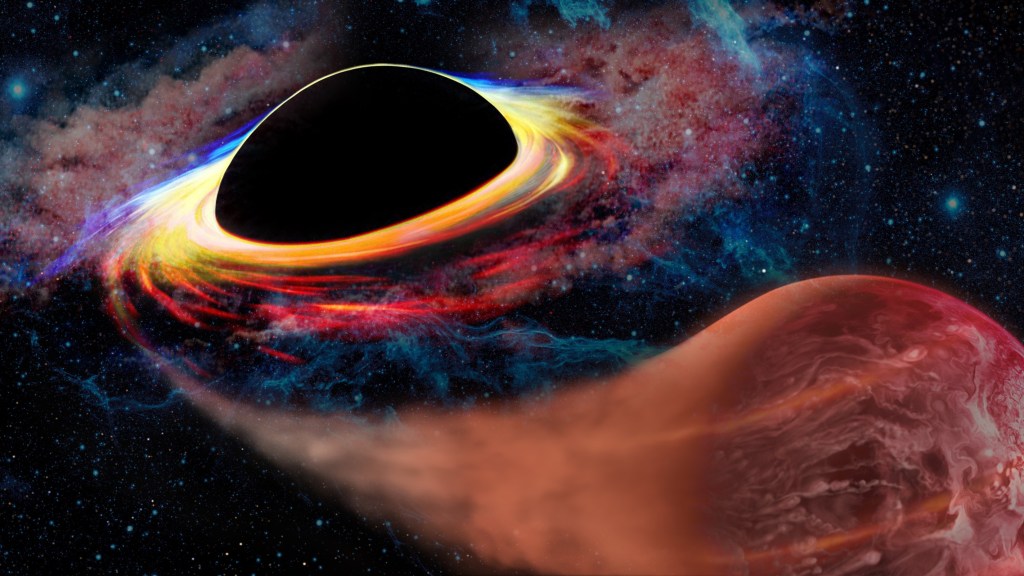
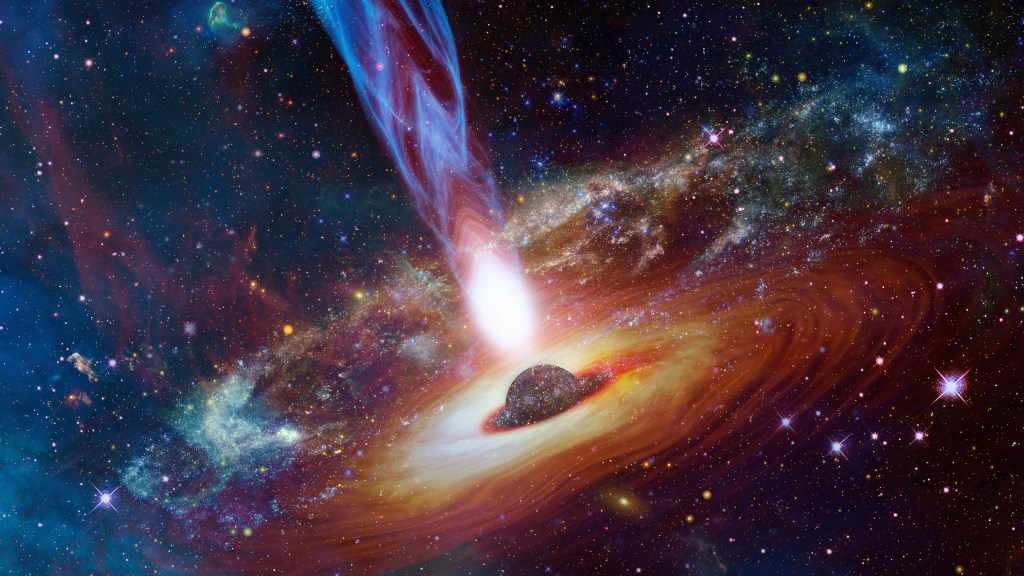
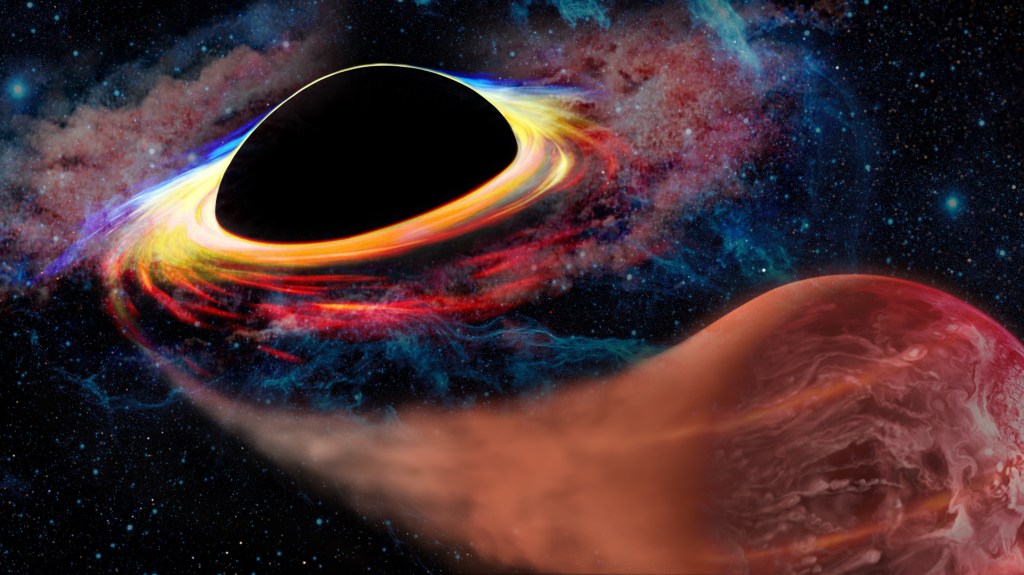
A black hole is a region of spacetime where gravity is so strong that nothing, including light, can escape it. The boundary of no escape is called the event horizon. If you pass the event horizon you cannot come back out no matter how much energy you use. Nothing can escape, no matter, no radiation, not light, or other electromagnetic radiation, and no information. Nothing at all can escape. The curvature of time and space itself forbids it.
I should add that right at the event horizon, there is so called Hawking radiation, but without complicating things it is not the same thing as escaping a black hole. You can guess from physical laws what might be inside, but you can never observe and report what is inside to planet Earth. In a sense, the event horizon of a black hole is another edge of the Universe. You can read about different types of black holes here. You can read more about black holes here, or here.
Below is an animation created by NASA that depicts what an observer falling into a black hole would see.



 Super Facts