Smallpox Killed 300 million People in the Last Century Before Eradication

Superfact 24: Smallpox killed 300 million people in the 20th century. However, there have been no naturally occurring cases of smallpox since 1977, and the world was declared free of smallpox on May 8, 1980, by the 33rd World Health Assembly.

Vial with smallpox vaccine and syringe against blurred doctor's face. 3D rendering | Smallpox Killed 300 million People in the Last Century Before Eradication
Smallpox vaccine Stock Illustration ID: 1782022109 by Novikov Aleksey

300 million people is an astonishing number. It is six times the 50 million people who died from the Spanish flu. It is about four times as many people as the 70 to 85 million people who died in World War II. It is close to the entire current population of the United States. That’s how many people died from this very dangerous disease. It was eradicated by a vaccination campaign.

I think this fact qualify as a super-fact, first of all because of the astonishingly huge number of deaths but also for the fact that it is gone. It is hard to believe that this happened. It is hard to believe that the world has changed so drastically for the better. It is a shocking but true fact. Thanks to the vaccination campaign we are living in a much better world.
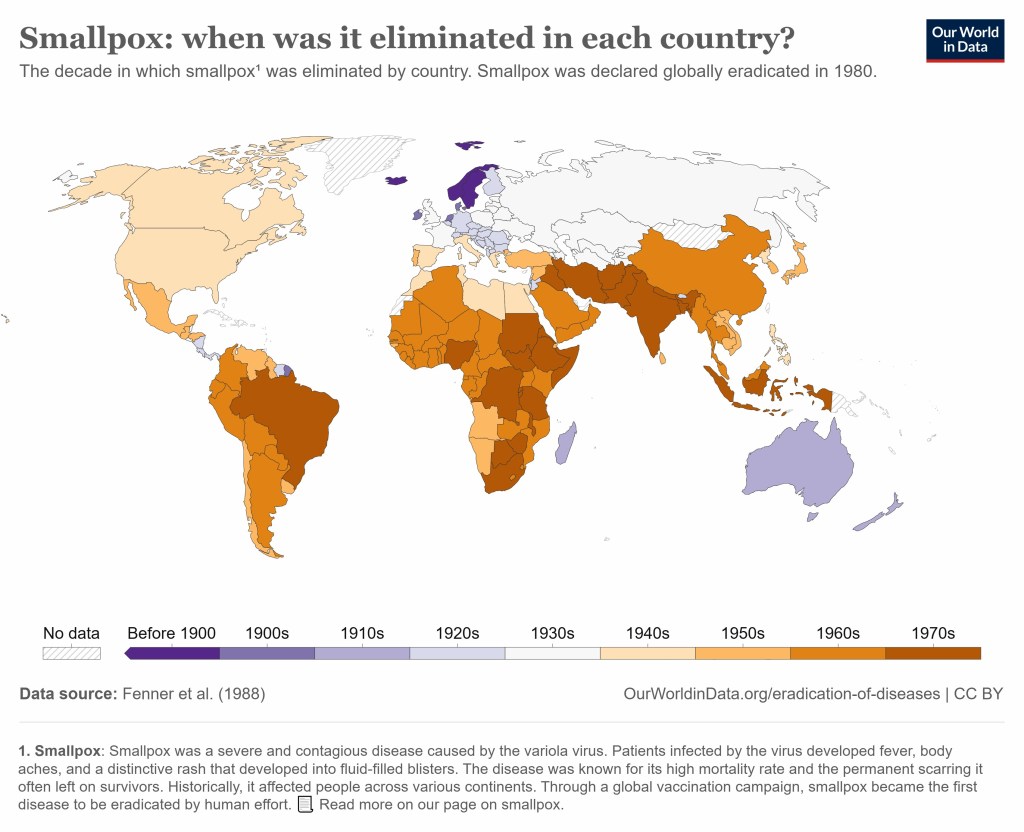
The picture is a world map showing countries in different colors. The colors indicated when smallpox was eradicated in that country. Dark blue indicates that it was before 1900 and that is Sweden and Norway. Light beige indicates it was eradicated in the 1940’s, which is true for the United States. Dark brown indicates that it was eradicated in the 1970’s and that represents, for example, India, Brazil and many African countries | Smallpox Killed 300 million People in the Last Century Before Eradication
This world map shows when smallpox was eradicated from different countries. The source is Our World in Data, originally Fenner et al. at CDC.

What is Smallpox?

Smallpox is an infectious disease caused by the variola virus<<Link-1>>. The last naturally occurring case was diagnosed in October 1977, and the World Health Organization (WHO) certified the global eradication of the disease in 1980.  The disease begins with fever and vomiting followed by the formation of ulcers in the mouth and a skin rash that later turns into fluid filled blisters with a dent in the middle. These blisters get scabbed and leave scars. The death rate was about 30%.
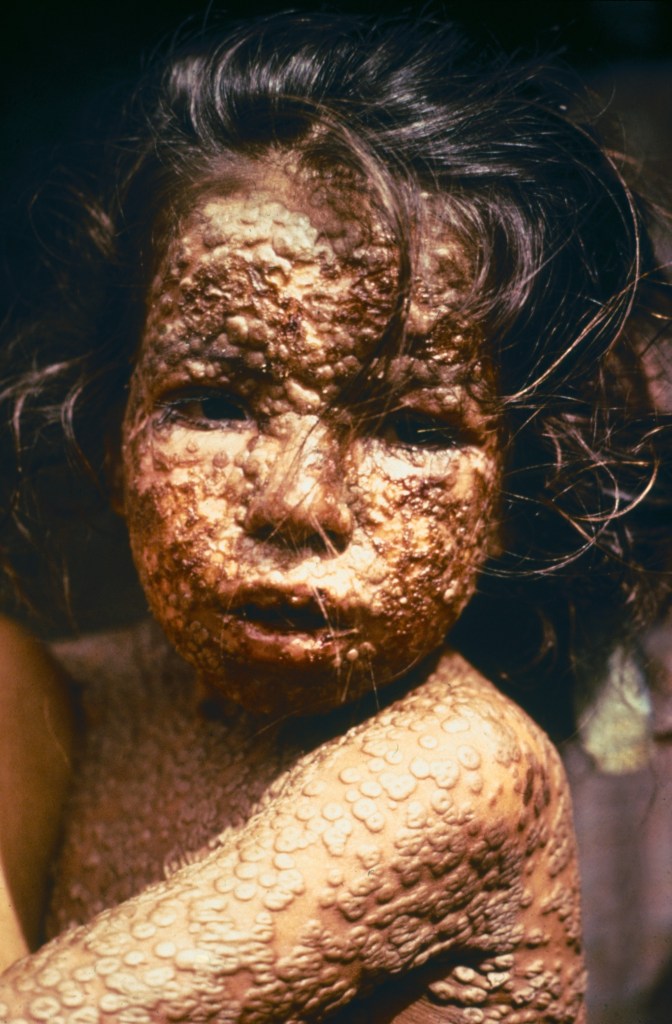
A child with covered by severe blisters.
Child with smallpox in Bangladesh 1975. Wikimedia commons photo by CDC/James Hicks.

The Eradication of Smallpox and Vaccines

The smallpox vaccine has a long history that begin in China where smallpox inoculation had existed long before it did in Europe. In 1796 the English physician Edward Jenner demonstrated the effectiveness of cowpox to protect humans from smallpox. Soon after several countries enacted mandatory vaccinations.

In 1807, Bavaria became the first country in the world to introduce compulsory vaccinations. In 1958 the World Health Assembly was called upon to eradicate smallpox. At this point 2 million people still died from smallpox every year. In 1967 the World Health Organization intensified the global smallpox eradication. As mentioned, smallpox was eradicated at the end of the 1970’s.

In 1998 & 2002 vaccination was dealt a blow by the Wakefield studies claiming that the MMR vaccine caused autism. Even though the studies were debunked, and several later studies showed no link between the MMR vaccines and autism, the fear of vaccines began to spread.  

For example, in 2024 the American Veterinary Medical Association reported 37% of the dog owners surveyed believe canine vaccination could cause autism in their dogs. Not only is there no link between vaccines and autism, but technically speaking, dogs cannot be autistic as the condition is unique to humans. Unfortunately, the unnecessary fear of vaccines causing autism seems to only be getting worse.


To see the other Super Facts click here


Are you vaccinated against smallpox?
The Surprising Monty Hall Problem

Superfact 22: Suppose you’re on a game show, and you’re given the choice between three doors: Behind one door is a car; behind the other two doors there are goats. You want to pick the car. You pick a door, and the host, who knows what’s behind the three doors, opens another door revealing a goat. Now the question is, is it to your advantage to switch door choice? The answer is yes. And that is the surprising Monty Hall Problem.

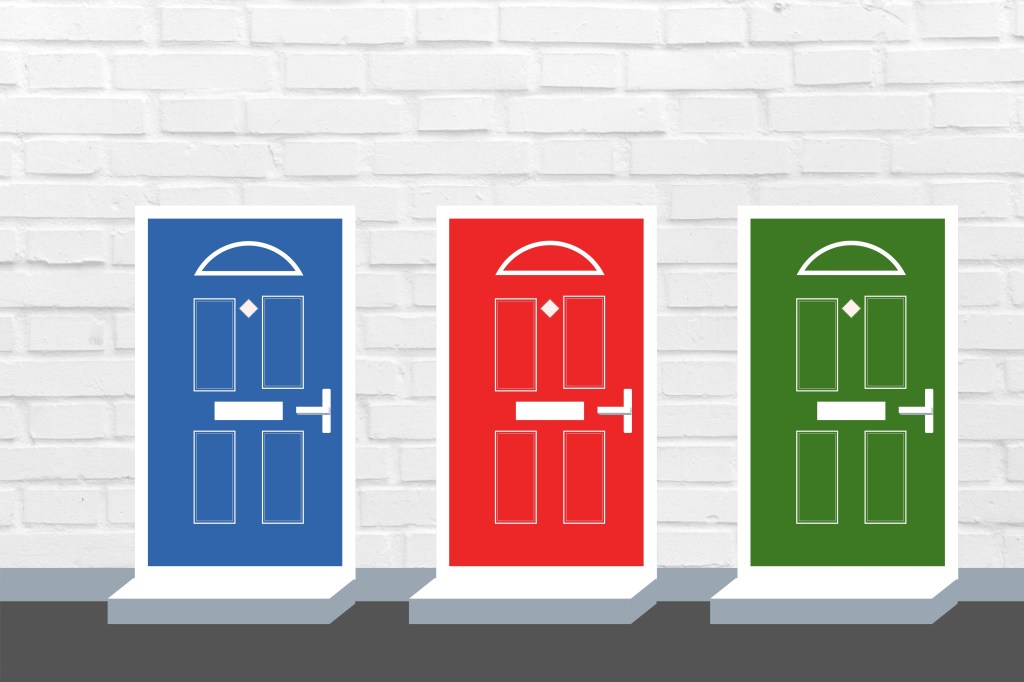
There is a blue door on the left, a red door in the middle, and a green door on the right | The Surprising Monty Hall Problem
The Monty Hall gameshow Three Doors Problem. There is a car behind one door, and goats behind the other two. You pick a door. Monty Hall, the gameshow host, opens one of the other doors and it has a goat. Should you change your choice of door? Yes, you should. But why? – Monty Hall Problem Stock Illustration ID: 1881849649 by SATYA94.

It is quite common to argue that it does not matter. You don’t know what is behind the two remaining doors so it should be 50/50 right? In a test involving 228 people only 13% chose to switch. However, you should switch.

Monty Hall, the gameshow host of the Let’s Make a Deal television game show, knows where the car is, so he never chooses the door with the car. And by curating the remaining two doors for you, he raises the odds that switching is always a good bet. By switching your choice, you have a 2/3 chance of winning the car but if you stay with your original choice, you only have a 1/3 chance of winning the car.

So why is this a super-fact? First, we know it is true. It is mathematically proven and experimentally verified that switching door is the best choice. Secondly, this was widely contested and is still surprising to people. Finally, probabilistic thinking is the key to being rational and making good decisions. This fact is true, important and disputed and thus a super fact.

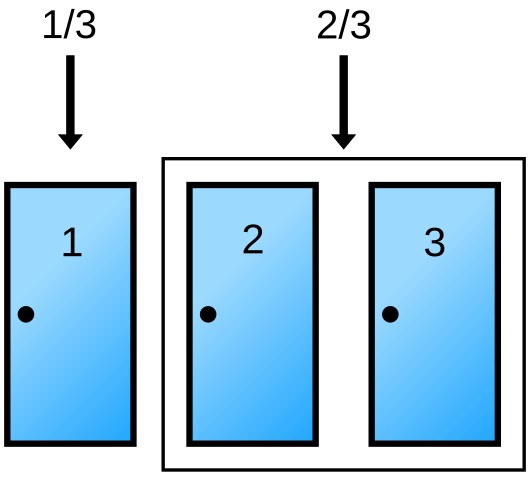
One way of viewing the situation is by noting that there is a 1/3 chance that the car is behind any door that the contestant picks and a 2/3 chance that the car is behind one of the other two doors.

The picture shows three doors, one marked 1/3 and two more grouped together under 2/3 | The Surprising Monty Hall Problem
The car has a 1/3 chance of being behind the contestant’s pick and a 2/3 chance of being behind the other two doors. Picture from Wikimedia commons public domain.

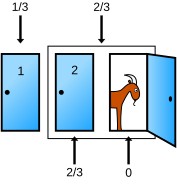
If Monty opens one of the two doors that the contestant did not pick there is still a 1/3 probability that the car is behind the door the contestant picked and a 2/3 chance that the car is behind one of the other two doors. However, one of the doors that the contestant did not pick is now known to feature a goat. Therefore, the probability that the car is behind the other door is 2/3.

The picture shows three doors, one marked 1/3 and two more grouped together under 2/3. The last door has a goat, and it is marked by 0. The door in the middle is marked by 2/3.
The host opens a door. The odds for the two sets don’t change but the odds become 0 for the open door and 2/3 for the closed door. Picture from Wikimedia commons public domain.

The table below is probably (no pun intended) a better way of illustrating the situation. In the table door 1 is the door designated to be the contestant’s first choice. Monty opens one of the remaining doors that has a goat behind it.

Behind door 1Behind door 2Behind door 3Result if staying at door 1Result if switching to door offered.
GoatGoatCarWins goatWins Car
GoatCarGoatWins goatWins Car
CarGoatGoatWins CarWins goat

There are various other ways of explaining the situation including Steven Pinker’s approach. It is easy to test this is real life and repeated experiments and simulations shown that if you switch you have a 2/3 chance of winning.

As an example of the controversy this probability puzzle caused was Marily Savant’s column in Parade Magazine. As a side note, Marilyn Vos Savant is the person who has the highest recorded intelligence quotient (IQ) as stated in the Guinness Book of Records. In response to a question regarding the Monty Hall game show problem she wrote that you should switch. She received letters from 10,000 readers disputing this, including 1,000 with PhDs. In the long run she prevailed.


To see the other Super Facts click here


Wind power is providing more than a quarter of Texas Power

Superfact 16: Wind power is providing more than a quarter of Texas Power. In 2023, wind represented 28.6 percent  of Texas energy generation. In 2022, wind power accounted for about 25 percent  of Texas’ energy generation.

I am referring to this fact as a super fact because, it is true, important, and yet it’s a fact that is difficult to believe for many people. That wind power, allegedly a marginal energy source, is successful in fossil fuel loving Texas is hard to believe. I have come across what appears to be well informed people who were certain it was nonsense. However, as you can see from the Texas government links above, it is true, something they could not dispute.

The reason for the success of wind power in Texas is economics, which is another fact that may be surprising to some. Fossil fuels are a major source of income for us in Texas, but everyone also wants to save money. Texas has its own electric grid, it’s deregulated, and organized along free market principles.  

When companies sell their energy (to ERCOT) it works like a continuous auction. The one with the lowest price is picked first and allowed to contribute with whatever they are able to and also, of course, considering what the grid-powerlines can carry safely. Naturally, the price of wind in Texas includes federal subsidies, which make it even cheaper.

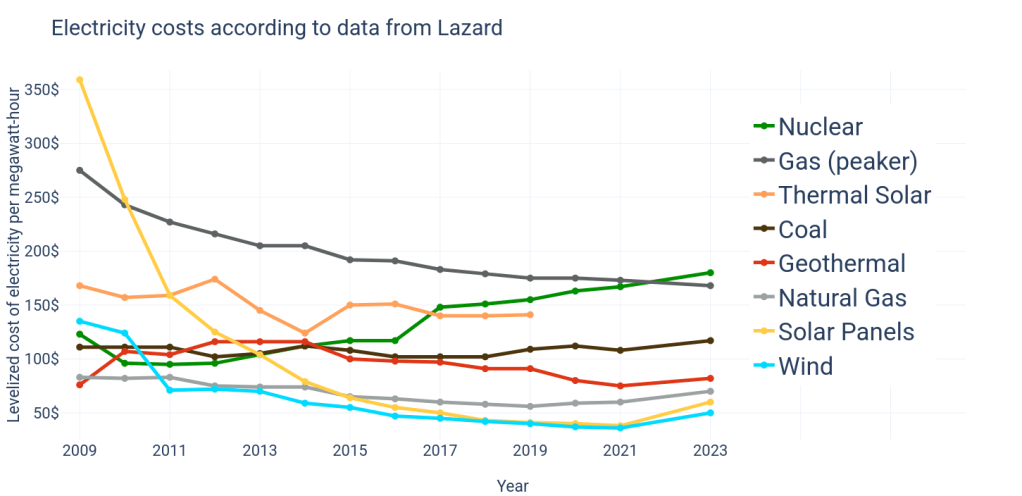
However, all energy sources are subsidized, and fossil fuels have a long history of government subsidies. Below is the average unsubsidized levelized cost of energy according to Lazard. Levelized means that construction costs, land rent, and other costs not directly caused by electricity generation are taken into consideration. Notice how cheap wind is (blue line). This is for the United States not just Texas. I don’t have any numbers, but I’ve heard that for Texas solar is the cheapest .

The image shows 8 graphs representing the price of Nuclear, Gas (peaker), Thermal Solar, Coal, Geothermal, Natural Gas, Solar Panels, and Wind. Today Wind is the cheapest.
Average unsubsidized levelized cost of energy. Notice that the light blue line indicates that wind power is pretty cheap. Mir-445511, CC BY-SA 4.0 https://creativecommons.org/licenses/by-sa/4.0, via Wikimedia Commons.

Affordability

Windpower is not only relatively cheap. Wind power is one of the most efficient and sustainable energy sources available. The energy required to manufacture, install, and maintain wind turbines is small compared to the energy they produce over their lifespan. This is known as their energy return on investment (EROI), which is quite favorable for wind energy.

The Institute of Environmental Management and Assessment (IEMA) states that the average wind farm will pay back the energy that was used in its manufacture within 3-5 months of operation. This article in the journal Renewable Energy found that the average windfarm produces 20-25 times more energy during its operational life than was used to construct and install its turbines. It included data from 119 turbines across 50 sites going back 30 years.

Wind power is providing more than a quarter of Texas Power
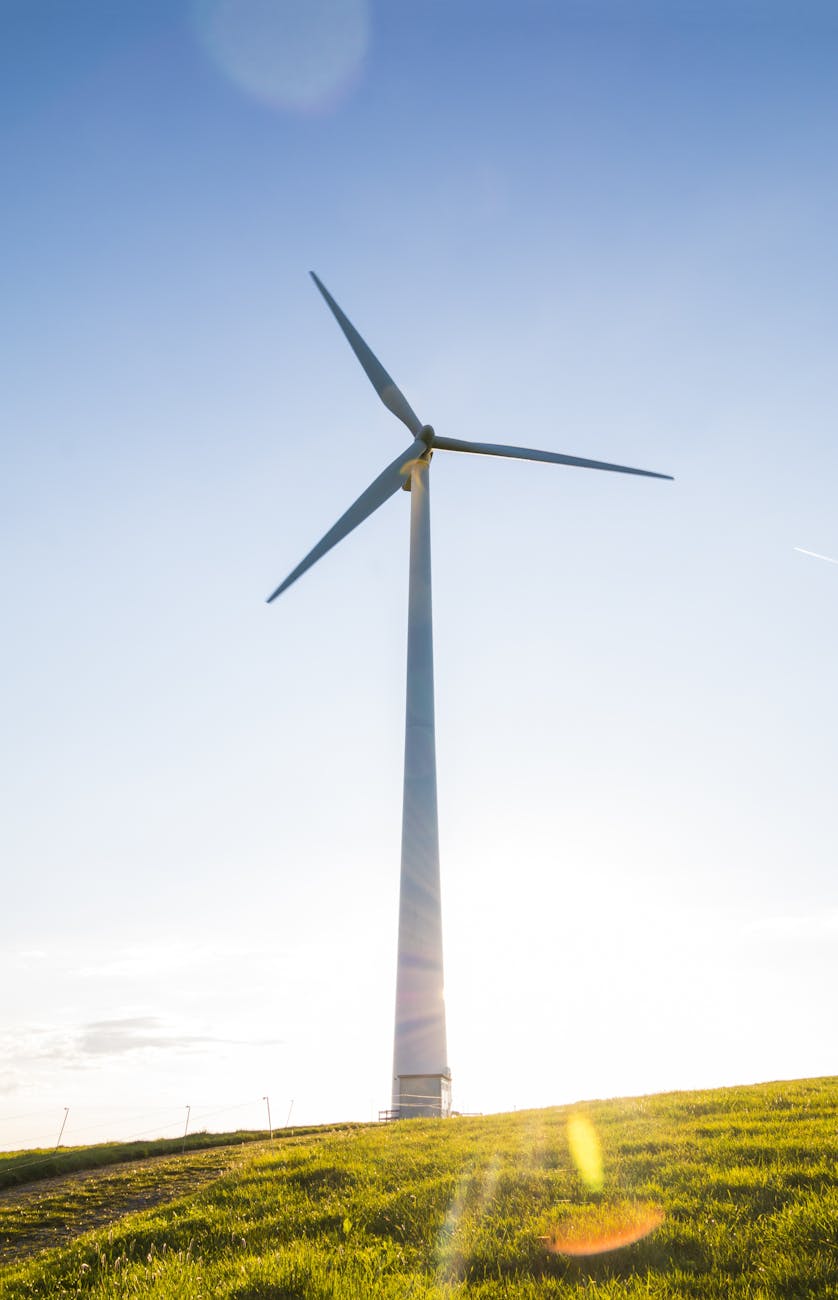
Photo by Pixabay on Pexels.com

False Claims

It is important to be aware that there are many false claims floating around about wind power. The sound from wind power stations does not cause cancer, it does not use any other energy sources while operating; it solely harnesses the kinetic energy from the wind to generate electricity, meaning it only relies on wind to function as its primary energy source. Windpower is not a major cause if bird deaths. To read more about false claims about wind power click here.

Wind power is providing more than a quarter of Texas Power
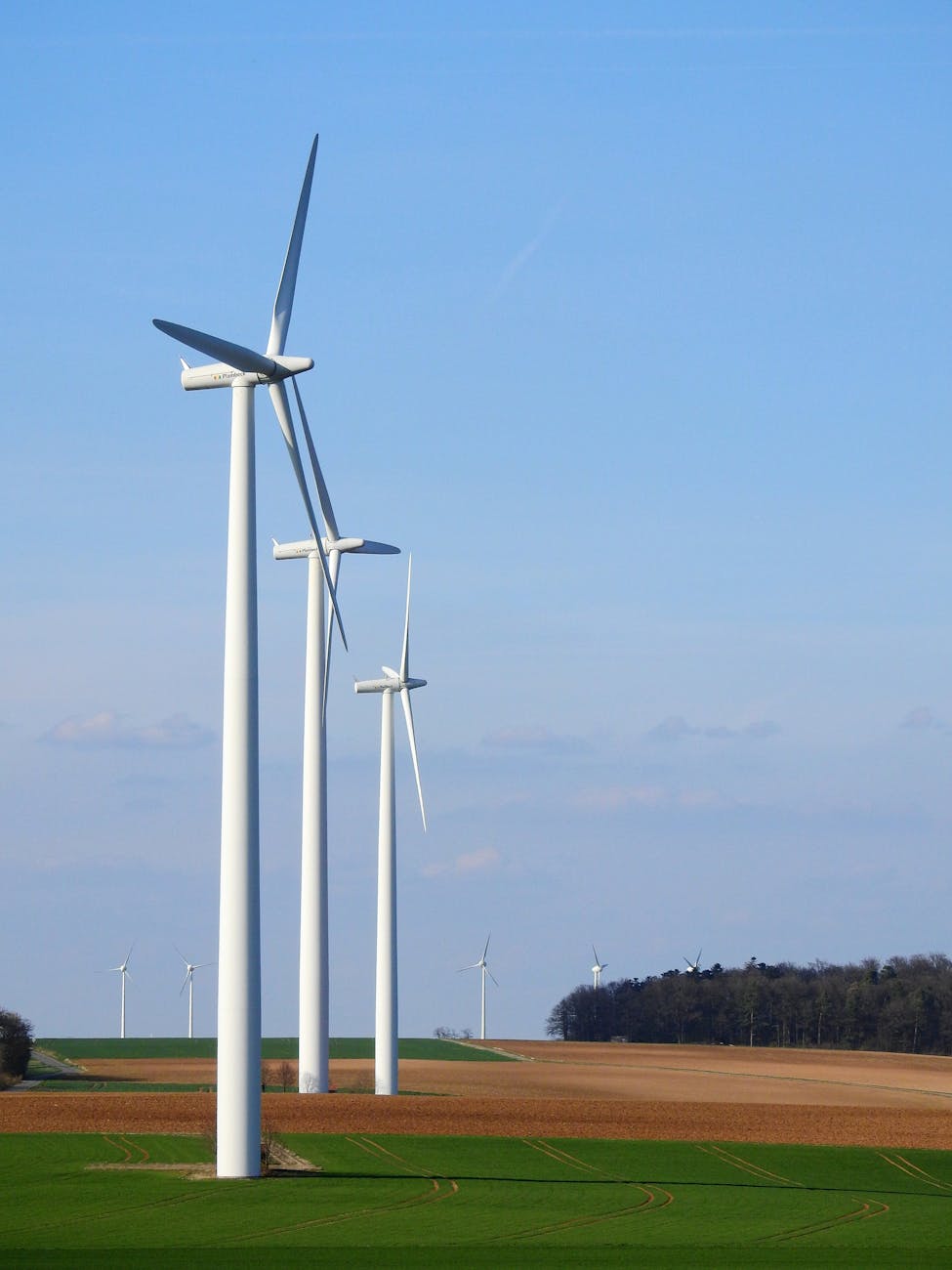
Photo by Pixabay on Pexels.com

There are positive and negative aspects of wind power, like any other source of energy. One issue with wind power (and solar) is that it is an intermittent source of energy. When the wind is not blowing you need other sources of energy (until there is sufficient energy storage). This is less of a problem when you have a mix of energy sources as Texas does.


To see the other Super Facts click here


The United States is a Republic and a Democracy

Superfact 12: The United States is both a Republic and a Democracy

I believe that most people do not find that statement surprising in the least. When I became a citizen of the United States, through naturalization (I am originally from Sweden), I had to learn about the US government, and I was told by the US government officials that the United States is both a Republic and a Democracy.

However, I’ve come across a lot of people who state something like “The United States is a Republic and therefore not a Democracy” as if being a Republic and a Democracy are mutually exclusive. Well, as this article explains it is not. To be very specific, the United States is a “federal constitutional representative democracy.” Because the United States is indeed both a Republic and a Democracy and yet many would dispute that fact, I consider this to be a super-fact.

This is an article from the United States Citizenship and Immigration Services on the topic that confirms that the United States is a Republic and a Democracy. This is an article from NPR on the topic. This is what the Wikipedia entry on the United States says under the headline “Government and politics” “It is a liberal representative democracy “in which majority rule is tempered by minority rights protected by law.””

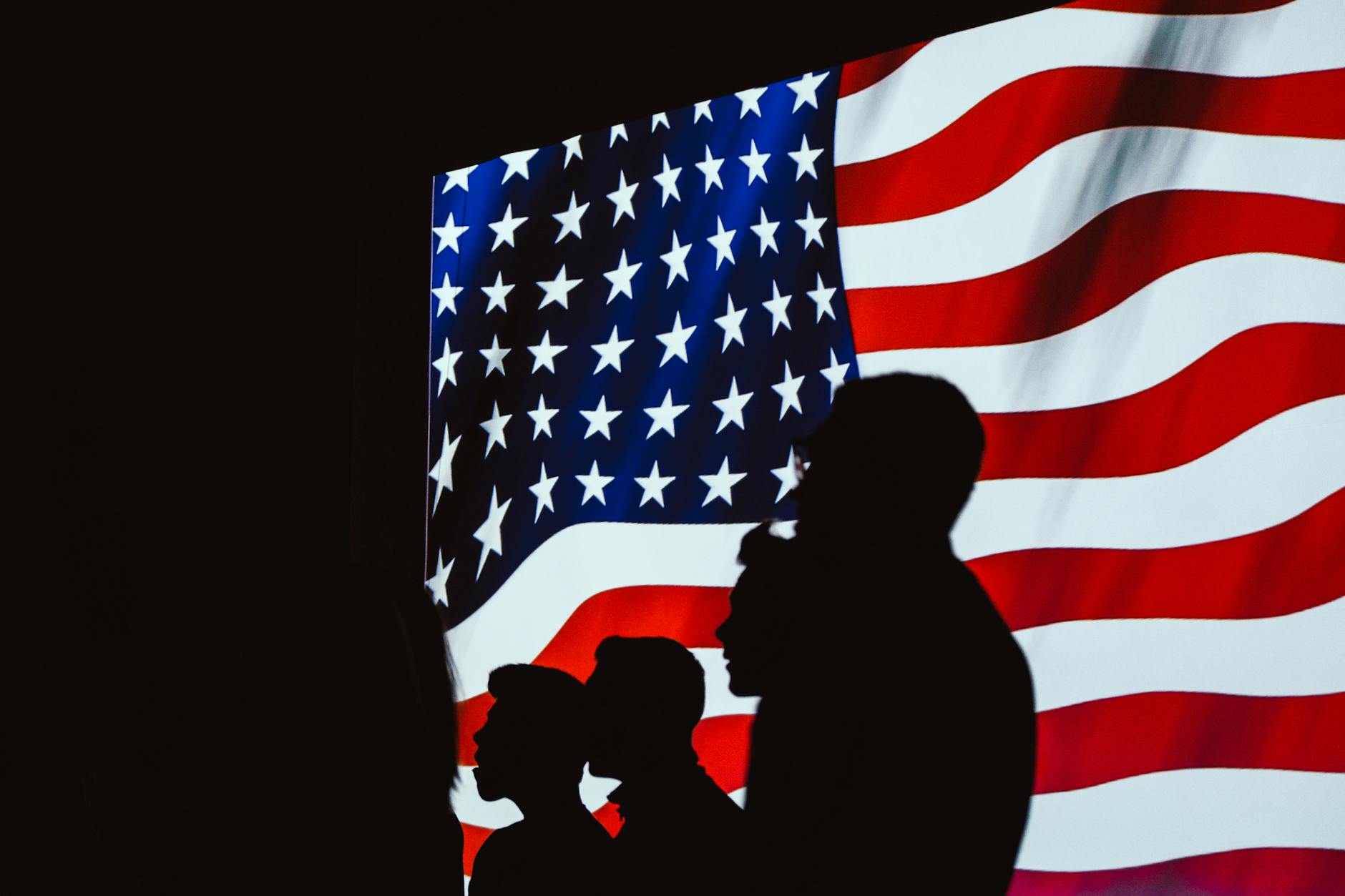
The picture shows an American Flag and the shadows of people | The United States is a Republic and a Democracy
The United States is a representative democracy. Photo by Brett Sayles on Pexels.com

It should be noted that United States is not a Direct Democracy, like ancient Greece, but it features some aspects of it in referendums. Just like most democracies around the world. Another thing to note is that the Economists Intelligence Unit downgraded the United States from a full democracy to a flawed democracy in 2016. But it is still a democracy.

Is the United States a democracy?

If you ask google / AI this question “Is the United States a democracy?”. The answer you get is:

The United States is a representative democracy. This means that our government is elected by citizens. Here, citizens vote for their government officials. These officials represent the citizens’ ideas and concerns in government.

When I asked ChatGPT the same question (Is the United States a democracy?) I got this answer:

Yes, the United States is considered a democracy, but more specifically, it is a representative democracy or democratic republic. In a pure democracy, citizens directly vote on all laws and policies. In a representative democracy, like in the U.S., citizens elect officials (such as members of Congress, the president, and local representatives) who make decisions and pass laws on their behalf.

The U.S. system is also based on the principles of constitutional democracy, where the rule of law, individual rights, and the separation of powers (between the executive, legislative, and judicial branches) are foundational. The Constitution guarantees these principles, which are designed to protect minority rights while allowing majority rule through democratic elections.

In summary, the U.S. combines democratic elements with a framework that ensures checks and balances to prevent abuses of power.

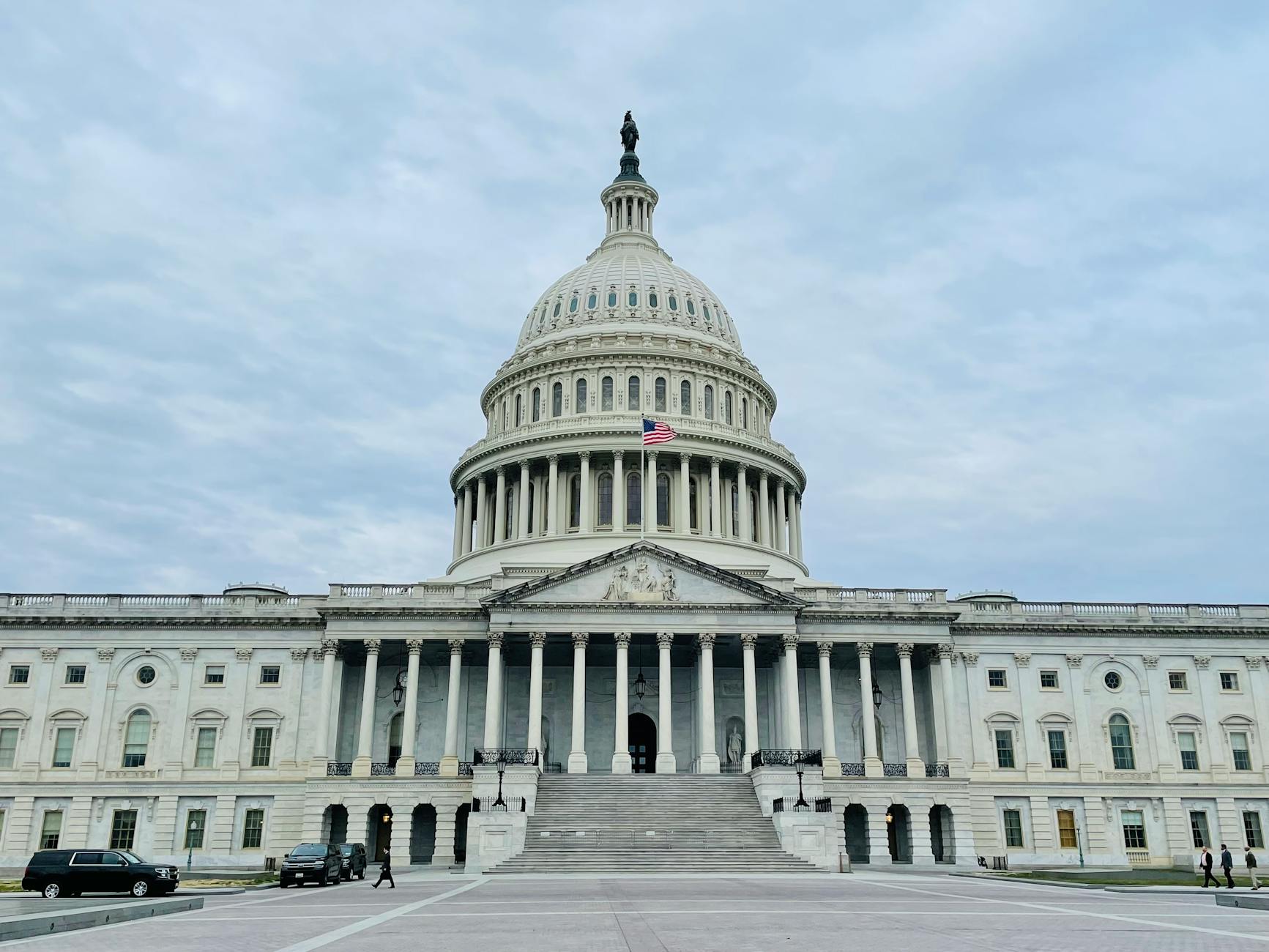
The photo shows the United States Capitol Building, which is white and is shaped like a roundish tower.
The United States Capitol Building in Washington DC. Photo by Patrick Morris on Pexels.com

Partisan politics aside, the consensus seems to be that the United States is both a Republic and a Democracy.


To see the other Super Facts click here