The goal of this blog is to create a list of super facts. Important facts that are true with very high certainty and yet surprising, misunderstood, or disputed by many. This blog aims to be challenging, educational, and fun, without it being clickbait. I determine veracity using evidence, data from reputable sources and longstanding scientific consensus. Prepare to be challenged (I am). Intentionally seek the truth not confirmation of your belief.
Today, June 6 is the National Day of Sweden (or the Independence Day of Sweden). Gustav Vasa, or Gustav I, Sweden’s hero king and the father of modern Sweden, was elected king of Sweden on June 6th, 1523. This was after the Swedish War of Liberation from Denmark 1521 to 1523. Gustav rose to lead the Swedish War of Liberation following the Stockholm Bloodbath, where his father was executed. Gustav Vasa or Gustav I was King of Sweden from 1523 until his death in 1560. Since I am originally Swedish (now living in Texas) June 6 is a significant date for me.
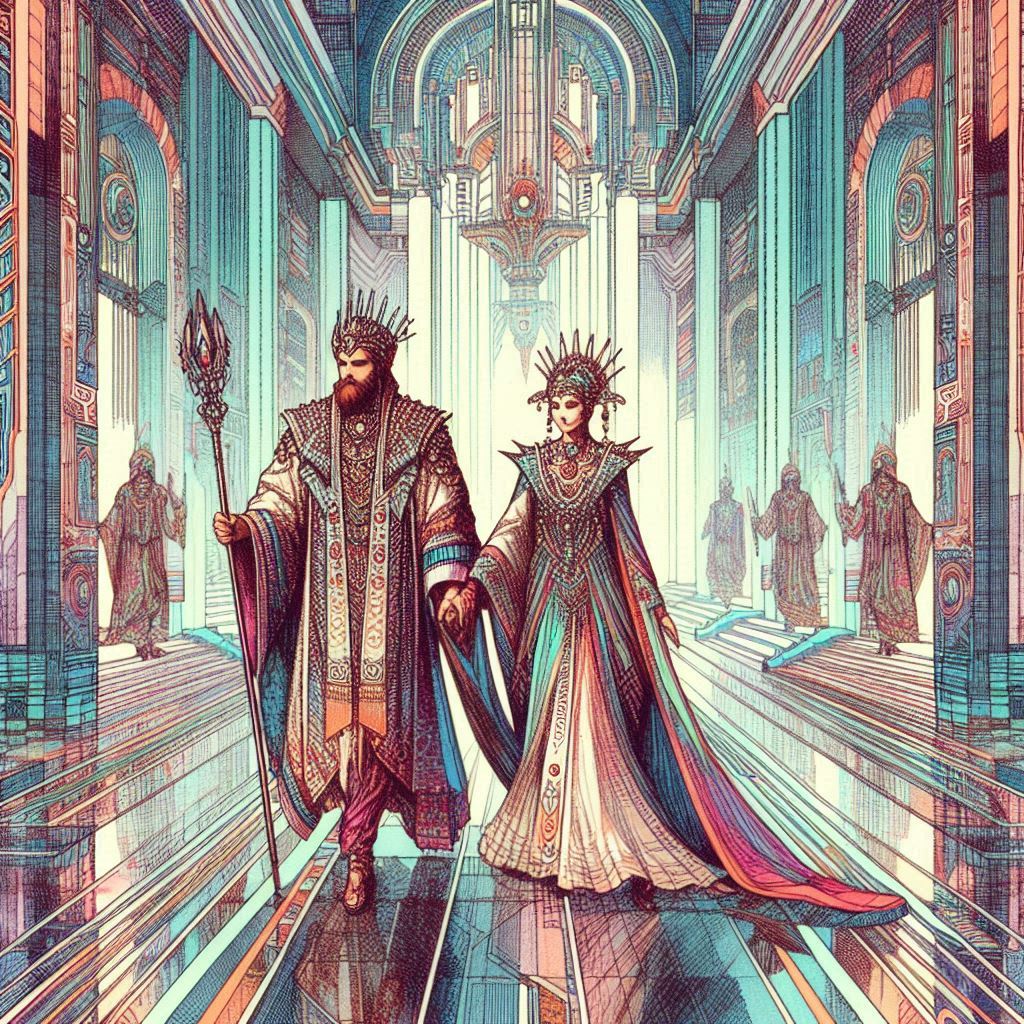
This picture is how I imagine Gustav Vasa at his coronation. BTW this is a submission for Kevin’s No Theme ThursdayThis is how I imagine Gustav Vasa’s marriage to Catherine of Saxe-Lauenburg on September 24th, 1531. This picture is also from Kevin’s No Theme Thursday
Depictions of Gustav Vasa
Kevin’s pictures above were, like I said, how I imagine Gustav Vasa. The depictions below might be closer to the truth.
Painting of Gustav I Vasa. Fashion was somewhat different back in the day.Portrait of Gustav Vasa (from Wikipedia Commons).
The Kalmar Union
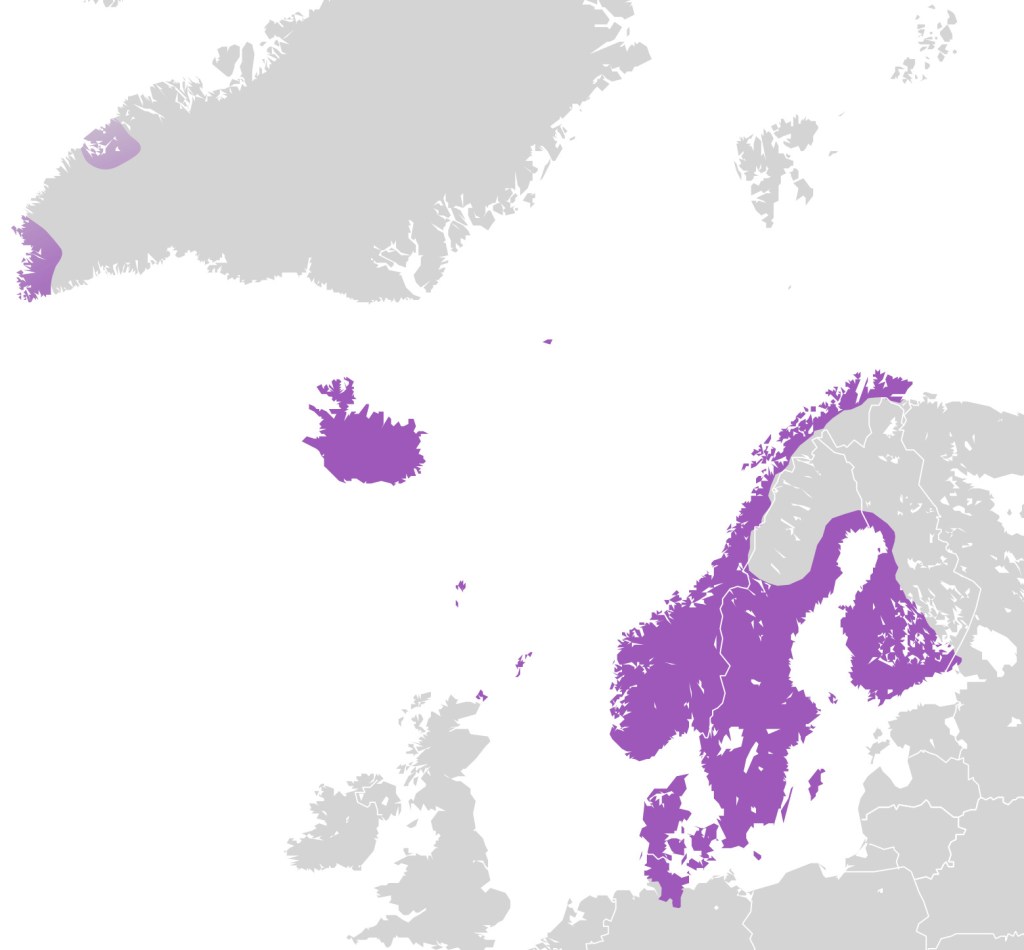
In 1397 a union was formed between Denmark, Norway and Sweden called the Kalmar Union (Kalmar is a city a Sweden). The Kalmar Union came to be dominated by Denmark and there were occasional rebellions. During Gustav’s childhood, parts of the Swedish nobility tried to make Sweden independent. Gustav’s father Erik Johansson Vasa was part of that nobility.
After some problematic interactions with Denmark and the Danish King Christian II, King Christian massacred 100 Swedish nobles, November 7-9, 1520, on Stortorget in Stockholm, including Gustav’s father. In 1521 Gustav led a rebellion (or a civil war) against Denmark, which ended in the deposition of King Christian II from the throne of Sweden, effectively ending the Kalmar Union. I can add that King Christian is called Christian the Tyrant in Sweden and Christian the good in Denmark.
Sweden and Denmark has had a complicated history that included a lot of hostilities and eleven wars, but you wouldn’t know it if you looked at the situation today. There hasn’t been a war between Sweden and Denmark in more than 180 years and Swedes and Danes get along very well. However, it is best not to bring up the past. That is probably true for marriages as well.
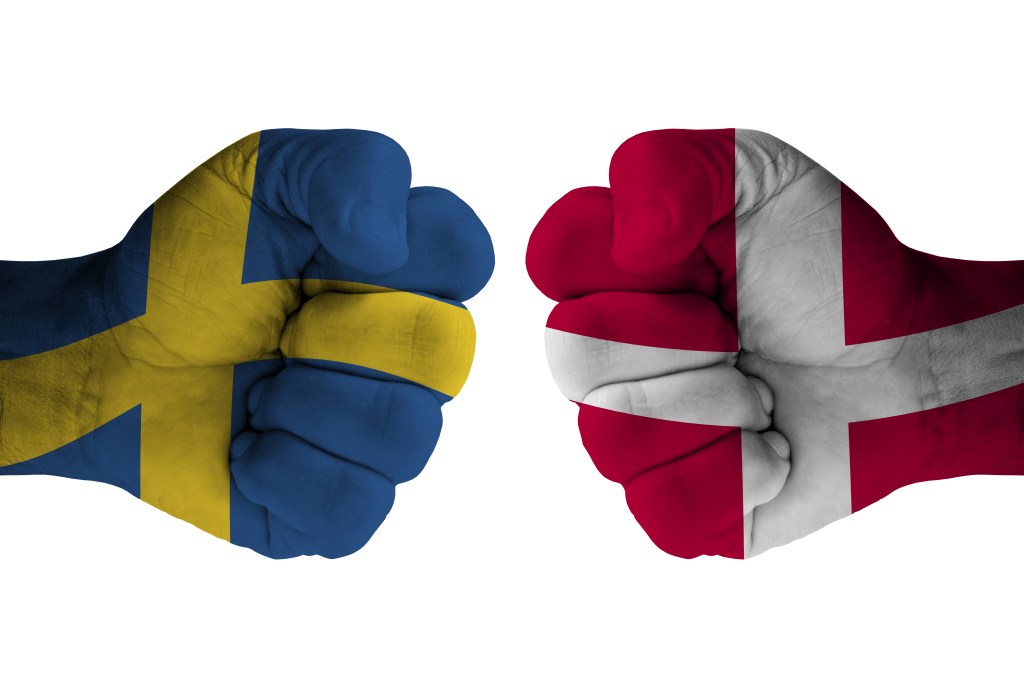
Denmark vs Sweden. The yellow and blue flag is the Swedish flag. Red and white is the Danish. Shutterstock Stock Photo ID: 1114320377 by Hasanov Jeyhun.
Gustav Vasa’s Burial Place
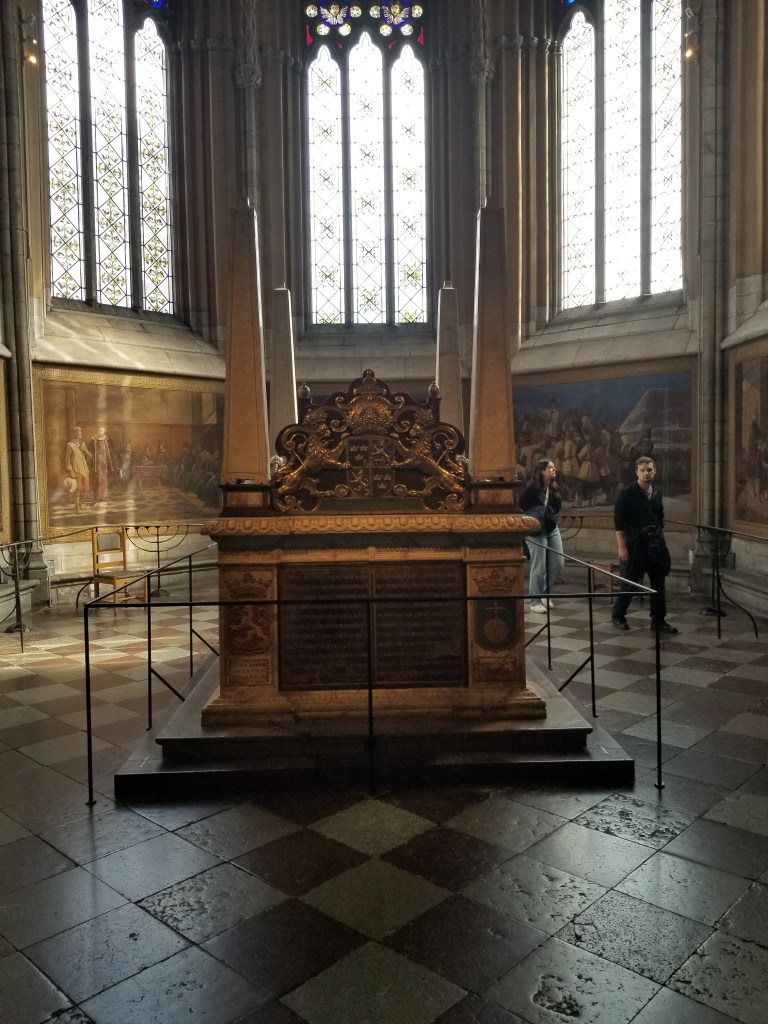
Gustav Vasa died on September 29, 1560, and is buried together with three of his wives (while only two are engraved) in the Cathedral of Uppsala. Uppsala is an old city north of Stockholm famous for its Viking graves/mounds. During the Viking era Uppsala was the religious center of Sweden. Later as Sweden became Christian it remained the religious center of Sweden, however, the Viking temple in old Uppsala was replaced by a Christian church. Uppsala hosts one of the most prominent Universities in the world and it also happens to be where I studied Engineering Physics.
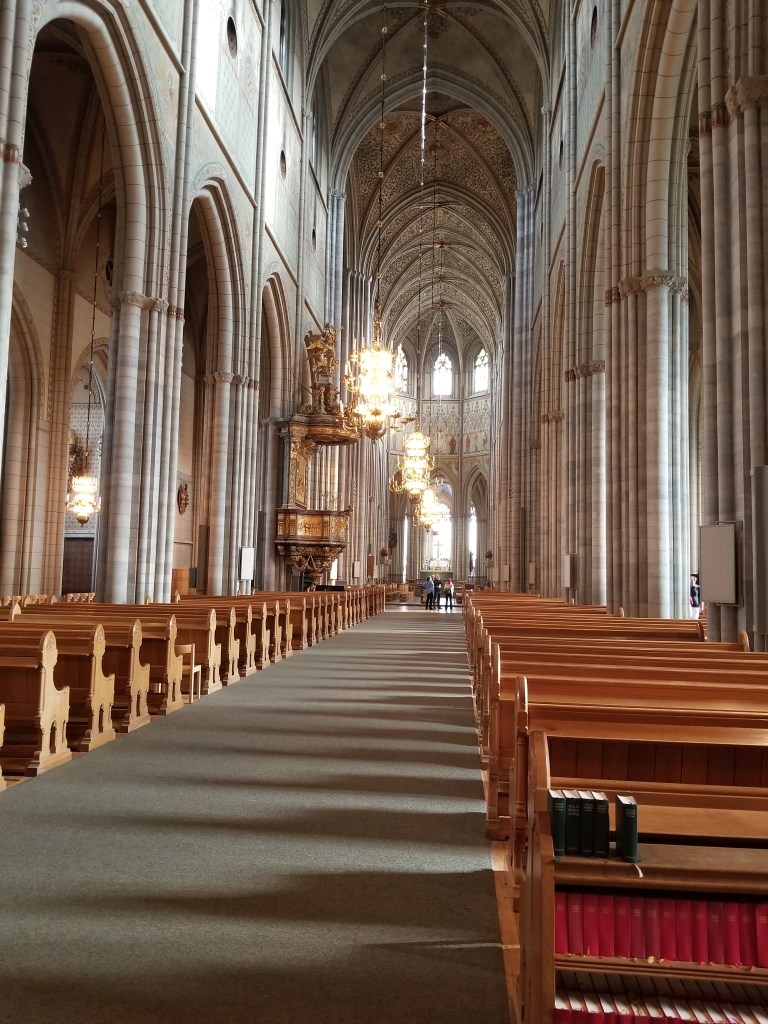
The largest cathedral in Sweden, Uppsala Domkyrka. This is where Gustav I Vasa is buried. Gustav I is arguably Sweden’s most prominent king.Inside Uppsala Domkyrka.The tomb of Gustav I Vasa in Uppsala Domkyrka. In the background is my son and his wife.
Photos from Sweden
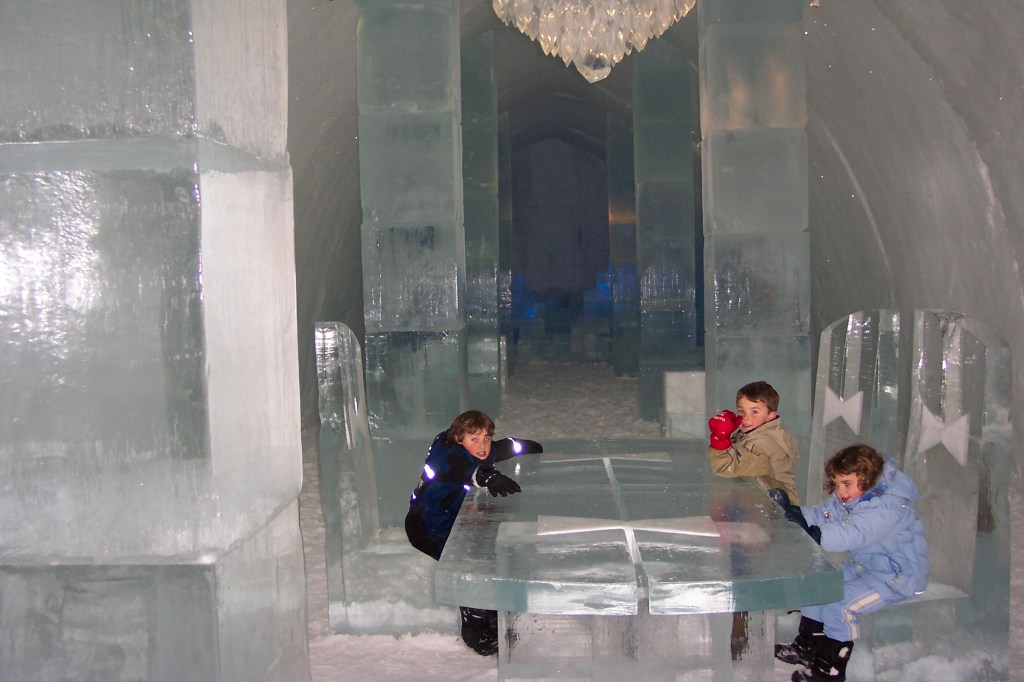
I am a fan of Leonberger dogs, and this is a photo of the only Swedish Leonberger I met personally. Her name was Amie. We met her at an interesting place, at the top of a north Swedish mountain called Skule Mountain (Skull Mountain).One of the interesting tourist attractions in northern Sweden is the Ice Hotel in Jukkasjärvi . The ice hotel in Jukkasjärvi is the first/original and largest ice hotel in the world. My kids at the lobby of the ice hotel in northern Sweden.
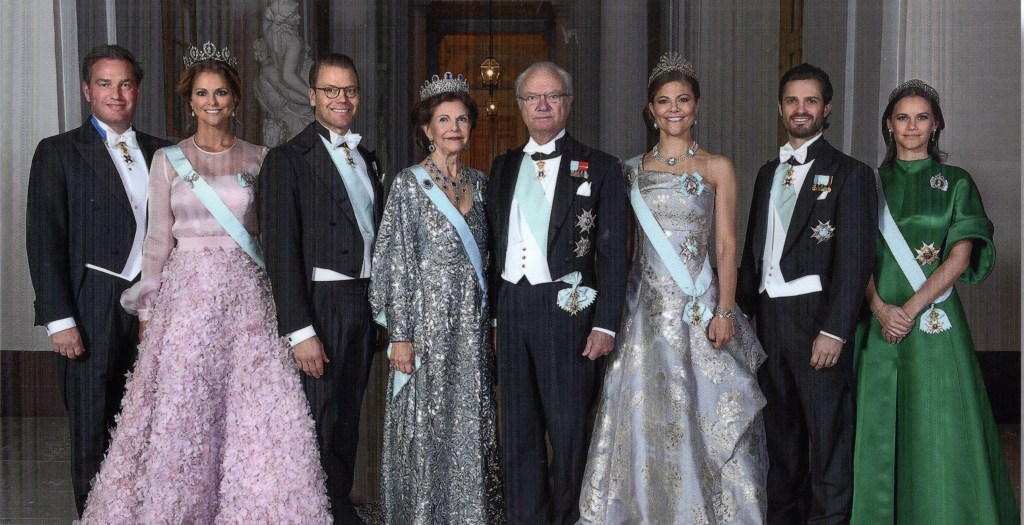
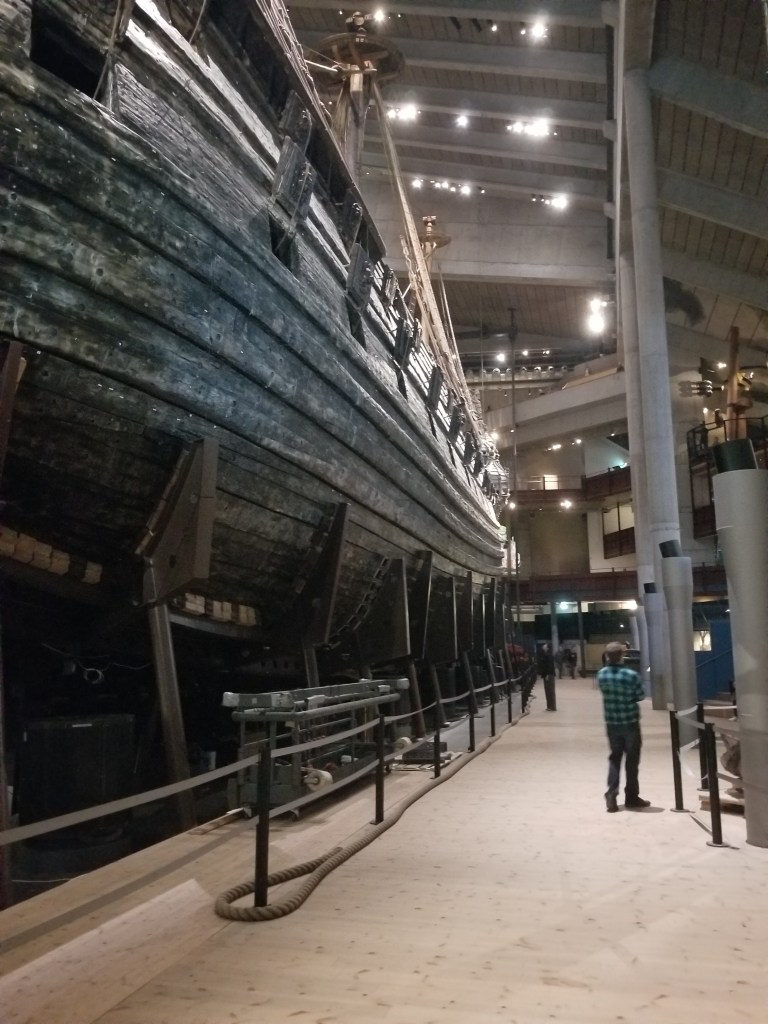
Sweden has a king (Carl XIV), and he owns a couple of big castles. This is my kids with the guard in front of the Winter Castle in Stockholm.Drottningholm, one of the Royal Palaces in Sweden. It was built in the 1660’s and inspired by Versailles.A photo of the Vasa ship from the bottom floor. My son is standing on the right in a green and black shirt.The Swedish Royal family. The two people in the middle are Queen Silvia and King Carl XVI Bernadotte. To the right of the king is the future monarch of Sweden princess Victoria and to the left of Queen Silvia is her husband. The others are their other two children and their spouses.Finally, the Swedish Flag (Wikimedia Commons). All other photos above are mine
This picture reminded me of the Swedish lakes I used to swim in. This is a submission for Kevin’s No Theme Thursday
Freedom to Roam Everywhere
When I was a kid, I used to roam around a lot, in the forest and on the mountains, and I liked to swim and fish in the rivers and the famous deep lakes in the Swedish countryside. Sweden has 97,500 lakes larger than 2 acres and many of them are deep lakes with clean and clear water surrounded by forests, typically coniferous forests. A small deep clean forest lake is referred to as a “tjärn”. I can add that there are no alligators or venomous water snakes in Swedish lakes.
Sweden offers a type of freedom that is rare in the world, and it does not exist in the United States and certainly not in Texas where I live. It is the freedom to roam or more specifically allemansrätten. Whether the land is public or private you have the right to roam, to hike, to camp, to swim, to pick wild berries, to pick wild mushrooms, to fish, and no one can stop you. Landowners are not allowed to tell you to get off their land and they cannot put up fences to stop you or animals from roaming on their land. Everyone has the right to roam and swim everywhere. It is a freedom Swedes love, and if you one day come to experience it you will know why.
My son is jumping off a tire swing and into a “tjärn” in northern Sweden.
Allemansrätten
The Swedish freedom to roam or allemansrätten, is a right for all people to travel over private land in nature, to temporarily stay there and, for example, pick wild berries, mushrooms, flowers and certain other plants. It is important to point out that you must respect the landowner’s property. You can pick wild berries but not anything the landowner is growing. You cannot destroy or break things or start fires, use ATVs, cut branches off trees, etc. You also need to stay 70 meters or 230 feet away from any dwelling.
As a landowner in Sweden, you can buy land and use it for farming and forestry, and you have the right to prevent people from damaging or stealing your crops. You can buy land for mining, and you have the right to your proceeds and the right to prevent people from stealing from your mines. In addition, people don’t have the right to get close to your house. However, you do not have the right to prevent anyone from roaming on your land.
Other countries with similar laws are Norway, Finland and Iceland. Limited forms of allemansrätten exist in Austria, Germany, Estonia, France, the Czeck Republic, and Switzerland. In the United States, where allemansrätten does not exist, 63% of all land is private and in Texas 93% of all land is private. Since there is no law in the US protecting your freedom to roam there is noticeably something missing, especially if you are an outdoors person.
Concentric Circles
In addition to evoking my memories of Swedish lakes and allemansrätten, Kevin’s picture tickles my mathematical sense, specifically regarding concentric circles. Concentric circles are beautiful, dreamy, and interesting mathematical phenomena. I could watch concentric circles in the water all day long.
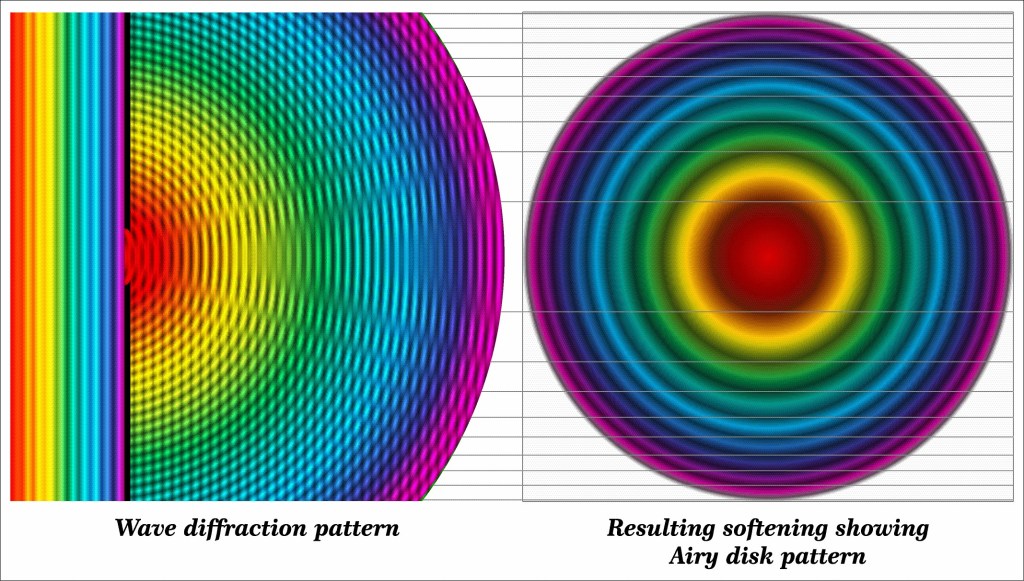
When you jump and play in a lake, when raindrops fall on a lake or a pond you’ll see concentric circles. You see concentric circles on a tree stumps, when you cut an onion, some flower petals, spiderwebs, etc. Concentric circles are everywhere in nature. Light can create concentric circles due to diffraction called an airy disk. Gravitational waves originating from, for example, two black holes colliding create 3D gravitational concentric circles/spheres traveling at the speed of light through space.
Concentric circles are very common in nature. You can see them in Kevin’s picture above. You can see them below my son as he falls into the Swedish lake, and you can see them in the pictures of light below. Whenever waves originate at a point and spread outward you get concentric circles.
There are many kinds of waves, water waves, sound waves, surface waves, seismic waves (earthquakes), mechanical waves, light are waves, electromagnetic waves, matter is both particles and waves, gravitational waves, and they can all make concentric circles. If the waves are moving outward with the same velocity in all directions, you will get equidistant concentric circles.
A real Airy disk created by passing a red laser beam through a 90-micrometre pinhole aperture with 27 orders of diffraction. Bautsch, CC0, via Wikimedia CommonsA computer generated an Airy disk from diffracted white light. The colorful light circles come from the hole in the left wall. Asset id: 1973771255 by Fouad A. Saad.
Superfact 11: United States, Europe and the Pacific Ocean Are Bigger Than You Might Think
The area of the United States is around 9,8 million square kilometers
The area of continental United States is around 8.1 million square kilometers
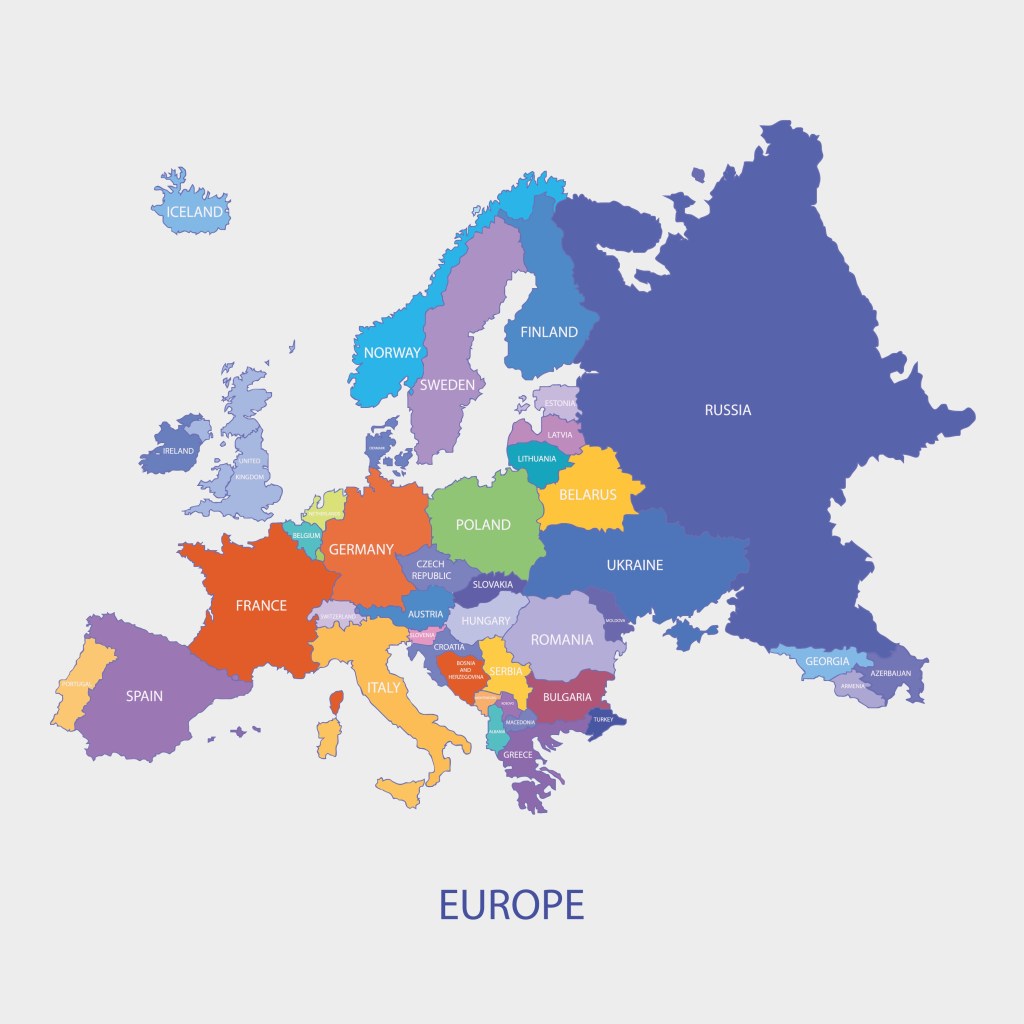
The area of Europe is around 10.2 million square kilometers
Earth’s total land area is 148.9 million square kilometers
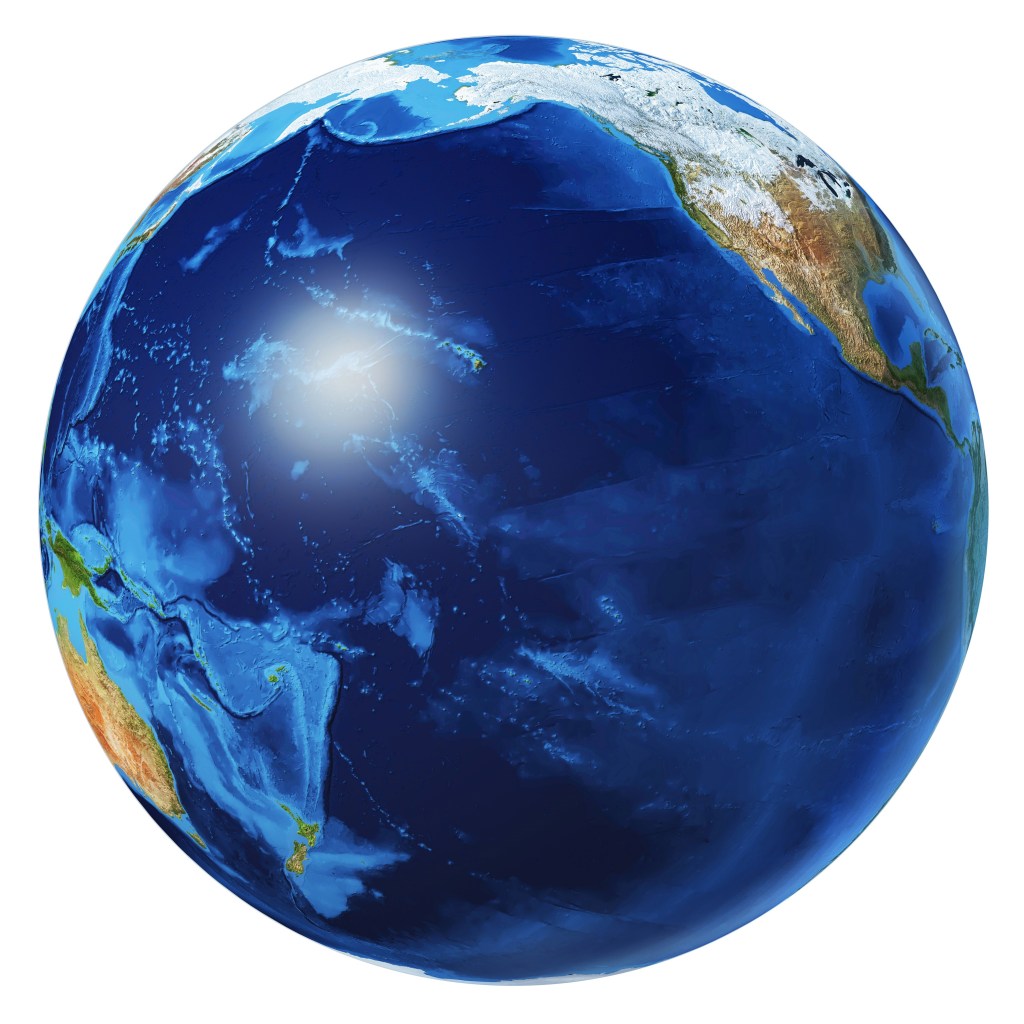
The area of the Pacific Ocean is 165.3 million square kilometers
The area of the whole earth is 510 million square kilometers
The United States
The United States is much bigger than many Europeans think. Europe is much bigger than many Americans think. Many of us don’t realize that one of the five oceans, the Pacific Ocean, is one third of earth’s entire surface and cover a larger area than all landmass on earth. Since so many of us are surprised to hear these facts and they are not under dispute among experts, they constitute a super-fact, or a few super-facts in my opinion.
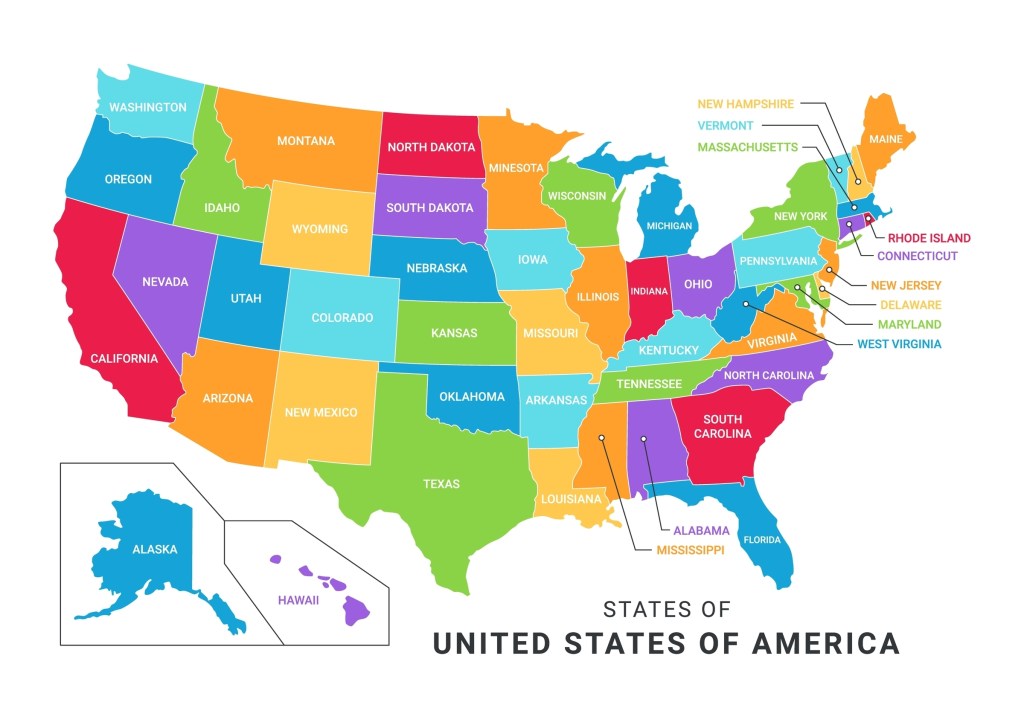
Map of the United States. Alaska and Hawaii are not to scale. Alaska is double as big as Texas. Stock Vector ID: 2247501877 by HazimAlfi.
Some time ago I was talking to a Swedish friend of mine who told me something along the lines of “the United States isn’t so big as they say. We drove through half a dozen states in an afternoon.” I asked her, “which states?” It turns out that was the New England states, Maine, New Hampshire, Massachusetts, Rhode Island, Connecticut, and finally New Jersey and New York (New York city). You can do that drive in an afternoon, but you cannot drive through Texas in an afternoon, not even in a day.
The distance from Texarkana to El Paso is 1,300 kilometers and takes more than 12 hours to drive on the highway without stopping. I’ve come across many Europeans who underestimate the size of the United States. The mistake they make is that they don’t realize that while some US states are small, other states are much bigger. Just look at the map.
Political map of Europe (including European Russia) Stock Vector ID: 319593110 by okili77.
Europe
Interestingly Americans often make the same mistake about Europe. I quite often hear Americans claim that distances are so small in Europe. You can drive through a country in a couple of hours and the language changes. It’s a trope that seems to be repeated every time Europe is discussed on social networks.
Today, as I was talking to a friend of mine about our recent trip to Sweden and Norway, my friend told me that it was good that distances in Europe were so short so we could easily travel between the places I was telling him about. He was more than surprised to hear that was not the case. The distance between where we were Sweden and Norway was too large for anything other than planes considering we only had 10 days.
The distance from Malmö in southern Sweden to Karesuando in northern Sweden is more than 1,900 kilometers and takes more than 21 hours to drive without stopping. In fact, by area, Sweden is bigger and longer than California.
The Pacific Ocean
Last but not least. Earth has seven continents (Asia, Africa, North America, South America, Antarctica, Europe, and Australia), and five oceans (the Arctic, Atlantic, Indian, Pacific, and Southern (Antarctic) Oceans). But just one ocean, the Pacific Ocean cover a third of earth’s entire surface. This may come as a surprise to many. See the globe photorealistic 3d illustration below.
Earth Pacific Ocean view Stock Illustration ID: 1617553012 by Matis75.
I just returned from a trip to Scandinavia with my son and his wife. Since it is World Tourism Day today, September 27th, I thought I’d make one more post related to our trip. As usual, the post features many interesting facts, but it is not a super-fact post. To provide some background. Me and my oldest son and his wife visited my native country of Sweden and Norway over the last 10+ days. We got a lot done. Unfortunately, we did not have time to visit with family this time.
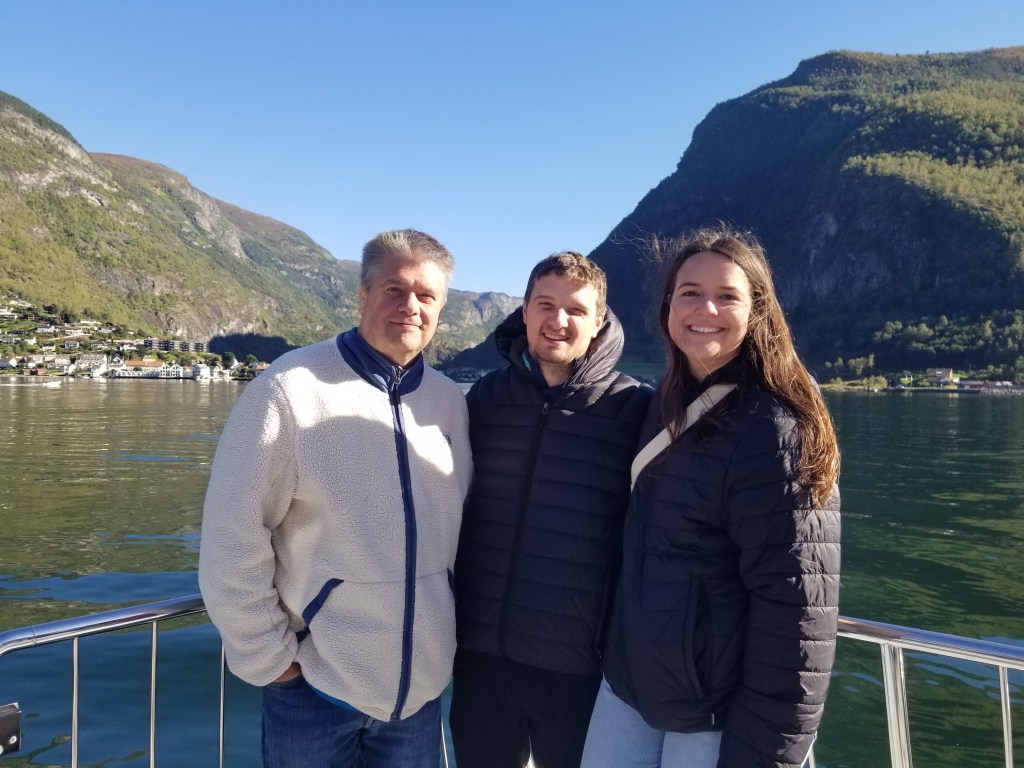
From a cruise in Sognefjord. Left to right, me, my eldest son and his wife.
First, we visited Stockholm including the Old City (Gamla Stan), the Royal Palace in Stockholm and Drottningholm, which is a Royal Palace outside of Stockholm, built in the 1660’s and resembling Versailles in France. We also visited the Ice Bar, a Viking restaurant, many museums including the Vasa Museum and the Abba Museum, and we learned about Karl XIV Bernadotte, the founder of the current Swedish Royal dynasty.
A photo of the Vasa ship from the bottom floor. My son is standing on the right in a green and black shirt.
We spent a day in Uppsala, the student city north of Stockholm, where I studied engineering physics. Here we visited Sweden’s largest cathedral, the tomb of king Gustav I, Uppsala castle, my old student club (Nation of Norrland), the religious center of the Vikings, a Viking Museum, and we spent the afternoon with a classmate from my days at Uppsala University.
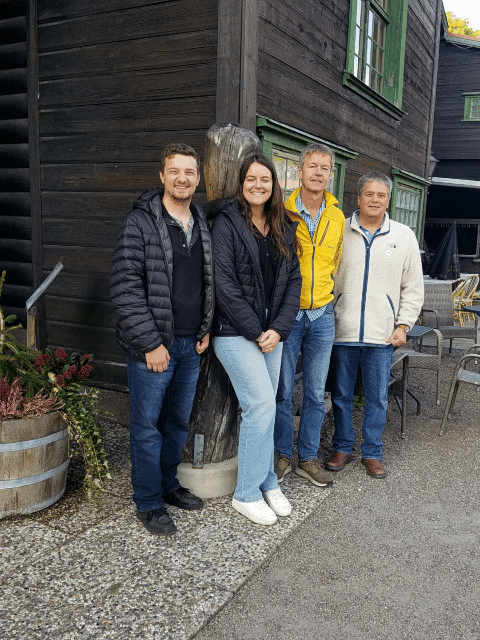
From left to right, my oldest son, his wife, a classmate of mine from engineering physics 35-40 years ago, and finally me in the white jacket. In the background is a restaurant. I had Viking honey mead.
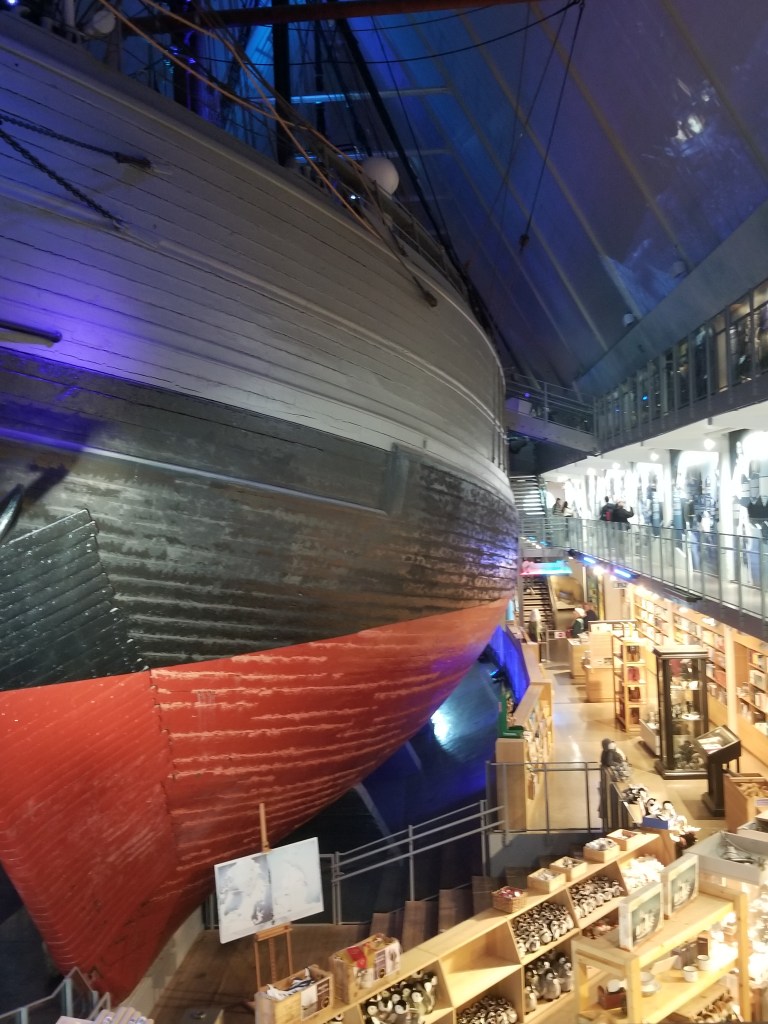
We also visited Oslo, Norway, where we visited several museums including an outdoor museum, the armed forces museum, the Maritime and the Fram Museum, an old fort, and we did some fishing in Oslo fjord. We toured the Norwegian mountains and did a cruise on Sognefjord. As a side note, the Fram Museum was centered around a ship called Fram, which was used by polar explorers such as Roald Amundsen who was the first to reach the South Pole. It is generally considered that the American Robert Peary reached the North Pole first, but that claim is disputed, which makes it possible that Roald Amundsen reached the North Pole first as well.
Fram was the Norwegian ship used for Polar expeditions.
With this post I also wanted to focus on practical issues regarding visiting Scandinavia. The Scandinavian countries are relatively wealthy, like the United States, and most people, at least young people, speak English and are friendly towards tourists including Americans. When you visit tourist attractions in Scandinavia you will hear a plethora of languages. However, unlike Texas, Spanish is not a common language, so if Spanish is your first language you’ve got to know English as well. Crime is not high, even though you should watch out for pick pockets. It is rare to encounter Scandinavians who try to trick you or take advantage of you, in contrast to some other tourist places around the world. However, there are some differences between Scandinavia and the United States, especially Texas, that can be challenging to tourists.
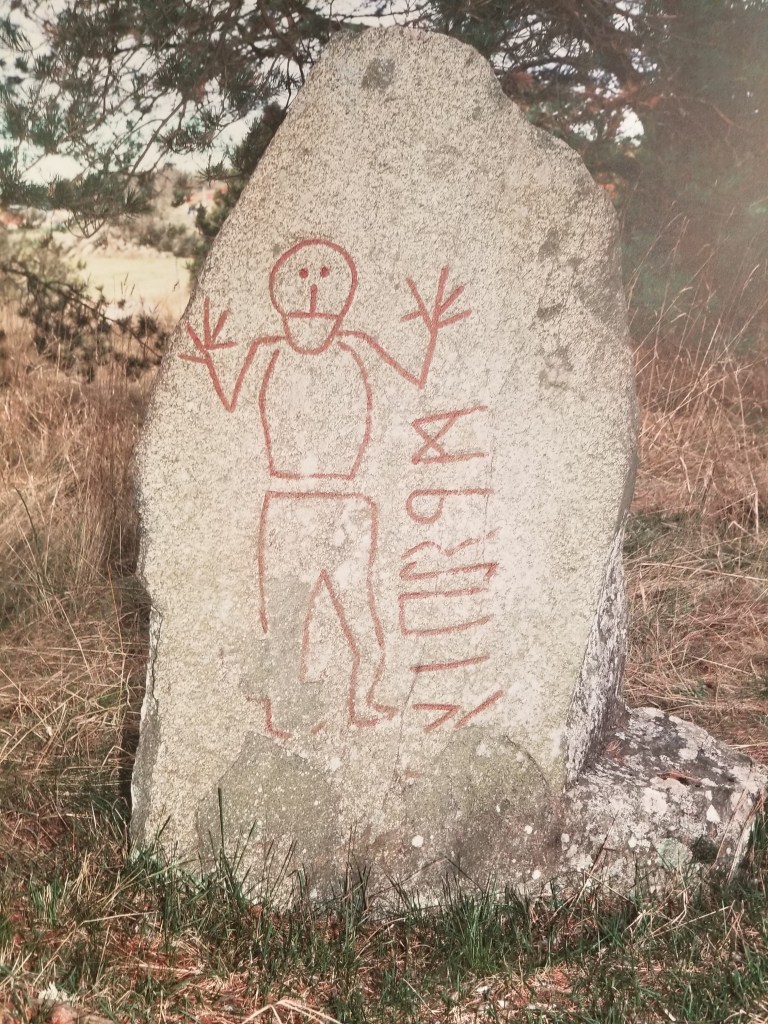
An early runestone in Sweden.
Sweden and to a certain degree Norway are trying to be cashless societies. Banks will not handle cash, most stores, restaurants, hotels, and other businesses will not accept cash. Before leaving I tried to change dollars into Swedish crowns at my bank in Dallas, but I was informed that Swedish banks no longer provide or handle cash, so they did not have any either. There are Forex stores at airports that will exchange dollars and euros into Swedish and Norwegian crowns, but using the cash is a challenge. You pretty much have to use credit cards or a swish app on your phone to pay for anything.
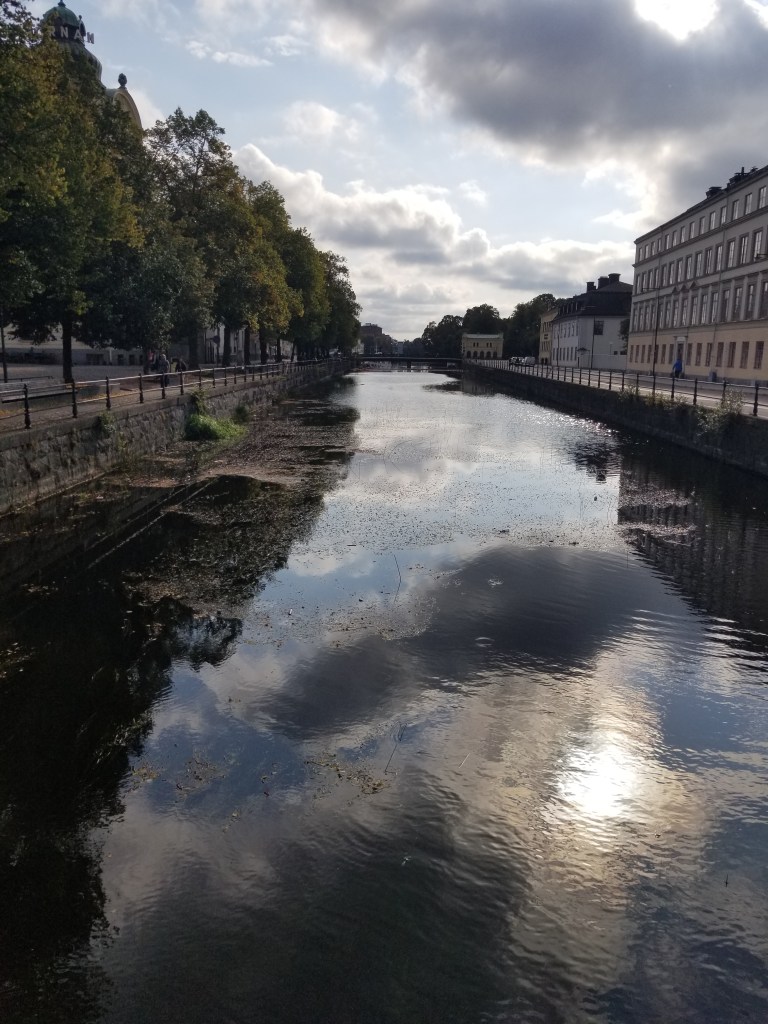
Fyrisån, the small river that flows through Uppsala.
Personally, I disagree with this. It removes one important option to pay, which becomes a problem if your credit card is stopped, or you don’t have a credit card. It greatly inconveniences tourists, visitors, and many immigrants. In addition, it forces everyone to have a detailed digital footprint that can be used to track everything you buy. Identity theft, power outages, cyber-attacks, natural disasters, and other mishaps that disable electronic payment options can become disastrous without access to cash. Therefore, despite being Swedish I think this is a bad move by Sweden.
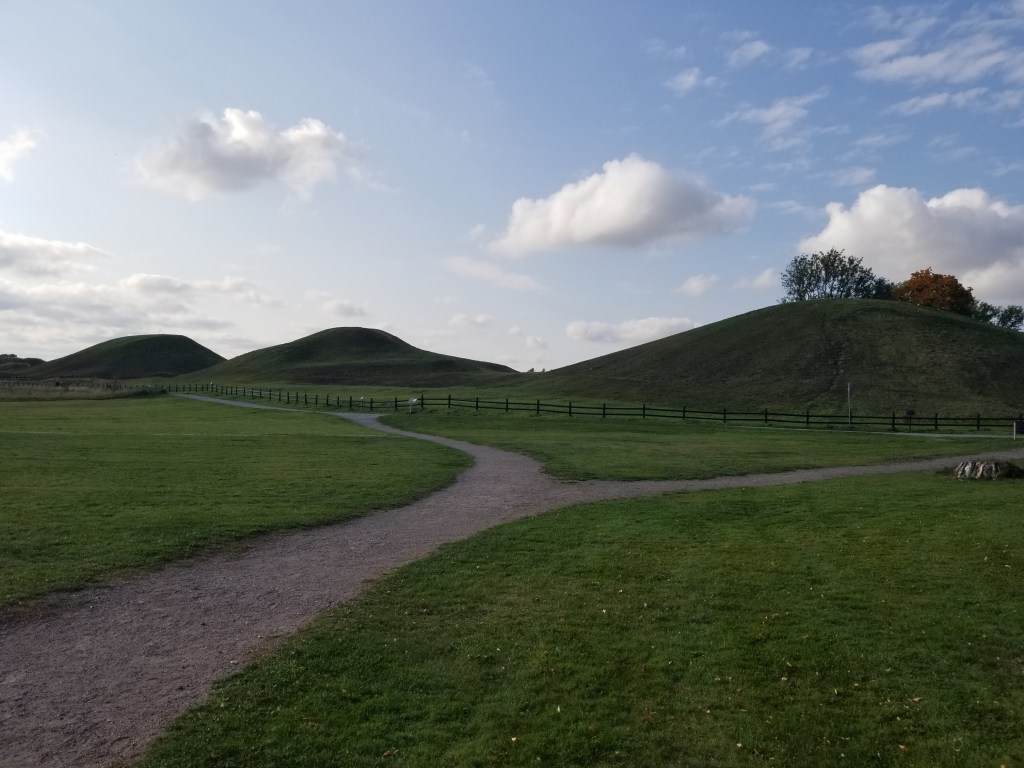
A view of a few of the Viking king and iron age king burial mounds in Uppsala.
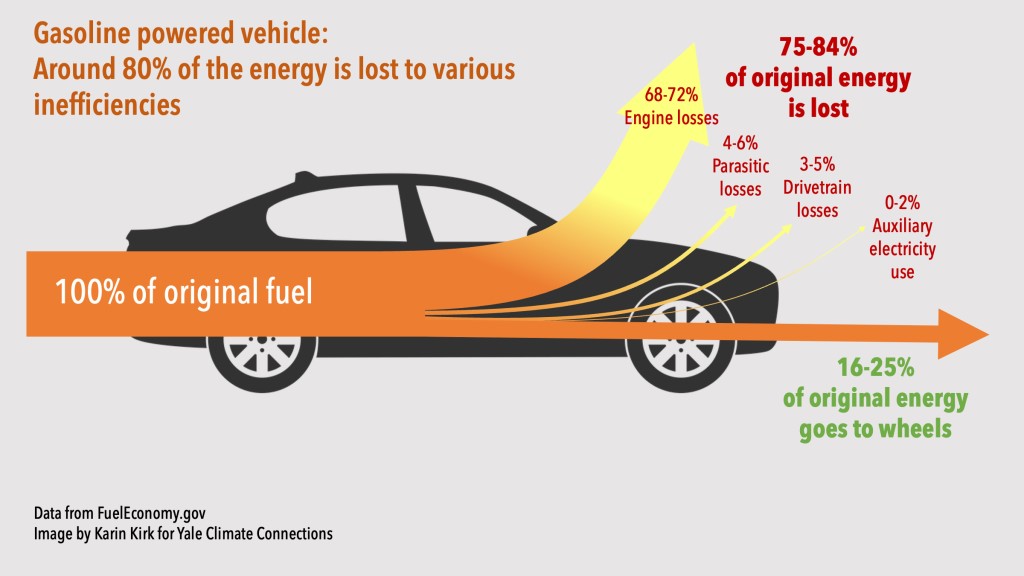
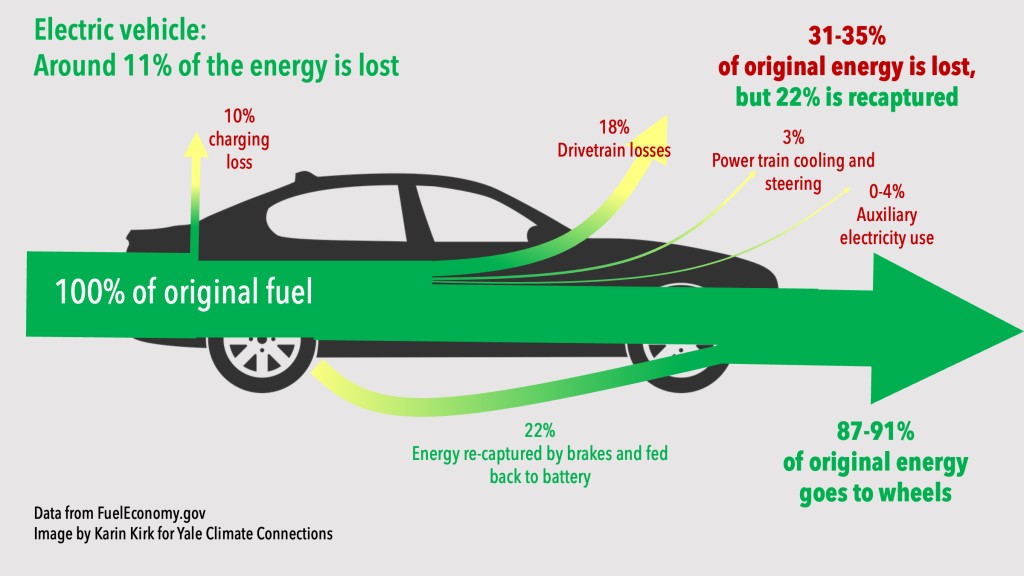
One difference that I personally find more amenable, but I know that many Texans (I live in Texas) will find objectionable, is the focus on reducing one’s carbon footprint and the fight against global warming. You are reminded of this all the time and EV cars are very common. Texans frequently believe that EV cars are not environmentally friendly and does not emit less carbon dioxide than regular internal combustion engine cars. This is a false belief that Swedes do not tend share. Sweden has an almost entirely fossil fuel free grid and Swedes value that their carbon footprint is less than a third of that of, for example, Americans. These are all things that could rub some Texans the wrong way, just like Texas opinions could rub Swedes the wrong way. It is better not to argue.
16-25% of original energy goes to the wheels. Data from FuelEconomy.gov, Image by Karin Kirk for Yale Connections.87-91% of original energy goes to the wheels. Since EVs are so much more efficient than internal combustion engines they are cleaner even when their electricity come from a very dirty grid. Data from FuelEconomy.gov, Image by Karin Kirk for Yale Connections.
There are other differences. Public transportation is very good in Sweden and Norway. Public transportation is safe and typically much cheaper than taxi, uber or renting a car. In fact, considering the difference in traffic signs, the difficulties with parking, and the restrictions on driving in inner cities, you may not want to rent a car unless you plan on driving far out into the countryside. Bicycles and bicycle lanes are also very common and need to be respected. Luckily Scandinavian inner cities are very walkable. Doorknobs/handles are not round and are like levers. Scandinavians eat dinner earlier compared to southern and central Europeans and are like Americans in that regard.
I am currently traveling in Scandinavia with my oldest son and his wife. Therefore, my blogging activities are a little bit less intense than usual. This post is factual, but it is not a super-fact post.
Yesterday, we visited Uppsala, a city north of Stockholm. Uppsala is Sweden’s fourth largest city, and it is the home to one of Europe’s most prominent universities, Uppsala University. This is also where I studied engineering physics before coming to the United States.
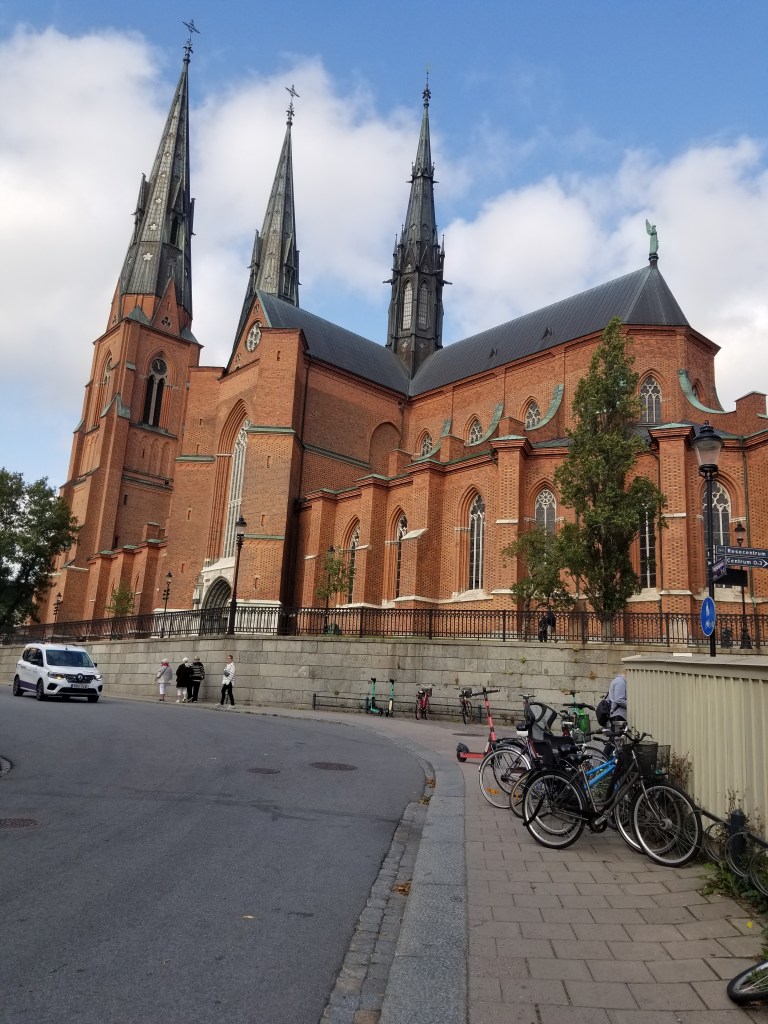
The largest cathedral in Sweden, Uppsala Domkyrka. This is where Gustav I Vasa is buried. Gustav I is arguably Sweden’s most prominent king.
During the Viking era Uppsala was the religious center of Sweden. Later as Sweden became Christian it remained the religious center of Sweden, however, the Viking temple in old Uppsala was replaced by a Christian church. Sweden’s largest cathedral, Uppsala Domkyrka, is located in Uppsala. Inside Uppsala Domkyrka is the tomb of the king that is considered to be the father of Sweden, Gustav I Vasa.
Inside Uppsala Domkyrka.
The relationships between the Scandinavian countries were quite complicated in the past, especially that between Sweden and Denmark. If you do a google search using the phrase “which two countries fought the most wars with each other” the top results all claim that this was Sweden and Denmark. The websites in question, Quora, Twitter and Reddit, aren’t reliable sources, so this may not be true. However, more reliable sources, such as historical sites, encyclopedia Britannica and Wikipedia state that Sweden and Denmark fought at least 11 wars with each other.
Denmark vs Sweden. The yellow and blue flag is the Swedish flag. Red and white is the Danish. Shutterstock Stock Photo ID: 1114320377 by Hasanov Jeyhun.
In 1397 a union was formed between Denmark, Norway and Sweden called the Kalmar Union (Kalmar is a city a Sweden). The Kalmar Union came to be dominated by Denmark and eventually Sweden rebelled against the Danish King Christian II. He was called Christian the Good in Denmark and Christian the Tyrant in Sweden.
This rebellion was led by a noble, Gustav Eriksson who later would be crowned as Gustav I Vasa. He was the first of the Vasa kings. Sweden declared its independence from Denmark on June 6th, 1523, which is why June 6th is Sweden’s national day, or Independence Day.
The Kalmar Union. Finland was part of Sweden at the time. Ssolbergj, CC BY-SA 3.0 <https://creativecommons.org/licenses/by-sa/3.0>, via Wikimedia CommonsPainting of Gustav I Vasa. Fashion was somewhat different back in the day.
Sweden and Denmark had a complicated history that included a lot of hostilities and wars, but you wouldn’t know it if you looked at the situation today. There hasn’t been a war between Sweden and Denmark in more than 180 years and Swedes and Danes get along very well, well as long as you don’t talk too much about the past. In my opinion Swedes and Danes get along better than Texans and Oklahomans. Maybe it helps that Swedes can’t understand what the Danes are saying.
The tomb of Gustav I Vasa in Uppsala Domkyrka. In the background is my son and his wife.













 Super Facts