
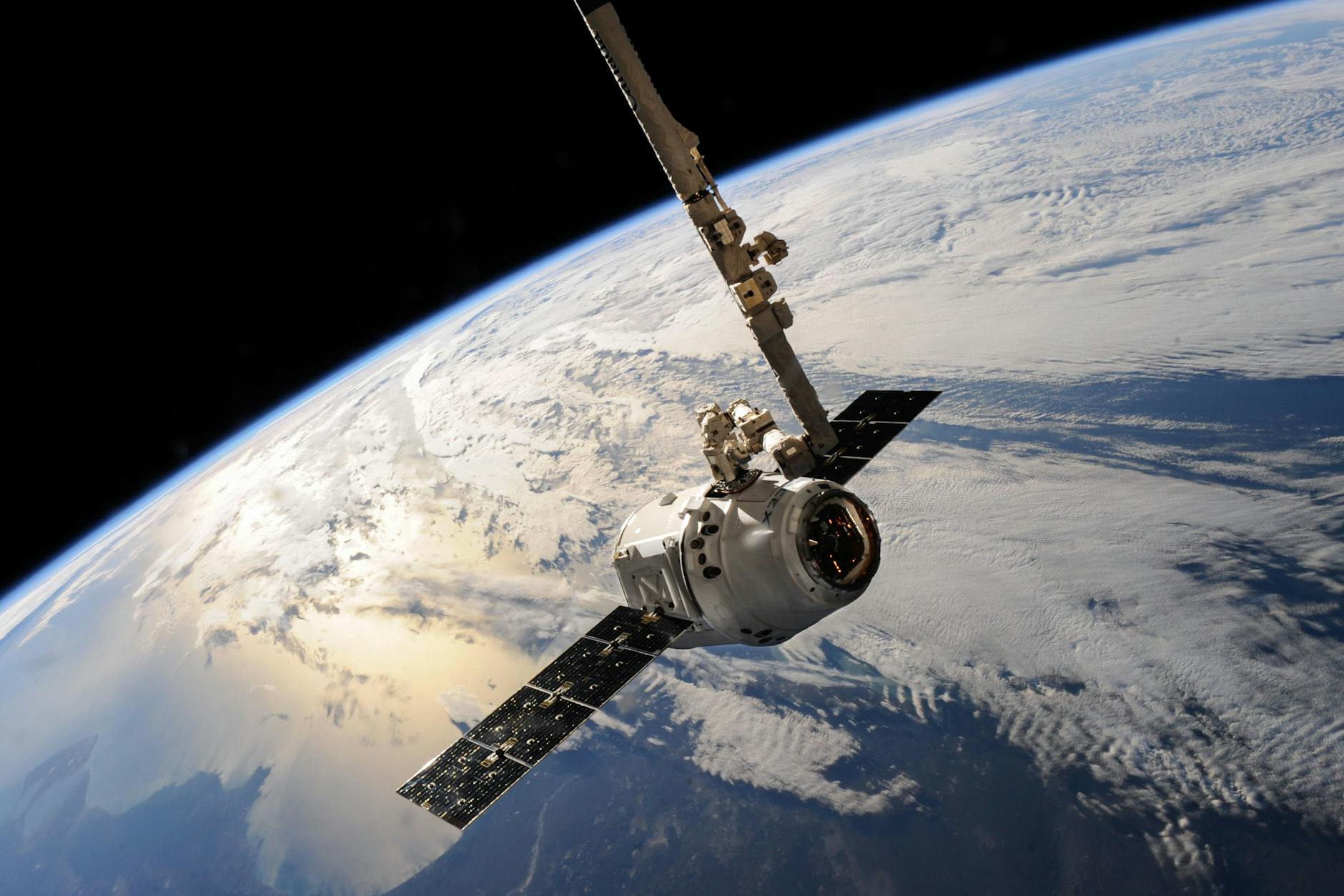
Super fact 54 : Satellites currently handle a very small percentage of global internet traffic, estimated at about 1%. The vast majority of internet traffic is carried by undersea cables.
I consider this a super fact because it is surprising, true and not trivia. It is an important fact since most of us use internet every day. It is a very common belief that satellites handle most of the global internet traffic, or at least a very large portion of it. I should say that a few years ago I thought so myself.


How Much Internet Traffic is Handled by Satellites
I should say that I did not find a lot of sites that answered this question, but all of the sites that I found gave similar answers such as, less than 1%, 1.5%, 1-2%, very little, etc.
I started out by asking ChatGPT this question “How much of internet communication does Satellites handle?” The answer I got was that Satellites handle a relatively small percentage of global internet traffic — typically less than 1–2% — with most of the world’s internet communication carried through undersea fiber optic cables and terrestrial infrastructure (like cell towers and wired broadband). Wikipedia states that satellites handle less than 5% – to an estimate of even 0.5%. I should add I do not rely on ChatGPT, SGE or Gemini, or Wikipedia for this blog but I take hints from them.
According to NOAA, over 95 percent of international data and voice transfers are currently routed through the many fiber optic cables that crisscross the world’s seafloors, whilst satellites currently carry just about 1% of global internet traffic according to Research Outreach. Operations Forces Report, Space Voyage Ventures, Neterra, and Newsweek made similar claims .
The reason satellite internet is used less is because satellite internet is significantly more expensive to use than traditional wired connections. In addition, satellites have higher latency (delay) compared to fiber optic cables, and less bandwidth (data capacity). Satellite internet is primarily used in remote areas where other forms of internet access are unavailable. Satellite internet is also used for military and government operations, as well as maritime and aviation connectivity. However, satellite internet is improving so this may change in the future. This is a comparison between satellite internet and optical fiber.
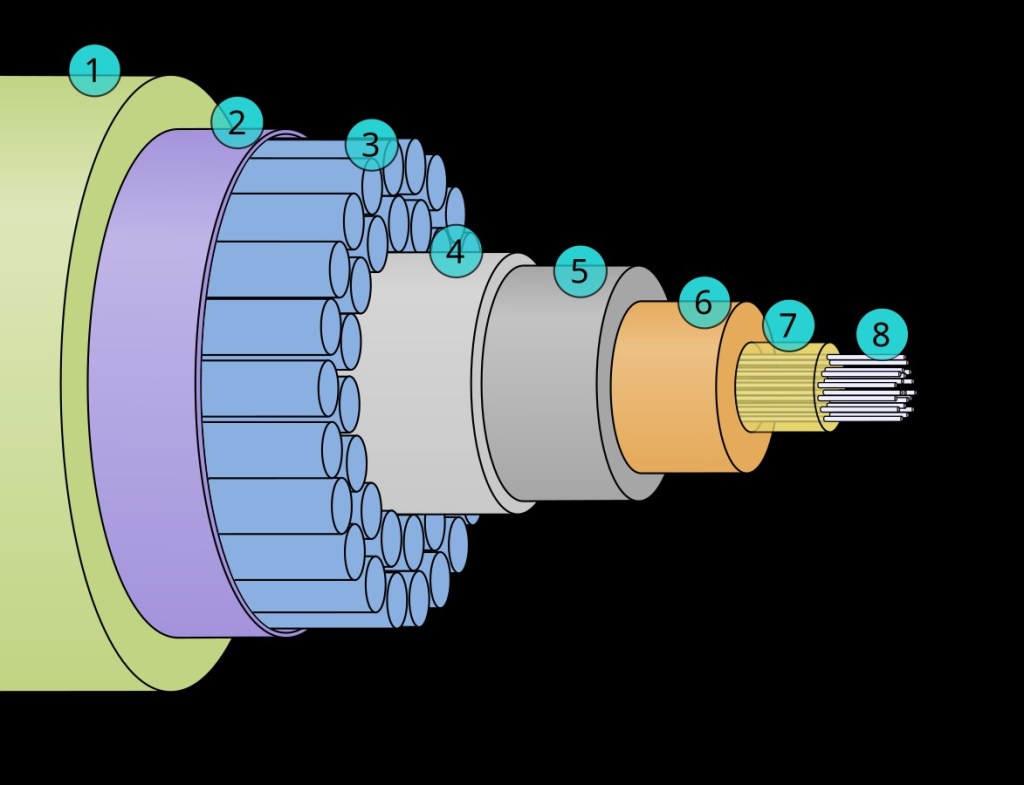
The layers in the picture of the submarine communications cable above are (from outside to inside): (1) Polyethylene (2) Mylar tape (3) Stranded steel wires (4) Aluminum water barrier (5) Polycarbonate (6) Copper or aluminum tube (7) Petroleum jelly (8) Optical fibers.
Related Post
A related post and super fact is: GPS uses relativity for accuracy
To see the other Super Facts click here

 Super Facts
HI Thomas, this does not surprise me as I have see the calamity that arises with the internet when the undersea cables are damaged. I didn’t realise it was this low though. Thanks for this interesting information.
LikeLiked by 1 person
Yes me neither. I read about this a couple of years ago but before that I thought satellites took care of most internet traffic. However, since it satellites are becoming more numerous, they might be handling most internet traffic in the future.
LikeLike
I wonder if that will be a good or a bad thing. Time will tell.
LikeLiked by 1 person
Yes you are right. I read somewhere that we would 20,000 to 40,000 satellites to replace the cables and that would change our night skies. Someone also pointed out to me (Java Bean, a dog) that aliens could use satellites against us like in Independence Day. That’s a lot more difficult with the hundreds of 1.4 million kilometers of deep ocean cables.
LikeLike
I would not want our night skies ruined. As for aliens, if I were one I’d stay far away from humans – haha!
LikeLiked by 1 person
Yes having those shiny dots moving around in the sky would make it difficult to identify stars and planets. I guess we humans aren’t going to impress aliens. I remember the movie when the earth stood still.
LikeLike
🌑🌝⭐️☄️
LikeLiked by 1 person
Hi Thomas, your post is very enlightening. I’ve assumed, wrongly, that the reverse was true. Thank you for setting the facts straight for me. 🌞
LikeLiked by 1 person
Thank you so much Gwen. So did I until I found out otherwise.
LikeLiked by 1 person
An excellent overview of both technologies, Thomas. The history of undersea cables is fascinating, too. I’m drawn to current stories highlighting the risks to those cables. I’m especially concerned about nation-sponsored destruction that can disrupt a country’s sovereignty, making the commerce vulnerable to external forces.
LikeLiked by 1 person
Thank you so much Grant. I agree that is interesting. Also the nation sponsored destruction is indeed a concern. Satellites are becoming more common and taking over more traffic. I don’t know if that would provide better protection from sabotage.
LikeLike
Oh, this is such a great observation, Thomas. One of these ships in charge with repairing the underwater internet fibres docks in the Cape Town harbor. We were lucky to see it once. It is massive, but not as large as one might imagine. A few years later there was a massive internet failure off the west coast of Africa and it was this ship that went to get the cables fixed on the ocean bed. I couldn’t even log into my Amazon account, so it was a palpable issue. Then to think that we’ve seen it.
Thomas, thank you so much for nominating my blog. I so appreciate it. It’s hard work creating and maintaining a blog, as you know, with two, so it means a lot.
Have a great week!
LikeLiked by 1 person
Thank you so much Patricia. That is a very interesting story. Maybe these problems you describe will be less common and satellites begin to take over more internet traffic. I don’t know. About the recommendation. Someone recommeded my blog yesterday so I recommended back and added three more people including you. It is the first time I see this feature. Have a great week you too.
LikeLiked by 1 person
I didn’t expect it to be so small a percentage either, Thomas. I live remotely and had satellite internet for years. It was expensive and would frequently cut out on us (if raining or snowing). We had restricted hours and restrictions on usage. (We’d watch movies at midnight when it was cheaper). When Obama funded rural fiber optics, we were able to leave all that behind. Phew!
LikeLiked by 1 person
It is a surprisingly low number. That is a quite interesting story. You went from satellite to fiber. We have fiber but we’ve had that for a long time (well since we swicthed from cable).
LikeLiked by 1 person
We’ve had fiber for about 10 years now. It has vulnerabilities, but so far so good.
LikeLiked by 1 person
I think we had fiber for 10 years too, but cable before that.
LikeLiked by 1 person
I wasn’t surprised to read this, but didn’t realize the percentage of satellite internet was so low. We have fibre optic here and it’s a huge improvement over the old cable system. The shipboard internet during our last cruise was via satellite and it was extremely unreliable, and, as you said, expensive!
P.S. Thank you so much for recommending my blog on the WordPress Reader! 🌹 I hadn’t been aware of this function before, but I have started a list now, and added both of yours to it. 👌
LikeLiked by 1 person
Yes it seems very low, but that is what everyone seems to be saying (who says something about it). About the recommendation. Someone recommeded my blog yesterday so I recommended back and added three more people including you. It is the first time I see this feature.
LikeLiked by 1 person
Java Bean: “Ayyy, this is a good thing, because the undersea cables can’t be used against us the way the satellites were in that movie Independence Day, right? RIGHT???”
LikeLiked by 3 people
Oh I did not think about that. Good observation Java Bean. Those pesky aliens can’t hijack 1.4 million kilometers (870,000 miles) of underwater cables thousands of feet under water. I think.
LikeLiked by 1 person
Especially important since we probably can’t rely on Will Smith and Jeff Goldblum to save us this time.
LikeLiked by 1 person
Yes Will Smith slapped Chris Rock and Jeff Goldblum was the Wizard of Oz in the Wicked movie. Who is going to save us now?
LikeLike