The Bizarre Reality of Black Holes

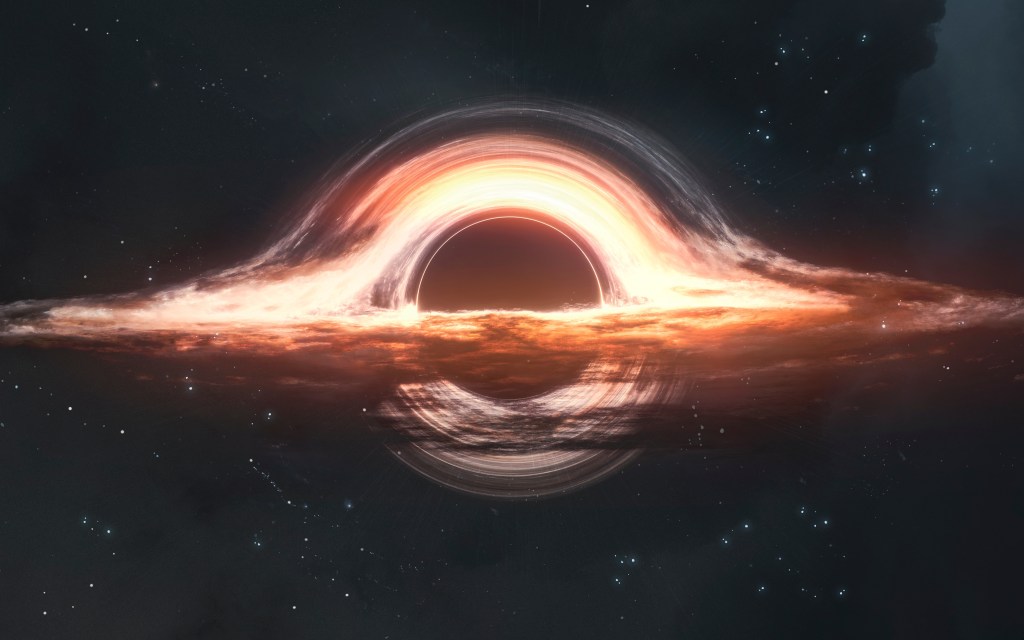
A black hole with a large bright accretion disk | The Bizarre Reality of Black Holes
3D illustration of giant Black hole in deep space. High quality digital space art in 5K – realistic visualization. Stock Illustration ID: 2476711459 by Vadim Sadovski.

Superfact 15: A black hole is a region of spacetime wherein gravity is so strong that nothing can escape it, not light, not anything. There are different kinds of black holes. We don’t fully understand black holes, which makes them very interesting to science. The boundary of no escape is called the event horizon.  Black holes are invisible. They are truly black. However, we can see what they do to their environment as they consume surrounding matter. Below are some bizarre facts about black holes.

  • Time runs much slower closer to a black hole.
  • An object falling towards a black hole will become redder, faint, then infrared, then invisible and all its movements and clocks will freeze.
  • From the perspective of an outside observer, time appears to stop for someone reaching the event horizon of a black hole. Time will continue for someone falling in.
  • At the center of a black hole may lie a gravitational singularity, a region where the spacetime curvature becomes infinite. However, since we cannot peer into a black hole we cannot know.
  • The largest known black hole (TON 618) is more than 287 million times more massive than the most massive known star (R136a1).
  • If our planet earth collapsed into a black hole, it’s diameter would  be 1.75 centimeters or 0.69 inches in diameter. The diameter of the largest known black hole (TON 618) is 242 billion miles, which is more than one million times larger than the distance from the earth to moon.
  • There are supermassive black holes located at the center of most large galaxies, including our Milky Way. The Milky Way’s black hole is about 4 million times the mass of the Sun.
  • Astronomers estimate that there are around 100 million black holes in our Milky Way.
  • When an object (maybe a spaceship, or a person) approaches or falls into a black hole the difference between the gravity on the parts closer to the black hole and those further away will be so large that the object is stretched and ripped apart. This is called spaghettification.
  • Stretching from the event horizon and out another half radius of the black hole is a region called the photon sphere. In the photon sphere light will travel in a non-stable circular orbit around the black hole. Light will go around and around for a while. If you are in the photon sphere you might be able to see the back of your head.
  • Above is just a small sample of weird black hole facts.
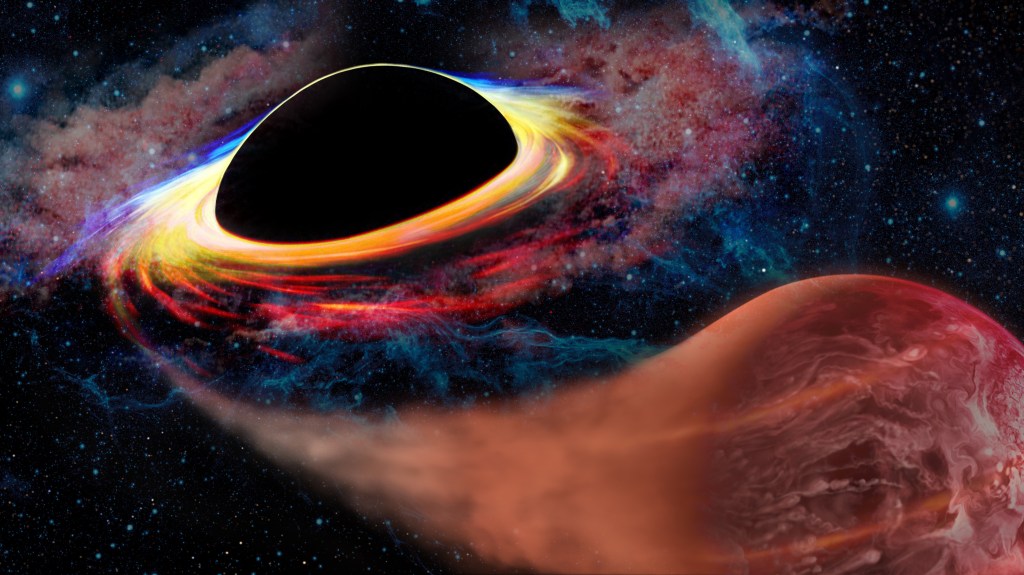
A black hole sucking in a planet
The understanding of black holes requires the General Theory of Relativity, and it is still a lot we don’t understand about them. Stock Photo ID: 2024419973 by Elena11

The Bizarre Reality of Black Holes

I chose the Bizarre Reality of Black Holes as a super-fact and included the ten facts above because these facts are shocking and yet not well known. Below is a photograph of a supermassive black hole at the center of the galaxy M87 taken by the event horizon telescope in 2017. To create the picture below image processing was needed. It is the first photograph of a black hole. This supermassive black hole is an estimated 6.5 billion times as massive as our sun, and 28 million times as massive as the largest known star.
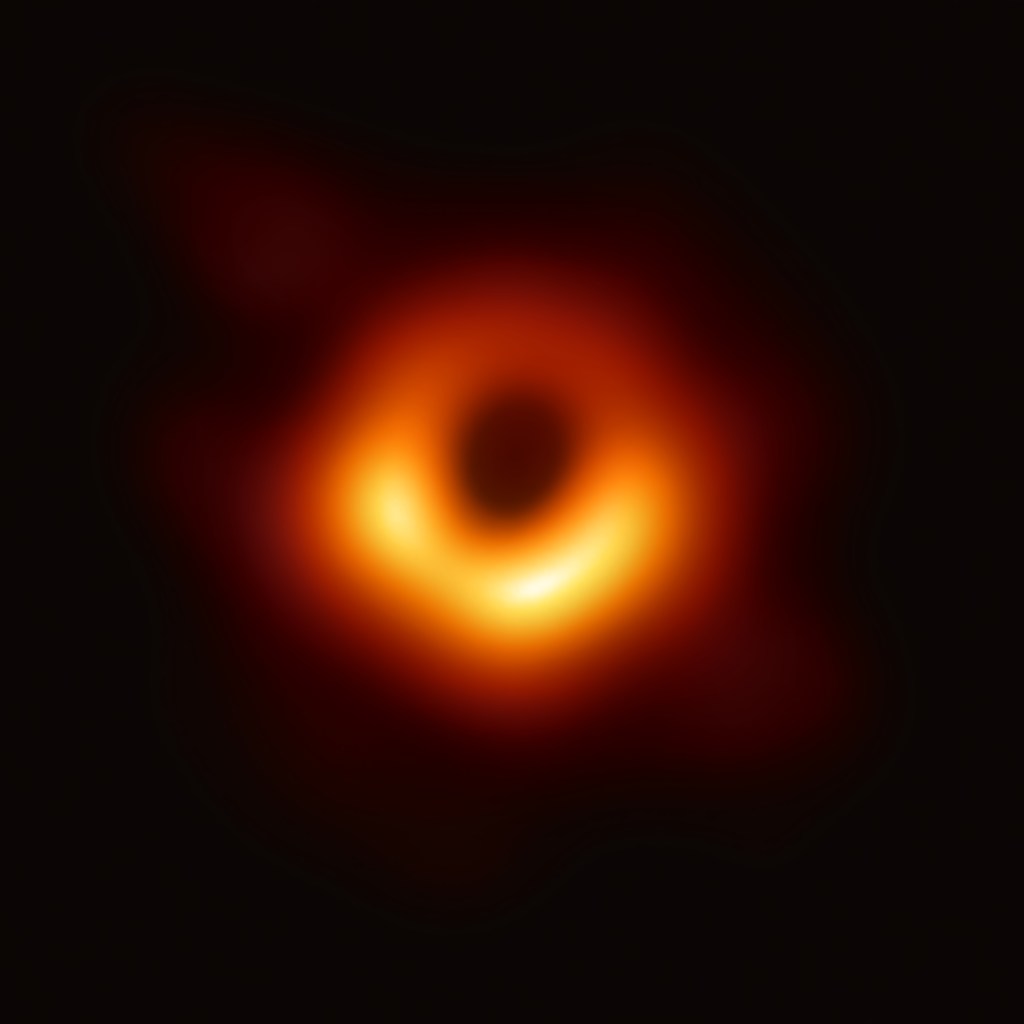
The supermassive black hole at the center of the galaxy M87 taken by the event horizon telescope in 2017 | The Bizarre Reality of Black Holes
The photo of the supermassive black hole at the center of the galaxy M87 taken by the event horizon telescope in 2017. Uploader cropped and converted TIF to JPG – This file has been extracted from another file, CC BY 4.0, https://commons.wikimedia.org/w/index.php?curid=77925953.

Below is an animation created by NASA that depicts what an observer falling into a black hole would see.

The fact that from the perspective of an outside observer, time appears to stop for someone reaching the event horizon of a black hole seems to prevent anything from falling into a black hole from an outside perspective. How does anything ever get inside the black hole if it freezes up at the event horizon? Black holes grow, they collide and merge, so clearly things can get inside, right? But how? As I tried to find the answer to this question, I found that I was far from the only one asking this question.
A black hole with an orange accretion disk is approached by futuristic starship.
Realistic spaceship approaching a black hole. This content was generated by an Artificial Intelligence (AI) system. Stock AI-generated image ID: 2448481683 AI-generated image Contributor Shutterstock AI Generator.

I searched physics forums trying to find the answer to this question. There were a lot of discussions but no clear answers. Some said, nothing falls into a black hole. Everything accumulates on the event horizon from the outside perspective and that’s how the event horizon and the black hole grows. The observer crossing the horizon essentially jumps infinitely far into the future, or into a different universe, that’s how he can pass through the event horizon.

Others said that the black hole is not static, it grows, and it shrinks from Hawking radiation, and this complicates the equations so that objects can enter the black hole even from an outside perspective. I have a few physics books on black holes that I have not finished reading. If I learn something better, I will update this post.
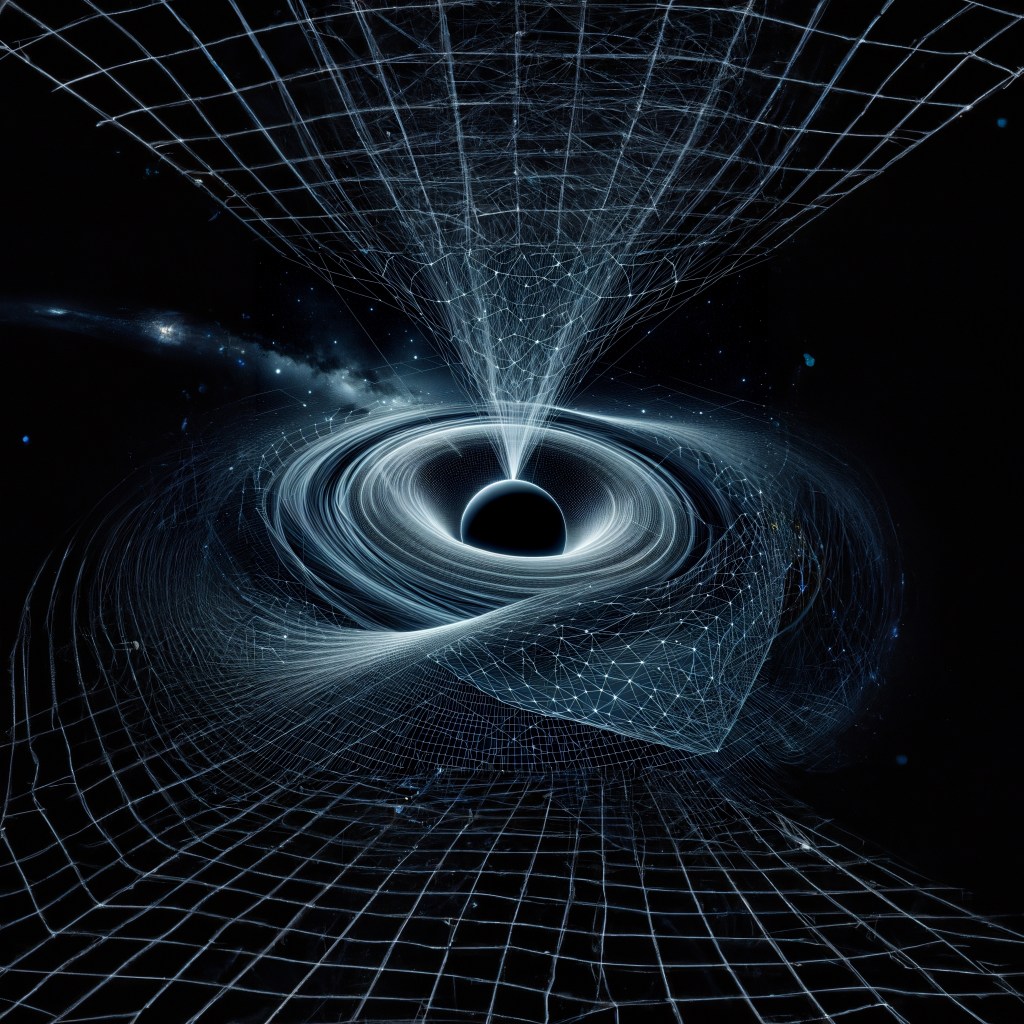
A depiction of a black hole surrounded by a space-time geometric grid that is bending due to gravity | The Bizarre Reality of Black Holes
AI-generated image Description : Space Black Hole Blue Illustration Gravity Geometry Vast Line. Stock AI-generated image ID: 2457551367 by AI-generated image Contributor Shutterstock.AI

In the image above the grid demonstrates how a black hole is distorting space-time. Other strange facts about black holes are that they are slowly evaporating through what is called Hawking radiation.

They come in different sizes. The smallest known black hole (XTE J1650-500) has a diameter of approximately 15 miles. Perhaps scariest of all, black holes are nearly undetectable unless they are feeding on star dust or tugging on nearby stars. That means one hungry black hole could be zipping right through our solar system without us knowing. Considering there are an estimated 100 million black holes in our Milky Way space travel might be scary.

Addressing a Good Question

After posting this post I received a question via email regarding this fact “If our planet earth collapsed into a black hole, its diameter would  be 1.75 centimeters or 0.69 inches in diameter. The diameter of the largest known black hole (TON 618) is 242 billion miles, which is more than one million times larger than the distance from the earth to moon.” The person who asked thought that 1.75 centimeters was pretty tiny and was wondering how a black hole could be that small.

To create a black hole, you need extremely strong gravity and one way to increase the force of gravity at the surface of a planet is to compress all its mass into a smaller volume.

If you compressed all of earth’s gravity so its diameter was only half of what it is, it would be more compact, and the gravity would be four times stronger at earth’s surface. If you compressed it further so that the earth’s diameter would only be a fourth of its original diameter the gravity at the surface would now be 16 times stronger. If you keep compressing the earth until its diameter is only 1.75 centimeters the force of gravity at the surface would be 132,000 trillion times greater than it currently is according to Newtonian physics, and you would get a black hole.

I should say that it comes out differently with General Relativity and that number is different for different sized black holes. However, this calculation is for demonstrative purposes. For relatively small masses like a planet, you would have to compress so much that it becomes tiny before gravity becomes large enough to make a black hole.


To see the other Super Facts click here


If you were an astronaut on an interstellar journey, would you be afraid of falling into a black hole?

David Lee Summers and the NEID spectrograph

A couple of weeks ago I made a post about exo planets. My blogger friend and Astronomer David Lee Summers stopped by and mentioned that investigating exo planets was his day job. He is working with the NASA-funded NEID spectrometer. He also happens to be an author of several science fiction books and scifi-horror books. Below is the front cover of one of his books. This is a reblog of one of his posts regarding NEID spectrometer. Head over there and check it out.

The NEID fiber feed (Port Adaptor) mounted on the WIYN telescope obtained during commissioning of the instrument. The Port Adaptor feeds light from the telescope to the NEID instrument, which is located on another floor of the building, below the telescope. The WIYN 3.5-meter Telescope at Kitt Peak National Observatory is located near Tucson, Arizona.
Portion of the NASA funded spectroscope that David works with. Above is an image of the NEID fiber feed (Port Adaptor) mounted on the WIYN telescope obtained during commissioning of the instrument. The Port Adaptor feeds light from the telescope to the NEID instrument, which is located on another floor of the building, below the telescope.

The front cover of David Lee Summers book features the inside of a lerge observatory and a bird like monster roaming around inside.
Front cover of the book The Astronomer’s Crypt by David Lee Summers

Finally, I am also posting my Amazon review of the Astronomer’s Crypt (see below) as well as Amazon’s description of the book.

Amazon’s Description of The Astronomer’s Crypt

Two years ago on a stormy night, in the dead of winter, Mike Teter experienced something that would change his life forever. Mike was a telescope operator at the world renowned Carson Peak Observatory in New Mexico. We won’t tell you what he saw that night on the mountain nor what happened afterward on a dark stretch of highway, because it would haunt you just as it has haunted Mike. But what we will tell you is that Mike is back at Carson Peak. And what he witnessed that night two years ago is about to become a reality…

My Review of The Astronomer’s Crypt

To visit a more complete description of this book click here.

An Intense and Fun Horror Thriller Taking Place in an Astronomical Observatory

The protagonist Mike Teter is a telescope operator at a fictitious observatory in New Mexico, the Carson Peak observatory. The Carson Peak observatory features two large buildings hosting a 5-meter and a 2.5-meter telescope. It is located on sacred land adjacent to an Apache reservation. There are caves nearby that host ancient sacred artifacts that should not be removed from the caves. The observatory is a labyrinthine and dangerous place that appears to be haunted. There are long corridors and hidden rooms. The observatory has a history of deadly accidents. For example, a Dr. Burroughs and a graduate student had been killed there.

One day Mike has what seems to be hallucinations. A large ancient evil creature looking like a mix of a dinosaur and a bird appears before him, and he encounters a talking coyote that gives him a warning about the sacred portals, he sees the ghost of Dr. Burroughs, and he witnesses the gruesome death of his friend the Astronomer Dr. Wallerstein. He’s had enough and he quit his job only to return to it at a later time. He thought that the things he saw were just nerves. However, this time things really go amiss. A creepy but wealthy lawyer by name of Mr. Vassago is trying to acquire sacred artifacts. There are drug cartel thugs, greedy adventurers, freak accidents, severe storms, hostage situations, ghosts, and ancient evil monsters. Mike Teter is faced with a very complicated and nightmarish situation.

The story is action packed, suspenseful and features a lot of plot twists. The characters are well-developed, relatable and multi-layered. The observatory is realistically described, and it is obvious that the author is very familiar with astronomical observatories. As you read this book you will learn something about observatories as well as the job of telescope operators. The author skillfully creates a chilling scenery of a dark haunted observatory, which brought my imagination to the spaceship in the movie Alien. It is obvious that the author is highly intelligent. A lot of things happened in just a few pages, and it was difficult to put the book down. It is one of the most intense and fun horror thrillers I’ve ever read, and I highly recommend it.

About David Lee Summers

Photo of David Lee Summers author of The Astronomer’s Crypt. He is wearing glasses, a green tie, and a brown suit.

David Lee Summers is an author, editor and astronomer living somewhere between the western and final frontiers in Southern New Mexico. He is the author of twelve novels. His short stories and poems have appeared in numerous magazines including Cemetery Dance, Realms of Fantasy, Star*Line, and The Santa Clara Review.

David also edited Tales of the Talisman Magazine for ten years. When he’s not writing, he operates telescopes at Kitt Peak National Observatory.

To see the Super Facts click here

Grizzly 399 is dead

I just read the sad news 399, a female grizzly bear named after her tag number died on Tuesday October 22 at the age of 28. She was hit by a car. They are looking for her cubs. Grizzly bear 399 was arguably the most famous grizzly bear in the United States. Unlike the typical bear, Grizzly 399 regularly gave birth to triplets rather than twins.

She lived in the Yellowstone and Grand Teton national park area, near Snake River, and she was seen and admired by thousands of visitors. Her Instagram account has 55,000 followers, books were written about her and documentaries were made. She had 22 cubs throughout her life.

Grizzly 399 in the meadow. She is followed by her three cubs | Grizzly 399 is dead
Grizzly 399 with three cubs. Photo from Wikipedia by StevenPDeVries, CC BY-SA 4.0 <https://creativecommons.org/licenses/by-sa/4.0&gt;, via Wikimedia Commons

She is special to me because we also encountered her and three of her cubs during a visit to Grand Teton national park in 2007. It was a school trip organized by the math teacher and each kid was accompanied by at least one parent to give the math teacher a break. Grizzly 399 gave us a very memorable experience.

Photo including a somewhat turbulent Snake River with the Teton mountain range in the background.
My photo of the Teton mountain range taken from Snake River.

Grizzly 399 frequently sought human company. She came down to the roads with her cubs and stayed with the passersby for hours. She did not beg for food. She just wanted to stay with people and this article describes her as a gentle soul.

Grizzly bears seeking human company is normally a dangerous situation and grizzly bears seeking human company are therefore often shot to protect the public. Grizzlies are dangerous animals. They can kill people both out of aggression and for food. However, the park rangers left Grizzly 399 and her cubs alone because they deemed her harmless. She frequently interacted with people without ever showing any aggression towards people.

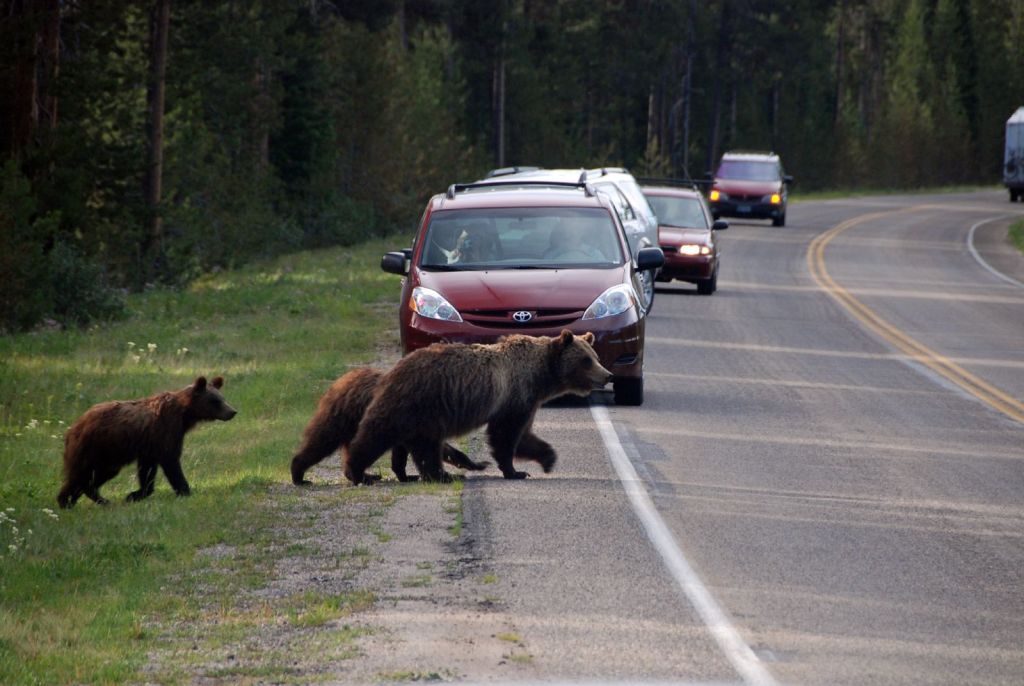
Four cars that are stopped on the road letting the grizzlies cross the road.
A photo of Grizzly 399 and a couple of her cubs taken in June 2007 by fellow trip participant Gabriel Goncalves.

Her behavior was somewhat strange, but I was told by a ranger that male grizzlies sometimes kill cubs, and this was her way of protecting the cubs. Grizzlies tend to stay away from people, except her, so she used people as a shield to protect her cubs.

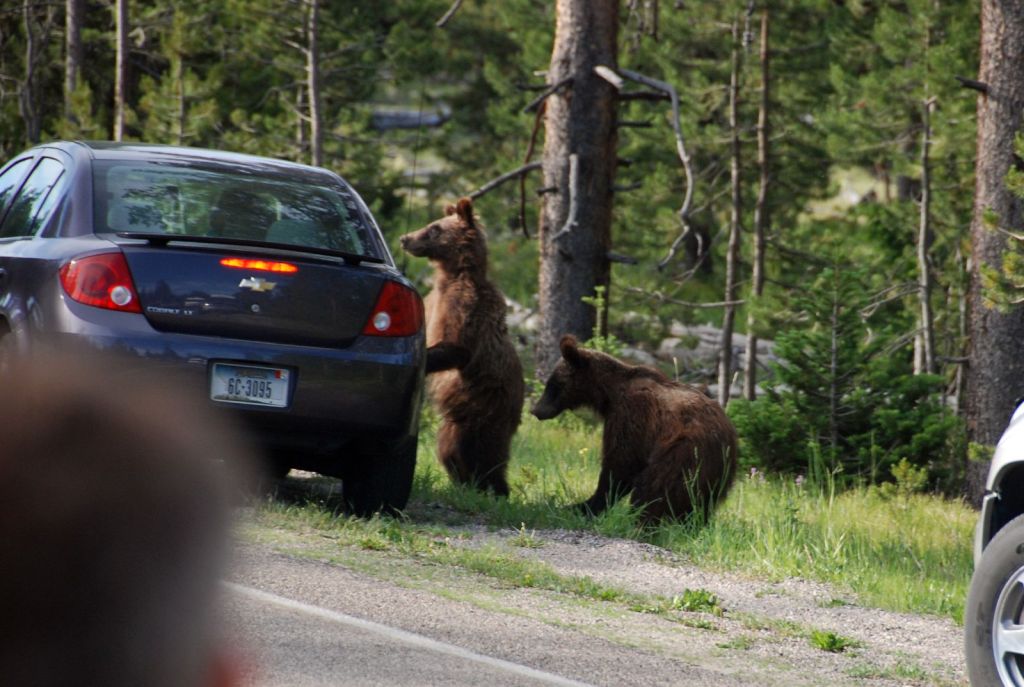
One grizzly cub is looking in the window of a blue car. The other one is right behind.
A photo of two of 399’s cubs. The photo was taken in June 2007 by a fellow trip participant Gabriel Goncalves.

One ranger told us a story about 399 that sounded a bit scary. A hiker, hiking alone (which you should not do) stumbled upon 399 and her cubs as they were in the middle of eating an Elk carcass. He had come out of a thicket and had not seen them until he essentially bumped into them. He screamed on top of his lungs because he was shocked and started running. 399, who was equally startled, pursued him. He laid down on the ground as he had read that he should do when pursued by a grizzly. 399, sniffed him but did not touch him. Her two cubs bit his behind but not hard.

After the grizzlies had left, he stood up, walked away and went to a hospital to check out the bites on his bum, which allegedly were not bad.

Shrubs, bushes and trees and a grizzly bear walking in the middle. There are cubs behind her, still in the bushes | Grizzly 399 is dead
399 is approaching the road. Her cubs are in the background. The photo was taken in June 2007 by a fellow trip participant Gabriel Goncalves.

As for us, we had a somewhat scary experience with Grizzly 399, but as it turned out, we were never in any danger. Someone that he had seen enough and decided to leave, so he drove his car, with a trailer in between 399 and her cubs. Someone rightly thought that was dumb and decided to improve the situation by angrily honking.

As a result, 399 started running towards us, the large group of tourists standing outside taking pictures. People started screaming and running, and unfortunately the math teacher who had organized the trip fell and got trampled by the panicking people.

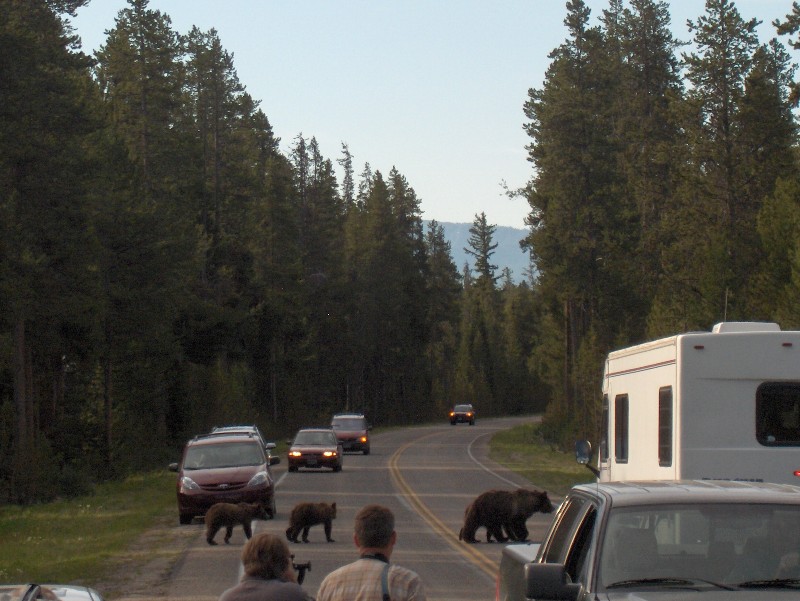
Six cars a car with a big trailer and a grizzly mother and three cubs on the road | Grizzly 399 is dead
399 is crossing the road with her cubs. The photo was taken in June 2007 by a fellow trip participant Gary Weinstein.

A lot of other things happened during the panic. People ran back to their cars or to any car. A couple of my fellow trip participants found themselves blocked from entering their own car (on the side away from the bear) because a plus sized lady was stuck in their door.

By pushing her from behind they were able to get her inside and could then enter the car themselves. The kids were standing on top of the SUVs that we had rented and crawled back into the cars through the sunroofs. My son entered the car last by his own choice.

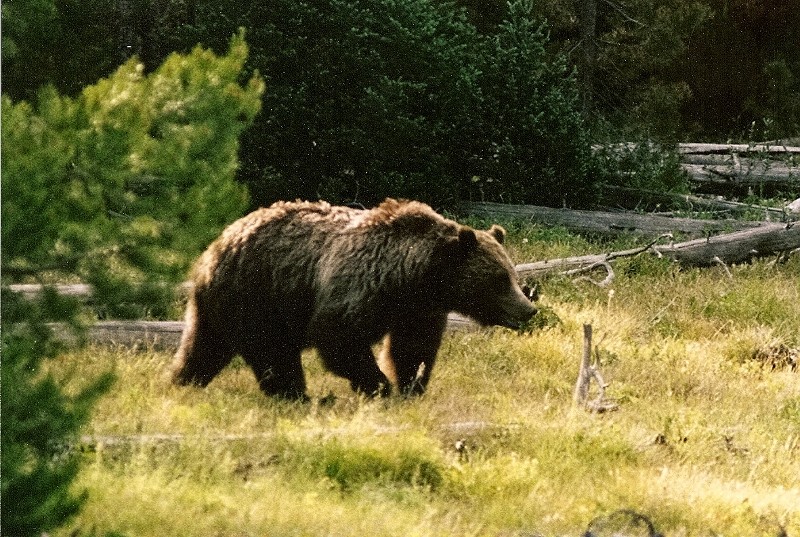
A grizzly bear is walking out of the thicket in a forest nearby the road | Grizzly 399 is dead
The math teacher, Frank Jordan, took this photo of 399.

As it turned out the panic was completely unnecessary. 399 was not chasing anyone and was not really running towards us. She was running to the end of the car with the trailer to get around it to get to her cubs on the other side. Below are a few more photos taken by my fellow trip participants. I did not get good photos of this event, so I am not including them.

Cars a trailer, and grizzly mother with her cubs on the road | Grizzly 399 is dead
399 and her cubs amongst the cars. The photo was taken in June 2007 by a fellow trip participant Carl Ondracek.
Grand Teton and a few other mountains in the Teton range reflected in a lake.
A view of the Teton Mountain range. The big mountain is Grand Teton. The photo was taken in June 2007 by a fellow trip participant Gabriel Goncalves.
The Teton range towering an island is reflected in a lake.
Jackson Lake, an island and the Teton Mountain range in the background. The photo was taken in June 2007 by a fellow trip participant Gabriel Goncalves.

To see the Super Facts click here


Astronomer

Daily writing prompt
What alternative career paths have you considered or are interested in?

So I am trying out the Daily writing prompt for the first time, answering the question “What alternative career paths have you considered or are interested in?”.

I’ve always been interested in astronomy and astrophysics, and I studied engineering physics, later electrical engineering. I did not think astronomer or astrophysicist was an easily attainable career and perhaps not very well paid either, but I think it would have been a fun job to have.

Astronomer
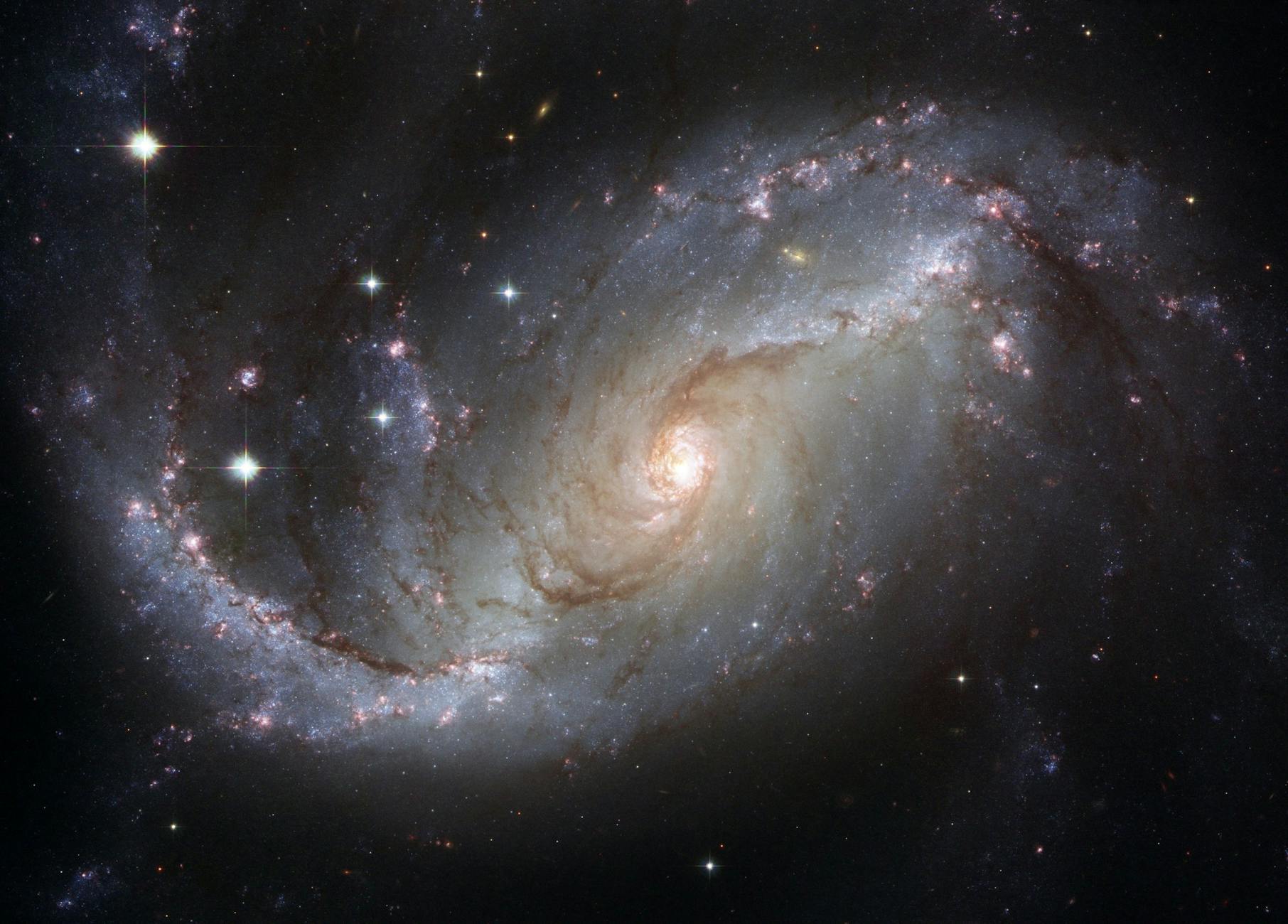
Photo by Lucas Pezeta on Pexels.com

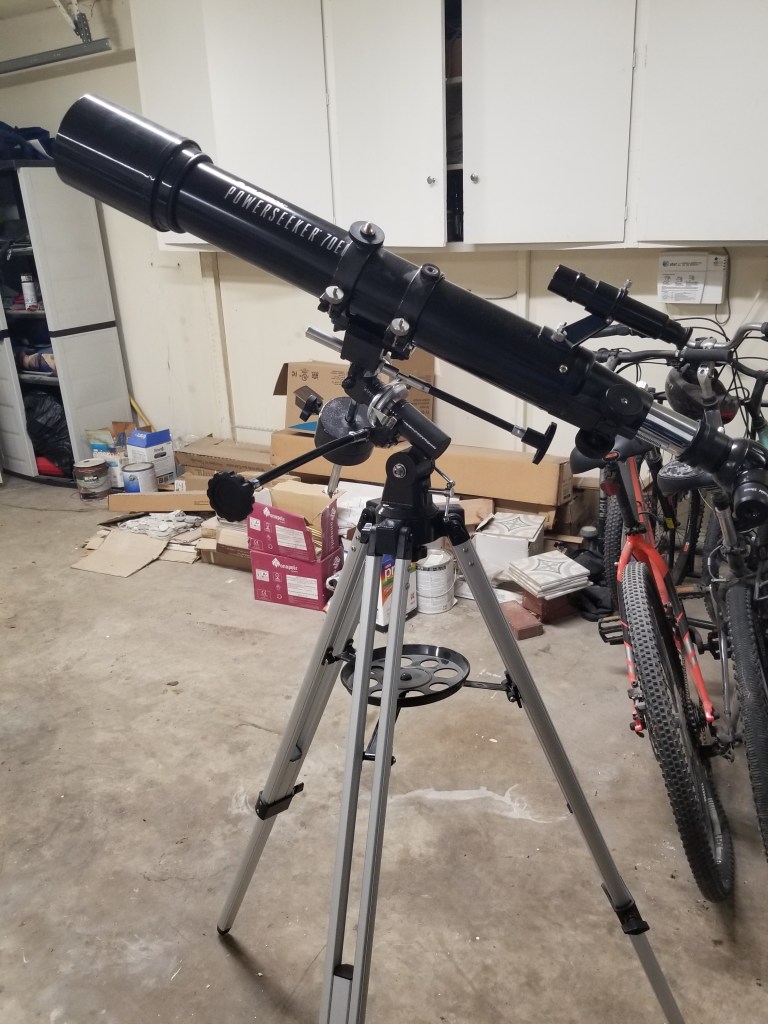
Celestron Powerseeker 70EQ

I am a bit of an amateur astronomer, and I own a basic telescope for amateurs, a Celestron Powerseeker 70EQ. It is not a great telescope, but it is good enough for observing objects such as Saturn and its rings, Jupiter and its four Galilean moons, Mars, Venus (the crescent), the moon and its craters. Those objects you can see from inside a big city like Dallas. Naturally you can do much better if you leave the city and especially if you visit a dark spot. I am a member of TAS, Texas Astronomical Society and they own a dark spot in Oklahoma. Below is a photo of my Celestron Powerseeker 70EQ standing in my garage.

Black Telescope standing in front of bicycles in a garage
Celestron Powerseeker 70EQ

What Does an Astronomer Do?

Astronomers study the universe, including galaxies, stars, planets, and other celestial objects, using telescopes and other instruments to observe and analyze them. They observe and analyze celestial objects. Depending on their specific area, astronomers have different duties.

  • They observe celestial objects using telescopes.
  • They conduct research, analyze data and test hypothesis.
  • They use and develop models including complex mathematical models and computer simulations to understand complex astrophysical phenomena.
  • They collaborate with peers, they teach, and they do mentoring and public outreach.

Types of Astronomers

  • Observational Astronomers use telescopes and other observational instruments to collect data from celestial objects.
  • Theoretical Astrophysicists use mathematical models and computer simulations to understand the physical processes in the universe. They may study stellar evolution, galaxy formation, cosmology, and black holes.
  • Planetary Scientists study planets, moons, and other objects within our solar system. They use data collected by space missions, telescopes, and remote sensing techniques.
  • Stellar Astronomers study stars, their properties, and their life cycles. They may study variable stars, binary star systems, massive stars, stellar remnants such as white dwarfs, neutron stars, or black holes.
  • Galaxies and Cosmology researchers study galaxies and the large-scale structures in the universe.
  • Radio Astronomers study celestial objects using radio waves instead of visible light. They may study radio galaxies, cosmic microwave background radiation, and the structure of the Milky Way.
  • Exoplanet Astronomers study and discover planets orbiting stars outside our solar system. They use techniques such as transit photometry and radial velocity measurements to detect and characterize exoplanets.

Famous Astronomers

  • Nicolaus Copernicus 1473–1543, discovered the heliocentric model putting the sun at the center of our solar system.
  • Johannes Kepler 1571–1630, revolutionized our understanding of how planets orbit the Sun. He used the Copernicus heliocentric model and very careful measurements to show that the planets moved in elliptical orbits around the sun and he came with additional laws to describe the speed of the planets in their orbits.
  • Galileo Galilei, 1564–1642, or Galileo di Vincenzo Bonaiuti de’ Galilei, was an Italian astronomer, physicist and engineer who greatly improved the optical telescope and discovered the four primary moons of Jupiter and the rings of Jupiter. He proved that all falling bodies fall at the same rate, regardless of mass, and developed the first pendulum clock. He got in trouble for defending Nikolai Copernicus idea.
  • Edmund Halley, 1656–1742,  investigated and discovered many things including the nature of comets’ orbits.
  • Edwin Powell Hubble, United States, 1889–1953. Hubble proved that many objects previously thought to be clouds of dust and gas and classified as “nebulae” were galaxies beyond the Milky Way. He showed that these galaxies were moving away from us and each other leading to the conclusion that the universe was expanding.
  • Vera Rubin, 1928–2016,  studied the rotation of galaxies and uncovered the discrepancy between the predicted and observed angular motion. This led to the discovery of dark matter.

What about you? What alternative career paths have you considered or are interested in?


To see the Super Facts click here


The vastness of space and the beginning of infinity

Superfact 14: The vastness of space and the beginning of infinity

The Universe is unimaginably large. Our solar system is enormous. It consists of our star, the sun, the planets including earth, dwarf planets, asteroids, comets, rocks, the Kuiper belt, the Oort cloud, and much else. It is 100,000 times wider than the distance between the sun and our earth. Yet it is just one star system among between 100 and 400 billion in our galaxy, the Milky Way. 

But that is not all. According to the Nobel Prize winner in physics, Roger Penrose, our universe is just one in an eternal (infinite) series of universes, an eternal chain of Big Bangs that has always existed. See his conformal cyclic cosmology (CCC) model (and the book cycles of time).

According to Stephen Hawking, M-theory, an extension or collection of string theories, states that there are 10^500 or 10000000000000…(followed by five hundred zeros) possible multi-verses that are all equally possible. Hugh Everett’s multiverse or multi-world theory states that there are infinitely many universes.

Now try to imagine the size of it all. You can’t do that, can you?

The vastness of space and the beginning of infinity
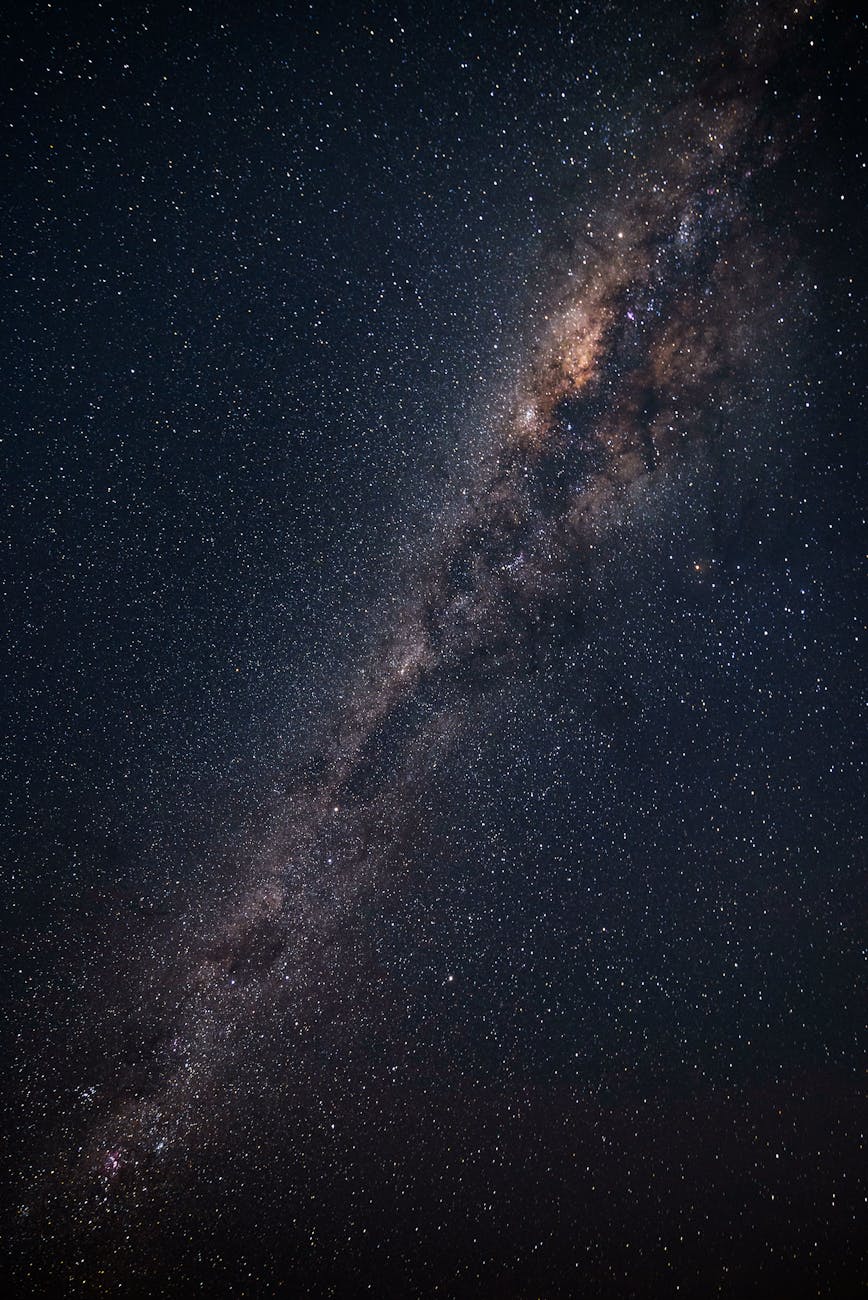
Photo by Pixabay on Pexels.com

About The Universe

When the astrophysicist Brian Cox was asked the question “what is the one fact about the Universe that blows your mind the most?”, he answered, “One. Just the size and scale of it…”.

At first, I thought his answer was a bit boring. I mean, what about neutron stars, which essentially are giant atomic nuclei? What about the amazing mysteries surrounding black holes, and what about supermassive black holes, quasars, magnetars, the great attractor, what about the big bang, quantum physics, massless particles, the amazing general theory of relativity, dark energy, etc.

Then I tried to imagine the size and scale of the universe and I realized that he knew what he was talking about. The more you think about it, the more it blows your mind.

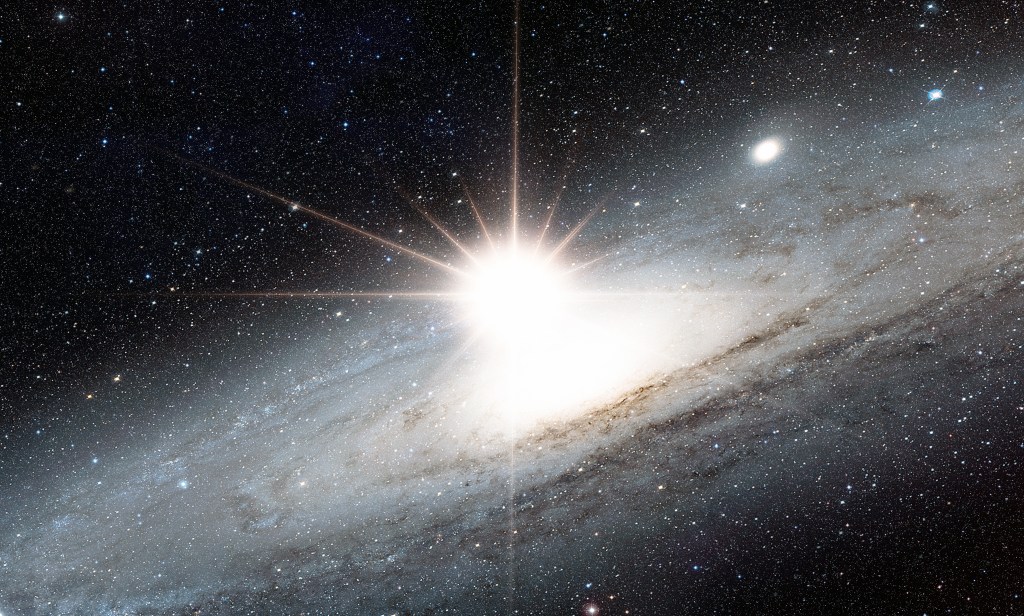
A picture of the Andromeda Galaxy with a bright white light near its center. The bright light is almost outshining the entire galaxy.
An illustration of the Andromeda galaxy with a supernova explosion near its center. “Elements of this image furnished by NASA” Stock Photo ID: 2495486227 by muratart.

The vastness of space and the beginning of infinity

Below is a 55 second video in which astrophysicist Brian Cox ruminates on what it means to live a finite fragile life in an infinite eternal Universe.

Our sun is a star. The sun’s diameter is 109 times larger than earth’s diameter, which means that you could fit more than one million earths inside the sun. The distance between the sun and the earth is called an astronomical unit or 1 AU. 1 AU is approximately 11.7 million times larger than earth’s diameter and 107,340 times larger than the sun’s diameter.

The solar system including all the planets, dwarf planets, asteroids, the Kuiper belt and the Oort cloud is 100,000 AU across with the sun just being a dust speck in the middle.

I mentioned that M-theory implies that there are at least 10^500 multiverses. To get an idea of how bif that number is;  It is a quintillion times a quintillion times a quintillion times a quintillion times a quintillion times a quintillion times a quintillion times a quintillion times a quintillion times a quintillion times  a quintillion times a quintillion times a quintillion times a quintillion times a quintillion times a quintillion times a quintillion times a quintillion times a quintillion times a quintillion times a quintillion times a quintillion times a quintillion times a quintillion a quintillion times a quintillion times a quintillion times. By the way a quintillion is a million trillion.

The vastness of space and the beginning of infinity
Photo by Philippe Donn on Pexels.com

Below are two more videos. The first one is trying to give a perspective on the size of our solar system, our galaxy, and the Universe. It is 11 minutes and 9 seconds long. The second one is very long, half an hour, and it is a bit advanced, so I recommend it only to star nerds.

However, at 22 minutes and a bit more than 30 seconds it states the observable universe is less than a 15 millionth of the universe (which might be even bigger) which contains at least 30 quintillion galaxies.


To see the other Super Facts click here