What Can We Do About Climate Change

The goal of this blog is to create a list of what I call super facts. Important facts that we know to be true and yet they are surprising, shocking or disputed among non-experts. Super facts are important facts that people get wrong. However, I also create posts that are not super facts but other interesting information, such as this book review and book recommendation.

Saving Us: A Climate Scientist’s Case for Hope and Healing in a Divided World

Saving Us: A Climate Scientist’s Case for Hope and Healing in a Divided World by Katharine Hayhoe is a book about human caused Climate Change, how bad it is, and what we can do about it. The good news is that we are not all going to destroy ourselves. It is still bad, but we can do a lot to avoid making it really bad. However, there are a lot misunderstandings regarding what really makes a difference. This book examines these issues with a good dose of realistic optimism and science. I read the hardback version (and my review on Amazon is currently the top review).

  • Hardcover –  Publisher : Atria/One Signal Publishers (September 21, 2021), ISBN-10 : 1982143835, ISBN-13 : 978-1982143831, 320 pages, item weight : 1.05 pounds, dimensions : ‎6 x 1 x 9 inches, it costs $19.14 on US Amazon. Click here to order it from Amazon.com.
  • Paperback –  Publisher : Atria/One Signal Publishers (September 20, 2022), ISBN-10 : 1982143843, ISBN-13 : 978-1982143848, 320 pages, item weight : 8.8 ounces, dimensions : 5.5 x 0.7 x 8.38 inches, it costs $17.22 on Amazon. Click here to order it from Amazon.com.
  • Kindle –  Published : Atria/One Signal Publishers (September 21, 2021), ASIN : B08BZW2BQG, 318 pages, it costs $14.99 on US Amazon. Click here to order it from Amazon.com.
  • Audiobook –  Published : September 21, 2021, ASIN : B08D4RGYM8, Listening Length : 8 hours and 7 minutes, it costs $16.40 on US Amazon. Click here to order it from Amazon.com.
The front cover of “Saving Us: A Climate Scientist's Case for Hope and Healing in a Divided World” by Katahrine Hayhoe | What Can We Do About Climate Change
Front cover of Saving Us. Click on the image to go to the Amazon page for the hardcover version of the book.

Amazon’s description of the book

“An optimistic view on why collective action is still possible—and how it can be realized.” —The New York Times

“As far as heroic characters go, I’m not sure you could do better than Katharine Hayhoe.” —Scientific American

“It’s not an exaggeration to say that Saving Us is one of the more important books about climate change to have been written.” —The Guardian

United Nations Champion of the Earth, climate scientist, and evangelical Christian Katharine Hayhoe changes the debate on how we can save our future.

Called “one of the nation’s most effective communicators on climate change” by The New York Times, Katharine Hayhoe knows how to navigate all sides of the conversation on our changing planet. A Canadian climate scientist living in Texas, she negotiates distrust of data, indifference to imminent threats, and resistance to proposed solutions with ease. Over the past fifteen years Hayhoe has found that the most important thing we can do to address climate change is talk about it—and she wants to teach you how.

In Saving Us, Hayhoe argues that when it comes to changing hearts and minds, facts are only one part of the equation. We need to find shared values in order to connect our unique identities to collective action. This is not another doomsday narrative about a planet on fire. It is a multilayered look at science, faith, and human psychology, from an icon in her field—recently named chief scientist at The Nature Conservancy.

Drawing on interdisciplinary research and personal stories, Hayhoe shows that small conversations can have astonishing results. Saving Us leaves us with the tools to open a dialogue with your loved ones about how we all can play a role in pushing forward for change.

This is my five-star review for Saving Us

Climate Change; what can we do? Talk about it!

This is an extremely well written, informative, and hopeful book on climate communication. A decade ago I was doubtful that human caused climate change was anything to worry about even though it physically made sense that it was happening. I thought environmentalists were exaggerating and distorting the facts. In general I did not trust or respect environmentalists whom I thought were driven by leftist agendas.

I studied the topic on my own by reading books and scientific articles on the topic, and I learned what climate scientists, not opinionated bloggers, said about the topic. I was especially impressed by a book by James Hansen.

I came to realize that human caused global warming definitely was real and a serious problem. I think I was able to change my mind so easily because I never had a strong affiliation with a political tribe, I respected scientific expertise and my encounter with science deniers in other fields had inoculated me against their kind of rhetoric (it’s fairly universal). I’m an abstract thinker who loves pro-con-lists, and I prefer going in deep and I am not afraid of math, but I don’t think that’s typical.

The backside of that is that it made me a pretty crappy and easily frustrated climate change communicator once I came around. I felt I needed to take action so I joined Citizens Climate Lobby (CCL), a bipartisan volunteer organization with good solutions and good practices. From CCL I learned how to communicate better. In this book Katherine Hayhoe praises CCL and use it as a model for how to approach climate change with respect to solutions and communication.

In addition to climate change communication she gives a high level overview of why we know that global warming is happening (there are 26,500 lines of independent evidence for climate change), how fast it is happening (10 times faster than the last ice age warming), and how we know it isn’t natural. It’s a simple overview, not a deep dive. I thought her analogy about driving while looking in the rearview mirror as you hit a curve to be genius.

She also discusses our cognitive biases, and why not to engage with the 7% who are dismissives, the abuse she’s been a victim of, and so called zombie arguments. Zombie arguments are dismissive arguments that have been thoroughly debunked over and over but won’t die because they fulfill an emotional need for those who are dismissive of climate change. She discusses the political divided in the US, the “blame and shame the consumer” tactic and the misguided “population control solution” and solutions aversion in general.

She describes our situation lucidly. That there is no particular known limit that will doom us all. It is like smoking; you don’t get lung cancer after a certain amount of cigarettes, it’s just better to stop as soon as you can. She discusses solutions and the economy, including cap and trade and a price on carbon, and she states we don’t have to harm the economy to solve climate change, and a lot is already being done the world over. It is a mostly hopeful view.

I was surprised to learn that if you take into account, production subsidies, tax breaks, land leases on public lands below market rates, and the cost of pollution, the IMF estimates that fossil fuel subsidies in the US top $600 billion per year, twenty times clean energy subsidies. That’s about $2,000.00 per person and year, or $8,000.00 per family per year. That’s a lot of money.

Because of my experience with CCL I recognized a lot of what Katherine Hayhoe was saying in this book, but I still had a lot to learn, and besides the book is hopeful, and intelligently written and therefore a pleasure to read. She stresses that the most important thing we can do to solve climate change is to talk about it. I love this book and I highly recommend this book.
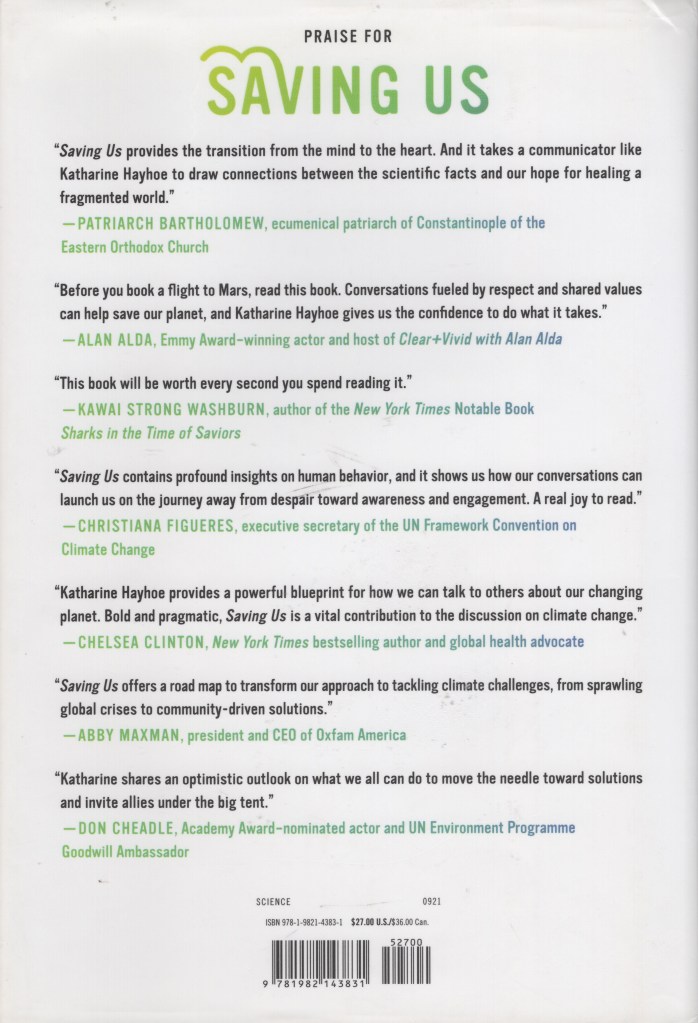

Back cover of “Saving Us: A Climate Scientist's Case for Hope and Healing in a Divided World” by Katharine Hayhoe
Back cover of Saving Us. Click on the image to go to the Amazon page for the kindle version of the book.

To see the Super Facts click here


GPS uses relativity for accuracy

Superfact 23: GPS uses relativity for accuracy. Global Positioning Systems or GPS uses Special Relativity and General Relativity to guide you to your destination. In fact, GPS systems would be rendered useless without the Theories of Relativity.

Businessman finger pin for location points and search addresses on the world map application. Marking destination for travel or finding business places in GPS Satellite coordinates system online web | GPS uses relativity for accuracy
Stock Photo ID: 2502019165 by mayam_studio

Did you use Einstein’s Theories of Relativity to get to the grocery store today?

The theories of relativity may seem strange and impractical, something you only use for astrophysics, black holes, cosmology and extreme velocities. They feature strange concepts such as time dilation, the stretching and bending of space, events simultaneous to some are not to others, the universal constancy of the speed of light in vacuum, the energy and mass equivalency, etc. 

Therefore, it is a bit surprising that without the theories of relativity the GPS app on your phone would not be able to guide you to the grocery store. That’s why I call it a super fact that GPS uses relativity for accuracy.

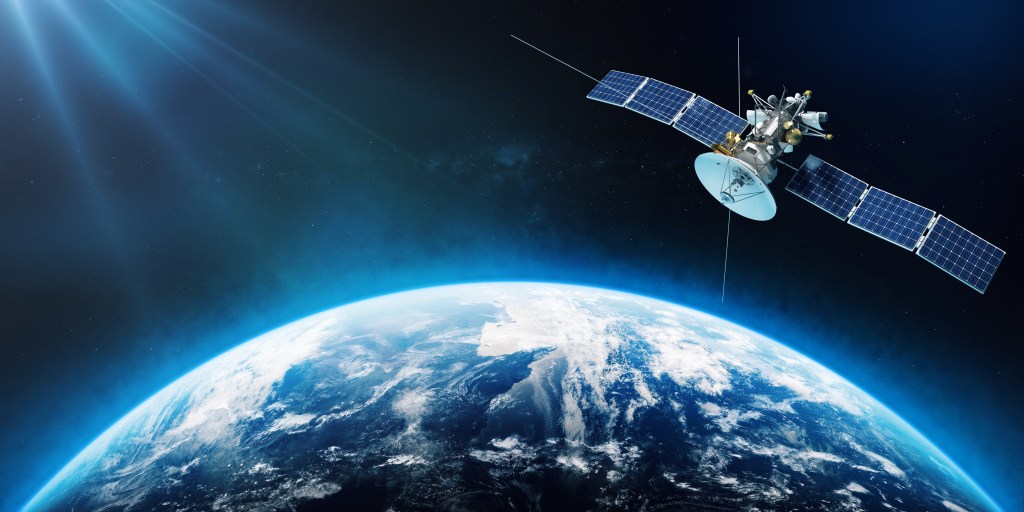
Space satellite orbiting the Earth. 3D rendering
Stock Illustration ID: 1372134458 by Boris Rabtsevich

GPS and Time Dilation

GPS is a satellite-based  radio navigation system that provides location information and time anywhere on Earth. It is amazingly accurate. The basic GPS service provides users with approximately 7.0-meter accuracy, 95% of the time, anywhere on or near the surface of the earth.

The fact that the information is provided by satellites that orbit earth at high speeds and high above earth’s surface makes General Relativity and Special Relativity necessary. The GPS system needs to calculate precisely the time it takes for signals to travel from the satellites to a receiver on Earth for it to work. GPS satellites travel at high speeds causing a large enough time dilation that must be accounted for. In addition, they orbit earth high above earth’s surface where earth’s gravitational field is weaker than on earth’s surface. Clocks run faster in weaker gravitational fields due to gravitational time dilation, so you must correct that as well.

If you ignore relativity, you will accumulate a discrepancy of six miles in one day.  You are not going to find the grocery store that way, unless you use the old-fashioned method of reading a map. In a sense, if your GPS device finds the grocery store for you, you have proven Einstein right.

Below is a YouTube video animation visualizing the GPS system.


GPS Facts

  • The GPS project was started by the U.S. Department of Defense in 1973. It is also owned by the U.S. Department of Defense.
  • The GPS satellites were sent up by the United States Air Force (and not NASA).
  • The first NAVSTAR satellite, later called GPS, was launched in 1978.
  • There are 31 GPS satellites currently in orbit.
  • The system requires 24 GPS satellites.
  • The 24-satellite system became fully operational in 1993.
  • The Global Positioning System cost (the US government) $1.8 billion annually to operate and maintain.
  • The Global Positioning System is free to use for the public worldwide.
  • Making GPS free to civilians worldwide was a decision by President Ronald Reagan in 1983 after a Korean airliner was shot down for straying off course.
  • GPS satellites carry extremely accurate atomic clocks. As explained, GPS must account for relativity, special relativity as well as General Relativity.
  • Other satellite systems help improve GPS, including WAAS (in the U.S.), EGNOS (in Europe), and MSAS (in Japan).
  • GPS is not the only satellite navigation system. Other countries have their own satellite navigation systems. GLONASS (Russia), Galileo (EU), and BeiDou (China).
  • Ukraine is helped by both GPS and Galileo.
  • Russian forces have been actively jamming GPS signals in Ukraine.

Uses of GPS

  • Examples of consumer electronics that use GPS are smart phones, tablets, Smartwatches, Car navigation systems, Cameras (DSLR with GPS), some models of laptops, fitness trackers (Fitbit), and drones.
  • Examples of vehicles using GPS are cars, delivery vans, trucks, aircraft, trains, ships and boats.
  • Military uses of GPS include guided missiles, guided munitions, tactical radios, communication systems, soldier-worn devices for location tracking, military vehicles and military aircraft.
  • Additional examples of GPS use include construction equipment for site positioning and machine guidance,  tractors for precision farming and other agricultural machinery, surveying equipment, pipeline inspection drones, other inspection drones and rovers, emergency locator beacons, pet trackers, smart collars, livestock monitoring, personal trackers, and geocaching devices.

As you can see, GPS is extremely useful, and there are a lot of interesting facts about GPS.


To see the other Super Facts click here

Red Touches Yellow Kill A Fellow

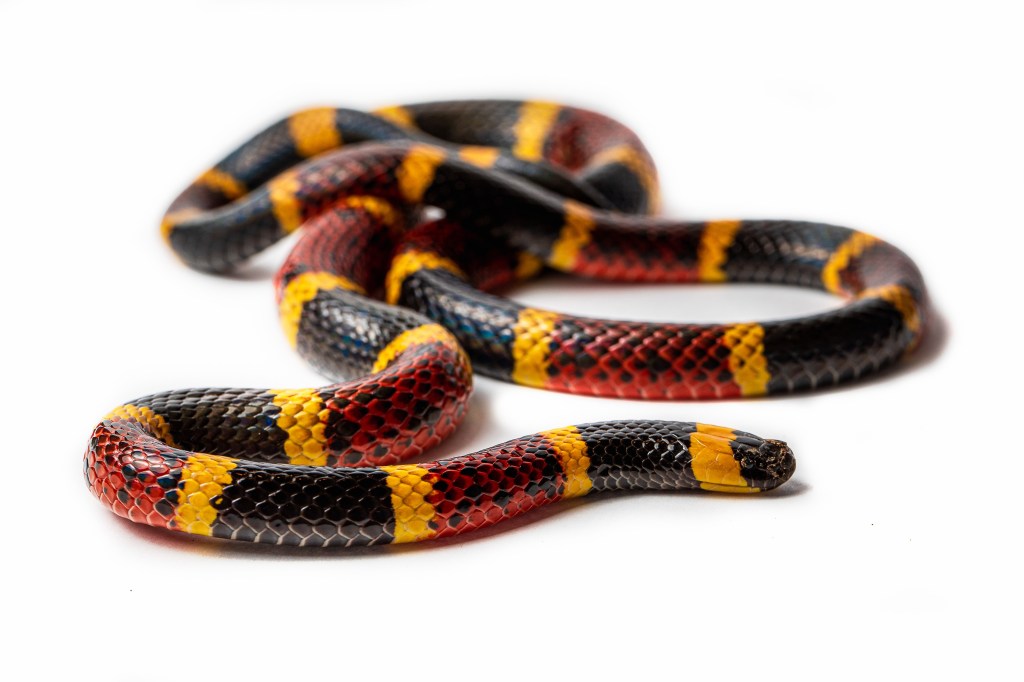
There at least 105 species of snake in Texas, the most of any U.S. state and 15 species are significantly venomous and four more are mildly venomous. The most venomous is the Texas coral snake, which has enough venom in one bite to kill six adult men. However, the milk snake and the king snake are harmless snakes that look very similar to the coral snake. The way to tell the difference is to use the rhyme “Red touches yellow, kill a fellow; red touches black, friend to Jack” or alternatively “Red touch black, safe for Jack. Red touches yellow, kills a fellow”.

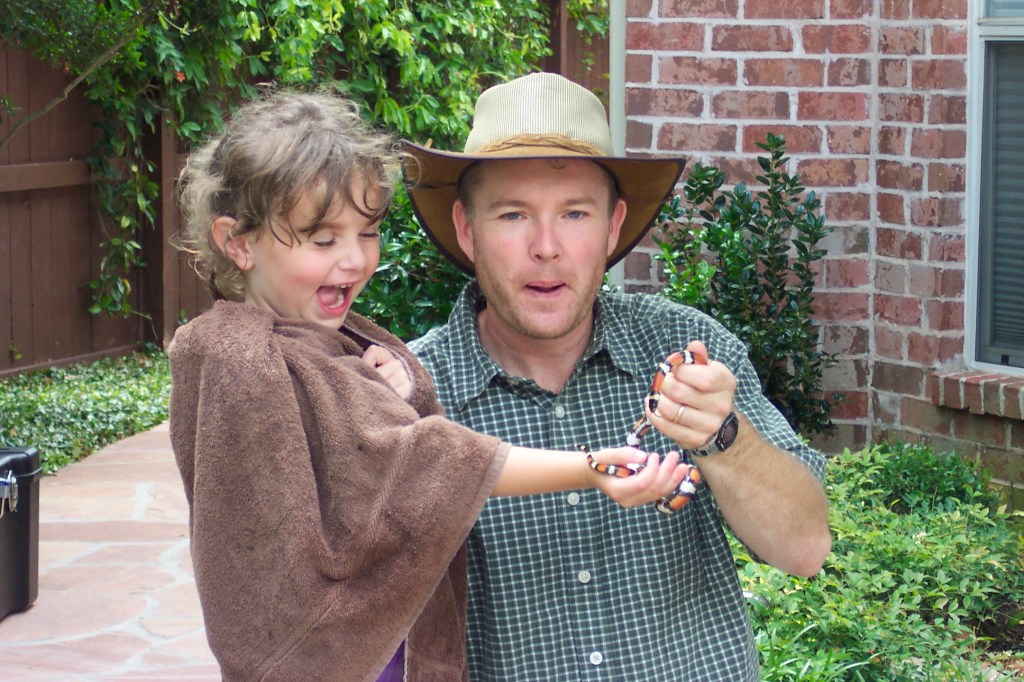
Look at the two pictures below. One is my daughter with the critter man, and she is holding a milk snake. The other picture is of the deadly coral snake. Can you tell them apart by using the rhyme?

My daughter on the left is holding a milk snake. It has red, white/yellow and black bands | Red Touches Yellow Kill A Fellow
My daughter with a milk snake. We hired the critter man for her birthday.
A Texas Coral Snake, Mircrurus tener, isolated on a white background | Red Touches Yellow Kill A Fellow
Photo of a Texas coral snake. Stock Photo ID: 2018440949 by Scott Delony

The Green Mamba

When our kids were young, we frequently visited Dinosaur State Park near Glen Rose, Texas. On one occasion I was carrying my four-year-old son on my shoulders. Suddenly he shouted, “Dad you almost stepped on that Green Mamba”. I looked down and between my feet crawled a green snake. It was a harmless green grass snake, but I did not even know there were green snakes in Texas.

On another occasion I was showing a whipsnake to my daughter. It was at a girl scout camp, and I had taken the snake out from its glass jar located in a room where they stored nonvenomous snakes. I was holding it in my hands. The whipsnake was pretty strong and decided to crawl under my shirt sleeve. I had to fight it to get it out from underneath my shirt sleeve and back into its glass jar. I probably looked like a clown juggling a snake. Whipsnakes are thin but very strong, long and stubborn.

We’ve also seen all kinds of water snakes as well as the dangerous water moccasin or cottonmouth as it is also called. We’ve seen rat snakes and snakes in our yard. I’ve seen a lot of snakes in the wild here in Texas and I typically don’t know what kind they are. That’s why I needed The Lone Star Field Guide to Texas Snakes by Alan Tennant.

Lone Star Field Guide to Texas Snakes by Alan Tennant

The goal of this blog is to create a list of what I call super facts. Important facts that we know to be true and yet they are shocking or disputed among non-experts. Super facts are important facts that people get wrong.

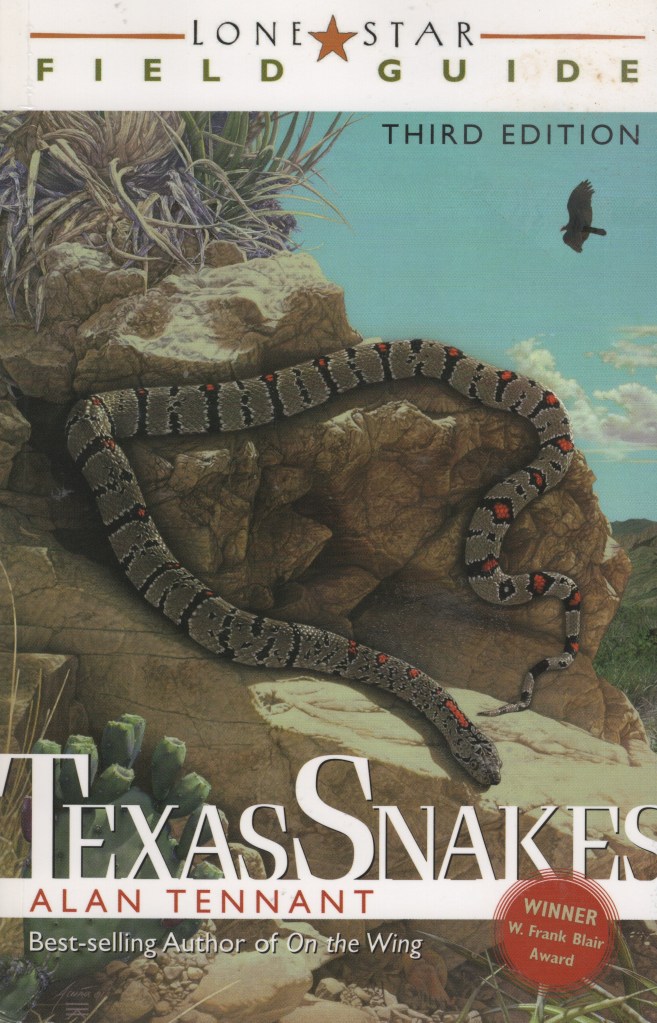
However, I sometimes create posts that are not super facts but contain other interesting information, such as this book review and book recommendation of the Lone Star Field Guide to Texas Snakes. This book features 105 snakes and includes hundreds of photos, information on prey and reproduction, habitat information, geographical distribution, and more. I bought the paperback version of the book.

  • Paperback –  Publisher : Taylor Trade Publishing; Third edition (December 28, 2005), ISBN-10 : 1589792092, ISBN-13 : 978-1589792098, 352 pages, item weight : 1.15 pounds, dimensions : ‎ ‏ 7.1 x 0.81 x 8.46 inches, it costs $43.46 new on Amazon, but you can buy used copies much cheaper. Click here to order it from Amazon.com.
  • Kindle –  Published : Taylor Trade Publishing; 3rd edition (January 27, 2006), ASIN : B00IUFI1K8, 352 pages, it costs $10.99 on US Amazon. Click here to order it from Amazon.com.
Front cover of Lone Star Field Guide to Texas Snakes by Alan Tennant | Red Touches Yellow Kill A Fellow
Front cover of Lone Star Field Guide to Texas Snakes. Click on the image to go to the Amazon page for the paperback version of the book.

Amazon’s description of the book

The State of Texas not only boasts the largest snakes in North America, but also the largest number of species—105. This guide describes in detail each and every one of them, from the benign Texas long-nosed snake, to the venomous Western Cottonmouth. Facts on the biology and behavior are given, plus the latest findings on abundance, reproduction, prey, sizes, and habitat.

In addition, introductory chapters describe the physiology and diet of snakes, and an all-important section on “Venom and Evenomation” debunks the many myths surrounding what to do when bit by a venomous snake. 128 color plates of species and subspecies aid in identification.

This is my five-star review for Lone Star Field Guide to Texas Snakes

The review I posted below is a copy from Amazon, but I’ve improved it a bit. For example, in my original review of 2008 I called snakes poisonous. Snakes are not poisonous, they are venomous.

You almost stepped on that green mamba

“Dad, you almost stepped on that Green Mamba”. That is what my 4-year old (sitting on my shoulders) told me when we were walking in Dinosaur Valley state park. Using the second edition of this book I was able to identify the snake as the “Rough Green Snake” when I got home.

I am glad there are no Green Mambas in Texas (in the wild), but there are still some very poisonous snakes to watch out for. Seven species of rattle snake, two species of Massasauga, and a pigmy rattle snake, cottonmouth (water moccasin), three species of copperhead, and the Texas Coral snake. The Texas Coral snake is the most venomous of the snakes in Texas (but it is not aggressive) and the poison from the Mojave Rattle Snake can kill six adults (lives only in West Texas). There are 105 species of snakes in Texas.

This edition (third edition) has essentially the same pictures and information as the second edition, but the third edition is organized better, is a little bit bigger, and more updated. What I really like about this book is that for each of the snakes it has a map of Texas showing the distribution of the snake.

The book is also well organized, and the photos are good. It is also an interesting book to read, it contains a lot of facts about the various snakes. Once you start reading about the various snakes, and looking at the pictures and the distribution maps, you just can’t put it down. The book tickles your curiosity. Compared to other Texas snake books that I have seen this one is the most interesting and the most well-organized of them all. If you quickly need to identify a snake this is the right book.

Back cover of Lone Star Field Guide to Texas Snakes By Alan Tennant
Back cover of Lone Star Field Guide to Texas Snakes. Click on the image to go to the Amazon page for the Kindle version of the book.

Western Diamondback Rattlesnake Crotalus Atrox

One of the most common venomous snakes in Texas is the Western Diamondback Rattlesnake. It is fairly big, 3 to 7 feet long. Nearly all of the most serious cases of snakebite treated in Texas hospitals are inflicted by Crotalus Atrox, the Western Diamond-back. Deaths are uncommon but the loss of limbs is more common. There are 10 species of rattlesnake in Texas.

A diamond-backed rattle snake raising its rattle and preparing to strike.
Western Diamondback Rattlesnake, crotalus atrox. Stock Photo ID: 2494534895 by Clint H

To see the Super Facts click here


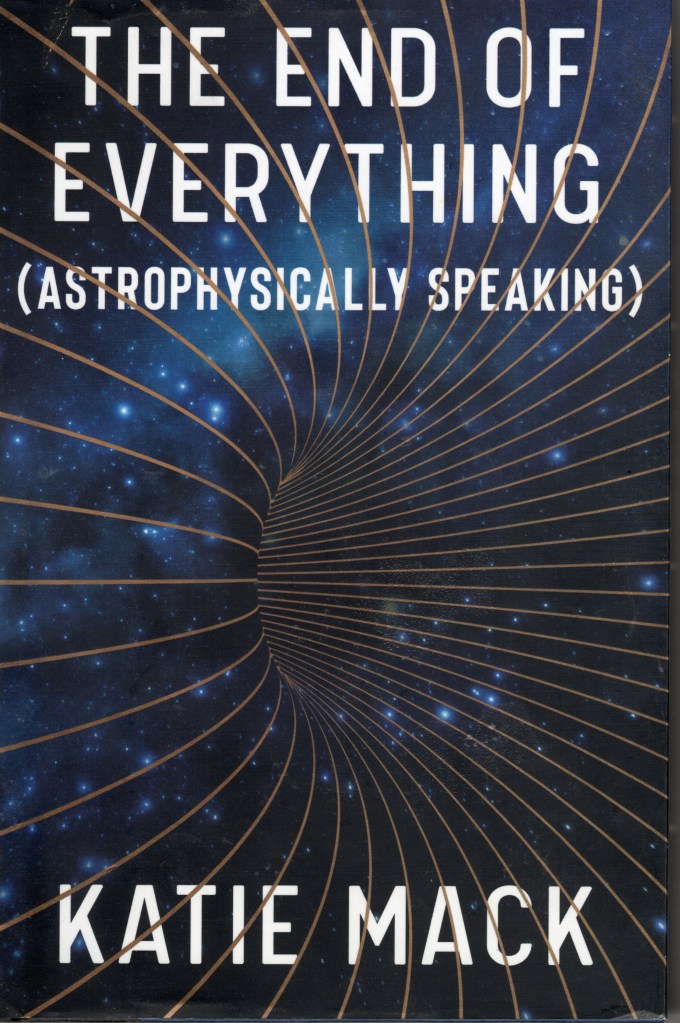
The End of Everything By Katie Mack

What will the end of everything be like? How will everything end? Will it be the Big Crunch as the Universe collapses back to a reverse Big Bang? Will it be the heat death, or what is better called the high-entropy death? Will it be the Big Rip as the Universe is ripped apart, or vacuum decay? Maybe it will be the Quantum Bubble of Death? Wouldn’t the Quantum Bubble of Death be a cool way to die?

The goal of this blog is to create a list of what I call super facts. Important facts that we know to be true and yet they are surprising, shocking or disputed among non-experts. Super facts are important facts that people get wrong. However, I sometimes create posts that are not super facts but other interesting information, such as this book review and book recommendation.

The End of Everything: (Astrophysically Speaking) by Katie Mack is a relatively easy book on cosmology. It features scientifically guided speculation on how the Universe will end. As in the previous book I reviewed the cosmic microwave background radiation (CMBR) is a major source for the information. It is amazing what it can tell you. I bought the hardback version of it. I can add that this book and my Amazon review was written in 2020, a good year for talking about the end of the world.

  • Hardcover –  Publisher : Scribner; Illustrated edition (August 4, 2020), ISBN-10 : 198210354X, ISBN-13 : 978-1982103545, 240 pages, item weight : 2.31 pounds, dimensions : ‎5.5 x 1 x 8.38 inches, it costs $19.14 on US Amazon. Click here to order it from Amazon.com.
  • Paperback –  Publisher : Scribner (May 4, 2021), ISBN-10 : 1982103558, ISBN-13 : 978-1982103552, 256 pages, item weight : 2.31 pounds, dimensions : ‎ ‏ : ‎5.5 x 0.6 x 8.38 inches, it costs $10.99 on Amazon. Click here to order it from Amazon.com.
  • Kindle –  Published : August 04, 2020, ASIN : B07Z41TTNK, 237 pages, it costs $14.89 on US Amazon. Click here to order it from Amazon.com.
  • Audiobook –  Publisher : Scribner (August 4, 2020), ASIN : B07Z8B5NZ8, it costs $13.12 on US Amazon. Click here to order it from Amazon.com.
Front cover of The End of Everything By Katie Mack | The End of Everything
Front cover of The End of Everything? Click on the image to go to the Amazon page for the hardcover version of the book.

Amazon’s description of The End of Everything By Katie Mack

A NEW YORK TIMES NOTABLE BOOK OF 2020

NAMED A BEST BOOK OF THE YEAR BY * THE WASHINGTON POST * THE ECONOMIST * NEW SCIENTIST * PUBLISHERS WEEKLY * THE GUARDIAN

From one of the most dynamic rising stars in astrophysics, an “engrossing, elegant” (The New York Times) look at five ways the universe could end, and the mind-blowing lessons each scenario reveals about the most important concepts in cosmology.

We know the universe had a beginning. With the Big Bang, it expanded from a state of unimaginable density to an all-encompassing cosmic fireball to a simmering fluid of matter and energy, laying down the seeds for everything from black holes to one rocky planet orbiting a star near the edge of a spiral galaxy that happened to develop life as we know it. But what happens to the universe at the end of the story? And what does it mean for us now?

Dr. Katie Mack has been contemplating these questions since she was a young student, when her astronomy professor informed her the universe could end at any moment, in an instant. This revelation set her on the path toward theoretical astrophysics.

Now, with lively wit and humor, she takes us on a mind-bending tour through five of the cosmos’s possible finales: the Big Crunch, Heat Death, the Big Rip, Vacuum Decay (the one that could happen at any moment!), and the Bounce. Guiding us through cutting-edge science and major concepts in quantum mechanics, cosmology, string theory, and much more, The End of Everything is a wildly fun, surprisingly upbeat ride to the farthest reaches of all that we know.

This is my five-star review for The End of Everything

The End of the Universe can be a lot of fun

Katie Mack’s timely (it’s 2020 after all) survey of the various ways the Universe might end, based on current physics, was a delightful read. It is an interesting and fun book. We learn about the Big Crunch (the Universe shrinking back), the Heat Death, or rather the high-entropy death, the Big Rip, Vacuum decay, or the “quantum bubble of death” if you want to call it that, and the “bounce”. 

To understand where the various ideas regarding the end of the Universe come from, you need to understand some of the physics and the cosmology. We learn something about CMB, or the Cosmic Microwave Background, Big Bang, cosmic inflation, Planck Time, GUTs, Nucleosynthesis, the standard model, de Sitter Space, black holes, electroweak symmetry breaking, the Higgs Boson and the Higgs field, multiverses, and much more.

Perhaps most importantly, we learn about dark matter and dark energy, which are important concepts that have greatly changed cosmology over the last few years. Chapter 2 on the Big Bang reminded me a lot about an old book by Stephen Weinberg, the first 3 minutes. However, Katie Mack puts a modern spin on it and goes much further beyond our Universe. I was intrigued to hear that it might be possible to communicate between different Universes in a multiverse using gravity, or gravity waves.

The book is written for laymen, and I found it to be between Neil De Grasse Tyson / Carl Sagan and Stephen Hawking in difficulty level. The book covers a lot of concepts and theories but does so concisely, simply and not in a mathematical way. Not so simply though that it is misleading.

I am an Engineer with an undergrad degree in physics so I may not be the best person to judge whether this is an easy read for laymen, but I believe it is. I am very interested in these kinds of topics, and I read all popularized books on cosmology, modern physics, the standard model, that I can find. This was one of the most fun books that I’ve ever read.

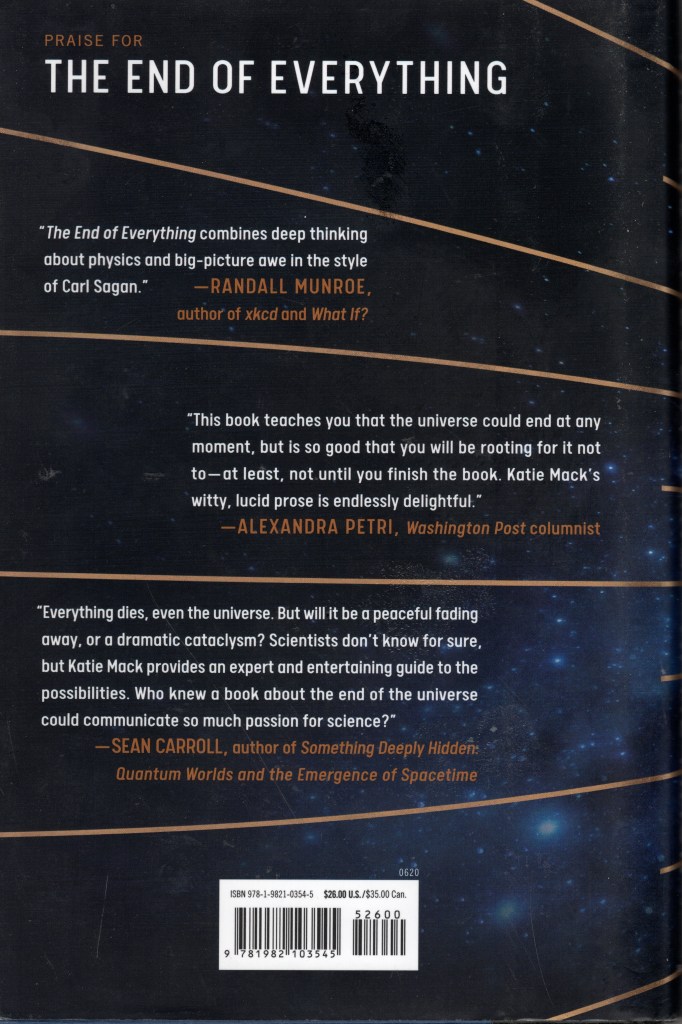
The back cover of The End of Everything by Katie Mack
Back cover of The End of Everything? Click on the image to go to the Amazon page for the hardcover version of the book.

Would you like to travel in time into the future to see the end of the Universe?


To see the Super Facts click here


Do You Ever See Wild Animals

Yes, I see wild animals every day despite living in a large city (Dallas). I see squirrels, rabbits, coyote, bats, birds of all kinds, crows, owls, hawks, pelicans, blue jays, mockingbirds, rats and mice, and I see snakes every now and then. Not too long ago we had a rat snake in the sink. I live in Texas and here we have 116 snake species.

Daily writing prompt
Do you ever see wild animals?

I guess insects are animals too, and we have cicadas and crickets, wolf spiders, spider wasps of various kinds, including mud daubers and tarantula hawks, and sometimes I see them inside the house. We also have a lot of coyotes in the neighborhood. A few years ago, a coyote ran up to me as I was walking my two small dogs, a pug named Daisy and a Japanese Chin named Ryu. I was worried about my dogs, so I stared him down, and he ran off.

A coyote walking in the grass | Do You Ever See Wild Animals
Wild Coyote – (Canis latrans) Stock Photo ID: 1629174541 by Tory Kallman

Every now and then we leave the city and there’s plenty of wild animals in the countryside. Two days ago, we visited a dark spot in Oklahoma. A dark spot is an exceptionally dark place intended for sky watching. I saw a skunk in the middle of the night. But we’ve seen foxes, coyotes, deer, antelope, wild turkeys, turkey vultures, wild pigs, bobcats, eagles, fish of all kinds, and many other types of animals. In the past we’ve also gone fishing and hunting and we’ve seen many wild animals that way.

We’ve also visited national parks, for example, Yellow Stone and Grand Teton where we’ve seen grizzly bears, black bears, cinnamon bears, wolves, bison, elk, moose, prong horn, big horn sheep, marmots, whizzle pigs, and much more. I can add that sometimes we also visit other countries where we’ve seen more exotic wild animals, kangaroos, crocodiles, sharks, koalas, lynx, dolphins, etc.

A Bison is standing in a handicap spot | Do You Ever See Wild Animals
Bison in Yellowstone National Park
Elk in in Yellowstone National Park, photo by me
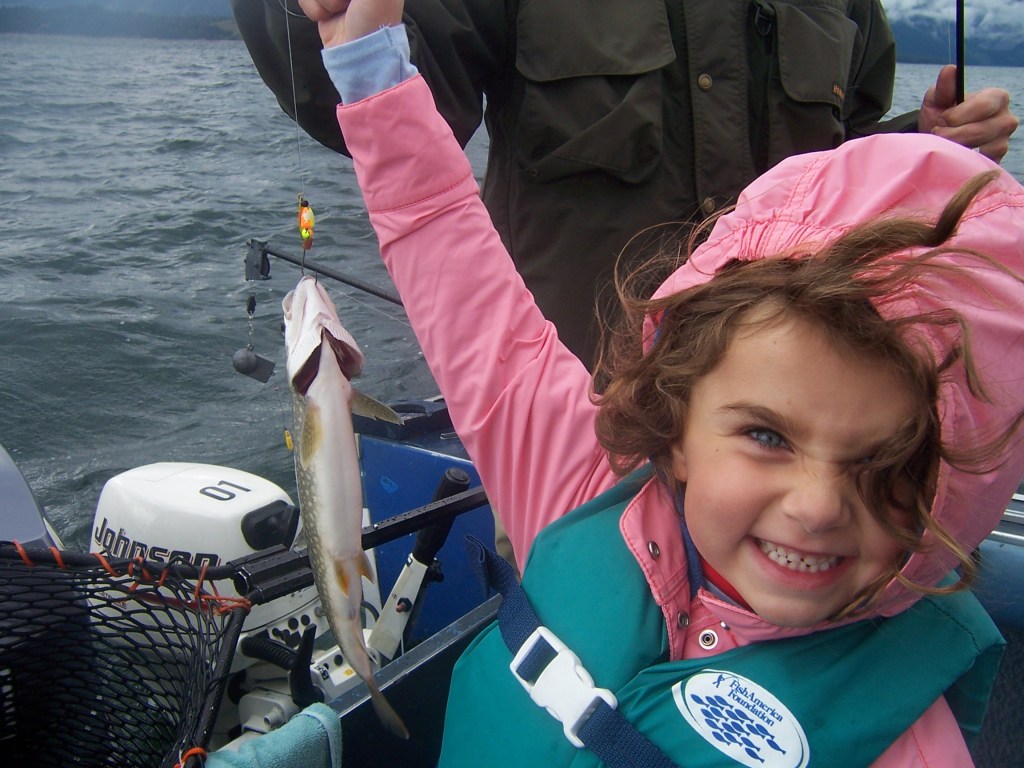
My daughter is wearing a pink rain jacket. She is holding a rainbow trout.
My daughter caught a rainbow trout in Jackson Lake in Grand Teton National Park, photo by me.
A big grizzly bear is coming out of the forest | Do You Ever See Wild Animals
Grizzly bear in Grand Teton National Park, photo by Gabriel Goncalves, a fellow traveler.
One grizzly bear cub is looking through a window of a blue car, the other is on the ground.
Grizzly bear cubs in Grand Teton National Park, photo by Gabriel Goncalves, a fellow traveler.
A whistle pig is sticking his head out of a hole in a wood floor.
A whistle pig in Yellowstone National Park. Photo by me.
A marmot is standing on its back legs looking into the camera | Do You Ever See Wild Animals
A marmot in Yellowstone National Park. Photo by me.
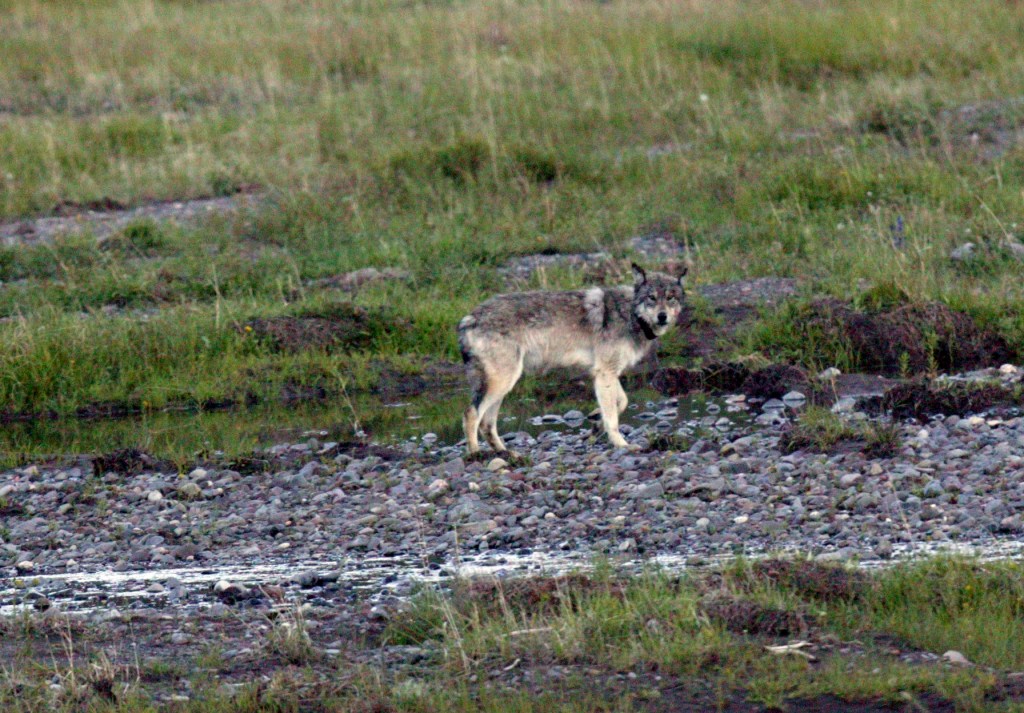
A grey wolf is standing sideways but looking into the camera.
A grey wolf in Yellowstone National Park.
A dark male moose with huge antlers.
A moose in Yellowstone National Park.
Tarantula and a Tarantula Wasp | Do You Ever See Wild Animals
A tarantula hawk (wasp) is stinging a tarantula and then dragging it. This was in Oklahoma. Photo by either me or my friend Mark Segal.

To see the Super Facts click here