
With this blog I just wanted highlight Jacqui Murray’s reblog of my Science for Babies Post. I would like for you to head over to Ask A Tech Teacher and check out her post. Also thank you very much Jacqui for your kind repost.
Category: General
Does not match an existing category
Destroying Ourselves with High Conflict
I haven’t posted or read blog posts for almost a week because I was busy with something else. I am a member of a non-partisan volunteer organization called the Citizens Climate Lobby which seeks to create political will for a livable future. As the name suggests we do a lot of lobbying. It is not the kind of paid lobbying that is done by professionals and that is often associated with money. We are average constituents, average voters, with no money, who are visiting our legislators to give them information and opinions on legislation we support or don’t support.
Since we are non-partisan, we visit both Democrats and Republican offices. We just had a CCL conference in Washington DC on Sunday, Monday and Tuesday. We were 800+ volunteers who visited 400+ Congressional offices in Washington DC on Tuesday July 22nd.
I visited four Texas Congressmen, including Senator Ted Cruz (R), Congresswoman Beth Van Duyne (R), and Congressman Marc Veasey (D). We also had a zoom call with Congressman John Carter’s (R) office. I am the CCL liaison for Senator Cruz’ office and I was the one who organized our visit, from our side, with Senator Cruz and a couple of his staff. Ted Cruz does not always agree with us, or perhaps more correctly, he seldom agrees with us, but we had a friendly and interesting meeting, and he and his staff were very appreciative of us being there.

Ted Cruz is standing in the back between the flags. I am in the front row, second from the right wearing a blue suit. We are twelve people.
Right after our meeting with Senator Cruz I posted the following on Facebook “I am in Washington DC meeting with congressmen. We had an in person meeting with Ted Cruz and we took pictures with him.” along with a photo of the capitol building (not the group photo). Most people left interesting or nice comments but then a far-left Facebook friend of mine left a very hostile comment. He started out saying “so you are finally revealing your true colors Thomas…” and that was followed by an angry outburst in two separate comments filled with F-bombs and how he was ending his friendship with me. I deleted his comments and blocked him. Basically, a centrist on-line friend visiting with a Republican politician for a friendly exchange of opinions enraged him. Naturally I have seen a lot of this on both sides.
Division has become so severe in this country that we are losing our ability to talk to each other. Families are divided against each other, and the rhetoric is overheated. This is dangerous and it is what Amanda Ripley, the keynote speaker at our CCL conference in Washington DC calls High Conflict. High Conflict is a natural psychological phenomenon that sucks us deep into conflict that eventually gets out of hand. She compares it to the La Brea Tar Pits in Los Angeles. We form kinships and tribes, echo chambers, and dislikes for those with different opinions, we belittle and insult each other, which grows resentment, and we create an us-versus them scenario, which evolves into a good (us) versus evil (them).
Amanda Ripley is the author of the book High Conflict: Why We Get Trapped and How We Get Out. I think her message and her book are very important, and I have a lot of good things to say about the book. However, the book featured one false and defamatory statement and generalization about environmentalists, which prevents me from giving the book five stars. That claim pretty much ruined it for me , so I am giving the book three stars. I still recommend the book, and perhaps whether I like this book or not is not as important as the topic.
High Conflict the Book Formats
High Conflict: Why We Get Trapped and How We Get Out by Amanda Ripley. I bought the hardback format.
- Hardcover – Publisher : Simon & Schuster (April 6, 2021), ISBN-10 : 1982128569, ISBN-13 : 978-1982128562, 368 pages, item weight : 1.26 pounds, dimensions : 6 x 1.2 x 9 inches, it costs $24.98 on US Amazon. Click here to order it from Amazon.com.
- Paperback – Publisher : Simon & Schuster (April 5, 2022), ISBN-10 : 1982128577, ISBN-13 : 978-1982128579, 368 pages, item weight : 2.31 pounds, dimensions : 5.5 x 0.92 x 8.38 inches, it costs $13.95 on US Amazon. Click here to order it from Amazon.com.
- Kindle – Publisher : Simon & Schuster (April 6, 2021), ASIN : B08LDW7M7J, ISBN-13 : 978-1982128586, 363 pages, it costs $ 15.99 on US Amazon. Click here to order it from Amazon.com.
- Audio– Publisher : Simon & Schuster Audio (April 6, 2021), Listening Length : 9 hours and 50 minutes, ASIN : B0DCCWRMJS, it costs $0.00 with membership on US Amazon. Click here to order it from Amazon.com.

Amazon’s Description of High Conflict
When we are baffled by the insanity of the “other side”—in our politics, at work, or at home—it’s because we aren’t seeing how the conflict itself has taken over.
That’s what “high conflict” does. It’s the invisible hand of our time. And it’s different from the useful friction of healthy conflict. That’s good conflict, and it’s a necessary force that pushes us to be better people.
High conflict is what happens when discord distills into a good-versus-evil kind of feud, the kind with an us and a them. In this state, the brain behaves differently. We feel increasingly certain of our own superiority, and everything we do to try to end the conflict, usually makes it worse. Eventually, we can start to mimic the behavior of our adversaries, harming what we hold most dear.
In this “compulsively readable” (Evan Osnos, National Book Award-winning author) book, New York Times bestselling author and award-winning journalist Amanda Ripley investigates how good people get captured by high conflict—and how they break free.
Our journey begins in California, where a world-renowned conflict expert struggles to extract himself from a political feud. Then we meet a Chicago gang leader who dedicates his life to a vendetta—only to realize, years later, that the story he’d told himself about the conflict was not quite true. Next, we travel to Colombia, to find out whether thousands of people can be nudged out of high conflict at scale. Finally, we return to America to see what happens when a group of liberal Manhattan Jews and conservative Michigan corrections officers choose to stay in each other’s homes in order to understand one another better, even as they continue to disagree.
All these people, in dramatically different situations, were drawn into high conflict by similar forces, including conflict entrepreneurs, humiliation, and false binaries. But ultimately, all of them found ways to transform high conflict into good conflict, the kind that made them better people. They rehumanized and recategorized their opponents, and they revived curiosity and wonder, even as they continued to fight for what they knew was right.
People do escape high conflict. Individuals—even entire communities—can short-circuit the feedback loops of outrage and blame, if they want to. This is an “insightful and enthralling” (The New York Times Book Review) book—and a mind-opening new way to think about conflict that will transform how we move through the world.
My three-star review of High Conflict
Interesting discussion on conflict but with a lot of interpretation and opinion
“Good conflict” is healthy conflict in which questions get asked, in which there is curiosity and movement in opinions. “High conflict” on the other hand is what happens when conflict devolves into a good versus evil kind of feud. The conflict takes on its own life and draws us in like a tar pit.
The book gives many examples of high conflict and explains how they came to be; the Hatfield’s and the McCoy, John Adams and Thomas Jefferson, our current political division, couples getting divorced, gang warfare, guerilla warfare, civil war, etc. The book focuses much attention on Gary, a friendly lawyer who rather solves conflict than benefit from it, as is typically a lawyer’s job. Gary runs for a local office and wins but because he is thinking a little bit too highly about himself and his abilities, he by mistake excludes some really knowledgeable, willing and helpful people from what he refers to as “the old guard”, which leads to a high conflict that he himself created. However, in the end he becomes part of the solution. It is a good story.
The author makes a lot of interesting observations such as; we have group belongings, we form factions, we need belonging, giving people two choices is dangerous, a proportional representation system might be better than the current American system, people have biases that inflame conflict such as confirmation bias, and there’s a conflict industrial complex. There are fire starters, group identities, conflict entrepreneurs, and humiliation. Media and social networking can function as conflict entrepreneurs. The areas in Rwanda where the radio reception was better there were more killings.
To escape high conflict, we need to recognize the conflict entrepreneurs around us, avoid excluding and humiliating people, and recognize that people want to be heard. Getting out of high conflict includes recognizing a saturation point where people had enough, building new broader identities, reframing the situation, and clearing the path for combatants. Welcome former combatants home rather than shaming them. Avoiding conflict involves complicating the narrative from the beginning. Simplifications do damage. I felt all that was pretty good advice.
Then on page 183 a strange claim is made, implying that very few people concerned about climate change would want a “carbon fairy” to solve climate change (that carbon fairy could be nuclear power) because they want to use “climate change” as vehicle for something else. I am volunteering in a climate change organization, and I have never met anyone who isn’t part of it primarily to solve carbon emissions. Half are pro nuclear power the other half skeptical about it being a “climate fairy” (I am pro nuclear). Some are pro-capitalists, others more left leaning, a substantial minority are Republicans, and world views are all over the spectrum. So obviously page 183 makes a false claim probably for sensationalistic reasons.
That’s just one dubious claim, but it alerted me to read the book more critically and I realized that the author is far from objective. She definitely wants to promote her ideas and make her book look more interesting. She is doing that by carefully selecting examples and stories, interpreting those cherry-picked situations, and there’s a lot of opinions, and who knows what she may get wrong or misreporting? It seems at first to be an authoritative work, but it is not a scientific book. That doesn’t mean that it’s wrong. I believe a lot of what the book claims to be true, but I do not know. It is a journalist’s opinion and interpretation of conflict, and it is therefore less than I expected.
To see the Super Facts click here
Choosing Super Facts
This is my 100th post on my Superfactful blog. There are 50 super-fact posts. The other posts are posts about the blog, like this one, or posts featuring interesting information that I think is important, or book reviews of non-fiction books, travel posts with some information, posts about me, or mysteries.
However, the goal of this blog is to create a long list of facts that are important, not trivia, and that are known to be true and yet are either disputed by large segments of the public or highly surprising or misunderstood by many, perhaps shocking. Learning or accepting such a fact will change how you view the world. This makes these facts deserving of special attention, which is why I refer to them as super facts. You can also consider the super facts as a form of myth busting, major myth busting.
As mentioned, at the time of writing this I have come up with 50 super facts and made 50 posts about those super facts, but I am hoping to come up with hundreds. I am open to suggestions for super facts as well as critique of super facts. Tell me if you think it is trivia, not important, not surprising, or not an established fact. To see the first 50 super facts click here.

Deciding on What is an Important Fact
Deciding what is an important fact or not is subjective, but for the same reason it also makes it an easy thing to decide. Ultimately, I decide what is important. It is difficult to compare the importance of facts, but my main concern is to avoid trivia. I also try to avoid facts that may be important to me but do not concern others very much.
For example, I am looking for facts that people discuss a lot, or are often mentioned in the mainstream media, or facts that people dispute fiercely despite a scientific consensus and overwhelming evidence telling us what is true. I am looking for facts from science that could change people’s perspective on nature, our world, or the universe, or facts that could change people’s view of the world, that are related to important historical events, such as the deaths of millions of people, etc.
Shocking Facts
Deciding whether a fact is highly surprising, misunderstood by many, shocking, or contentious and disputed is also not an exact science. In some cases, there are polls stating how common a certain belief is amongst the public but in most cases (that I consider) I have no polls to fall back on. I just have to use my judgment. In some cases, almost everyone I’ve spoken to about the subject is misinformed, bamboozled, or they misunderstand it. In other cases, I need to decide based on my impression. I have to guess.

Finding the Truth
As I mentioned, deciding on what is important or highly surprising is not an exact science. I think that is OK. There’s going to be super facts that are impressive and some that are less so. However, the third criteria is the one thing that I need to get right, and that is whether the fact is true or not.
We humans are not very rational, and we often believe with intense conviction things which are false. I think that is true for all of us. We don’t know what those false beliefs are, otherwise, we wouldn’t have them. However, this is where the super facts can come in handy, as tools for personal growth if we are willing to change our minds in the face of new evidence. This is easier said than done since we are emotional beings embedded in our culture, our tribal attachments and favorite myths. We have biases, we jump to conclusions, we overestimate our understanding of subjects we don’t know much about (see the Dunning Kruger effect), and we tend to believe what we want to believe. That goes for me too.
Adding to the difficulty on deciding what is true is the fact that the internet and especially social media is full of misinformation. There are an enormous amount of YouTube videos, podcasts, and websites touting false claims, conspiracy theories, and pseudo-science. There are political think tanks deceiving the public and industry funded organizations spending billions of dollars on misinformation, as well as people claiming to have special insights and superior knowledge.
I see the most ridiculous claims on Facebook and Instagram on a daily basis and the amazing thing is that people fall for it. If it supports their pre-existing beliefs or opinions, they see it as proof or conclusive evidence and they don’t take the time to question the source. When I see this, I often point out that the source is not reliable, or it may even be a satirical site, and I often add something from Snopes to my comment assuming they’ve investigated it.
Sure, when I do this, I am raining on someone’s parade, and it is quite often not welcome. No matter how politely I try to explain the situation I end up getting insulted or blocked. I should say, I’ve also fallen for fake information myself, but I try to accept it when someone points it out to me using reliable sources. The point is, we humans are really bad at deciding what is true, and we underestimate how bad at it we are, and deciding what is true is often a quite challenging task.
Before I publish a super fact, I need to be fairly certain that it is true. Outside of mathematics and logic you cannot be 100% sure about anything, but some facts we can say with very high certainty are true. For example, the earth is not flat like a pancake, the Sun is bigger than the earth, the capital of the United States is Washington DC, the heart pumps the blood, we breathe oxygen, carbon dioxide is a greenhouse gas, the light speed in vacuum is a universal constant, time dilation is real, Cesium-137 is radioactive, etc. Most likely you only know a very tiny fraction of a percentage of the facts that we know to be true with very high certainty. Some of those facts will surprise you, shock you, or are facts you would like to dispute, and I call them super facts.
Determining What Facts Are True
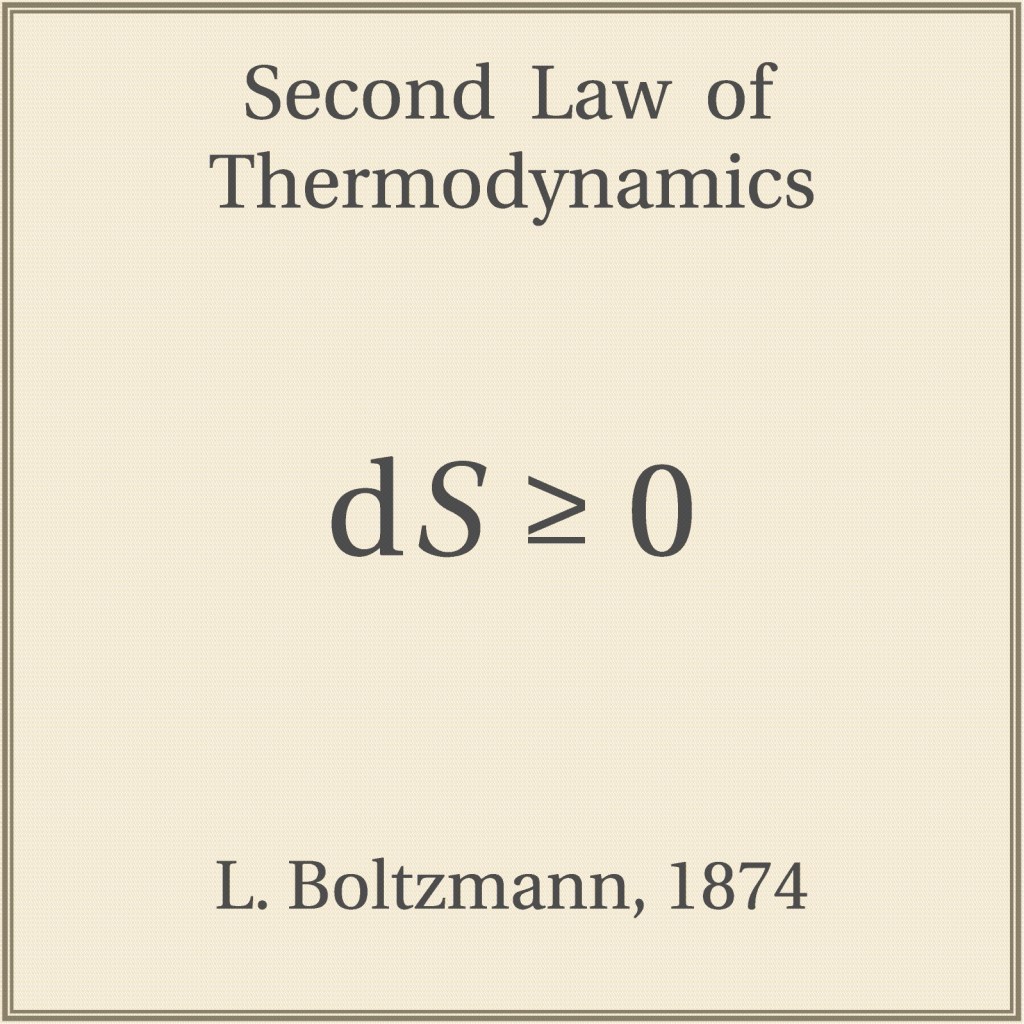
When I determine whether something is true with a high degree of certainty I start with my own expertise. For example, when someone claims that the second law of thermodynamics (entropy) contradict evolution I know that to be false because I have a degree in physics (master’s degree) and I’ve taken several classes in thermodynamics and statistical mechanics. In addition, I am very familiar with the faulty argumentation behind the claim because I’ve read dozens of creationist books. Yes, I was once bamboozled by creationism myself. Then I learned more about science, evolutionary biology, physics and thermodynamics.
However, my personal expertise is not enough. I also find out about scientific consensus or expert consensus and evidence from reliable sources. I should say that using scientific consensus as a reliable indicator that something is true does not fall under the “appeal to authority fallacy”. The “appeal to authority fallacy” refers to appealing to influential people or organizations who may not necessarily be experts, and regardless of the evidence. In science you don’t really have authorities, you have experts who often disagree with each other. In the event almost all experts agree on a certain fact that has been thoroughly vetted you can trust that fact with nearly 100% certainty, and that is not appeal to authority but a probability argument.
I typically select several reliable sources such as research papers published in respectable journals, national academies, government websites such as NASA, NOAA, EPA, FBI, respected research organizations such Our World in Data, Pew Research Center, and academic publications and books. I make sure that they various sites I find don’t contradict each other regarding my prospective super fact. If they all seem to agree I accept the super fact and include a few of the links in my post.
If I don’t have much personal expertise on a subject I start out by asking Google AI. I don’t ask ChatGPT because I believe it is less reliable with respect to information. Then I check Wikipedia and or another online encyclopedia such as encyclopedia Britannica. This is not to establish the truth but to get an idea. Wikipedia is not an academically acceptable source, but it is rarely wrong and serves as a good first filter to save time. Then I start focusing on the reliable sources above and I will make sure I understand the evidence.
So, in summary I will use my expertise, scientific consensus, reliable sources and better, agreement between reliable sources, to determine if I can say with confidence that something is true. I will also frequently include links from Wikipedia in my posts because Wikipedia typically feature good summaries that are easy to understand. Naturally, anyone is free to dispute any of my super facts. Just make sure you provide good evidence from an arguably reliable source, or I cannot take it seriously.

Sources I will not consider are claims from unreliable sources, political think tanks, talk show hosts, politicians, articles written by contrarians heavily funded by industry or political organizations, and random Reels or YouTube videos, and I will not entertain conspiracy theories for my purposes. Also, I will ignore, articles with click bait titles, sources making claims about a great swindle by the scientific community, articles claiming everyone is lying to you, articles purporting to reveal the hidden truth, articles insisting on presenting the truth that “they”/the-others won’t tell you, etc. Cults will tell you that everyone else is lying to you. I’ve learned not to fall for it at this point.
My Super Fact List
Finally, here are a few examples of my super facts.
- Poverty and child mortality has been sharply reduced worldwide.
- We are Star Dust.
- Smallpox Killed 300 million People in the Last Century Before Eradication.
- Global Warming is Happening and is Caused by us.
- That Earth is round was well known long before Columbus.
- Emissions of ozone-depleting gases have fallen by 99 Percent.
To see all the Super Facts click here
The Universal State of Obliviousness
At ABB Robotics in Auburn Hills, a suburb of Detroit, Michigan, where I used to work as an engineer, there was a steel door without a window that opened out into a hallway. Whomever designed this must have been clueless. When someone opened the door into the hallway, he would not know anything about what was on the other side of the door.
One day I saw a couple of guys standing and talking in the hallway in front of the door. Suddenly a fellow engineer opened the door, and it slammed into one of the guys, who screamed “hey watch it!”.
The thought that occurred to me was “no you watch it! Standing in front of that door is pretty clueless. How is the guy opening the door going to know that you are there?”. I did not say anything.
The fact of the matter was that the designer, the door opener, the guys hanging out in front of the door, all of them were oblivious. In my opinion the guy standing in front of the door and then when something happened instantly blaming the other guy was the most clueless.

Obliviousness
Obliviousness is a state of being unaware or unmindful of something or being ignorant of its existence. Some synonyms are clueless, ignorant, and unmindful. The goal of this blog is to create a list of what I call super facts. Important facts that we know to be true and yet they are often surprising, shocking or disputed among non-experts.
However, I will write about other related things as well, and today I am musing about obliviousness and cluelessness, something that afflicts us all more or less. Without obliviousness and cluelessness this super-fact blog could not exist.
I got the idea for this post by reading a comment on another blog post where the author mentioned that “…a woman on her phone in the supermarket walked into my trolley this morning…”. The woman with the phone was oblivious to her surroundings because of her fixation on her phone, a very common situation. I think most of us are guilty of this on occasion, but it is very annoying when the person who was staring at the phone is blaming the other party.
The same is true for people who walk backwards in crowded places and then blame the people they bump into. There are different levels of obliviousness.

Obliviousness And Social Media
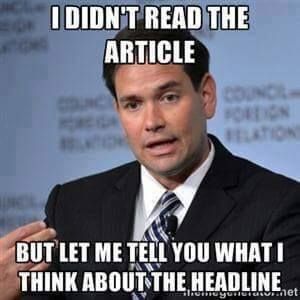
There are a lot of ways to be excessively oblivious. One of the most common and annoying examples on social media is in my opinion when people comment on articles they have not read.
I remember an experiment on Facebook where an organization posted an article with an intentionally misleading headline. The article was about something completely different, and the article even stated that the headline was misleading, and the article explained the experiment. If you read just a small part of the article you would know. The result was that most people commented on the headline, not the article. They did not read any of the article and fell into the trap.
Obliviousness pops up in all kinds of circumstances. On Facebook I am the administrator or moderator in half a dozen beer groups. In these groups people discuss and review beers.
One of the want-to-be influencers are posting in lots of groups without ever engaging with or reading other posts, with the result that he has completely missed that one of the beer groups is very international and was started by Italians. He unsuccessfully keeps trying to engage other members several times a day by posting questions such as “Don’t you love this unusually warm evening?”, “What beer are you drinking while watching the game tonight?”.
Basically, he thinks this international beer group is his hometown, not Belgium, China, Brazil, Germany, Italy or Australia. As a result, no one knows what he is talking about. After one year with hardly any likes or comments he still has not figured this out because he never looks at anyone else’s posts.

Oblivious Bilinguals
Another common example of extreme obliviousness happens when monolingual people judge bilingual people on their language abilities. I’ve written about that here.
People may speak and understand a second language perfectly and still have a strong accent in that language assuming they did not learn the second language in childhood. Unless you take speech therapy an accent is very difficult to lose in adulthood, something bilingual people know but many monolingual people do not know. You certainly cannot know everything, but when someone negatively judges people for having an accent their level of obliviousness is more extreme.

Oblivious To Facts
Perhaps the most comical example of an extreme level of obliviousness is when people who know very little about a subject lecture the experts in the field and even mock the experts.
I recently read about such an example. A man was writing to a theoretical physicist, an expert on the second law of thermodynamics, telling him that the second law of thermodynamics contradicted evolution and that the physicist was an idiot for not knowing this. The man had fallen in the trap of believing a common but basic misunderstanding of the second law of thermodynamics.
Not understanding the second law of thermodynamics is one thing, assuming that your brief encounter with it makes you a superior expert on the topic compared to an expert with a PhD in physics is a much higher degree of obliviousness. I should say I see this type of situation quite often on social media.

We can’t know or understand everything, and we are all more or less unaware of other cultures, places, the feelings and thoughts of others, we all get distracted sometimes, and we know a very tiny infinitesimal portion of existing knowledge, we are all oblivious. However, we can make it much worse by not trying.
What are your favorite examples of obliviousness ?
To see the Super Facts click here
Examples of the Dunning Kruger Effect
The goal of this blog is to create a list of what I call super facts, but this is not a super-fact post. I sometimes create posts that are not super fact posts but related to this goal as well as other factual posts, and this is one of those. This post is about the Dunning–Kruger effect. The Dunning–Kruger effect is a cognitive bias in which people with limited competence in a particular domain overestimate their abilities. Those who are incompetent in a given area tend to be ignorant of their incompetence. What is so interesting about this effect is how widespread it is and how extreme it can get.
Some extreme examples include people without much knowledge in a given field lecturing the experts in the field, people without experience or much knowledge in an area telling the professionals in the field how to do their job. It includes people insisting on absurd claims despite not understanding the topic. It includes people dismissing scientific consensus on a topic without having much knowledge about that topic. It includes managers lacking engineering experience refusing to listen to the engineers, etc.
We are all occasional victims of the Dunning–Kruger effect. The problem comes when the one with the lower ability is stubborn and unreasonable and does not attempt to understand what the better-informed person is saying. Sometimes the situation becomes absurd. Below I am listing a few interesting cases, starting with a time when I was the ignorant one.
Creationism Bamboozled Me
When I was a teenager, I read creationist books that claimed that evolution was a hoax, and that earth was likely 6,000 years old. This is still a very common belief here in the US. These books appeared to me to be very convincing, and I took it upon myself to spread the word and correct the misconceptions. I was good at science and math, but this was before I had studied biology and physics in depth. I was accepted into the “Natur / Natural Science” Highschool program (similar to taking all AP Science classes) and I later studied physics in college.
As a result of what I learned I came to realize that the creationism I had come to embrace was bunk. The young earth claims and the anti-evolution rhetoric was not tenable. I realized this not by reading counter creationist books; I was just learning about the science. Understanding some science made all the difference. I just never knew how much I was missing. It was a lot. To read more about this click here and here. One more thing I learned is that you should avoid science related books written by lawyers and theologians with agendas. It is not their field and they don’t know what they are misunderstanding.

Entropy and Evolution
Related to this is the myth that entropy contradicts evolution. Entropy is the measure of a system’s thermal energy per unit temperature that is unavailable for doing useful work. It is also the measure of the number of possible microscopic arrangements or states of individual atoms and molecules of a system that comply with the macroscopic condition of the system. These two definitions are identical.
The formula is S = K * ln (W), where S is entropy, K is Boltzmann’s constant, and W is the number of microstates whose energy equals to the one of the system. Entropy is said to be the amount of disorder in a system, but in this context “disorder” may not correspond exactly to what people mean by disorder. Anyway, the issue is the second law of thermodynamics, which states that the entropy of an isolated system left to spontaneous evolution cannot decrease with time.
The creationists like to say that evolution decreases disorder in the biosphere and therefore contradicts the second law of thermodynamics.
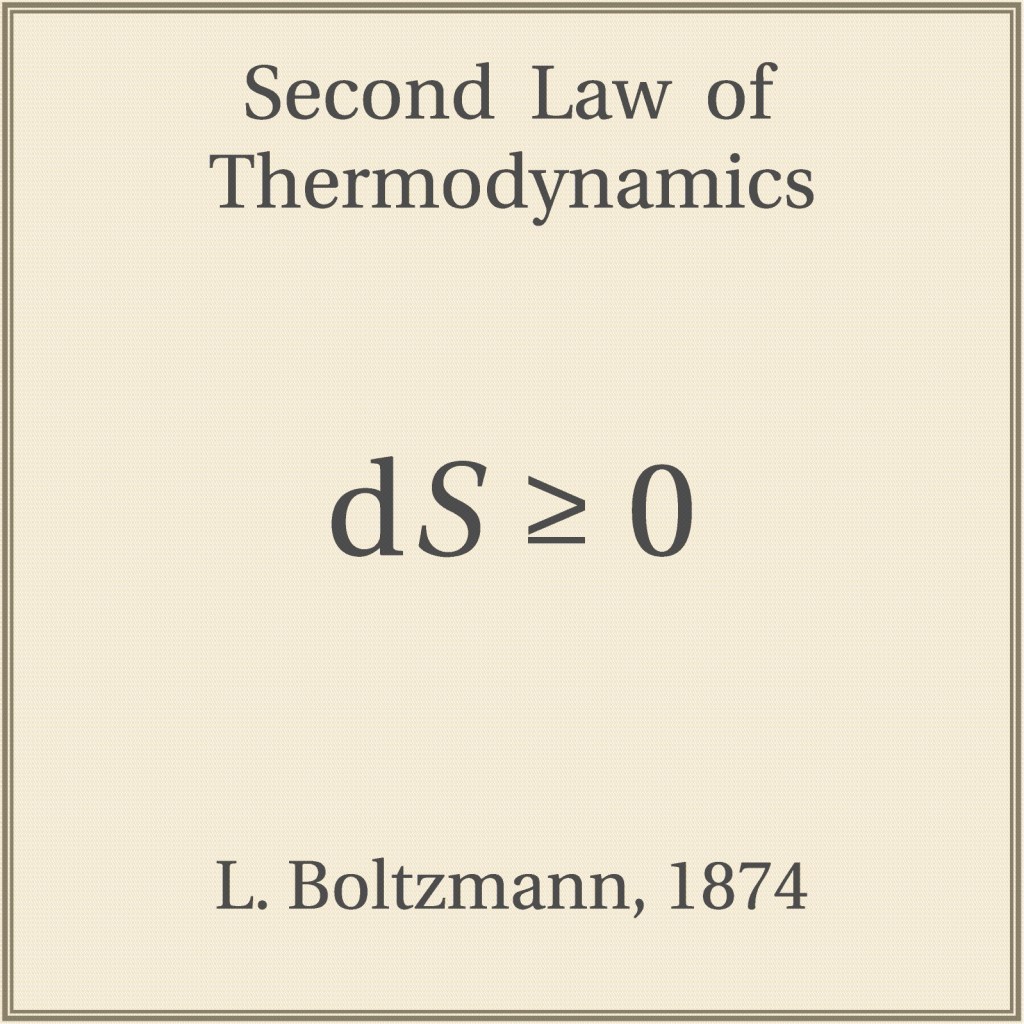
If you take a college level class in thermodynamics you will realize within half an hour that this creationist / anti-evolution claim is false. The most important point being that evolution does not occur within an isolated system.
First of all, the earth, the biosphere, plants and animals receive energy from the outside, the sun for starters. Whether evolution decreases disorder in the biosphere or not, the claim fails instantly on the point that the system is not closed.
Despite decades and even centuries of conclusive debunking many people continue to make the false claim that the second law of thermodynamics and evolution are incompatible. There are people writing to prominent physicists and lecturing them and mocking them for “not knowing” that the second law of thermodynamics and evolution are incompatible. Typically, people who know almost nothing about the subject. They know too little to realize that their arguments are absurd.
The awkward algorithm
One day the engineering manager at my job at Siemens asked me and another guy to do research on how a certain process might improve our system. It was the CEO of the company (he was not an engineer) who was requesting this.
However, it was instantly obvious to me that this process was not compatible with what we were doing. Before, I had opened my mouth, the engineering manager told me “Thomas I know what you are going to say. This process is not applicable to what we are doing, but the CEO just learned about this process, and he is very excited about it. Just pretend to work on it for a few weeks and then write a report about why it did not work out. This is easier than explaining to the CEO why it wouldn’t work.”
Isotopes are real
On one occasion I was arguing on Facebook with an acquaintance regarding whether the current rapid Global Warming trend was natural or not. He said it was natural, and he insisted that he knew a lot about the science. I knew that he did not have a college level science degree, and it was obvious from what he said that he did not understand the science behind climate change.
One of the pieces of evidence I mentioned to him was that isotope studies showed that the carbon dioxide in the atmosphere originated from our burning of fossil fuels. That was when he said that the atoms of a certain element were all identical. There was no such thing as isotopes. He accused me of fabricating the existence of isotopes.

I posted a research article of one isotope study (carbon-12/carbon-13/carbon-14) and an article from Wikipedia on isotopes. Wikipedia isn’t an academically acceptable source, but it featured a good introduction.
He focused on the fact that Wikipedia articles are not always entirely accurate and used it as a reason to dismiss everything I said about isotopes. I was surprised he had never heard of Carbon-14. Isotopes is well known high school science and there are thousands of articles about it on the internet. He just didn’t know anything about this basic fact. He started insulting and mocking me perhaps because he felt I was lecturing him, but how would I have handled this? He knew too little about the subject to realize how much he was missing.
The Current Global Warming is not natural
Nearly all climate scientists say the same thing, Global Warming / Climate Change is real, and it is us. Just because the climate has changed for natural reasons in the past does not mean that is the case now. The same people who told us about the natural variability of climate in the past are the ones telling us it is not natural now. We should listen.
It is not orbital cycles, not the sun, not volcanoes, not bacteria or other lifeforms, and not cosmic radiation, it is us, primarily because of emissions from fossil fuels. The paleoclimatologists and the climate scientists and atmospheric physicists are telling us that it is not natural because of the quite substantial and solid evidence. Yet a very substantial proportion of us insist that it is natural causes without knowing much about the evidence. Why? Because they know too little about the evidence to consider it. The Dunning-Kruger effect again. BTW I will make a more detailed post about this in the future.
Wind Power Myths
Wind power has been on the receiving end of false claims, nonsense, and strange rumors for a while. It is not the only energy source that is a victim of widespread falsehoods, but it is a considerable problem. One false claim is that wind power requires an additional power source to operate (such as a companion diesel engine).
Another false claim is that wind power generates less power than it consumes, and yet another false claim is that wind power causes cancer. These claims are absurd and no one with basic insights in engineering and science would know they are false, yet many people fall for them. The people who fall for these claims think they know more than others, not less. Dunning-Kruger again. I am discussing nonsense and rumors about wind power here.

Well, that is long enough, but I can certainly list many more examples. My own Dunning-Kruger moments as well as those of others.
 Super Facts