The goal of this blog is to create a list of super facts. Important facts that are true with very high certainty and yet surprising, misunderstood, or disputed by many. This blog aims to be challenging, educational, and fun, without it being clickbait. I determine veracity using evidence, data from reputable sources and longstanding scientific consensus. Prepare to be challenged (I am). Intentionally seek the truth not confirmation of your belief.
Category: Geology
Important but surprising facts relating to Geology
A lot of people have died on the silver screen from being trapped in quicksand. In the 1960s, almost 3% of films featured someone sinking in clay, mud or sand. However, this is extremely rare, if it has ever happened, and it is very difficult to find any documented cases of people drowning in quicksand even when they struggle. The reason is that you can never completely become submerged in quicksand because quicksand is much denser than water so you’ll easily float. If you relax you will float and sink no more than up your waist or lower chest. In addition, quicksand pits are rarely more than a few feet deep. Another misconception spread by the silver screen is that quicksand appear in the desert. However, quicksand usually appears near water.
Quicksand is thick and heavy, and it is extremely difficult to get out once you are stuck. The best way to get out of quicksand on your own is to slowly lean back so that the weight of your body is distributed over a wider area and then do back and forth movements as if you are swimming. It will take a long time though, so expect to take it very slowly and gently.
That does not mean that getting stuck in quicksand is not dangerous. There are documented cases where people have gotten stuck in quicksand and there was no one around to help them and they couldn’t get out on their own and eventually died from thirst, exposure, or attacking animals. Another dangerous situation is when the quicksand is located on a beach near the shore. There are cases where a person was stuck in quicksand, and the tide came in resulting in a drowning.
There are situations in which the dangers associated with being submerged in quicksand are real, and that is what is called “grain entrapment” or “grain engulfment”. Several people are killed each year when they become submerged in grain and cannot escape. This happens in grain elevators and silos. So don’t jump into grain silos.
I should say that I do not consider this a super fact because it is not very important information, sort of trivia, and I also don’t think there is enough reliable information out there about this. However, I think it is interesting information that relates to me a little bit (see next section). To remind you, this is what I consider a super fact.
A super fact is:
An important fact that can be simply stated.
It is very surprising, shocking, widely disputed, misunderstood, or mind-blowing.
Yet it is true with a very high degree of certainty.
Woman sinking in quicksand Shutterstock Asset id: 2576940253 by Shutterstock AI
My Quicksand Experience
When I was about 6-7 years old, I had my own experience with quicksand or at least a mudpuddle that acted very much like quicksand. I should say that back then neighbors were friends, and your lawn was everyone’s lawn, and the kids in the neighborhood played with each other. The kids roamed the neighborhood and the forest. We threw stones at imaginary witches, screamed at moose, broke into barns to jump in the hay, ate dirt and cheerfully watched the schoolhouse burn down. There were no cellphones, doomscrolling, political keyboard warriors, online predators or overprotective parents. Kids were happy back then, but life was less safe.
I was with a group of kids, including a couple of kids a bit older than I was. We came upon a funny-looking mudpuddle, about two feet wide, and I decided to step in to check it out. I don’t remember why. Maybe I wanted to impress. Maybe I was curious. It only took a few seconds for me to sink in to right above my knees and then it was impossible to get out. The mud/quicksand held my legs in an iron grip. The fact that I stopped sinking around my knees might have been because my feet had hit solid ground. My friends tried to pull me up but could not get me up.
The older kids told me not to struggle and one of them ran to get my parents. They came running as fast as they could. My dad gripped me around the waist and slowly, bit by bit, he was able to pull me up. The rubber boots I was wearing stayed in the mud/quicksand. They might still be there like a fossil to be found by future inhabitants of our planet. Was it some sort of strange mud, or quicksand? I don’t know, but I remember being afraid. It taught me one lesson. Don’t step in funny looking mud puddles. In fact, maybe you shouldn’t step in mud at all unless you have to.
The scientific evidence overwhelmingly show that Earth is billions of years old. There is no credible scientific evidence for a young Earth.
This is the second post on my super-factful blog. As I mentioned in my first post the goal of this blog is to create a long list of facts that are important and known to be true yet are either disputed by large segments of the public or highly surprising or misunderstood by many. These facts are not trivia, they are accepted as true by the experts in the relevant fields, the evidence that the fact is true is impressive, and they are important to the way we view the world and to what we believe, and yet they are hard pills to swallow for many. They are not scientific theories or complicated insights but facts that can be stated simply.
In lack of a better term, I am referring to these facts as “super facts” and so far, I’ve made a list of more than a hundred. In addition to just stating the fact I will explain why we know that it is true and discuss the evidence, give background information and provide links. However, my posts will not be deep dives into the topics in question. I will try to remember to suggest resources for further study. I am open to suggestions for super facts as well as challenges to super facts I’ve posted, or other things I written that someone may disagree with. In fact, I would find that helpful, as long as we can discuss the issue in good faith and keep it friendly.
I will certainly be open to counter arguments but let’s keep it friendly. Photo by Ketut Subiyanto on Pexels.com
My first super fact, which is this post, is “We Know That the Earth is Billions of Years Old”. To some this may seem trivial whilst others dispute it. The scientific community states that Earth is 4.5 billion years old and that humans evolved over millions of years. This is not in dispute among the scientists / experts in the relevant fields, and yet a lot of non-scientists do not believe this. A 2019 Gallup poll showed that 40% of US adults believe that God created humans in their current form within the last 10,000 years. Therefore, I think this is a good example of a super fact.
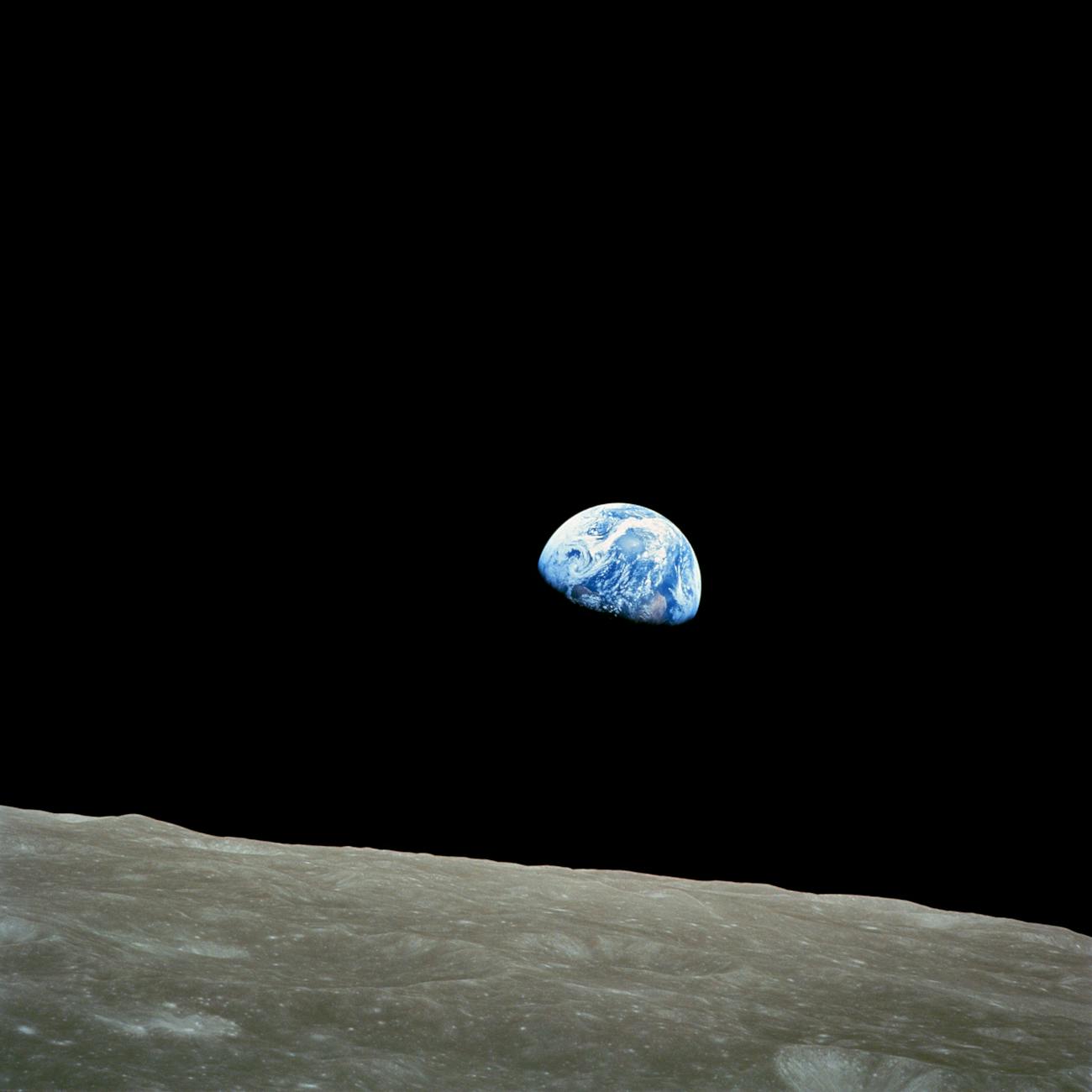
Is Earth 4.5 billion years old or 6,000 years old? Photo by Pixabay on Pexels.com. It was originally taken by Bill Anders and published by NASA.
Older Beliefs
As a teenager I believed that Earth was 6,000 years old. That was before I knew much about science. I had read agenda driven books that left out, or wrongfully dismissed the evidence for an old earth while presenting faulty arguments for a young earth. Just learning about the relevant science was enough for me to realize that I had been bamboozled. At first, I dug my heels in, but I eventually realized that the belief that earth was 6,000 years old was not tenable and unsupportable by science.
If I had known and understood any of what I am posting in this post when I was 14 years old, I don’t think I would have been bamboozled by the young earth creationist books. However, I can add it was not the only time I was bamboozled. I am hoping my blog will lead to some new insights and good reflection including for myself.
Perhaps some new insight. Perhaps some intellectually honest reflection. Photo by Keegan Houser on Pexels.com
“Old Earth” Vs “Young Earth”
Below I am first presenting some evidence for “old earth” and then some arguments, or faulty evidence, for “young earth”.
The various measurements include radiometric dating of rocks and crystals and meteorites found in the earth’s crust as well as moon rocks. There are a number of radiometric dating methods, not just carbon-14.
For example, comparisons of the abundance of carbon-12 and carbon-13 has been used to established that the increase of carbon dioxide in the atmosphere comes from burning fossil fuels, not another source of carbon. Radiometric dating methods use the relative abundance of radioactive isotopes in materials. For example, I-129 (Iodine 129) decays to X-129 (Xenon 129) with a half-life of 16 million years. So, if only a quarter of the original amount of I-129 remains you know that corresponds to 32 million years.
There are a lot of other radioactive isotopes with a wide range of half-lives that can be used for radiometric dating, including uranium-lead dating (U-235, U-238, Pb-206, Pb-207), Samarium–neodymium dating, Potassium–argon dating, Rubidium–strontium dating, Uranium–thorium dating, Chlorine-36 dating, Argon–argon dating, Iodine–xenon dating (I-129 – Xe-129), Lanthanum–barium dating, Lead–lead dating, Hafnium–tungsten dating, Oxygen-Oxygen dating (Isotopes O-16, O-17, O-18), Potassium–calcium dating, Rhenium–osmium dating, Uranium–uranium dating, Krypton–krypton dating, Beryllium dating (Be-10 Be-9), and many others as well the mixing of dating methods.
These dating methods use radioactive decay to establish age, and the various isotopes mentioned have half-lives from a few thousand years to billion years.
There are also dating methods that do not use the relative abundance of radioactive isotopes to establish age. In fission track dating you count the “track” markings left in it by the spontaneous fission of , for example, uranium-238 impurities. In this case you don’t need to know the initial abundance of the radioactive isotope.
In luminescence dating methods you don’t even rely on radioactive isotopes but the effect that background radiation has had on materials. Stratigraphy, or stratigraphic dating, is a relative dating method that uses layers of sediment, rock, debris, and other materials to date events.
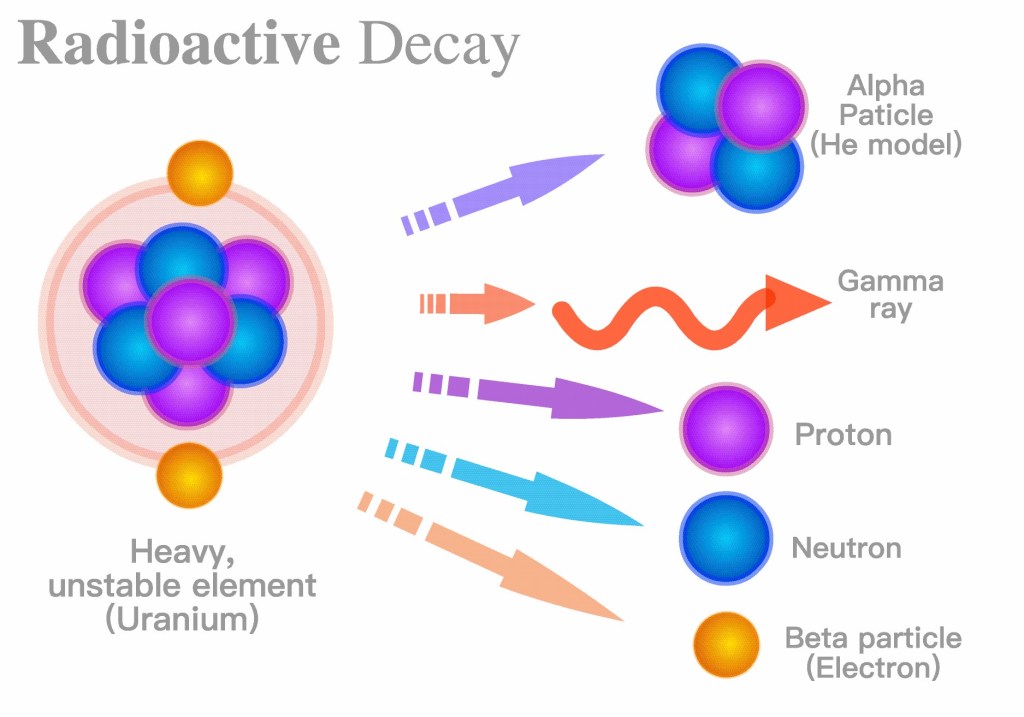
Radiometric dating uses the rate of radioactive decay and knowledge of initial relative abundances to establish age. Earth comes out to be billions of years old, not 6,000. Stock Vector ID: 2417370135 by grayjay
We can see galaxies that are billions of lightyears away.
This does not establish the age of the earth, but young earth creationists typically also believe in a young universe. In addition, an old universe makes a young earth implausible.
The light from a powerful stellar object or a galaxy that is five billion light years away took five billion years to reach us.
We know stars are old because they develop according to certain physical processes.
These physical processes give different stars different lifespans. You can establish the age of a star by determining where it is along its development. An example is our sun. It has fused (burned up) up around five billion years’ worth of hydrogen, so we know it is around five billion years old.
The heavier elements in our solar system originate with older stars that burned out and exploded.
Our solar system, the earth and our bodies contain many kinds of elements heavier than iron. However, elements above iron in the periodic table cannot be formed in the normal nuclear fusion processes in stars. But they can be formed when massive stars die in a supernova explosion or when neutron stars (dead stars) collide. A massive star living, dying, exploding in a supernova, and after that the heavy elements are spread all the way to our solar system, is not a process that can take only 6,000 years. It’s millions and billions of years. It is also interesting to note that this means that parts of our body consist of materials originating in faraway dead stars. We are stardust.
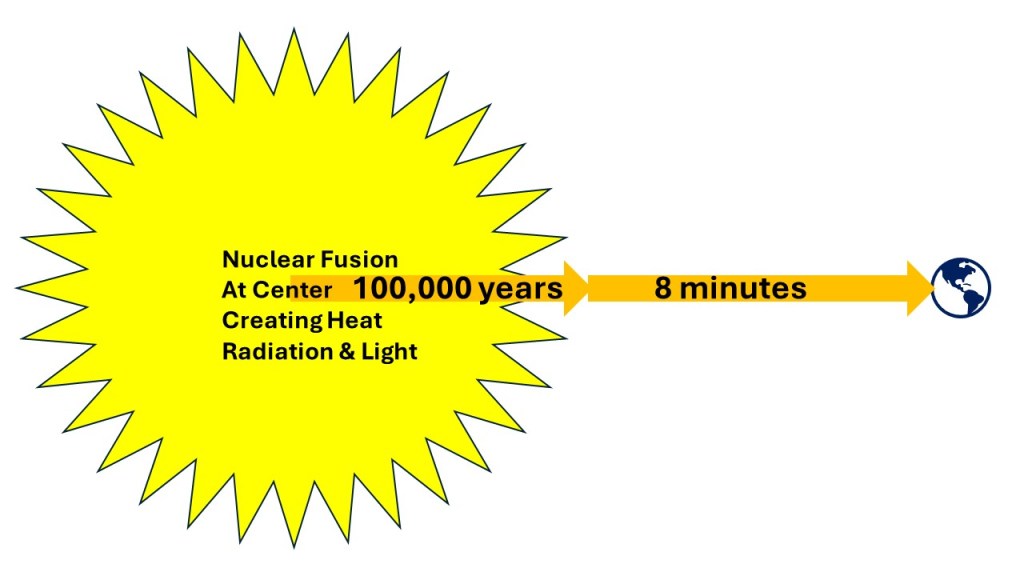
Electromagnetic radiation, including light, and heat transfer, travels from the inside of the sun to the surface and this process takes 100,000 years.
The photons are emitted and reabsorbed over and over, which is a relatively slow process inside the side. If the solar system, the earth, the sun, etc., is only 6,000 years old, how can we see the sun?
Heat / radiation transfer from the inside of the sun to the surface of the sun takes 100,000 years.
Finally, some young earth arguments
Radioactive decay rates have changed drastically (No!)
First, this is an ad hoc argument that lacks evidence. Secondly this claim cannot work. The rates of radiometric decay (the ones relevant to radiometric dating) are a result of fundamental physical properties of matter, such as the probability per unit time that a certain particle can “tunnel” out of the nucleus of the atom.
You can’t change fundamental physical properties without destroying physics and how atoms work. The claim is also contrary to empirical evidence. For example, analysis of spectra from quasars show that the fine structure constant has not changed over the last ten billion years.
Another problem with this argument is that for a young earth you would need the decay rates to have been millions of times faster in the past, which would require changes in fundamental properties that would have plenty of noticeable effects on processes other than radioactive decay, not to mention the radiation being millions of times stronger than today. That’s a lot of radiation for Adam and Eve to survive. It would have fried everything.
In addition it is also a mystery how the dozens of different radiometric dating methods could have remained consistent with each other throughout time and add the fact that there are dating methods that do not rely on the decay rate of isotopes.
Young earth creationists sometimes make the claim that the initial ratios between isotopes may have been different.
That the initial ratios/condition were different in the past and therefore radiometric dating is unreliable is a better argument, but it also fails. In this case you must take it case by case for each radiometric dating method and situation. There are some rare cases of mistaken assumptions but there are also cases where the amount of the daughter isotope is known to have been zero, which makes it easy and reliable.
The speed of light in vacuum has changed throughout history (No!)
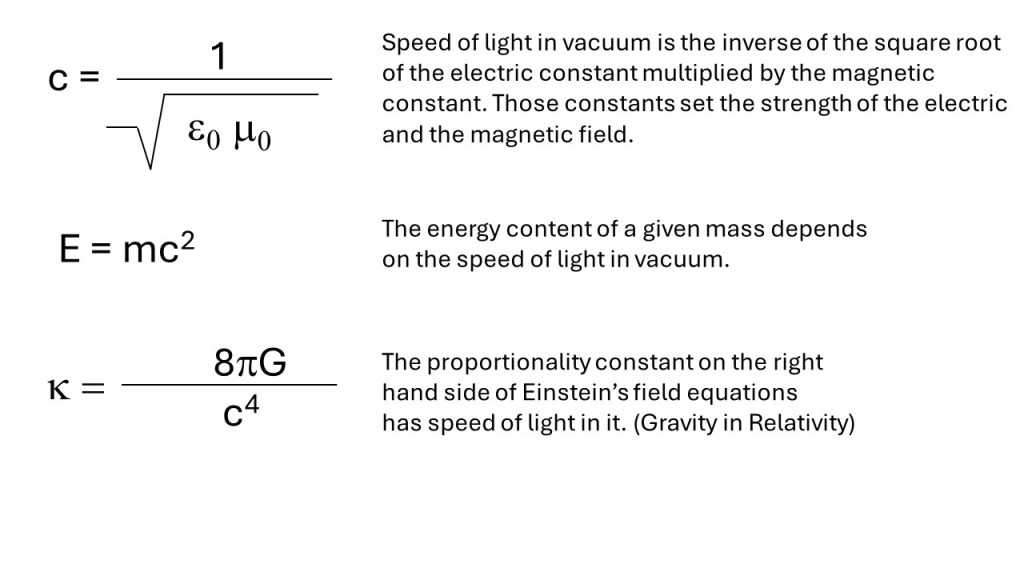
Similar to the situation above, this objection does not work because the light speed in vacuum is a fundamental constant that is not believed to change, and it would be very strange if it could change. It has been measured and no change has been seen. An example is the Einstein’s equivalence of energy and mass E = mc2. If the speed of light once was millions of times faster than now, the energy contained in a kilogram would be a trillion times larger than now. Where did all that energy go?
Another example, from electromagnetic theory the speed of light is determined by the inverse of the square root of the electric constant multiplied by the magnetic constant (see below). You would have to drastically change the strength of the electric and magnetic fields (by the trillions) to get the speed of light to be millions of times faster. If you for example made the electric field a trillion times weaker how would atoms hold together?
Yet another example, Planck’s law features the speed of light in vacuum constant. In physics, Planck’s law describes the spectral density of electromagnetic radiation emitted by a black body in thermal equilibrium at a given temperature T, when there is no net flow of matter or energy between the body and its environment. Changing the speed of light in vacuum would turn light into very slow microwaves. How would Adam and Eve be able to see? Not to mention that the proportionality constant on the right-hand side of Einstein’s field equations has the speed of light in it. Gravity would essentially disappear. The light speed in vacuum shows up in many other physical relations as well.
A few equations in which the speed of light in vacuum is a fundamental constant.
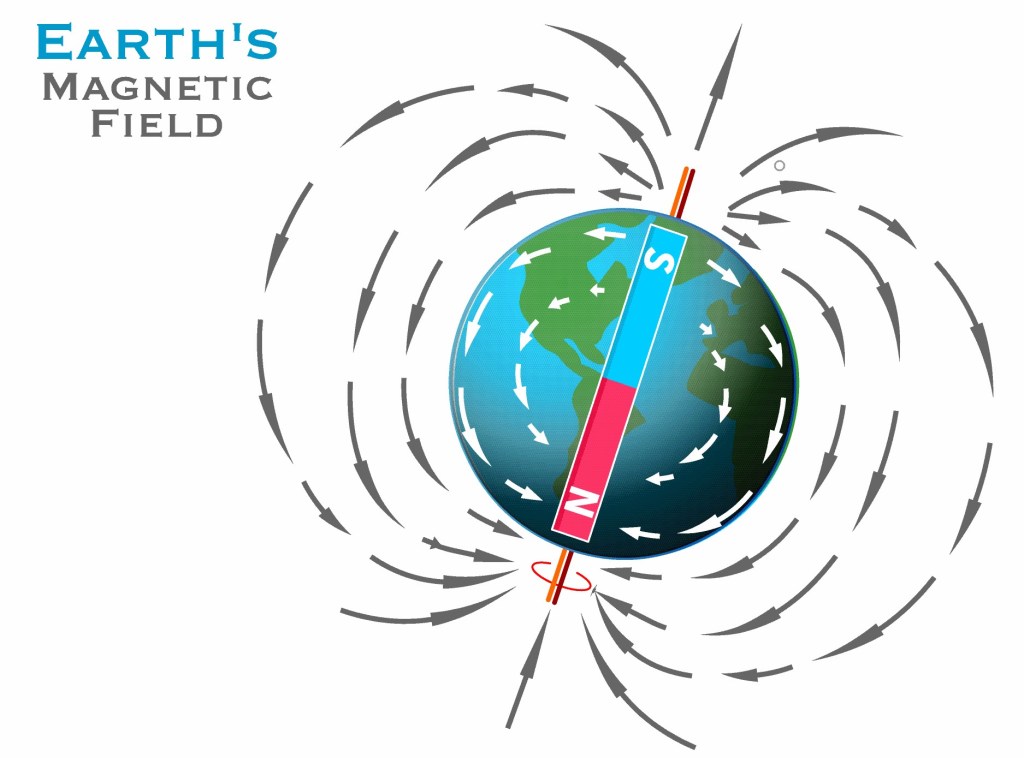
The earth’s magnetic field has been weakening during the last 130 years as if it was formed from currents resulting from earth being a discharging capacitor (claim by Thomas Barnes). This would make an impossibly strong magnetic field already 8,000 years ago.
I remember this being one of the arguments in a young earth creationist book that I read as a teenager. However, there are a number of problems with this claim.
The first problem with this argument is that there is no good reason to believe that earth’s magnetic field acts this way. It does not act like a discharging capacitor.
We know that earth’s magnetic field has reversed itself several times thus disproving the discharging capacitor model.
Thomas Barnes’ extrapolation completely ignores the nondipole component of the field.
Earth’s magnetic field. Stock Vector ID: 1851166585 by grayjay.
If the earth and the moon were billions of years old there would be a hundred feet thick dust layer from meteorites on the moon. The moon landing proved otherwise.
This is yet another argument I remember reading in a young earth creationist book (Scientific Creationism by Henry Morris) as a teenager. The problem with this argument, as I would later find out, is that Morris’ claims about a hundred feet thick dust layer was based on faulty and obsolete data. The expected depth of meteoritic dust on the Moon is less than one foot (after billions of years).
An old earth would be covered by 182 feet of meteoric dust.
This is another claim that I remember from Henry Morris’ book. The observed rates used in Morris’s calculations are based on dust collected in atmosphere; this measurement was contaminated by dust from the earth. More recent measurements of cosmic dust influx measured from satellites give an influx rate of about 1% as large, corresponding to a 66 centimeter at most thick over 4.5 billion years.
Basically, the evidence for an old earth is very compelling whilst young earth objections to that evidence fails, and young earth arguments tend to fail. At least I am not aware of any valid young earth argument. In addition, based on my readings of young earth creationist books, these books tend to be conspiratorial in nature and making implausible claims about scientific community having certain agendas. There is a reason the young earth view is nearly universally rejected by the relevant scientists.
Conclusion
My conclusion is that the fact that we know that the Earth is Billions of Years Old is a super fact. We know it’s true, it is important, and yet large portions of the public reject that fact.







 Super Facts