Scientists Agree that Global Warming is happening and that we are the Cause

Super fact 34: Climate Scientists agree that Global Warming or if you call it Climate Change is happening, and that it is caused by us primarily because of our burning of fossil fuels. There is a long-standing scientific consensus on these two facts because the evidence is conclusive. Typically, studies show an agreement of at least 97% or 98% among climate scientists.

This is a super fact because surveys show that this is not what the public believes and yet it is true. The public incorrectly believes that there is a large disagreement among scientists on this topic. A note, to understand why the evidence is conclusive as to why global warming is happening and is caused by us click here.

Note : I will use the term “global warming” in this review. Whether you call the phenomenon climate change, climate disruption, or global heating, is not important.

The Scientific Consensus

This extensive survey from 2013 of 12,000 climate papers (papers published over two decades) by Dana Nuccitelli and Cook, etc., concluded that 97.1% of climate scientists endorsed the consensus position that humans are causing global warming.

They also did a science author self-rating which concluded that 97.2% of climate scientists endorsed the consensus position that humans are causing global warming. Another conclusion from the survey was that the consensus had increased from around 90%, perhaps less, in the early 1990’s.

A later review of six independent, peer-reviewed studies examining the scientific consensus about global warming have concluded that between 90% and 100% of climate scientists are convinced human-caused global warming is happening. A more recent study (2021) found that as many as 98% of climate scientists are convinced global warming is happening and is human-caused. Numerous other surveys have concluded the same thing.

People’s Beliefs About Global Warming

This 2024 survey from Yale University show that most Americans (61%) understand that global warming is mostly human caused. By contrast, 28% think it is caused mostly by natural changes in the environment. Most Americans (58%) <<Link-6>> understand that most scientists think global warming is happening. This percentage has trended generally upward since this survey began in 2008. By contrast, about one in five (22%) think there is a lot of disagreement among scientists about whether global warming is happening.

The green graph is going up slightly starting from 46% in 2009 and ending in 58% in 2023. The black graph starts at 33% in 2009 and ends in 22% in 2023. The yellow graph starts at 2% in 2009 and ends in 2% in 2023 | Scientists Agree that Global Warming is happening and that we are the Cause
The green graph corresponds to “most scientists think global warming is happening (%).” The black graph corresponds to “there is a lot of disagreement among scientists (%)”. The yellow graph corresponds to “Most scientists think global warming is NOT happening (%)”. Graph taken from the Yale Program on Climate Change Communication.

However, only one in five Americans (20%) understand that nearly all climate scientists (more than 90%) think that human-caused global warming is happening. The aforementioned Dana  Nuccitelli refers to this in his book Climatology versus Pseudoscience as the consensus gap. Again, this large discrepancy between public perception and reality makes the consensus gap a super fact. Research has shown that this discrepancy has a large impact on people’s other beliefs regarding global warming.

This is bar graph. It shows that 2% believe the answer is 0-10%, 2% believe the answer is 11-20%, 3% believe the answer is 21-30%, 3% believe the answer is 31-40%, 8% believe the answer is 41-50%, 7% believe the answer is 51-60%, 7% believe the answer is 61-70%, 13% believe the answer is 71-80%, 13% believe the answer is 81-90%, 20% believe the answer is 91-100%, 22% don’t know | Scientists Agree that Global Warming is happening and that we are the Cause
The question was, To the best of your knowledge what percentage of climate scientists think that human-caused global warming is happening? Graph taken from the Yale Program on Climate Change Communication.

Why is there a Consensus Gap?

In his book Climatology versus Pseudoscience Dana Nuccitelli explains that a relatively small group of so-called climate skeptics, or more accurately called climate contrarians have received a lot of attention from media. Even though their science is bad, and they’ve published their error ridden papers in obscure or discredited journals, and the fact that their predictions have failed repeatedly many times over, they have had an enormous influence on public discourse. Conservative politicians, and many talk show hosts are blindly devoted to their falsehoods, whilst real scientists are being attacked.

It is not just rightwing media who are using them for their purposes, but mainstream media are giving the contrarians undue attention as well. Sensationalism is one issue. A science contrarian claiming that all the climate scientists are wrong, and that he is the only one who finally got it right is a lot more interesting of a story than a repeat of the consensus. Another issue is false balance. Journalist should not feel that they must give equal time to evidence-based science and nonsense, but that is often the case. To read my review of this book click here.

The Oregon Petition

I am mentioning the Oregon petition because I fell for it myself. The Oregon petition was an official looking petition circulated by climate contrarians, claiming that there is no evidence that human-caused global warming will cause catastrophic heating of earth’s atmosphere and disruption of earth’s climate, and that adding more carbon dioxide to the atmosphere would even be beneficial for plants and animals. It got an impressive number of signatures, 32,000 after some years.

However, it turned out that the signatories rarely had climate expertise, and were not scientists, and the survey listed many falsified names such as the names of the Spice Girls and several fictional characters. Less than 200 of the signatories were climate researchers.

It was a con, but it was touted in a lot of media as the truth. I saw it over and over and I believed it. I was later surprised to learn that it was a con and that a scientific consensus existed on global warming / climate change. Learning that I had been bamboozled on this matter was one of the red flags that prompted me to start doing some fact checking on the issue global warming.
To see the other Super Facts click here

Quick Easy Introduction to Astrophysics

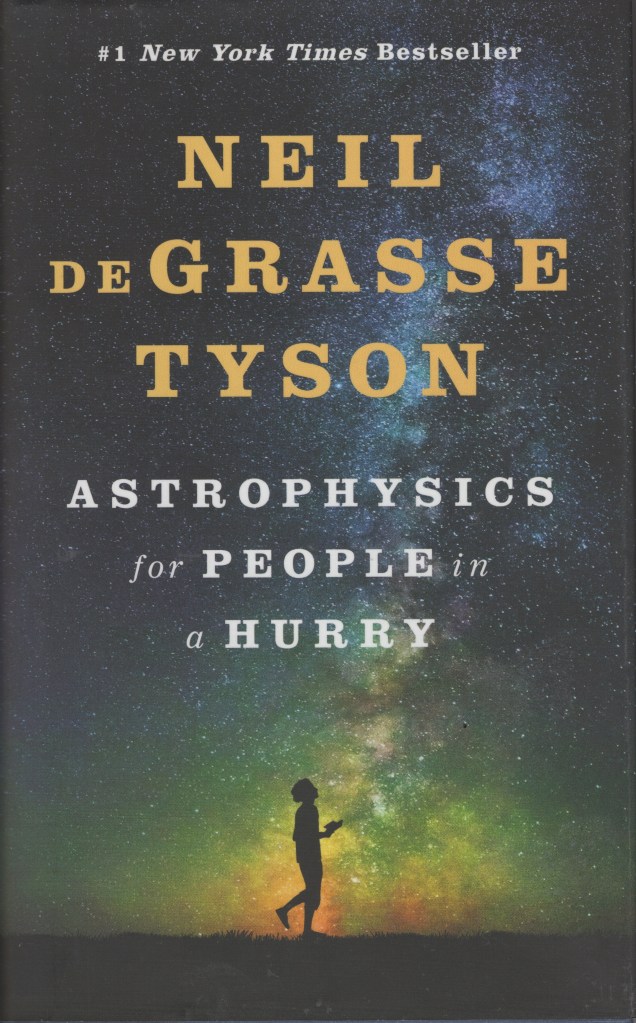
The goal of this blog is to create a list of what I call super facts. Important facts that are known to be true and yet they are surprising, shocking or disputed among non-experts. In a sense it is myth busting. However, it is not the only type of posts I do. This is a review for a popular book on Astrophysics called “Astrophysics for People in a Hurry” by Neil De Grasse Tyson. It is a New York Times best seller and the #1 best seller in Astronomy & Astrophysics on Amazon. It has almost 37,000 ratings/reviews on Amazon and more 194,000 reviews/ratings on Goodreads.

Below is a list of the four formats in which it comes on Amazon.

  • Hardcover –  Publisher : W. W. Norton & Company; First Edition (May 2, 2017), ASIN : 0393609391, ISBN-10 : 9780393609394, ISBN-13 : 978-0393609394, 224 pages, item weight : 2.31 pounds, dimensions : ‎ 7.3 x 4.8 x 0.9 inches, it costs $6.21 – $13.26 on US Amazon. Click here to order it from Amazon.com.
  • Kindle –  Publisher – W. W. Norton & Company (May 2, 2017), ASIN : B01MAWT2MO, 222 pages, it costs $9.00 on US Amazon. Click here to order it from Amazon.com.
  • Audiobook –  Publisher : Blackstone Audio Inc (May 2, 2017), ASIN : B06XB2PX7G, it costs $10.20 on US Amazon. Click here to order it from Amazon.com.
  • Audio CD –  Publisher : Blackstone Publishing; Unabridged edition (May 2, 2017), ISBN-10 : 1538408015, ISBN-13 : 978-1538408018, it costs $24.95 on US Amazon. Click here to order it from Amazon.com.
“Astrophysics for People in a Hurry” by Neil De Grasse Tyson front cover | Quick Easy Introduction to Astrophysics
Front cover of the book Astrophysics for People in a Hurry. Click on the image to go to the Amazon page for the hardcover version of the book.

Amazon’s Description of Astrophysics for People in a Hurry

Over a year on the New York Times bestseller list and more than a million copies sold.

The essential universe, from our most celebrated and beloved astrophysicist.

What is the nature of space and time? How do we fit within the universe? How does the universe fit within us? There’s no better guide through these mind-expanding questions than acclaimed astrophysicist and best-selling author Neil deGrasse Tyson.

But today, few of us have time to contemplate the cosmos. So Tyson brings the universe down to Earth succinctly and clearly, with sparkling wit, in tasty chapters consumable anytime and anywhere in your busy day.

While you wait for your morning coffee to brew, for the bus, the train, or a plane to arrive, Astrophysics for People in a Hurry will reveal just what you need to be fluent and ready for the next cosmic headlines: from the Big Bang to black holes, from quarks to quantum mechanics, and from the search for planets to the search for life in the universe.

This is my four-star review for Astrophysics for People in a Hurry

The reason I gave the book four stars instead of five is because I felt that if you have an interest in the topic, you will have heard it all before. However, in retrospect that might not be a good reason to deduct a star. After all, the book seems to be targeting people who do not know much about the subject and thus will not have heard it all before.

Quick and Entertaining Overview of Astrophysics

I’ve read a number of Neil DeGrasse Tyson’s books and I love them. This book is a compressed version of what he has been explaining in other books. If you’ve already read a number of Neil De Grasse books, or perhaps other popular science Astrophysics books such as those by Stephen Hawking, you will not find much new in this book. However, I think it is a brief but good summary of Astrophysics written for a layman. It is 208 pages, each page having about half as much text per page as a typical popular science book. It is an easy and fairly quick read.

He briefly explains the Big Bang, physical laws, spectra, nebulae, the speed of light, very briefly relativity and quantum physics, the cosmic background radiation, galaxies, gravitational lensing, dark matter, dark energy, neutron stars, the composition of the solar system and exoplanets. He covers a lot of ground quickly and he makes it easy to understand without simplifying so much that it becomes misleading. This book is exactly what the title says. However, as I mentioned, if you’ve read a lot on the topic already, especially if it is Neil DeGrasse Tyson’s books, you’ve seen it before. I still think it was very enjoyable though and I still learned something new. He is a very entertaining author.

“Astrophysics for People in a Hurry” by Neil De Grasse Tyson back cover
Front cover of the book Astrophysics for People in a Hurry. Click on the image to go to the Amazon page for the hardcover version of the book.
To see the Super Facts click here

Many Popular Environmental Actions Are Ineffective

Super fact 33: Actions such as eating locally, buying organic produce, using paper straws, and recycling can be good for the environment but can also be worse for the environment and these actions often have a much smaller positive impact than alternative rarely considered actions. What are popular actions for the environment is often different from what is effective.

I consider this a super fact because the beliefs regarding what is good for the environment and what is bad for the environment and what has a significant impact and what has not, are often based on popular trends and culture rather than knowledge. We need to educate ourselves. Following trends is not the answer to good stewardship of the planet.

A big green hand is depicted to symbolize the protection of the environment, where climate-friendly topics are also depicted, such as wind turbines and recycling symbols | Many Popular Environmental Actions Are Ineffective
This content was generated by an Artificial Intelligence (AI) system. Asset id: 2531547331

Is Locally Grown Food Really Better for the Environment?

As I explained in this post eating locally is not necessarily ecological. Agricultural products that are grown off season or in non-native environments are often grown in greenhouses, which require a lot of energy and generate significantly more emissions than shipping the produce across oceans would. This is especially true for crops like tomatoes, cucumbers, mangoes and bananas, that require warmer climates to be grown in open fields.

Red cherry tomatoes | Many Popular Environmental Actions Are Ineffective
From pexels.com by Julia Nagy.

In some cases, the crop requires significant water resources or chemical inputs to thrive and may not be suitable for warmer climates, for example, apples. Some crops, like avocados or almonds require a lot of water but despite that they are grown in dry places like California (80% of California’s freshwater is used for agriculture). From an environmental perspective it would be better to grow these crops in a suitable environment and then transport them.

Is Eating Organic Really Good for the Environment?

As explained in this post eating organic is not necessarily ecological. Despite strong public perception of organic agriculture producing better environmental outcomes, conventional agriculture often performs better on environmental measures including land use, greenhouse gas emissions, and pollution of water bodies. There are, however, some contexts where organic agriculture may be better for the environment.

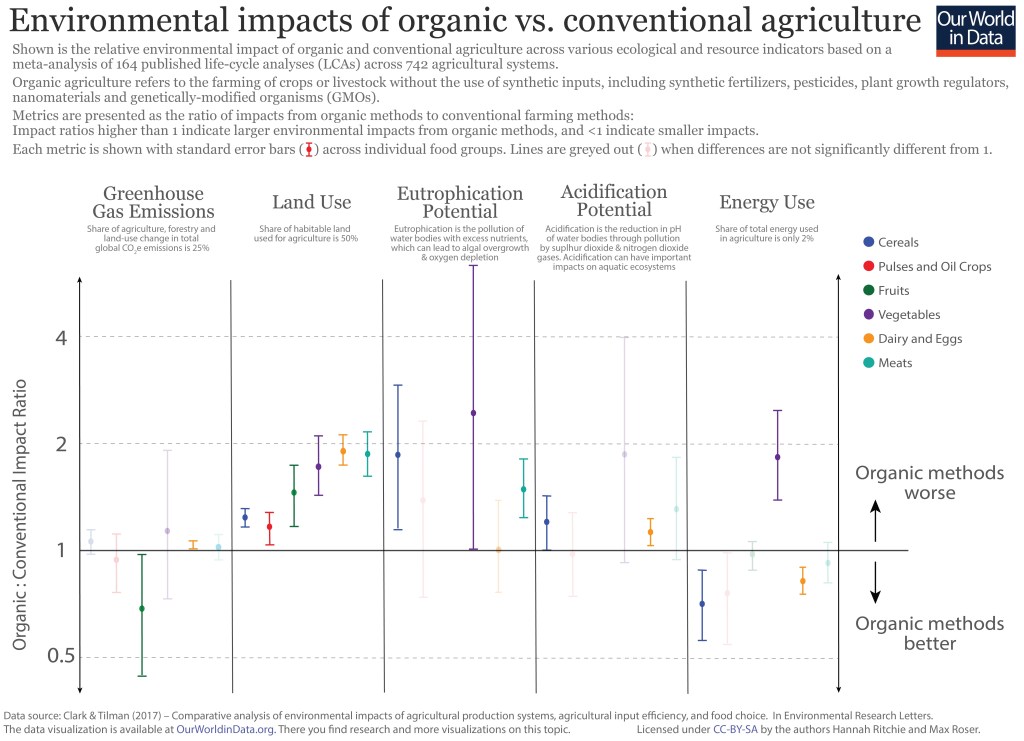
The graph below gives an overview of the environmental impact of various types of crops grown organically and conventionally. As you can see organic crop often require double as much land compared to conventionally grown crops. It is complicated.

The graph shows the six food groups and their impact across greenhouse gas emissions, land use, eutrophication potential,  acidification potential and energy usage | Many Popular Environmental Actions Are Ineffective
Shown is the relative environmental impact of organic and conventional agriculture across various ecological and resource indicators based on a meta-analysis of 164 published life-cycle analyses (LCAs) across 742 agricultural systems. Roughly, lower in the graph means organic is better and higher up in the graph means conventional farming is better. Data source: Clark & Tilman (2017) – Comparative analysis of environmental impacts of agricultural production systems, agricultural input efficiency, and food choice. In Environmental Research Letters. The data visualization is available at OurWorldinData.org<<Link-10>>. There you can find research and more visualizations on this topic. Licensed under CC BY-SA by the authors Hannah Ritchie and Max Roser.

What really matters though is the type of food you eat, not whether it is organic or not. For example, beef (from beef herd) causes emissions 188 times larger than nuts do for the same amount of protein provided. Another thing to note is that if you eat 300 steaks per year you will have a 100 times larger environmental impact from your meat eating compared to someone who eats 3 steaks per year. You don’t have to become a vegetarian to have a smaller environmental impact but quantity matters.

Is Recycling Important?

The common perception that recycling is one of the best things you can do for the environment is not correct. Its impact is often not very large and if not done properly it can be counterproductive. If you throw a greasy pizza box in the recycling, you can ruin the entire batch.

Surveys across 21,000 adults in 30 countries showed that the two actions among twelve that people believed saved the most greenhouse gases were recycling (59%) and upgrading lightbulbs (36%). As it turns out, those two saved the least greenhouse gases among the twelve options. The option saving the most greenhouse gases among the 12 was giving up an SUV, which saved 18 times as much greenhouse gases as recycling. 17% of respondents picked that one.

A filled recycling bag
Photo by Anna Shvets on Pexels.com

According to Our World in Data (and the book Not the End of the World page 114<<Link-6>>), which is based on this research, giving up an average SUV for a sedan would save 3.6 metric ton, or 22.5% of the carbon emissions for the average American. Switching to a plant-based diet would save 2.2 metric ton per person, or 13.8%. Recycling comes in at a savings of 0.2 metric tons according to the same data. EPAs estimates are slightly higher but still low in comparison.

Plastic straws versus paper straws

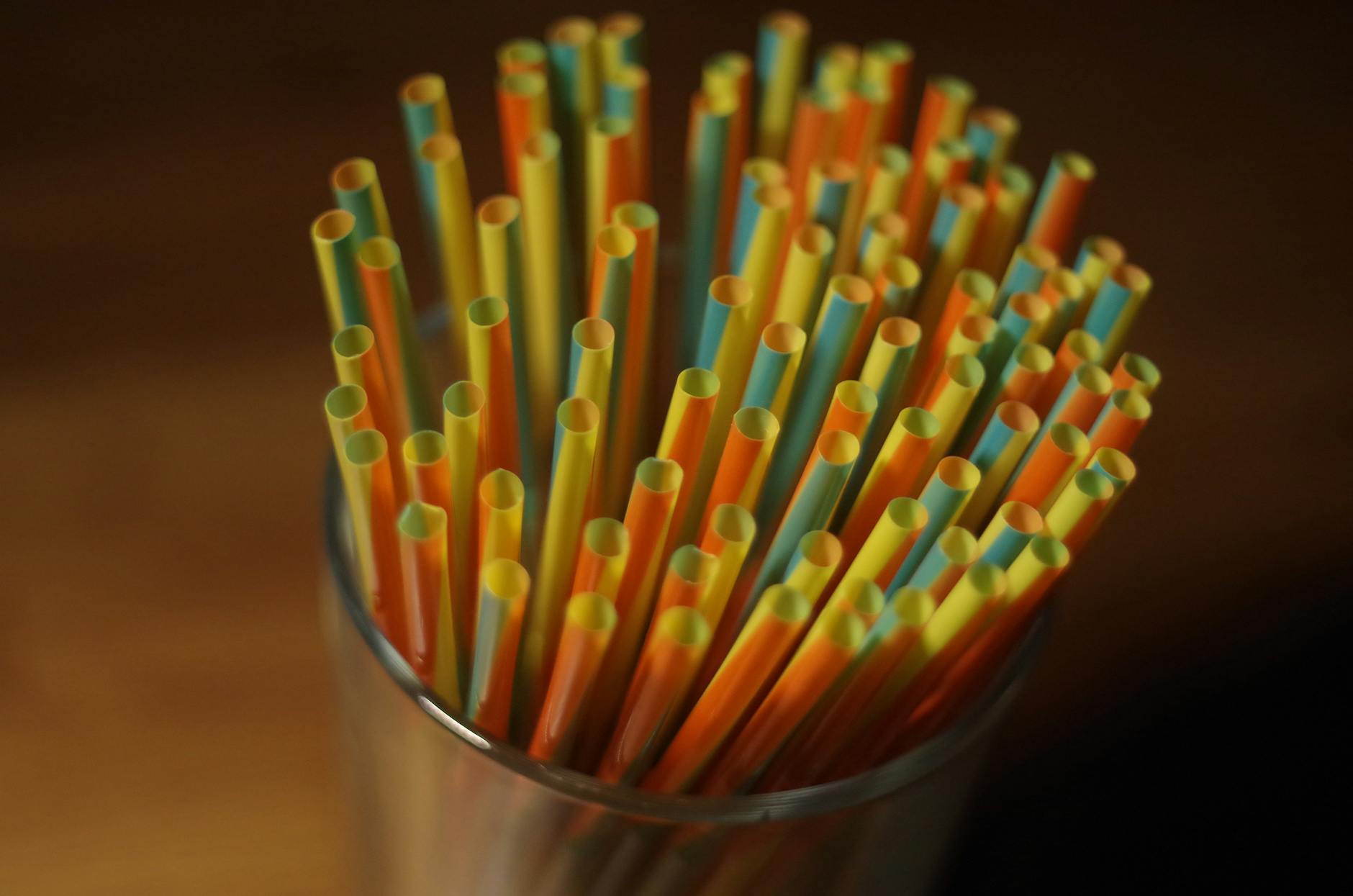
Producing a plastic straw requires 39 kilojoules of energy and produces 1.5 grams of carbon dioxide emissions. However, producing a paper straw requires 96 kilojoules of energy and produces 4.1 grams of carbon dioxide emissions. So, plastic straws are better for the environment from that perspective. However, this could be compared to a typical passenger vehicle, which emits about 4.6 metric tons of CO2 per year according to EPA. That corresponds to more than 3 million plastic straws and more than one million paper straws.

According to the same article the average passenger vehicle emits about 400 grams of CO2 per mile. So, driving just one mile corresponds to hundreds of plastic straws and paper straws.

Plastic straws
Photo by Christopher on Pexels.com
paper straws
Photo by Sarah Chai on Pexels.com

One advantage of paper straws is that they are easier to recycle, at least under ideal circumstances. Unfortunately, they often get soggy, and recycling plants don’t want that so they often throw them out. Another advantage is that paper straws decompose and don’t end up in our ocean.

However, not only are straws very small items, most of the plastic pollution in the ocean does not come from north America(1%) or Europe (1%). Paper straws versus plastic straws seem like a complex riddle but it may not be an important one. Whether you drive more or drive less is probably a lot more important.

Plastic bags versus paper bags

As with plastic straws versus paper straws plastic bags versus paper bags is a complicated question. From an environmental perspective they both have advantages and disadvantages. Plastic bags are less carbon intensive to produce, are easier to reuse several times, and the production of plastic bags require on average four times less energy than the production of paper bags.

On the other hand, paper bags are decomposable and easier to recycle. However, the chemicals and fertilizers used in producing paper bags create additional harm to the environment. It is a complicated question.

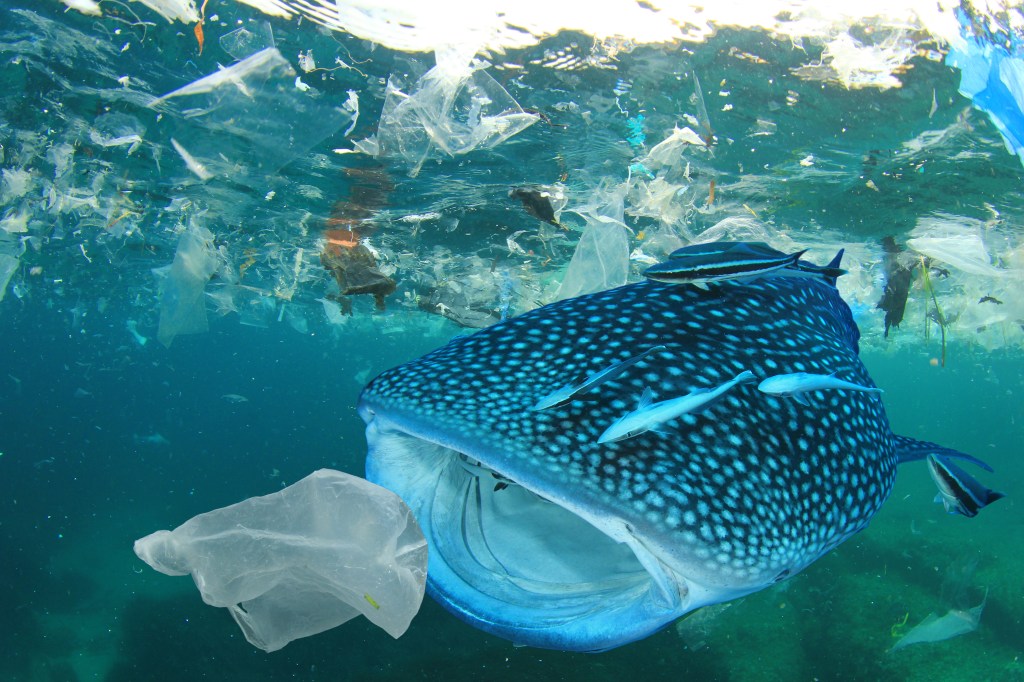
Whale Shark swimming in the ocean about to swallow a plastic bag.
Plastic Ocean pollution. Whale Shark filter feeds in polluted ocean, ingesting plastic. Asset id: 1120768061 by Rich Carey

Having a Significant and Positive Impact on the Environment

Some of the allegedly sustainable practices and actions mentioned above are counter productive and others have a very small effect, for example, carbon emissions savings that are a few grams. According to the “Our World Data” and the book “Not the End of the World” page 114, a compilation of data research, some actions that you can take that will significantly reduce carbon emissions are  (savings in metric tons per year, for flight it is per trip):

  • Giving up an SUV 3.6 tons
  • Go car free (average car) 2.4 tons
  • Switch to plant-based diet 2.2 tons
  • Avoid transatlantic flights 1.6 tons
  • Buy green energy 1.5 tons
  • Switch to electric car (from average sedan) 1.2 tons
  • Switch from electric car to none 1.2 tons
  • Avoid medium flight 0.6 tons (1,700 miles each way going and returning)
  • Laundry in cold water 0.25 tons
  • Hand-dry clothing 0.2 tons
  • Recycle 0.2 tons
  • Upgrade light bulbs 0.1 tons

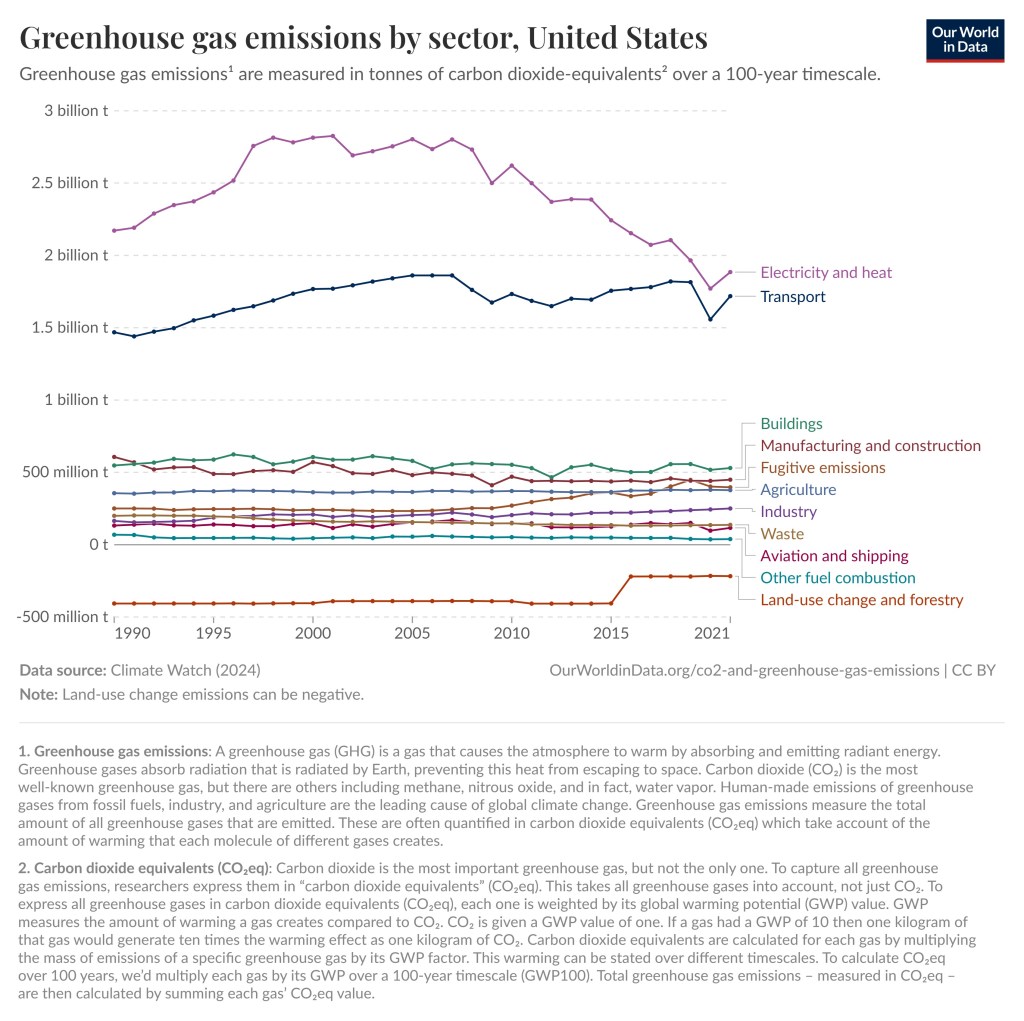
As you can see in the graphs below, the largest contributor of greenhouse gas emissions in the World and in the United States is electricity and heat. Unfortunately, the composition of the electric grid is something we as consumers have very little control over. We can save energy, get solar panels for our roof, or buy our electricity from green energy companies, but we cannot easily change the composition of the grid. Energy companies and politicians must do that.

However, we can make our voices heard by calling and writing to our representatives. This might be the single most impactful action that you as an individual can take. Your congressman, senator, or state legislator will probably not read your letter. They have hundreds of thousands or millions of constituents and get lots of letters every day. What is likely to happen is that a staff member will skim the letter and note the concern in a database.

Just make sure that your letter is politely written so it does not go in the wastebasket. Also make sure that you are a constituent. Writing to Ted Cruz when you live in Florida is not going to have an impact. They are interested in finding out what the concerns of their constituents are and according to staff members and other information I have come across, this really has an impact.

The largest contributor of greenhouse gas emissions in the World is electricity and then comes Transport. After that comes manufacturing and construction, agriculture, industry, fugitive emissions, buildings, waste, land-use change and forestry, aviation and shipping, other fuel combustion | Many Popular Environmental Actions Are Ineffective
Data source : Climate Watch (2024). Note : Land use emissions can be negative. OurWorldinData.org/co2-and-greenhouse-gas-emissions| CC BY
The largest contributor of greenhouse gas emissions in the US is electricity and heat but it has gone down. Transport is number two. Then comes buildings, manufacturing and construction, fugitive emissions, agriculture, industry, waste, aviation and shipping, other fuel combustion, land-use change and forestry | Many Popular Environmental Actions Are Ineffective
Data source : Climate Watch (2024). Note : Land use emissions can be negative. OurWorldinData.org/co2-and-greenhouse-gas-emissions| CC BY
Conclusion

The survey mentioned above showed that among the twelve environmental actions an individual could take, the one with the second to smallest positive impact was the one that the majority thought had the biggest positive impact, despite it having a relatively tiny impact. The actions that could really make a huge difference were hardly considered.

We, the public, are very bad at determining what is good or bad for the environment and what has a significant and positive impact or not, even though the data is out there and we easily can look it up. Maybe the biggest positive impact one could have on the environment is to look up the facts and get better educated.

To see the other Super Facts click here

Marsupial Planet

Image above by Kevin from The Beginning at Last

An illustration of a kangaroo jumping across the grassland. There are a few trees in the background | Marsupial Planet
This picture reminded me of our trip to Australia and all the kangaroos and other marsupials we encountered. This is a submission for Kevin’s No Theme Thursday.

There Are Three Types of Mammals

Placentals, Monotremes, and Marsupials

All mammals are warm-blooded, have fur, and produce milk. However, there are three main types of mammals, placentals, monotremes, and marsupials, distinguished by how they give birth. Placentals give birth to well-developed young, and they nourish their young in the uterus through the placenta. Examples include gorillas, humans, whales, rodents, tigers, and bats. Monotremes lay soft-shelled eggs. Examples include the platypus and the echidna.

Then we have Marsupials, which give birth to small and underdeveloped young. Most female marsupials have pouches. Examples include kangaroos, wallabies, wombats, possum, opossum, Tasmanian devils, and koalas. Below is a kid friendly overview of the three types of mammals.

Marsupials on Three Continents

Close to 70% of the 334 extant marsupial species are concentrated on the Australian continent, including mainland Australia, Tasmania, New Guinea, and nearby islands. The remaining 30% are distributed across the Americas, primarily in South America. The Virginia opossum is the only marsupial native to the United States, but it is quite common. For example, we have lots of them in our neighborhood in Dallas. It should also be noted that there are a lot of marsupial fossils in Antarctica, which means that marsupials once lived there.

The image shows the distribution of marsupials being Australia, south America and parts of North America.
This map shows the distribution of marsupials. Blue indicates places in which marsupials are native and purple where they have been introduced. The image is from Wikipedia commons created by Michal Klajban under https://creativecommons.org/licenses/by/4.0/.

DNA evidence supports a South American origin for marsupials, with Australian marsupials arising from a single Gondwanan migration of marsupials from South America, across Antarctica, to Australia. These continents were connected and part of the supercontinent Gondwana back then. The ancestors of the marsupials, the metatherians split from placentals around 100 million to 120 million years ago during dinosaur times.

Bamboozled by an Opossum

We’ve found opossums in our house, behind our laundry machine. We’ve seen them along the street, on lawns in the neighborhood and we’ve seen them climb trees. They are pretty common in our neighborhood. It should be noted that they are not possums even though they are sometimes called that. Possums is an Australian relative to the Opossum.

An Opossum sitting on top of a fence looking down at the photographer.
A photo of an Opossum. Author Sergey Yarmolyuk. From  Wikimedia commons https://creativecommons.org/licenses/by-sa/4.0/

One day when my wife and I were out walking the dogs we saw an opossum lying on the alleyway behind our house. He looked dead. However, when I checked, he was warm and appeared to be alive even though he was unconscious. We put him in a box containing a soft blanket and took him to the veterinary. We were willing to pay for any treatment or surgeries needed. At the veterinarian he woke up and they later placed him in a nature sanctuary. We did not need to pay anything.

Later on, we learned that when an opossum is threatened or harmed, they will “play possum“. They mimic the appearance and smell of a dead animal. This response is involuntary, like fainting, and not a conscious act. That might have been what was going on. So, I might have been bamboozled by an opossum. Bamboozlement seems to be the story of my life. Luckily, he was a male and the veterinary said it looked like he had been hit by a car, so us taking him to the veterinary probably did not do much harm. However, the “playing possum” thing is something to keep in mind with these animals.

Australia and our Photos of Marsupials

When our kids were young, we traveled to Australia where we encountered a lot of marsupials in the wild, in nature preserves and at zoos We encountered a lot of kangaroos but also wombats, koalas, and Tasmanian Devils. I can add that checking out kangaroos and other marsupials was not the only thing we did in Australia. We also spent a week in Great Barrier Reef where we did snorkel and scuba diving.

The first picture below was from our visit to the Blue Mountains. We stopped to have lunch, and I decided to go and take a leak. As I approached a bush, I heard some noise and when I looked behind the bush, I saw that there was a kangaroo behind it. What you see in the picture below is what I saw. The kangaroo was just two yards away. He seemed to be as startled as I was, and we stared at each other for a few seconds. I had my camera hanging around my neck, so I decided to take a photo. Then he hopped away. I am so glad I did not pee on his lunch.

A kangaroo standing behind a bush munching on foliage while staring into the camera | Marsupial Planet
A surprise encounter with a kangaroo in the wild. I am so glad I did not pee on his lunch.
Our son in a blue shirt and our daughter in a pink rain jacket surrounded by three kangaroos.
Our oldest son and daughter feeding small kangaroos (or wallabies) at a nature preserve outside Brisbane, Australia.
My wife and younger son in yellow rain jackets and our daughter in a pink rain jacket surrounded by three kangaroos that are close up.
Our younger son and daughter feeding small kangaroos at a nature preserve outside Brisbane, Australia. They are laughing because one of the kangaroos grabbed the entire bag of food and then spilled it.
The kangaroo is putting his face straight into the camera, very close | Marsupial Planet
A small kangaroo/wallaby is sniffing my camera (at the same nature preserve).
Note : Koalas are often called Koala bears, but they are not bears.
A koala is sitting in a tree branch curled up with its eyelids shut.
A Koala sleeping in a tree at Brisbane Zoo.
Our six-year-old daughter is sitting in a chair and holding a koala.
Our daughter holding a Koala at Brisbane Zoo.
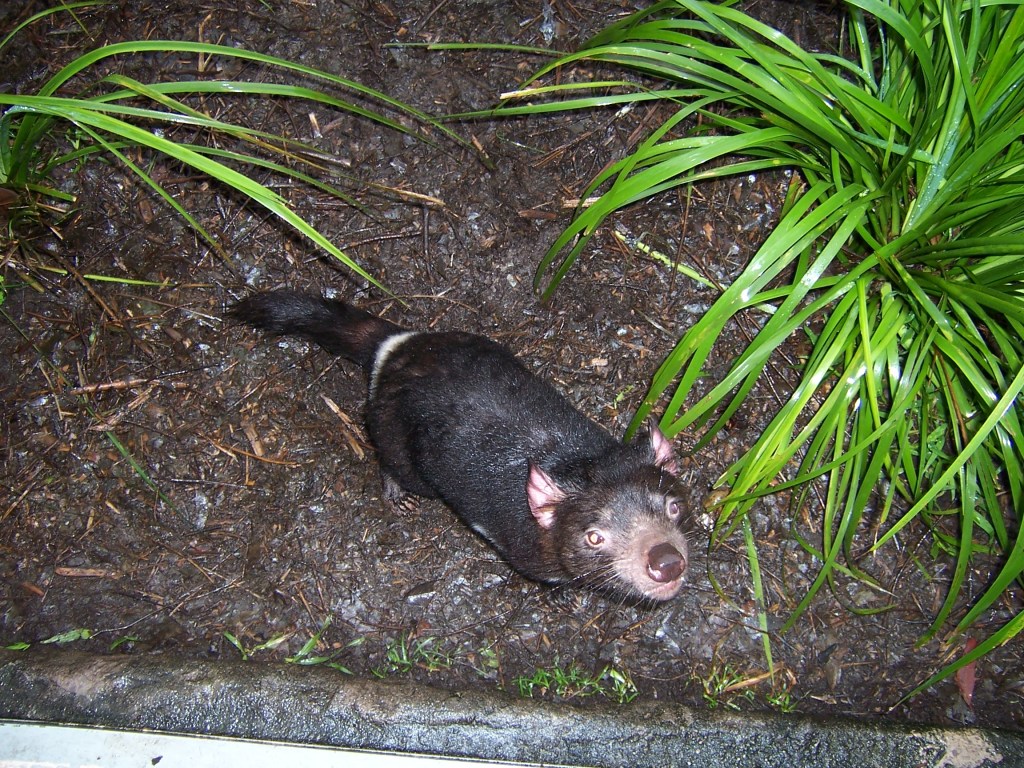
The Tasmanian Devil is behind a fence, and he is looking up to the camera | Marsupial Planet
A Tasmanian Devil at the Brisbane Zoo.
A wombat in a cage eating straw | Marsupial Planet
Wombat at Brisbane Zoo

One interesting fact about Wombats is that they produce cubic shaped poop. This makes the poop stackable, and the wombats use it to mark their territory and attract mates.

To see the Super Facts click here

Environmental Benefits of Recycling Are Overestimated

Super fact 32: The common perception that recycling is one of the best things you can do for the environment is an exaggeration. Its impact is often not very large and if not done properly it can be counterproductive.

In general recycling is beneficial, because you conserve natural resources, reduce climate change, save energy and reduce waste and pollution. Battery recycling is particularly important since it reduces toxic waste and reduces the risk of a future shortage of certain minerals. Recycling is often viewed as a very important activity that everyone should participate in, and neighbors often shame those who fail to comply.

The shocking news is that even though recycling in general is good for the environment it may not be as beneficial as it is assumed. It turns out to be complicated. As you will see later, most people think that recycling is the most impactful action you can take as an individual to reduce carbon emissions, when in fact it is of very marginal importance. This is what made me consider this a super fact.

A company where a big green hand is depicted to symbolize the protection of the environment, where climate-friendly topics are also depicted, such as wind turbines or recycling | Environmental Benefits of Recycling Are Overestimated
This content was generated by an Artificial Intelligence (AI) system. Asset id: 2531547331

Recycling and Greenhouse Gases

According to EPA recycling saves 193 million metric tons of carbon emissions, which sounds a lot until you consider that the US emit 6,343 million metric tons per year according to EPA making it 3%. According to this website consumers can save 732 kilograms of CO2 assuming they do the recycling correctly. This should be compared to the average carbon footprint for an American (US), which is 16 metric tons, making the savings for good recyclers 4.6%.

According to our World in Data (Not the End of the World page 114), based on this research, giving up an average SUV for a sedan would save 3.6 metric ton, or 22.5%. Switching to a plant-based diet would save 2.2 metric ton per person, or 13.8%. Actions saving more greenhouse gases than recycling that we as consumers can take, are for example: give up SUV, go car free, have a plant-based diet, avoid transatlantic flights, buy green energy, switch to electric car, switch from electric car to no car, avoid medium flights, laundry in cold water, and hand dry clothing.

Surveys across 21,000 adults in 30 countries showed that the two actions that people believed saved the most greenhouse gases were recycling (59%) and upgrading lightbulbs (36%). Upgrading lightbulbs have an even smaller effect than recycling. It is of course still a good action to take.

However, what this data demonstrates is that we are bad at guessing which actions are impactful. We need to get better informed and not make assumptions. It should be noted that the efficiency of the recycling efforts varies from country to country. Among the 32 developed countries for which there is data the United States ranks 25.

Recycling and Plastic Waste

Greenhouse gas emissions is certainly not the only issue to consider. What about plastic waste? As it turns out plastic is very difficult to recycle (depending on the kind of plastic) and according to the EPA less than 9% of plastic is recycled. According to Our World in Data and the book “Not the End of the World” by Hannah Ritchie the US and Europe have well managed landfills and good waste management systems that make our plastic problem less of an issue. That’s good news.

But what about the awful problem with plastic in the ocean? Plastic ending up in the ocean is indeed a bad problem. However, 81% of all plastic in the ocean come from Asia, and the rest mostly comes from Latin America. Only 1% come from the United States and 1% from Europe and Oceania. According to Scientific American 93% of plastic in ocean come from just 10 rivers. Eight of them are in Asia: the Yangtze; Indus; Yellow; Hai He; Ganges; Pearl; Amur; Mekong. Two are in Africa – the Nile and the Niger.

None of them are in North America or Europe. Therefore, if we in the developed world greatly improve our recycling of plastic, it would not make much of a difference with respect to the problem of plastic in the ocean. What we need to do is assist China, India and southeast Asia with improving their waste management systems.

Whale Shark swimming in the ocean about to swallow a plastic bag.
Plastic Ocean pollution. Whale Shark filter feeds in polluted ocean, ingesting plastic. Asset id: 1120768061 by Rich Carey

Another issue to keep in mind is that uneducated consumers can do a lot of damage to the recycling process. For example, throwing a greasy pizza box into the recycling bin can ruin the entire batch. You are not just recycling incorrectly you are ruining the recycling efforts of your neighbors too. There are many ways to ruin the recycling process, by throwing items in the recycling that don’t belong there. Recycling requires consumers to pay attention to the instructions. It should also be noted that some companies have been found to ignore the recycling process and throw all recycled items in with the trash. There are also neighborhoods that don’t have recycling.

Conclusion

In summary, recycling may not be as great as it is often made out to be. You should still do it if you care about the environment. Just be aware that there are actions that you can take and that your government can take that are much more impactful.

One of the conclusions you can draw from this discussion is that if you are driving a big SUV or eating red meat every day you should probably abstain from shaming your neighbor for not recycling.

To see the other Super Facts click here