
Superfact 99: Carbon capture is the process of separating carbon dioxide from industrial emissions. Even though it works and could be helpful it isn’t used very much, at least not the right way.
Esther’s writing prompt: April 29, 2026: Capture
Click here or here to join in.
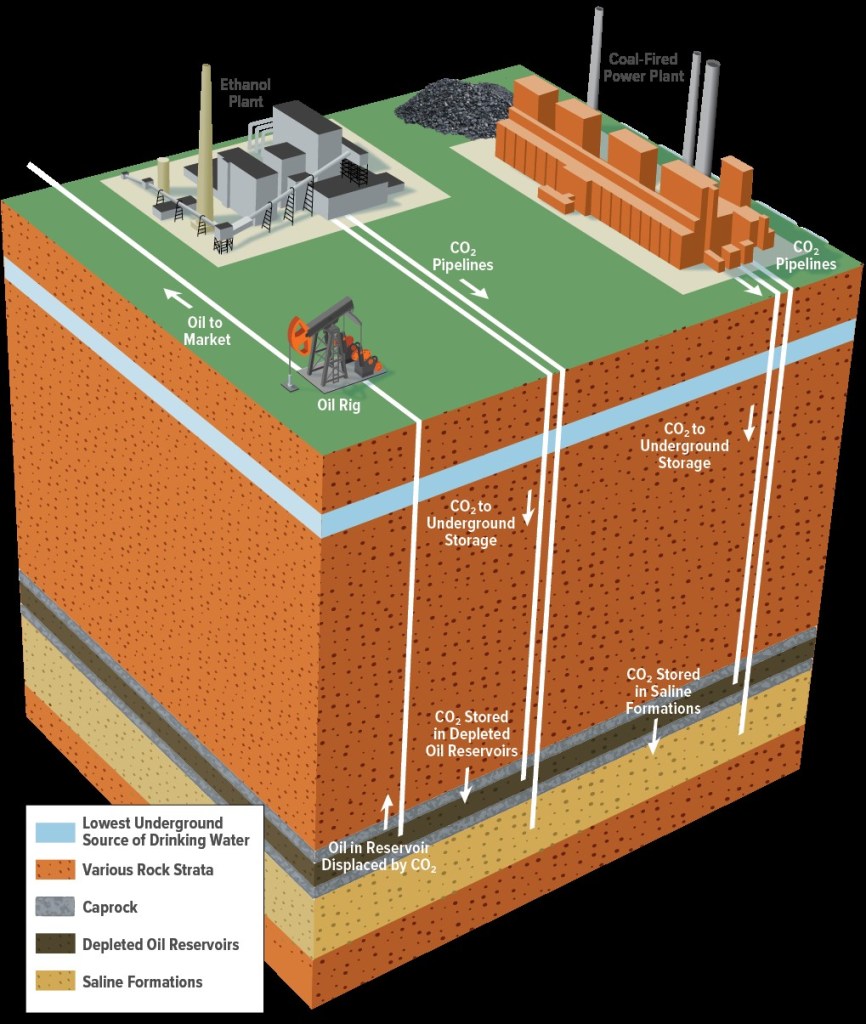
Carbon capture and storage is the process of separating carbon dioxide (CO2) from industrial emissions to prevent it from entering the atmosphere and contributing to climate change. There are also systems that can remove carbon dioxide directly from the atmosphere, but this is expensive. After capturing the carbon dioxide, it is compressed and stored permanently underground or used in products.
Capturing carbon dioxide from concentrated sources like ethanol or natural gas plants can cost as little as $15–$25 per ton, which should be compared to the huge cost from the damage to health and the environment caused by carbon dioxide added to atmosphere. This cost ranges from several hundred dollars per ton, to thousands of dollars per ton, and even one hundred thousand dollars per ton according to some estimates. Yet it has only captured about 0.1% of global emissions, making its overall climate impact negligible. Instead of storing the captured carbon dioxide it is often injected into nearly depleted oil wells to force out the remaining oil.
If you have not heard about carbon capture before, its existence may be a surprise to you. If you do know about carbon capture it is likely to come as a surprise to you that it is a potentially promising technology that is underutilized and not used correctly. The facts around this technology are surprising, which is why I call it a super fact.
Carbon dioxide and Global Warming
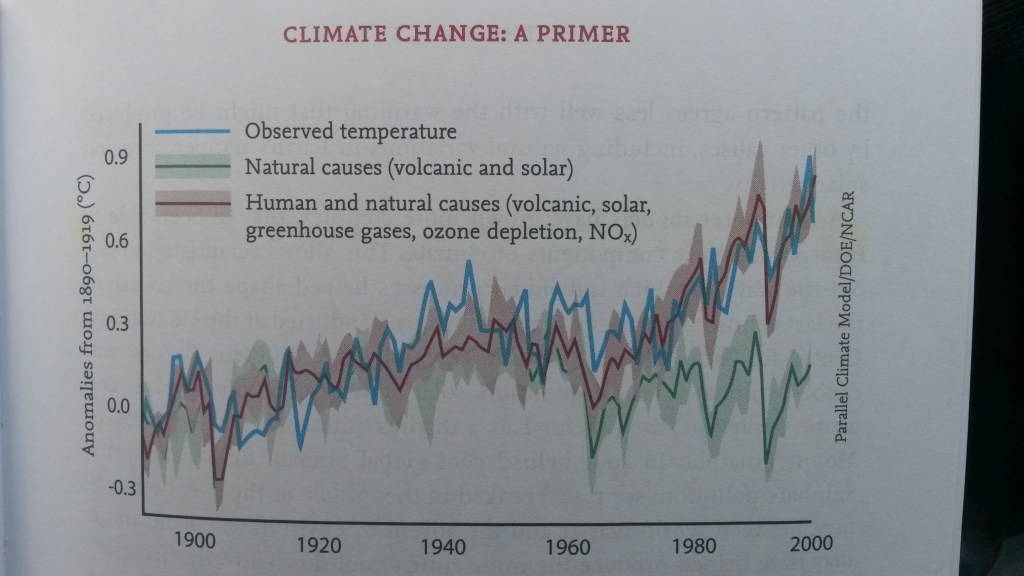
Global warming, or if you call it climate change, is happening and it is happening very fast. We also know that it is caused by us primarily as a result of our burning of fossil fuels. The primary culprit is carbon dioxide. There is a long-standing scientific consensus on these two/three facts because the evidence is conclusive. Some organizations and contrarians have successfully confused the public, but that does not mean there is a serious scientific discussion on the issue. To read more about this click here.
The damage caused by carbon dioxide to human health and the environment is difficult to assess, but you can get an idea, and you can put a dollar price on it. The economist William Nordhaus did this and got the Nobel Prize in economy for it in 2018. See my review for his book The Climate Casino. Now the question is what to do about it, and carbon capture and storage is one potential option.
Carbon capture and storage an unfulfilled promise
The following is to a large degree my opinion, not just fact. Carbon capture and storage is a good idea. However, it adds costs to the production of energy, a cost someone must pay for. It seems like a no brainer that if carbon dioxide creates a social cost of several hundred dollars per ton, then paying much less than that to mitigate the emissions would be a good idea. However, the social cost that carbon dioxide imposes on all of us is imposed on all of us whether we are responsible for the emissions or not. Whereas the cost for carbon capture is a cost to a specific company or person responsible for the emissions.
Even though the cost for carbon capture may only be a few dollars added to the natural gas bill or a few cents per gallon on a gas tank it is a cost that is not incurred by your competitor who is not doing carbon capture. Unless the governments of the world either pay for carbon capture or put a price on carbon emissions, carbon capture isn’t going to be economically viable.
In addition, carbon capture and storage has been disappointing in other ways. It has been more difficult and expensive than expected. It has been used to extract more fossil fuels rather than removing carbon emissions. In addition, renewable energy has become so cheap that it is cheaper to use renewable energy instead of fossil fuels with carbon capture.
My Other Responses to Esther’s Prompts
- Prompt : Small : Small Microscopic Subatomic and Strings
- Prompt : Kind : Leonbergers Are Kind Dogs
- Prompt : Window : What Does Rollo See Out His Window
- Prompt : Charge : Electric Charge is not the only type of Fundamental Charge
- Prompt : Promises : Promises To My Dog
- Prompt : Shade : A Total Solar Eclipse the Ultimate Moon Shade
- Prompt : Money : Ten Money Facts
- Prompt : Edge : The Edge of the Observable Universe is 46.5 billion Light Years Away
- Prompt : Fish : Ten Amazing Fish Facts
- Prompt : Promise : I Promise Not to Post AI Generated Comments
- Prompt : Respect : Respect your Dog
- Prompt : Giving : Leonbergers Giving Gifts to Pugs
- Prompt : Family : Dogs Are Family
- Prompt : Snow : Snow and Ice in Norrland
- Prompt : Red : The Universe has a Redshift and its Increasing
- Prompt: Shapes : Conic Sections are the Shapes that Shape Our World
- Prompt: Flying : 10 Wind Blowing Facts About Birds
- Prompt: Drive : Letting Your Dog Drive the Car
- Prompt: Memories: False Memories Strange Memories Unpleasant Memories and Amnesia
- Prompt: Magic: Magic In New Orleans a Travel Overview
- Prompt: Vision: Human Vision Only Detects a Sliver of the EM Spectrum
- Prompt: Flower: Leonberger Dogs with Flowers
 Super Facts