The goal of this blog is to create a list of super facts. Important facts that are true with very high certainty and yet surprising, misunderstood, or disputed by many. This blog aims to be challenging, educational, and fun, without it being clickbait. I determine veracity using evidence, data from reputable sources and longstanding scientific consensus. Prepare to be challenged (I am). Intentionally seek the truth not confirmation of your belief.
Super fact 102: Stars twinkle but planets do not. Planets reflect sunlight, like the moon, whereas stars emit intense light like the sun. However, stars are thousands of times further away.
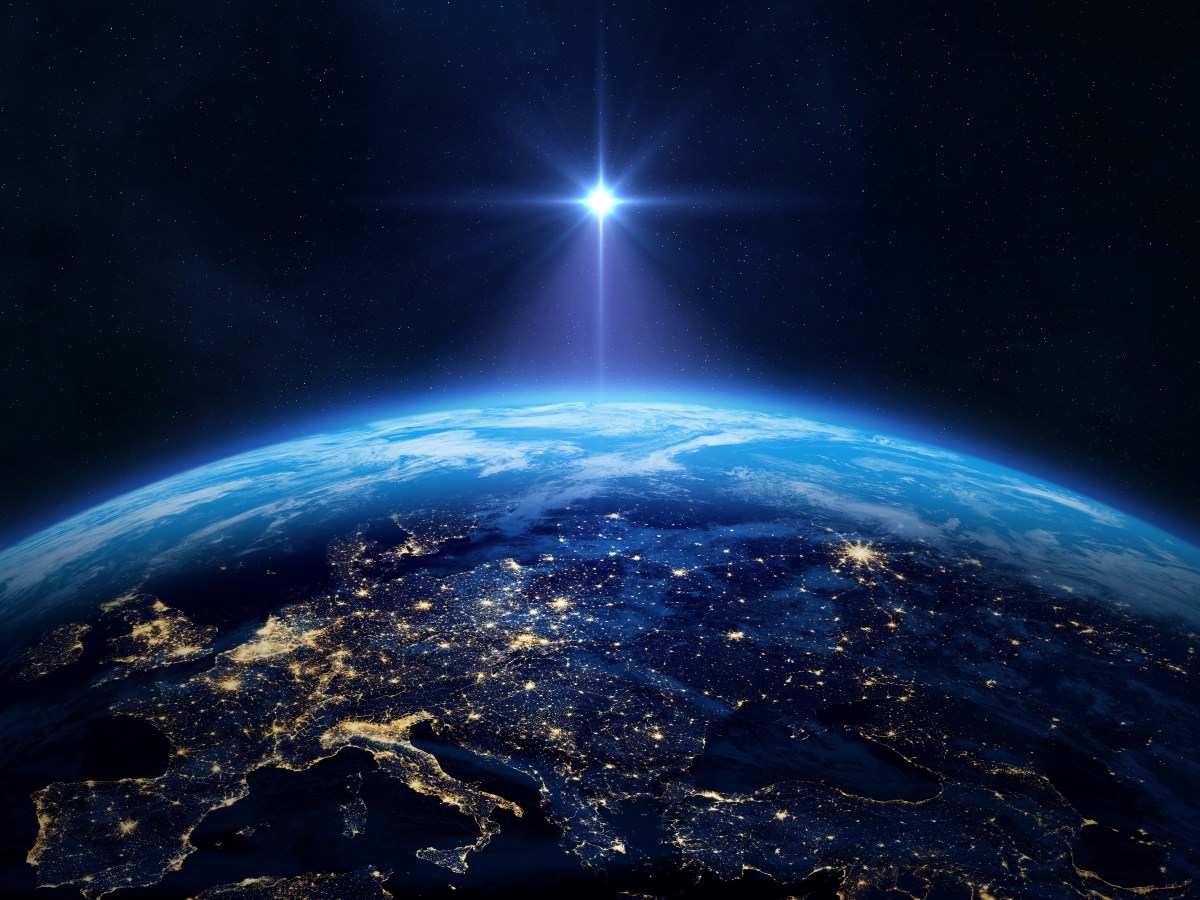
The light from stars is intense allowing stars to have much smaller discs in the sky for the same amount of light as a planet. Shutter Stock Illustration ID: 566774353 by Nostalgia for Infinity.
The Sun and the Moon appear to have roughly the same sized disk in the sky, about 0.5 degrees of arc, because the Sun is roughly 400 times wider than the Moon but also about 400 times farther away. However, the moon, which reflects sunlight but does that emit any, is much fainter than the sun in our sky. The Sun provides approximately 400,000 times more light to Earth than the full Moon. If you were to move the sun farther away until it provided the same amount of light as the moon you would have to move the sun 632 times farther away until it became a tiny point in comparison to the moon.
The planets in our solar system, Venus, Jupiter, Mars, Mercury, Saturn, etc., appear in the sky as small discs reflecting light whereas the stars appear as intense points of light with a disc diameter that is thousands of times smaller than that of the planets. However, we can’t see the difference with the naked eye. Both planets and stars appear like points of lights to us, but the difference in disc size in the sky is very big.
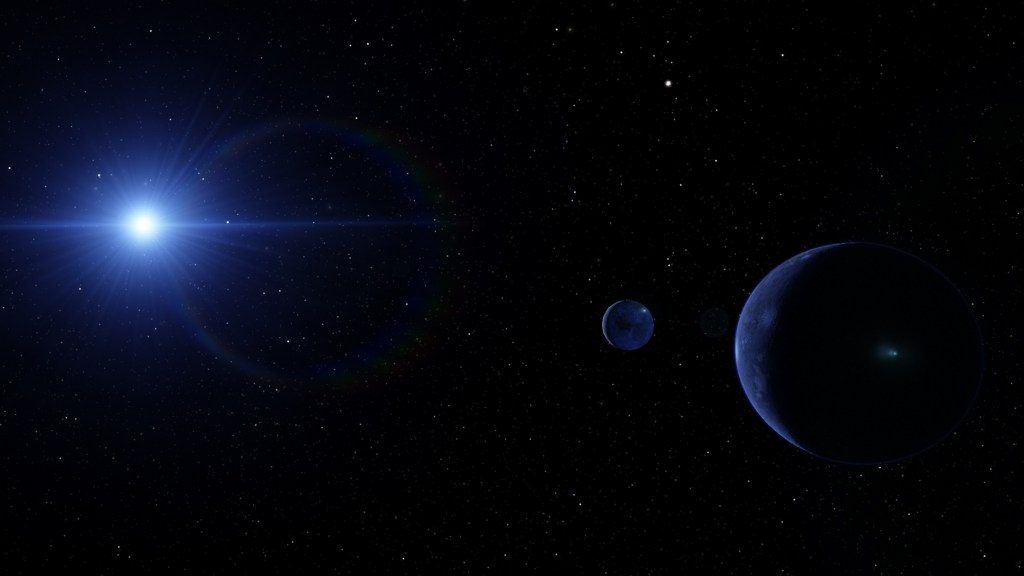
Planets reflect light whereas the stars appear as intense points. Shutterstock asset id: 2709145593 by buradaki
Because stars are tiny intense points of light Earth’s atmosphere can easily refract (bend) their light. This is known as scintillation. I can add that the light from stars that are low in sky go through more atmosphere and therefore twinkle more. Since planets appear as tiny discs rather than tiny points, planets create a steadier beam of light, which averages out atmospheric turbulence. In addition, dust particles in space and in the atmosphere can more easily block the light from stars compared to that of planets, because the planets have much larger discs in the sky (thousands of times larger).
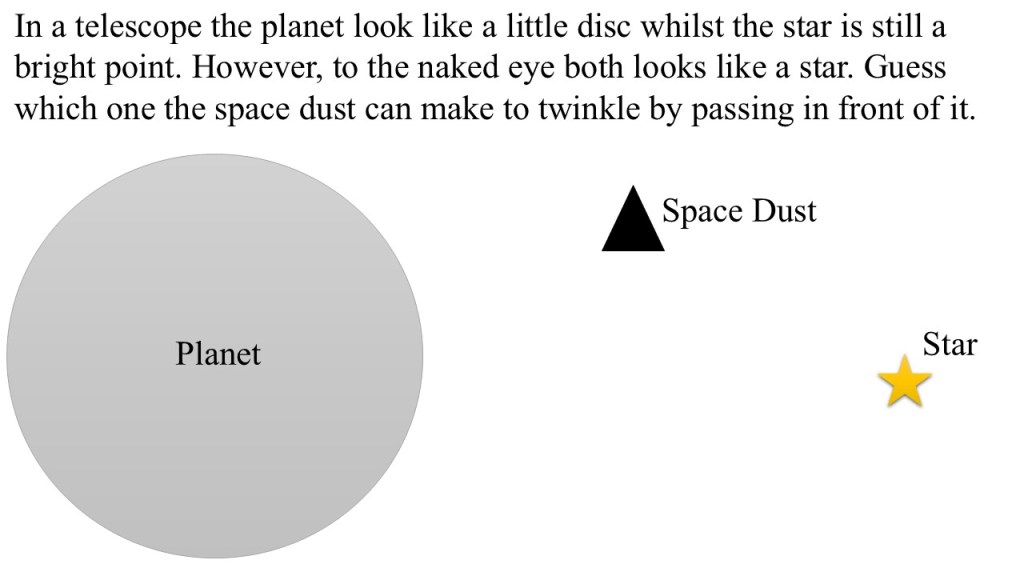
To the naked eye a planet and a star point look light points of light. In a telescope the planet will turn into a disc, but the star will remain a bright point of light. For example, a piece of space dust can easily make the star twinkle by moving in front of it but won’t do that to the planet. Note: planets are much smaller than stars, but they are much closer and can look bigger.
Since this fact is not scientifically under question, a lot of people don’t know it, and it is kind of important to anyone interested in the night sky, I consider it a super fact. I should say that I borrowed this super fact from Jacqui Murray’s blog worddreams.
Planets Reflect Light like the Moon
Planets reflect light. They don’t shine and emit light like the sun or the stars.
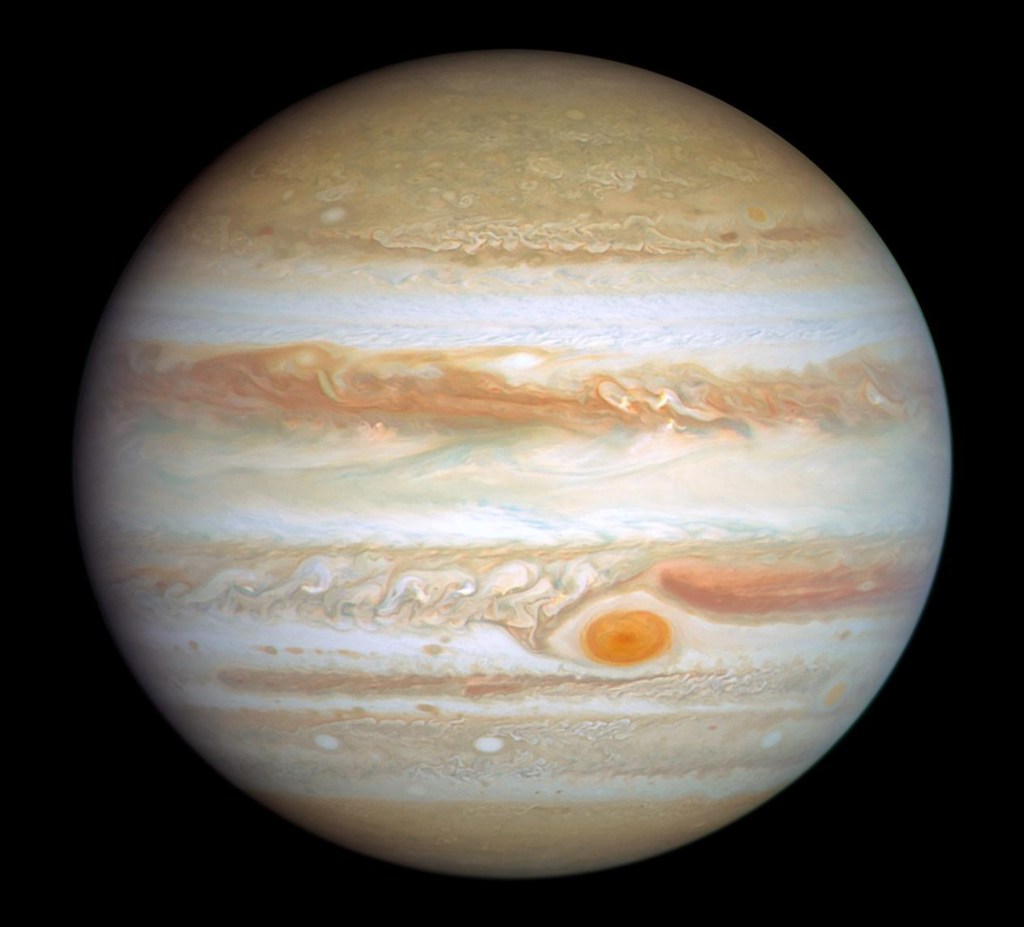
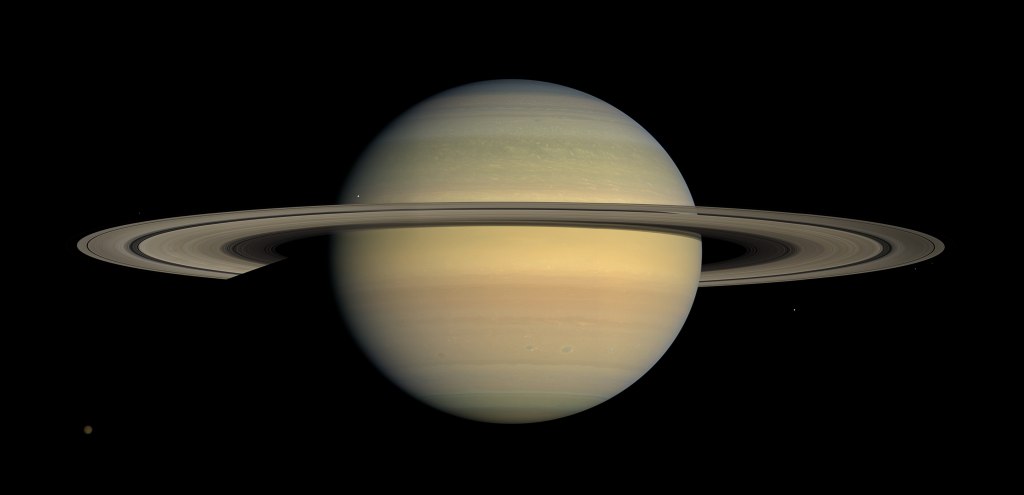
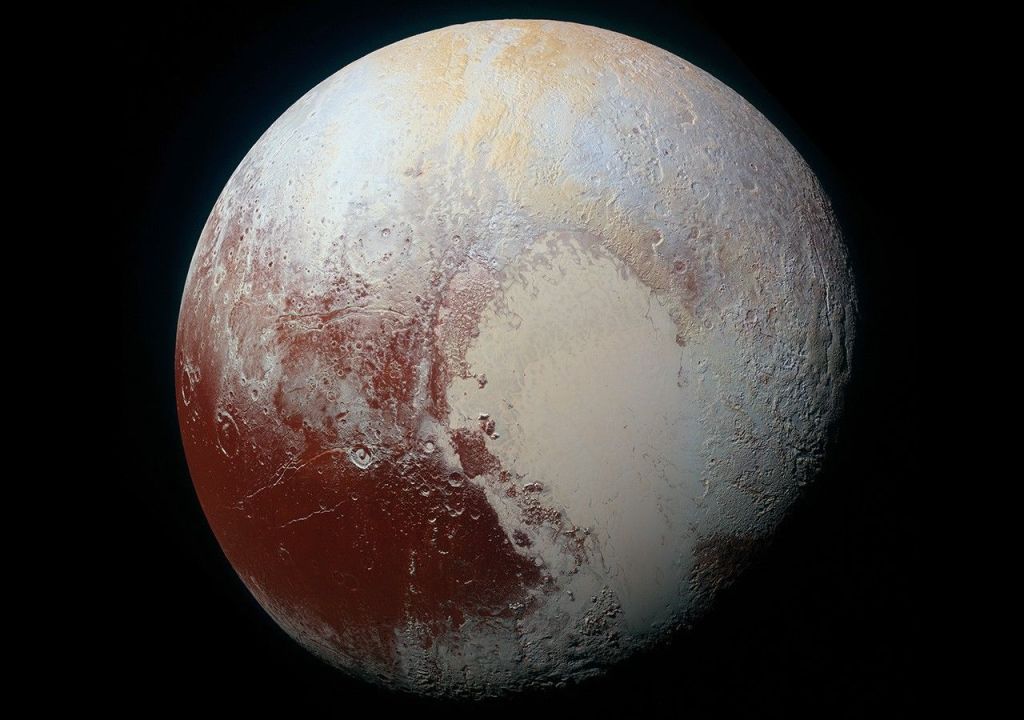
Jupiter in true color, taken by the Hubble Space Telescope in January 2024Saturn and its prominent rings, as captured by the Cassini orbiter. This natural color view of the planet Saturn was created from images collected shortly after Cassini began its extended Equinox Mission in July 2008.Pluto from NASA/JHUAPL/SwRI. NASA / Johns Hopkins University Applied Physics Laboratory / Southwest Research Institute, Public domain, via Wikimedia Commons. NASA’s New Horizons spacecraft captured this high-resolution enhanced color view of Pluto in 2015.
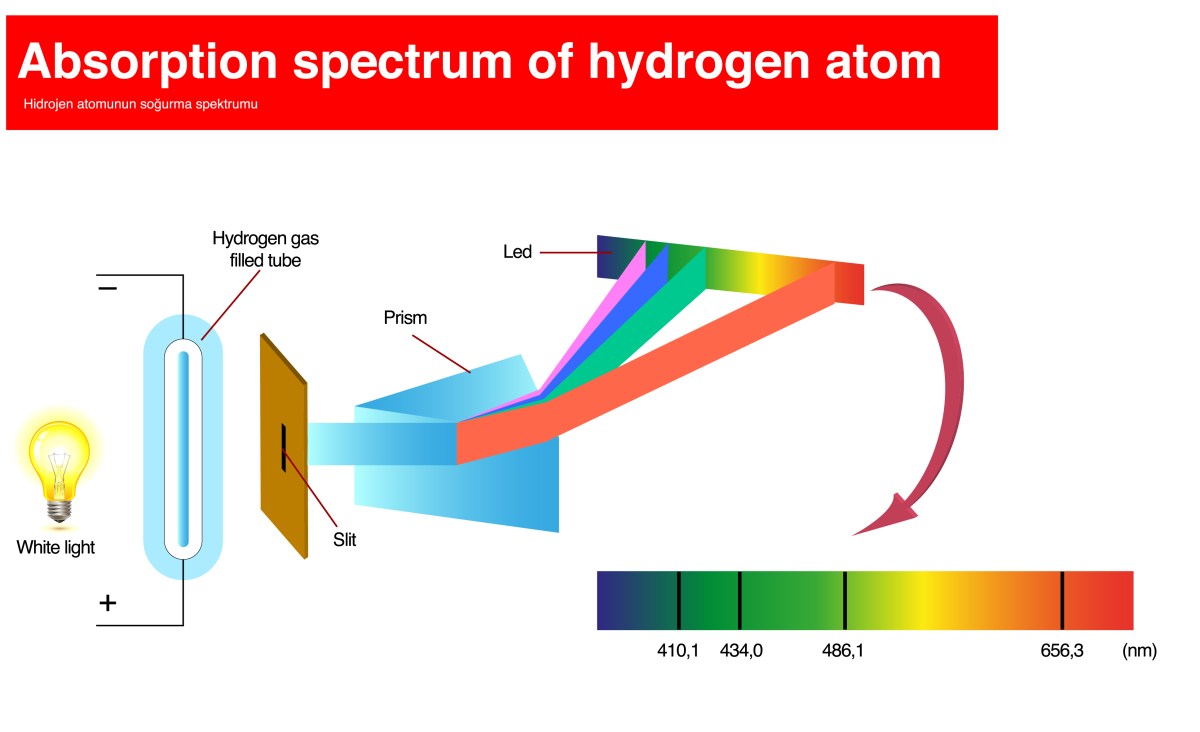
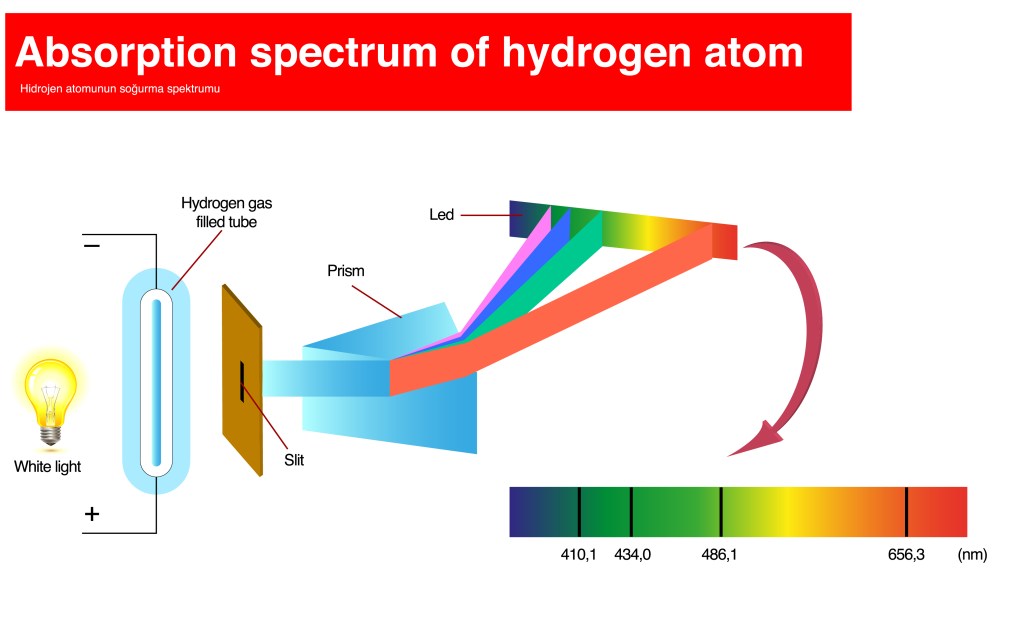
If you place a light bulb (white light includes a spectrum of colors) in front of a container filled with hydrogen and then you let the light pass through a prism, it will split into the different colors (red, yellow, blue, etc.) forming a rainbow, as prisms do. You see this every time you see a rainbow in nature. However, if you measure carefully, as in the experimental setup below, you will notice that some frequencies are missing. That’s because the hydrogen gas will absorb certain frequencies.
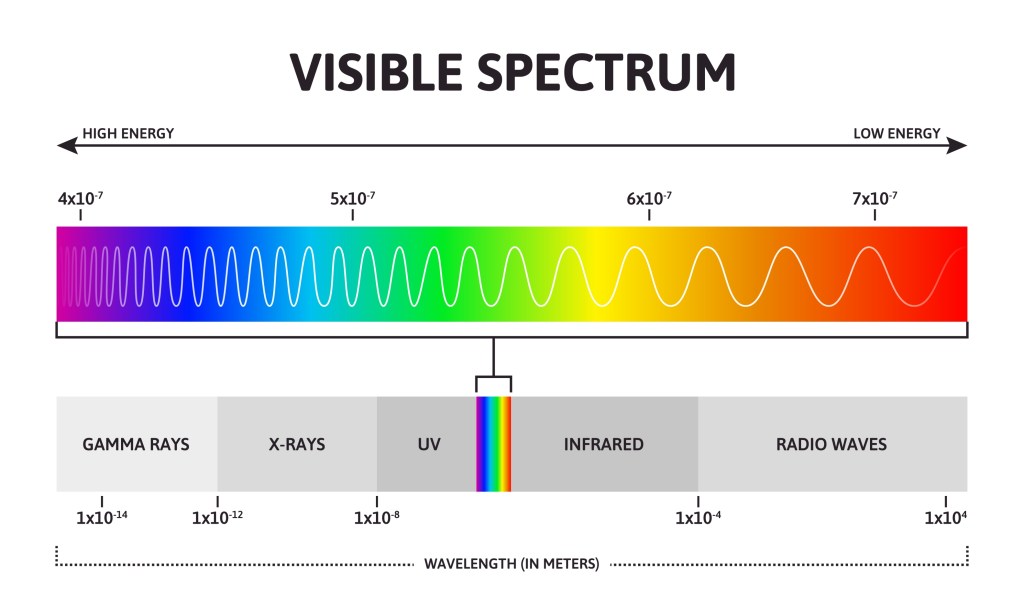
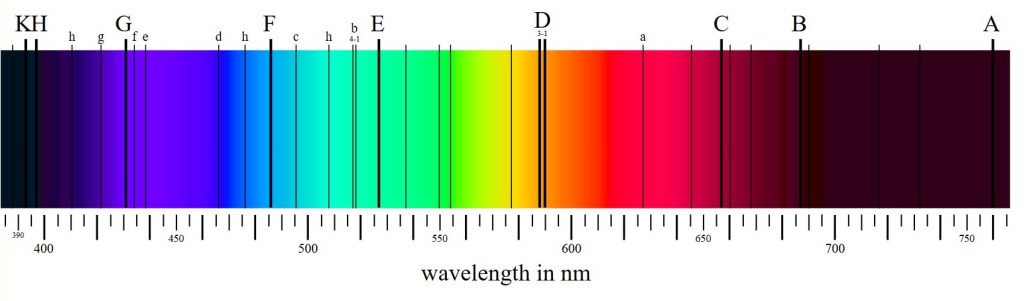
This is true, not just for hydrogen, but for all elements/atoms and molecules. Atoms and molecules have light absorption patterns that are unique to the atom/element in question. The dark lines in the spectra are referred to as Frauenhofer lines. In a sense, all elements have a thumb print resulting from their so called absorption spectra. This makes it possible to identify the elements in a star and their proportions.
Absorption spectrum / Frauenhofer lines of the hydrogen atom. Shutterstock asset id: 1305568666 by Emir Kaan
Before the discovery of absorption spectra, it was sometimes believed that humanity would never know the chemical elements of stars. Even today many people are surprised to hear that we can indeed know what stars are composed of just by looking at their light. In addition to identifying elements in the upper layers / atmosphere of stars you can use the same absorption spectra to determine the relative velocity of stars compared to us and sometimes the distance to the stars. This is an old discovery that is surprising and important to our understanding of the world and therefore a super fact in my opinion.
Examples of Absorption Spectra
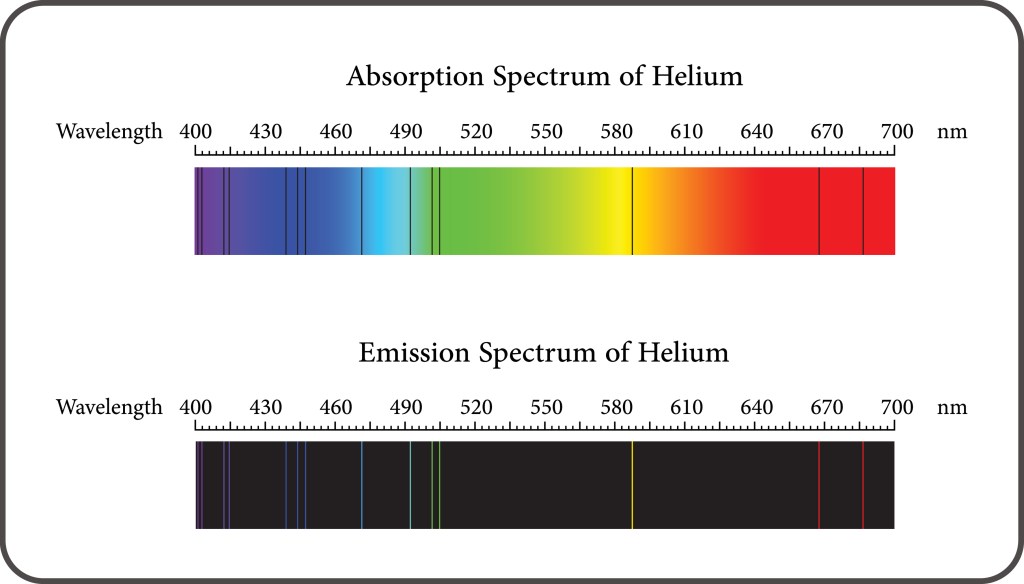
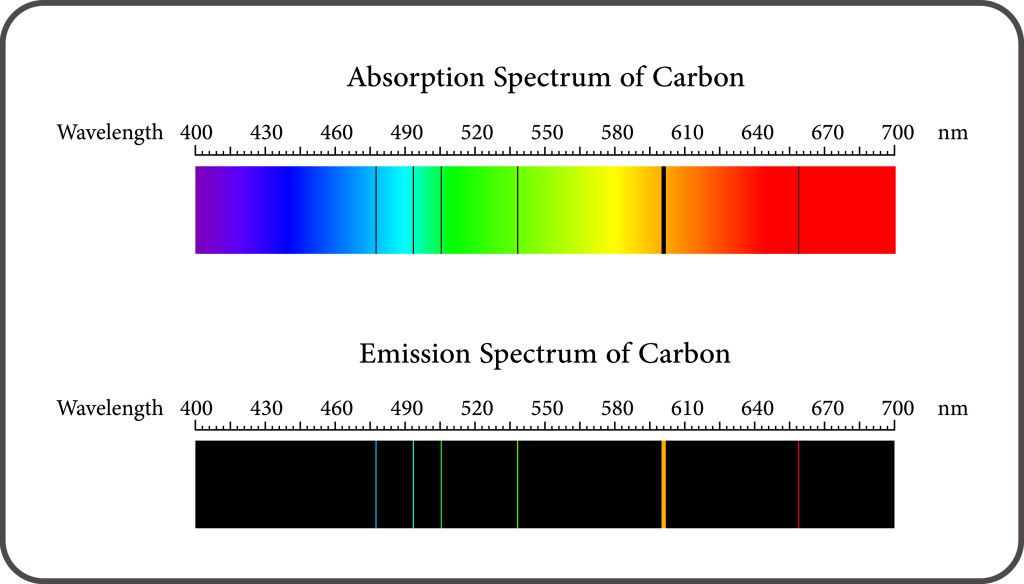
An interesting, related fact is that Helium was discovered in the Sun before it was found on Earth, with the help of emission spectra (August 18, 1868). Emission spectra are the opposite of absorption spectra. It should be noted that while emission spectra are commonly used for identifying the composition of interstellar gas, absorption spectra are commonly used for identifying the composition of stars.
Absorption and Emission Spectrum of Helium Shutterstock asset id: 1724296909 by MoFaroukAbsorption and Emission Spectrum of Carbon Shutterstock asset id: 1725934867 by MoFaroukSolar spectrum with Fraunhofer lines as it appears visually. The solar spectrum is a combination of spectra from multiple elements: nl:Gebruiker:MaureenVSpectrum-sRGB.svg: Phrood~commonswikiFraunhofer_lines_DE.svg: *Fraunhofer_lines.jpg: Saperaud 19:26, 5. Jul. 2005derivative work: Cepheiden (talk)derivative work: Cepheiden, Public domain, via Wikimedia Commons.
Using Redshift to Determine how fast Stars are Moving Compared to us
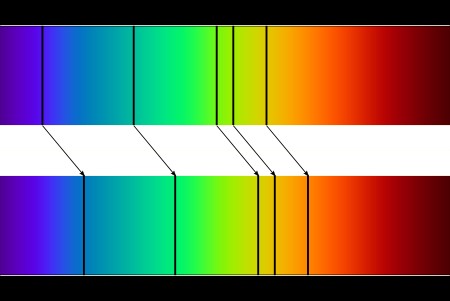
A star or galaxy that is moving towards us will have a blue shifted spectrum. A star or galaxy that is moving away from us will have a red shifted spectrum. Red shifted means that the absorption lines have moved towards red because the frequency of the light has been shifted due to the motion.
This is called the doppler effect. You can notice this phenomenon for the case of sound when an ambulance is coming towards you and then speeding by you. The sound changes. The astronomer Hubble was using redshift to the determine that the further away a galaxy was from us the faster it was moving away from us. Measuring the redshift of a faraway galaxy or star, not only tells us its speed compared to us but can indirectly help us determine the distance to the galaxy or star.
Visualization of redshifted absorption lines are redshifted due to velocity away from observer. Top lines are for an object at rest and in the bottom picture the object is moving away. Maxmath12, CC0, via Wikimedia Commons. This file is made available under the Creative Commons CC0 1.0 Universal Public Domain Dedication.
There are other things you can tell from the light from stars and from their electromagnetic spectrum such as the type of star, the size of the star, and the age of the star, but that is for another post. This post is long enough.
Superfact 99: Carbon capture is the process of separating carbon dioxide from industrial emissions. Even though it works and could be helpful it isn’t used very much, at least not the right way.
If you have not heard about carbon capture before, its existence may be a surprise to you. If you do know about carbon capture it is likely to come as a surprise to you that it is a potentially promising technology that is underutilized and not used correctly. The facts around this technology are surprising, which is why I call it a super fact.
With CCS, carbon dioxide is captured from a point source, such as an ethanol refinery. It is usually transported via pipelines and then either used to extract oil or stored in a dedicated geologic formation. Congressional Budget Office, U.S. Federal Government, Public domain, via Wikimedia Commons.
Carbon dioxide and Global Warming
Global warming, or if you call it climate change, is happening and it is happening very fast. We also know that it is caused by us primarily as a result of our burning of fossil fuels. The primary culprit is carbon dioxide. There is a long-standing scientific consensus on these two/three facts because the evidence is conclusive. Some organizations and contrarians have successfully confused the public, but that does not mean there is a serious scientific discussion on the issue. To read more about this click here.
The damage caused by carbon dioxide to human health and the environment is difficult to assess, but you can get an idea, and you can put a dollar price on it. The economist William Nordhaus did this and got the Nobel Prize in economy for it in 2018. See my review for his book The Climate Casino. Now the question is what to do about it, and carbon capture and storage is one potential option.
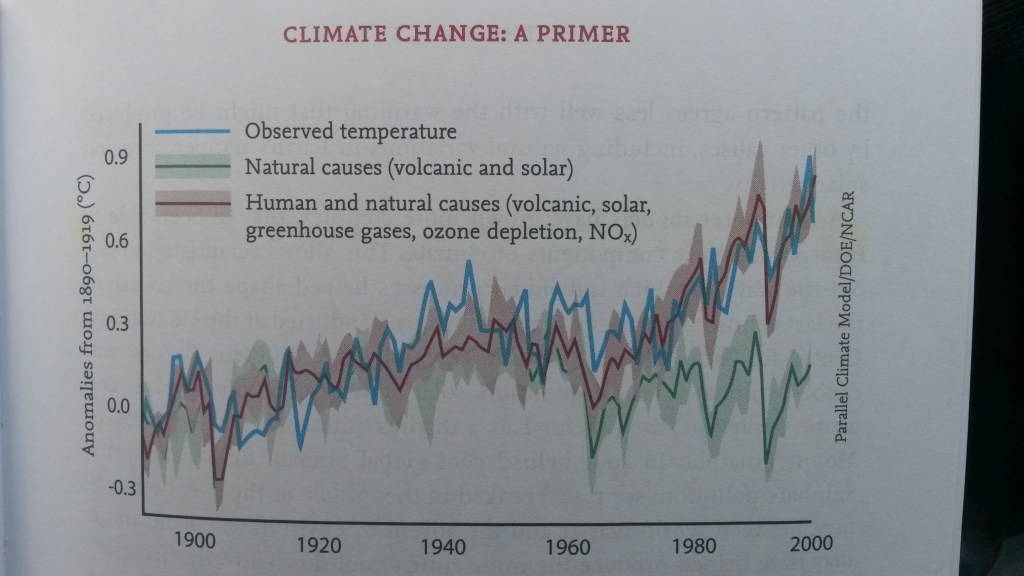
Natural causes for global warming / climate change would have cooled the planet, not warm it. Click here to visit this NASA web page regarding the causes behind global warming.
Carbon capture and storage an unfulfilled promise
The following is to a large degree my opinion, not just fact. Carbon capture and storage is a good idea. However, it adds costs to the production of energy, a cost someone must pay for. It seems like a no brainer that if carbon dioxide creates a social cost of several hundred dollars per ton, then paying much less than that to mitigate the emissions would be a good idea. However, the social cost that carbon dioxide imposes on all of us is imposed on all of us whether we are responsible for the emissions or not. Whereas the cost for carbon capture is a cost to a specific company or person responsible for the emissions.
Even though the cost for carbon capture may only be a few dollars added to the natural gas bill or a few cents per gallon on a gas tank it is a cost that is not incurred by your competitor who is not doing carbon capture. Unless the governments of the world either pay for carbon capture or put a price on carbon emissions, carbon capture isn’t going to be economically viable.
In addition, carbon capture and storage has been disappointing in other ways. It has been more difficult and expensive than expected. It has been used to extract more fossil fuels rather than removing carbon emissions. In addition, renewable energy has become so cheap that it is cheaper to use renewable energy instead of fossil fuels with carbon capture.
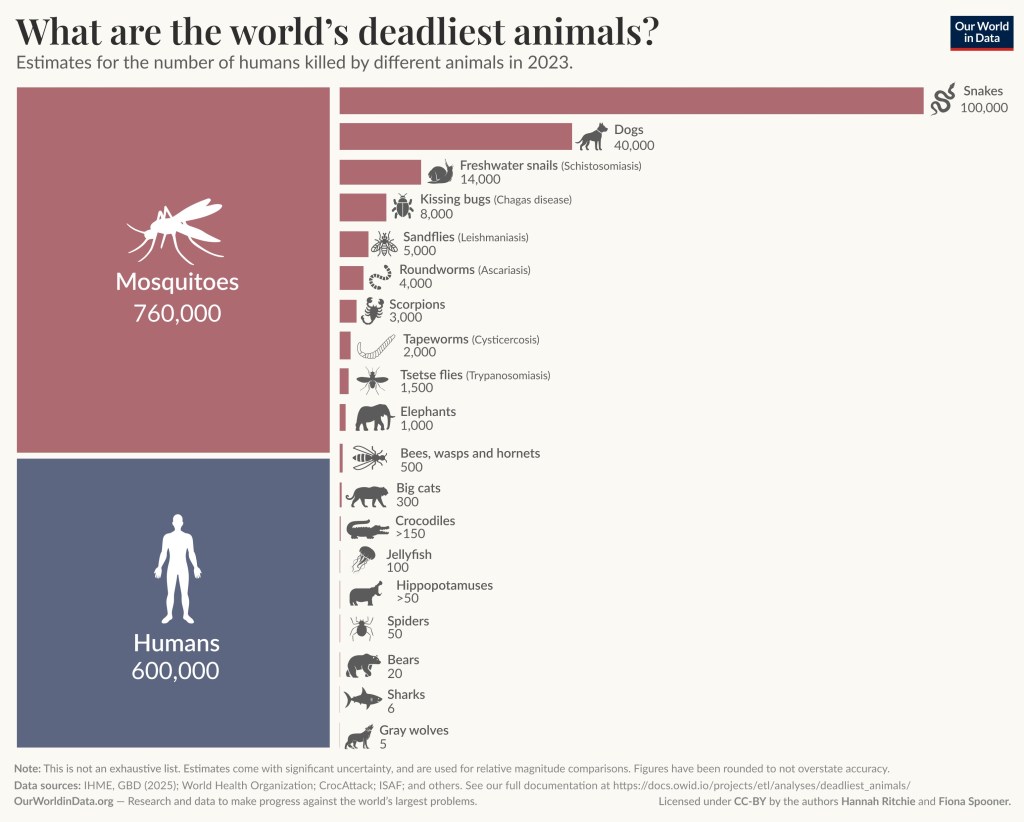
Super fact 98 : The deadliest animals in the world are mosquitos, snakes and dogs. Mosquitos kill an estimated 760,000 people each year. Snakes kill an estimated 100,000 people each year. Dogs kill an estimated 40,000 people each year. By comparison humans kill on average 600,000 other humans annually due to wars and violence.
Estimates for the number of humans killed by different animals in 2023. Note: This is not an exhaustive list. Estimates come with significant uncertainty and are used for relative magnitude comparisons. Figures have been rounded to not overstate accuracy. Data sources: IHME; GBD (2025); World Health Organization; CrocAttack; ISAF; and others. See the full documentation at https://docs.owid.io/projects/etl/analyses/deadliest_animals/OurWorldInData – Research and data to make progress against the world’s largest problems. Licensed under CC-BY by the authors Hannah Ritchie and Fiona Spooner.
The first time I heard that the deadliest animal in the world was the mosquito I was surprised. After I heard that the reason was all the diseases that mosquitos spread, such as malaria, dengue fever, and yellow fever, it made more sense to me. I recently learned that snakes kill 100,000 people every year. It surprised me because it seemed like a lot to me.
I was also surprised to learn that our best friends the dogs, come in as number three on the list of deadliest animals, at an annual kill rate of 40,000 people. Even though scorpions are not at the top of the list they kill 3,000 people annually, while spiders only kill 50 people. We have both venomous spiders and scorpions where I live, but I’ve been worried about spiders, not scorpions. It is also surprising to me that sharks only kill about 6 people per year. I guess my super fact 98 is a collection of facts regarding “killer animals” rather than one specific fact. I am hoping that at least one of the facts will be surprising to you.
I should mention that the numbers vary over time and different sources give different statistics. Therefore, the numbers should be seen as ballpark numbers and not exactly. However, Our World in Data is considered one reputable and highly reliable data source that is frequently cited in scientific journals, and access is free.
Mosquitos Kill 760,000 People Each Year
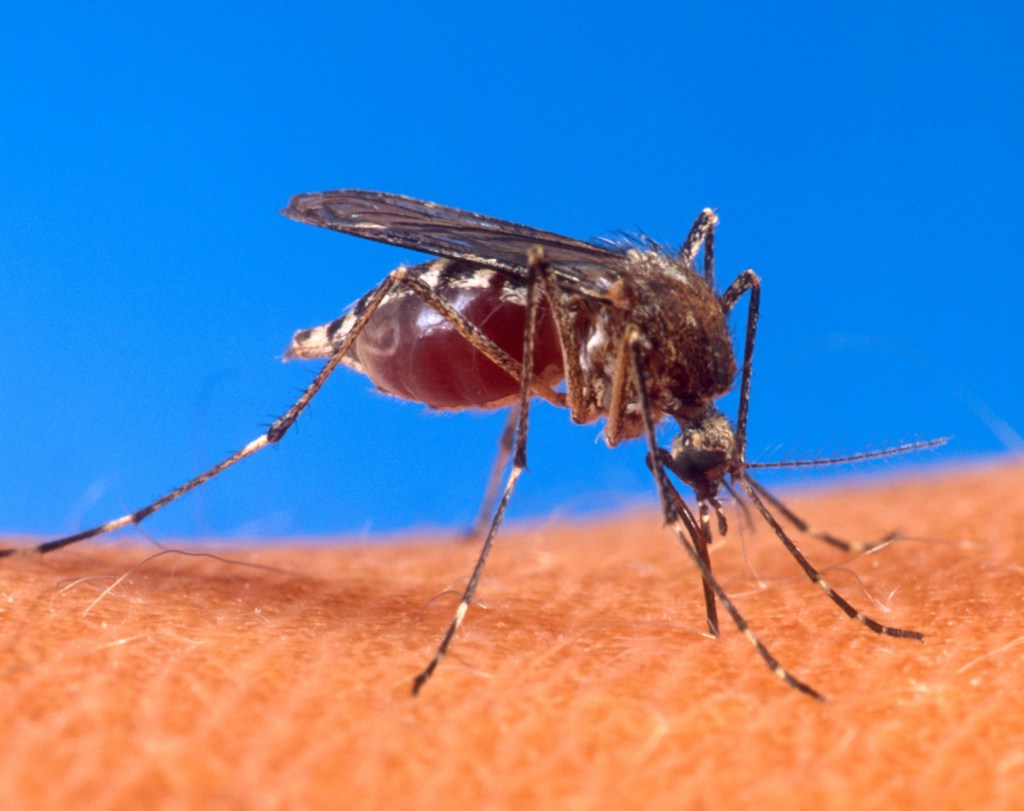
Mosquitos are the biggest killers of humans by far. 80% of those deaths are the result of malaria which is transmitted and spread by the Anopheles mosquito. We have made progress against malaria, and it used to be worse. In the 20th century 150 to 200 million people died from malaria, which is more than one and half million people per year. Smallpox killed 300 million people in the 20th century, but it was entirely eradicated by 1977 thanks to the smallpox vaccine. The two existing vaccines for malaria are relatively recent (2021 & 2023), not as effective as the smallpox vaccine was, and not yet as widely used, which is one reason malaria is still a major health concern.
The Aedes aegypti mosquito, which spreads dengue fever and yellow fever. Original author: US Department of Agriculture; then denoised rescaled, enhanced with adaptive denoising filters and minimal resharpening, then unscaled to original resolution, for easier refitting at various resolutions., Public domain, via Wikimedia Commons.
In addition, mosquitos spread other diseases killing more than 100,000 people every year. Dengue fever, yellow fever and Japanese encephalitis, are a few of the more dangerous mosquito borne diseases.
Snakes Kill 100,000 People Each Year
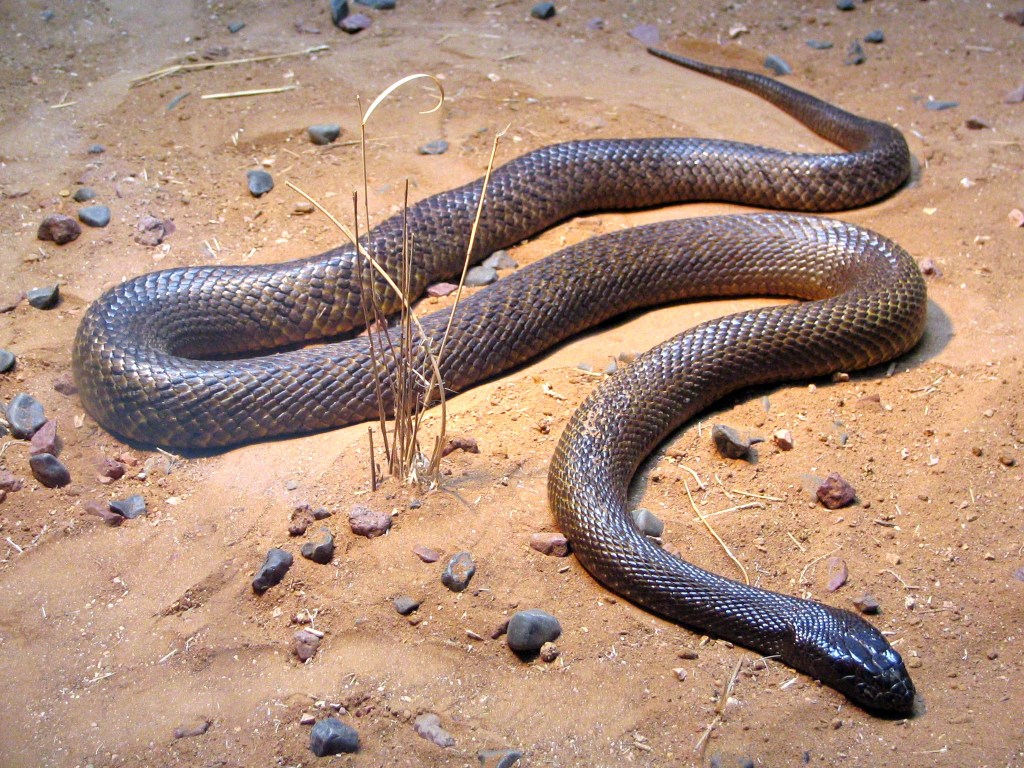
The death toll from venomous snakes is uncertain but it is likely to be 100,000 deaths per year. The World Health Organization estimates that snake bites kill between 81,410 and 137,880 each year.
The most venomous snake in the world is the Inland Taipan. Its venom can kill over 100 people in a single bite. However, due to its shy nature and remote Australian habitat, no human deaths have been attributed to it. The most dangerous snake to humans, in terms of fatalities, is often considered the Russell’s viper, responsible for 25,000 deaths annually. Other snakes that kill several thousand people every year are the saw-scaled viper, the common krait, the Indian cobra in Asia, and the black mamba.
Did you kill 40,000 people? Actually, our mini-Australian Shepherd Rollo did not kill anybody.
Even though there are some large and dangerous dogs, most deaths caused by dogs is from rabies resulting from being bitten by a rabies infected dog. See the horror movie Cujo.
Freshwater Snails, Kissing Bugs, Sandflies, Roundworms are Mass Killers
Other critters that kill thousand of people every year are freshwater snails, kissing bugs, sandflies, and roundworms. These critters kill people by infecting them with dangerous parasites or as in the case of roundworms, being a dangerous parasite.
Scorpions Kill 3,000 People Each Year but Spiders Only 50
I was at an overnight outing with the guys at work. I had just moved to Texas. We were standing or sitting around the fire drinking beer when I asked a question. I’ve heard about the scorpions in Texas, but I’ve never seen any. How common are scorpions?
A coworker named Gary told me to turn around, so I did. Behind me was a tree, and the tree was covered by crawling scorpions. Well, I was glad I did not lean on it. The scorpions I saw were the striped bark scorpion.
The reason scorpions kill a lot more people than spiders is that some scorpion species have a very potent and deadly venom. Some spiders are dangerous too, but spiders tend to have less potent venom.
The Big Cats kill only 300 People Annually and Sharks Only 6
Would you prefer to stay in a room with a Tiger or with a mosquito? Mosquitos kill 760,000 people every year, whilst Tigers only kill a handful of people every year. However, Tigers don’t kill less people than mosquitos because they are less dangerous than mosquitos. The difference is exposure. Mosquitos are everywhere but not Tigers. If Tigers were as common as people and everywhere people were, the numbers probably would be different.
Bengal tiger (Panthera tigris tigris) female, Kanha National Park, India. Attribution: Charles James Sharp.