
Superfact 104: The evolution of eyes is convergent, meaning different, unrelated animal species independently evolved similar types of eyes. Biologists estimate that eyes have evolved independently between 40 to over 65 different times across various lineages. An example is the evolution of Cephalopod eyes (like squid and octopus) and vertebra eyes.
Esther’s writing prompt: May 20, 2026: Eyes
Click here to join in.
First of all, eyes evolved. Creationists often say that eyes are too complex too have evolved. That is because the eye is composed of many interdependent, finely tuned parts, for example, the cornea, iris, retina and lens. And that it cannot function without all those components already evolved. This is referred to as the argument for irreducible complexity.
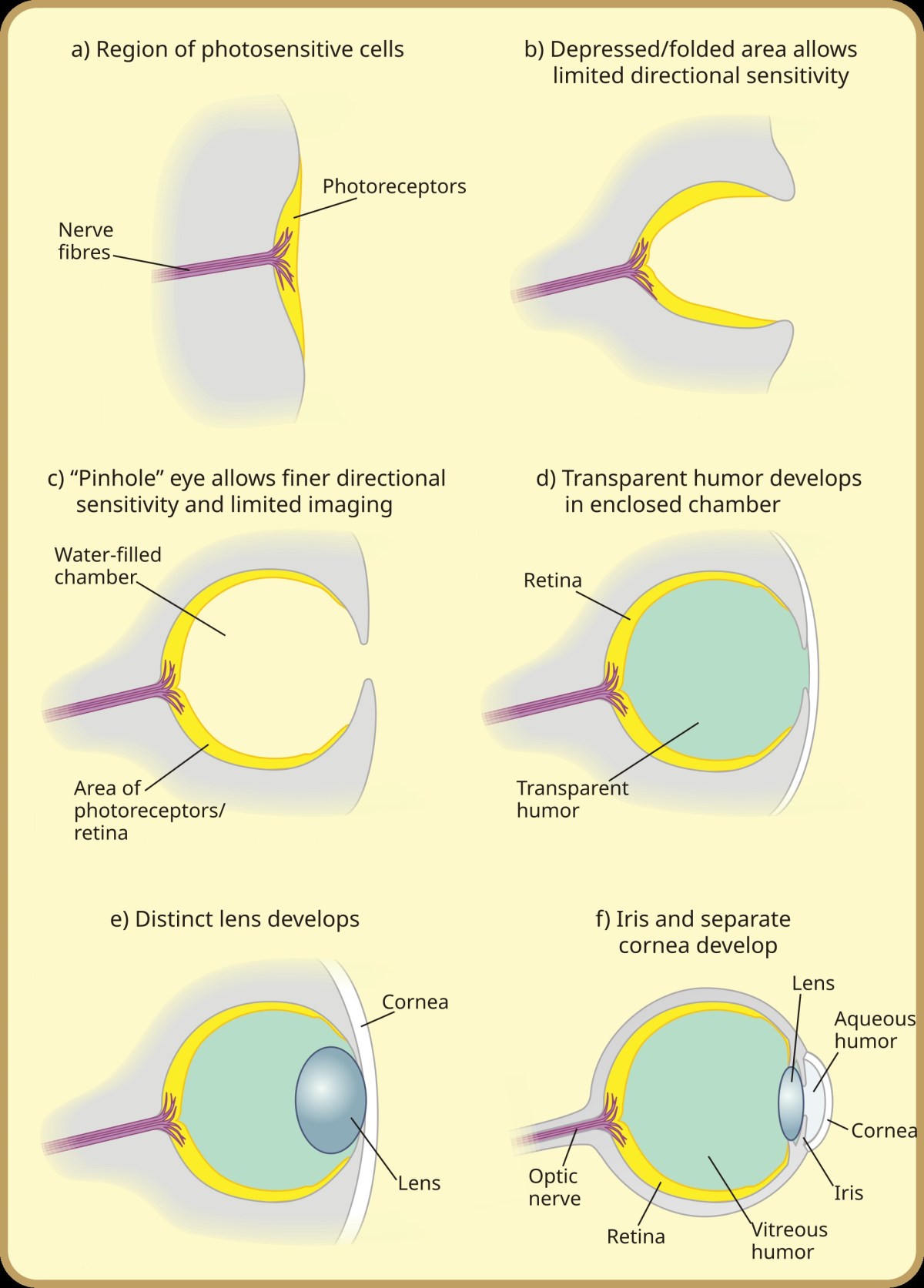
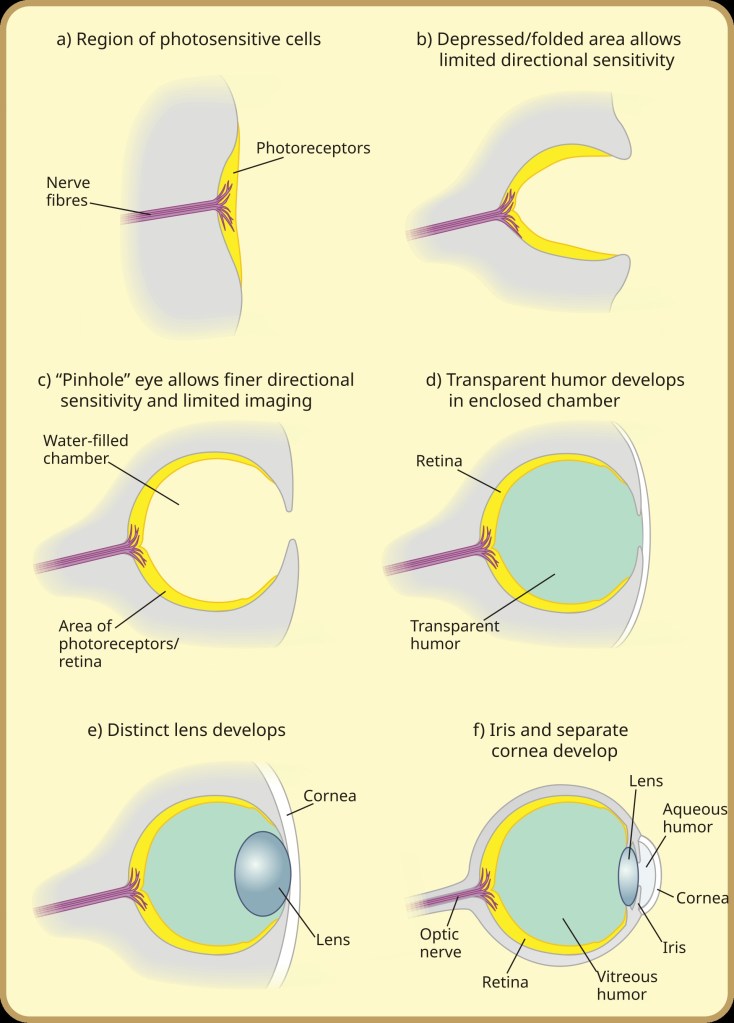
The problem with that argument is that evolution is not linear. The various intermediate steps may not have functioned as the final product but could still have provided evolutionary advantage. There are many intermediate “eyes” existing today in nature. As you can see in the picture below the evolution of the vertebra eye did not start with all the current parts.
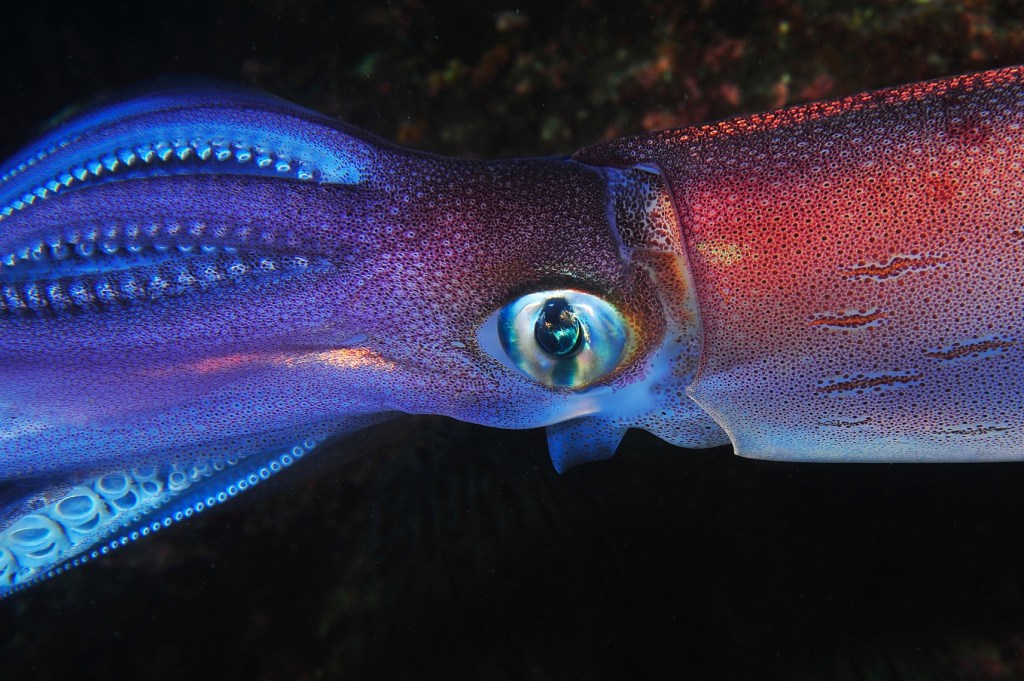
In addition, the evolution of eyes is largely convergent. Biologists estimate that eyes have evolved independently between 40 to over 65 different times across various lineages. The cephalopods (like octopuses and squid) and vertebrates (like humans, mammals, birds and fish) evolved their camera-style eyes completely independently. This is one of nature’s most famous examples of convergent evolution, where two unrelated species arrive at the exact same biological solution to survive in their environments.
The fact that eyes evolved and that the irreducible complexity argument does not work comes as a surprise to creationists. That the various kinds of eyes in nature evolved separately but converged on similar complex structures is in general an amazing fact. It is a kind of an important fact that is true. Therefore, it is a super-fact in my opinion.
Eyes Are not an Example of Irreducible Complexity
The evidence that the complexity of eyes is not an example of irreducible complexity is strong. We can trace lineages via DNA and sub-optimality. We can also simulate the evolution of the eye using computers. In a simulation based on mutations and natural selection it took 363,992 generations to evolve an eye from an eyespot (light-sensing organelle) to a complex camera type eye, which probably corresponds to around half a million years. See The Evidence for Evolution by Alan R. Rogers.
I can add a personal anecdote. In my job as a software engineer trying to find better algorithms for sorting mail using the photos of the mail, including the address block, I tried using genetic algorithms. Genetic algorithms is a type of Artificial Intelligence that simulates evolution to create better systems (better algorithms and software). The genes corresponding to the best algorithms were allowed to propagate, recombine and mutate. That was the natural selection component.
What I saw was that the genetic algorithm could evolve the system into a complex and effective system of interdependent complex components that did not exist at the beginning. Several complex components working together did not require that components/parts evolve one after another. They can go through several formats from primitive to advanced and they can have different functions along the way. Some parts might evolve and then disappear and new kinds of parts pop up, as the total algorithm kept evolving. There is no reason to believe that irreducible complexity even exists.
The Vertebra Eye versus the Cephalopod Eye
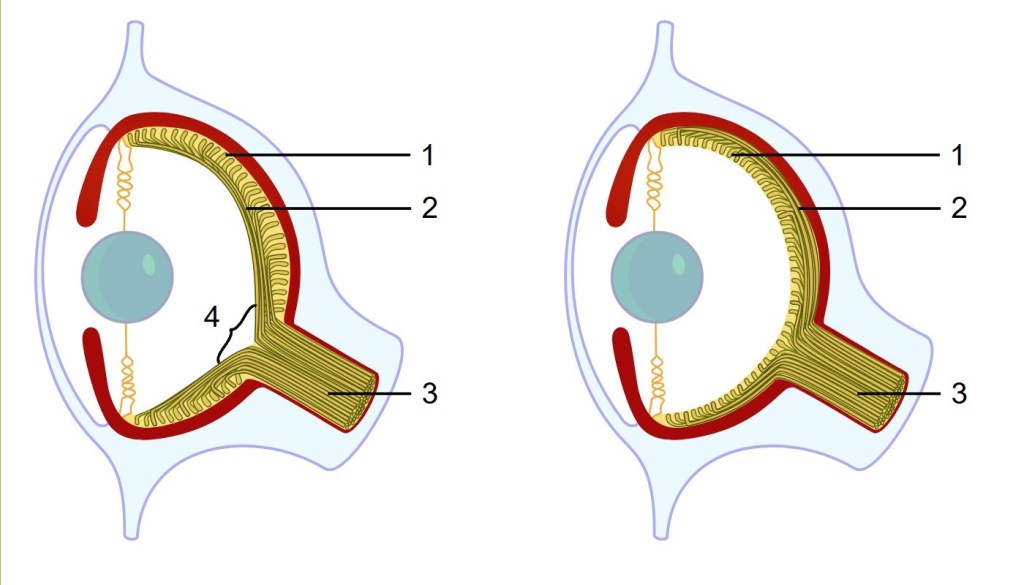
While both eyes share features like a cornea, iris, lens, and retina, they were built from different starting materials and possess some structural differences. In vertebrate eyes, the nerve fibers route before the retina, blocking some light and creating a blind spot where the fibers pass through the retina. In cephalopod eyes, the nerve fibers route behind the retina, and do not block light or disrupt the retina. In other words, the cephalopod eyes not having a blind spot are more perfect than our eyes.
My Other Responses to Esther’s Prompts
- Prompt : Small : Small Microscopic Subatomic and Strings
- Prompt : Kind : Leonbergers Are Kind Dogs
- Prompt : Window : What Does Rollo See Out His Window
- Prompt : Charge : Electric Charge is not the only type of Fundamental Charge
- Prompt : Promises : Promises To My Dog
- Prompt : Shade : A Total Solar Eclipse the Ultimate Moon Shade
- Prompt : Money : Ten Money Facts
- Prompt : Edge : The Edge of the Observable Universe is 46.5 billion Light Years Away
- Prompt : Fish : Ten Amazing Fish Facts
- Prompt : Promise : I Promise Not to Post AI Generated Comments
- Prompt : Respect : Respect your Dog
- Prompt : Giving : Leonbergers Giving Gifts to Pugs
- Prompt : Family : Dogs Are Family
- Prompt : Snow : Snow and Ice in Norrland
- Prompt : Red : The Universe has a Redshift and its Increasing
- Prompt: Shapes : Conic Sections are the Shapes that Shape Our World
- Prompt: Flying : 10 Wind Blowing Facts About Birds
- Prompt: Drive : Letting Your Dog Drive the Car
- Prompt: Memories: False Memories Strange Memories Unpleasant Memories and Amnesia
- Prompt: Magic: Magic In New Orleans a Travel Overview
- Prompt: Vision: Human Vision Only Detects a Sliver of the EM Spectrum
- Prompt: Flower: Leonberger Dogs with Flowers
- Prompt: Capture: Carbon Capture and Storage an Unfulfilled Promise
To see the Other Super Facts click here


Thanks for this very interesting post about the evolution of the eye, Thomas. Nature has been completely adept at developing, discarding and replacing through many countless species down through the ages.
LikeLiked by 2 people
Thank you so much for your kind words Lynette and you are absolutely right.
LikeLiked by 1 person
What an amazing post – again. Thank you for explaining this to us. I really like the photo of the squid eye.
LikeLiked by 2 people
Thank you so much Esther for your kind words and holding this fun write-off. I agree that squid eye photo is amazing.
LikeLiked by 1 person
cool. It is one of those things you don’t give much thought too but everything evolves to function in a specific way. Things that don’t die off.
LikeLiked by 1 person
Thank you Kevin. Yes it is amazing how different lineages of species can all start out with the basics like a photo receptor and eventually end of with similar complex structures and similar components, just based on what dies off and not.
LikeLiked by 1 person
Such a cool post! I’ve never heard of convergent evolution before. It’s amazing to hear that nature adapts and evolves. Your own experience with genetic algorithms sounds fascinating.
LikeLiked by 2 people
Thank you so much Ada. I agree it is amazing how different lineages of species can all start out with the basics like a photo receptor and eventually end of with similar complex structures and similar components, just based on natural selection.
LikeLiked by 1 person
The eyes have it… Thanks, Thomas, for an insightful post.
LikeLiked by 1 person
Thank you so much for your kind words Grant
LikeLiked by 1 person
Oh, I see!
LikeLiked by 2 people
Ha ha I love that punny comment.
LikeLiked by 1 person
Eyes are amazing (from one with constantly challenged eyes). I remember my shock when I found out eyelids were all different!
LikeLiked by 1 person
Thank you Jacqui. I did not know that but now when I looked it up after reading your comment. Yes that is a very fascinating fact.
LikeLiked by 1 person
This information about the two sets of eye types and their separate development is fascinating, Thomas. I didn’t know this.
LikeLiked by 1 person
Thank you so much Robbie. It is amazing that despite starting out with just a eyespot the early cephalopods and the ancestors of vertabra evolved independently into very similar complex eyes with the same basic components. That’s convergent evolution. But you are right, they are not the same. Cephalopods don’t have a blind spot like vertebra. Their eyes are more perfect.
LikeLike
Very interesting. My eyes have deteriorated over that past few years and now I have to wear glasses.
LikeLiked by 1 person
Thank you Robbie. Since my early 20’s I have been a bit near sighted. Luckily, it has not gotten worse with age. However, I have had to wear glasses since my early 20’s for driving and sitting in class rooms. The same prescription glasses the whole time. However, unlike the cephalopods all us humans have a blind spot.
LikeLike
Yes, I know about the blind spot. You are lucky your prescription hasn’t changed. I have multiracial glasses now 🌸
LikeLiked by 1 person
Yes you are right. My guess is that you mean multifocal glasses.
LikeLike
Haha, yes, not sure if that was me or autocorrect.
LikeLiked by 1 person
Yes that is funny. I have autocorrect turned off in most of my apps because it gives me grief.
LikeLike
😁💚
LikeLiked by 1 person
Beautiful eyes . Well shared 👌
LikeLiked by 1 person
Thank you so much Priti.
LikeLiked by 1 person
🙏
LikeLiked by 1 person
Fascinating information, Thomas! Thanks for the education, and for setting the record straight between what Creationists believe and scientific fact. Very cool image of the squid eye!
LikeLiked by 1 person
Thank you so much for your very kind words Debbie.
LikeLiked by 1 person
Those eyes hold the ancient patience of something that has watched the dark sea longer than we have watched the stars.
LikeLiked by 2 people
That is very poetic. You are right, the cephaolopod lineage is estimated to be more than 500 million years old.
LikeLiked by 1 person
I wonder how long it would take one just to count to 500 million.
LikeLiked by 1 person
Well assuming you said each number once per second it would take 15 years and 10 months. However, you have to say the complicated numbers like 239,145,463 fast. And you need to sleep and eat. You may have spend your entire life counting. Maybe a life goal.
LikeLiked by 1 person
Thomas, I appreciate your estimation. Endeed, perhaps a lifetime and not a bad goal to have. Like any body of work, it will require perseverence. And that’s an accomplishment in itself 🙂
LikeLiked by 1 person
Yes that is true. However, I think blogging or writing a book is better use of someone’s time than counting to 500 million, even though both take a long time can be exhausting.
LikeLiked by 1 person
Fascinating, I’ve never read about the evolution of the eye. Maggie
LikeLiked by 1 person
Thank you so much Maggie.
LikeLike
Interesting info, Thomas. The topic of eyes brought to mind a documentary I saw on Netflix about people who traveled overseas to have their eye color permanently and surgically changed. It’s called Caterpillar.
LikeLiked by 1 person
Ouch that is a bit odd. I’ve heard that this is a dangerous surgery. I wonder what color people wanted.
LikeLiked by 1 person
The colors were strange looking — like contacts people wear for special effects — but they didn’t want to wear contacts, so they had the surgery instead. It did not end well for them.
LikeLiked by 1 person
That sounds like a terrible and foolish thing to do. There is a reason such surgeries are not allowed in the west.
LikeLiked by 1 person
It was sad, especially the main guy’s story.
LikeLiked by 1 person
Yes that is sad. People sometimes do very foolish things perhaps it is vanity or unrealistic dreams.
LikeLiked by 1 person
Thanks for this very interesting super fact that I did not know. This is one of those areas where it would be interesting to encounter truly alien life to see if it also followed this pattern of eye development, if it found a very different path, or even if it developed eyes at all.
LikeLiked by 1 person
Thank you so much David. Those are very interesting question you bring up. One could imagine that since so many independent evolutionary paths result in similar structures that the same would happen on alien worlds with advanced life, but you never know. Maybe it would be totally different.
LikeLiked by 1 person
ve evolved independently 40 to 65 times. It really highlights how strong the evolutionary pressure is to develop vision. The comparison between cephalopod and vertebrate eyes is always such a classic example of this convergence!”
LikeLiked by 1 person
Yes you are so right. An advanced efficient eye is so useful that evolution will eventually get there. And like you sau the comparison between cephalopod and vertebrate eyes is a classic.
LikeLiked by 1 person
Agreeing with the classic example: “It really is a classic case! It’s fascinating how nature arrives at the same complex solution through completely different evolutionary paths.
LikeLiked by 1 person
Yes I certainly agree with you Praveen. That is very fascinating.
LikeLike
“Thank you, Thomas! I’m glad we’re on the same page—it really is a fascinating topic to explore.”
LikeLiked by 1 person
Yes you are right Praveen. Thank you so much!
LikeLike
Always welcome my friend. God bless you my dear .
LikeLiked by 1 person
An interesting article, Thomas, thank you for sharing! Eyes are definitely a fascinating subject, both scientifically as well as in photography 😊
LikeLiked by 1 person
Yes you are right Nicole. I may not be the best photographer but I am trying to learn. There are may people who take excellent photos that I can use.
LikeLike
It’s amazing how much information there is here and how much we take for granted with our eyes. It is quite fascinating and incredible how they have evolved! I just found an interesting thing with my eyes when I stopped drinking wine waiting for my grandbaby since I’ll be part of the team at the birth … since I’ve stopped my eyes aren’t dry like usual. Must be that alcohol dehydrates the eyes! Fun find and great post, Thomas! ❤️
LikeLiked by 1 person
Thank you so much Cindy for your very kind words. It is interesting what you experienced with the wine, so I looked it up. Alcohol can definitely make your eyes drier. Drinking alcohol dehydrates your body and reduces tear production. Luckily for me, I have not noticed that effect with beer, but maybe I will.
LikeLiked by 1 person
You’re welcome! Thanks for looking it up as I knew that had to be it! ❣️❤️❣️
LikeLiked by 1 person
Yes you are right. Thank you Cindy.
LikeLiked by 1 person
🙌🏽💗🙏🏼
LikeLiked by 1 person
Lulu: “This is a great write-up about the development of eyes and complex vision! And our Dada says the counter-argument isn’t even really an argument since it’s starting from its conclusion and working backwards and not presenting any evidence and making claims that are not falsifiable.”Charlee: “We have no idea what he is talking about but he sounds like a lawyer.”
LikeLiked by 1 person
Thank you Lulu, and I believe your Dada is right. It is starting from the conclusion and working backwards when it assumes that all the components must have been there from the start to make a useful eye. Charlee, your Dada is very smart.
LikeLike
What are some examples of evolutionary traits that can easily evolve independently, and what are some that do not easily evolve independently?
LikeLiked by 1 person
That is a great question. Camera like eyes, wings, echolocation, are examples of things that have evolved multiple times independently. Photosynthesis, placental reproduction (mammals), and the vertebrate jaw only evolved once and then followed lineages. I don’t know the difference.
LikeLike