Review of Atomic Awakening

I recently read a very interesting book on the history of nuclear power and its possible future, Atomic Awakening: A New Look at the History and Future of Nuclear Power by James Mahaffey. Something like 90% of the book was history, the history of physics, nuclear physics, the Manhattan project, the nuclear bombs, the nuclear tests, nuclear reactors, etc.

About 10% of the book examined the viability of nuclear power and discussed the public’s fear of it. His approach to that is something like; well, no wonder people are afraid of nuclear power, look at the history. However, that fear is still irrational. The awesome power of nuclear power can give us safe and clean energy, replace fossil fuels and fight global warming, and also take us to the stars. He points out that nuclear reactions are millions of times more powerful than chemical reactions.

What Are Isotopes?

I should explain what an isotope is. Atoms consist of a nucleus and electrons surrounding the nucleus. In the nucleus there are protons and neutrons (and some other stuff). Neutral atoms have an equal amount of electrons and protons, which determines what kind of element it is. Hydrogen has one electron and one proton. Helium has two electrons and two protons. Oxygen has eight electrons and eight protons, etc. The number of protons/electrons is called the atomic number of the element.

The number of protons plus the number of neutrons is called the mass number. Atoms of the same element but different number of neutrons are called isotopes. Uranium-235 or U-235 has 92 protons and 235 – 92 = 143 neutrons. The number if protons/electrons determine the chemical properties of the element. The number of neutrons determines nuclear properties such as the stability of the nucleus, radioactivity, etc., as well as the weight. Therefore U-238 and U-235 are identical chemically and look and feel the same, but U-235 is more radioactive, and you can use U-235 for fission but not U-238.

Illustration of nuclear chain reaction. Uranium-235 fission.
This is an illustration of a chain reaction with fission of a Uranium-235 isotope. Notice the atomic number (number of protons) is incorrectly stated as 95 in the picture. It is 92.  When I have time, I will fix that. Shutterstock Asset id: 73714504 by Mpanchenko.

Cesium-137 in my Pocket

Before I continue with my review of the book I am going to tell a story about my crazy adventure with a Cesium-137, a very radioactive and dangerous isotope. In fact, Atomic Awakening claims that Cesium-137 and Strontium-90 are the two isotopes of the greatest concern with regards to nuclear waste.

Once when I was a young student of engineering physics, I was around 20 years old, we were doing experiments with radioactivity. We were using Cesium-137. There were signs on the walls warning about radioactivity and the Cesium-137 sample was enclosed in a little house built from lead bricks. We were supposed to quickly remove the lead bricks, take out the sample, do the experiment quickly, put the sample back and enclose it with the lead bricks. However, I got distracted by something and put the Cesium-137 sample in the back pocket of my jeans.

I walked around school with the Cesium-137 sample in my back pocket the whole day and after school I went shopping at the grocery store still having it in my back pocket. I discovered it once I got back to my room. I put in a drawer and stayed as far away from it as I could. The next day I woke up early, put the sample in my bag, went to the lab at school and when no one was looking I put the sample back in the lead brick house.

No, I don’t have any extra heads growing out of my buttocks, and I did not turn into the Hulk, but so much for nuclear safety.

Atomic Awakening Formats

Atomic Awakening: A New Look at the History and Future of Nuclear Power by James Mahaffey comes in four formats. I bought the hardback format.

  • Hardcover –  Publisher : Pegasus Books (June 23, 2009), ASIN : 1605980404, ISBN-13 : 978-1605980409, 352 pages, item weight : 1.42 pounds, dimensions : ‎ 6.4 x 1.2 x 9.3 inches, it costs $49.29 on US Amazon. Click here to order it from Amazon.com.
  • Paperback –  Publisher – Pegasus Books (October 15, 2010), ISBN-10 : 1605981273, ISBN-13 : 978-1605981277, 368 pages, item weight : 12.8 ounces, dimensions : ‎ 6 x 0.92 x 9 inches, it costs $15.63 on US Amazon. Click here to order it from Amazon.com.
  • Kindle –  Publisher : Pegasus Books (October 15, 2010), ASIN : B004GUS68I, ISBN-13 : 978-1605982038, Item 369 pages, it costs $13.99 on US Amazon. Click here to order it from Amazon.com.
  • Audio–  Publisher : Audible Studios (September 24, 2013), Listening Length : 11 hours and 44 minutes, ASIN : B00FBPGS78, it costs $21.83 on US Amazon. Click here to order it from Amazon.com.
Front cover of hardback format of the book Atomic Awakening: A New Look at the History and Future of Nuclear Power By James Mahaffey
Front cover of hardback format of the book Atomic Awakening: A New Look at the History and Future of Nuclear Power. Click on the image to go to the Amazon page for the hardcover version of the book.

Amazon’s Description of Atomic Awakening

Nuclear power is a paradox of danger and salvation―how is it that the renewable energy source our society so desperately needs is the one we are most afraid to use?

The American public’s introduction to nuclear technology was manifested in destruction and death. With Hiroshima and the Cold War still ringing in our ears, our perception of all things nuclear is seen through the lens of weapons development. Nuclear power is full of mind-bending theories, deep secrets, and the misdirection of public consciousness, some deliberate, some accidental. The result of this fixation on bombs and fallout is that the development of a non-polluting, renewable energy source stands frozen in time.

It has been said that if gasoline were first used to make napalm bombs, we would all be driving electric cars. Our skewed perception of nuclear power is what makes James Mahaffey’s new look at the extraordinary paradox of nuclear power so compelling. From medieval alchemy to Marie Curie, Albert Einstein, and the Manhattan Project, atomic science is far from the spawn of a wicked weapons program. The discovery that the atom can be split brought forth the ultimate puzzle of the modern age: Now that the energy of the universe is available to us, how do we use it? For death and destruction? Or as a fuel for our society that has a minimal impact on the environment and future generations?

Outlining nuclear energy’s discovery and applications throughout history, Mahaffey’s brilliant and accessible book is essential to understanding the astounding phenomenon of nuclear power in an age where renewable energy and climate change have become the defining concerns of the twenty-first century.

My five-star review for Atomic Awakening

The Amazing History of Everything Nuclear

The book is divided into three parts with five chapters each. The first third of the book (titled the Fantasy) recounts the history of physics, electromagnetics, light, the Michelson-Morley experiment, relativity, the nonexistence of simultaneous events, Einstein’s miraculous year, atoms, spectrometry, atomic models, isotopes, the photoelectric effect, radioactivity, quantum physics, nuclear physics, nuclear decay, fission, fusion, and why nuclear reactions are millions of times more energetic than chemical reactions. I already knew a lot of this history having a degree in physics, but I did not know all of it and the way it was written made it very interesting.

The second third of the book (titled the Puzzle) describes the discovery of fission and fusion and it is explained why the isotopes Uranium-235 and Plutonium-239 (among 3000+ isotopes) were perfect for fission. The author provides an account of the Manhattan Project’s history, and he explains in a general sense how a nuclear reactor and a nuclear bomb work. This section reminded me of the movie Oppenheimer. He describes a bit about the various nuclear reactor designs and how the first nuclear submarine came into existence.

This part of the book is filled with interesting and surprising anecdotes about the various scientists. The first part of the book also contained many interesting anecdotes, but this part of the book really has some very interesting and crazy stories to tell. The author points out that because of Hitler there were many Jewish top scientist and other top scientists who had to flee Europe to the US, thus turning the United States into the scientific superpower it wasn’t before. He explains why the Germans did not have a chance creating a nuclear bomb. I found it interesting that the Soviets deduced that the US was working on a nuclear bomb from the fact that so many US. physicist stopped publishing in physics journals. Apparently, the Germans and the Japanese did not figure this out. However, silence is suspicious, very suspicious.

The third part of the book (titled the Paradox) is about what came after the Second World War. The author describes the development of better and safer nuclear reactors (BWR, PWR, CANDU, etc.) as well as giving us an overview of many nuclear accidents, one of them being the terrible Chernobyl accident, which largely happened because of the extremely dangerous and bad reactor design, a so called RBMK reactor. RBMK reactors are monsters that cannot be built in the West. He recounts the development of new nuclear bomb technology, such as thermonuclear bombs, more popularly called hydrogen bombs.

He also tells us about the large number of nuclear tests performed including the detonation of Tsar Bomba, the Soviet 50 Megaton bomb. It was 3,300 times more powerful than the Hiroshima bomb. He makes it clear that there were thousands of nuclear bomb tests, but he did not specify an exact number, but I looked it up. There’s been more than 2,000 nuclear tests corresponding to a yield of 42,000 Hiroshima bombs. Many of the tests were not military. For example, project plowshare was about making a bigger and deeper Panama Canal by blowing a series of deep holes through Panama using hydrogen bombs. There were 35 nuclear bombs tests to determine the feasibility of creating giant holes with hydrogen bombs. He also explains how a nuclear bomb driven spaceship works and how we could have used it for interstellar space travel (Project Orion).

Towards the end of the book, he successfully makes the case that modern Nuclear Power (not the RBMK of course) is safe and clean. We avoid pollution, and it can be used to fight global warming. The same is true for solar and wind. However, he argues that the base power source must be constantly running, high-output nuclear stations. He argues that the public got a very bad impression of anything nuclear because of how it all started with nuclear bombs, nuclear tests, bad reactor designs and accidents, and how misinformation and miscalculations added to the bad impression. We often ignore the many tens of millions of victims of fossil fuels, and the hundreds of thousands of deaths from hydro, while exaggerating the dangers of nuclear power.

However, in nuclear power we have an immense power source that we are eventually bound to start using. That’s the Atomic Awakening. One of the shocking statements in this part of the book is that “all the medical and industrial radioisotopes, used daily in impressive quantities in the United States, are made in one reactor in Canada”. He blamed this on irrational fear of nuclear power. I checked whether this scary situation still existed today. Luckily, it is not as bad. Medical and industrial radioisotopes are still all imported but they also come from Europe and Australia. It is not just one reactor in Canada. He states that “the Paradox of Nuclear Power is that far more people die each year of radiation-induced disease from standing out in the sun than have ever died from the application of nuclear power” (page 223).

There were a few things that I did not like about the book. The first is that the author often describes complex experimental setups, designs, or tools that really could be better understood with an illustration, or a picture, but there were none. I found a typo on page 308, where he refers to fission as fusion in the third sentence. I think he spent too little space on the feasibility of Nuclear Power in the modern world and maybe too much on the history of physics. Nuclear Power seems to be what the book should be about and yet this topic was concentrated to the last 10% of the book and I don’t think he made his case as well as he could have. The end of the book seems rushed. On the other hand, it was a fascinating journey before we got there. Overall, I think this book is extremely interesting, it was a fun to read, and it was fact filled and a great learning experience. I loved reading this book, so even though I have a few misgivings I still think it is a five-star book. I highly recommend it.

Back cover of hardback format of the book Atomic Awakening: A New Look at the History and Future of Nuclear Power By James Mahaffey
Back cover of hardback format of the book Atomic Awakening: A New Look at the History and Future of Nuclear Power. Click on the image to go to the Amazon page for the paperback version of the book.

Other Nuclear Related Posts


To see the Super Facts click here

We Exploded Thousands of Nuclear Bombs
Super fact 48 : Since 1945 we have set off more than 2,000 Nuclear Bombs corresponding to a yield of an estimated 42,000 times that of the Hiroshima Bomb.

According to the Arms Control Association there’s been 2,056 nuclear bomb tests. According to the UN there’s been more than 2,000 nuclear bomb tests, and according to Wikipedia there’s been 2,121 nuclear bomb tests, totaling 635 Megaton. Using the typical yield estimate for the Hiroshima bomb of 15 Kiloton that corresponds to more than 42,000 Hiroshima bombs. I think most of us know about the Hiroshima and Nagasaki bombs and we know about nuclear testing. However, I think the number of tests and the large total yield will come as a surprise to many, at least it was a surprise to me. That is why I consider this a super fact.

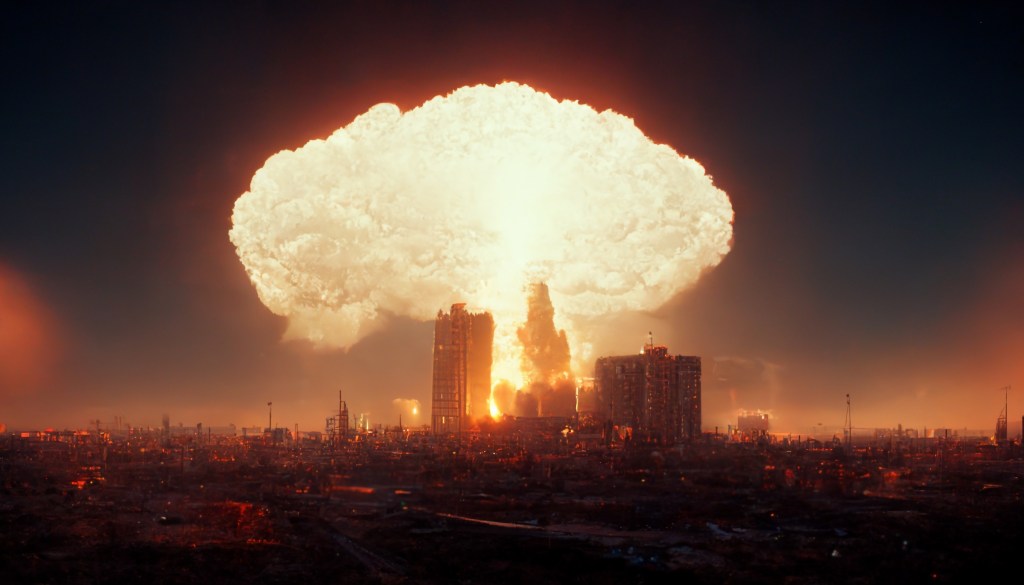
Atomic bomb explosion in a city - nuclear attack on a crowded city – 3D rendering of a mushroom cloud encompassing a city with skyscrapers | We Exploded Thousands of Nuclear Bombs
Nuclear bomb dropped on a big city. Shutterstock, asset id: 2188083835 by CI Photos.

Nuclear Landscaping

It may also come as a surprise that many of these tests were not for military purposes. Another usage for nuclear bombs is nuclear landscaping. Towards the end of the 1950’s the existing Panama Canal was thought to be insufficiently large and some people, including Edward Teller, the father of the Hydrogen bomb (Thermonuclear bomb), suggested that a new wider and deeper canal could be built simply by using nuclear bombs to blow multiple huge holes across Panama. The US was also interested in creating a new harbor in Alaska using nuclear bombs.

Thus, Project Plowshare was created to achieve this. As part of the Project Plowshare 35 nuclear warheads were detonated. The Soviet Union also had a similar program named “Nuclear Explosions for the National Economy” that included 124 nuclear bomb tests. Due to concerns over radioactive fallout the nuclear landscaping projects were eventually put to rest. The last Plowshare detonation was on May 17, 1973. The book Atomic Awakening by James Mahaffey recounts the history of nuclear testing and nuclear landscaping in greater detail.

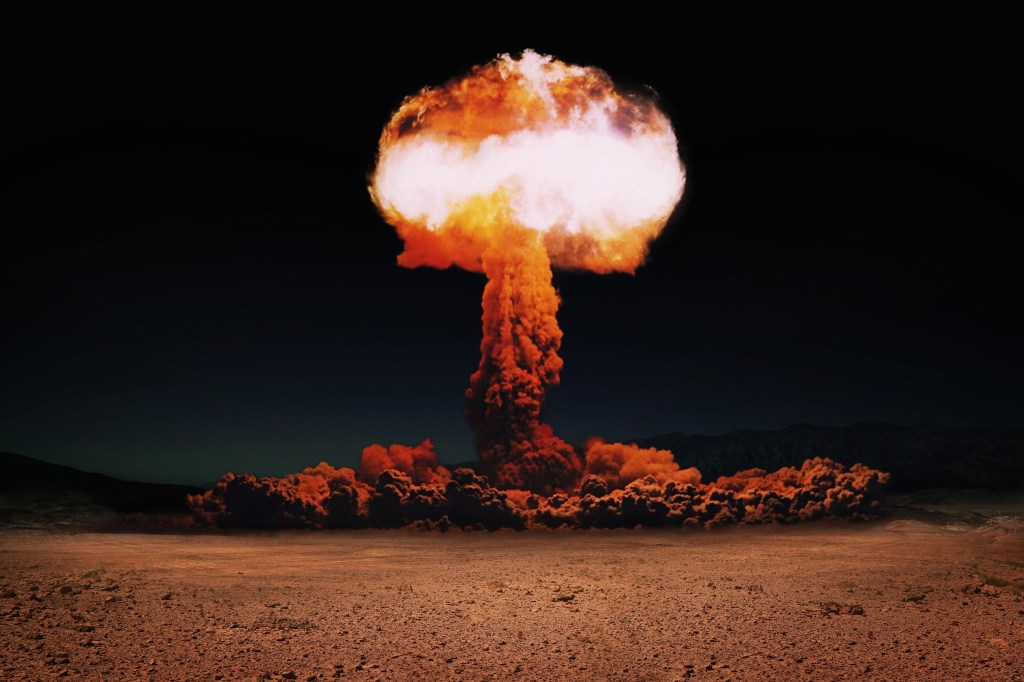
An enormous nuclear bomb explosion in the dessert featuring a huge mushroom cloud.
Hydrogen bomb test by Alones Shutterstock Asset id: 2194195335.

Project Orion

Another non-military use of nuclear bomb testing was Project Orion. Project Orion was a study conducted from 1956 to 1964 by the US Air Force, NASA, and DARPA into the viability of a nuclear pulse spaceship that would be directly propelled by a series of atomic explosions behind the craft. A thick steel pusher plate would catch the blast and accelerate the ship forward.

The “Pascal B” shot in Operation Plumb Bob in 1957 was the first nuclear weapons test of the pusher concept. The Limited Test Ban Treaty of 1963 made it difficult to continue with the project. According to the book Atomic Awakening, if the design had been successfully completed, we could have created an interstellar spaceship that could have taken a crew and a large load to other planets and stars.

I can add that According to Atomic Awakening, in addition to Nuclear Landscaping and Project Orion, Nuclear Blasts were a tourist attraction.

Number of Nuclear Tests by Country

Below is a list of countries and the number of nuclear tests that they’ve performed according to the Arms Control Association and Wikipedia.

  • The United States – 1,030 – According to Wikipedia – 1,032
  • The USSR/Russia – 715 – According to Wikipedia – 727
  • France – 210 – According to Wikipedia – 215
  • United Kingdom – 45 – According to Wikipedia – 88
  • China – 45 – According to Wikipedia – 47
  • North Korea – 6 – According to Wikipedia – 6
  • India – 3 – According to Wikipedia – 3
  • Pakistan – 2- According to Wikipedia – 2

However, it should be noted that partially due to nuclear arms control legislation such as; the Limited Test Ban Treaty (LTBT): Signed in 1963,  the Threshold Test Ban Treaty (TTBT): Signed in 1974, and the Comprehensive Nuclear-Test-Ban Treaty (CTBT) opened for signing in 1996, the number of nuclear tests have been significantly reduced. This is illustrated by the graph below from Our World in Data. The last nuclear test was done by North Korea in 2017.

The histogram graph shows how many nuclear tests took place each year since 1945. The different countries, the portion by each country, the US, USSR/Russia, France, United Kingdom, China, North Korean, India, and Pakistan are colored differently. The histogram shows the 1961 was the year when most nuclear tests took place. The vast majority of the tests took place between 1950 and 1990 | We Exploded Thousands of Nuclear Bombs
Data Source: Arms Control Association (2024). OurWorldInData.org/nuclear weapons.

Tsar Bomba

The biggest nuclear bomb ever exploded was RDS-220, or AN602, or Tsar Bomba. It was detonated by the Soviet Union on October 30th, 1961, on the arctic island of Novaya Zemlya, and yielded more than 50 Megaton. In other words, it was 3,300 times more powerful than the Hiroshima bomb. According to Atomic Awakening, windows in Finland 1,900 kilometers (1,180 miles) away shattered. There are no cities large enough to match the size of the explosion. This is the kind of bomb that could obliterate states or small countries.

Tsar Bomba was a so-called thermonuclear device, or a hydrogen bomb as they are typically called. Hydrogen bombs are much more powerful than fission bombs, such as Uranium bombs or Plutonium bombs. To read my related post called “Ukraine Gave up Thousands of Nuclear Warheads” click here.

Russian Tsar Bomba mushroom cloud rising high above the clouds. High quality photo realist ( 3d make ) | We Exploded Thousands of Nuclear Bombs
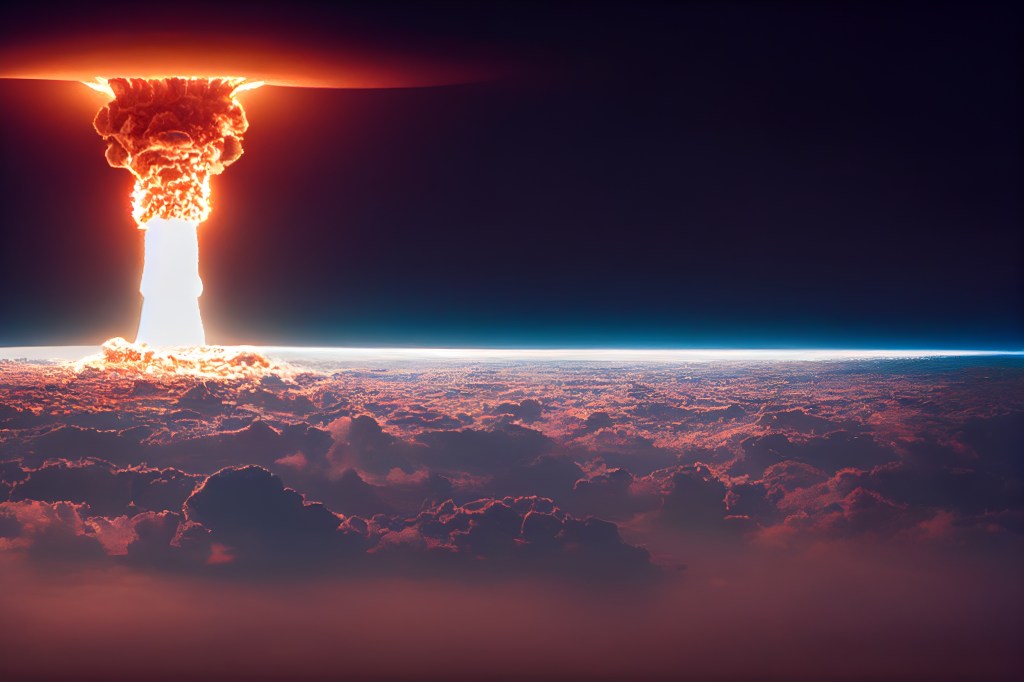
This is an illustration of the Tsar Bomba explosion by by mbafai Shutterstock Asset id: 2208486661. To see a photo of the actual Tsar Bomba explosion click here (it is copyrighted).

Would you pay to watch a Nuclear Bomb Test? (Nuclear Bomb Test Tourism)


To see the other Super Facts click here

Gustav Vasa

Image above by Kevin from The Beginning at Last

Today, June 6 is the National Day of Sweden (or the Independence Day of Sweden). Gustav Vasa, or Gustav I, Sweden’s hero king and the father of modern Sweden, was elected king of Sweden on June 6th, 1523. This was after the Swedish War of Liberation from Denmark 1521 to 1523. Gustav rose to lead the Swedish War of Liberation following the Stockholm Bloodbath, where his father was executed.  Gustav Vasa or Gustav I was King of Sweden from 1523 until his death in 1560. Since I am originally Swedish (now living in Texas) June 6 is a significant date for me.

In the picture there muscular man holding up crown | Gustav Vasa
This picture is how I imagine Gustav Vasa at his coronation. BTW this is a submission for Kevin’s No Theme Thursday
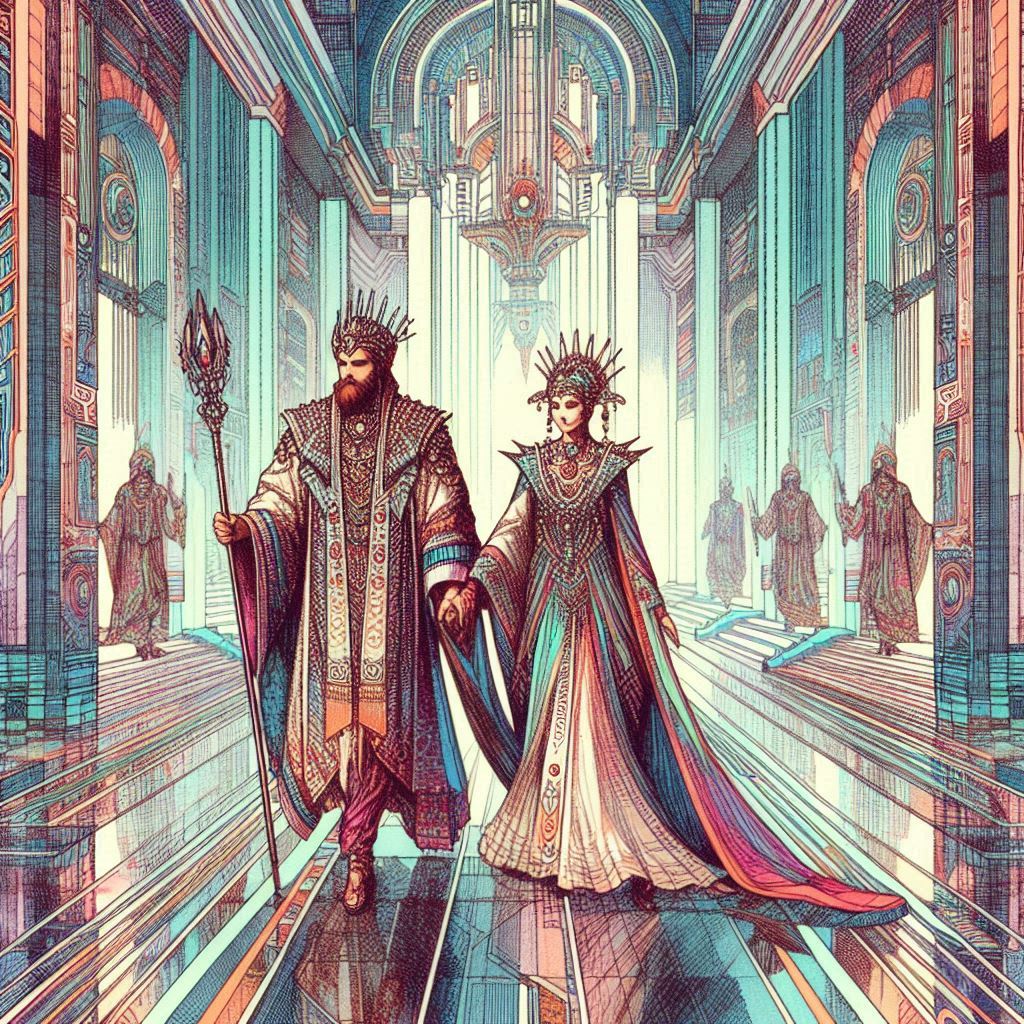
A bearded king and his queen are marching down the middle of beautiful large building, perhaps a cathedral or a castle | Gustav Vasa
This is how I imagine Gustav Vasa’s marriage to Catherine of Saxe-Lauenburg on September 24th, 1531. This picture is also from Kevin’s No Theme Thursday

Depictions of Gustav Vasa

Kevin’s pictures above were, like I said, how I imagine Gustav Vasa. The depictions below might be closer to the truth.

Painting of Gustav Vasa with an interesting hairdo and wearing a large robe.
Painting of Gustav I Vasa. Fashion was somewhat different back in the day.
Gustav Vasa is wearing a big black robe and black beanie looking hat that is slanted on his head.
Portrait of Gustav Vasa (from Wikipedia Commons).

The Kalmar Union

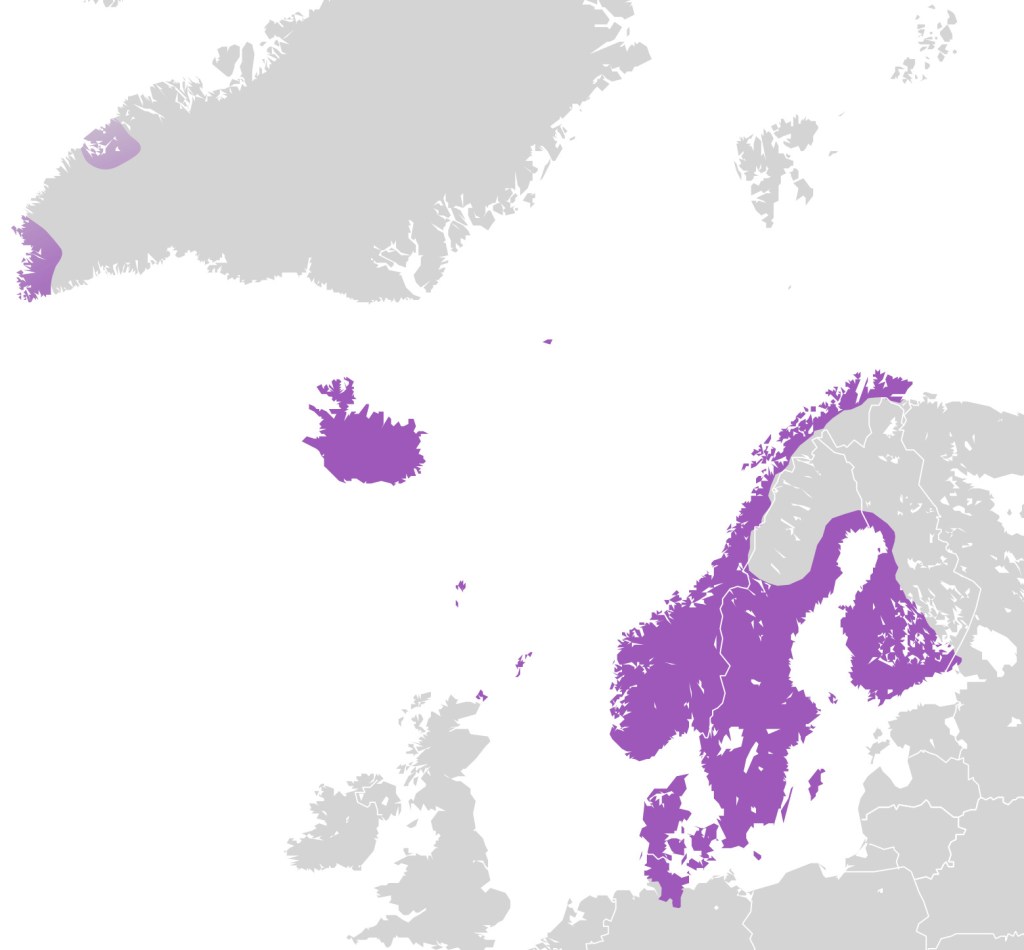
In 1397 a union was formed between Denmark, Norway and Sweden called the Kalmar Union (Kalmar is a city a Sweden). The Kalmar Union came to be dominated by Denmark and there were occasional rebellions. During Gustav’s childhood, parts of the Swedish nobility tried to make Sweden independent. Gustav’s father Erik Johansson Vasa was part of that nobility.

Map showing Denmark, Sweden and Norway in purple. Iceland and Finland are also included.
The Kalmar Union. Finland was part of Sweden at the time. Ssolbergj, CC BY-SA 3.0 <https://creativecommons.org/licenses/by-sa/3.0&gt;, via Wikimedia Commons

After some problematic interactions with Denmark and the Danish King Christian II, King Christian massacred 100 Swedish nobles, November 7-9, 1520, on Stortorget in Stockholm, including Gustav’s father. In 1521 Gustav led a rebellion (or a civil war) against Denmark, which ended in the deposition of King Christian II from the throne of Sweden, effectively ending the Kalmar Union. I can add that King Christian is called Christian the Tyrant in Sweden and Christian the good in Denmark.

Sweden and Denmark has had a complicated history that included a lot of hostilities and eleven wars, but you wouldn’t know it if you looked at the situation today. There hasn’t been a war between Sweden and Denmark in more than 180 years and Swedes and Danes get along very well. However, it is best not to bring up the past. That is probably true for marriages as well.

On the left, a fist with a yellow and blue flag. On the right, a fist with a red and white flag.
Denmark vs Sweden. The yellow and blue flag is the Swedish flag. Red and white is the Danish. Shutterstock Stock Photo ID: 1114320377 by Hasanov Jeyhun.

Gustav Vasa’s Burial Place

Gustav Vasa died on September 29, 1560, and is buried together with three of his wives (while only two are engraved) in the Cathedral of Uppsala. Uppsala is an old city north of Stockholm famous for its Viking graves/mounds. During the Viking era Uppsala was the religious center of Sweden. Later as Sweden became Christian it remained the religious center of Sweden, however, the Viking temple in old Uppsala was replaced by a Christian church. Uppsala hosts one of the most prominent Universities in the world and it also happens to be where I studied Engineering Physics.

The largest cathedral in Sweden, Uppsala Domkyrka. This is where Gustav I Vasa is buried. Gustav I is arguably Sweden’s most prominent king.
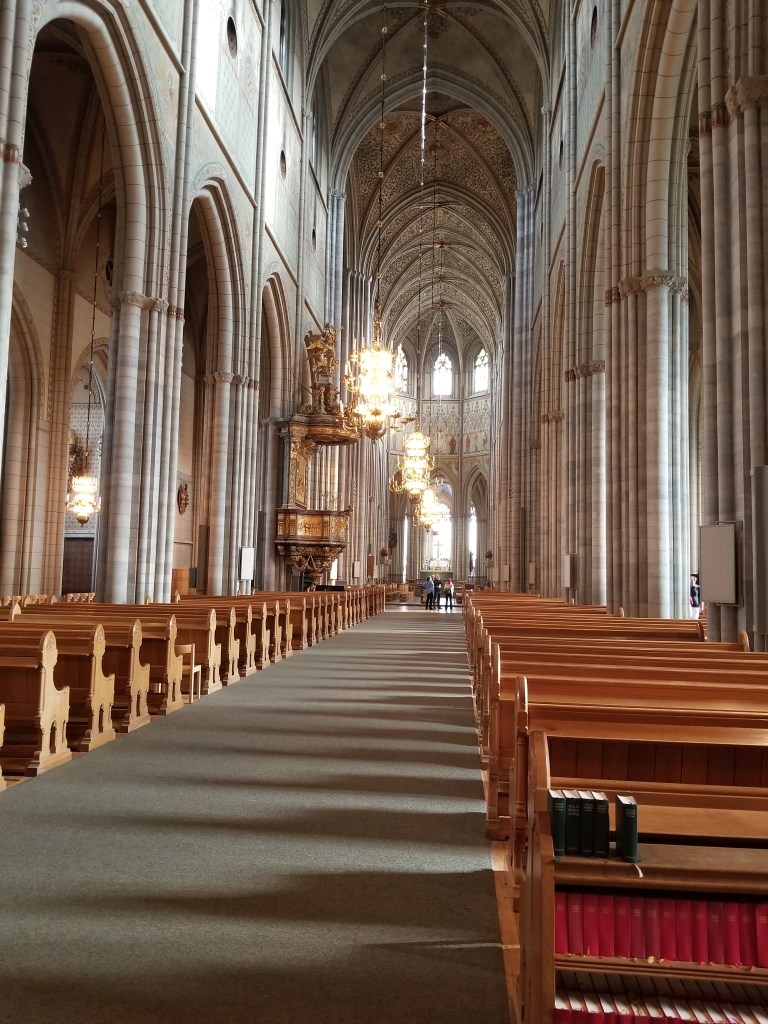
Inside Uppsala Domkyrka
Inside Uppsala Domkyrka.
The tomb of Gustav I Vasa in Uppsala Domkyrka | Heavily decorated coffin shaped tomb placed in a large, decorated room filled with paintings.
The tomb of Gustav I Vasa in Uppsala Domkyrka. In the background is my son and his wife.

Photos from Sweden

Photo of a Leonberger standing on of a bench
I am a fan of Leonberger dogs, and this is a photo of the only Swedish Leonberger I met personally. Her name was Amie. We met her at an interesting place, at the top of a north Swedish mountain called Skule Mountain (Skull Mountain).
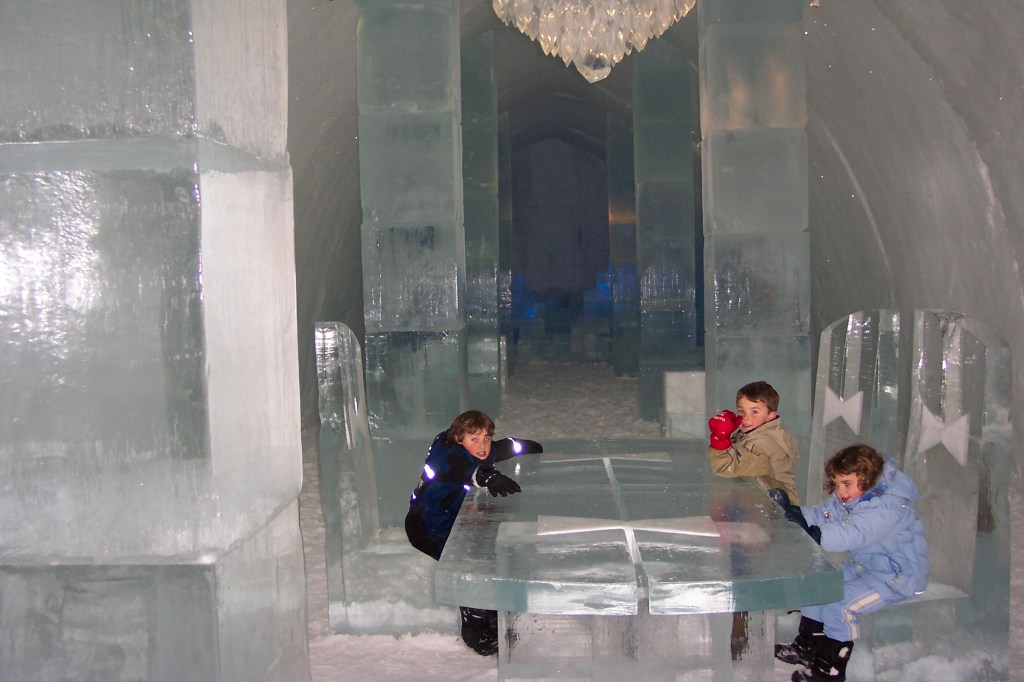
Three children sitting around a large table made of ice in a large room with columns of ice. There is an ice chandelier above the table.
One of the interesting tourist attractions in northern Sweden is the Ice Hotel in Jukkasjärvi . The ice hotel in Jukkasjärvi is the first/original and largest ice hotel in the world. My kids at the lobby of the ice hotel in northern Sweden.

A guard in a dark blue uniform wearing a golden helmet and a gun in standing in front of a booth in front of a big brick castle.
Sweden has a king (Carl XIV), and he owns a couple of big castles. This is my kids with the guard in front of the Winter Castle in Stockholm.
My photo of Drottningholm castle taken from the garden, a very large garden.
Drottningholm, one of the Royal Palaces in Sweden. It was built in the 1660’s and inspired by Versailles.
A photo of the Vasa Ship taken from below.
A photo of the Vasa ship from the bottom floor. My son is standing on the right in a green and black shirt.
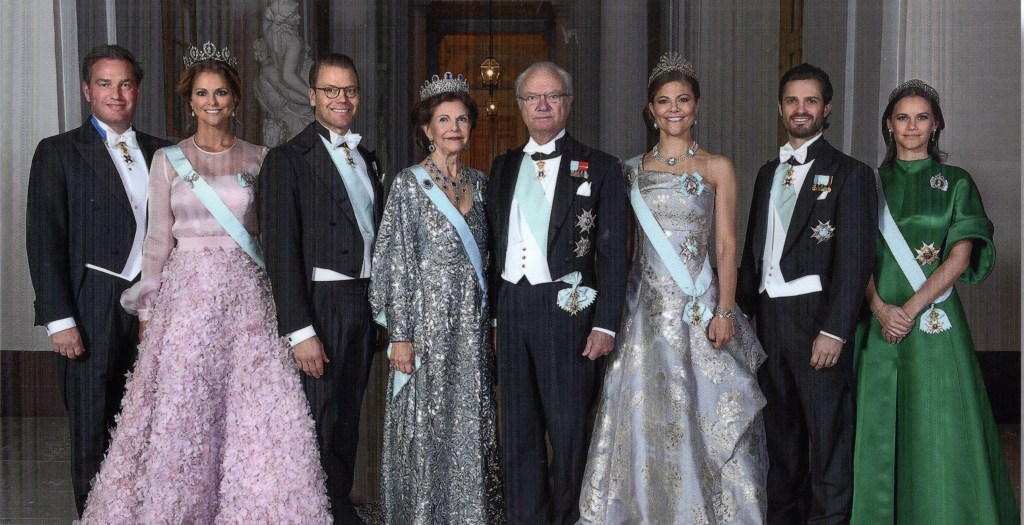
This is a photo of a well-dressed 8-member royal family.
The Swedish Royal family. The two people in the middle are Queen Silvia and King Carl XVI Bernadotte. To the right of the king is the future monarch of Sweden princess Victoria and to the left of Queen Silvia is her husband. The others are their other two children and their spouses.
Yellow and Blue Swedish flag | Gustav Vasa
Finally, the Swedish Flag (Wikimedia Commons). All other photos above are mine

Other Scandinavian Posts


To see the Super Facts click here

Relativity by Albert Einstein

This is not a super fact post but another kind of fact-oriented post. It is a book review for a book that I find interesting, Relativity: The Special and the General Theory by Albert Einstein. Yes, the book was written by Albert Einstein in 1916 and translated into English in 1920. It is written for laymen, average readers, and despite being more than 100 years old (well this reprint is from 1995) it does not feel outdated.

I should say that I wrote my review decades ago and Amazon has hidden about 900 of the oldest reviews including mine. So, you can no longer find it. Luckily, I still had it, but I cannot provide a link to it. The book comes in formats, hardcover (2024), paperback (1995), Kindle (2014), Audio (2009). I bought the paperback version.

  • Publisher : Independently published (July 29, 2024), ASIN : B0DBQVVJVQ, ISBN-13 : 979-8334454118, 109 pages, item weight : 7.8 ounces, dimensions : ‎ 6 x 0.47 x 9 inches, Translator : Robert W. Lawson, it costs $12.33 on US Amazon. Click here to order it from Amazon.com.
  • Paperback –  Publisher : Crown (June 6, 1995), ASIN : 0517884410, ISBN-13 :  978-0517884416, 208 pages, item weight : 8 ounces, dimensions : ‎ 5.2 x 0.5 x 8 inches, it costs $7.89 on US Amazon. Click here to order it from Amazon.com.
  • Kindle –  Publisher : Amazon Kindle Direct Publishing (February 23, 2014), ASIN : B004M8S53U, 126 pages, it costs $0.99 on US Amazon. Click here to order it from Amazon.com.
  • Audiobook –  Publisher : HighBridge, a division of Recorded Books (November 14, 2009), ASIN : B002XGLDAA, Listening Length : 2 hours and 14 minutes, it costs $12.09 on US Amazon. Click here to order it from Amazon.com.
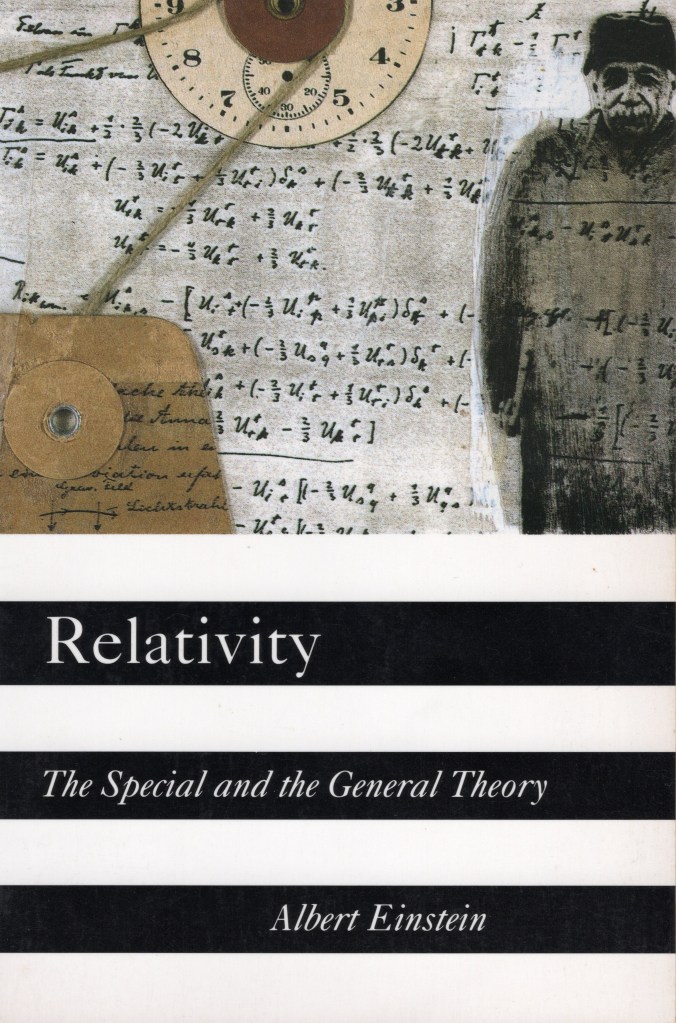
The front cover of the paperback version feature Albert Einstein in front of a black board full of equations, title “Relativity: The Special and the General Theory” and author – Albert Einstein | Relativity by Albert Einstein
Front cover of Relativity: The Special and the General Theory by Albert Einstein. Click on the image to go to the Amazon page for the paperback version of the book.

Amazon’s Description of Relativity by Albert Einstein

This book was originally written in German by Albert Einstein in 1916 and later translated to English by Robert W. Lawson in 1920. In Einstein’s own words, “The present book is intended, as far as possible, to give an exact insight into the theory of Relativity to those readers who, from a general scientific and philosophical point of view, are interested in the theory, but who are not conversant with the mathematical apparatus of theoretical physics. It is an easy-to-understand collection of the ideas of one of the greatest scientists of the twentieth century including the idea he is most known for, the theory of relativity.

Redesigned inside and out to have a fresh, appealing look, this new edition of a classic Crown Trade Paperback is a collection of Einstein’s own popular writings on his work and describes the meaning of his main theories in a way virtually everyone can understand.

Below is my review for Relativity: The Special and the General Theory by Albert Einstein. First, I should mention that the book is divided into two sections, one for the Special Theory of Relativity and another for the General Theory of Relativity. In addition, there are five short appendices. The five appendices are not written for layman and require at least high school mathematics.

Relativity Explained by Einstein himself

I found it very interesting to read an explanation of the theories of relativity by the developer of those theories. However, it is important to remember that the inventors of science theories aren’t always the best ones to explain them. Isaac Newton is a prime example.

Another thing to remember is that today there are a lot of books and online graphics that use clever pedagogic techniques and visualizations to assist you in understanding these theories, and naturally this book does not contain any of that.

This book was originally written in 1916 and updated in 1920 and since then it has been reprinted/edited several times (as this book is an example of). I should say that the General Theory of Relativity had just been published so there weren’t much else out there for laymen at the time.

I’ve already read many good books on relativity, and I believe I understand special relativity pretty well, but my understanding of general relativity is partial. I did not buy this book to understand relativity. The reason I bought this book was to gain another perspective on the subject. If you just want to learn and understand relativity, I recommend Relativity Visualized by Lewis Carroll Epstein instead.

“Relativity: The Special and the General Theory” features no derivations of the formulas in relativity (except in the appendix) and no visualizations demonstrating relativistic effects and phenomena. The book is focused on the conceptual foundations of relativity and physics.

For example, what are Geometrical propositions, what does it mean to measure the length of a rod, or the time of an event, what do we mean by speed, what is simultaneity, what is the difference between what we observe and what we measure, etc? Einstein spends one and a half page explaining addition of velocities in classical-pre-relativistic kinematics (w = v + u) and what assumptions that are inherent with the approach. In that sense the book is quite philosophical, which is what I meant by “another perspective”. The book covers both the Special Theory of Relativity and the General Theory of Relativity. However, the sections on the General Theory of Relativity are quite short and very introductory.

There are some issues with the book. In appendix 1 Einstein (I presume) derives the Lorentz transforms. However, it is not, in my opinion, the best derivation from a pedagogical standpoint and it also had typos in it. As far as I can tell the formula on page 50 is wrong unless what Einstein means with the “m” is “additional relative mass” and not actual “mass” as stated.

The book features an addition written in 1920 where he is discussing an ad hoc modification to his theory that he had previously made but it turned out to be unnecessary (related to cosmology). The language is also very old fashioned. On the other hand, this kind of stuff makes you feel as if you travel back in time to when the theories of relativity were being churned out.

I don’t recommend the book for learning the theories of relativity but overall I liked the book. It focuses very much on basic concepts and near philosophical aspects of time, space and relativity. The book presents a valuable perspective if you already understand what the theories of relativity are about.

The back cover of the paperback features an overview of the background to relativity and to this book as well as ISBN number and publisher | Relativity by Albert Einstein
Back cover of Relativity: The Special and the General Theory by Albert Einstein. Click on the image to go to the Amazon page for the hardback version of the book.

Other Relativity Related Posts


To see the Super Facts click here

The Sunshine Blogger Award Is Rising Again

I’ve been nominated for the Sunshine Blogger Award a second time, this time by Pooja, from Lifesfinewhine. Thank you for the nomination, Pooja! It was a nice surprise.

The Sunshine Blogger Award Official Image
The Sunshine Blogger Award

Check out her blog for lots of great posts featuring blogging advice and expertise, beautiful poetry, short stories, thought provoking quotes and much more!

Without further ado, here are the rules which I’ve copied from Pooja’s blog:

  • Display the award’s official logo somewhere on your blog.
  • Thank the person who nominated you.
  • Provide a link to your nominator’s blog.
  • Answer your nominators’ questions.
  • Nominate up to 11 bloggers.
  • Ask your nominees 11 questions.
  • Notify your nominees by commenting on at least one of their blog posts.

Eleven Questions for Me

Below are my answers to Pooja’s eleven questions.

Question 1 : What’s your favorite animal?

Dogs, especially Leonberger dogs. I love dogs that are big or small. We’ve had a Labrador, a German Shepherd, a Leonberger, a Japanese Shin, a Pug and a mini-Australian Shepherd. I did not grow up with dogs. I learned to love them as an adult. Dogs are intelligent, they can understand hundreds of words, they are emotional, they are great communicators, they are loyal and loving. Dogs are the only animals capable of loving you more than they love themselves. Our Leonberger Bronco, or Le Bronco von der Löwenhöhle, was a very large dog. He was brave, confident, strong, and a great family dog.

A photo of our three months old Leonberger wearing a red scarf
Our Leonberger Bronco at the age of three months. He would grow to be 140lbs, and 167lbs when he was a bit overweight.

Bronco rescued hamsters and he saved our Pug’s life by stepping in between her and an attacking dog. He likely saved our Labrador’s life too by sniffing out an oncoming insulin shock. He chased off a trespasser and peeping Tom who was harassing my wife and other women in the neighborhood thereby saving the women in the neighborhood when police couldn’t.  He was very funny and an amazing swimmer as well as a skilled counter surfer. I wrote a book about Bronco that you can find here.

The cover is light brown and featuring an old Leonberger dog. The title is The Life and Times of Le Bronco von der Löwenhöhle: Stories and Tips from Thirteen Years with a Leonberger. Author is Thomas Wikman.
The front cover of The Life and Times of Le Bronco von der Löwenhöhle: Stories and Tips from Thirteen Years with a Leonberger. Click on the picture to visit the Amazon page the book.

Question 2 : What TV show or movie do you wish you could watch for the first time again?

I think that might be Ex Machina. This was a movie about Artificial Intelligence embedded in a female robot. She displayed human feelings in many ways, but she was imprisoned, and she wanted to get out. She was a disaster in the making. The movie was very thought-provoking, scary on many levels, as well as full of social commentary. Because it featured several surprises it is the kind of movie that is difficult to watch too many times.

Question 3 : What’s one thing you love unironically?

My wife, my children, my dog, well, that’s many things.

Question 4 : What is your favorite dish to cook?

I don’t have a favorite dish to cook but I love to grill or barbecue chicken, meat, sausage, and drink a beer while I am doing it.

Question 5 : Share the one joke that always makes you laugh no matter how many times you hear it?

There are some jokes that have a thought-provoking aspect to them and those I can laugh at even if I’ve heard them before. An example, “How will Descartes feel when he finds out that people who don’t think exist too?”.

A picture of Descartes with the caption How will Descartes feel when he finds out that people who don’t think exist too? | The Sunshine Blogger Award

I also love dog jokes, even the silly simple ones. An example featuring our Pug Daisy and our mini-Australian Shepherd is shown below.

Daisy tells Rollo “Rollo do you want to hear a joke?”. Rollo says “OK”, Daisy says “Knock! Knock!”, and they both stars barking.

Question 6 : What was your favorite cartoon growing up?

I read a lot of French Belgian Bande Dessinée (in Swedish) when I was a kid. My favorite was Tintin and maybe Asterix. That goes for both the comic books as well as the animated movies.

Question 7 : You get to bring three items to a desert island. What are they?

  • A knife. A gun needs ammunition and cannot be used for a lot of practical things. However, you can use a knife for a very long time. In addition, you can turn it into a spear and use it as a tool and use it to prepare a fire.
  • A hard bottle, or another sort of vessel, for carrying water or digging.
  • A reverse osmosis filter for removing salt from sea water.

Question 8 : What’s your go-to karaoke song?

I’ve only sang Karaoke a few times and I don’t remember what songs I picked, so I don’t have a go-to karaoke song. However, if I ever do Karaoke again, I think I will sing “Nothing Else Matters” by Metallica.

Question 9 : Are you more of a “stay in and binge-watch” person or “go out and explore” person?

I love nature and I love the outside world. However, Dallas, where I live, does not offer a lot of opportunities for that so I might stay inside and watch TV. When I am in the countryside, or where there is a forest, mountains, or beeches, or in a beautiful city like Paris, Stockholm, or Copenhagen, I go out and explore.

Question 10 : What’s your useless superpower?

My most useless superpower is pointing out to people when they are getting their facts wrong. You would think they would appreciate the learning opportunity, but no, they often get annoyed.

Question 11 : What’s the weirdest compliment you’ve ever received?

My dog gives me an implicit compliment when he sits outside the bathroom door and waits for me. He shows that he wants to be with me, but it is a little weird.

Our dog Rollo’s dark brown hair is visible under the white bathroom door | The Sunshine Blogger Award
Rollo’s fur sticking out underneath the bathroom door. He is waiting for me to come back out.

Here are my questions for my nominees:

Question 1 : What’s your favorite book?

Question 2 : What’s your ultimate comfort food?

Question 3 : What’s your favorite season and why?

Question 4 : Do you recharge better alone or with others?

Question 5 : What’s one adventure or trip that changed you?

Question 6 : What’s something you used to believe that you’ve changed your mind about?

Question 7 : What’s something you’ve learned about yourself in the past year?

Question 8 : What’s the weirdest or most random fact you know?

Question 9 : What’s a risk you’re glad you took?

Question 10 : What’s the best piece of advice you’ve ever received?

Question 11 : What kind of legacy do you want to leave behind?

Eleven New Victims

Below are my nominees. Naturally, whether you participate or not is entirely up to you. I do not have any expectations, and I fully understand if you are not up to it.

Susana Cabaço, Spiritual Insights & Personal Empowerment

John Howell, Fiction Favorites

Pete Springer, teacher and author

Violet Lentz from Thru Violet’s Lentz

Jan Sikes, Award winning Texas author

Laura Stamps from Dog Dazed

Ada Jenkins from The Introverted Bookworm

Joanne Macco, Anything is Possible with Love, Hope, and Perseverance

Darlene Foster from Darlene Foster’s Blog

Carol Ann Taylor from Carol Cooks2

The Mindful Mystic from the Wild Pomegranate Tree

To see the Super Facts click here