The goal of this blog is to create a list of super facts. Important facts that are true with very high certainty and yet surprising, misunderstood, or disputed by many. This blog aims to be challenging, educational, and fun, without it being clickbait. I determine veracity using evidence, data from reputable sources and longstanding scientific consensus. Prepare to be challenged (I am). Intentionally seek the truth not confirmation of your belief.
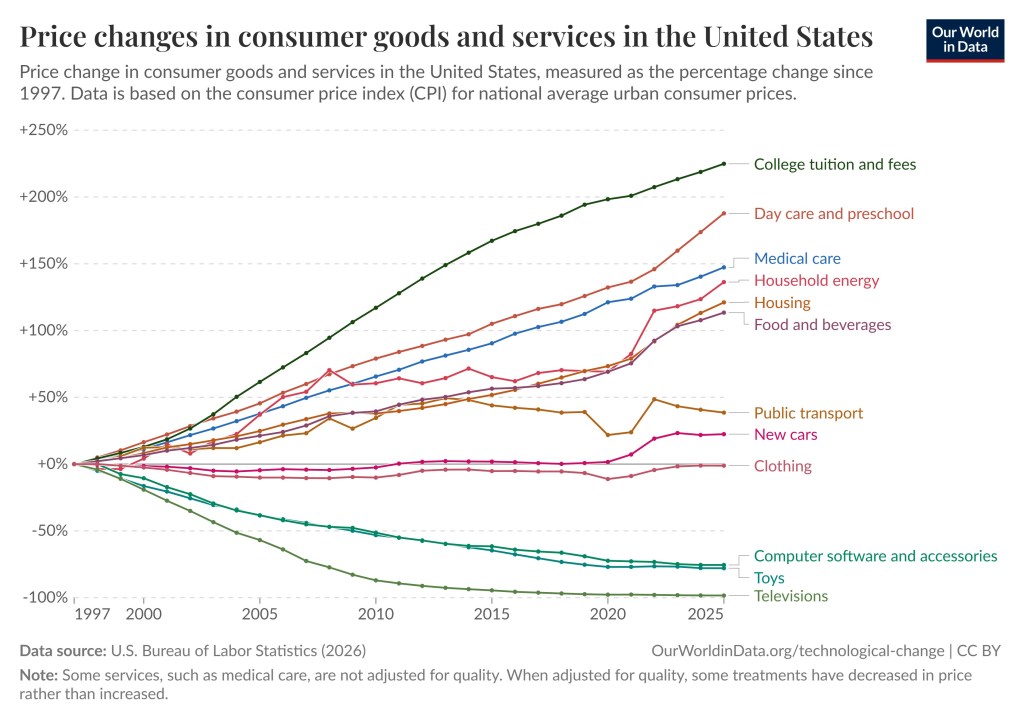
Super fact 92 : College tuition and fees increased by 207% between 1997 and 2022, which corresponds to a tripling. Since 2022 it has continued to increase. Adjusted for inflation this corresponds to a 60% increase, more than any other major economic sector.
Students are sucked into a hole with money for college tuition. Shutterstock Asset id: 335014478 by alphaspirit.it.Data source: US Bureau of Labor Statistics (2026). OurWorldInData.org/technological-change. Note: Some services such as medical care are not adjusted for quality, some treatments have decreased in price rather than increased. To visit the original page for this graph click here or on the picture.
To read about the graph above in greater detail click here. To read more about the increase in college tuition click here, here, here, or here. To calculate the inflation for different periods of time click here (the inflation calculator).
It should be noted in the graphs above that Televisions have decreased in price by 98%, which seems implausible. However, it is not an April 1st joke. It is not April 1st in Texas yet (where I live). The reason for the large decline in price of Televisions is that quality is taken into account. 20 years ago, you could not easily buy the kind of TVs you can today and if you did you would cost you an enormous amount of money. You get a lot more for a few hundred bucks than you did 20 years ago.
This is a superfact because it is true, shocking, and important to how we live.
An example of heavy spending on amenities is college sports. I studied at a university called Uppsala University, which is a very large University founded in 1477. It is considered one of the world’s top Universities (top 50). However, they do not have any competitive teams associated with the University itself. In 1987 I was sent as an exchange student (electrical engineering) to Case Western Reserve University, in Cleveland, Ohio. Case Western Reserve University has some competitive teams associated with the University but only a small college football stadium.
However, I quickly came to realize that many American universities have huge college football and baseball stadiums. This is an added expense that you rarely encounter in the rest of the world. Universities are for studies and for learning. Sports teams, whether it is soccer, or American football is a separate issue.
BLOOMINGTON, US – Aug 04, 2025: Side-angle drone view of Indiana University Memorial Stadium with field, stands, and cityscape on a clear summer day. . – Shutterstock Asset id: 2700467103
Superfact 90: Large Language Models (LLMs) such as ChatGPT, Claude, Llama and Gemini are just one type of popular applications of Artificial Intelligence among hundreds of applications of Artificial Intelligence, and LLMs represents just one branch of Artificial Intelligence.
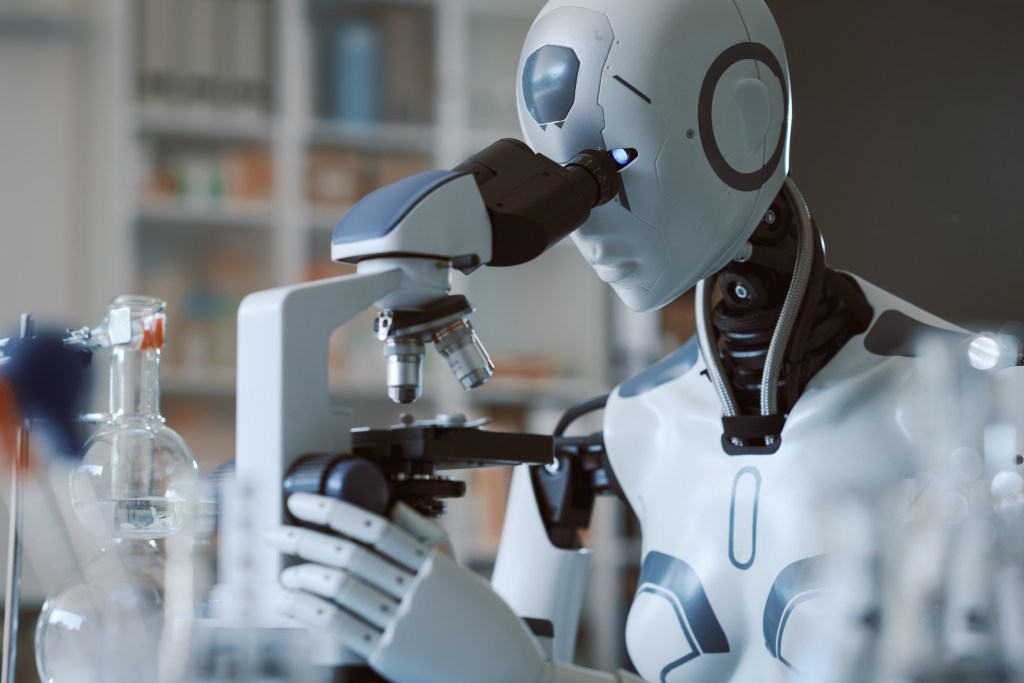
Artificial intelligence and research concept. Shutterstock Asset id: 2314449325 by Stock-Asso
LLMs are currently the most popular “viral” AI. We can all access LLMs in our browsers. This has created the common misconception that Artificial Intelligence is the same as Large Language Models. However, LLMs represent only one branch of narrow AI systems designed to perform specific tasks.
Applications of Artificial Intelligence other than what Large Language Models are used for include robotics, robot motion planning, advanced control systems using AI, self-driving cars, image processing, optical character recognition, classification, facial recognition systems, medical imaging diagnostics, game playing such as chess playing computers, financial fraud detection, cybersecurity, investment robots, route optimization, mathematical proof generation, recommendation algorithms, virtual assistants, programming code generation, smart home devices, drug discovery, and that is just for starters.
There are probably many applications and types of Artificial Intelligence that we have not yet invented.
Two Robots powered by Artificial Intelligence. Shutterstock Asset id: 558350728 by Willrow Hood.
LLMs use large neural networks with many hidden layers, so called deep learning algorithms, and they employ the Rumelhart backpropagation learning algorithm invented by David Rumelhart, Geoffrey Hinton, and Ronald Williams. Clearly neural networks with multiple hidden layers and using the Rumelhart backpropagation algorithm are incredibly successful but it is just one of many kinds of Artificial Intelligence algorithms, and who knows what we will see in the future. Related to this post is my previous post Artificial Intelligence is Not New. We have only just begun.
I consider this a super fact because it is true, kind of important, and I believe that the multitude of Artificial Intelligence algorithms and applications is a surprise to many.
The many Artificial Intelligence Algorithms
Shutterstock Asset id: 2645975149
Due to the great improvement and success of Neural Networks, they have become very popular and Large Language Models use very large Neural Networks with multiple hidden layers (employing the Rumelhart back propagation algorithm). You can read more about that here.
However, there are many other AI algorithms, hundreds, maybe thousands. One example is genetic algorithms. These are types of algorithms that mimics evolution. They iteratively select a set of the best candidate solutions, then combine them (crossover), and also add random changes (mutation) to generate new solutions. Then select the best solutions and then you do it again. Selecting the best solutions corresponds to natural selection. I tried out such algorithms at my work, and over many iterations / generations you can get some impressive results. It is easy to understand how a complex organ such as an eye can evolve in a similar way in nature.
One type of decision tree based machine learning algorithm that I used specifically for classification tasks at work was C4.5 and C5. More specifically I used this type of machine learning algorithm for evaluating the results from automatic mail sorting systems. Basically, how well can a result from a certain machine be trusted. I don’t remember exactly but my classes were something along the line of super reliable, pretty reliable, average, and this result probably sucks. Other examples of this type of machine learning are ID3, Random Forest, Gradient Boosting, and CART. These types of algorithms are still very popular.
One advantage of using decision tree based machine learning over neural networks for the same task is that when a decision has been made you can follow the decision tree backwards and see why a decision / classification was made. In fact, if you have less than 100 parameters you could likely do it over a lunch. When a neural network makes a decision all you have is a large bunch of numbers that were spit out by an algorithm that looped possibly thousands of times and changing all the numbers every time. You can’t backtrack and figure out exactly how a decision was made. You just have to trust the neural network. The advantage of a neural network in this situation is that if it is trained properly, it is likely to have a better result.
Another type of algorithm used in Artificial Intelligence is search algorithms. For robot motion planning I used an algorithm called A* or A-star, which is a very efficient pathfinding algorithm. It comes in dozens of variants and there are hundreds of other types of search algorithms.
These are just a few examples, but there’s also knowledge based agents, AI-agents with reinforcement learning algorithms, algorithms based on Bayes’ Theorem, Vector Machines, Markov Decision Processes, clustering algorithms, K-nearest neighbor (KNN) algorithm, simulated annealing, hill climbing, the ant colony optimization algorithm, and of course neural networks and there are also many types of neural networks. I used a relatively unknown form of artificial intelligence called reflex control for my robotics research. The point is, there is zoo of artificial intelligence algorithms out there. Deep learning neural networks are very popular AI algorithms but far from the only ones.
My Personal Experience with Artificial Intelligence
In 1986, when I was in college in Sweden, I took a class in the LISP programming language. LISP was the first Artificial Intelligence programming language, and it was invented in 1958. In 1987, as a university level exchange student, I took a class called Artificial Intelligence at Case Western Reserve University. That same year I also took a class called Pattern Recognition which introduced neural networks to me.
In 1986 a landmark paper was published by David Rumelhart, Geoffrey Hinton, and Ronald Williams introducing the Rumelhart backpropagation algorithm. Geoffrey Hinton received the Nobel Prize in physics in 2024. David Rumelhart and Ronald Williams were both dead and could therefore not receive the Nobel Prize. The Nobel Prize was also given to John J. Hopfield, another pioneer in neural networks. He invented the Hopfield network. You can read more about neural networks and the Nobel Prize in physics in 2024 here.
The Rumelhart backpropagation algorithm was a giant leap forward for neural networks and for Artificial Intelligence and it is the algorithm used by ChatGPT and the other large language models. Geoffrey Hinton is often interviewed in media and often presented as the father of Artificial Intelligence. He is not, but he us arguably partially responsible for the greatest leap forward in neural networks, as well as Artificial Intelligence.
In the pattern recognition class, we used the Rumelhart backpropagation algorithm on a simple neural network to read images with text. Later I did research in the field of Robotics where I implemented various Artificial Intelligence algorithms as mentioned above. I have a PhD in Applied Physics and Electrical Engineering with specialty in Robotics. Later I would use artificial intelligence algorithms in my professional career.
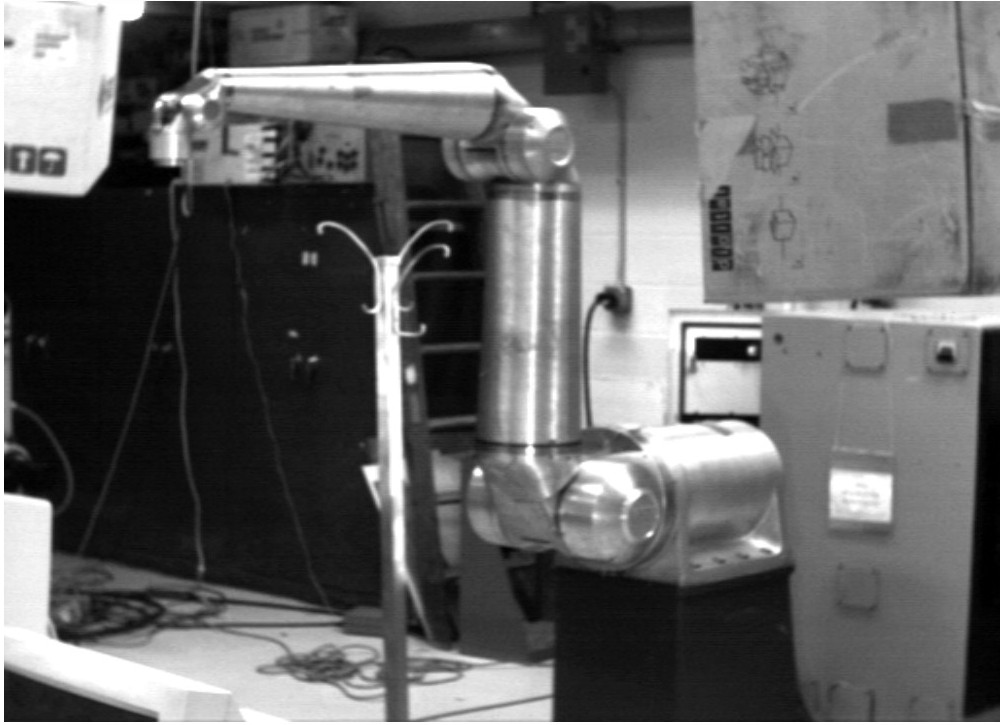
I used mostly the seven joint Robotics Research Corporation Robot for my robotics research. The robot was able to detect and avoid colliding with the objects surrounding it. I used echolocation for object detection.
The potential harm of AI is a related and important topic that I did not address. I don’t know much about this topic. However, Grant from “Grant at Tame Your Book” have written an excellent, well research and professional post about this issue called Don’t Confuse AI with a Benign Tool. Please check it out.
Superfact 87: Wind energy is a clean, renewable, and sustainable power source that produces no atmospheric emissions or water pollution during operation. Manufacturing and installation have a small carbon footprint that is much smaller than the carbon footprint of the fossil fuels they potentially replace.
Photo from pexels.com
There is a lot of disinformation being spread about wind power. One recent example is the TV series Landman which presents demonstrably false claims as facts. In Texas where I live the problem with deceitful anti-renewable propaganda is especially severe. It is important to check with reputable sources before you believe what you come across. Wind energy is not 100% clean and not without issues but it is much safer and cleaner than the fossil fuels they potentially replace. Below is a two minute video that explains this.
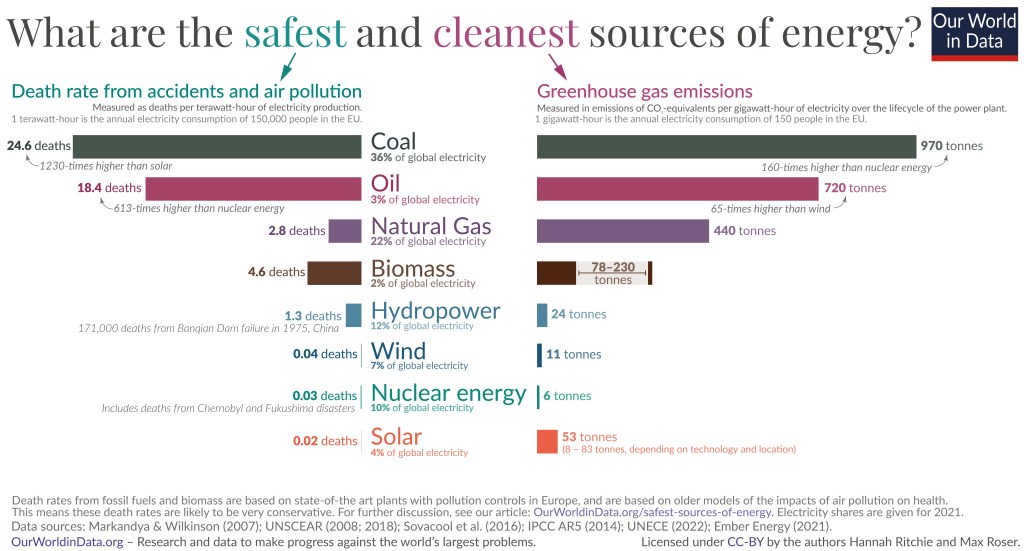
The graph below from Our World in Data depicting lifetime greenhouse gas emissions (construction, operation, disposal) show that the lifetime greenhouse gas emissions of coal power are 88 times higher than those of wind power and kill 615 times as many people as wind power. The lifetime greenhouse gas emissions of natural gas are 40 times higher than those of wind power and kill 460 times as many people as wind power. The difference is staggering. When someone tells you that there’s nothing clean about wind power, they are not just lying to you, they are lying very big.
In the graph below, greenhouse gas emissions is measured of CO2 equivalents per Gigawatt-hour of electricity over the lifecycle of the power plant. 1 Gigawatt-hour is the annual electricity consumption of 150 people in the EU. Death rate from accidents and air pollution is measured as deaths per Terawatt hour of electricity production. 1 terawatt hour is the annual electricity consumption of 150,000 people in the EU.
Death rates from fossil fuels and biomass are based on state-of-the art plants with pollution control in Europe and are based on older models of the impacts of air pollution on health. This means these death rates are likely to be very conservative. For further discussion see our article: OurWorldinData.org/safest-sources-of-energy. Electricity shares are given for 2021. Data sources: Markandya & Wilkinson (2007); UNSCEAR (2008: 2018); Sovacol et al. (2016); IPCC AR5 (2014); UNECE (2022); Ember Energy (2001). OurWorldinData.org – Research and data to make progress against the world’s largest problems. Licensed under CC-BY by the authors Hannah Ritchie and Max Roser. Citation : Hannah Ritchie (2020) – “What are the safest and cleanest sources of energy?” Published online at OurWorldinData.org. Retrieved from: ‘https://archive.ourworldindata.org/20260202-100556/safest-sources-of-energy.html’ [Online Resource] (archived on February 2, 2026).
As you can see wind power is safe and emits very little greenhouse gases over its lifetime. In addition, there is no water impact associated with the operation of wind turbines, but a relatively small amount is used in manufacturing. There are other issues with land use, sounds, rare earth mining, waste, and effects on wildlife particularly birds.
However, these issues are in general smaller than depicted must be compared to issues with the fossil fuels they replace. For example, 15 billion tons of fossil fuels (including 9 billion tons of coal) are mined every year and burned whilst the annual mining for all clean energy technologies is around 7 million tons (2,000 times less). More about birds in the next section. Overall wind energy is a clean, renewable, and a sustainable power source. You can read more about this here, here, here, or here.
I am referring to this fact as a super fact because, it is true, an important topic, and yet it’s a fact that is difficult for many people to believe. Too much misinformation has been spread about wind power. I expect some people to dismiss this fact out of hand. But that is the point of super facts, they are true but hard to believe for many, or surprising, and perhaps even shocking.
Wind power saves a lot more birds than it kills
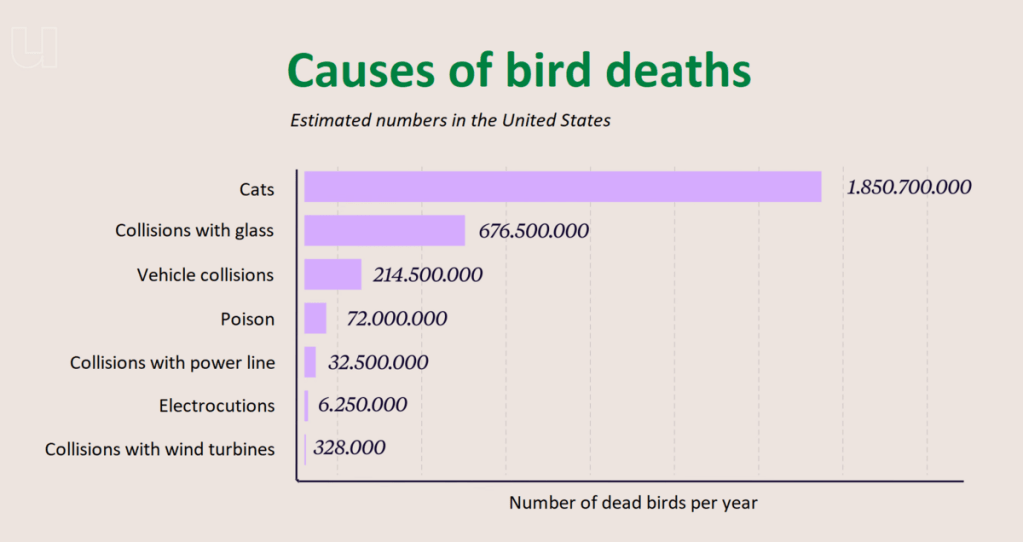
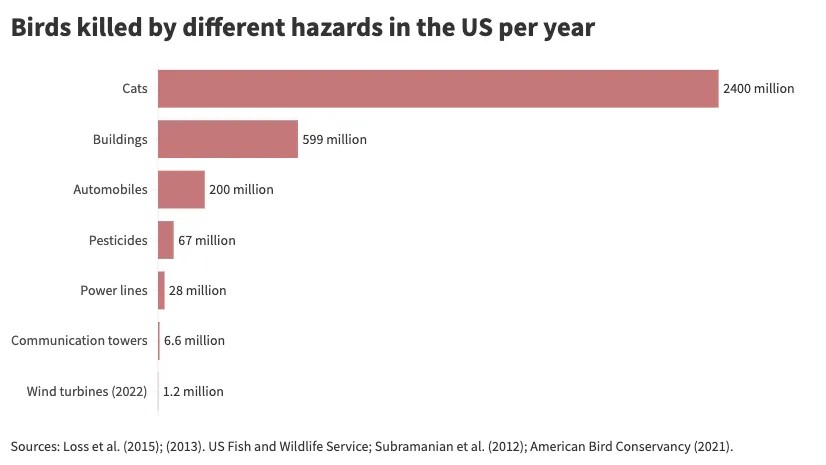
It may come as a surprise to some, but wind power is not a major cause of bird death. Wind farms are estimated to be responsible for losing less than 0.4 birds per gigawatt-hour (GWh) of electricity generated, compared to over 5 birds per GWh for fossil fueled power stations. This means that replacing fossil fuels with wind power saves a lot more birds than wind power turbines take. In addition, cats, windows, cars, poison and powerlines are examples of things that kill a lot more birds than wind power does. Cats kill thousands of times more birds than wind power does, and this usually does not bother us. Note I love both dogs and cats.
It is difficult to make exact estimates of bird deaths but below are some interesting graphs from reputable sources, confirmed by many other studies and analysis, such as this overview from MIT and this analysis by Hannah Richie. The numbers aren’t the same, but they make the same point. You can read more about this here.
From Wikipedia: Universiteit van Nederland, CC BY 3.0 https://creativecommons.org/licenses/by/3.0, via Wikimedia CommonsAn alternative graph taken from Hannah Richie / Our World in Data, using alternative sources essentially showing the same thing. Sources: Loss et al. (2015), (2013), US Fish and Wildlife Service; Subramnayan et al. (2012), American Bird Conservancy (2021).
That does not mean we shouldn’t do our best to reduce bird deaths from wind power stations. However, don’t fall for the misinformation that is trying to paint it is a big problem specifically for wind power.
Photo from pexels.com
Wind Power is Inexpensive
Finally, a bit of a deviation from the main topic. In addition to being a relatively clean, renewable, and sustainable power source, wind power is now relatively cheap, which explains its recent success around the world. I am bringing this up because another widespread myth about wind power is that it is expensive and wouldn’t survive without subsidies.
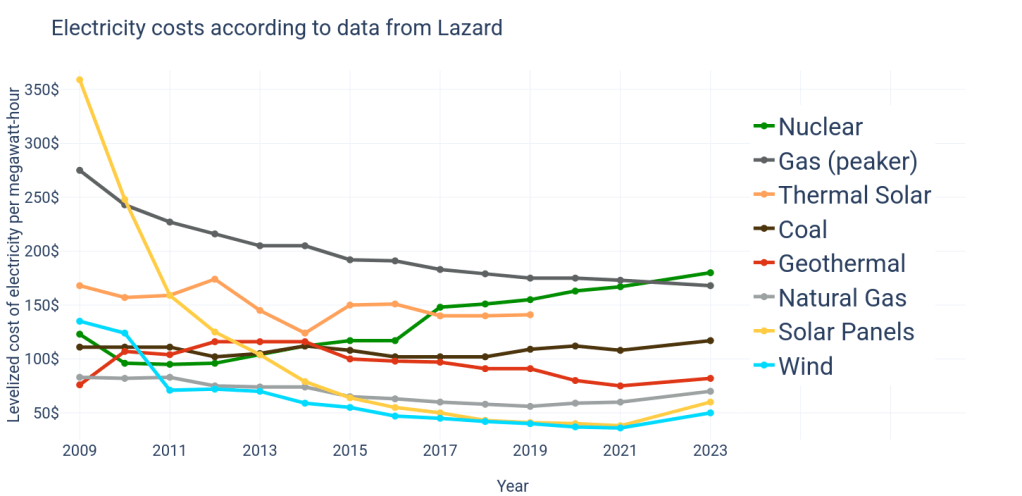
Practically all energy sources are subsidized, and fossil fuels have a long history of government subsidies. Below is the average unsubsidized levelized cost of energy according to Lazard. Levelized means that construction costs, land rent, and other costs not directly caused by electricity generation are taken into consideration. Notice how cheap wind is (blue line). This graph is for the United States.
Average unsubsidized levelized cost of energy. Notice that the light blue line indicates that wind power is pretty cheap. Mir-445511, CC BY-SA 4.0 https://creativecommons.org/licenses/by-sa/4.0, via Wikimedia Commons.
Windpower is not only relatively cheap. Wind power is one of the most efficient and sustainable energy sources available. The energy required to manufacture, install, and maintain wind turbines is small compared to the energy they produce over their lifespan. This is known as their energy return on investment (EROI), which is quite favorable for wind energy. The Institute of Environmental Management and Assessment (IEMA) states that the average wind farm will pay back the energy that was used in its manufacture within 3-5 months of operation. This article in the journal Renewable Energy found that the average windfarm produces 20-25 times more energy during its operational life than was used to construct and install its turbines. It included data from 119 turbines across 50 sites going back 30 years.
It is important to be aware that there are many false claims floating around about wind power. The sound from wind power stations does not cause cancer, it does not use any other energy sources while operating; it solely harnesses the kinetic energy from the wind to generate electricity, meaning it only relies on wind to function as its primary energy source. Windpower is not a major cause if bird deaths. To read more about false claims about wind power click here.
Conclusion
There are positive and negative aspects of wind power, like any other source of energy. One issue with wind power (and solar) is that it is an intermittent source of energy. When the wind is not blowing you need other sources of energy (until there is sufficient energy storage). This is less of a problem when you have a mix of energy sources and in practice it has not been a big problem so far. However, what we know is that Wind Energy is indeed clean energy, much cleaner than the fossil fuels they potentially replace, and also relatively cheap, even without subsidies.
Super fact 85 : Scientists recognized that whales descended from land animals already in the 19th century. However, it was not until the 1980’s that intermediate fossils for whale evolution were found. In addition, molecular and genetic / DNA studies showed that Hippopotamus and whales were closely related. Until then the evolution of whales was a bit of a mystery and creationists frequently mocked the lack of intermediate fossils for whale evolution.
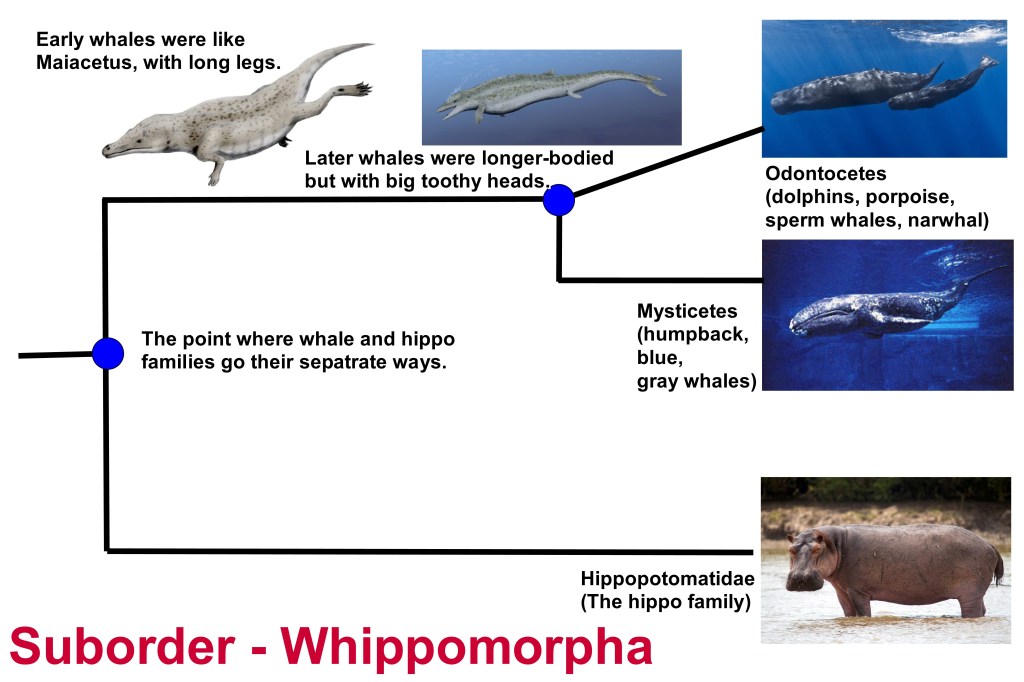
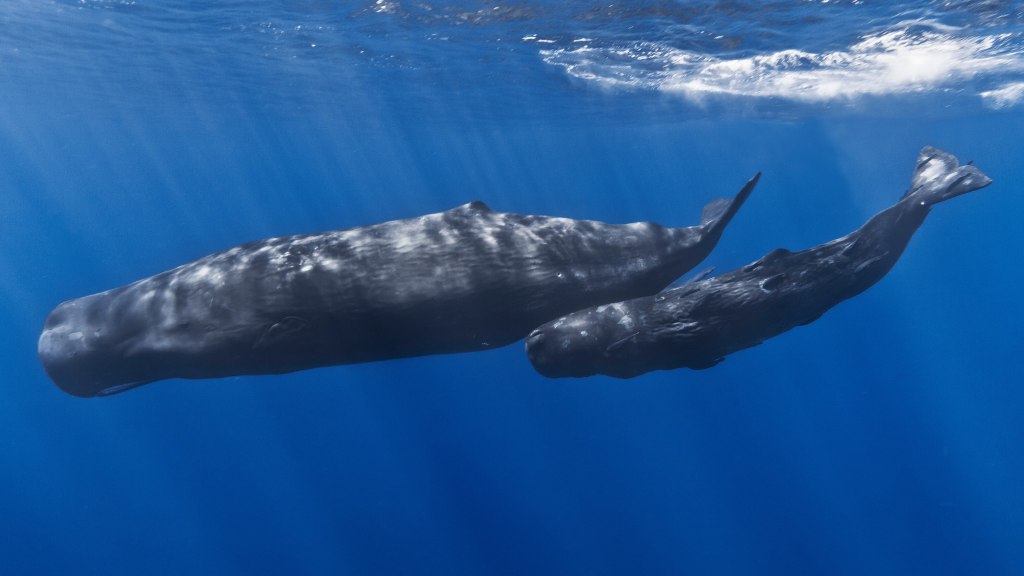
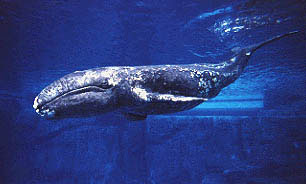
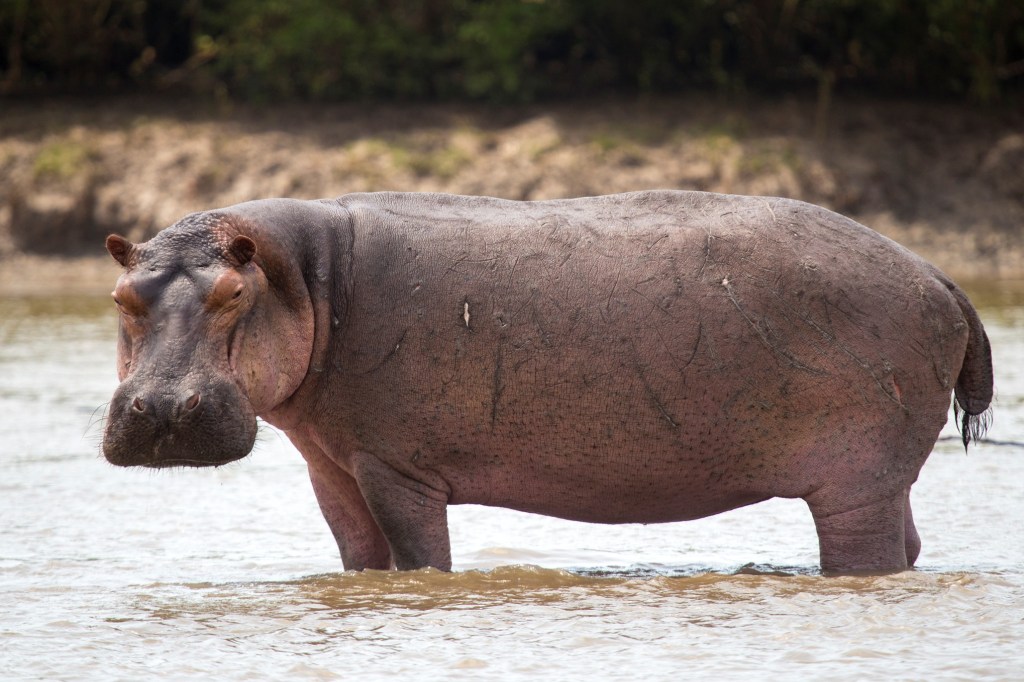
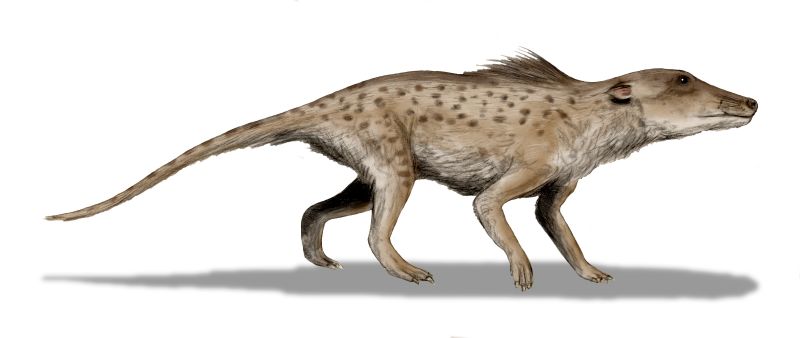
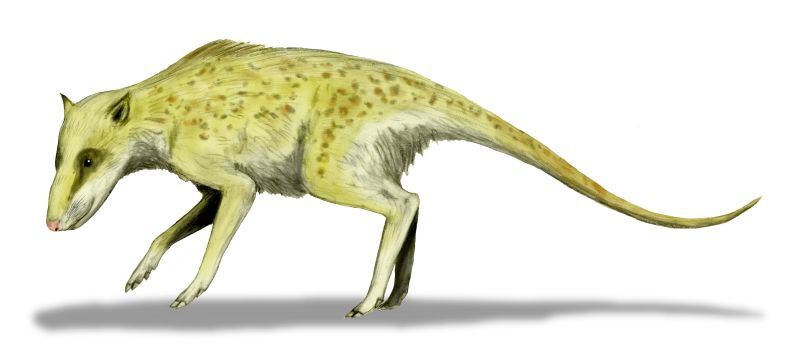
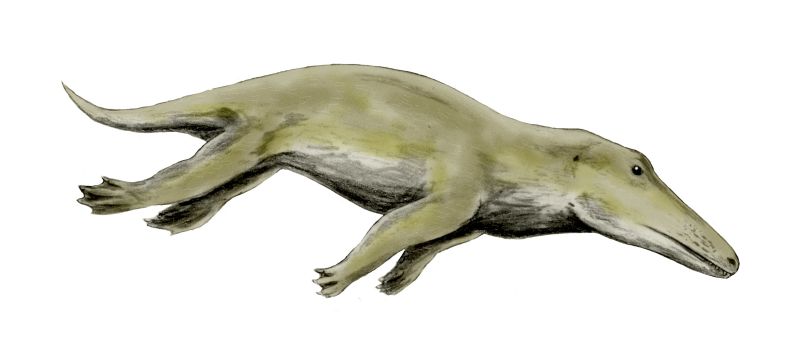
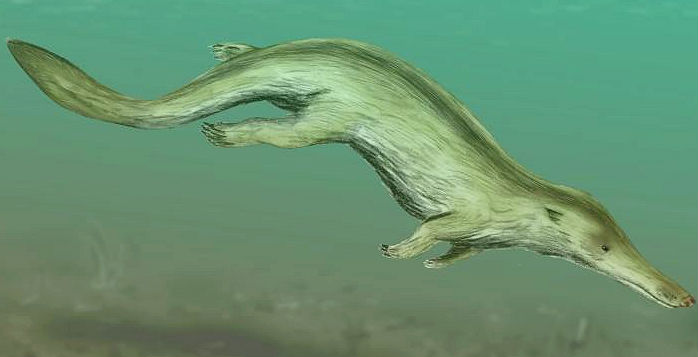
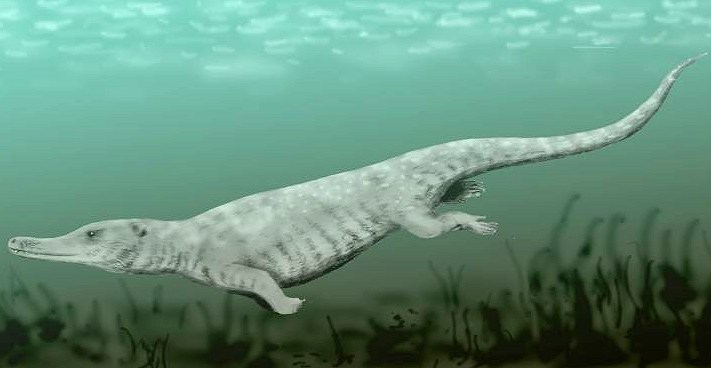
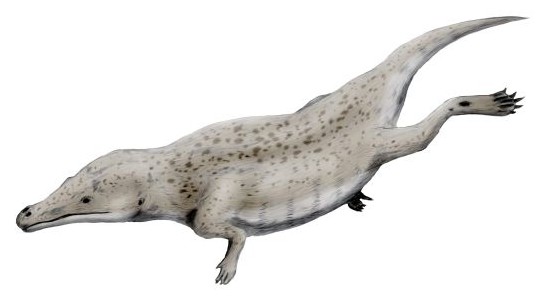
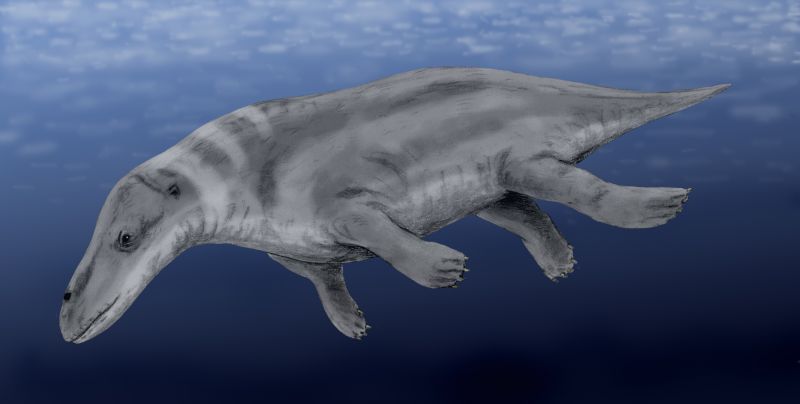
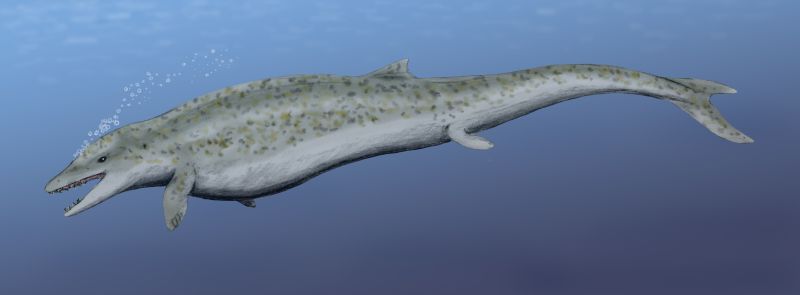
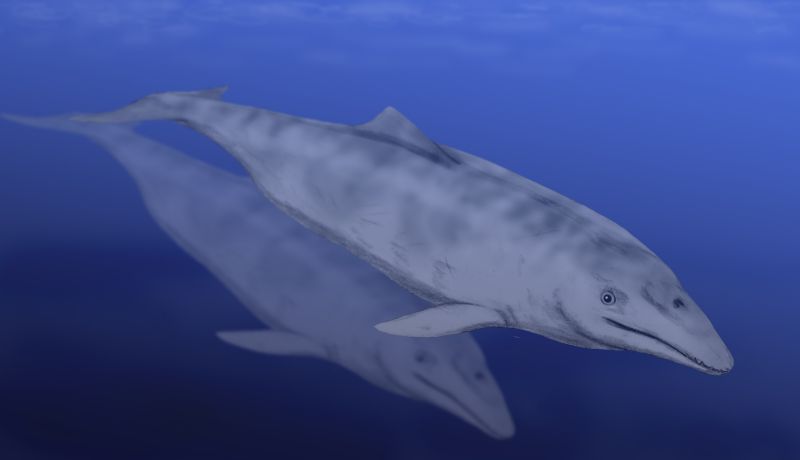
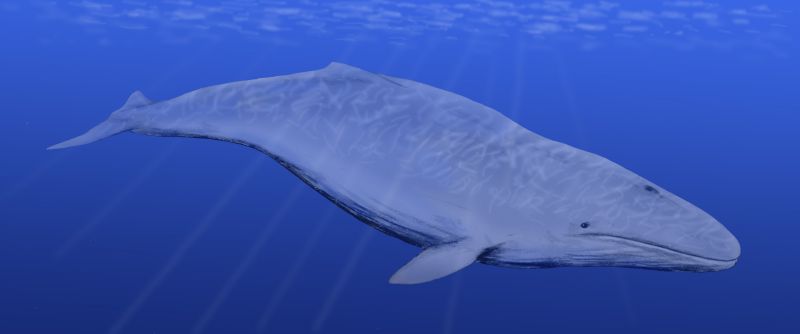
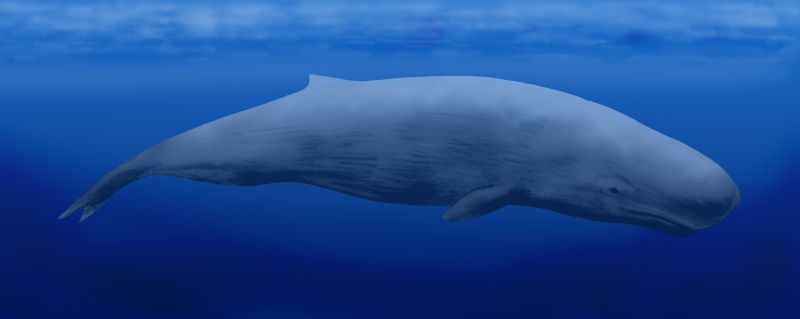
All living cetaceans including whales, dolphins, porpoises, sperm whales and hippopotamids / hippopotamus belong to a suborder of artiodactyls called whippomorpha. Just like humans and chimpanzees have a common ancestor hippopotamus and whales have a common ancestor. Note: I created this image by inserting a few pictures from Wikipedia commons including a mother sperm whale and her calf off the coast of Mauritius, a gray whale in captivity, a hippopotamus and two pre-historic whales (from the section Evolution of Whales – Intermediate Fossils). All pictures are shown below.Sperm whales from Wikimedia commons. A mother sperm whale and her calf off the coast of Mauritius. The calf has remoras attached to its body.A gray whale in captivity. Marine Mammal Commission, Public domain, via Wikimedia Commons.Portrait of a Hippopotamus in water in Saadani National Park. Muhammad Mahdi Karim, CC BY-SA 4.0 <https://creativecommons.org/licenses/by-sa/4.0>, via Wikimedia Commons.
Scientists realized hundreds of years ago that whales were a lot more like mammals than fish, in fact they were mammals. However, the fact that no intermediate fossils between land dwelling mammals and whales had been found presented a mystery and attracted the mockery by creationists. It was said that there was a missing link. Then intermediate fossils were found, and then a lot more of them.
In addition, DNA analysis of modern whales and hippopotamus showed that they were related and had a common ancestor. Just like chimpanzees and humans have a common ancestor, but chimpanzees are not an ancestor to humans, hippopotamus and whales have a common ancestor, but whales did not evolve from hippopotamus. To read more about the evolution of whales click here, or here, or here, or here, or here, or here, or here.
The thing with gaps in the fossil record or so called missing links is that as they are filled out new gaps are created, smaller gaps. Therefore, you can always claim that there are gaps. So be careful when you hear creationists speaking of missing links or gaps in the fossil record. Instead focus on the intermediate fossils that we have found and keep finding.
The fact that we’ve found a lot of intermediate fossils for the evolution of whales and that DNA tells us that Hippos and Whales are related and have a common ancestor probably comes as a surprise to many. It was certainly a surprise to me when I heard it the first time. It is true and kind of important to know. Therefore, I consider this a super fact.
Evolution of Whales – Intermediate Fossils
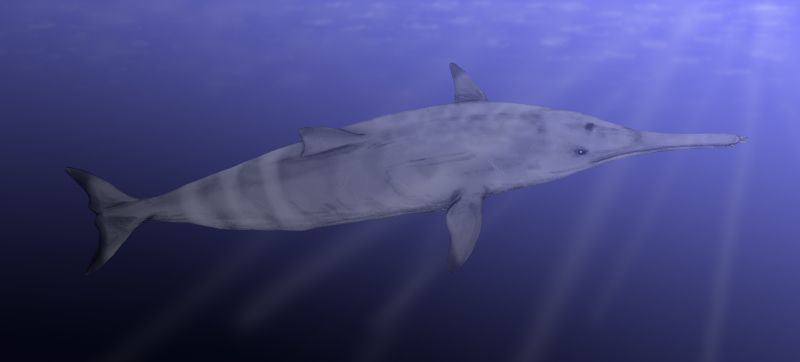
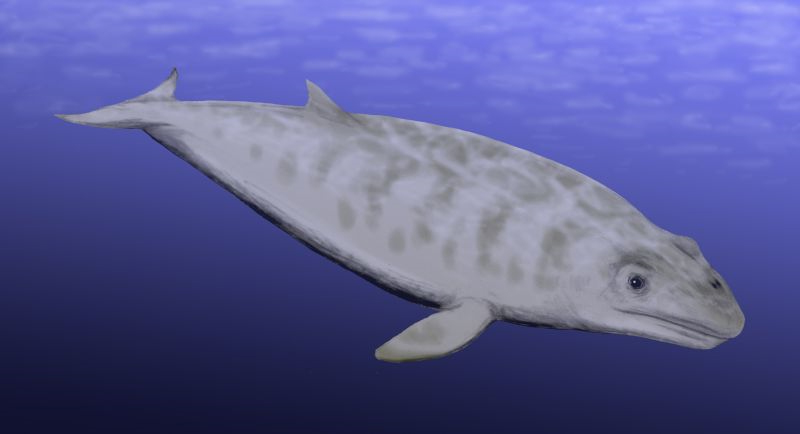
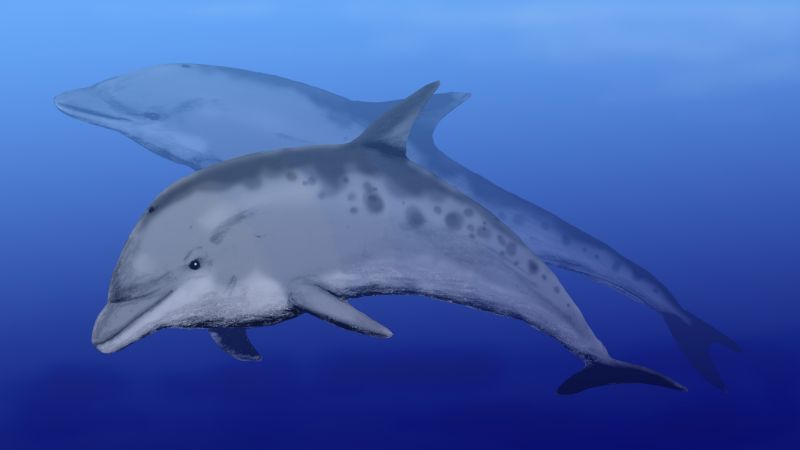
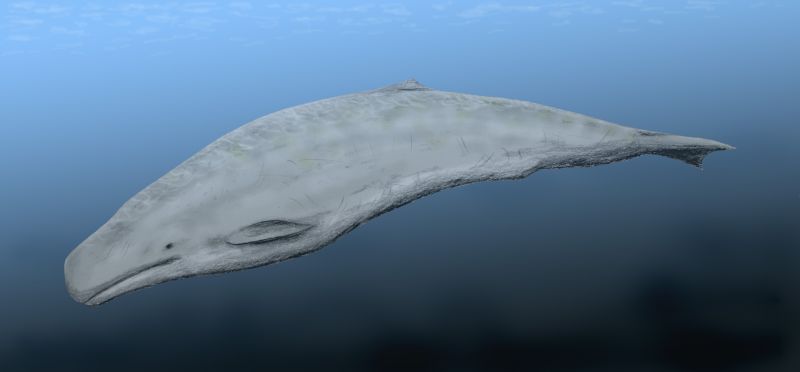
The first intermediate fossil found between land mammals and whales was Pakicetus found in Pakistan in 1983. You may wonder how we know that Pakicetus was related to whales. This evidence includes its fossilized ear bone (auditory bulla), which possesses a unique, thickened shape called an involucrum that is found only in cetaceans. Pakicetus also shares whale-like teeth, an ankle bone and a skull structure similar to other early whale like creaturs. Since the discovery of Pakicetus a lot more whale ancestors (intermediate fossils) have been found. Below is a list with illustrations of the various intermediate fossils.
Super fact 81 : Humans are not descended from chimpanzees, or monkeys, or any other primate living today. However, humans and chimpanzees share a common ancestor that lived roughly 5 to 7 million years ago. The two species evolved separately to become modern humans and chimpanzees. Humans and chimpanzees are closely related and share approximately 98.8% of their DNA. Studying the DNA, it is possible to determine how long ago this ancestor lived despite not having any fossils from this ancestor.
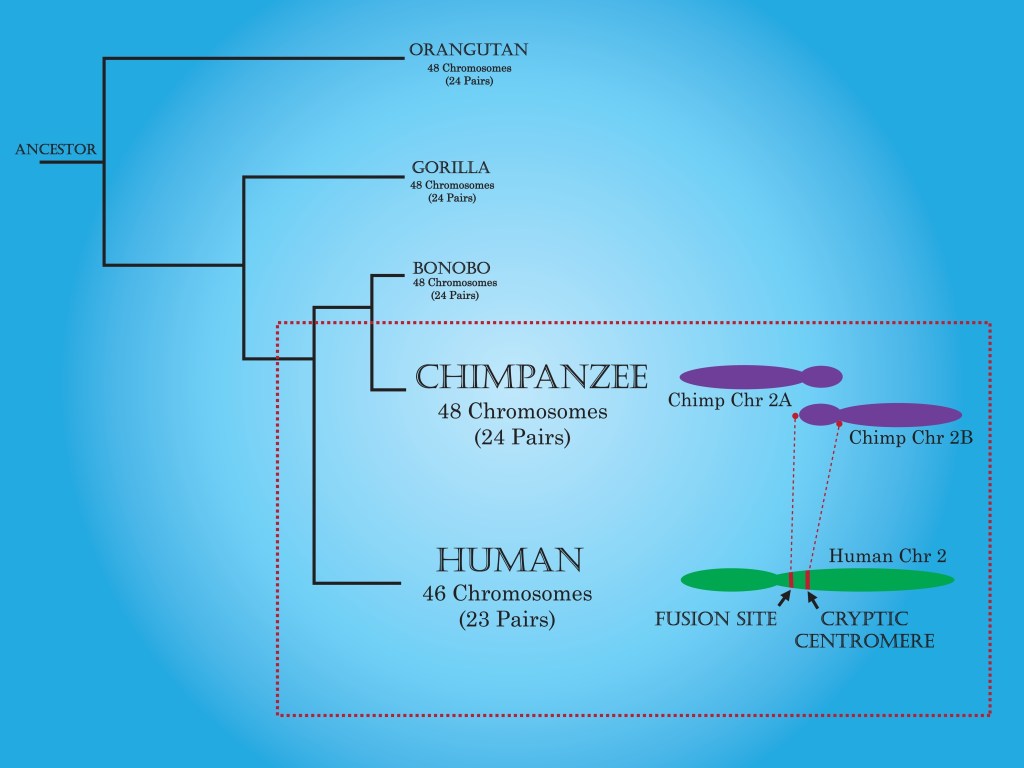
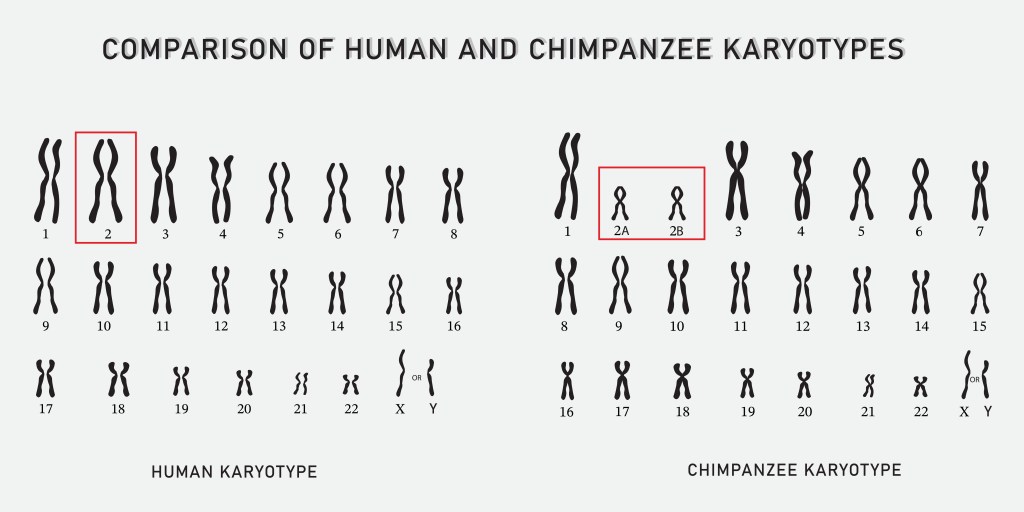
Chimpanzee genome sequencing and the sequencing of human DNA has led to the realization that human and chimpanzee DNA is very similar and that humans and chimpanzees share an ancestor. The fact that the great apes have 48 (24 pairs) chromosomes while humans have 46 (23 pairs) is not an issue. What happened was that the ancestral chromosomes corresponding to modern chimpanzee chromosomes 2A and 2B fused to create human chromosome 2. We can see that the genes in 2A and 2B line up with chromosome 2 and we can also see where the 2A and 2B merge in the human chromosome 2 (see picture below).
Evolution of humans via phylogenetics and differentiation between humans, chimpanzees, and other primates. Shutterstock Asset id: 2448150743 by kanyanat wongsa
The graph above shows that gorillas, chimpanzees and humans share a common ancestor with orangutans. At the next level bonobos, chimpanzees and humans share a common ancestor with gorillas and finally chimpanzees and bonobos share a common ancestor with humans. We can deduct these things from DNA without needing fossils. We have found millions of fossils corresponding to more than 250,000 species. However, the best evidence for so called “macro evolution” and the best tool for determining relationships between species may not be the fossil record but DNA.
It should be noted that the terms “macro-evolution” and “micro-evolution” are terms that creationists like to use but that scientists do not like to use. Creationists like to say that microevolution is possible (it is observed) but not macroevolution. However, macroevolution is the result of repeated microevolution, so you cannot claim that microevolution is possible but not macroevolution. In addition, speciation is relative. An animal A may be able to successfully interbreed with an animal B, and that animal B may be able to successfully interbreed with an animal C, but animal A and C cannot interbreed. The border between microevolution and macroevolution is fuzzy.
The fact that we can determine evolutionary ancestry by sequencing DNA of living creatures may come as a surprise to many people. In addition, we can also determine how long ago a common ancestor lived. It may also come as an additional surprise to many that we are not descended from the great apes but share a common ancestor. Super fact 81 is a super fact because we know it is true, it is surprising to many, and important to know.
Identifying a common ancestor using DNA Sequencing
Below is a very high-level image of human and chimpanzee chromosomes referred to as a Karyotype. A karyotype is a laboratory-produced image or visual profile of an individual’s complete set of chromosomes, arranged in pairs by size, shape, and number.
Comparison between human and chimpanzee karyotypes isolated on background. Shutterstock Asset id: 2432966649 by kanyanat wongsa
Based on the similarity in transposons, or jumping genes, pseudo genes, and genes in general (all of the genome) we know that the closest related living animals to humans are chimpanzees and bonobos. You can read more about this in the book Relics of Eden by Daniel Fairbanks, a book I highly recommend. According to the author the latest and perhaps best evidence for evolution as well as the fact that humans and chimpanzees have a common ancestor comes from so called junk-DNA. DNA that is not currently used but contains scientifically informative remnants of our evolutionary ancestry trapped in our DNA. The author refers to these remnants as relics.
Hominini species
Another interesting fact derived from DNA research is that chimpanzees and humans are more closely related than chimpanzees than to the other great apes. Based on the genetic record chimpanzees are no longer classified as great apes but as Hominini together with humans. The fact that there are three Hominini species (homo sapies – us humans, chimpanzees and bonobos) could maybe be another super fact.
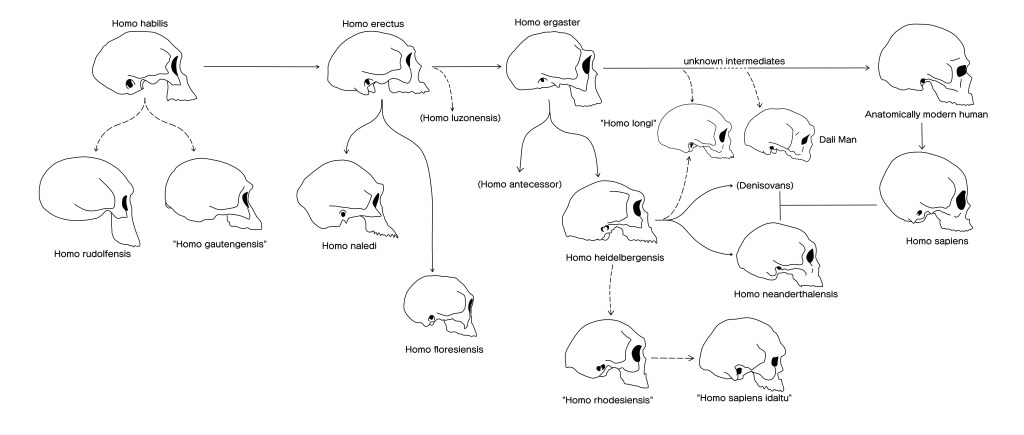
Speaking about hominini species, we have found more than 6,000 hominin fossils corresponding to dozens of species including Australopithecus, Paranthropus, Homo Habilis, Homo Erectus, Homo Heidelbergensis, Homo Neanderthalis, and Homo Sapiens. This link features a cool phylogenetic tree that includes Homo Sapiens (us), Neanderthals, as well as chimpanzees and bonobos.