
Esther’s writing prompt: October 8 : Shade
Click here or here to join in.
On April 8, 2024, a narrow sliver of the United States, including Dallas, where we live, experienced a total solar eclipse whilst most of the United States experienced a partial solar eclipse. We also had a three hour long partial solar eclipse and the total solar eclipse lasted four minutes. To explain, first there was a one and a half hour partial solar eclipse, then the total solar eclipse lasting four minutes, and then a one and a half hour long partial solar eclipse again. A partial solar eclipse is interesting, but a total solar eclipse is something else entirely. A total solar eclipse is the ultimate moon shade and an unforgettable lifetime experience.
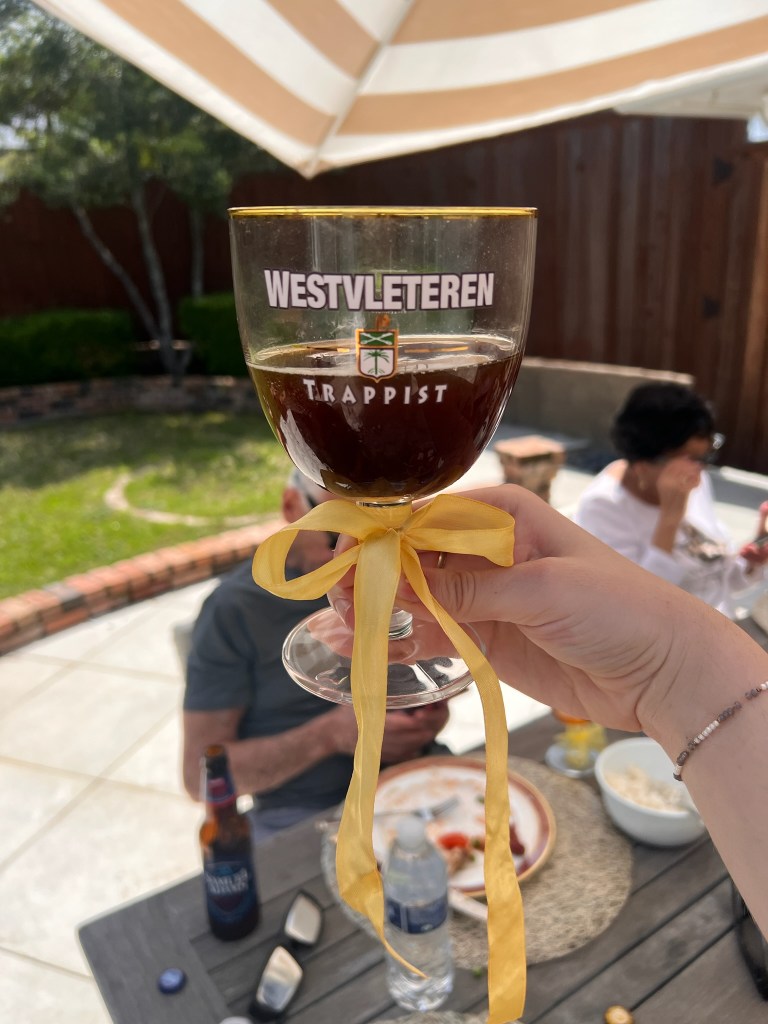
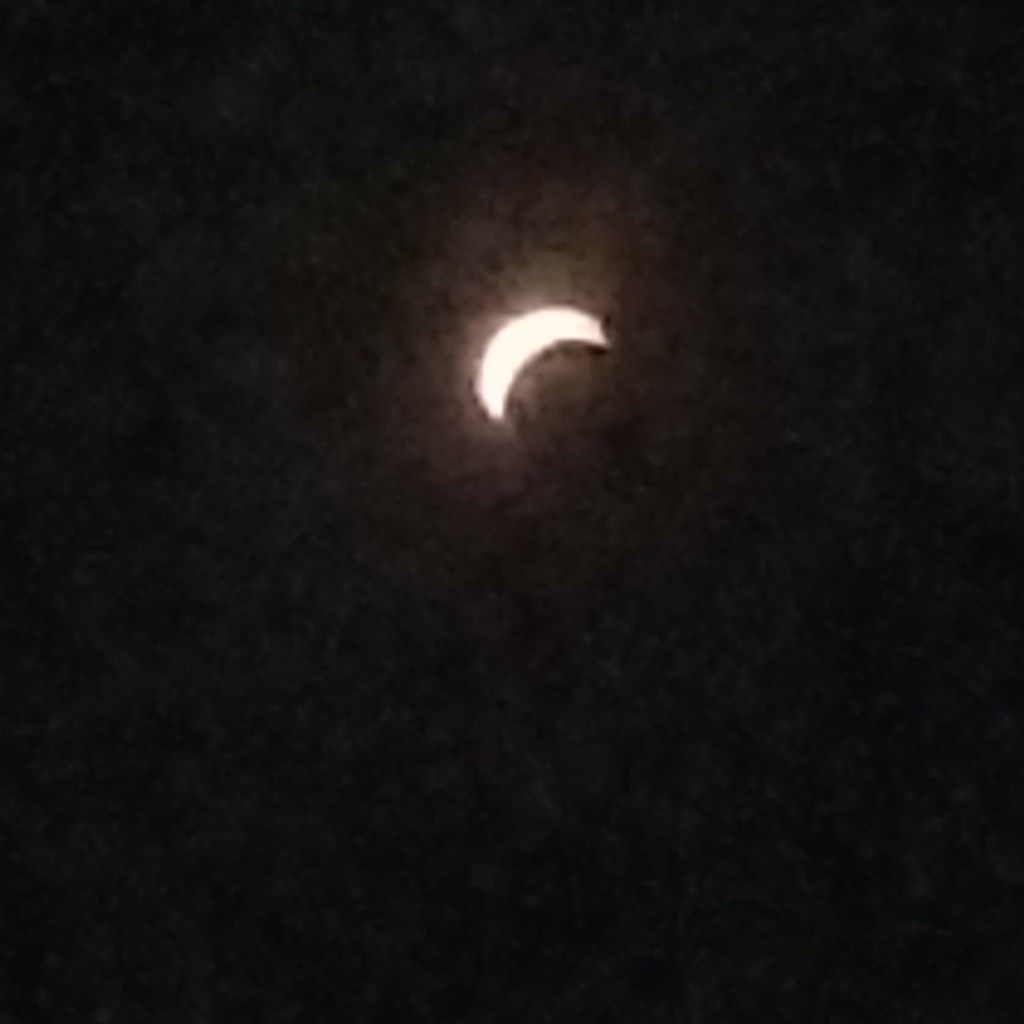
We were all sitting outside in our backyard having a little party, drinking beer and eating snacks, as the partial solar eclipse began. During the partial solar eclipse, it was still daylight, and you could not look at the sun unless you had ISO certified solar eclipse glasses, which we did. When you put on the solar eclipse glasses you could see that the sun looked like a crescent. This was not possible to see without the solar eclipse glasses, and you certainly should not look at the sun during a partial solar eclipse.
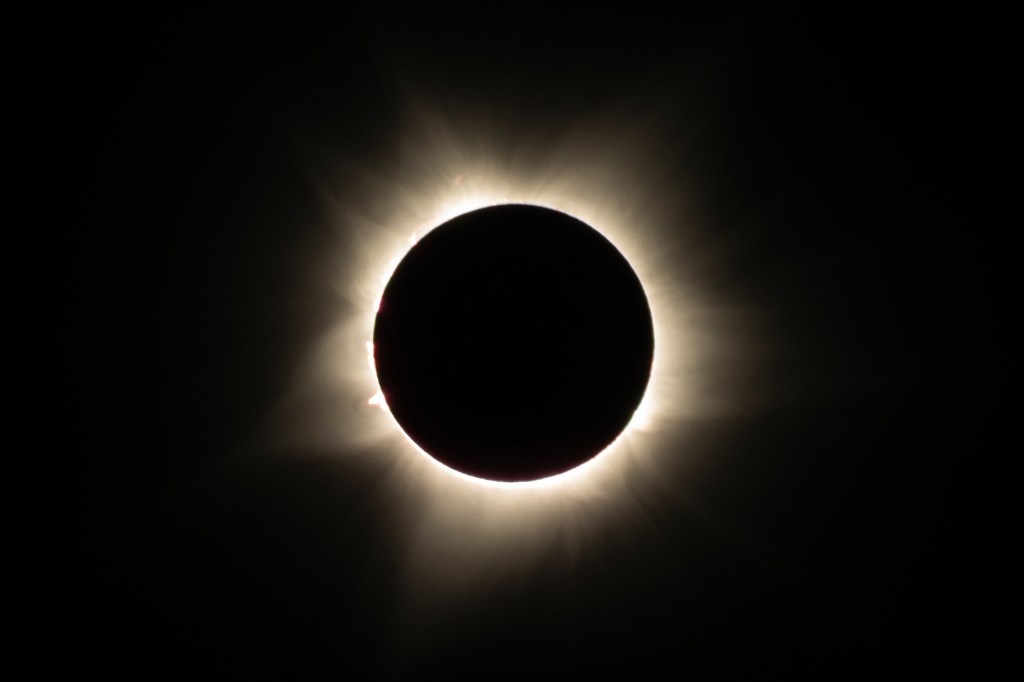
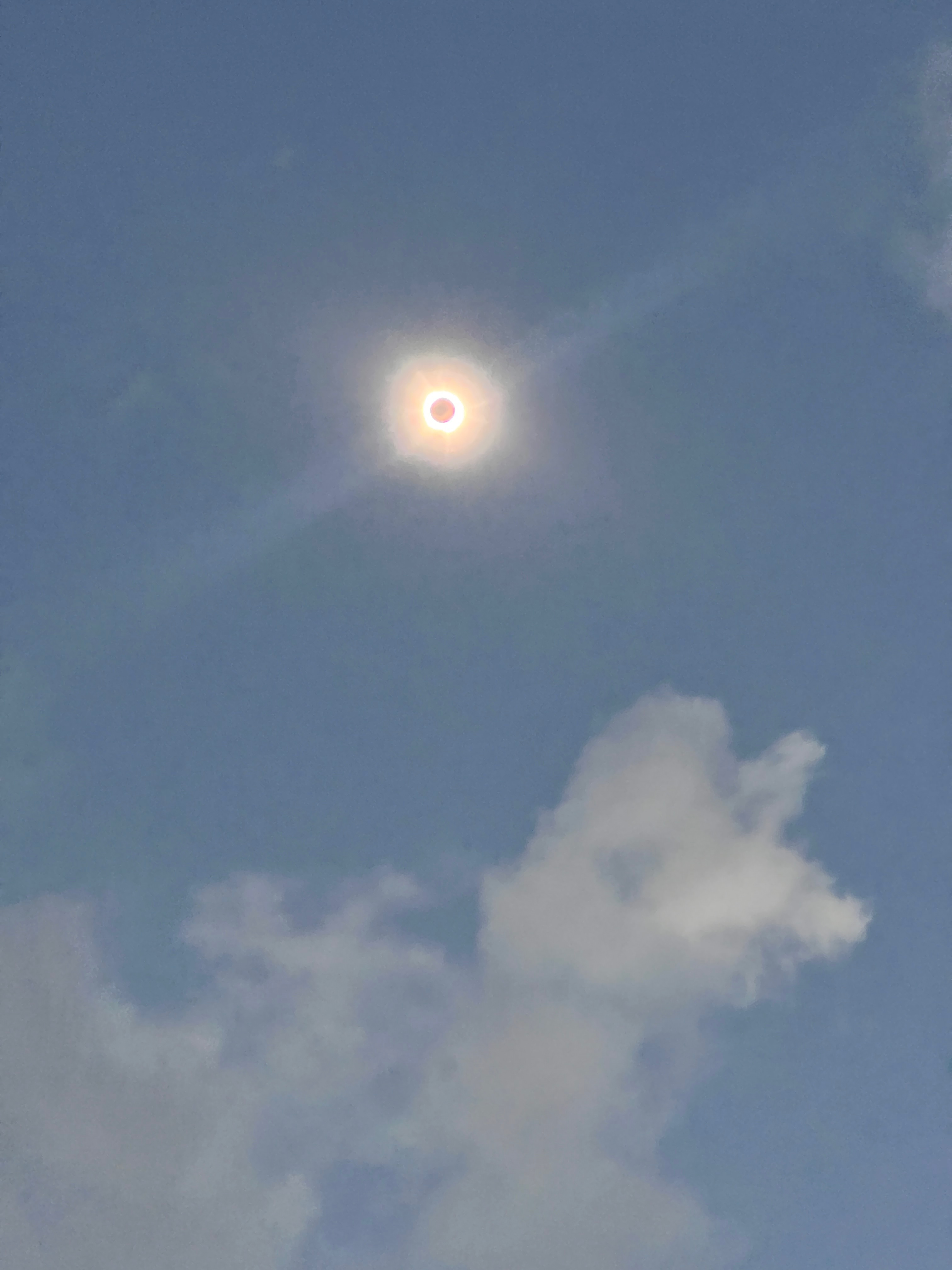
Suddenly, it got dark, not entirely dark, but more like as if it was well into twilight. The sun turned into a black circle surrounded by a faint wispy light. That was the sun’s corona, which normally is invisible due to the sun’s powerful light. The sun’s transformation only took a few seconds. The darkness fell extremely fast as if someone turned off the lights. Now you could look straight at the sun without the ISO certified solar eclipse glasses. Looking straight at the sun during a total eclipse is perfectly safe since all you see is a black circle in the sky. What you see is the black moon. The sun is hidden behind the moon. However, you need to be ready to put on your glasses, or turn your head, when it is time for the sun to come back.
As the sun suddenly vanished, the birds and the insects became quiet. The stars came out. Venus appeared above our heads, not far from the sun. It shone brightly in a location where you normally never see Venus. Venus typically appears above the western horizon after sunset (the evening star) or above the eastern horizon before sunrise (the morning star), not right above you. It was quiet, dark, the sky was beautiful and filled with stars, and there was a black circle in the sky surrounded by the magical faintly shining corona.
I knew what was coming next as the four minutes came to a close, so I put my ISO certified solar eclipse glasses back on. At first, I saw nothing. Then I saw something that looked like a big star that was quickly expanding like a super nova and turning into a thin bright thin crescent. The lights came on, the stars and Venus disappeared, the birds and insects began making noise again. Daylight and the whole world returned in just a few seconds. Now we had another one and a half hour of a partial solar eclipse to enjoy (using our solar eclipse glasses).

What is a Total Solar Eclipse?
Solar eclipse occurs when the Moon passes between the Sun and Earth, blocking the Sun’s light and casting a shadow on Earth’s surface. This is illustrated in the picture below. As you can see there’s a weaker but larger shadow covering a portion of earth. This corresponds to the moon not blocking all of the sun, which results in a bright sun crescent. The darker smaller region/circle on earth corresponds to the moon blocking all of the sun resulting in near total darkness. This is the region on earth that has a total solar eclipse.



Partial Solar Eclipse
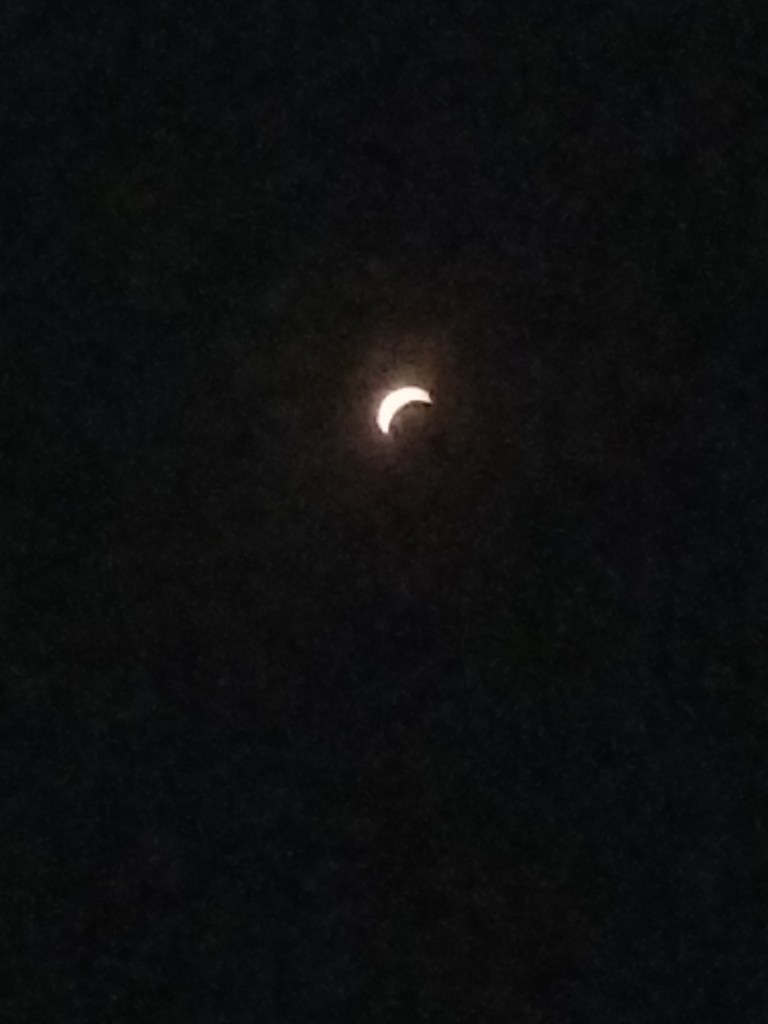
As I said, most of the country had a partial solar eclipse and we had a partial solar eclipse as well as a total solar eclipse. During a partial solar eclipse, it does not get dark, no stars come out (the sun is too bright), the birds don’t stop singing, and you cannot see the partial solar eclipse with the naked eye. You need ISO certified solar eclipse glasses. However, there are other cool effects such as the shadows of the trees turn into thousands of little crescents.
Annular Solar Eclipse
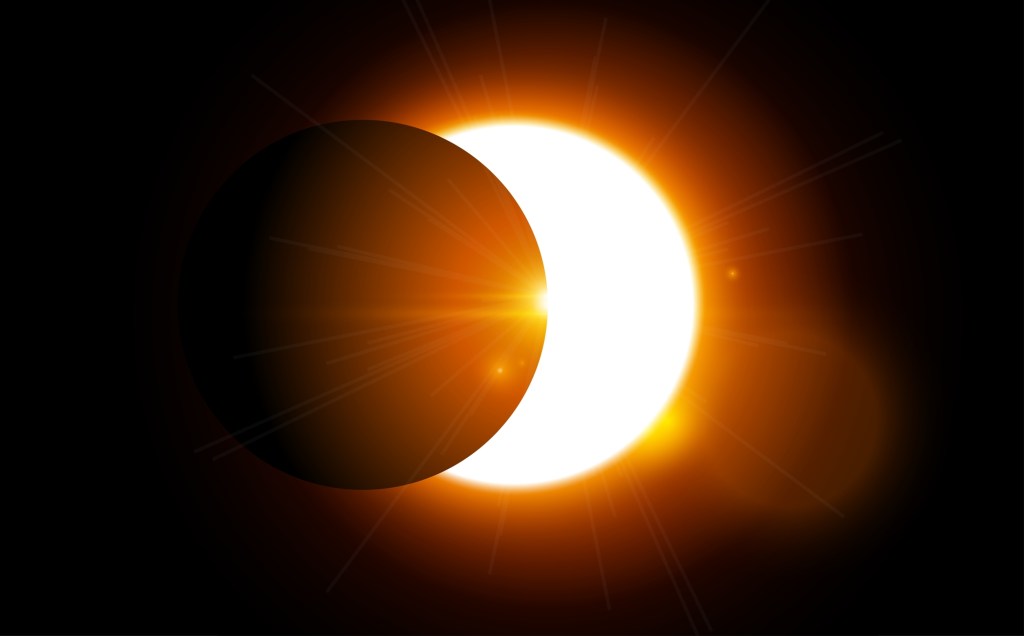
Lastly there are also annular solar eclipses. That is almost a total solar eclipse, but the moon is not covering all of the sun’s disc resulting in circle of the sun being visible. It is similar to a partial solar eclipse in the sense that it is still daylight, the stars won’t come out, etc. I can add that even though the light is dimmed a bit during an annular solar eclipse it does not get dark as during a total solar eclipse. The picture below is a bit misleading in that sense (probably a photo filter).

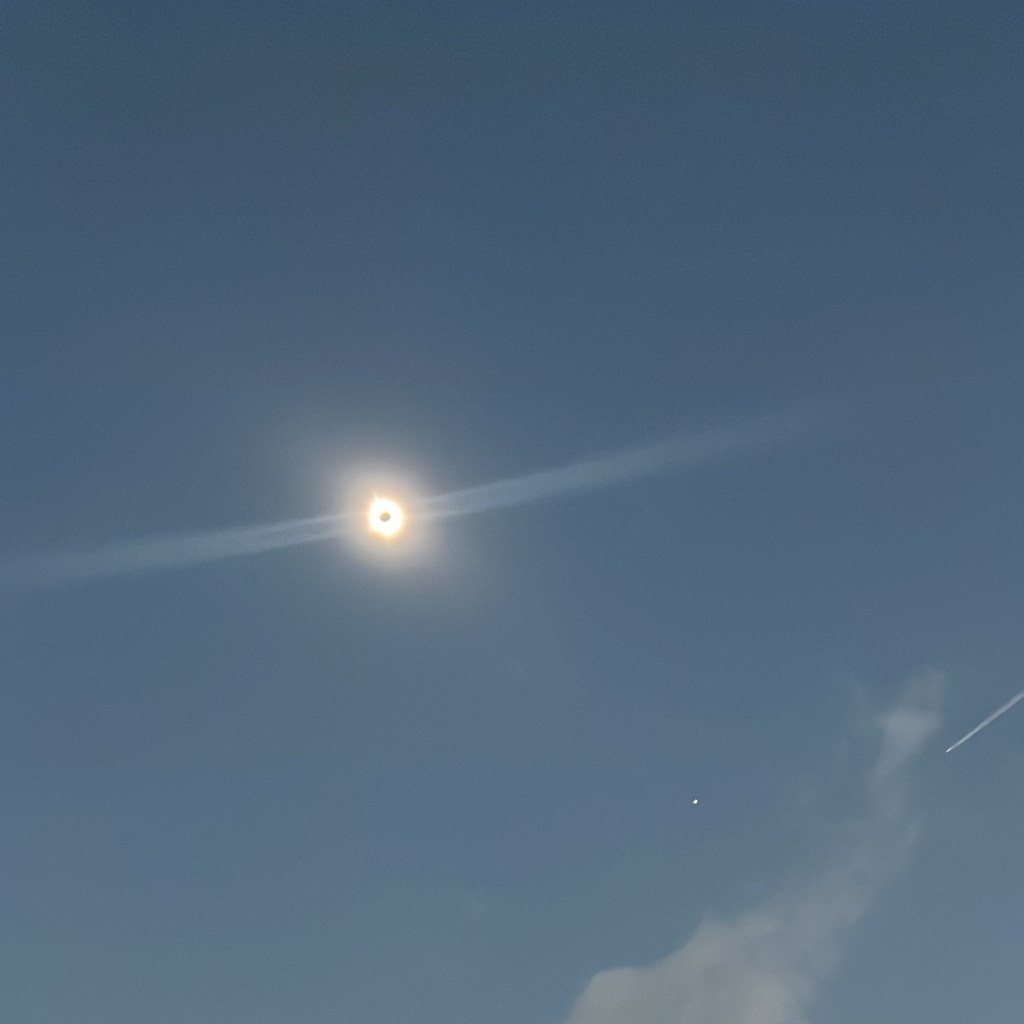
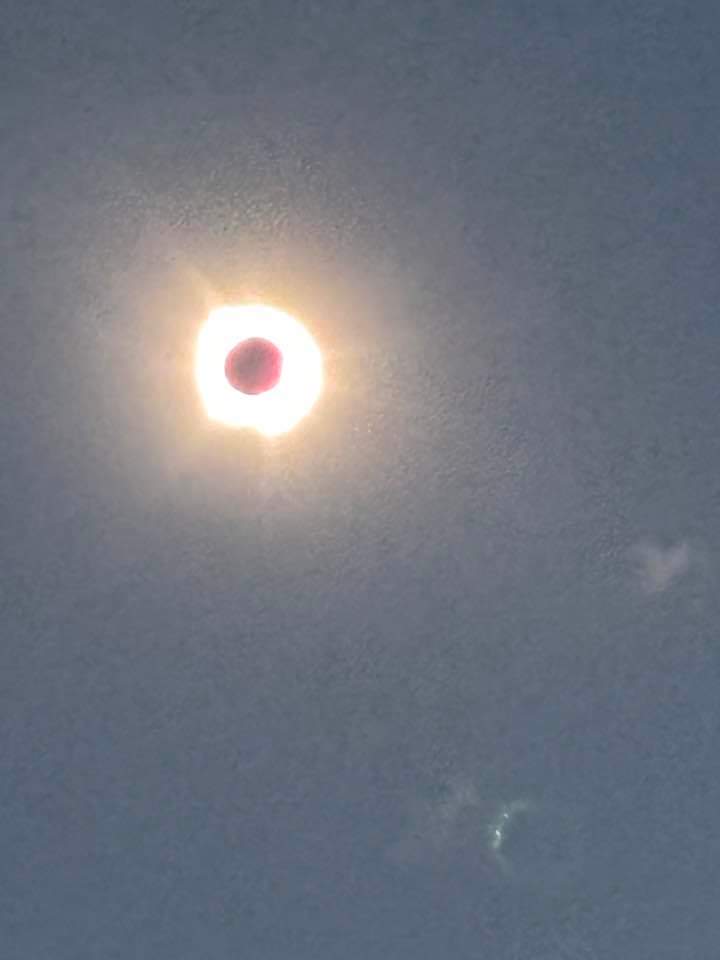
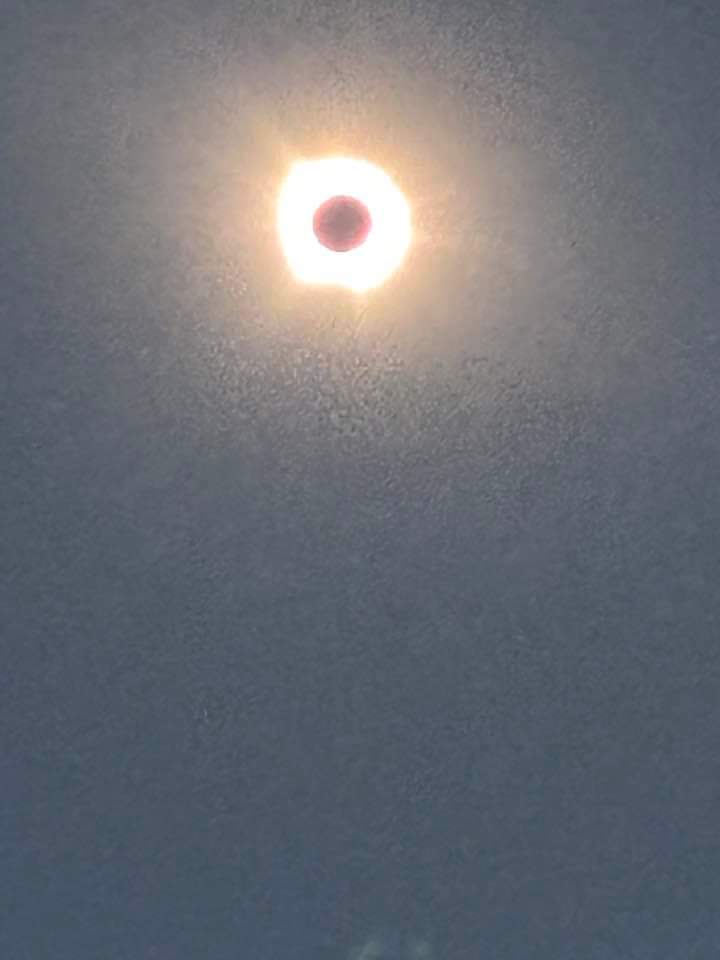
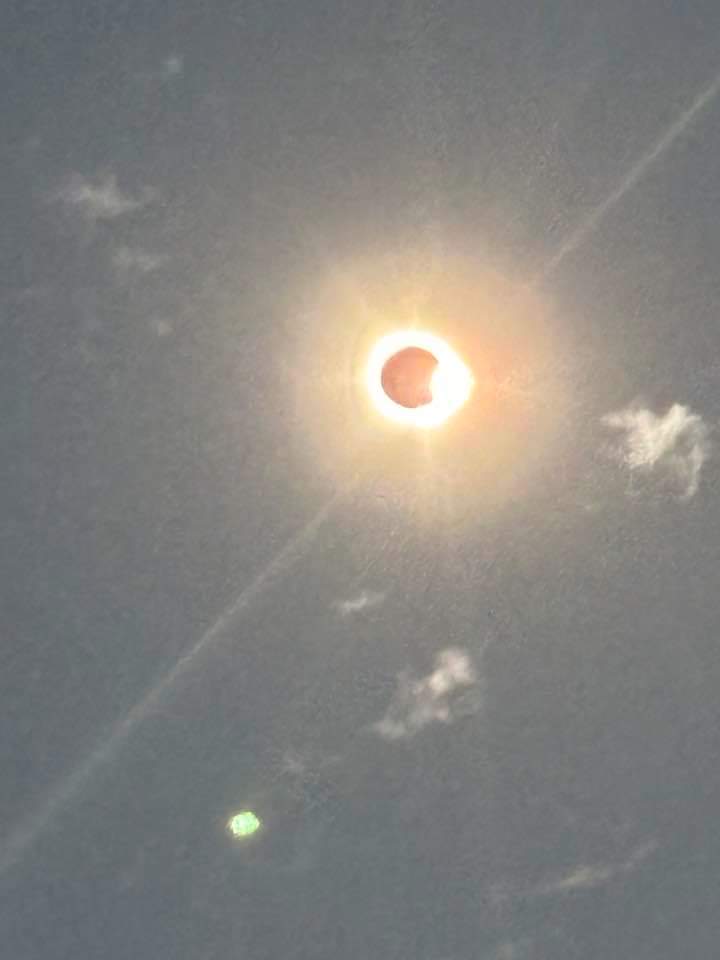
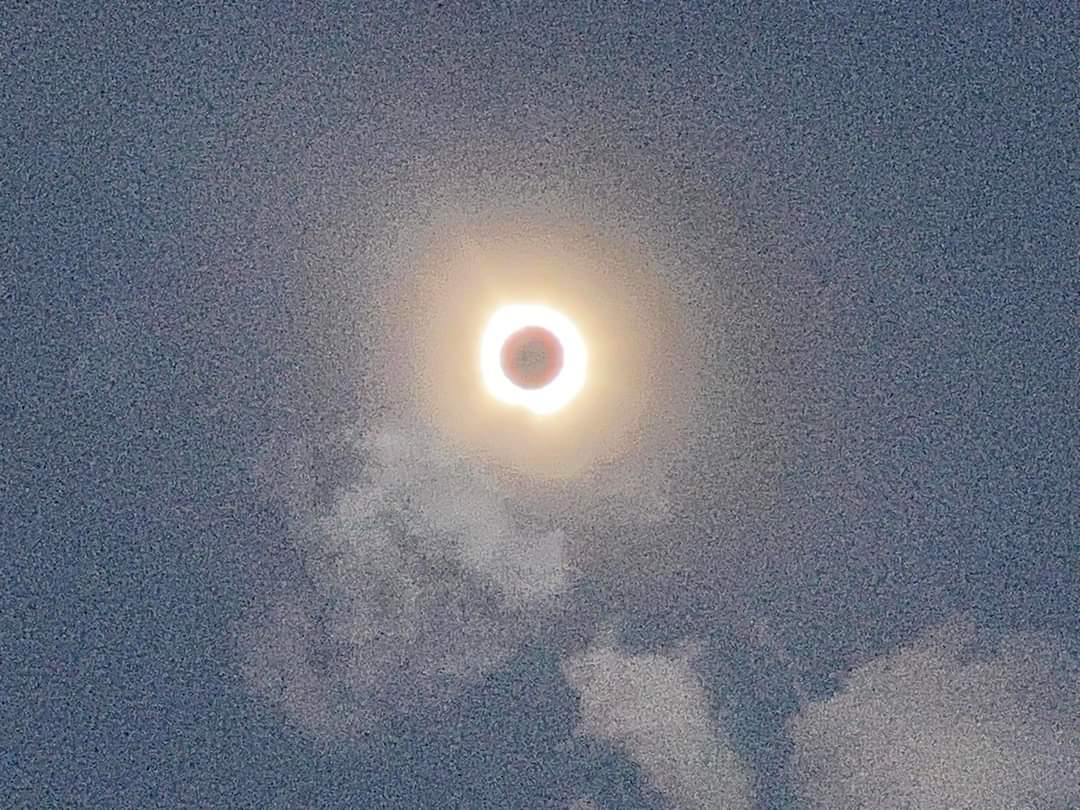
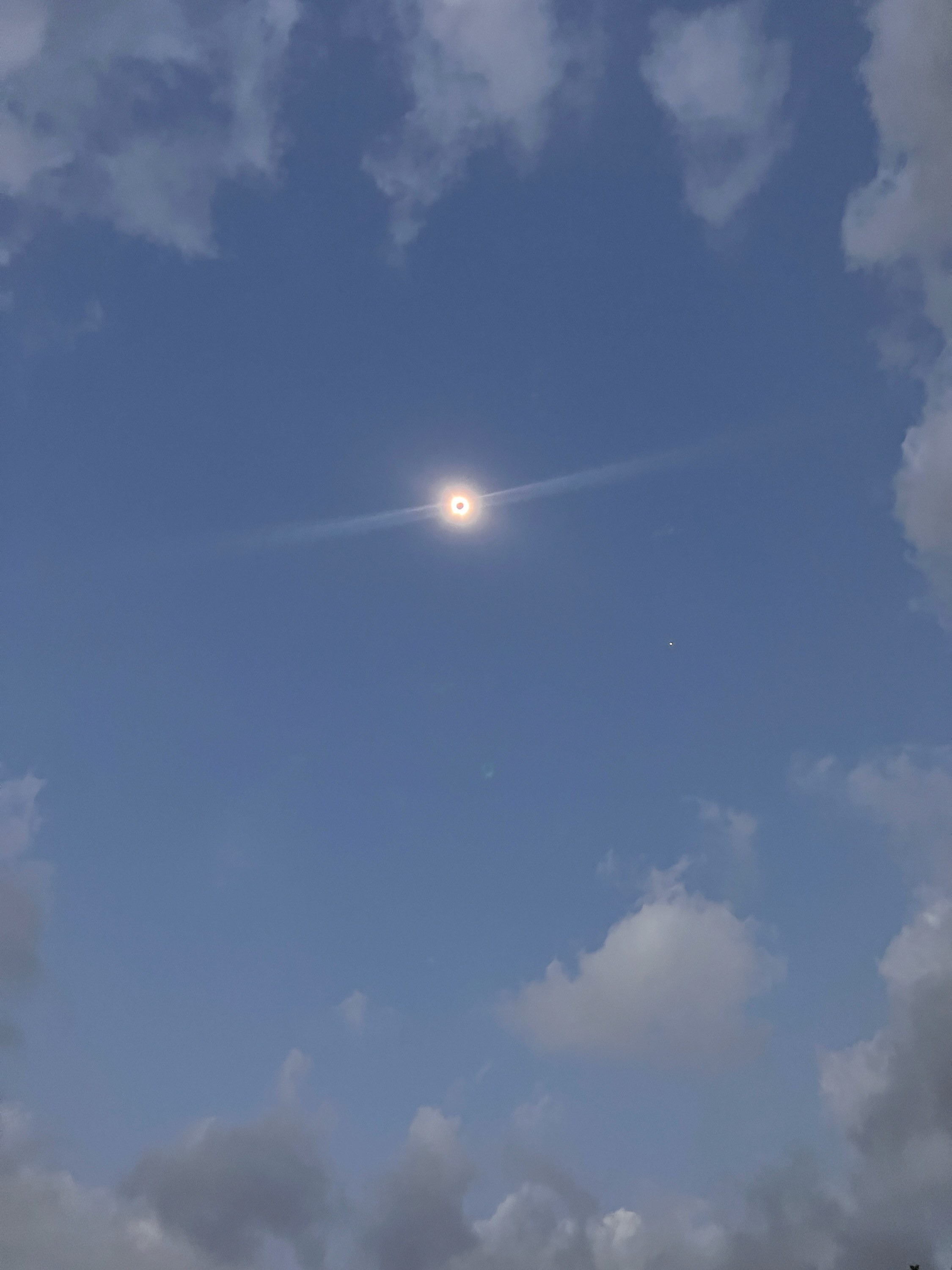
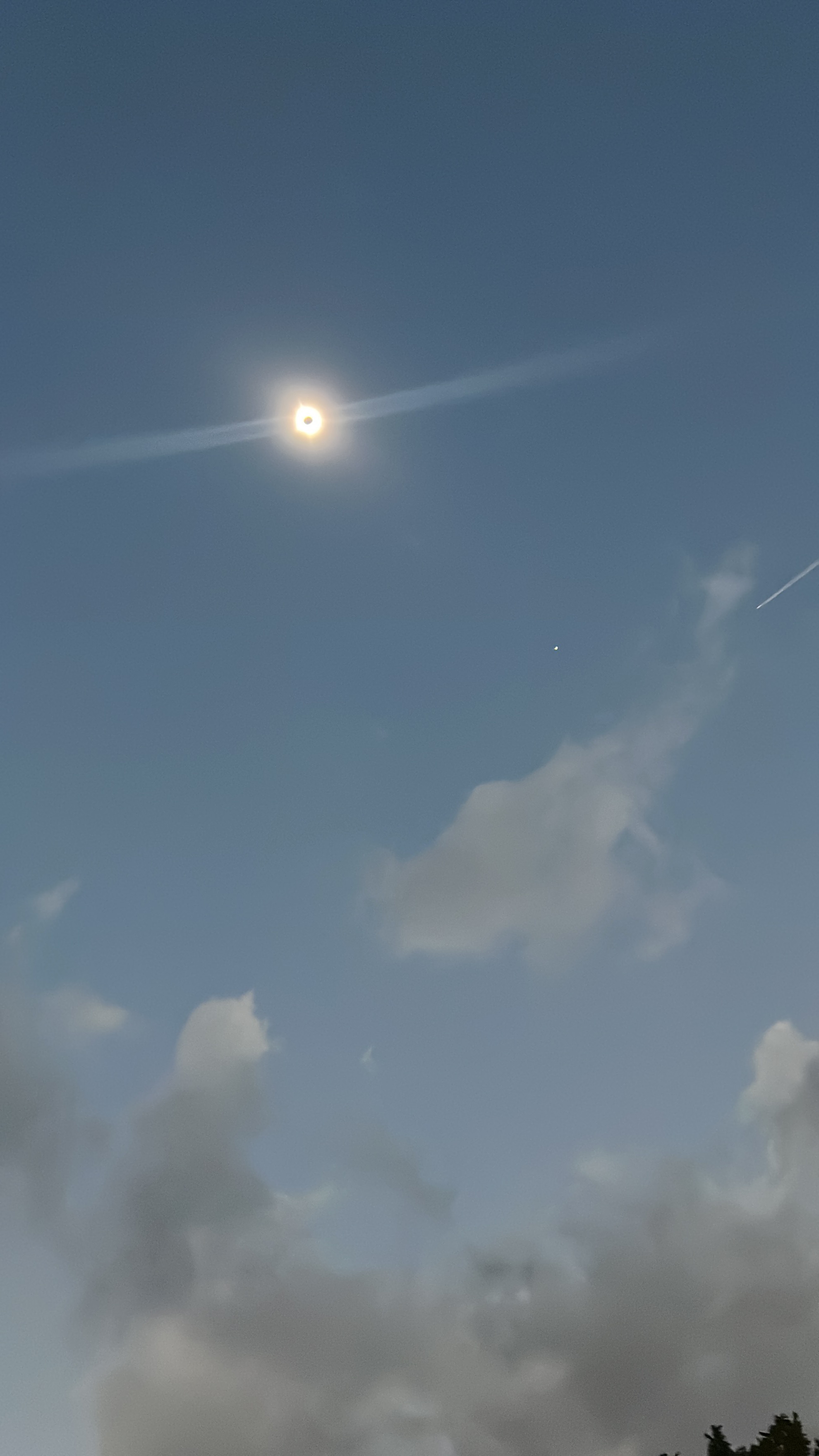
Miscellaneous Solar Eclipse Photos taken with Cell Phones


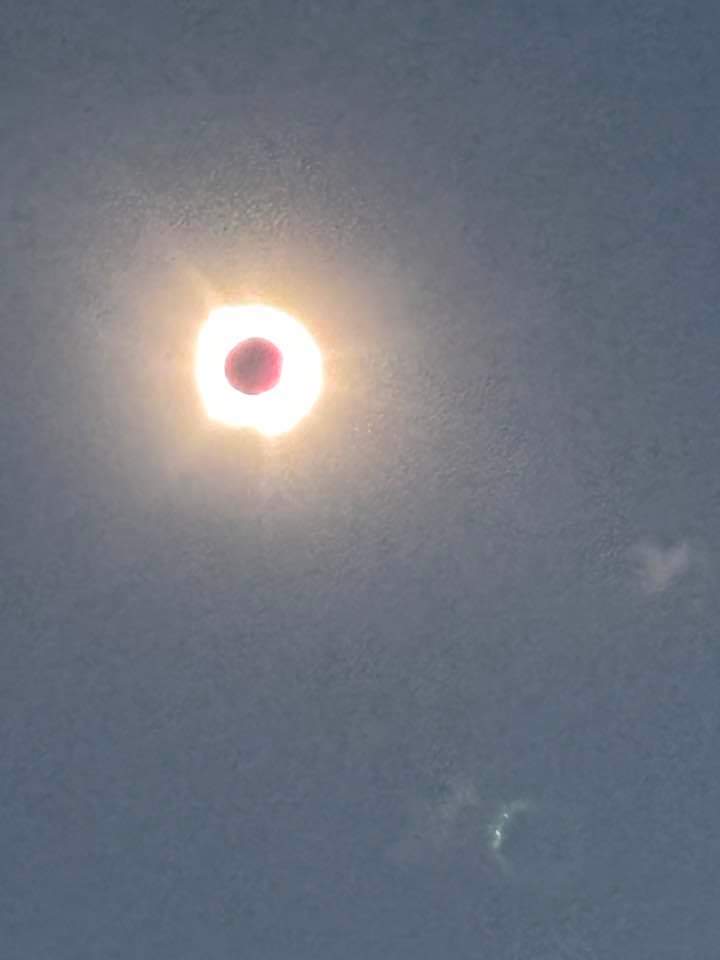
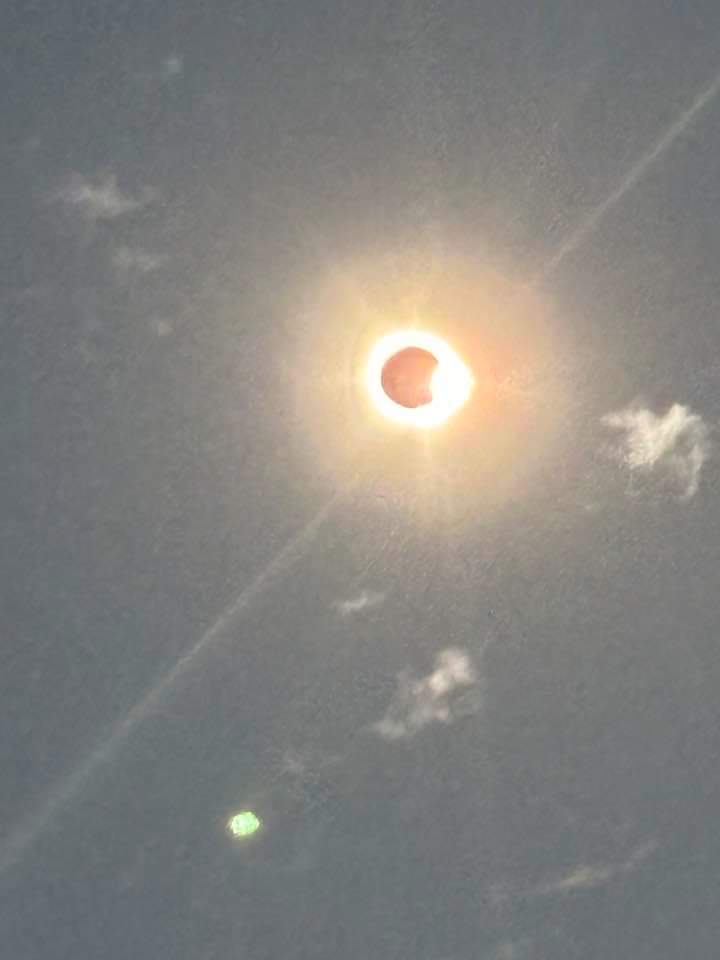


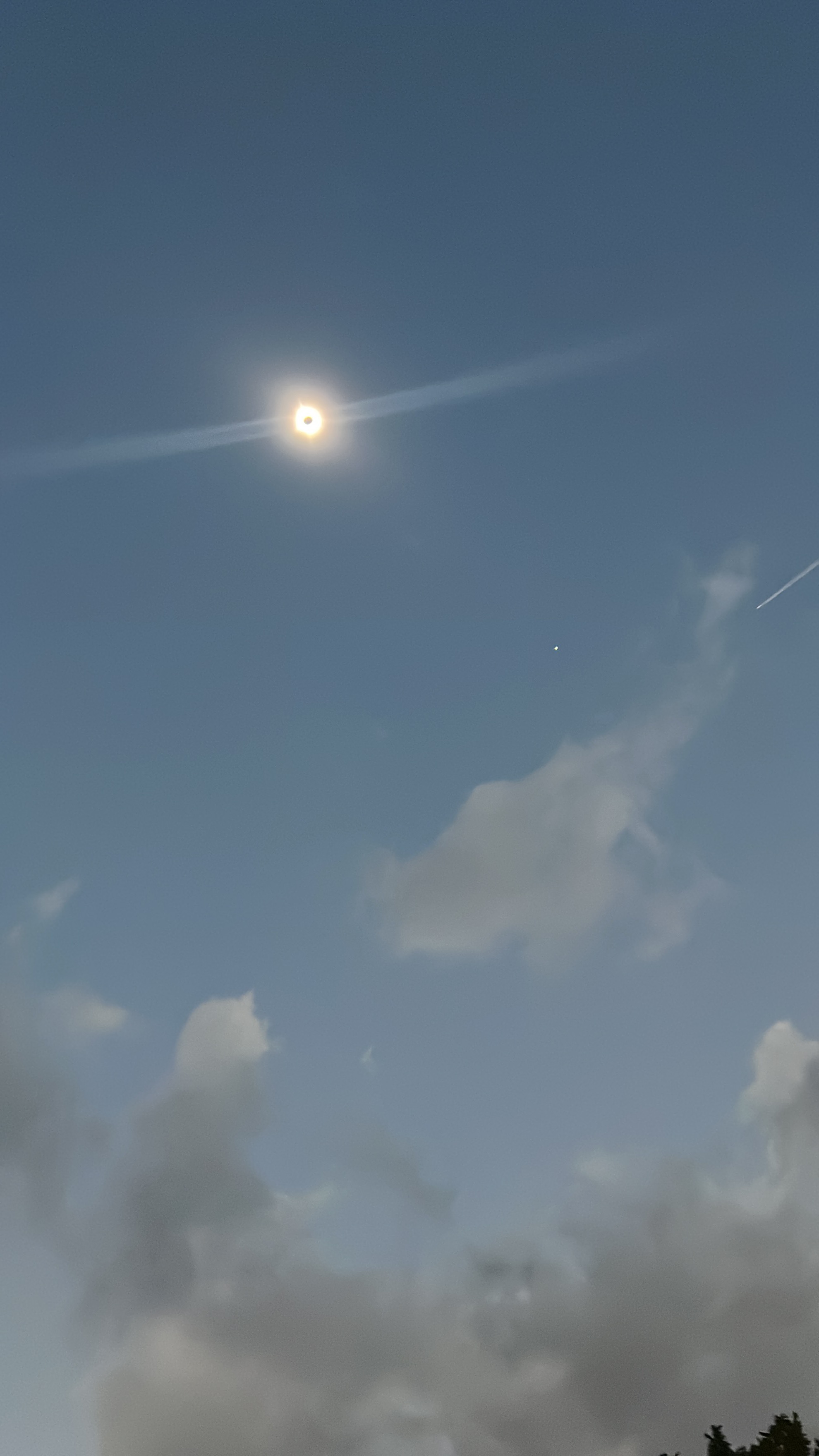

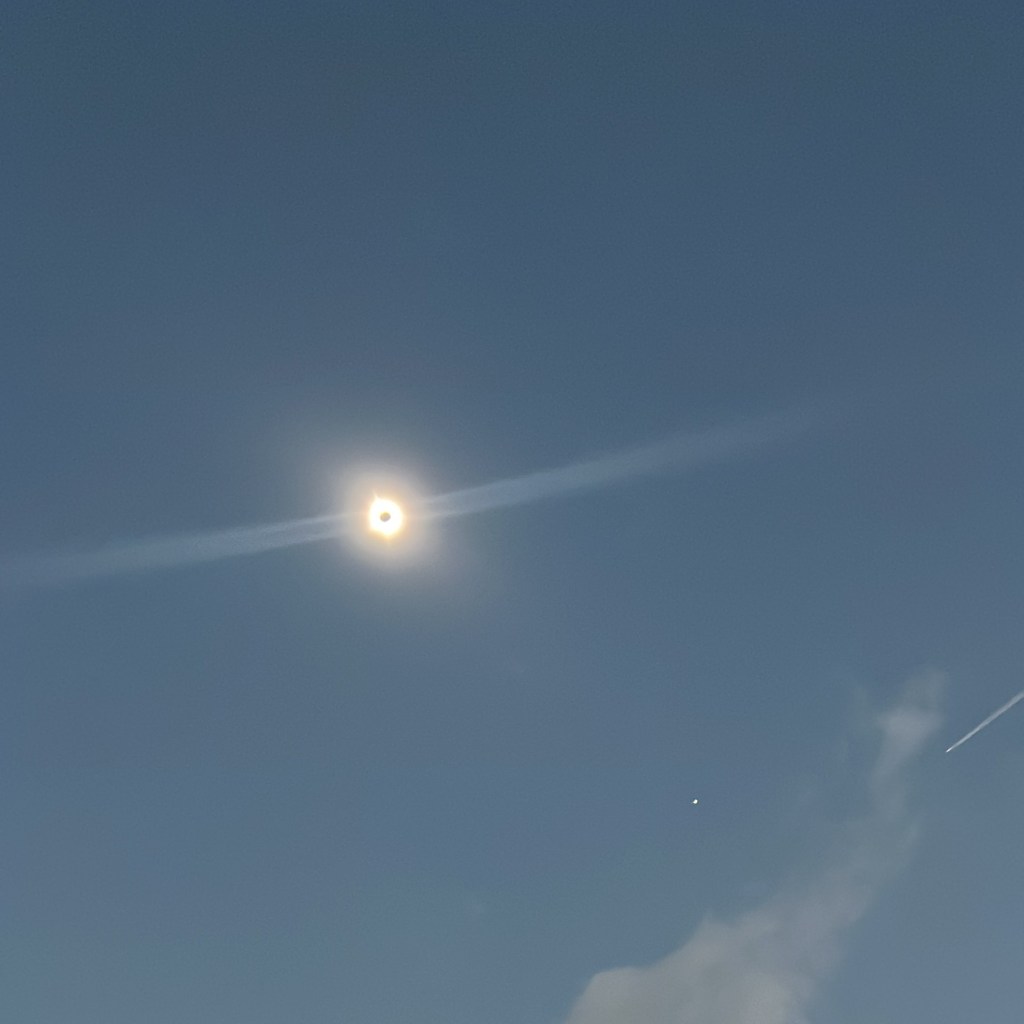
These eight pictures above were taken with cell phones by my daughter Rachel, and friends Denise Mosier-Wanken, and Margaret Weiss Bloebaum.
If you want to read more about this experience you can click here or here.
 Super Facts