The goal of this blog is to create a long list of facts that are important, not trivia, and that are known to be true yet are either disputed by large segments of the public or highly surprising or misunderstood by many.
Super fact 81 : Humans are not descended from chimpanzees, or monkeys, or any other primate living today. However, humans and chimpanzees share a common ancestor that lived roughly 5 to 7 million years ago. The two species evolved separately to become modern humans and chimpanzees. Humans and chimpanzees are closely related and share approximately 98.8% of their DNA. Studying the DNA, it is possible to determine how long ago this ancestor lived despite not having any fossils from this ancestor.
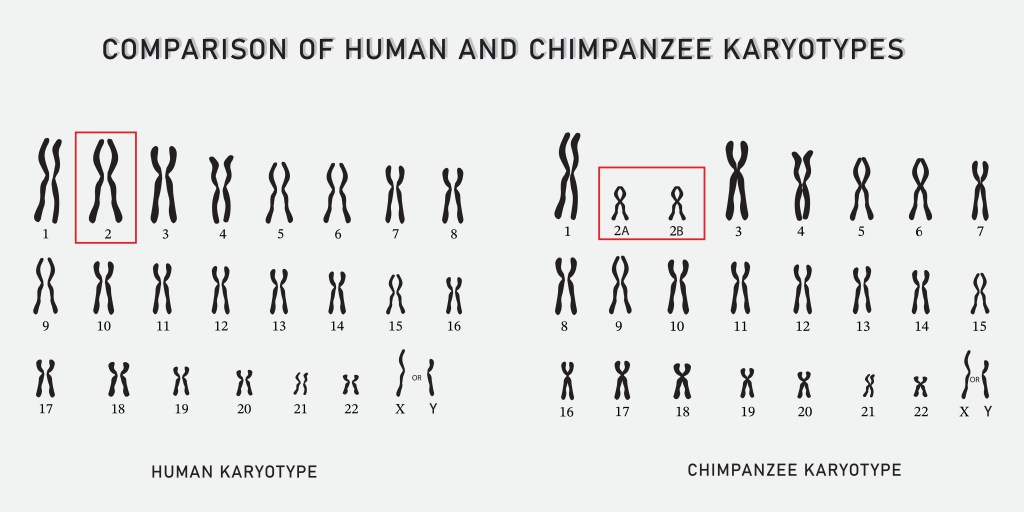
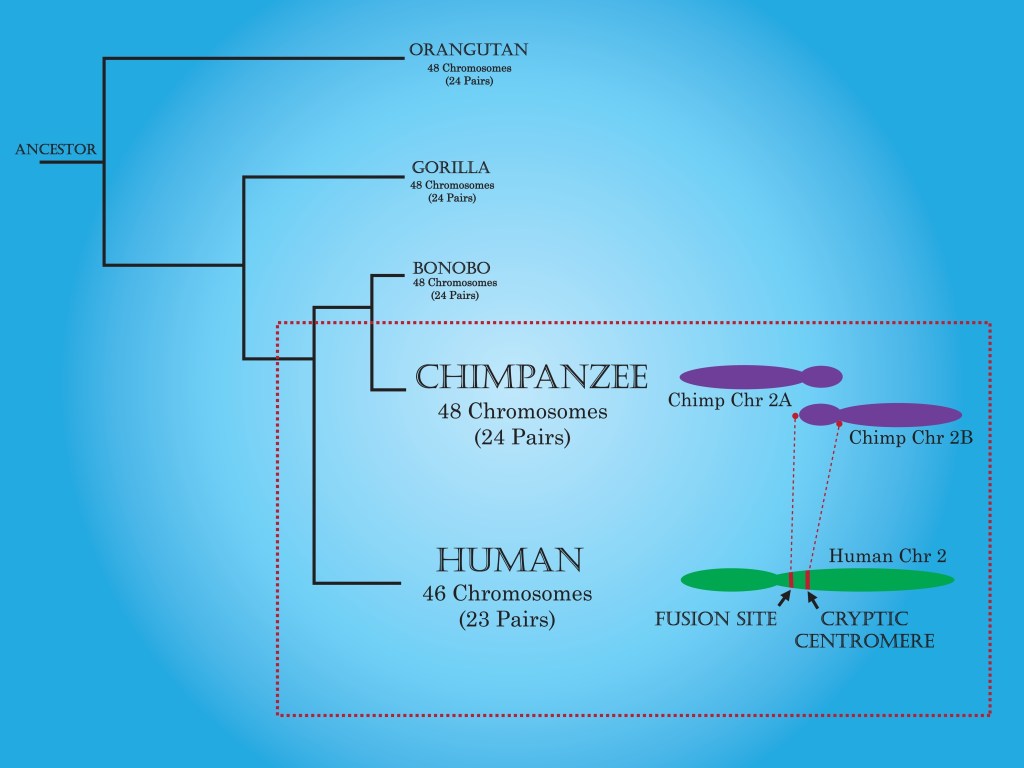
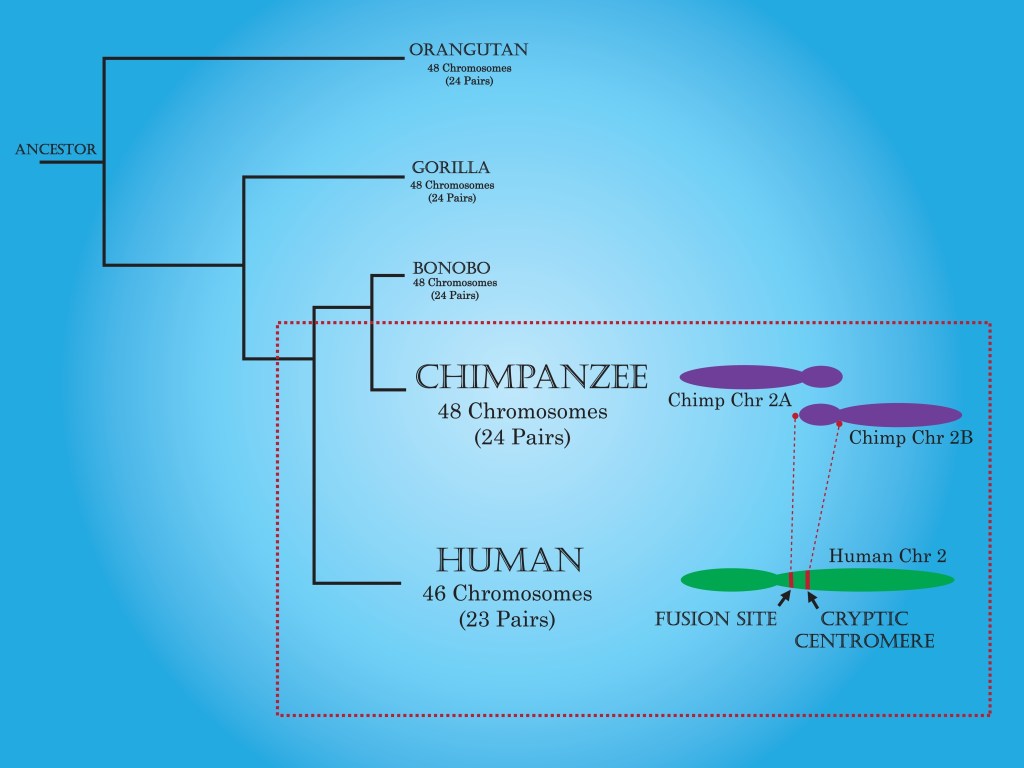
Chimpanzee genome sequencing and the sequencing of human DNA has led to the realization that human and chimpanzee DNA is very similar and that humans and chimpanzees share an ancestor. The fact that the great apes have 48 (24 pairs) chromosomes while humans have 46 (23 pairs) is not an issue. What happened was that the ancestral chromosomes corresponding to modern chimpanzee chromosomes 2A and 2B fused to create human chromosome 2. We can see that the genes in 2A and 2B line up with chromosome 2 and we can also see where the 2A and 2B merge in the human chromosome 2 (see picture below).
Evolution of humans via phylogenetics and differentiation between humans, chimpanzees, and other primates. Shutterstock Asset id: 2448150743 by kanyanat wongsa
The graph above shows that gorillas, chimpanzees and humans share a common ancestor with orangutans. At the next level bonobos, chimpanzees and humans share a common ancestor with gorillas and finally chimpanzees and bonobos share a common ancestor with humans. We can deduct these things from DNA without needing fossils. We have found millions of fossils corresponding to more than 250,000 species. However, the best evidence for so called “macro evolution” and the best tool for determining relationships between species may not be the fossil record but DNA.
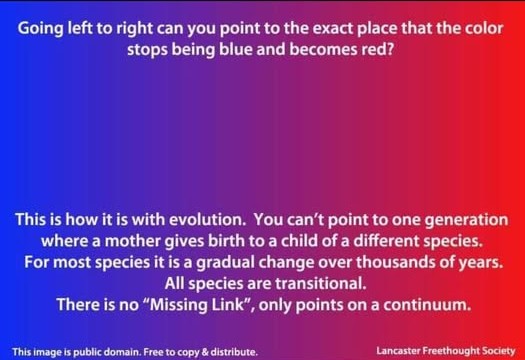
It should be noted that the terms “macro-evolution” and “micro-evolution” are terms that creationists like to use but that scientists do not like to use. Creationists like to say that microevolution is possible (it is observed) but not macroevolution. However, macroevolution is the result of repeated microevolution, so you cannot claim that microevolution is possible but not macroevolution. In addition, speciation is relative. An animal A may be able to successfully interbreed with an animal B, and that animal B may be able to successfully interbreed with an animal C, but animal A and C cannot interbreed. The border between microevolution and macroevolution is fuzzy.
The fact that we can determine evolutionary ancestry by sequencing DNA of living creatures may come as a surprise to many people. In addition, we can also determine how long ago a common ancestor lived. It may also come as an additional surprise to many that we are not descended from the great apes but share a common ancestor. Super fact 81 is a super fact because we know it is true, it is surprising to many, and important to know.
Identifying a common ancestor using DNA Sequencing
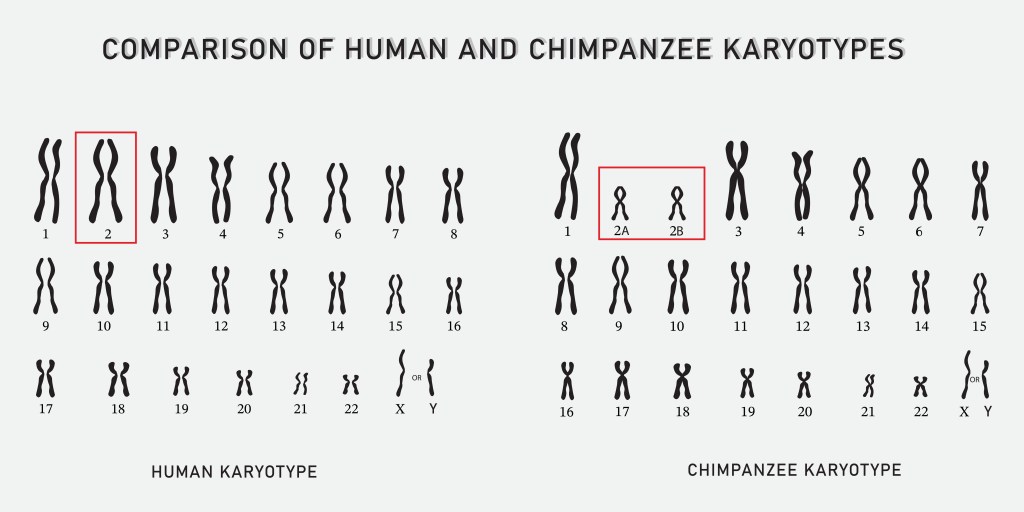
Below is a very high-level image of human and chimpanzee chromosomes referred to as a Karyotype. A karyotype is a laboratory-produced image or visual profile of an individual’s complete set of chromosomes, arranged in pairs by size, shape, and number.
Comparison between human and chimpanzee karyotypes isolated on background. Shutterstock Asset id: 2432966649 by kanyanat wongsa
Based on the similarity in transposons, or jumping genes, pseudo genes, and genes in general (all of the genome) we know that the closest related living animals to humans are chimpanzees and bonobos. You can read more about this in the book Relics of Eden by Daniel Fairbanks, a book I highly recommend. According to the author the latest and perhaps best evidence for evolution as well as the fact that humans and chimpanzees have a common ancestor comes from so called junk-DNA. DNA that is not currently used but contains scientifically informative remnants of our evolutionary ancestry trapped in our DNA. The author refers to these remnants as relics.
Hominini species
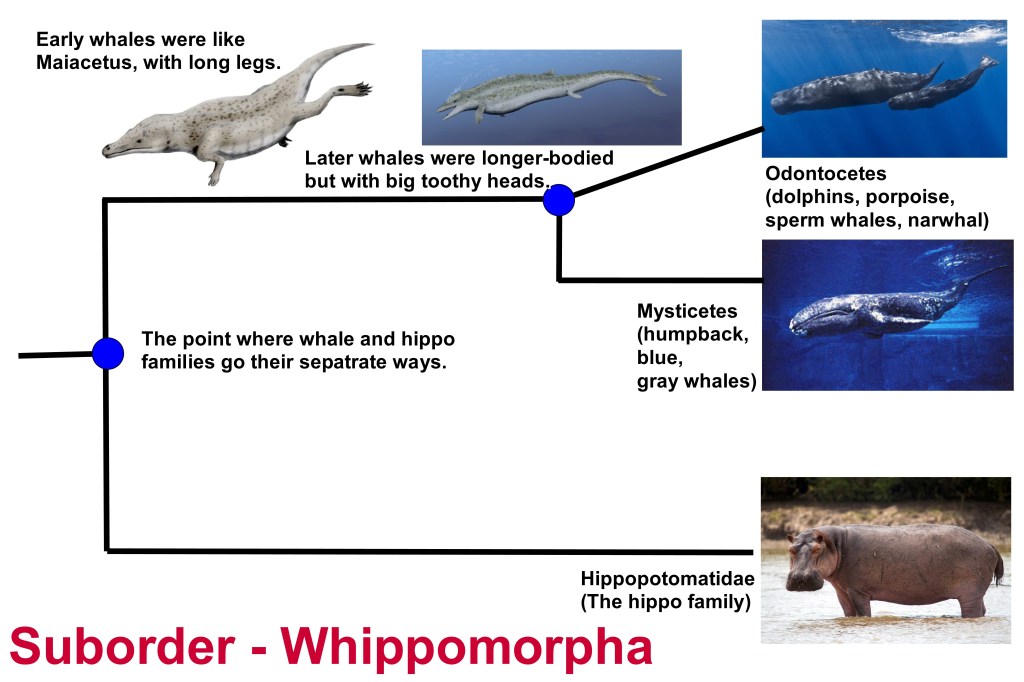
Another interesting fact derived from DNA research is that chimpanzees and humans are more closely related than chimpanzees than to the other great apes. Based on the genetic record chimpanzees are no longer classified as great apes but as Hominini together with humans. The fact that there are three Hominini species (homo sapies – us humans, chimpanzees and bonobos) could maybe be another super fact.
Speaking about hominini species, we have found more than 6,000 hominin fossils corresponding to dozens of species including Australopithecus, Paranthropus, Homo Habilis, Homo Erectus, Homo Heidelbergensis, Homo Neanderthalis, and Homo Sapiens. This link features a cool phylogenetic tree that includes Homo Sapiens (us), Neanderthals, as well as chimpanzees and bonobos.
I started this blog, superfactful, in August of 2024. The goal of my blog is to create a list of facts that are important, not trivia, and that are known to be true yet surprising, shocking or disputed by large segments of the public. I determine what is true by evaluating the evidence I find in reliable reputable sources and if a longstanding scientific consensus is available that certainly helps. In some cases, I have expertise in the subject myself, which also helps. Whether a fact is important and surprising or disputed is a judgment call. In some cases, there are polls to help me determine how surprising or disputed the fact is. I am trying to avoid trivia and click bait, and I am only focusing on what is true, important and mindboggling.
It is a project I hope to learn a lot from, and I hope others will also learn something from reading it. We are all drowning in misinformation, false beliefs and unsubstantiated assumptions. We often know and understand less than we think. I have been bamboozled in the past and I am pretty sure you have too. If this blog can spread a little bit of light, I am happy.
In 2024 I posted 25 super facts and in 2025 I posted 53. I am hoping to one day to have collected 200 super facts. I have also made 64 other kinds of posts on this blog such as book reviews for educational books as well as other fact related posts. Below are ten selected super facts from 2025. To read the full post click the links.
That Earth is round was well known long before Columbus
Super fact 28: That Earth is round, or spherical (or closely spherical) had been known for at least a couple of thousand years by the time Columbus set sail. Columbus did not set sail to prove that earth was round, and he knew it was round.
I’ve realized that this comes as a surprise to some. To read the post click here.
Columbus thought earth was smaller. He did not know about the Pacific Ocean. Earth Pacific Ocean view Stock Illustration ID: 1617553012 by Matis75
EV Cars Indeed Emit Less Carbon Pollution
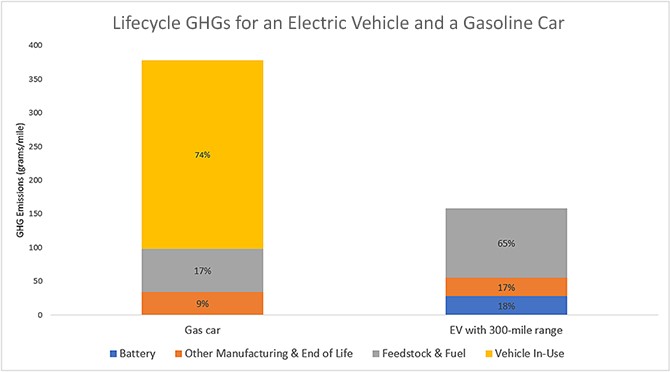
Super fact 29: EV Cars emit less pollution than Internal Combustion Engine, even considering manufacturing, disposal and EV Cars being charged by dirty grids.
There is a lot of misinformation about EVs including that EVs are not better for the environment. To read the post click here.
Lifecycle greenhouse gas emissions comparison of average gasoline car and 300 mile range EV. Feedstock and fuel include the generation of electricity for EVs.
Scientists Agree that Global Warming is happening and that we are the Cause
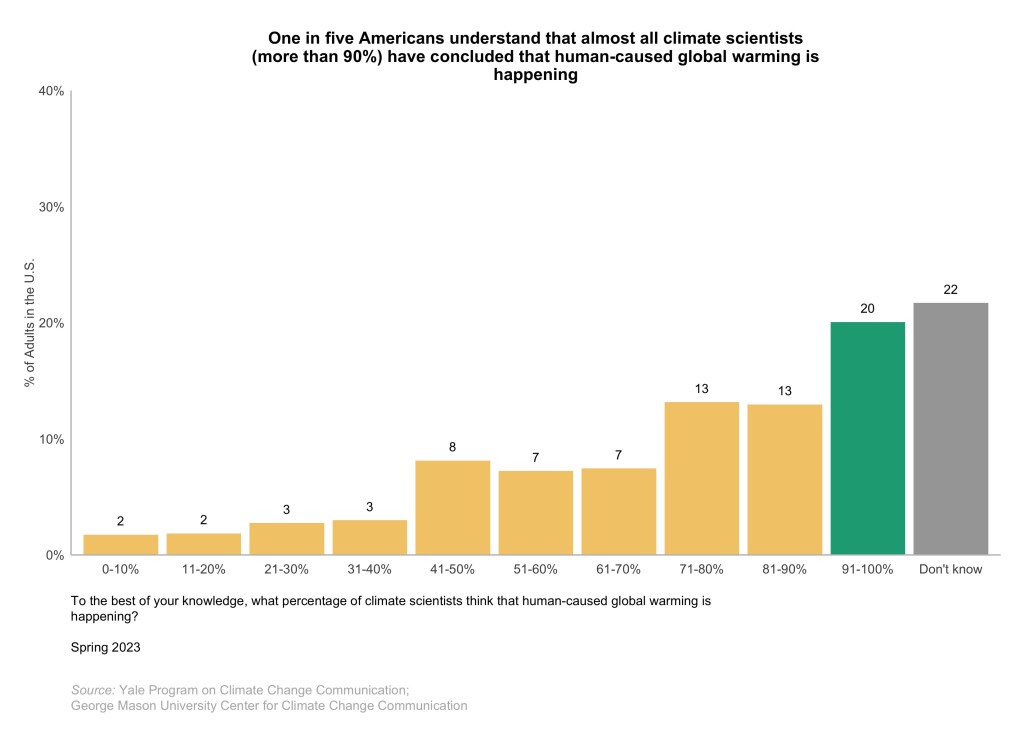
Super fact 34: Climate Scientists agree that Global Warming or if you call it Climate Change is happening, and that it is caused by us primarily because of our burning of fossil fuels. There is a long-standing scientific consensus on these two facts because the evidence is conclusive. Typically, studies show an agreement of at least 97% or 98% among climate scientists.
Polls show that most American are unaware of the consensus among climate scientists. To read the post click here.
There is almost total agreement among climate scientists that global warming, or climate change, is happening and is caused by us. To understand why, you need to know a little bit about the impressive evidence, which for all practical purposes is conclusive. Take a look at this post “Global Warming is Happening and is Caused by us”
The green graph corresponds to “most scientists think global warming is happening (%).” The black graph corresponds to “there is a lot of disagreement among scientists (%)”. The yellow graph corresponds to “Most scientists think global warming is NOT happening (%)”. Graph taken from the Yale Program on Climate Change Communication.
Time Dilation Goes Both Ways
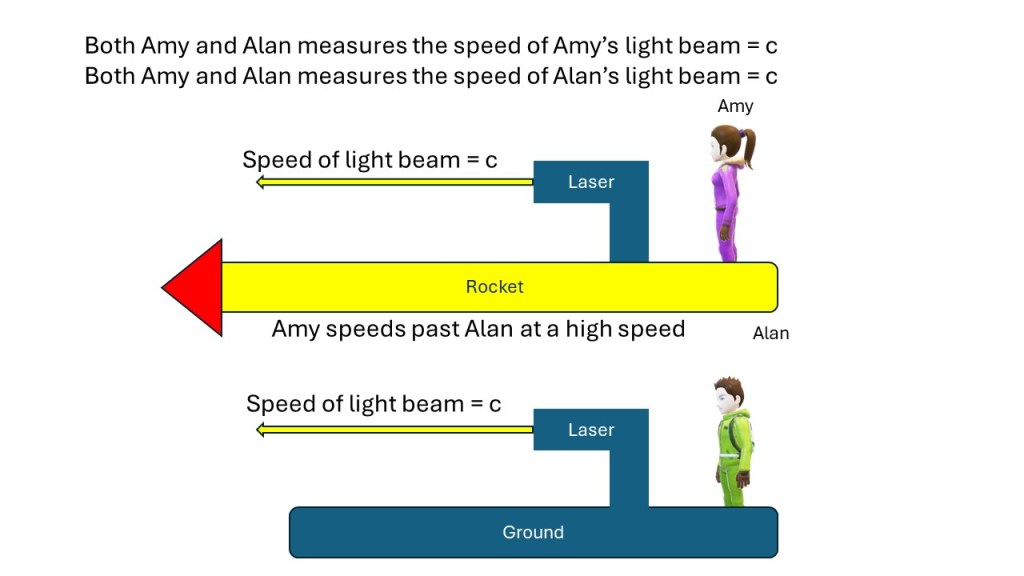
Super fact 38 : If two observers are moving compared to each other both will observe the other’s time as being slower. In other words, both observers will observe the other’s clocks as ticking slower. Time slowing down is referred to as Time Dilation.
Clocks slow down as you travel at high speeds. However, the person travelling think they are standing still. It is the other person who is travelling. This is confusing. To understand it click here.
In this picture Amy is traveling past Alan in a rocket. Both have a laser. Both measure the speed of both laser beams to be c = 299,792,458 meters per second. The speed of light is a universal constant.
Emissions of ozone-depleting gases have fallen by 99 Percent
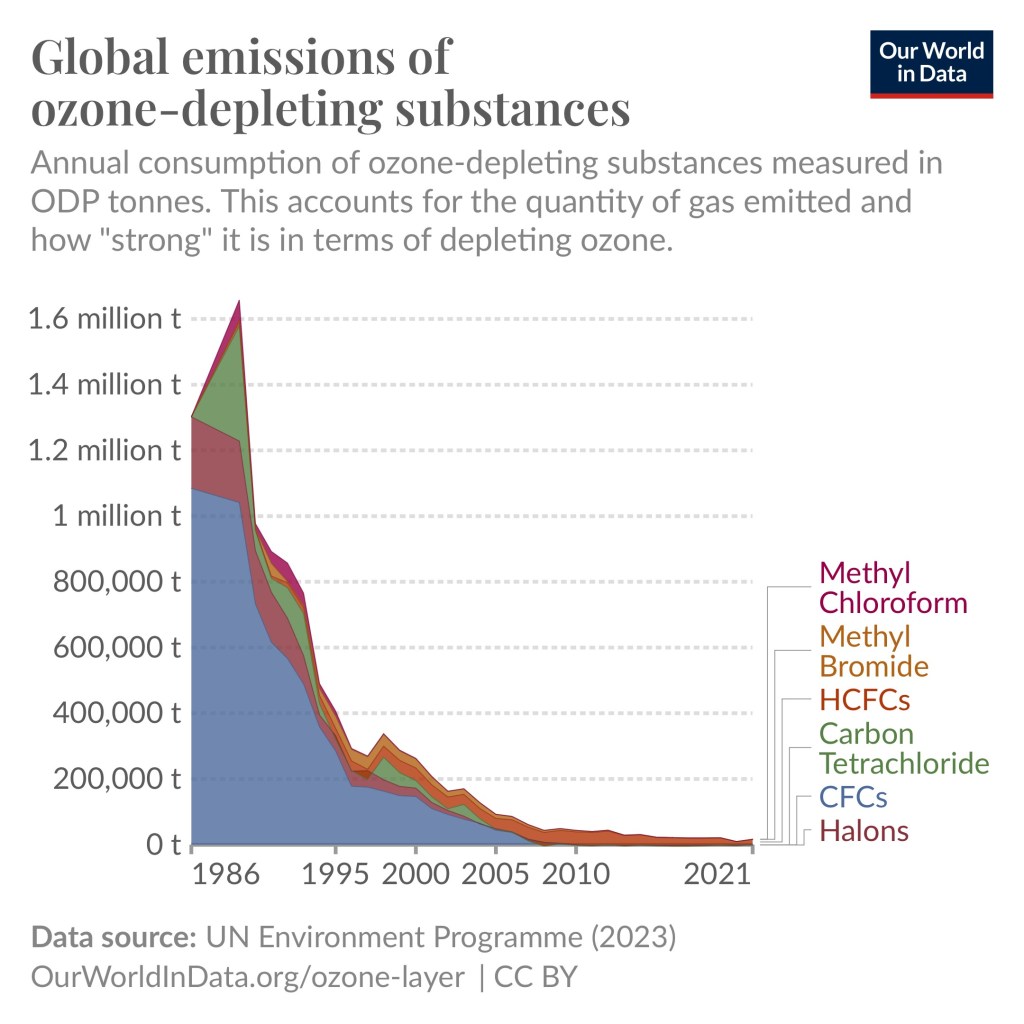
Super fact 41 : Largely thanks to the Montreal Protocol in 1987 the emissions of ozone-depleting gases have fallen by more than 99%, 99.7% to be exact, according to Our World in Data. This has resulted in halting the expansion of the ozone holes and the reduction in emissions of ozone-depleting gases is saving millions of lives every year.
A gigantic victory for the environment that few are aware of. To read the post click here.
The phase out of six ozone depleting gases. Data source UN Environment Program (2023).
Sulfur dioxide pollution has fallen by 95 percent in the US
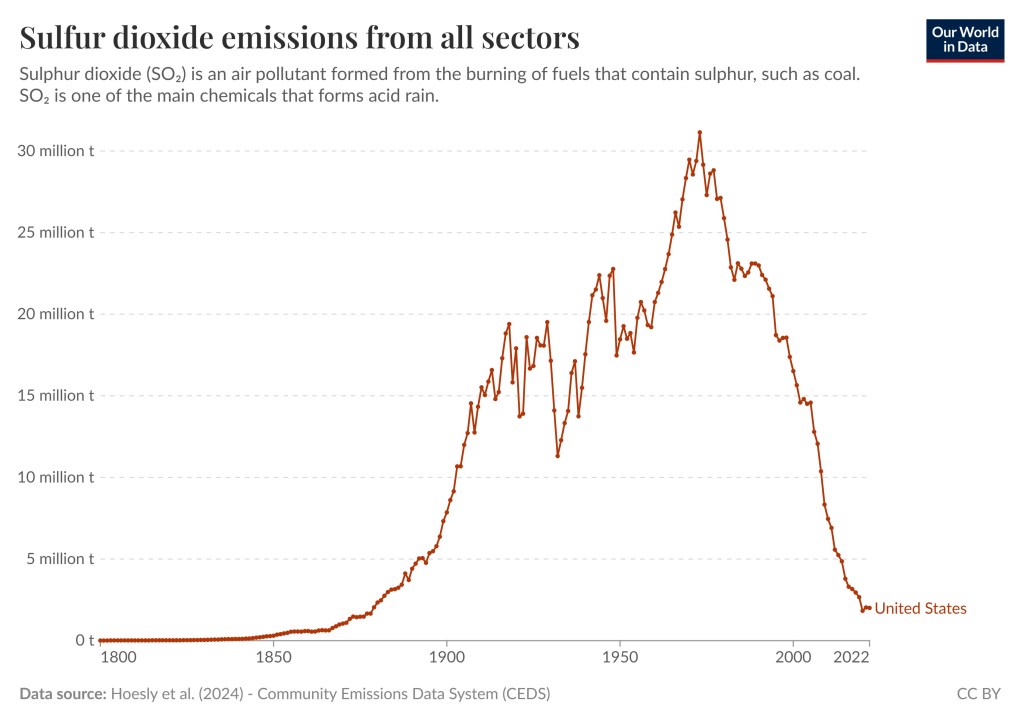
Super fact 44 : Sulfur dioxide pollution in the US has fallen by approximately 95% since the 1970s. This significant reduction is primarily due to regulations like the Clean Air Act. Global sulfur dioxide pollution has also fallen but not as much.
Another big victory for the environment that we seldom hear of. To read the post click here.
US sulfur dioxide pollution since 1800. Data Source: Hoesly et al (2024) – Community Emissions Data System (CEDS). This graph is taken this page in Our World In Data. US Emissions peaked in 1973.
I should mention that by clicking this link you can visit the graph above Our World in Data and select different countries and regions and play around with the settings.
We Exploded Thousands of Nuclear Bombs
Super fact 48 : Since 1945 we have set off more than 2,000 Nuclear Bombs corresponding to a yield of an estimated 42,000 times that of the Hiroshima Bomb.
That we have exploded these many nuclear bombs was a surprise to me and perhaps to you too. To read the post click here.
This is an illustration of the Tsar Bomba explosion by by mbafai Shutterstock Asset id: 2208486661. To see a photo of the actual Tsar Bomba explosion click here (it is copyrighted).
The Euler Number Math Magic
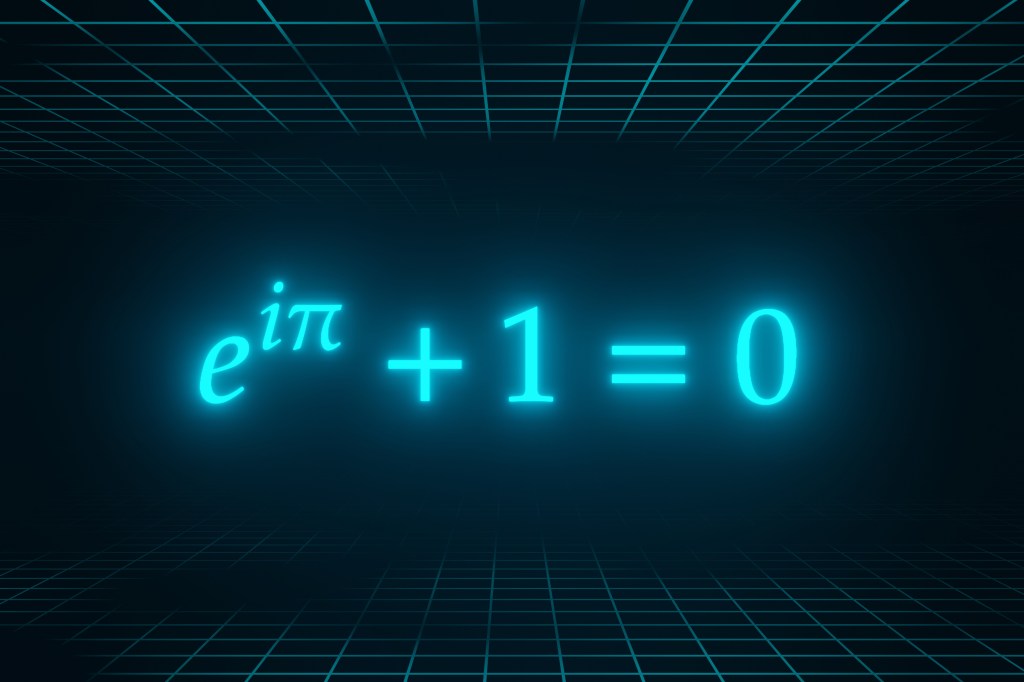
Super fact 53 : The Euler number denoted e, is an irrational number, which like the number pi is extremely important in mathematics. In addition, the relationship between the Euler number and pi; seemingly unrelated numbers, is quite amazing, especially if you throw the imaginary number: i = square root of -1 into the mix. Euler’s formula e^ix = cos(x) + isin(x), where x is degrees expressed in radians, is mind blowing to say the least. Radians means that 180 degrees is replaced by pi, and 90 degrees is replaced by pi/2, etc. A simpler special case, but equally amazing is Euler’s identity e^ix = -1, or e^ix + 1 =0. This is amazing math assuming you understand it.
One of the most amazing math facts explained. To read the post click here.
Euler’s formula in cyber space with grid 3d illustration, Asset id: 1636161301 by Giggle2000
The Bermuda Triangle the Big Non-Mystery
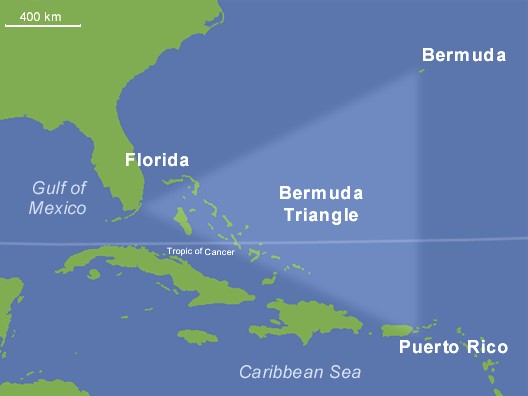
Super fact 56 : The Bermuda Triangle mystery is a myth. There is not a higher risk of disappearances in the Bermuda Triangle. To be specific, disappearances do not occur in the so-called Bermuda Triangle, or Devils Triangle, with any higher frequency than in other comparable regions of the ocean. The “mystery” of the Bermuda Triangle is largely a manufactured one, perpetuated by sensationalized accounts that often misrepresent the facts and downplay the role of natural hazards like storms.
A surprise to the people who are convinced that there really is a mystery. To read the post click here.
The Bermuda Triangle: It is approximately defined as a triangle Florida, Bermuda, and Puerto Rico. There is no exact definition. Alphaiosderivative work: -Majestic-, Public domain, via Wikimedia Commons.
Evolution is a Fact
Super fact 63 : Evolution is both a fact and a scientific theory. It is a fact that life has changed over time. This is supported by overwhelming evidence, while the theory of evolution provides a comprehensive scientific explanation for these changes, using processes like natural selection.
Yes, there are scientific facts, and that evolution is happening is an observed scientific fact. To read the post click here.
The fossil record is a lot more solid and much less problematic than the creationist books I have read claimed. Shutter Stock Photo ID: 1323000239 by Alizada Studios
Super fact 63 : Evolution is both a fact and a scientific theory. It is a fact that life has changed over time. This is supported by overwhelming evidence, while the theory of evolution provides a comprehensive scientific explanation for these changes, using processes like natural selection.
This is very confusing to people who do not know what a scientific fact is or what a scientific theory is. First of all, a scientific fact (they exist) is not the same as the scientific theory associated with that fact. Secondly, theory in science does not mean a guess, or a hypothesis, as is often the case in common parlance. In science, a theory is far more than a guess — it is a well-tested, comprehensive explanation of natural phenomena, supported by an extensive body of evidence. I think a good example of this confusion is the following dialogue that I found on Facebook.
I follow “The Credible Hulk”, a Facebook page managed by a group of anonymous scientists dedicated to correcting misinformation around vaccines, global warming, evolution and GMOs. I did not save the post, but it went something like this: The Credible Hulk posted a meme that looked like this.
One of the commentors said : “Calling evolution a “fact” defeats your argument. The Theory of Evolution is by definition a theory not a fact. It’s the currently agreed upon hypothesis but not a fact.” He did not know that he did not know what he was talking about. Since the Credible Hulk page is administered by scientists and a lot of its followers are also scientists, or people with a science education, he got schooled. You can read more about this confusion in my post “There Are Scientific Facts”, or here.
The evidence for evolution is both vast and compelling. Evolution is not just a process of the distant past — it can be observed in real time. Bacteria developing antibiotic resistance, viruses adapting to immune systems, and insects evolving resistance to pesticides are clear, measurable examples of evolution in action. The extensive fossil record, transitional fossils, comparative anatomy, sub-optimality, evidence from biogeography, etc., provide a very large body of conclusive evidence for evolution. Modern genetics provides perhaps the strongest proof of evolution.
Far from being a matter of belief, evolution is a scientifically established reality that shapes life continuously. Its understanding is vital, not only for biology but also for medicine, ecology, and environmental science. It allows us to track disease outbreaks, design new treatments, and appreciate the delicate balance of ecosystems. Evolution is not speculation — it is the foundation of modern biology and a dynamic process still unfolding around us. Evolution is a fact.
According to the pew research center around a third of all Americans reject the idea of evolution. Since this is an important fact that is widely disputed amongst the public, and yet we know it is true, I consider it a super fact. I also would like to reiterate that none of my super facts are scientific theories, but some of them are scientific facts, which again, is not the same thing.
Evidence for Evolution
The evidence for evolution as a phenomenon (fact) is conclusive as we can directly observe it (see below). That is all I need for my statement above that evolution is a fact. However, most people want to know how strong the evidence is for large-scale evolutionary changes that have occurred over geologic time, and what evidence there is for evolution being as the origin of species. In other words, how strong is the evidence for the theory of evolution. It turns out the evidence for that is also very strong. That is not the same as my super fact, but it is related and a quite interesting discussion.
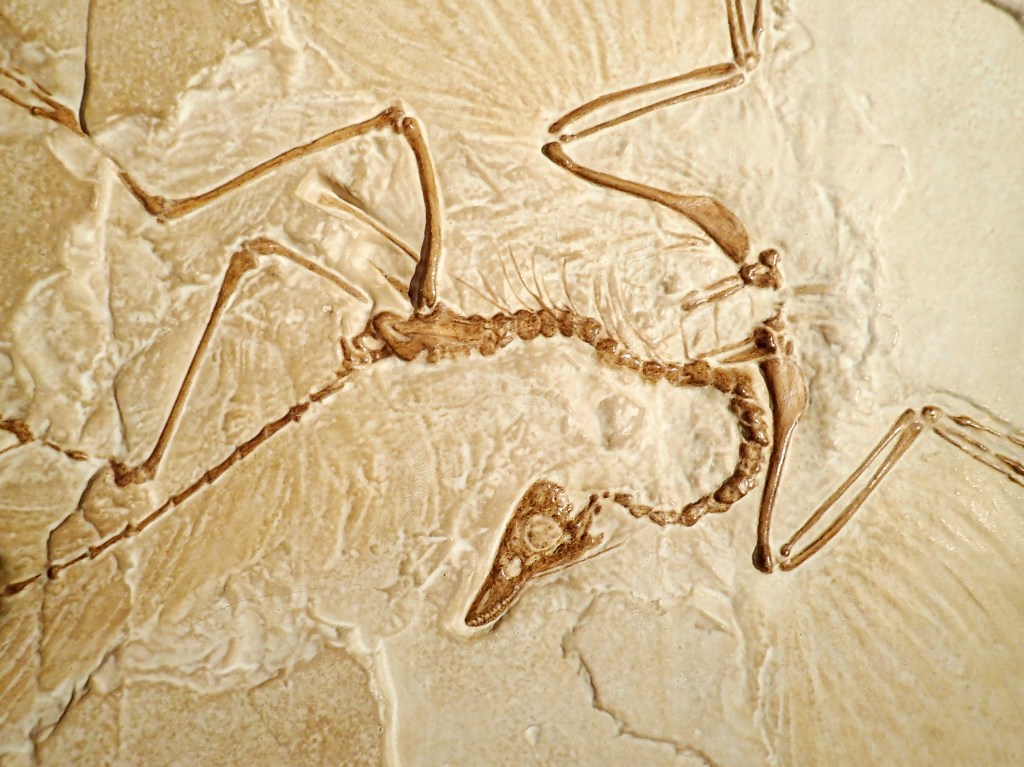
Fossil records preserved in rock layers reveal a chronological history of life on Earth, documenting gradual changes in species over millions of years. Transitional fossils, such as Archaeopteryx linking dinosaurs to birds, demonstrate how one group of organisms evolved into another. Comparative anatomy adds to the case, showing homologous structures across species that point to shared ancestry.
Biogeography shows patterns of species distribution explained by common descent and migration. Modern genetics provides perhaps the strongest proof. DNA — the universal code of life — shows striking similarities across organisms. Humans, for example, share a large percentage of their genome with chimpanzees, and remarkably, the same genetic code underlies all living things, from bacteria to mammals, confirming a common evolutionary origin.
Making a list of all the evidence with brief explanations is far beyond the scope of this blog post and reading a 1,000,000+ word essay about evidence is not everyone’s cup of tea. Therefore, I am just providing a very small sample with very brief explanations (this post is long enough as it is).
This website offers a more extensive overview including 29+ evidences for so called macroevolution. Macroevolution describes large-scale evolutionary changes that occur over geologic time. Scientist tend to avoid the word Macroevolution because it is so misunderstood. First of all, Macroevolution is just the combination of a large number of smaller scale changes. New species do not randomly pop up because of some amazing mutation.
Speciation is considered relative. It is often said that two animals belong to the same species if they can interbreed in nature and produce viable, fertile offspring. However, it is not that simple. An animal A may be able to successfully interbreed with an animal B, and that animal B may be able to successfully interbreed with an animal C, but animal A and C cannot interbreed. Animal A could be said to be a different species relative to animal C but animal B could be said to be the same species as both animal A & C.
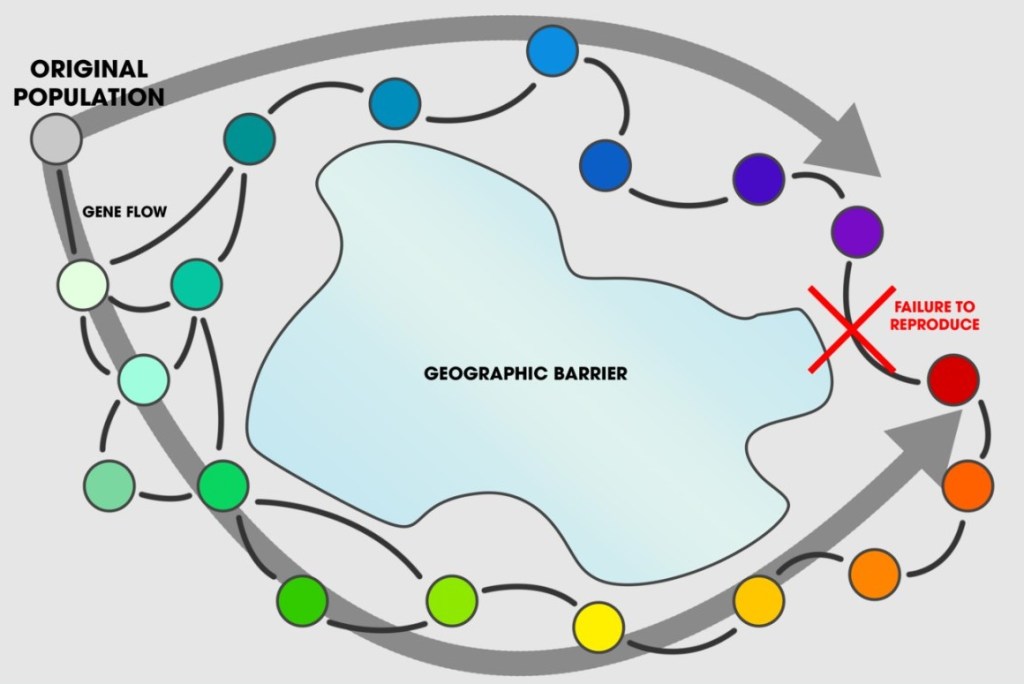
A great geography related example of this is ring species. In a ring species, gene flow occurs between neighboring populations of a species, but at the ends of the ring the populations don’t interbreed. Macroevolution is the result of repeated microevolution, so you cannot claim that microevolution is possible but not macroevolution.
Illustration of ring species, an example of how speciation can be relative. All the circles next to each other can interbreed but at the end it no longer works. Andrew Z. Colvin, CC BY-SA 4.0 <https://creativecommons.org/licenses/by-sa/4.0>, via Wikimedia Commons
Direct Observation
Evolution in viruses and bacteria has been observed and is well-documented, providing a direct window into evolutionary processes. Examples include the development of antibiotic-resistant bacteria, the annual evolution of influenza viruses and researchers can also directly observe rapid adaptation through experiments, such as the ongoing “arms race” between bacteria and viruses in lab settings. Direct observation supports my claim that “evolution is a fact”, because we’ve seen it. However, the evidence for so called macroevolution over longer periods of time is more indirect but still extremely strong.
Evidence from Biogeography
Biogeography provides evolutionary evidence by revealing patterns in the geographic distribution of species that can only be explained by common descent and evolutionary processes. For example, oceanic islands, which are islands that are formed from the sea bottom typically through volcanic activity, feature very narrow sets of native species (flora + fauna) that do not exist elsewhere.
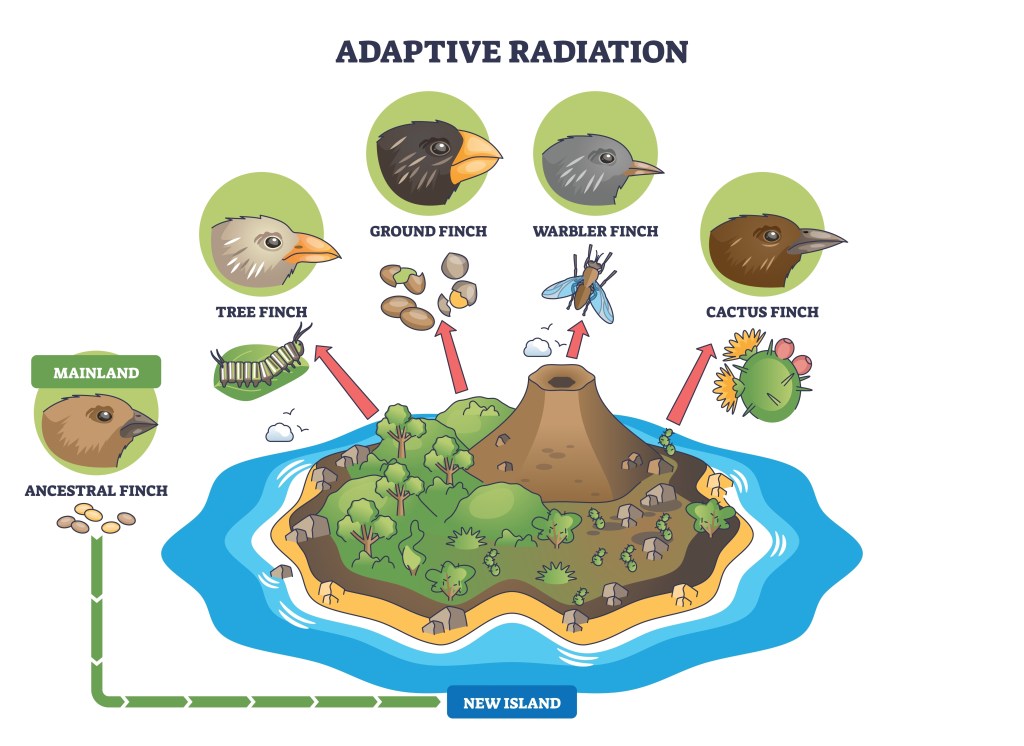
One example is the Hawaiian Islands, which make up only 0.004 percent of the earth’s land and yet they contain nearly half of the world’s two thousand species of Drosophila. Darwin’s finches is another example. Another example is that oceanic islands do not have any native freshwater fish, or amphibians and rarely any native reptiles or mammals. These kinds of examples match the narrative that certain species (birds, insects, etc.) travelled to these islands and then evolved resulting in a unique set of species. BTW non-native freshwater fish, amphibians, and mammals do just fine, so it is not the environment. The book Why Evolution Is True by Jerry A. Coyne gives an extensive overview of biogeographic evidence for evolution.
Fossil Record
There are millions of found fossils representing 250,000 different species (there are likely trillions of not yet found fossils). The fossil record shows that early life was simple with complex life appearing later, with the youngest fossils being most similar to currently living species. It documents the orderly succession of life forms through geologic time. This is predicted by the theory of evolution. In addition, the various so called gaps in the fossil record keep being filled out. Opponents to evolution often criticize the dating methods used to date fossils. However, these criticisms do not hold water. You can read about that in my post We Know That the Earth is Billions of Years Old.
The fossil record is a lot more solid and much less problematic than the creationist books I have read claimed. Shutter Stock Photo ID: 1323000239 by Alizada Studios
Evidence of Evolution from DNA
DNA provides strong evidence for evolution. It is perhaps the strongest evidence for evolution. For example, related species share genes for fundamental traits, and the more similar the DNA sequences of two organisms, the more recently they shared a common ancestor. As time goes by DNA mutations accumulate acting like a “genetic clock,” allowing scientists to estimate how long ago different lineages split from each other. That’s how we know that Chimpanzees and Hominins / Humans share a common ancestor about 6-8 million years ago without having a fossil.
I can add that this was just a sample with a very brief summary for each case. Other types of evidence is the development of embryos. For example, whale and dolphin embryos have limbs that disappear, fetuses look like fish early on, human fetuses go through a hairy (primate) stage. There is evidence in the anatomy of our bodies, sub-optimality, curious anatomical imperfections due to our evolutionary history, so called atavisms, and vestiges. But that is enough for now.
Objections to Evolution
If you pay attention to this topic, you will come across a lot of flawed objections to evolution. When I was a teenager, I was a young earth creationist myself. Since I did not know a lot about the subject at the time I accepted many of these flawed objections and I even believed in a young earth. It doesn’t matter how many flawed objections you have to a theory (or a fact), if they are flawed, they don’t matter. I was very interested in science and went to science high school in northern Sweden. As I learned more about science, I came to realize that I had been bamboozled. You can read more about that in my post “Bamboozlement Misunderstandings, Big Surprises and My Journey”.
Since then, I have tried to argue with creationists about evolution, and I have come to realize that a lot of people are very emotionally invested in their opposition to evolution. For example, back in high school my wife was asked whether she believed in evolution and when she said yes, another girl threatened to beat her up in the bathroom. Once I was arguing online with a couple of strict fundamentalists who took a very aggressive and self-assured attitude to the topic despite not knowing much about the related science or evidence. It seemed to be impossible for them to understand normal scientific or logical arguments and yet they were totally sure, and they used mockery a lot. One of them found out that I “believed/accepted” that global warming is real and caused by us and started mocking me for that, a totally unrelated issue. Then the other one told me that if you believe in evolution, then you and your children will burn in hell forever. Well, if that is really what you believe, no wonder you can’t be rational about it. Anyway, at this point I pressed the block button. Talk about a hot discussion.
In my youth I read dozens of creationist books of various kinds, so I’ve have come across a lot of creationist objections. In the end I came to realize that none of them worked. I can add that the book “The Counter-Creationism Handbook” address over 400 of the most prevalent claims made by creationists. Below I am just very briefly addressing a few.
If humans descended from monkeys how come there are still monkeys?
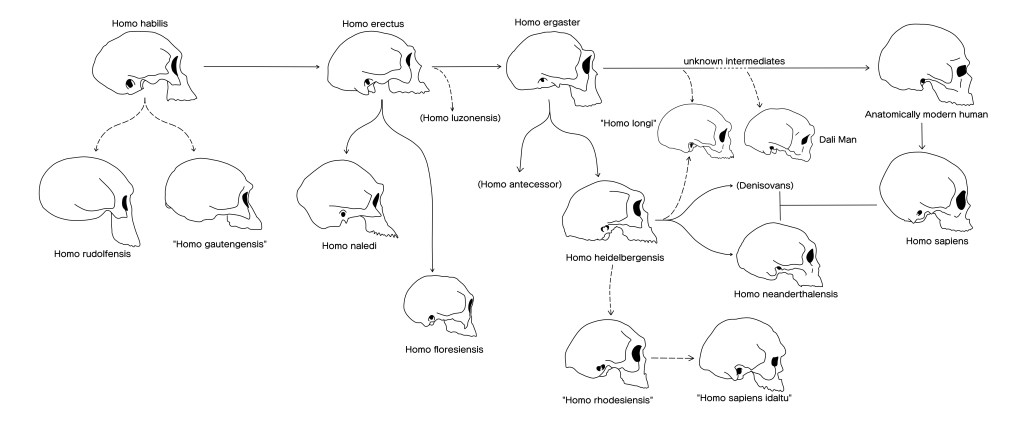
This is perhaps one of the more simplistic objections, but it is still worth mentioning. Even if it would have been true that monkeys evolved from monkeys, there’s no reason monkeys would stop existing just because humans evolved from some monkeys. However, that is not what happened. Genetics provides overwhelming evidence that hominins (including humans) and chimpanzees share a common ancestor. We have not found a fossil for this ancestor, but human and chimpanzee DNA tells us that such an ancestor lived about 6 to 8 million years ago. The simplified cladogram for hominins below demonstrates this. I can add that there are around 6000 hominin fossils, and up to 31 hominin species.
Simple cladogram showing evolution of modern man from Hominid Ancestor Shutterstock Asset id: 2093535535 by CLOUD-WALKER
Evolution is not Falsifiable
A theory is scientific only if it can be proven false. It must be falsifiable. Opponents to evolution often claim that evolution is not falsifiable because it deals with unobservable, unrepeatable events. However, the theory of evolution is falsifiable. There are no Precambrian rabbits or Mesozoic human fossils, but if there were that would have proven the theory of evolution false. Note evolution would still have been directly observable (viruses and bacteria), so evolution is a fact that would still be true, but the theory of evolution would have been proven wrong.
Second law of Thermodynamics contradicts Evolution
The second law of thermodynamics states that entropy (typically denoted ‘S’ in physics), which could be said to represent disorder, always increases or stays the same in a closed system. Creationists believe evolution creates complexity and order, which would seem to be a decrease in entropy. One weakness of this argument is that entropy representing disorder only loosely relates to order and disorder as used in common language. More correctly, entropy is defined as; for a given set of macroscopic variables, the entropy measures the degree to which the probability of the system is spread out over different possible microstates. Much more importantly, the creationist argument fails because the second law of thermodynamics requires a closed system, and evolution does not operate in a closed system. For example, the sun is shining and providing earth with energy.
Second law of thermodynamics Shutter Stock Vector ID: 2342031619 by Sasha701
Evolution is Random and Improbable
Another creationist argument is that evolution is random, and randomness cannot create an elephant or an airplane. No matter how many times you randomly throw pieces of junk around you won’t get an airplane. The error in this argument is that evolution is not random. It is guided by natural selection (theory of evolution), and natural selection can be very powerful over time. For example, several computer simulations have been created to model the evolution of the eye, demonstrating that a complex camera-type eye can evolve gradually from a simple light-sensitive patch through a series of small, advantageous steps.
I can add that I have some personal experience with genetic algorithms myself. At work I created an algorithm that interpreted data from a camera for the purpose of sorting mail effectively. I started out with a chromosome that was very bad. Then my program applied random mutations and few other genetic features and allowed the best chromosomes to survive. Eventually a very complex but effective algorithm/chromosome resulted. I did not create this powerful algorithm; randomness combined with natural selection did. Randomly throw lots of junk around but also add some natural selection and you may very well get an airplane.
Microevolution is possible but not Macroevolution
Creationists like to say this because they must accept the reality of observable microevolution. It is a scientific fact. However, so called macroevolution is just repeated microevolution. There is no reason that macroevolution wouldn’t be possible. In addition, as you saw in the paragraphs before the ring species image above, the evidence for macroevolution is very strong. Again, microevolution and macroevolution are concepts that creationists like to use more than scientists.
Anyway, this became very long, almost 3,000 words.
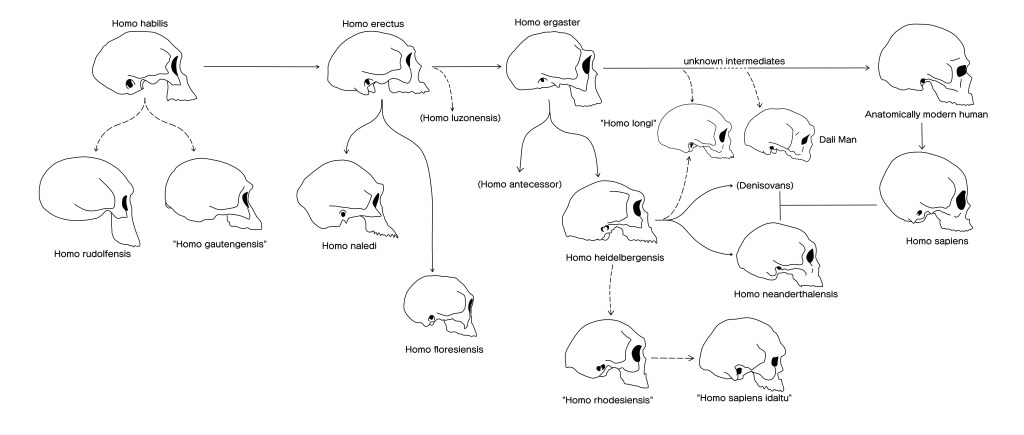
It is a common belief that humans originated in Africa. That is true but human ancestry is complicated, and in the past, there were many human species and subspecies. Starting with Homo Erectus, it is estimated that they lived between 1.6 million years ago until about 100,000 years ago.
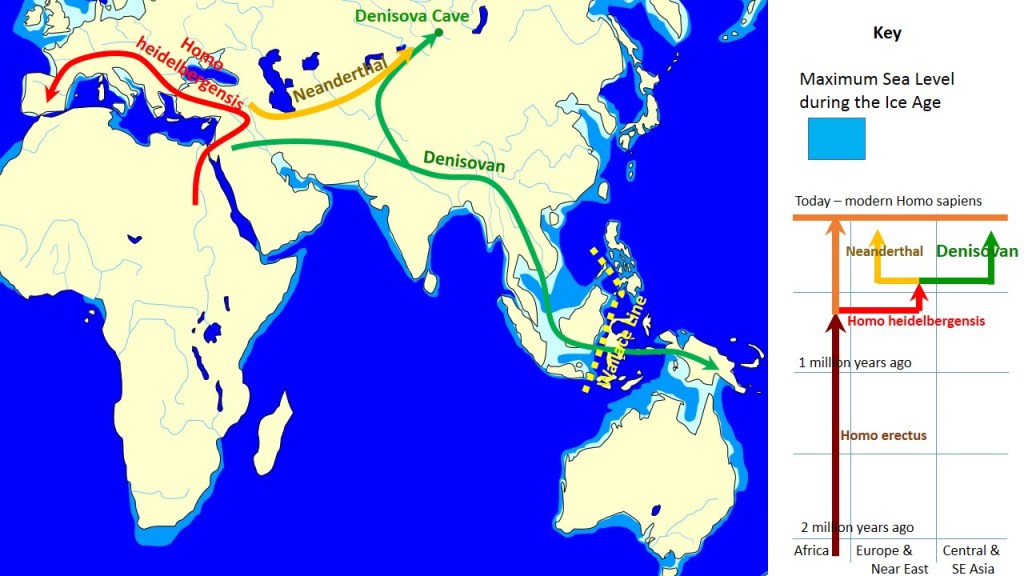
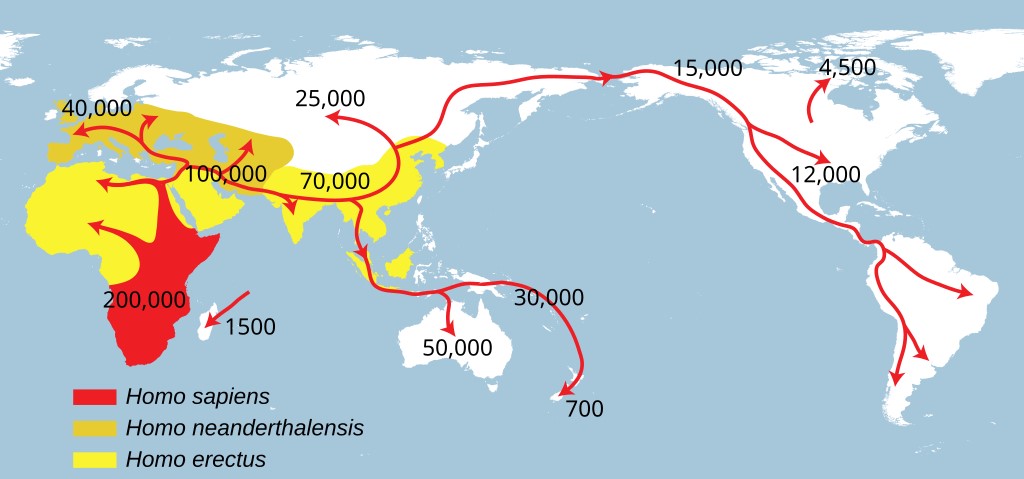
However, note that Homo Neanderthalensis is not an ancestor of Homo Sapiens. Homo Heidelbergensis was an ancestor to both. Homo Neanderthalensis originated in Europe and Asia and stayed there, whilst Homo Sapiens originated in Africa and ventured elsewhere (see picture below).
Homo Neanderthalensis and Homo Sapiens (or Homo Sapiens Sapiens) interbred, and so did Homo Denisova and Homo Sapiens, and Homo Neanderthalensis interbred with Homo Denisova. What a mess! I can add that Homo Neanderthalensis and Homo Sapiens were different species, so it may seem strange that they could interbreed.
However, species is a complex concept and at certain points in history you could consider Homo Neanderthalensis and Homo Sapiens to be different subspecies rather than different species. That is why you sometimes hear the terms Homo Sapiens Neanderthalensis and Homo Sapiens Sapiens. Now when you know how complicated it is, I suggest you take a look at the map below.
The spread of Homo Erectus (yellow), Homo Sapiens (red) and Homo Neanderthalensis (dark yellow). NordNordWest, Public domain, via Wikimedia Commons
I can add that genetic testing can reveal how much Neanderthal DNA you have. I took a test with 23AndMe to find out about my ancestry (it was 98% Scandinavian and Finnish) and to find out about my risk for genetic illnesses. 23AndMe also told me that I was in the 99 percentiles with respect to carrying Neanderthal genes, meaning that I had unusually many Neanderthal genes (but not 99%). However, no one has called me a Neanderthal to my face yet.
The Extent of the Neanderthal Habitat
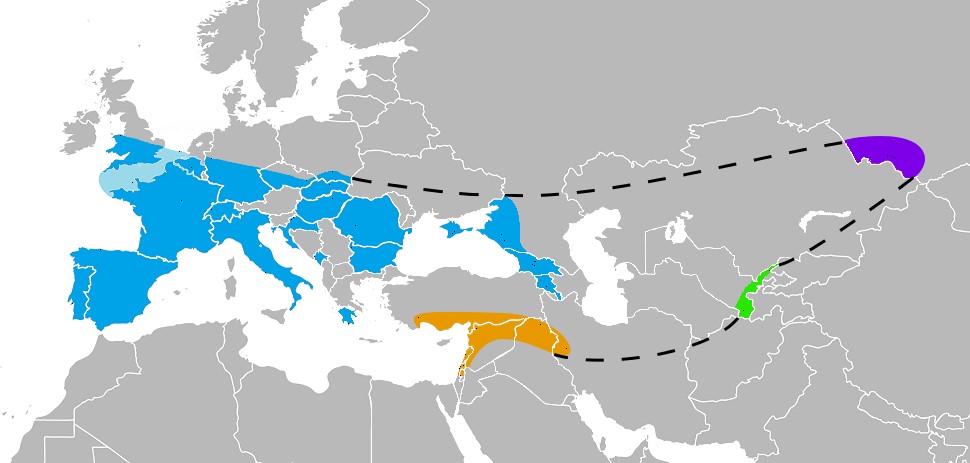
The map below indicates where skeleton remains of Neanderthals had been found as of 2017.
Known Neanderthal range in Europe (blue), Southwest Asia (orange), Uzbekistan (green), and the Altai mountains (violet), as inferred by their skeletal remains (not stone tools). There were 165 such places by 2017. Nilenbert, N. Perrault, auteur du guide complet du canotageI, CC BY-SA 3.0 <http://creativecommons.org/licenses/by-sa/3.0/>, via Wikimedia Commons
Other Neanderthal Facts
There are a lot of other interesting and surprising facts about Neanderthals, such as:
They lived in caves, but they also built shelters.
They had complex tools and skills, cooked and processed food and created art and jewelry, cooked glue, and had musical instruments (for example a bone flute).
Neanderthals not only used fire, they were able to control and maintain fire, and they used it to cook food, make tools, and for warmth and shelter.
Neanderthals were stockier and more muscular than modern humans, with broader rib cages and shorter limbs. This helped them conserve heat and survive in the cold environments in Europe and Asia during the ice ages.
They might have spoken language.
There’s evidence that they were seafaring as far back as 200,000 to 150,000 years ago.
Their brains were larger than ours. The braincases of Neanderthal men and women averaged about 1,600 cm3 and 1,300 cm3, respectively, which is considerably larger than the modern human average (1,260 cm3 and 1,130 cm3, respectively).
They had medical knowledge. They had knowledge of medicinal plants and well-healed fractures on many bones indicate the setting of splints. They also knew how to treat wounds.
They hunted big game.
They interbred with modern humans.
The Cause of the Ice Ages
Regarding the Ice Ages, which were a great challenge to Neanderthals, they are caused by earth’s orbital cycles. However, keep in mind that does not mean that orbital cycles are causing the current rapid global warming. NASA keeps track of the orbital cycles, and they should slowly be causing a cool down right now, not a rapid warming. In addition, if the warming was caused by orbital cycles (or the sun), the upper troposphere would be warming as well as the lower troposphere.
However, what we are seeing is a warming of the lower troposphere and cooling of the upper troposphere consistent with greenhouse gas emissions causing the warming (the blanket effect). To read more about what is causing the current global warming, click here.
Illustration of Milankovitch cycles from MIT’s Climate Primer.
Above from PBS explanation and overview of earth’s three orbital cycles.
Endangered Species
When I was a teenager, I read a few of Jean M. Auels novels about pre-historic humans. I loved them and I saw the movie. Now I am reading Jacqui Murray’s novels about pre-historic humans. Jacqui Murray’s books are even more fascinating and very realistic and well researched.
The latest Jacqui Murray book I’ve read is Endangered Species, the first book in her new series Savage Lands. This book is set to take place 75,000 years ago among Neanderthals and ancient Homo sapiens. I love all her books, but especially Endangered Species. I was also happy that she included canines as heroes in the book (Ump, White Streak, etc.) I am a dog lover after all. I can add that at the end of the book there are a lot of interesting Neanderthal Facts.
You can read my Amazon review for Endangered Species by clicking here and you can read my Virtual Book Blast post for Endangered Species (promoting this book) by clicking here. All the Virtual Book Blasts for Endangered Species feature interesting Neanderthal facts. To see a few more Virtual Book Blasts for this book click on the links in the list below.

Virtual Book Blast for Endangered Species – Darlene Foster – Click here
Virtual Book Blast for Endangered Species – Liz Gauffreau – Click here

Virtual Book Blast for Endangered Species – Carol Cooks – Click here
Virtual Book Blast for Endangered Species – John Howell – Click here
Virtual Book Blast for Endangered Species – Booomcha, Kymber Hawke – Click here
Front cover of Endangered Species. Click on the image to go to the Amazon page for the paperback version of the book.