Astronomer

Daily writing prompt
What alternative career paths have you considered or are interested in?

So I am trying out the Daily writing prompt for the first time, answering the question “What alternative career paths have you considered or are interested in?”.

I’ve always been interested in astronomy and astrophysics, and I studied engineering physics, later electrical engineering. I did not think astronomer or astrophysicist was an easily attainable career and perhaps not very well paid either, but I think it would have been a fun job to have.

Astronomer
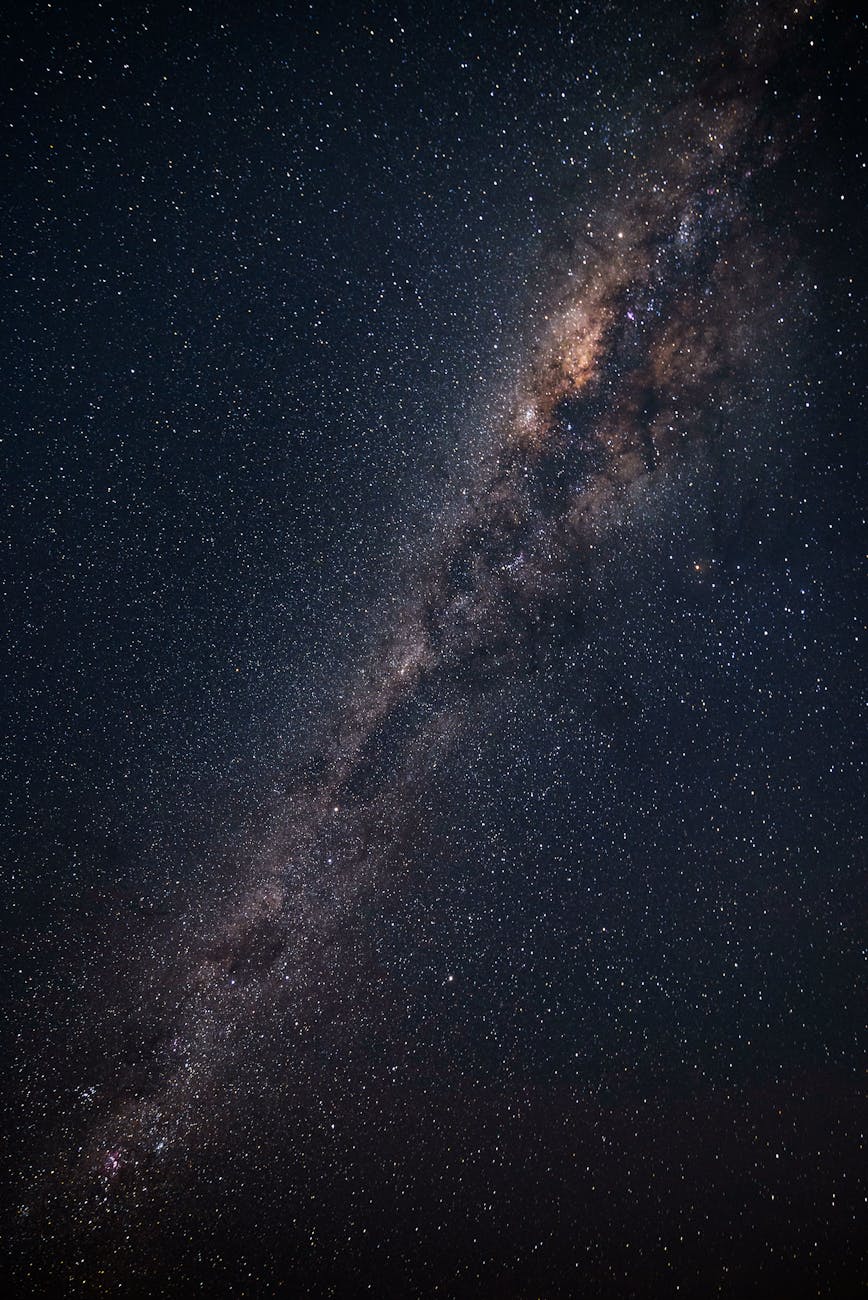
Photo by Lucas Pezeta on Pexels.com

Celestron Powerseeker 70EQ

I am a bit of an amateur astronomer, and I own a basic telescope for amateurs, a Celestron Powerseeker 70EQ. It is not a great telescope, but it is good enough for observing objects such as Saturn and its rings, Jupiter and its four Galilean moons, Mars, Venus (the crescent), the moon and its craters. Those objects you can see from inside a big city like Dallas. Naturally you can do much better if you leave the city and especially if you visit a dark spot. I am a member of TAS, Texas Astronomical Society and they own a dark spot in Oklahoma. Below is a photo of my Celestron Powerseeker 70EQ standing in my garage.
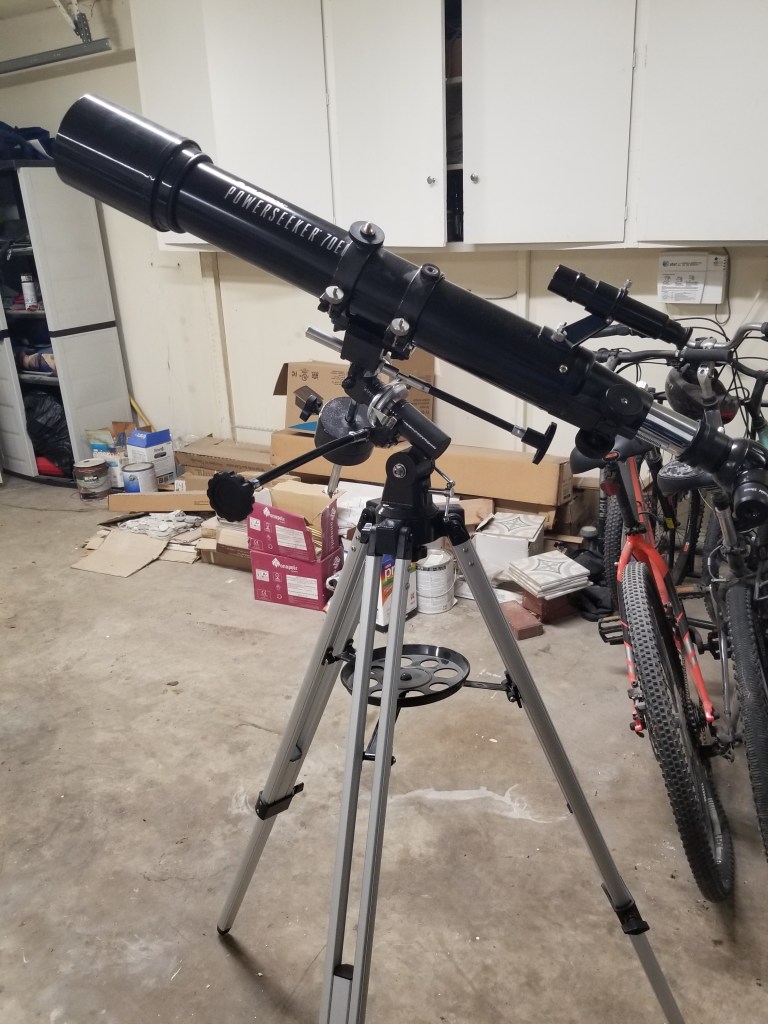
Black Telescope standing in front of bicycles in a garage
Celestron Powerseeker 70EQ

What Does an Astronomer Do?

Astronomers study the universe, including galaxies, stars, planets, and other celestial objects, using telescopes and other instruments to observe and analyze them. They observe and analyze celestial objects. Depending on their specific area, astronomers have different duties.

  • They observe celestial objects using telescopes.
  • They conduct research, analyze data and test hypothesis.
  • They use and develop models including complex mathematical models and computer simulations to understand complex astrophysical phenomena.
  • They collaborate with peers, they teach, and they do mentoring and public outreach.

Types of Astronomers

  • Observational Astronomers use telescopes and other observational instruments to collect data from celestial objects.
  • Theoretical Astrophysicists use mathematical models and computer simulations to understand the physical processes in the universe. They may study stellar evolution, galaxy formation, cosmology, and black holes.
  • Planetary Scientists study planets, moons, and other objects within our solar system. They use data collected by space missions, telescopes, and remote sensing techniques.
  • Stellar Astronomers study stars, their properties, and their life cycles. They may study variable stars, binary star systems, massive stars, stellar remnants such as white dwarfs, neutron stars, or black holes.
  • Galaxies and Cosmology researchers study galaxies and the large-scale structures in the universe.
  • Radio Astronomers study celestial objects using radio waves instead of visible light. They may study radio galaxies, cosmic microwave background radiation, and the structure of the Milky Way.
  • Exoplanet Astronomers study and discover planets orbiting stars outside our solar system. They use techniques such as transit photometry and radial velocity measurements to detect and characterize exoplanets.

Famous Astronomers

  • Nicolaus Copernicus 1473–1543, discovered the heliocentric model putting the sun at the center of our solar system.
  • Johannes Kepler 1571–1630, revolutionized our understanding of how planets orbit the Sun. He used the Copernicus heliocentric model and very careful measurements to show that the planets moved in elliptical orbits around the sun and he came with additional laws to describe the speed of the planets in their orbits.
  • Galileo Galilei, 1564–1642, or Galileo di Vincenzo Bonaiuti de’ Galilei, was an Italian astronomer, physicist and engineer who greatly improved the optical telescope and discovered the four primary moons of Jupiter and the rings of Jupiter. He proved that all falling bodies fall at the same rate, regardless of mass, and developed the first pendulum clock. He got in trouble for defending Nikolai Copernicus idea.
  • Edmund Halley, 1656–1742,  investigated and discovered many things including the nature of comets’ orbits.
  • Edwin Powell Hubble, United States, 1889–1953. Hubble proved that many objects previously thought to be clouds of dust and gas and classified as “nebulae” were galaxies beyond the Milky Way. He showed that these galaxies were moving away from us and each other leading to the conclusion that the universe was expanding.
  • Vera Rubin, 1928–2016,  studied the rotation of galaxies and uncovered the discrepancy between the predicted and observed angular motion. This led to the discovery of dark matter.

What about you? What alternative career paths have you considered or are interested in?

To see the Super Facts click here


The vastness of space and the beginning of infinity

Superfact 14: The vastness of space and the beginning of infinity

The Universe is unimaginably large. Our solar system is enormous. It consists of our star, the sun, the planets including earth, dwarf planets, asteroids, comets, rocks, the Kuiper belt, the Oort cloud, and much else. It is 100,000 times wider than the distance between the sun and our earth. Yet it is just one star system among between 100 and 400 billion in our galaxy, the Milky Way. 

But that is not all. According to the Nobel Prize winner in physics, Roger Penrose, our universe is just one in an eternal (infinite) series of universes, an eternal chain of Big Bangs that has always existed. See his conformal cyclic cosmology (CCC) model (and the book cycles of time).

According to Stephen Hawking, M-theory, an extension or collection of string theories, states that there are 10^500 or 10000000000000…(followed by five hundred zeros) possible multi-verses that are all equally possible. Hugh Everett’s multiverse or multi-world theory states that there are infinitely many universes.

Now try to imagine the size of it all. You can’t do that, can you?

The vastness of space and the beginning of infinity
Photo by Pixabay on Pexels.com

About The Universe

When the astrophysicist Brian Cox was asked the question “what is the one fact about the Universe that blows your mind the most?”, he answered, “One. Just the size and scale of it…”.

At first, I thought his answer was a bit boring. I mean, what about neutron stars, which essentially are giant atomic nuclei? What about the amazing mysteries surrounding black holes, and what about supermassive black holes, quasars, magnetars, the great attractor, what about the big bang, quantum physics, massless particles, the amazing general theory of relativity, dark energy, etc.

Then I tried to imagine the size and scale of the universe and I realized that he knew what he was talking about. The more you think about it, the more it blows your mind.

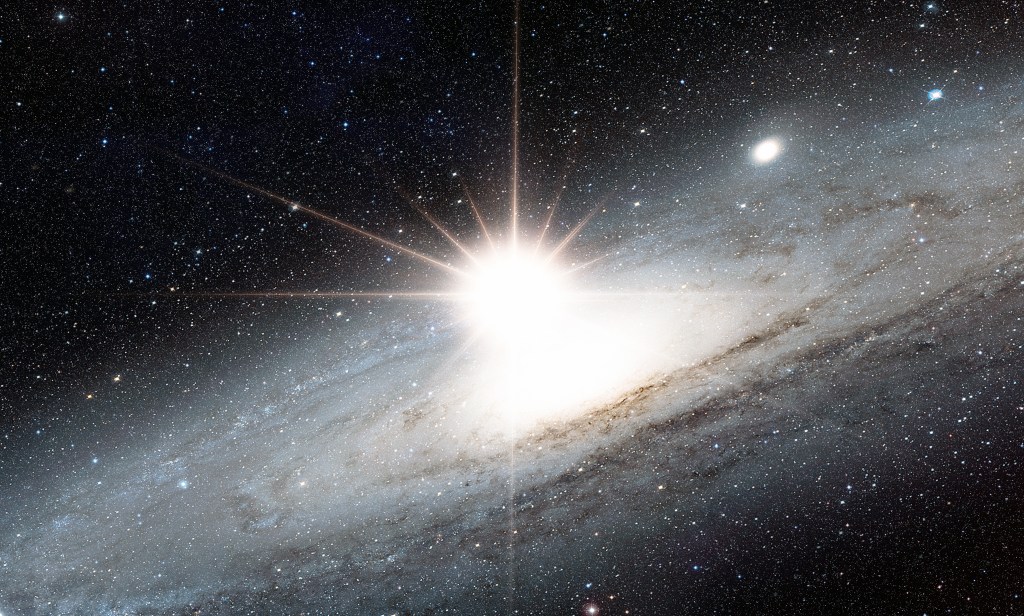
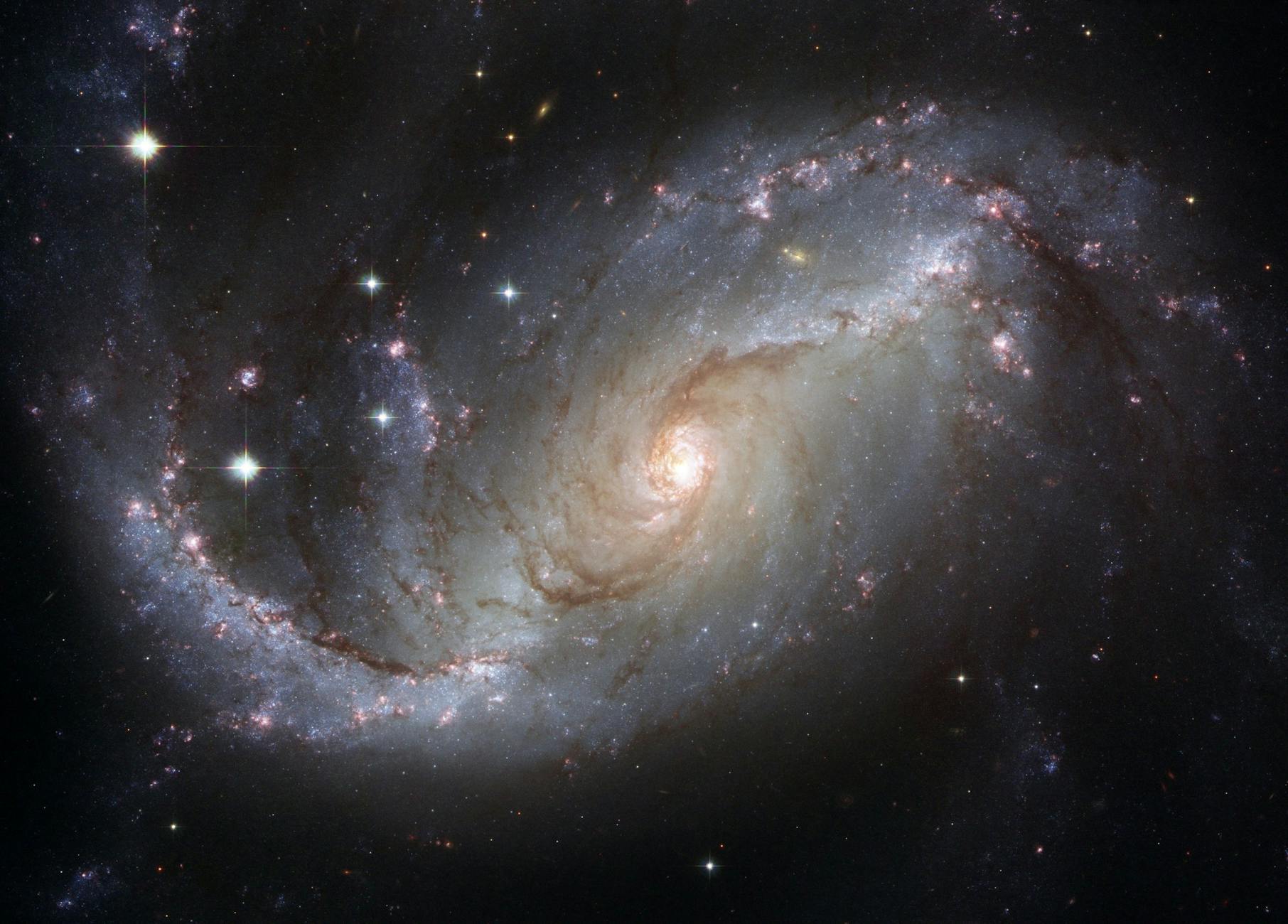
A picture of the Andromeda Galaxy with a bright white light near its center. The bright light is almost outshining the entire galaxy.
An illustration of the Andromeda galaxy with a supernova explosion near its center. “Elements of this image furnished by NASA” Stock Photo ID: 2495486227 by muratart.

The vastness of space and the beginning of infinity

Below is a 55 second video in which astrophysicist Brian Cox ruminates on what it means to live a finite fragile life in an infinite eternal Universe.

Our sun is a star. The sun’s diameter is 109 times larger than earth’s diameter, which means that you could fit more than one million earths inside the sun. The distance between the sun and the earth is called an astronomical unit or 1 AU. 1 AU is approximately 11.7 million times larger than earth’s diameter and 107,340 times larger than the sun’s diameter.

The solar system including all the planets, dwarf planets, asteroids, the Kuiper belt and the Oort cloud is 100,000 AU across with the sun just being a dust speck in the middle.

I mentioned that M-theory implies that there are at least 10^500 multiverses. To get an idea of how bif that number is;  It is a quintillion times a quintillion times a quintillion times a quintillion times a quintillion times a quintillion times a quintillion times a quintillion times a quintillion times a quintillion times  a quintillion times a quintillion times a quintillion times a quintillion times a quintillion times a quintillion times a quintillion times a quintillion times a quintillion times a quintillion times a quintillion times a quintillion times a quintillion times a quintillion a quintillion times a quintillion times a quintillion times. By the way a quintillion is a million trillion.

The vastness of space and the beginning of infinity
Photo by Philippe Donn on Pexels.com

Below are two more videos. The first one is trying to give a perspective on the size of our solar system, our galaxy, and the Universe. It is 11 minutes and 9 seconds long. The second one is very long, half an hour, and it is a bit advanced, so I recommend it only to star nerds.

However, at 22 minutes and a bit more than 30 seconds it states the observable universe is less than a 15 millionth of the universe (which might be even bigger) which contains at least 30 quintillion galaxies.


To see the other Super Facts click here


Supermoon October 2024

“Supermoon October 2024” is not a super-fact post but some fun facts about the Moon. It is a super-moon post instead.

As many of you probably have read, we currently have a so-called supermoon (October 17 & October 18). The moon’s orbit around earth is not a perfect circle but slightly elliptical. Therefore, the moon’s distance to earth varies.

A supermoon is when a full moon occurs when the moon is at its closest point to Earth, called perigee, making it appear larger and brighter than usual. Or more correctly, the term supermoon is usually used to describe a full moon that comes within at least 90% of the perigee. Since this is a special moon event, I took out my little telescope and looked at the moon and its craters. I also took a look at Jupiter, and I saw three of the four Galilean moons.

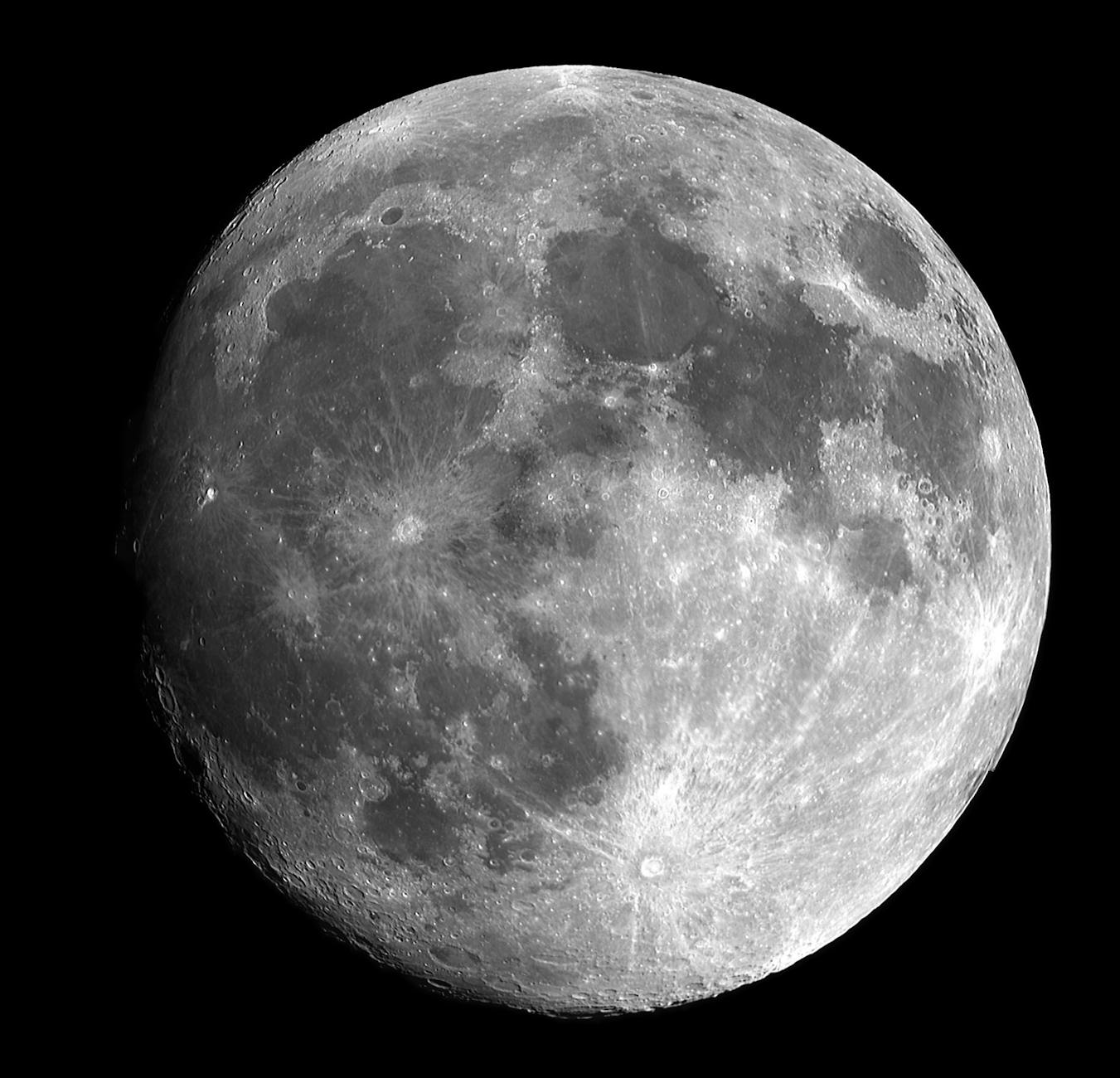
A close up photo of the near side of the moon | Supermoon October 2024
Photo by Pixabay on Pexels.com
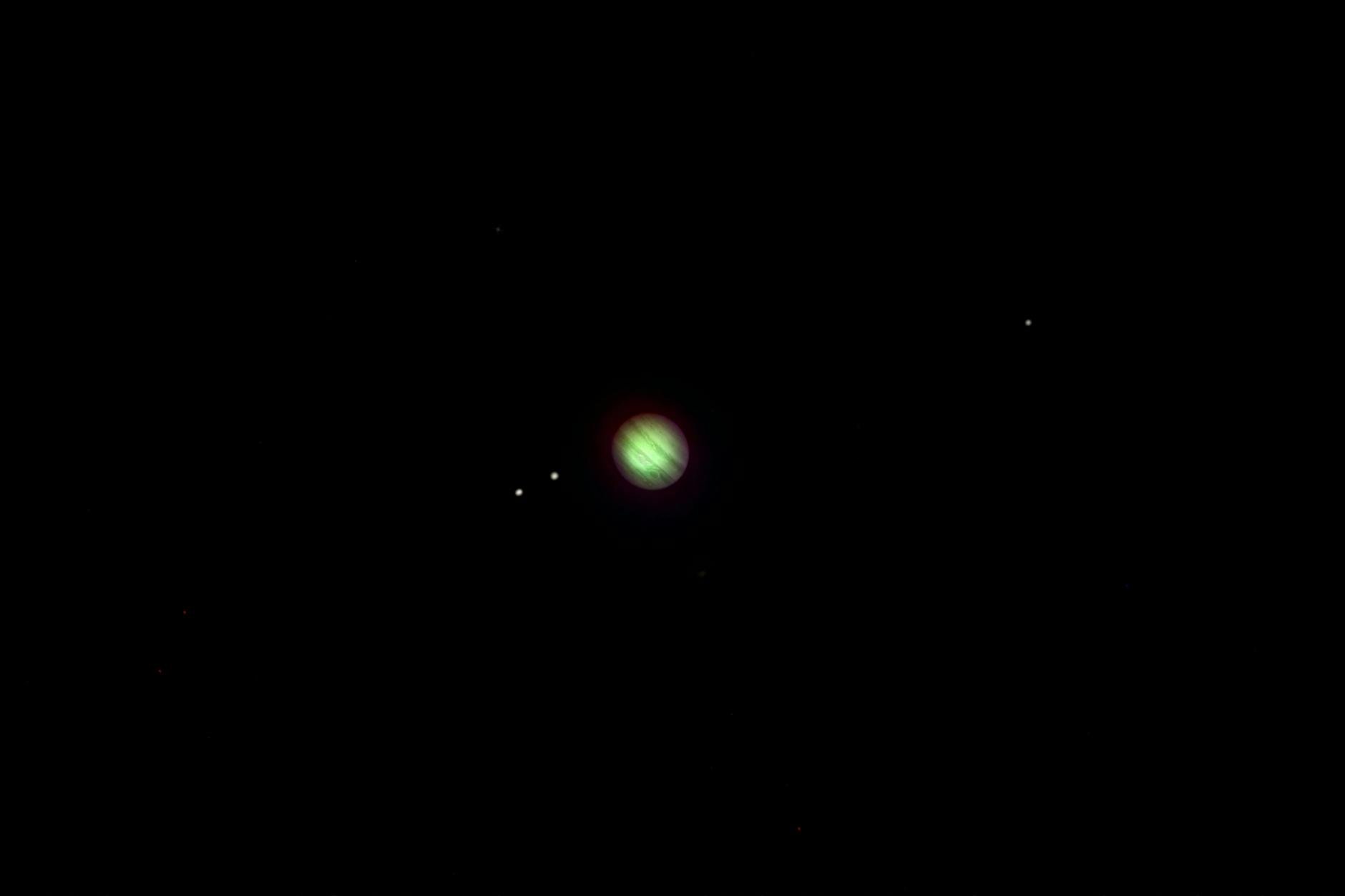
Jupiter in the middle. It is a greenish speck with lines. It is surrounded by three white dots.
The green speck is Jupiter. The three little dots are three of the four Galilean Moons. I roughly saw this in my telescope an hour ago, but it is not my photo. Photo by Raoni Aldrich Dorim on Pexels.com

I thought I might as well mention a few interesting facts about the moon.

There is no dark side of the moon

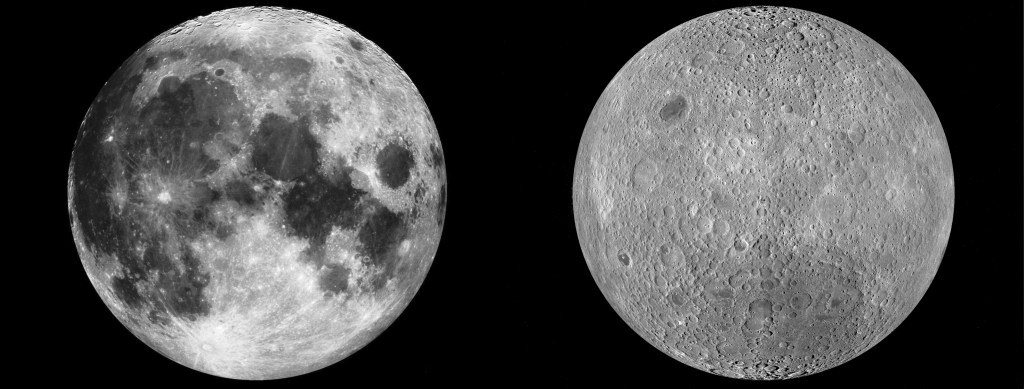
This is a very common misunderstanding. The moon is always showing the same side towards us (or almost exactly the same side). When there is a full moon the backside, or far side, of the moon is dark, but that is not the case when the moon is half, or a crescent, etc. When the moon is new, the far side / backside is “full” from sunlight. If you wondered, NASA and other space agencies have photographed the far side of the moon.

On the left is the near side of the moon and on the right the far side of the moon | Supermoon October 2024
The near side of the Moon and the far side of the Moon. Comparison between the two hemispheres of the Moon. Elements of this image were furnished by NASA. Stock Photo ID: 2157518223 by Claudio Caridi.

Below is a youTube video showing an animation composed of actual satellite photos by NASA.

A few comments about this animation. You see no stars because the sun is shining, and the earth is also quite bright. The reason you don’t easily see stars during the day is not because the sky is blue but because there is too much light to see them. The sun ruins the starry sky. In addition, stars are not easily captured by cameras when there is ambient light. And again, of course, contrary to the belief of some, the backside of the moon is not always dark.

The far side of the moon is different

As you can see in the YouTube video and the enhanced photo above, the far side looks different from the nearside and it is different in appearance and terrain. The near side of the moon has large, dark, flat-lying basins called maria. They look like oceans. The far side is a lot more rugged and covered by lots of craters. Another difference is that the far side of the moon has a much thicker crust compared to the near side.

Photo of the moon on a blue background | Supermoon October 2024
Photo by Alex Andrews on Pexels.com

The moon is drifting away from earth at about 3.8 centimeters per year

The moon is moving away from earth due to the gravitational forces between the moon and earth, which also causes tidal bulges in the Earth’s oceans and the moon. Back in high school I took a physics test on which you had to calculate how much the moon was moving away from earth based on the size of the tidal waves on earth. I did not solve that one, but not many did. The calculation made perfect sense though and some geniuses got it.

NASA found water on the moon

In 2020, NASA announced the discovery of water on the sunlit surface of the Moon. You can read about it here.

Drop of water
Photo by Pixabay on Pexels.com

The moon was likely created by a celestial collision : The most widely accepted explanation for the existence of the moon is that the Moon was created when a planet-like object, the size of Mars slammed into Earth, soon after the solar system began forming. That was about 4.5 billion years ago.


To see the Super Facts click here

Nonsense and Rumors About Wind Power

“Nonsense and Rumors About Wind Power” is not a super-fact post but just what I consider interesting information regarding nonsense and rumors about wind power.

Wind power has been on the receiving end of false claims, nonsense, and strange rumors for a while. It is not the only energy source maligned by false information. Another example is Nuclear Power. However, this post is about some of the incorrect claims about wind power that I have come across. I am starting out with three bizarre claims.

Nonsense and Rumors About Wind Power
Photo by Kervin Edward Lara on Pexels.com

False claim : Wind Power requires an additional power source to operate (like a diesel engine)

This bizarre claim is akin to saying that sailboats need a diesel motor to sail. If you get something to rotate (a turbine), whether it is pushed by running water, wind, or an engine, and you connect it to a coil in a magnetic field (generator), you get electricity. This is high school physics. You don’t need anything else. It is the principle behind hydro power, nuclear power, coal power, gas power, and wind power.

For a wind power station, the moving air rotates the wind turbine’s blades. That turning motion spins a generator just downwind from the blades (or rotor) in the nacelle, which also stores all the other working parts of a turbine. The generator produces electricity. When you read about how wind power works it says nothing about an additional power source needed (or click here).

For fun let’s also ask Google AI : Does wind power use other energy sources while operating?

Google AI: No, wind power itself does not use any other energy sources while operating; it solely harnesses the kinetic energy from the wind to generate electricity, meaning it only relies on wind to function as its primary energy source.

However, it should be noted that wind power is intermittent, so if it is part of a power grid other power sources or energy storage/batteries may need to be used more when wind speeds are too low to generate electricity.

Also, as is true with any power source, energy is needed when constructing wind power plants. In addition, a small amount of external electricity may be needed for startup and maintenance. It is possible that these facts were misunderstood and turned into “Wind Power requires an additional power source to operate” by confused listeners.

Nonsense and Rumors About Wind Power
Photo by Nitin Sharma on Pexels.com

False claim : Wind Power generates less power than it consumes

This is another bizarre claim made by confused politicians (here in Texas). If wind power generated less power than it consumed, why would anyone invest in it?

The Institute of Environmental Management and Assessment (IEMA) states that the average wind farm will pay back the energy that was used in its manufacture within 3-5 months of operation. This article in the journal Renewable Energy found that the average windfarm produces 20-25 times more energy during its operational life than was used to construct and install its turbines. It included data from 119 turbines across 50 sites going back 30 years.

For fun let’s ask ChatGPT this question : Does wind Power generate less power than it consumes?

ChatGPT : Wind power does not consume more energy than it generates. In fact, wind power is one of the most efficient and sustainable energy sources available. The energy required to manufacture, install, and maintain wind turbines is small compared to the energy they produce over their lifespan. This is known as their energy return on investment (EROI), which is quite favorable for wind energy.

Nonsense and Rumors About Wind Power
Photo by Andrew Del Castilho on Pexels.com

False claim : The sound from wind power stations cause cancer

Donald Trump stated on April 2, 2019, in a speech to the National Republican Congressional Committee that “The noise (from windmills) causes cancer.” A poll was conducted in Iowa, a state where wind power is thriving and only 1% of registered voters agreed with Trump that wind turbines cause cancer, 84% disagreed and 15% did not know. So, it is not a widespread belief, but it does exist. The claim was quickly debunked by the American Cancer Society.

On the contrary, the pollution from the fossil fuel power plants that wind power will likely replace causes cancer.

Just for fun let’s ask ChatGPT this question : Does windpower cause cancer?

ChatGPT : No, wind power does not cause cancer. There is no scientific evidence to support the claim that wind turbines or wind energy have any connection to causing cancer. This misconception might stem from misinformation or misunderstandings about how wind turbines work. Wind power is a clean and renewable energy source, and studies have shown that it does not pose significant health risks.

Some people have raised concerns about possible health effects from wind turbines, such as “wind turbine syndrome,” which includes symptoms like headaches or sleep disturbances attributed to the noise or vibrations of turbines. However, extensive studies have not found conclusive evidence to support these claims either. The noise levels and vibrations from wind turbines are generally well within safety limits set by health and environmental standards.

Solar panels and wind turbines.
Photo by Pixabay on Pexels.com

Next, I am going to focus on three claims which are partially true but that are greatly exaggerated and need to be understood in context.

False claim : Wind power kills an enormous amount of birds causing an environmental disaster

Wind power killing birds is often presented as if it is a huge environmental problem and only a problem for wind power. When presented this way it is false. A study made in 2012 claimed that fossil fuels killed 24 million birds per year in the US, which correspond to 35 times more birds per GWh than wind power kills. That means that wind power saves the life of birds as it replaces fossil fuels.

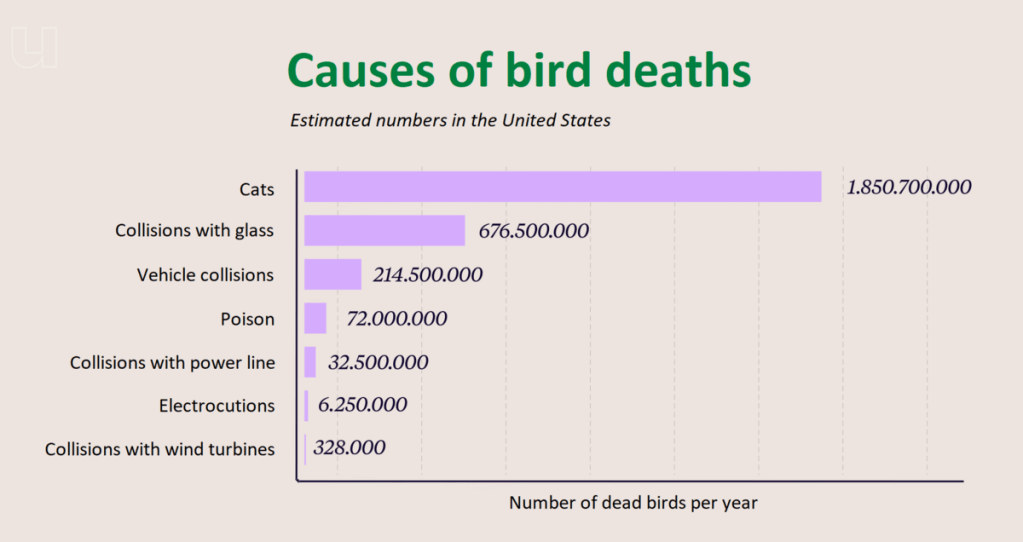
In addition, the biggest bird killer is not fossil fuels but cats. Cats kill 5,600 times more birds than wind power stations and 77 times more birds than fossil fuels. See the graph from Wikipedia below. The problem with wind power plants killing birds should be addressed (and has been addressed) but let’s be honest about the scale of the problem.

The graph shows that Wind Turbines kill 328,000 birds per year in the US, Electrocutions kill 6,250,000 birds, Collisions with powerlines kill 32,500,000 birds, Poison kills 72,000,000 birds, Vehicle collisions kill 214,500,000 birds, Collisions with glass kill 676,500,000 birds, and cats kill 1,850,700,000 birds per year in the US.
From Wikipedia: Universiteit van Nederland, CC BY 3.0 <https://creativecommons.org/licenses/by/3.0&gt;, via Wikimedia Commons

False claim : Wind power is only a marginal energy source

Wind power currently accounts for around 7.8%  of the world’s electricity up from 3.5% in 2015 and 1.63% in 2010. Wind power accounts for 10% of US electricity and 57.7% of Denmark’s electricity. It may also some as a surprise to some that in the fossil fuel capital of the world, the great state of Texas, where I live, wind represented 28.6 percent of the energy generation in 2023, second only to natural gas (41.8 percent). That is not a marginal energy source.

I can add that Texans are in general not favorable towards wind, and the local politicians are hostile towards wind. Fossil fuel is after all our bread and butter. Why wind power is so prominent in Texas is because of the Texas ERCOT system in which energy sources compete on price and the cheapest always goes first. In practice that means wind goes first.

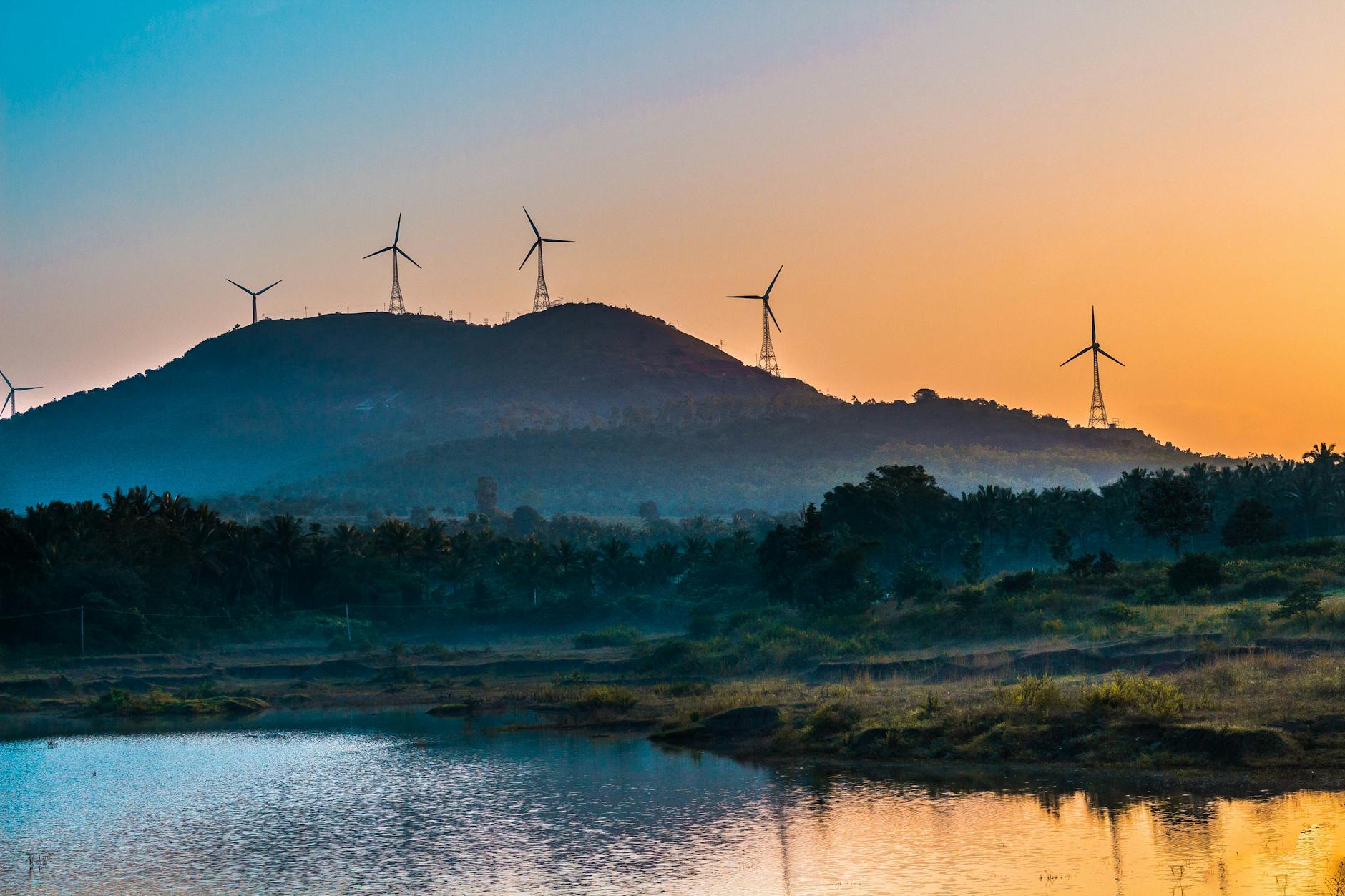
Wind turbines, sunset in the background.
Photo by Pixabay on Pexels.com

False claim : Wind power is extremely expensive

Wind power used to be expensive. It has been and still is subsidized by the government, but that is basically true for all energy sources, not just wind. Below is the average unsubsidized levelized cost of energy according to Lazard (from Wikipedia). Notice that the light blue line indicates that wind power is pretty cheap.

The image shows 8 graphs representing the price of Nuclear, Gas (peaker), Thermal Solar, Coal, Geothermal, Natural Gas, Solar Panels, and Wind. Today Wind is the cheapest.
Mir-445511, CC BY-SA 4.0 <https://creativecommons.org/licenses/by-sa/4.0&gt;, via Wikimedia Commons.

To see the Super Facts click here


The Nobel Prize in Physics and Neural Networks

“The Nobel Prize in Physics and Neural Networks” is not a super-fact but just what I consider interesting information

The Nobel Prizes are in the process of being announced. The Nobel Prize in Physiology or Medicine, Chemistry, Physics and Literature have been announced and the Nobel Prize in Peace will be coming up at any minute. The Nobel Prize in Economics will be announced October 14.

The Nobel Prize in Peace tends to get the most attention but personally I focus more on the Nobel Prizes in the sciences. That may be because of my biases, but those prizes also tend to be more clearcut and rarely politized. Nobel Prize in Peace is announced and given in Oslo, Norway, and all the other prizes are announced and given in Stockholm, Sweden.

Nobel Prize In Physics

What I wanted to talk about here is the Nobel Prize in Physics given to John J. Hopfield and Geoffrey J. Hinton. They made a number of important discoveries in the field of Artificial Intelligence, more specifically neural networks. This is really computer science, not physics. However, they used tools and models from physics to create their networks and algorithms, which is why the Nobel committee deemed it fit to give them the Nobel Prize in Physics.

Perhaps we need another Nobel Prize for computer science. It is also of interest to me because I’ve created and used various Neural Networks myself. It was not part of my research or part of my job, so I am not an expert. For all of you who are interested in ChatGPT, it consists of a so-called deep learning neural network (multiple hidden layers) containing 176 billion neurons. By the way that is more than the 100 billion neurons in the human brain. But OK, they aren’t real neurons.

So, what is an artificial neural network?

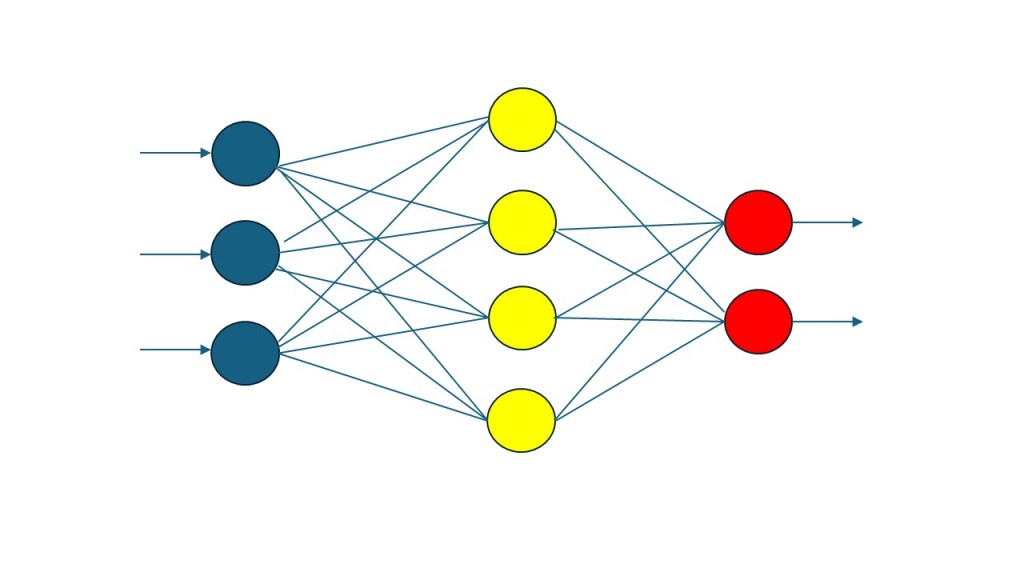
A simple old-style 1950’s Neural Network drawing | The Nobel Prize in Physics and Neural Networks
A simple old-style 1950’s Neural Network (my drawing)

The first neural networks created by Frank Rosenblatt in 1957 looked like the one above. You had input neurons and output neurons connected via weights that you adjusted using an algorithm. In the case above you have three inputs (2, 0, 3) and these inputs are multiplied by the weights to the outputs.
3 X 0.2 +0 + 2 X -0.25 = 0.1 and 3 X 0.4 + 0 + 2 X 0.1 = 1.4 and then each output node has a threshold function yielding outputs 0 and 1.

To train the network you create a set of inputs and the output that you want for each input. You pick some random weights and then you can calculate the total error you get, and you use the error to calculate a new set of weights. You do this over and over until you get the output you want for the different inputs. The amazing thing is that now the neural network will often also give you the desired output for an input that you have not used in the training. Unfortunately, these neural networks weren’t very good, and they often failed and could not even be trained.

In 1985/1986, Geoffrey Hinton, David Rumelhart and Ronald J. Williams presented an algorithm applied to a neural network featuring a hidden layer that was very successful. It was effective and guaranteed to learn patterns that were possible to learn. It set off a revolution in Neural Networks. The next year, in 1987, when I was a college student, I used that algorithm on a neural network featuring a hidden layer to do simple OCR (optical character recognition).

Note that a computer reading an image with a letter is very different from someone typing it on a keyboard. In the case of the image, you must use OCR, a complicated and smart algorithm for the computer to know which letter it is.

A multiple layer neural network with one hidden layer. This set-up and the associated backpropagation algorithm set off the neural network revolution. Drawing.
A multiple layer neural network with one hidden layer. This set-up and the associated backpropagation algorithm set off the neural network revolution. My drawing.

In the network above you use the errors in a similar fashion to the above to adjust the weights to get the output you want, but the algorithm, the backpropagation algorithm is very successful.

Below I am showing two 10 X 10 pixel images containing the letter F. The neural network I created had 100 inputs, one for each pixel, a hidden layer and then output neurons corresponding to each letter I wanted to read. I think I used about 10 or 20 versions of each letter during training, by which I mean running the algorithm to adjust the weights to minimize the error until it is almost gone.

Now if I used an image with a letter that I had never used before, the neural network typically got it right even though the image was new. Note, my experiment took place in 1987. OCR has come a long way since then.

Two examples of the letter F in a 10 X 10 image | The Nobel Prize in Physics and Neural Networks
Two examples of the letter F in a 10 X 10 image. You can use these images (100 input neurons) to train a neural network to recognize the letters F.

At first, it was believed that adding more than one hidden layer did not add much. That was until it was discovered that by applying the backpropagation algorithm differently to different layers created a better / smarter neural network and so at the beginning of this century the deep learning neural network was born (or just deep learning AI). Our Nobel Prize winner Geoffrey J. Hinton was a pioneer in deep learning neural networks.

Drawing of a deep learning neural network (deep learning AI). There are three hidden layers.
My drawing of a deep learning neural network (deep learning AI). There are three hidden layers.

I should mention that there are many styles of neural networks, not just the ones I’ve shown here. Below is a network called a Hopfield network (it was certainly not the only thing he discovered).

Four neurons that are all connected to each other | The Nobel Prize in Physics and Neural Networks
In a Hopfield network all neurons are input, and output neurons and they are all connected to each other.

For your information, ChatGPT-3.5 is a deep learning neural network like the one in my colorful picture above, but instead of 3 hidden layers it has 96 hidden layers in its neural network and instead of 19 neurons it has a total of 176 billion neurons. Congratulations to John J. Hopfield and Geoffrey J. Hinton.


To see the Super Facts click here