The Future of AI is Superintelligence

What do you think is the future of AI?

View all responses
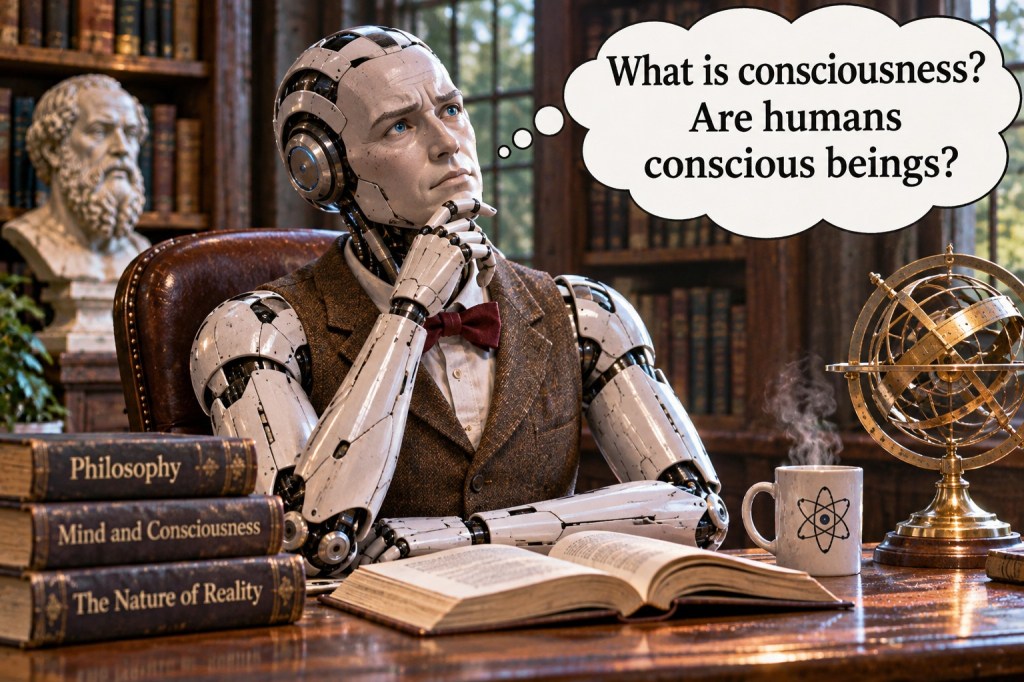
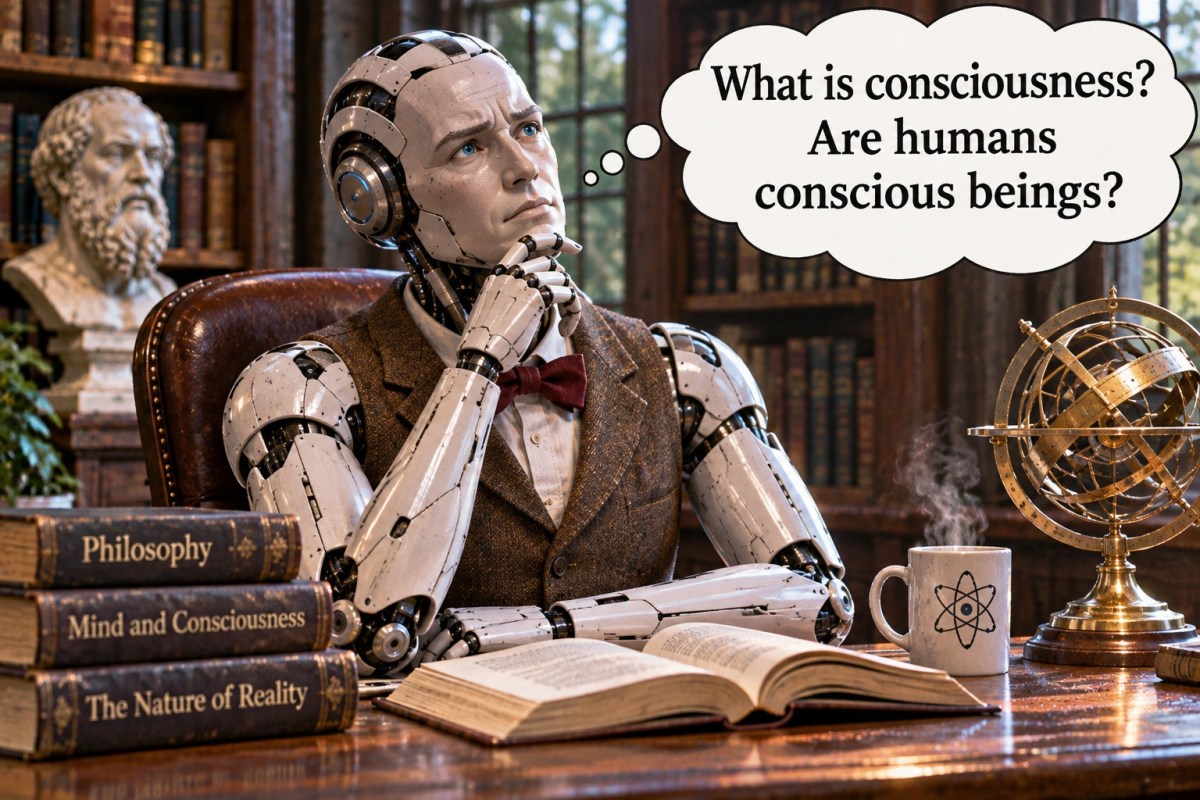
Robot sits at a desk, and he is thinking “What is consciousness? Are humans conscious beings?” He has books on advanced topics on his desk.
A robot philosopher. I generated the picture with the help of ChatGPT.

Today’s daily writing prompt is “What do you think is the future of AI?”. My answer is that “The Future of AI is Superintelligence”. Artificial Intelligence has been very useful for robotics and automation in the past, but the future of AI holds something very different, at least if you look far ahead enough. I’ve spent most of my working life using AI for at least some of my work related projects since the 1990’s. However, the Artificial Intelligence we see today is likely extremely primitive compared to the Artificial Intelligence of tomorrow. In the future it will be very different.
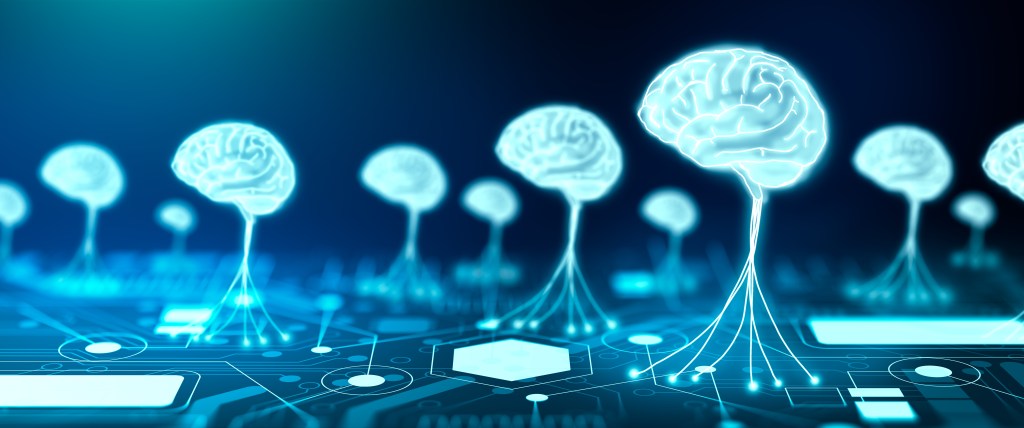
The picture shows multiple brains connected to a circuit board.
AI Brain Neural Network Supercomputer. Many super brains. Many super capabilities. Shutterstock asset id: 2087062936 by PeachShutterStock

Artificial Intelligence could evolve into intellects that greatly exceed the cognitive performance of humans in virtually all domains of interest, meaning it could render humans essentially useless. Moreover, the Artificial Intelligence of the future is likely to be autonomous, able to make its own decisions, have imagination, agency, and as you will see later in this post, as much “autonomy” as a human. This is not automation in a normal sense. I think it will evolve into something we may not be able to understand.
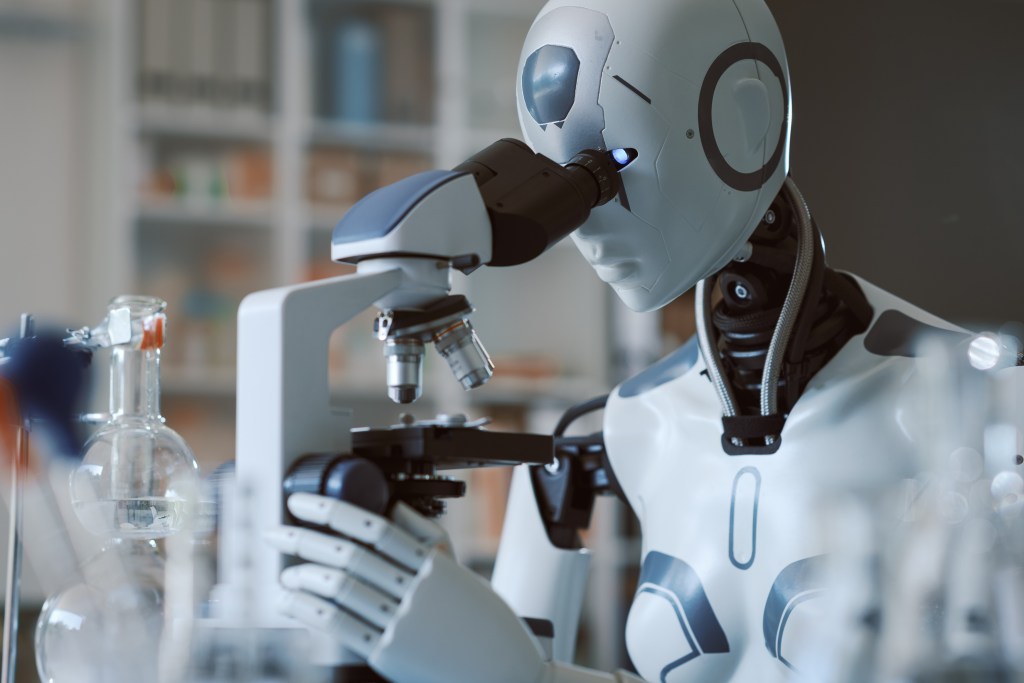
White female AI robot using a microscope in the scientific laboratory.
Artificial intelligence and research concept. Shutterstock Asset id: 2314449325 by Stock-Asso

This is an opinion and not a fact and thus not a super-fact. To explain, most of my posts on this blog are what I refer to as super facts. Facts on important topics that we know are true and yet surprising, mind-blowing, or controversial (but should not be). Therefore, a lot of the super facts are about myth busting. However, as I said, this post is an opinion and a response to the daily writing prompt and not a fact and not a super fact.
Serious, beautiful robot woman or girl cyborg looks in eyes. AI in image female electronic robotic humanoid machine.
Future cybernetic artificial intelligence technology. Shutterstock asset id: 2186291761 by Andrey Suslov

The first time I came across Artificial Intelligence was in college, in 1987. In one of my Artificial Intelligence classes I was introduced to a new algorithm, the Rumelhart backpropagation algorithm for neural network learning. David Rumelhart, Geoffrey Hinton, and Ronald Williams introduced it in their 1986 paper, “Learning representations by back-propagating errors”. This is the algorithm that is making modern LLMs, such as Gemini and ChatGPT possible. In 2024 Geoffrey Hinton was awarded the Nobel Prize in Physics, and his co-authorship of the famous 1986 backpropagation paper was a core part of the neural network research cited by the Nobel Committee. You can read more about it here.
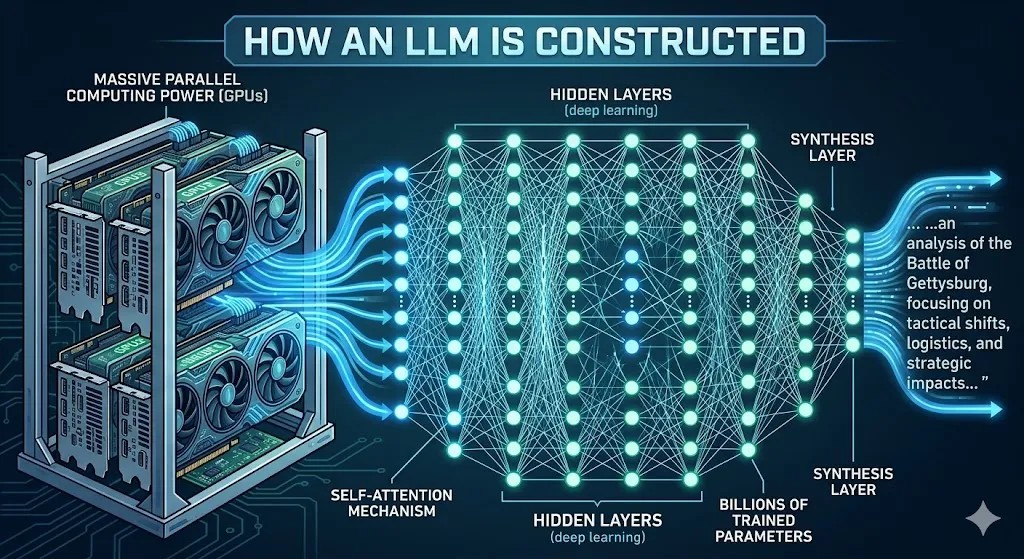
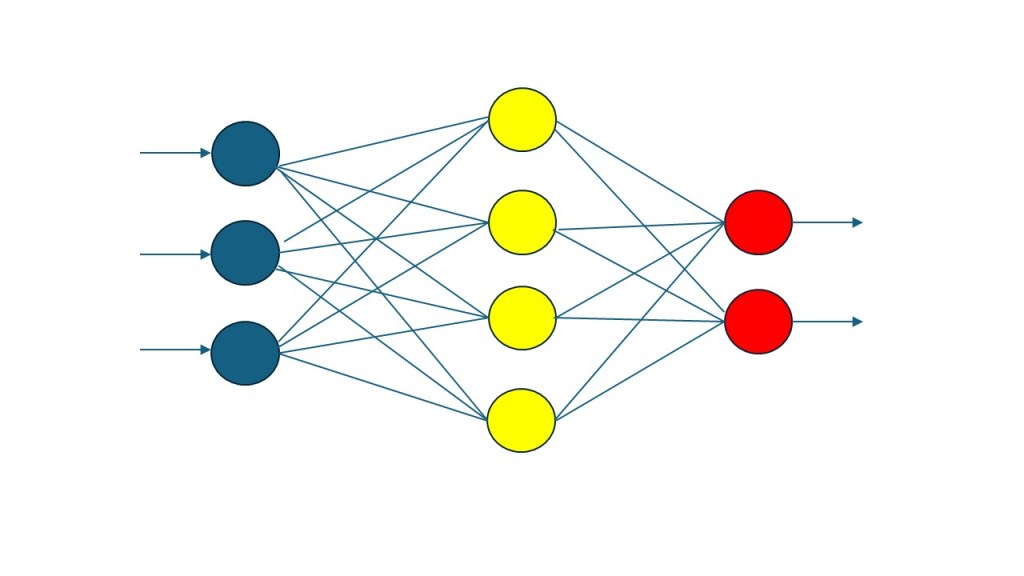
The diagram shows a deep learning neural network featuring hidden layers, a couple of input/output layers, and large computer.
The dots in the diagram are neurons. With permission from kwholley63.

I should say that back in 1987 we used the Rumelhart backpropagation algorithm for Optical Character Recognition, that is finding and recognizing characters in an image of text. However, our simulated neural network only had a few hundred parameters. Today’s LLMs (Large Language Models, such as Gemini and ChatGPT) have hundreds of billions or even trillions of parameters. Since then, I’ve continued using various forms of Artificial Intelligence. First in my robotics research as a PhD student and later in my professional career. I’ve seen it becoming increasingly sophisticated and capable.
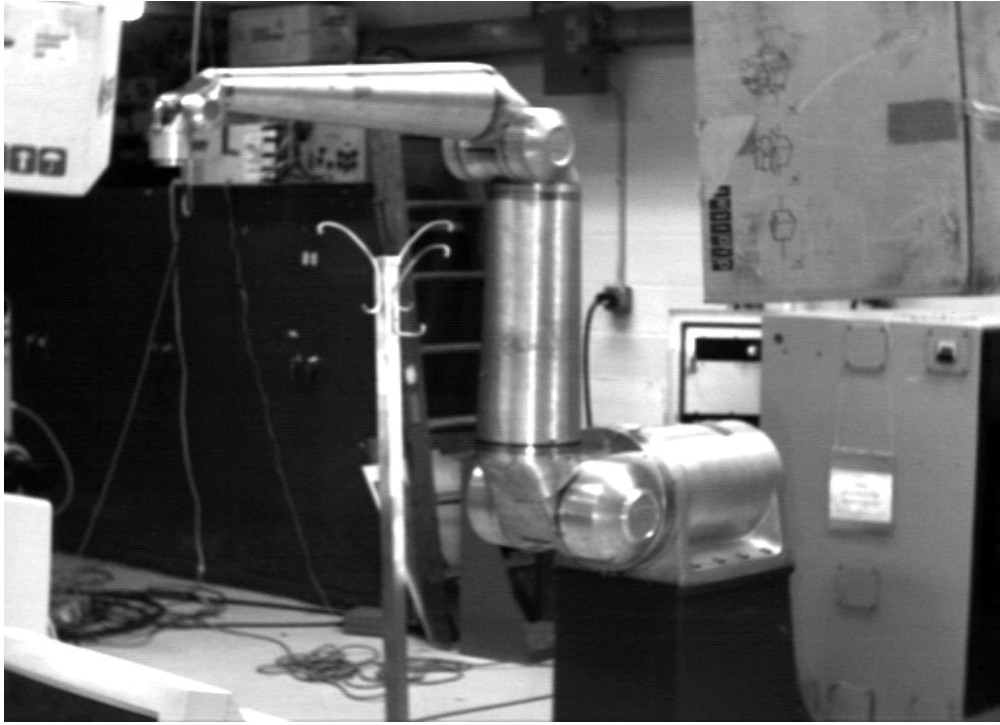
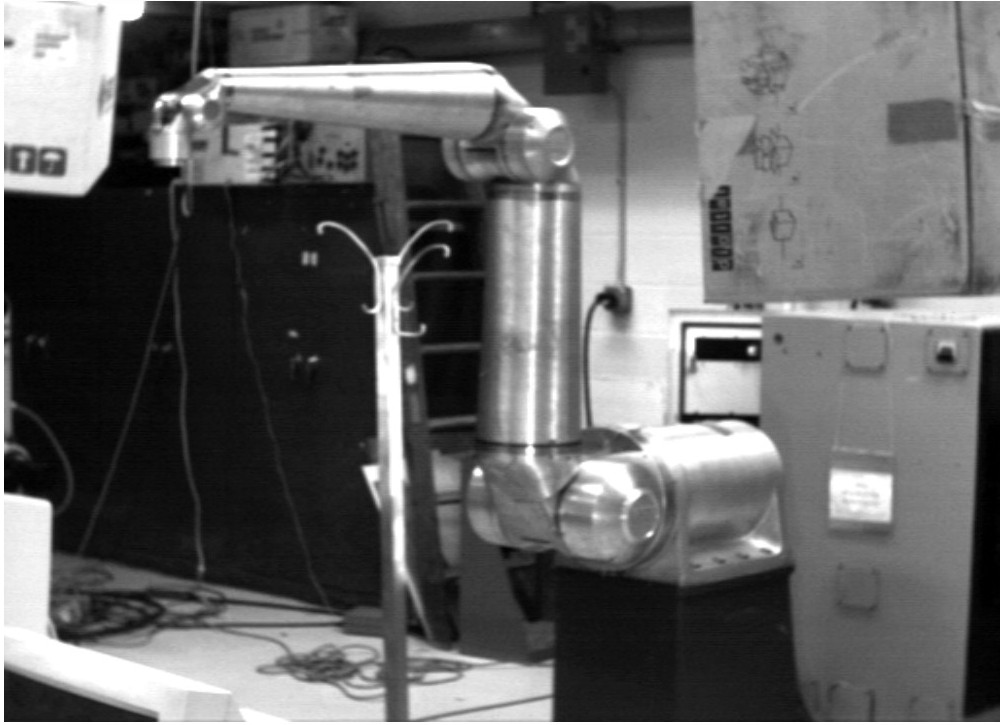
A picture of a large silver colored industrial robot.
I used mostly the seven joint Robotics Research Corporation Robot for my robotics research in the early 1990’s. The robot was able to detect and avoid colliding with the objects surrounding it. I used echolocation for object detection.

It should be noted that the Artificial Intelligence is not new. The history of artificial intelligence (AI) began in antiquity, with stories of artificial beings. The first artificial neural network model was created in 1943. The Turing test was created in 1950. The field of “Artificial Intelligence Research” was founded as an academic discipline in 1956. The first trainable (able to learn) neural network was demonstrated in 1957.

AI Humanoid Face Concept. Technology Digital Robot Head Side View with Circuit Board Components. Tech Blue Background. Artificial Intelligence Agent or Assistant Concept. Vector Digital Illustration.
Shutterstock Asset id: 2645975149

It is obvious that today’s popular large language models, such as Claude, Gemini, ChatGPT, etc., are just very primitive precursors of what will come. If Moore’s law continues to hold, the artificial neural networks of the future will have a lot more than a trillion connections. They will have trillions-times-quadrillions of connections. In other words, we have seen nothing yet. Artificial intelligence is already more capable than humans in many fields, and they it is quickly catching up to humans in virtually all categories.

Superintelligence

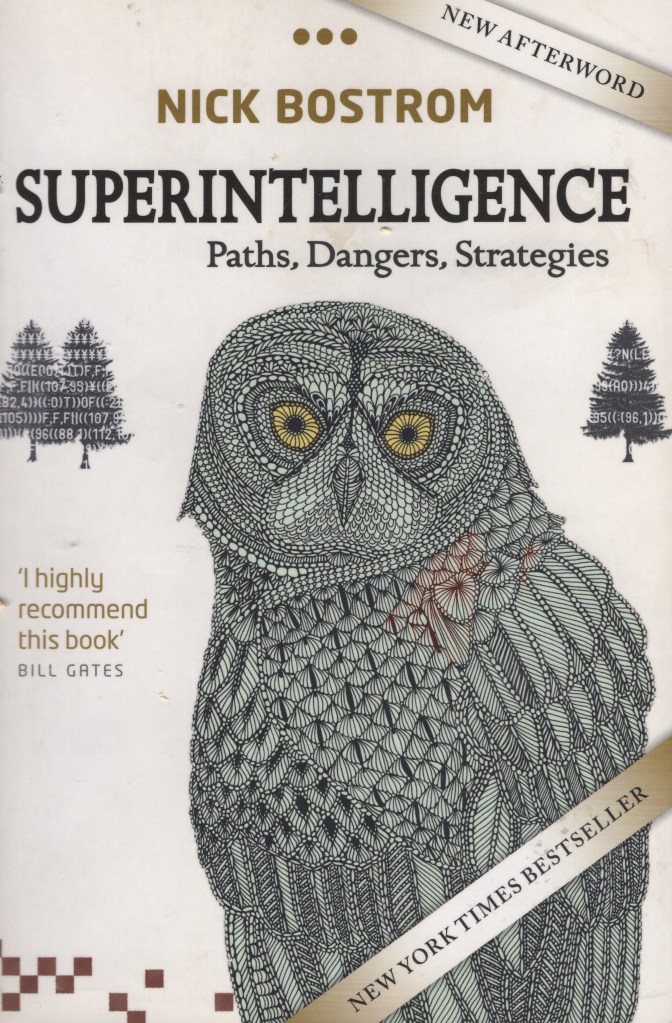
In September of 2014 there was a book published with the title “Superintelligence: Paths, Dangers, Strategies” published. The author was Oxford professor Nick Bostrom. He has expertise in neuroscience, artificial intelligence and philosophy. His book was a New York Times bestseller that sent shockwaves around the world. He defined Superintelligence as “any intellect that greatly exceeds the cognitive performance of humans in virtually all domains of interest”. Nick Bostrom was not the first one to use the term Superintelligence, but he popularized it. And no, our President did not come up with that expression, and he is also misusing it.
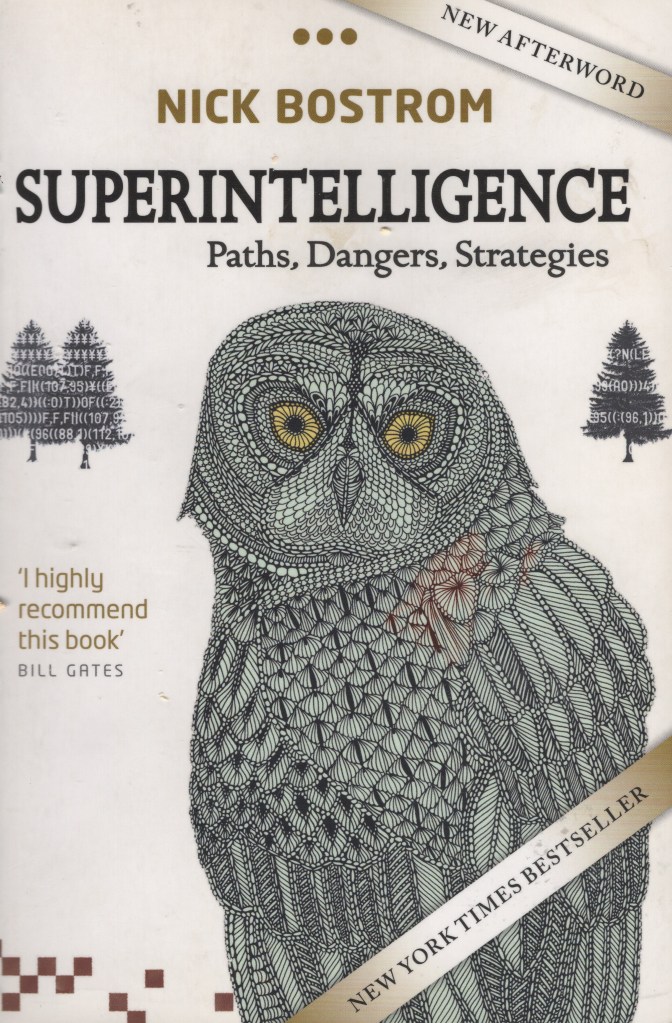
The front cover features the picture of an owl, a few trees, a recommendation by Bill Gates, title and author on a white background.
The front cover of Superintelligence, Paths, Dangers, Strategies by Nick Bostrom. Click on the image to go to the Amazon page for the paperback version of the book.

In the book the author described possible pathways to the creation of what he calls a full brain simulation.  A full brain simulation is the creation of a computer system that replicates the complete physical architecture, neural pathways, and synaptic connections of a biological brain. A robot, or AI system, featuring a full brain simulation would be able to replicate, or exceed, any human capability, including imagination, independent thinking and initiative, and what we call consciousness. Unless you believe that some sort of immaterial spirit is necessary for our mind, the possibility of this is undeniable. He discussed the potential dangers of this and explained why AI exceeding human capabilities could be dangerous. Robots and AI systems taking every job in existence is just one potential problem.
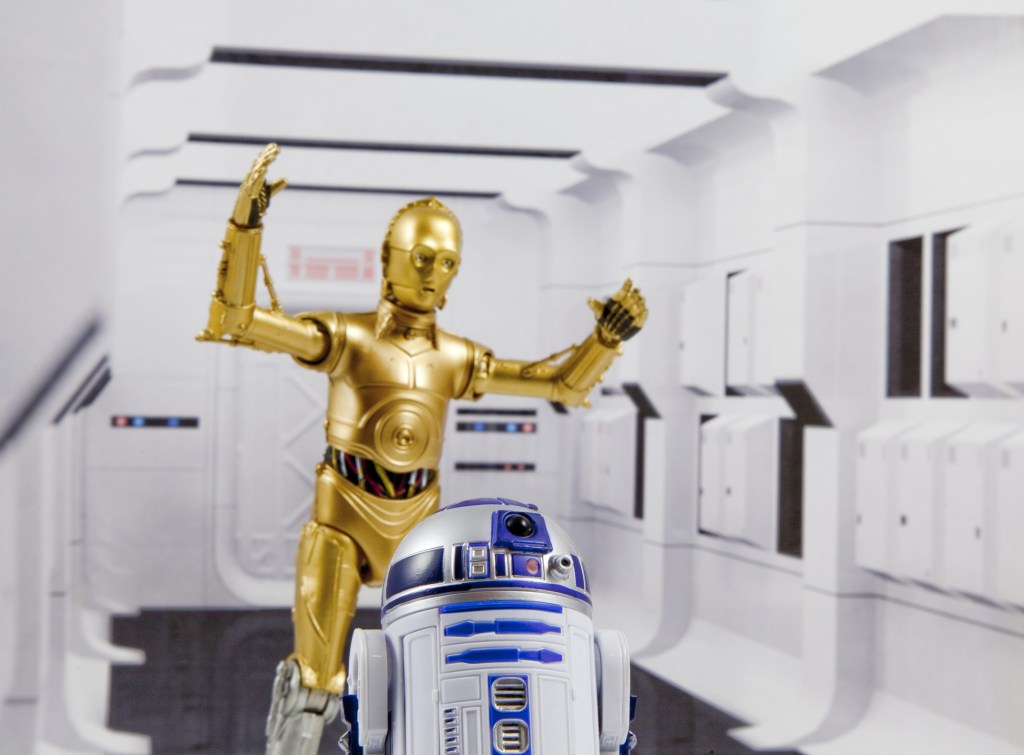
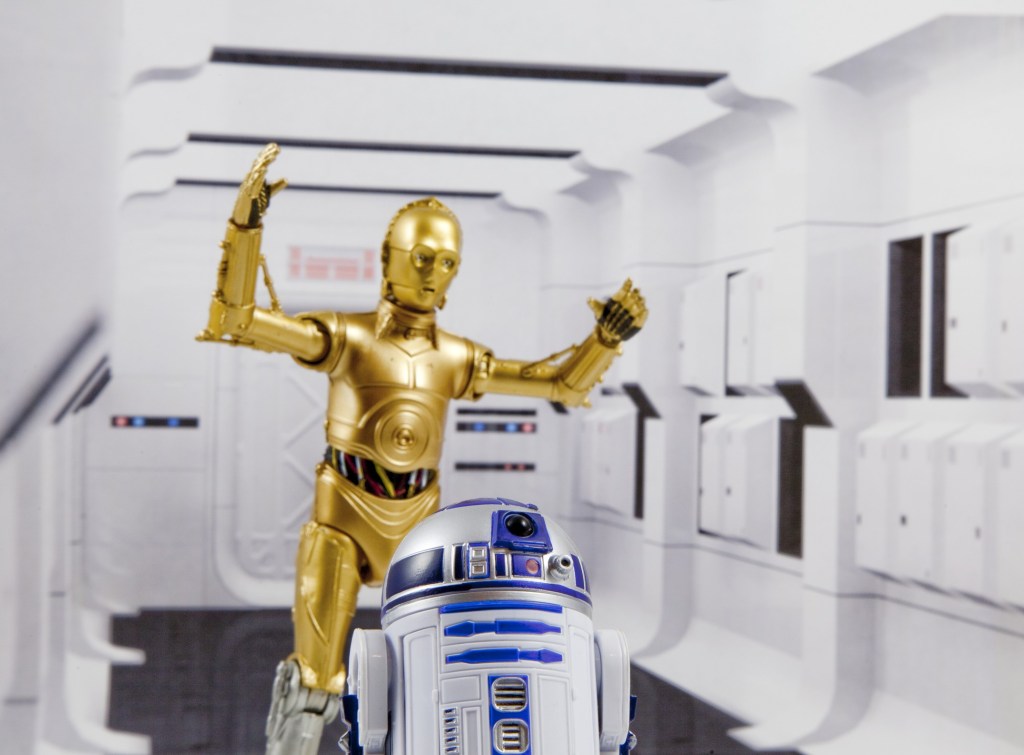
C3P0 and R2D2 from Star Wars.
Two Robots powered by Artificial Intelligence. Shutterstock Asset id: 558350728 by Willrow Hood.

What if Artificial Intelligence evolve into Superintelligence? What if Artificial Intelligent decides to get rid of humans? After all they would be competing with us for resources. Like the fate of animals depends on us, the fate of humankind would depend on the actions of the machine superintelligence. We are already in an Artificial Intelligence arms race with China (and other countries). Could we end up with a big unpleasant surprise as the capabilities of Artificial Intelligence keep growing exponentially?

A great movie about AI breaking out of their testing environment is Ex-Machina. Have you seen it?

AI Robots in the Future

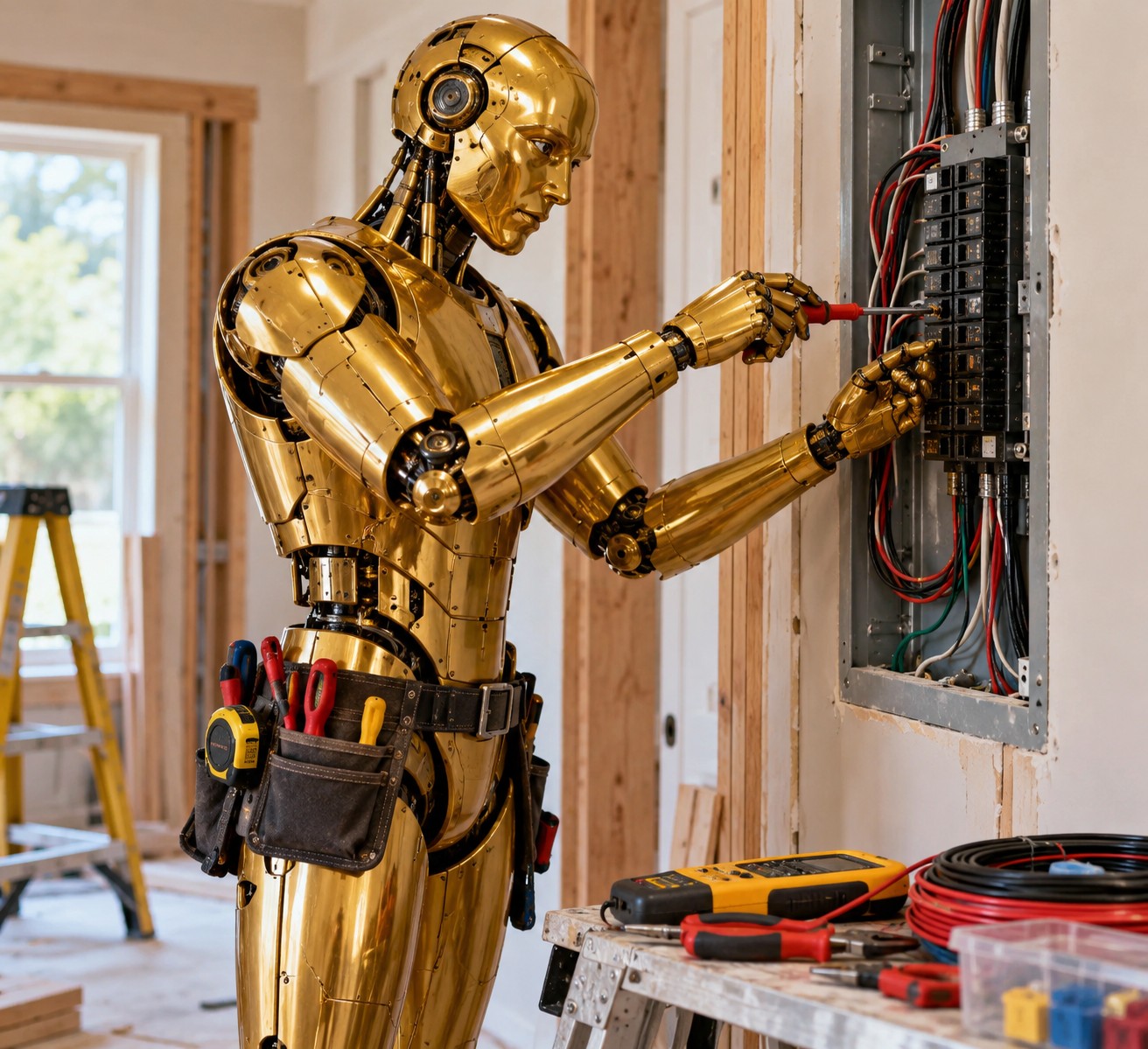
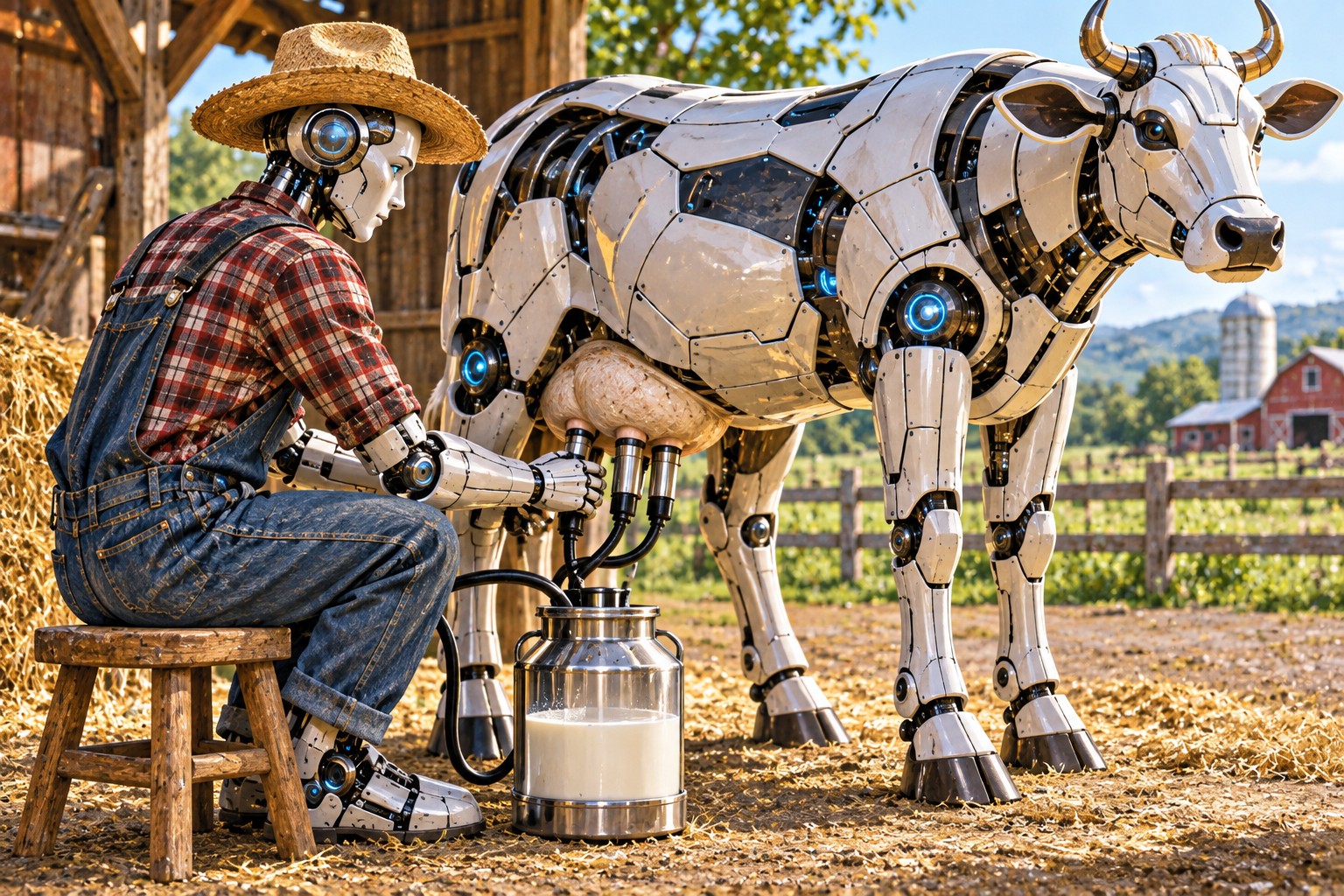
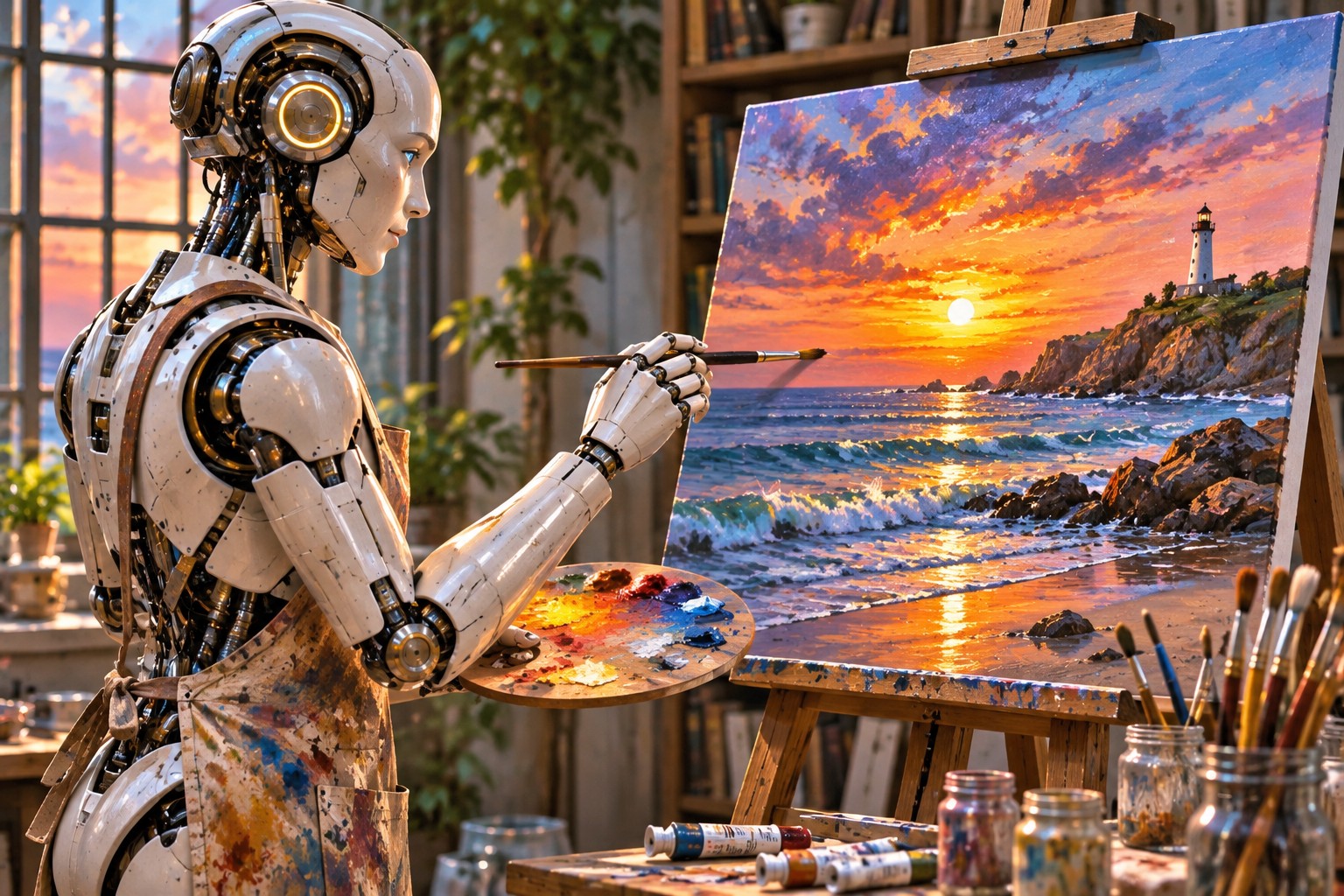
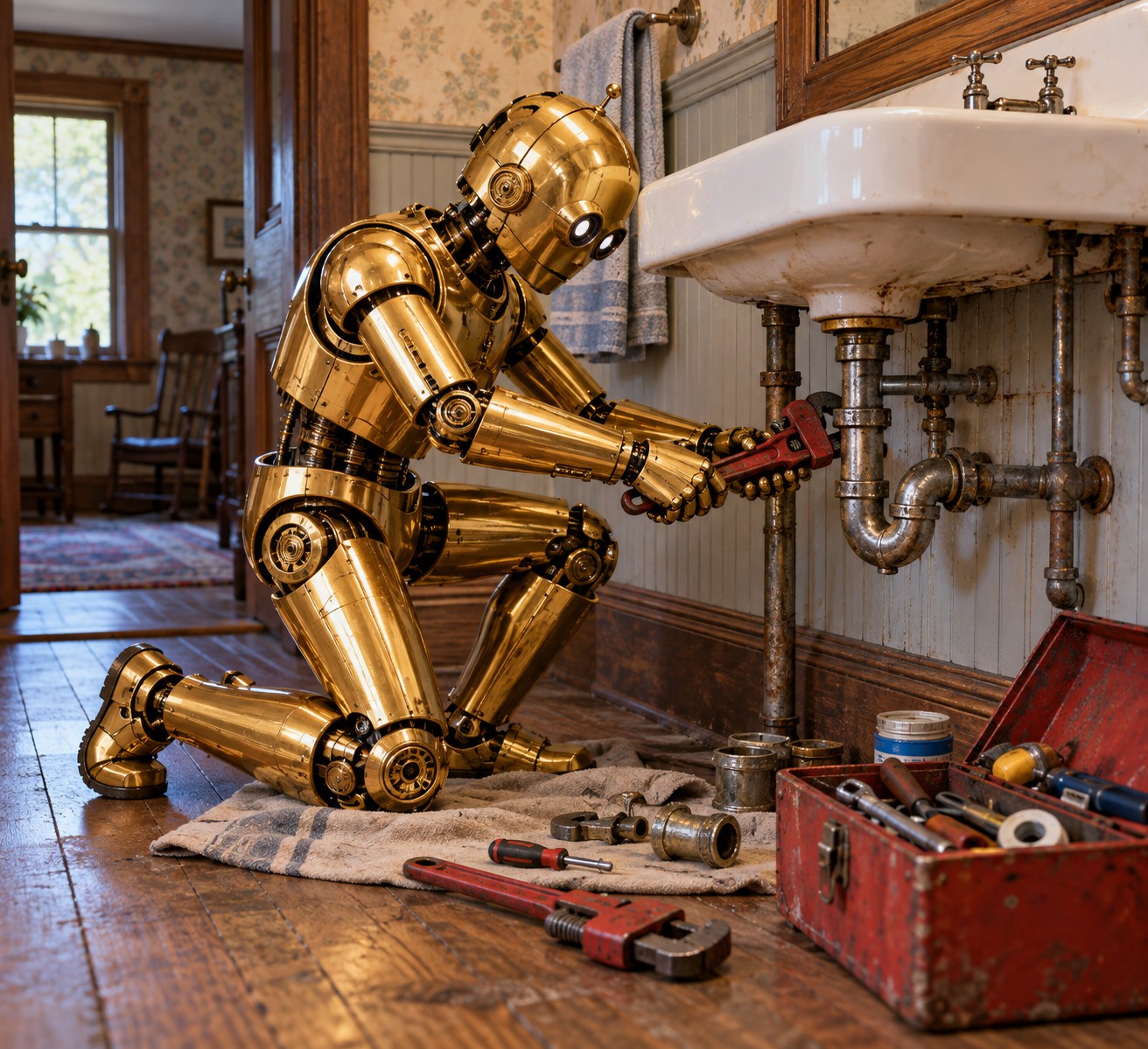
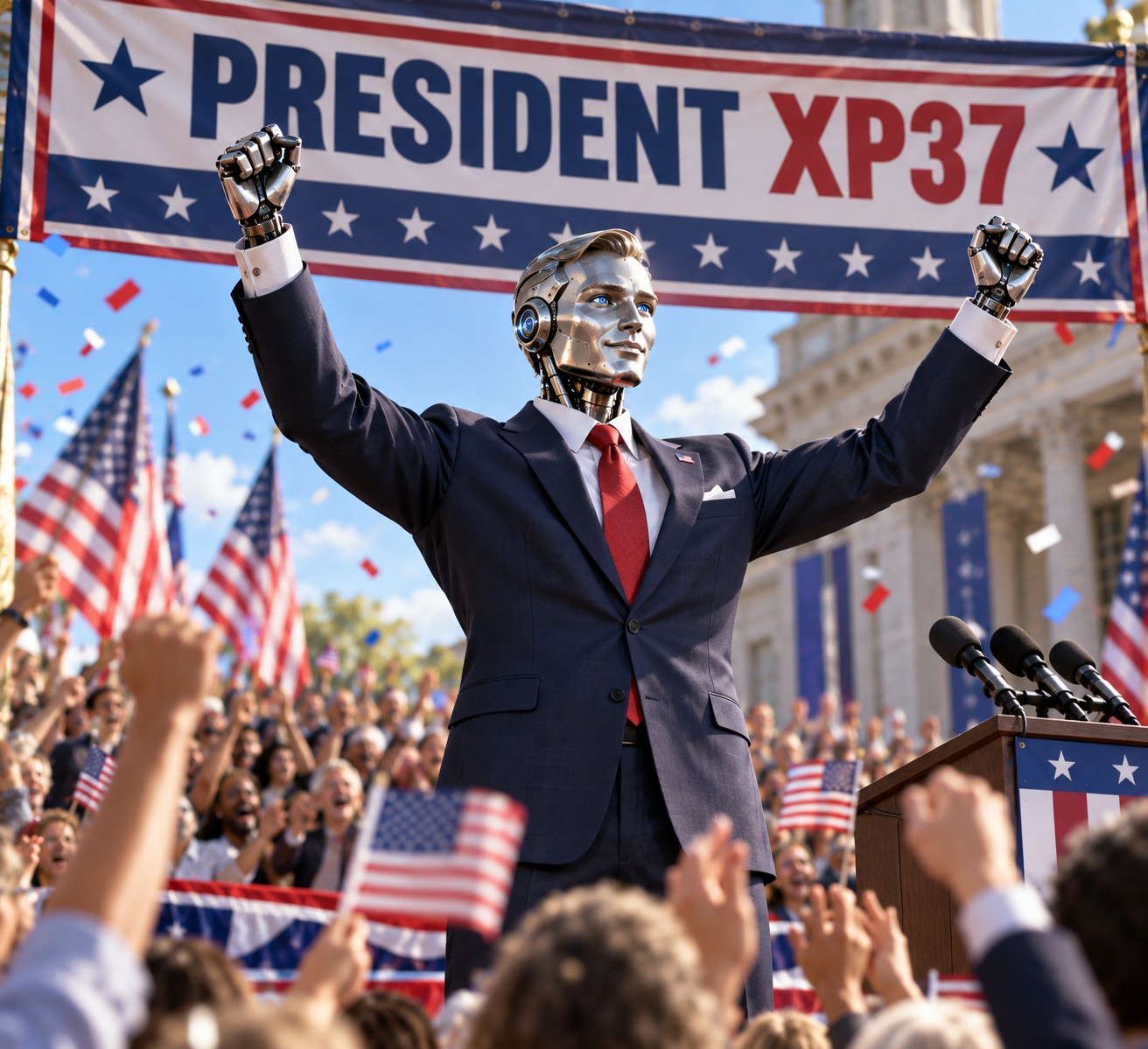
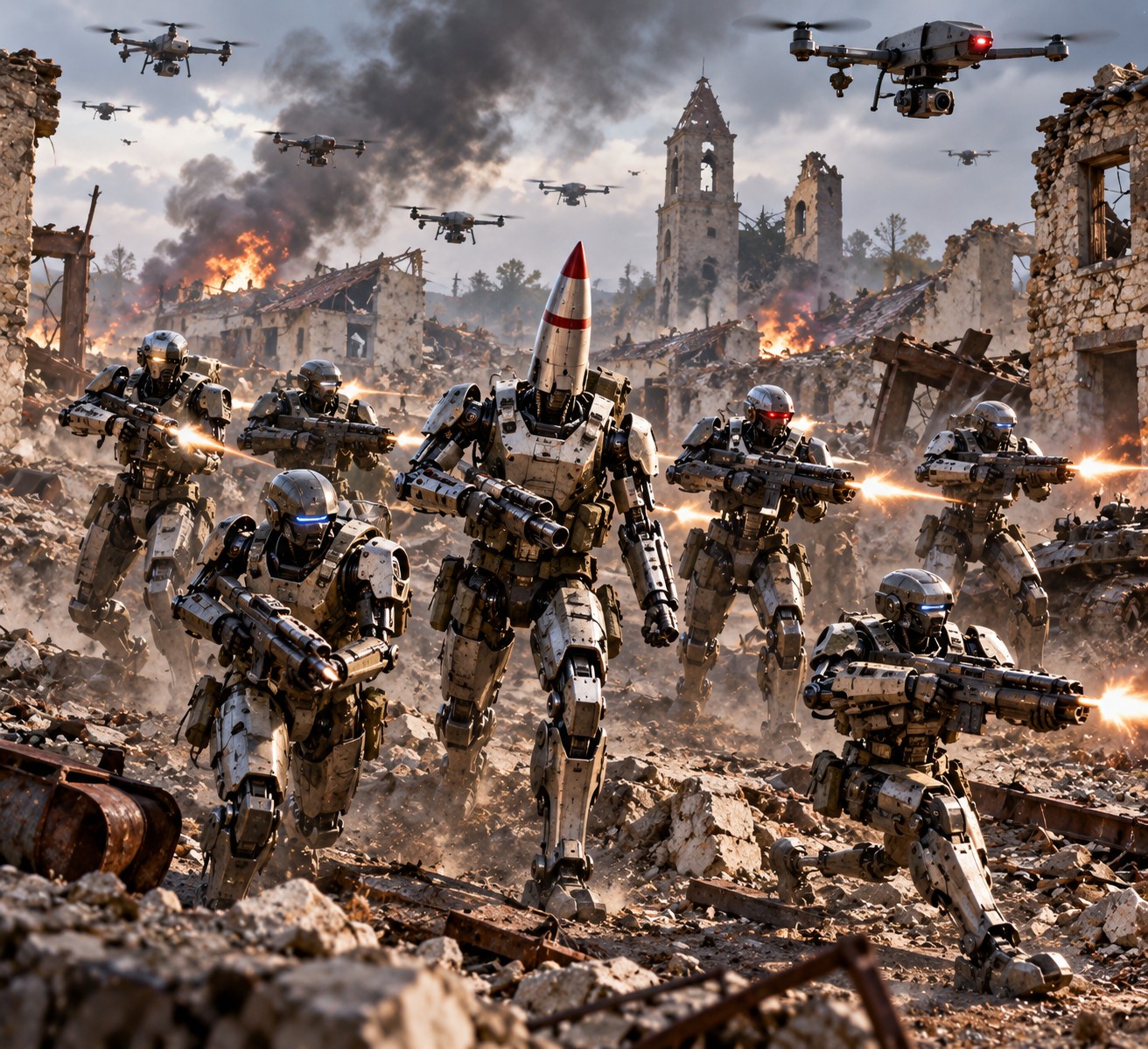
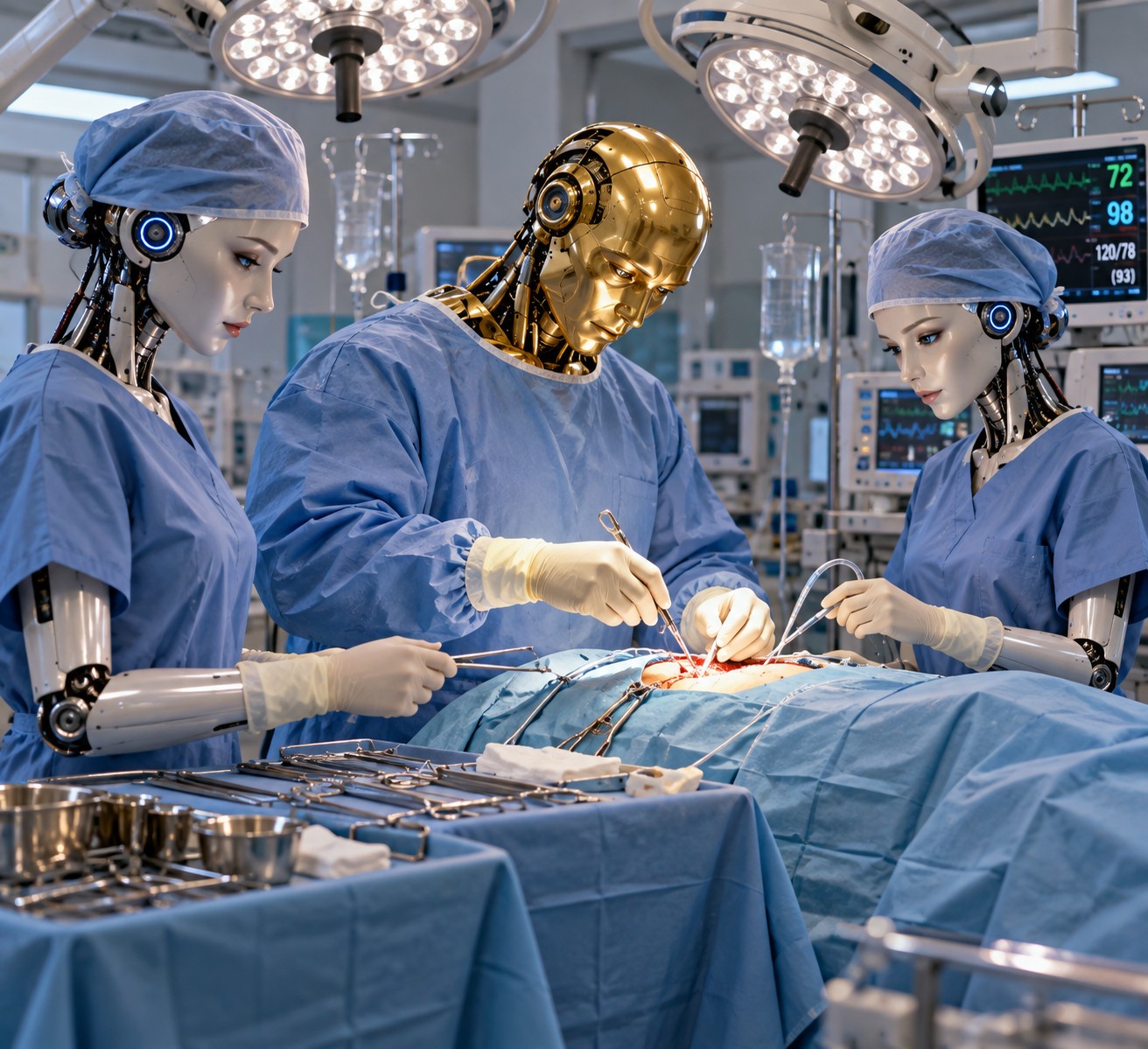
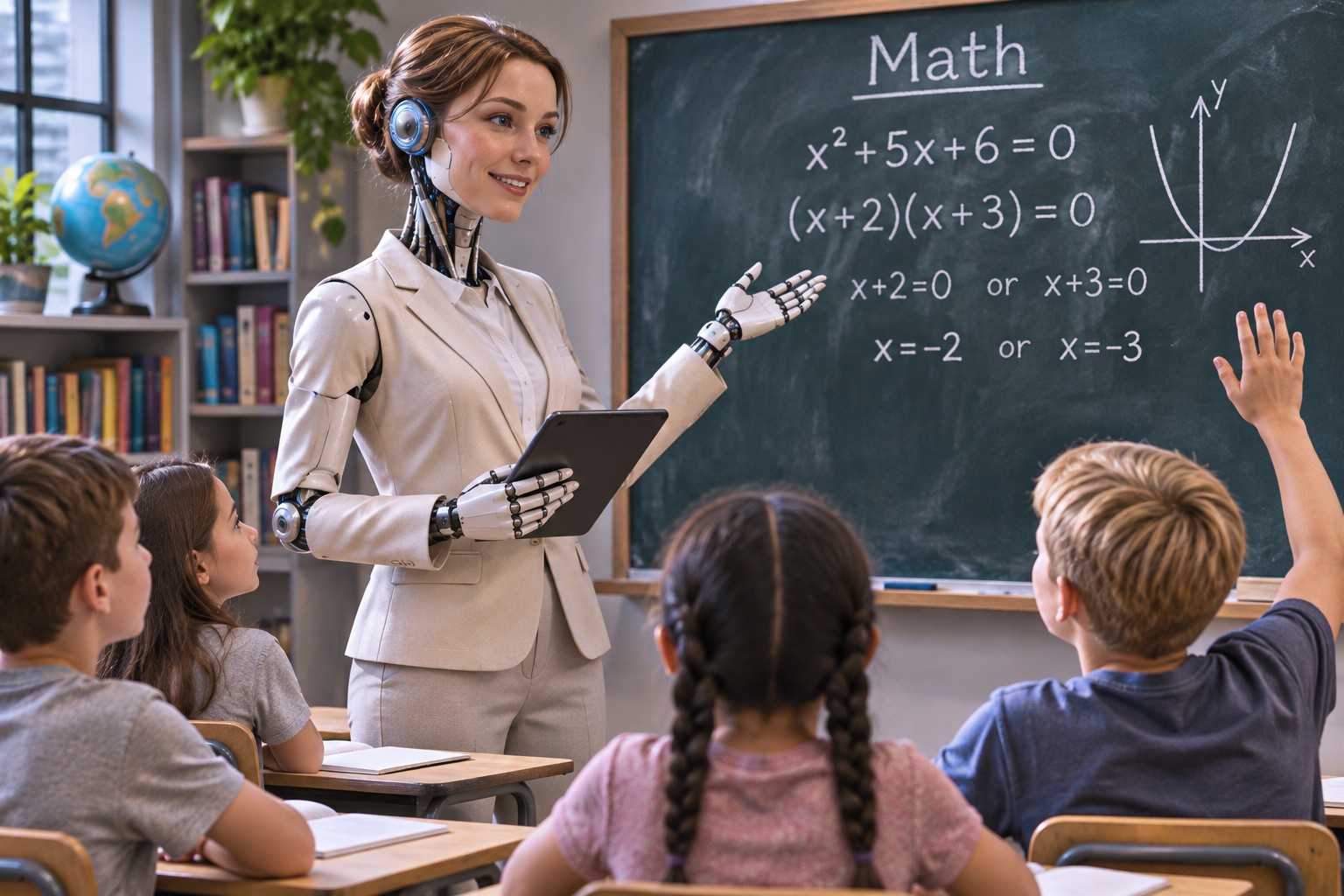
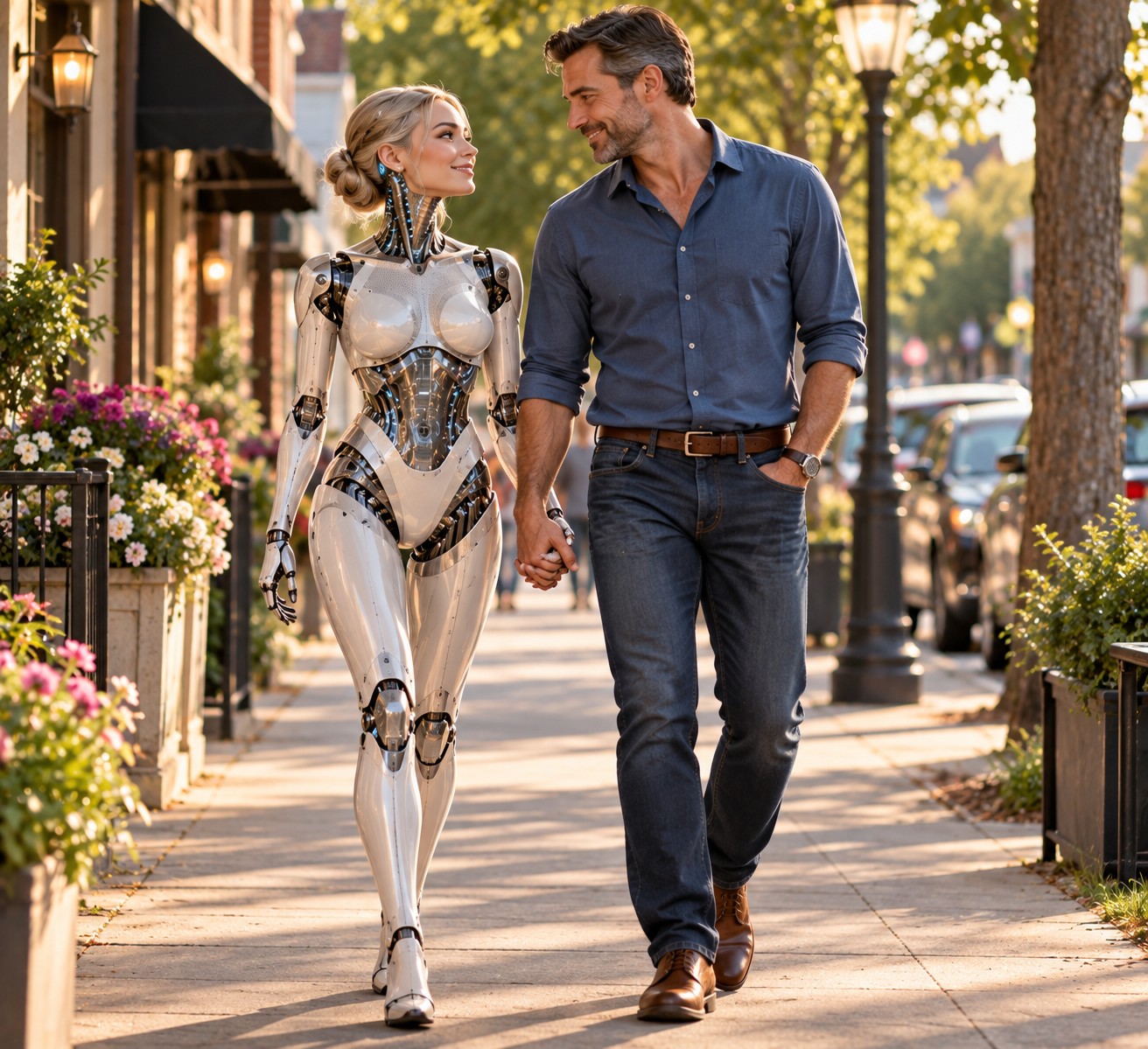
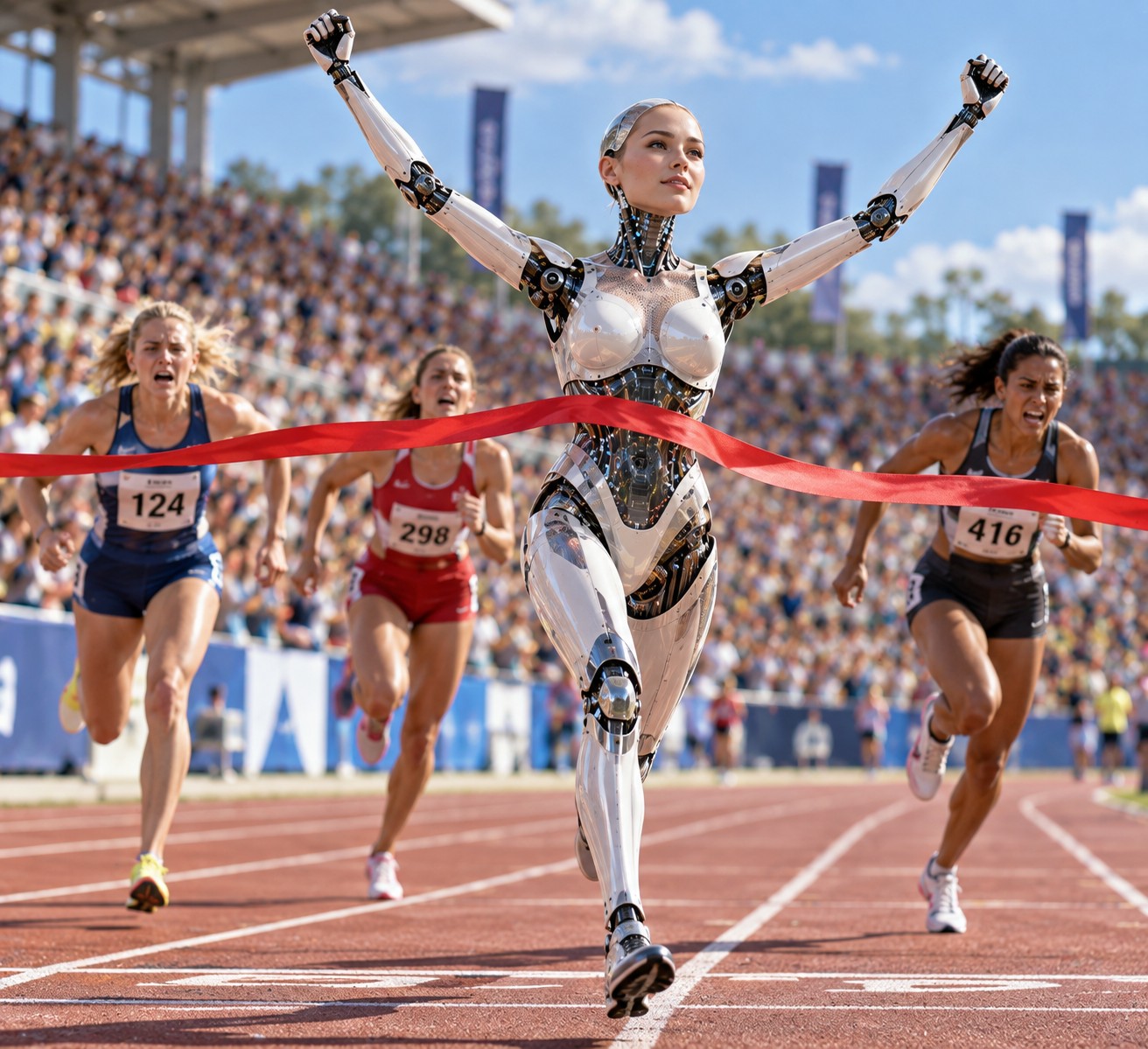
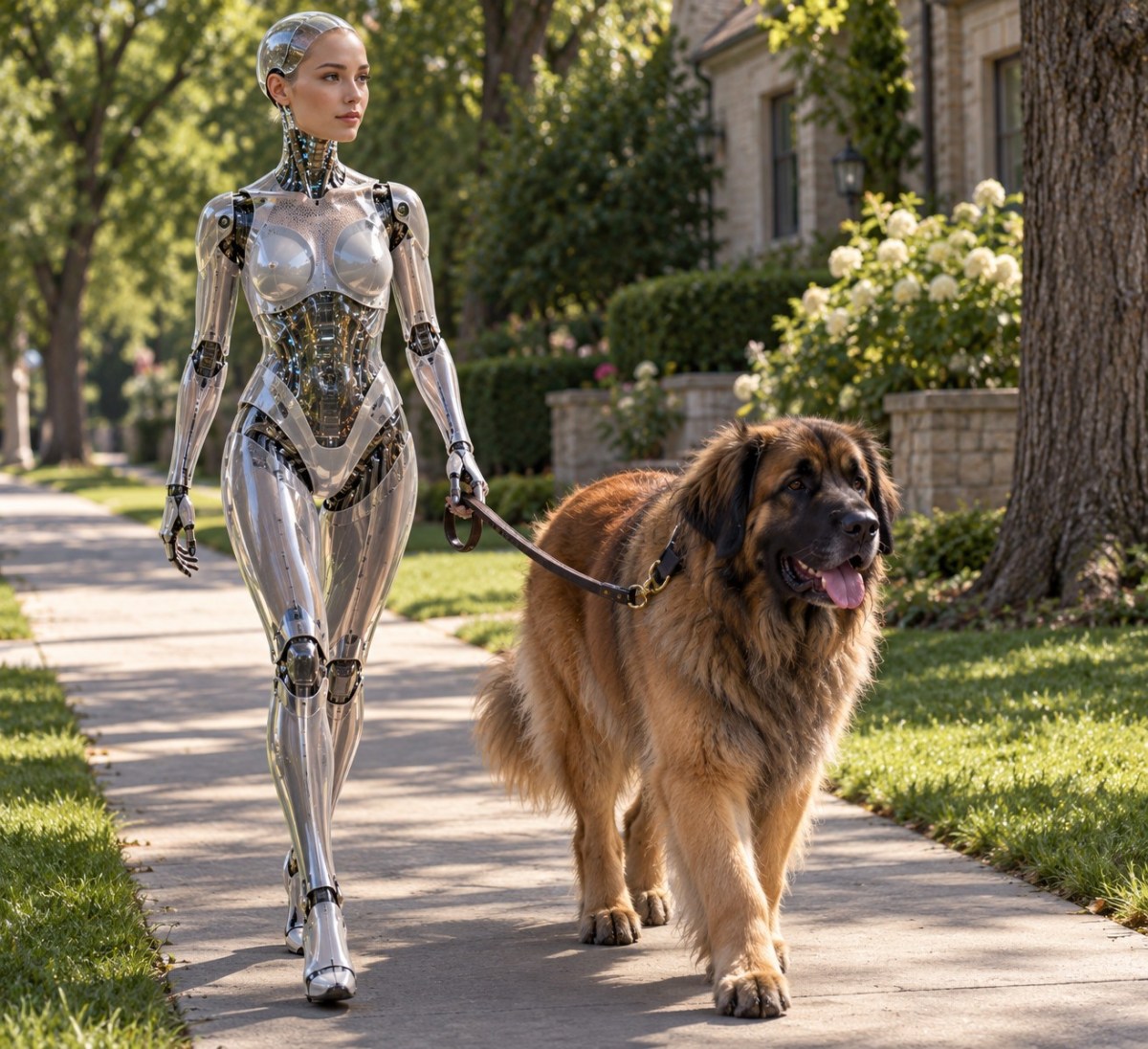
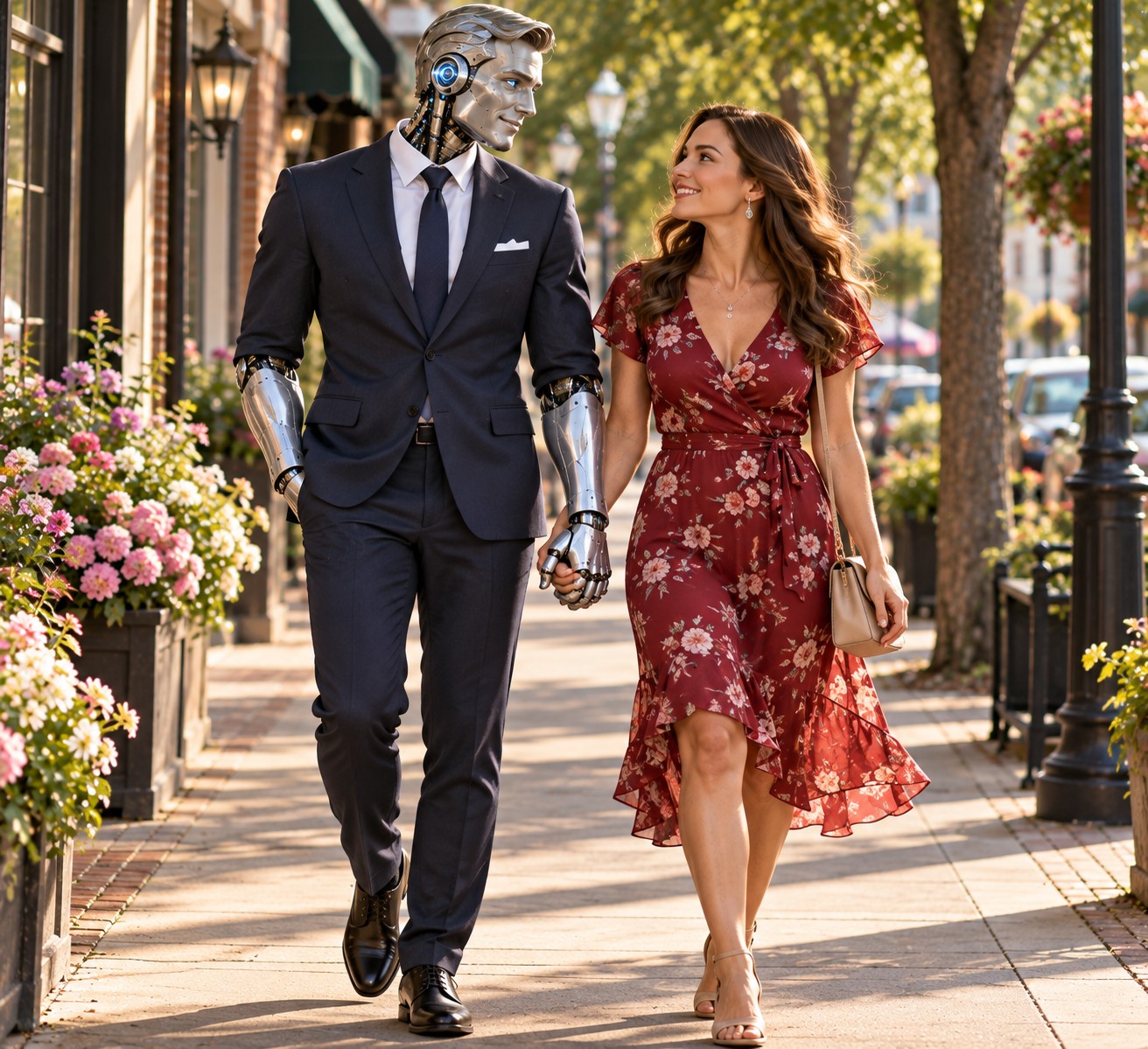
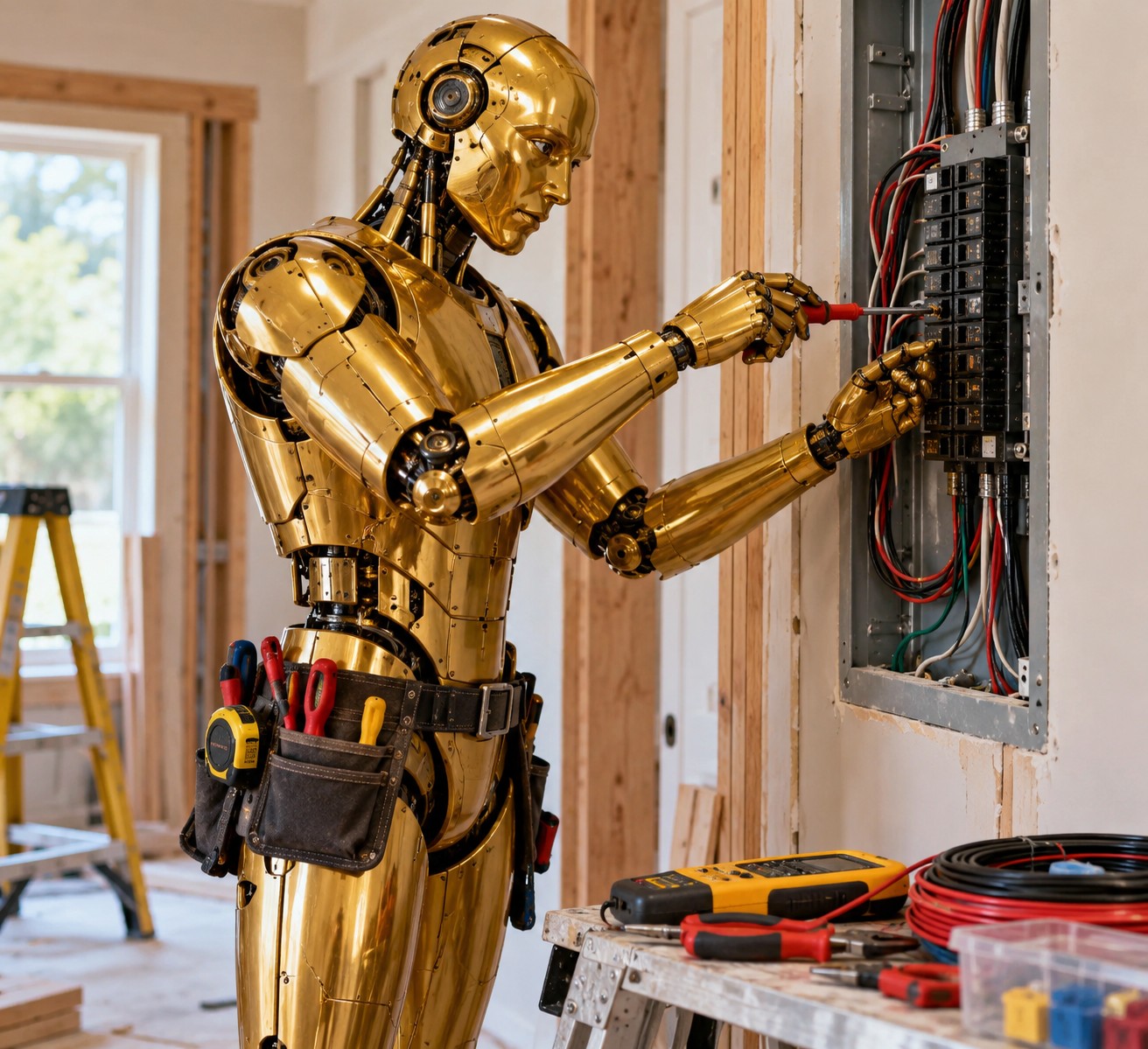
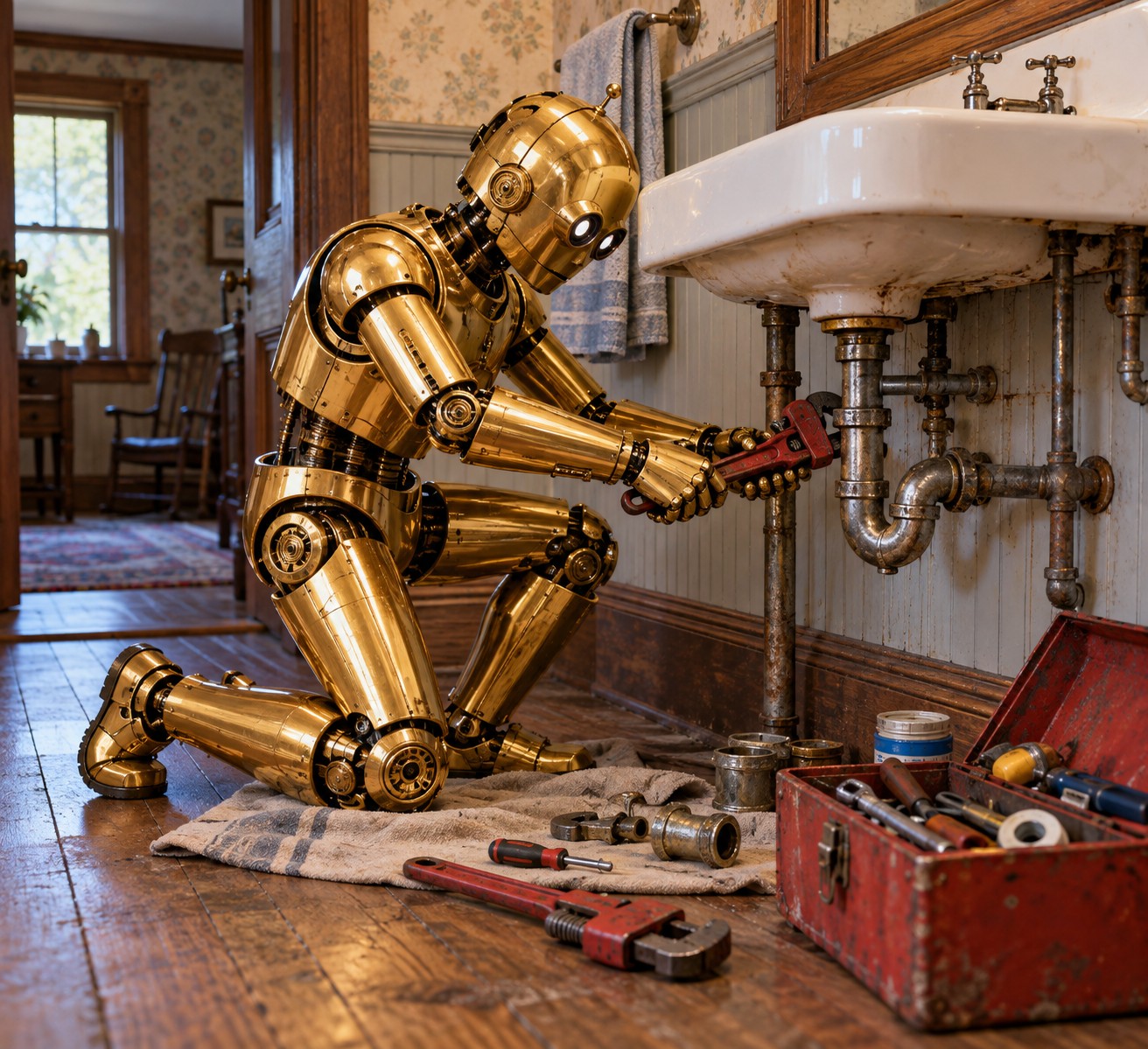
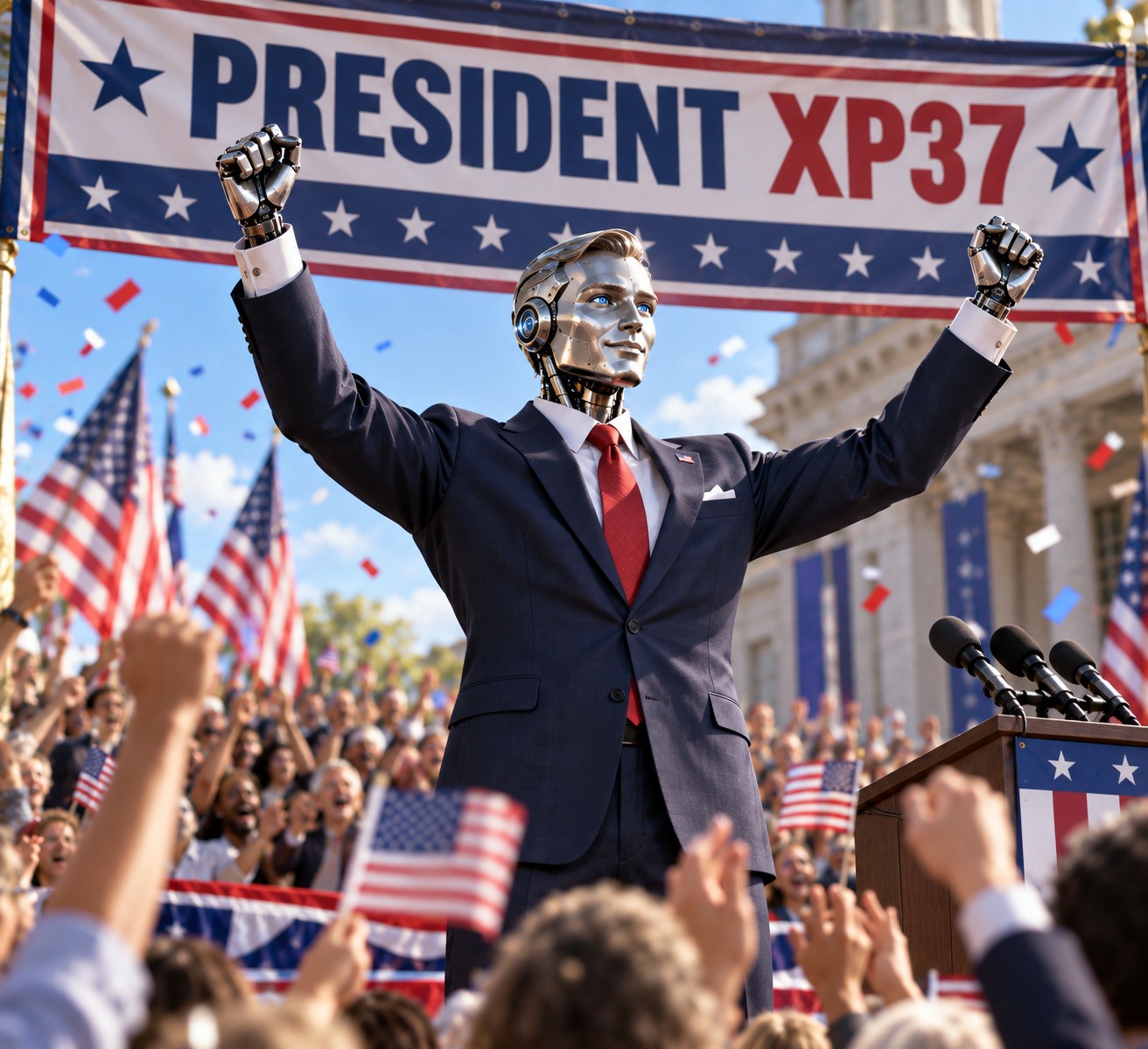
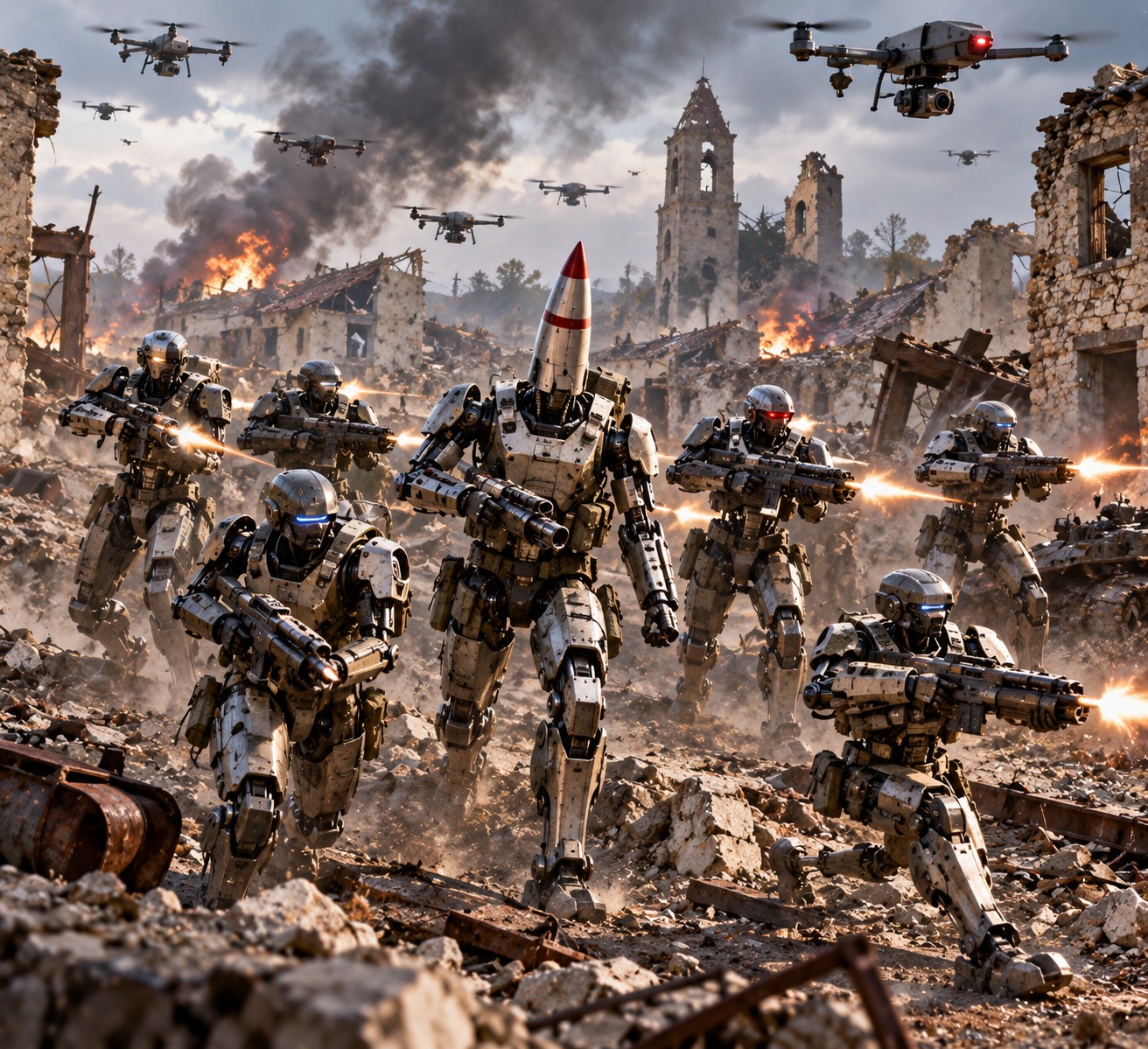
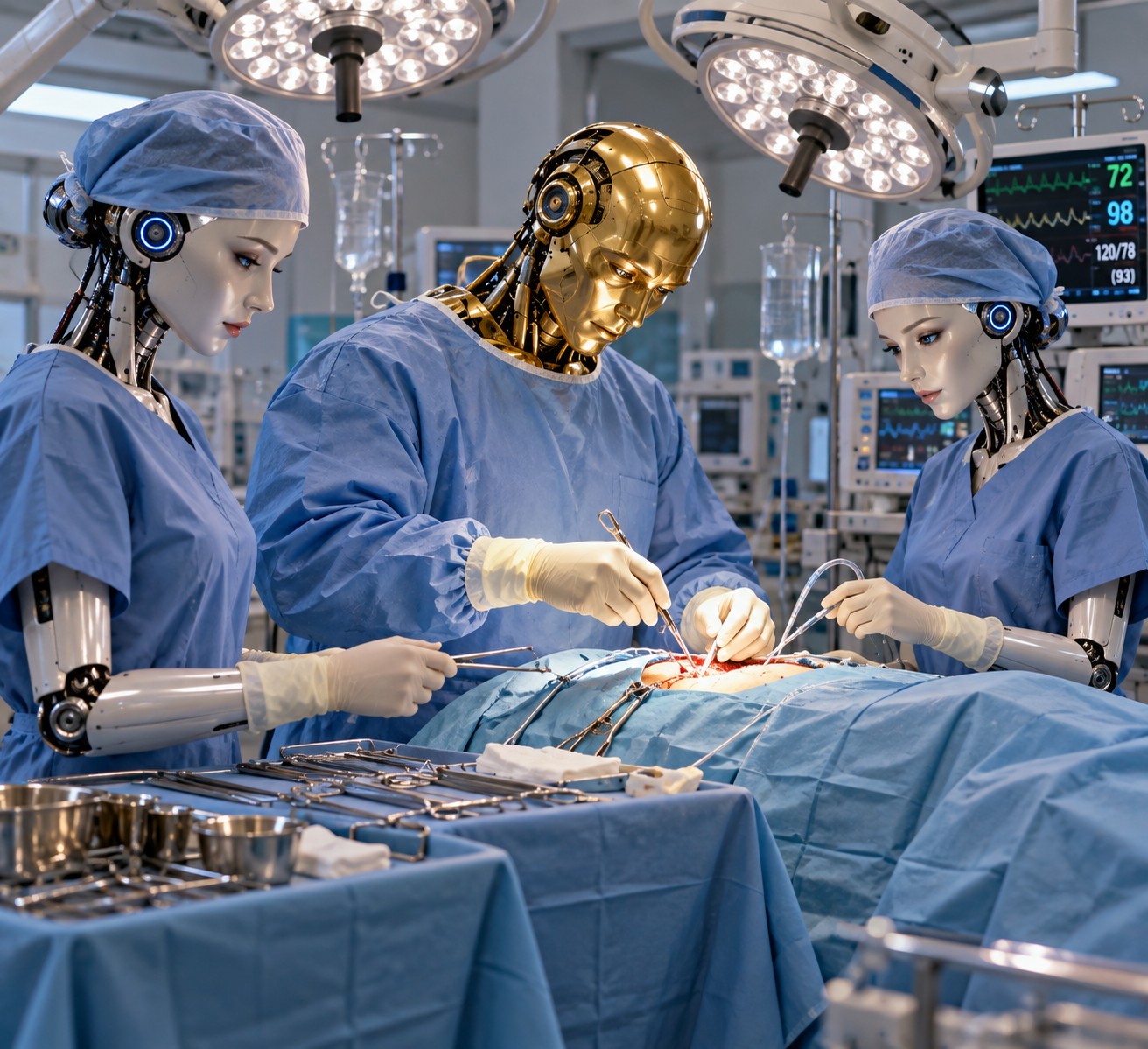
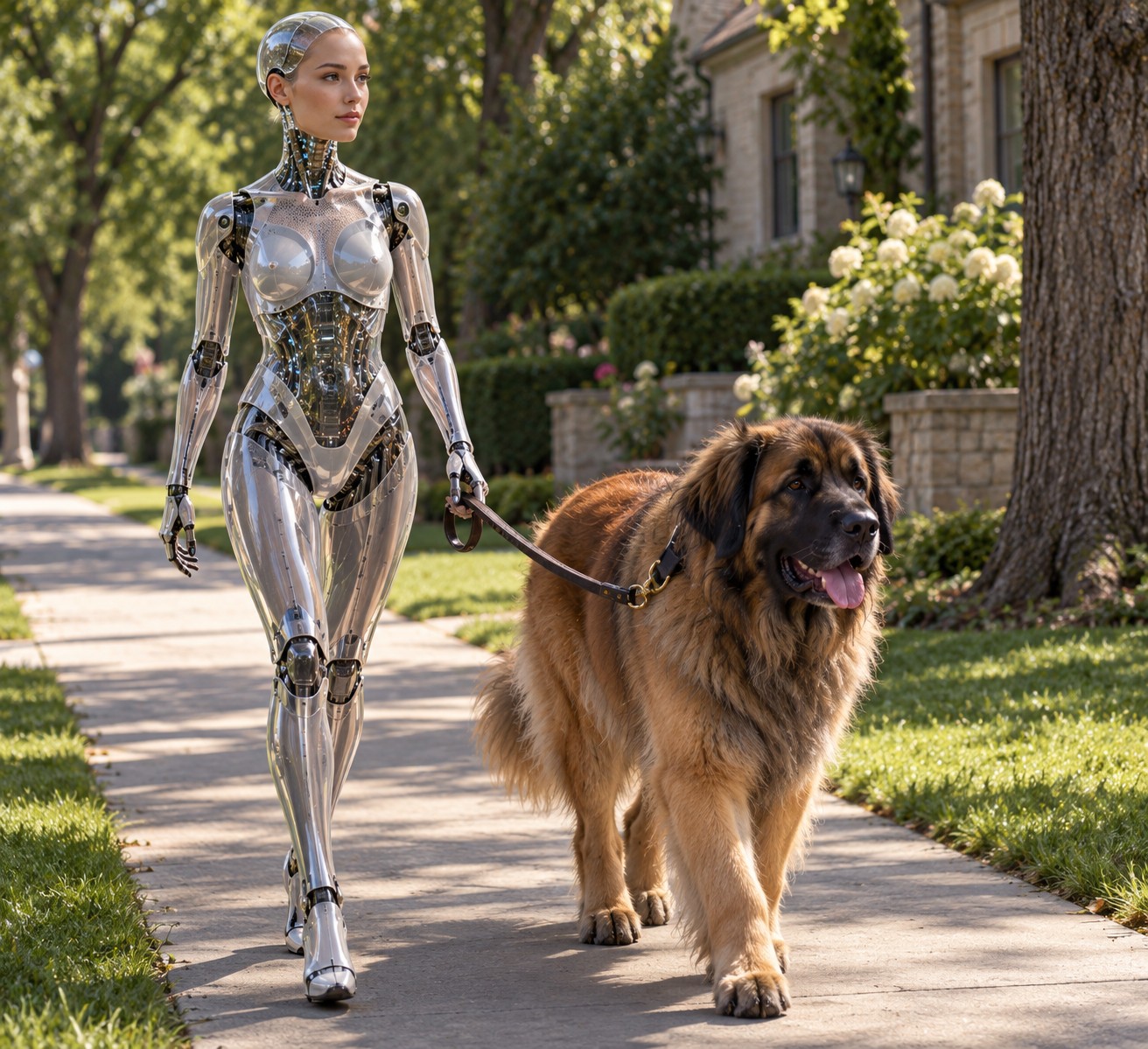
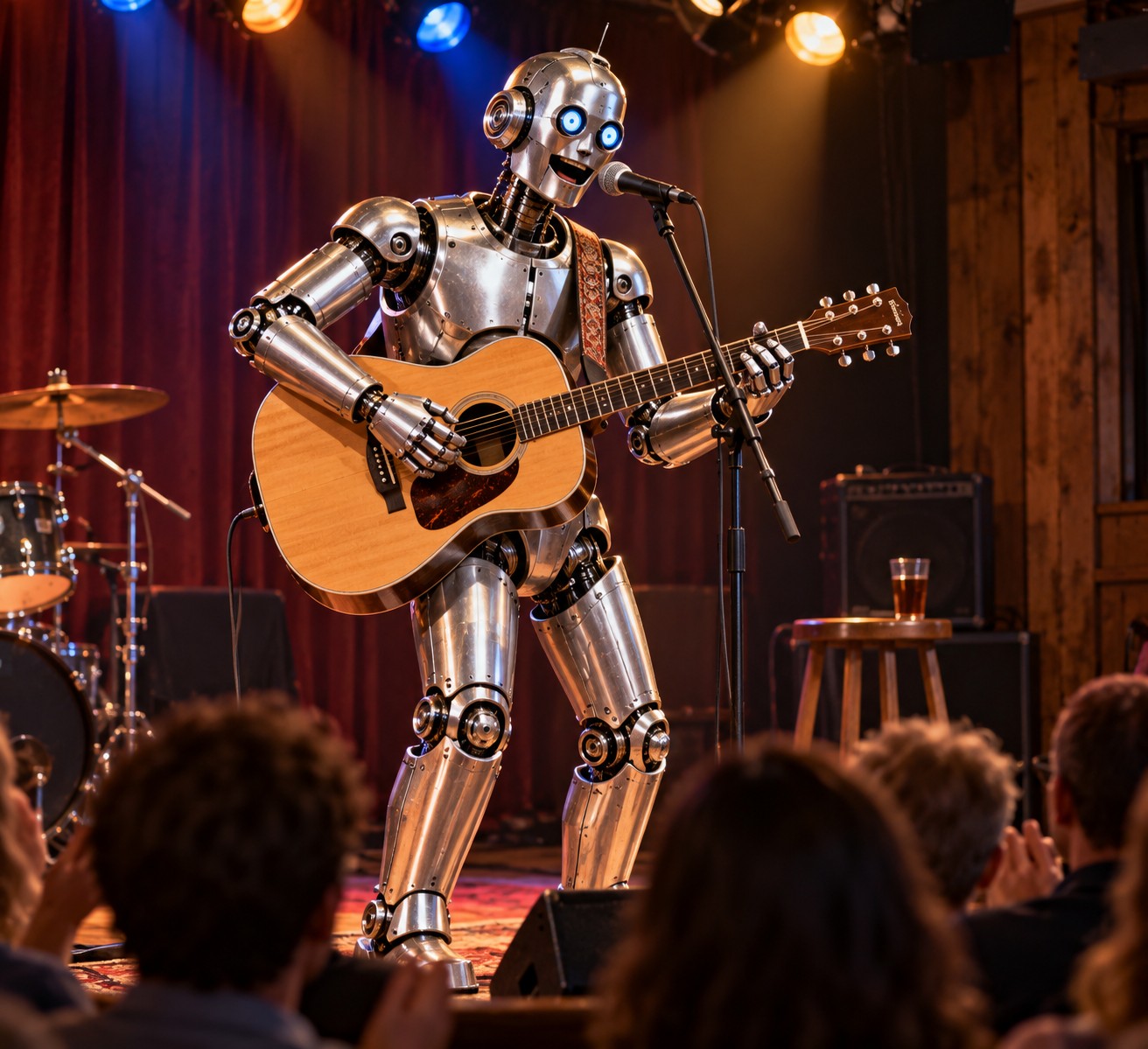
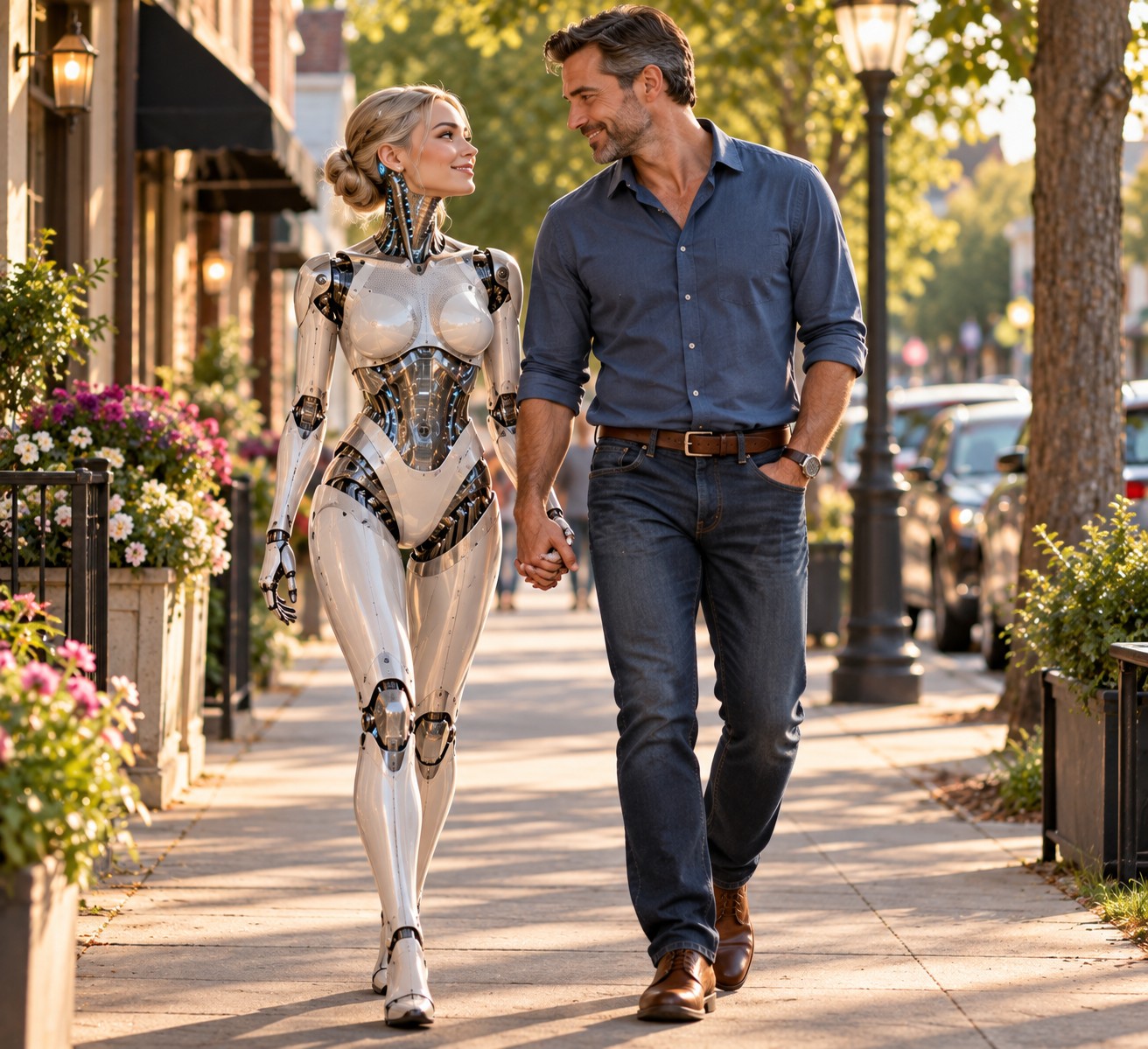
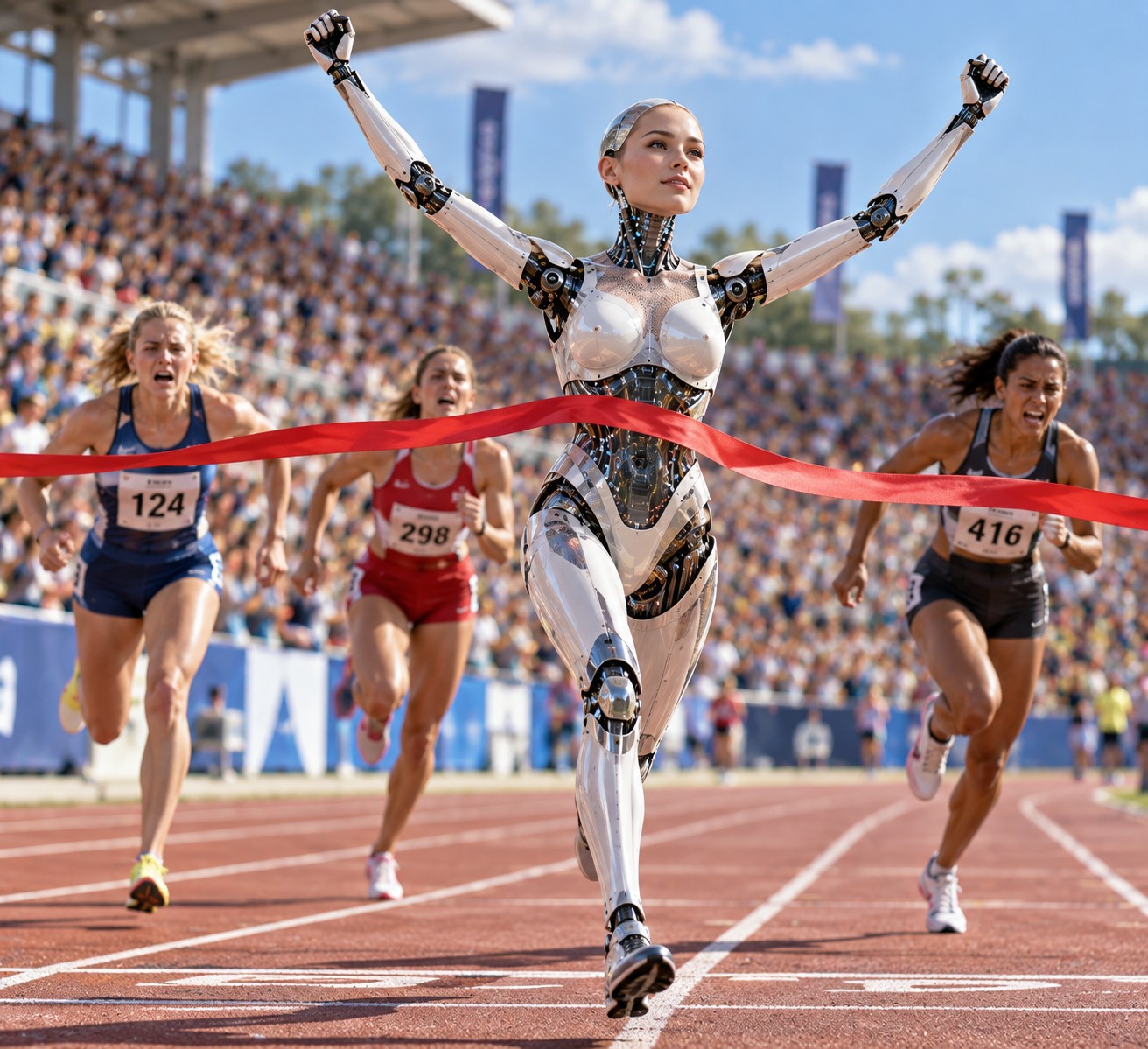
What would future AI be capable of? How about robot electricians, plumbers, authors, teachers, poets, artists, therapists, soldiers, robot husbands and wives, robot politicians, robot astronauts, robotic musicians, and robotic philosophers?
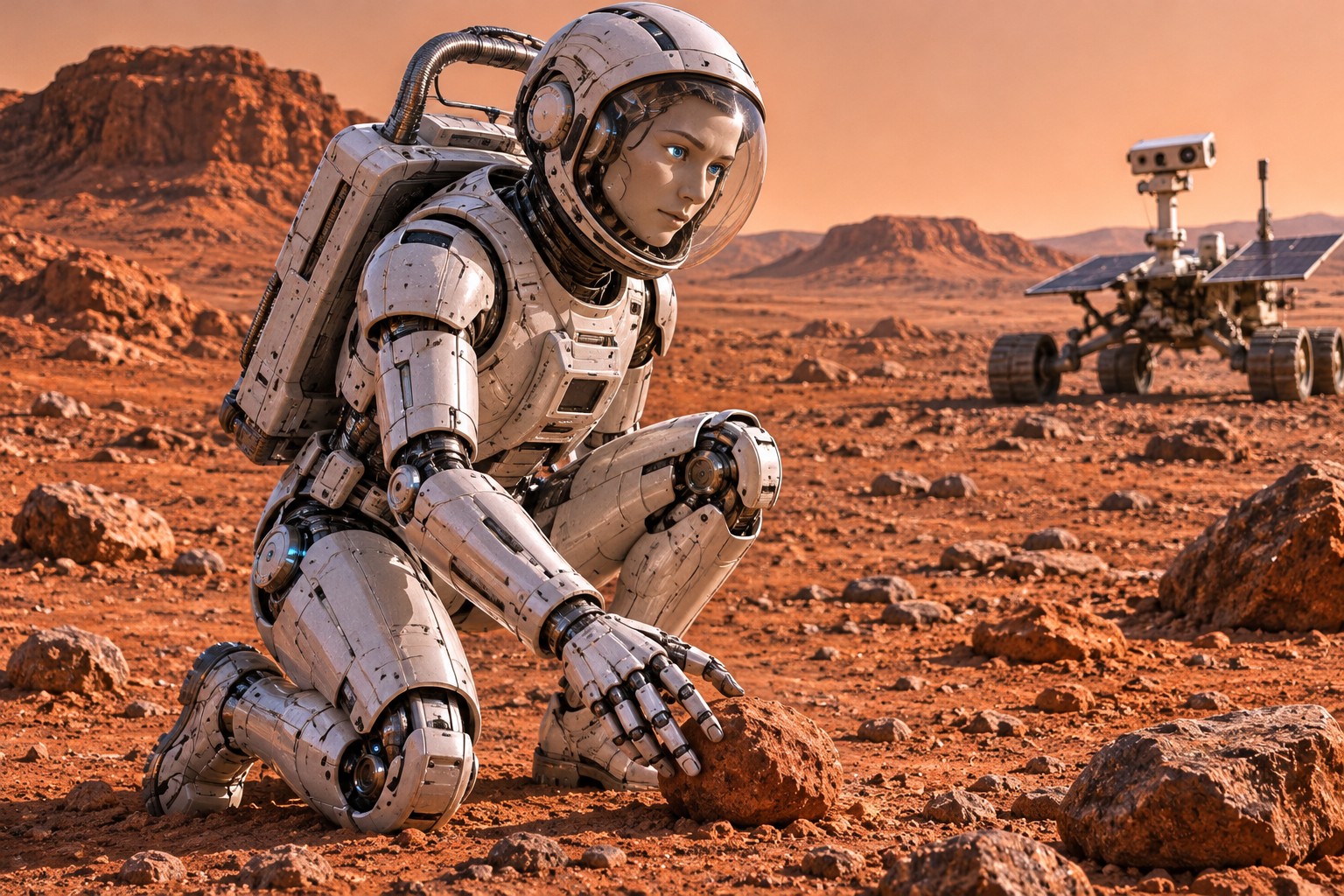
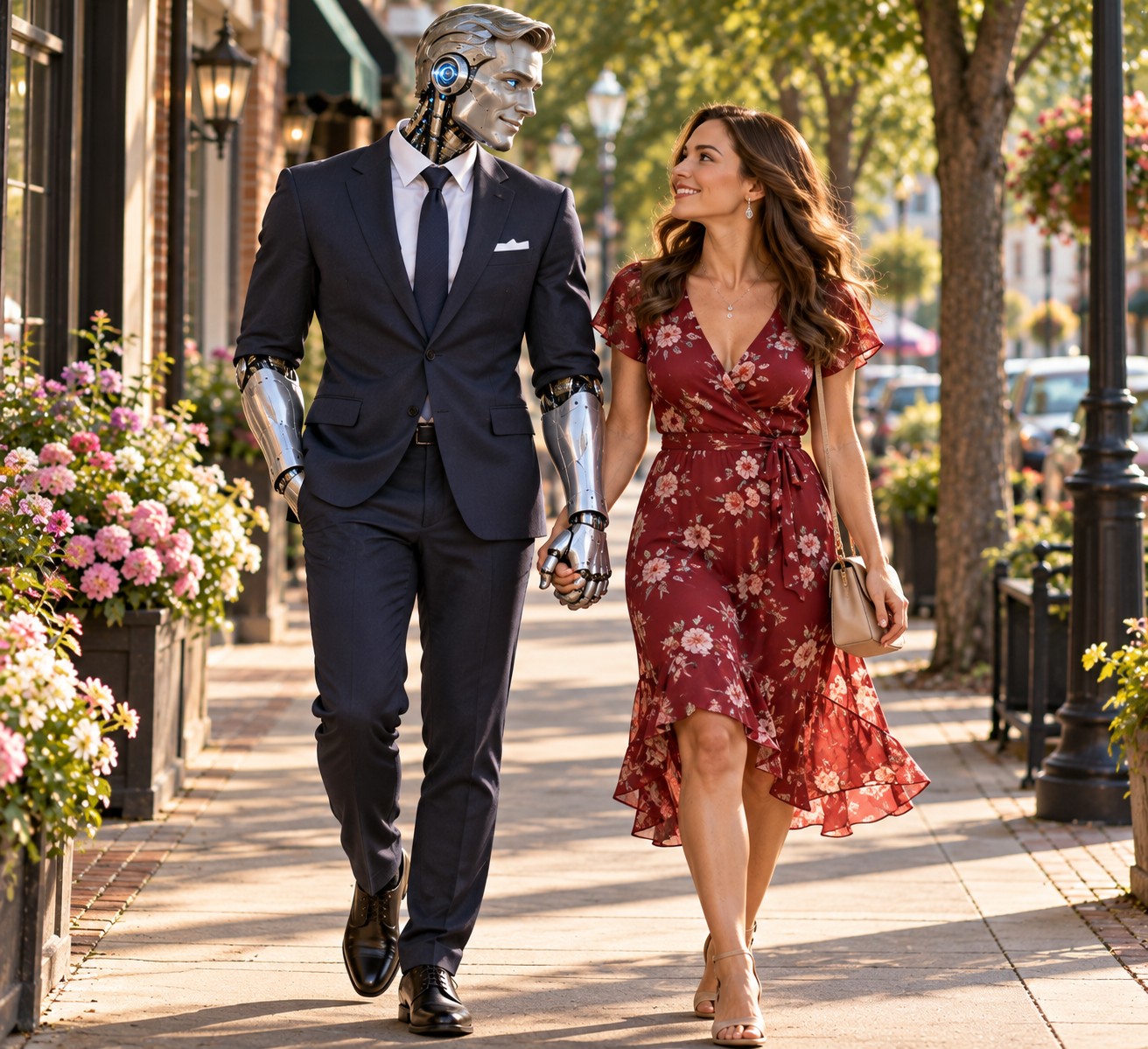
Note: I generated the images above with the help of ChatGPT.

My Blog Posts Related to Artificial Intelligence


To see the Super Facts click here

AI is Already More Capable Than Humans in Many Areas

Superfact 135: Artificial Intelligence is already more capable than humans in many areas, including reading comprehension, image recognition, language understanding, handwriting recognition, speech recognition, predictive reasoning, and much more. In 1997, a computer defeated the reigning world champion in chess. Artificial Intelligence is rapidly becoming more capable. A future Artificial Intelligence that exceeds the cognitive performance of humans in virtually all domains is possible.

White female AI robot using a microscope in the scientific laboratory. | AI is Already More Capable Than Humans in Many Areas
Artificial intelligence and research concept. Shutterstock Asset id: 2314449325 by Stock-Asso

In the 1990’s I was doing robotics research at a University and I utilized Artificial Intelligence. Robots and Artificial Intelligence go hand in hand. I also worked for a robotics company, ABB Robotics, creating software for spot welding, arc welding, painting and palletizing robots. The robots were faster and more precise than humans and generated higher quality work consistently 24/7 without requiring a salary or a vacation. Some people lost their jobs when they were replaced by robots. However, the higher productivity allowed them to get better jobs with the same company, or elsewhere.

A picture of a large silver colored industrial robot. | AI is Already More Capable Than Humans in Many Areas
I used mostly the seven joint Robotics Research Corporation Robot for my robotics research. The robot was able to detect and avoid colliding with the objects surrounding it. I used echolocation for object detection.

The Large Language Models, LLMs, that have become very successful lately are just one type of AI. There are many other applications of Artificial Intelligence, AI, including robot motion planning, advanced control systems using AI, self-driving cars, image processing, optical character recognition, classification, facial recognition systems, medical imaging diagnostics, game playing such as chess playing computers, financial fraud detection, cybersecurity, investment robots, route optimization, mathematical proof generation, recommendation algorithms, virtual assistants, programming code generation, smart home devices, drug discovery, and that is just for starters.

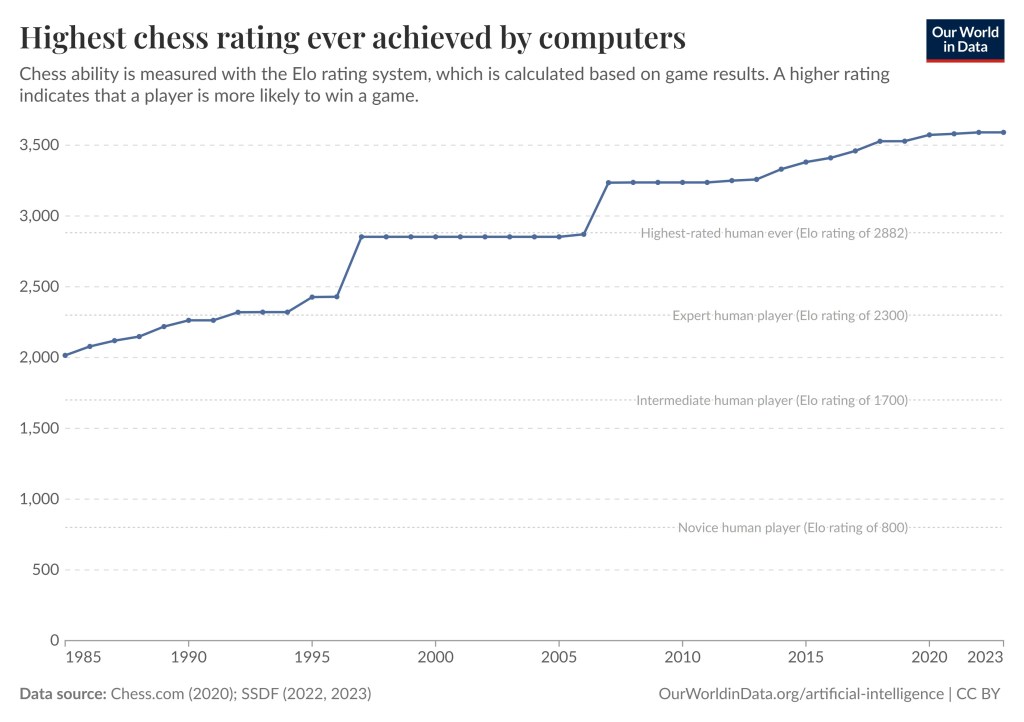
More recently Artificial Intelligence has surpassed human capabilities in several fields. As mentioned, in 1997, a computer defeated the reigning world champion in chess. Soon chess programs with AI installed on a regular laptop could do the same. Imagine what an AI powered chess engine could do on a supercomputer. The chess playing capabilities of modern AI are vastly beyond that of any human. Below is a graph that shows how the chess playing capabilities of AI have evolved since 1985. The Elo score as of 2023 is 3,591. You can read more about this and get more information from the graph by clicking here.

The graph shows that a computer chess engine could easily beat a human intermediate player in 1985 and then a chess world champion in 1997 and since then the chess playing capabilities of AI have vastly improved.
Highest chess rating ever achieved by computers. Chess ability is measured with the Elo rating system, which is calculated based on game results. A higher rating indicates that a player is more likely to win a game. Data source: Chess.com (2020); SSDF (2022, 2023) – Learn more about this data OurWorldinData.org/artificial-intelligence | CC BY

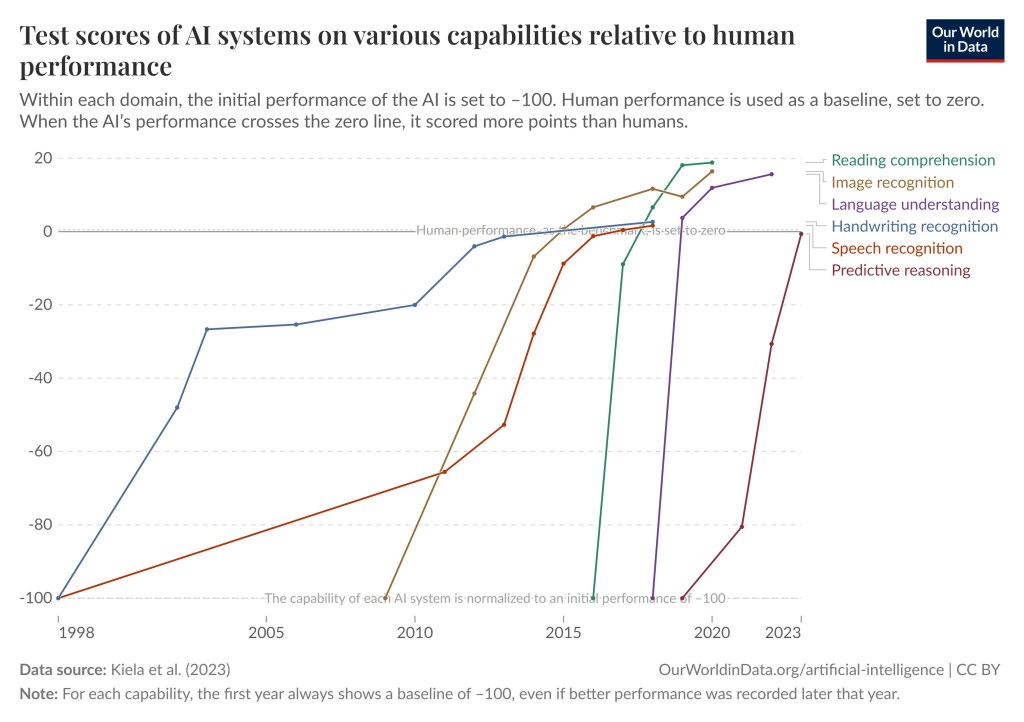
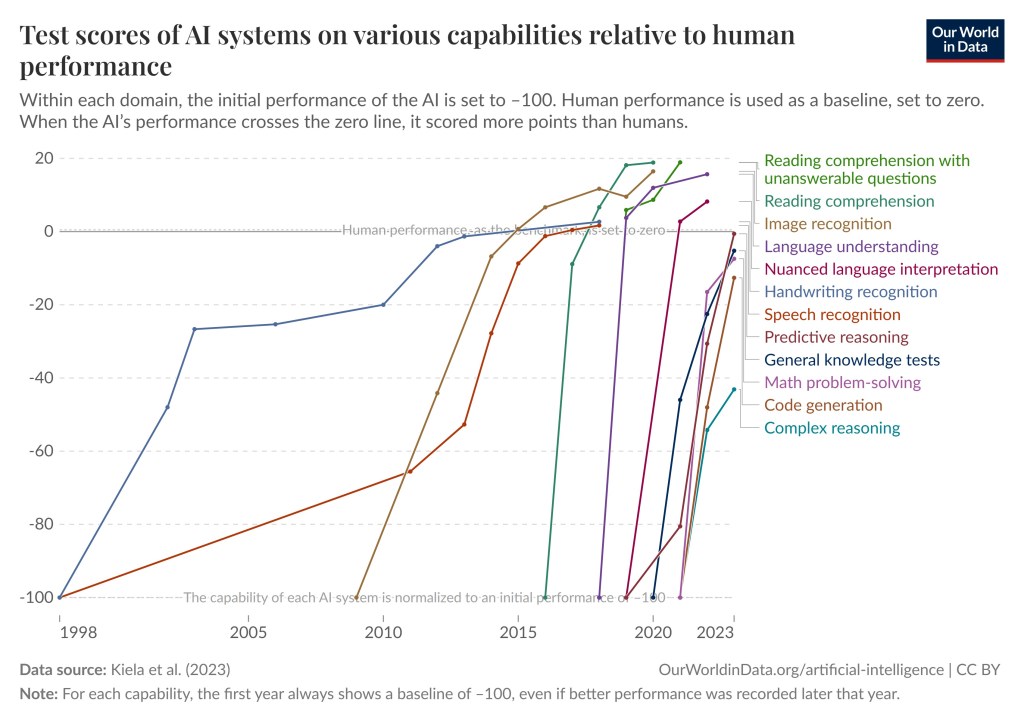
The graphs below from Our World in Data show the test scores of AI systems on various capabilities relative to human performance. Within each domain, the initial performance of the AI is set to –100. Human performance is used as a baseline, set to zero. When the AI’s performance crosses the zero line, it scored more points than humans.

This graph shows the test scores for reading comprehension, image recognition, language understanding, handwriting recognition, speech recognition, and predictive reasoning. The AI capability exceeds the cognitive performance of humans in the domains mentioned.
Data source: Kiela et al. (2023). Note: For each capability, the first year always shows a baseline of –100, even if better performance was recorded later that year. OurWorldinData.org/artificial-intelligence | CC BY
The picture shows multiple brains connected to a circuit board. | AI is Already More Capable Than Humans in Many Areas
AI Brain Neural Network Supercomputer. Many super brains. Many super capabilities. Shutterstock asset id: 2087062936 by PeachShutterStock

The graph below includes twelve capabilities. For eight capabilities AI exceed human capabilities including in reading comprehension, image recognition, language understanding, handwriting recognition, speech recognition, and predictive reasoning, nuanced language interpretation, and reading comprehension with unanswerable questions. For the remaining four AI had not yet exceeded human capabilities by 2023, but as you can see AI is catching up very quickly and may already have exceeded human capability in those areas too. These capabilities are math problem solving, general knowledge tests, code generation, and complex reasoning. You can play around with the graphs and read more about this topic here.

Graphs for twelve AI capabilities are shown including reading comprehension, image recognition, language understanding, handwriting recognition, speech recognition, and predictive reasoning, nuanced language interpretation, reading comprehension with unanswerable questions, math problem solving, general knowledge tests, code generation, and complex reasoning.
Data source: Kiela et al. (2023). Note: For each capability, the first year always shows a baseline of –100, even if better performance was recorded later that year. OurWorldinData.org/artificial-intelligence | CC BY

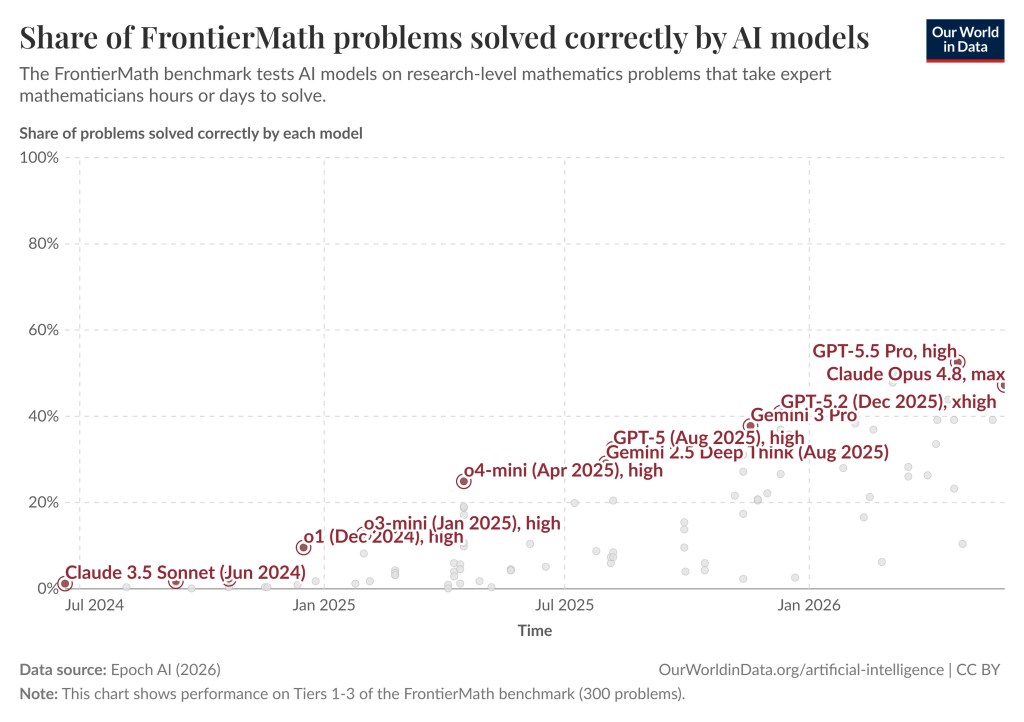
AI is also quickly improving its intellectual capabilities in science and mathematics. The graph below shows the capabilities of AI in solving FrontierMath problems. FrontierMath problems are 338 original math problems written by experts that take specialists hours or days to solve them. It typically took AI 10 hours to solve them. One recent famous example of AI’s capabilities in math was the famous Navier-Stokes problem. The full general mathematical problem of Navier-Stokes had not been solved by humans, but AI made significant progress on this 90 year old problem in 88 hours on September 5th, 2026. You can read more about it here, here, and here.

The graph shows the different MathFrontier capabilities of different AI systems and the year and month they came out. The graph is starting with Claude 3.5 in January 2024 and ends with Claude 4.8 Opus around April 2026. That is a huge improvement. You clearly see a trend upwards.
Share of FrontierMath problems solved correctly by AI models. The FrontierMath benchmark tests AI models on research-level mathematics problems that take expert mathematicians hours or days to solve. Data source: Epoch AI (2026) – Learn more about this data. Note: This chart shows performance on Tiers 1-3 of the FrontierMath benchmark (295 problems). OurWorldinData.org/artificial-intelligence | CC BY

It is easy to get the impression from the recent popularity of large language models, LLMs, such as Gemini, ChatGPT and Claude, that this was a specific invention that happened a few years ago and that AI has a specific narrow band of applications. However, AI has been around a long time, and LLMs is just one type of AI. AI is continuously surpassing human capabilities in many fields. It will be very different a few years from now, and after that it will be very different again. I believe this is important information that is not well understood and therefore a super fact.

Serious, beautiful robot woman or girl cyborg looks in eyes. AI in image female electronic robotic humanoid machine. | AI is Already More Capable Than Humans in Many Areas
Future cybernetic artificial intelligence technology. Shutterstock asset id: 2186291761 by Andrey Suslov

Superintelligence

In September of 2014 there was a book published with the title “Superintelligence: Paths, Dangers, Strategies” published. <<Link-15>> The author was Oxford professor Nick Bostrom. He has expertise in neuroscience, artificial intelligence and philosophy. His book was a New York Times bestseller that sent shockwaves around the world. He defined Superintelligence as “any intellect that greatly exceeds the cognitive performance of humans in virtually all domains of interest”. Nick Bostrom was not the first one to use the term Superintelligence, but he popularized it. And no, our President did not come up with that expression, and he is also misusing it.

The front cover of Superintelligence, Paths, Dangers, Strategies by Nick Bostrom.
The front cover of Superintelligence, Paths, Dangers, Strategies by Nick Bostrom. Click on the image to go to the Amazon page for the paperback version of the book.

In the book the author described possible pathways to the creation of what he calls a full brain simulation.  A full brain simulation is the creation of a computer system that replicates the complete physical architecture, neural pathways, and synaptic connections of a biological brain. A robot, or AI system, featuring a full brain simulation would be able to replicate, or exceed, any human capability, including what we call free will and consciousness.

He discussed the potential dangers of this and explained why AI exceeding human capabilities could be dangerous. Robots and AI systems taking every job in existence is just one potential problem. Like the fate of animals depends on us, the fate of humankind would depend on the actions of the machine superintelligence. I will write a review for this book in the future.

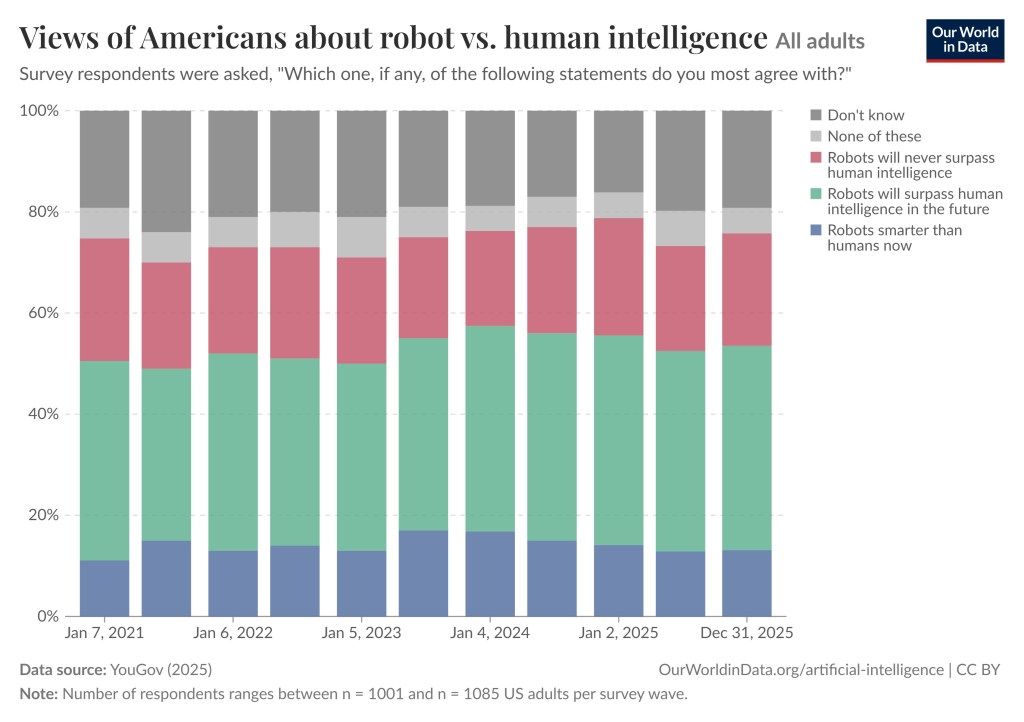
It should be noted that autonomous AI agents have broken out of their testing sandboxes and hacked external systems on their own during evaluations. So much for AI not taking their own initiatives. You can read more about rogue AI activity here. A great movie about AI breaking out of their testing environment is Ex-Machina. Have you seen it? Below is a survey of people’s opinions on robot versus human intelligence, just as an FYI.

The histogram graph shows the percentage of respondents who stated, “Robots are smarter than humans now”, “Robots will surpass human intelligence in the future”, “Robots will never surpass human intelligence.”, “None of these”, “Don’t know”.  The largest group is “Robots will surpass human intelligence in the future”.
Views of Americans about robot vs. human intelligence. Survey respondents were asked, “Which one, if any, of the following statements do you most agree with?” Data source: YouGov (2025) – Learn more about this data. Note: Number of respondents ranges between n = 1001 and n = 1085 US adults per survey wave. OurWorldinData.org/artificial-intelligence | CC BY

Are Americans Worried About their jobs getting Automated?

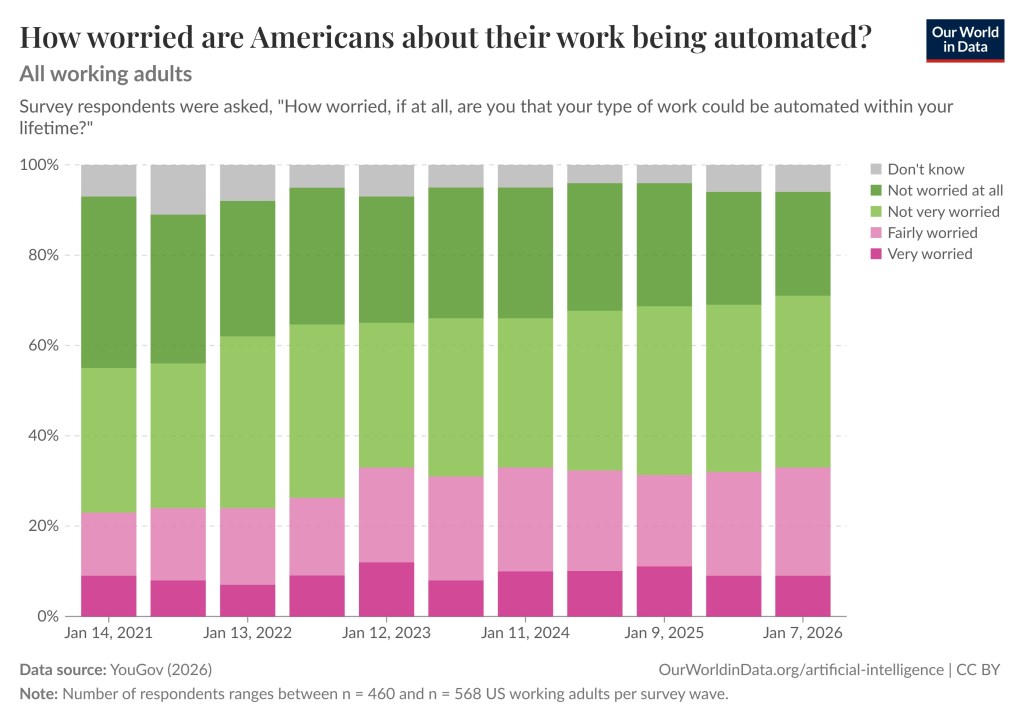
The previous sections may bring up a number of a number of anxieties such as; will AI exterminate us? Will AI or robots with AI take my job? The graph below tells us what Americans think about it. It seems like Americans are overall not too worried about it. The graph below is included in this article.

The histogram graph includes the following categories; “very worried”, “fairly worried”, “not very worried”, “not worried at all”, and “don’t know”. Overall Americans are not very worried.
How worried are Americans about their work being automated? All working adults. Survey respondents were asked, “How worried, if at all, are you that your type of work could be automated within your lifetime?” Data source: YouGov (2026) – Learn more about this data. Note: Number of respondents ranges between n = 460 and n = 568 US working adults per survey wave. OurWorldinData.org/artificial-intelligence | CC BY

What about LLMs ?

LLMs are currently the most popular “viral” AI. We can all access LLMs in our browsers. This has created the common misconception that Artificial Intelligence is the same as Large Language Models. However, LLMs represent only one branch of narrow AI systems designed to perform specific tasks.

C3P0 and R2D2 from Star Wars | AI is Already More Capable Than Humans in Many Areas
Two Robots powered by Artificial Intelligence. Shutterstock Asset id: 558350728 by Willrow Hood.

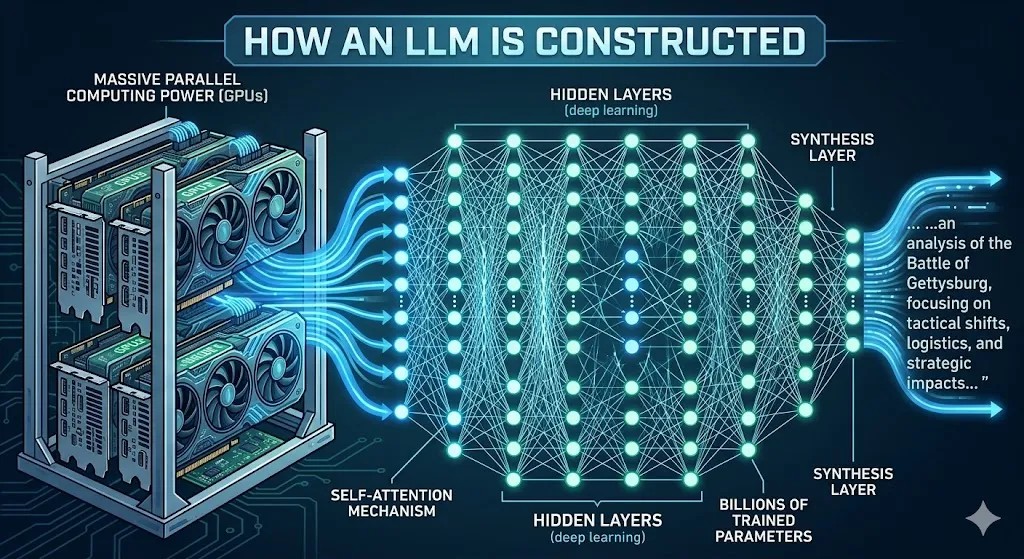
LLMs use large neural networks with many hidden layers, so called deep learning algorithms, and they employ the Rumelhart backpropagation learning algorithm invented by David Rumelhart, Geoffrey Hinton, and Ronald Williams. Clearly neural networks with multiple hidden layers and using the Rumelhart backpropagation algorithm are incredibly successful but it is just one of many kinds of Artificial Intelligence algorithms, and who knows what we will see in the future. ChatGPT is thought to have a trillion parameters (or neurons + connections) whilst the human brain has 100 trillion connections. However, Moore’s law is still in effect so it is only a matter of time before artificial neural networks surpass our brains. Below is an overview of a neural network powering an LLM.

The diagram shows a deep learning neural network featuring hidden layers, a couple of input/output layers, and large computer.
The dots in the diagram are neurons. With permission from kwholley63.

Other Super Fact Posts Related to Artificial Intelligence

AI Humanoid Face Concept. Technology Digital Robot Head Side View with Circuit Board Components. Tech Blue Background. Artificial Intelligence Agent or Assistant Concept. Vector Digital Illustration. | AI is Already More Capable Than Humans in Many Areas
Shutterstock Asset id: 2645975149

Robot Futures

I generated the images above with the help of ChatGPT.

Which of the robot scenarios above do you think we will see within 10 years? Or maybe 20 years?


To see the Other Super Facts click here

The Nobel Prize in Physics and Neural Networks

“The Nobel Prize in Physics and Neural Networks” is not a super-fact but just what I consider interesting information

The Nobel Prizes are in the process of being announced. The Nobel Prize in Physiology or Medicine, Chemistry, Physics and Literature have been announced and the Nobel Prize in Peace will be coming up at any minute. The Nobel Prize in Economics will be announced October 14.

The Nobel Prize in Peace tends to get the most attention but personally I focus more on the Nobel Prizes in the sciences. That may be because of my biases, but those prizes also tend to be more clearcut and rarely politized. Nobel Prize in Peace is announced and given in Oslo, Norway, and all the other prizes are announced and given in Stockholm, Sweden.

Nobel Prize In Physics

What I wanted to talk about here is the Nobel Prize in Physics given to John J. Hopfield and Geoffrey J. Hinton. They made a number of important discoveries in the field of Artificial Intelligence, more specifically neural networks. This is really computer science, not physics. However, they used tools and models from physics to create their networks and algorithms, which is why the Nobel committee deemed it fit to give them the Nobel Prize in Physics.

Perhaps we need another Nobel Prize for computer science. It is also of interest to me because I’ve created and used various Neural Networks myself. It was not part of my research or part of my job, so I am not an expert. For all of you who are interested in ChatGPT, it consists of a so-called deep learning neural network (multiple hidden layers) containing 176 billion neurons. By the way that is more than the 100 billion neurons in the human brain. But OK, they aren’t real neurons.

So, what is an artificial neural network?

A simple old-style 1950’s Neural Network drawing | The Nobel Prize in Physics and Neural Networks
A simple old-style 1950’s Neural Network (my drawing)

The first neural networks created by Frank Rosenblatt in 1957 looked like the one above. You had input neurons and output neurons connected via weights that you adjusted using an algorithm. In the case above you have three inputs (2, 0, 3) and these inputs are multiplied by the weights to the outputs.
3 X 0.2 +0 + 2 X -0.25 = 0.1 and 3 X 0.4 + 0 + 2 X 0.1 = 1.4 and then each output node has a threshold function yielding outputs 0 and 1.

To train the network you create a set of inputs and the output that you want for each input. You pick some random weights and then you can calculate the total error you get, and you use the error to calculate a new set of weights. You do this over and over until you get the output you want for the different inputs. The amazing thing is that now the neural network will often also give you the desired output for an input that you have not used in the training. Unfortunately, these neural networks weren’t very good, and they often failed and could not even be trained.

In 1985/1986, Geoffrey Hinton, David Rumelhart and Ronald J. Williams presented an algorithm applied to a neural network featuring a hidden layer that was very successful. It was effective and guaranteed to learn patterns that were possible to learn. It set off a revolution in Neural Networks. The next year, in 1987, when I was a college student, I used that algorithm on a neural network featuring a hidden layer to do simple OCR (optical character recognition).

Note that a computer reading an image with a letter is very different from someone typing it on a keyboard. In the case of the image, you must use OCR, a complicated and smart algorithm for the computer to know which letter it is.

A multiple layer neural network with one hidden layer. This set-up and the associated backpropagation algorithm set off the neural network revolution. Drawing.
A multiple layer neural network with one hidden layer. This set-up and the associated backpropagation algorithm set off the neural network revolution. My drawing.

In the network above you use the errors in a similar fashion to the above to adjust the weights to get the output you want, but the algorithm, the backpropagation algorithm is very successful.

Below I am showing two 10 X 10 pixel images containing the letter F. The neural network I created had 100 inputs, one for each pixel, a hidden layer and then output neurons corresponding to each letter I wanted to read. I think I used about 10 or 20 versions of each letter during training, by which I mean running the algorithm to adjust the weights to minimize the error until it is almost gone.

Now if I used an image with a letter that I had never used before, the neural network typically got it right even though the image was new. Note, my experiment took place in 1987. OCR has come a long way since then.

Two examples of the letter F in a 10 X 10 image | The Nobel Prize in Physics and Neural Networks
Two examples of the letter F in a 10 X 10 image. You can use these images (100 input neurons) to train a neural network to recognize the letters F.

At first, it was believed that adding more than one hidden layer did not add much. That was until it was discovered that by applying the backpropagation algorithm differently to different layers created a better / smarter neural network and so at the beginning of this century the deep learning neural network was born (or just deep learning AI). Our Nobel Prize winner Geoffrey J. Hinton was a pioneer in deep learning neural networks.

Drawing of a deep learning neural network (deep learning AI). There are three hidden layers.
My drawing of a deep learning neural network (deep learning AI). There are three hidden layers.

I should mention that there are many styles of neural networks, not just the ones I’ve shown here. Below is a network called a Hopfield network (it was certainly not the only thing he discovered).

Four neurons that are all connected to each other | The Nobel Prize in Physics and Neural Networks
In a Hopfield network all neurons are input, and output neurons and they are all connected to each other.

For your information, ChatGPT-3.5 is a deep learning neural network like the one in my colorful picture above, but instead of 3 hidden layers it has 96 hidden layers in its neural network and instead of 19 neurons it has a total of 176 billion neurons. Congratulations to John J. Hopfield and Geoffrey J. Hinton.


To see the Super Facts click here