The goal of this blog is to create a list of super facts. Important facts that are true with very high certainty and yet surprising, misunderstood, or disputed by many. This blog aims to be challenging, educational, and fun, without it being clickbait. I determine veracity using evidence, data from reputable sources and longstanding scientific consensus. Prepare to be challenged (I am). Intentionally seek the truth not confirmation of your belief.
We are all in our places with sunshiny faces ready to experience the astronomical event of the century, a spectacle that Mr. Sun, Sun, Golden Mr. Sun and the moon provided for us.
For us in Dallas, Texas, 2024 was the year when the sun and the moon put up an unforgettable spectacle for all of us to see. On April 8, 2024, the sun and the moon and earth lined up perfectly so that the moon fully covered the sun. We had a total solar eclipse, and we were lucky with the weather. I can add that experiencing a total solar eclipse is quite different from experiencing a partial or annular solar eclipse. I’ve experienced a partial solar eclipse as well and I can attest to the difference.
Unlike a partial eclipse, it gets dark during a total solar eclipse, the stars come out if the sky is clear like it was. The birds and the insects become quiet. It happens very suddenly, in just a few seconds. The total solar eclipse lasted four minutes.
The Motion of the Sun and the Moon
To understand what a solar eclipse is, the video below might help. What you see is the moon and the earth as seen from the sun’s viewpoint. We see earth all lit up by the sun, like a full moon, and we also see the moon lit up by the sun.
In this situation, when the people on earth look up in the sky, they see the sun, but they don’t see the moon, even though it is there. It is a new moon, or a black moon if it happens twice in the same month. As the moon begins to partially cover the sun the shadows on the ground start looking different and if you use solar eclipse glasses you can see the sun disappearing and looking like a bright crescent, but it is still daylight and looking at the sun without eclipse glasses would just hurt your eyes.
Well, this is true until the sun is fully covered by the moon. When that happens, the light turns off and at that point it is safe to look at the sun without glasses. What you’ll see is a pitch-black circle in the sky surrounded by wispy faint lights. Those wispy faint lights are the sun’s corona.
Below is a youTube video showing an animation composed of actual satellite photos by NASA.
Solar Eclipse Preparation
I drank a very special beer for the occasion, a Trappist Belgian Strong Ale, or Quadruple, called Westvleteren 12 from Brouwerij Westvleteren (Sint-Sixtusabdij van Westvleteren).
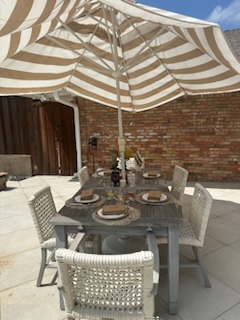
Our patio table. The little brown packages contain AAS / ISO certified solar eclipse glasses.Our daughter holding a Westvleteren 12 glass with a bow. Grandpa and grandma in the background.Rollo our mini-Australian Shepherd on the patio.
The Partial Eclipse Phase
It was partially cloudy during the partial eclipse, but we were able to get a good look at the eclipse as it progressed. As mentioned, to see the partial eclipse, you have to use good solar eclipse glasses. It is primarily for safety reasons, but it is also pointless to look at the sun during a partial eclipse. You won’t see the eclipse crescent because the powerful light from the sun overwhelms your view.
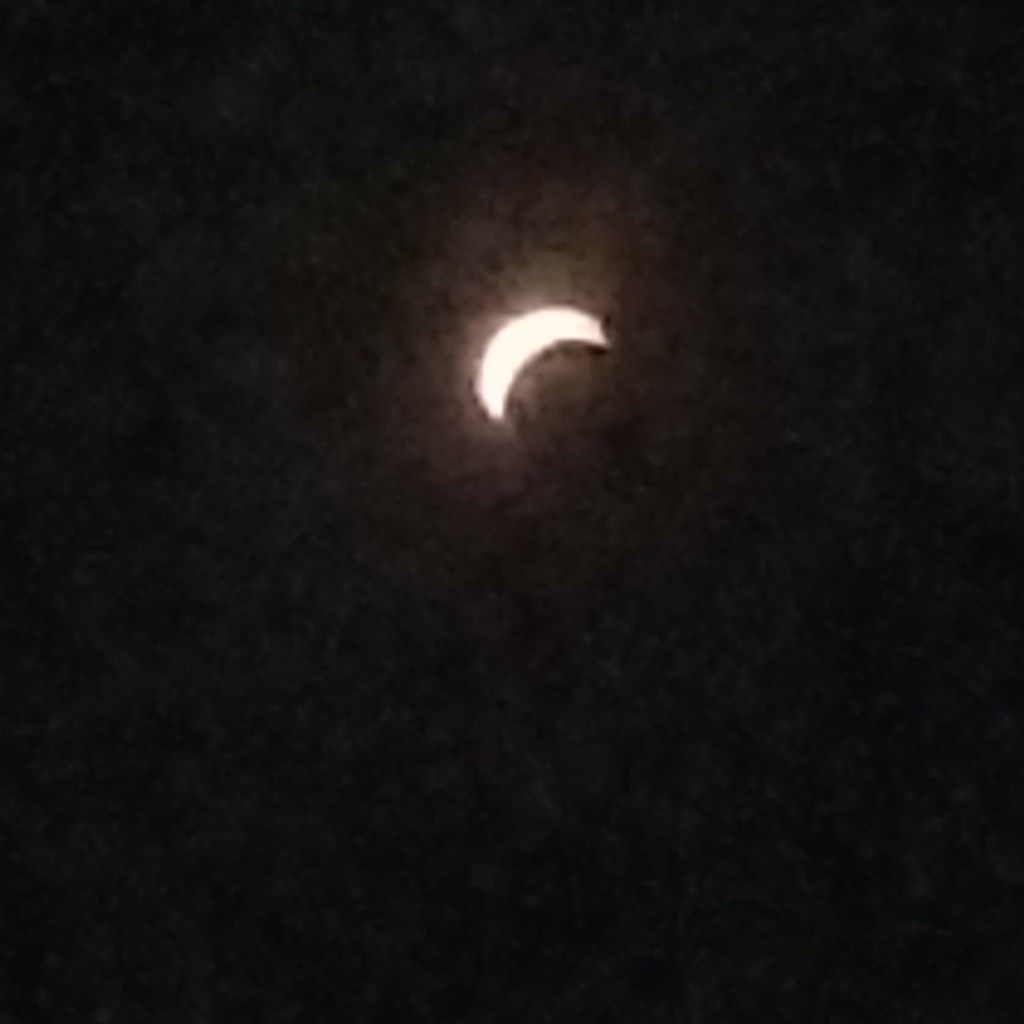
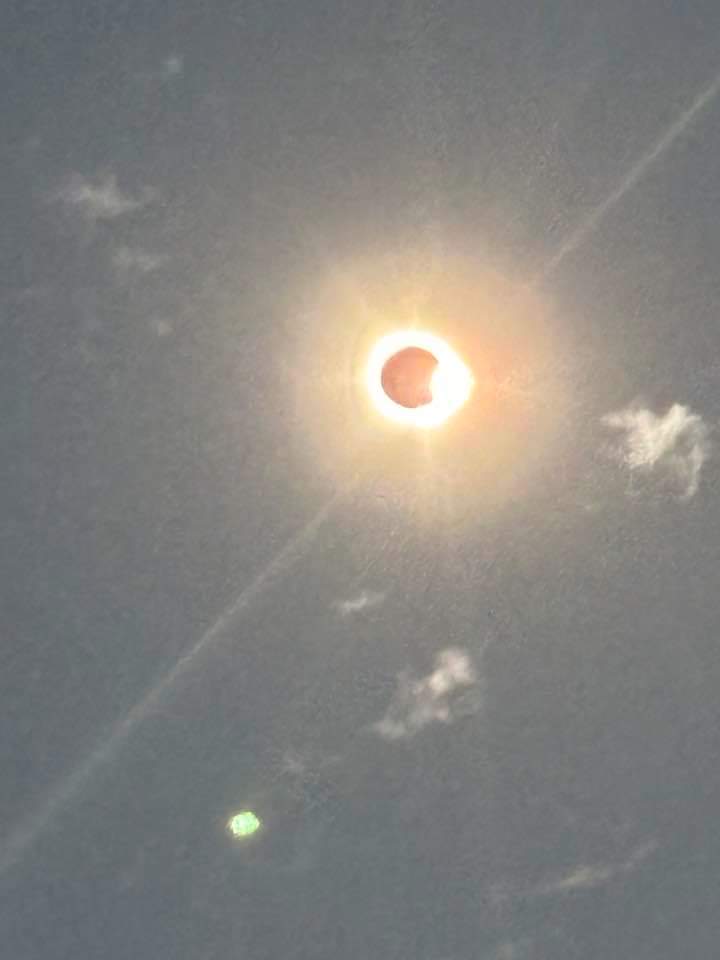
I had a little filter that was placed in front of my phone camera as I took a few pictures. Admittedly they were pretty bad. I have an old Samsung Galaxy S8+ but even using newer phones it is difficult to get decent photos of something like this.
Partial eclipse photo taken with my old Samsung Galaxy phone and a filter.
The Total Eclipse
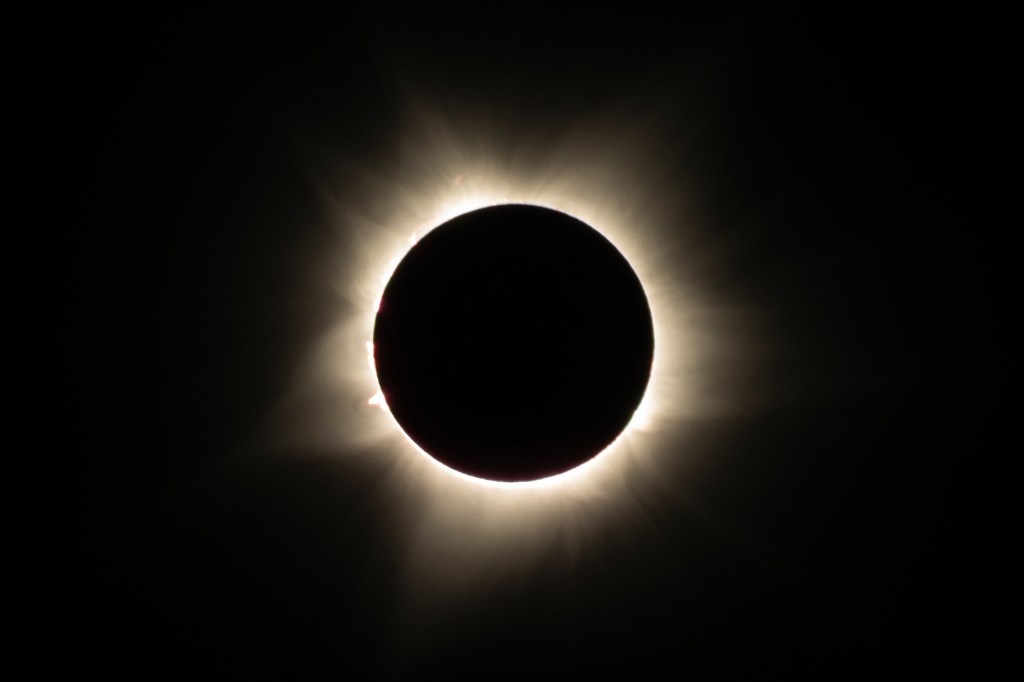
At 1:40PM Dallas time the total solar eclipse happened and luckily it was not covered by clouds. At this point it suddenly got dark and it was safe to look straight at the sun without using the eclipse glasses. The total eclipse lasted four minutes. I have included a shutter stock photo below which closely represents what we actually saw. We saw a black circle and around the black circle was a wispy white fog like light. This was the sun’s corona and it shone with about the same power as the full moon. It kind of looked like a black hole.
Except for the black background this looks like what we saw with our eyes. The sky we had was dark, like twilight, but not black. Solar Eclipse Stock Photo ID: 2344355767 by aeonWAVE
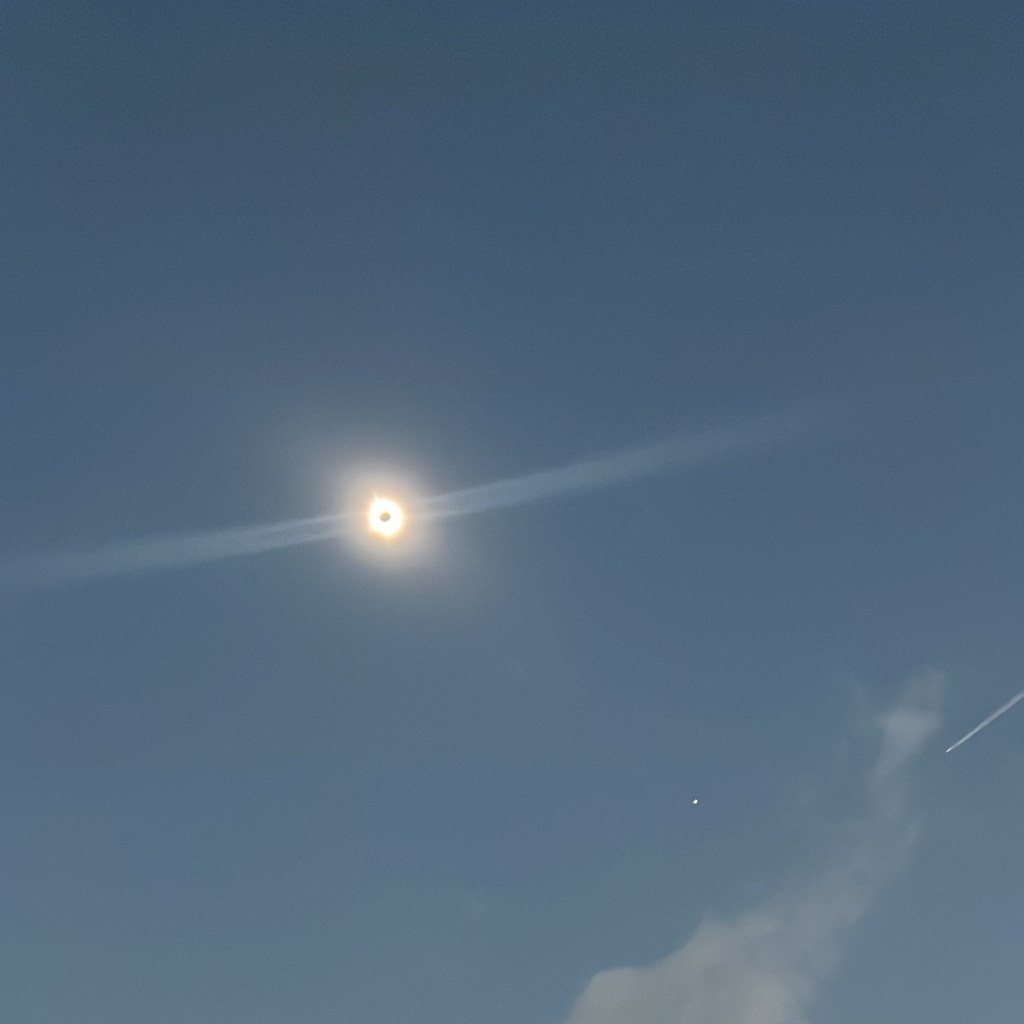
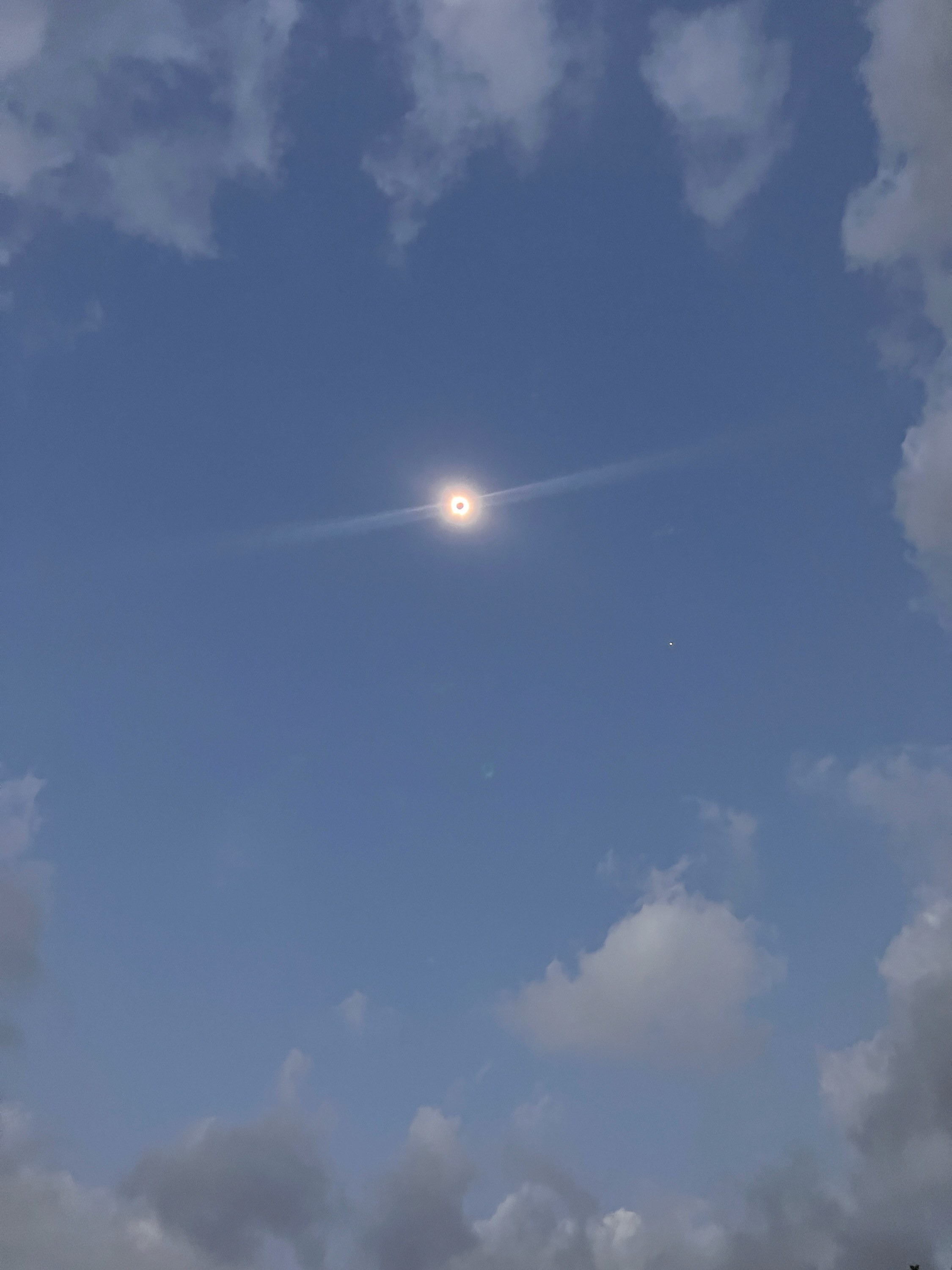
The Stars and the Planet Venus
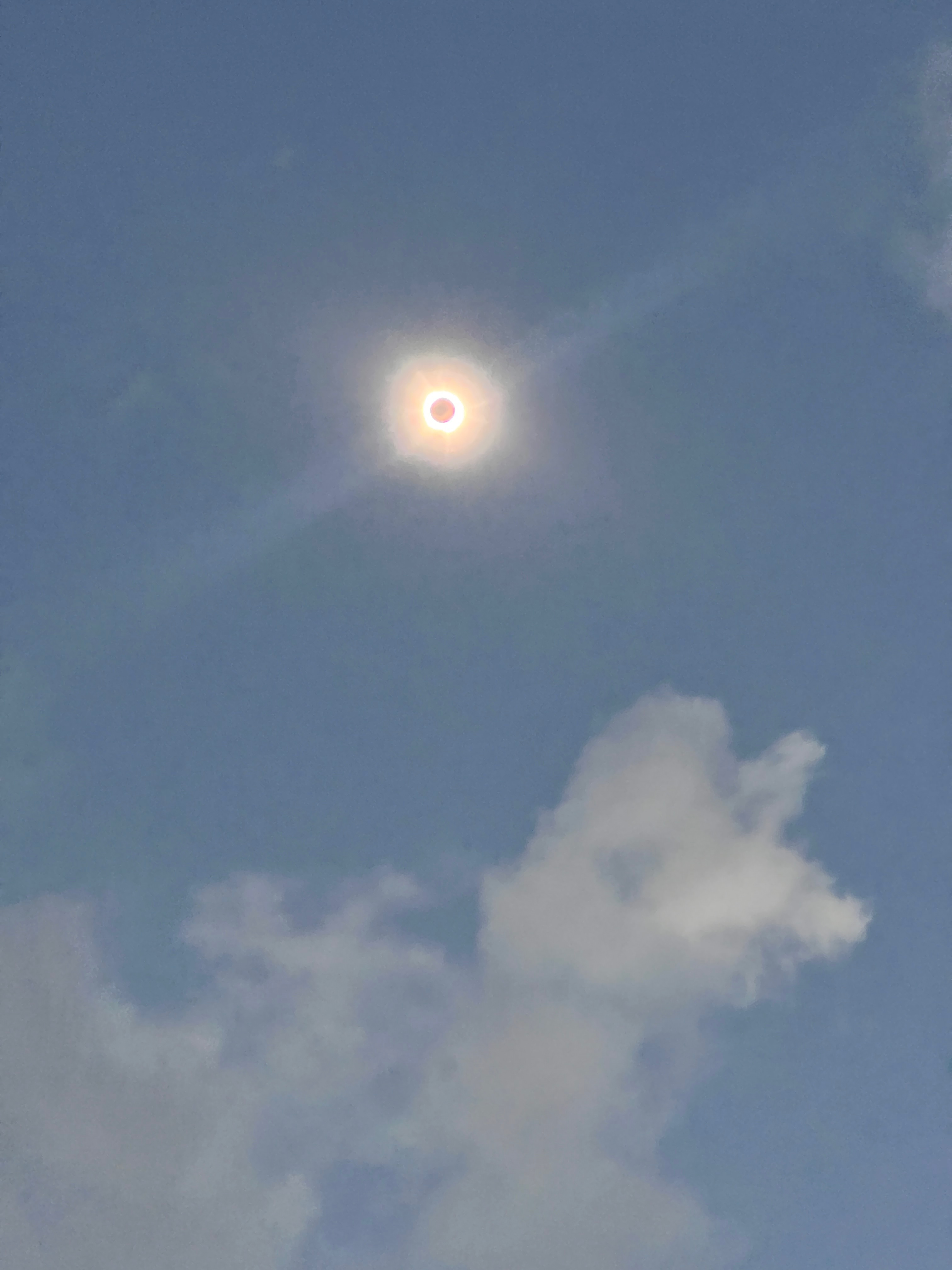
Total solar eclipse photo that my daughter took. Can you find Venus?
Total Eclipse Photos
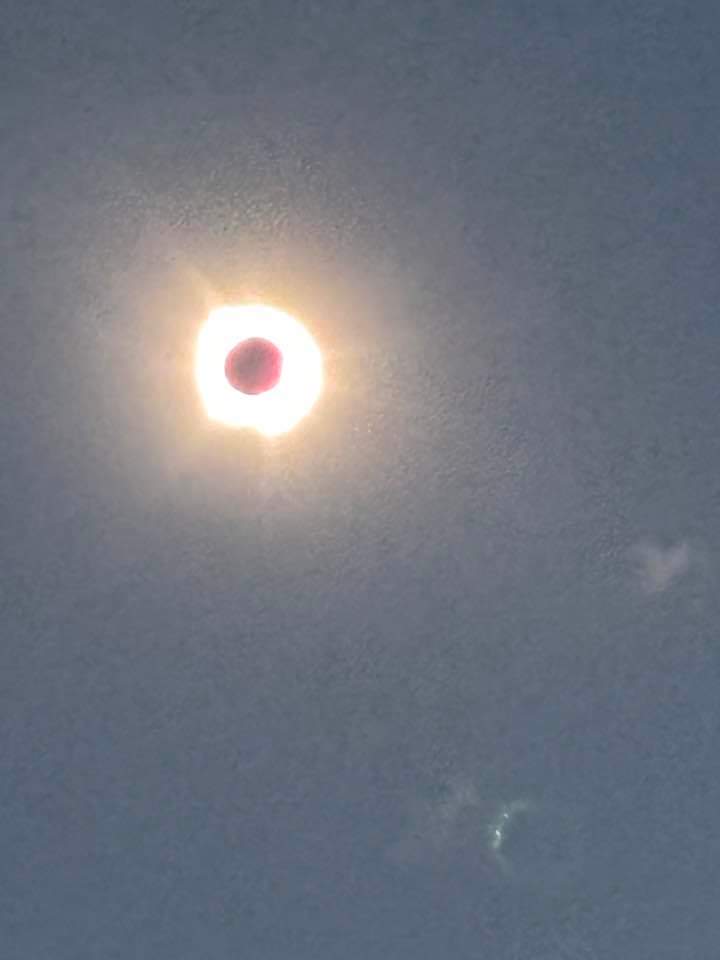
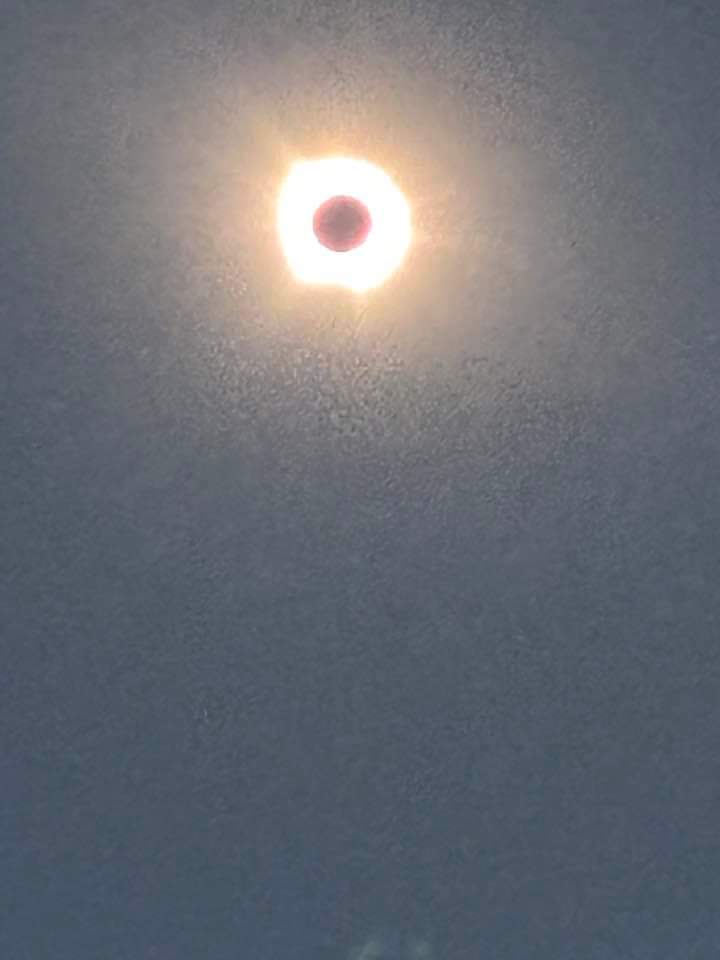
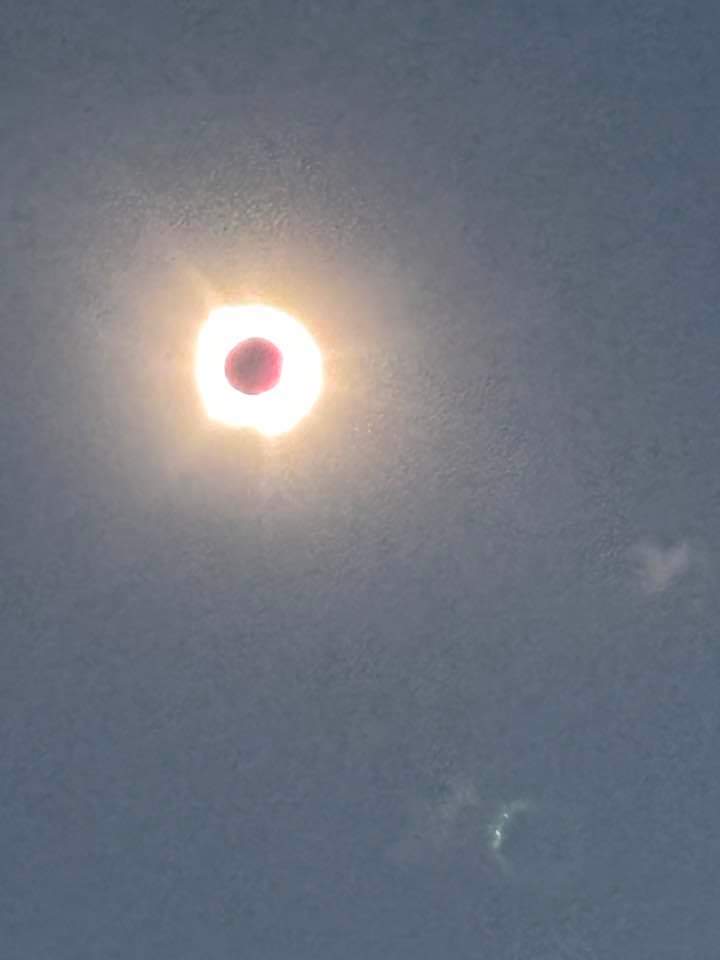
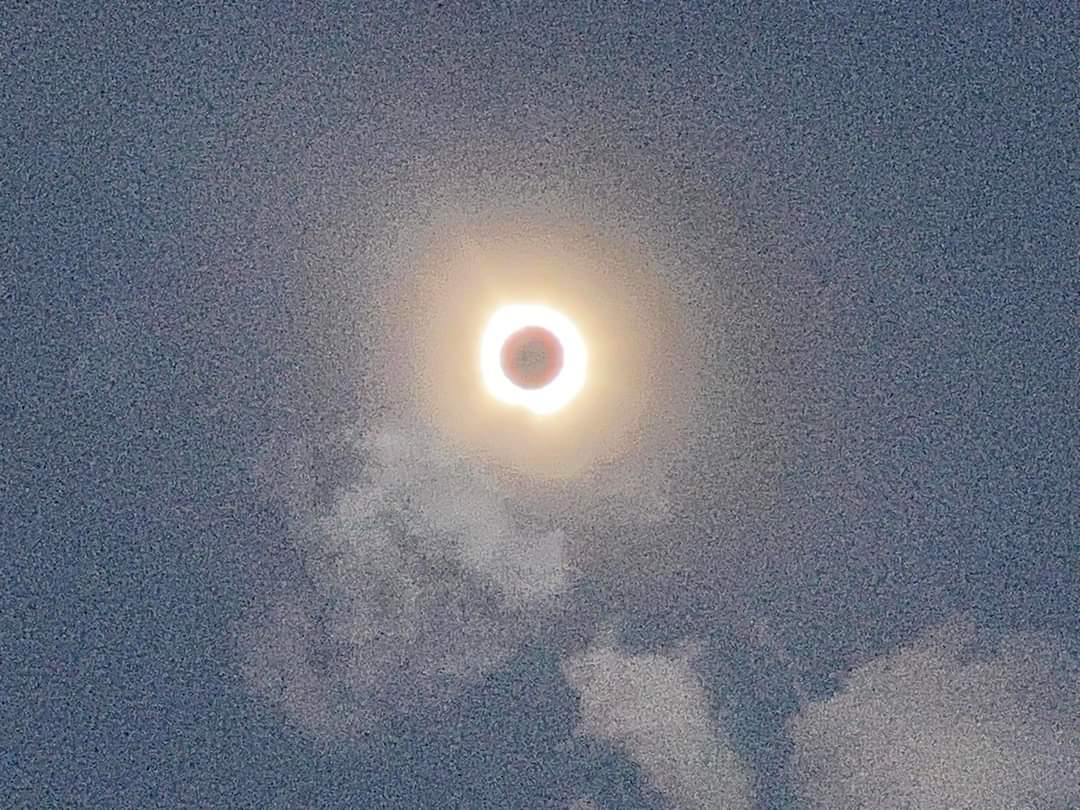
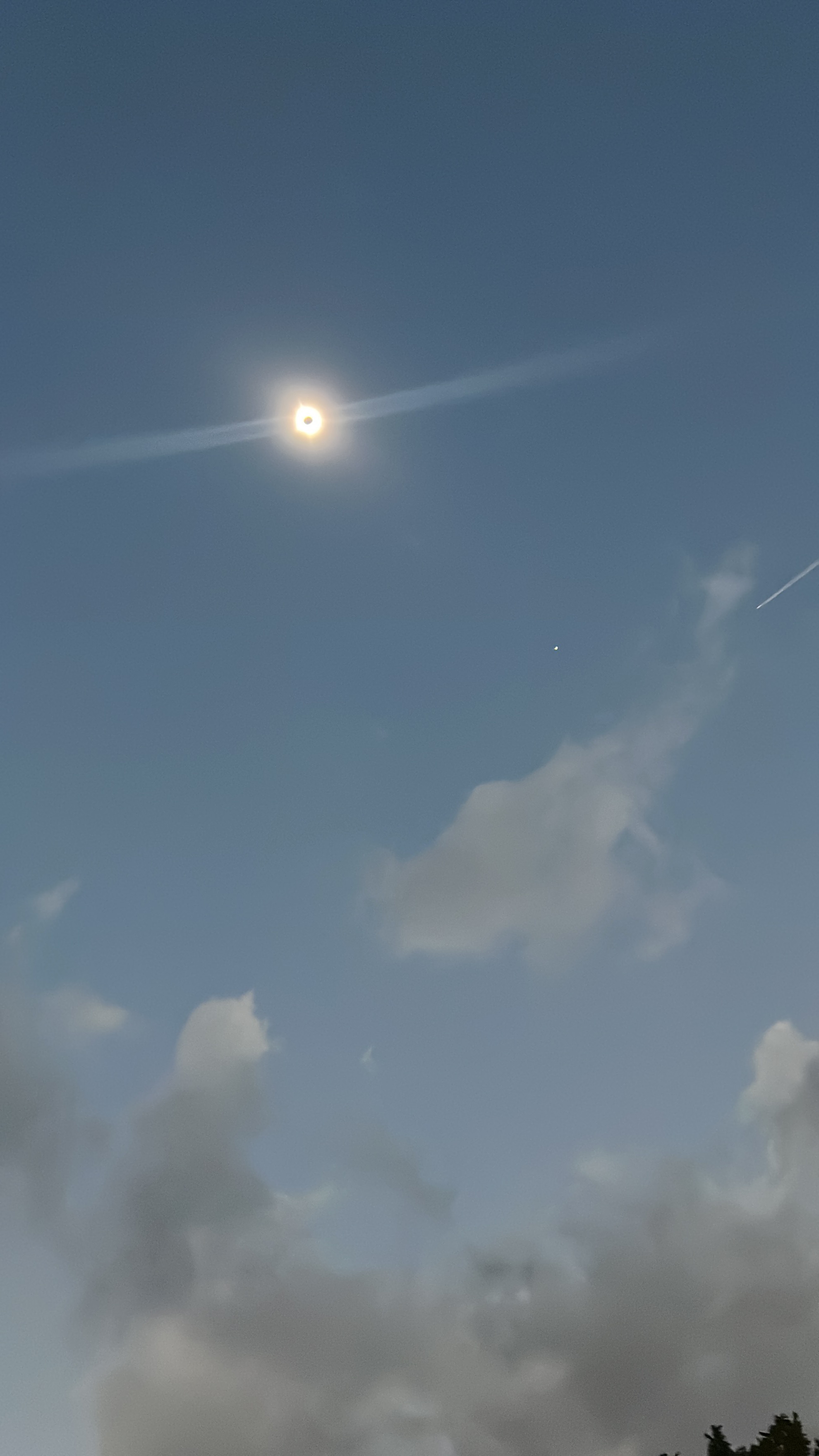
These eight pictures were taken with cell phones by my daughter Rachel, Denise Mosier-Wanken, and Margaret Weiss Bloebaum.
Today, December 30, 2024, we are having what is called a Black Moon. In Europe it will be December 31. This is not a super-fact post. Just some lighthearted information about the Black Moon phenomenon.
What is a Black Moon?
The most common definition is that it is the second new moon in a single calendar month. That’s what we are having now. During a new moon the moon is located between the sun and earth, which means that the night side of the moon is directed towards us. At night it is usually below the horizon and during the day you can’t see it.
However, there is one exception to that and that is when you are having a solar eclipse. In that case the moon is directly in front of the sun. It is an unusually well-placed new moon if you will. Here in Dallas, we had a total solar eclipse on April 8 this year. It was a remarkable experience. It turned daker, cooler, some stars and planets came out, including Venus, and the birds and insects stopped singing. I have included some photos from that event below. What you see is the dark side of the moon with the sun hiding behind it.
I took this photo with my old Samsung 8+ phone before we had totality. Since the sun was still partially visible and bright I used a filter / a pair of glasses that I held in front of the phone.A friend Denise Mosier-Wanken took this photo with her phone. The sun is almost gone. The fuzzy fog like light around the black circle is the sun’s corona.My daughter Rachel took this photo with her iPhone.A professional solar eclipse photo with filter. What we saw with our eyes was something in between this photo and the photos we took. The corona in our photos is too big. This one is too small. Stock Photo ID: 2344355767 by aeonWAVE.
Alternative Definitions of a Black Moon
As mentioned, the most common definition of a black moon is that it is the second new moon in a single calendar month. However, there are other definitions:
A month with no full moon
A month with no new moon
The third new moon in a season with four new moons. A season is defined as the period between a solstice and an equinox and is roughly three months.
A New Moon is a Star Gazing Opportunity
Since there is no moon in the sky the night is a little bit darker. This makes a significant difference in places that are very dark and very far away from city lights. There is so much light pollution here in Dallas, so it doesn’t matter here. However, I still took out my little telescope and observed easy objects, such as Venus, Mars, Jupiter and its four Galilean moons.
The three little dots are three of the four Galilean Moons. I roughly saw this in my telescope a couple of hours ago, but it is not my photo. Photo by Raoni Aldrich Dorim on Pexels.com
The Near Side and the Far Side of the Moon
The moon is always showing us the same side, the so-called near side. The far side, or the back side, you can only see from spacecrafts. Look at the photo below. The near side is on the left whilst the far side is on the right. During a new moon the near side (left) is dark, and the far side (right) is lit up by the sun. But again, you cannot see the far side (right), which is turned away from us.
During a full moon the near side (left) is lit up by the sun, and the far side (right) is dark. One interesting fact about the moon is that the near side (left) and the far side (right) are very different. The far side (right) not only looks different, it has a crust that is much thicker compared to the near side, and it is also densely cratered compared to the near side.
The near side of the Moon and the far side of the Moon. Comparison between the two hemispheres of the Moon. Elements of this image were furnished by NASA. Stock Photo ID: 2157518223 by Claudio Caridi.
Below is a youTube video showing an animation composed of actual satellite photos by NASA.
In this video the near side of the moon is dark. It is a new moon and the people on earth don’t see the moon. The sun is behind us and lights up both earth and the far side of the moon (the side people on earth do not see), so that is what the space craft see.
Happy New Year
Finally, a Happy New Year to all of you from Rollo and me. He may not look that happy but that is because I am leaving over the New Years. We have a dog sitter though. For the same reason I will not be on-line tomorrow.
The goal of this blog is to create a list of what I call super facts. Important facts that we know to be true and yet they are surprising, shocking or disputed among non-experts. Super facts are important facts that people get wrong. However, I also create posts that are not super facts but other interesting information, such as this book review and book recommendation.
Saving Us: A Climate Scientist’s Case for Hope and Healing in a Divided World
Saving Us: A Climate Scientist’s Case for Hope and Healing in a Divided World by Katharine Hayhoe is a book about human caused Climate Change, how bad it is, and what we can do about it. The good news is that we are not all going to destroy ourselves. It is still bad, but we can do a lot to avoid making it really bad. However, there are a lot misunderstandings regarding what really makes a difference. This book examines these issues with a good dose of realistic optimism and science. I read the hardback version (and my review on Amazon is currently the top review).
Hardcover – Publisher : Atria/One Signal Publishers (September 21, 2021), ISBN-10 : 1982143835, ISBN-13 : 978-1982143831, 320 pages, item weight : 1.05 pounds, dimensions : 6 x 1 x 9 inches, it costs $19.14 on US Amazon. Click here to order it from Amazon.com.
Paperback – Publisher : Atria/One Signal Publishers (September 20, 2022), ISBN-10 : 1982143843, ISBN-13 : 978-1982143848, 320 pages, item weight : 8.8 ounces, dimensions : 5.5 x 0.7 x 8.38 inches, it costs $17.22 on Amazon. Click here to order it from Amazon.com.
Kindle – Published : Atria/One Signal Publishers (September 21, 2021), ASIN : B08BZW2BQG, 318 pages, it costs $14.99 on US Amazon. Click here to order it from Amazon.com.
Audiobook – Published : September 21, 2021, ASIN : B08D4RGYM8, Listening Length : 8 hours and 7 minutes, it costs $16.40 on US Amazon. Click here to order it from Amazon.com.
Front cover of Saving Us. Click on the image to go to the Amazon page for the hardcover version of the book.
Amazon’s description of the book
“An optimistic view on why collective action is still possible—and how it can be realized.” —The New York Times
“As far as heroic characters go, I’m not sure you could do better than Katharine Hayhoe.” —Scientific American
“It’s not an exaggeration to say that Saving Us is one of the more important books about climate change to have been written.” —The Guardian
United Nations Champion of the Earth, climate scientist, and evangelical Christian Katharine Hayhoe changes the debate on how we can save our future.
Called “one of the nation’s most effective communicators on climate change” by The New York Times, Katharine Hayhoe knows how to navigate all sides of the conversation on our changing planet. A Canadian climate scientist living in Texas, she negotiates distrust of data, indifference to imminent threats, and resistance to proposed solutions with ease. Over the past fifteen years Hayhoe has found that the most important thing we can do to address climate change is talk about it—and she wants to teach you how.
In Saving Us, Hayhoe argues that when it comes to changing hearts and minds, facts are only one part of the equation. We need to find shared values in order to connect our unique identities to collective action. This is not another doomsday narrative about a planet on fire. It is a multilayered look at science, faith, and human psychology, from an icon in her field—recently named chief scientist at The Nature Conservancy.
Drawing on interdisciplinary research and personal stories, Hayhoe shows that small conversations can have astonishing results. Saving Us leaves us with the tools to open a dialogue with your loved ones about how we all can play a role in pushing forward for change.
This is an extremely well written, informative, and hopeful book on climate communication. A decade ago I was doubtful that human caused climate change was anything to worry about even though it physically made sense that it was happening. I thought environmentalists were exaggerating and distorting the facts. In general I did not trust or respect environmentalists whom I thought were driven by leftist agendas.
I studied the topic on my own by reading books and scientific articles on the topic, and I learned what climate scientists, not opinionated bloggers, said about the topic. I was especially impressed by a book by James Hansen.
I came to realize that human caused global warming definitely was real and a serious problem. I think I was able to change my mind so easily because I never had a strong affiliation with a political tribe, I respected scientific expertise and my encounter with science deniers in other fields had inoculated me against their kind of rhetoric (it’s fairly universal). I’m an abstract thinker who loves pro-con-lists, and I prefer going in deep and I am not afraid of math, but I don’t think that’s typical.
The backside of that is that it made me a pretty crappy and easily frustrated climate change communicator once I came around. I felt I needed to take action so I joined Citizens Climate Lobby (CCL), a bipartisan volunteer organization with good solutions and good practices. From CCL I learned how to communicate better. In this book Katherine Hayhoe praises CCL and use it as a model for how to approach climate change with respect to solutions and communication.
In addition to climate change communication she gives a high level overview of why we know that global warming is happening (there are 26,500 lines of independent evidence for climate change), how fast it is happening (10 times faster than the last ice age warming), and how we know it isn’t natural. It’s a simple overview, not a deep dive. I thought her analogy about driving while looking in the rearview mirror as you hit a curve to be genius.
She also discusses our cognitive biases, and why not to engage with the 7% who are dismissives, the abuse she’s been a victim of, and so called zombie arguments. Zombie arguments are dismissive arguments that have been thoroughly debunked over and over but won’t die because they fulfill an emotional need for those who are dismissive of climate change. She discusses the political divided in the US, the “blame and shame the consumer” tactic and the misguided “population control solution” and solutions aversion in general.
She describes our situation lucidly. That there is no particular known limit that will doom us all. It is like smoking; you don’t get lung cancer after a certain amount of cigarettes, it’s just better to stop as soon as you can. She discusses solutions and the economy, including cap and trade and a price on carbon, and she states we don’t have to harm the economy to solve climate change, and a lot is already being done the world over. It is a mostly hopeful view.
I was surprised to learn that if you take into account, production subsidies, tax breaks, land leases on public lands below market rates, and the cost of pollution, the IMF estimates that fossil fuel subsidies in the US top $600 billion per year, twenty times clean energy subsidies. That’s about $2,000.00 per person and year, or $8,000.00 per family per year. That’s a lot of money.
Because of my experience with CCL I recognized a lot of what Katherine Hayhoe was saying in this book, but I still had a lot to learn, and besides the book is hopeful, and intelligently written and therefore a pleasure to read. She stresses that the most important thing we can do to solve climate change is to talk about it. I love this book and I highly recommend this book.
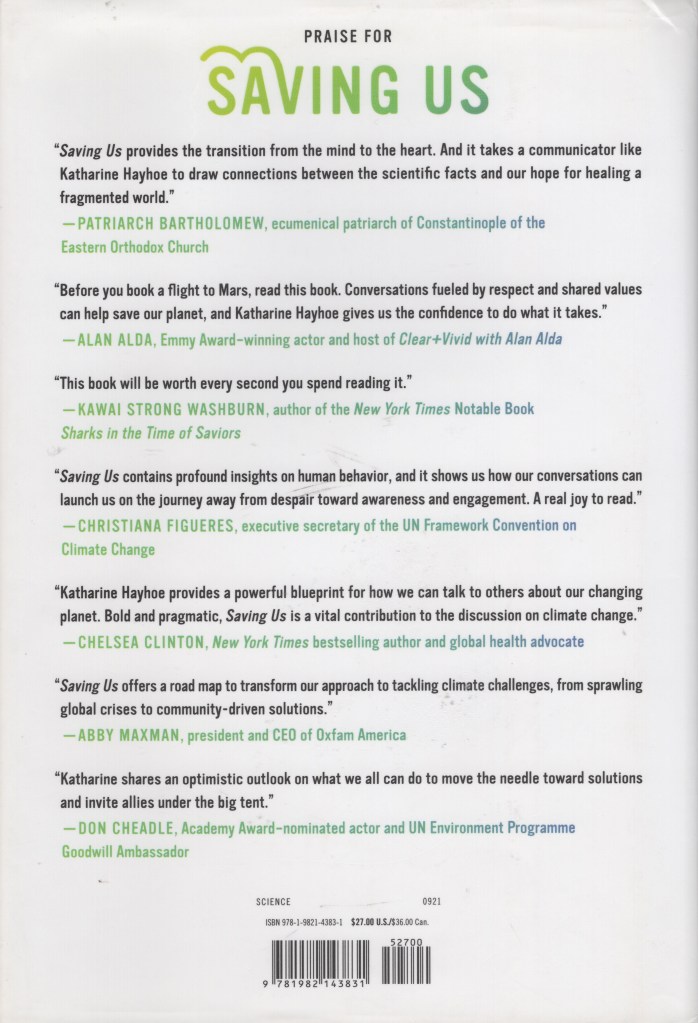
Back cover of Saving Us. Click on the image to go to the Amazon page for the kindle version of the book.
Superfact 23: GPS uses relativity for accuracy. Global Positioning Systems or GPS uses Special Relativity and General Relativity to guide you to your destination. In fact, GPS systems would be rendered useless without the Theories of Relativity.
Stock Photo ID: 2502019165 by mayam_studio
Did you use Einstein’s Theories of Relativity to get to the grocery store today?
Therefore, it is a bit surprising that without the theories of relativity the GPS app on your phone would not be able to guide you to the grocery store. That’s why I call it a super fact that GPS uses relativity for accuracy.
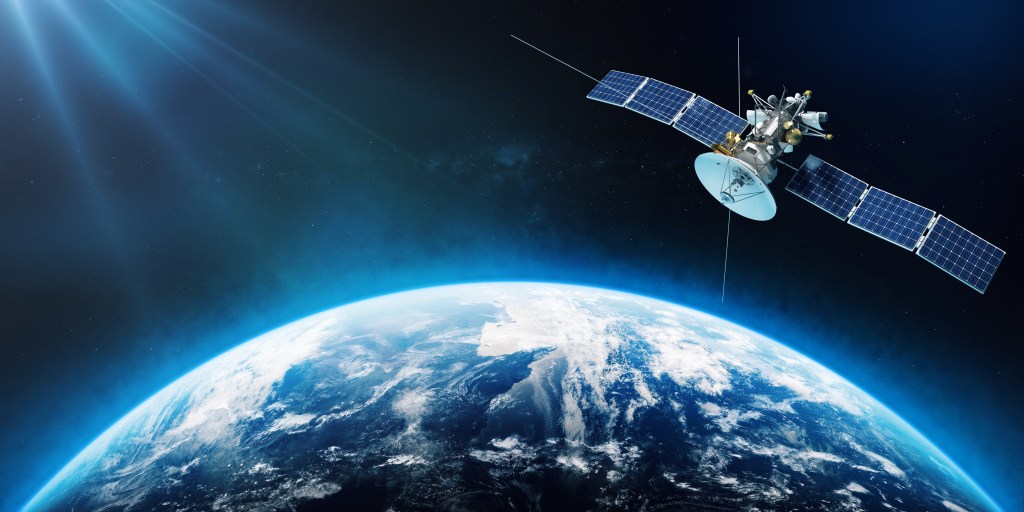
Stock Illustration ID: 1372134458 by Boris Rabtsevich
GPS and Time Dilation
GPS is a satellite-based radio navigation system that provides location information and time anywhere on Earth. It is amazingly accurate. The basic GPS service provides users with approximately 7.0-meter accuracy, 95% of the time, anywhere on or near the surface of the earth.
The fact that the information is provided by satellites that orbit earth at high speeds and high above earth’s surface makes General Relativity and Special Relativity necessary. The GPS system needs to calculate precisely the time it takes for signals to travel from the satellites to a receiver on Earth for it to work. GPS satellites travel at high speeds causing a large enough time dilation that must be accounted for. In addition, they orbit earth high above earth’s surface where earth’s gravitational field is weaker than on earth’s surface. Clocks run faster in weaker gravitational fields due to gravitational time dilation, so you must correct that as well.
If you ignore relativity, you will accumulate a discrepancy of six miles in one day. You are not going to find the grocery store that way, unless you use the old-fashioned method of reading a map. In a sense, if your GPS device finds the grocery store for you, you have proven Einstein right.
Below is a YouTube video animation visualizing the GPS system.
The GPS satellites were sent up by the United States Air Force (and not NASA).
The first NAVSTAR satellite, later called GPS, was launched in 1978.
There are 31 GPS satellites currently in orbit.
The system requires 24 GPS satellites.
The 24-satellite system became fully operational in 1993.
The Global Positioning System cost (the US government) $1.8 billion annually to operate and maintain.
The Global Positioning System is free to use for the public worldwide.
Making GPS free to civilians worldwide was a decision by President Ronald Reagan in 1983 after a Korean airliner was shot down for straying off course.
GPS satellites carry extremely accurate atomic clocks. As explained, GPS must account for relativity, special relativity as well as General Relativity.
Other satellite systems help improve GPS, including WAAS (in the U.S.), EGNOS (in Europe), and MSAS (in Japan).
GPS is not the only satellite navigation system. Other countries have their own satellite navigation systems. GLONASS (Russia), Galileo (EU), and BeiDou (China).
Ukraine is helped by both GPS and Galileo.
Russian forces have been actively jamming GPS signals in Ukraine.
Uses of GPS
Examples of consumer electronics that use GPS are smart phones, tablets, Smartwatches, Car navigation systems, Cameras (DSLR with GPS), some models of laptops, fitness trackers (Fitbit), and drones.
Examples of vehicles using GPS are cars, delivery vans, trucks, aircraft, trains, ships and boats.
Military uses of GPS include guided missiles, guided munitions, tactical radios, communication systems, soldier-worn devices for location tracking, military vehicles and military aircraft.
Additional examples of GPS use include construction equipment for site positioning and machine guidance, tractors for precision farming and other agricultural machinery, surveying equipment, pipeline inspection drones, other inspection drones and rovers, emergency locator beacons, pet trackers, smart collars, livestock monitoring, personal trackers, and geocaching devices.
As you can see, GPS is extremely useful, and there are a lot of interesting facts about GPS.
So I am trying out the Daily writing prompt for the first time, answering the question “What alternative career paths have you considered or are interested in?”.
I’ve always been interested in astronomy and astrophysics, and I studied engineering physics, later electrical engineering. I did not think astronomer or astrophysicist was an easily attainable career and perhaps not very well paid either, but I think it would have been a fun job to have.
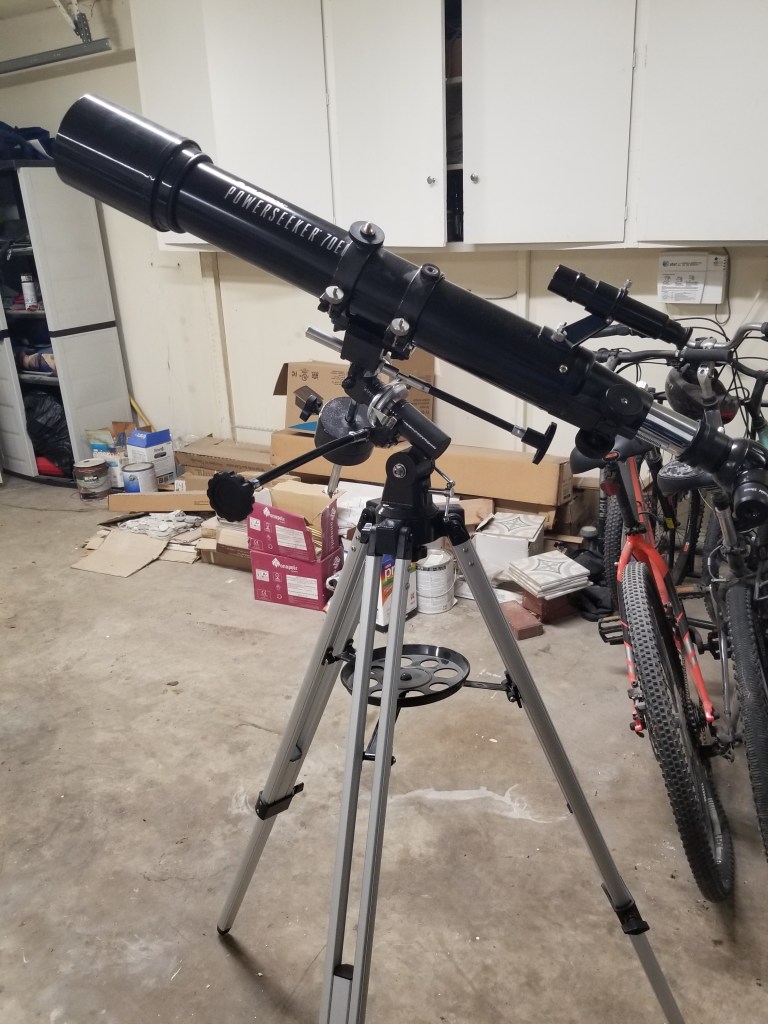
I am a bit of an amateur astronomer, and I own a basic telescope for amateurs, a Celestron Powerseeker 70EQ. It is not a great telescope, but it is good enough for observing objects such as Saturn and its rings, Jupiter and its four Galilean moons, Mars, Venus (the crescent), the moon and its craters. Those objects you can see from inside a big city like Dallas. Naturally you can do much better if you leave the city and especially if you visit a dark spot. I am a member of TAS, Texas Astronomical Society and they own a dark spot in Oklahoma. Below is a photo of my Celestron Powerseeker 70EQ standing in my garage.
Celestron Powerseeker 70EQ
What Does an Astronomer Do?
Astronomers study the universe, including galaxies, stars, planets, and other celestial objects, using telescopes and other instruments to observe and analyze them. They observe and analyze celestial objects. Depending on their specific area, astronomers have different duties.
They observe celestial objects using telescopes.
They conduct research, analyze data and test hypothesis.
They use and develop models including complex mathematical models and computer simulations to understand complex astrophysical phenomena.
They collaborate with peers, they teach, and they do mentoring and public outreach.
Types of Astronomers
Observational Astronomers use telescopes and other observational instruments to collect data from celestial objects.
Theoretical Astrophysicists use mathematical models and computer simulations to understand the physical processes in the universe. They may study stellar evolution, galaxy formation, cosmology, and black holes.
Planetary Scientists study planets, moons, and other objects within our solar system. They use data collected by space missions, telescopes, and remote sensing techniques.
Stellar Astronomers study stars, their properties, and their life cycles. They may study variable stars, binary star systems, massive stars, stellar remnants such as white dwarfs, neutron stars, or black holes.
Galaxies and Cosmology researchers study galaxies and the large-scale structures in the universe.
Radio Astronomers study celestial objects using radio waves instead of visible light. They may study radio galaxies, cosmic microwave background radiation, and the structure of the Milky Way.
Exoplanet Astronomers study and discover planets orbiting stars outside our solar system. They use techniques such as transit photometry and radial velocity measurements to detect and characterize exoplanets.
Famous Astronomers
Nicolaus Copernicus 1473–1543, discovered the heliocentric model putting the sun at the center of our solar system.
Johannes Kepler 1571–1630, revolutionized our understanding of how planets orbit the Sun. He used the Copernicus heliocentric model and very careful measurements to show that the planets moved in elliptical orbits around the sun and he came with additional laws to describe the speed of the planets in their orbits.
Galileo Galilei, 1564–1642, or Galileo di Vincenzo Bonaiuti de’ Galilei, was an Italian astronomer, physicist and engineer who greatly improved the optical telescope and discovered the four primary moons of Jupiter and the rings of Jupiter. He proved that all falling bodies fall at the same rate, regardless of mass, and developed the first pendulum clock. He got in trouble for defending Nikolai Copernicus idea.
Edmund Halley, 1656–1742, investigated and discovered many things including the nature of comets’ orbits.
Edwin Powell Hubble, United States, 1889–1953. Hubble proved that many objects previously thought to be clouds of dust and gas and classified as “nebulae” were galaxies beyond the Milky Way. He showed that these galaxies were moving away from us and each other leading to the conclusion that the universe was expanding.
Vera Rubin, 1928–2016, studied the rotation of galaxies and uncovered the discrepancy between the predicted and observed angular motion. This led to the discovery of dark matter.
What about you? What alternative career paths have you considered or are interested in?







 Super Facts