
Without carbon dioxide the Earth would freeze

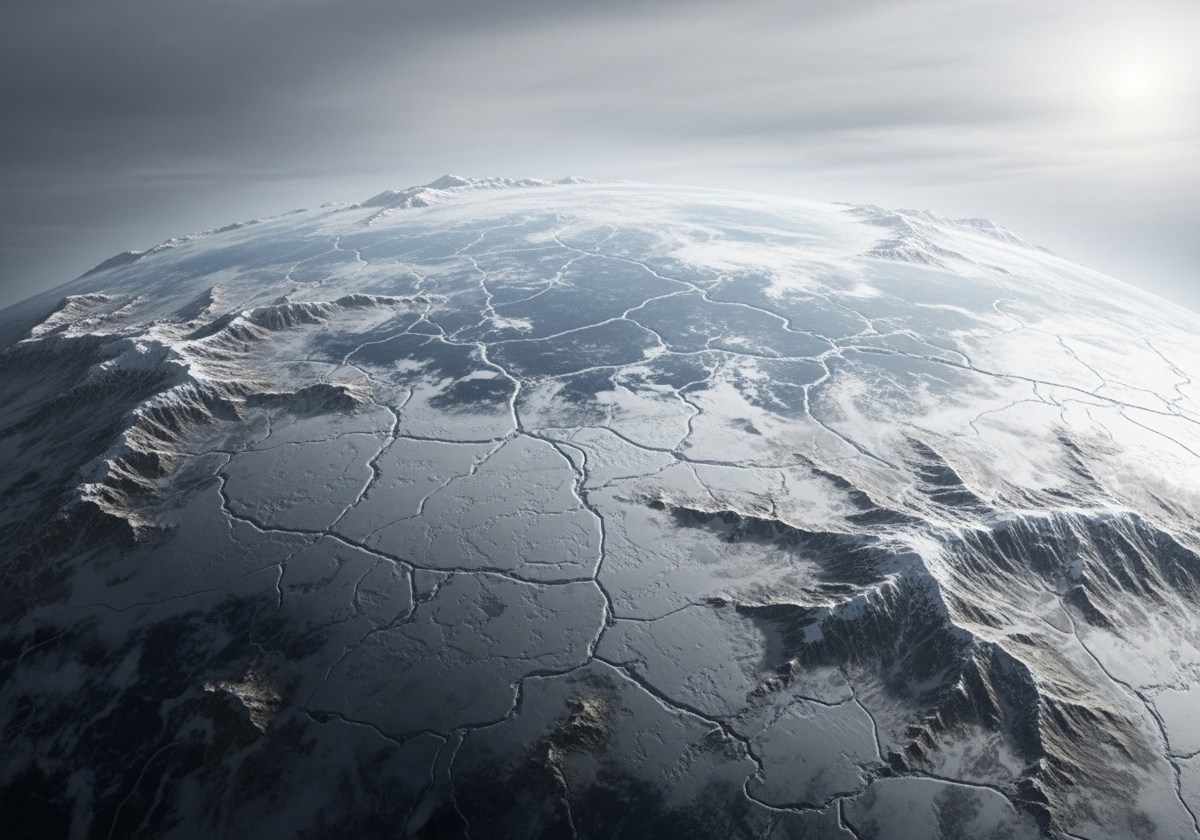
Superfact 91: Without greenhouse gases, the Earth’s average surface temperature would drop from the current 15 Celsius (59 Fahrenheit) to approximately -18 Celsius (0 Fahrenheit), which is an average temperature drop of 33 degrees Celsius. If you removed carbon dioxide from the atmosphere but let the other greenhouse gases stay the drop would be 30 degrees Celsius. In both cases most of the planet would freeze. This is referred to as snowball Earth.
Snowball Earth or Snowball planet. In the picture Earth is seen from space. It is covered by ice all over. | Without carbon dioxide the Earth would freeze
Shutterstock Asset id: 2750019199 by Shutterstock AI

Our planet is much warmer than it otherwise would be because of greenhouse gases. Carbon dioxide, or CO2, is the most important of the greenhouse gases. We are rapidly warming the atmosphere with our carbon dioxide emissions as explained by these articles from NASA and NOAA.  If we did the opposite and removed CO2 from the atmosphere we would be cooling the atmosphere. As mentioned, if we removed all greenhouse gases from the atmosphere the planet’s average temperature would drop by 33 degrees Celsius and this NASA article claims it would take 50 years to reach that temperature.

If we removed only carbon dioxide and let all the other greenhouse gases remain, we would get an almost as big temperature drop of 30 degrees Celsius according to the calculations done by this article. Some of you may know that water vapor provides a larger portion of the warming than CO2. In fact, 75% of the greenhouse effect is caused by water vapor and clouds. This seems contradictory. However, when the atmosphere cools, the water vapor will rain out of the atmosphere unlike CO2. Basically, water vapor will adjust to the temperature whilst CO2 is  forcing the temperature. It is crucial to understand this difference. That is why CO2 is the most important greenhouse gas. In summary, we need just the right amount of CO2 for a healthy climate.

I consider this a super fact because it is true, it is an important fact, and I believe it is a surprising fact to many, especially those who doubt carbon dioxide’s importance to the global warming we are experiencing. I called it global warming but whether you call it global warming, climate change, or climate disruption, we are talking about the same thing.

Snowball Earth
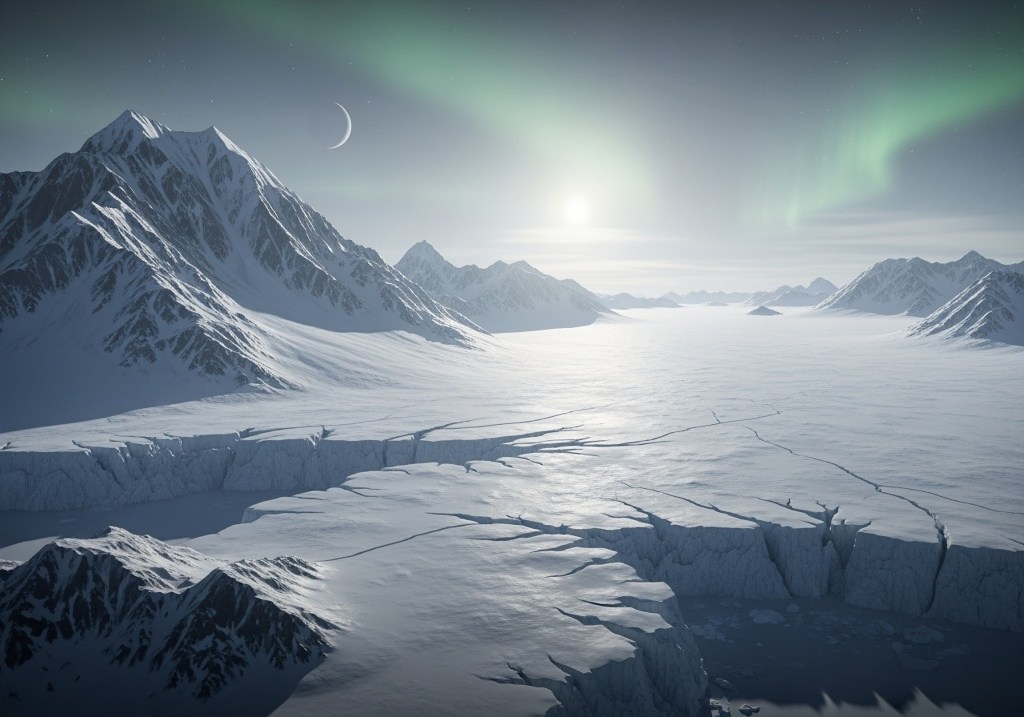
Mountains covered by ice and snow and valleys covered by a thick ice sheet.
Shutterstock Asset id: 2749007159 by Shutterstock AI

Scientists believe there have been at least two major “Snowball Earth” events between 720 and 635 million years ago where ice and snow covered nearly the entire planet. These snowball earth events were triggered by natural events, likely a plunge in sunlight, followed by a plunge in carbon dioxide not entering the atmosphere, and amplified by sunlight reflecting back into space. All three effects made Earth cooler. The recent ice ages were likely caused primarily by earth’s orbital cycles. Climate changed in the past due to natural phenomena, but that does not mean that the current very rapid warming (rapid geologically speaking) is natural.

If you want to understand why we can be so sure that it is our CO2 emissions that is causing the current global warming, not the sun, not volcanoes, not orbital cycles, and not another natural process, please check out the list of evidence in the second part of this post “Global Warming is Happening and is Caused by us”.

Hothouse Venus

What we see in the photo is a large white smooth planet. The MESSENGER spacecraft snapped a series of images as it approached Venus on June 5, 2007. The planet is enshrouded by a global layer of clouds that obscures its surface to the MESSENGER Dual Imaging System (MDIS) cameras. This single frame is part of a color sequence taken that helped the MESSENGER team calibrate the camera in preparation for the spacecraft's first flyby of Mercury on January 14, 2008.
Image taken by the NASA MESSENGER as it approached Venus on June 5, 2007. NASA/Johns Hopkins University Applied Physics Laboratory/Carnegie Institution of Washington, Public domain, via Wikimedia Commons. The image is taken from this Wikipedia article.

The opposite of snowball Earth is hot Venus. Venus is the hottest planet in the solar system due to an extreme runaway greenhouse effect. Surface temperatures are averaging around 465 degrees Celsius (870 degrees Fahrenheit). The thick atmosphere of Venus is composed primarily of carbon dioxide with clouds of sulfuric acid. This causes a greenhouse effect that traps heat.

Despite the fact that Mercury is much closer to the sun (58 million kilometers versus 108 million kilometers) and receives nearly four times as much sunlight per unit area than Venus, Mercury is on average much cooler. The reason is that Mercury’s atmosphere is thin and without a greenhouse effect.

The YouTube video below from NASA explains the greenhouse effect on Venus. It is just one minute long.


I would also like you to take a look at this post:, “The Greenhouse Effect: From Early Chemistry to the Keeling Curve” by Craigavad miscellany a science blog written by a retired academic. It is a very educational and interesting post related to this topic.



To see the Other Super Facts click here

Oxygen Blue Sky and Complex Life Exist Because of a Bacteria

Super fact 72 : About three billion years ago Cyanobacteria evolved a new type of photosynthesis that used sunlight, water, and carbon dioxide to create energy, while releasing oxygen as a waste product. This transformed the atmosphere and enabled complex life by allowing aerobic respiration to evolve. This invention turned the sky blue, gave us the protective ozone layer, but also caused climate change resulting in massive extinctions.

A microscopic photo of Cyanobacteria. They look like green blobs with small nucleuses. | Oxygen Blue Sky and Complex Life Exist Because of a Bacteria
An example of a Cyanobacteria. From Wikipedia. Luke Thompson from Chisholm Lab and Nikki Watson from Whitehead, MIT, CC0, via Wikimedia Commons

Cyanobacteria, also known as blue-green algae, are bacteria capable of oxygenic photosynthesis. Between 3.4 and 2.5 billion years ago they developed a new and very effective form of photosynthesis, which took advantage of highly abundant resources, using sunlight, water, and carbon dioxide turning it into sugar and releasing oxygen as byproduct. This is referred to as the Great Oxidation Event. You can read more about this event here, here, here, here, here, or in the book Becoming Earth by Ferris Jabr.

The atmosphere prior to the Great Oxidation Event was primarily composed of volcanic gases including nitrogen, carbon dioxide, water vapor, methane and ammonia, but almost no free oxygen. The Great Oxidation Event changed all this, but it likely took at least 200 million years.

Labeled educational bacteria internal structure scheme.
Cyanobacteria vector illustration. Biological blue green algae diagram with carboxysome, thylakoid and phycobilisome parts location inside cell. Asset id: 1687712761 by VectorMine

A Microbial Great Extinction and Snowball Earth

Oxygen was a toxic gas to many early microbes forcing them to adapt or perish. In addition, the change in the atmospheres composition changed the climate, resulting in a severe global cooling referred to as Snowball Earth. This caused a great extinction, perhaps the most severe extinction in Earth’s history. It is not included among the five mass extinction events in Earth’s history because it happened very early in Earth’s history when only primitive microbial life existed and fossil evidence from that time is nearly non-existent. The definition of a mass extinction event is that at least 75% of the world’s species are lost during a short period of time – geologically speaking. This period is not clearly defined but often defined to be two million years. It is very difficult to determine whether the great extinction following the Great Oxidation Event qualifies as a mass extinction event. To read about mass extinctions click here.

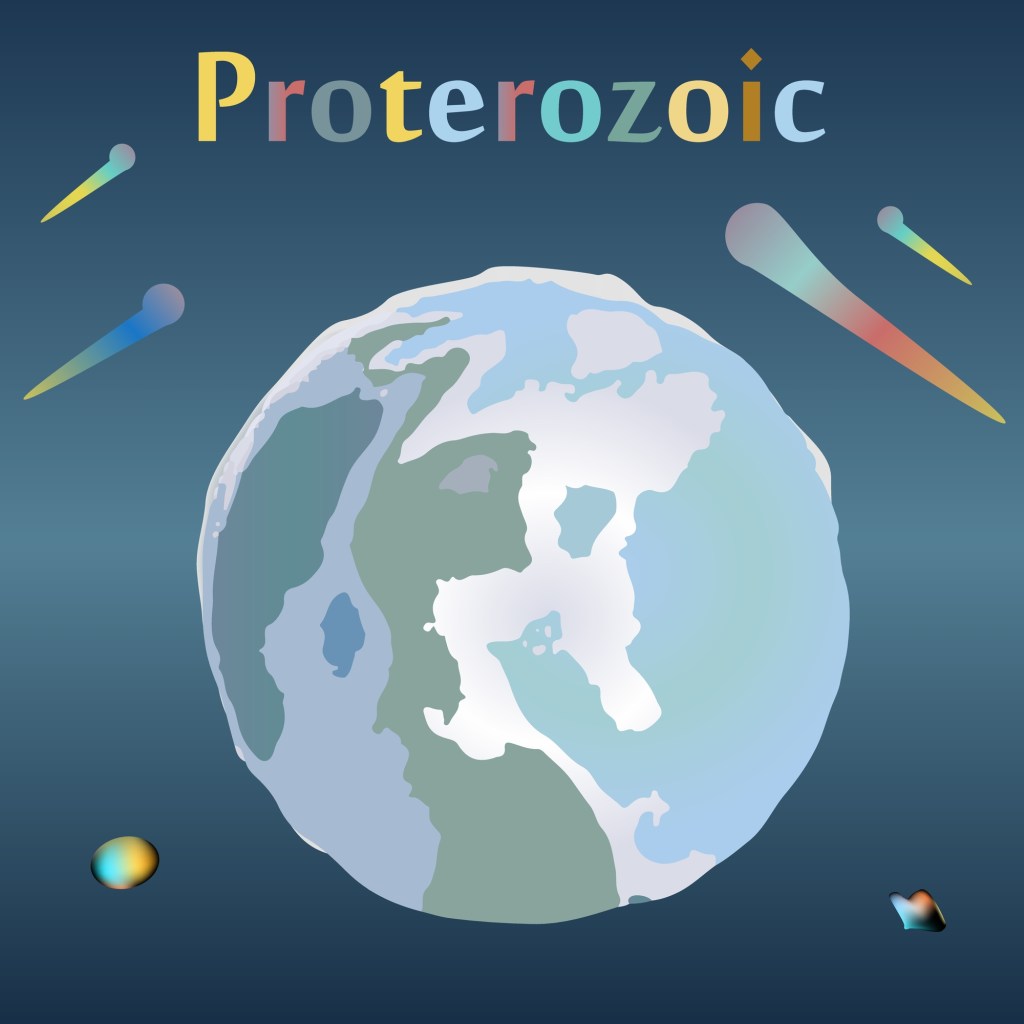
Ancient Earth almost entirely covered by ice and white snow. | Oxygen Blue Sky and Complex Life Exist Because of a Bacteria
Proterozoic era in the history of the Earth. Snowball earth. Global glaciation of the Earth. Asset id: 2010272753 by Elena Kelman

The Ozone Layer and the Blue Sky

Oxygen is also responsible for formation of the ozone layer in the atmosphere. The UV radiation from the sun split oxygen molecules, which consist of two oxygen atoms, into two separate atoms of oxygen, which then reacted with another oxygen molecule to generate ozone, and oxygen molecule consisting of three oxygen atoms. Ozone acts as a natural sunscreen to prevent harmful UV radiation from reaching the earth. Therefore, oxygen not only enables land dwelling complex multicell organisms to exist by allowing aerobic respiration to evolve, but also by protecting life from too much UV radiation.

As mentioned above, the atmosphere prior to the Great Oxidation Event was primarily composed of volcanic gases and almost no free oxygen. The color of the sky was likely orange, brown. As oxygen replaced the existing gases the sky slowly turned blue. Oxygen molecules along with Nitrogen molecules scatter blue light from the sun through a process called Rayleigh scattering, making the sky appear blue.

Cyanobacteria and The Great Oxygenation Event

It should be noted that there were other geological and biological processes that were responsible for this permanent shift in the Earth’s system, including changes in the composition of volcanic emissions and chemical reactions that allowed atmospheric hydrogen to escape to space, leaving behind an excess of oxygen molecules. However, whatever the exact mix of mechanisms, cyanobacteria were undoubtedly a critical source of accumulating oxygen. It is possible that tectonic activity altered the cycling and distribution of phosphorus and other nutrients essential for cyanobacteria. To read more see the book Becoming Earth by Ferris Jabr.


To see the other Super Facts click here