The goal of this blog is to create a list of super facts. Important facts that are true with very high certainty and yet surprising, misunderstood, or disputed by many. This blog aims to be challenging, educational, and fun, without it being clickbait. I determine veracity using evidence, data from reputable sources and longstanding scientific consensus. Prepare to be challenged (I am). Intentionally seek the truth not confirmation of your belief.
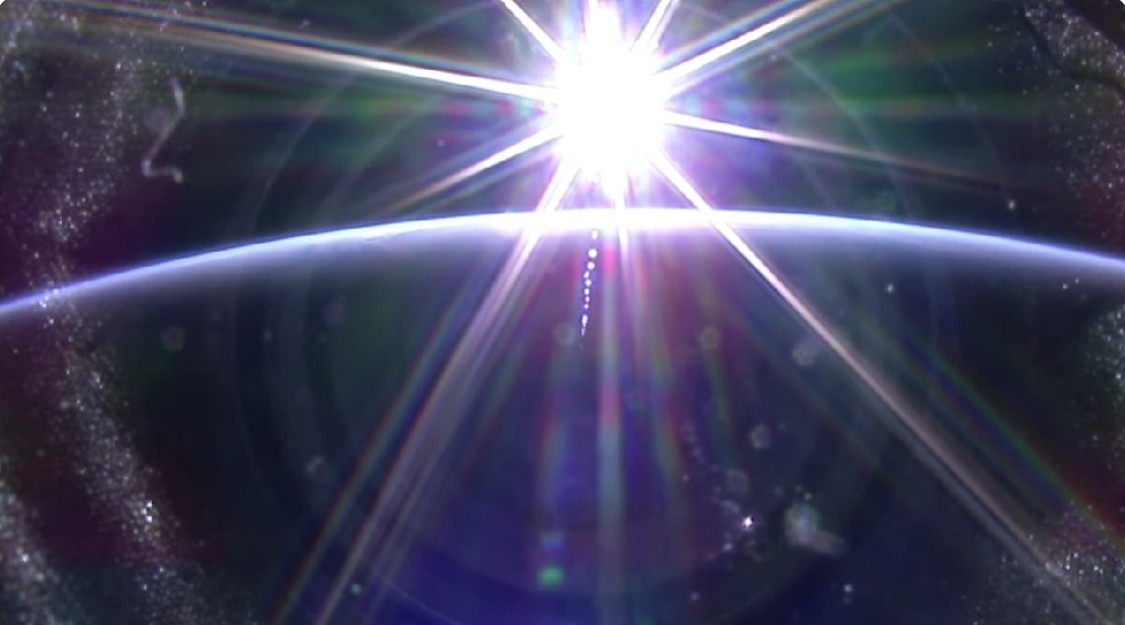
Superfact 105: The Sun is white, but the Sky steals its Blue is a poetic way of saying that the sun’s light is scattered by the atmosphere giving the Sun a yellowish tint as well as giving us our blue sky. From space the sun looks completely white.
Sunset from the International Space Station by NASA
Viewed from space the sun is entirely white. White light consists of a mix of all the colors of the rainbow. However, viewed from earth the sun has a yellow tint, which gets more pronounced, it even dips into orange, as the sun nears sunset. That does not happen in space as can be seen below in the one minute sunset timelapse video taken from the International Space Station.
Sunset Timelapse from the International Space Station
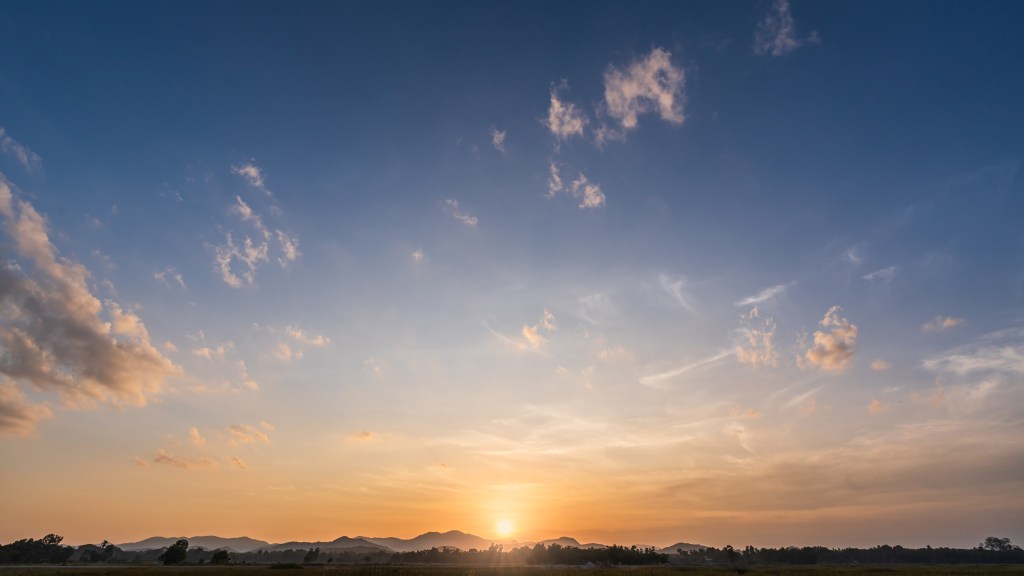
On earth the sunset looks more like something in the picture below.
The sky dusk has a dramatic background featuring a summer season golden sunset landscape. The light is at the horizon is an orange and yellow color with blue sky above. Shutterstock asset id: 2670235703 by Nature Peaceful
The sun is a so called yellow dwarf star, or a G-type main-sequence star. The term yellow dwarf is a bit of a misnomer, because they range in color from white, for more luminous G-types like the Sun, to only very slightly yellowish for less massive and less luminous G-type main-sequence stars. The sun emits all the colors of the rainbow simultaneously, but the most dominant color is green. However, this looks white to us.
When sunlight enters Earth’s atmosphere, tiny air molecules scatter shorter, blue wavelengths of light in all directions. This scattering is what makes the sky look blue. This is called Rayleigh scattering. Because much of the blue light is removed, the remaining wavelengths of light that reach your eyes combine to make the sun appear yellow. This is a super fact because it is a basic but surprising fact, and we know it is true.
Rayleigh Scattering
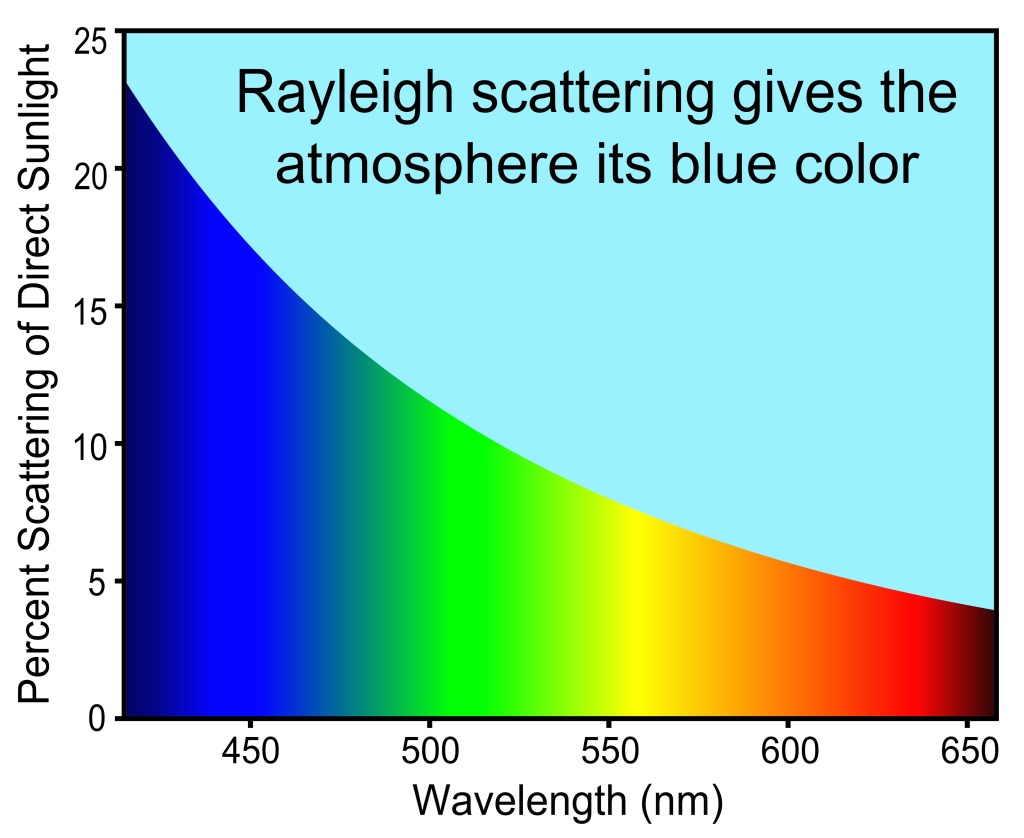
The blue color of the sky is caused by Rayleigh scattering of sunlight by the gases in the Earth’s atmosphere. The image below shows the degree to which Rayleigh scattering occurs at different wavelengths / frequencies of light. Blue has the shortest wavelength (highest frequency) for visible light and red the longest (lowest frequency). The curve shows that blue light scatters more than red light. It should be noted that UV light (not shown) scatter even more. The scattering curve shown is calculated for sunlight passing vertically through the atmosphere.
Figure showing the greater proportion of blue light scattered by the atmosphere relative to red light. Robert A. Rohde derivative work:KES47 (talk) (converted to SVG)., CC BY-SA 3.0 http://creativecommons.org/licenses/by-sa/3.0/, via Wikimedia Commons.
Super fact 72 : About three billion years ago Cyanobacteria evolved a new type of photosynthesis that used sunlight, water, and carbon dioxide to create energy, while releasing oxygen as a waste product. This transformed the atmosphere and enabled complex life by allowing aerobic respiration to evolve. This invention turned the sky blue, gave us the protective ozone layer, but also caused climate change resulting in massive extinctions.
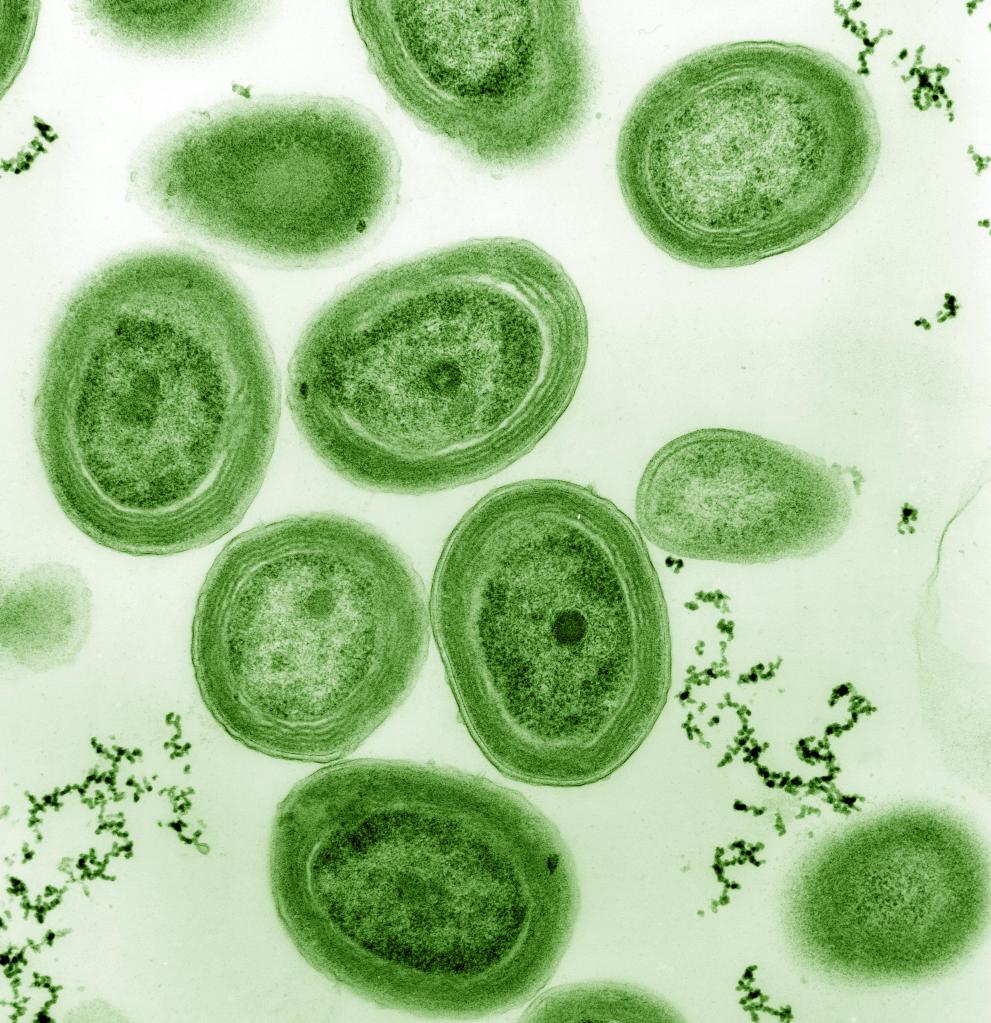
An example of a Cyanobacteria. From Wikipedia. Luke Thompson from Chisholm Lab and Nikki Watson from Whitehead, MIT, CC0, via Wikimedia Commons
Cyanobacteria, also known as blue-green algae, are bacteria capable of oxygenic photosynthesis. Between 3.4 and 2.5 billion years ago they developed a new and very effective form of photosynthesis, which took advantage of highly abundant resources, using sunlight, water, and carbon dioxide turning it into sugar and releasing oxygen as byproduct. This is referred to as the Great Oxidation Event. You can read more about this event here, here, here, here, here, or in the book Becoming Earth by Ferris Jabr.
The atmosphere prior to the Great Oxidation Event was primarily composed of volcanic gases including nitrogen, carbon dioxide, water vapor, methane and ammonia, but almost no free oxygen. The Great Oxidation Event changed all this, but it likely took at least 200 million years.
Cyanobacteria vector illustration. Biological blue green algae diagram with carboxysome, thylakoid and phycobilisome parts location inside cell. Asset id: 1687712761 by VectorMine
A Microbial Great Extinction and Snowball Earth
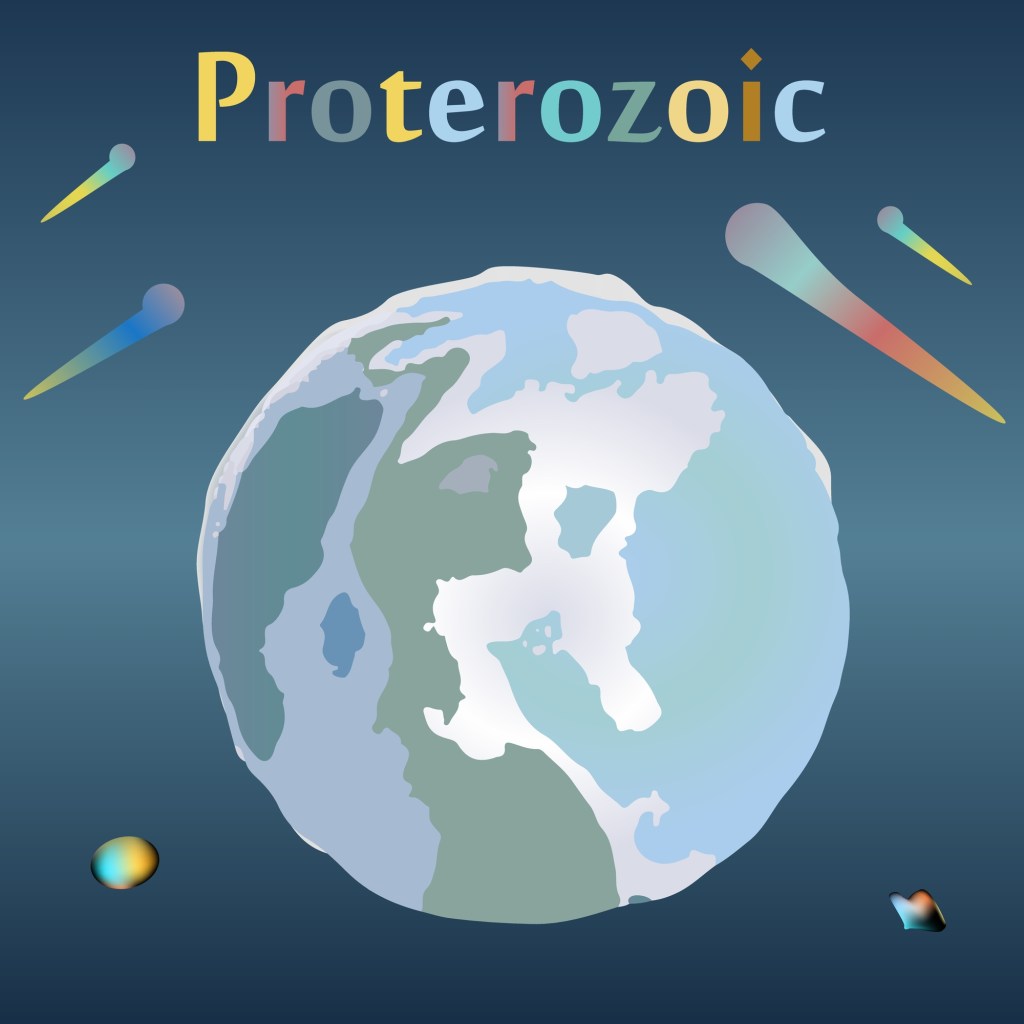
Oxygen was a toxic gas to many early microbes forcing them to adapt or perish. In addition, the change in the atmospheres composition changed the climate, resulting in a severe global cooling referred to as Snowball Earth. This caused a great extinction, perhaps the most severe extinction in Earth’s history. It is not included among the five mass extinction events in Earth’s history because it happened very early in Earth’s history when only primitive microbial life existed and fossil evidence from that time is nearly non-existent. The definition of a mass extinction event is that at least 75% of the world’s species are lost during a short period of time – geologically speaking. This period is not clearly defined but often defined to be two million years. It is very difficult to determine whether the great extinction following the Great Oxidation Event qualifies as a mass extinction event. To read about mass extinctions click here.
Proterozoic era in the history of the Earth. Snowball earth. Global glaciation of the Earth. Asset id: 2010272753 by Elena Kelman
The Ozone Layer and the Blue Sky
Oxygen is also responsible for formation of the ozone layer in the atmosphere. The UV radiation from the sun split oxygen molecules, which consist of two oxygen atoms, into two separate atoms of oxygen, which then reacted with another oxygen molecule to generate ozone, and oxygen molecule consisting of three oxygen atoms. Ozone acts as a natural sunscreen to prevent harmful UV radiation from reaching the earth. Therefore, oxygen not only enables land dwelling complex multicell organisms to exist by allowing aerobic respiration to evolve, but also by protecting life from too much UV radiation.
As mentioned above, the atmosphere prior to the Great Oxidation Event was primarily composed of volcanic gases and almost no free oxygen. The color of the sky was likely orange, brown. As oxygen replaced the existing gases the sky slowly turned blue. Oxygen molecules along with Nitrogen molecules scatter blue light from the sun through a process called Rayleigh scattering, making the sky appear blue.
Cyanobacteria and The Great Oxygenation Event
It should be noted that there were other geological and biological processes that were responsible for this permanent shift in the Earth’s system, including changes in the composition of volcanic emissions and chemical reactions that allowed atmospheric hydrogen to escape to space, leaving behind an excess of oxygen molecules. However, whatever the exact mix of mechanisms, cyanobacteria were undoubtedly a critical source of accumulating oxygen. It is possible that tectonic activity altered the cycling and distribution of phosphorus and other nutrients essential for cyanobacteria. To read more see the book Becoming Earth by Ferris Jabr.


 Super Facts