
Super fact 72 : About three billion years ago Cyanobacteria evolved a new type of photosynthesis that used sunlight, water, and carbon dioxide to create energy, while releasing oxygen as a waste product. This transformed the atmosphere and enabled complex life by allowing aerobic respiration to evolve. This invention turned the sky blue, gave us the protective ozone layer, but also caused climate change resulting in massive extinctions.
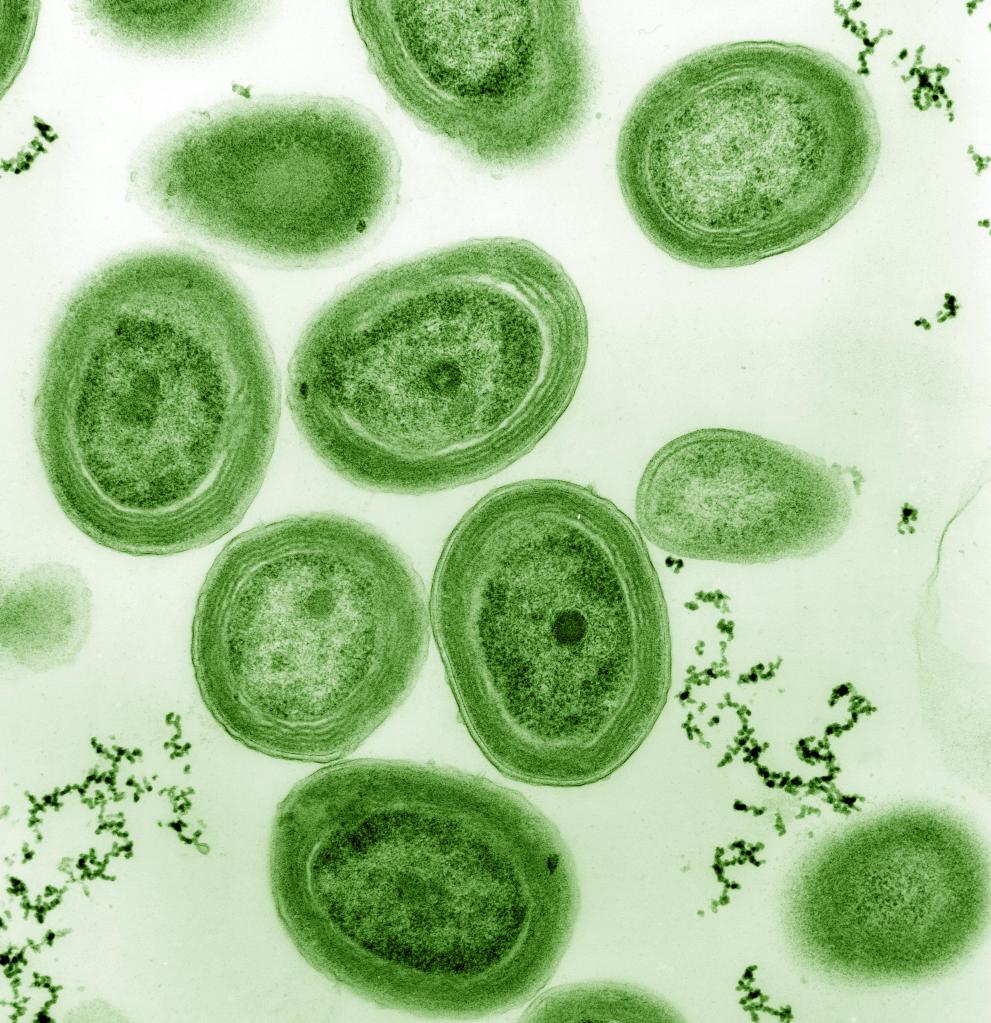
Cyanobacteria, also known as blue-green algae, are bacteria capable of oxygenic photosynthesis. Between 3.4 and 2.5 billion years ago they developed a new and very effective form of photosynthesis, which took advantage of highly abundant resources, using sunlight, water, and carbon dioxide turning it into sugar and releasing oxygen as byproduct. This is referred to as the Great Oxidation Event. You can read more about this event here, here, here, here, here, or in the book Becoming Earth by Ferris Jabr.
The atmosphere prior to the Great Oxidation Event was primarily composed of volcanic gases including nitrogen, carbon dioxide, water vapor, methane and ammonia, but almost no free oxygen. The Great Oxidation Event changed all this, but it likely took at least 200 million years.

A Microbial Great Extinction and Snowball Earth
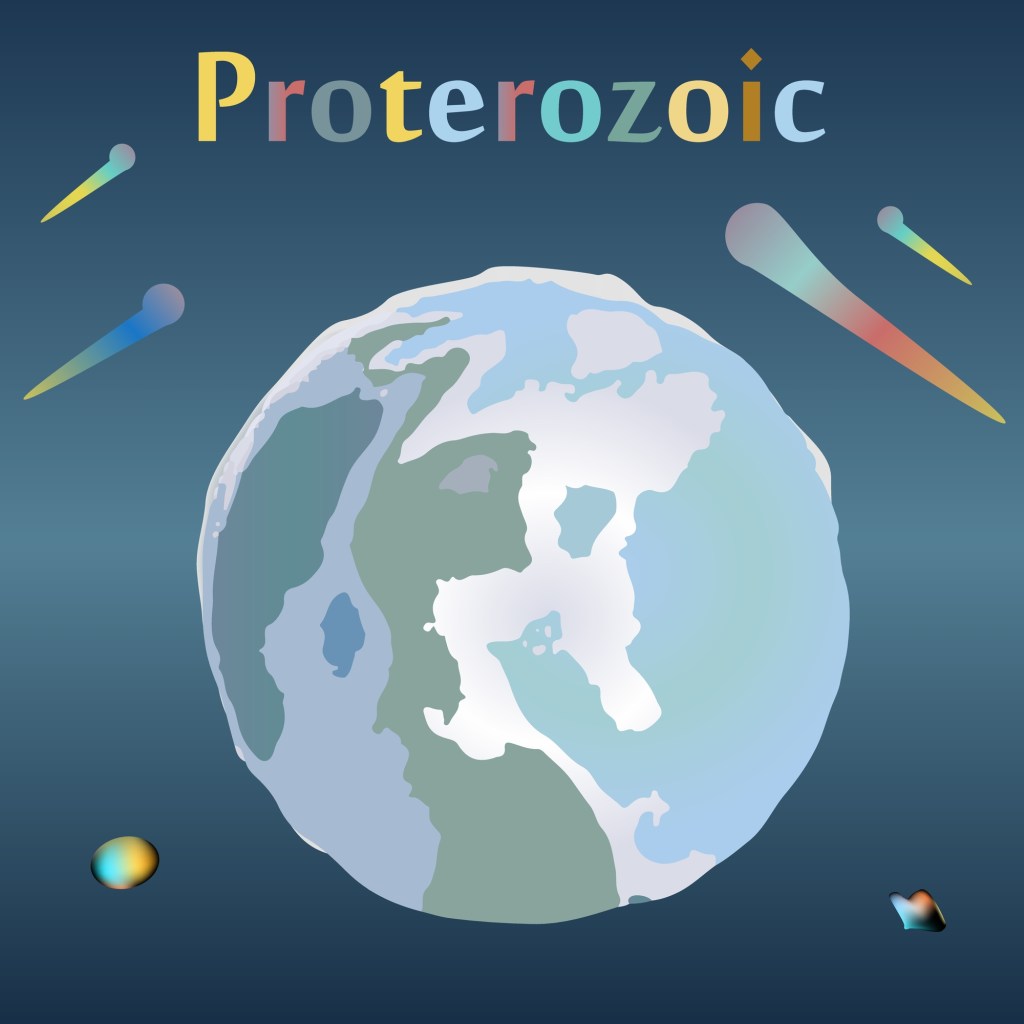
Oxygen was a toxic gas to many early microbes forcing them to adapt or perish. In addition, the change in the atmospheres composition changed the climate, resulting in a severe global cooling referred to as Snowball Earth. This caused a great extinction, perhaps the most severe extinction in Earth’s history. It is not included among the five mass extinction events in Earth’s history because it happened very early in Earth’s history when only primitive microbial life existed and fossil evidence from that time is nearly non-existent. The definition of a mass extinction event is that at least 75% of the world’s species are lost during a short period of time – geologically speaking. This period is not clearly defined but often defined to be two million years. It is very difficult to determine whether the great extinction following the Great Oxidation Event qualifies as a mass extinction event. To read about mass extinctions click here.
The Ozone Layer and the Blue Sky
Oxygen is also responsible for formation of the ozone layer in the atmosphere. The UV radiation from the sun split oxygen molecules, which consist of two oxygen atoms, into two separate atoms of oxygen, which then reacted with another oxygen molecule to generate ozone, and oxygen molecule consisting of three oxygen atoms. Ozone acts as a natural sunscreen to prevent harmful UV radiation from reaching the earth. Therefore, oxygen not only enables land dwelling complex multicell organisms to exist by allowing aerobic respiration to evolve, but also by protecting life from too much UV radiation.
As mentioned above, the atmosphere prior to the Great Oxidation Event was primarily composed of volcanic gases and almost no free oxygen. The color of the sky was likely orange, brown. As oxygen replaced the existing gases the sky slowly turned blue. Oxygen molecules along with Nitrogen molecules scatter blue light from the sun through a process called Rayleigh scattering, making the sky appear blue.
Cyanobacteria and The Great Oxygenation Event
It should be noted that there were other geological and biological processes that were responsible for this permanent shift in the Earth’s system, including changes in the composition of volcanic emissions and chemical reactions that allowed atmospheric hydrogen to escape to space, leaving behind an excess of oxygen molecules. However, whatever the exact mix of mechanisms, cyanobacteria were undoubtedly a critical source of accumulating oxygen. It is possible that tectonic activity altered the cycling and distribution of phosphorus and other nutrients essential for cyanobacteria. To read more see the book Becoming Earth by Ferris Jabr.
To see the other Super Facts click here

 Super Facts
I had heard of Snowball Earth, but did not understand the full picture, so thanks for this info, Thomas!
It’s good to know that despite multiple extinctions, there is still life on earth. It will continue in some form despite the damage we are doing now.
LikeLiked by 2 people
Thank you so much Audrey. Not many of microbes (other than cyanobacteria) survived the atmosphere filling up with oxygen and then the snowball earth that followed. I’ve read (but didn’t quote) that 99% of life died out. But it paved the way for complex life. We are warming the globe at a pace many times faster, even thousands of times faster than what is typical for natural warmings, but it looks like we are slowly turning things around. Hopefully, we will not destroy our grandchildren’s future.
LikeLiked by 2 people
Hi Thomas, I did not know this is how the earth changed to an environment able to sustain life as we know it. Very interesting.
LikeLiked by 2 people
Neither did I until I read about it a couple of years and then I read another book on the subject last week “Becoming Earth”. I will soon write a book review.
LikeLiked by 1 person
I look forward to that book review and I will probably purchase it. This topic really interests me.
LikeLiked by 2 people
Thank you Robbie. I just need to get it done. I haven’t started writing it yet.
LikeLiked by 1 person
Takes me back to university biology. 😊 Maggie
LikeLiked by 2 people
I can imagine. Biology is very interesting. My younger son is studying biology. I studied physics and electrical engineering at my Universities, so I did not know about this stuff until fairly recently.
LikeLiked by 2 people
Hey thomas oh wow all of these posts look interesting 😀 missed you around!
LikeLiked by 2 people
Thank you so much for your kind comment Anna
LikeLiked by 2 people
Of course have a great weekend stay interesting 😀
LikeLiked by 2 people
Have a great weekend you too Anna
LikeLiked by 2 people
Absolutely fascinating Thomas I was not aware of any of this…Looking forward to your review of “Becoming Earth” I suppose everything has to be aligned which is probably why other planets cannot sustain life like we do on earth …Just image if it had have been there would be lots of earths surrounding us in the solar system…
LikeLiked by 2 people
Yes you are right. Earth is in the Goldilock zone to start with, and other things had to go right. I will get to the review of Becoming Earth soon.
LikeLiked by 2 people
The more I know I find all this extremely fascinating mainly thanks to your posts, Thomas you are opening another world for me 🙂 x
LikeLiked by 2 people
Thank you so much for your very kind words Carol
LikeLiked by 2 people
Well deserved, Thomas have a lovely day 🙂 x
LikeLiked by 2 people
Thank you so much Carol and have a lovely day you too
LikeLiked by 1 person
Thanks for the fascinating look at the role cyanobacteria played in creating oxygen and the ozone layer. I had not realized that the Great Oxidation event might have qualified as a mass extinction event, though it does make it sense how it might.
LikeLiked by 2 people
Thank you David. I should say that it was a very drawn out process, at least 200 million years, and the snowball earth that followed lasted a long time. Even though the scientists in the field guess that 99% of all life / microbes died out that is not known for sure, and also it took much longer than the 2 million years (or less) typically used to define a mass extinction event, so it is not counted as one of the five mass extinction events.
LikeLiked by 1 person
It’s bacteria’s world. We just live in it.
I would love to be able to go back in time and look at some of these extreme periods in Earth’s history like the Snowball Earth or the collision that produced the Moon or the Late Heavy Bombardment. From a safe remove of course.
LikeLiked by 2 people
That is a very good point, we live in the bacteria’s world. I agree with you, I would like to go back at see Earth’s history. Luckily some clues are left behind that the scientists can study.
LikeLiked by 1 person
Charlee: “Wow, those are some busy bacteria. Almost as busy as Oona.”Oona: “ALMOST.”
LikeLiked by 2 people
Oona is certainly changing planet Earth, for the better
LikeLiked by 1 person
It’s humbling to realize that the oxygen we breathe today owes its origin to tiny cyanobacteria — quiet microbes that reshaped the world. The insight that their action affected everything from sky colour to complex life makes this article a gentle reminder of life’s fragile roots. Thank you, Thomas for sharing such an eye-opening perspective.
LikeLiked by 1 person
“quiet microbes that reshaped the world” – that is a good way to put it. Thank you so much for your kind words Livora.
LikeLiked by 1 person
Thank you, Thomas. It’s always a joy to learn something that changes how we look at the everyday world, even the air we breathe.
LikeLiked by 1 person
Yes I feel the same way. I am curious. Thank you so much Livora.
LikeLiked by 1 person
This is so interesting and totally new to me. It’s crazy how every small thing has its role.
LikeLiked by 1 person
Yes, some say we live on the planet of the microbes.
LikeLiked by 1 person
You never cease to fascinate Thomas. Thank you for explaining all of this to us. Not typical things one would look up. 😊
LikeLiked by 1 person
Thank you Debby. I missed this too until recently. I guess you have to take a college class in biology to find this out. We often miss the most fascinating things by not studying every subject. I am trying to be a suoer fact hunter.
LikeLiked by 1 person
You are a super fact hunter. And thank you for laying it out for us who missed the biology classes. 😊
LikeLiked by 1 person
Ha ha thank you Debby
LikeLiked by 1 person
Just sayin’ 😊
LikeLiked by 1 person
Interesting information!
LikeLiked by 1 person
Thank you Dawn
LikeLike