Life Must Have Hydrogen Oxygen Carbon Nitrogen and Phosphorus

The goal of this blog is to create a list of what I call super facts. Important facts that we know to be true and yet they are surprising, shocking or disputed among non-experts. Special facts that any well-informed person should know. 

  • Paperback –  $18.95 on Amazon – future release March 25, 2025.
  • Hardcover –  Publisher : Princeton University Press; First Edition (September 12, 2023), ISBN-10 : 0691177295, ISBN-13 : 978-0691177298, 240 pages, item weight : 1 pounds, dimensions : 5.75 x 1 x 8.5 inches, it costs $18.95 on Amazon. Click here to order it from Amazon.com.
  • Kindle –  Publisher : Princeton University Press (September 12, 2023), ASIN : B0C5SBB26C, 229 pages, it costs $15.37 on US Amazon. Click here to order it from Amazon.com.
  • Audio –  Publisher : Princeton University Press (September 19, 2023), ASIN : B0CF6WHBVX, listening length 7 hours, narrator : Christopher Ragland, it costs $0.99 on US Amazon. Click here to order it from Amazon.com.
A picture of planet earth, the title and the subtitle “How Five Elements Changed Earth’s Past And Will Chape Our Future” The letters H, N, C, P, O are circled | Life Must Have Hydrogen Oxygen Carbon Nitrogen and Phosphorus
Front cover of Elemental. Click on the image to go to the Amazon page for the hardcover version of the book.

Amazon’s description of the book

It is rare for life to change Earth, yet three organisms have profoundly transformed our planet over the long course of its history. Elemental reveals how microbes, plants, and people used the fundamental building blocks of life to alter the climate, and with it, the trajectory of life on Earth in the past, present, and future.

Taking readers from the deep geologic past to our current era of human dominance, Stephen Porder focuses on five of life’s essential elements—hydrogen, oxygen, carbon, nitrogen, and phosphorus. He describes how single-celled cyanobacteria and plants harnessed them to wildly proliferate across the oceans and the land, only to eventually precipitate environmental catastrophes.

He then brings us to the present, and shows how these elements underpin the success of human civilization, and how their mismanagement threatens similarly catastrophic unintended consequences. But, Porder argues, if we can learn from our world-changing predecessors, we can construct a more sustainable future.

Blending conversational storytelling with the latest science, Porder takes us deep into the Amazon, across fresh lava flows in Hawaii, and to the cornfields of the American Midwest to illuminate a potential path to sustainability, informed by the constraints imposed by life’s essential elements and the four-billion-year history of life on Earth.

This is my five-star review for the book Elemental

The Story of HOCNP the Five Elements Essential to all Life

The author, a biogeochemist, explains why five elements, hydrogen (H), oxygen (O), carbon (C), nitrogen (N), and phosphorus (P) are essential to all life. As an example, in the sunlit waters of the central equatorial Pacific Ocean, a lack of Nitrogen creates a water desert with no life. Lifeforms that are able extract more of these elements have a competitive advantage.

This book focuses on three world-changing organisms that were able to extract unprecedented amounts of these elements from the environment also resulting in success and huge increases in the total mass of lifeforms, as well as consequences causing mass extinction eventually followed by an entirely new planet. Note this book is not about mass extinctions, which have happened at least five times, but something more profound. It is about planet-changing events.

During the first two billion years of earth’s history there had been no oxygen in the environment; oxygen was always bound to some other atom, such as hydrogen in water. There was life back then but in the form of primitive bacteria using a primitive form of photosynthesis involving sulfur. Then came cyanobacteria which had invented a more effective form of photosynthesis, as well as a way of extracting nitrogen using a process called nitrogen fixation. The two-atom nitrogen in the air is nearly inert and very difficult to use. This made cyanobacteria extremely successful.

However, one consequence was that the carbon dioxide was largely removed from the atmosphere, while the atmosphere was filled up by oxygen, which is a byproduct of the new form of photosynthesis. Carbon dioxide is a greenhouse gas that warms the planet, something scientists had already figured out in the 1850’s. With much less carbon dioxide, the earth got very cold, and a snowball earth disaster followed. However, in the long run the oxygen paved the way for the existence of multicellular life and animals. The planet changed.

About 400 million years ago plants was a new type organism that was able to extract water (hydrogen and oxygen) from land as well as phosphorus. Their success led to another depletion of carbon dioxide causing another ice period, but they paved the way for life on land. The planet changed again. Now humans, the third type of organism, are extracting all five elements in unprecedented amounts causing global warming and other unintended consequences.

Unlike cyanobacteria and plants, we are not doing this to primarily extract nutrients but for transportation, heating and consumer products and we can control and predict the consequences of our actions.

As evidence for global warming / climate change the author discusses the temperature measurement records of various organizations (NOAA etc.). That is the smoking gun.

However, he also mentions things like the fact that the vast majority of glaciers in the world are retreating or disappearing and the fact that anyone above the age of 50 who comes from a northern climate (that would be me) can attest to the fact that winters have gotten noticeably shorter snow seasons and warmer summers. That is true and it is a good thing to mention because there are those who are quick to dismiss temperature records as big hoaxes.

The second part of his global warming discussion, the evidence that we humans are the cause of the current warming, leaves something out in my opinion. He explains why the various climate models provide incontrovertible evidence that the chief cause for the current global warming is our burning of fossil fuels, despite the models being far from perfect. I totally agree with that, but once again there are those who are not willing to accept climate models as solid evidence, and therefore you should mention other evidence as well, which he does not do.

Examples of evidence that we are the cause and that does not involve complex models would be, no known natural cause can explain the current warming, the upper troposphere is cooling while the lower troposphere is warming, the arctic is warming much faster than average, nights are warming much faster than days, etc. Those are things that would not happen if the cause was a hotter sun (which we also kept a record of) or an orbital cycle.

In addition, spectral analysis shows the cause to be the adding of greenhouse gases to the atmosphere, and various isotope studies show that the carbon emissions come from the burning of hundreds of millions of years old carbon. Why not mention that as well? I know all this is baked into the models, but simple explanations appear more convincing to many. I am not taking off a star for it, but I felt it was a missed opportunity.

One environmental threat that you don’t hear much about is the depletion of phosphorus. This is something that may be far into the future but something that seems impossible to solve once it arrives and could evolve into an enormous food crisis. This was certainly a unpleasant surprise to me.

The book explains many processes and concepts, biogeochemistry, primitive photosynthesis using sulfur, photosynthesis using water (cyanobacteria) and releasing oxygen, nitrogen fixation, endosymbiosis, how plants extract phosphorus from the ground, the evolution of plants, the slow carbon cycles, the fast carbon cycle, the effect of volcanoes on climate, respiration, why can trust certain aspects of climate models, nitrogen fixation, nitrogenase, the immense effect fertilizers have had on food production, the Haber-Bosch process, earth’s climate history, why phosphorus is both finite and irreplaceable, the danger to aquifers, how we have changed ecosystems, and more.

Despite that the author makes himself understood. He explains complex concepts, so they are easy to understand and connects them all in a logical way that makes a lot of sense. So don’t be afraid that the book will be difficult to read. You may just learn a lot.

The author considers climate change / global warming to be our most serious environmental challenge, but he offers a lot of suggestions for a way forward. He discusses a lot of interesting technological solutions. I think he may be a bit gloomier than necessary but overall, what he says is very insightful and somewhat hopeful.

Again, I was very impressed by the organization of the book. It is easy to create a mess when you try to connect a lot of different concepts and complex science into a logical narrative, but he was very successful. It was a delight to read this book, it was interesting and full of facts, which were new to me, and I think are very important. I learned a lot and I think it is a very well written page turner.

The back cover advanced praise for the book.
Back cover of Elemental. Click on the image to go to the Amazon page for the kindle version of the book.

To see the Super Facts click here


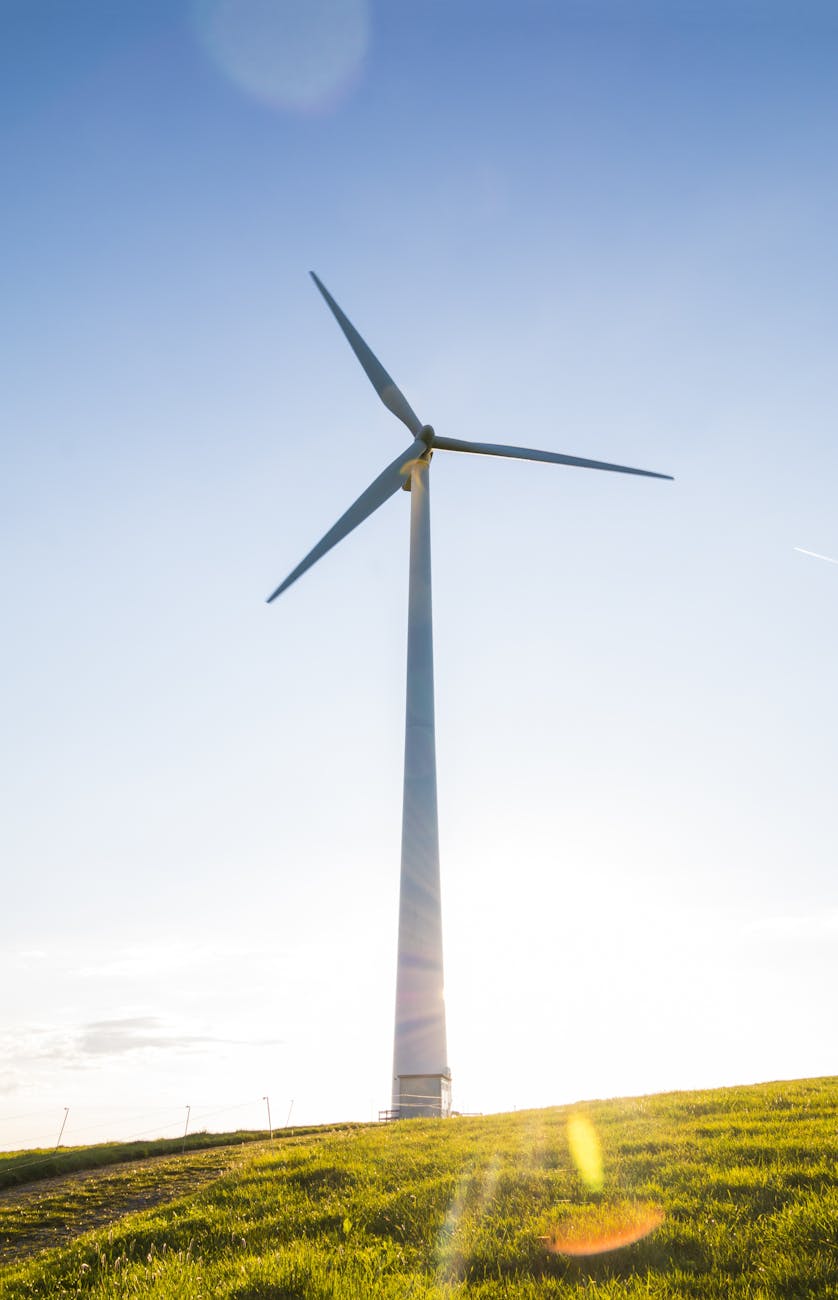
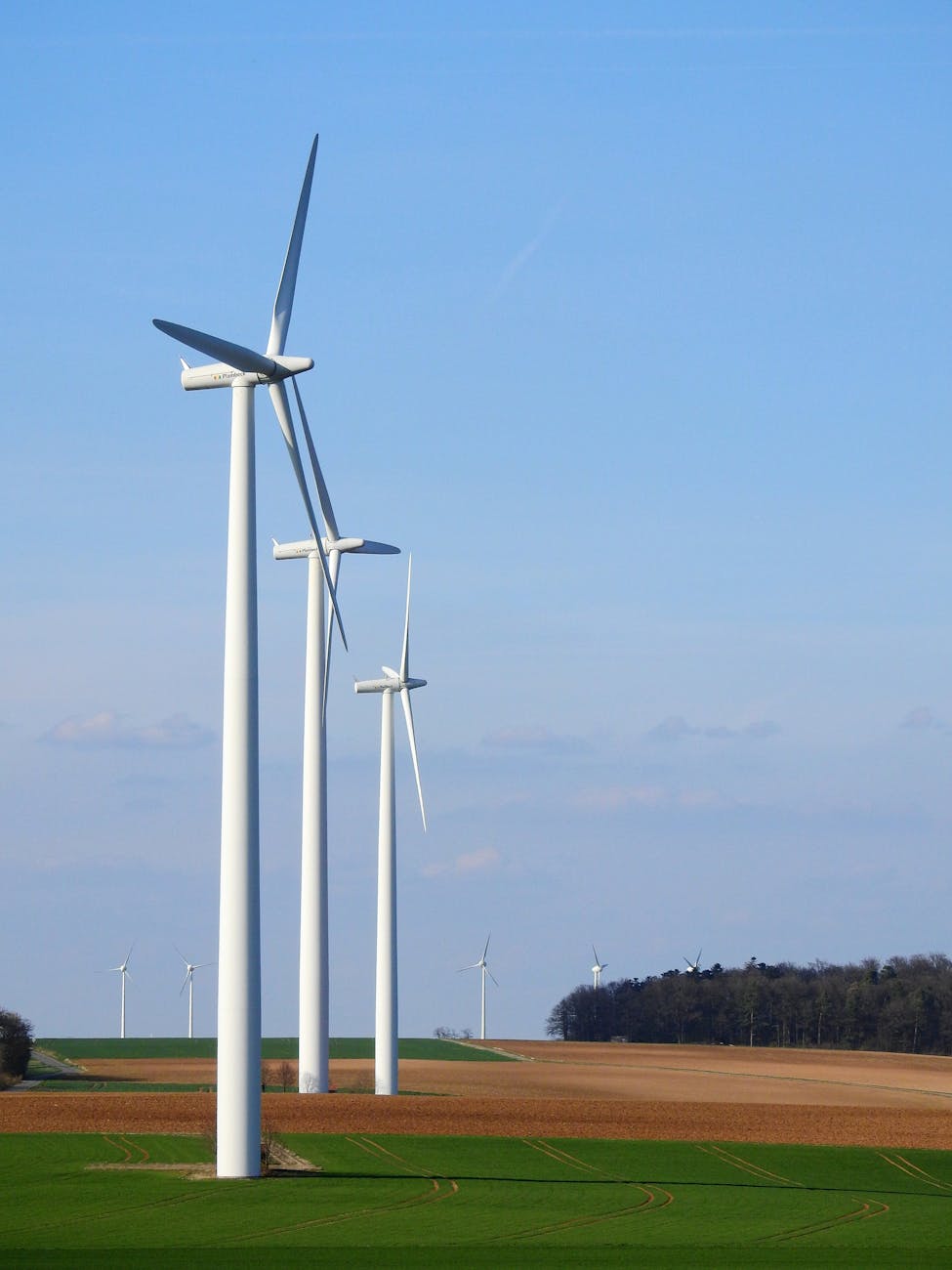
Wind power is providing more than a quarter of Texas Power

Superfact 16: Wind power is providing more than a quarter of Texas Power. In 2023, wind represented 28.6 percent  of Texas energy generation. In 2022, wind power accounted for about 25 percent  of Texas’ energy generation.

I am referring to this fact as a super fact because, it is true, important, and yet it’s a fact that is difficult to believe for many people. That wind power, allegedly a marginal energy source, is successful in fossil fuel loving Texas is hard to believe. I have come across what appears to be well informed people who were certain it was nonsense. However, as you can see from the Texas government links above, it is true, something they could not dispute.

The reason for the success of wind power in Texas is economics, which is another fact that may be surprising to some. Fossil fuels are a major source of income for us in Texas, but everyone also wants to save money. Texas has its own electric grid, it’s deregulated, and organized along free market principles.  

When companies sell their energy (to ERCOT) it works like a continuous auction. The one with the lowest price is picked first and allowed to contribute with whatever they are able to and also, of course, considering what the grid-powerlines can carry safely. Naturally, the price of wind in Texas includes federal subsidies, which make it even cheaper.

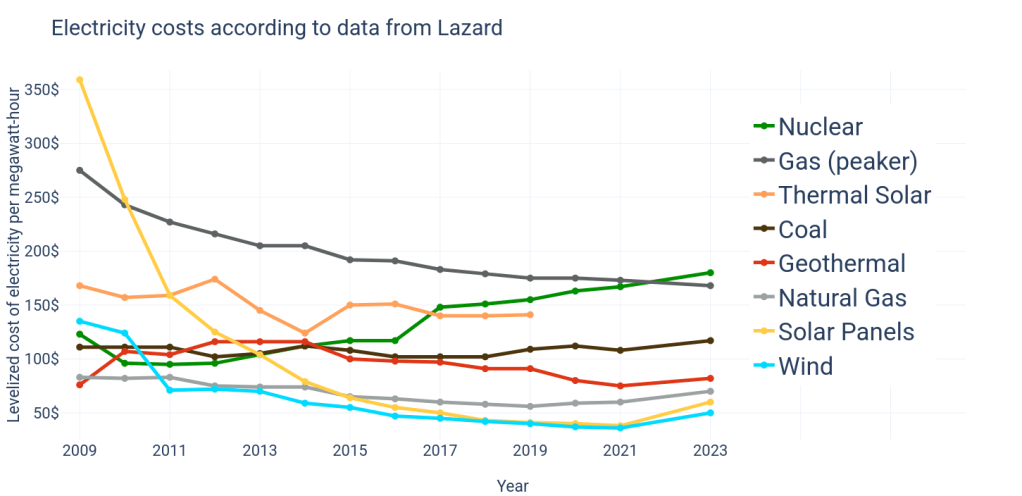
However, all energy sources are subsidized, and fossil fuels have a long history of government subsidies. Below is the average unsubsidized levelized cost of energy according to Lazard. Levelized means that construction costs, land rent, and other costs not directly caused by electricity generation are taken into consideration. Notice how cheap wind is (blue line). This is for the United States not just Texas. I don’t have any numbers, but I’ve heard that for Texas solar is the cheapest .

The image shows 8 graphs representing the price of Nuclear, Gas (peaker), Thermal Solar, Coal, Geothermal, Natural Gas, Solar Panels, and Wind. Today Wind is the cheapest.
Average unsubsidized levelized cost of energy. Notice that the light blue line indicates that wind power is pretty cheap. Mir-445511, CC BY-SA 4.0 https://creativecommons.org/licenses/by-sa/4.0, via Wikimedia Commons.

Affordability

Windpower is not only relatively cheap. Wind power is one of the most efficient and sustainable energy sources available. The energy required to manufacture, install, and maintain wind turbines is small compared to the energy they produce over their lifespan. This is known as their energy return on investment (EROI), which is quite favorable for wind energy.

The Institute of Environmental Management and Assessment (IEMA) states that the average wind farm will pay back the energy that was used in its manufacture within 3-5 months of operation. This article in the journal Renewable Energy found that the average windfarm produces 20-25 times more energy during its operational life than was used to construct and install its turbines. It included data from 119 turbines across 50 sites going back 30 years.

Wind power is providing more than a quarter of Texas Power
Photo by Pixabay on Pexels.com

False Claims

It is important to be aware that there are many false claims floating around about wind power. The sound from wind power stations does not cause cancer, it does not use any other energy sources while operating; it solely harnesses the kinetic energy from the wind to generate electricity, meaning it only relies on wind to function as its primary energy source. Windpower is not a major cause if bird deaths. To read more about false claims about wind power click here.

Wind power is providing more than a quarter of Texas Power
Photo by Pixabay on Pexels.com

There are positive and negative aspects of wind power, like any other source of energy. One issue with wind power (and solar) is that it is an intermittent source of energy. When the wind is not blowing you need other sources of energy (until there is sufficient energy storage). This is less of a problem when you have a mix of energy sources as Texas does.


To see the other Super Facts click here


The Bizarre Reality of Black Holes

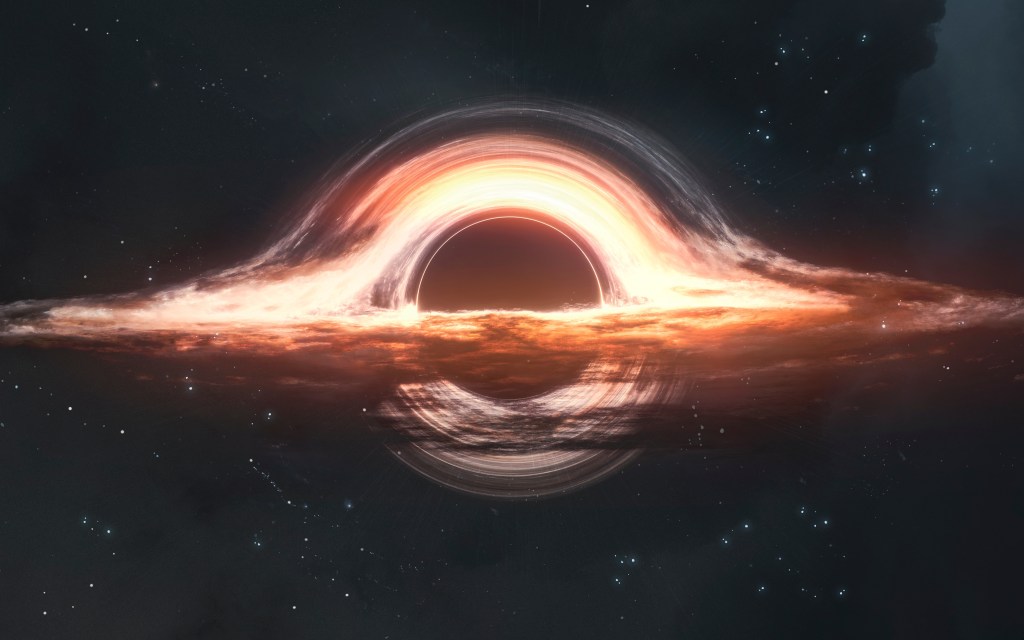
A black hole with a large bright accretion disk | The Bizarre Reality of Black Holes
3D illustration of giant Black hole in deep space. High quality digital space art in 5K – realistic visualization. Stock Illustration ID: 2476711459 by Vadim Sadovski.

Superfact 15: A black hole is a region of spacetime wherein gravity is so strong that nothing can escape it, not light, not anything. There are different kinds of black holes. We don’t fully understand black holes, which makes them very interesting to science. The boundary of no escape is called the event horizon.  Black holes are invisible. They are truly black. However, we can see what they do to their environment as they consume surrounding matter. Below are some bizarre facts about black holes.

  • Time runs much slower closer to a black hole.
  • An object falling towards a black hole will become redder, faint, then infrared, then invisible and all its movements and clocks will freeze.
  • From the perspective of an outside observer, time appears to stop for someone reaching the event horizon of a black hole. Time will continue for someone falling in.
  • At the center of a black hole may lie a gravitational singularity, a region where the spacetime curvature becomes infinite. However, since we cannot peer into a black hole we cannot know.
  • The largest known black hole (TON 618) is more than 287 million times more massive than the most massive known star (R136a1).
  • If our planet earth collapsed into a black hole, it’s diameter would  be 1.75 centimeters or 0.69 inches in diameter. The diameter of the largest known black hole (TON 618) is 242 billion miles, which is more than one million times larger than the distance from the earth to moon.
  • There are supermassive black holes located at the center of most large galaxies, including our Milky Way. The Milky Way’s black hole is about 4 million times the mass of the Sun.
  • Astronomers estimate that there are around 100 million black holes in our Milky Way.
  • When an object (maybe a spaceship, or a person) approaches or falls into a black hole the difference between the gravity on the parts closer to the black hole and those further away will be so large that the object is stretched and ripped apart. This is called spaghettification.
  • Stretching from the event horizon and out another half radius of the black hole is a region called the photon sphere. In the photon sphere light will travel in a non-stable circular orbit around the black hole. Light will go around and around for a while. If you are in the photon sphere you might be able to see the back of your head.
  • Above is just a small sample of weird black hole facts.
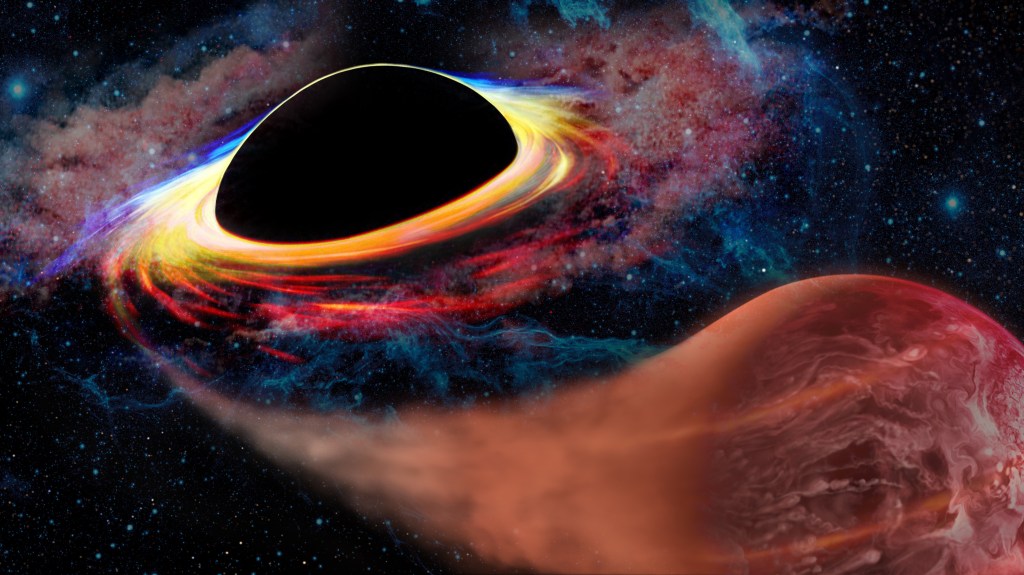
A black hole sucking in a planet
The understanding of black holes requires the General Theory of Relativity, and it is still a lot we don’t understand about them. Stock Photo ID: 2024419973 by Elena11

The Bizarre Reality of Black Holes

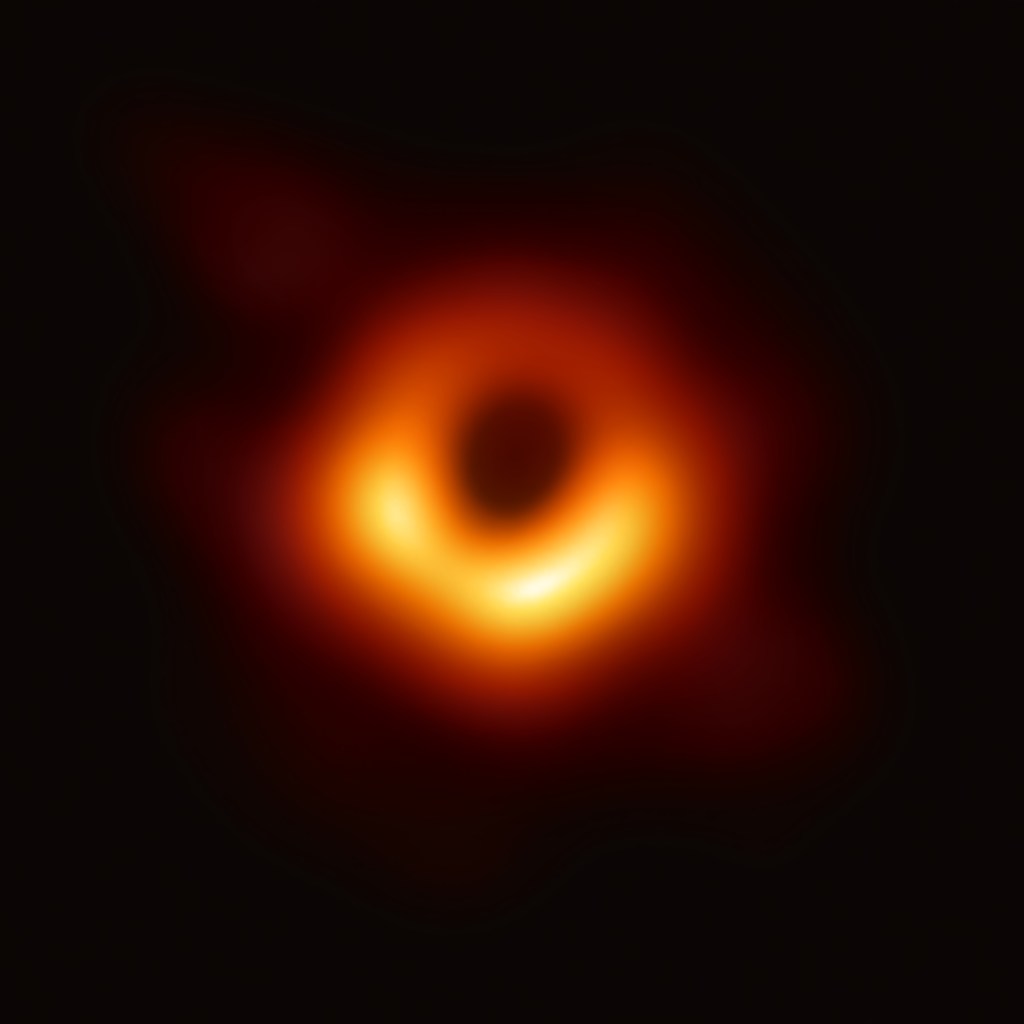
I chose the Bizarre Reality of Black Holes as a super-fact and included the ten facts above because these facts are shocking and yet not well known. Below is a photograph of a supermassive black hole at the center of the galaxy M87 taken by the event horizon telescope in 2017. To create the picture below image processing was needed. It is the first photograph of a black hole. This supermassive black hole is an estimated 6.5 billion times as massive as our sun, and 28 million times as massive as the largest known star.

The supermassive black hole at the center of the galaxy M87 taken by the event horizon telescope in 2017 | The Bizarre Reality of Black Holes
The photo of the supermassive black hole at the center of the galaxy M87 taken by the event horizon telescope in 2017. Uploader cropped and converted TIF to JPG – This file has been extracted from another file, CC BY 4.0, https://commons.wikimedia.org/w/index.php?curid=77925953.

Below is an animation created by NASA that depicts what an observer falling into a black hole would see.

The fact that from the perspective of an outside observer, time appears to stop for someone reaching the event horizon of a black hole seems to prevent anything from falling into a black hole from an outside perspective. How does anything ever get inside the black hole if it freezes up at the event horizon? Black holes grow, they collide and merge, so clearly things can get inside, right? But how? As I tried to find the answer to this question, I found that I was far from the only one asking this question.

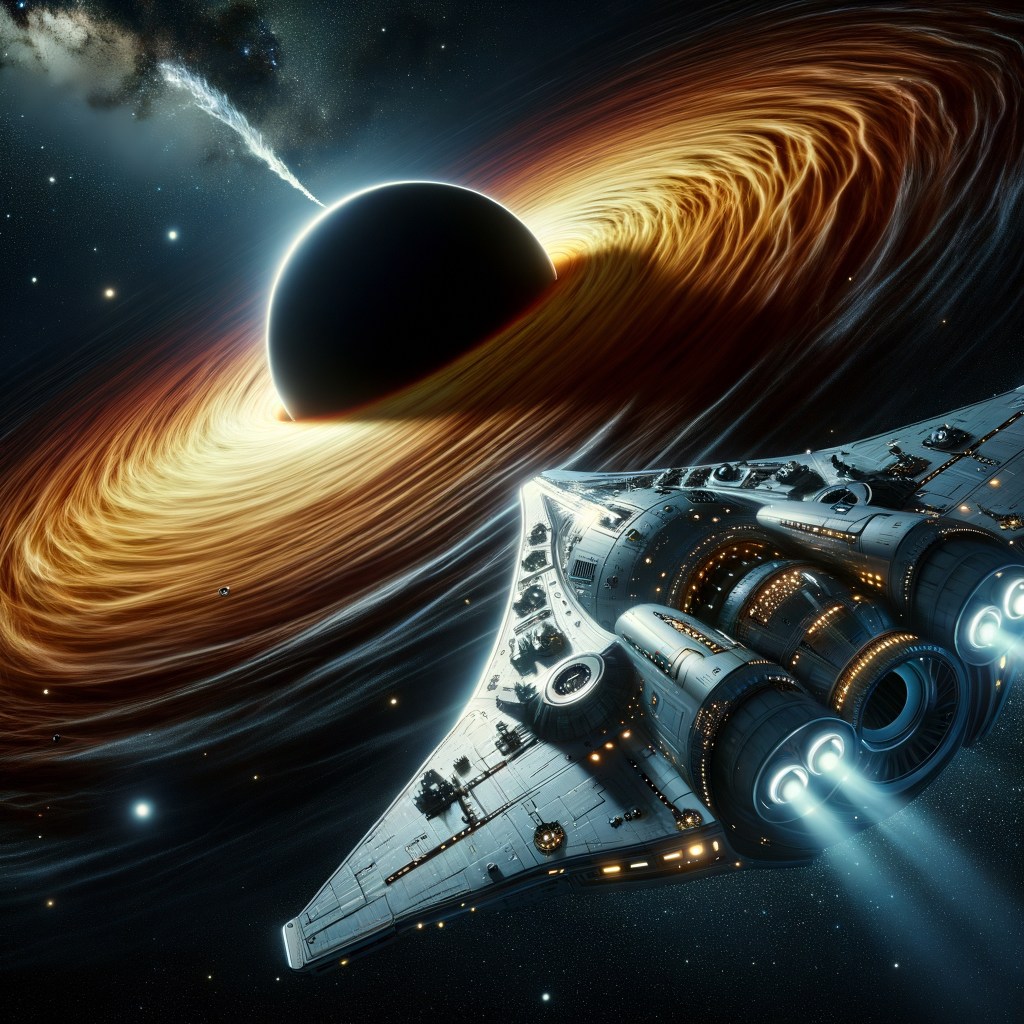
A black hole with an orange accretion disk is approached by futuristic starship.
Realistic spaceship approaching a black hole. This content was generated by an Artificial Intelligence (AI) system. Stock AI-generated image ID: 2448481683 AI-generated image Contributor Shutterstock AI Generator.

I searched physics forums trying to find the answer to this question. There were a lot of discussions but no clear answers. Some said, nothing falls into a black hole. Everything accumulates on the event horizon from the outside perspective and that’s how the event horizon and the black hole grows. The observer crossing the horizon essentially jumps infinitely far into the future, or into a different universe, that’s how he can pass through the event horizon.

Others said that the black hole is not static, it grows, and it shrinks from Hawking radiation, and this complicates the equations so that objects can enter the black hole even from an outside perspective. I have a few physics books on black holes that I have not finished reading. If I learn something better, I will update this post.

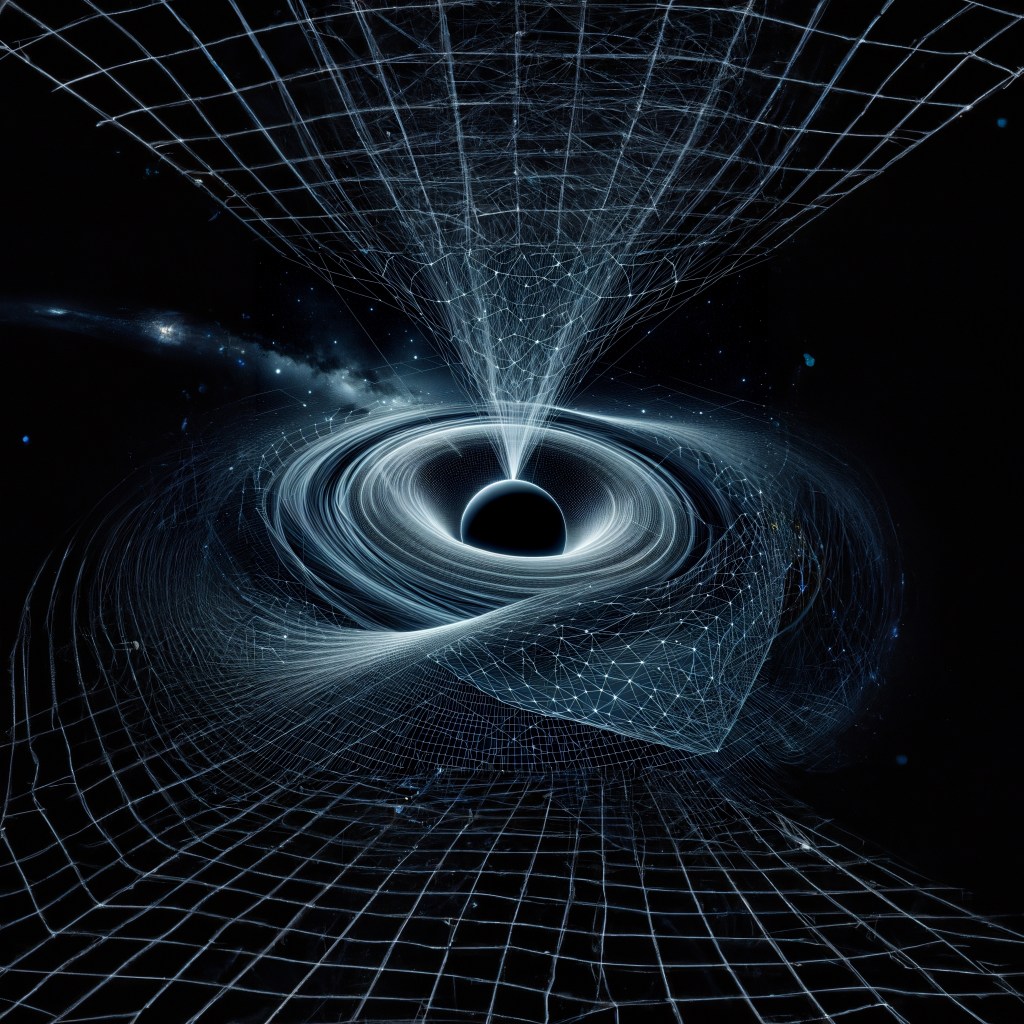
A depiction of a black hole surrounded by a space-time geometric grid that is bending due to gravity | The Bizarre Reality of Black Holes
AI-generated image Description : Space Black Hole Blue Illustration Gravity Geometry Vast Line. Stock AI-generated image ID: 2457551367 by AI-generated image Contributor Shutterstock.AI

In the image above the grid demonstrates how a black hole is distorting space-time. Other strange facts about black holes are that they are slowly evaporating through what is called Hawking radiation.

They come in different sizes. The smallest known black hole (XTE J1650-500) has a diameter of approximately 15 miles. Perhaps scariest of all, black holes are nearly undetectable unless they are feeding on star dust or tugging on nearby stars. That means one hungry black hole could be zipping right through our solar system without us knowing. Considering there are an estimated 100 million black holes in our Milky Way space travel might be scary.

Addressing a Good Question

After posting this post I received a question via email regarding this fact “If our planet earth collapsed into a black hole, its diameter would  be 1.75 centimeters or 0.69 inches in diameter. The diameter of the largest known black hole (TON 618) is 242 billion miles, which is more than one million times larger than the distance from the earth to moon.” The person who asked thought that 1.75 centimeters was pretty tiny and was wondering how a black hole could be that small.

To create a black hole, you need extremely strong gravity and one way to increase the force of gravity at the surface of a planet is to compress all its mass into a smaller volume.

If you compressed all of earth’s gravity so its diameter was only half of what it is, it would be more compact, and the gravity would be four times stronger at earth’s surface. If you compressed it further so that the earth’s diameter would only be a fourth of its original diameter the gravity at the surface would now be 16 times stronger. If you keep compressing the earth until its diameter is only 1.75 centimeters the force of gravity at the surface would be 132,000 trillion times greater than it currently is according to Newtonian physics, and you would get a black hole.

I should say that it comes out differently with General Relativity and that number is different for different sized black holes. However, this calculation is for demonstrative purposes. For relatively small masses like a planet, you would have to compress so much that it becomes tiny before gravity becomes large enough to make a black hole.


To see the other Super Facts click here


If you were an astronaut on an interstellar journey, would you be afraid of falling into a black hole?

David Lee Summers and the NEID spectrograph

A couple of weeks ago I made a post about exo planets. My blogger friend and Astronomer David Lee Summers stopped by and mentioned that investigating exo planets was his day job. He is working with the NASA-funded NEID spectrometer. He also happens to be an author of several science fiction books and scifi-horror books. Below is the front cover of one of his books. This is a reblog of one of his posts regarding NEID spectrometer. Head over there and check it out.

The NEID fiber feed (Port Adaptor) mounted on the WIYN telescope obtained during commissioning of the instrument. The Port Adaptor feeds light from the telescope to the NEID instrument, which is located on another floor of the building, below the telescope. The WIYN 3.5-meter Telescope at Kitt Peak National Observatory is located near Tucson, Arizona.
Portion of the NASA funded spectroscope that David works with. Above is an image of the NEID fiber feed (Port Adaptor) mounted on the WIYN telescope obtained during commissioning of the instrument. The Port Adaptor feeds light from the telescope to the NEID instrument, which is located on another floor of the building, below the telescope.

The front cover of David Lee Summers book features the inside of a lerge observatory and a bird like monster roaming around inside.
Front cover of the book The Astronomer’s Crypt by David Lee Summers

Finally, I am also posting my Amazon review of the Astronomer’s Crypt (see below) as well as Amazon’s description of the book.

Amazon’s Description of The Astronomer’s Crypt

Two years ago on a stormy night, in the dead of winter, Mike Teter experienced something that would change his life forever. Mike was a telescope operator at the world renowned Carson Peak Observatory in New Mexico. We won’t tell you what he saw that night on the mountain nor what happened afterward on a dark stretch of highway, because it would haunt you just as it has haunted Mike. But what we will tell you is that Mike is back at Carson Peak. And what he witnessed that night two years ago is about to become a reality…

My Review of The Astronomer’s Crypt

To visit a more complete description of this book click here.

An Intense and Fun Horror Thriller Taking Place in an Astronomical Observatory

The protagonist Mike Teter is a telescope operator at a fictitious observatory in New Mexico, the Carson Peak observatory. The Carson Peak observatory features two large buildings hosting a 5-meter and a 2.5-meter telescope. It is located on sacred land adjacent to an Apache reservation. There are caves nearby that host ancient sacred artifacts that should not be removed from the caves. The observatory is a labyrinthine and dangerous place that appears to be haunted. There are long corridors and hidden rooms. The observatory has a history of deadly accidents. For example, a Dr. Burroughs and a graduate student had been killed there.

One day Mike has what seems to be hallucinations. A large ancient evil creature looking like a mix of a dinosaur and a bird appears before him, and he encounters a talking coyote that gives him a warning about the sacred portals, he sees the ghost of Dr. Burroughs, and he witnesses the gruesome death of his friend the Astronomer Dr. Wallerstein. He’s had enough and he quit his job only to return to it at a later time. He thought that the things he saw were just nerves. However, this time things really go amiss. A creepy but wealthy lawyer by name of Mr. Vassago is trying to acquire sacred artifacts. There are drug cartel thugs, greedy adventurers, freak accidents, severe storms, hostage situations, ghosts, and ancient evil monsters. Mike Teter is faced with a very complicated and nightmarish situation.

The story is action packed, suspenseful and features a lot of plot twists. The characters are well-developed, relatable and multi-layered. The observatory is realistically described, and it is obvious that the author is very familiar with astronomical observatories. As you read this book you will learn something about observatories as well as the job of telescope operators. The author skillfully creates a chilling scenery of a dark haunted observatory, which brought my imagination to the spaceship in the movie Alien. It is obvious that the author is highly intelligent. A lot of things happened in just a few pages, and it was difficult to put the book down. It is one of the most intense and fun horror thrillers I’ve ever read, and I highly recommend it.

About David Lee Summers

Photo of David Lee Summers author of The Astronomer’s Crypt. He is wearing glasses, a green tie, and a brown suit.

David Lee Summers is an author, editor and astronomer living somewhere between the western and final frontiers in Southern New Mexico. He is the author of twelve novels. His short stories and poems have appeared in numerous magazines including Cemetery Dance, Realms of Fantasy, Star*Line, and The Santa Clara Review.

David also edited Tales of the Talisman Magazine for ten years. When he’s not writing, he operates telescopes at Kitt Peak National Observatory.

To see the Super Facts click here

Grizzly 399 is dead

I just read the sad news 399, a female grizzly bear named after her tag number died on Tuesday October 22 at the age of 28. She was hit by a car. They are looking for her cubs. Grizzly bear 399 was arguably the most famous grizzly bear in the United States. Unlike the typical bear, Grizzly 399 regularly gave birth to triplets rather than twins.

She lived in the Yellowstone and Grand Teton national park area, near Snake River, and she was seen and admired by thousands of visitors. Her Instagram account has 55,000 followers, books were written about her and documentaries were made. She had 22 cubs throughout her life.

Grizzly 399 in the meadow. She is followed by her three cubs | Grizzly 399 is dead
Grizzly 399 with three cubs. Photo from Wikipedia by StevenPDeVries, CC BY-SA 4.0 <https://creativecommons.org/licenses/by-sa/4.0&gt;, via Wikimedia Commons

She is special to me because we also encountered her and three of her cubs during a visit to Grand Teton national park in 2007. It was a school trip organized by the math teacher and each kid was accompanied by at least one parent to give the math teacher a break. Grizzly 399 gave us a very memorable experience.

Photo including a somewhat turbulent Snake River with the Teton mountain range in the background.
My photo of the Teton mountain range taken from Snake River.

Grizzly 399 frequently sought human company. She came down to the roads with her cubs and stayed with the passersby for hours. She did not beg for food. She just wanted to stay with people and this article describes her as a gentle soul.

Grizzly bears seeking human company is normally a dangerous situation and grizzly bears seeking human company are therefore often shot to protect the public. Grizzlies are dangerous animals. They can kill people both out of aggression and for food. However, the park rangers left Grizzly 399 and her cubs alone because they deemed her harmless. She frequently interacted with people without ever showing any aggression towards people.

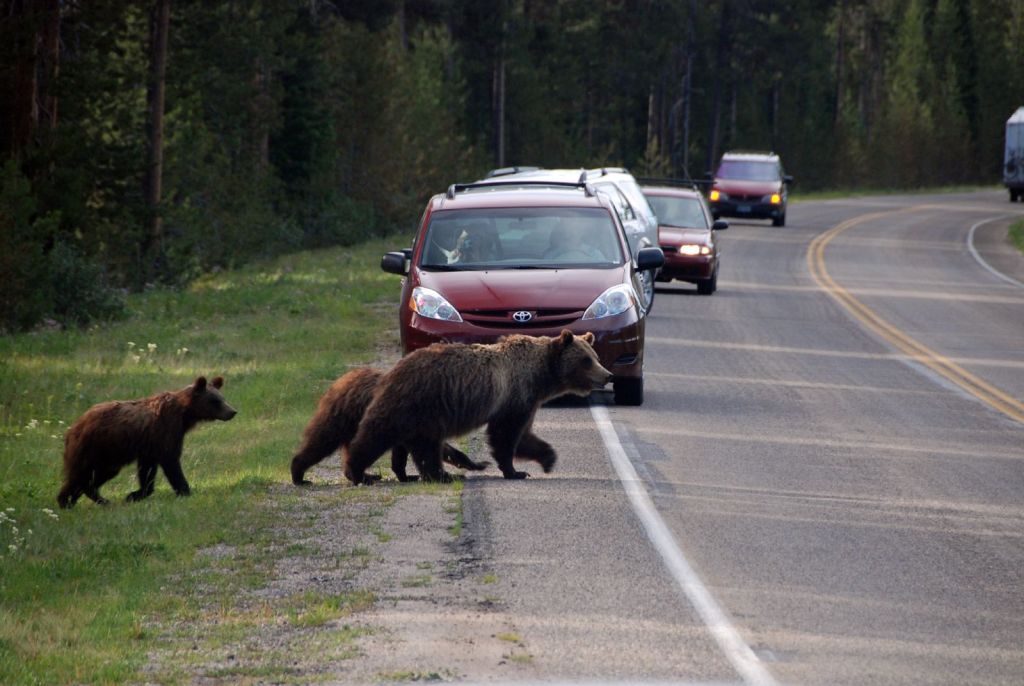
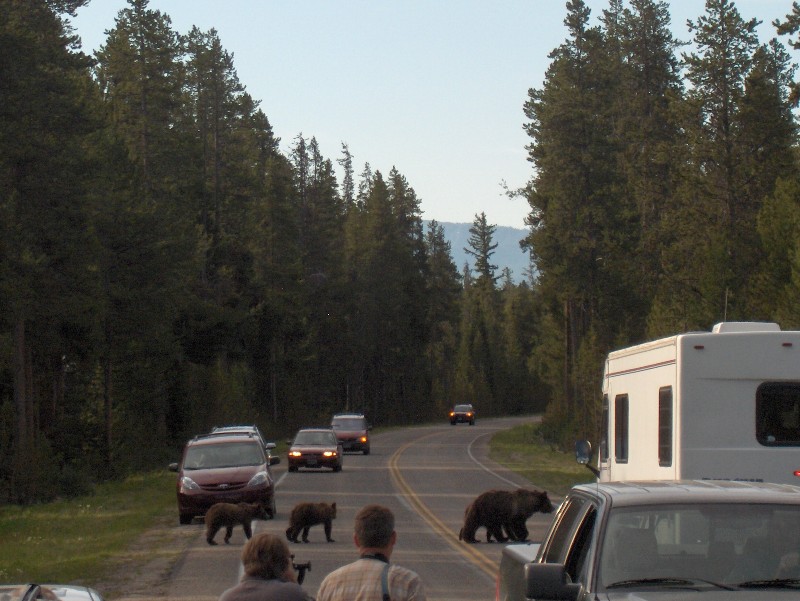
Four cars that are stopped on the road letting the grizzlies cross the road.
A photo of Grizzly 399 and a couple of her cubs taken in June 2007 by fellow trip participant Gabriel Goncalves.

Her behavior was somewhat strange, but I was told by a ranger that male grizzlies sometimes kill cubs, and this was her way of protecting the cubs. Grizzlies tend to stay away from people, except her, so she used people as a shield to protect her cubs.

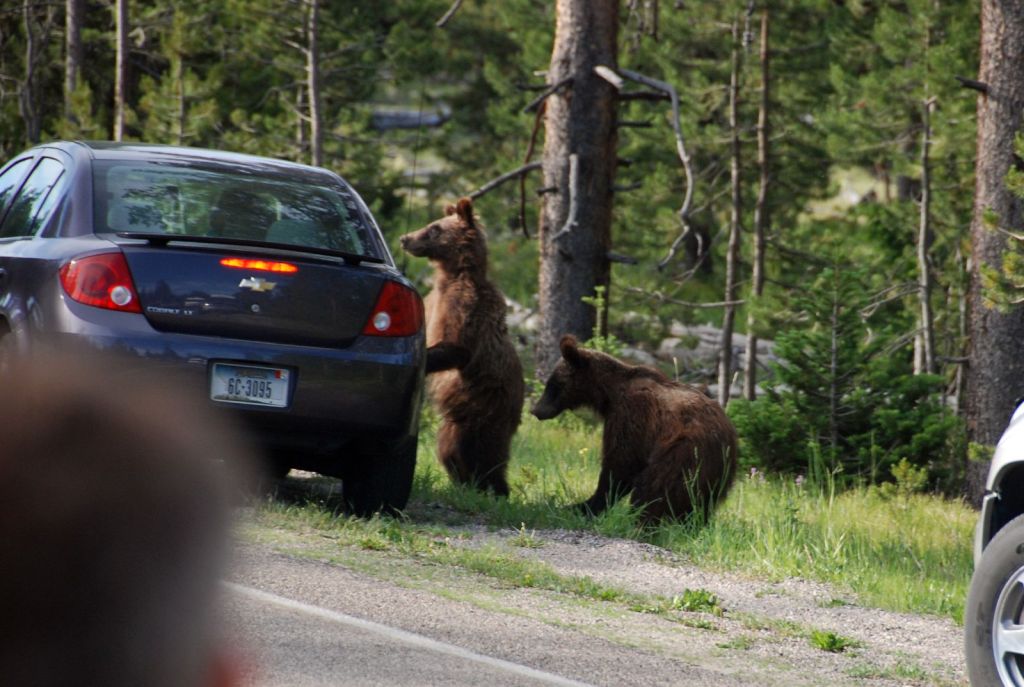
One grizzly cub is looking in the window of a blue car. The other one is right behind.
A photo of two of 399’s cubs. The photo was taken in June 2007 by a fellow trip participant Gabriel Goncalves.

One ranger told us a story about 399 that sounded a bit scary. A hiker, hiking alone (which you should not do) stumbled upon 399 and her cubs as they were in the middle of eating an Elk carcass. He had come out of a thicket and had not seen them until he essentially bumped into them. He screamed on top of his lungs because he was shocked and started running. 399, who was equally startled, pursued him. He laid down on the ground as he had read that he should do when pursued by a grizzly. 399, sniffed him but did not touch him. Her two cubs bit his behind but not hard.

After the grizzlies had left, he stood up, walked away and went to a hospital to check out the bites on his bum, which allegedly were not bad.

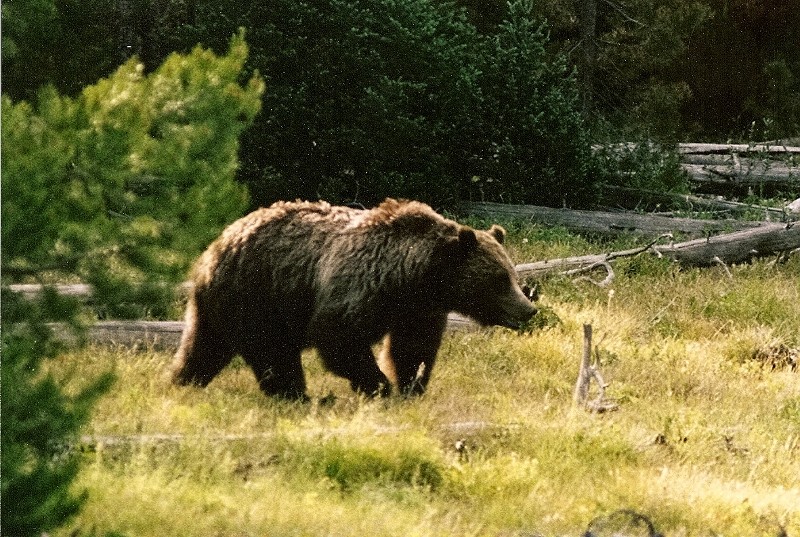
Shrubs, bushes and trees and a grizzly bear walking in the middle. There are cubs behind her, still in the bushes | Grizzly 399 is dead
399 is approaching the road. Her cubs are in the background. The photo was taken in June 2007 by a fellow trip participant Gabriel Goncalves.

As for us, we had a somewhat scary experience with Grizzly 399, but as it turned out, we were never in any danger. Someone that he had seen enough and decided to leave, so he drove his car, with a trailer in between 399 and her cubs. Someone rightly thought that was dumb and decided to improve the situation by angrily honking.

As a result, 399 started running towards us, the large group of tourists standing outside taking pictures. People started screaming and running, and unfortunately the math teacher who had organized the trip fell and got trampled by the panicking people.

Six cars a car with a big trailer and a grizzly mother and three cubs on the road | Grizzly 399 is dead
399 is crossing the road with her cubs. The photo was taken in June 2007 by a fellow trip participant Gary Weinstein.

A lot of other things happened during the panic. People ran back to their cars or to any car. A couple of my fellow trip participants found themselves blocked from entering their own car (on the side away from the bear) because a plus sized lady was stuck in their door.

By pushing her from behind they were able to get her inside and could then enter the car themselves. The kids were standing on top of the SUVs that we had rented and crawled back into the cars through the sunroofs. My son entered the car last by his own choice.

A grizzly bear is walking out of the thicket in a forest nearby the road | Grizzly 399 is dead
The math teacher, Frank Jordan, took this photo of 399.

As it turned out the panic was completely unnecessary. 399 was not chasing anyone and was not really running towards us. She was running to the end of the car with the trailer to get around it to get to her cubs on the other side. Below are a few more photos taken by my fellow trip participants. I did not get good photos of this event, so I am not including them.

Cars a trailer, and grizzly mother with her cubs on the road | Grizzly 399 is dead
399 and her cubs amongst the cars. The photo was taken in June 2007 by a fellow trip participant Carl Ondracek.
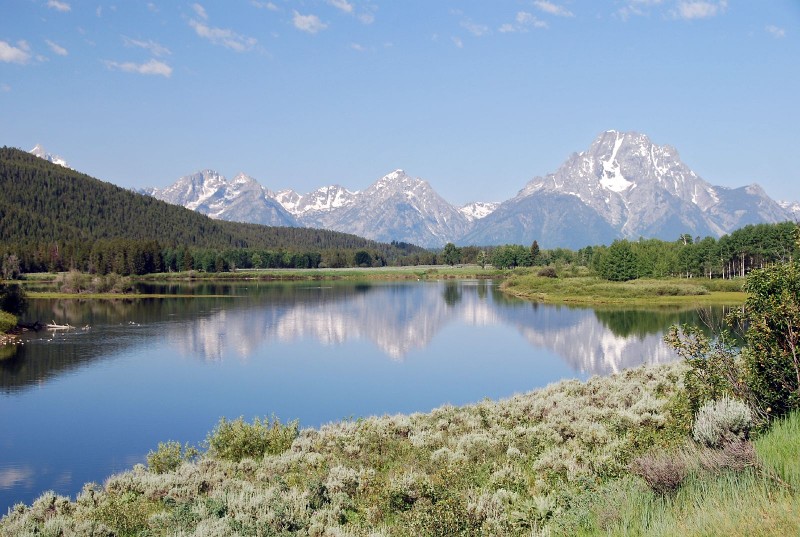
Grand Teton and a few other mountains in the Teton range reflected in a lake.
A view of the Teton Mountain range. The big mountain is Grand Teton. The photo was taken in June 2007 by a fellow trip participant Gabriel Goncalves.
The Teton range towering an island is reflected in a lake.
Jackson Lake, an island and the Teton Mountain range in the background. The photo was taken in June 2007 by a fellow trip participant Gabriel Goncalves.

To see the Super Facts click here