Landman Lies

Super fact 77 : The TV series Landman portrays several falsehoods about clean energy. Since these claims are mostly unchallenged, appear to be information, and are also very easy to look up and debunk, they are deliberate lies.

“Lies” may be a strong word but if you make a very one sided presentation and you don’t fact check your claims even though that would take less than 30 seconds to do, especially since you are a large company with lots of resources, then you are clearly intentionally deceiving your audience, which is lying. I consider the claim above (in bold) a super fact because it is true, and it is important because it is a popular series and based on the reaction the Landman series has deceived a lot of people.

I got the idea for this super fact yesterday as we were watching a few episodes of Landman. Since I know a little bit about this topic the misinformation was obvious to me. The Landman series is fiction but the way the information was presented made it appear as facts. It appeared as if it was trying to teach us something rather than being the delusional rants of an oilman.

In addition, the misinformation is not minor. It consists of big bold whoppers. Imagine a movie promoting us taking Greenland from Denmark claiming that the Danes attacked Pearl Harbor, acquired a nuclear bomb, and used chemical weapons on Los Angeles. Whatever your opinion on the Greenland situation is, these big whoppers would likely make it harder for you to watch the movie, at least if you know some history. If most people’s knowledge of history was so bad that they’d believe it, then it would also create problems. There is a lot of confusion and misinformation regarding clean energy, and it is a poorly understood topic, so telling big lies does damage.

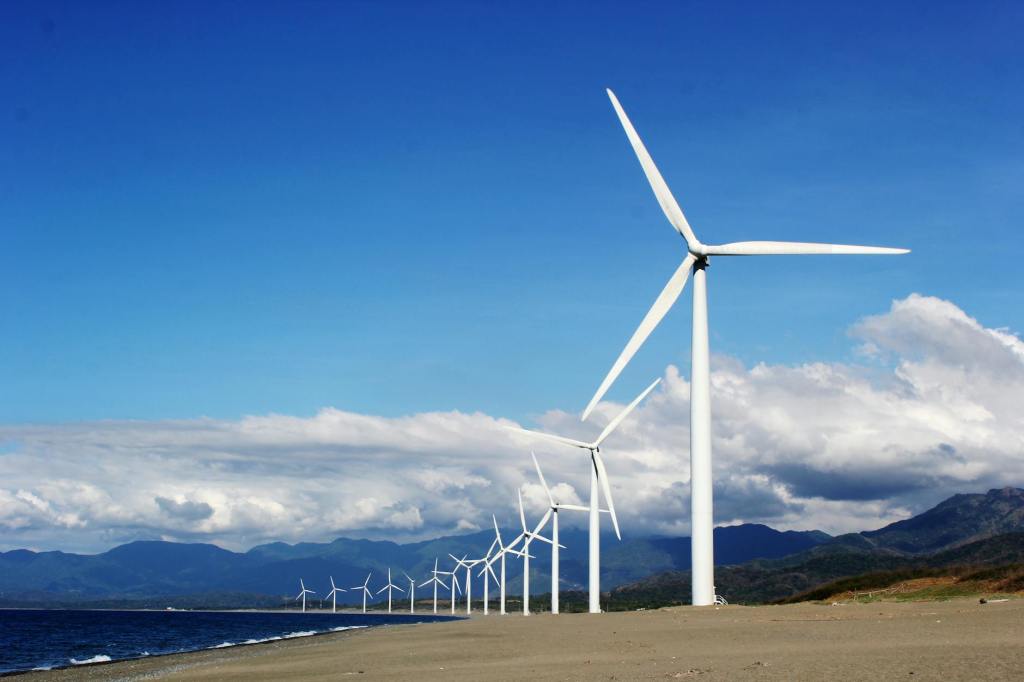
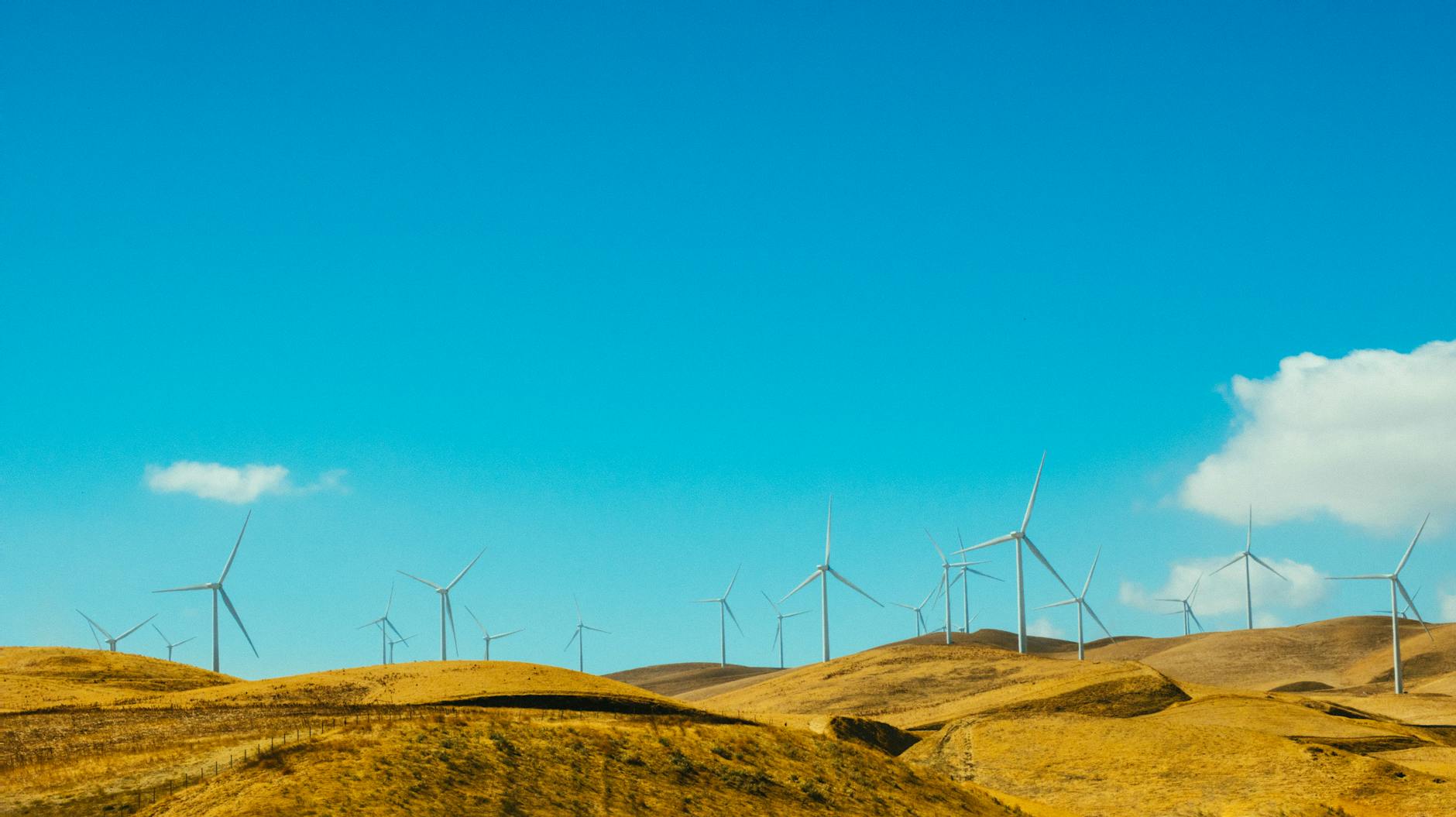
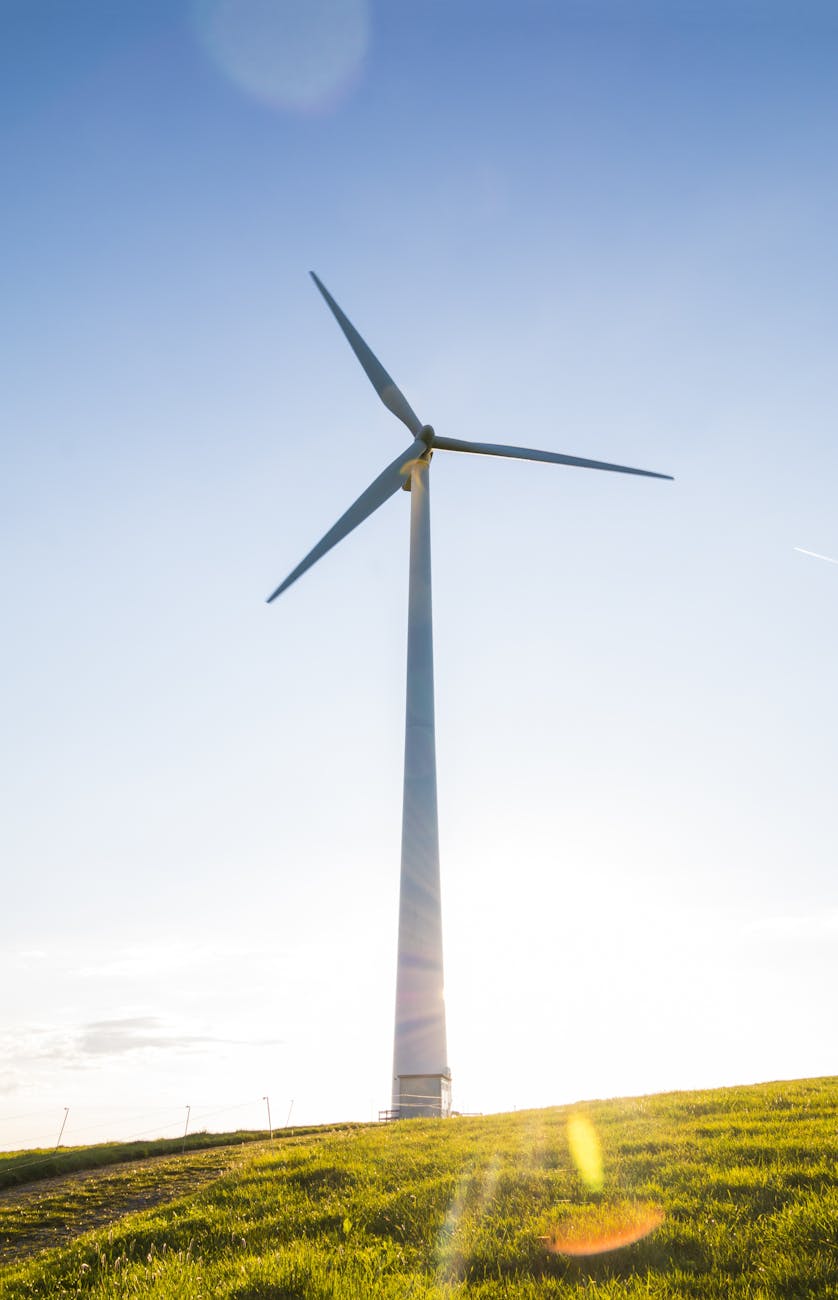
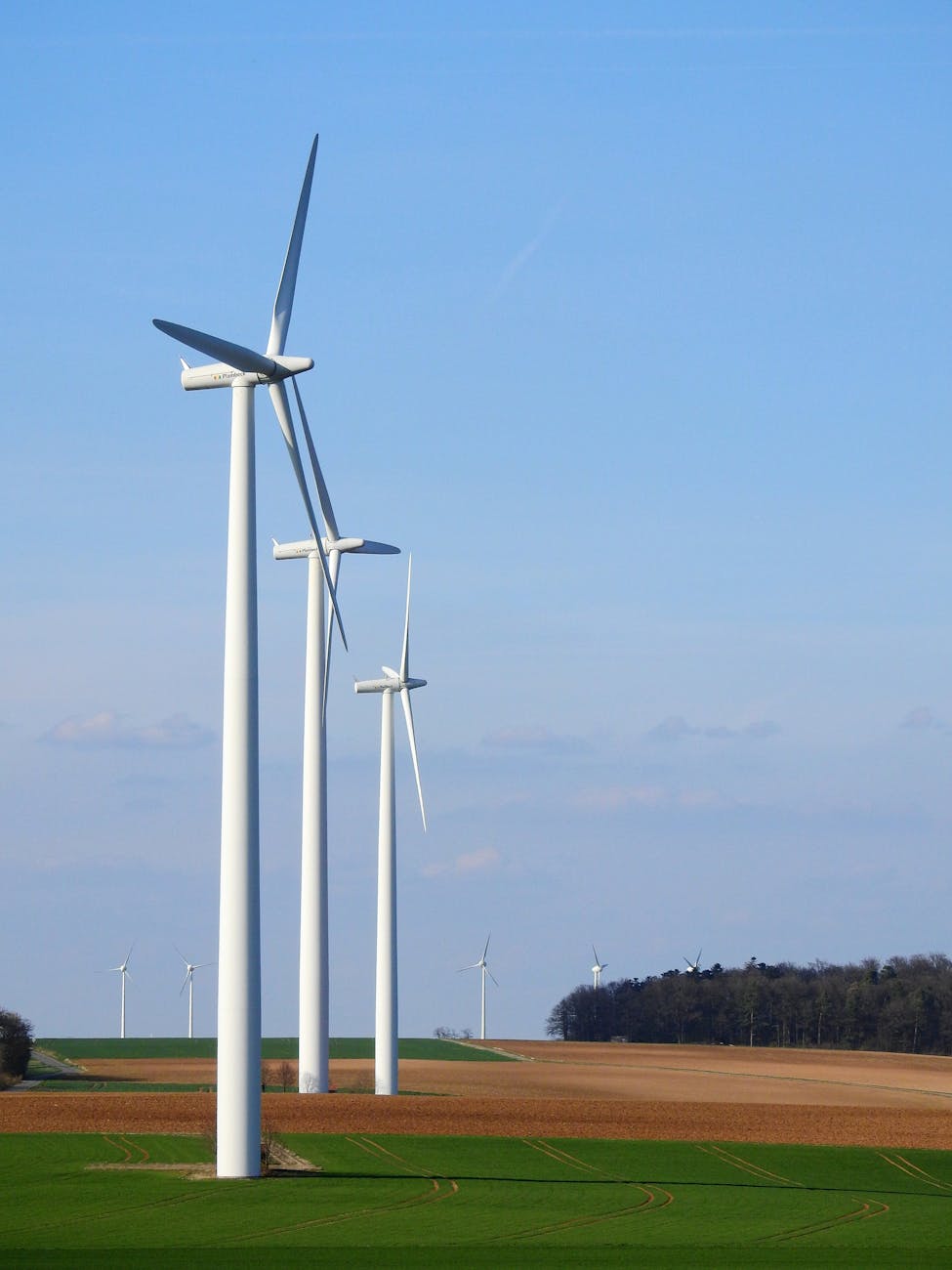
Photo of a row of wind turbines. | Landman Lies
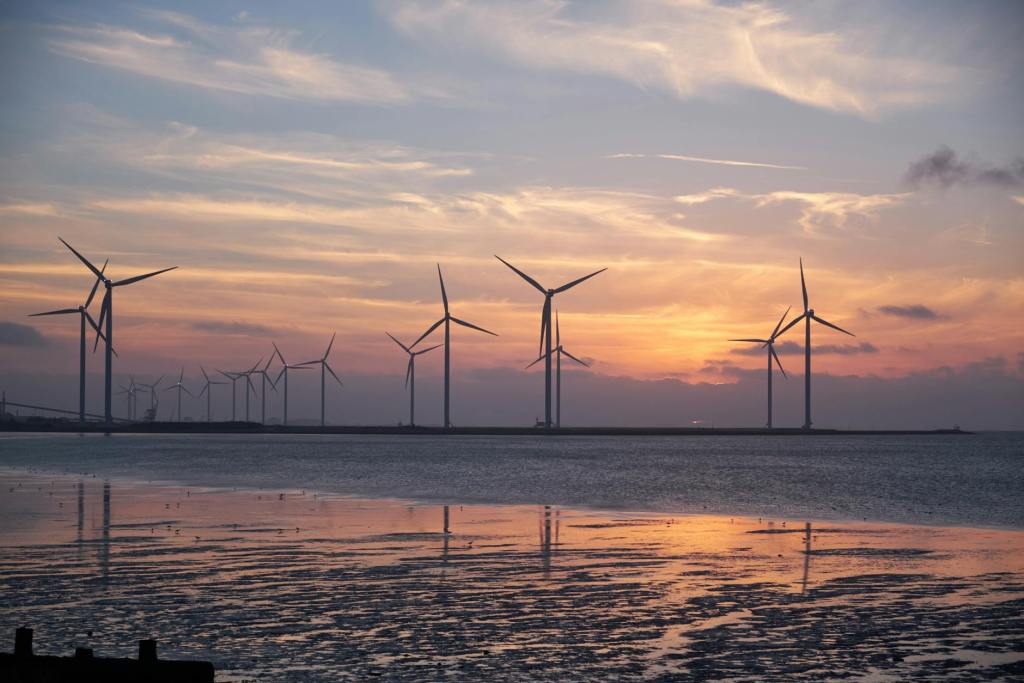
Wind turbines from pexels.com

It may come as a surprise to many that Paramount plus would deliberately mislead their audience. However, clean energy, climate science, evolution, vaccines, and any science that is inconvenient to some people have been undermined by false information for quite a while. It is just more of it than usual right now. That the executive branch is at war with clean energy might have something to do with it.

Misleading information about clean energy is often spread on social media via fake memes, non-reputable sources, comments by people who do not know what they are talking about, conspiracy theories, small groups of contrarian agenda driven scientists making youTube videos with false information, bots, deep fakes, etc., but now it has also shown up in a major Hollywood Production.

It is more important than ever to be skeptical of claims you hear, especially if they seem to support your own political, ideological, religious, or philosophical views, because that’s how you get bamboozled. Questioning other people’s views does not require much effort. I speak from experience. Intentionally seek the truth not confirmation of your belief. Verify all claims before you take them seriously. Be a realist.

Truth: Windpower and Solar are Much Cleaner than Fossil Fuels

The false claim in the series is that “there is nothing clean about clean energy, that renewables require too much fossil fuel to build to be considered clean.” I am using the true statement as the title of this section because our memories often mix up the false and true statements as time goes by, so highlighting the true statement helps.

Manufacturing, transporting, and building infrastructure for wind power currently involve fossil fuels and so do fossil fuel plants. However, this is only an initial stage. Once wind and solar facilities are built, they generate power without direct emissions, unlike fossil fuel plants which continue to burn fuel and emit CO2 during their entire operational lives. For example, the lifetime emissions of gas-powered generation are estimated to be around 20 to 40 times higher than those of renewables. You can read more here or here.

This is a 3 minute video

Truth: Wind turbines typically offset their carbon footprint within a year

The demonstrably false claim is that “wind turbines do not offset their carbon footprint within their lifespan.” According to energy researchers, for example, the National Renewable Energy Laboratory, a wind turbine typically offsets the carbon emissions from its manufacturing, transport, and installation within six months to one year of operation. In other words, wind turbines offset their carbon footprint quickly. The average lifespan of a wind turbine is over 25 years.

Truth: Solar and Wind Are Cheaper than Gas, Coal and Nuclear

The false claim in Landman is that “solar and wind energy are significantly more expensive than natural gas.” While wind and solar can have higher upfront installation costs, their operational costs are very low as they do not require fuel. Therefore, they can provide electricity very cheaply, making them competitive with and often cheaper than natural gas over their full lifespan.

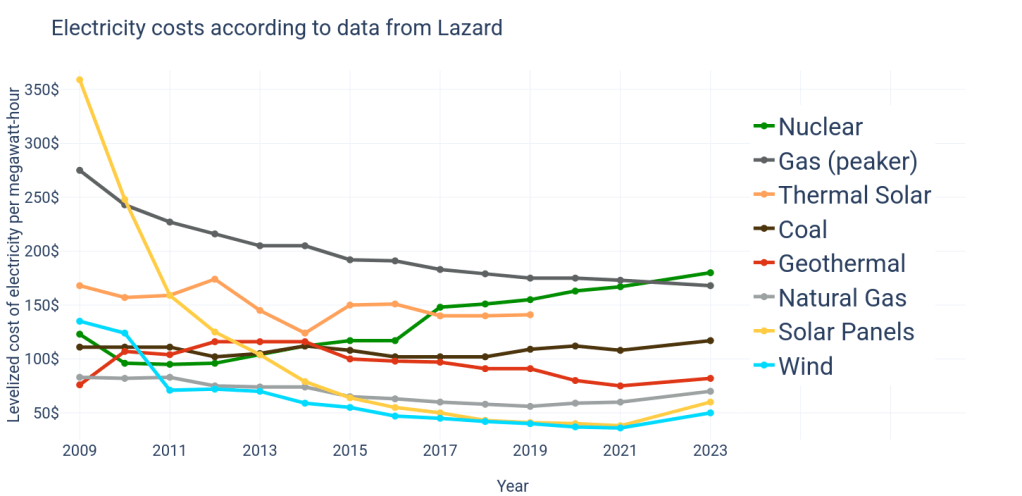
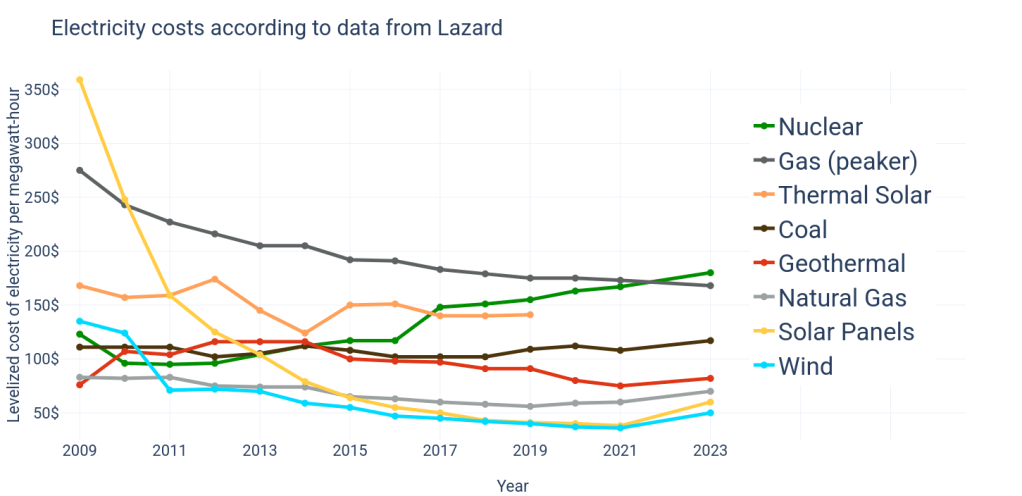
However, all energy sources are subsidized, and fossil fuels have a long history of government subsidies. Below is the average unsubsidized levelized cost of energy in the United States according to Lazard. Levelized means that construction costs, land rent, and other costs not directly caused by electricity generation are taken into consideration. Notice how cheap wind is (blue line). This is for the United States not just Texas. I don’t have any numbers, but I’ve heard that for Texas solar is the cheapest .

The image shows 8 graphs representing the price of Nuclear, Gas (peaker), Thermal Solar, Coal, Geothermal, Natural Gas, Solar Panels, and Wind. Today Wind is the cheapest.
Average unsubsidized levelized cost of energy. Notice that the light blue line indicates that wind power is pretty cheap. Mir-445511, CC BY-SA 4.0 <https://creativecommons.org/licenses/by-sa/4.0&gt;, via Wikimedia Commons.

The free market based Texas (my state) grid ERCOT provides an excellent example of how wind and solar effectively compete with other energy sources. ERCOT provides a minute by minute update for the fuel mix percentages. This is a fun website.

Truth: Fossil Fuels are Worse for the Environment than lithium batteries and solar panels

The false claim in Landman is that “Lithium batteries and solar panels are worse for the environment than fossil fuels.” Solar panels typically offset the emissions from their production and installation within 1 to 4 years. Battery technology is continuously improving, and current systems are highly recyclable (90-95%). While the mining of materials like lithium has environmental impacts, the overall lifetime emissions of renewables and associated storage systems are vastly lower than those of fossil fuels.

Truth: Fossil fuels kill a lot more birds than Wind Power per Giga Watt

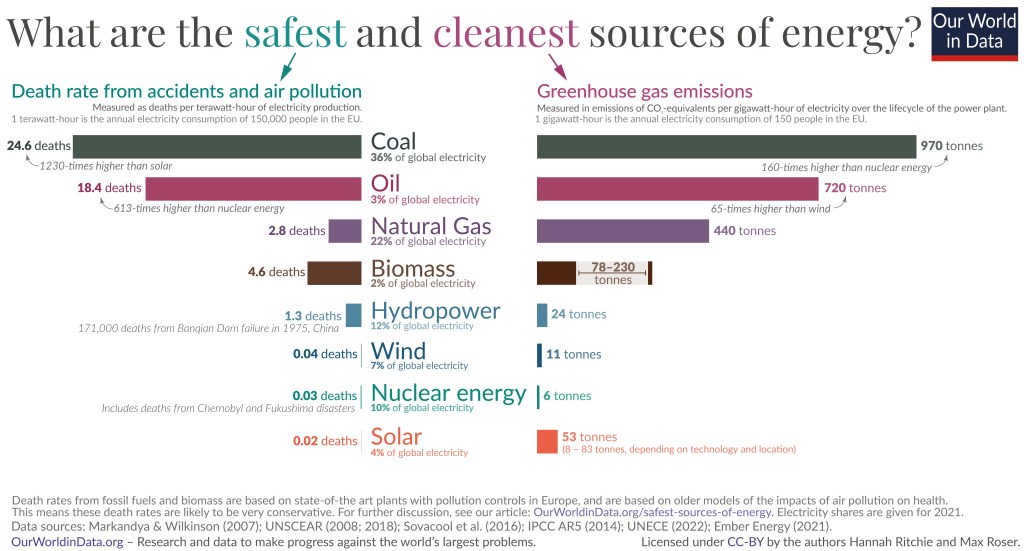
Tommy Norris (played by Billy Bob Thornton) implies in a rant that “Wind turbines are a major ecological disaster for birds, disrupting patterns and causing mass deaths.” While wind turbines kill some birds it is minor compared to the impacts of the oil and gas industry or other common human activities. This study estimates that wind farms and nuclear power stations are responsible each for between 0.3 and 0.4 fatalities per gigawatt-hour (GWh) of electricity while fossil-fueled power stations are responsible for about 5.2 fatalities per GWh. These articles from MIT provide additional information and reiterate that fossil fuels are lot more deadly to birds than wind power stations. You can read more on this topic here, here, here or here.

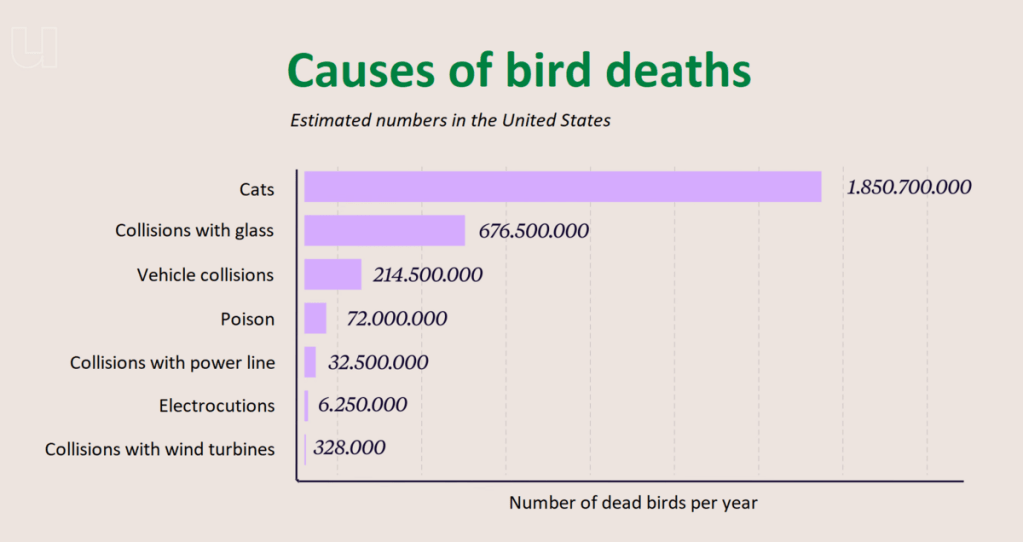
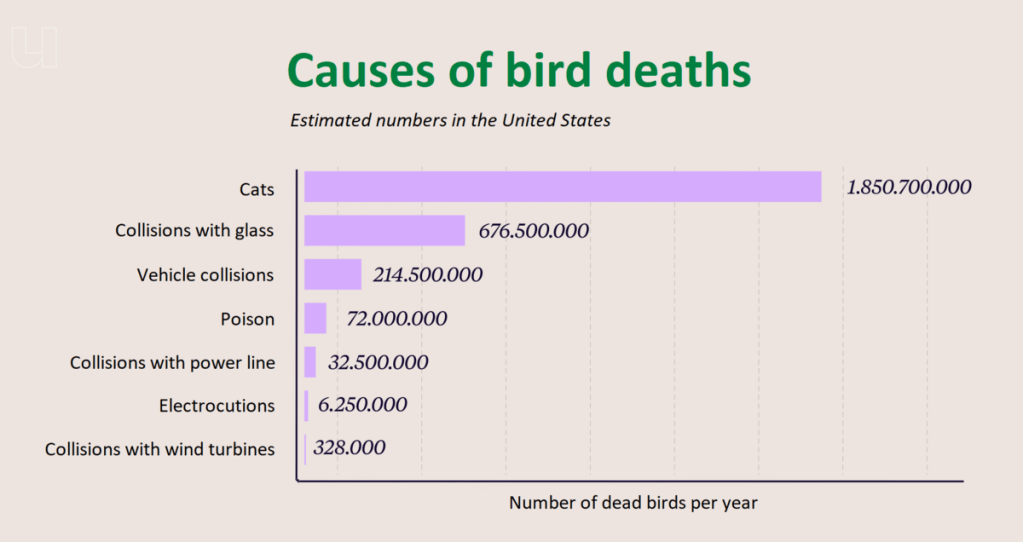
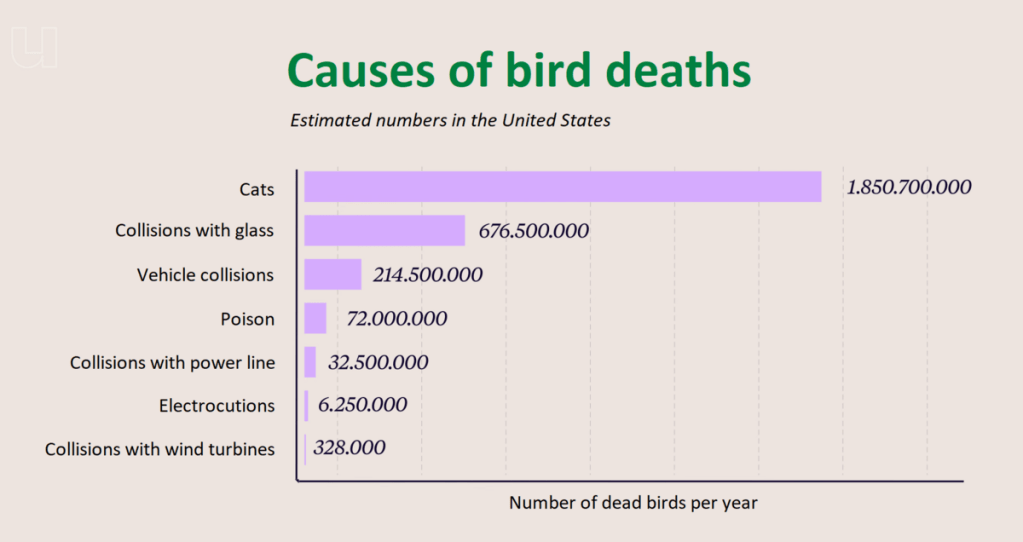
The graph shows that Wind Turbines kill 328,000 birds per year in the US, Electrocutions kill 6,250,000 birds, Collisions with powerlines kill 32,500,000 birds, Poison kills 72,000,000 birds, Vehicle collisions kill 214,500,000 birds, Collisions with glass kill 676,500,000 birds, and cats kill 1,850,700,000 birds per year in the US. | Landman Lies
From Wikipedia: Universiteit van Nederland, CC BY 3.0 <https://creativecommons.org/licenses/by/3.0&gt;, via Wikimedia Commons
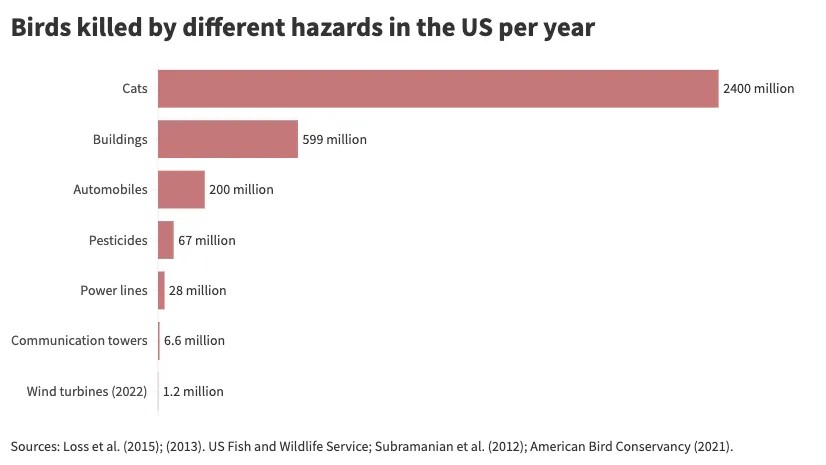
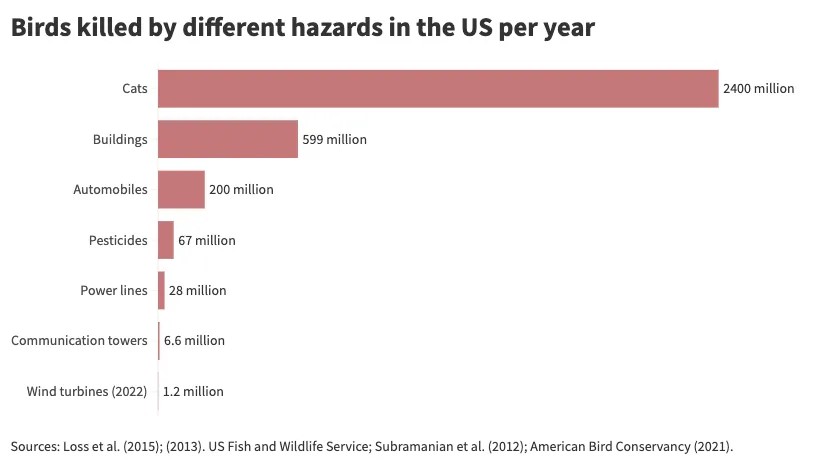
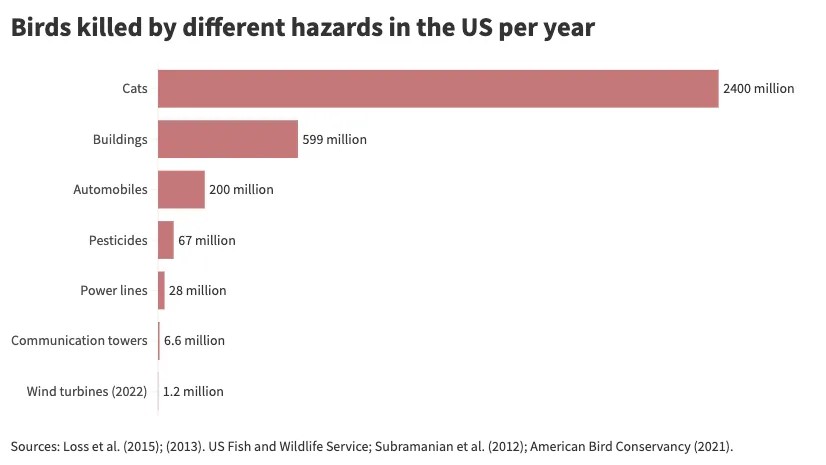
Bar graph showing cats killing an estimated 2,400 million birds per year, buildings killing an estimated 599 million birds per year, automobiles killing an estimated 200 million birds per year, pesticides killing an estimated 67 million birds per year, powerlines killing an estimated 28 million birds per year, communication towers killing an estimated 6.6 million birds per year, and wind turbines killing an estimated 1.2 million birds per year.
An alternative graph taken from Hannah Richie / Our World in Data, using alternative sources essentially showing the same thing. Sources: Loss et al. (2015), (2013), US Fish and Wildlife Service; Subramnayan et al. (2012), American Bird Conservancy (2021).

Truth: There is no evidence that Offshore Wind Kills Whales

The false claim in Landman is that “offshore wind development, including site characterization surveys, is responsible for a spike in whale deaths”. The primary cause of human-caused threats to large whales are vessel strikes and entanglement in fishing gear but not offshore wind. According to NOAA there are no known links between large whale deaths and ongoing offshore wind activities. You can read more on this topic here, here, or here.


To see the other Super Facts click here

ERCOT Fuel Mix

This is not a super fact but just interesting information about ERCOT. ERCOT or the Electric Reliability Council of Texas is the organization that manages the state’s electricity grid, ensuring reliability and it operates the competitive wholesale electricity market for 90% of Texas’s electric load. There are a few things that are important to remember about ERCOT.

  • The ERCOT grid is located solely within the state of Texas and is not interconnected to the rest of the United States. In addition to Texans being independent, this is a way of avoiding federal regulation. ERCOT is regulated by the Texas Public Utility Commission while the rest of the country is regulated by the Federal Energy Regulatory Commission (FERC).
  • ERCOT is an ISO (independent system operator), meaning it’s a non-profit organization that manages the electricity grid independently of any single utility company.
  • When companies sell their energy (to ERCOT) it works like a continuous auction. The one with the lowest price is picked first and allowed to contribute with whatever they are able to and also, of course, considering what the grid-powerlines can carry safely.
A power grid. The sun is setting in the background | ERCOT Fuel Mix
The power grid carries the power and if not sufficient it can be a major bottle neck. Photo by Pixabay on Pexels.com

Renewables are successful in Texas

One thing that surprises many people is that renewable energy, for example, wind and solar, is quite successful in Texas. Fossil fuels is important in Texas, and there are many powerful oil and gas billionaires in Texas who fight the expansion of renewables. Texas politicians work hard to create laws that punish renewables with discriminatory permitting requirements.

For example, a recent bill in the Texas Senate SB819 adds a lot of requirements on renewables and battery storage that does not apply to fossil fuel-based energy sources. An example is the requirement in SB819 that wind turbines must be at least half a mile away from the property line of any neighboring property whilst, for example, oil rigs can be built up to the property line. There are a lot more regulations in SB819 that are discriminatory, contrary to free market principes, and even violations of private property rights.

Despite all the obstacles set up against renewable energy in Texas renewable energy is on the march in Texas. The reason is that ERCOT is ultimately a price competitive free market-based system and renewables are cheap. Solar and wind are the cheapest even considering subsidies and the cost of construction, land rent, disposal, and other costs not directly caused by electricity generation are taken into consideration disposal. Click here for details. The graph below shows the evolution of different energy sources in Texas. The graph is taken from this link provided by Dr. Joshua Rhodes, a research scientist at UT Austin.

The graph shows the average annual mix for natural gas, coal, wind, nuclear, solar, and other sources. Natural has roughly remained around 40-50%, coal has shrunk from 37% to 13%, wind has grown from 2% to 24%, nuclear has shrunk from 14% to 8%, and solar has grown from nothing to 10% over the last five years | ERCOT Fuel Mix
The ERCOT fuel mix from 2006 to 2024. Notice the expansion of wind power and notice that solar has gone from nothing to 10% of the average fuel mix in five years. The graph is taken from this link.

You can read more about the evolution of renewable energy in Texas by clicking here.

Watching the ERCOT Fuel Mix in Real Time

Finally, what I think is the most interesting portion of this post, the real-time ERCOT Fuel Mix. It includes a couple of energy sources not mentioned earlier in this post, hydro and power storage.

Hydro is very small in Texas and power storage is a new item that is not a true energy source but a feature that can be called upon when energy is suddenly needed somewhere. It is still not widely used but it reached 10% of the mix at one point in 2024. It is likely an energy source that will keep growing as it is instant and scalable. It is the most dispatchable energy source of all. I can add that there is a lot of misinformation spread about renewable energy, especially about wind power. To read more about that click here.

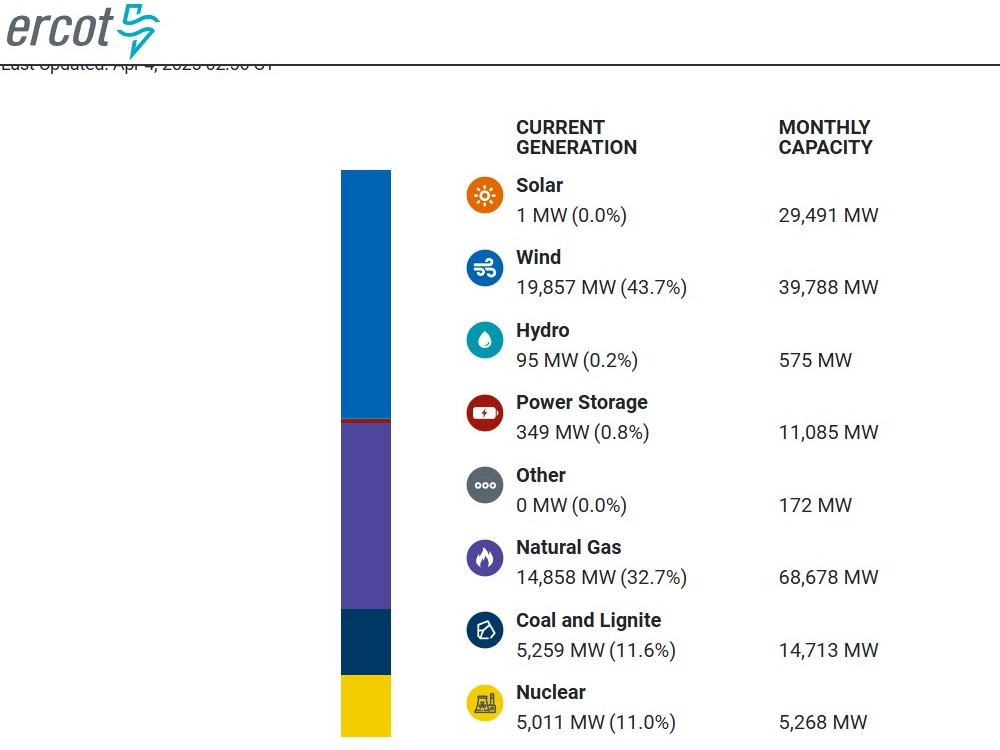
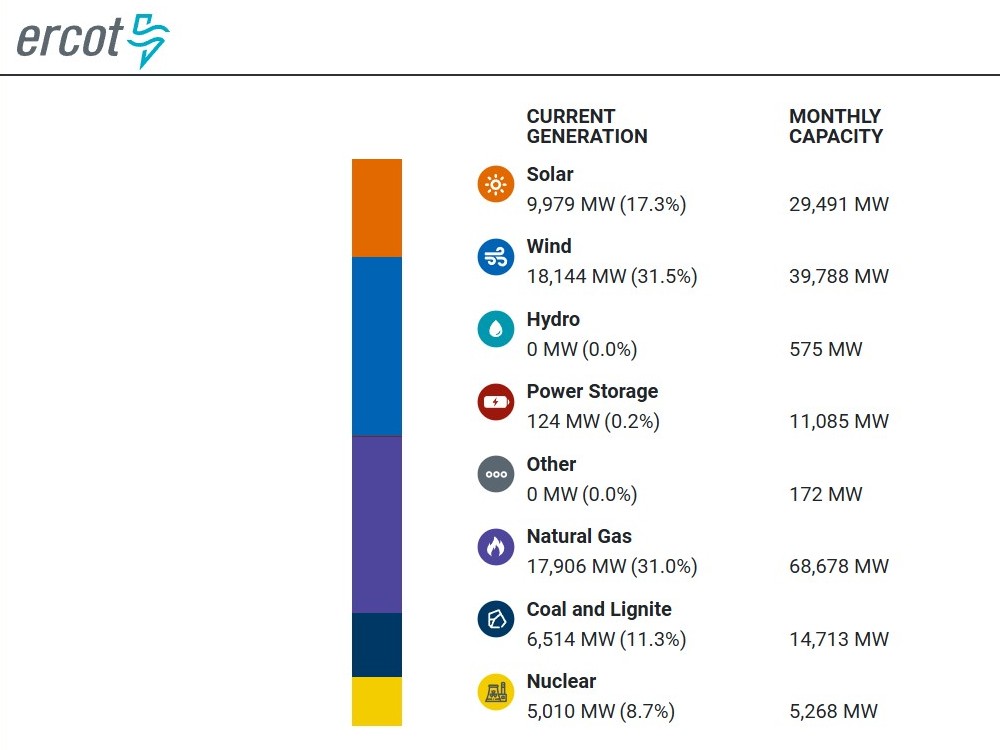
Last evening and today I took several screen shots of the real time ERCOT fuel mix (see below). A couple of things to note are that solar does not contribute at night and wind contributes more at night. It was a very cloudy and rainy day today so solar contributed less than normal during daytime, but not a lot less. It is not much less than the typical sunny day of 20%. It is true that wind and solar are intermittent, but it does not matter a whole lot because wind contributes more at night when solar does not contribute and battery storage, the most dispatchable energy source of all, is growing in importance.

Click here to watch the real-time ERCOT Fuel Mix minute by minute anytime you like. (highly recommended).

Wind is 40.5%, Natural Gas 38.8%, Power Storage 2.5% | ERCOT Fuel Mix
Fuel Mix on April 3rd 2025 at 8:00PM
Wind is 38.4%, Natural Gas 40.3%, Power Storage 0.7%
Fuel Mix on April 3rd 2025 at 10:00PM
Wind is 41.9%, Natural Gas 34.2%, Power Storage 0.4%
Fuel Mix on April 4th 2025, at 1:15AM
Wind is 43.7%, Natural Gas 32.7%, Power Storage 0.8% | ERCOT Fuel Mix
Fuel Mix on April 4th 2025, at 3:00AM
Wind is 31.5%, Natural Gas 31.0%, Power Storage 0.2%
Fuel Mix on April 4th 2025, at 12:35PM
Wind is 31.7%, Natural Gas 31.2%, Power Storage 0.2%
Fuel Mix on April 4th 2025, at 2:00PM
Wind is 32.7%, Natural Gas 34.3%, Power Storage 1.1%
Fuel Mix on April 4th 2025, at 4:00PM
Wind is 32.6%, Natural Gas 36.8%, Power Storage 0.8% | ERCOT Fuel Mix
Fuel Mix on April 4th 2025, at 5:30PM
Wind is 41.1%, Natural Gas 37.4%, Power Storage 0.2% | ERCOT Fuel Mix
Fuel Mix on April 4th 2025, at 9:30PM
Wind is 49.9%, Natural Gas 29.0%, Power Storage 0.0% | ERCOT Fuel Mix
Fuel Mix on April 4th 2025, at midnight
To see the Super Facts click here

Wind power is not a major cause of bird death

Superfact 17: Fossil fuels kill a lot more birds per gigawatt hour than wind power does. Cats, windows, cars, poison and powerlines are examples of things that kill a lot more birds than wind power does. Wind power killing birds is not the huge environmental problem it is often made out to be.

Wind power killing birds is often mentioned as a slam dunk environmentally based argument against wind power and evidence for the hypocrisy of environmentalists. This is misguided. Wind power killing birds is a real problem and it should be addressed, and it is being addressed. No energy source comes without environmental problems. However, wind turbines account for only a small fraction of overall bird deaths compared to other human causes. It is not a good argument against wind power, and it does not demonstrate any hypocrisy by environmentalists. In fact, a study made in 2012 (overview here) concluded that fossil fuels killed 24 million birds per year in the US, which correspond to 35 times more birds per GWh than wind power kills according to this study. Even though this study and other similar studies are estimates based on assumptions that are far from perfect, they are good indicators that replacing fossil fuels with wind power likely saves birds rather than kills them.

Photo by Pixabay on Pexels.com

In any case, as this Wikipedia article states, collisions with wind turbines are a minor source of bird mortality compared to other human causes. According to the graph below cats kill 5,600 times more birds than wind power and collisions with powerlines kills 99 times more birds than wind power, and yet we rarely discuss these problems. Even though these numbers are estimates they are mostly confirmed by other studies and analysis, as this overview from MIT and this analysis by Hannah Richie shows. The numbers aren’t the same, but they make the same point. FYI Hannah Richie is the deputy editor and lead researcher at Our World in Data. Our World in Data is a scientific online publication that focuses on large global problems. They are associated with Oxford University and is one of the most respected statistics, analysis and research organizations in the world.

The graph shows that Wind Turbines kill 328,000 birds per year in the US, Electrocutions kill 6,250,000 birds, Collisions with powerlines kill 32,500,000 birds, Poison kills 72,000,000 birds, Vehicle collisions kill 214,500,000 birds, Collisions with glass kill 676,500,000 birds, and cats kill 1,850,700,000 birds per year in the US.
From Wikipedia: Universiteit van Nederland, CC BY 3.0 <https://creativecommons.org/licenses/by/3.0&gt;, via Wikimedia Commons
Bar graph showing cats killing an estimated 2,400 million birds per year, buildings killing an estimated 599 million birds per year, automobiles killing an estimated 200 million birds per year, pesticides killing an estimated 67 million birds per year, powerlines killing an estimated 28 million birds per year, communication towers killing an estimated 6.6 million birds per year, and wind turbines killing an estimated 1.2 million birds per year.
An alternative graph taken from Hannah Richie / Our World in Data, using alternative sources essentially showing the same thing. Sources: Loss et al. (2015), (2013), US Fish and Wildlife Service; Subramnayan et al. (2012), American Bird Conservancy (2021).

Wind power has been on the receiving end of false claims, nonsense, and strange rumors for quite some time. It is not the only energy source maligned by false information, but it is an interesting case study in misinformation regarding energy sources. To read about nonsense and rumors about wind power click here.

Photo by Athena Sandrini on Pexels.com


To see the other Super Facts click here


Wind power is providing more than a quarter of Texas Power

Superfact 16: Wind power is providing more than a quarter of Texas Power. In 2023, wind represented 28.6 percent  of Texas energy generation. In 2022, wind power accounted for about 25 percent  of Texas’ energy generation.

I am referring to this fact as a super fact because, it is true, important, and yet it’s a fact that is difficult to believe for many people. That wind power, allegedly a marginal energy source, is successful in fossil fuel loving Texas is hard to believe. I have come across what appears to be well informed people who were certain it was nonsense. However, as you can see from the Texas government links above, it is true, something they could not dispute.

The reason for the success of wind power in Texas is economics, which is another fact that may be surprising to some. Fossil fuels are a major source of income for us in Texas, but everyone also wants to save money. Texas has its own electric grid, it’s deregulated, and organized along free market principles.  

When companies sell their energy (to ERCOT) it works like a continuous auction. The one with the lowest price is picked first and allowed to contribute with whatever they are able to and also, of course, considering what the grid-powerlines can carry safely. Naturally, the price of wind in Texas includes federal subsidies, which make it even cheaper.

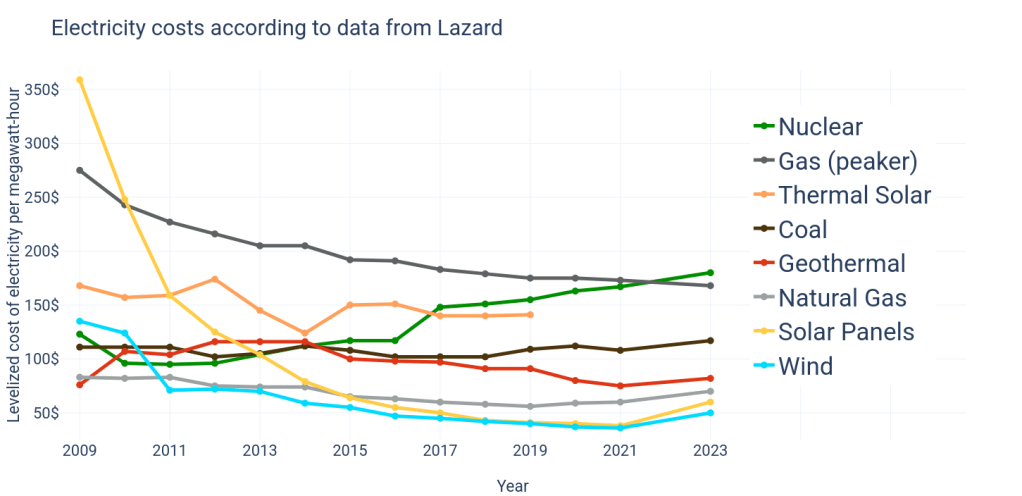
However, all energy sources are subsidized, and fossil fuels have a long history of government subsidies. Below is the average unsubsidized levelized cost of energy according to Lazard. Levelized means that construction costs, land rent, and other costs not directly caused by electricity generation are taken into consideration. Notice how cheap wind is (blue line). This is for the United States not just Texas. I don’t have any numbers, but I’ve heard that for Texas solar is the cheapest .

The image shows 8 graphs representing the price of Nuclear, Gas (peaker), Thermal Solar, Coal, Geothermal, Natural Gas, Solar Panels, and Wind. Today Wind is the cheapest.
Average unsubsidized levelized cost of energy. Notice that the light blue line indicates that wind power is pretty cheap. Mir-445511, CC BY-SA 4.0 https://creativecommons.org/licenses/by-sa/4.0, via Wikimedia Commons.

Affordability

Windpower is not only relatively cheap. Wind power is one of the most efficient and sustainable energy sources available. The energy required to manufacture, install, and maintain wind turbines is small compared to the energy they produce over their lifespan. This is known as their energy return on investment (EROI), which is quite favorable for wind energy.

The Institute of Environmental Management and Assessment (IEMA) states that the average wind farm will pay back the energy that was used in its manufacture within 3-5 months of operation. This article in the journal Renewable Energy found that the average windfarm produces 20-25 times more energy during its operational life than was used to construct and install its turbines. It included data from 119 turbines across 50 sites going back 30 years.

Wind power is providing more than a quarter of Texas Power
Photo by Pixabay on Pexels.com

False Claims

It is important to be aware that there are many false claims floating around about wind power. The sound from wind power stations does not cause cancer, it does not use any other energy sources while operating; it solely harnesses the kinetic energy from the wind to generate electricity, meaning it only relies on wind to function as its primary energy source. Windpower is not a major cause if bird deaths. To read more about false claims about wind power click here.

Wind power is providing more than a quarter of Texas Power
Photo by Pixabay on Pexels.com

There are positive and negative aspects of wind power, like any other source of energy. One issue with wind power (and solar) is that it is an intermittent source of energy. When the wind is not blowing you need other sources of energy (until there is sufficient energy storage). This is less of a problem when you have a mix of energy sources as Texas does.


To see the other Super Facts click here


Nonsense and Rumors About Wind Power

“Nonsense and Rumors About Wind Power” is not a super-fact post but just what I consider interesting information regarding nonsense and rumors about wind power.

Wind power has been on the receiving end of false claims, nonsense, and strange rumors for a while. It is not the only energy source maligned by false information. Another example is Nuclear Power. However, this post is about some of the incorrect claims about wind power that I have come across. I am starting out with three bizarre claims.

Nonsense and Rumors About Wind Power
Photo by Kervin Edward Lara on Pexels.com

False claim : Wind Power requires an additional power source to operate (like a diesel engine)

This bizarre claim is akin to saying that sailboats need a diesel motor to sail. If you get something to rotate (a turbine), whether it is pushed by running water, wind, or an engine, and you connect it to a coil in a magnetic field (generator), you get electricity. This is high school physics. You don’t need anything else. It is the principle behind hydro power, nuclear power, coal power, gas power, and wind power.

For a wind power station, the moving air rotates the wind turbine’s blades. That turning motion spins a generator just downwind from the blades (or rotor) in the nacelle, which also stores all the other working parts of a turbine. The generator produces electricity. When you read about how wind power works it says nothing about an additional power source needed (or click here).

For fun let’s also ask Google AI : Does wind power use other energy sources while operating?

Google AI: No, wind power itself does not use any other energy sources while operating; it solely harnesses the kinetic energy from the wind to generate electricity, meaning it only relies on wind to function as its primary energy source.

However, it should be noted that wind power is intermittent, so if it is part of a power grid other power sources or energy storage/batteries may need to be used more when wind speeds are too low to generate electricity.

Also, as is true with any power source, energy is needed when constructing wind power plants. In addition, a small amount of external electricity may be needed for startup and maintenance. It is possible that these facts were misunderstood and turned into “Wind Power requires an additional power source to operate” by confused listeners.

Nonsense and Rumors About Wind Power
Photo by Nitin Sharma on Pexels.com

False claim : Wind Power generates less power than it consumes

This is another bizarre claim made by confused politicians (here in Texas). If wind power generated less power than it consumed, why would anyone invest in it?

The Institute of Environmental Management and Assessment (IEMA) states that the average wind farm will pay back the energy that was used in its manufacture within 3-5 months of operation. This article in the journal Renewable Energy found that the average windfarm produces 20-25 times more energy during its operational life than was used to construct and install its turbines. It included data from 119 turbines across 50 sites going back 30 years.

For fun let’s ask ChatGPT this question : Does wind Power generate less power than it consumes?

ChatGPT : Wind power does not consume more energy than it generates. In fact, wind power is one of the most efficient and sustainable energy sources available. The energy required to manufacture, install, and maintain wind turbines is small compared to the energy they produce over their lifespan. This is known as their energy return on investment (EROI), which is quite favorable for wind energy.

Nonsense and Rumors About Wind Power
Photo by Andrew Del Castilho on Pexels.com

False claim : The sound from wind power stations cause cancer

Donald Trump stated on April 2, 2019, in a speech to the National Republican Congressional Committee that “The noise (from windmills) causes cancer.” A poll was conducted in Iowa, a state where wind power is thriving and only 1% of registered voters agreed with Trump that wind turbines cause cancer, 84% disagreed and 15% did not know. So, it is not a widespread belief, but it does exist. The claim was quickly debunked by the American Cancer Society.

On the contrary, the pollution from the fossil fuel power plants that wind power will likely replace causes cancer.

Just for fun let’s ask ChatGPT this question : Does windpower cause cancer?

ChatGPT : No, wind power does not cause cancer. There is no scientific evidence to support the claim that wind turbines or wind energy have any connection to causing cancer. This misconception might stem from misinformation or misunderstandings about how wind turbines work. Wind power is a clean and renewable energy source, and studies have shown that it does not pose significant health risks.

Some people have raised concerns about possible health effects from wind turbines, such as “wind turbine syndrome,” which includes symptoms like headaches or sleep disturbances attributed to the noise or vibrations of turbines. However, extensive studies have not found conclusive evidence to support these claims either. The noise levels and vibrations from wind turbines are generally well within safety limits set by health and environmental standards.

Solar panels and wind turbines.
Photo by Pixabay on Pexels.com

Next, I am going to focus on three claims which are partially true but that are greatly exaggerated and need to be understood in context.

False claim : Wind power kills an enormous amount of birds causing an environmental disaster

Wind power killing birds is often presented as if it is a huge environmental problem and only a problem for wind power. When presented this way it is false. A study made in 2012 claimed that fossil fuels killed 24 million birds per year in the US, which correspond to 35 times more birds per GWh than wind power kills. That means that wind power saves the life of birds as it replaces fossil fuels.

In addition, the biggest bird killer is not fossil fuels but cats. Cats kill 5,600 times more birds than wind power stations and 77 times more birds than fossil fuels. See the graph from Wikipedia below. The problem with wind power plants killing birds should be addressed (and has been addressed) but let’s be honest about the scale of the problem.

The graph shows that Wind Turbines kill 328,000 birds per year in the US, Electrocutions kill 6,250,000 birds, Collisions with powerlines kill 32,500,000 birds, Poison kills 72,000,000 birds, Vehicle collisions kill 214,500,000 birds, Collisions with glass kill 676,500,000 birds, and cats kill 1,850,700,000 birds per year in the US.
From Wikipedia: Universiteit van Nederland, CC BY 3.0 <https://creativecommons.org/licenses/by/3.0&gt;, via Wikimedia Commons

False claim : Wind power is only a marginal energy source

Wind power currently accounts for around 7.8%  of the world’s electricity up from 3.5% in 2015 and 1.63% in 2010. Wind power accounts for 10% of US electricity and 57.7% of Denmark’s electricity. It may also some as a surprise to some that in the fossil fuel capital of the world, the great state of Texas, where I live, wind represented 28.6 percent of the energy generation in 2023, second only to natural gas (41.8 percent). That is not a marginal energy source.

I can add that Texans are in general not favorable towards wind, and the local politicians are hostile towards wind. Fossil fuel is after all our bread and butter. Why wind power is so prominent in Texas is because of the Texas ERCOT system in which energy sources compete on price and the cheapest always goes first. In practice that means wind goes first.

Wind turbines, sunset in the background.
Photo by Pixabay on Pexels.com

False claim : Wind power is extremely expensive

Wind power used to be expensive. It has been and still is subsidized by the government, but that is basically true for all energy sources, not just wind. Below is the average unsubsidized levelized cost of energy according to Lazard (from Wikipedia). Notice that the light blue line indicates that wind power is pretty cheap.

The image shows 8 graphs representing the price of Nuclear, Gas (peaker), Thermal Solar, Coal, Geothermal, Natural Gas, Solar Panels, and Wind. Today Wind is the cheapest.
Mir-445511, CC BY-SA 4.0 <https://creativecommons.org/licenses/by-sa/4.0&gt;, via Wikimedia Commons.

To see the Super Facts click here