United States is Tornado Country

Super fact 65 : The United States covers approximately 6.14% of Earth’s total land area. Despite that approximately 75% of the world’s tornadoes occur in the United States, making the risk of a tornado in the US 46 times higher than in the rest of the world. Tornadoes are particularly common in Tornado alley. Canada is the country with the second-highest number of tornadoes globally.

Our neighborhood was ravaged by an EF3 tornado in the evening of October 20, 2019. Today is the six year anniversary of that event. One year ago, I was interviewed by the NBC about this event. Yes, I was on TV. NBC had found me via my Leonberger dog blog. I’ve included the clip below.

It appears that the most common statistics stated by reliable sources is that approximately 75% of the world’s tornadoes occur in the United States (click here, here, or here). As stated, 75% is an approximate number and another common number is 90%.  90% might be overstated because smaller tornadoes are underreported in the rest of the world. Whether the correct number is 75% or 90% it is clear that the United States has the most tornadoes. It is the Tornado Country of the world.

It is quite astonishing that one country, the United States, has such a high concentration of this extreme weather phenomenon. Most Americans know that their country is special in this regard. I’ve met a lot of Europeans (I am from Europe / Sweden myself) who thinks tornadoes is just Hollywood thing. However, it is a real and very common phenomenon in the United States, and that is surprising to much of the rest of the world. It is also an important extreme weather phenomenon that kills a lot of people and causes billions of dollars in damage every year. This is why I consider “United States is Tornado Country” a super fact.

A large well-formed tornado over the plains | United States is Tornado Country
A tornado. Stock Photo ID: 2369175167 by g images.com.

Tornado Alley

Tornadoes can happen anywhere, but as mentioned they are more common in North America and especially in tornado-alley. Despite tornado alley’s small size, a quarter of all significant tornadoes in the world occurred there according to a study (1921 – 1995). The extent of tornado alley includes north Texas, Oklahoma, Kansas, Nebraska, South Dakota, Iowa, and the corners of Minnesota, Wyoming, Colorado and New Mexico. Dallas, where we live, is in Tornado Alley.

Tornado Alley is indicated in red, orange and yellow covering north Texas, Oklahoma, Kansas, Nebraska, South Dakota, Iowa, and the corners of Minnesota, Wyoming, Colorado and New Mexico.
Map showing Tornado Alley. It includes north Texas / Dallas. Stock Vector ID: 1719764089 by Adansijav Official.

Dixie Alley

Another region with a lot of tornadoes is Dixie Alley. Dixie Alley stretches from eastern Texas and Arkansas across Louisiana, Mississippi, Tennessee, Alabama, Georgia, and mid to western Kentucky to upstate South Carolina and western North Carolina; the area reaches as far north as southeast Missouri.

Dixie Alley has fewer tornadoes than Tornado Alley, but they tend to be deadlier and more violent than in Tornado Alley. The tornadoes in Dixie Alley occur year-round, at night, and the Tornadic storms in Dixie Alley are often high precipitation supercells due to an increase of moisture from proximity to the nearby Gulf of Mexico. The heavy rain makes it difficult to detect the tornadoes. Dixie Alley also has more mobile homes, homes tend to not have basements, and it is more densely populated than Tornado Alley. NOAA records indicate that the majority of deaths from tornadoes in the US have occurred in Dixie Alley.

Map of the United States showing Dixie Alley in red. It includes parts of eastern Texas and Arkansas, Louisiana, Mississippi, Tennessee, Alabama, Georgia, and mid to western Kentucky to upstate South Carolina and western North Carolina and  southeast Missouri.
Map showing Dixie Alley. Bhockey10, CC BY-SA 3.0 <https://creativecommons.org/licenses/by-sa/3.0&gt;, via Wikimedia Commons.

Tornadoes and Hurricanes Are Different

Another related issue that has been brought to me is that many Europeans do not know the difference between a hurricane and a tornado. This is not strange since both of these extreme weather phenomena are less common in Europe.

A hurricane is a big rotating storm system originating in the ocean that sometimes makes landfall and devastates our coasts. Hurricanes are big, thousands of square miles and even a million square miles. A hurricane has wind speeds of 74 miles per hour (mph) or higher. That’s 119 kilometers per hour or 33 meters per second. They are called hurricanes in the Atlantic and the northeast Pacific, and Typhoons in the northwest Pacific, and otherwise just cyclones.

Satellite photo of Mexico, southeastern United States and the Caribbean. A hurricane is approaching from the east. | United States is Tornado Country
Satellite photo of hurricane approaching Cuba and Florida. Stock Photo ID: 2202605185 by Emre Akkoyun.

A tornado is a violently rotating column of air that is in contact with both the surface of the Earth and a cloud. They originate with thunderstorms, especially supercells, and are more of an inland phenomenon even though hurricanes can sometimes generate tornadoes. Tornadoes are much smaller than hurricanes in area, almost always much smaller than a square mile, or just 10 or 30 meters across. The reason they can be as deadly as hurricanes is that they tend to have stronger winds and they appear and disappear quicker thus taking people by surprise.

A threatening supercell with lightning
A so called supercell but without a tornado. Stock Photo ID: 1768468151 by Laura Hedien.
A nice photo of a threatening Tornado. | United States is Tornado Country
An F5 tornado in Canada. From Wikimedia Commons.

So, in summary, Hurricanes cover a large area and lasts a long time. They come from the sea and devastate coastal areas and are less common than tornadoes. Tornadoes are formed on land from thunderstorms, typically supercells. They are particularly common in tornado-alley. They cover a small area and go high up into the air forming a funnel and are commonly more intense. They are also more common, and they can surprise people. Therefore, on average, tornadoes cause more deaths in the US than hurricanes. You can read more about it here.

Our Tornado Experience

As mentioned, on October 20, 2025, our neighborhood was ravaged by an EF3 tornado. I was sitting outside in the backyard drinking a beer (Yellow Rose from Lone Pint brewery) when the sirens went off and my cell phone started screaming tornado warning “seek shelter immediately”. I did not see any problem, so I thought it was just one of unnecessary warnings again and I wanted to finish my beer. However, I decided to walk back into the house. About one minute later there was a lot of noise and a piece of the neighbor’s roof flew into our chimney, smashed it and it started raining bricks.

The house shook and thought to myself, “that was some thunderstorm”. I opened the door to the backyard, and I was astounded when I saw the devastation. My backyard was covered in debris, bricks, trees, garbage, my grill had flown off, several of our neighbors’ houses were just rubble. I guessed it must have been a tornado. My wife Claudia told me to go and check on her parents who lived about a mile away. I started driving my Toyota Prius, but I did not get very far because a neighbor’s roof was lying across the road. We live on a circle, so I decided to go the other way instead but about 30 trees lying across the road stopped me. So, I started walking but four firemen stopped me and told me that it was too dangerous to walk around. I had to go home. We would later learn that my wife’s father was injured. I am describing this in the NBC interview below.

We lost power for four days, we needed a new roof and a new chimney, the wiring and piping (for air conditioning) in the attic was destroyed, the fence and garage door were broken. It cost $50,000.00 to repair, nut our house stood, the frame was fine, and luckily our insurance paid for all of it, except for the parasol the flew away. We had no proof it ever existed. Not everyone was that lucky, especially those whose houses were destroyed. Unfortunately, our Leonberger dog Bronco had a heart failure one week after this. However, he recovered. But we are guessing that the fact that we did not have air conditioning for a while could have affected his heart. It was a tough day for Bronco, our Leonberger Dog. <<Link-13>>

A neighbor’s house with the roof ripped off.
A neighbor’s house the morning of October 21st, 2019.
Debris on the street from a neighbor’s destroyed house.
Another neighbor’s house. This house was about 100 yards from our house. It took a direct hit from the tornado.
This house is totally destroyed.
Another neighbor’s house (a bit further away from us).
My wife Claudia is walking among the debris in my in-laws house.
Inside Claudia’s parents’ house. This was the morning after. We are walking into their house to check on them (that’s my wife).
The entire top of this house is destroyed.
This is the next-door neighbor of Claudia’s (my wife) parents.
The house is completely flattened. A large tree is destroyed. It has no branches. | United States is Tornado Country
Destroyed house in the neighborhood.
A big nice-looking house destroyed by a tornado.
Another house in the neighborhood.
A photo taken from the inside of a destroyed office.
The remains of the veterinary clinic where we used to take our dogs. Luckily there were no animals staying overnight at this time.
Crashed cars and destroyed stores. | United States is Tornado Country
View of the shopping center in our neighborhood.
The Gap store has its entire backside ripped off.
A store at a nearby shopping center
The yellow school bus is wrapped around a tree.
This was a school bus belonging to the school where my boys went.
Trees are ripped up, vehicles are crushed. | United States is Tornado Country
Streetview from the neighborhood.

My Interview with NBC

As I mentioned, last year NBC interviewed me about this event. They said that they had been reading my Leonberger blog and were interested in a post that I had made about the tornado in Dallas on October 20, 2019. They wanted to interview me and asked for permission to use a few of my photos.

A photo of a TV above the fireplace. Thomas Wikman on the TV screen.
Seeing myself on the TV was a bit surreal. Click on the image to see the interview. My interview starts at 1 minute and 11 seconds.
A photo of my TV above the fireplace. I am on the TV screen. | Thomas Wikman NBC Interview
Here I am with NBC journalist Katie Blake. Click on the image or here to see the interview. My interview starts at 1 minute and 11 seconds.

I would like to stress that there are thousands of people whom they could have interviewed. Thousands of people who probably would have been better candidates. What made all the difference was the post I made on my blog. Therefore, fellow bloggers, perhaps this is an example of the fact that blogs bring attention.


To see the other Super Facts click here

Eulers Polyhedra Math Magic

Super fact 64 : V – E + F = 2 is true for all convex polyhedra, where V is the number of vertices (corners), E is the number of edges, and F is the number of faces of a convex polyhedron. This is called Euler’s formula for polyhedra.

Stick drawings of a tetrahedron on the left and a cube on the right | Eulers Polyhedra Math Magic | Euler's Polyhedron Formula
Polyhedron Euler’s formula. The cube has 6 faces, 8 corners (blue dots), and 12 edges (grey lines) and 8 – 12 + 6 = 2. Popular shapes Asset id: 2362684465 by ramonparaiba.

Convex polyhedra are polyhedra without holes, or it has no internal angles larger than 180 degrees. To express that exactly; A convex polyhedron is a three-dimensional solid with flat polygonal faces where a line segment connecting any two points on its surface or interior remains entirely within the solid. I can add that convex polyhedra consists of convex polygons as their faces. All its faces are convex polygons.

On the left are three convex polygons and on the left are three concave polygons.
The difference between convex and concave polygons. Notice that the concave polygons on the right have “holes” in them, or inner angles larger than 180 degrees, and that you can draw a line starting and ending inside the polygon that goes outside the polygon.

It is easy to understand that there are an infinite number of convex polyhedra. All pyramids (with convex polygons for bottoms) are convex polyhedra whether the bottom is a square/rectangle, or a convex pentagon, hexagon, heptagon, octagon, or any kind of convex polygon, even with trillions.

A hexagonal pyramid with differently colored faces | Eulers Polyhedra Math Magic | Euler's Polyhedron Formula
A hexagonal pyramid (it is convex). Tomruen at en.wikipedia, Public domain, via Wikimedia Commons.

Examples of convex polyhedra are cubes, boxes, a tetrahedron, pyramids of various sorts, an octahedron, dodecahedron, icosahedron, but there are infinitely many.

As an example, take a cube (like a dice). It has six faces (F = 6), eight vertices (corners V = 8), and 12 edges (V – E + F = 2 or 8 – 12 + 6 = 2). A tetrahedron has four faces (F = 4), four vertices (V =4), and six edges (E = 6) (V – E + F = 2 or 4 – 6 + 4 = 2). A pyramid (with a square bottom) has five faces (F = 5), five vertices (V = 5) and eight edges (E = 8) (V – E + F = 2 or 5 – 8 + 5 = 2). An octahedron has eight faces (F = 8), and six vertices (V = 6), and twelve edges (E = 12) (V – E + F = 2 or 6 – 12 + 8 = 2). A dodecahedron has twelve faces (F = 12), and twenty vertices (V = 20), and thirty edges (E = 30) (V – E + F = 2 or 20 – 30 + 12 = 2). An icosahedron has twenty faces (F = 20), and twelve vertices (V = 20), and thirty edges (E = 30) (V – E + F = 2 or 12 – 30 + 20 = 2). Euler’s Polyhedral Formula works for all of them and for all the infinite number of convex polyhedra that exists.

Line of colorful Platonic solids on a grey surface (polyhedra - tetrahedron, cube, octahedron, dodecahedron and icosahedron, 3d render, banner.
Tetrahedron, cube, octahedron, dodecahedron and icosahedron, Shutterstock Asset id: 2138211027 by Dotted Yeti

I consider this a super fact because it is quite amazing and surprising that the number of faces, vertices, and edges follow the same formula for all convex polyhedra. At least it is surprising if you haven’t seen it before. I should say that Leonhard Euler’s most celebrated discovery is probably his discovery of the Euler Number and the associated Euler’s Formula.

More Polyhedra Examples

The three first examples below are convex polyhedra so Euler’s Polyhedral Formula apply. The last two examples are not so Euler’s Polyhedral Formula does not apply.

Blue truncated icosahedrons. Geometric soccer ball or football shape. Archimedean solid. Regular polygon outline with pentagonal and hexagonal faces. Blue gradient polygonal figure | Eulers Polyhedra Math Magic | Euler's Polyhedron Formula
This is a truncated icosahedron, which is a convex polyhedra, so Euler’s Polyhedral Formula apply. Shutterstock Asset id: 2309812551 by Mima Subota.
A green Rhombicuboctahedron with 8 triangles and 18 squares as faces.
This Rhombicuboctahedron is an example of convex polyhedron, so Euler’s Polyhedral Formula applies. Cyp, CC BY 4.0 <https://creativecommons.org/licenses/by/4.0&gt;, via Wikimedia Commons.
Icosidodecahedron with faces that are triangles and pentagons.
This Icosidodecahedron is another example of a convex polyhedron, so Euler’s Polyhedral Formula applies. Attribution must be given to Robert Webb’s Stella software as the creator of this image along with a link to the website: http://www.software3d.com/Stella.php. A complimentary copy of any book or poster using images from the Software would also be appreciated where feasible., Attribution, via Wikimedia Commons
This polyhedron is donut shaped | Eulers Polyhedra Math Magic | Euler's Polyhedron Formula
This hexagonal torus / toroidal polyhedron is not a convex polyhedra, so Euler’s Polyhedral Formula does not apply in this case. Tom Ruen, SVG version from de:User:Antonsusi, Public domain, via Wikimedia Commons
3d polyhedron Merkaba, esoteric bronze crystal, sacral geometry shape, volume david star, mesh form, abstract vector object
This Merkaba Polyhedron is not a convex polyhedra, so Euler’s Polyhedral Formula does not apply in this case. Shutterstock Asset id: 1296063079 by Panimoni


To see the other Super Facts click here

There Are Scientific Facts

Super fact 62 : Facts exist in science; a scientific “fact” is an observation of a natural phenomenon that has been repeatedly confirmed by independent observers and is accepted as true for all practical purposes.

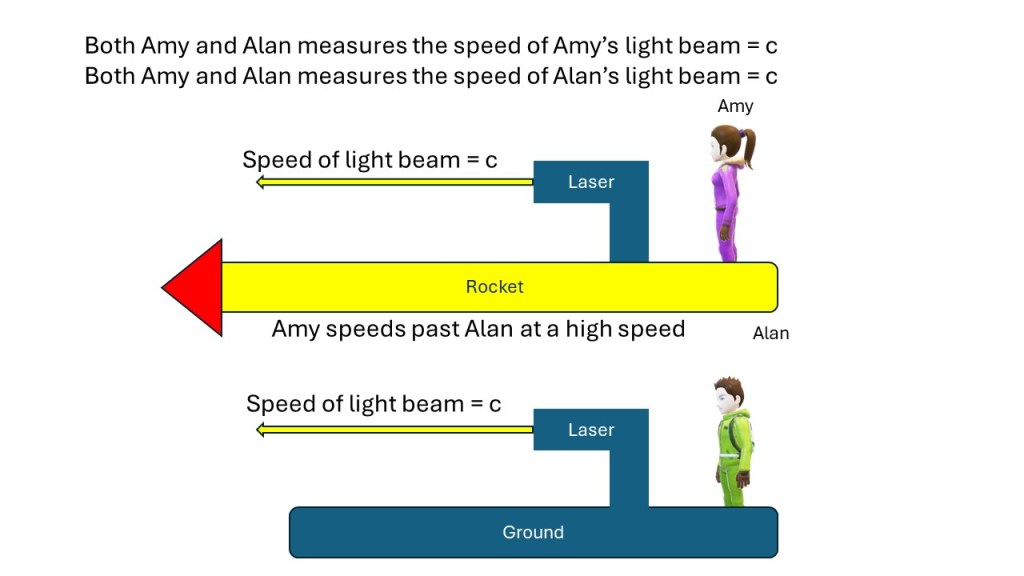
Outside of mathematics and logic nothing is ever the final truth, not in science, and not anywhere else. However, there are facts that have been so well confirmed and are so basic that there is no reason to doubt them. Earth is not flat like a pancake, and the sun is a star, are two examples of astronomical facts. Most dogs have four legs is another fact. The speed of light in vacuum is the same for all observers is a fact in physics that is surprising if you didn’t know it before. Scientific facts are verified by repeatable careful observation or measurement by experiments or other means. It is possible that we are all living in a virtual reality, like in the movie The Matrix, and that Earth is really flat like a pancake after all, because all of reality is a dream. However, for all practical purposes, it is not the case.

This blog, super facts, deal with facts that are surprising, strange, or disputed by non-experts, and yet true because they have been verified, for example, in the case of scientific facts, by repeatable careful observation. Anyone is free to object if you think I am wrong about a fact.

My next super fact is going to be “Evolution is a fact”. Evolution is also a scientific theory, but it means something different from when you say evolution is a fact. Moreover, a Scientific Theory is not a guess, as commonly but incorrectly assumed. I am bringing this up because many people who are typically unaware of the evidence behind a fact will use arguments such as “science does not know everything”, “it is just a theory”, etc., in efforts to dismiss a well-supported claim.

I should say that this post is inspired by a Facebook post by “The Credible Hulk”, a Facebook page managed by a group of anonymous scientists opposing misinformation around vaccines, global warming, evolution and GMOs. I did not save the post, but it went something like this:

One of the commentors said : “Calling evolution a “fact” defeats your argument. The Theory of Evolution is by definition a theory not a fact. It’s the currently agreed upon hypothesis but not a fact”

What the commentor did not realize is that “Theory” in the context of science does not mean what he thought it did. I am using past tense because he got “schooled”. To his credit he did not respond with insults and neither did the Credible Hulk, which does not seem to be standard on Facebook. However, his comment illustrates something that drives scientists like those who created “The Credible Hulk” nuts, and that is the widespread lack of understanding of the difference between a guess, a hypothesis, a scientific fact, theory as used in common language and used when talking about a scientific theory.

Rather than having this discussion over at my upcoming “Evolution is a fact” post, I am making a separate post about it. I consider “There are Scientific Facts” a super fact because it is true, and yet the confusion around it and what a Scientific Theory pertains is massive, and it is an important topic.

What is Science?

Science is the process of learning about the world through systematic observation and experimentation to gain knowledge about how things work. It involves observing phenomena, forming testable ideas (hypotheses), systematic studies, conducting experiments, and collecting evidence and facts that support or refute those ideas, ultimately leading to a deeper understanding of general truths and natural laws. If an idea/hypothesis correctly predicts and explains facts, it becomes a theory, which is something that is very different from a guess.

The process of making observations, formulating testable hypotheses, conducting experiments, analyzing data, and drawing conclusions to understand phenomena and solve problems is referred to as the scientific method, and there are different types of scientific methods. Some involve experiments, other involve analysis historical artifacts or existing data. Objectivity, reproducibility, falsifiability, and predictive power or problem solving are essential.

Banner research vector illustration concept with keywords and icons for Analysis, Data, Survey, Development, Fact, Knowledge, and Data Entry
Aspects of scientific research include analysis, data collection, sometimes surveys, development, establishing facts, creating knowledge, and data entry so that others can repeat it and verify results. Shutterstock Asset id: 1100776715 by Trueffelpix

What is a Scientific Theory?

When people hear the phrase “evolution is a theory,” many mistakenly assume it means evolution is just a guess or speculation. In science, however, a theory is far more than a guess. A scientific theory is an explanation of an aspect of the natural world that can be or that has been repeatedly tested and has corroborating evidence in accordance with the scientific method, using accepted protocols of observation, measurement, and evaluation of results. In other words, it is a well-tested, comprehensive explanation of natural phenomena, supported by an extensive body of evidence.

3D Isometric Flat Vector Conceptual Illustration of Scientific Method and Knowledge Acquiring. Icons organized in a circle, observation, question, hypothesis, experiment, conclusion, and result | There Are Scientific Facts
Conceptual Illustration of Scientific Method and Knowledge Acquiring. Notice, not all scientific methods necessarily include experiments. Some include surveys, or testing of ancient artifacts, etc. Shutterstock Asset id: 2139402875 by TarikVision

The evidence for evolution is both vast and compelling. It is not just the massive fossil record, it is in DNA, anatomy, there’s geographic evidence, and evidence from dozens of other scientific fields, not to mention that evolution is directly observable. There is a Theory of Evolution, that is the well supported explanation for evolution, or evolution by natural selection. There is also “Evolution is a fact” referring to, for example, the fact that we can directly observe it. It is true for all practical purposes, and that does not mean that evolution stops being a scientific theory as well as a fact.

Afterword

Even though science is constantly evolving and our knowledge is evolving and sometimes our understanding and scientific theories on a topic needs to be updated, scientific facts exist. Some scientific facts are extremely unlikely to change. For example, Jupiter has multiple moons, galaxies exist, global warming is real and is caused by us, and evolution is a fact. Before you decide to dismiss such a fact make sure you know what “theory” means in science, and most importantly educate yourself on the relevant evidence. There might be a whole lot more than you imagined, and you may discover that the evidence you thought was contrary is not evidence.

You often hear “science does not know everything”. That’s true. If science knew everything it would stop. However, the collective knowledge created by science is enormous and as individuals we know next to nothing. So be humble and learn from scientific evidence presented by reliable sources.


To see the other Super Facts click here

Electric Charge is not the only type of Fundamental Charge

Super fact 59 : Most people have heard of electrical charges, positive and negative. However, in nature there are also color charges—red, green, and blue—which are analogous to electric charges. In addition, there are anti-red, anti-green, and anti-blue charges.

Esther’s writing prompt: 10th September : Charge

Click here or here  to join in.

As you may know, atoms consist of particles. Electrons surround the nucleus of the atom. The nucleus of the atom is in the middle of the atom and it consists of protons and neutrons. Electrons have a negative charge. Protons have a positive charge. Neutrons do not have an electrical charge. Electrons are so called elementary particles. They are not composed of other particles. Protons and Neutrons, on the other hand, are not elementary particles. They are composite particles consisting of quarks, gluons and quark pairs called mesons.

The picture shows a Hydrogen atom consisting of one proton and one electron, one Carbon atom with six electrons, six protons and six neutrons, an Oxygen atom with eight electrons, eight protons and eight neutrons, and a Nitrogen atom with seven electrons, seven protons and seven neutrons | Electric Charge is not the only type of Fundamental Charge
Four elements with a nucleus and electron shells. The number of electrons, protons, and neutrons is shown. The green particles circling the nucleus are electrons. The red particles in the nucleus (middle) are protons and the blue particles in the nucleus are neutrons. The colors of the particles in this picture have nothing to do with color charges. The four elements are Hydrogen, Carbon, Oxygen, and Nitrogen. There are 118 elements. These elements can combine into millions of different kinds of molecules that make up everything. Asset id: 1555863596 by OSweetNature.

Quarks have electric charges, just like an electron and a positron, which is why a proton has an electric charge, a positive electric charge. However, in addition quarks have something called color charge. Unlike electric charges, which come in two forms, negative and positive, they come in three forms red, green and blue and in anti-red, anti-green, and anti-blue (well six forms actually). I should say that the color charges, red, green and blue, are not real colors. They are just names. Just electric charges are associated with electric forces; color charges are associated with the nuclear strong force. The strong force is even stronger than the electrical force.

If you take an equal amount of positive and negative electric charges you get something that is electrically neutral. If you take an equal amount of red, green and blue you get what is called white, or neutral. If you take an equal amount of red and anti-red you also get white. Any other mix gives you a net color charge.

vector illustration of up and down quarks in proton and neutron on white background. The proton (left) is a red and blue up quark and a green down quark. The neutron is a red and green down quark and a blue up-quark.
The proton and neutron each consist of three quarks. Protons consist of two up quarks and one down quark. Neutrons consist of two down quarks and one up quark. Both protons and neutrons have a net white charge. The yellow squiggly lines are gluons transporting color charge between the quarks. Asset id: 2333679305 by KRPD.

I can add that gluons are elementary particles that in many respects are like photons. Light consists of photons. It is because of the photons that we can see. In addition, the photons transport electrical charge. Photons are massless elementary particles with the intrinsic spin of one, and they belong to a group of elementary particles called Bosons. Gluons transport color charge, and they are massless and have an intrinsic spin of one and belong to the same group of elementary particles called Bosons. Unlike photons, they are stuck inside the nucleus and unlike photons they never get to see the light of day. The pun was intended.

Matter, light, and electrical charges are all part of our daily life. We can touch matter, see light, and we come across electrical charge when we touch something that is charged or when we see lightning. However, we do not come across quarks, gluons, and color charges in our daily life because they are hidden at the center of the atoms. Yet they are fundamental to the existence of matter, of us. We know color charges exist, the existence of color charges is an important fact, and yet it is not a well-known fact and often a big surprise to people. Therefore, I think it is a super fact.

The 118 Elements and the 3,500 Isotopes

There are 118 known elements. Why not 500, or just 4 or 5, like the ancient Greeks believed? Each element is defined by it having a certain number of protons and the same number of electrons if it is to be electrically neutral. The problem with having more than one proton in the nucleus is that protons all carry a positive charge and therefore want to push each other away. Same charges repel and different charges attract. What saves the nucleus from blowing apart are the neutrons and the associated strong nuclear force (protons & neutrons) which is guided by the color charges. The quantum model for electricity is called Quantum electrodynamics or QED. The quantum model for color charges is called Quantum chromodynamics or QCD.

As you add more protons it becomes increasingly more difficult for the nuclear forces (strong and weak) to hold the nucleus together. The positive charge of the protons is pushing too hard. That’s why there are only 118 Elements. Another thing to note is that the number of neutrons does not have to be the same as the number of protons. This means that for each element there are several kinds of so-called isotopes. For example, carbon has six protons and six electrons (if the atom is electrically neutral) but the carbon atom / element can have six neutrons, seven neutrons, or eight neutrons. You call them carbon-12, carbon-13, and carbon-14, where the number represents the number of protons plus the number of neutrons.

The picture shows a Carbon-12 isotope, a Carbon-13 isotope, and a Carbon-14 isotope | Electric Charge is not the only type of Fundamental Charge
Three natural isotopes of Carbon Stock Vector ID: 2063998442 by zizou7
Bohr model representation of the uranium atom, number 92 and symbol U. Conceptual vector illustration of uranium-238 isotope atom, mass number 238 and electron configuration 2, 8, 18, 32, 21, 9, 2.
This is a simplified Bohr model of the Uranium atom. There are 92 little blue balls circling a nucleus in the middle of the atom. Those are electrons. In the nucleus there are 92 protons. Those are the red balls with plus signs. In addition, there is a yellowish smudge around the protons in the nucleus. Those are the neutrons. Depending on the isotope, there are 143 neutrons for U-235, 146 neutrons for U-238 and 142 neutrons for U-234. Shutterstock asset id: 1999370450 by Patricia F. Carvalho

It is the electrons that determine the chemical properties of an element, and therefore isotopes with a different amount of neutrons are chemically identical. However, they are different with respect to properties that relate to he nucleus, such as radioactivity/stability, and of course weight. Also, when atoms combine into molecules their chemical properties change drastically, but again that is due to the rearrangement of the electrons. There are around 3,500 known isotopes, most of them radioactive.

What is a Quark?

To learn more about Protons, Neutrons, Quarks, Gluons, Color Charges, and Quantum Chromodynamics you can watch this 10 minute video below.

Other Physics Related Superfacts


To see the other Super Facts click here

Half the World’s Population Live within a 2 Percent Circle

Super fact 57 : Half the World’s Population live within a circle that covers 2% of the world’s surface, or 10% of earth’s land area. This circle is often referred to as the “Valeriepieris Circle” or Yuxi Circle, and it is centered on southeast Asia.

This circle, has a radius of a bit more than 2,000 miles, and encompasses densely populated areas of East and South Asia, including major population centers like China, India, and Indonesia. The original Valeriepieris Circle was created by a teacher named Ken Myers in 2013 and was larger (radius 2,500 miles) than the more optimized circle created in 2015. In 2015, Singaporean professor Danny Quah—with the aid of an intern named Ken Teoh created a significantly smaller circle (radius 2,050 miles) that included half the world’s population. 4.2 billion people live in the Valeriepieris Circle, which is 5.6 times as many people as in Europe and 12.4 times as many people as in the Unites States.

I consider this a super fact because it is true, it is an important fact, and it is a surprising fact to those of us who have not come across this information before. It is an important fact because it impacts how we view our world. The circle is located far away from Europe and North America, in a part of the world that is rising quickly economically. The people in this highly populated circle have different cultures, music, literature and religions from the US and Europe. They speak different languages, and they play different sports, well soccer (the real football) is international but not as common in the Valeriepieris Circle as in Europe or South America.

Those among us who live outside of this circle, for example, in the United States or Europe, probably need to pay more attention to this half of world. Especially, if you live in the United States, it is easy to believe that the world is about us. The existence of this circle demonstrates that this view is not a realistic view.

This is a world map showing all the continents with the colors of the Valeriepieris Circle inverted. It should be noted that the circle is quite small compared to the whole world | Half the World’s Population Live within a 2 Percent Circle | The original 2013 map by Ken Myers, with the interior of the circle.
The original 2013 map by Ken Myers, with the interior of the circle. Half as many people live inside the circle as outside the circle. However, it is larger and less optimized compared to the circle from 2015 below. This circle is NASA, Public domain, via Wikimedia Commons
This is a special geometric projection of planet earth showing the Valeriepieris Circle at the center. The proportion of the circle (yellow circle) and the whole earth is proportional, and the circle is obviously much smaller | Half the World’s Population Live within a 2 Percent Circle | Danny Quah's 2015 circle, on a Lambert azimuthal equal-area projection.
Danny Quah’s 2015 circle, on a Lambert azimuthal equal-area projection. It should be noted that the fraction of the area of the circle to that of the globe is equal to its equivalent on Earth. Again, half as many people live inside the circle as outside the circle. From Wikipedia cmglee, jimht at shaw dot ca, CC BY-SA 4.0 <https://creativecommons.org/licenses/by-sa/4.0&gt;, via Wikimedia Commons.

Population of Southeast Asia

The countries that are part of the Valeriepieris Circle are, for example,

The map shows the countries in Southeast Asia as relatively large, especially, China and India. Almost the entire right-hand side of the map is filled with Southeast Asian countries making it easy to understand how just around 20 Southeast Asian countries can correspond to half the world’s population.
Each country’s size represents the size of the population in 2018. Each little square represents 500,000 people. All 15,266 squares show where the world’s 7,633 billion peopls lived in 2018 (now the world population is 8,244 billion people). Image from our World in Data. By Max Roser for OurWorldinData.org – the free online publication on the world’s largest problems and how to make progress against them.

Population Statistics

Most people know that in recent centuries the world population has grown almost exponentially but is now projected to level off sometime around the middle of this century. Europe is an interesting example. A thousand years ago Europe’s share of the world population was around 14.5%. Then came the scientific revolution and the industrial revolution and by 1900 it was 25%. As other countries around the world became industrialized Europe’s share of the world population shrunk, even though the population of Europe kept increasing, just slower. Now Europe’s share of the world population is 9%.

As countries become wealthier their population growth tends to slow down, not just in Europe, but around the world. The world’s population growth is illustrated by the image from Our World in Data below (starting 5,000 years ago, ending the year 2000) and the six minute YouTube video below from the American Museum of Natural History (starting 100,000 years ago and ending the year 2100). The YouTube video also shows the projected population decline beyond the year 2050.

Twelve maps depicting earth’s population distribution  (population per square kilometer) at different twelve different times in history. The times are 3000BC, 2000BC, 1000BC, 1AD, 500AD, 1000AD, 1500AD, 1600AD, 1700AD, 1800AD, and 2000AD | Half the World’s Population Live within a 2 Percent Circle
Population per square kilometer. Source of the original visualization Klein Goldewijk, Beusen and Janssen (2010). Long term dynamic modeling of global population and built-up area in a spatially explicit way: HYDE 3.1. In the Holocene 20(4) 565-573. The original visualization was adapted by OurWorldinData.org


A somewhat related super fact is – Poverty and child mortality has been sharply reduced worldwide.

Next Super fact coming up is : Time is the fourth dimension


To see the other Super Facts click here