Scandinavian Mythology

Since it is Halloween I thought I’d make a fun post (not a super fact) about Scandinavian Mythology or folklore. I live in Texas, but I am originally from Sweden so the various beings I’ll describe or mention below are beings that I grew up hearing about. When I was a kid, we kids used to scare each other with stories about these beings.

I should also point out that it is not ancient Viking mythology but more recent folklore that some people still believe in. I am focusing on Swedish folklore and Norwegian folklore since it is similar to Swedish folklore. Danish folklore is a little bit different, but it has many similarities to Swedish and Norwegian folklore. Denmark is a Scandinavian country, but the post would be too long if I included folklore that is specifically Danish.

I am providing one or more pictures for each being. These pictures are either in the public domain, for example via Wikipedia, or shutter-stock pictures (I have a subscription), or pictures I generated with the help of ChatGPT with varying success. The beings covered are Tomte, Vittra (Vitter folk), Elf, Skogsrå/ /Tallemaja/Huldra, Näcken/Fossegrim, Troll, Myling, Storsjö odjuret (the north Swedish equivalent of the Loch Ness monster), Kraken, and Skvader. Finally, Blodstämmare is not a being but a north Swedish magical practice that you use to remotely stop the blood flow in a person.

Tomte

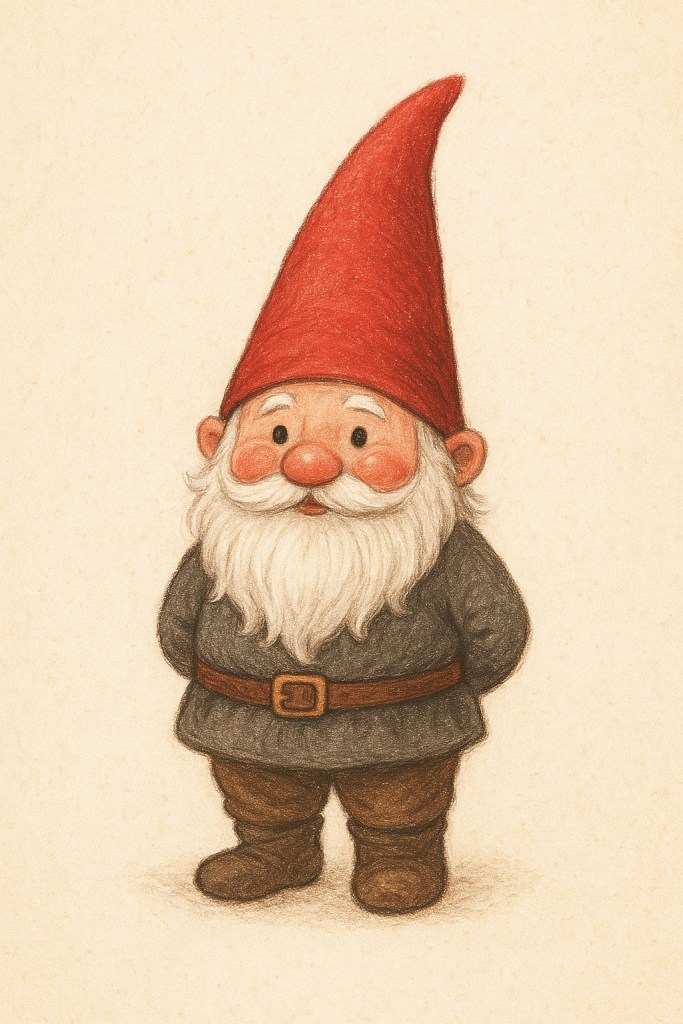
Tomtar (plural of Tomte) or Nisse in Norwegian is a type of small magical people, or gnomes, related to Vitter folk (described below). They are friendly and is the inspiration behind the Swedish version of Santa Claus, which is therefore a bit different from the Disney version of Santa Claus that has become so popular.

For one thing, the Disney version of Santa Claus works alone while delivering presents and therefore needs to move faster than the speed of light to cover all the good children. A Tomte may help you with your projects and duties if you are nice to them. They may help you with your farm and your animals, warn you of danger, and bring you gifts for Christmas if you in return put out food for them, such as porridge. As mentioned, there are many Tomtar, often one Tomte per house.
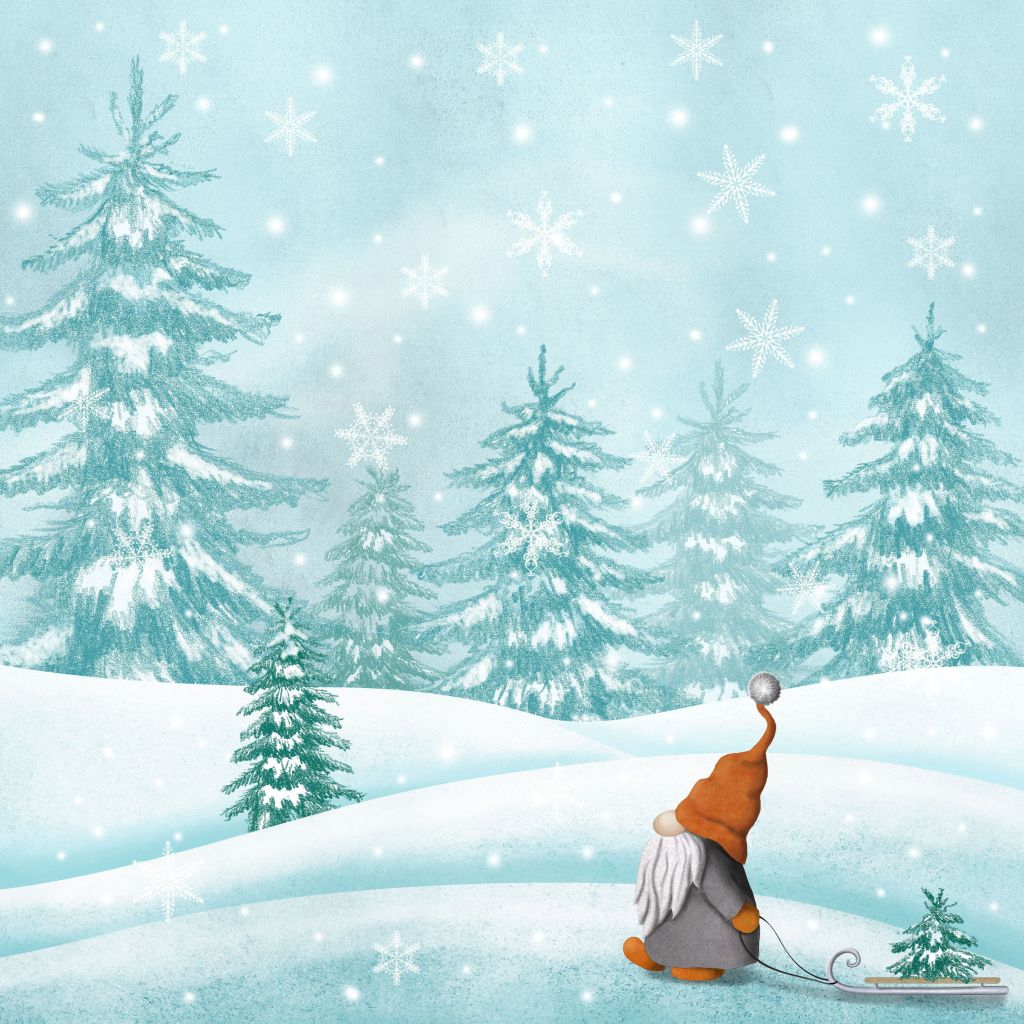
A Tomte wearing a red hat in a snowy winter forest. | Scandinavian Mythology
An illustration of a Tomte. Shutterstock ID: 2060057882 by PLIMPLUM.
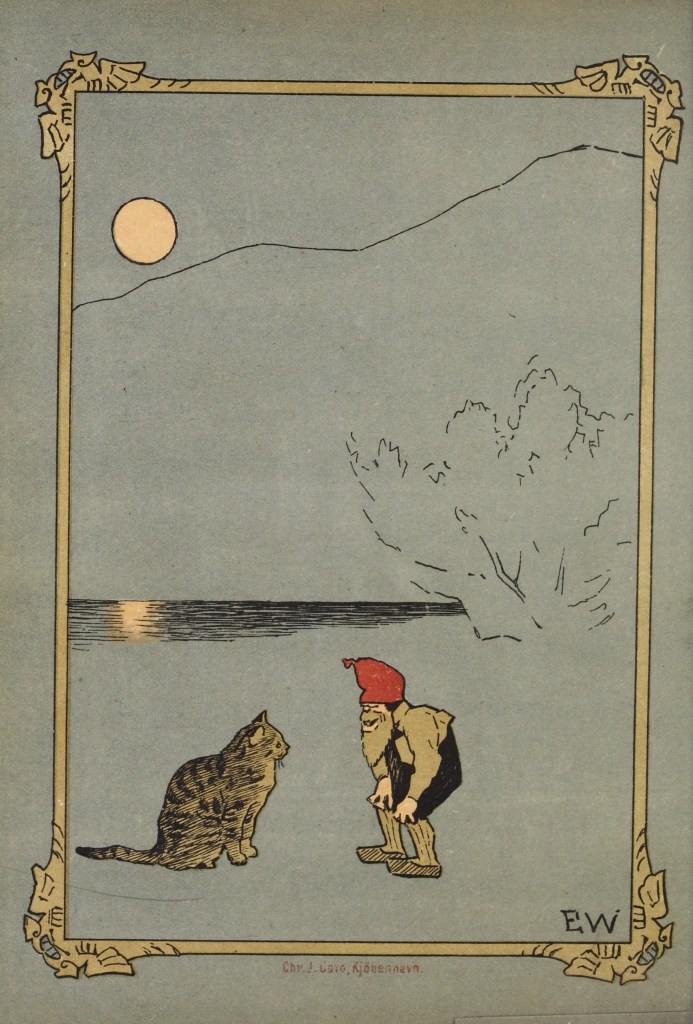
An old illustration of a Tomte conversing with a sitting cat.
A Tomte or a Nisse, about as big as a cat, Erik Werenskiold, Public domain, via Wikimedia Commons
Tomte with a beard wearing a red pointed hat | Scandinavian Mythology
Tomte generated by ChatGPT

Vittra

Vittra or Vitterfolk are supernatural spirits or small invisible people who have a lot in common with people as well as Tomtar. They own cattle and they sometimes interact with people. Usually, they stay out of your way, but if you hurt them, for example by throwing hot water out the window without warning them first, they may take revenge on you and burn down your house. Vittra are not evil but not friendly either.

The belief in Vittra is especially prevalent in northern Sweden. On the Swedish island of Gotland, they are often referred to as “Di små undar jordi” in the Got/Goth dialect, or “De små under jorden” in proper Swedish, or “the small ones below ground” in English. They are sometimes depicted as looking similar to Tomtar, gnomes or elves, and sometimes as invisible, or near invisible little spirits. Below are some depictions of Vitter folk.
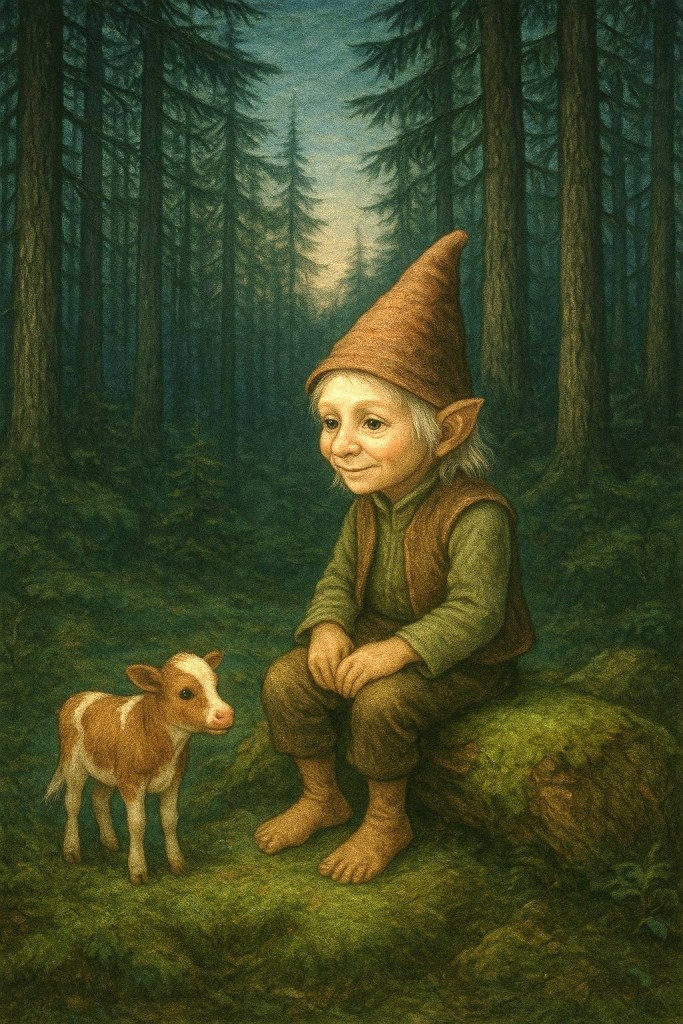
A Vitter is sitting on a log in the forest and baby cow is standing in front of him.
A Vitter and his mini calf. Generated with the help of ChatGPT

Elf

An elf, or elves in plural, is a type of human like supernatural being in Germanic folklore and especially Nordic/Scandinavian folklore. Since elves have been popularized around the world it is a well known being. In Scandinavian mythology they were initially often considered bad news but because of popular culture, such as Tolkien’s books, they have been redeemed into something positive. The first picture below is from a Swedish children’s book written in 1910. I read this book when I was a child. The wispy creatures are elves and the small kids with mushroom hats are Tomte children. In this book the elves are depicted in a Nordic pre-modern fashion, but they are nice.
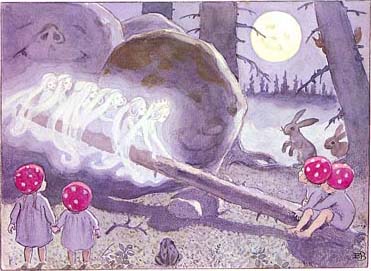
Wispy spirit like elves are sitting on a log. The Tomte children are standing next to them and talking to them. The Tomte children are wearing red mushroom hats. | Scandinavian Mythology
Little älvor, playing with Tomtebobarnen. From Children of the Forest (1910) by Swedish author and illustrator Elsa Beskow. Elsa Beskow, Public domain, via Wikimedia Commons
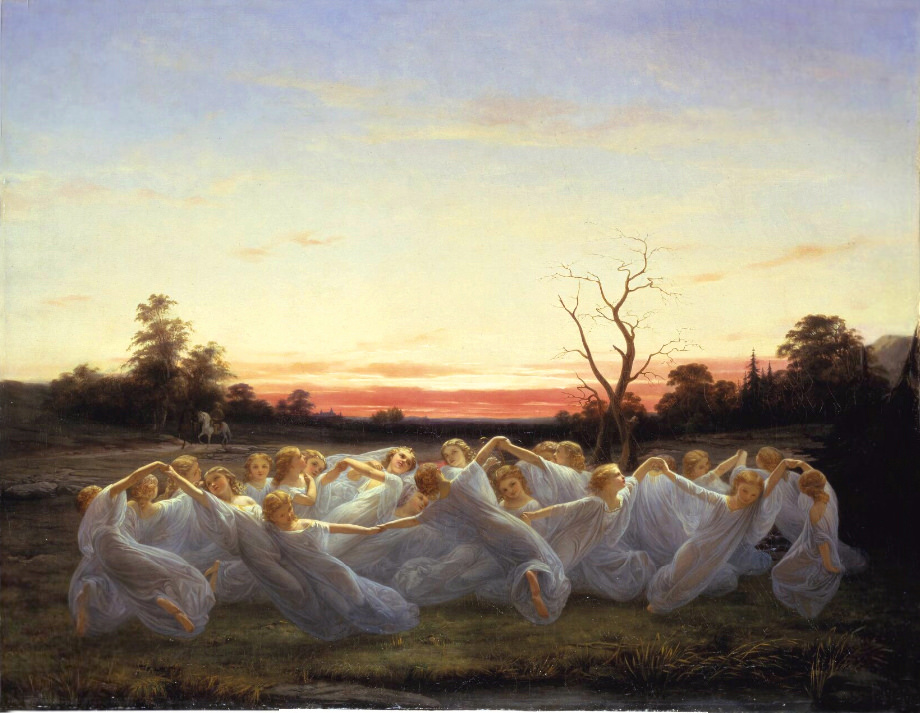
Around 20 white dressed female elves are dancing on a meadow.
Ängsälvor (Swedish “Meadow Elves”) by Nils Blommér (1850). Nils Blommér, Public domain, via Wikimedia Commons.
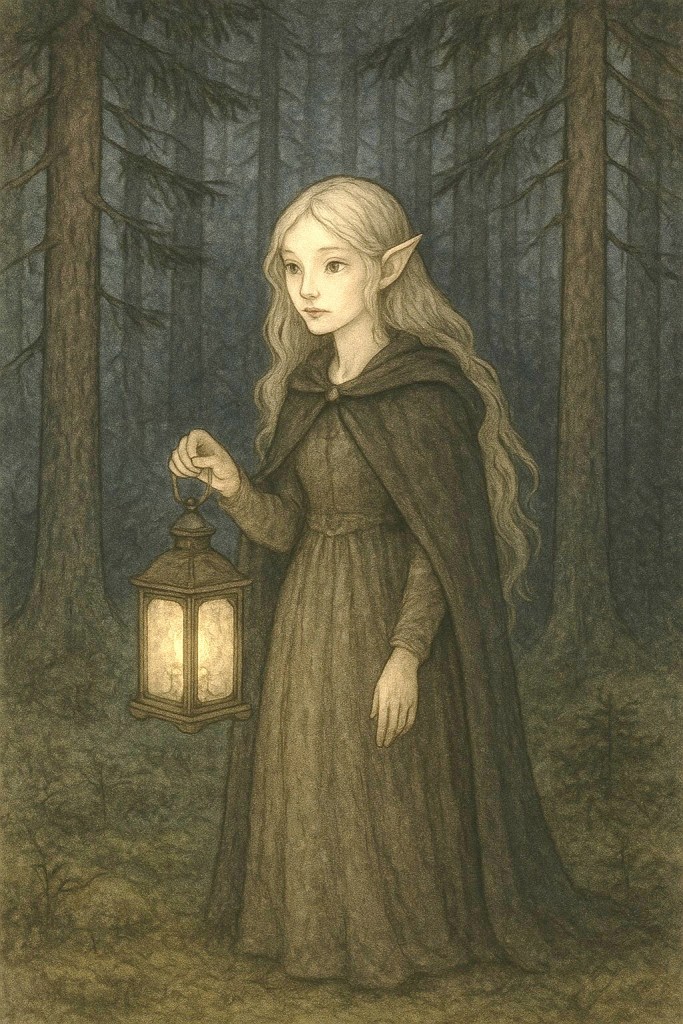
A female elf in the forest. She is holding a lantern. | Scandinavian Mythology
A female elf that I generated with the help of ChatGPT
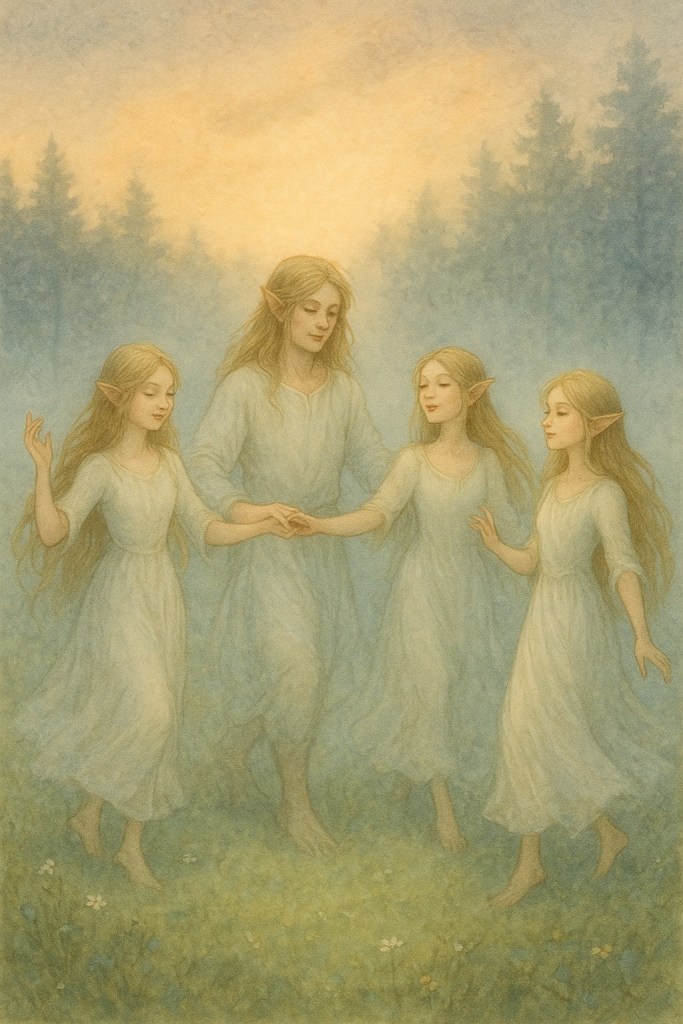
One male elf and three female elves standing in a clearing.
Four elves (one male, three females) standing in a forest glade. I generated this picture with the help of ChatGPT.

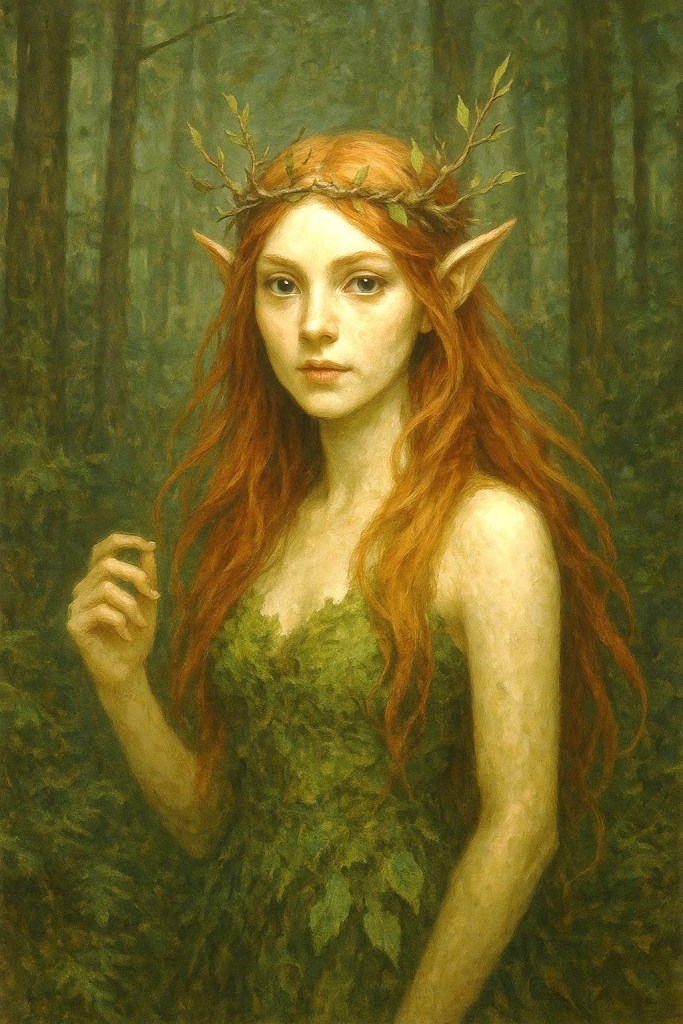
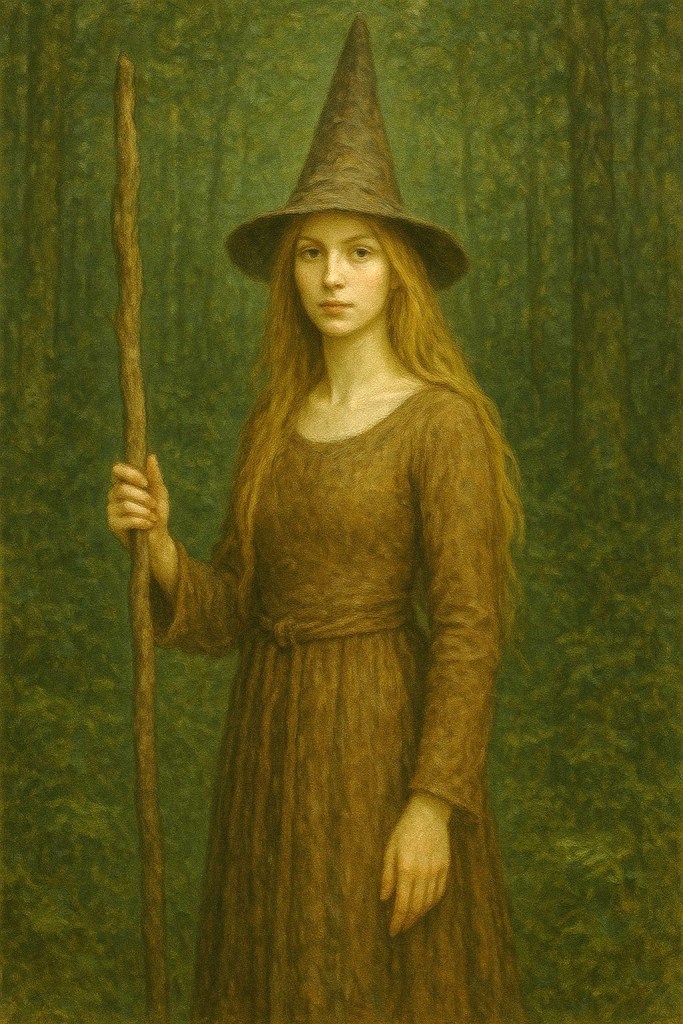
Skogsrå,  Tallemaja, Huldra

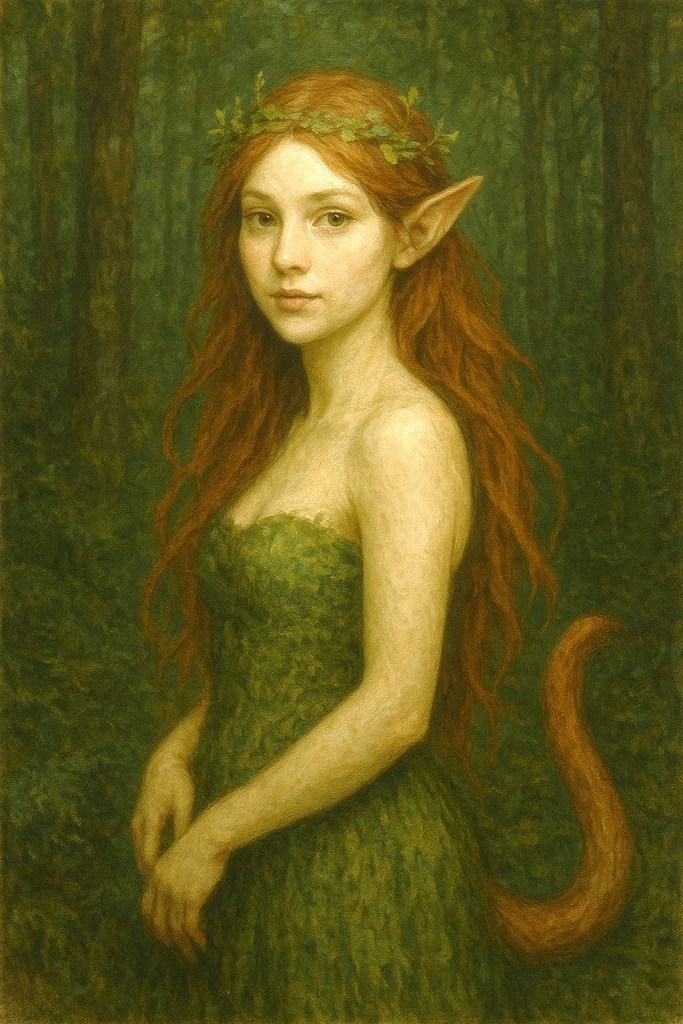
Skogsrå or Tallemaja in Swedish folklore is a seductive female creature who lures men with her beauty or beautiful singing and then kills the men. The Skogsrå / Tallemaja typically has a tail and a hollowed out back, which you can’t see if you are facing each other. In Norwegian this creature is called Huldra (Hulder in plural).

It should be noted that I read that if you meet a Huldra in the forest and you treat her with respect she will not kill you. She would just enjoy your company for a while, talk to you, sing to you, show you the beauty of the forest, and then she would let you go. It is only the rude and selfish men who don’t respect her boundaries whom she kills.

An image AI-illustration of a Huldra
Imagining how a Huldra would look like. Stock AI-generated image ID: 2400845203 by Shutterstock AI Generator.
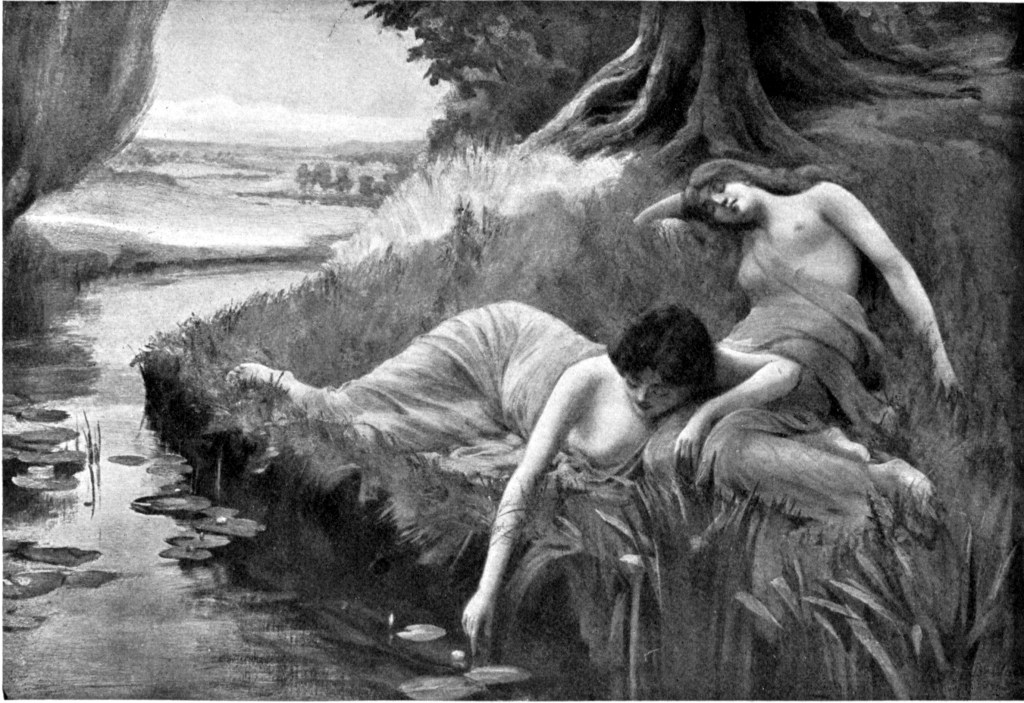
Two lightly dressed huldras / nymphs resting by a creek in the forest. | Scandinavian Mythology
Huldra’s Nymphs (1909) by Bernard Evans Ward, Public domain, via Wikimedia Commons
A Tallemaja with pointed ears and red hair. She is wearing a green dress, and she is standing in the forest.
A Skogsrå, Tallemaja or Huldra that I generated with the help of ChatGPT
A Skogsrå with pointed ears and red hair. She is wearing a green leafy dress, a crown of leaves, and she is standing in the forest. | Scandinavian Mythology
Another picture of a Skogsrå, Tallemaja or Huldra that I generated with the help of ChatGPT.
A Tallemaja with long hair. She is wearing a brown dress, a pointy hat, and she is standing in the forest.
A Tallemaja that I generated with the help of ChatGPT.

Last summer (a bit more than one year ago) we visited Sweden and Norway. One day we took a tour into the Norwegian mountains and fjords. We took a two-hour cruise on Sognefjord and after the cruise we took a train to the top of the surrounding mountains. Along the way we encountered a Huldra by a waterfall. She sang to us in her beautiful voice, and she seduced us all, both men and women, to take photos of her with our phones and posting them on social media. It was a tourist ploy of course. You can read more about our trip here .
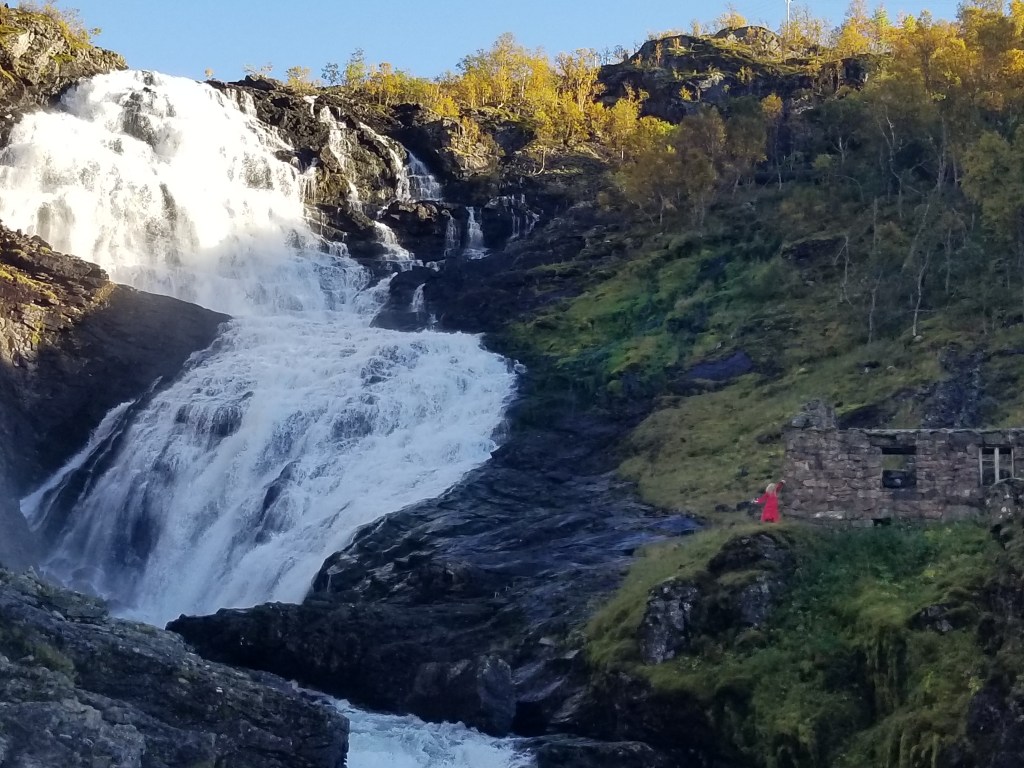
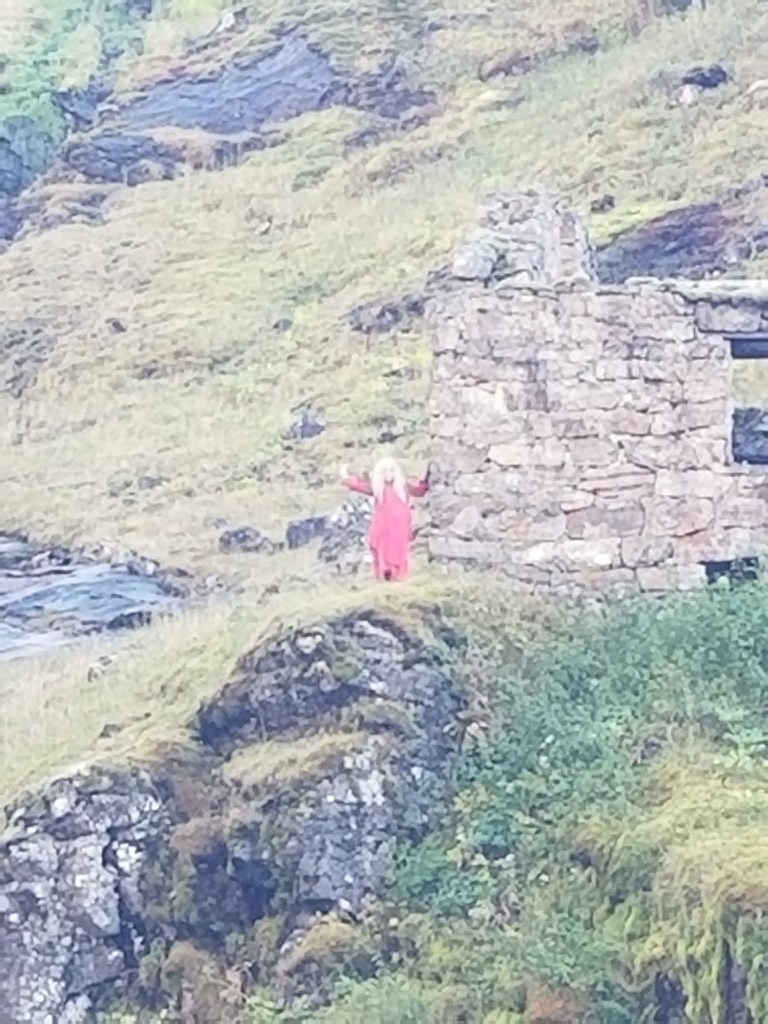
A waterfall in the mountains. A woman in a red dress is standing to the right of the waterfall.
My photo of the Huldra (in red) by the waterfall in the Norwegian mountains. She seduced us all into taking photos of her for Facebook. Her seductiveness was feared in medieval times, but in modern times we refer to the seductiveness of the Huldra as a “tourist trap”.
Blurry image of a Huldra dressed in red standing on a mountain side. | Scandinavian Mythology
A close up of the Huldra we encountered. Sorry, my phone camera is the best and it was at a distance.

Näcken, Fossegrim

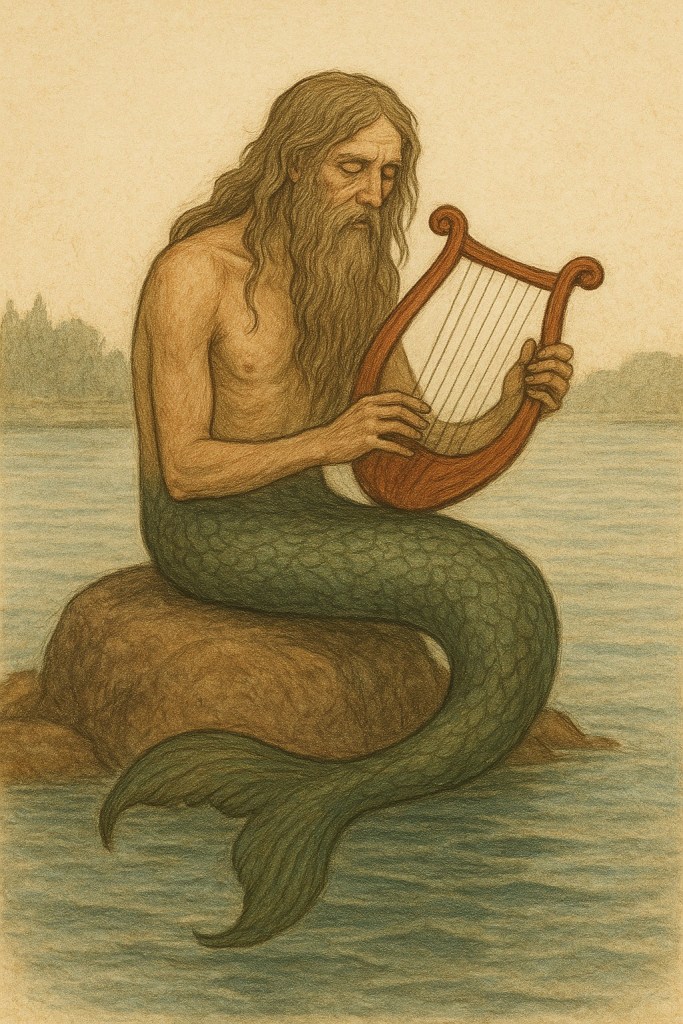
Näcken, Strömkarlen, or Fossegrim in Norwegian is a male creature who lives by the water, creeks, rivers, ponds and lakes. He plays a harp or a violin He lures children and others to their death. In southern Sweden (Scania) he seduces people by skillfully playing a violin thus creating irresistible music.
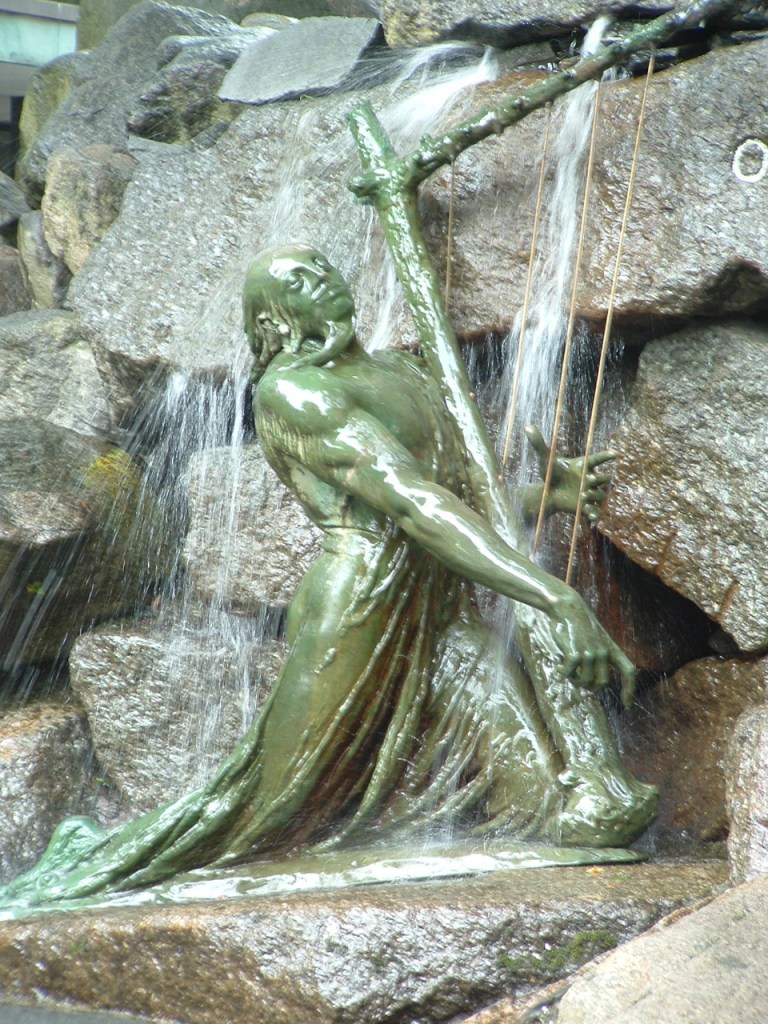
Greenish statue of Fossegrim standing in a small waterfall playing a harp. | Scandinavian Mythology
Bjørn som tegner, CC BY-SA 3.0 <https://creativecommons.org/licenses/by-sa/3.0&gt;, via Wikimedia Commons
Näcken or Strömkarlen is sitting on a rock in a creek playing a harp. | Scandinavian Mythology
A picture of Näcken that I generated with the help of ChatGPT

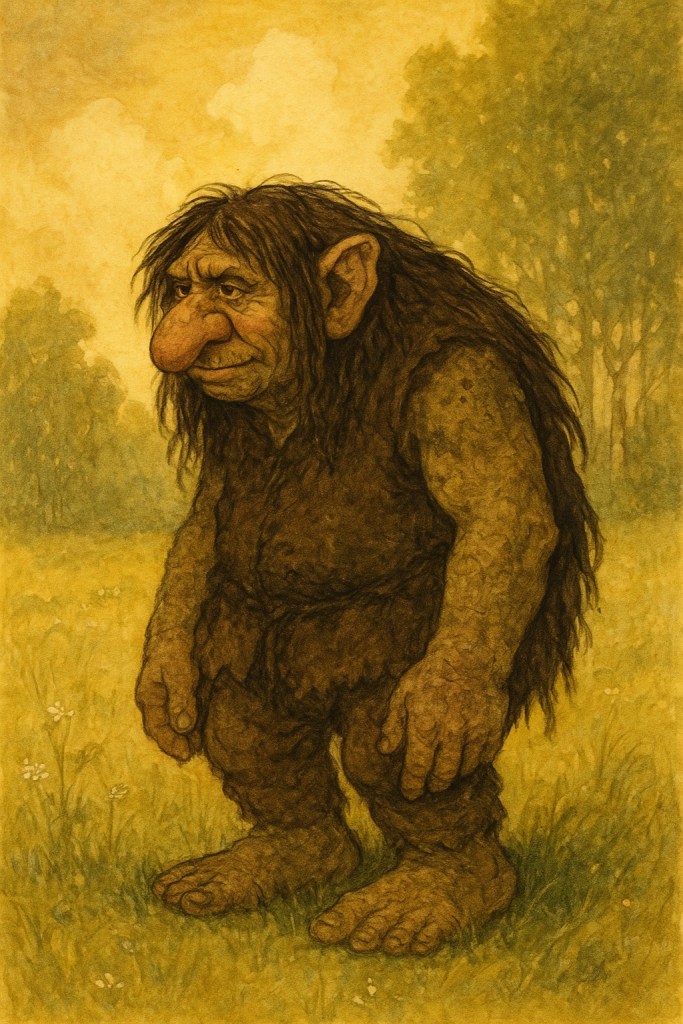
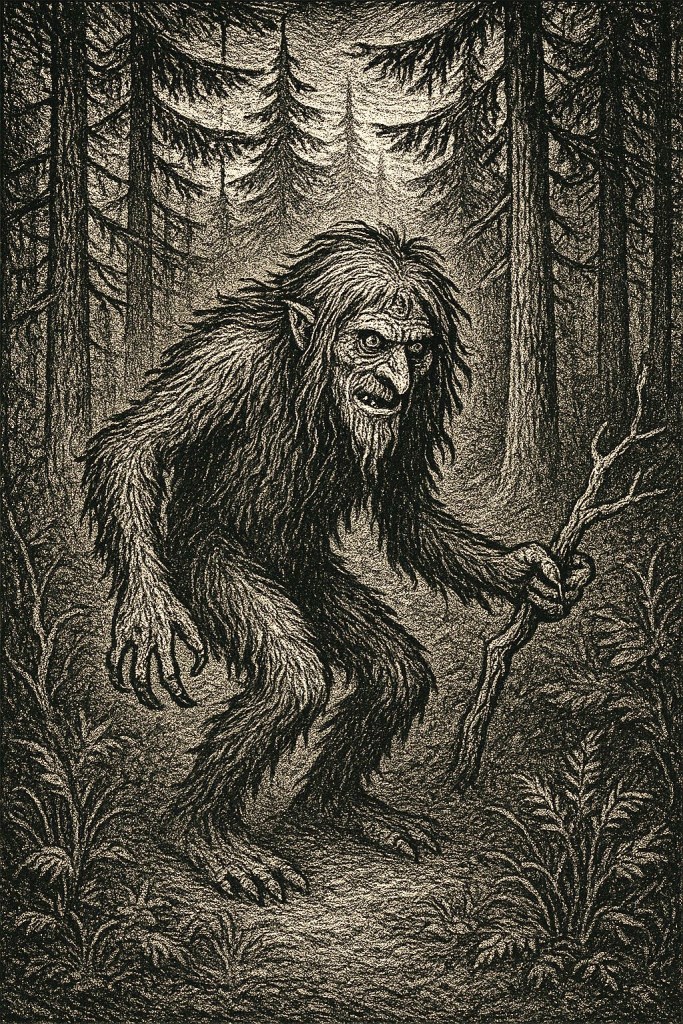
Troll

Troll, or Trolls in plural, are large ugly creatures with magical powers. They typically live in caves and sunlight is dangerous to them. They are typically hostile to humans and may kidnap people, including children, to work in their mines. Trolls are called Trolls in both Swedish and Norwegian.
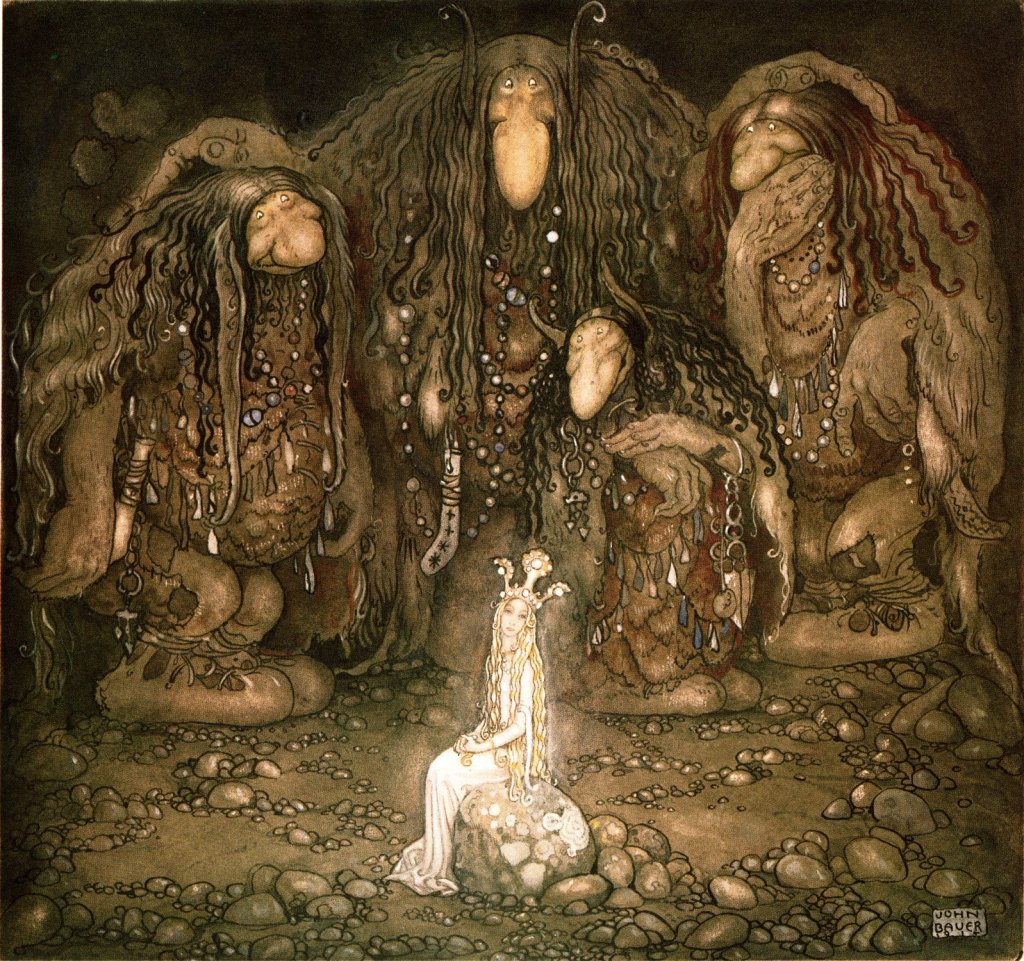
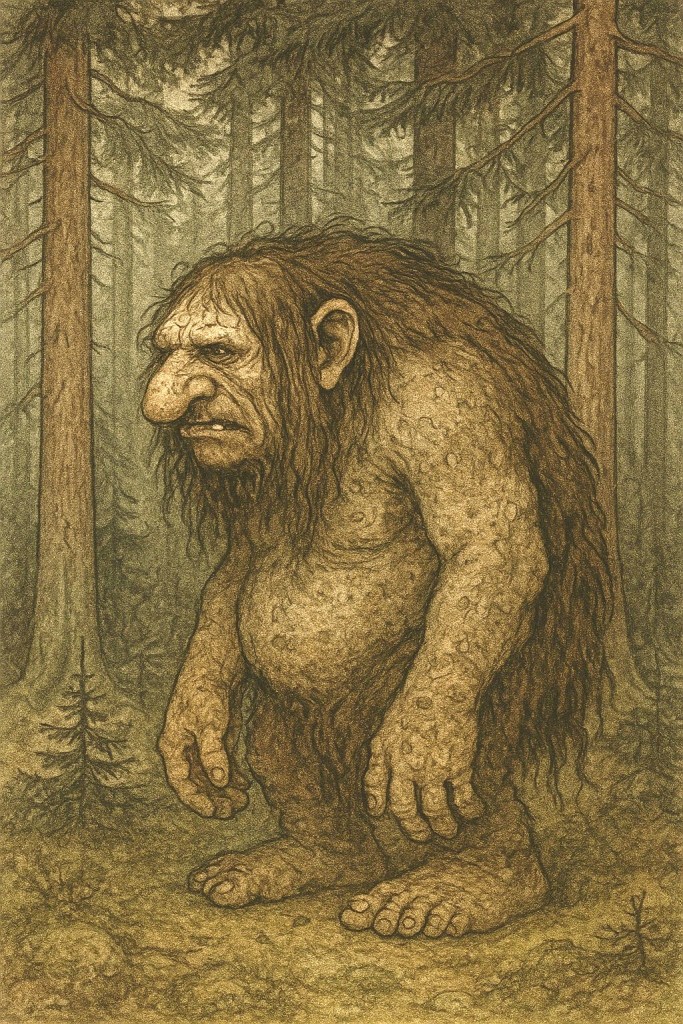
Four big Trolls sitting next a shiny white female elf.
Look at them, troll mother said to the elf girl. Look at my sons! You won’t find more beautiful trolls on this side of the moon. (1915) by John Bauer. John Albert Bauer (4 June 1882 – 20 November 1918) was a Swedish painter and illustrator. wikipedia public domain.
A troll standing in the forest
A picture of a troll that I generated with the help of ChatGPT
A troll standing in the forest | Scandinavian Mythology
Another picture of a troll that I generated with the help of ChatGPT
A very ugly troll standing in the forest
A picture of a troll, a slightly different style, that I generated with the help of ChatGPT

Myling

Before modern contraception, infanticide was one way for parents to limit the number of children they had. Unwanted and out of wedlock children were often killed. It is part of our human dark history. These babies were not baptized and in old Scandinavian mythology they became restless spirits seeking revenge on the mother or both parents. Alternatively, they caused mischief until they could convince someone to at least bury them properly. These restless baby spirits are referred to as myling or mylingar in plural.
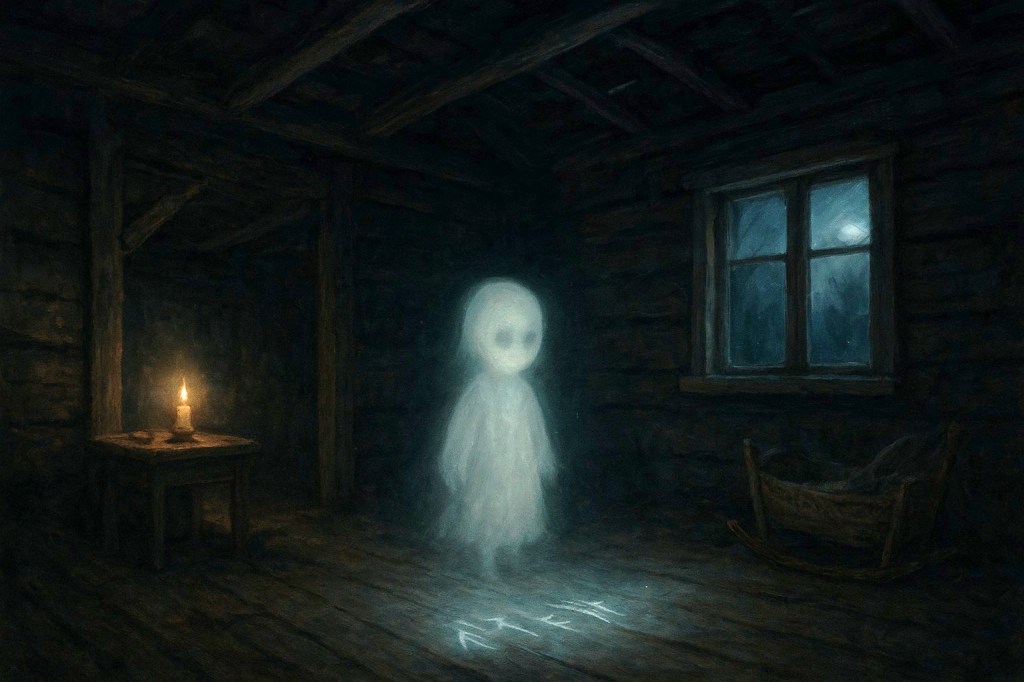
A myling in the middle of a room of a cottage. The myling looks like a small shiny ghost. It is dark in the cottage and there is a window and a candle. | Scandinavian Mythology
A picture of a myling that I generated with the help of ChatGPT

Storsjö odjuret

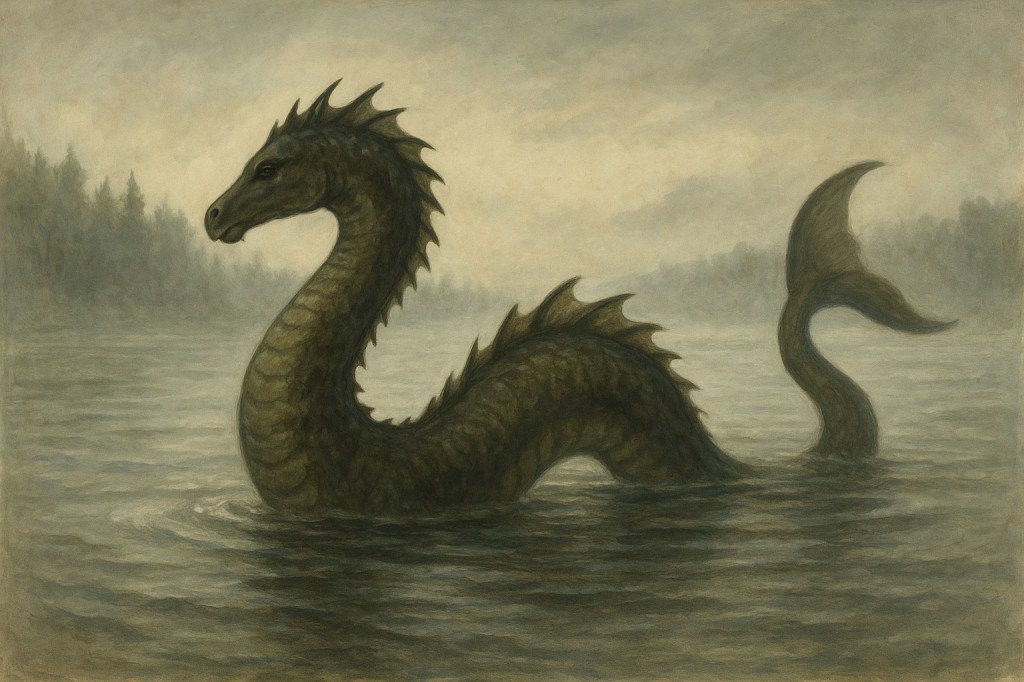
Storsjöodjuret is a large sea serpent like Swedish lake monster like the Loch Ness monster. It resides in a lake in northern Sweden. The English translation of Storsjö odjuret is the monster of the Great Lake. Storsjö / Great Lake is not far from where I grew up. I should say this monster has been hundreds of times since 1635 and seems to have been depicted on a rune stone from the 11th century.
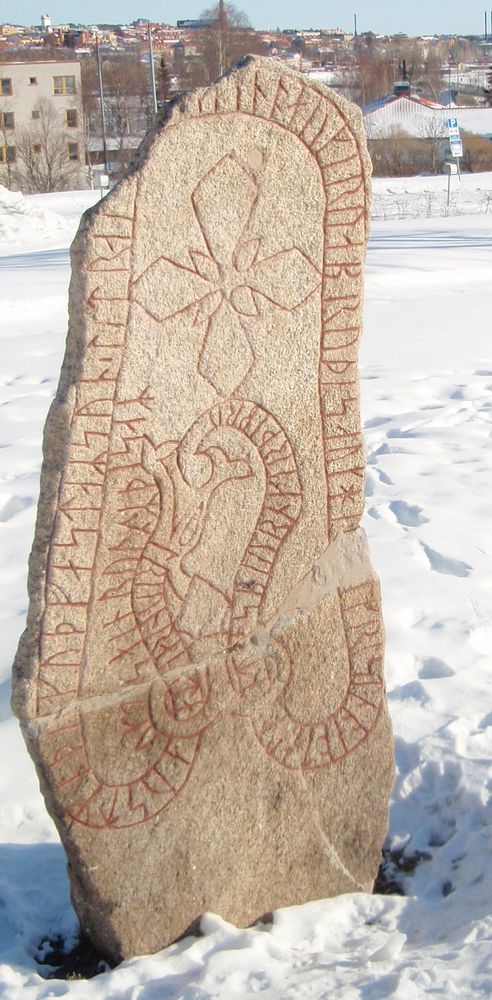
A runestone with runes and a picture of snake like creature.
The Frösö Runestone from the mid-11th century. Frösö is an island located in the middle of Storsjö. In the legend from 1635 Storsjöodjuret is said to be the serpent depicted on the stone. Andreaze, Public domain, via Wikimedia Commons
Depicted is a large sea serpent like creature with a horse like head and a fish tail. | Scandinavian Mythology
A picture of storsjoodjuret that I generated with the help of ChatGPT

Kraken

Kraken is a gigantic octopus that can bring down entire ships. It is more of a Norwegian creature but also Swedish.
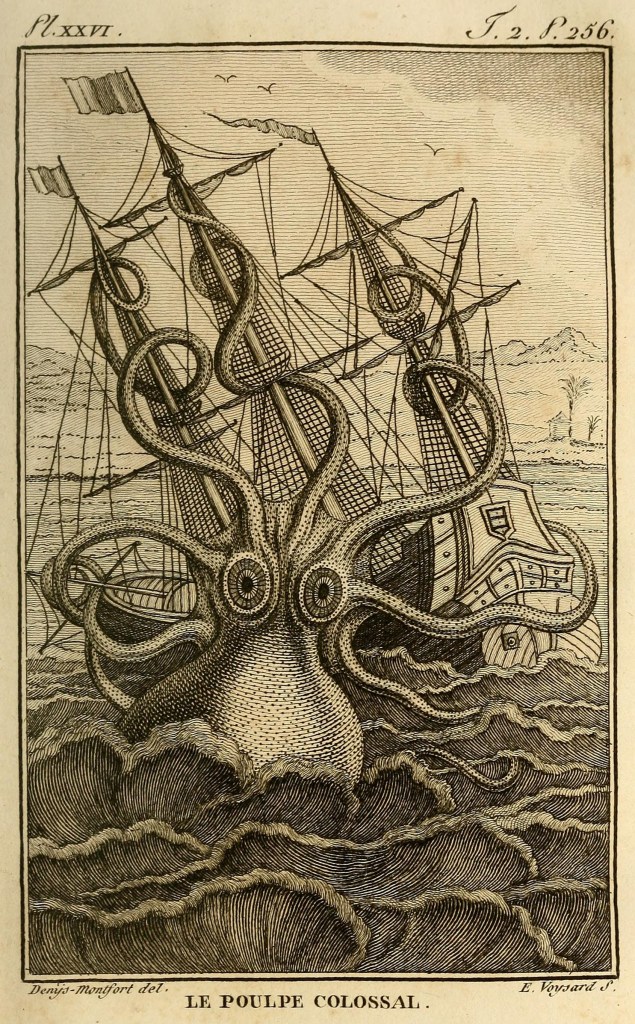
An old illustration of a giant octopus climbing all over a ship.
Pierre Denys de Montfort (1766–1820) / Étienne Claude Voysard (1746–1812.), Public domain, via Wikimedia Commons

Skvader

The skvader is a Swedish fictional creature that looks like a mix of a wood grouse and a hare. It started with a taxidermist creating a mixture of the two animals, taking a photo, and a rumor spread that it was real. I am remember watching debates on Swedish TV on whether the creature was real or not. People love to believe strange things. Yet another reason we scientifically valid evidence.
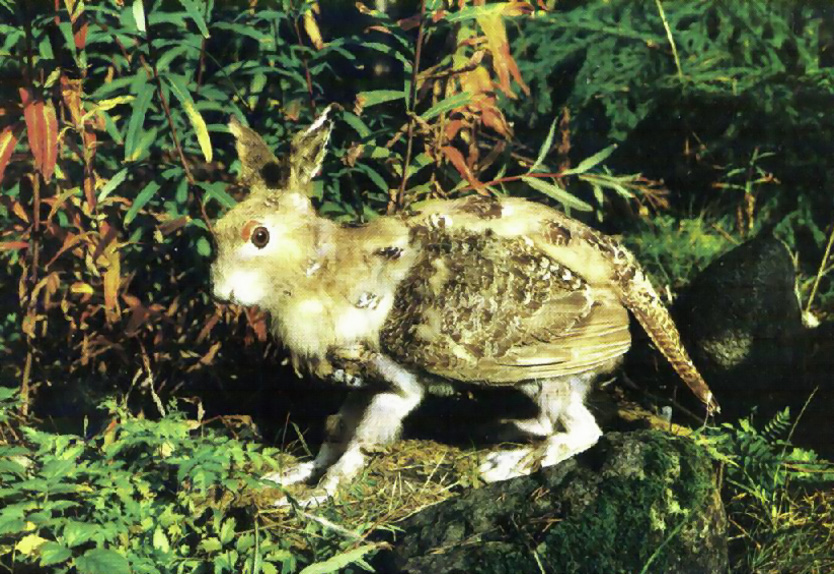
A photo of animal that looks like a mix of a wood grouse and a hare.
Unknown photographer, Copyrighted free use, via Wikimedia Commons

Blodstämmare

This is not a creature but a very common superstition in northern Sweden. There are people, blodstämmare, who can stop the flow of blood by uttering magical phrases while focusing their minds on the person in question. This power is usually used for helping people who are bleeding. It can also be used for evil, like black magic, to stop the blood flow in someone’s heart. This superstition is based on Sami (indigenous north Scandinavian people) Shamanism and north Swedish Christian fundamentalism (Laestadians). It is respected enough that some north Swedish hospitals have used blodstämmare in emergency situations.

The father of a close friend of mine called a blodstämmare when he had a bad nosebleed, and it worked. I know anecdotes are not valid scientific evidence. It is just a good story.
Happy Halloween


To see the Super Facts click here

The Edge of the Observable Universe is 46.5 billion Light Years Away

Super fact 67 : The Edge of the Observable Universe is 46.5 billion light years away despite the age of the Universe being 13.8 billion years. We can see 3.4 times further than light can travel in 13.8 billion years.

Esther’s writing prompt: October 29 : Edge

Click here or here  to join in.

That sounds impossible at first. The age of the universe is 13.8 billion years. How can we see something that is farther away than 13.8 billion light-years if that’s how long the light had to travel. The reason it works is that space itself has been expanding the entire time that the light has been traveling toward us. The light we see today from the most distant regions of the universe was emitted 13.8 billion years ago, but the space between us and the origin of that light has stretched enormously. You can say that the light hitched a ride on the expanding space.

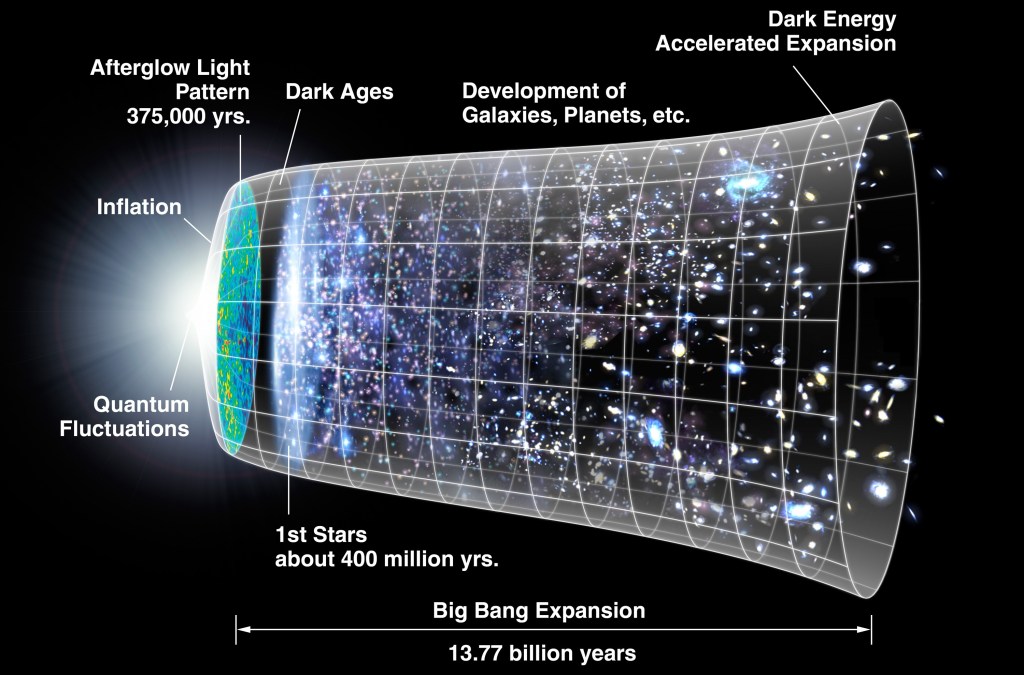
The pictures show an expanding Universe starting with quantum fluctuations followed by inflation, then an afterglow light pattern 375,000 after the Big Bang and then the so-called dark ages, the creation of stars and galaxies. | The Edge of the Observable Universe is 46.5 billion Light Years Away
An overview of the last 13.8 billion years. This file is in the public domain in the United States because it was solely created by NASA. From Wikimedia commons.

As mentioned, the edge of the observable universe is now about 46.5 billion light-years away in every direction, which means that the observable universe is about 93 billion light-years across (46.5 billion light years times 2) vastly larger than what you’d expect if you just multiplied the age of the universe by the speed of light. Beyond that observable edge there may be much more—possibly an infinite Universe, but it is forever hidden from us because light hasn’t had time to reach us yet and will never reach us.

The speed of light in vacuum is a universal constant and nothing can travel faster then the speed of light. However, space itself can expand faster than the speed of light if measured across large enough distances. The distance between two points in space can expand faster than the speed of light if that distance is large enough. This is possible because there is nothing material that is traveling faster than light. It is just the space of the Universe itself expanding because of dark energy.

Space is expanding right where you are standing too. Can you feel space expanding around you? Well, probably not but it is. I consider this a super fact because it is an important aspect of our view of the universe, it is surprising to those who did not know it before, and it is true.


Galaxies are Moving Beyond the Observable Universe

In the future the far away galaxies will continue to move away from us faster and faster, and beyond a certain distance their light will no longer ever reach us again. Therefore, more and more galaxies will disappear from our view. They won’t vanish physically; they’ll just slip beyond our observable horizon. In about 100 billion years, observers in the Milky Way (or what is left of it) may only see the Local Group of galaxies (Milky Way, Andromeda, etc.). Everything else will have faded out of visibility.

Our Local Group of galaxies consists of 80 galaxies compared to the estimated two trillion galaxies in the current observable universe. That means that the observable universe at that point will have 25 billion times fewer galaxies than now, or in other words only 0.000000004% of the galaxies in the observable universe will remain observable.

3D rendered Digital Illustration of a cluster of galaxies. | The Edge of the Observable Universe is 46.5 billion Light Years Away
Large-scale structure of Multiple Galaxies in Deep Universe. When will all these galaxies forever disappear beyond the edge of the observable universe. Asset id: 389006449 by vchal

The Cosmological Event Horizon Another Edge of the Universe

Beyond roughly 16 billion light-years, galaxies recede faster than light due to the expansion of space. Again, that’s allowed in relativity because it’s space expanding, not them moving through space faster than light. Eventually, most of them will cross a boundary called the cosmic event horizon. Once they do, their light will never be able to reach us, not even given infinite time. We can still see these galaxies because of the light they emitted in the past, but the light they emit now will never reach us.

The cosmological event horizon, not to be confused with the event horizon for a black hole, is 16 billion light years away. That is another limit, or edge of the universe. Below is a 10 minute video explaining both the horizon / edge of the observable universe and the cosmological event horizon for those who are interested.

Black Holes Edges of the Universe

A black hole with a large bright accretion disk.
3D illustration of giant Black hole in deep space. High quality digital space art in 5K – realistic visualization. Stock Illustration ID: 2476711459 by Vadim Sadovski.

A black hole is a region of spacetime where gravity is so strong that nothing, including light, can escape it. The boundary of no escape is called the event horizon. If you pass the event horizon you cannot come back out no matter how much energy you use. Nothing can escape, no matter, no radiation, not light, or other electromagnetic radiation, and no information. Nothing at all can escape. The curvature of time and space itself forbids it.

I should add that right at the event horizon, there is so called Hawking radiation, but without complicating things it is not the same thing as escaping a black hole. You can guess from physical laws what might be inside, but you can never observe and report what is inside to planet Earth. In a sense, the event horizon of a black hole is another edge of the Universe. You can read about different types of black holes here. You can read more about black holes here, or here.

Below is an animation created by NASA that depicts what an observer falling into a black hole would see.

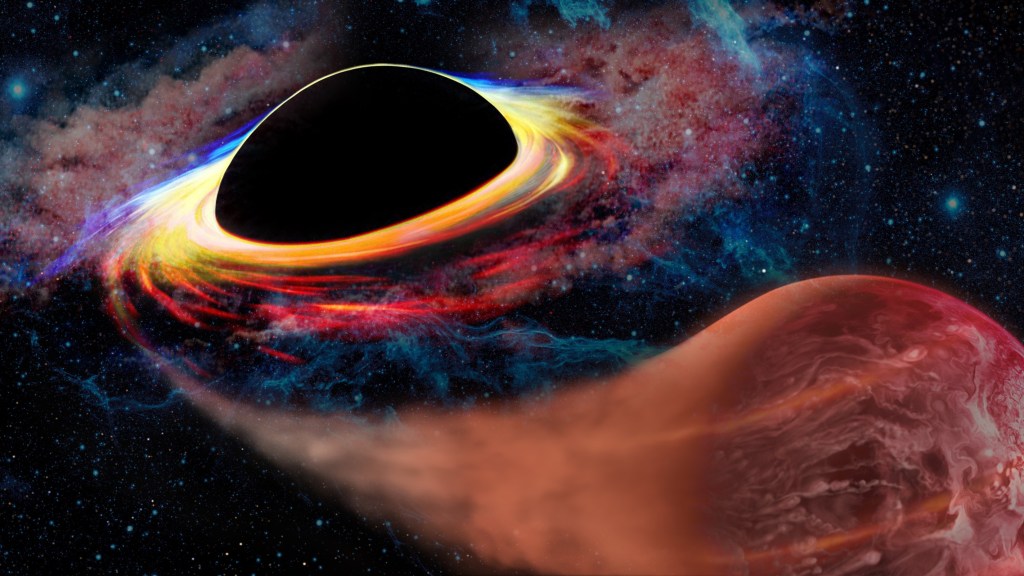
Black hole devouring a planet. The planet is on the right. It is being consumed.
Black hole devouring a planet. Black Hole Stock Photo ID: 2024419973 by Elena11
A black hole with an orange accretion disk is approached by futuristic starship. | The Edge of the Observable Universe is 46.5 billion Light Years Away
Realistic spaceship approaching a black hole. This content was generated by an Artificial Intelligence (AI) system. Stock AI-generated image ID: 2448481683 AI-generated image Contributor Shutterstock AI Generator.
A depiction of a black hole surrounded by a space-time geometric grid that is bending due to gravity.
AI-generated image Description : This image depicts what a black hole is doing to space around it. Gravity bends space time depicted as a grid. Stock AI-generated image ID: 2457551367 by AI-generated image Contributor Shutterstock.AI
Fuzzy orange blur surrounding a black speck.
The photo of the supermassive black hole at the center of the galaxy M87 taken by the event horizon telescope in 2017. CC BY 4.0, Event Horizon Telescope, uploader cropped and converted TIF to JPG, CC BY 4.0 <https://creativecommons.org/licenses/by/4.0&gt;, via Wikimedia Commons.
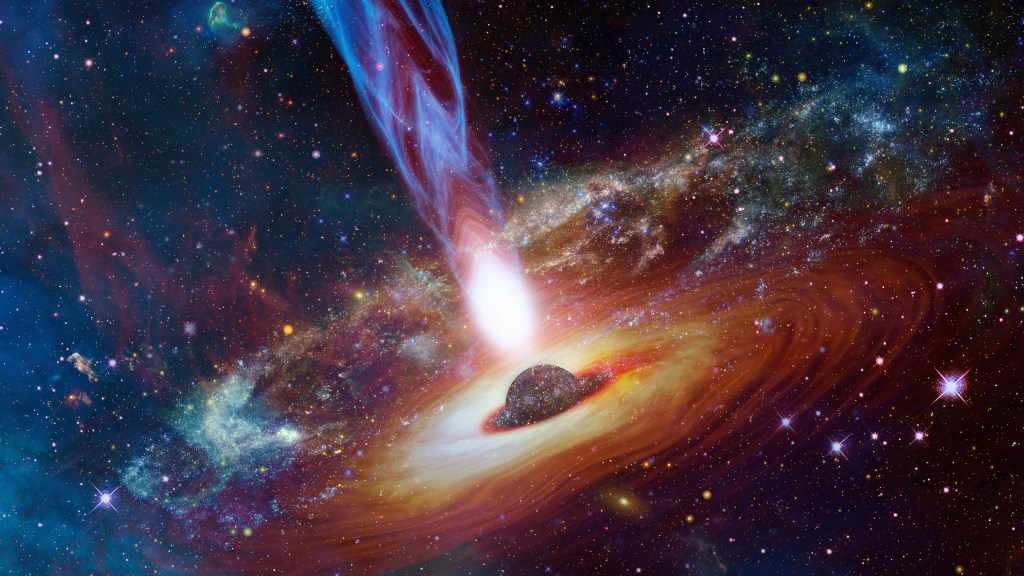
The quasar is ejecting an enormous energy beam. In the background are stars possibly being absorbed by the quasar. | The Edge of the Observable Universe is 46.5 billion Light Years Away
Quasar in deep space (a huge black hole emitting an energy beam). Elements of this image furnished by NASA. Asset id: 1758938918. by NASA images.


To see the Other Super Facts click here

The Moose or Elk Conundrum

This is not a super fact but more of a fun fact. It is a piece of trivia that confuses a lot of people. What is the difference between a Moose and an Elk? Well that depends on where you live and you’d be surprised.

What people in North America refer to as a Moose is called an Elk in British English or in general when you speak English in Europe. It is called an “Älg” in Swedish, “Elg” in Norwegian and in Danish, “Elch“ in German, “Élan” in French, “Alce” in Spanish and Italian. If you use Google Translate “Elk” in English translates to “Älg” in Swedish and “Elch” in German, etc., but so does “Moose”. Using Google Translate Elk and Moose translate to the same animal in all other languages as well. However, if you ask ChatGPT to generate a picture of an Elk and then of a Moose you get two different animals. The same is true for Google AI. There is quite a bit of confusion.

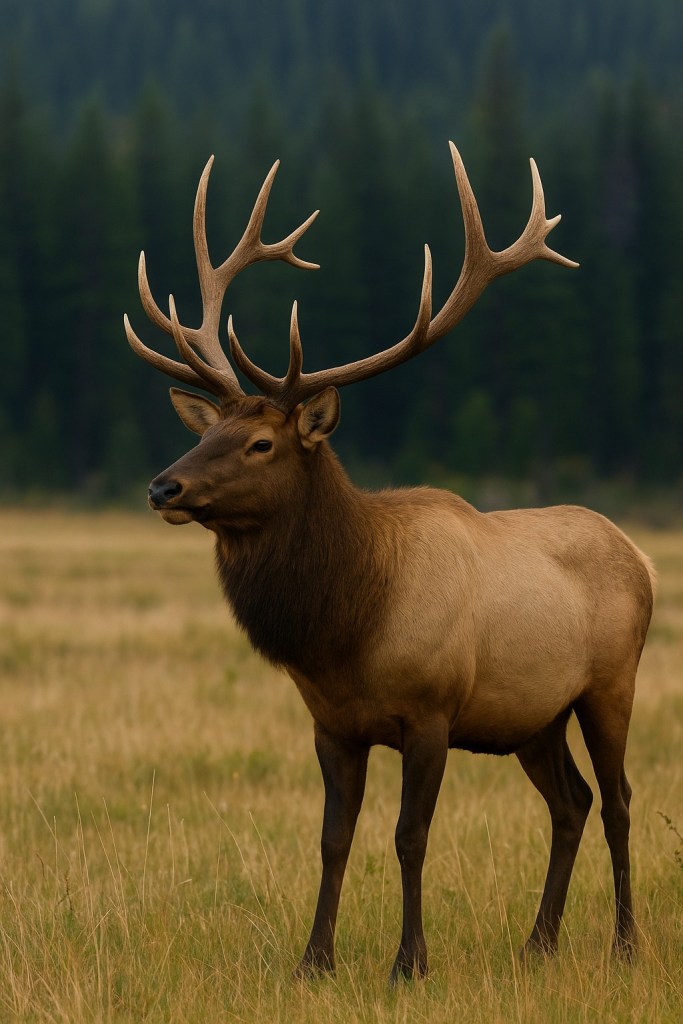
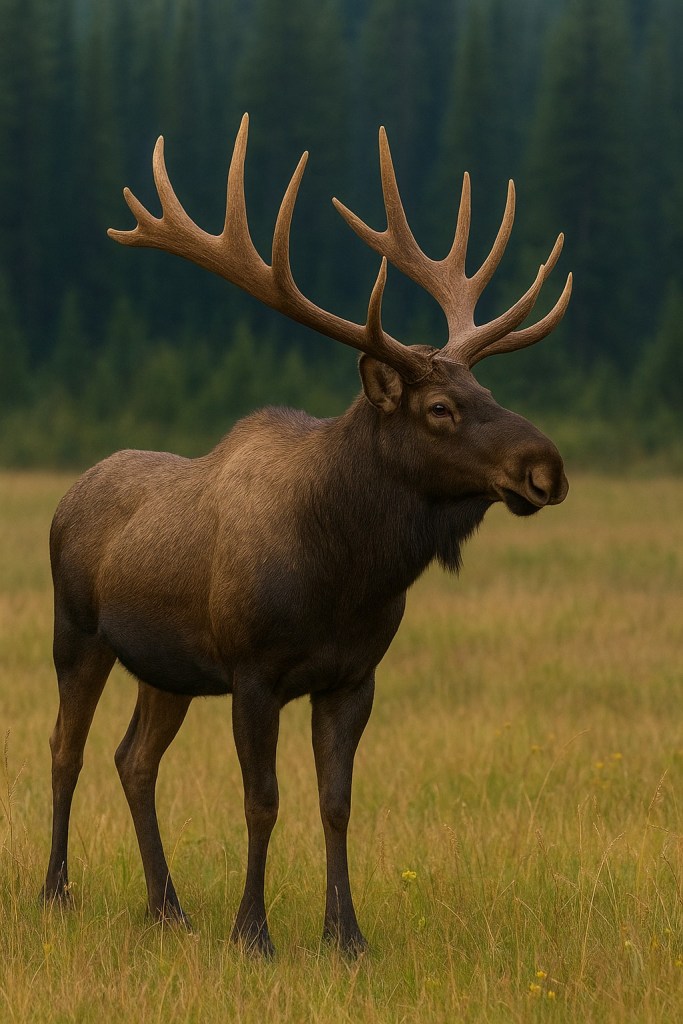
ChatGPT created a picture of an Elk standing in a meadow | The Moose or Elk Conundrum
ChatGPT generated picture of an Elk. Or is it a Moose?
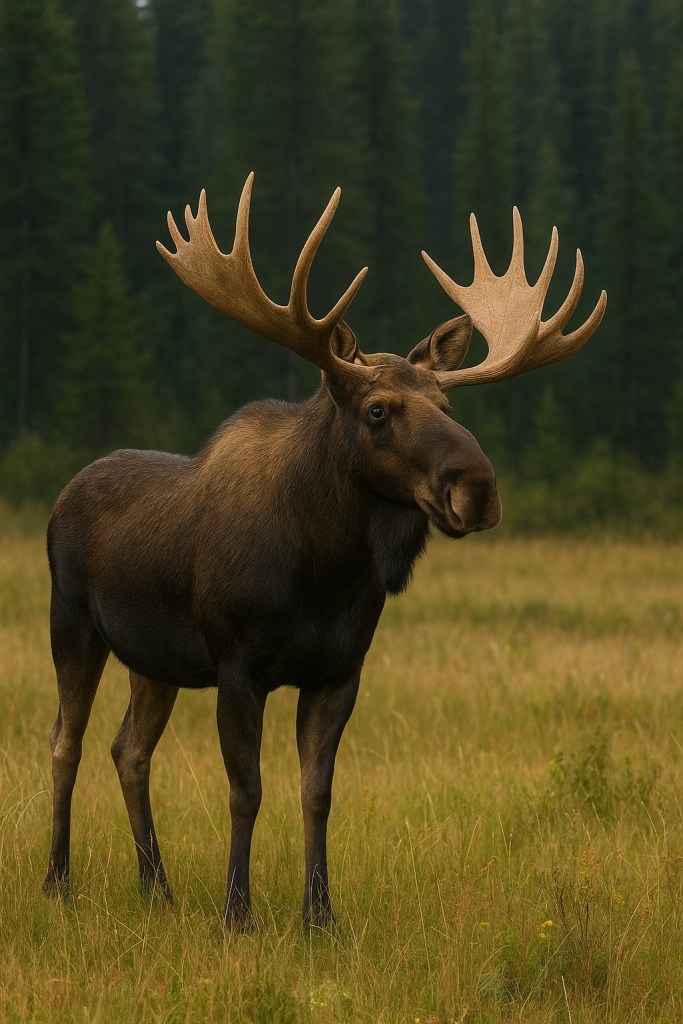
ChatGPT created a picture of a Moose standing in a meadow
ChatGPT generated picture of a Moose. Or is it an Elk?
ChatGPT created a picture of a Moose with Elk antlers standing in a meadow | The Moose or Elk Conundrum
ChatGPT generated picture of a Moose-Elk. Or is it an Elk-Moose.

The moose (Alces Alces) is called Elk in Eurasia. It belongs to the deer family and like all members of deer family the bull has antlers. It is the largest species within the deer family. After the mating season the males drop their antlers to conserve energy for the winter. A new set of antlers will then regrow in the spring. An interesting fact about moose is that not all bull moose have the same type of antlers. The moose in northern Europe and Alaska have palmate antlers, and they act as parabolic reflectors, amplifying sound at the moose’s ear. You may think that the plural of Moose is Meese, but it is not, and it is not Mooses either, it is just Moose. To read more about moose click here.

The picture shows the distribution of moose in red. The red color covers North America, Scandinavia, parts of eastern Europe, Russia and Siberia.
The Moose (or Elk in Eurasia) live in northern North America, Scandinavia, parts of eastern Europe, Russia and Siberia. Jürgen Gbruiker / User:Jrockley, CC BY-SA 3.0 <http://creativecommons.org/licenses/by-sa/3.0/&gt;, via Wikimedia Commons.

Elk (Cervus Canadensis) is the second largest species within the deer family. It is also called Wapiti, and I have come across the name Canada Deer in Europe. Remember, when in Europe you can’t call an Elk and Elk because in Europe the name Elk is reserved for Moose. Like Moose Elk shed their antlers every year. You can read more about Elk here. Note that it says “This article is about the species called “elk” in North America. For the species called “elk” in Eurasia (Alces alces), see Moose.”.

Moose and Elk Photos

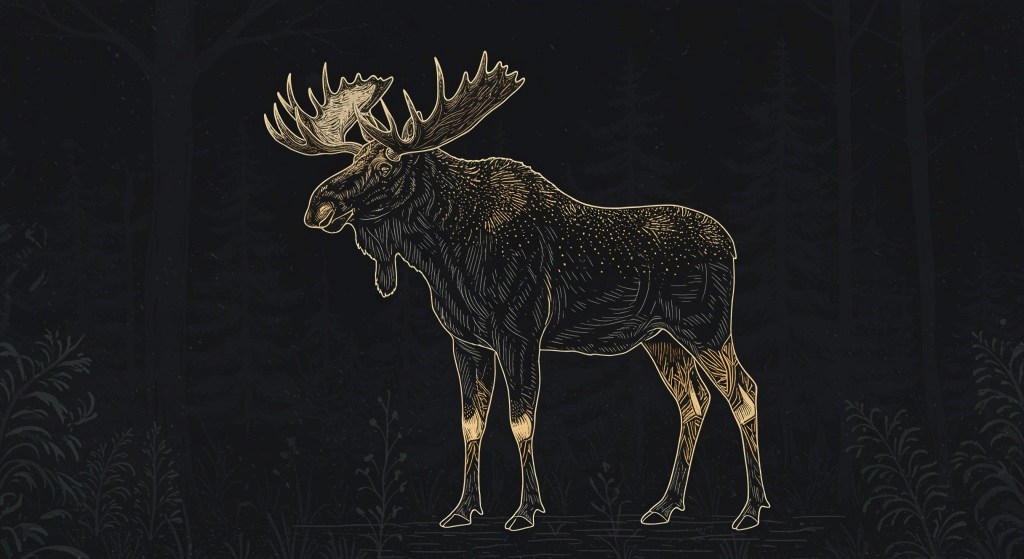
Dark illustration of a Scandinavian Bull Moose | The Moose or Elk Conundrum
Vintage boho artistic image of älg (a bull moose) in Sweden in the forest Asset (Shutterstock AI) id: 2592983377
A photo of a Bull Moose standing in the snow
A Moose in Jasper Canada Asset id: 2031585740 by Harry Collins Photography
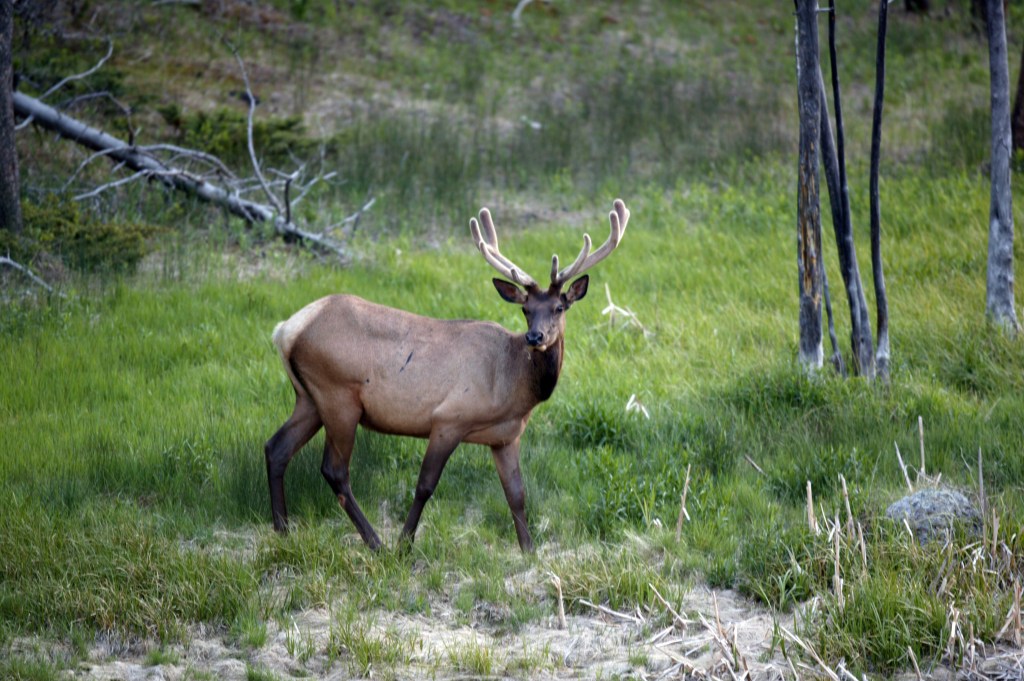
A bull elk in walking on grass. There is a forest in the background | The Moose or Elk Conundrum
A bull elk in autumn during the rut Asset id: 190972129 by Harry Collins Photography
A big bull elk standing in tall grass nearby a few trees.
Photo of Elk taken by friend in Yellowstone National Park.
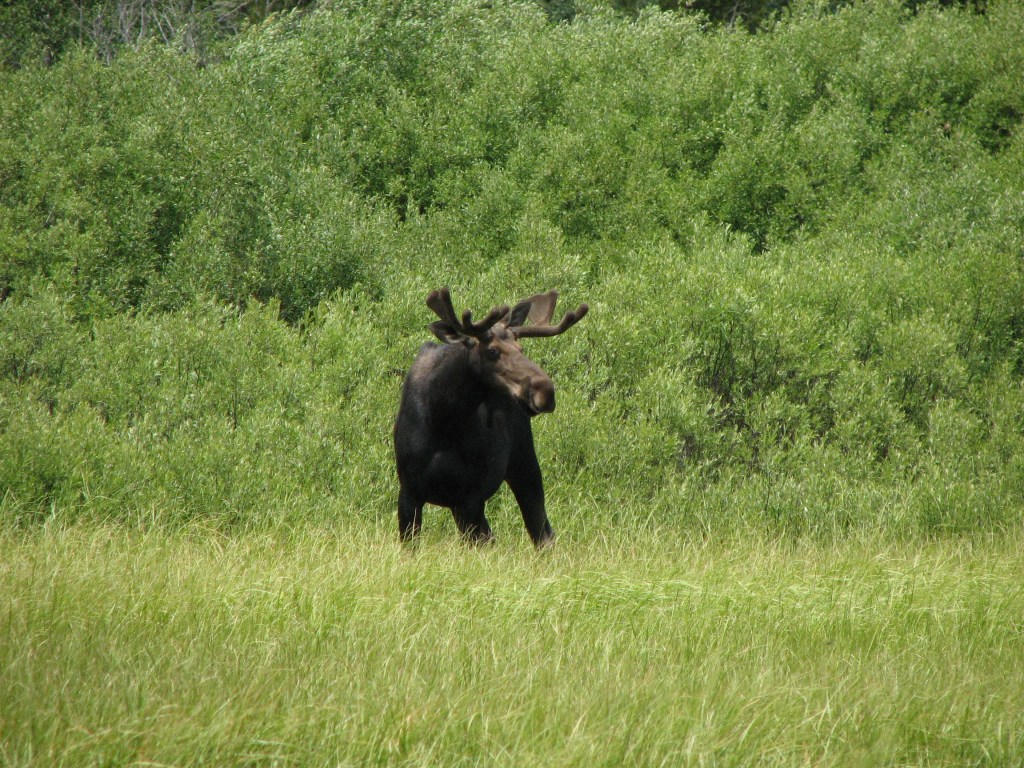
A large bull moose standing in tall green grass. There is a forest in the background | The Moose or Elk Conundrum
Photo of a moose taken by friend in Grand Teton National Park.

My Moose and Elk Photos

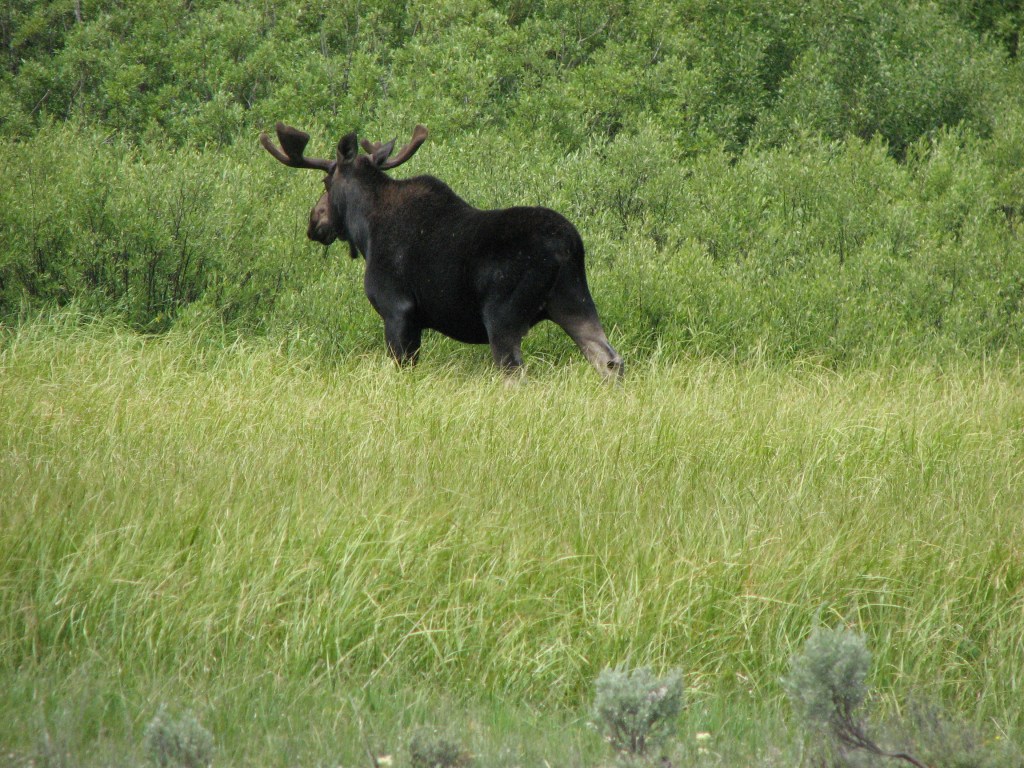
Bull moose standing in tall green grass at a distance
Photo of a Moose that I took on a visit to Yellowstone National Park
Bull moose running in tall green grass at a distance. The moose is headed away from us towards some bushes. | The Moose or Elk Conundrum
Photo of a Moose that I took on a visit to Yellowstone National Park
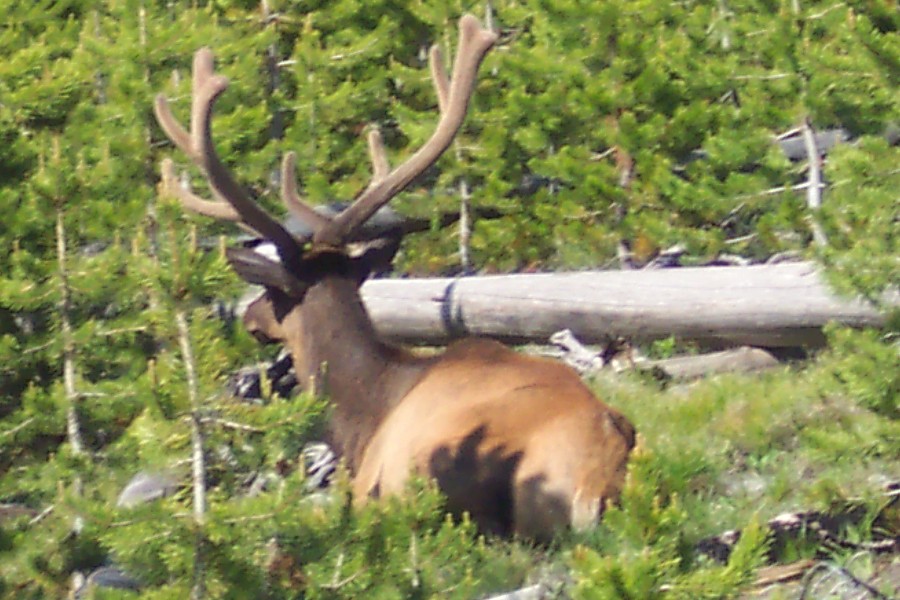
Elk is lying down in the grass. He is turned away from us.
Photo of an Elk that I took on a visit to Yellowstone National Park
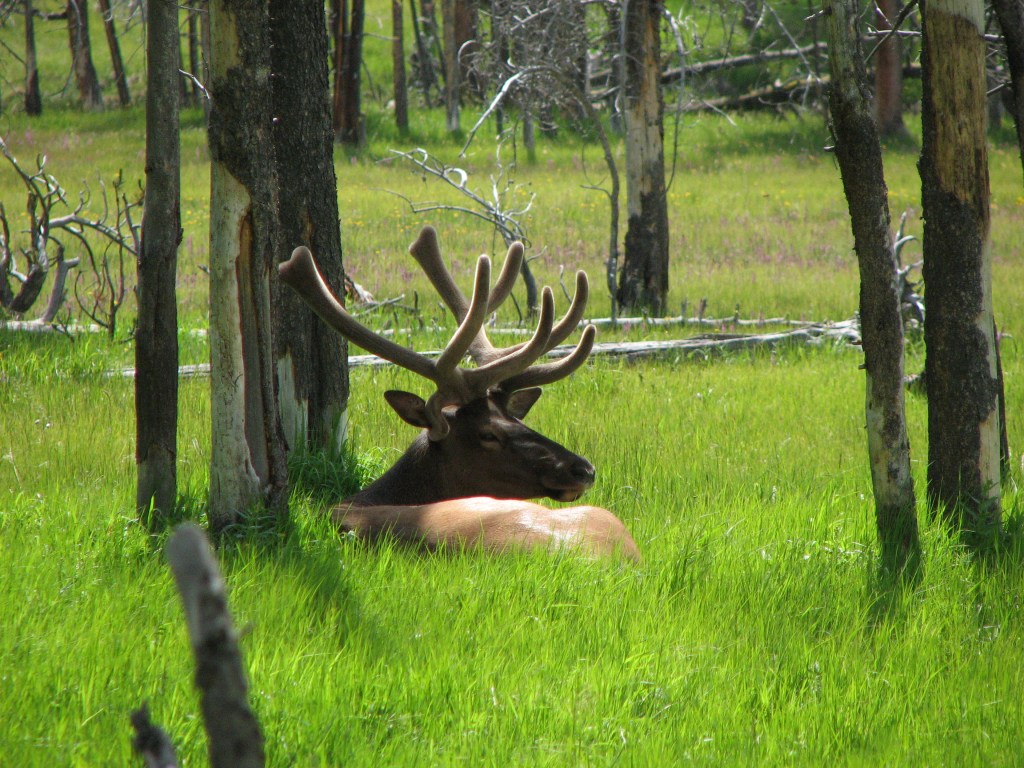
Elk is lying in the forest.
Photo of another Elk that I took on a visit to Yellowstone National Park
The two Elk are lying down among the trees in a forest
Photo of two Elk that I took on a visit to Yellowstone National Park.

The Murder Moose

The first story I ever wrote in my life I gave the title the “The Murder Moose” / “Mördar Älgen”. It was when I was in second grade in Swedish public school. Our teacher told us that we could write about anything, and I chose a horror story. The story was about a very big and dangerous moose that ran into to villages and killed people. At the end of the story a hunter shot the moose. I also drew a picture of a moose with big antlers and sharp teeth.

A moose with big antlers and giant sharp teeth. | The Moose or Elk Conundrum
The murder moose in my second grade story. The picture was generated by ChatGPT.
The inspirations behind this story were two-fold. A neighbor’s girl and I had been walking in the forest together when we saw something big moving behind a thicket around 30 feet ahead of us. At first it looked like a horse and carriage to me, but it couldn’t be. A horse and carriage could not have gotten deep into the forest. Suddenly two big heads peered out of the thicket. It was a bull moose and female moose. We screamed on top of our lungs and ran home, and the two moose startled by our screams ran the opposite way.

The second inspiration for the story is that moose hunting is very common in Sweden especially in northern Sweden where I lived. Sweden has a very large moose population of approximately 300,000 to 400,000 moose, with a stable population of around 350,000. Sweden is the country with the highest concentration of moose in the world. Each fall about 80,000 to 90,000 moose are hunted and killed during the hunting season as part of wildlife management. Therefore, moose hunting was a practice that a lot of adults I knew participated in. We also ate a lot of moose meat.


To see the Super Facts click here

United States is Tornado Country

Super fact 65 : The United States covers approximately 6.14% of Earth’s total land area. Despite that approximately 75% of the world’s tornadoes occur in the United States, making the risk of a tornado in the US 46 times higher than in the rest of the world. Tornadoes are particularly common in Tornado alley. Canada is the country with the second-highest number of tornadoes globally.

Our neighborhood was ravaged by an EF3 tornado in the evening of October 20, 2019. Today is the six year anniversary of that event. One year ago, I was interviewed by the NBC about this event. Yes, I was on TV. NBC had found me via my Leonberger dog blog. I’ve included the clip below.

It appears that the most common statistics stated by reliable sources is that approximately 75% of the world’s tornadoes occur in the United States (click here, here, or here). As stated, 75% is an approximate number and another common number is 90%.  90% might be overstated because smaller tornadoes are underreported in the rest of the world. Whether the correct number is 75% or 90% it is clear that the United States has the most tornadoes. It is the Tornado Country of the world.

It is quite astonishing that one country, the United States, has such a high concentration of this extreme weather phenomenon. Most Americans know that their country is special in this regard. I’ve met a lot of Europeans (I am from Europe / Sweden myself) who thinks tornadoes is just Hollywood thing. However, it is a real and very common phenomenon in the United States, and that is surprising to much of the rest of the world. It is also an important extreme weather phenomenon that kills a lot of people and causes billions of dollars in damage every year. This is why I consider “United States is Tornado Country” a super fact.

A large well-formed tornado over the plains | United States is Tornado Country
A tornado. Stock Photo ID: 2369175167 by g images.com.

Tornado Alley

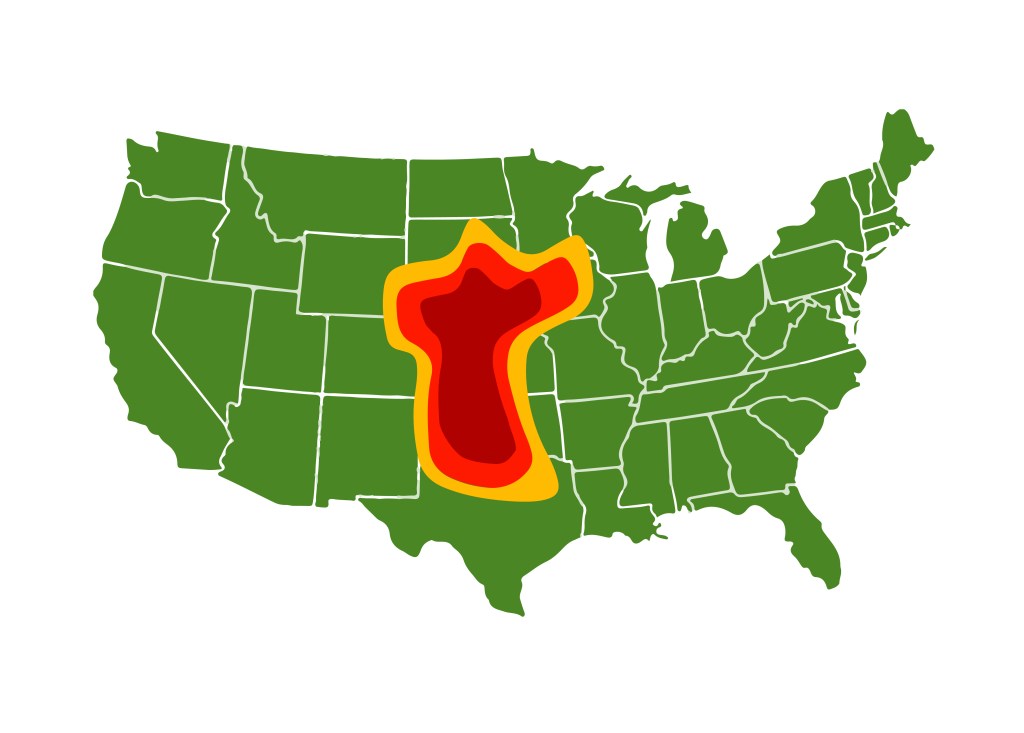
Tornadoes can happen anywhere, but as mentioned they are more common in North America and especially in tornado-alley. Despite tornado alley’s small size, a quarter of all significant tornadoes in the world occurred there according to a study (1921 – 1995). The extent of tornado alley includes north Texas, Oklahoma, Kansas, Nebraska, South Dakota, Iowa, and the corners of Minnesota, Wyoming, Colorado and New Mexico. Dallas, where we live, is in Tornado Alley.

Tornado Alley is indicated in red, orange and yellow covering north Texas, Oklahoma, Kansas, Nebraska, South Dakota, Iowa, and the corners of Minnesota, Wyoming, Colorado and New Mexico.
Map showing Tornado Alley. It includes north Texas / Dallas. Stock Vector ID: 1719764089 by Adansijav Official.

Dixie Alley

Another region with a lot of tornadoes is Dixie Alley. Dixie Alley stretches from eastern Texas and Arkansas across Louisiana, Mississippi, Tennessee, Alabama, Georgia, and mid to western Kentucky to upstate South Carolina and western North Carolina; the area reaches as far north as southeast Missouri.

Dixie Alley has fewer tornadoes than Tornado Alley, but they tend to be deadlier and more violent than in Tornado Alley. The tornadoes in Dixie Alley occur year-round, at night, and the Tornadic storms in Dixie Alley are often high precipitation supercells due to an increase of moisture from proximity to the nearby Gulf of Mexico. The heavy rain makes it difficult to detect the tornadoes. Dixie Alley also has more mobile homes, homes tend to not have basements, and it is more densely populated than Tornado Alley. NOAA records indicate that the majority of deaths from tornadoes in the US have occurred in Dixie Alley.

Map of the United States showing Dixie Alley in red. It includes parts of eastern Texas and Arkansas, Louisiana, Mississippi, Tennessee, Alabama, Georgia, and mid to western Kentucky to upstate South Carolina and western North Carolina and  southeast Missouri.
Map showing Dixie Alley. Bhockey10, CC BY-SA 3.0 <https://creativecommons.org/licenses/by-sa/3.0&gt;, via Wikimedia Commons.

Tornadoes and Hurricanes Are Different

Another related issue that has been brought to me is that many Europeans do not know the difference between a hurricane and a tornado. This is not strange since both of these extreme weather phenomena are less common in Europe.

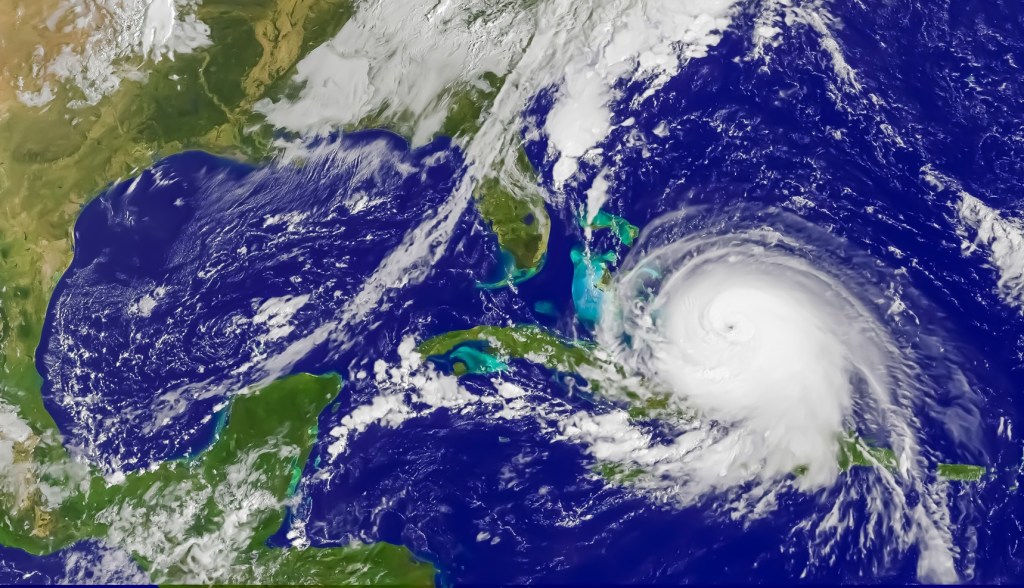
A hurricane is a big rotating storm system originating in the ocean that sometimes makes landfall and devastates our coasts. Hurricanes are big, thousands of square miles and even a million square miles. A hurricane has wind speeds of 74 miles per hour (mph) or higher. That’s 119 kilometers per hour or 33 meters per second. They are called hurricanes in the Atlantic and the northeast Pacific, and Typhoons in the northwest Pacific, and otherwise just cyclones.

Satellite photo of Mexico, southeastern United States and the Caribbean. A hurricane is approaching from the east. | United States is Tornado Country
Satellite photo of hurricane approaching Cuba and Florida. Stock Photo ID: 2202605185 by Emre Akkoyun.

A tornado is a violently rotating column of air that is in contact with both the surface of the Earth and a cloud. They originate with thunderstorms, especially supercells, and are more of an inland phenomenon even though hurricanes can sometimes generate tornadoes. Tornadoes are much smaller than hurricanes in area, almost always much smaller than a square mile, or just 10 or 30 meters across. The reason they can be as deadly as hurricanes is that they tend to have stronger winds and they appear and disappear quicker thus taking people by surprise.

A threatening supercell with lightning
A so called supercell but without a tornado. Stock Photo ID: 1768468151 by Laura Hedien.
A nice photo of a threatening Tornado. | United States is Tornado Country
An F5 tornado in Canada. From Wikimedia Commons.

So, in summary, Hurricanes cover a large area and lasts a long time. They come from the sea and devastate coastal areas and are less common than tornadoes. Tornadoes are formed on land from thunderstorms, typically supercells. They are particularly common in tornado-alley. They cover a small area and go high up into the air forming a funnel and are commonly more intense. They are also more common, and they can surprise people. Therefore, on average, tornadoes cause more deaths in the US than hurricanes. You can read more about it here.

Our Tornado Experience

As mentioned, on October 20, 2025, our neighborhood was ravaged by an EF3 tornado. I was sitting outside in the backyard drinking a beer (Yellow Rose from Lone Pint brewery) when the sirens went off and my cell phone started screaming tornado warning “seek shelter immediately”. I did not see any problem, so I thought it was just one of unnecessary warnings again and I wanted to finish my beer. However, I decided to walk back into the house. About one minute later there was a lot of noise and a piece of the neighbor’s roof flew into our chimney, smashed it and it started raining bricks.

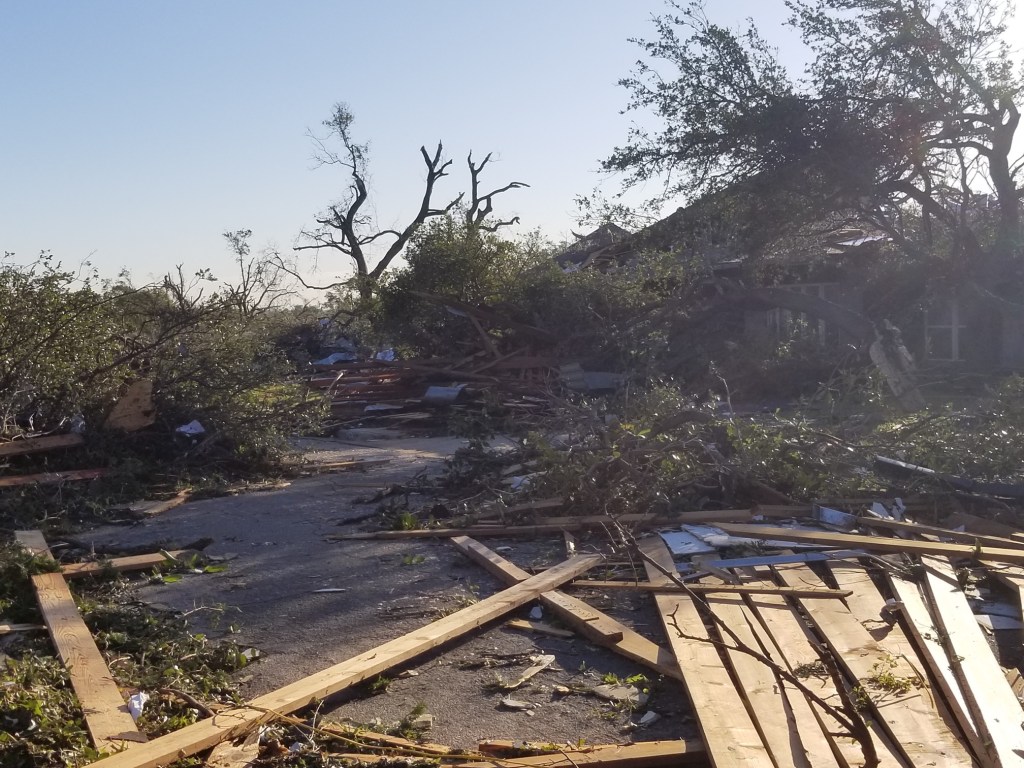
The house shook and thought to myself, “that was some thunderstorm”. I opened the door to the backyard, and I was astounded when I saw the devastation. My backyard was covered in debris, bricks, trees, garbage, my grill had flown off, several of our neighbors’ houses were just rubble. I guessed it must have been a tornado. My wife Claudia told me to go and check on her parents who lived about a mile away. I started driving my Toyota Prius, but I did not get very far because a neighbor’s roof was lying across the road. We live on a circle, so I decided to go the other way instead but about 30 trees lying across the road stopped me. So, I started walking but four firemen stopped me and told me that it was too dangerous to walk around. I had to go home. We would later learn that my wife’s father was injured. I am describing this in the NBC interview below.

We lost power for four days, we needed a new roof and a new chimney, the wiring and piping (for air conditioning) in the attic was destroyed, the fence and garage door were broken. It cost $50,000.00 to repair, nut our house stood, the frame was fine, and luckily our insurance paid for all of it, except for the parasol the flew away. We had no proof it ever existed. Not everyone was that lucky, especially those whose houses were destroyed. Unfortunately, our Leonberger dog Bronco had a heart failure one week after this. However, he recovered. But we are guessing that the fact that we did not have air conditioning for a while could have affected his heart. It was a tough day for Bronco, our Leonberger Dog. <<Link-13>>

A neighbor’s house with the roof ripped off.
A neighbor’s house the morning of October 21st, 2019.
Debris on the street from a neighbor’s destroyed house.
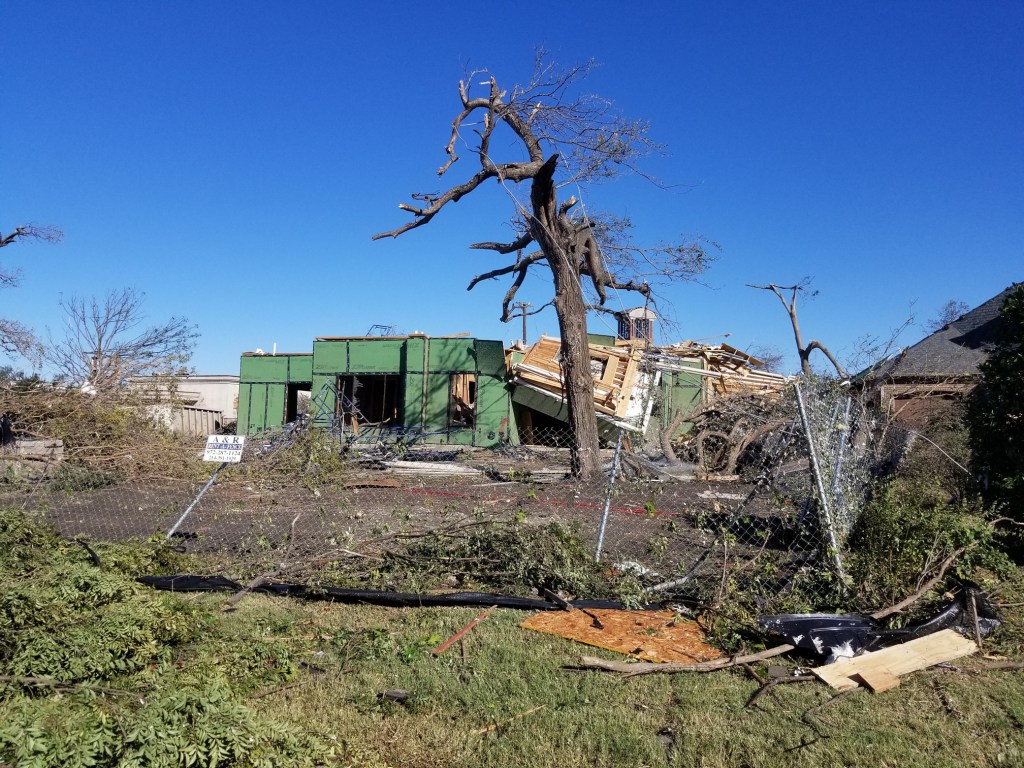
Another neighbor’s house. This house was about 100 yards from our house. It took a direct hit from the tornado.
This house is totally destroyed.
Another neighbor’s house (a bit further away from us).
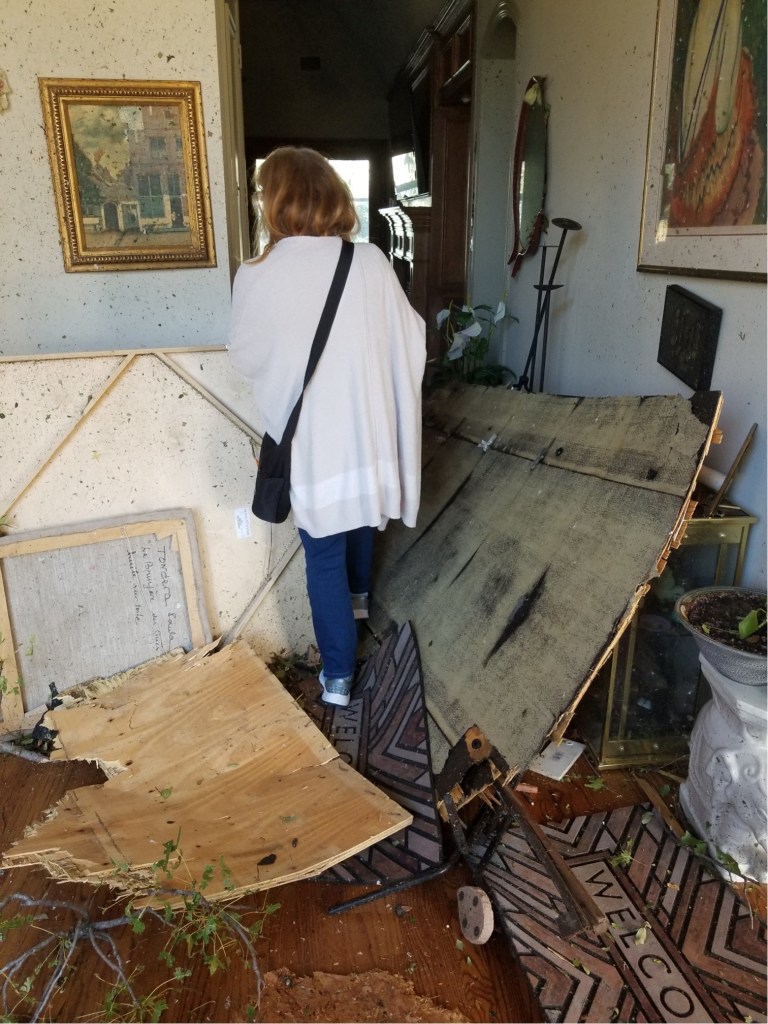
My wife Claudia is walking among the debris in my in-laws house.
Inside Claudia’s parents’ house. This was the morning after. We are walking into their house to check on them (that’s my wife).
The entire top of this house is destroyed.
This is the next-door neighbor of Claudia’s (my wife) parents.
The house is completely flattened. A large tree is destroyed. It has no branches. | United States is Tornado Country
Destroyed house in the neighborhood.
A big nice-looking house destroyed by a tornado.
Another house in the neighborhood.
A photo taken from the inside of a destroyed office.
The remains of the veterinary clinic where we used to take our dogs. Luckily there were no animals staying overnight at this time.
Crashed cars and destroyed stores. | United States is Tornado Country
View of the shopping center in our neighborhood.
The Gap store has its entire backside ripped off.
A store at a nearby shopping center
The yellow school bus is wrapped around a tree.
This was a school bus belonging to the school where my boys went.
Trees are ripped up, vehicles are crushed. | United States is Tornado Country
Streetview from the neighborhood.

My Interview with NBC

As I mentioned, last year NBC interviewed me about this event. They said that they had been reading my Leonberger blog and were interested in a post that I had made about the tornado in Dallas on October 20, 2019. They wanted to interview me and asked for permission to use a few of my photos.

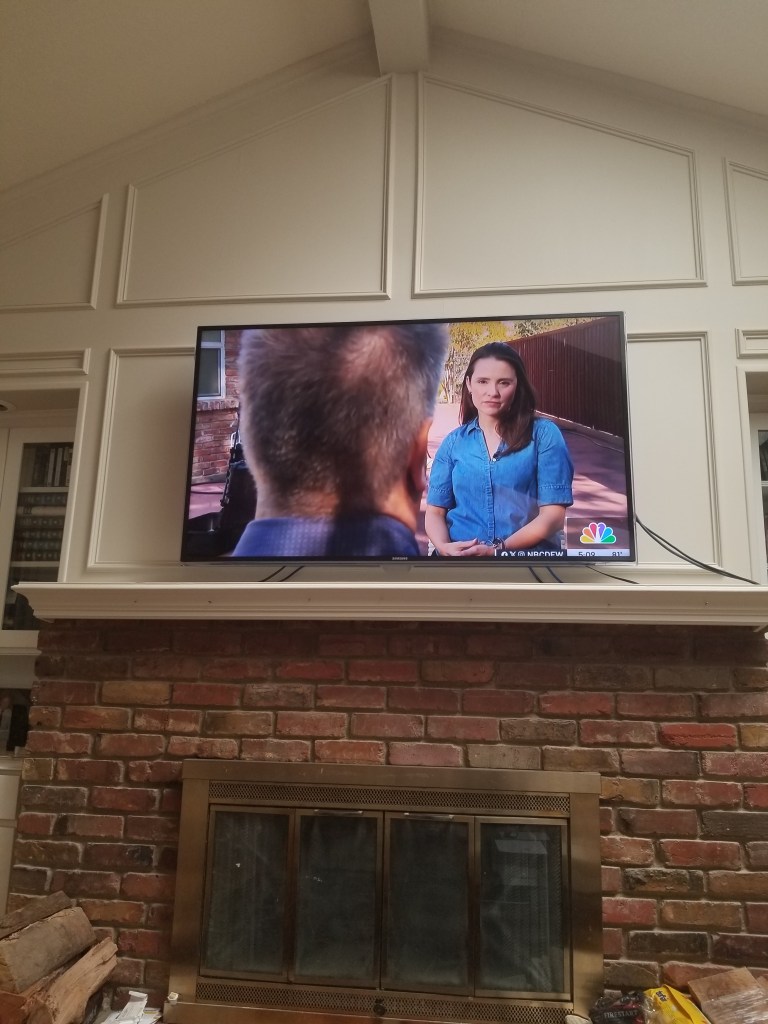
A photo of a TV above the fireplace. Thomas Wikman on the TV screen.
Seeing myself on the TV was a bit surreal. Click on the image to see the interview. My interview starts at 1 minute and 11 seconds.
A photo of my TV above the fireplace. I am on the TV screen. | Thomas Wikman NBC Interview
Here I am with NBC journalist Katie Blake. Click on the image or here to see the interview. My interview starts at 1 minute and 11 seconds.

I would like to stress that there are thousands of people whom they could have interviewed. Thousands of people who probably would have been better candidates. What made all the difference was the post I made on my blog. Therefore, fellow bloggers, perhaps this is an example of the fact that blogs bring attention.


To see the other Super Facts click here

Ten Money Facts

Esther’s writing prompt: October 15 : Money

Click here or here  to join in.

This is not a super fact but a collection of interesting facts regarding money.

A one hundred US Dollar bill sailing through a cloudy sky | Ten Money Facts
US 100 dollar bills falling through the air Shutterstock Asset id: 2555911235 by Caito

Money is a Shared Fiction, a Myth

Money is a fiction that depends on the trust that we collectively put in it. In his book Sapiens, History Professor Yuval Noah Harari argues that money is a “myth”, or a “shared fiction” because its value is not an objective, physical reality but a collective belief. This imagined order allows for mass cooperation by creating a universally accepted, albeit artificial, medium of exchange that can bridge the gap between strangers who don’t know or trust each other personally. When people cease to believe in the value of money it ceases to have value.

Money is Not the Root of All Evil

The “root of all evil is money” is a common phrase that is a misquote of the biblical verse in 1 Timothy 6:10. According to the King James Version of the Bible it says, “For the love of money is the root of all evil: “. However, this is also not correct because it is a mistranslation. According to the New American Standard Bible – NASB 1995 (NASB1995),  the New Century Version (NCV), the American Standard Version (ASV), the New King James Version (NKJV), the correct translation is “For the love of money is a root of all kinds of evil”. The latter makes a whole lot more sense. Not all evil is because of the love of money, but a lot of it.

The Wealth of the World is 500 Trillion Dollars

The world’s total net wealth in 2025 is estimated to be around 500 trillion, but there are other estimates. More than half of this, $260 trillion, is in stocks and bonds.

The Wealth of the United States is 160 Trillion Dollars

The United States has an estimated total wealth of approximately $160 trillion. The top 50% of the US population own 98% of that wealth. The bottom 50% of the US population owns 2% of that wealth. In Q3 2024, the top 1.3 million had a wealth of 49.2 trillion (31%), the next 65.2 million had a wealth of 106.8 trillion (67%), and the next 66.6 million had a wealth of 3.9 trillion (2%).

The Second Most Important Currency is the Euro

The Euro is the second most important currency after the US Dollar, which is the most important currency for borrowing, lending, and reserves.

US paper money is not paper

US paper mone is not made of paper; it’s a blend of 75% cotton and 25% linen to make it more durable.

Cacao Was Once a Currency

The ancient Aztecs used cacao beans as a form of money. Some Aztec taxes were paid in Cacao, and it was even used to pay workers. A single bean could buy you a tamale, while a few dozen might get you a rabbit.

Cash is Not Very Common

On the topic of digital money, it turns out that only 8% of the world’s currency is actually physical, the rest is online or card transactions.

In God We Trust

In God We Trust” is the official motto of the United States. It was adopted by the U.S. Congress in 1956, replacing E pluribus unum (“Out of many, one”). The first paper money to feature the motto was the one-dollar silver certificate, which entered circulation on October 1, 1957.

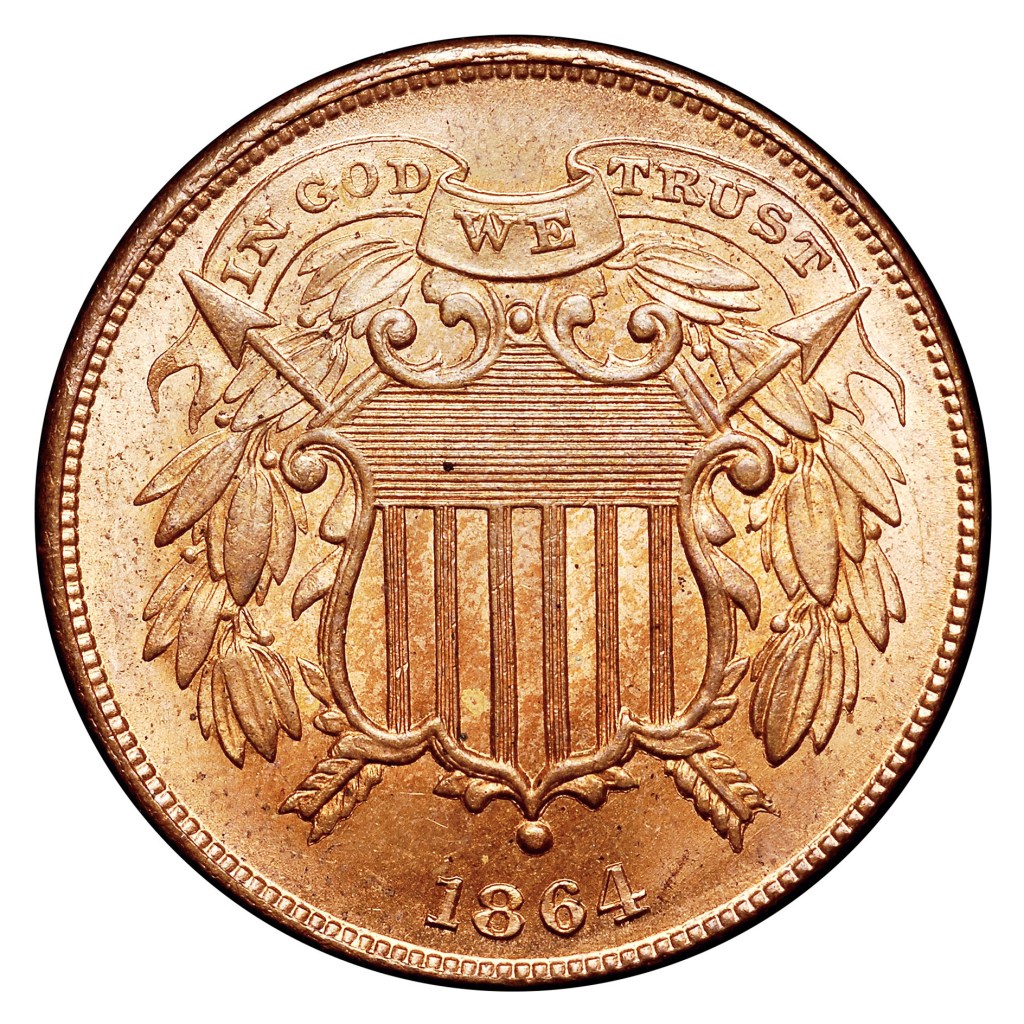
However, that was not the first time “In God We Trust” appeared on American money. “IN GOD WE TRUST” first appeared on the obverse side of the Two-cent piece in 1864.

The backside of a copper colored coin featuring the text “1864” and “IN GOD WE TRUST” | Ten Money Facts
Image courtesy of Heritage Auctions, Public domain, via Wikimedia Commons

US Banknotes Have Multiple Security Features

US banknotes / “paper currency” (along with other currencies) contain security features that can be used to authenticate the banknotes and thereby avoiding accepting counterfeit currency. If you feel the paper (well it is not paper) it should feel slightly rough. All denominations higher than $10 have color shifting ink in the numeral on the lower right corner of the note. On current notes it should change from copper to green. The current style of $100 notes also includes two new security features that you can check by tilting the note: the color shifting in the inkwell and the 3D security ribbon (in the middle across the note). The images of the bells and the text of “100s” should shift as you tilt the note.

In addition, hold the note to light and check the watermark and the security thread that are included on denominations $5 and higher. When held to light the security thread should be visible when held to light. The watermark on a bill should match the portrait of the banknote. The two watermarks on five dollar bills should match the numeral five. The security thread is in a different location for each denomination and glows in a unique color when exposed to UV light. To watch a video explaining how you can check if a bank note is authentic click here or on the YouTube Video below.

If you sort the banknotes or use a machine to check for counterfeiting, there are additional features. The different denominations have a unique magnetic ink signature, as well as a serial number that is unique to each banknote. However, that is for machines and complex systems to discover. The serial number helps in identifying and tracking individual bills.

Me Being a Money Printing Engineer

At one point in my life (2013, 2014, beginning of 2015), I was working for a British company, which at the time was called DeLaRue Cash Systems, now DeLaRue Currency Solutions. DeLaRue Currency Solutions provide more than half of the world’s currencies for a lot of countries around the world. I was working there as a senior software engineer (and electrical engineer) and I was handling and developing the machines that printed banknotes or sorted banknotes. Both of these machines needed to be able to detect the security features described above and therefore they featured various detectors such as cameras, UV lights, magnetic detectors, etc. In the first case to make sure the banknotes were printed correctly and in the second case to check for counterfeit banknotes.

Through my work at DeLaRue I got the opportunity to travel to Great Britain and India. In Great Britain (Gateshead) I visited a banknote printing facility, which when I visited contained huge stacks of banknotes to the value of several billion dollars. Security was pretty tight, and you were not allowed to bring in or out any money. In Bangalore in India, I was introduced to an actress at the Bangalore Palace. My guide told me she was the Jennifer Aniston of India. I looked it up and she was not. Anyway, below is a picture.

Young Indian woman on the left. Me in a yellow T-shirt on the right
Me and allegedly Jennifer Aniston of India, at the Bangalore Palace. They were making a movie at the palace. It was very nice of her to agree to a photo, but my guide’s claim that she was Jennifer Aniston of India was perhaps a slight exaggeration.

Finally, ABBA’s Money, Money, Money


To see the Super Facts click here