The Hockey Stick Graph is not Wrong

Superfact 26: The disputed Hockey Stick Graph showing that recent global warming is unprecedented in the context of the past thousand years has been shown to be correct.

The Mann, Bradley, and Hughes hockey stick curve published in 1998 in Nature and showing a sharp upturn in global temperatures in recent years as well as relatively flat temperatures in the previous 1,000 years, ignited a firestorm.

Initially some scientists criticized it for being wrong, and the rightwing media and think tanks, and especially politicians criticized the graph and even attacked the scientists involved accusing them of being frauds. Al Gore was harshly criticized for using the hockey stick in his documentary “an inconvenient truth”. There were congressional hearings, politicians intimidating scientists, fake scandals, threats, and lawsuits.

The propaganda campaign against the hockey stick graph succeeded in winning over the public and that included me. I was for the longest time convinced that the hockey stick graph was wrong and perhaps a fraud. I was wrong. I had been bamboozled just like large segments of the American public.

The scandal around the hockey stick curve and the related climate-gate (fake scandal) was used to question the entire concept of global warming / climate change. As you may know, the evidence clearly shows that global warming is happening and is caused by us.

It should be noted that the way Mann, Bradley, and Hughes implemented their statistical analysis was not 100% correct, but the discrepancy was very small and did not make a big difference. However, this discrepancy was very useful for their detractors.

The controversy led to an investigation resulting in the so-called North Report. The 2006 North Report published by the United States National Academy of Sciences endorsed the MBH studies with a few reservations.

Subsequent research has resulted in more than two dozen reconstructions, using various refined statistical methods and combinations of proxy records. They are not identical to the original hockey-stick graph but closely resemble it and consistently show a slow long-term cooling trend changing into relatively rapid warming in the 20th century.

Since there is now a scientific consensus supporting the hockey stick graph, it is important news, and a lot of people still have not gotten the memo or are refusing to believe it, I consider it a super fact.

Before The Hockey Stick Graph

Before the hockey stick curve there was a lot of talk about the medieval warm period and the little ice age. Many people used these periods to cast doubt on global warming claims by scientists. I should say that the climate scientists claim about global warming was not based on the temperature record for the last 1,000 years. It was because the observed recent uptick in average global temperatures was not expected naturally.

Their worries were based on the fact that our greenhouse gas emissions could explain the uptick whilst there was no climate cycle or natural phenomenon that could explain it. That combined with the fact that the manner in which the warming was happening (it’s fingerprint if you will) showed that it was our greenhouse gases causing it.

So, the comparably high temperatures during the medieval warm period and the very cold temperatures during the little ice age should not have mattered much. But as you can see in the graph below, the old temperature graphs could be used by global warming skeptics.

It should be noted that previous estimates for the temperatures during the medieval warm period and the little ice age were based insufficient data and guesstimates.

The graph below from the 1990 IPCC report shows three curves, a red, a blue and a black one, and a green extension to the blue from 1998 to 2007. The red graph shows a large bulge corresponding to the medieval warm period, a significant drop corresponding to the little ice age, and a minor uptick in recent temperatures. The blue curve shows a flattened medieval warm period with only a minor little ice age and sharper uptick in recent temperatures. The green extension stretching from 1998 to 2007 shows a significantly sharper uptick in temperatures. The black curve is an alternative temperature curve by Moberg.

As you can see the estimates for the average global temperatures during the medieval warm period and little ice age were too large. When the hockey stick curve came along (next graph), a propaganda tool was diminished, which led to the media storm.

The graph below from the 1990 IPCC report shows three curves, a red, a blue and a black one, and a green extension to the blue from 1998 to 2007 | The Hockey Stick Graph is not Wrong
The red line is from the 1990 IPCC report and shows what was believed at the time about temperatures during the last 1,000 years. The blue line is the (MBH) hockey stick graph from 1998. Graph taken from this page. William M. Connolley derivative work: Dave souza, CC BY-SA 3.0 <http://creativecommons.org/licenses/by-sa/3.0/&gt;, via Wikimedia Commons
Hockey stick curve going back 1,000 years. The recent uptick in global temperature is very sharp and very sudden | The Hockey Stick Graph is not Wrong
The so-called hockey stick curve depicting the last 1,000 years. The blue line is the first hockey stick curve ever created (by Michael Mann). He used proxy measurements such as tree rings, green-dots 30-year average, red temperature measurements. Wikimedia commons <<https://creativecommons.org/licenses/by-sa/4.0/deed.en>>. This graph is taken from this page.

Multiple Hockey Stick Graphs

As mentioned, various refined statistical methods and combinations of proxy records, has resulted in another couple of dozen hockey stick curves that largely agree with the original MBH hockey curve. Below are a few examples taken from various sources. The first two graphs below are taken from the real climate website, a website created by climate scientists.

IPCC 3rd Assessment Report

On the left is the original MBH 1998/1999 hockey stick curve extending back 1,000 years and, on the right, a more recent reconstruction extending back 2,000 years. The curves look like each other but the more recent one looks even more like a hockey stick | The Hockey Stick Graph is not Wrong
Side-by-side comparison of the (left) original Mann et al (1999) “Hockey Stick” reconstruction as featured in the Summary for Policy Makers of the IPCC 3rd Assessment report (2001) and the (right) longer, sharper “Hockey Stick” as featured in the Summary for Policy Makers of the IPCC 6th Assessment report (2021).

Eight Hockey Sticks by New Scientist

The graphics below are focused on the northern hemisphere. The top graph shows the 2001 IPCC hockey stick curve with data from thermometers (in red). Below that graph are eight more hockey stick curves plus a red dotted line corresponding to the instrumental record. This was compiled for New Scientist by Rob Wilson of the University of Edinburgh, UK.

The IPCC curve is at the top and below it is another graph containing eight hockey stick curves, Jones 1998 (red), Crowley 2000 (yellow), Briffa 2001 (black), Esper 2002 (purple), Huang 2004 (light blue), Moberg 2005 (black), Oerlemans 2995 (black), D'Arrigo 2006 (green).
The top graph shows the 2001 IPCC version of the hockey stick curve stretching back 1,000 years. The error bars (in grey) show the 95% confidence range. The blue line is from tree rings, corals, ice cores and historical records. All curves correspond to the departures in temperatures in centigrade from the 1961 to the 1990 average.

The Hockey Stick Wars

I also wanted to add a few examples related to the propaganda wars against the first hockey stick graph and its author Dr. Michael Mann and climate science in general. If you haven’t followed this topic, I can add that it did get intense.

On April 23, 2010, Virginia Attorney General Ken Cuccinelli issued a Civil Investigative Demand (CID) to the University of Virginia (UVA). The CID demanded that UVA provide every email, record, or document it had related to Dr. Mann from his time there from 1999 to 2005. This resulted in a strong reaction from the scientific community.

On 2 March 2012 the Supreme Court ruled that Cuccinelli as Attorney General had no legal authority to demand the records from the university. Dr. Mann was also severely harassed and received chilling death threats against himself as well as his family, as documented in his book “The Hockey Stick and the Climate Wars: Dispatches from the Front Lines”.

In February 2024, Michael Mann won a defamation lawsuit against conservative writers Rand Simberg and Mark Steyn (Mann v. Competitive Enterprise Institute). The jury awarded Mann $1 million in punitive damages and $1 in compensatory damages. The lawsuit was over blog posts written by Simberg and Steyn that accused Mann of manipulating data in his famous “hockey stick” graph. It was not so much about questioning the science but rather about the fact that they intentionally tried to ruin his reputation using false information.

For example, they were comparing him to the infamous pedophile Jerry Sandusky. Jerry Sandusky was a football coach at Penn State University and Dr. Michael Mann is a distinguished Professor of Atmospheric Science at Penn State.

To see the other Super Facts click here

Global Warming is Happening and is Caused by us

Superfact 25: Global warming is happening. Or if you call it Climate Change or Climate Disruption is happening. And it is happening very fast. We also know that it is caused by us primarily as a result of our burning of fossil fuels. There is a long-standing scientific consensus on these two facts because the evidence is conclusive. Check the evidence below.

This is a long post. However, I summarized this somewhat complex issue in a post I hope is both comprehensive and easy to read at the same time. I believe you can learn a lot from reading it. Note in this post I will use the terms climate change, climate disruption and global warming interchangeably, or nearly interchangeably. I am doing that on purpose because some attribute a false meaning to the fact that people use different labels for this phenomenon.

A lot of people would like to dispute this fact. Including large segments of the public, politicians, and political organizations. I was once a so-called skeptic myself. However, climate scientists very rarely dispute this because of the large amount of compelling evidence. This is a good summary from NASA. We know it’s true, it is important, yet disputed, which makes it a super fact in my opinion.

Below I created a top 10 list of evidence for the fact that climate change / global warming is happening. As well as a top 10 list of evidence for the fact that we are the cause for it. Primarily because of our burning of fossil fuels.

Evidence that Global Warning is Happening

  • (1) The temperature records collected by numerous organizations show that global warming is happening. Organizations such as NASA, NOAA, the Hadley Centre, the European Centre for Medium-Range Weather Forecasts, the Japanese Meteorological Agency, the World Meteorological Organization, and many more, use data from land-based weather stations, ocean buoys, satellite measurements, and other sources to monitor Earth’s climate. Comparison with the palaeoclimatological record shows that the rise in average global temperatures is extremely fast. This is the smoking gun. However, for those who question the data from all of these organizations there are other simpler types of evidence (see below).
  • (2) Global sea levels has increased by 20–25 cm (8–10 in) since 1900, with half of that increase occurring since 1980. Sea level rise occurs from a combination of thermal expansion and the melting of land ice, both which happen as a result of warming. This sea level rise has been the fastest in “at least the last 3000 years”.
  • (3) Arctic ice is melting. See the video from NASA below.
  • (4) Glaciers are retreating.
  • (5) The Antarctic ice sheet is losing ice at a rate of about 100–200 billion tons per year, which has increased in the past two decades.
  • (6) Eco zones are generally shifting northward and to higher elevations, meaning that plant and animal habitats are moving towards cooler regions as temperatures rise in previously suitable areas.
  • (7) Snow seasons are getting shorter
  • (8) Extreme events are increasing in frequency showing that climate is changing
  • (9) After extensive research and scientific debates in the past there is now a long-standing scientific consensus that Global Warming is happening. This is not physical evidence, but it is a rational point. Take notice that it does not appeal to the authority fallacy. Think about it in terms of probability. How likely is it that after tens of thousands of peer-reviewed articles, scientific investigations and discussions amongst thousands of top scientists from all over the world, over a period of several decades, the emerging consensus is wrong?
  • (10) Old guys originating from northern climates like me, have noticed that the seasons are changing. Even if you dismiss all the evidence from NASA, NOAA, IPCC, and all the world’s meteorological institutions, and you claim that all the world’s climate scientists are all in a massive conspiracy, you cannot convince me of something that is contrary to what I can see with my own eyes.

Below is short 3 minute video from NASA that addresses this topic and answer questions.

Graphs and Videos Showing Global Warming

Land and Ocean Temperature percentiles for January 2025 to December 2025. Most regions have an increased warming over the average, and a few smaller regions are at or below average.
This map from NOAA shows the percentage of warming over the 20th century average for the year 2025. This is a bit more recent than the video above. This map is taken from this article.
To see the NASA web page from where the YouTube video of the shrinking arctic ice is taken click here .
Graph showing global temperature rise since 1850 to 2022. There are five nearly identical graphs shown in different colors. Temperature anomaly graphs from NASA GISS – orange. HadCRUT – green. NOAA – purple, Japan Meteorological Agency – blue, Berkley Earth – red. The jagged curves show more than a 1.2 degrees Celsius increase | Global Warming is Happening and is Caused by us
Temperature anomaly graphs from NASA, Hedley Center, Japan Meteorological Agency, NOAA, and Berkley. Wikimedia commons << https://creativecommons.org/licenses/by-sa/4.0/deed.en>&gt;.
Hockey stick curve going back 1,000 years. The recent uptick in global temperature is very sharp and very sudden | Global Warming is Happening and is Caused by us
The so-called hockey stick curve depicting the last 1,000 years. The blue line is the first hockey stick curve ever created (by Michael Mann). He used proxy measurements such as tree rings, green-dots 30-year average, red temperature measurements. Wikimedia commons <<https://creativecommons.org/licenses/by-sa/4.0/deed.en>>. This graph is taken from this page
The graph shows wild swings over the last 150,000 years and then a very sharp uptick at the end | Global Warming is Happening and is Caused by us
Temperature record for the last 150,000 years. Notice the sharp uptick towards the end. This picture is taken from this article.

Confusion About Climate Change

Before continuing I would like to address a couple of issues that sometimes trip up people. And prevent them from learning about this topic.

The question “climate has always been changing, why would we be the cause now?”, is a good question if asked honestly. However, it is a bad question if it is asked like a gotcha or a dismissive statement, because the paleoclimatologists and the climate scientists, in other words the experts on past climate, are the ones telling us that the current climate change / global warming is caused by us, it is not “natural”. They tell us that because they know something that the dismissive laymen don’t know. It only takes a tiny bit of reflection to realize that maybe the paleoclimatologists and the climate scientists have got something to tell us.

Sometimes you come across people who have a hangup over the fact that we use a few different terms interchangeably, global warming, climate change, climate disruption, inadvertent climate modification, etc. The people who have a hangup about this jump to the incorrect conclusion that there is some sort of deception or backtrack going on. If I talk about my dog and my mini-Australian Shepherd, I am not confused or deceptive or backtracking anything. It is the same family member. Whether you call it global warming or climate change or something else is a distracting non-issue, a red herring if you will.

To add some information about it. Climate change has become the more popular term recently, but the terms climate change and inadvertent climate modification predates the term global warming, which became popular in the 1980’s largely because climate scientist James Hansen likes to use it. Climate change is a broader term since it could include global warming and global cooling, but in the current context, global warming is a good term as well since that is what is happening now. 

One advantage of the term climate change is that the average warming trend is in itself not the major issue. The effects on the overall climate that warming has is the more important issue. You could say that you want some global warming when the weather is cold and it would make sense. But you don’t want the destruction of eco systems, oceanic and atmospheric circulation changes, sea level rise, worse storms, draughts, floods, wildfires, etc., that it causes.

Natural Causes of Climate Change

The fact that natural climate change occurred in the past does not mean that the current warming is natural. Many people say, “but the planet has warmed naturally before” as if that automatically means that our current warming is natural, but nothing could be further from the truth. This is an excellent overview to why we know that global warming (the current) is not natural.

There are many different kinds of natural causes of climate change. Two billion years ago cyanobacteria developed a form of photosynthesis that absorbed carbon dioxide and emitted oxygen, as well as a way of extracting nitrogen using a process called nitrogen fixation. This made cyanobacteria extremely successful. One consequence of this was that the carbon dioxide was largely removed from the atmosphere, and the earth got very cold, but the oxygen that was now present in the atmosphere paved the way for the existence of multicellular life and animals. To find out more about this, read this book

The planet changed but it took millions of years. The emergence of land plants did something similar. Examples of other slow-moving drivers of climate change are continental drift and the fact that the light from the sun has gotten 6% stronger over the last one billion years (0.006% per million years).

Green algae sludge in water.
Cyanobacteria caused a global cooling two billion years ago while paving the way for the existence of multicellular life and animals. Stock Photo ID: 2197045895 by Andre Engelhardt.

65 million years ago an asteroid struck earth, which caused earth’s climate to change, which is probably what killed the non-avian dinosaurs. Another example of a past climate change driver is unusual volcanic activity. Volcanoes emit greenhouse gases, such as carbon dioxide (CO₂) and water vapor, during eruptions. 

However, their contribution to the total CO₂ emissions in modern times is very small compared to human activities. Annual volcanic CO₂ emissions are estimated to be around 200-500 million tons while humans add 37-40 billion tons, or 100 times as much. Therefore, it is unlikely that volcanoes contribute much to the current warming, but the fine sulfate aerosols emitted by volcanoes can cause a significant cooling effect for a few years.

Two carnivorous dinosaurs and a flaming hot asteroid crashing through the atmosphere in the background.
Dinosaur and asteroids during extinction day Stock Illustration ID: 1438260563 by serpeblu
A black and orange colorful illustration of an erupting volcano.
Volcano – An active volcano that erupts lava. Stock Illustration ID: 2497156167 by MERT1995

One type of important type of climate forcing that’s been the cause behind the multiple ice ages that we’ve had over the last two million years are earth’s orbital cycles, or the Milankovitch cycles. There are three of them, orbital eccentricity, change in axial tilt, and axial precession. Could they explain the current warming? No, they can’t because we are currently in a cycle that should be cooling the planet. And it was until now. Below I have included a video from PBS that explains these orbital cycles.

Three illustrated orbital cycles. On the left orbital eccentricity, in the middle is the axial tilt and on the right axial precession | Global Warming is Happening and is Caused by us
Illustration of Milankovitch cycles from MIT’s Climate Primer.<< Link-22>>.
From PBS explanation and overview of earth’s three orbital cycles.

There are also short-term solar irradiance cycles. There is an 11-year cycle and an 80-year cycle, but these correspond to small changes. The 11-year cycle corresponds to a temperature change of 0.05 degrees Celsius. 

In addition, the Sun’s irradiance has been slightly decreasing over the past few decades. Changes in the sun’s irradiance cannot explain the sharp warming we are witnessing. As you’ve seen above, neither can volcanic activity nor any known orbital cycles, slow moving climate drivers such as continental drift cannot explain it and we did not get hit by an asteroid recently. However, what fits the bill almost perfectly is our greenhouse gas emissions.

This is a brief overview from MIT.

What Does Climate Models Say About Climate Change

Unlike weather, the climate is not particularly sensitive to initial conditions (chaos). For example, we can be pretty certain that July will be warmer than January in Minnesota. We use climate models to try to predict future climate. All climate models rely on the laws of thermodynamics. But they vary in regard to the different understandings of the best ways to incorporate those laws in a representation of all of Earth. They do not come up with identical results. But they all get the average temperature of each region of the world right. 

In addition, the various old climate models from the 1990’s do a very good job of what has happened during the last 30 years. They aren’t perfect but they are useful and more importantly for our context they serve as powerful evidence that the current warming is caused by our emissions. You remove our emissions from the models and none of what we measure will happen. Climate models are therefore the smoking gun with respect to what is causing global warming, just like the temperature record is for the fact that it is happening in the first place.

Unfortunately, the climate models have been maligned and misrepresented by those who wish that the public do not pay attention to them. That’s why we need to mention additional types of evidence (see below).

Evidence that Global Warming is Caused by US

  • (1) Climate models – as we have seen above, climate models are the smoking gun evidence that we humans are causing global warming / climate change. In addition, both simplistic and complex climate models show that 100% of global warming is caused by humans.
  • (2) Satellites directly measuring our greenhouse gases trapping heat – A second smoking gun is the evidence from satellites having directly measured our greenhouse gases trapping heat and causing global warming by reducing outgoing longwave radiation. This isn’t a “theory” or a “model.” It is a direct measurement of our emissions, warming the planet just like scientists predicted. Click here for more detailed information.
  • (3) Greenhouse gases will make the planet warmer, and we are emitting a lot of them.
  • (4) The upper troposphere is cooling, which shows that the heating is from greenhouse gases and not the sun or orbital cycles. To understand how the lower atmosphere is warming while the upper is cooling, think of the greenhouse gases as a blanket.
  • (5) winters and nights are generally warming faster than other seasons and times of day due to the increased presence of greenhouse gases in the atmosphere, which trap heat more effectively during colder periods. This is considered a key indicator of human-induced climate change.
  • (6) The speed of the warming, 0.31 degrees Fahrenheit per decade, or 0.17 degrees Celsius per decade, is extremely fast. Known natural climate forcing tends to be slower.
  • (7) Human activities is the only known explanation for the current global warming. One way that we know that the current warming is caused by human activity is because we are currently in a cycle that should be cooling the planet. The same is true for the sun’s irradiance. It is not volcanoes or any other known cause. See the section above called “Natural Causes of Climate Change”.
  • (8) Isotope studies show that the origin of the greenhouse gases added to the atmosphere are from burning fossil fuels. This is referred to as the isotopic footprint.
  • (9) The observed temperature rise mirrors industrialization.
  • (10) More than 90% of excess heat from global warming is absorbed by the oceans, causing significant increases in ocean temperatures. Oceans absorb about a quarter of human CO₂ emissions, leading to lower pH levels. This is unprecedented in at least 26,000 years and is directly linked to anthropogenic CO₂. These effects have been carefully studied and observed.

Also let’s not forget that nearly all actively publishing climate scientists say humans are causing climate change. Take notice that it does not appeal to the authority fallacy. Think about it in terms of probability. How likely is it that after tens of thousands of peer-reviewed articles, scientific investigations and discussions amongst thousands of top scientists from all over the world, over a period of several decades, the emerging consensus is wrong?.

This is a short one-minute overview of the causes behind global warming that is happening.
This video from NASA is a bit longer, 13 minutes. Click here to see the page this is coming from
Graph showing possible causes for the observed temperature (blue), natural causes (volcanic, solar), human and natural causes (volcanic, solar, greenhouse gases, NO2, ozone depletion).
Natural causes for global warming / climate change would have cooled the planet, not warm it. Click here to visit this NASA web page regarding the causes behind global warming.<<Link-31>>
The Keeling curve starting in 1958 ending in 2022 showing the increase in carbon dioxide in the atmosphere.
The carbon dioxide concentration measurements began in 1958 at the Mauna Loa Observatory on the island of Hawaii. Since then, several other ways of measuring carbon dioxide concentration have been added.
Curve showing CO2 concentration starting 10,000 years ago. Again a very sharp uptick towards end.
From Scripps institute. Keep two things in mind. First the warming from CO2 is delayed and may result in positive feedback that can manifest decades and centuries later. Secondly, human civilization developed during a period of stable climate. That CO2 levels and temperatures were higher millions of years ago is not much comfort.
Graph showing CO2 concentrations starting 800,000 years ago. The curve is wavy until it suddenly shoots up towards the end | Global Warming is Happening and is Caused by us
Going back 800,000 years. From Scripps institute.

Six Silly but Common Arguments Against Climate Change

Silly ArgumentResponse
It’s not a problem because CO2 is good for plants.Yes, plants need CO2, but that no way compensates for the increased heat waves, droughts, floods, storm intensity, etc. This is like saying floods aren’t a problem because fish like water.
CO2 is a tiny portion of the atmosphere.That tiny portion is the difference between our planet and an ice planet. See this super fact “Without carbon dioxide the Earth would freeze“.  Small doesn’t mean unimportant, and we are approaching a doubling of CO2.
Volcanoes emit more CO2 than we do.No, they freaking don’t. Please fact check before repeating this nonsense.
We just had a big snowstorm, so much for global warming. (remember Senator Snowball from Oklahoma?)No one ever said there won’t be large winter storms. We are talking about the average climate, not individual weather events.
Climate has changed in the past, who caused that, dinosaurs?Just because the climate has changed naturally before doesn’t mean the current warming is natural. We have fact checked natural drivers of climate change, none of them can explain the current warming (also see the information above).
“Global Warming” wasn’t happening, so they changed the name to “climate change”.The first “Intergovernmental Panel on CLIMATE CHANGE” report was in 1990. It has always been about climate change. Also, the globe is, in fact, warming.
six young women and two young men holding signs. They are protesting Global Warming.
A Global Warming protest. It’s their future. Stock Photo ID: 1427361263 by manpeppe


To see the other Super Facts click here

What Can We Do About Climate Change

The goal of this blog is to create a list of what I call super facts. Important facts that we know to be true and yet they are surprising, shocking or disputed among non-experts. Super facts are important facts that people get wrong. However, I also create posts that are not super facts but other interesting information, such as this book review and book recommendation.

Saving Us: A Climate Scientist’s Case for Hope and Healing in a Divided World

Saving Us: A Climate Scientist’s Case for Hope and Healing in a Divided World by Katharine Hayhoe is a book about human caused Climate Change, how bad it is, and what we can do about it. The good news is that we are not all going to destroy ourselves. It is still bad, but we can do a lot to avoid making it really bad. However, there are a lot misunderstandings regarding what really makes a difference. This book examines these issues with a good dose of realistic optimism and science. I read the hardback version (and my review on Amazon is currently the top review).

  • Hardcover –  Publisher : Atria/One Signal Publishers (September 21, 2021), ISBN-10 : 1982143835, ISBN-13 : 978-1982143831, 320 pages, item weight : 1.05 pounds, dimensions : ‎6 x 1 x 9 inches, it costs $19.14 on US Amazon. Click here to order it from Amazon.com.
  • Paperback –  Publisher : Atria/One Signal Publishers (September 20, 2022), ISBN-10 : 1982143843, ISBN-13 : 978-1982143848, 320 pages, item weight : 8.8 ounces, dimensions : 5.5 x 0.7 x 8.38 inches, it costs $17.22 on Amazon. Click here to order it from Amazon.com.
  • Kindle –  Published : Atria/One Signal Publishers (September 21, 2021), ASIN : B08BZW2BQG, 318 pages, it costs $14.99 on US Amazon. Click here to order it from Amazon.com.
  • Audiobook –  Published : September 21, 2021, ASIN : B08D4RGYM8, Listening Length : 8 hours and 7 minutes, it costs $16.40 on US Amazon. Click here to order it from Amazon.com.
The front cover of “Saving Us: A Climate Scientist's Case for Hope and Healing in a Divided World” by Katahrine Hayhoe | What Can We Do About Climate Change
Front cover of Saving Us. Click on the image to go to the Amazon page for the hardcover version of the book.

Amazon’s description of the book

“An optimistic view on why collective action is still possible—and how it can be realized.” —The New York Times

“As far as heroic characters go, I’m not sure you could do better than Katharine Hayhoe.” —Scientific American

“It’s not an exaggeration to say that Saving Us is one of the more important books about climate change to have been written.” —The Guardian

United Nations Champion of the Earth, climate scientist, and evangelical Christian Katharine Hayhoe changes the debate on how we can save our future.

Called “one of the nation’s most effective communicators on climate change” by The New York Times, Katharine Hayhoe knows how to navigate all sides of the conversation on our changing planet. A Canadian climate scientist living in Texas, she negotiates distrust of data, indifference to imminent threats, and resistance to proposed solutions with ease. Over the past fifteen years Hayhoe has found that the most important thing we can do to address climate change is talk about it—and she wants to teach you how.

In Saving Us, Hayhoe argues that when it comes to changing hearts and minds, facts are only one part of the equation. We need to find shared values in order to connect our unique identities to collective action. This is not another doomsday narrative about a planet on fire. It is a multilayered look at science, faith, and human psychology, from an icon in her field—recently named chief scientist at The Nature Conservancy.

Drawing on interdisciplinary research and personal stories, Hayhoe shows that small conversations can have astonishing results. Saving Us leaves us with the tools to open a dialogue with your loved ones about how we all can play a role in pushing forward for change.

This is my five-star review for Saving Us

Climate Change; what can we do? Talk about it!

This is an extremely well written, informative, and hopeful book on climate communication. A decade ago I was doubtful that human caused climate change was anything to worry about even though it physically made sense that it was happening. I thought environmentalists were exaggerating and distorting the facts. In general I did not trust or respect environmentalists whom I thought were driven by leftist agendas.

I studied the topic on my own by reading books and scientific articles on the topic, and I learned what climate scientists, not opinionated bloggers, said about the topic. I was especially impressed by a book by James Hansen.

I came to realize that human caused global warming definitely was real and a serious problem. I think I was able to change my mind so easily because I never had a strong affiliation with a political tribe, I respected scientific expertise and my encounter with science deniers in other fields had inoculated me against their kind of rhetoric (it’s fairly universal). I’m an abstract thinker who loves pro-con-lists, and I prefer going in deep and I am not afraid of math, but I don’t think that’s typical.

The backside of that is that it made me a pretty crappy and easily frustrated climate change communicator once I came around. I felt I needed to take action so I joined Citizens Climate Lobby (CCL), a bipartisan volunteer organization with good solutions and good practices. From CCL I learned how to communicate better. In this book Katherine Hayhoe praises CCL and use it as a model for how to approach climate change with respect to solutions and communication.

In addition to climate change communication she gives a high level overview of why we know that global warming is happening (there are 26,500 lines of independent evidence for climate change), how fast it is happening (10 times faster than the last ice age warming), and how we know it isn’t natural. It’s a simple overview, not a deep dive. I thought her analogy about driving while looking in the rearview mirror as you hit a curve to be genius.

She also discusses our cognitive biases, and why not to engage with the 7% who are dismissives, the abuse she’s been a victim of, and so called zombie arguments. Zombie arguments are dismissive arguments that have been thoroughly debunked over and over but won’t die because they fulfill an emotional need for those who are dismissive of climate change. She discusses the political divided in the US, the “blame and shame the consumer” tactic and the misguided “population control solution” and solutions aversion in general.

She describes our situation lucidly. That there is no particular known limit that will doom us all. It is like smoking; you don’t get lung cancer after a certain amount of cigarettes, it’s just better to stop as soon as you can. She discusses solutions and the economy, including cap and trade and a price on carbon, and she states we don’t have to harm the economy to solve climate change, and a lot is already being done the world over. It is a mostly hopeful view.

I was surprised to learn that if you take into account, production subsidies, tax breaks, land leases on public lands below market rates, and the cost of pollution, the IMF estimates that fossil fuel subsidies in the US top $600 billion per year, twenty times clean energy subsidies. That’s about $2,000.00 per person and year, or $8,000.00 per family per year. That’s a lot of money.

Because of my experience with CCL I recognized a lot of what Katherine Hayhoe was saying in this book, but I still had a lot to learn, and besides the book is hopeful, and intelligently written and therefore a pleasure to read. She stresses that the most important thing we can do to solve climate change is to talk about it. I love this book and I highly recommend this book.

Back cover of “Saving Us: A Climate Scientist's Case for Hope and Healing in a Divided World” by Katharine Hayhoe
Back cover of Saving Us. Click on the image to go to the Amazon page for the kindle version of the book.

To see the Super Facts click here


Life Must Have Hydrogen Oxygen Carbon Nitrogen and Phosphorus

The goal of this blog is to create a list of what I call super facts. Important facts that we know to be true and yet they are surprising, shocking or disputed among non-experts. Special facts that any well-informed person should know. 

  • Paperback –  $18.95 on Amazon – future release March 25, 2025.
  • Hardcover –  Publisher : Princeton University Press; First Edition (September 12, 2023), ISBN-10 : 0691177295, ISBN-13 : 978-0691177298, 240 pages, item weight : 1 pounds, dimensions : 5.75 x 1 x 8.5 inches, it costs $18.95 on Amazon. Click here to order it from Amazon.com.
  • Kindle –  Publisher : Princeton University Press (September 12, 2023), ASIN : B0C5SBB26C, 229 pages, it costs $15.37 on US Amazon. Click here to order it from Amazon.com.
  • Audio –  Publisher : Princeton University Press (September 19, 2023), ASIN : B0CF6WHBVX, listening length 7 hours, narrator : Christopher Ragland, it costs $0.99 on US Amazon. Click here to order it from Amazon.com.
A picture of planet earth, the title and the subtitle “How Five Elements Changed Earth’s Past And Will Chape Our Future” The letters H, N, C, P, O are circled | Life Must Have Hydrogen Oxygen Carbon Nitrogen and Phosphorus
Front cover of Elemental. Click on the image to go to the Amazon page for the hardcover version of the book.

Amazon’s description of the book

It is rare for life to change Earth, yet three organisms have profoundly transformed our planet over the long course of its history. Elemental reveals how microbes, plants, and people used the fundamental building blocks of life to alter the climate, and with it, the trajectory of life on Earth in the past, present, and future.

Taking readers from the deep geologic past to our current era of human dominance, Stephen Porder focuses on five of life’s essential elements—hydrogen, oxygen, carbon, nitrogen, and phosphorus. He describes how single-celled cyanobacteria and plants harnessed them to wildly proliferate across the oceans and the land, only to eventually precipitate environmental catastrophes.

He then brings us to the present, and shows how these elements underpin the success of human civilization, and how their mismanagement threatens similarly catastrophic unintended consequences. But, Porder argues, if we can learn from our world-changing predecessors, we can construct a more sustainable future.

Blending conversational storytelling with the latest science, Porder takes us deep into the Amazon, across fresh lava flows in Hawaii, and to the cornfields of the American Midwest to illuminate a potential path to sustainability, informed by the constraints imposed by life’s essential elements and the four-billion-year history of life on Earth.

This is my five-star review for the book Elemental

The Story of HOCNP the Five Elements Essential to all Life

The author, a biogeochemist, explains why five elements, hydrogen (H), oxygen (O), carbon (C), nitrogen (N), and phosphorus (P) are essential to all life. As an example, in the sunlit waters of the central equatorial Pacific Ocean, a lack of Nitrogen creates a water desert with no life. Lifeforms that are able extract more of these elements have a competitive advantage.

This book focuses on three world-changing organisms that were able to extract unprecedented amounts of these elements from the environment also resulting in success and huge increases in the total mass of lifeforms, as well as consequences causing mass extinction eventually followed by an entirely new planet. Note this book is not about mass extinctions, which have happened at least five times, but something more profound. It is about planet-changing events.

During the first two billion years of earth’s history there had been no oxygen in the environment; oxygen was always bound to some other atom, such as hydrogen in water. There was life back then but in the form of primitive bacteria using a primitive form of photosynthesis involving sulfur. Then came cyanobacteria which had invented a more effective form of photosynthesis, as well as a way of extracting nitrogen using a process called nitrogen fixation. The two-atom nitrogen in the air is nearly inert and very difficult to use. This made cyanobacteria extremely successful.

However, one consequence was that the carbon dioxide was largely removed from the atmosphere, while the atmosphere was filled up by oxygen, which is a byproduct of the new form of photosynthesis. Carbon dioxide is a greenhouse gas that warms the planet, something scientists had already figured out in the 1850’s. With much less carbon dioxide, the earth got very cold, and a snowball earth disaster followed. However, in the long run the oxygen paved the way for the existence of multicellular life and animals. The planet changed.

About 400 million years ago plants was a new type organism that was able to extract water (hydrogen and oxygen) from land as well as phosphorus. Their success led to another depletion of carbon dioxide causing another ice period, but they paved the way for life on land. The planet changed again. Now humans, the third type of organism, are extracting all five elements in unprecedented amounts causing global warming and other unintended consequences.

Unlike cyanobacteria and plants, we are not doing this to primarily extract nutrients but for transportation, heating and consumer products and we can control and predict the consequences of our actions.

As evidence for global warming / climate change the author discusses the temperature measurement records of various organizations (NOAA etc.). That is the smoking gun.

However, he also mentions things like the fact that the vast majority of glaciers in the world are retreating or disappearing and the fact that anyone above the age of 50 who comes from a northern climate (that would be me) can attest to the fact that winters have gotten noticeably shorter snow seasons and warmer summers. That is true and it is a good thing to mention because there are those who are quick to dismiss temperature records as big hoaxes.

The second part of his global warming discussion, the evidence that we humans are the cause of the current warming, leaves something out in my opinion. He explains why the various climate models provide incontrovertible evidence that the chief cause for the current global warming is our burning of fossil fuels, despite the models being far from perfect. I totally agree with that, but once again there are those who are not willing to accept climate models as solid evidence, and therefore you should mention other evidence as well, which he does not do.

Examples of evidence that we are the cause and that does not involve complex models would be, no known natural cause can explain the current warming, the upper troposphere is cooling while the lower troposphere is warming, the arctic is warming much faster than average, nights are warming much faster than days, etc. Those are things that would not happen if the cause was a hotter sun (which we also kept a record of) or an orbital cycle.

In addition, spectral analysis shows the cause to be the adding of greenhouse gases to the atmosphere, and various isotope studies show that the carbon emissions come from the burning of hundreds of millions of years old carbon. Why not mention that as well? I know all this is baked into the models, but simple explanations appear more convincing to many. I am not taking off a star for it, but I felt it was a missed opportunity.

One environmental threat that you don’t hear much about is the depletion of phosphorus. This is something that may be far into the future but something that seems impossible to solve once it arrives and could evolve into an enormous food crisis. This was certainly a unpleasant surprise to me.

The book explains many processes and concepts, biogeochemistry, primitive photosynthesis using sulfur, photosynthesis using water (cyanobacteria) and releasing oxygen, nitrogen fixation, endosymbiosis, how plants extract phosphorus from the ground, the evolution of plants, the slow carbon cycles, the fast carbon cycle, the effect of volcanoes on climate, respiration, why can trust certain aspects of climate models, nitrogen fixation, nitrogenase, the immense effect fertilizers have had on food production, the Haber-Bosch process, earth’s climate history, why phosphorus is both finite and irreplaceable, the danger to aquifers, how we have changed ecosystems, and more.

Despite that the author makes himself understood. He explains complex concepts, so they are easy to understand and connects them all in a logical way that makes a lot of sense. So don’t be afraid that the book will be difficult to read. You may just learn a lot.

The author considers climate change / global warming to be our most serious environmental challenge, but he offers a lot of suggestions for a way forward. He discusses a lot of interesting technological solutions. I think he may be a bit gloomier than necessary but overall, what he says is very insightful and somewhat hopeful.

Again, I was very impressed by the organization of the book. It is easy to create a mess when you try to connect a lot of different concepts and complex science into a logical narrative, but he was very successful. It was a delight to read this book, it was interesting and full of facts, which were new to me, and I think are very important. I learned a lot and I think it is a very well written page turner.

The back cover advanced praise for the book.
Back cover of Elemental. Click on the image to go to the Amazon page for the kindle version of the book.

To see the Super Facts click here


Wind power is providing more than a quarter of Texas Power

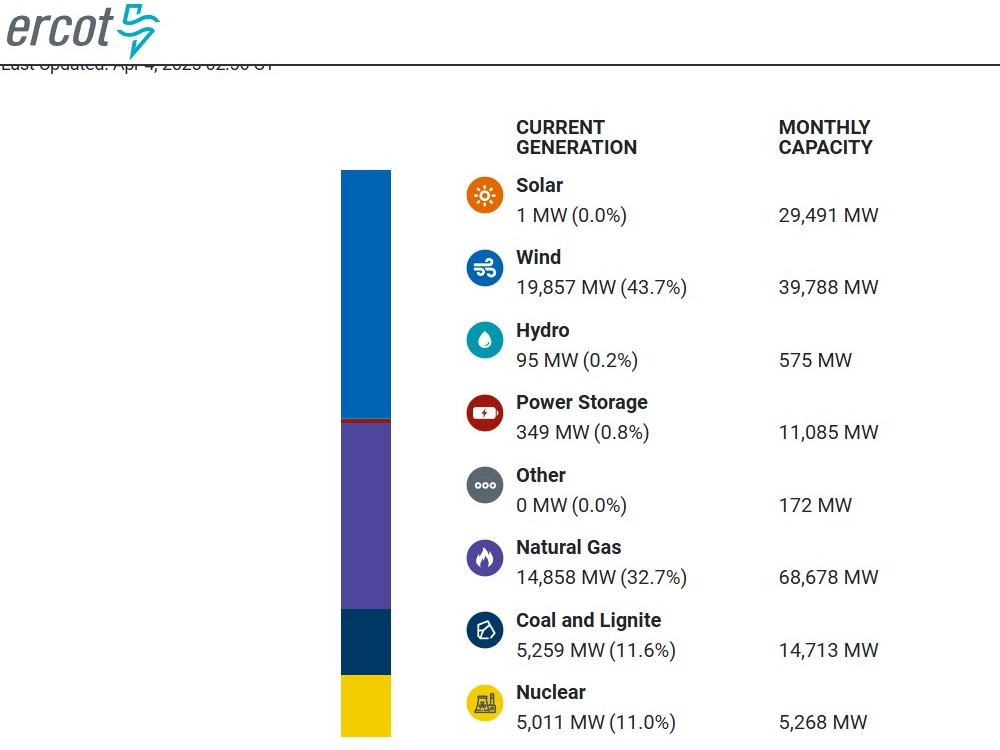
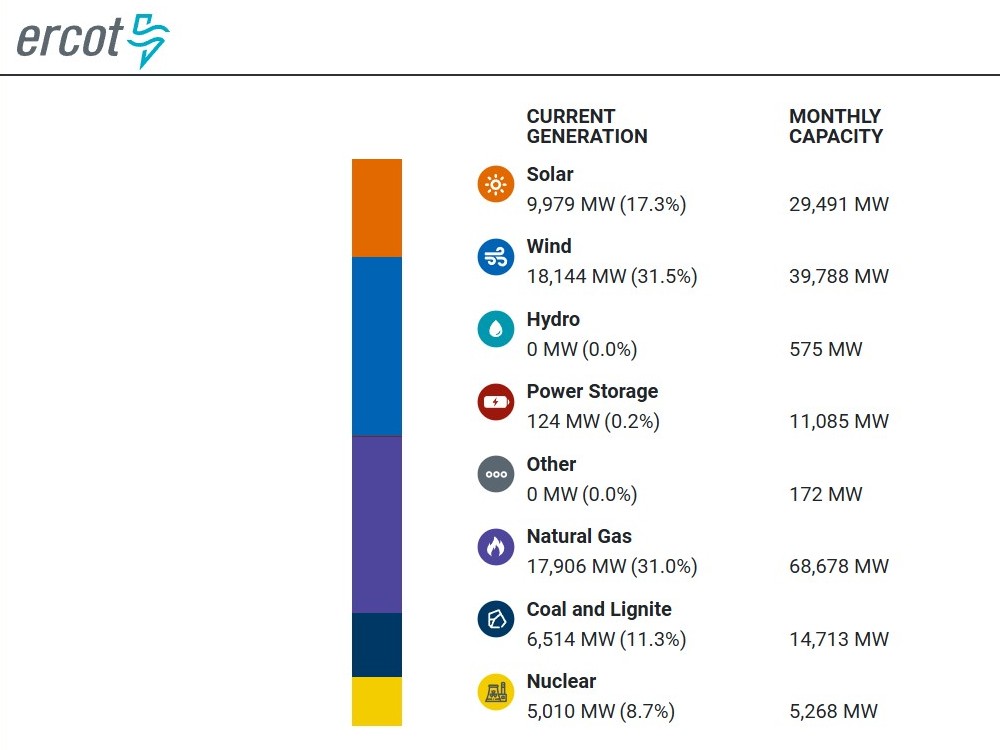
Superfact 16: Wind power is providing more than a quarter of Texas Power. In 2023, wind represented 28.6 percent  of Texas energy generation. In 2022, wind power accounted for about 25 percent  of Texas’ energy generation.

I am referring to this fact as a super fact because, it is true, important, and yet it’s a fact that is difficult to believe for many people. That wind power, allegedly a marginal energy source, is successful in fossil fuel loving Texas is hard to believe. I have come across what appears to be well informed people who were certain it was nonsense. However, as you can see from the Texas government links above, it is true, something they could not dispute.

The reason for the success of wind power in Texas is economics, which is another fact that may be surprising to some. Fossil fuels are a major source of income for us in Texas, but everyone also wants to save money. Texas has its own electric grid, it’s deregulated, and organized along free market principles.  

When companies sell their energy (to ERCOT) it works like a continuous auction. The one with the lowest price is picked first and allowed to contribute with whatever they are able to and also, of course, considering what the grid-powerlines can carry safely. Naturally, the price of wind in Texas includes federal subsidies, which make it even cheaper.

However, all energy sources are subsidized, and fossil fuels have a long history of government subsidies. Below is the average unsubsidized levelized cost of energy according to Lazard. Levelized means that construction costs, land rent, and other costs not directly caused by electricity generation are taken into consideration. Notice how cheap wind is (blue line). This is for the United States not just Texas. I don’t have any numbers, but I’ve heard that for Texas solar is the cheapest .

The image shows 8 graphs representing the price of Nuclear, Gas (peaker), Thermal Solar, Coal, Geothermal, Natural Gas, Solar Panels, and Wind. Today Wind is the cheapest.
Average unsubsidized levelized cost of energy. Notice that the light blue line indicates that wind power is pretty cheap. Mir-445511, CC BY-SA 4.0 https://creativecommons.org/licenses/by-sa/4.0, via Wikimedia Commons.

Affordability

Windpower is not only relatively cheap. Wind power is one of the most efficient and sustainable energy sources available. The energy required to manufacture, install, and maintain wind turbines is small compared to the energy they produce over their lifespan. This is known as their energy return on investment (EROI), which is quite favorable for wind energy.

The Institute of Environmental Management and Assessment (IEMA) states that the average wind farm will pay back the energy that was used in its manufacture within 3-5 months of operation. This article in the journal Renewable Energy found that the average windfarm produces 20-25 times more energy during its operational life than was used to construct and install its turbines. It included data from 119 turbines across 50 sites going back 30 years.

Wind power is providing more than a quarter of Texas Power
Photo by Pixabay on Pexels.com

False Claims

It is important to be aware that there are many false claims floating around about wind power. The sound from wind power stations does not cause cancer, it does not use any other energy sources while operating; it solely harnesses the kinetic energy from the wind to generate electricity, meaning it only relies on wind to function as its primary energy source. Windpower is not a major cause if bird deaths. To read more about false claims about wind power click here.

Wind power is providing more than a quarter of Texas Power
Photo by Pixabay on Pexels.com

There are positive and negative aspects of wind power, like any other source of energy. One issue with wind power (and solar) is that it is an intermittent source of energy. When the wind is not blowing you need other sources of energy (until there is sufficient energy storage). This is less of a problem when you have a mix of energy sources as Texas does.


To see the other Super Facts click here