The goal of this blog is to create a list of super facts. Important facts that are true with very high certainty and yet surprising, misunderstood, or disputed by many. This blog aims to be challenging, educational, and fun, without it being clickbait. I determine veracity using evidence, data from reputable sources and longstanding scientific consensus. Prepare to be challenged (I am). Intentionally seek the truth not confirmation of your belief.
Super fact 51 : In 1968 5,033 Americans died from a drug overdose. In 1978 5,506 Americans died from a drug overdose. In 1999 16,801 Americans died from a drug overdose. In 2022 107,941 Americans died from a drug overdose. 82,000 of those deaths involved opioids (about 76%). The number of people who died from an opioid overdose in 2022 was 10 times the number in 1999. More than half of all opioid deaths in the world were Americans despite being only 4.2% of the world population. The hardest hit demographic is white males.
Note the data in the super fact above is taken from Wikipedia, which in turn took it from CDC. However, the data across multiple sources look roughly the same (CDC / CDC, NIDA/NIH, Our world in Data, Wikipedia). I think this is a super fact. I should add that the statistics seem to have improved a little bit in 2023 and 2024.
I’ve posted about good super facts in this blog several times:
However, unfortunately there are also bad super facts, like this one.
The Severe Drug Overdose Epidemic in the US is a Super Fact
We recently went to the funeral for the young son (in his 20’s) of good friends of ours. He died from a drug overdose. The same thing happened to another friend of ours not too long ago. Despite all the talk about drugs, the war of drugs, and the “just say no campaign”, in the 1980’s I don’t remember this happening to people I knew when I was young, so I looked up the statistics. I knew we had an opioid epidemic with Fentanyl being the greatest culprit followed by Heroin. I just didn’t realize how severe it was and how American it was. This is important and shocking and the sources behind the data are reliable, which is why I consider this a super fact.
The United States Has by Far the Highest Death Rate from Opioids
If you play around with this graph from Our World in Data you will notice that the United States has a very high rate of deaths from drug overdoses, especially opioids, much higher than any other country. For example, take my home country Sweden, where 283 people died from opioid in 2021 (398 all drugs, data from IHME). Compare that with the United States, where 55,452 died from opioid in 2021 (70,893 all drugs, data from IHME). Adjust that for the population in each country you get a rate of 16.3 deaths per 100,000 inhabitants for the US and 2.7 deaths per 100,000 inhabitants for the Sweden. Sweden and the US are both open wealthy democracies in which certain opioids are legal for medical purposes but otherwise illegal. The graph below has slightly different numbers but notice that the year (2024) is different.
Data source : Institute for Health Metrics and Evaluation (IHME), Global Burden of Disease (2024). The graph is taken from Our World in Data .
Some illustrative Graphics on Drug Deaths
The graphs below illustrate both the sharp rise in drug related deaths, especially opioids, as well as how hard hit the United States is compared to the rest of the world.
The population of the United States is 340 million.The population of South America is 438 millionThe population of Europe is 744 million.The population of Asia is 4,800 million.This graph shows the contribution to US deaths from specific drugs including synthetic opioids (Fentanyl), Heroin, prescription opioids, and cocaine. Notice that the vertical axis shows the death rate per 100,000 people and not the total number of deaths. Data source : US Centers for Disease Control and Prevention WONDER. Note: Opioids include prescription pain relief drugs, synthetic opioids, excluding methadone and other opioids such as heroin. The graph is taken from Our World in Data.
This is my 100th post on my Superfactful blog. There are 50 super-fact posts. The other posts are posts about the blog, like this one, or posts featuring interesting information that I think is important, or book reviews of non-fiction books, travel posts with some information, posts about me, or mysteries.
However, the goal of this blog is to create a long list of facts that are important, not trivia, and that are known to be true and yet are either disputed by large segments of the public or highly surprising or misunderstood by many, perhaps shocking. Learning or accepting such a fact will change how you view the world. This makes these facts deserving of special attention, which is why I refer to them as super facts. You can also consider the super facts as a form of myth busting, major myth busting.
As mentioned, at the time of writing this I have come up with 50 super facts and made 50 posts about those super facts, but I am hoping to come up with hundreds. I am open to suggestions for super facts as well as critique of super facts. Tell me if you think it is trivia, not important, not surprising, or not an established fact. To see the first 50 super facts click here.
Smash your old beliefs with new surprising facts, super facts. Expand your mind. Shutterstock ID: 1685660680 by MattL_Images
Deciding on What is an Important Fact
Deciding what is an important fact or not is subjective, but for the same reason it also makes it an easy thing to decide. Ultimately, I decide what is important. It is difficult to compare the importance of facts, but my main concern is to avoid trivia. I also try to avoid facts that may be important to me but do not concern others very much.
For example, I am looking for facts that people discuss a lot, or are often mentioned in the mainstream media, or facts that people dispute fiercely despite a scientific consensus and overwhelming evidence telling us what is true. I am looking for facts from science that could change people’s perspective on nature, our world, or the universe, or facts that could change people’s view of the world, that are related to important historical events, such as the deaths of millions of people, etc.
Shocking Facts
Deciding whether a fact is highly surprising, misunderstood by many, shocking, or contentious and disputed is also not an exact science. In some cases, there are polls stating how common a certain belief is amongst the public but in most cases (that I consider) I have no polls to fall back on. I just have to use my judgment. In some cases, almost everyone I’ve spoken to about the subject is misinformed, bamboozled, or they misunderstand it. In other cases, I need to decide based on my impression. I have to guess.
Super facts can be surprising, shocking, or something you refuse to believe, and yet they are true. Photo by Andrea Piacquadio on Pexels.com
Finding the Truth
As I mentioned, deciding on what is important or highly surprising is not an exact science. I think that is OK. There’s going to be super facts that are impressive and some that are less so. However, the third criteria is the one thing that I need to get right, and that is whether the fact is true or not.
We humans are not very rational, and we often believe with intense conviction things which are false. I think that is true for all of us. We don’t know what those false beliefs are, otherwise, we wouldn’t have them. However, this is where the super facts can come in handy, as tools for personal growth if we are willing to change our minds in the face of new evidence. This is easier said than done since we are emotional beings embedded in our culture, our tribal attachments and favorite myths. We have biases, we jump to conclusions, we overestimate our understanding of subjects we don’t know much about (see the Dunning Kruger effect), and we tend to believe what we want to believe. That goes for me too.
Adding to the difficulty on deciding what is true is the fact that the internet and especially social media is full of misinformation. There are an enormous amount of YouTube videos, podcasts, and websites touting false claims, conspiracy theories, and pseudo-science. There are political think tanks deceiving the public and industry funded organizations spending billions of dollars on misinformation, as well as people claiming to have special insights and superior knowledge.
I see the most ridiculous claims on Facebook and Instagram on a daily basis and the amazing thing is that people fall for it. If it supports their pre-existing beliefs or opinions, they see it as proof or conclusive evidence and they don’t take the time to question the source. When I see this, I often point out that the source is not reliable, or it may even be a satirical site, and I often add something from Snopes to my comment assuming they’ve investigated it.
Sure, when I do this, I am raining on someone’s parade, and it is quite often not welcome. No matter how politely I try to explain the situation I end up getting insulted or blocked. I should say, I’ve also fallen for fake information myself, but I try to accept it when someone points it out to me using reliable sources. The point is, we humans are really bad at deciding what is true, and we underestimate how bad at it we are, and deciding what is true is often a quite challenging task.
Before I publish a super fact, I need to be fairly certain that it is true. Outside of mathematics and logic you cannot be 100% sure about anything, but some facts we can say with very high certainty are true. For example, the earth is not flat like a pancake, the Sun is bigger than the earth, the capital of the United States is Washington DC, the heart pumps the blood, we breathe oxygen, carbon dioxide is a greenhouse gas, the light speed in vacuum is a universal constant, time dilation is real, Cesium-137 is radioactive, etc. Most likely you only know a very tiny fraction of a percentage of the facts that we know to be true with very high certainty. Some of those facts will surprise you, shock you, or are facts you would like to dispute, and I call them super facts.
Determining What Facts Are True
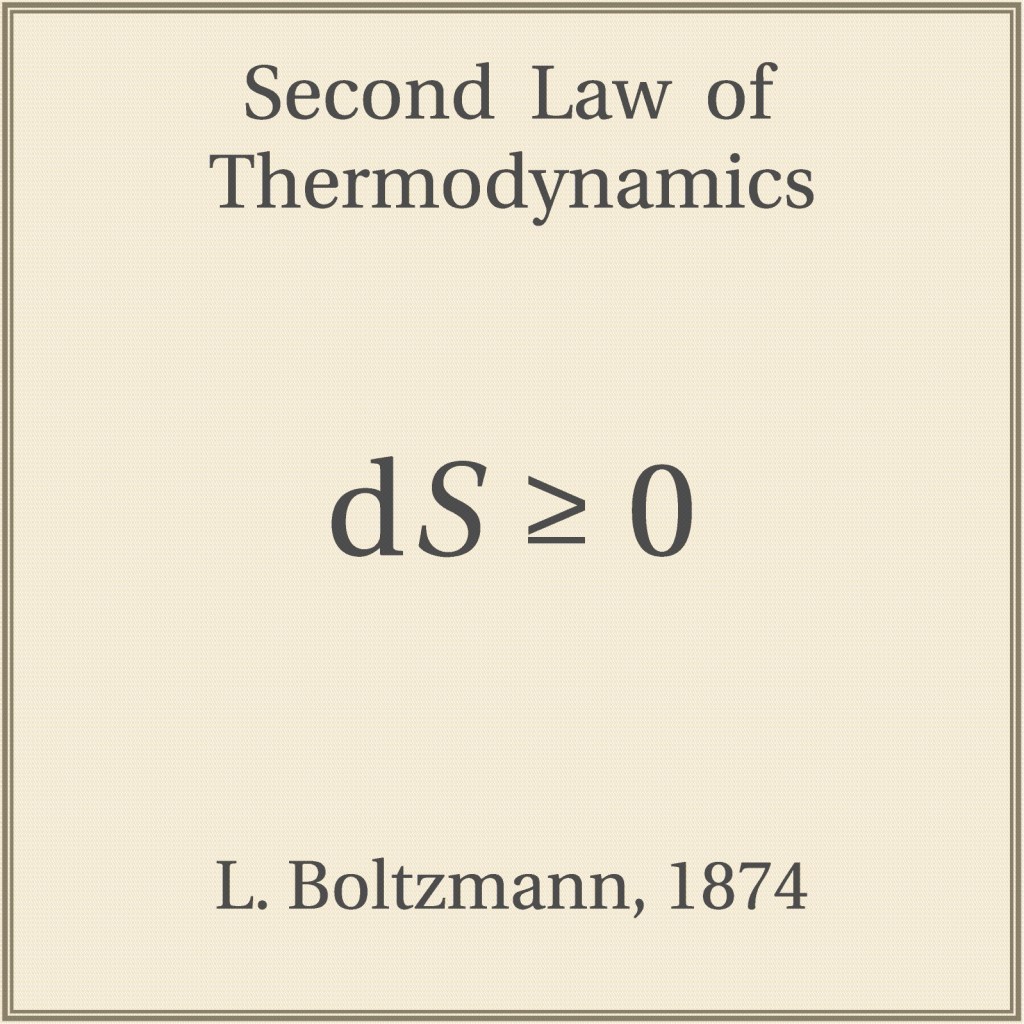
When I determine whether something is true with a high degree of certainty I start with my own expertise. For example, when someone claims that the second law of thermodynamics (entropy) contradict evolution I know that to be false because I have a degree in physics (master’s degree) and I’ve taken several classes in thermodynamics and statistical mechanics. In addition, I am very familiar with the faulty argumentation behind the claim because I’ve read dozens of creationist books. Yes, I was once bamboozled by creationism myself. Then I learned more about science, evolutionary biology, physics and thermodynamics.
Second law of thermodynamics Shutter Stock Vector ID: 2342031619 by Sasha701
However, my personal expertise is not enough. I also find out about scientific consensus or expert consensus and evidence from reliable sources. I should say that using scientific consensus as a reliable indicator that something is true does not fall under the “appeal to authority fallacy”. The “appeal to authority fallacy” refers to appealing to influential people or organizations who may not necessarily be experts, and regardless of the evidence. In science you don’t really have authorities, you have experts who often disagree with each other. In the event almost all experts agree on a certain fact that has been thoroughly vetted you can trust that fact with nearly 100% certainty, and that is not appeal to authority but a probability argument.
I typically select several reliable sources such as research papers published in respectable journals, national academies, government websites such as NASA, NOAA, EPA, FBI, respected research organizations such Our World in Data, Pew Research Center, and academic publications and books. I make sure that they various sites I find don’t contradict each other regarding my prospective super fact. If they all seem to agree I accept the super fact and include a few of the links in my post.
If I don’t have much personal expertise on a subject I start out by asking Google AI. I don’t ask ChatGPT because I believe it is less reliable with respect to information. Then I check Wikipedia and or another online encyclopedia such as encyclopedia Britannica. This is not to establish the truth but to get an idea. Wikipedia is not an academically acceptable source, but it is rarely wrong and serves as a good first filter to save time. Then I start focusing on the reliable sources above and I will make sure I understand the evidence.
So, in summary I will use my expertise, scientific consensus, reliable sources and better, agreement between reliable sources, to determine if I can say with confidence that something is true. I will also frequently include links from Wikipedia in my posts because Wikipedia typically feature good summaries that are easy to understand. Naturally, anyone is free to dispute any of my super facts. Just make sure you provide good evidence from an arguably reliable source, or I cannot take it seriously.
Fact or myth. Shutterstock Asset id: 2327968607
Sources I will not consider are claims from unreliable sources, political think tanks, talk show hosts, politicians, articles written by contrarians heavily funded by industry or political organizations, and random Reels or YouTube videos, and I will not entertain conspiracy theories for my purposes. Also, I will ignore, articles with click bait titles, sources making claims about a great swindle by the scientific community, articles claiming everyone is lying to you, articles purporting to reveal the hidden truth, articles insisting on presenting the truth that “they”/the-others won’t tell you, etc. Cults will tell you that everyone else is lying to you. I’ve learned not to fall for it at this point.
My Super Fact List
Finally, here are a few examples of my super facts.
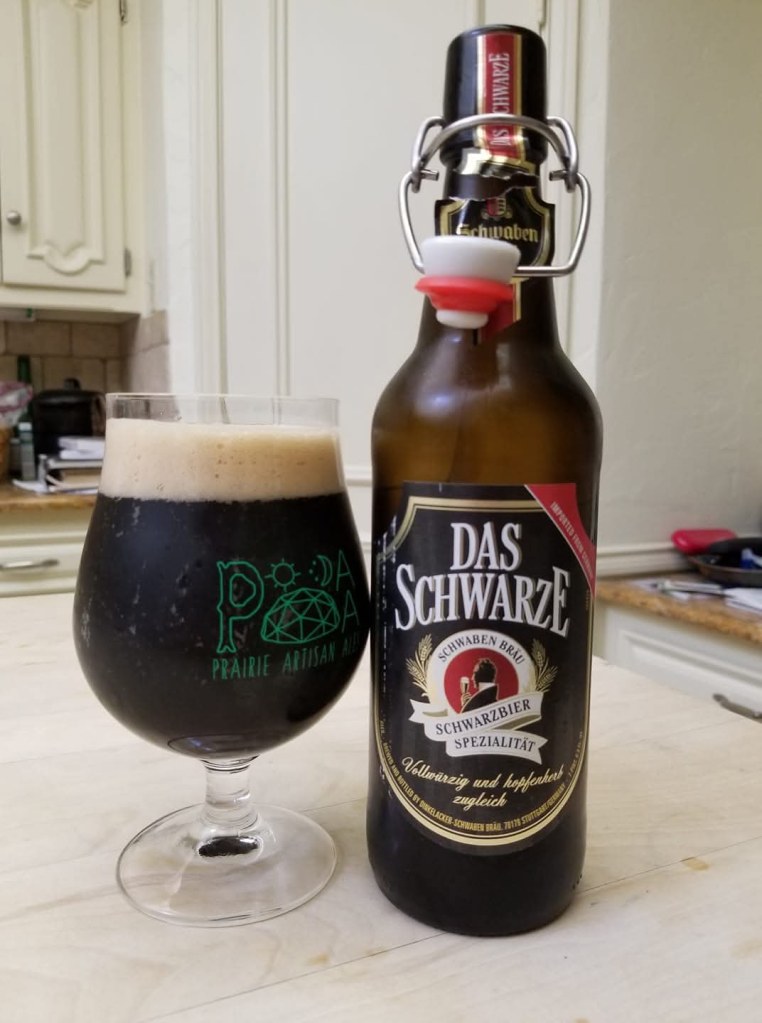
Super fact 50 : There are hundreds of types of beer but in general they fall into two main categories, ales and lagers, and these two categories are not differentiated based on color. The ales are not necessarily dark and lagers light. There are light colored ales and dark, even black ales. There are light colored lagers and dark and almost black lagers (Schwarzbier). The difference between ales and lagers is the type of yeast used and the fermentation temperature. Ales are typically made with top-fermenting yeast at warmer temperatures. This result is a wider range of flavors and aromas, often with fruity or spicy notes. Lagers, on the other hand, are made with bottom-fermenting yeast at cooler temperatures making them crisper and more subtle. Ales have been around for 6,000 years. The lager is a more recent invention.
I consider this a super fact, first, because even though beer is a well-known drink that a lot of us drink almost every day, a lot of people don’t know what the two basic kinds of beer are. They don’t know what an ale is or what a lager is. Even beer fans and many people who drink beer every day are often clueless about this, the most basic fact about beer. A lot of people say that they like light/blond beer or they like dark beer. In my native country Sweden, which I admit is not a true beer country, I often hear people say that they prefer “ljus öl” (light/blond beer) rather than “mörk öl” (dark beer), or the other way around, which is like saying that you like blond / light colored food rather than dark colored food. It doesn’t make sense.
This is a so called Schwarzbier that I drank some time ago. Das Schwarze a German Schwarzbier from Dinkelacker-Schwabenbräu, ABV 4.9%. Some roasted notes, sweet caramel, light flavor, a bit fizzy, somewhat thin but good enough. This is a Lager but notice a how dark it is, basically black. I did not put black dye in it. It is how they really look despite being Lagers.
I am in the process of learning Franch, and I’ve discovered that this confusion is even baked into the French language. Well as you might guess France is not a true beer country. If you use Google Translate and you type in “Lager” in the English edit box the answer you get in French is “Bière blonde”, even though French and Belgian beer that are labeled Blonde frequently are Ales not Lagers. I’ve read a lot of French language sites mentioning beer, and unless the author has some beer expertise, they make the same mistake as Google Translate. Blonde / light beer is not Lager, and dark beer is not necessarily Ale.
I had a discussion about this with one of my French teachers and despite me having talked a lot about beer in class and having previously shown him that I knew something about the topic, he had a very hard time accepting the truth. After a Google search he finally accepted the truth, but he was very surprised, perhaps even shocked.
The confusion is immense, it is worldwide, and the truth is surprising to some people. I should mention that Americans for the most part get this right. In general Americans know that Lager isn’t necessarily blonde and vice versa. They know that IPAs, which are not Lagers but Ales, typically are light colored. Perhaps because of the prominent craft beer industry in the US. I should also mention that there are also hybrid beer styles and beer styles that are hard to classify as lager or ale. More about that later.
This is Ba Ba Black Lager, an American Schwarzbier. I had sushi with this Schwarzbier.
Secondly, lagers, especially pale bland mass-produced lagers have become so common that when people taste an ale, especially if it is a little bit different, like fruity, tart, have chocolate or coffee flavors, etc., they don’t even consider it a real beer. In their minds real beer is a bland tasting lager. Never mind that we have had Ales for 6,000 years, and that Ales dominated beer drinking up to relatively modern times. Nowadays 90% of beer consumption worldwide is lagers (87% in the US), but throughout most of human history nearly 100% of beer consumption worldwide was ales.
This is an IPA called Cold War. IPAs are NOT Lagers. However, notice how light the color is. IPAs are popular in the US, which I think is one reason Americans are better educated on the difference between lagers and ales to countries that are not part of the European beer countries (Germany, Britain, Ireland, Belgium, the Czech Republic, etc.)
What is an Ale?
As mentioned, an Ale is a style of beer, brewed using a warm fermentation method. Ales are typically made with top-fermenting yeast at warmer temperatures. This result is a wider range of flavors and aromas, often with fruity or spicy notes. The word ale is an English word which in medieval England meant a drink brewed without hops (it is not what it means today). Some popular ales include IPA, Pale Ale, Stouts, Porter, Scotch Ale, and Barley Wine. Below is a more complete list of Ales. The list is from the beer advocate. Despite the 120 styles listed the list is not complete. It should be noted that I’ve added a few that were missing.
India Pale Ales : American IPA, Belgian IPA, Black IPA, Brut IPA, Cold IPA, English IPA, Imperial IPA, Milkshake IPA, New England IPA.
Pale Ales : American Amber / Red Ale, American Blonde Ale, American Pale Ale, Belgian Blonde Ale, Belgian Pale Ale, Bière de Garde, English Bitter, English Pale Ale, English, Pale Mild Ale, Extra Special / Strong Bitter (ESB), Grisette, Irish Red Ale, Kölsch, Saison.
Wild/Sour Beers : Berliner Weisse, Brett Beer, Faro, Flanders Oud Bruin, Flanders Red Ale, Fruit Lambic, Fruited Kettle Sour, Gose, Gueuze, Lambic, Wild Ale.
Wheat beers : American Dark Wheat Beer, American Pale Wheat Beer, Dunkelweizen, Grodziskie, Hefeweizen, Kristallweizen, Witbier.
Stouts : American Imperial Stout, American Stout, English Stout, Foreign / Export Stout, Irish Dry Stout, Oatmeal Stout, Russian Imperial Stout, Sweet / Milk Stout.
Porters : American Porter, Baltic Porter, English Porter, Imperial Porter, Robust Porter, Smoked Porter.
Dark Ales : Dubbel, Roggenbier, Scottish Ale, Winter Warmer.
Brown Ales : Altbier, American Brown Ale, Belgian Dark Ale, English Brown Ale, English Dark Mild Ale.
Strong Ales : American Barleywine, American Strong Ale, Belgian Dark Strong Ale, Belgian Pale Strong Ale, English Barleywine, English Strong Ale, Imperial Red Ale, Old Ale, Quadrupel (Quad), Scotch Ale / Wee Heavy, Tripel, Wheatwine.
Specialty Beers: Ancient Herbed Ale, Sahti.
Trappist Westvleteren from Brouwerij Westvleteren (Sint-Sixtusabdij van Westvleteren) a Belgian Quadruple might be the most renowned beer in the world. I’ve had it many times and it is heavenly. However, it is very difficult to get in the US. A Quadruple is a type of Ale.Plutonium-239 from the Manhattan Project Brewing Company in Dallas, Texas. It is a strong-tasting Porter with coconut flavors. (chocolate, coconut and coffee). There is no clear definition on the difference between porter and stout, other than porters are in general milder and not as strong as stouts. From that perspective Plutonium-239 is really a stout.
Wild Ales and Sour Beers often have fruity flavors. This can be achieved by adding fruits or berries to them but often fruit flavors emerge naturally from the fermentation process, which, at least if you use wild yeast, produce esters (fruit flavors). Wheat beers often have banana or pear notes and just as for Wild Ales these flavors emerge naturally from the fermentation process (esters again). Some of the IPAs also have distinct fruit flavors, especially the New England style IPAs, but in this case the fruit flavors come from the hops.
Jester King in Texas brews a Wild Ale called Atrial Rubicite. It is a Wild Ale infused with raspberries. The fermentation process uses “wild yeast” to create a tart and fruity base but raspberries are added to enhance the fruit flavor resulting in a thick full raspberry flavor which most people describe as heavenly.
What is a Lager?
As mentioned, lagers are made with bottom-fermenting yeast at cooler temperatures making them crisper and more subtle. The word lager (German) means to storage or storeroom and used to refer to beers stored at cold temperatures. Sometime in the 15th century cold fermentation yeast emerged, and people started using it to do fermentation at cold temperatures. As time went by this form of fermentation became more popular. It was brought to the US in 1840 and between 1860 and 1870 it became the most popular fermentation process in Bohemia. As mentioned, today 90% of beer consumption worldwide is lagers.
Below is a more complete list of Lagers. The list is from the beer advocate.
Pale Lagers: American Adjunct Lager, American Lager, Czech / Bohemian Pilsner, Czech Pale Lager, European / Dortmunder Export Lager, European Pale Lager, European Strong Lager, Festbier / Wiesnbier, German Pilsner, Helles, Imperial Pilsner, India Pale Lager (IPL), Kellerbier / Zwickelbier, Light Lager, Malt Liquor.
Dark Lagers : American Amber / Red Lager, Czech Amber Lager, Czech Dark Lager, European Dark Lager, Märzen, Munich Dunkel, Rauchbier, Schwarzbier, Vienna Lager.
Specialty Lagers : Japanese Rice Lager, Chile Beer
Paulaner is a so called Festbier (or Octoberfest), which is type of Lager made especially for Octoberfest in Germany.
Finally, there are also specialty beers that are hybrids, or neither or that can be both.
Hybrid (Ale/Lager): Bière de Champagne / Bière Brut, Braggot, California Common / Steam Beer, Cream Ale.
Neither lager or ale, or can be both : Fruit and Field Beer, Low-Alcohol Beer, Rye Beer, Smoked Beer, Herb and Spice Beer, Kvass, Gruit, Happoshu, Pumpkin Beer.
That’s 120 styles of beer. I’ve had 110 beer styles. How many have you had?
Super fact 49 : The top one-meter (3.3 feet) of a typical 10 meters (33 feet) by 40 meters (131 feet) garden contains 2 kilograms (4.4 pounds) of Uranium. For comparison, the Hiroshima bomb contained 64 kilograms (121 pounds) of Uranium. Certain rocks such as Granite and Shale contain much more Uranium than soil. Uranium also exists in the atmosphere and there is 4.5 billion tons of Uranium in the ocean.
The numbers above come from the IAEA (International Atomic Energy Agency) and Stanford University . I should mention that the numbers vary depending on Geography, type of soil, etc. For example, there is much less Uranium in the soil in Florida compared to the soil in the Midwest.
This may come as a surprise to many people. Isn’t Uranium radioactive? How come we are still alive? That’s why I call this a super fact. The answer is that even though Uranium is used in nuclear bombs and nuclear reactors, it is by itself not very radioactive. You can hold natural uranium in your hand without much risk. The radioactivity from, for example, nuclear explosions come mainly from the fission process and the radioactivity from nuclear reactor waste is mainly from other isotopes created by the fission process in the reactor rather than the uranium itself.
If Uranium is not very radioactive, how come a nuclear bomb spread so much radioactivity. The answer is that the radioactivity comes from the fission process and the resulting new isotopes, not the uranium.
What Are Isotopes?
Before I explain some facts about the radioactivity and decay rate of Uranium, I should explain what an isotope is. Atoms consist of a nucleus and electrons surrounding the nucleus. In the nucleus there are protons and neutrons (and some other stuff). Neutral atoms have an equal amount of electrons and protons, which determines what kind of element it is. Hydrogen has one electron and one proton. Helium has two electrons and two protons. Oxygen has eight electrons and eight protons, etc. The number of protons/electrons is called the atomic number of the element.
The number of protons plus the number of neutrons is called the mass number. Atoms of the same element but different number of neutrons are called isotopes. Uranium-235 or U-235 has 92 protons and 235 – 92 = 143 neutrons. The number if protons/electrons determine the chemical properties of the element. The number of neutrons determines nuclear properties such as the stability of the nucleus, radioactivity, etc., as well as the weight. Therefore U-238 and U-235 are identical chemically and look and feel the same, but U-235 is more radioactive, and you can use U-235 for fission but not U-238.
This is a simplified Bohr model of the Uranium atom. There are 92 little blue balls circling a nucleus in the middle of the atom. Those are electrons. In the nucleus there are 92 protons. Those are the red balls with plus signs. In addition, there is a yellowish smudge around the protons in the nucleus. Those are the neutrons. Depending on the isotope, there are 143 neutrons for U-235, 146 neutrons for U-238 and 142 neutrons for U-234. Shutterstock asset id: 1999370450 by Patricia F. Carvalho
The decay rate of Uranium
There are three main Uranium isotopes. Uranium-234, Uranium-235, and Uranium-238. Uranium-238 is the most common. 99.28% of natural Uranium is Uranium-238, 0.72% is Uranium-235 and 0.0057% is Uranium-234. Uranium-235 is the isotope we use for nuclear weapons.
The different isotopes have different decay rates and different levels of radioactivity. The half life of a radioactive isotope is the time it takes for an isotope to decay so that only half of it is left. The half-life of Uranium-238 is four and half billion years. That means that it will be around for a very long time, but since its decay rate is so slow, it is not very radioactive. The half-life of Uranium-235 is 710 million years, again it will be around for a very long time, but again, since its decay rate is so slow, it is not very radioactive. The half-life Uranium-234 is 247,000 years, a little bit faster but it still has a pretty slow decay rate.
This should be compared to Cesium-137, which has a half-life of roughly 30 years. In other words, it decays 150 million times faster than Uranium-238 and 23.7 million times faster than Uranium-235. Since Cesium-137 decays so much faster than the Uranium isotopes it means that each atom of Cesium-137 will send out radioactive particles much more often than a Uranium atom will, making it much more radioactive.
If you want to read about when I was walking around a whole day with a Cesium-137 sample in the back pocket of my jeans, click here. Radon-222, an extremely radioactive isotope of radon, which seeps into our basements from the inside of earth. It has a half-life of 3.82 days giving it a decay rate that is 430 billion times faster than Uranium-238 and 68 billion times faster than Uranium-235.
What makes it possible to make a nuclear bomb from Uranium-235 is not because it is very radioactive. It is not. It is because it has properties that make it perfect for bomb making. Each nucleus emits more than one neutron, in fact more than two on average, and the neutrons colliding with other Uranium-235 nucleuses can be made to travel at the correct speed to cause fission. In other words, it is fissile. It is a goldilocks situation. It is just right. Below is an illustration showing a chain reaction. Observe, the picture indicates that Uranium has 95 protons. This is wrong. Uranium has 92 protons. When I have the time, I will fix this picture.
This is an illustration of a chain reaction with fission of a Uranium-235 isotope. Notice the atomic number (number of protons) is incorrectly stated as 95 in the picture. It is 92. When I have time, I will fix that. Shutterstock Asset id: 73714504 by Mpanchenko.
Super fact 48 : Since 1945 we have set off more than 2,000 Nuclear Bombs corresponding to a yield of an estimated 42,000 times that of the Hiroshima Bomb.
According to the Arms Control Association there’s been 2,056 nuclear bomb tests. According to the UN there’s been more than 2,000 nuclear bomb tests, and according to Wikipedia there’s been 2,121 nuclear bomb tests, totaling 635 Megaton. Using the typical yield estimate for the Hiroshima bomb of 15 Kiloton that corresponds to more than 42,000 Hiroshima bombs. I think most of us know about the Hiroshima and Nagasaki bombs and we know about nuclear testing. However, I think the number of tests and the large total yield will come as a surprise to many, at least it was a surprise to me. That is why I consider this a super fact.
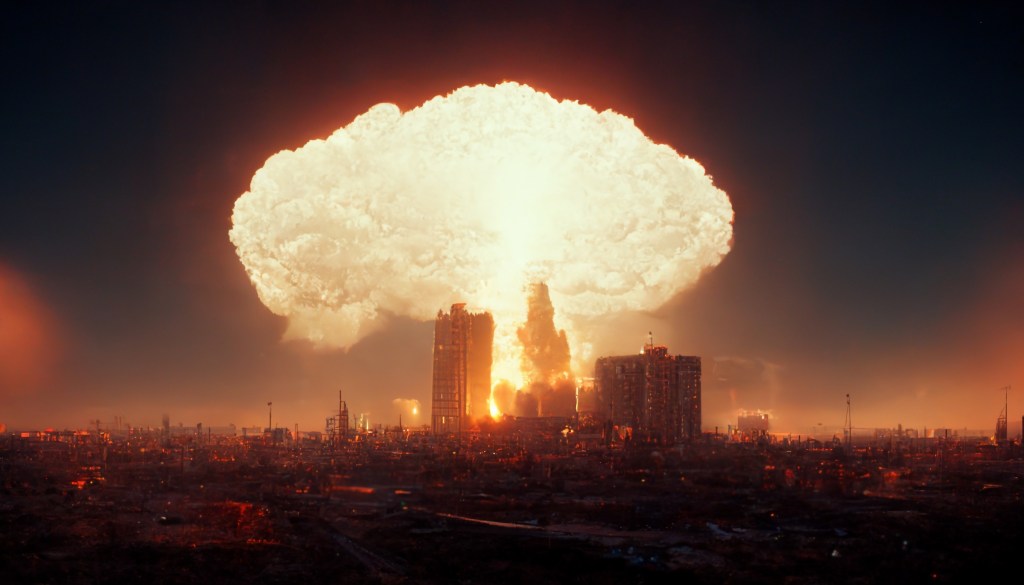
Nuclear bomb dropped on a big city. Shutterstock, asset id: 2188083835 by CI Photos.
Nuclear Landscaping
It may also come as a surprise that many of these tests were not for military purposes. Another usage for nuclear bombs is nuclear landscaping. Towards the end of the 1950’s the existing Panama Canal was thought to be insufficiently large and some people, including Edward Teller, the father of the Hydrogen bomb (Thermonuclear bomb), suggested that a new wider and deeper canal could be built simply by using nuclear bombs to blow multiple huge holes across Panama. The US was also interested in creating a new harbor in Alaska using nuclear bombs.
Thus, Project Plowshare was created to achieve this. As part of the Project Plowshare 35 nuclear warheads were detonated. The Soviet Union also had a similar program named “Nuclear Explosions for the National Economy” that included 124 nuclear bomb tests. Due to concerns over radioactive fallout the nuclear landscaping projects were eventually put to rest. The last Plowshare detonation was on May 17, 1973. The book Atomic Awakening by James Mahaffey recounts the history of nuclear testing and nuclear landscaping in greater detail.
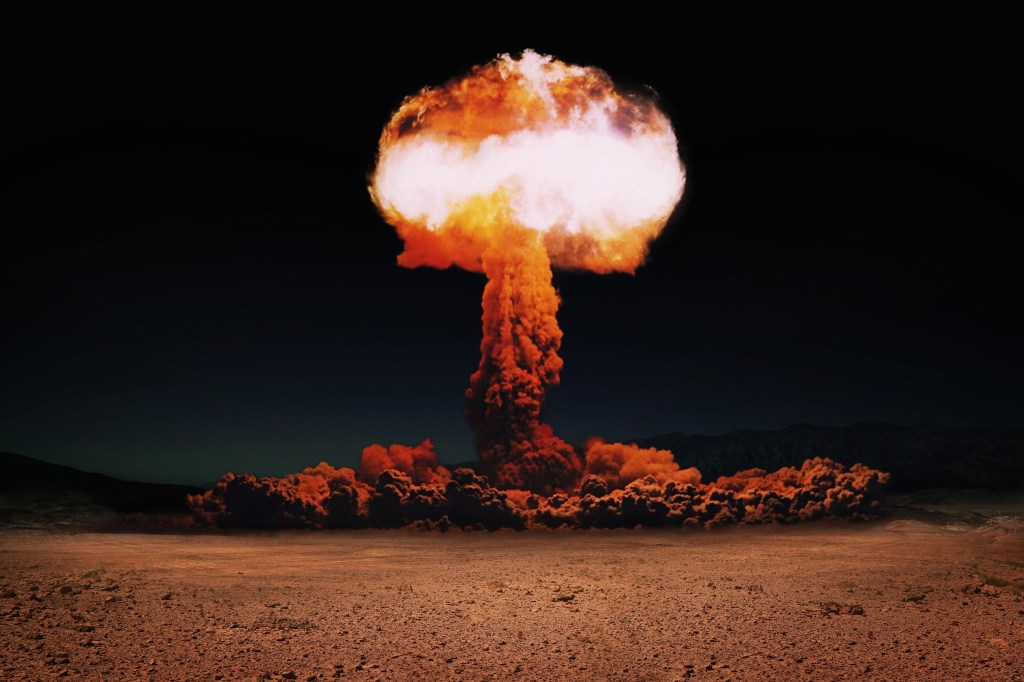
Hydrogen bomb test by Alones Shutterstock Asset id: 2194195335.
Project Orion
Another non-military use of nuclear bomb testing was Project Orion. Project Orion was a study conducted from 1956 to 1964 by the US Air Force, NASA, and DARPA into the viability of a nuclear pulse spaceship that would be directly propelled by a series of atomic explosions behind the craft. A thick steel pusher plate would catch the blast and accelerate the ship forward.
The “Pascal B” shot in Operation Plumb Bob in 1957 was the first nuclear weapons test of the pusher concept. The Limited Test Ban Treaty of 1963 made it difficult to continue with the project. According to the book Atomic Awakening, if the design had been successfully completed, we could have created an interstellar spaceship that could have taken a crew and a large load to other planets and stars.
I can add that According to Atomic Awakening, in addition to Nuclear Landscaping and Project Orion, Nuclear Blasts were a tourist attraction.
Number of Nuclear Tests by Country
Below is a list of countries and the number of nuclear tests that they’ve performed according to the Arms Control Association and Wikipedia.
The United States – 1,030 – According to Wikipedia – 1,032
The USSR/Russia – 715 – According to Wikipedia – 727
France – 210 – According to Wikipedia – 215
United Kingdom – 45 – According to Wikipedia – 88
China – 45 – According to Wikipedia – 47
North Korea – 6 – According to Wikipedia – 6
India – 3 – According to Wikipedia – 3
Pakistan – 2- According to Wikipedia – 2
However, it should be noted that partially due to nuclear arms control legislation such as; the Limited Test Ban Treaty (LTBT): Signed in 1963, the Threshold Test Ban Treaty (TTBT): Signed in 1974, and the Comprehensive Nuclear-Test-Ban Treaty (CTBT) opened for signing in 1996, the number of nuclear tests have been significantly reduced. This is illustrated by the graph below from Our World in Data. The last nuclear test was done by North Korea in 2017.
The biggest nuclear bomb ever exploded was RDS-220, or AN602, or Tsar Bomba. It was detonated by the Soviet Union on October 30th, 1961, on the arctic island of Novaya Zemlya, and yielded more than 50 Megaton. In other words, it was 3,300 times more powerful than the Hiroshima bomb. According to Atomic Awakening, windows in Finland 1,900 kilometers (1,180 miles) away shattered. There are no cities large enough to match the size of the explosion. This is the kind of bomb that could obliterate states or small countries.
Tsar Bomba was a so-called thermonuclear device, or a hydrogen bomb as they are typically called. Hydrogen bombs are much more powerful than fission bombs, such as Uranium bombs or Plutonium bombs. To read my related post called “Ukraine Gave up Thousands of Nuclear Warheads” click here.
This is an illustration of the Tsar Bomba explosion by by mbafai Shutterstock Asset id: 2208486661. To see a photo of the actual Tsar Bomba explosion click here (it is copyrighted).
Would you pay to watch a Nuclear Bomb Test? (Nuclear Bomb Test Tourism)







 Super Facts